Home Blog Page 2360

Labour, groups urge Lalong to discard bill seeking to privatise water sector

THE Amalgamated Union of Public Corporations Civil Service Technical and Recreational Services Employees (AUPCTRE) and the Environmental Rights Action/Friends of the Earth Nigeria (ERA/FoEN), on Monday urged Simon Lalong, the Plateau State Governor, to discard the Plateau State water sector law passed by the State Assembly.

The coalition argued that Plateau State residents had repeatedly rejected attempts to privatise the water sector in the state, stressing that such law would prohibit democratic control of water resources.

Members of the State Assembly, last week approved the bill after a report of the House Standing Committee on Parastatals was read by Hon. Godfrey Langdip, to the House. He claimed that the bill would foster adequate water provision to the people despite public agitations.

In a statement issued by Philip Jakpor, Head, Media and Campaign, ERA, in Abuja the groups frowned at how the lawmakers hurriedly passed the law in spite of popular aversion to its Public-Private Partnership (PPP) provisions.

According to the statement, Article three sub-section 1 (p) of the bill seeks to promote PPP principles in the development and management of water resources in Plateau.

But AUPCTRE and ERA/FoEN countered this in a joint statement, describing the passage as a betrayal of trust that Plateau citizens reposed on the lawmakers to defend them against ‘oppressive forces’. They urged Governor Lalong not to append his signature to the bill.

“We are not only dismayed with this news; we feel the Plateau State House of Assembly just gifted the citizens of the state a bad law that will mortgage their future and tie them to the loins of for-profit only entities. We reject the PPP in its entirety,” says Comrade Benjamin Anthony, AUPCTRE National President.

“The PPP privatization model in the water sector has failed in virtually all countries of the globe where it was introduced…..what we want the state government to do is to avoid worsening the already tensed security situation in the state through a denial of their fundamental right to a free gift of nature.”

Anthony insisted that the solution to the Plateau State water crisis, just like that of other states of the federation, requires the prioritizing of the rights of the people far above private interests.

Akinbode Oluwafemi, ERA/FoEN Deputy Executive Director, described the development as the height of insensitivity. He also tagged the enacted law as ‘anti-people’.

“The PPP experiment that the Plateau State government is planning to embark on will only lead to poor water quality, job losses, hike in water prices and poor service. It has happened elsewhere and will not be different here,” says Oluwafemi.

“The Governor must side with the people by not appending his signature.”

Meanwhile, on April 16, a public hearing was held on the bill where the proposed bill was reportedly rejected by the Civil Society Coalition for Good Governance and a host of the grassroots group. Rather, they canvassed support for public control and sustainable budgetary allocation to the water sector.

The groups appealed to the Plateau government to fully uphold human rights to water as an obligation of the government, representing the people and integrate broad public participation in developing plans to achieve universal access to clean water.

“The Plateau State government must build the political will to prioritize water for the people by investing in the water infrastructure necessary to provide universal water access. This will create jobs, improve public health, and invigorate the Plateau economy”.
Buhari offers more money to military in four years, but security grows worse

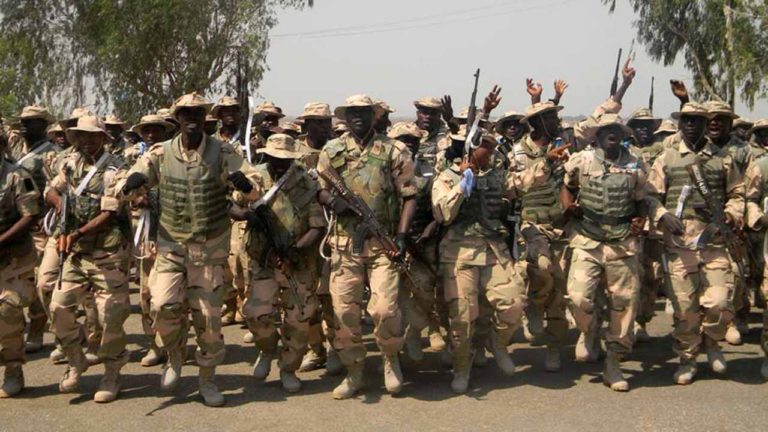
THE Nigerian military’s total spendings rose by 137 per cent between the four-year term of the former President Goodluck Jonathan and the first term of President Muhammadu Buhari.

According to the data obtained by The ICIR from the Office of the Accountant General of the Federation (OAGF). This implies that the military during the first four years of President Buhari received more allocation than the last four years of ex-President Jonathan with a difference of N109, 106,256,894. 

Also, the military capital releases during Buhari’s first tenure increased by 128.52 per cent compared with Jonathan government.

Spendings on capital expenditure between 2011 and 2014 amounted to N79.54 billion, whereas the total capital budget for the military between 2015 and 2018 is N188.65 billion.

But, despite this rise in military spending during Buhari’s first tenure, the increased allocation has an inverse relationship with the level of security in the country.

Curiously, the data shows that the more the government spends on arms and ammunition, the more widespread are the incidents of restiveness across the nation.

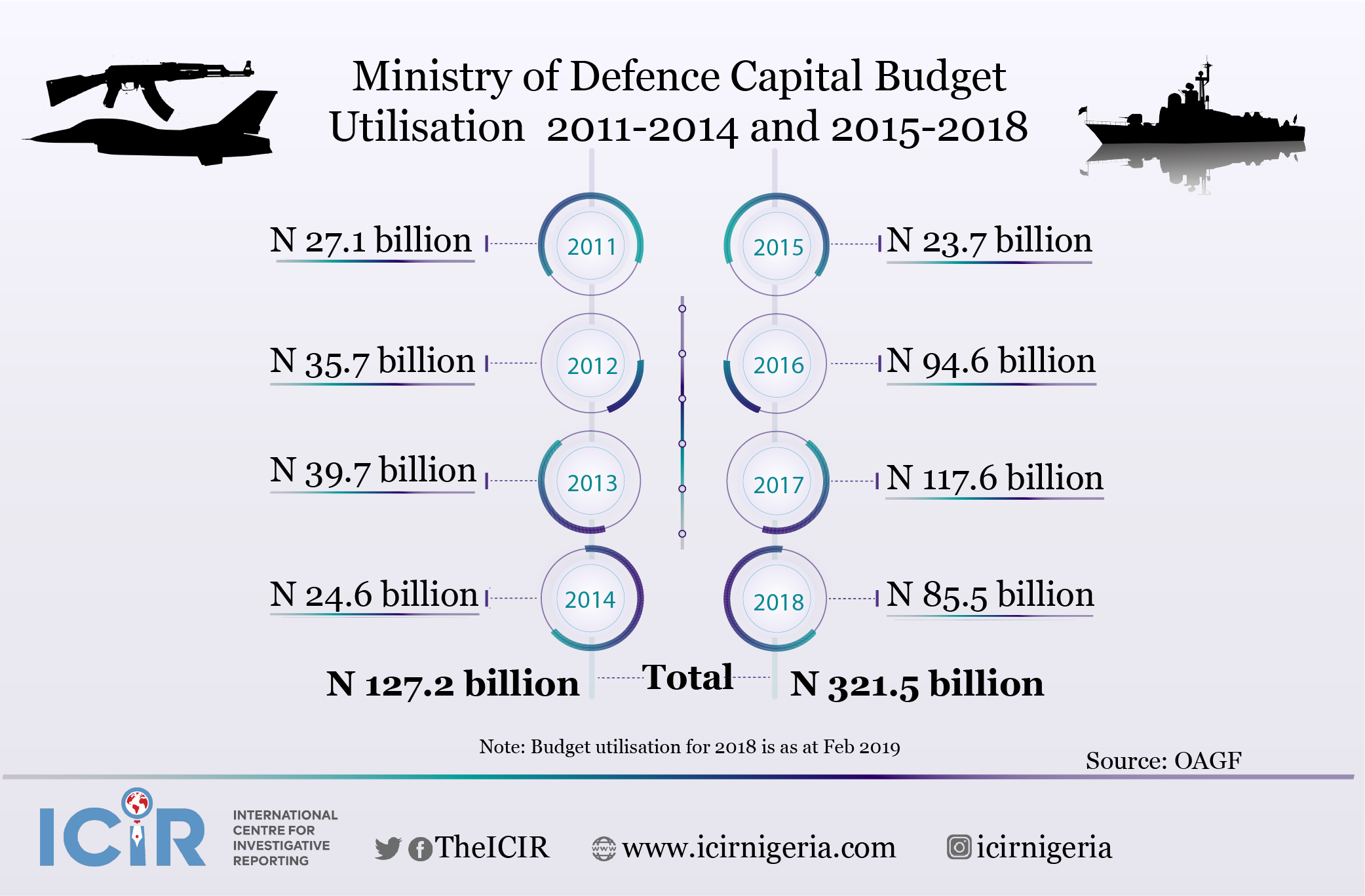
The budget of the Federal Ministry of Defence also rose significantly within the period. From 2011 to 2014, the defence ministry got N132.3 billion and spent N127.2 billion, whereas the ministry received an allocation of N334.75 billion and spent N321.5 billion between 2015 and 2018.

Years of increased budget releases, full utilisation

The breakdown of the budget showed that for the past four years of President Buhari, the military spent a total of N17.19 billion (2015), N61.67 billion (2016), N61.24 billion (2017) and N48.55 billion (2018) as at February 2019.

In 2015, the joint military – Nigerian Army, Navy and Air Force got an allocation of N21 billion as capital budget. Similarly, in 2016, the military got N69.71 billion. In 2017, it was N80.72 billion and in 2018 the entire military got a total approved capital budget of N91.73 billion.

Therefore, the total approved capital budget amounts to N263,601,055,203 during Buhari years while total releases for the period was N188,649,423,842.

Within this period, the Nigerian Army actually utilised N52,513,106,071; the Navy, N53,881,122,409 while the Nigerian Air Force spent N82,255,149,858.

However, from 2011 to 2014, the Nigerian Army utilised N21.92 billion, the Nigerian Navy spent N36.19 billion while the Nigerian Air-force utilised N21.43 billion.

Between 2015 and 2018, the Federal Ministry of Defence had a total release of N334.75 billion and utilised N321.58 billion.  Its approved capital budget for the period was N464.57 billion.

However, from 2011 to 2014, the Ministry received a total release of  N132.33 billion and utilised N127.27 billion.

This breakdown shows that President Buhari spent far more on the military than his predecessor.

Timeline of Killings

Despite the increased allocation to the Nigerian military, insecurity in the country steadily has been on the rise.

Nigerians are repeatedly worried on the visibly declining security situation, ranging from kidnappings to killings, aside from the contending Boko Haram insurgency.

More often than none, attacks occur in different parts of the country.  In Zamfara State, for instance, a BBC report, identified 262 civilian deaths in the first 100 days of the year.

Mid-last year, former Senator Sa’idu Dansadau made a claim that about 3,000 people were killed in Zamfara State, with 2, 076 farms destroyed within two years. The ICIR has not confirmed this.

On the night of 31st December 2018, Kashim Shettima, the former Borno State Governor held an extraordinary security meeting on what he perceived as worsening security situation in the state.

On 5th April, 50 people were reportedly killed as claimed by Sanusi Rikiji, Speaker of the Zamfara State House of Assembly, speaking during a condolence visit to Kaura Namoda Emirate.

BBC Hausa reported on 2nd May, how suspected gunmen also attacked Government Girls Secondary School, Moriki, Zuru Local Government Area of Zamfara, abducting teachers and girls.

The kidnapping came five years after Secondary School girls were abducted by the Boko Haram insurgents in North East Borno State.

Miss Faye Mooney, a British national was killed by bandits in Kaduna state, adding to several other gory incidents that have generated much public anxiety recently.

On 5th May, gunmen at the early hours of Sunday kidnapped Mrs Suzzy Nathan, Permanent Secretary of the Taraba State Ministry of Water Resources, from her home. The height of the situation was a declaration by the Daura Emirate of its resolve to suspend Sallah celebration in the President’s home town.

Lawmakers, Traditional ruler reacts 

Worried over the insecurity situation, Abdulmumini Kabir, the Emir of Katsina, reiterated the need to proffer a lasting solution to the continuous killings and kidnappings.

“What are you to gain by killing, kidnapping people? It’s very unfortunate. I have not seen this kind of country; how do we live like animals? Three days ago Magajin Gari (of Daura emirate council) was abducted, nobody is safe now, whether in your house or road, wherever you are,” says the emir “What we want you to do for us is to stop the fight. Many people have deserted, abandoned their farms in fear of kidnapping and killings and other atrocities, it’s very unfortunate.”

Recently, the lawmakers summoned the President who was apparently away in London, to meet before it to explain reasons for the reoccurring insecurity.

This is coming less than a month member of the National Assembly (NASS) invited the president over the insecurity situations.

Despite this intervention, killing is yet to abate in several parts of the country. And these tragic occurrences have made it difficult for Buhari administration to justify the rising military spending.

Gwarzo: Aggrieved SEC union protests reinstatement of DG, locks headquarters

THE Security and Exchange Commission has been shut down by its workers’ union to prevent the reinstatement of its suspended Director-General, Mounir Gwarzo who was accused by the Independent Corrupt Practices and Other Related Offences Commission (ICPC) of fraud and abuse of office.

The Association of Senior Civil Servants of Nigeria, on Monday reportedly locked-up the offices of the headquarter in Abuja to prevent the former DG’s reinstatement.

Gwarzo was suspended by the former Minister of Finance, Kemi Adeosun in November 2017.

Shortly after Adeosun suspended Gwarzo over multiple financial improprietiesa leaked memo emerged in the media detailing how both officials had sparred over a decision by SEC to go ahead with a probe into the activities of Oando Petroleum Plc but the former minister claimed Gwarzo’s suspension was not as a result of the probe, she alleged that the former DG had tried to blackmail her.

He was formerly indicted over alleged abuse of office and corruption in a probe carried out by a panel headed by Mahmoud Isa-Dutse of the Federal Ministry of Finance.

However, an industrial court in Abuja last Thursday acquitted Gwarzo and dismissed the three issues raised against the embattled DG and ordered his immediate reinstatement.

Obi, former NIMASA boss, jailed for seven years over N136 million fraud

FORMER Acting Director-General of the Nigerian Maritime Administration and Safety Agency (NIMASA), Calistus Obi, has been sentenced to imprisonment for seven years, the News Agency of Nigeria has reported.

The sentence was pronounced on Monday by the Federal High Court, sitting in Lagos, in connection with an eight-count charge of fraud to the tune of N136 million.

He was arraigned by the Economic and Financial Crimes Commission (EFCC), which had alleged that the offence was committed in August 2014.

The commission said Obi and a former NIMASA employee, Alu Dismas, conspired to unlawfully appropriate property belonging to the agency knowing full well that they are proceeds of stealing, in violation of the 2012 Money Laundering Prohibitions Act.

Rotimi Oyedepo in an earlier trial said the evidence shows that funds were transferred to Obi and were used for personal purposes.

The former acting DG was convicted on Thursday, May 23, but the court deferred sentencing to a later date.

Obi was appointed acting DG in July 2015 following the sack of Ziakede Patrick Akpobolokemi by the federal government.

Meanwhile, Haruna Jauro, another former NIMASA acting DG is also facing trial at the Federal High Court in Lagos. He was charged in 2016 alongside other defendants with 19 counts of converting N304 million belonging to the agency. He closed his defence in May and the court adjourned to June 20 for the adoption of final addresses.

Patrick Akpobolokemi, Obi’s predecessor has been arraigned before the court by the EFCC on 12 counts including conspiracy, forgery, and stealing N687 million.

Nearly 30,000 teachers to take TRCN’s professional qualifying examination

THE Teachers Registration Council of Nigeria (TRCN) says about 30,000 Nigerian teachers are going to write its  Professional Qualifying Examination (PQE) slated to hold between June 7 and 8 in 50 centres across the country.

Registrar of the Council, Josiah Ajiboye, disclosed this in Abuja while interacting with journalists on the planned professional qualification examination.
‎“About 30,000 would-be teachers across the states of the federation and the FCT have registered for the examination,” Ajiboye said.
“The examination would hold between June 7 and 8 in all the states of the federation and the FCT. In states like Bauchi, Kaduna and Kano the examination will begin  on Friday, June 7 because of the large number of candidates.”
The registrar said the Professional Qualifying Examination had become one of the benchmark processes for registering professional teachers in Nigeria.
According to him, the PQE was introduced in October 2017 noting that the forthcoming one would be the fourth in the series.
“One of the aims of the examination was to get the teachers prepared technologically in the 21st century.
“It has provided a big experience for us because when we started, many people who took the exam were not computer literate, and that accounted for the large number of failure in the first exam in 2017,” he said.
He said TRCN has achieved the target of getting teachers inclined to computer appreciation, adding that 83.2 per cent passed the exams across to the country.
Ajiboye reiterated that the deadline for flushing out unqualified teachers from the classroom remains December 31, 2019, noting that the deadline has made the council to record an increase in the number of people going to take the May diet of the PQE.
“In the first PQE, we had like 16,000 candidates. In October 2018, we had 22,000; this year we have recorded the highest number.”
“Presently, we have registered about 30,000 candidates.”
“By January 2020, we are going to begin our enforcement and we may likely start from the private schools because our mandate covers both the public and private schools.
“We have more than 80 per cent compliance from public schools, but the major problem we have is private schools.”

 Identity theft: NECO procures 8000 biometric machines for May/June exam

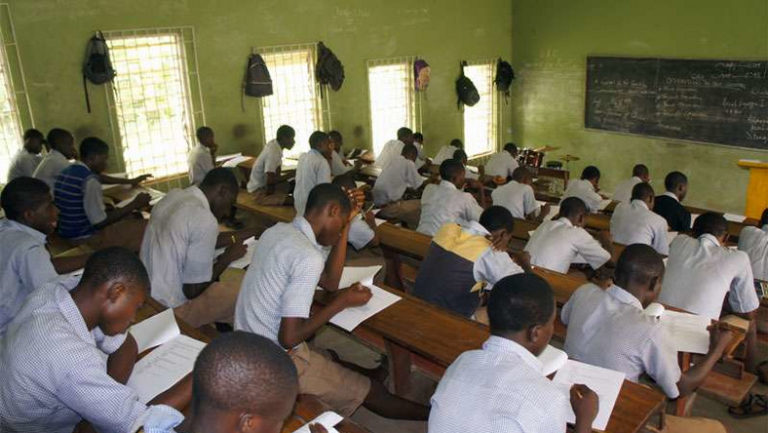
THE National Examination Council (NECO) says it has procured a total of 8000 biometric machines to verify the identity of candidates that would sit for the 2019 NECO senior secondary certificate examination scheduled to start this month. 

Registrar of the Council, Abubakar Gana who disclosed this in Minna, Niger State said the biometric machines which were procured late last year following approval from the Governing Council of NECO and the Bureau for Public Procurement (BPP) would also address the problem of attendance and impersonation during the examination.

The event was the commissioning of 20 Toyota Hilux vans and the biometric machines by the Permanent Secretary Federal Ministry of Education, Sunny Echono.

The biometric machines, he said, is worth N500million while the newly 20 Toyota Hilux vans procured for distribution of examination materials were procured at 327,800,000.

Gana said NECO has saved well over N2 billion through its prudent management of funds, adding that the agency will save more in the future as it has fully integrated its transactions into the Treasury Single Account, (TSA).
He noted that leakages were being blocked and reduced to the barest minimum at the agency even as the exam body is ensuring prudent management and utilisation of the nation’s scarce resources.
“We were able to procure 20 single cabin Hilux vans. The last time the council bought vehicles was in 2013. We have also bought 8000 units of biometric capture machines, which can verify the identity of candidates as well as record attendance.”
On whether the 8,000 biometric capturing machines can serve the 10 thousand NECO centres across the country, he said one machine can be used in two schools to verify candidates at registration and before they commence any SSCE exams.
He assured that with the purchase of 20 new Hilux vans, examination materials would arrive their destination on time and eliminate arbitrary postponement of the examination, stressing that the last time government procured vehicles for NECO was in 2013.
Speaking also, Chairman Governing Board of NECO, Abubakar Sadiq,  announced that the examination body has eliminated the use of scratch cards and adopted pin vending to check the activities of fraudsters who may take advantage of the system to defraud unsuspecting candidates.
Sadiq lamented that impersonation has become a major problem to public examinations in Nigeria while assuring that the biometric capturing machines would reduce incidents of identity theft up to 90 or 95 per cent.
He noted that although NECO has the capacity to adopt the Computer Based Test (CBT) method like the Joint Admissions and Matriculation Board (JAMB), the council would continue with the paper-pencil method for the time being.


New Polio Virus, CPV, hits Kano

AFTER a three-year polio-free record witnessed in the state, a recent case of Circulating Polio Virus (CPV) was discovered in sewage located at Darmanawa Ward in Tarauni Local Government Area of Kano State.

Nura Haruna, the primary health care coordinator of Tarauni Local Government Area (LGA) told newsmen that the virus was suspected to have come from Zaria LGA in Kaduna, where two cases of CPV were uncovered earlier in 2019.

He explained that the scientific test carried out shows CPV is mostly linked to poor environmental sanitation, sewage, although unable to cripple a child, but poses a threat of Wild Polio Virus (WPV).

“Before this discovery in Tarauni LGA, there were two cases recorded in Zaria, so we are suspecting that it is either the affected children travelled down to Kano to spread the disease or the CPV came through the sewage due to poor environmental sanitation in the area, because we have conducted some scientific tests and discovered the CPV inside a sewage in the local government area,” Haruna said.

PREMIUM TIMES reports, that all under-five children in the area are at risk of contracting the CPV, so the state ministry of health and some stakeholders had organized a mop-up immunization exercise in the area to prevent the spread of the virus, following the turnout of the event.

Haruna complained that there were elites in the area not complying to polio and routine immunization, as they hardly release their children for vaccination in spite of its importance, especially at Darmanawa, Hotoro and Daurawa quarters.

“Sometimes our workers spend an hour in a particular house without seeing anyone attending to them. We need the intervention of relevant authorities to compel them to take the polio immunization seriously.

“Whether you are elite or not, we need your household to be vaccinated because if we vaccinate nine out of 10 houses, the remaining one will still put the entire community at polio risk,” Haruna said

He further enjoined parents to take their personal hygiene and environmental sanitation important, as well as presenting their children for immunization to prevent an outbreak of poliovirus in the state.

In 2004, the World Health Organisation (WHO), expressed its readiness in the support of eradicating polio in Kano state, through Polio immunization campaigns.

 “The Initiative re-affirms its commitment to support Kano’s state, traditional and religious leaders, as well as Nigeria’s federal ministry of health to ensure the country reaches its goal of stopping poliovirus transmission by end 2004.”

In 2005 WHO reports that Polio Victims Trust Association (PVTA), was determined to ensure that polio cripples in Kano live respectably and that no other child in Kano State is again disabled by the disease.

“Kano’s decision to vaccinate children against polio comes at a critical time in the polio eradication programme. Sub-Saharan Africa is on the verge of the largest polio epidemic in recent history. Cases recorded in the region are five times that for the same period in 2003 (483 compared to 95), due to the outbreak originating from Kano and surrounding states.”

SEC bars Oando’s boss from being director in any public company for five years

The Securities and Exchange Commission, SEC, on Friday released the final report of its investigation of Oando Plc instructing the Group Chief Executive Officer, CEO, of the company, Wale Tinubu, and other indicted board members to resign.

In a statement issued by SEC, Tinubu and the Deputy Group Chief Executive Officer of the company, Omamofe Boyo, were barred from holding a position as directors of public companies for a period of five years.

It also directed that an Extraordinary General Meeting should be convened on or before July 1, to appoint new directors.

The Commission also listed several punitive measures taken against the company which includes payment of monetary penalties and refund of improperly disbursed remuneration by the affected Board members to the company.

The statement signed by the management of the Commission goes thus: “The general public is hereby notified of the conclusion of the investigations of Oando Plc. The findings from the report revealed serious infractions such as false disclosures, market abuses, misstatements in financial statements, internal control failures, and corporate governance lapses stemming from poor board oversight, irregular approval of directors’ remuneration, unjustified disbursements to directors and management of the company, related party transactions not conducted at arm’s length, amongst others,” the statement reads.

The company is also expected to pay an undisclosed monetary penalty while board members are expected to refund improperly disbursed remuneration.

However, SEC stated that other aspects of the findings would be referred to relevant bodies which include Nigerian Stock Exchange (NSE), Federal Inland Revenue Service (FIRS), and the Corporate Affairs Commission (CAC).

FUOYE: Governing Council election cancelled over alleged rigging

THE election of Congregation Representatives into the Governing Council of Federal University, Oye (FUOYE), Ekiti, scheduled to hold on Friday was cancelled following an allegation of manipulation and rigging by members.
News Agency of Nigeria (NAN) reports that the results of the election were declared and later cancelled by the Chairman of the Electoral Committee, Kester Ojokheta.
The chairman, while justifying the cancellation, said that the total number of votes cast 955, was higher than 440 eligible voters.
He explained that the objective of the election was to elect two representatives from both academic and non-academic staff into the governing council of the institution as stipulated in the establishment Act of the university.
Earlier, Vice Chancellor of the university, Kayode Soremekun, said there would be a maximum of eight nominations from both the teaching and non-teaching cadres, which was objected to by the majority of congregants.
The congregants though raised objections to the vice chancellor’s decision but were denied to express their views as he declined to recognise anyone to speak.
Seven congregants comprising one teaching staff and six non-academic staff were nominated to contest for the election.
They‎ include: Dosu Malomo,(Teaching cadre) while  Adelani Efuntade, Abayomi Oshatimi, Samson Durojaye, Usman, Ayodele Fatuase and L.A Eni are Non-Teaching cadre.
After reading the nominations, the vice chancellor announced the closing of nominations which attracted stiff resistance from members of the congregation, who alleged that most of the nominees were his close associates.
But after an extensive, rowdy and shouting session, the vice chancellor announced the extension of nomination to 10 and three additional members were nominated.
The three added nominees were Toibudeen Sanmi (Teaching cadre), Ademiju Aganga (Teaching cadre) and Victor Ige (Non-Teaching cadre).
While the voting process which was conducted through the secret ‎ballot was ongoing, some members of the congregation raised accusations that the Director of Administration in the office of the Vice-Chancellor, Olatunbosun Odusanya, had allegedly ‎dropped some ballot papers in one of the ballot boxes.
The allegation was reported to the Vice Chancellor and the Chairman of the electoral committee but was ignored, as nothing was done to either verify or confirm the allegation.
At the end of the voting process, Chairman of the Electoral Committee,  Kester Ojokheta, announced the results with L.A Eni, polling 85 votes, Abayomi Oshatimi had 29 votes, Usman polled 13 votes, Ayodele Fatuase polled 105 votes and Ademiju Aganga had 307 votes.
Others were Dosu Malomo who scored 148 votes, Victor Ige 162 vote, Adelani Efuntade 79 votes, Samson Durojaye 2 votes and Toibudeen Sanmi polled 25 votes.
When the results were announced,  Aganga and Dr. Victor Ige had the highest votes cast.
The electoral committee chairman, however, observed that the total number votes cast (955) was higher than the 440 total number of eligible voters‎ and consequently cancelled the outcome of the election.
Speaking with NAN after the election, the electoral committee chairman said he was disappointed with the behaviour of the academic staff of the university towards the outcome of the election.
“I never compromised the rules and regulations of the election, in spite of the fact that my close friend was leading in the election, I cancelled it for fairness.
“If I was biased, I could have pronounced my friend winner of the election. More so, it is an internal affair and it should be handled internally without the media interfering.
“Most of the people complaining about the process of the election and result‎ were my friends and I was only appointed by the Vice Chancellor to oversee the election.
“I do not have ulterior motives because I am on sabbatical leave at FUOYE ‎and once my leave is over, I will return to the University of Ibadan which is my base,” he told NAN on telephone.‎
‎(NAN)

NBET MD demands apology from members of LeaksNG for alleged defamation

THE Managing Director of the Nigerian Bulk Electricity Trading Plc (NBET), Marilyn Amobi, has asked ‎PREMIUM TIMES, The Cable and Sahara Reporters to apologise over a report exposing graft at her agency.

She said the report is defamatory against her and the agency and demanded its retraction.

The Leaks NG comprising The ICIR, PREMIUM TIMES, The Cable, Orderpaper and Sahara Reporters last year published a series of investigative reports on alleged corruption and victimisation of whistleblowers at NBET under Mrs Amobi.

The first report revealed how the managing director controversially paid at least N2 billion to two power generating companies.

The House of Representatives later investigated the allegations of corruption at the agency, after a civil society coalition called for an investigation.

But in a letter by her counsel, Babalakin&co, dated April 24, Ms Amobi gave PREMIUM TIMES and Leaks NG seven days to retract the publication.

The letter said the reports had caused Mrs Amobi emotional distress and psychological trauma.

“Our clients are understandably very disturbed by the actual and potential damage that this publication has caused and could further cause to the security of Mrs Amobi and the management staff of NBET, as well as our clients’ commercial and public activities.

“Your portrayal of Mrs Amobi as a corrupt pubic official has subjected her to considerable emotional distress and psychological trauma. Indeed, the publication has severely exposed our client to public ridicule and outage as several other local and international media outlet have also picked on these allegations.

“Furthermore, it is noteworthy that our clients are strategically placed in the Nigeria economy and our clients’ commercial operations in the power sector are significantly threatened by the content of your publication.

As you may be aware, our clients, on behalf of the Federal Government, Interface with various local and international stakeholders including investors, diplomats, financial institutions and development agencies.

“And this offensive and baseless publication is capable of adversely affecting our clients’ interaction with key stakeholders.

Ultimately, your publication is capable of orchestrating a serious crisis of confidence in the Nigerian Electricity Supply Industry (NESI).”

Allegations

The report of infractions by Mrs Amobi and her management team at NBET was published on February 8 by Leaks NG, a coalition of Nigerian newsrooms and civil society groups.

First of the allegations was that Mrs Amobi authorised overpayment to two power generating companies – Omotosho Electric Genco and Olorunsogo Electric Company.

This act was a flagrant violation of the details of a Power Purchase Agreement (PPA) the companies signed with the government in February and August 2016, respectively.

The PPA is an agreement between NBET and power generating plants for the sale and purchase of energy generated by the plants.

According to the PPA, to qualify for full payment, generating plants must provide evidence that they have active GSA and GTA or else the power purchase agreement would be deemed inactive and would only receive payment for the power they supplied.

PREMIUM TIMES reported on April 9, how the House of Representatives mandated two of its committees to investigate NBET and its Managing Director, Mrs Amobi, over several corruption allegations.

The resolution followed a motion by Mohammed Sabo representing South West Constituency, State, Jigawa State.

Mr Sabo warned that if the allegations were not properly investigated, it would create “an institutional system of manipulation of the procurement”, leading to financial losses to the federal government.

In a unanimous decision, the House referred the issue to its Committees on Public Procurement and Power to jointly investigate and report back in two weeks.

Mrs Amobi’s lawyer, in the letter, however, demanded the publication be retracted following published reports by the Nigerian Electricity Regulatory Commission (NERC), on February 28, debunking the claim that it fraudulently paid at least N2 billion to two power generating companies.

”Consequently, it is quite clear that your publication is completely defamatory against NBET in its corporate character and Amobi in her official and individual capacity.

”We hereby notify you of our clients’ intention to institute appropriate legal action against Leaks NG for this defamatory publication within seven days after the receipt of this letter, you tender an unreserved apology and retraction which must be given publicity that is as wide as that of the offending publication.”