Home Blog Page 2366

Diamond, Zenith, Stanbic IBTC, others top list of banks owing N1.6 billion stamp duty — Reps

0

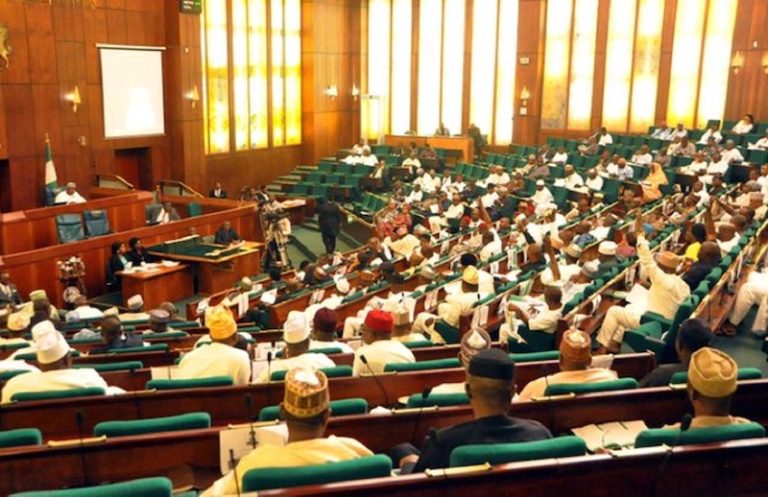
THE House of Representatives has asked the Central Bank of Nigeria (CBN) to sanction 16 commercial banks for under-remitting stamp duty revenue to the tune of N1.6 billion.

It also asked the CBN to ensure the banks pay the outstanding revenue with interests.

The House reached the decision after adopting the report of the ad-hoc committee which investigated the non-remittance of the stamp duties on Thursday.

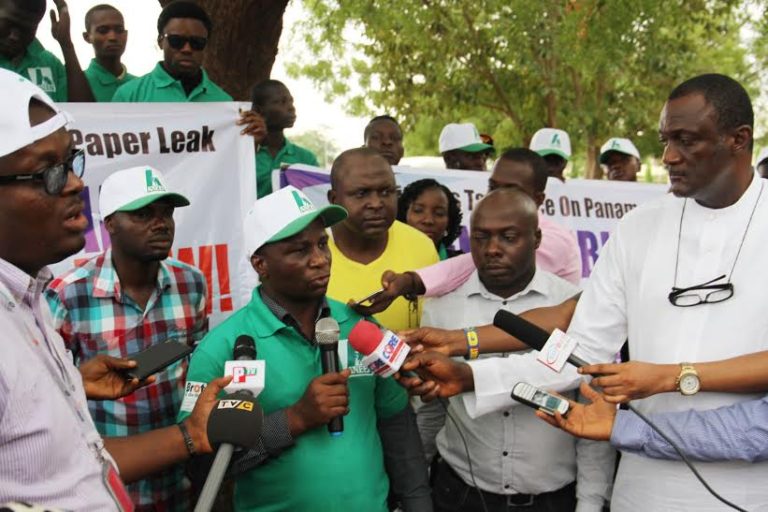
Leaks.ng, a collation of media houses, had reported that the agencies refused to disclose details of the stamp duty revenue whose status has been shrouded in secrecy over the years.

Following the report, the House set up an ad-hoc committee to investigate the matter and report its findings.

CBN officials had told the committee the total stamp duty revenue since January 2016 stands at N35.2 billion.

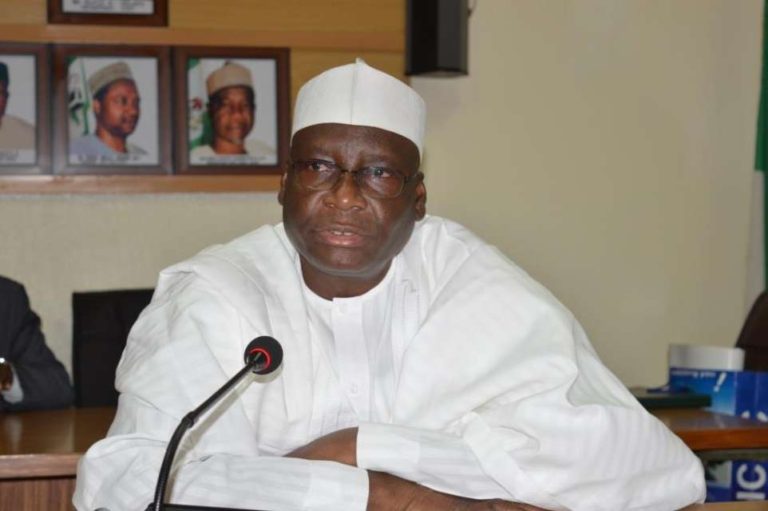
The committee’s report, as presented by its chairman, Abubakar Ahmad, listed the indicted banks with highest under-remitted stamp duty revenues as Diamond Bank, with N545.87 million; Zenith Bank, with N265.63 million, and Stanbic IBTC, with N231 million.

The other banks indicted include Guaranteed Trust Bank (N196.3 million); Standard Chartered Bank (N3.65 million); Citi Bank (N1.86 million); and Providus Bank (N646,650).

Others are Fidelity Bank (N32.88 million), Keystone Bank (N24.47 million), United Bank of Africa (N81 million), and ECOBANK (N78.52 million)

Also indicted are Unity Bank (N40 million), Jaiz Bank (N2.43 million), Access Bank (N66 million), Skye Bank (N11 million), and Polaris Bank (N2.9 million).

The House, however, called for further investigation into four banks which it said failed to honour their invitations. The banks include First Bank of Nigeria, First City Monument Bank, Wema Bank and Suntrust Bank.

Recommendations

Apart from penalising the 16 banks, the lawmakers also asked CBN to strengthen its supervisory role over the stamp duty revenue to ensure they are collected promptly.

It also called for a machinery to allow for the recovery of under -remittances “after further reconciliation is carried out with the banks concerned.”

Other recommendations include:

– That all banks that were found not to have made full disclosure on stamp duties collections and remittances should be further investigated.

– That financial institutions, especially the deposit money banks (DMBs) should remit all collections with respect to government revenues promptly and correctly, and where remittances are not promptly done, the DMBs should be sanctioned.

– That the relevant agencies should give maximum cooperation to the School of Banking Honours (SBH) to enable it realise the goal of the assignment given to it.

– That other forms of stamp duty should be explored “to increase the revenue base of various tiers of government in accordance with the provisions of the Stamp Duty Act, 2004.

Blame FG for any disruption in academic calendar, ASUU warns

THE Academic Staff Union of Universities says the federal government is displaying “lackadaisical attitude” in implementing the agreement it signed with the union earlier in the year and as such should be held responsible for any disruption in the academic calendar.

This was contained in a statement issued on Thursday by the ASUU National Chairman, Biodun Ogunyemi, in reaction to the recent claims by the Minister of Education, Adamu Adamu, that another tranche of N25 billion has been approved for the ASUU members.

Ogunyemi said the funds, which was meant to be a part-payment of the earned academic allowances, ought to have been released since February according to the Memorandum of Action that FG signed with ASUU.

“Since information on the amounts mentioned in the media went round, the ASUU has been inundated with enquiries on the union’s perspective to the story,” Ogunyemi said.

“Funding for the revitalisation of public universities has for years been of very high priority to ASUU.

“Reaching an agreement with the Federal Government has often been a frustrating journey for our union. It is often marked with protests, strikes and requires a conscious and focused engagement.

“The 2001 agreement, which gave birth to the 2009 agreement, was not an exemption. The exception here is the personality leading the government negotiation team.

“The current leadership of the government team clearly lacks the academic disposition and humility needed to undertake such task.

“Our members enjoy their work and hate to see any disruption in the smooth running of our universities. However, the level of frustration occasioned by the lackadaisical attitude of the government towards meeting the terms of the 2019 Memorandum of Action that was freely signed with our union is increasingly becoming unbearable.

“We, therefore, call on all Nigerian patriots, parents and students including the Nigeria Labour Congress to prevail on the government to keep to the terms of our agreement. Otherwise, our union should not be held responsible for any disruption in the system.”

The last strike action embarked upon by ASUU was called off on February 8, just days to the 2019 general election. It lasted for a little over three months.

ASUU strikes have become a regular occurrence in Nigeria over the years, contributing to the further depreciation of the country’s education sector. During the campaigns for the 2015 general election, Muhammadu Buhari, then candidate of the opposition All Progressives Congress (APC) had promised to, among other things, bring an end to the incessant strikes.

However, education has fared rather poorly during Buhari’s first term in office, and the situation does not appear any brighter as the President is about to be sworn into office for a second four-year tenure.

I have a lot of respect for her… Atiku says of Justice Bulkachuwa 


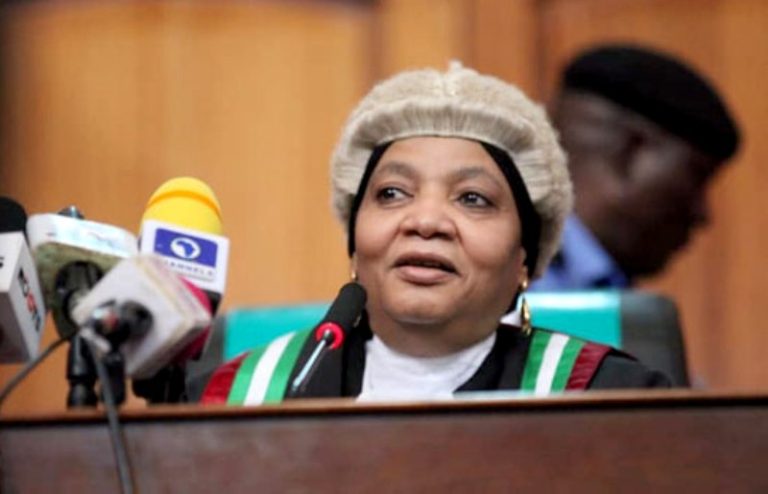
FORMER Vice President, Abubakar Atiku says he has the utmost respect for Justice Zainab Bulkachuwa, President of the Court of Appeal, who just recused herself from presiding over the 2019 presidential election petitions tribunal on Wednesday.

Atiku, candidate of the opposition Peoples Democratic Party (PDP) in the election, said his demand for Bulkachuwa to step aside from the trial was based solely on her being the wife of an APC chieftain and not because of any other personal issue.

“My legal team’s objection was not a reflection on Justice Bulkachuwa’s character or competence. As a matter of fact, I have great respect for her, being a pioneer and advocate for gender equality and female empowerment,” Atiku said via a statement issued on Thursday.

“It is with this in mind that I commend Justice Bulkachuwa for recusing herself from the Presidential Election Petition Tribunal Panel hearing my petition against the Independent National Electoral Commission and the Presidential candidate of the All Progressives Congress, President Muhammadu Buhari.

“Her action showed courage and is an act of patriotism. She has, by this action, increased the confidence the public have for the judiciary.

“Not only do I commend her, I also pray, especially in this holy month of Ramadan, that Justice will be done by the tribunal according to the fear of God and not in keeping with respect for the powers that be.”

Justice Bulkachuwa decided to stand aside as the chairman of the presidential election petitions tribunal for personal reasons.

Earlier on Wednesday, the tribunal had dismissed Atiku’s application asking Bulkachuwa to recuse herself from the tribunal on the basis of being a wife and mother respectively to two prominent members of the All Progressives Congress (APC).

Delivering the judgement, Justice Peter Ige said the applicants had not presented enough materials before the court to show that Justice Bulkachuwa will be biased in the hearing and the decisions on the petition.

Ige held that Bulkachuwa’s filial relationship to members of the APC  is not capable of prejudicing the case, hence his decision to dismiss the application.

However, Bulkachuwa went ahead to withdraw from the case citing personal reasons.


Measles is killing Borno children, Doctors Without Borders calls for children vaccination

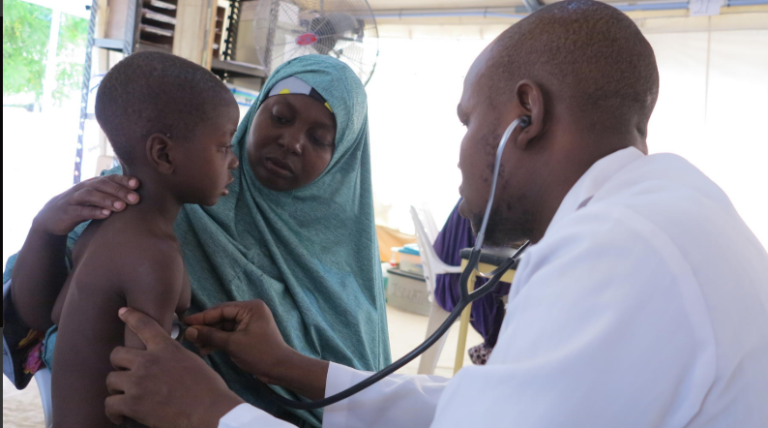
A NEWS report from the Medecins Sans Frontiers also known as Doctors Without Borders has narrated how children in Borno State are still dying from measles.

The report raised concern on the spike of measles in the state in 2019. It attributed the condition to a lack of vaccination coverage among the most vulnerable people in northern Nigeria, coupled with a lack of capacity among health actors to respond to the measles outbreak.

A previous report by the UNICEF noted that nearly four million Nigerian children missed vaccination for measles in 2017.

The Doctors Without Borders said lack of the routine vaccine has left thousands of children at risk of getting infected with measles.

“In the four months from January to April alone, MSF teams treated 2,343 children with measles. And the number of cases in April was four times higher than in January. There are so many patients that all 73 isolation beds at Gwange Hospital, in the west of Maiduguri, are full,” the report read in part.

Since January, the medical team has recorded 58 deaths from measles in both the State Specialist Hospital and the Gwange Hospital of Borno State.

“But this is only part of the total death toll,” the report stated.

“MSF teams have treated 2,922 children for measles in Borno since November 2018 as part of the organization’s response to a spike in cases of the potentially deadly disease.”

Caroline Masunda, MSF medical team leader in Maiduguri said in the report that lots of children die from measles due to complications such as acute malnutrition, malaria, and pneumonia.

“It is unacceptable that there are still high numbers of children passing away from such a treatable disease,” she said. “It has brought a lot of loss and a lot of sadness to the community.”

A mother of a three-year-old girl explained how her baby nearly died from the disease.

“She started sneezing and had a high fever, the mother said in the report. “The inside of her lips turned red and she was constantly vomiting. I was so worried and I thought she was going to die. Though after nearly a month of treatment, the girl recovered from the disease.

“Most children we see are admitted for days, if not weeks,” said  Muhammad Abdullahi, a doctor at the Maiduguri’s specialist hospital.

“Since I started practising as a doctor in 2016, I have not seen such high numbers of measles cases in Maiduguri,” he said.

The medical team noted that most children suffering from Measles in Borno come from internally displaced populations and the communities that host them.

The  Boko Haram insurgencies have caused large numbers of displacements in northeastern Nigeria since 2014. The conflicts have left nearly two million people dependent on humanitarian assistance for their survival.

According to the latest Global Report on Internally Displacement, more than 1.1 million Nigerians were newly displaced in 2018. The number increased the stock of the displaced in the country to over 2.2 million as of December 2018.

In the situation report on measles released by the Nigeria Centre for Disease Control (NCDC) on 18 May, Nigeria has recorded 28796 cases of measles as of May 12. Borno State has the highest number of the disease with a total of 13,742 cases, followed by Katsina with 4,062 recorded cases of measles.


To limit the number of complicated cases that increase the mortality rate, MSF asked for free access to primary health care in Maiduguri for the citizens.

The team also “urgently calling for better, faster coordination between all actors, including Nigerian authorities, UN agencies, and nongovernmental organizations, to provide routine vaccination to children across northeastern Nigeria to protect them against measles—and prevent future outbreaks”.

Medecins Sans Frontiers has been working in Nigeria since 1996 and has a permanent presence in Borno state since 2014.

The group provides lifesaving medical care in northeastern Nigeria, running projects in Gwoza, Maiduguri, Monguno, Ngala, and Pulka, while the emergency teams respond to disease outbreaks and other urgent humanitarian needs.

ANEEJ, NGOs urge Buhari to sign Proceeds of Crime, Mutual Legal Assistance bills

THE Africa Network for Environment and Economic Justice (ANEEJ) and its partner organisations have urged  President Muhammadu Buhari to sign two bills before him: the Proceeds of Crime (POCA) bill and the Mutual Assistance in Criminal Matters bill.

The POCA bill, passed in April, was transmitted to the president on Monday by the National Assembly, and the second bill had been passed by the Senate since May 2017.

ANEEJ, in a press release made public on Tuesday, said both bills when assented to will strengthen the anti-corruption fight of the administration.

“We urge the resident to assent to both bills to strengthen the asset recovery architecture in Nigeria and also institutionalise the enabling frameworks for the effective implementation of the London anti-corruption and the Global Forum for Asset Recovery (GFAR) commitments which the president signed unto in 2016,” ANEEJ’s executive director, David Ugolor, said.

“We commend the National Assembly for transmitting both bills after painstaking negotiations. While we note that the POCA cannot be perfect as passed by both chambers of the National Assembly, if assented to by the president, it will help send a strong message to other jurisdictions withholding our stolen funds,” he added.

“We also want to place on record the excellent support offered by the senate committee chairman on the judiciary, human rights and legal matters, David Umaru, leading to the passage of this all important bill.

“We equally appreciate the leading role of the Honourable Attorney-General and Minister of Justice, Abubakar Malami (SAN) and his team in the Federal Ministry of Justice as well as Civil Society Organisations for their relentless efforts towards the passage of the bills over the years.”

Non-governmental organisations partnering with ANEEJ, under its Monitoring of Recovered Returned Assets Through Transparency and Accountability (MANTRA) project, have also lent their voice to the recommendation.

Zikirulahi Ibrahim, executive director of the Centre for Human Rights and Civic Education (CHRICED), described the passing of the bills as a significant milestone for all of the country’s anti-corruption activities and said it is a big leap in implementing the government’s anti-corruption strategy.

“We must ensure that looters of the nation’s treasury are not allowed to keep proceeds of their criminality,” he said. “When assented by the president, POCA will make our campaign for the recovery and management of looted assets a lot more easier.”

The Civil Resource Development and Documentation Centre (CIRDDOC) through its executive director, Ralph Ndigwe, said the transmission of both bills to the president signals a significant milestone in the war against corruption in Nigeria.

He added that Utazi Godfrey Chukwuka, senator representing Enugu North and chairman of the Senate committee on anti-corruption and financial crimes, “has written his name in gold in the struggle to rid Nigeria of corruption by this development”.

“We are happy with this development and we call on the President to assent to both Bills and use it as a template to firm up assets recovery institutional framework in the country,” said Abiodun Oyeleye, executive director of the New Initiative for Social Development (NISD), another MANTRA partner.

“It will surely give the needed teeth to anti-corruption activists to bite treasury looters. Unexplained wealth can be seized and the onus placed on the owner to showcase why the government will not seize such suspicious assets with POCA,” he added.

The bill on Mutual Assistance in Criminal Matters has been touted to have the capacity to assist in the repatriation of looted funds in foreign countries. It will also enable Nigeria obtain evidence, identify witnesses, and transfer suspects in other countries.

Like this instrument, the Proceeds of Crime bill is also crucial in tackling corruption. It provides for the confiscation, forfeiture, and management of property derived from unlawful activities.

Nigeria is overwhelmed by many challenges, most of them caused by politicians, says NOA boss

THE Director-General of the National Orientation Agency (NOA), Garba Abari, says the Nigerian state is being overwhelmed by multiple challenges in all sectors, and its leaders are mostly blameworthy.

Abari said this during a live interview on Channels Television on Thursday, adding, however, that the agency is doing its best with the resources available to bring about a positive mindset among Nigerians.

The NOA DG admitted that the activities of the agency to bring about the desired change may just be “a tiny drop” in the ocean, given the numerous challenges facing the country which shows that Nigeria as a country has been overwhelmed.

“The agency is doing the best it can,” Abari said, but “first and foremost, you have to put this within context, what is it that has brought us to where we are today, basically the capacity of the state.

“The Nigerian state is just simply not capable, and it is being overwhelmed. That is the most fundamental aspect that we must all have to understand.

“The Nigerian state is being eaten into. Its capability and competence level is being eaten into simply because of decades of what we have inflicted upon ourselves as a people and as leaders.”

Abari said that it is because of the incapacity of the Nigerian state that the job of the NOA, as well as that of many other government agencies, is made difficult.

The NOA has the mandate of communicating government policies to Nigerians and inculcating values that promote national unity and integration, a responsibility which Abari agrees would be lots easier if the leaders were leading by example.

Abari noted that though there has been a slight change in the public conduct of leaders in the country in recent times, many still exhibit characters that leave much to be desired.

“There is the fundamental role of leadership, and as much as we want to change, we must first and foremost see those to whom we have put in a position of responsibility leading the change. Then it becomes easy for any kind of message to be sent out and for citizens to align and to key into such messages,” he said.

“But what we see out there is a kind of a systemic disconnect between what we see leaders do and what the citizens expect of the leaders to do, and this what behoves on all Nigerians, therefore, to stand up and to challenge.”

Nevertheless, Abari said the NOA has adopted several policies targeted at young people across tertiary institutions in the country to make them believe in Nigeria and to give their best in promoting unity and development.

“Young people must have to take more than a passing interest in the affairs of the country,” Abari said. “It’s not all about listening to music and being on youtube, it is about behaving responsibly and also taking interest in national affairs.”

Recently, NOA,  an agency under the supervision of the Ministry of Information, has appeared rather dormant as many say the agency fails to effectively communicate government’s policies to the citizenry.

Even Abari admitted during the interview that his leadership of the NOA has been able to achieve just about 40 per cent of its set objectives.

He blamed the poor performance on a number of challenges, including bad leadership example of politicians,  thereby making it difficult for citizens to accept the message of change.

Lack of funds may also be responsible for the NOA’s seeming lack of visibility in the country.

Between 2015 and 2018 the total budgetary allocation for the NOA was slightly above N1.4 billion, and only N957 million were released for spending.

Court finds former NIMASA boss guilty of N136m fraud, fixes May 28 for sentencing

THE Federal High Court, Lagos, has declared Calistus Obi, former Director General of the Nigeria Maritime Administration and Safety Agency (NIMASA), guilty of fraud.

Justice Mojisola Olatoregun gave the judgement on Thursday but adjourned the matter till May 28 for the sentencing of the convicts. Meanwhile, the trial judge ordered that they should be remanded in prison custody until the next adjourned date.

This is following an eight-count corruption charge filed in 2015 against Obi and one other defendant, Dismas Alu, by the Economic and Financial Crimes Commission (EFCC).

Alu was an aide to the former NIMASA DG, Patrick Akpobolokemi.

The EFCC accused the duo of conspiring to convert the sum of N136 million belonging to NIMASA to their own use, a crime which the commission said was contrary to sections 15 and 18(a) of the Money Laundering (Prohibition) (Amendment) Act, 2012.

Both men pleaded not guilty to the charges when they were arraigned and were granted bail in the sum of N5 million each, with sureties in like sum.

The accused persons had filed a no-case submission on January 31, 2017, after the EFCC had closed its case against them, but the court dismissed the no-case submission on February 21, 2017, and ordered them to enter their defence.

In her judgement on Thursday, Justice Olatoregun declared the accused persons guilty as charged, holding that the EFCC proved its case against the accused persons beyond a reasonable doubt.

Obi became acting NIMASA DG in July 2015 after President Muhammadu Buhari removed the then DG, Patrick Akpobolokemi from office. Akpobolokemi himself is also facing separate corruption charges for offences he allegedly committed while in office.


Algeria becomes second African country to be declared Malaria-free by WHO

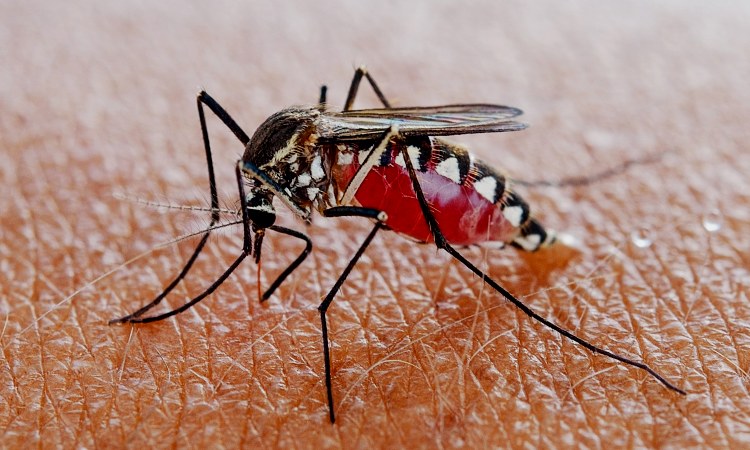
THE World Health Organization (WHO) has declared that Algeria is now free of malaria.

Algeria is the second African country to be officially recognised as malaria-free, following Mauritius which was certified in 1973.

Alongside Algeria, Argentina was also declared malaria-free according to a statement obtained from the WHO’s website on Wednesday.

This means that there has not been a single case of anyone catching the disease in either country over the past three years.

“Algeria and Argentina have eliminated malaria thanks to the unwavering commitment and perseverance of the people and leaders of both countries,” said Dr Tedros Adhanom, WHO Director-General, said.

“Their success serves as a model for other countries working to end this disease once and for all.”

According to the WHO, Malaria was first discovered in Algeria by a French medical doctor, Charles Louis Alphonse Laveran, in 1880, and by the 1960s, the disease had become Algeria’s primary health challenge, with an estimated 80,000 cases each year.

“Algeria’s subsequent success in beating the disease can be attributed primarily to a well-trained health workforce, the provision of malaria diagnosis and treatment through universal health care, and a rapid response to disease outbreaks. Together, these factors enabled the country to reach – and maintain – zero malaria cases,” the WHO statement read.

The WHO Regional Director for Africa, Matshidiso Moeti, expressed delight at the development, describing it as a significant milestone in the battle against Malaria.

“Algeria is where the malaria parasite was first discovered in humans almost a century and a half ago, and that was a significant milestone in responding to the disease,” Moeti said.

“Now Algeria has shown the rest of Africa that malaria can be beaten through country leadership, bold action, sound investment and science. The rest of the continent can learn from this experience.”

WHO grants a certification of malaria elimination when a country has proven, beyond reasonable doubt, that the chain of indigenous transmission has been interrupted nationwide for at least the previous three consecutive years.

In addition, a national surveillance system capable of rapidly detecting and responding to any malaria cases must be operational, together with an effective programme to prevent re-establishment of the disease.

There are a total of 38 countries that malaria has been eradicated or never existed. In Africa, they include Mauritius and Algeria, as well as Lesotho and Seychelles where the disease “never existed or disappeared without specific measures”.

In Nigeria, Malaria remains endemic and accounts for a significant number of the total deaths in the country annually.

Buhari’s ministers to remain in office till May 28

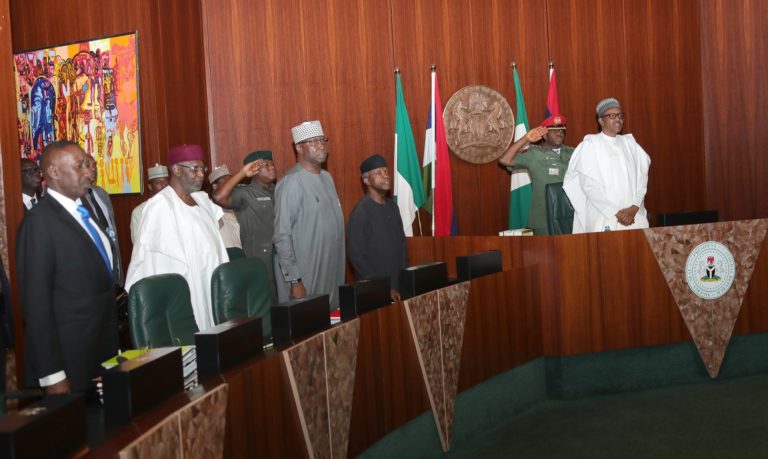
PRESIDENT Muhammadu Buhari has directed his ministers to maintain their official duties until May 28, a day to his second term inauguration.

At a valedictory Federal Executive Meeting (FEC) meeting at the State House, Abuja, on Wednesday, Buhari said though FEC meetings have come to an end, work continues for the ministers.

He said handover letters should be submitted to the office of the Secretary to the Government of the Federation (SGF).

Buhari praised the cabinet members for their contributions to the success of his first term and to national development.

It had been expected that Buhari would dissolve his cabinet after Wednesday’s valedictory FEC meeting, according to remarks by the Minister of Information and Culture, Lai Mohammed.

Also, presidential spokesman, Femi Adesina, had said that the president is likely to dissolve his cabinet before his swearing-in on May 29, 2019.

“Shortly before May 29, the president is likely going to officially dissolve his government. That is the way it is usually done. He says thank you to everybody that he has called to work with him and then he dissolves that government officially,” Adesina had said.