Home Blog Page 244

Darlington dismisses rape accusations, shuns NAPTIP invitation

NIGERIAN entertainer, Darlington Okoye, popularly known as Speed Darlington, has dismissed rape allegations against him, noting that he would not honour the invitation by the National Agency for the Prohibition of Trafficking in Persons (NAPTIP)

The ICIR reports that the 41-year-old singer claimed he slept with a 15-year-old girl in a hotel on a viral Instagram livestream on Children’s Day, May 27, which sparked outrage.

He said he gave the young girl N2,000 afterwards, after seeing blood stains on the bed sheet.

The claims have sparked outrage among netizens, activists, and civil rights organisations, many of whom are calling for swift intervention by the authorities in what they have described as ‘rape’.

Last Friday, NAPTIP declared Okoye wanted through its official Instagram page. It urged the public to provide any information regarding his whereabouts.

“Darlington Okoye, aka Speed Darlington, is wanted in connection with alleged offences including rape, cyberbullying, and cyberstalking,” the agency said.

The NAPTIP said that the declaration followed Okoye’s failure to honour multiple summons from the agency after his viral Children’s Day livestream triggered public outrage and concern from women’s rights groups. 

The agency initially summoned him on May 28 to appear in Abuja on May 30. He refused and suggested June 26 as an alternative. However, NAPTIP rejected the proposed date, citing the urgency of the case, and issued a final deadline of June 2, which the agency said the singer also ignored.

“The issue at hand is of urgent national importance and requires an urgent response,” the agency said in a letter, warning of possible legal consequences for non-compliance.

Although Okoye later claimed the video was a prank intended to promote his music, critics argued that making light of child sexual abuse, even as a joke, was unacceptable.

Meanwhile, NAPTIP maintained that his statements, if proven true, could amount to violations under the Trafficking in Persons (Prohibition) Enforcement and Administration Act 2015 and the Cybercrime Act 2015.

In a video posted on his Instagram page on Monday, June 30, the singer insisted he had committed no crime, described the allegations as baseless, and accused the agency of seeking social media attention.

“This video I am making is for NAPTIP…I’m not coming. You hear me? I’m not coming. I have not committed any crime. All I did was speak. Irresponsible is not a crime,” Okoye said.

He criticised the women and activists tagging NAPTIP on his video to take action, accused them of “hating on him”, and warned that he would sue the agency for defamation if his name was not cleared.

“There is no crime. All I did was try to claim it. You have no evidence. So, my coming here is a waste of my time… Which one is cyberstalking? Who did I stalk? Did I post or bully, or call anyone names in the video?. You have no evidence against me,” he insisted.

The controversial singer described the agency’s invitation as a psychological ploy, stating he would only appear if paid his standard appearance fee of N2.5 million.

“Where is your evidence? Who is the complainant? You want to use me to collect social media clout? ‘Hey, look at us. We are doing our job. We summoned a celebrity and he came.”

He added, “2.5 million is what I charge for my appearance. You want to pay me 2.5 million plus round-trip tickets for me and my PA to come? Because I call that appearance.”
 

Forest Guard initiative: a lawyer’s perspective on security, legal reform in Nigeria

0

By Redzie JUGO

PRESIDENT Bola Tinubu’s recent approval for the establishment of a national forest guard system marks a pivotal moment in Nigeria’s ongoing struggle against pervasive insecurity.  

As a legal practitioner deeply concerned with the rule of law and the protection of fundamental rights, particularly in regions like the Middle Belt that have borne the brunt of this crisis, I view this initiative through a lens of legal and policy implications.

This article aims to provide a streamlined analysis of the policy, focusing on its legal underpinnings, potentialpitfalls, and its critical intersection with existing legal frameworks, most notably the Firearms Act.

The policy in brief: a legal mandate for forest security

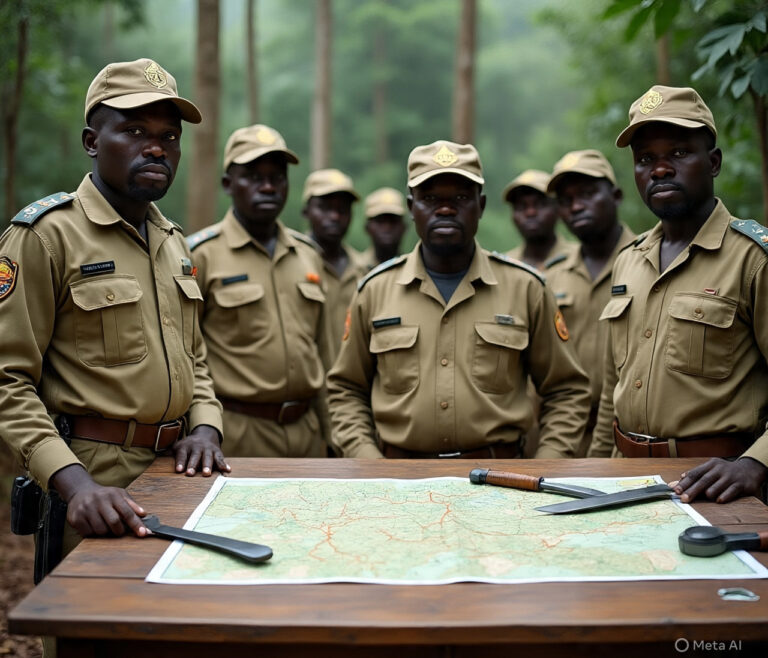
The forest guard initiative, as approved by the President, seeks to deploy over 130,000 armed operatives across Nigeria’s 1,129 forest reserves. These reserves, tragically, have become operational bases forterrorists, bandits, and kidnappers. The policy’s core legal premise rests on a collaborative security effort between the federal and state governments, with the Office of the National Security Adviser (ONSA) and the Ministry of Environment tasked with its supervision. The intent is clear: to formalise and empower a dedicated force to reclaim these ungoverned and criminally governed spaces and restore law and order.

Legal and policy considerations: navigating the complexities

While the strategic intent of the forest guard policy is commendable, its implementation presents several critical legal and policy considerations:

  1. Potential for enhanced law enforcement: From a legal standpoint, the formal establishment of armed forest guards provides a much-needed legal framework for security operations within forest environments. This can legitimise actions against criminal elements in areas previously lacking adequate law enforcement presence, potentially improving the state’s capacity to fulfill its constitutional duty to protect lives and property.
  2. Jurisdictional overlap and accountability: A significant legal challenge lies in defining the precise jurisdictional boundaries and operational mandates of these new guards in relation to existing security agencies such as the Nigeria Police Force and the Nigerian Security and Civil Defence Corps (NSCDC). Without clear legal delineation, there is a substantial risk of jurisdictional conflicts, operational inefficiencies, and, more critically, ambiguities in accountability when incidents occur. The chain of command and legal responsibility for actions taken by armed guards must be unequivocally established to prevent impunity.
  3. Rules of engagement and human rights: Arming a new security force necessitates the immediate development and strict enforcement of clear, legally sound rules of engagement. These rules must be in strict compliance with national laws and international human rights standards, particularly concerning the use of force. Training must go beyond basic paramilitary skills to include comprehensive modules on human rights, due process, and the legal consequences of abuses. Failure to do so risks exacerbating human rights concerns and undermining the policy’s legitimacy.
Redzie Jugo, founder of the Srarina Initiative for Peace, Justice and Development.

The Middle Belt imperative: a call for legal and political will

As a voice from the Middle Belt, I must underscore the profound legal and humanitarian implications o fthe protracted insecurity in our region. The continuous failure to secure our communities from armed groupsoperating from forest hideouts represents a grave dereliction of the state’s primary constitutional duty toprotect its citizens. The forest guard policy, therefore, is not merely a security measure for the MiddleBelt; it is a legal and moral imperative.

Our governors and political leaders in the Middle Belt bear a significant responsibility. While the federal government has provided the policy framework, the onus is on state leadership to demonstrate the political and legal will for its immediate and intensified implementation. This includes:

  • Expediting legal and administrative processes: Fast-tracking the necessary state-level legal and administrative frameworks for recruitment, training, and deployment, ensuring compliance with all relevant
  • Ensuring adequate resourcing: Legally committing state resources for the adequate funding and equipping of these guards, recognising the unique and challenging terrain of our forests.
  • Fostering inter-state legal cooperation: Establishing robust legal frameworks for inter-state collaboration and intelligence sharing, as criminals exploit jurisdictional boundaries. This requires formal agreements and protocols between states.

International best practices: integrating legal safeguards

Drawing from international best practices in forest security and combating armed groups, it is evident that effective armed forest protection units operate within stringent legal and ethical frameworks. Examples from other regions demonstrate the importance of:

  • Clear legal mandates and oversight: Units like armed park rangers in parts of Africa, who confront well-armed poachers and even insurgent groups, operate under clear legal mandates that define their powers, responsibilities, and limitations. Crucially, they are subject to robust oversightmechanisms to ensure accountability [4, 5].
  • Human rights compliant training: International standards emphasize training that integrates human rights principles into all aspects of law enforcement, particularly the use of Thisensures that security operations, while effective, do not violate the rights of citizens.
  • Multi-agency legal frameworks: Successful international models often involve legally defined collaborative frameworks between forest security, military, police, and intelligenceagencies, ensuring seamless information flow and coordinated legal responses to threats.

Nigeria’s forest guard policy must integrate these legal safeguards. This means not just arming the guards, but legally empowering them within a framework that ensures discipline, accountability, and respect for human rights.

The Firearms Act and Forest Guards: a necessary reassessment

The effectiveness of the proposed armed forest guards is inextricably linked to Nigeria’s current Firearms Act (Cap F28 Laws of the Federation of Nigeria 2004). As I argued in my previous article, “Assessing Nigeria’s firearms laws: A path to security in Plateau and beyond” [6], this Act, despite itstheoretical provisions for civilian ownership, has practically disarmed law-abiding citizens through itsrestrictive, opaque, and often biased implementation. This has created a dangerous power asymmetry,where criminal elements freely wield military-grade weapons while legitimate security actors, includingpotential forest guards, may face legal and practical hurdles in acquiring adequate defensive capabilities.

For the forest guard initiative to succeed, it necessitates a comprehensive reassessment of the FirearmsAct. This is not a call for indiscriminate arms proliferation, but for a targeted legal reform that:

  • Streamlines armament for state-sanctioned Security: Creates a clear, efficient, and legally sound process for state-sanctioned security outfits like the forest guards to acquire and possess appropriate firearms necessary for their mandate. This must bypass the bureaucratic and discretionary hurdles that have plagued civilian
  • Ensures parity in firepower: Recognises the grim reality that forest guards will confront heavilyarmed The legal framework must allow for equipping these guards with weaponry thatenables them to effectively counter the threat, rather than being outgunned.
  • Provides legal protection and accountability: Defines the legal parameters for the use of firearms by forest guards, ensuring they are protected when acting within their mandate,while simultaneously establishing stringent accountability mechanisms for any misuse or abuse oftheir powers.

Without such a legal overhaul, the forest guard policy risks being undermined by an outdated and impracticallegal framework. The current Act, designed for a different era, is ill-suited to the contemporarysecurity challenges Nigeria faces. Empowering the forest guards legally, through a reformed Firearms Act, is as crucial as their physical training and armament.

Conclusion

The forest guard initiative holds significant promise for reclaiming Nigeria’s ungoverned and criminallygoverned forest spaces and restoring security, particularly in the beleaguered Middle Belt.

However, its success hinges not just on recruitment and training, but on a meticulous attention to its legal and policy implications. Clear mandates, robust accountability mechanisms, and strict adherence to human rightsare paramount.

Crucially, the policy serves as a powerful catalyst for a long-overdue reassessment of Nigeria’s Firearms Act.

As a lawyer, I contend that aligning our legal frameworks with the urgent realities of our security landscape is not merely an option, but a fundamental prerequisite for achieving lasting peace andstability. The time for decisive legal and political action is now.

References

FCTA takes over nearly two-thirds of UniAbuja’s permanent site

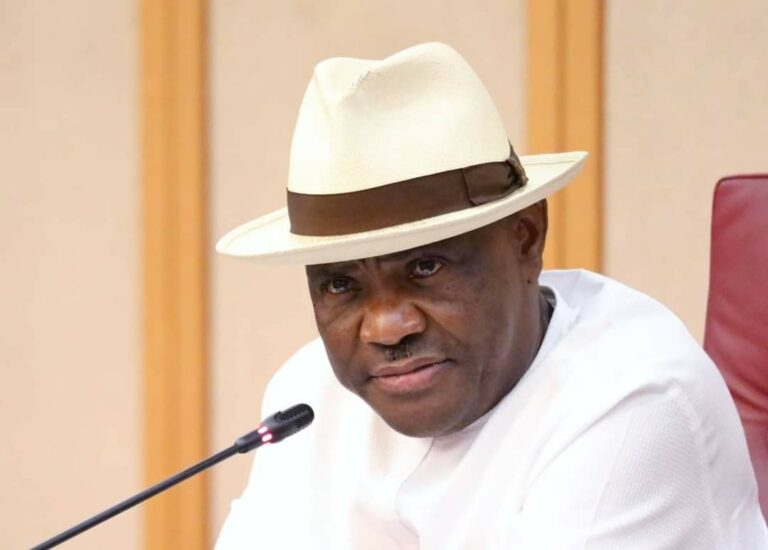
THE Federal Capital Territory (FCT) Minister, Nyesom Wike, has announced the retrieval of 7,000 out of the 11,000 hectares of land initially allocated to the University of Abuja.

Wike announced this on Monday, June 30, while commissioning the newly constructed access roads in the Giri District of the nation’s capital.

He accused the university of “land grabbing” and fencing several hectares of land without proper approval or documentation.

“The University on its own grabbed 11,000 hectares. I said that would not happen. No document, nothing. You see them fencing everywhere, and before you know it, they will have gone to sell our land,” Wike explained.

Wike said the land reclaimed from the university would be used for developmental purposes.

Assuring the FCT residents of his administration’s commitment to infrastructural development in Giri and its environs, the minister announced that internal road construction in the district would begin soon, with plans already in motion by the Federal Capital Development Authority (FCDA).

“Having created this access road, we have told the Executive Secretary of FCDA and other relevant agencies to start working on the details of how we are going to do the roads within the district. So, be assured that maybe next year, it will be a different thing,” he said.

The minister added that the EFCC Academy, one of the major institutions in the area, was expected to commence operations immediately following the completion of the road.

“They will start the academy immediately because now they have access roads that they can move in their equipment and develop this. And when this comes, you see that other people will also move in and develop their own area.

“Most of the problems we’re having here is that sometimes when you allocate land, there are no facilities, no infrastructure, and people are not encouraged. So, we will do everything we can to see that basic infrastructure is being provided,” he said.

The ICIR reports that the vast land of the university has been fenced, with many residents of the city encroaching on it.

Currently, a community with about a thousand houses is within the university.

Surrounded by huge rocks, much of the institution’s land is used for farming by locals and other residents in the area.

The headquarters of the Nigerian Army faces the university across the highway.

The university runs some of its remedial and other programmes at its temporary site in Gwagwalada, a major satellite town in the FCT.


PDP’s NEC affirms Sam Anyanwu as party’s national secretary

0

THE National Executive Committee (NEC) of the Peoples Democratic Party (PDP) has reached a consensus, allowing Sam Anyanwu to continue as National Secretary of the party.

The decision was announced by the acting chairman of the party, Umar Damagun, after the 100th NEC Meeting of the party in Abuja on Monday, June 30.

The party also agreed to hold another NEC meeting in July. It directed Anyanwu to forward a letter to the Independent National Electoral Commission (INEC) informing the electoral body about the meeting.

Those in attendance at the meeting are the Chairman of the PDP Board of Trustees (BoT), Adolphus Wabara, Chairman of the PDP Governors’ Forum and Bauchi State Governor, Bala Mohammed, Governors Ahmadu Fintiri (Adamawa), Dauda Lawal (Zamfara), Seyi Makinde (0yo), and Caleb Mutfwang (Plateau) and Douye Diri of Bayelsa state.

Others include former Senate President Bukola Saraki, Senate Minority Leader Abba Moro, and Senator representing Bayelsa West, Seriake Dickson.

The NEC meeting had been characterised by crisis.

The ICIR reported that the Board of Trustees (BoT) meeting of the party, earlier scheduled for Monday morning, was not held at the party secretariat as armed policemen laid siege on the building.

The party later announced that the meeting would be held at the Shehu Yar’Adua Centre in the city.

However, the meeting could not be held at the Centre, following what appeared to be a peaceful resolution of what led to the crisis by the party stalwarts.

Read the live update HERE

One World Media seeks fellows

THE One World Media seeks proposals for its fellowship.

The programme is open to nonfiction media across all platforms: film, print, audio, photojournalism and multimedia.

The fellowship is aimed at mid-career journalists and filmmakers from the Global South.

Working in film, print, audio, photography or multimedia, the fellows seek to develop their existing career reporting in the global south, raising awareness and breaking down prejudices with integrity and creativity.

Ten international fellows will be selected this year.

Journalists and filmmakers interested in telling stories from the Global South can apply for this fellowship.

Fellows receive a production grant up to GBP3,000 (US$4,119), mentorship, training and networking opportunities.

The organiser says, “Since 2001, One World Media has supported nearly 300 emerging journalists and filmmakers to report from over 100 countries. OWM provides each fellow with a reporting grant, one-to-one mentoring, invaluable workshops and events by industry experts.

The deadline for the submission of the application is August 20, 2025.

Interested applicants can apply here.

Ondo women farmers seek support under AU’s Cocoa Agenda

WOMEN cocoa farmers in Ondo State have called on the federal and state governments to ensure their inclusion in the African Cocoa Agenda 2063.

The agenda is a continental blueprint aimed at revolutionising cocoa farming for sustainable economic growth across Africa.

They made the appeal at the weekend during a stakeholders’ engagement convened by the development Research and Projects Centre (dRPC) in partnership with the Association of Women in Trade and Agriculture (AWITA) in Ile-Oluji Local Government Area of the state.

Participants at the engagement included members of AWITA’s Ile-Oluji cocoa cluster, its national leadership, and a research team from the dRPC.

The two-day event sought to explore the role of women in the cocoa value chain and assess their environmental conservation practices in cocoa-producing areas.

According to the organisers, the engagement served as a platform to better understand the contributions of women farmers to cocoa production and to spotlight the challenges they face, particularly in accessing training, funding, market linkages, and policy inclusion.

The AWITA’s cocoa cluster members at the meeting highlighted their involvement across all stages of cocoa farming, ranging from planting to post-harvest processing, while stressing the need for support in addressing rising production costs, environmental sustainability, and limited access to formal structures for agricultural aid.

They also called for training in modern cocoa farming techniques and increased access to markets, in addition to inclusion in decision-making processes in cocoa development initiatives, including the African Cocoa Agenda 2063.

Representing the dRPC, the Head of Research and Analysis, Kareem Abdulrazak, noted that the Cocoa Agenda 2063 offered significant potential to uplift women farmers by integrating them into long-term strategies for agricultural transformation.

He explained that the initiative, adopted by African heads of state in 2013, was a 50-year commitment designed to reposition Africa as a global powerhouse through sustained investment in key sectors such as agriculture.

AWITA’s National President, Ruth Agbo, commended women across the country for their continued contributions to the economy and reaffirmed the organisation’s commitment to strengthening the role of women in trade and agriculture through partnerships with civil society and development organisations.

As part of the visit, the delegation also met with the Permanent Secretary of the Ondo State Ministry of Agriculture and Forestry, Tunde Daramola, and other senior ministry officials to brief them on the engagement and advocate for increased investment in the cocoa value chain, especially for women-led initiatives.

The African Cocoa Agenda 2063 forms part of the broader African Union Agenda 2063 – a strategic vision to drive inclusive growth and development across the continent.


LIVE UPDATE: PDP BoT meets in Abuja

0

THE Board of Trustees (BoT) of the Peoples Democratic Party (PDP) is expected to hold a high-stakes meeting in Abuja today, drawing national attention amid deepening internal divisions within the party.

The gathering comes against the backdrop of an intensifying power struggle between two rival factions within the party.

Stay with us for live updates, breaking developments, and exclusive insights from the high-stakes meeting.  This page will be updated with developments:


The National Executive Committee (NEC) of the Peoples Democratic Party (PDP) has reached a consensus, allowing Sam Anyanwu to continue as National Secretary of the party.

The decision was announced by the acting chairman of the party, Umar Damagun, after the 100th NEC Meeting of the party in Abuja on Monday, June 30.

Read the full report HERE


Update: 4:20 pm:

Governors of Zamfara, Oyo, Bauchi, other states spotted at the venue of the meeting.


Update: 3:40 pm: 

Some party members within and outside the Wadata House are jubilating and waving the party’s flag in preparation for the meeting.


Update: 3:30pm:

At the PDP Headquarters, Wadata Plaza, Wuse, Abuja, staff set up canopies in preparation for a meeting. As of now, it remains unclear whether the gathering is for the Expanded Caucus or the much-anticipated 1000th NEC meeting.

Staff set up canopies in preparation for the meeting.

Update: 3:15 pm:

BoT members and journalists are returning from the Yar’Adua Centre to the PDP national secretariat, initially taken over by police officers. Tents are being mounted within the premises now, and there are indications that the meeting could be held


Update: 2:20 pm:

PDP relocates meeting venue

The Board of Trustees (BoT) meeting of the Peoples Democratic Party (PDP), initially scheduled to commence at 10:00 AM at the party’s National Secretariat in Abuja, has been relocated to the Yar’Adua Centre.

The last-minute venue change follows growing tension within the party over factional disagreements and leadership tussles.

The BoT meeting is a precursor to the larger National Executive Committee (NEC) meeting and is expected to set the tone for critical discussions on the PDP’s internal crisis, reconciliation efforts, and preparations for the 2027 general

A statement from PDP reads, “The Meeting of the Board of Trustees (BoT) of the Peoples Democratic Party (PDP), earlier scheduled to hold by 10 am at the Party’s National Secretariat in Abuja has been moved to Yar’Adua Centre, Central Business District, Abuja.”


NCAA grounds Rano aircraft over engine failure

0

The Nigeria Civil Aviation Authority (NCAA) has grounded a Rano Air aircraft with registration number 5N-BZY following an in-flight engine failure observed in one of its engines.

It made this known in a statement on Monday, June 30.

The aircraft en route to Kano-Sokoto flight noticed a smoke incident in its cabin and flight deck, creating tension amongst passengers and crew.

“The Rano aircraft 5N-BZY experienced a failure on its engine 1.

“Smoke was noticed in the cabin and flight deck. Oxygen masks were donned. The appropriate safety protocols were initiated on the ground for landing. Smoke dissipated. Pilot safely landed the aircraft without incident,” NCAA stated.

According to the statement, the NCAA Directorate of Airworthiness instructed that the aircraft 5N-BZY remain grounded until the conclusion of investigations.

It said the rescue aircraft to airlift passengers out of Sokoto had already boarded Abuja-Katsina passengers.

It noted that it would have created problems to deboard those passengers, stressing that the flight out of Sokoto was, therefore, cancelled.

“5N-BYZ is still on the ground with engineers working on it. The Nigerian Civil Aviation Authority, NCAA, prioritises safety.

“The records are clear. More advanced countries have worse air incidents than Nigeria because, here, flights will get cancelled if there is the slightest safety concern,” the NCAA added.

The ICIR reports that grounding an aircraft in the instance means preventing it from flying, typically due to technical issues, maintenance requirements, or regulatory reasons.

It reported an incident on April 23, 2024, where a Dana aircraft that skidded off the Lagos airport was grounded, and the Nigerian aviation authorities subsequently suspended the airline’s operations.

Confusion as police block PDP BoT from meeting at party’s headquarters in Abuja

0

THE Board of Trustees (BoT) of the Peoples Democratic Party (PDP) has shifted its meeting to the Yar’Adua Centre after police laid siege on the party’s headquarters in Abuja.              

The party accused the FCT Police Command of deploying gun-wielding officers to take over its secretariat.

The party also accused the police of harassing its BoT members who came for the meeting.

“The Meeting of the Board of Trustees (BoT) Meeting of the Peoples Democratic Party (PDP), earlier scheduled to hold by 10 am at the Party’s National Secretariat in Abuja has been moved to Yar’Adua Centre, Central Business District, Abuja,” the PDP stated on its official handle on X.

The ICIR reporter at the PDP headquarters observed a massive deployment of armed police officers and about five operatives of the State Security Service (SSS) within and around the premises.

The security officers had stopped some members of the party’s BoT from gaining entrance into the premises.

Following the blockade, the BoT members later left the party’s secretariat amid tension over the party’s National Executive Committee (NEC) meeting, also scheduled for today on the premises.

Meanwhile, the FCT Police Command has said that policemen were drafted to the party’s headquarters to maintain law and order and not fir personal agenda.

The FCT police, in a statement by its spokesperson, Josephine Adeh, said officers were only deployed to the venue to maintain law and order and ensure public safety in line with their constitutional mandate.

She said at no time was the secretariat sealed off by the police.

The PDP has been embroiled in controversy that has lingered since the party lost the 2023 general election.

The crisis has resulted in frequent postponement of the party’s NEC meeting.

The NEC meeting was postponed severally times recently, prompting the party’s leadership to meet with the Independent National Electoral Commission (INEC).

There have also been problems over the party’s substantive national secretary.

The recent problem started when the Acting National Chairman of the party, Umar Damagun, announced the postponement of the NEC meeting planned for today, but the National Working Committee (NWC) of the PDP insisted that the meeting would proceed as scheduled.

Court grants Natasha bail on self-recognition

0

THE Federal High Court in Abuja has granted bail to the senator representing Kogi Central Senatorial District, Natasha Akpoti-Udauaghan, on self-recognition.

She was arraigned on six counts bordering on alleged cybercrime.

The senator allegedly made false statements against Senate President Godswill Akpabio and Kogi State’s former governor, Yahaya Bello.

According to the charge, she alleged that Akpabio instructed the Kogi State former governor to ensure that she was harmed in Kogi State rather than in Abuja to mislead investigators about her attackers.

The senator pleaded not guilty to the charges after they were read.

During an appearance on Channels TV’s Politics Today, Akpoti-Uduaghan repeated the allegations, asserting, “It was part of the meeting, the discussions that Akpabio had with Yahaya Bello that night… to eliminate me.”

The Federal Government, which sued the lawmaker on behalf of Akpabio and Bello, stated that these statements, widely shared through digital platforms, were knowingly false and intended to initiate unrest.

The government further argued that the remarks violate Section 24(2)(c) of the Cybercrimes Act, which criminalises the intentional spread of false information to damage reputations or provoke public disorder.

Akpoti-Uduaghan’s legal team, headed by Roland Otaru, a senior advocate, requested that the accused be granted bail on self-recognition as a senator of the Federal Republic of Nigeria (FRN) and a senior member of the bar.

He added that there was no counter-affidavit from the prosecution challenging the bail application.

The judge, Mohammed Umar, proceeded to grant the request of the defence counsel and granted the senator bail on self-recognition.

The court adjourned until September 22 for the commencement of the trial.

The ICIR reported a similar suit recently when the Federal Capital Territory (FCT) High Court on Thursday, June 19, granted Akpoti-Uduaghan a ₦50 bail in a case involving her and the Nigerian government.

 The bail came after she pleaded not guilty to an alleged defamation charge preferred against her.

In the ruling, the judge, Chizoba Orji, granted the female lawmaker bail with one surety, who must be a “responsible resident” of the FCT and have landed property in the nation’s capital.

The judge adjourned the case to September 23, 2025, for continuation of the trial.

Among the witnesses lined up to testify against the lawmaker in court are Akpabio and Bello.

The ICIR reported how the family home of Akpoti-Uduaghan was attacked again by gunmen for the second time this year.

Akpoti-Uduaghan, currently suspended by the Senate, had urged Nigerians to hold Akpabio, Kogi State Governor Ahmed Ododo and his predecessor, Yahaya Bello, responsible if she and her supporters were attacked.

The ICIR reported that the ongoing case comes amid mixed feelings surrounding Akpoti-Uduaghan, who was suspended from the Senate earlier this year. Her suspension sparked widespread criticisms and allegations of political persecution by Akpabio.

She had accused Akpabio of targeting her after she rejected his alleged sexual advances, claiming that her suspension was orchestrated to silence her. 

She made the allegations after she refused to accept a new seating arrangement in the Senate Chamber, which led to Akpabio ordering the sergeant-at-arms to eject her from the chamber.