Home Blog Page 246

Akume: Presidency denies resignation report of SGF

0

THE presidency has refuted reports that the Secretary to the Government of the Federation (SGF), George Akume, has resigned his position.

The Special Adviser to the President on Information and Strategy, Bayo Onanuga, dismissed the report in a statement on Saturday, June 28.

“There has been no change in the status of His Excellency, Senator George Akume, as Secretary to the Government of the Federation.

“President Bola Ahmed Tinubu, currently in Saint Lucia, has not made any new appointments,” Onanuga said.

He described the information circulating about Akume’s replacement as untrue, stating that agents of mischief fabricated it.

“The Presidency advises Nigerians to disregard the fake news,” Onanuga added.

News filtered on Saturday that Akume had resigned as SGF, less than 24 hours after the All Progressives Congress (APC) National Chairman, Abdullahi Ganduje, stepped down from his position.

Since the APC is likely to zone the chairmanship to the north-central, and Akume happens to come from that zone, there is speculation that he might be favoured to take over as the party’s national chairman.

On Friday, June 27, the former Kano State Governor Ganduje resigned as APC National Chairman, paving the way for the party’s Deputy National Chairman (North), Ali Bukar Dalori, to take over, The ICIR reported.

Though APC spokesman Felix Morka said Ganduje’s resignation was to enable him to attend to urgent and important personal matters, there are feelers that he resigned due to increasing resistance from within, particularly from those who viewed his appointment as a violation of the party’s internal zoning arrangements.

Dalori, from the North East, will fill the position of Acting National Chairman, pending the meeting of the National Executive Committee (NEC) of the party to be summoned immediately to fill the vacancy created by the resignation.

Aminu Dantata honoured in Kano, to be laid to rest in Saudi Arabia

0

RENOWNED Kano-based business mogul and philanthropist Aminu Alhassan Dantata has been honoured with a Salatul Ga’ib, an Islamic funeral prayer in absentia, in Kano state

Dantata died on Friday, June 27, in faraway Dubai, United Arab Emirates (UAE), at the age of 94, and according to his will, he is to be buried in Madina, Saudi Arabia.

The funeral prayer for Dantata was led by Ibrahim Khalil at Umar Bin Khattab Mosque in Kano on Saturday.

Thousands attended Dantata’s funeral prayer, including notable figures like Deputy Senate President Barau Jibrin.

Khalil described the late Dantata as a pious Muslim, philanthropist, and community leader who lived a life of service and humility.

Mustapha Junaid, his aide, announced his passing early on Saturday, June 28.

Dantata was born on 19 May 1931, to the family of Alhassan Dantata, and was the first chancellor of Al-Qalam University in Katsina.

He was the commissioner for planning and development in Kano from 1967 to 1972.

Dantata founded the Express Petroleum and Gas Company Limited and was one of the organisers of Jaiz Bank in Nigeria.

As a philanthropist, Dantata was one of the promoters of the Kano State Endowment Fund, which supports educational initiatives and provides grants to small-scale entrepreneurs in Kano.

He was known for donating funds to various institutions around Kano, including the Alhassan Dantata Haemodialysis Centre and Aminu Kano Teaching Hospital.

Until his death, Dantata was one of the most influential figures in Nigeria’s business sector.

Dantata built a vast business empire across multiple sectors, including construction, manufacturing, finance, agriculture, and oil and gas.

Renowned Nigerian filmmaker Kayode Peters dies in Canada

CELEBRATED Nigerian filmmaker, director, and actor Kayode Peters has passed away.

He died in Toronto-Canada, on the morning of Saturday, June 28, following a prolonged battle with illness. He was 49.

The news of his passing was confirmed in a heartfelt statement released by his family via his official Instagram page.

“It is with profound sadness that we announce the passing of our beloved, Kayode Peters Adewumi, who passed on peacefully this morning, June 28, 2025, in Toronto, Canada,” the family wrote. “KP braved, challenged, and conquered a long-time illness until his last breath this morning.”

Described as a cherished son, husband, father, brother, and friend, Peters was widely respected not just for his artistic brilliance but for his warmth, humility, and generous spirit. “He touched countless lives, both on and off the screen, and will be deeply missed,” the statement added.

Peters rose to prominence in the early 2000s as the creator of the hit comedy series Flatmates, which quickly became a staple of Nigerian television. Over the years, he cemented his legacy through his work on other beloved shows such as ‘Extended Family’ and through his vibrant contributions to Nigeria’s stage and theatre scene.

A passionate advocate for local talent and storytelling, Peters helped shape the careers of many young actors and comedians, and his productions were known for blending humor with social commentary.

As news of his passing spreads, tributes have begun pouring in from fans, colleagues, and the wider Nigerian entertainment industry, celebrating a man whose work brought joy to countless homes.

The Adewumi family has requested privacy as they begin preparations for his funeral, with more details expected to be announced in the coming days.

I resisted pressure to vacate villa as VP due to coup rumours, says Jonathan

0

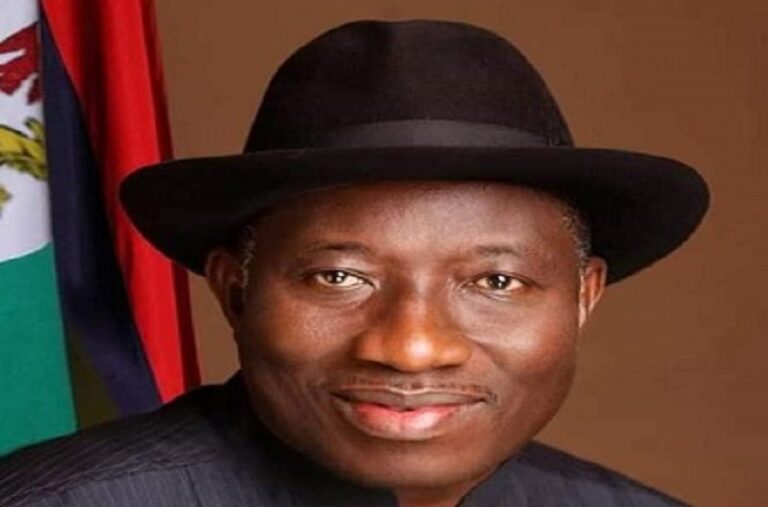
FORMER President Goodluck Jonathan has revealed that he was advised to vacate the presidential villa as vice president for his safety, arising from rumours over a possible coup d’etat.

He said during that time, some friends urged him to vacate the presidential villa for his life.

He made the revelation about the circumstances surrounding his assumption of power during the late Yar’Adua’s prolonged illness in an interview with the Rainbow Book Club. The interview was about his memoir, ‘My Transition Hours.’

Jonathan revealed that even before the doctrine of necessity was invoked, some friends advised him to avoid sleeping at his official residence due to coup fears, suggesting he stay at a safer location instead.

“I said, ‘No.’ I will stay in the state house. If anybody wants to kill me, you should kill me in the state house, so Nigerians will know that they assassinated me in the state house. They know I have not committed any offence.

“If I go and stay in your guest house and people kill me there, they will now say Indian girls brought apples to kill me. And I wouldn’t want that kind of story,” he stated.

The former President claimed he remained calm and unruffled despite the intense pressure, saying he wasn’t bothered by the coup rumours and tensions surrounding him.

He also revealed that late President Umaru Musa Yar’Adua signed a letter authorising him to take over in his absence, but a key aide allegedly kept the document from the National Assembly (NASS).

Recall that Yar’Adua’s prolonged absence without transferring power created a political crisis in Nigeria.

Jonathan recalled the period and described it as extremely turbulent, characterised by heightened ethnic and religious tensions and a severe constitutional crisis that threatened Nigeria’s democracy.

He stated that the power tussle worsened after Yar’Adua succeeded Obasanjo, due to an informal agreement that the presidency should remain in the north for eight years before rotating again.

He further pointed out that Yar’Adua’s health issues sparked the problem, making it contentious for him to assume acting powers.

He added that as vice president, he was caught in a constitutional dilemma, unable to fully exercise presidential powers or command the armed forces.

“That letter was written. But the person to whom the letter was handed over — I will not mention the name — refused to submit it to the national assembly. Yar’Adua became so ill that he had no control over issues,” Jonathan stated.

Jonathan stated that as vice president, he could perform some executive duties but couldn’t act as commander-in-chief without a formal power transfer, which was a challenge to him.

He explained that the Nigerian president has two key roles: chief executive, which the vice president can assume, and another role that requires formal authority.

“But there was no commander-in-chief, and there’s nothing like acting commander-in-chief. You are either a commander-in-chief or not.”

The former president recalled that the uncertainty over power transfer threw Nigeria into constitutional limbo, forcing the National Assembly to invoke the doctrine of necessity to make him acting president.

He added that the country was on edge, with daily coup rumours worsening existing north-south and Christian-Muslim tensions.


Nigeria public debt rises to N149.39 trillion, says DMO

NIGERIA’s total public debt has risen to N149.39 trillion as of the first quarter(Q1) of 2025, according to the Debt Management Office (DMO).

The DMO revealed this in its latest report, ‘Nigeria’s Total Public Debt Portfolio as at March 31, 2025’, published on its website on Friday, June 27.

It shows that Nigeria’s debt profile rose by N27.72 trillion year-on-year relative to N121.67 trillion, the DMO reported in the first quarter of 2024.

It also shows that Nigeria’s public debt increased by N4.72 trillion from N144.67 trillion as of December 31, 2024.

According to the DMO, external debt increased to N70.63 trillion in March 2025 from N56.02 trillion in March 2024.

On a quarter-on-quarter basis, it rose slightly by N344 billion from N70.29 trillion in December 2024.

Although the DMO did not disclose the exact exchange rate at which it converted the debt from dollars to naira, it could point to a weaker naira value in the period, reflecting currency volatility faced in the country’s foreign exchange market.

The ICIR reports that Nigeria’s external borrowings include loans from multilateral lenders such as the World Bank and African Development Bank, bilateral arrangements, and commercial debt instruments, including Eurobonds.

The debt office further revealed Nigeria’s domestic debt climbed to N78.76 trillion in March 2025, from N65.65 trillion in the same period in 2024.

Domestic debt also rose by N4.38 trillion from N74.38 trillion it was as of December 2024.

The continued rise in debt stock is attributed to new borrowings by the Federal Government and the depreciation of the naira.

Amid the continuous reliance on both domestic and foreign borrowings, there have been worries over the effective utilisation of the funds to fund public projects.

The public debt is likely to inch up higher in the second quarter by the time the DMO releases its next report.

This is because in May this year, President Bola Tinubu had requested the National Assembly to approve new foreign loans worth $24.14 billion to fund key projects in infrastructure, health, education, and water supply, The ICIR reported.

Wike, Fubara spotted together in Rivers after Abuja peace talks

0

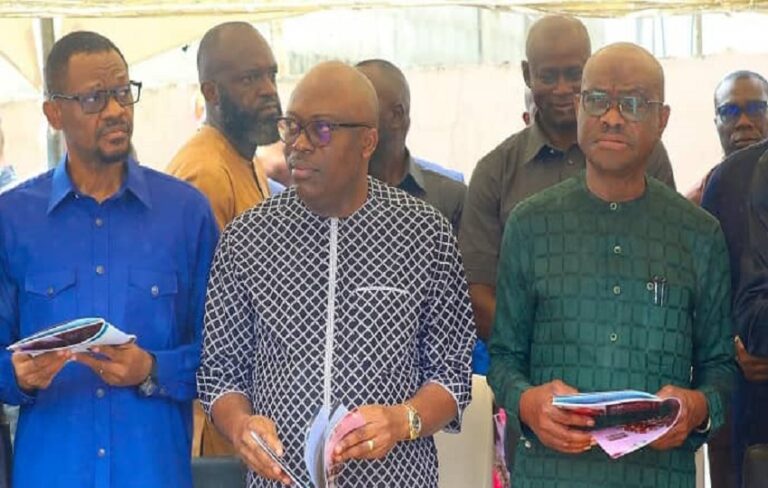
THE Minister of the Federal Capital Territory (FCT), Nyesom Wike, and his successor, Siminalayi Fubara, were seen together in Rivers State, two days after participating in peace talks at the Presidential Villa in Abuja.

Also seen with them was the suspended Speaker of the Rivers State House of Assembly, Martin Amaewhule, who also took part in the Abuja peace talks.

The three were spotted together at a funeral in Wike’s hometown of Rumueprikom, Rivers State.

“Minister of FCT, Nyesom Wike, alongside Governor Siminalayi Fubara and Speaker of the Rivers State House of Assembly, Martins Amaewhule, at the burial of Wike’s uncle in Rumuepirikom, Rivers State, today,” Lere Olayinka, a spokesperson for Wike, posted on X on Saturday.

Prominent politicians, including senators as well as former Deputy Speaker Chibudom Nwuche and others, attended the funeral service in Rumueprikom.

The appearance of the three key political figures together in Rivers State, following President Tinubu’s peace initiative, marks a significant development in ending their nearly two-year political rift.

The ICIR reported that Wike announced an end to his prolonged feud with the suspended Rivers State Governor, Fubara, on Thursday.

In a chat with journalists after the closed-door meeting at the Presidential Villa, Wike said both groups arrived at a final agreement to end animosity and work together in unity.

The minister acknowledged that the crisis had remained for months but described the Thursday agreement as conclusive.

Wike appealed for calm and unity among his followers and Fubara’s supporters, while Fubara welcomed the truce, crediting it to divine intervention and a new beginning for Rivers State.

The ICIR reported that the emergency rule declared by President Bola Tinubu in the state might soon be lifted after the president, on Thursday, reconciled the parties whose feud led to the declaration of a state of emergency in the state by the president on March 18.

The crisis between Wike and Fubara has its roots in who controls the political structure of the state between the two leaders.

The People’s Democratic Party (PDP) is the ruling party in the state.

The crisis took a different turn when the Amaewhule-led House of Assembly threatened to impeach Fubara over his alleged failure to implement a Supreme Court ruling on the political situation in the state.

The ICIR reports that nearly 90 per cent of the House members are loyal to Wike.


Oyo gov’t bars Okada, tricycle riders without ‘barcode jackets’ on roads

0

The Oyo State Government announced it will start enforcing “barcode jackets” for motorcycle Okada and tricycle commercial riders.

The chairman of the Oyo State Road Traffic Management Authority (OYRTMA), Adesagba Adekoya, said this in a notice on Saturday, June 28.

He said the enforcement takes effect from Monday, June 30, 2025, and would bar all commercial motorcycle (Okada) and tricycle (Maruwa) operators from operating across the state.

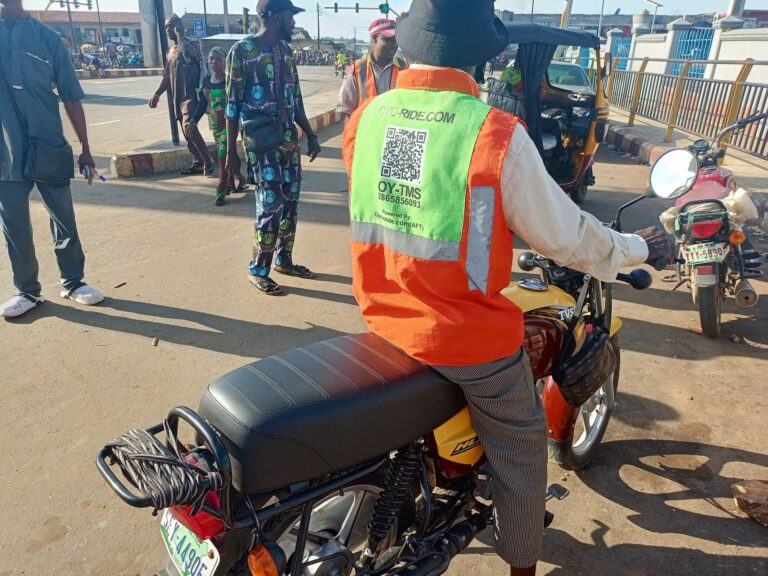
According to Adekoya, the QR-coded jacket contains security features, including a unique barcode for identification and tracking purposes.

“It is mandatory for all commercial riders to wear it while operating on public roads.

Barcode Jackets
This image from the Oyo State Road Traffic Management Authority shows a tricycle operator wearing the QR-coded jacket.

“All Okada and Maruwa operators without a barcode jacket are directed to immediately proceed to the Oyo State Secretariat to register their vehicles and collect their jackets,” he stated.

Adekoya noted that the registration has been ongoing for the past three years, but that many riders have failed to comply.

“No excuses will be entertained after enforcement begins. Unregistered riders will be arrested and prosecuted in line with the traffic laws of the state,” Adekoya warned.

He was quoted as saying that the enforcement came following recent incidents, including armed robbers on an unmarked motorcycle snatching a trader’s earnings at gunpoint in Bodija Market, while a passenger was also robbed by a fake Okada rider in the ‘Challenge Area’.

He noted that a kidnapping attempt was foiled after locals reported suspicious riders without QR jackets on the UI-Agbowo axis.

The OYRTMA chairman urged residents to patronise only Okada riders with these official jackets, asserting that the benefits include real-time rider verification, crime prevention, emergency tracking, and increased passenger trust.

The state traffic management vowed that it would conduct daily raids and impound non-compliant motorcycles, apply fines, and possibly prosecute violators where necessary.

The ICIR reports that the policy introduced in November 2023 requires Okada and tricycle operators to register under the State Residents’ Registration Scheme.

Extreme poverty rising fast in Nigeria, World Bank warns

0

THE World Bank has warned that extreme poverty is rising rapidly in Nigeria.

It gave the warning in its latest report titled ‘Extreme Poverty is Rising Fast in Economies Hit by Conflict, Instability’ released on Friday, June 27.

The Bretton Woods financial institution listed Nigeria among 39 economies affected by conflict and instability, worsening hunger and pushing development goals further out of reach.

The report was based on its post-COVID assessment of fragile and conflict-affected states, including Afghanistan, Sudan, Syria, Yemen, Haiti, the Democratic Republic of Congo, and Venezuela.

“These countries include both those experiencing active conflict and others facing deep instability,” the World Bank stated.

Nigeria faces increasing insecurity from banditry, kidnappings, and terrorism, mostly in the northern part of the country.

The recent insecurity situation was the killing of about 200 people in a fresh coordinated attack by suspected herdsmen on Yelewata and Daudu communities in the Guma Local Government Area of Benue State, The ICIR reported.

This widely condemned Benue incident adds to the many insecurity situations in the country that have left many homeless, farmers scared of going back to their farmlands and millions of properties destroyed.

In its findings, the World Bank stressed that economic conditions in these fragile states have continued to deteriorate since the pandemic, even as other developing economies begin to recover.

“Since 2020, their per capita GDP [gross domestic product] has shrunk by an average of 1.8 per cent per year, while expanding by 2.9 per cent in other developing economies.

“This year, 421 million people are struggling on less than $3 a day in economies afflicted by conflict or instability—more than in the rest of the world combined,” it said.

It projected that the number is to rise to 435 million, or nearly 60 per cent of the world’s extreme poor, by 2030.

According to the international institution, while the global focus has largely been on Ukraine and the Middle East in recent years, Africa bears the brunt of the crisis.

“Yet, more than 70 per cent of people suffering from conflict and instability are Africans,” it noted.

Commenting, the World Bank Group’s Deputy Chief Economist and Director of the Prospects Group, Ayhan Kose, said, economic stagnation—rather than growth—has been the norm in economies hit by conflict and instability over the past decade and a half.

He suggested that for progress to be possible, the global community must pay greater attention to the plight of these economies.

“Jumpstarting growth and development here will not be easy, but it can be done—and it has been done before.

“With targeted policies and stronger international support, policymakers can prevent conflict, strengthen governance, accelerate growth, and create jobs,” Kose added.

Obi praises Ganduje’s resignation, urges leaders to prioritise health

0

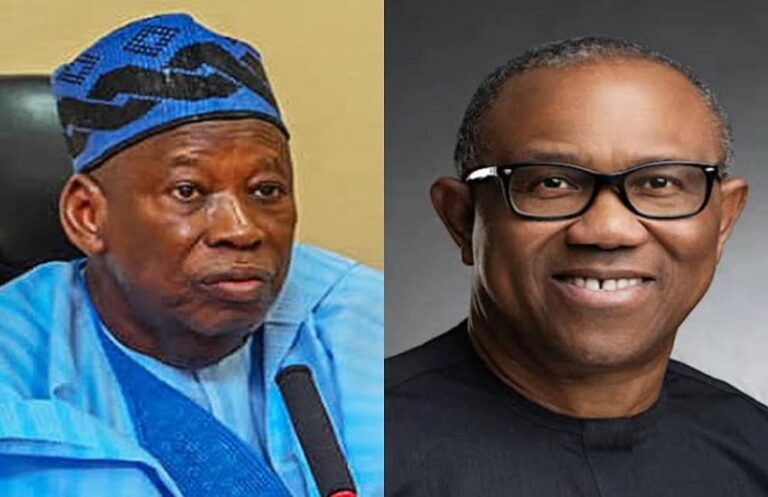
FORMER Labour Party (LP) presidential candidate Peter Obi has commended Abdullahi Ganduje for resigning as national chairman of the All Progressives Congress (APC).

Obi, in a post on X on Saturday, June 28, praised Ganduje’s decision as wise and honourable, setting a good example for other leaders to prioritise their health and step aside when unable to perform optimally.

He emphasised that Nigeria needs leaders who are physically and mentally fit to tackle the country’s challenges.

“I must commend Dr Ganduje for prioritising his health above all else. With his health reportedly in decline, it is both wise and honourable to step aside, knowing that he may no longer be able to render the level of service required by the party, the people, and the nation.

“By this exemplary action, Dr. Ganduje has thrown a challenge to other leaders who, due to health-related issues, are no longer able to deliver optimally. I sincerely hope they take a cue from him,” he posted.

According to Obi, the challenges confronting Nigeria today require leaders who are not only competent but also physically and mentally fit, leaders with the capacity and agility to respond decisively and promptly to pressing issues.”

“I have just read a news report that the National Chairman of the ruling party, Dr. Abdullahi Umar Ganduje, has resigned from his position with immediate effect, citing health challenges as the reason,” he wrote.

Obi added that at this point in Nigeria’s history, the country could no longer afford leadership defined by medical tourism, long holidays, or absenteeism caused by age-related ailments.

The former governor of Anambra State urges other leaders to follow Ganduje’s example and step aside if they’re unable to perform their duties optimally.

Ganduje resigned as the national chairman of the APC on Friday, citing health reasons.

The APC officially announced his resignation as the National Chairman of the Party on Friday.

His resignation, effective immediately, was announced in a statement by the National Publicity Secretary, Felix Morka.

According to the statement, the resignation was to enable Ganduje to attend to urgent and important personal matters.

Following the sudden resignation of Ganduje, Ali Bukar Dalori from Borno State, North Central, has been directed to immediately assume the role of Acting National Chairman.

Dalori was also asked to urgently convene a meeting of the party’s National Executive Committee (NEC) to formally address the leadership vacancy.

In the statement released Friday night, Morka announced that Ganduje tendered his resignation to focus on “urgent and important personal matters.”

Morka said the confidence reposed in Ganduje by the NEC and National Caucus during their February 2025 meetings stands as a testament to his performance.

Ganduje, on Friday, June 27, resigned as the National Chairman of the ruling APC in a letter, citing health concerns as the reason for his decision.

Although the circumstances surrounding his resignation remain unclear, some sources have attributed it to health reasons, while some believe it is a political strategy towards the 2027 general election.

The new acting chairman, Dalori, hails from Borno, the same state as Vice President Kashim Shettima, who has recently been embroiled in controversy over speculation about his potential replacement as running mate in the 2027 election by the president.


Kano business mogul, Aminu Dantata, dies at 94

0

RENOWNED Kano-based business mogul and philanthropist, Aminu Alhassan Dantata, is dead.

He died at the age of 94.

Mustapha Junaid, his aide, announced his passing early on Saturday, June 28.

Junaid said, “It is with a heavy heart that I announce the passing of our beloved father, Alhaji Aminu Alhassan Dantata. May Allah grant him Jannatul Firdaus and forgive his shortcomings.”

“The Janazah (funeral) details will be shared later insha Allah,” the post further read.

He was born on 19 May 1931 to the family of Alhassan Dantata, and was the first chancellor of Al-Qalam University in Katsina.

He was the commissioner for planning and development in Kano from 1967 to 1972.

Dantata founded the Express Petroleum and Gas Company Limited and was one of the organisers of Jaiz Bank in Nigeria.

As a philanthropist, Dantata was one of the promoters of the Kano state endowment fund, which supports educational initiatives and provides grants to small-scale entrepreneurs in Kano.

He was known for donating funds to various institutions around Kano, including the Alhassan Dantata Haemodyalysis Centre and Aminu Kano Teaching Hospital.