IN most parts of Nigeria, a man is not fully dressed without a matching covering over his head. In fact, in some traditions, it is a taboo for a man to be seen in public with his head uncovered.
Therefore it is no surprise that many Nigerian politicians have carved a niche for themselves with their signature caps such that one can easily identify them just by seeing their caps.
Whether it is the signature embroidery on Bola Tinubu’s traditional Yoruba caps, or the crescent moon and star that adorns Lai Mohammed’s cap, or Chris Ngige’s trademark papa’s cap, or the boys scout-like beret that Solomon Dalung cannot do without, Nigerian politicians make daily statements with their choice of head coverings.
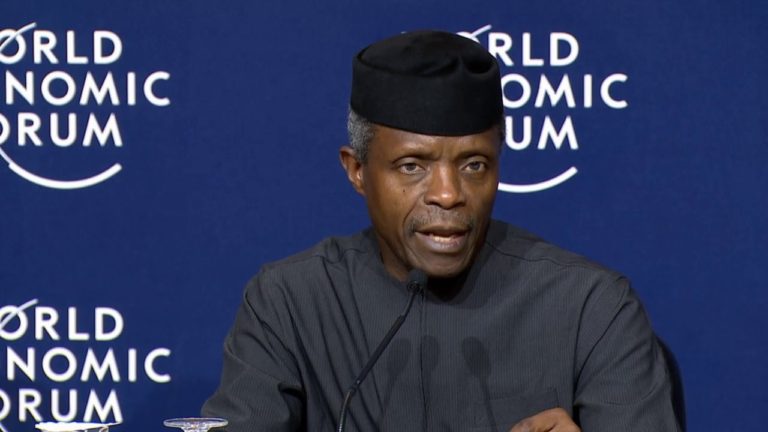
For instance, Vice President Yemi Osinbanjo’s ‘Awolowo cap’ could be a testament to his admiration of the renowned nationalist and statesman who played a key role in Nigeria’s independence movement. Also, Sports Minister, Dalung had explained that his red beret is a tribute to Thomas Sankara, the Burkinabe revolution leader who was assassinated in Ouagadougou, Burkina Faso, on October15 1987.
The caps sometimes signify affinity with one’s culture and tradition, as is exemplified in the case of Governor Samuel Ortom of Benue State. His “cap of many colours” actually makes a kind of I-belong-to-everybody-and-I-belong-to-nobody statement. The Tiv, Idoma and Igede ethnic groups, all in Benue State, have their traditional colours as black and white, red and black, and blue and black respectively, and all the colours, including Nigeria’s green and white, are represented in the Governor’s cap.
Same can also be said of the big red chieftaincy cap always worn by Victor Umeh, the Senator representing Anambra Central in the National Assembly, who is a title holder in Abagana, his hometown.
However, there are also a few of the politicians who cannot be caught dead wearing a cap, irrespective of what the occasion may be. Former Governor of Anambra State, and now vice presidential candidate of the Peoples Democratic Party (PDP), Peter Obi, and the National Chairman of the All Progressives Congress (APC), Adams Oshiomhole, fall within this category.
The 2019 presidential election has produced many candidates vying for the position of the number one citizen in Nigeria. And each of them is full of promises to change the lives of Nigerians within four years. Here are some of their many promises:
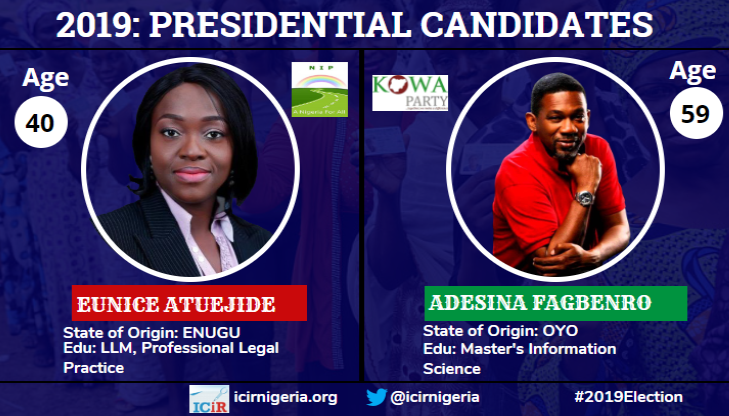
Adeshina Fagbenro
He was born June 5, 1959, and has a studied Economics. and obtained an LL.B (Bachelor of Laws), Master’s Information Science from the University of Ibadan, Oyo State, Nigeria. He was called to the bar at the Nigerian Law School, Lagos in 1989.
He served as an adviser in the delivery of several federal governance programs, a regional coordinator for South West and South East Nigeria as well as Head of Office, for Lagos and Enugu respectively.
Adeshina Fagbenro is the presidential flagbearer of KOWA party. His greatest selling point in the presidential race is restructuring.
“We are going to set the ball rolling with restructuring. We are going to be restructuring Nigeria. We will implement the 2014 Confab report,” he said on Channels TV Sunday Politics. His interactions and involvement in both political and non-political matters certainly, might be an added momentum for his proposed bid to implement restructuring come 2019 if he emerges as a winner.
The aspirant has also promised to declare a state of emergency on the educational sector.
“There will be zero tolerance for illiteracy and zero tolerance for hunger,” he said.
On state policing, Fagbenro said he is not a big believer of centrality in security matters. “I am in support of state policing absolutely. I support decentralisation of power.”
Five critical pillars make up his agenda for Nigeria which includes- Security and safety, health and education, environment, innovation and information and technology, infrastructure and economy. He said the beneficiaries would be the youths.
Here are the pillars of governance he stated as pirorities. Excerpts:
“Every citizen must be free from oppression and free to aspire within the law. States will be empowered to manage their own security apparatus to enforce laws.
“We will redesign our National Security architecture and system to be fit for purpose.
“Our National security policy must be based on the stated National Interest which must drive Development, Trade and Foreign policies respectively.
“Niger Delta clean-up will be pursed with a vigour not only relying on formal large-scale cleanup, remediation and restoration works but also on engaging local input into the supervision and acceleration of the cleanup. This shall form the only tax-deductible corporate social responsibility of every oil exploration and production companies working in Nigeria.
“We will grow a green belt of a variety of arid resistant plants and trees continuously across states between Sokoto and Maiduguri. This will reduce the advancement of desertification in Nigeria through effective vegetation cover for her states across the Northern borders with the Niger Republic.
“We will set up a Special Innovation Revolving Fund to finance startups in partnerships with the private sector, civil society and international agencies.
“We will reclaim the Lake Chad with the immediate commencement of the feasibility, design, mobilisation and construction of a water pipeline from the Atlantic ocean off Cross River State to Borno State to reclaim Lake Chad with the added economic externalities including desalination plants and power stations along the route.
“Ensure that all Nigerian children under the age of 18 are in school via our zero tolerance for illiteracy program.
“Increase national budget on Technical and Vocational Training by at least 35 per cent.
Graduation certificates for degree holders shall be made acceptable as collateral for Bank Loans for enterprise development.”
Eunice Atuejide
The 40-year- old lawyer, who hails from Enugu State, is best known for founding the youth-led, technology-driven political party known as the National Interest Party (NIP). As the presidential candidate of NIP, she has promised to conduct a total overhaul of the health insurance scheme.
“I will look into the health insurance scheme.”
Atuejide, unlike some presidential candidates, has made it clear that state policing will not be a policy she would implement among other promises. on Live TV. ” I don’t support state policing at the current state of Nigeria,” she said.
Though she said that morality in the Nigerian society does not support homosexuality but it is not an act she will criminalise. “I don’t think homosexuality is a crime. I just think it is not moral. I accept it and respect it.”
The power sector is an area of great interest to Atuejide as she has expressed concerns on commercialising the sector once she becomes the president. “I will do power as an agenda, we will make it possible for private sectors not only to produce but transmit electricity.”
MANY have died at the hands of their abductors, but not many were young, female medical workers.
The International Committee of the Red Cross has had personnel present in nearly every conflict zone for decades but never before has it had two of its young healthcare workers killed execution-style back-to-back.
It’s a sickening situation for humanity and a crippling blow for healthcare in conflict zones.
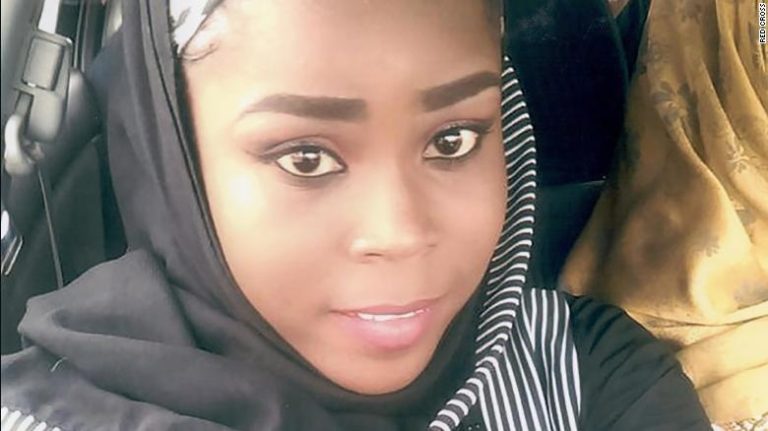
Hauwa Mohammed Liman, 24, worked in a hospital supported by the International Committee of the Red Cross (ICRC) when she was abducted March 1 in Rann, Nigeria. She appears to have been killed by her captors on Monday.
The slaying follows a similar execution-style killing last month of Saifura Hussaini Ahmed Khorsa, a 25-year-old ICRC midwife, also by ISWAP, or Islamic State’s West African province group.
I am ICRC’s director for Africa, and I understand the tension that exists between different belief systems. I am part Nigerian and part Swiss, and though I am not Muslim, some of my family members in Nigeria are.
What I can’t understand is an ideology that can justify the execution of young, female healthcare workers. They were midwives, bringing new life into the world. They were daughters and sisters, and one was a wife and mother. They have no part in the conflict.
When women choose to work in the healthcare field in rural northern Nigeria, it’s not a simple decision. The entire family– especially husbands and fathers — would have had to agree, and this is an important point for both the families and the wider communities.
Saifura was a devoted mother and midwife. Those who knew her said she adored her two children, a two-year-old boy, and a five-year-old girl, who have not been able to comprehend their mother’s absence. Hauwa, also a dedicated professional, made the personal sacrifice to move away from her family and help the community in Rann.
We often see health workers choose the relative safety of large cities. But that leaves rural areas — like Rann — with lean medical expertise. So when health personnel such as Hauwa and Saifura choose to work in a rural region, they deserve our gratitude and everyone’s respect.
Violence against healthcare is a trend the ICRC has kept a worried eye on in conflicts globally.
Nigeria isn’t even the only country in Africa where the ICRC faces a hostage situation; one of our nurses, a German national, was kidnapped in Somalia in May.
More broadly, health facilities in conflict zones like South Sudan, Yemen and Syria have been directly attacked, cutting off communities from the care they desperately need.
As a humanitarian professional, I’m good at focusing on the work that needs to be done, but I sometimes can’t help but wonder: How would I behave as a hostage? What was Hauwa going through in her final days, knowing Saifura had already been killed? Did she know we were doing everything we could to win her release?
I think about other victims in Nigeria, the Chibok girls, and abducted women and girls forced into carrying out suicide bombings. Some hostages have come back pregnant — will their communities accept them?
I am heartbroken by the deaths of these two women. But I also wonder where this intense anger comes from that would allow someone to kill a young midwife. To fight and kill an enemy is one thing, but why stage an execution to kill women helping the community? What can humanitarian organizations do in the face of such anger?
The laws of war exist to prevent or keep to a minimum atrocities and cycles of violence. Even when the laws of war fail an individual, we must insist on their value and continue to work to advance adherence to them.
Without the laws of war, we could face violence without end. We need to collectively stand for these and give humanity a chance.
I cling to the hope that the world will do better in the future.
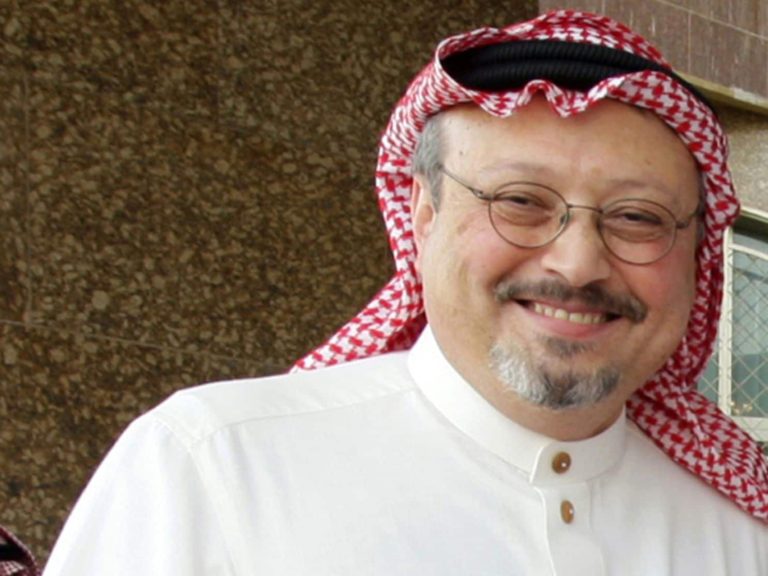
SAUDI Arabia has confirmed the death of missing Saudi journalist and Washington Post columnist Jamal Khashoggi, claiming he died in a fight involving more than a dozen Saudi officials at the country’s consulate in Istanbul. The CNN reports.
After 18 days in which it insisted it had no involvement in the journalist’s disappearance, Riyadh conceded that Khashoggi died as a result of the altercation after he had come to the consulate to obtain paperwork needed for his upcoming wedding.
An announcement carried on Saudi state TV said discussions between Khashoggi and officials at the consulate quickly turned violent and ended in his death. Those responsible then tried to cover up the death, state TV said.
Five high-ranking officials have been removed from their posts, including the deputy head of the Saudi intelligence service, and 18 Saudis have been detained, state TV said.
The statement was the first official confirmation of Khashoggi’s death in Turkey 18 days ago, and the first acknowledgement by Saudi Arabia of its role in it.
“The Kingdom of Saudi Arabia expresses deep regret at the painful developments that have taken place in this case and affirms the commitment of the authorities in the Kingdom to bring the facts to the attention of the public and to hold accountable all those involved,” the statement said.
Khashoggi disappeared after going to the Saudi Arabian consulate in Istanbul at about 1:15 p.m. on October 2 to obtain paperwork to marry his Turkish fiancée, Hatice Cengiz. She raised the alarm just before 5 p.m, while she was still waiting outside.
According to Saudi state media, citing official sources, the public prosecutor’s office investigated a number of suspects based on the information they received from Turkish authorities. Preliminary investigations showed a suspect went to Istanbul to meet with Khashoggi with the possible intention of bringing the journalist to the Kingdom.
The Saudis have set up a commission, led by Crown Prince Mohammed bin Salman, that will restructure the Saudi general intelligence directorate and will have one month to release a report, state TV said.
The commission will consist of national security officials, the foreign ministry and the interior ministry.
When asked if he found the Saudi explanation credible, Donald Trump, US President said he did.
He called the official statement from Riyadh a “good first step” and said talks with Saudi officials would continue, including raising some questions about their account of events.
He added that Saudi Arabia has been a “great ally in the Middle East,” but that “what happened is unacceptable.”
Trump said he would work with Congress to develop a response to Khashoggi’s death, but said that he didn’t want sanctions to affect US arms sales to the kingdom.
“I would prefer if there is going to be some form of sanctions — this was a lot of people they’re talking about… I would prefer we don’t use as retribution cancelled $110 billion worth of work,” he told reporters after a roundtable at Luke Air Force Base in Arizona.
Trump said he would withhold fuller comment until he speaks with Crown Prince Mohammed bin Salman.
Saudi Arabia has been under intense pressure since Khashoggi’s disappearance.
Turkish officials, mostly speaking privately, have released a steady stream of gory details about what happened to the journalist at the consulate. They said he was killed soon after he entered the embassy, and his body dismembered.
None of the Saudi statements gives any clue as to what happened to Khashoggi’s remains.
As many as 20 people who work at the Saudi Arabian consulate, including a driver, technician, accountant, and concierge personnel have given statements to Turkish investigators in their probe of Khashoggi’s death, according to semi-official Turkish media outlet Anadolu.
US officials have told CNN that the operation could not have been carried out without the knowledge of Prince bin Salman, Saudi Arabia’s de facto ruler.
Ahead of the Saudi statement, Bin Salman repeatedly denied knowledge of Khashoggi’s fate.
The 2019 presidential election has produced many candidates vying for the position of the number one citizen in Nigeria. And each of them is full of promises to change the lives of Nigerians within four years. Here are some of their many promises:
DONALD DUKE
Donald Duke was born 30 September 1961, and graduated from Ahmadu Bello University in 1982. He later bagged LLM in Business Law and Admiralty from the University of Pennsylvania (1984). He was governor of Cross River State between May 29, 1999, and May 29, 2007. He became the former Commissioner of Finance, Budget and Planning to the third republic civilian Governor Dr Clement Ebri and the member of the National Economic Advisory and Intelligence Committee under the Abacha regime. BBC reported in September 2006 that Governor Duke was the only governor specifically mentioned as not being under investigation by the federal Economic and Financial Crimes (EFCC).
On Arise News, the former governor discussed his presidential bids and plans for Nigeria.
On the Economy
We need to expand the economy. “You have an army of people, and our Bureau of Statistics says that 15 per cent of Nigerians are unemployed. I can reverse this in a short time by two-ticket item. Find a way to put money into people’s hands. Clean up the 2.5 billion cubic feet of gas equivalent of 25million litres of diesel that is flared every day.
Infrastructures
We can build rail lines. Rail lines technology is so basic. We can do them. “We have to go beyond seeking and borrowing and depending on foreign aid for our development. Our development needs to come from within ourselves. We need to wake up.
Gay Right
I will not call for a revision or amendment of the same sex act as it is not accepted by the norms of the nation.
Restructuring
“In restructuring this country, let no part be left behind because you are as strong as your weakest link. I support the clamour for restructuring. As individuals and people, we have our own differences.
SARS will be scraped
The aspirant equally promises to scrap SARS . “I don’t subscribe to a force where people carry arms without wearing uniforms because I don’t even know who you are. There is zero discipline in service and zero motivation.
Duke declared that skill-based education, healthcare, physical structure and technology shall be the four critical areas he would address.
A detailed account of his plan for Nigeria is contained in what he calls the Policy Document. Excerpts:
Radical Improvement of Access to Finance for SMEs
My administration will pursue access to funding for the myriads of small to medium businesses, many of them run by innovative young Nigerians. This will be founded on the development of robust financial inclusion data designed to inform the selection and sequencing of the government’s SME financing policy. The policy will coopt private sector support through regulatory incentives in achieving, among other things, the initiation of single digit interest rates with reasonable tenures.
Improvement in tax collection and compliance using up to date technology
My administration will drive the improvement of tax collection and compliance by deploying the use of up-to-date technology, while also ensuring the simplification of the tax code to aid compliance. We will put in place an insurance policy that expands insurance participation on life and property as a means of widening the financial base.
Investments in non-oil and gas sectors
My administration will combine heavy investment in 2018 infrastructure, following a robust five-year rapid infrastructural development plan, strategic investment in education, ease of doing business in Nigeria, and strategic tax policies, to attract foreign direct investment, with the aim of revamping the ailing manufacturing sector, strengthening the service sector, and reducing Nigeria’s worrying import dependency.
Power
My administration will ensure the efficient use of Nigeria’s hydro resources by revamping the outmoded infrastructure that supports it, and localize the power generation, transmission and distribution value chains as an urgent and effective means of diversifying the country’s power sector.
On education, Duke said that–
Developing a skills oriented educational system is a matter of urgent priority. My administration’s policies will cover access, curriculum development, teacher training and development, and infrastructure.
My administration will design a compulsory system of education, from crèche to adulthood, to ensure that every child up to the adult age of 18 years will acquire an education and learns a skill concurrently.
We will make a series of strategic investments in revamping the teaching profession to attract first rate talent; competitive remuneration with health and housing benefits, hardship allowances for teachers willing to teach in rural areas – as a means of encouraging inclusion – revamping of teacher training colleges, and ensuring a teacher/student ratio of 1-20 at primary and 1-30 at secondary level while also tying teacher career reward to student performance.
Health care
Our first step towards revamping healthcare will be to improve the budgetary allocation to the sector by over 35 per cent.
As a crucial step to delivering universal healthcare across the country, I will work with government across all tiers to facilitate the provision of at least one fully equipped and adequately staffed primary healthcare center in each political ward, with a planned ratio of one to a population of five thousand, with services ranging from basic care and curative services, to maternal and child healthcare and preventive services.
There will be a minimum of one General Hospital/Acute Care facility in each local government area. My administration will stem the flow of Doctors migrating to the diaspora by radically improving their working conditions across the country.
Housing
Duke also promised improved access to finance for housing development: My administration will co-opt the private sector through regulatory incentives to housing finance available to more Nigerians at better interest rates. Hardworking and honest Nigerians will be gifted with the opportunity to own their own houses.
We will introduce a mechanism that will give land to developers at an incentive rate, which will, in turn, reduce the purchase cost of land as well as the indigenous issues landowners face in owning and developing the land.
We will invest in building basic infrastructure in developing and rural areas to stem the tide of rural urban migration and the consequent congestion of urban settlements.
My administration will enable a system where building materials are locally produced while also deploying creative solutions in the construction of houses.
Environment
My administration will stem the loss of land to desertification, particularly in the Sahel region and in addition plug into the ongoing efforts at the multilateral level targeted at building up a Great Green Wall to slow down ongoing desertification in the Sahel region.
TOPE FASUA
Tope Kolade Fasua is a Nigerian businessman, economist and writer from Ondo State. Born September 11, 1971, he studied Economics at Ondo State University. A Chartered Accountant, Fasua also graduated in 2006 with a distinction in master’s degree in Financial Markets and Derivatives at the London Metropolitan University. He is the founder and CEO of Global Analytics Consulting Limited, an international consulting firm in Abuja.
He is unequivocal about his agenda to fix the economy, “it is the one thing we are targeting to fix,” he has said.
I am promising 15 – 20 per cent growth, 50 -70 million people out of poverty within 2-3 year of my governance.
“If we start this economy on a positive growth we should be growing this economy by 15- 20%. Taking people out of poverty bringing much more business opportunity in the environment, bringing in tourism and new ideas.”
On Arise News with Ruben Abati, the presidential aspirants made a number of other promises.
“What am bringing to the table is a fact and figures-based kind of leadership. A sense of urgency. A lot of myth-busting “thinking about what doesn’t exist and asking why”. A system kind of thinking, as well as attention to details which we haven’t seen.
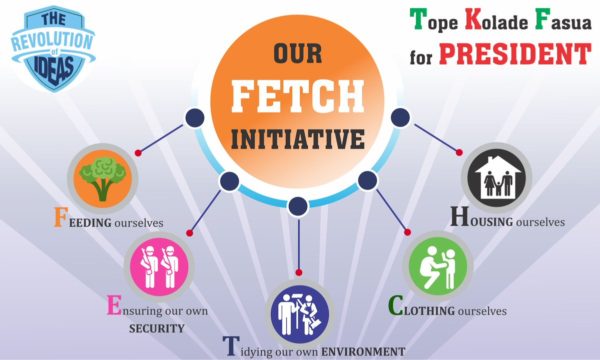
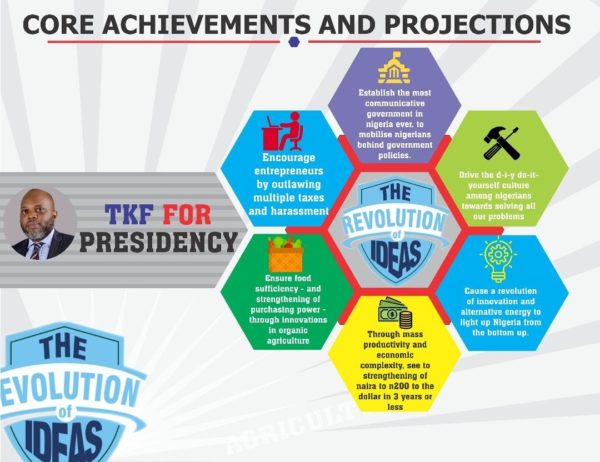
The aspirants drew up his Revolution of Ideas tagged the TKf manifesto, comprising Fetch initiatives and Core achievements and Projections.
Under the Fetch initiatives, he said: We are bringing facts and figure based government. We are promising 15-20 per cent growth. We are tiding up our environment and prioritising feeding.
We must secure our own security- by employing youth in the security area in the nation.
We will establish the most communicative government in Nigeria ever to mobilise Nigerians behind government policies.
We will encourage entrepreneurs by outlawing multiple taxes and harassment.
We will ensure food sufficiency and strengthening of purchasing power through innovations in organic agriculture.
We will through mass productivity and economic complexity, strengthen Naira to N200 to the dollar in 3 years or less. We will cause a revolution of innovation and alternative energy to high up Nigeria from the bottom up. We will drive the D-I-Y- Do It Yourself culture among Nigerians towards solving all our problems.
The Governing Council of the National Health Insurance Scheme (NHIS), on Thursday, placed the scheme’s Executive Secretary, Usman Yusuf, on an indefinite suspension over allegations of corruption and other sundry offences.
However, the development has thrown up another controversy on whether the Council has powers, according to the NHIS Act, to suspend the Executive secretary.
The arguments also stem from the fact that Yusuf had been suspended by the Minister of Health, Isaac Adewole, in June 2017, but President Muhammadu Buhari upturned the suspension and reinstated the NHIS boss.
On Twitter, Joe Abah, former Director General of the Bureau of Public Service Reforms, wrote: “A Governing Board/Council has no powers to suspend a DG/ES on its own. They can RECOMMEND suspension to the President through the SGF but they can’t suspend.”
If this news is true, a Governing Board/Council has no powers to suspend a DG/ ES on its own. They can RECOMMEND suspension to the President through the SGF but they can’t suspend. https://t.co/CMJcjrCU8A
However, many disagreed with Abah, recalling the situation at the Securities and Exchange Commission (SEC) where the former Minister of Finance, Kemi Adeosun, suspended the commission’s DG on allegations of corruption and abuse of office. That suspension still stands till date.
What the NHIS Act says
According to the NHIS Act, the Executive Secretary also serves as the Secretary of the Scheme’s governing council.
The first part of the Act (section 4) stipulates what could lead to the cessation of a person’s membership of the governing council. It reads thus: “A member of the Council shall cease to hold office if … he is guilty of serious misconduct in relation to his duties.”
It continues: “A member of the Council may be removed from office by the President on the recommendation of the Minister if he is satisfied that it is not in the interest of the Scheme
or the interest of the public that the member should continue in office.”
Section seven – in the second part – of the NHIS Act also speaks about “the functions of the (governing) council”, but among the many functions listed there, none empowers the council to even oversee the actions of the Executive Secretary, much less probe or suspend him.
Perhaps the closest to that is the provisions of subsection 7(j) which states that “the Council shall have power to… carry out such other activities as are necessary and expedient for the purpose of achieving the objectives of the Scheme as set out in this Act”.
In fact, the word “suspend” does not feature in the NHIS Act, and the word “suspension” appears only once but has nothing to do with the Executive Secretary. Similarly, the word “removed” is featured only once in the document, and that was in the section already quoted above.
From the foregoing, it is clear that going strictly by the provisions of the NHIS Act, neither the Minister of Health nor the governing council has sole powers to suspend or remove the Executive Secretary from office. The minister may only recommend such actions to the President in whose hand it is to wield the big stick or not.
Meanwhile, the Chairperson of the NHIS Governing Council, Enyenatu Ifenne, while announcing Yusuf’s suspension on Thursday, said that a panel has been set up to investigate the allegations against him and submit its report within three months.
Ifenne also said that the council “consulted and got the approval of the Honourable Minister of Health (Isaac Adewole) before this suspension”.
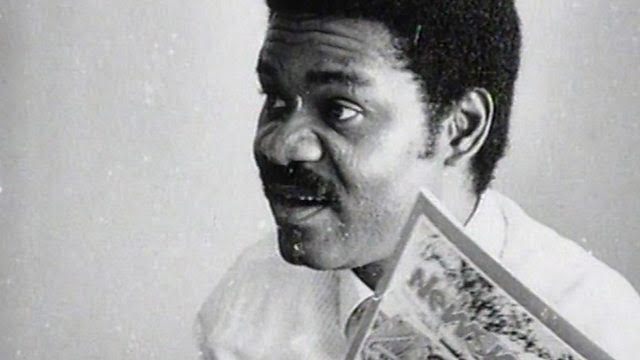
THIRTY-two years ago, the landscape of journalism in Nigeria was thrown into disarray when the death of prolific Nigerian journalist, Dele Giwa was announced on October 19, 1986. With his pen, he spoke the minds of the masses by investigating and revealing the dirty hidden truth about the dictatorial military government in power which made him a target for assassination by the Ibrahim Babangida government.
However, his premature death denied the country the contributions of one of its finest accountability journalist.
Sumonu Oladele “Baines” Giwa (popularly known as Dele Giwa) was born on 16 March 1947 in Ile-Ife, Osun State. Dele Giwa had his higher education in the United States at the Brooklyn College in 1977 and later enrolled for a graduate programme at Fordham University. Before returning to Nigeria from America he had worked as a News Assistant with the New York Times. He would go on to hone his craft in the defunct National Concord and the Daily Times newspapers both based in Lagos.
Following his exit from the National Concord Newspaper, alongside Ray Ekpu, Yakubu Mohammed and Dan Agbese, Giwa co-founded the pioneering investigative magazine Newswatch that introduced a whistleblowing journalism, speaking truth to power without compromise at the expense of their safety.
He died at the age of 39 as a result of injuries he sustained via a letter bomb he received on the 19th of October 1986 in his home at 25 Talabi Street, Adeniyi Jones, Ikeja, Lagos.
The 2017 report on the Global Impunity index ranks Nigeria 11th on a global scale where journalists have been killed with complete impunity in the past decade using indicators adopted by the Committee to Protect Journalists CPJ.
For this index, CPJ examined journalist murder that occurred between September 1, 2007, and August 31, 2017, that has remained unsolved.
“Only those nations with five or more unsolved cases are included on this index. CPJ defines murder as a deliberate attack against a specific journalist in relation to the victim’s work,” the report said.
Richard Akinola, a social commentator who spoke to The ICIR reporter said, unlike other African countries Nigeria has made significant progress in the freedom of expression of its citizens.
“Nigerians enjoy the freedom of expression compared to other nations in the continent but more needs to be done. Section 39 of the Nigerian constitution states it in black and white which empowers citizens to speak up and article 9 of the African Charter for human rights which is enshrined in the constitution of Nigeria gives citizens the legal backing.”
“But press freedom is restricted by the law from the provisions of Section 52 of the constitution which gives leaders a leeway in suppressing the press,” he said.
On immortalizing the late Dele Giwa, he suggested that young journalists should follow the path of the deceased journalist who was known for speaking the truth to power.
“Dele Giwa’s legacy can only be sustained if younger journalists begin to speak the truth to the government without bias. Investigative journalism which is the hallmark of good journalism is fast fading away apart from some few media houses in the country that are actively involved in investigations,” he stated.
“Though, the challenges facing these media houses are numerous I believe with capacity building and funding they will hold their head high among their peers,” he concluded.
Here is what Dele Olojede, one of the Giwa’s colleagues and mentees said about his boss in a radio interview conducted by Feyi Fawehinmi in 2017:
“Well, I remember the day clearly. Sunday, October 19, 1986. I had gone to play squash, I believe with Soji Akinrinade, who was also a colleague at NewsWatch at the time. I returned to my apartment in Oregun, which was not very far from the office, only to find all these messages waiting for me that something terrible had happened to Dele (Giwa). So I rushed over to his (Giwa’s) house, by which time they had taken him to the hospital in Opebi, and then rushed to the hospital from there and found him on this gunny. He was already dead by then, covered with a tarp. I pulled the thing open and saw him there stark naked, with his torso completely blasted apart! What I remember most about that day was somehow this image of his left wrist, where his watch had been.
.
The skin where the watch had been was preserved when every other thing was burnt. So you could see the image of the watch on his skin. I remember seeing that and I remember being extremely angry that day. I believe I was (the one) who drafted the official NewsWatch statement to the press, which probably accounted for this particular harshness and directness where I basically accused Babangida’s government of being behind the murder. So the next morning, they sent soldiers to NewsWatch offices and shut us down.”
.——-
Dele Olojede.
THE Commissioner of Police, Anti-Fraud Unit, Federal Criminal Investigation Intelligence Department (FCIID), Ikoyi, Lagos, Dan Okoro, has warned citizens to beware of the many cloned certificates and Automated Teller Machine (ATM) cards currently in circulation across the country.
Okoro said this while briefing journalists in Lagos on the discovery of some cloned certificates by a syndicate which specialises in printing fake documents of banks, government and corporate organisations.
He said the syndicate uses the fake documents to defraud banks, government, corporate organisations and individuals, adding that some bank officials aid and abet the crime.
According to the News Agency of Nigeria (NAN), the documents that are usually forged by the syndicate included CBN, presidential clearance certificates, IMF and court documents.
“I advise members of the public against cloned certificates, ATM card and other important documents currently in circulation. I want members of the public to keep their pin numbers, passwords and ATM safe.
“We have some documents recovered from one suspect arrested. We are investigating the documents and some bank staffers allegedly collaborating with the syndicate.
“It is only the bankers that have details of every deposit in the bank. Our investigation revealed that some bankers give information to the syndicate on how much customers have in every account.
“The syndicate cloned documents and transferred such money to another account, particularly, accounts with ATM cards are their easiest target.
“Many crimes are going on in different banks, unfortunately, the bank management will not allow the public to know about it because they want to keep their customers trust,” he said.
The commissioner said the arrested suspect was recuperating in an undisclosed hospital after he collapsed during a search of his house. Many incriminating items, including hard drugs, were found in his house.
“The suspect is a web site designer. He designed many of the cloned documents. We are on the trail of other members of the syndicate,” Okoro said. (NAN)
NIGERIA’S progress in the latest Global Competitiveness Index (GCI) released by the World Economic Forum (WEF) is confusing.
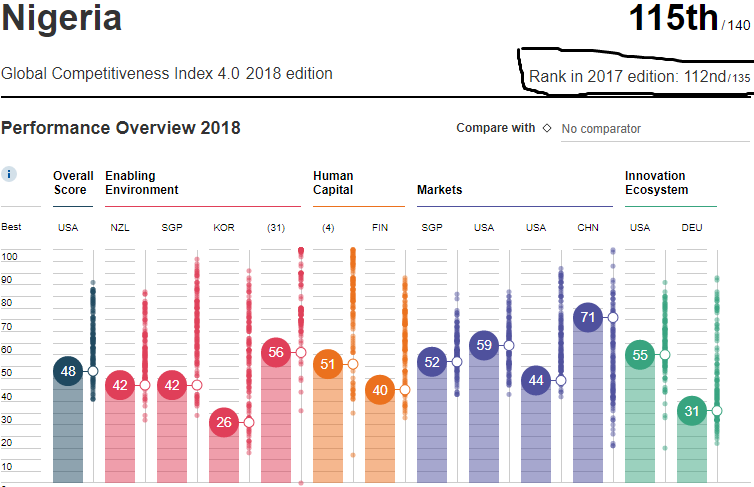
The media, including The ICIR, reported on Thursday that Nigeria moved up 10 places in the 2018 Global Competitiveness Report. Nigeria was ranked 125 last year and 115 this year. Therefore, the media report was right that Nigeria moved up 10 places in the ranking which indicates that the country has made progress in global competitiveness.
However, the 2018 Report showed that Nigeria fell three places to 115 and was ranked 112 in the 2017 edition.
2018 GC Report says Nigeria was ranked 112 in 2017 edition
This is where the confusion comes in. Contrary to the 2018 Report, the Global Competitiveness Report 2017 ranked Nigeria 125 out of 137 countries. But the 2018 Report indicated that Nigeria ranked 112 out of 135 countries in 2017.
It seems there is a misrepresentation of 2017 ranking because the 2018 Report indicated that 135 countries were ranked in 2017 whereas 137 countries were actually ranked as contained in the 2017 Report.
Reno Omokri, a former aide to former President Goodluck Jonathan, capitalised on this confusion to tweet that the media report that Nigeria made progress in GCI was false and alleged that the media report was sponsored by President Muhammadu Buhari government.
You may have seen the sponsored report by @MBuhari’s government claiming that Nigeria improved by 10 points in the World Economic Forum’s Global Competitiveness Index. This is a big lie. Nigeria actually retrogressed by 3 points. Never believe anything they tell you! #RenosDartspic.twitter.com/vsLiJwydiL
Based on the 2018 GCI, Omokri was right that Nigeria slipped by three places and did not make progress.
Therefore, both claims by the media and Omokri were right based on information from the WEF.
The ICIR sent an e-mail to WEF for clarification on Nigeria’s ranking but has not received feedback at the time of this report.
A tweet was also sent to the WEF Twitter handle but there was no reply by the time of this report.
Dear @wef Please I need clarification. In your 2017-2018 GCI, Nigeria was ranked 125 of 137 countries. But your 2018 report has this under Nigerian profile “Rank in 2017 edition: 112nd / 135”. Could you please clarify this?
WEF said it used a brand new methodology in this year’s ranking “to fully capture the dynamics of the global economy in the Fourth Industrial Revolution.”
According to the report “the GCI 4.0 framework is built around 12 main drivers of productivity. These pillars are: Institutions, Infrastructure; Technological readiness; Macroeconomic context; Health; Education and skills; Product market; Labour market; Financial system; Market size; Business dynamism; and Innovation. They comprise 98 individual indicators.”
CONCLUSION
Regardless of the new methodology used in the 2018 Report, it does not change the fact that Nigeria was ranked 125 in the 2017 GCI and now ranks 115 in the latest ranking. For the 2018 Report to say that Nigeria was ranked 112 in the 2017 edition is misleading.
A legal practitioner, Achinike William-Wobodo, has filed a suit before the Federal High Court in Abuja, asking the court to disqualify the incumbent Governor of Rivers State, Nyesom Wike, from taking part in the 2019 general election or any other election in Nigeria, on the grounds that he submitted a forged certificate of age declaration to the Independent National Electoral Commission (INEC).
In the suit filed on Wednesday, October 17, 2018, Wobodo asked the court to declare that the certificate of statutory declaration of age presented by Wike to the INEC on December 25, 2014, for the purpose of the 2015 general election into the office of the Governor of Rivers State, contained falsehoods and was forged.
Wobodo also asked the court to declare that pursuant to section 182, subsection 1 (j) of the 1999 constitution as amended, Wike is not qualified or eligible to contest or participate in the 2019 general election or any other election in Nigeria, having presented a forged certificate to INEC.
Copy of the suit filed by Nwobodo against Governor Wike.
Section 182 (1j) of the constitutionstates: “No person shall be qualified for election to the office of Governor of a State if – he has presented a forged certificate to the Independent National Electoral Commission.”
The Rivers State government is yet to officially respond to the development.
A number of top government functionaries have been hit with certificate scandals in recent times, most prominent of which is the former Minister of Finance, Kemi Adeosun, who resigned her position after admitting that her National Youth Service exemption certificate was fake.
Also, the Special Adviser to President Muhammadu Buhari on prosecution, Okoi Obono-Obla, is alleged to be parading an invalid senior secondary school certificate.





 Section 182 (1j) of the