Home Blog Page 2506

REPORT: How meagre support from NHIS jeopardises health of kidney failure patients

Abuja, Nigeria — Halima Galadima wheels herself into the Dialysis Unit of Garki Hospital with the support of her teenage daughter on September 11.  She is too weak to walk as she is overwhelmed by dizziness. 

In preparation for the day’s dialysis session, she came for some tests, including her packed cell volume (PCV) and to take injections. Being an End Stage Renal Disease (ESRD) patient, she needs to undergo a renal replacement therapy.

ESRD, otherwise known as kidney failure, is the last stage of chronic kidney disease. When the kidneys fail, it means they have stopped working well enough for patients to survive without dialysis or a kidney transplant.

Halima, who has not done kidney transplant because of her poor financial condition, takes hemodialysis three times a week as her only lifeline. Since she was diagnosed in October 2017, she has undergone about 45 sessions of dialysis.

“Without a renal transplant, ESRD patients do dialysis for the rest of their lives to stay alive,” said Aderemi Adelaja, a consultant nephrologist who works at Garki hospital. “And 36 sessions of dialysis will establish an individual who has kidney failure as an end-stage renal disease patient.”

Halima is a National Health Insurance Scheme (NHIS) beneficiary. Her health insurance scheme covered six out of 45 sessions of her dialysis procedure, excluding the injections and drugs she had taken since the inception of the disease.

“The injection costs N12,000 per dose and I have to take two doses in a week,” Halima told The ICIR.

At the cost of N26,700 per session, she has spent N1,201,500 on the dialysis sessions done so far. Her insurance scheme coverage paid N160,200 for the six sessions — the period covered by the scheme. She had not stopped receiving the periodic treatment as at the time The ICIR interviewed her. Without the kidney transplant, the patient would have to continue undergoing a regular dialysis procedure.

“NHIS to some extent supports hemodialysis. The number of sessions that are supported by the scheme is the question. That is where the problem is,” Dr Adelaja noted.

In between an intermittent cough and overload of fluid in her body, Halima lamented: “If the NHIS has supported me more, I would have been healthier as I struggle to meet up with even one session of dialysis per week.”

She said that, at several times, she had done emergency dialysis because some of her critical conditions warranted such.

Adequate dialysis and cost

“An ESRD patient has to dialyze three times in a week and to take two doses of injection in a week,” says Bulus Goni, a nephrology nurse who is also the dialysis unit head at Garki Hospital Abuja.

A dialysis session costs N26,700 in Garki hospital Abuja. In addition to that, some injections, which constitute Recormon and iron sucrose cost N10,000 and N2,000 respectively, bring the sum of the injection per dose to N12000.

Therefore in a week, N104,100 (N80,100 for dialysis and N24,000 on injection) are spent by the kidney failure patients to stay healthy. In a month, the money spent by these patients sums up to N416,400 while annually, N5 million naira is spent.

“The financial burden for the treatment of kidney failure mostly rests on the patient, the patient’s relatives or guarantors,” Adelaja said.

With the financial responsibility, Goni said a lot of patients could not afford regular dialysis.

The importance of the kidney to the proper body function cannot be overemphasised. Its functions include the removal of toxins from the body through the urine, said Akinremi Omotayo, a nephrology nurse at Garki Hospital and founder of the Omotayo Kidney Care Foundation.

The human kidneys, she explained, regulate the body fluids and the blood pressure, helping to stimulate Erythropoietin, a hormone that assists in the production of red blood cell in order to increase the blood volume. Omotayo said that in a situation when someone’s kidney is not properly working, those functions performed by the kidneys have shut down. Hence the reason for a renal replacement therapy which could be through a renal transplant, hemodialysis or peritoneal dialysis.

She said inadequate dialysis causes the urea and creatinine (i.e. some of the wastes in the blood removed by kidneys) to be high.  As a result, patients are bound to experience diarrhoea, loss of appetites and vomiting. And the blood volume is drastically reduced because the erythropoietin would not reproduce.

Nephrologists voice to the government

Adelaja told The ICIR that the Nigeria Association of Nephrology (NAN) has made a proposal through the Vice President and the Minister of Health for a more effective participation of the Nigerian government in either subsidizing or make the NHIS take over the management of dialysis.

A speech delivered by Babatunde Salako, the association’s president, and contained in a 2017 publication of NAN reveals that the government agreed to the proposal of increasing the number of dialyses to be covered by NHIS from 6 to 36 sessions.

NHIS speaks

In a phone interview, The ICIR spoke with an NHIS officer, who declined to be identified, she, however, confirmed that the insurance scheme only covers a maximum of six sessions of dialysis. When asked if there is any other plan to give more support to the kidney failure patients who chose NHIS as their health insurance scheme, she replied that the scheme is currently working on some benefit packages for the patients who are beneficiaries of NHIS but did not give further information.

Similarly, the NHIS Media Head told The ICIR the cost of dialysis restricted the NHIS to provide more benefit package for the patients.  “You know dialysis is a big amount of money?” He also hinted that the pool of funds accrued is insufficient.

Meanwhile, he directed The ICIR reporter to the Informal Sector head through the executive secretary, Usman Yusuf, saying that he would not give any information without the consent of the NHIS boss.

However, five weeks after Halima spoke with The ICIR, she died.

According to a nurse at the hospital where she was receiving treatment, her death was caused by the high creatinine and Urea in her body which was a result of the inconsistent dialysis.

UK court overturns Ibori’s conviction appeal

0

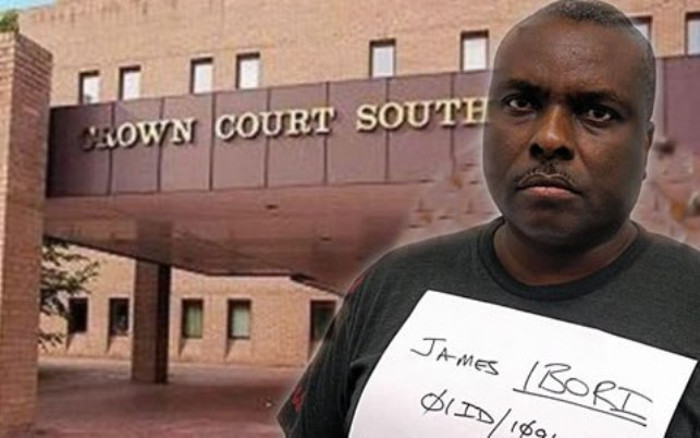
JAMES Ibori, who was jailed in Britain for laundering tens of millions of dollars in stolen public funds through British banks and properties, lost an appeal against his conviction in London on Wednesday.

Mr Ibori was governor of oil-producing Delta State in Southern Nigeria for eight years.

He had pleaded guilty in a London court in 2012 to a 10-count charge of fraud and money-laundering, involving sums amounting to at least 50 million pounds ($66 million).

He received a 13-year jail sentence of which he served half, as is common in the British system.

Mr Ibori, who is now back in Nigeria, appealed against his conviction, alleging misconduct by British Police and prosecutors, which he argued, tainted the judicial process.

(Reuters/NAN)

How MDAs frustrate Nigerians’ access to public information despite FOI law

ON Friday, September 7,  The ICIR submitted a Freedom of Information (FOI) request to the Federal Ministry of Education. The purpose of the request was to obtain procurement details of contracts approved for the ministry by the Federal Executive Council (FEC) between 2015 and 2017. Five weeks after, prospects of getting the needed information are still very slim.

When The ICIR reporter visited the ministry on September 25, armed with a reminder letter, he was told not to bother submitting as the original request had already been sent to the appropriate department. For hours, he moved from one office to another to get updates on the request.

According to the minister’s office, the request had been sent to the office of the Permanent Secretary on September 11 and was already sent to the Director of ICT for action. But the desk officer at ICT unit directed The ICIR reporter to the Director of Procurement. There, it was said that the request was sent to the Deputy Director (DD) of the unit on September 20. The DD’s records then showed that the request had been stuck with the Chief Procurement Officer (CPO) since September 21.

Edith Onyegbula, the ministry’s CPO, told The ICIR that she assumed the position in 2017 and has only the custody of FEC records of 2018. The office in charge of documenting such information, she said, is the Permanent Secretary’s.

At the last visit on Monday, it was resolved based on directives from the office of the PS, that Onyegbula would write to the Procurement Deputy Director about her challenge. And her report would then be transferred to the Director, and to the Permanent Secretary who would grant final approval.

It took nearly two weeks for the request to get to the CPO’s desk from the Permanent Secretary’s records office.  In the light of the observed challenges, it is unclear when the document will be finally made available.

File: Attorney-General of the Federation, Abubakar Malami. His office is responsible for ensuring compliance of FOIA.

Four months of frustration by public institutions

In the last four months, The ICIR has sent FOI requests to 13 public institutions and has recorded frustrating experience dealing with each of them.

On June 12, 2018, two FOI requests were sent to the Ministry of Finance and the Office of The Accountant-General of the Federation (OAGF), requesting for the details of 2017 capital releases.

The OAGF responded and delivered the requested information on June 26  after 10 working days as against the seven working days stipulated by the Freedom of Information Act, 2011. The Ministry of Finance, on the other hand, directed The ICIR to the office of the Accountant-General of the Federation for the details five days after the request was made.

In July, The ICIR filed a series of FOI requests to various public institutions with about 90 per cent of the requests yet to be responded to.

On July 19,  The ICIR sent another FOI request to the OAGF requesting for the updated details of 2013-2017 budgets capital releases and receipt of actual spending from the capital releases of 2013-2017, up till date, the OAGF has neither written to ask for an extension nor responded to the request.

On July 20, an FOI request was also sent to the Independent National Electoral Commission (INEC), asking for details of election results from 1999 to date. On July 25 (five days after), INEC responded by notifying  The ICIR of the commission’s acknowledgement.

The ICIR finally got the requested information on September 4, after 32 working days of filing the request.

The experience with other agencies is worse. The ICIR filed series of FOI request on the details of stamp duty recovered by the Nigerian Postal Service (NIPOST) from the office of the Secretary to the Government of the Federation (SGF), Central Bank of Nigeria (CBN), Nigeria Inter-Bank Settlement Systems Plc, (NIBSS) and the Nigerian Postal Service (NIPOST) – these are the relevant agencies who by law have records of the requested information.

The SGF wrote back on 9th of August (after the stipulated seven working days) to inform The ICIR that the Federal Inland Revenue Service (FIRS) is the custodian of the information.

Excerpt from the letter obtained from the SGF said: “…after careful review of the application, the Office is of the view that the Federal Inland Revenue Service (FIRS) has a greater interest and is the custodian of the information sought and therefore be in better position to provide same.”

It further said in the letter that the application was referred to the FIRS and advised the ICIR to deal with it directly.

The CBN in its response obtained on 8 August, said the request is being processed and will revert to The ICIR as soon as possible.

After 41 working days (precisely 26 September) of waiting for a response from the FIRS, CBN, NIPOST and NIBSS, The ICIR did a reminder to them all, 14 working days after, the request is still pending as they all have not responded.

In August, The ICIR sent an FOI request to INEC for the certified true copies of academic credentials of Sen. Ademola Adeleke, Osun state PDP governorship candidate in the last state election. The information was delivered after 15 working days, precisely 31 August.

An FOIA was invoked on The National Emergency Management Agency (NEMA) to produce details of 2016 contract for the ‘production and airing of a documentary on IDPs’. Two months after, NEMA has refused to respond to the request.

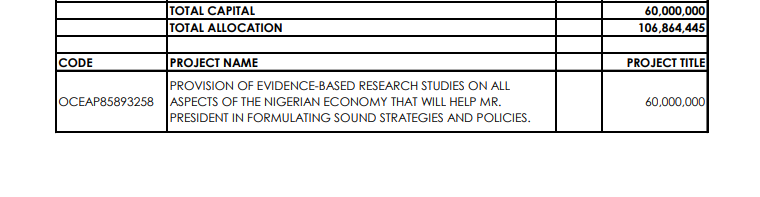
Recently, on 8 October, The ICIR filed another FOI request to the office of the Special Adviser to the President on Economic Matters to ask for a copy of “evidence-based research studies conducted in 2017 financial year” as provided for under the 2017 budget with OCEAP85893258 as the project code.

Budget provision for evidence-based research studies in 2017 financial year under the office of the Special Adviser to the President on Economic Matters

In a response dated 9 October 2018, the Special Adviser, Dr. Adeyemi Dipeolu,  said the budget item is not under the Special Adviser to the President on Economic Matters in the office of the Vice President. But Dr. Dipeolu’s claim is inaccurate because the budget document showed OCEAP85893258 is indeed a code for the provision in Office of the Chief Economic Adviser to the President.

In contrast,  the Universal Basic Education Commission responded promptly to the FOI request. When The ICIR  requested the status of 2015 Library projects on 2 August 2018, the agency responded within four days.

What the FOI Act says

The FOI Act was signed to law in 2011 by former President Goodluck Jonathan and since then, all requests for information received by a public institution have to be dealt with in accordance with the FOI Act.

Sections 1 and 2 of the FOI act establish the right of any person to apply for information or records in the possession of a public institution. Generally, these rights are:

  • The right to access or request any information or record that is in the custody or possession of any public institution or private bodies providing public services, performing public functions or utilising public funds.
  • The right to be told whether the information or record exists.
  • The right to have the requested information or record released if the information or record is in the custody or possession of a public institution.
  • The right not to demonstrate any specific interest or purpose in the requested information or record.
  • The right to receive information that public institutions are obliged to proactively disclose under the Act.
  • The right to take legal action in Court to compel any public institution to comply with the provisions of the Act, including discharging their proactive disclosure obligations under the Act.

Also, according to section 29 of the FOI Act, every public institution must submit its annual report on or before February 1 of each year to the AGF on all applications of FOI request they received.

For 2017, only 73 out 900 public institutions in Nigeria complied to that provision of the FOI act. This amounts to about only 8.1 per cent compliance to section 29 of the FOI act by public institutions.

The ICIR had earlier in the year reported how budget provisions meant for the implementation of FOI request have not been utilised fully to ensure compliance with the FOI Act.

Ogwezzy: CSOs, media must work together to promote good governance and accountability


THE Head of Department of Mass Communication, University of Lagos, Abigail Ogwezzy says Civil Society Organisations (CSOs) and Media practitioners and journalists must collaborate and cooperate to promote and enhance good governance and accountability in Nigeria.

“For media and CSOs, we see ourselves as competitors which is bad for the pursuit of good governance and accountability,” Ogwezzy, a Professor of Mass Communication and Development Communication said in Abuja on Wednesday at a one-day roundtable meeting for media and civil society organisations.

She spoke on “Emerging trends in the collaborative effort between the media and civil society in fostering social justice and accountability in the society.

According to her, the media and the CSOs have similar objectives of promoting good governance and transparency but have poor collaborations and cooperation as well as knowledge of each other.

Both the CSOs and the media, Ogwezzy stressed must come together, understand themselves and drop the mutual suspicion if they must make desired impacts in good governance and accountability.

“We have poor collaboration and cooperation and poor knowledge of each group and with this, we won’t be able to deepen good governance and accountability,’ she said

“There is a need to build a relationship, otherwise mutual suspicion will continue, people suspect each other because they don’t know each other.”

Bad governance and poor management of resources were the reasons many Africans flee abroad in search of greener pasture, Ogwezzy remarked, “people must put their feet down to make their country work because, with bad governance, nothing works,” she added.

She emphasized improved collaboration and cooperation between the CSOs and the media for them to achieve their objectives.

Engaging communications experts and designing the right type of communication strategies to every aspect of their work, she explained are keys to achieving the goals of CSOs.

She commended the management of the International Centre for Investigative Reporting (ICIR) for organizing the roundtable

In his opening remarks, Executive Director of the International Centre for Investigative Reporting (ICIR), Dayo Aiyetan said the roundtable was put together to ease the tension and mutual suspicion between the media and the CSOs.

“Our goals are the same−accountability and good governance. We want to find a way to work together,” Aiyetan said.

“We hope that this can blossom into some bigger relationship.”

He urged participants to take advantage of the roundtable to establish a relationship and build a network, saying “part of the things we take away from meetings like this is the network that it affords.”

The ICIR boss commended participants from Ghana, noting that the whole idea was to learn from what works in Ghana in terms of collaboration between the CSOs and the media.

“The whole idea about the project is that we want to explain certain things to them about Nigerian experience because Ghana experience is different from Nigerian experience,” he explained.

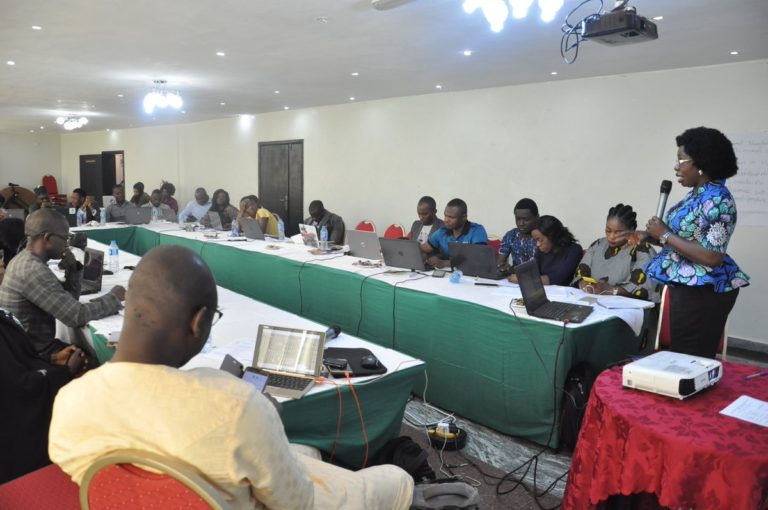
The roundtable which attracted 18 journalists and 11 CSOs from Nigeria and Ghana was organized by the International Centre for Investigative Reporting (ICIR) and funded by the Ford Foundation.

Fayemi: Ekiti will know true position of things in 100 days

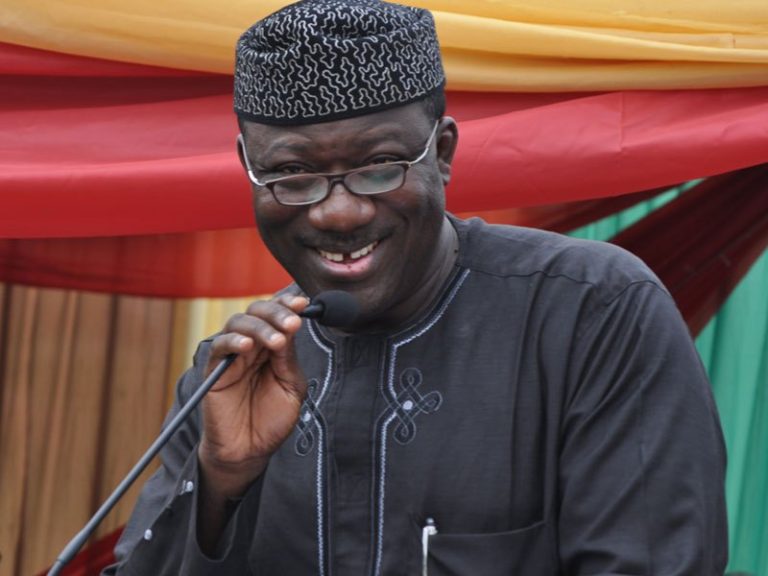
KAYODE Fayemi, the new governor of Ekiti State said on Tuesday during his inauguration that Ekiti would know the true position of things in 100 days.

This was contained in the speech read at his swearing-in celebration at Ado- Ekiti, the state capital.

Fayemi said, “We will ensure that within 100 days from today, Ekiti Kete will know the true position of things.”

According to the governor, Ekiti state’s debt profile has ballooned to over N170 billion which was expended on white elephant project.

Fayemi said his administration’s four pillars through which he would deliver his promises to the people would be agriculture and rural development, social investment, infrastructure and industrial development, and knowledge economy.

He welcomed the Ekiti people to a new era and emphasised his readiness to reclaim the state to achieve greater heights.

While blaming the past administration led by Ayodele Fayose for reducing the reputation of the state, he said Ekiti has become “a pot of jokes due to the crashing in the ethics field, loquacious ignorance and ravenous corruption done in the past administration.”

Fayemi said his government would thoroughly review all documents and widely disseminate the present state of affairs for all to see what has become of the state. He promised to seek out the truth and present it to the people.

He, however, added that his comeback was not a revenge mission but a healing balm to the painful wound of the past administration.  The governor said he is committed to promoting sustainable development goals, and transform the state in the areas of agriculture, tourism, infrastructure, and education.

In furtherance of his commitment to jobs and wealth creation, Fayemi said he would revisit the abandoned projects which included the road network, tourism project and to take on new infrastructure projects in advancing the economic growth of the state.

In order to achieve sustainable food security and foster agro-based industrial development for poverty alleviation, Fayemi said, the approach must change from the current focus on farming, and agriculture as a social service to a commercial and private sector driven agribusiness.

He assured the people of Ekiti that he would not sacrifice prompt payment of salary for indulgence in pursuance of projects of minimum benefits to people.

He noted that quality health care is important to the people especially the aged, and called on residents to join hands with him in achieving the goal.

“Delivering qualitative health care is our priority and we will re-equip our hospitals and their functionalities so as to attend to the need of our people.”

He promised to pay workers’ salaries and the social security benefit to the elderly.

Born on February 1969 in Isan-Ekiti of Oye Local Government, Fayemi had previously held the governorship position between 2010 and 2014. He contested for a second term in 2014 but lost to Ayodele Fayose of Peoples Democratic Party. Fayemi resigned as the Minister of Mines and Steel Development in May 2018 after he became the APC candidate for the governorship election which he won.

Nigeria demands elimination of safe havens for stolen asset

0

Nigeria has called for the elimination of safe havens for stolen assets and illicit financial flows to free up resources for sustainable development, Permanent Representative to the UN, Tijjani Bande, said

Mr Bande made this known at an ‘Interactive Dialogue for Sustainable Development’ at the Economic and Financial Committee of the UN General Assembly in New York.

He called for unconditional return of such assets and funds to their countries of origin.

The Nigerian envoy said: “In this regard, it is important that safe havens that create incentives for the transfer of stolen assets and illicit financial flows abroad are eliminated.

“The return of such assets and funds will certainly aid our ongoing sustainable development efforts.”

He said Nigeria believed that sustainable development required the galvanisation of urgent common efforts, a reinvigorated global partnership, and an enabling environment at all levels.

He called for the creation of appropriate global partnership for development, balanced against the increased emphasis on domestic resource mobilisation.

Mr Bande noted the concerns expressed in the report of the UN Secretary-General, Antonio Guterres, particularly in relation to the slow pace of Sustainable Development Goals (SDGs) progress in Sub-Saharan Africa.

According to him, Nigeria is fully committed to translating the SDGs into reality, in a balanced and integrated manner.

He added that “As a show of commitment, the Government of Nigeria has developed a comprehensive multi-layer and multi-cluster national accountability institutional framework for enhanced coordination of SDGs mainstreaming in the country.

“An Inter-Ministerial Committee on the SDGs has also been established and the operational guideline for coordinated engagement of Government intervention programmes has been adopted, at both the national and sub-national levels.

“The Office of the Senior Special Assistant to the President on SDGs has been empowered to ensure horizontal and vertical coherence of SDGs development policies, plans and strategies in the country.

“To fully harness Nigeria’s rich human and material resources and to more effectively engage other stakeholders, a Private Sector Advisory Group and a Donors’ Forum on the SDGs have recently been inaugurated.”

To enhance the legislative oversight on the SDGs implementation processes, he said, two committees on SDGs had been established in both the Nigerian Senate and House of Representatives.

The ambassador explained that Nigeria’s Economic Recovery and Growth Plan aligned, to a large extent, with SDGs targets.

To ensure proper monitoring and evaluation of SDGs implementation in Nigeria, an SDG data mapping exercise was recently concluded and a data supply responsibility framework, agreed upon, he said.

He said Nigeria was currently upscaling Conditional Grants Scheme, to become one of the best practices in counterpart contributory mechanism that incentivises sub-national governments to accelerate progress in SDGs core targets.

“In line with the Sendai Framework for disaster risk reduction and the workings of the United Nations International Disaster Reduction, Nigeria has established the National Emergency Management Agency as the focal point for all disaster management efforts of the Government.

“As a practical and pro-active approach to disaster reduction, Nigeria has also established the National Centre for Flood Early Warning Systems.

“The devastating impacts of climate change are increasing, posing fundamental threat for the existence of humanity. Nigeria has since taken steps in integrating and implementing the Paris Agreement.

“We urge States Parties to ensure compliance to the Paris Agreement on the basis of common but differentiated responsibilities,” the Nigerian envoy said.

(NAN)

From Allah we came, to Allah we shall return… Hauwa Liman’s final words before being abducted

“THEY are here, they will take us. We came from Allah and we (shall) return to him. Call my parents, they don’t know my situation. Call Fatima to tell my parents, but don’t tell them my situation. We are in the barracks. Surely we come from Allah and we (shall) return to him. They have entered.”

The above is the translation of the final words of Hauwa Liman, a former aid worker with the International Committee of the Red Cross (ICRC), on the day she and two of her colleagues were abducted by the Boko Haram in Rann, Borno State.

When the insurgents attacked the community, Hauwa took refuge inside a room from where she sent a voice note via Whatsapp, an instant messaging mobile application, to one of her friends informing her of her predicament. That message was the last time anybody heard from Hauwa.

Four soldiers, four policemen and three other aid workers were killed in that attack, but Hauwa was one of the ‘lucky’ ones that were kidnapped — to die another day.

Saifura Ahmed, a UNICEF employee who was kidnapped alongside Hauwa Liman, was executed by Boko Haram in September, and Hauwa herself was killed on Monday, October 15, 2018, exactly one month apart. According to video clips released by the insurgents, both ladies had their hands tied behind them before being shot at close range.

Hauwa was only 24.

Nigeria failed them

The federal government had successfully negotiated the release of many Boko Haram hostages, including some of the Chibok schoolgirls, the University of Maiduguri lecturers, some policewomen abducted on their way to a colleague’s funeral, and almost all the abducted Dapchi schoolgirls. But somehow, the government appeared helpless in the cases of Saifura Ahmed and Hauwa Liman.

When Saifura was executed, a spokesman of Boko Haram said that they had “contacted the government through writing and also sent audio messages but the government have ignored us”, so the execution was “a message of blood”. Apparently, this message too was ignored.

However, the Minister of Information and Culture, Lai Mohammed, denied that the government ignored Boko Haram. “It is very unfortunate that it has come to this,” Mohammed stated.

“The Federal Government did everything any responsible government should do to save the aid worker. We kept the line of negotiations open all through. In all the negotiations, we acted in the best interest of the women and the country as a whole,” he explained.

Two other hostages remain with the Boko Haram. They are, Alice Ngaddah, who was abducted in Rann alongside Hauwa, and Leah Sharibu, the Dapchi schoolgirl that was not released alongside her colleagues because she refused to convert to Islam.

Nigerians unimpressed

On the social media, tributes and comments continue to pour in over the execution of Hauwa Liman, many expressing displeasure at the government’s inability to save her, despite an initial warning by the Boko Haram.

Former Minister of Education, Oby Ezekwesili, tweeted that she found it difficult to sleep, wondering how a country watched helplessly as its citizens were being slaughtered on its soil.

Also, one Demola Olarewaju tweeted: “FG was ‘shocked’ by the killing of Hauwa Liman. Someone should explain this pls: shocked that in spite of all they did, BH went ahead and executed her or shocked because they had forgotten that BH had publicly promised to kill her if some demands made known to Govt were unmet?”

Another Twitter user with the name M.S. Elgusawi wrote: “It’s very disheartening how this young lady was mercilessly killed by so-called ‘Technically Defeated’ Boko Haram. Buhari allocated all of his energy on fighting citizens and opposition.”

Overall, the general consensus, as could be deducted from the thousands of tweets and posts, was that of criticism and condemnation for the government.

Below are a few of the tweets:

https://twitter.com/SpeakUPNig/status/1052133217153761280

MISTAKEN IDENTITY: There’s another Hauwa Liman, and she is alive

FOLLOWING the execution of Hauwa Liman, a former humanitarian aid worker with the International Committee of the Red Cross (ICRC), by the Boko Haram, many Nigerians took to the social media to express their condolences, but in so doing, many were sharing the image of another Hauwa Liman.

Yes, there is another Hauwa Liman. She is the founder and Creative Director of Afrik Abaya, a fashion brand that seeks to transform the traditional Middle East female attire known as “ABAYA” using African textiles and fashion accessories.

Liman, though a graduate of Economics and  Development Studies from the Bayero University, Kano, makes a living as a fashion designer. She was the overall winner/most creative designer for the 2015 edition of the Nigerian Student Fashion And Design Week.

She was also one of the maiden beneficiaries of the Tony Elumelu Entrepreneurship Foundation in 2015.


READ ALSO:

But many have continued to mistake one Hauwa Liman with the other, sharing the picture of the living while paying tribute to the deceased.


This Twitter user confuses Hauwa Liman, the Fashion Designer, with Hauwa Liman, the deceased Aid-worker.


The picture on the right is not the slain Hauwa Liman.

Bukky Shonibare, an advocate for the release of the Chibok Girls, also explained that there is another Hauwa Liman. “The picture to the right is not that of the ICRC Hauwa Liman that was killed. That’s another Hauwa Liman, and she’s alive,” Shonibare explained.

So, as the country mourns one Hauwa Liman, the aid worker brutally murdered by senseless terrorists, the other Hauwa Liman watches her countrymen celebrates her obituary.

‘EFCC I’m here,’ Fayose wears customised shirt to EFCC office

IMMEDIATE former Governor of Ekiti State, Ayodele Fayose on Tuesday reported at the old Headquarters of Economic and Financial Crimes Commission (EFCC, Abuja  wearing a customised shirt with an inscription “EFCC I’m Here!”

The former Governor shared his own picture on Twitter arriving at the headquarters of the anti-corruption agency wearing a blue T-shirt and a faze cap, backing a shuttle bag and a handbag.

He also said he was not being kept in any custody by the EFCC, noting that his media aide, Lere Olayinka, would take care of his Twitter handle for the period he would be at the anti-graft’s office.

“I’m not in the custody of EFCC. While I’m here, my media aide, @OlayinkaLere will operate this twitter handle,” Fayose wrote on Twitter.

After handing over the affairs of the state to his Head of Service on Sunday ahead of Tuesday inauguration of Kayode Fayemi as the new Governor of Ekiti State, Fayose was absent at the inauguration due to his appointment with the EFCC.

Fayose had said that he would be in Abuja with his bedclothes and pillowcase.

He had stated that he was going to Abuja to avoid all insinuations that he would run away from the country through any available route whenever he leaves office as the governor of Ekiti State.

Early in the day, he wrote that in a few minutes, he would be at the EFCC old office at Wuse 2, Abuja.

“In few minutes,  I will be at the EFCC Old  Office, Wuse 2,  Abuja,” Fayose wrote.

“I’m a man who stands by his words and I hope that after today, those President Buhari’s men that have been accused of corruption will also be bold enough to submit themselves to the @officialEFCC.”

He is wanted by the EFCC to answer allegations that he received about N1.3bn from the Office of the National Security Adviser through the then Minister of State for Defence, Senator Musiliu Obanikoro

Meanwhile, during his inauguration speech, Fayemi said that evidence has shown that the state has been plunged into debts of over N170billion.

He described Fayose’s exit from the office as “the end of an error.”

Budget and contract information missing on Ecological Fund Office’s website since 2016

THE Ecological Fund Office (EFO) receives three per cent of the monthly allocation from the Federation Account which runs into several billion, but the finances and expenditure of the agency are opaque. 

EFO was established as an intervention facility to address the ecological problems ravaging communities across the country, and theFederal Government has committed a huge share of taxpayers’ money to the challenge on yearly basis.

But between 2016 and 2018, the amount received by the Fund has never been published in the public domain. Its official website that ought to contain long lists of completed projects, ongoing projects, names of contractors and consultants, as well as contract sum and amount paid, has not been ‘significantly’ updated since 2016, The ICIR can report.

The Fund has not operated an active website since April 26, 2017, when the profile of its Permanent Secretary, Habiba Lawal was uploaded.

Besides Lawal’s picture and a slide showcasing some projects executed by the Fund on its Home Page, other content categories on the site were dormant.

The ICIR visited the website to access information for an investigative reporting on Plastic Waste Recycling Plants project funded by EFO in 2009, but only the ‘Home Page’ and ‘About Us’ section contained sparse information.

The 26 plastic waste recycling plants were reported to have been completed and ready for commissioning as of November 2013 in a report by the EFO.

No content was however displayed in the segment marked “Completed Projects” on the website while there were scanty pictures of ongoing drainage projects in the section marked ongoing projects.

“Nothing Found. It seems we can’t find what you’re looking for. Perhaps searching can help,” was the response.

When the site’s search engine was used for the same purpose, it returned the message: “Search Results for: plastic waste recycling plants. Nothing Found.”

The categories that have contents include ”Department” which showed that the EFO has five departments: Permanent Secretary’s Office, Soil Erosion and Flood Control Department, Drought and Desertification Control Department, Pollution Control Department and Public Procurement Department. Each of the sections simply highlights the duties of the departments.

But under a section like Ecological Issues that ought to list the various ecological challenges facing the country, “the page could not be found” was the result when it was clicked  by this reporter.

On its news and event page, there were only three items posted since 2016 namely – Profile of Habiba Lawal, Change begins with me at EFO, and highlights of achievements in 2016. But none of them could display any information. The result was just “oops, the page cannot be found.”

Other sections such as Tech Issues were also empty. The video gallery has just three videos while the photo gallery contains no picture.

The Ecological Fund Office is under the Office of the Secretary to the Government of the Federation (SGF).

Its annual budget and other financial activities have not been made public and this reinforces concerns in the public domain on the transparency level of the current administration of President Muhammadu Buhari.

The Fund, like NNPC, FIRS and CBN have been known not to make their annual budget public despite the provisions of Section 21 of the Fiscal Responsibility Act (FRA) 2007.

In 2016, the Public Accounts Committee (PAC) of the House of Representatives queried the EFO over the expenditure of N85 million for advertisement of its activities in 2010, and another N30 million which the office claimed was used to organise a stakeholders meeting.

The Fund was originally established in 1981 through the Federation Account Act (1981) based on the recommendation of the Okigbo Commission.

The Act has subsequently been modified by Decrees 36 of 1984 and 106 of 1992 respectively, and further modified through the Allocation of Revenue/Federation Account  (modification) order of 8th July 2002.

The Fund which originally received 1 per cent of the Federation Account was reviewed upwards to 2 per cent of the Federation Account in 1992. From its inception in 1981, it has been a first line charge which provides handy resources for the amelioration of ecological problems such as soil erosion, flood, drought, desertification, oil spillage, pollution, general environmental pollution, storm, tornadoes, bushfire, crop pest, landslide, earthquakes etc.

The enabling statutes have over the years placed the Fund under the control of the Head of the federal government, to be disbursed and managed in accordance with such directives as may be issued from time to time.