THE Federal Capital Territory (FCT) Police Command foiled a robbery attempt in the Zone E Extension area of Apo Resettlement,Abuja, on Monday, June 23.
A statement released on the incident by the command spokesperson, Josephine Adeh, on Tuesday, said the police received a distress call at about 10:30 pm from a commercial motorcycle rider about heavy gunfire in the area.
Following the call, the Divisional Police Officer (DPO) of Apo Division, Uchenna Igwebuike, a chief superintendent of police (CSP), mobilised his Ambush and Surveillance Teams to the scene.
“The attackers engaged the police team in a fierce gun battle. In a swift tactical response, a reinforcement team led by the Deputy Commissioner of Police in charge of Operations, DCP Isyaku Sharu, arrived at the scene.
“The operatives responded with superior firepower, forcing the assailants to flee into the surrounding hills.”
The police added that a joint manhunt operation involving their operatives and local vigilantes was ongoing to track down and apprehend the fleeing suspects.
However, during the operation, three persons were rescued with varying degrees of injuries.
All injured persons were immediately evacuated for emergency medical care.
According to the police,one of the victims later succumbed to his injuries and was pronounced dead by medical personnel at the hospital.
A green Toyota Corolla vehicle with registration number GWA 620 AU, belonging to one of the victims, was also recovered at the scene.
The Commissioner of Police, FCT, Ajao Adewale, condoled with the family of the deceased and assured residents that the command remained committed to protecting lives and property across the Territory.
The CP also appeals to members of the public, especially residents of communities around Apo Resettlement and its environs, to report anyone seen with gunshot wounds or suspicious injuries to the nearest police station or via any of the command’s emergency numbers.
He urged the public to remain vigilant, law-abiding, and continue supporting the police in their fight against crime and criminality.
Meanwhile, the Federal Government on Monday, June 23, said Abuja remained safe for citizens and visitors.
This came after the United States Embassy restricted staff from visiting military and government facilities in the city due to what it described as global security concerns.
The ICIR reported that the US Mission issued a notice warning its citizens against non-official travel to government and military institutions in the FCT.
But in a statement, the Minister of Information and National Orientation, Mohammed Idris, said the Nigerian government respected the right of foreign missions to issue advisories to their citizens, but emphasised that there was no cause for alarm.
Idris added that the security strategies in place in the nation’s capital had helped detect and neutralise threats before they could cause harm.
The advisory, he said, appeared to be a general precaution and not based on any imminent or localised risk.
UNITED States President Donald Trump has claimed that Israel and Iran had agreed to a ceasefire, urging both nations to embrace peace after nearly two weeks of war.
“The CEASEFIRE IS NOW IN EFFECT. PLEASE DO NOT VIOLATE IT!” he wrote on his Truth Social on Tuesday, June 24.
“On the assumption that everything works as it should, which it will, I would like to congratulate both countries, Israel and Iran, on having the stamina, courage, and intelligence to end what should be called ‘THE 12 DAY WAR,” Trump further wrote on the platform.
The ICIR reports that despite the alleged agreement, residents reported hearing explosions near Tel Aviv and Beersheba in southern Israel on Tuesday morning.
Meanwhile, Iran’s semi-official SNN news agency stated that Tehran launched its final round of missiles just before the ceasefire took effect.
Similarly, Israel’s Ambulance Service and Iranian authorities reported nine people killed in an attack in northern Iran on Tuesday morning.
Israeli Prime Minister Benjamin Netanyahu announced that Israel had accepted Trump’s ceasefire proposal, stating that the country had accomplished its objective of eliminating Iran’s nuclear and ballistic missile threat. However, he warned that Israel would respond decisively to any breach of the agreement.
“Israel thanks President Trump and the United States for their support in defence and their participation in eliminating the Iranian nuclear threat,” Netanyahu said.
WhenTrump announced what he described as a full ceasefire on Monday to end the war, he appeared to indicate that both Israel and Iran would be allowed to complete ongoing military operations before the truce took effect in phases.
His announcement followed a sharp escalation in the conflict, when the US bombed Iranian nuclear facilities, triggering a retaliatory missile strike by Iran on a US base in Qatar the following day.
Iranian Foreign Minister Abbas Araqchi said on Tuesday that if Israel stopped its “illegal aggression” against the Iranian people before 4 a.m. Tehran time (0030 GMT) on Tuesday, Iran had no intention of continuing its response afterwards.
“The final decision on the cessation of our military operations will be made later,” Araqchi added in a post on X.
Israel, with support from the United States over the weekend, launched strikes on Iran’s nuclear facilities, accusing Tehran of developing nuclear weapons.
Iran has consistently denied pursuing a nuclear weapons programme, but Supreme Leader Ali Khamenei warned that if the country chose to, “no world leader would be able to stop us.”
UNITED States Mission in Nigeria has issued a security alert, urging American citizens to avoid all non-essential travels to military and government facilities in Abuja amid heightened global security concerns.
“Due to increased security concerns arising from current global developments, US Mission Nigeria informs US citizens that all US Embassy employees and their families are prohibited from non-official travel to a Nigerian military site or other government venue in Abuja at this time” the embassy said.
In the alert issued on Monday, June 23, the embassy said the advisory came in the wake of global developments that had prompted heightened security measures and a re-evaluation of movement around sensitive locations.
“American citizens residing in or visiting Nigeria are urged to remain vigilant in public places, particularly in locations frequented by Westerners, expatriates, and government officials” the embassy said.
It further advised people to steer clear of large gatherings, maintain unpredictable daily routines, and stay aware of emergency exits in buildings.
“Actions to take: Stay alert in public places, with particular attention to locations and venues where westerners, expatriates, and government officials frequent” it added.
The embassy also directed citizens seeking additional information or assistance to visit its official website.
The ICIR reported that on Thursday last week, the Defence Headquarters (DHQ) said Nigerian armed forces eliminated 6,260 terrorists and arrested 14,138 terrorists and other criminals within the past two years across the country.
This national security concerns may have been compounded by ongoing Israel-Iran conflict, which the US has joined by supporting Israel.
While there are fears that Iran, now backed by Russia, could attack institutions linked to the US, the latest advisory could be one of the strategies by the US to keep its citizens safe.
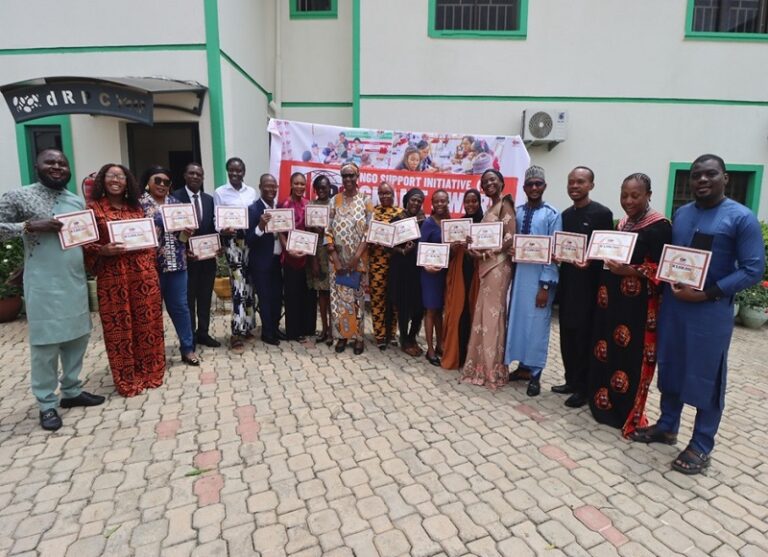
THE International Centre for Investigative Reporting (ICIR) and 16 other nonprofit organisations have been awarded grants by the Development Research and Projects Centre (dRPC)
The grant is to support organisations affected by the United States Agency for International Development (USAID) and other international aid cuts.
The dRPC, with the support of Ford Foundation, awarded N85 million to 17 organisations under the Indigenous NGO Support Initiatives (NSI), which aims to bridge the funding gaps.
At the launch of the award on Monday, June 23, in Abuja, the Executive Director of dRPC, Judith-Ann Walker, disclosed that the intervention was aimed at supporting NGOs in Nigeria that lost funding from USAID and other international NGOs within the year.
While describing the awardees’ proposals as excellent, she urged them to use the funds to improve the living conditions of the communities they work in. She added that each of the 17 NGOs would be given N5 million to implement their plans in three months.
“I congratulate you on winning this first cohort of this critical intervention, and I hope you will continue to do your best in a transparent and accountable manner to implement what you proposed to us,” she said.
Walker described the NSI grant as significant for civil society space in Nigeria,adding that, “it will provide much-needed funding to NGOs facing financial difficulties, enabling them to continue their essential work.”
She added that the grant would ensure the long-term viability of civil society organisations, enabling them to maintain their operations and continue to have a positive impact. It will also offer opportunities for NGOs to strengthen their capacities and improve their effectiveness in addressing social issues.
“Overall, this NSI grant is a lifeline for many NGOs, helping them navigate the funding crisis and continue their valuable contributions to society,” she said.
In his presentation at the award ceremony, the Director of Programmes at the dRPC, Stanley Ukpai, disclosed that the US government terminated 83 per cent of USAID programmes worldwide, cancelling over 5,200 contracts that disrupted HIV, TB, and malaria treatments.
He added that over 1,000 Nigerians lost their jobs due to USAID cuts in Nigeria alone, with over 5,800 programmes terminated worldwide.
“This is what the dRPC is responding to, to bridge these gaps that would help bridge the substantial disruptions in various sectors, including health, education, and economic development,” he stated.
Earlier, one of the mentors, Shina Ogunbiyi- a retired major general, stated that the grant would provide backstop services to the awardees. He commended the dRPC and the Gates Foundation, which for funding supports under the PACFaH@ scale project to develop mentors’ capacities, which were being stepped down to the new awardees.
He urged the recipients to ensure transparency and accountability in implementing their projects, adding that their performance would open opportunities for more NGOs to access the second cohort of funding that would be launched in September.
One of the recipients, Executive Director of the Visionary Women in Agricultural Development in Africa, Okafor Nkechi, commended the dRPC and Ford Foundation for the award and promised to use it prudently to improve women’s lives in Anambra State.
“We commend dRPC for this unique intervention, which will support local NGOs in Nigeria when global funding is increasingly limited,” she stated.
Highlights of the ceremony included the handing over of a N5 million cheque to each of the 17 recipients of the grant.
Some of the beneficiaries of the grants include the Federation of Muslim Women’s Associations in Nigeria (FOMWAN), Unique Royal Sisters, Blue Sapphire Hub Foundation, International Centre for Investigating Reporting (ICIR), andRising Hope Girls Educational Foundation (RHGE), among others.
The ICIR reported in February that the Trump administration announced its preparation to dismantle USAID and other funding aids to Africa and the rest of the world.
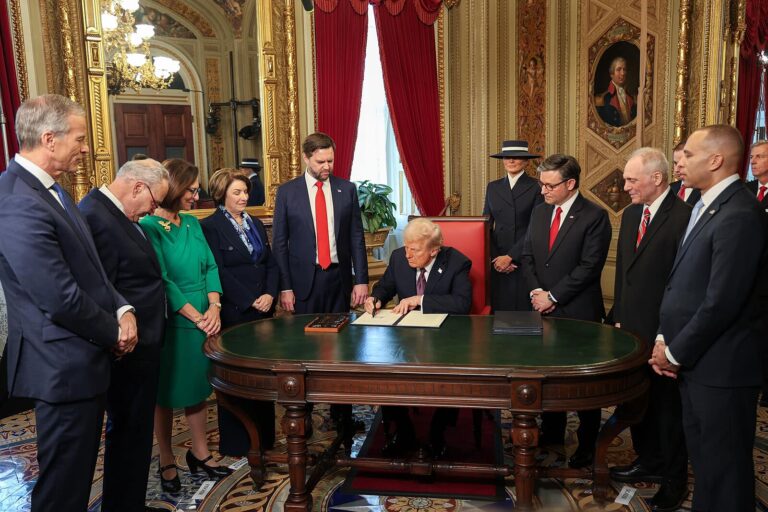
The ICIR also reportedhow Trump signed executive orders on his inauguration day on Monday, January 20, reversing several policies of his predecessor, Joe Biden.
Some of the orders include pulling the US out of the World Health Organisation (WHO), the Paris Climate Agreement, ending birthright citizenship for children of illegal immigrants, and recognising only two genders – male and female.
AFTER prevaricating about whether the United States would enter Israel’s war on Iran, President Donald Trump finally made a decision.
Early Sunday, US warplanes and submarines struck three of Iran’s nuclear sites at Natanz, Isfahan and Fordow, where the Iranians have a uranium enrichment plant buried about 80 metres beneath a mountain.
These strikes have to be viewed as part of an overall continuum that began with the Gaza war following Hamas’ attack on Israel on October 7, 2023, and then continued with Israel’s attacks on Hezbollah (the Iran-backed militant group in Lebanon) and the fall of the Iran-backed Assad regime in Syria.
Iran has never been weaker than it is now. And when Trump said it may take two weeks for him to decide whether to bomb Iran, the Israelis likely pushed him to act sooner.
We can assume there was a lot of Israeli pressure on Trump to use the massive ordnance penetrators, the 30,000-pound (13,600-kilogram) “bunker buster” bombs that only the US can deploy with its B2 bombers.
Now that Trump has taken the significant step of entering the US in yet another Middle East war, where could things go from here? There are a few possible scenarios.
1. Iran strikes back
The Iranians know they don’t have the strength to take on the US, and that the Americans can do enormous damage to their country and even put the Iranian regime’s stability at risk.
This is always the prime consideration of the clerical regime led by Supreme Leader Ali Khamenei – everything else is subordinate to that.
To gauge Iran’s possible reaction, we can look at the how it responded to the first Trump administration’s assassination of the head of the Islamic Revolutionary Guard Corps’ elite Quds Force, Qassem Soleimani, in January 2020.
Iran said there would be a major reaction, but all it did was launch a barrage of missiles at two American bases in Iraq, which caused no US fatalities and very little damage. After that token retaliation, Iran said the matter was closed.
Iran’s reaction to the new US strikes will likely be along these lines. It probably won’t want to get into a tit-for-tat with the US by launching attacks against American facilities in the region. Trump has promised to respond with force: “Iran, a bully of the Middle East, must now make peace. If they do not, future attacks will be far greater and a lot easier.”
It’s also unclear how long Iran will be able to prosecute this war. This depends largely on how many ballistic missiles and launchers it has left.
There are various estimates as to how many ballistic missiles Iran may have remaining in its stockpiles. It was believed to have about 2,000 missiles capable of reaching Israel at the start of the war. Some estimates say Iran has fired 700 of them; others say around 400. Whatever the number is, its stockpiles are dwindling quickly.
Israel has also destroyed about a third of Iran’s ballistic missile launchers. If Israel is able to destroy all of them, Iran would have very limited ability to fight back.
2. Iran backs down
Before the US got involved in the conflict, Iran said it was prepared to negotiate, but it wouldn’t do so while Israel was still attacking.
So, one scenario is that some sort of compromise can now be worked out, in which Israel announces a ceasefire and Iran and the US agree to resume negotiations on Tehran’s nuclear program.
The big problem is that Israeli Prime Minister Benjamin Netanyahu has said he doesn’t trust the negotiating process and he doesn’t want to stop Israel’s military actions until all of Iran’s nuclear facilities have been completely destroyed. He’s also been bombing Iran’s oil terminals and gas facilities to put even more pressure on the regime.
But the regime has shown itself to be incredibly determined not to lose face. It was under great pressure at different times during the Iran-Iraq war in the 1980s and never considered surrendering until a US missile mistakenly took down an Iranian passenger jet, killing 290 people.
Iran then agreed to a UN-brokered ceasefire. But the Iran-Iraq war lasted eight years, causing an estimated one million deaths. And when the then-supreme leader, Ayatollah Ruhollah Khomeini, agreed to the ceasefire, he said it was “worse than drinking poison”.
Given the state of Iran’s military capabilities, Khamenei, the current supreme leader, might surrender simply to try to preserve the regime. But this would be quite a climbdown as far as he’s concerned, and he has been very obstinate in the past.
The regime is very unpopular, but the Iranian people, in my experience, are strongly patriotic – loyal to their country, if not the regime. Though it’s difficult to gauge opinion in a country of 90 million people, a lot of Iranians would not want to be ordered to do anything by the US or Israel, and would rather fight on.
Netanyahu has said he wants to create the conditions for the Iranian people to rise up against the regime.
But it’s worth bearing in mind that the opposite of autocracy is not necessarily democracy. It could possibly be chaos. Iran has a number of different ethnic groups and there may be huge disagreements over what should take the place of the clerical regime, were it to fall.
Though we don’t know his probable successor, the regime has had plenty of time to plan for this. Those in senior positions will also know that a post-Khamenei succession struggle really would put the regime at risk.
3. The US engagement is limited
According to the new polling by The Economist and YouGov, released on June 17, 60% of Americans were opposed to joining the conflict between Israel and Iran, with just 16% in favour. Among Republicans, 53% opposed military action.
So, these strikes were not an obviously popular move among Americans at this stage. However, if this is an isolated event and succeeds in bringing a swift end to the war, Trump will probably be applauded by a majority of Americans.
If the US has to go back with more bombers – or there are serious attacks on US interests in the region – there could be more adverse reactions among Americans.
If it hasn’t been destroyed, and depending how much damage has been done to its centrifuges, Iran may be able to reconstruct its nuclear program relatively quickly. And it could have more incentive to further enrich this uranium to 90% purity, or weapons-grade level, to build a nuclear device.
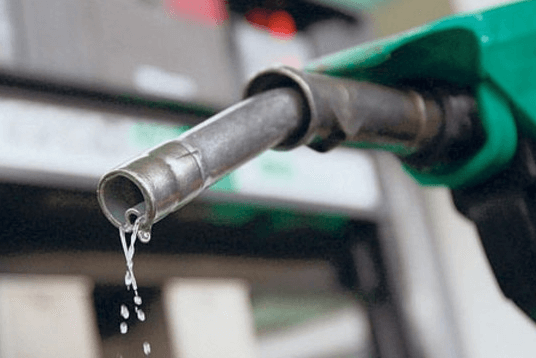
THE pump price of the premium motor spirit (PMS), popularly called petrol or fuel, has reverted upwards to nearing N1,000 per litre after declining in recent months.
The state-owned oil firm, Nigerian National Petroleum Company Limited (NNPCL) and other marketers and retail outlets have started adjusting their pump prices. The ICIR can report.
In Lagos, The ICIR observed that the NNPCL has increased its pump price of petrol to N915 per litre and reportedly to N945 per litre in Abuja.
This adjustment represents a N45 hike from N870 per litre in Lagos and N35 from N910 in Abuja from its previous pump prices.
The ICIR gathered that some NNPCL retail outlets along the Lagos-Ibadan Expressway have hiked their pump prices to N915 per litre, and at the same rate at other of its filling stations, including Ojudu Berger and Igando.
In Abuja, the NNPCL have adjusted the petrol pump price to N945 per litre at the Federal Housing area, Kubwa, up from the previous price of N910 per litre.
Some other independent marketers’ retail outlets have likewise raised their petrol prices.
The MRS filling stations, a major key retail outlets partner with Dangote Petroleum Refinery, had on Sunday, June 22, announced adjusting its pump price to N925 per litre in Lagos, N935 in other south-west states, N945 in north-west and north-central, and N955 in north-east, south-south and south-east.
The ICIR reported on May 22 that the Dangote Refinery had recently fixed the petrol pump price of petrol for its retail outlets partners at N875 per litre in Lagos and N885 in other southwest states.
In the northwest and north-central, it was fixed at N895 per litre and N905 per litre in the north-east, south-south and south-east.
The recent pump price adjustment came two days after the Dangote refinery increased its ex-depot price to N880 per litre.
The price of crude oil in the international market, which determines the up and down movement of the price of refined petroleum products, has been inching higher in recent times following the geopolitical tensions in the Middle East.
The ICIRreported that the global crude oil prices jumped over seven per cent to $74.85 for the first time in over four months on Friday, June 13, after an Israeli attack on Iran.
Since then, the oil price has continued to rise.
On Monday, June 23, at about 10:00 GMT, Brent crude futures were up 78 cents to $77.79 a barrel, and the U.S. West Texas Intermediate crude rose by 76 cents to $74.60.
IRAN has stated that the United States’ strike on its nuclear facilities has expanded the range of legitimate targets for its military and condemned President Donald Trump as a “gambler” for aligning with Israel’s military offensive against the Islamic Republic.
“Trump, the gambler, you may start this war, but we will be the ones to end it,” Ebrahim Zolfaqari, spokesperson for Iran’s Khatam al-Anbiya central military headquarters, said on Monday, June 23, at the end of a recorded video statement.
Iran made the announcement ahead of a scheduled meeting between its Foreign Minister, Abbas Araqchi, and Russian President, Vladimir Putin in Moscow today.
Speaking in Istanbul on Sunday, Abbas Araqchi stated that Iran would explore all possible responses and ruled out any return to diplomatic talks until it had carried out its retaliation.
The ICIR reports that while the Kremlin maintains a strategic partnership with Iran, it also has strong ties to Israel. Later, the TASS News Agency quoted Araqchi as saying that Iran and Russia were aligning their positions through coordination.
Since President Trump joined Israel’s offensive by launching massive bunker-buster bombs on Iranian nuclear sites early Sunday morning, Iran has issued repeated threats of retaliation.
Although Iran has continued launching missiles at Israel, it has so far refrained from directly targeting the United States, avoiding strikes on US bases or disrupting the 20 per cent of global oil shipments that pass near its shores at the mouth of the Gulf.
Iran and Israel exchanged a fresh round of air and missile strikes on Monday, as global tensions rose in anticipation of Tehran’s next move.
The Trump administration has consistently stated that its objective is to dismantle Iran’s nuclear programme, not to ignite a broader conflict.
However, in a social media post on Sunday, Trump openly discussed the possibility of overthrowing Iran’s hardline clerical leadership, which has remained a chief adversary of Washington since the 1979 Islamic Revolution.
“It’s not politically correct to use the term, ‘Regime Change,’ but if the current Iranian Regime is unable to MAKE IRAN GREAT AGAIN, why wouldn’t there be a Regime change? MIGA!!!” he wrote.
Trump called the strike a “Bullseye!!!”. “Monumental Damage was done to all Nuclear sites in Iran,” he wrote. “The biggest damage took place far below ground level.”
Experts analysing commercial satellite imagery said the US strike appeared to have caused significant damage to Iran’s Fordow nuclear facility, which is built deep inside a mountain. They suggested the attack may have destroyed the site along with the uranium-enriching centrifuges inside.
Since Israel’s surprise attack on June 13, which killed several of Iran’s top commanders, its airstrikes on Iranian targets have faced minimal resistance from Iranian air defenses.
The Israeli military said on Monday that about 20 jets had conducted a wave of strikes against military targets in Kermanshah, western Iran, and Tehran overnight.
FOLLOWING the Central Bank of Nigeria (CBN)’s recent policy and regulatory measures, only the share prices of Guaranty Trust Holding Company (GTCO) and three other banks increased. In contrast, those of the others fell, according to The ICIR’s analysis of last week’s stock market report.
In a notice on June 13, the CBN instructed that all the banks with unresolved forbearance exposures halt dividend payments, defer executive bonuses, and suspend all new investments in offshore subsidiaries.
The directive was aimed at strengthening capital buffers and ensuring adequate provisioning against impaired loans, especially with the banks that have breached the regulatory Single Obligor Limit (SOL).
But it sent a negative sentiment among investors towards the banking shares, following a report released on June 16 by Renaissance Capital, which indicated that many banks were likely to suspend dividend payments to shareholders.
At the beginning of the trading session last Monday, June 16, negative sentiment greeted the banking shocks as the CBN directive triggered panic selling across the financial sector, leading to a sharp dip in market value.
The selloff was, however, short-lived as banking stocks rebounded before the close of the week’s trading on Friday, June 20, after the apex bank moved to reaffirm the resilience and soundness of the banking sector, which market watchers said helped restore confidence among investors.
However, only four banks share prices appreciated out of the 12 banks listed on the NGX.
GTCO led the banking shares table, gaining N13.45 to close at N84.95 per share. Stanbic IBTC Holdings followed, gaining N7.65 to close at N87.
The shares of Ecobank Transnational Incorporated gained 50 kobo to close at N30.50 while Fidelity Bank’s share appreciated by 0.15 kobo to close at N19.4.
All other bank shares closed in the red, with United Bank for Africa (UBA) leading the pack and losing N1.75 to close at N34.4. First HoldCo followed with a loss of N1.25 to close at N26.95.
While Zenith Bank lost N1.6 to close at N48.5, Access Holdings shed 45 kobo to close at N21.9.
The share prices of other banks, including FCMB Group, Jaiz Bank, and Sterling Financial Holdings.
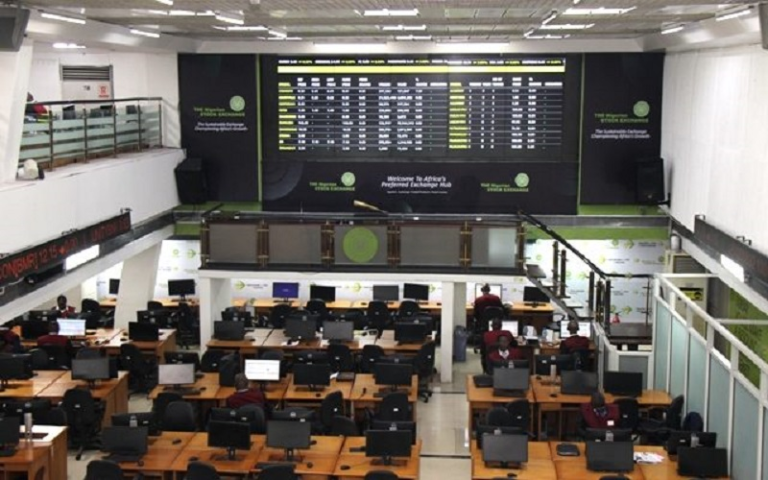
Despite the negative sentiment that the trading session of the week at the floor of the NGX, the stock market extended gains as the benchmark All-Share Index (ASI) appreciated by 2.35 per cent to close at 118,138.22 basis points.
This saw investors gaining over N1.7 trillion in one week as the stock market capitalisation increased by 2.40 per cent to close at N74.53 trillion.
A look at the stock market performance last week showed it was driven by renewed investor interest, particularly in the oil and gas, consumer goods, and banking sectors.
In its weekly market report, the NGX stated that a total turnover of 3.566 billion shares worth N115,403 billion in 99,960 deals was traded last week by investors, compared to a total of 2.057 billion shares valued at N51,015 billion that exchanged hands in the week before in 65,016 deals.
The financial services Industry (measured by volume) led the activity chart with 2.166 billion shares valued at N62.046 billion traded in 45,851 deals, contributing 60.73 per cent and 53.76 per cent to the total equity turnover volume and value, respectively.
The consumer goods Industry followed with 580.893 million shares worth N10.896 billion in 10,909 deals.
Zenith Bank, Champion Brewery, and Access Holdings (measured by volume) accounted for 1.003 billion shares worth N26,076 billion.
In 14,232 deals, contributing 28.14 per cent and 22.60 per cent to the total equity turnover volume and value, respectively.
Analysts at Cowry Asset Management were cautiously optimistic that the stock market would do well in the coming weeks.
“With over N283 billion worth of NT-bills (Nigerian Treasury Bills) set to mature in the coming week and no fresh NT-Bills auction scheduled, excess liquidity may spill into the equities space.
“In addition, the continuation of the dividend season and expectations of undervalued stocks gaining ground are likely to drive further buying
momentum,” the researchers said.
They, however, advise investors to maintain a disciplined approach, focusing on fundamentally sound, dividend-paying companies amid ongoing policy and macroeconomic uncertainties.
FRESH out of the University of Sokoto with a Biochemistry degree in hand and a passion to practice journalism, Umar* stepped into Abuja in 2022—Nigeria’s buzzing capital and land of big dreams.
He had just secured NYSC posting with a digital media platform based in Abuja, confident that his years of campus reporting had prepared him for the big leagues. However, beneath the city’s shiny promise, he was about to confront a reality far tougher than he ever imagined.
“At that time, I didn’t know anyone in Abuja except for this distant uncle who promised to give me accommodation when I came. Upon reaching here, he sat me down to explain that it would not be possible to stay with him because he was managing with his family in a self-contained room,” Umar recalled.
Umar recounted how his uncle who worked as a secretary for a transport company at the time, offered him a temporary solution; permission to sleep in his tiny office at the Nyanya Park.
Umar explained how he started house hunting with a Fifty-Thousand-Naira budget. “There are no houses of N50,000 in Abuja, so I had to sleep there.”
“I had to sleep there for two weeks, and it was during Ramadan fasting. It was lively because it’s a garage and there were a lot of people sleeping outside the garage, so the garage is kind of crowded area. There is a public toilet, I paid N20 for bathing and N30 for using the restroom,” he said.
In the same year Umar moved to Abuja, the ICIR reported that while over many houses in the city sat empty, nearly two million residents were struggling with homelessness.
Umar had only saved N50,000 as NYSC was only paying him N33 thousand. The average cost of a three-bedroom flat in highbrow areas such as Maitama, Asokoro, Wuse and Jabi that year was between N3.5 million and N4 million, while a one-bedroom apartment hovered around N1.5 million annually.
Even though the media platform was paying N25,000 stipend, he said that he couldn’t afford houses in satellite towns, a three-bedroom flat went for between N600,000 and N1.5 million, while one-bedroom flat was for an average of N400,000 yearly.
Umar said his parents contacted another distant uncle who accommodated him after the two weeks he spent in the garage.
“I stayed there for over a year. I was able to save up for my accommodation. I was retained at the media house after my youth service. So, I got a self-contained for the first time at N200,000 in a slum area of Lugbe,” Umar said.
Umar’s compound in Lugbe District, FCT, where he pays N200,000 annually.
Housing hurdles of Abuja journalists
Tunde*, a reporter with a renowned newspaper in the country also shared his experience.
“I have been living fully in Abuja since 2021. When I first got here, I was a bit stranded because work took me here from Ibadan and there was nowhere for me to stay. I think the major challenge I have faced is when I have to house hunt, from exploitative house agents to getting the kind of house you really like within your budget,” Tunde said.
The journalist shared that he struggled for three months before he could afford a room in a flat in Jabi, which costs N400,000 per year, noting that to make ends meet, he took on various jobs.
“The major rent I experienced was last year. Where I stay currently, the rent used to be N700,000 for a one bedroom. Now, it is N1.5 million, aside from estate charges for security and cleaning, among others. My main job is slightly above N200k,” he explained.
“I also have other sources of income that bring in steady cash monthly, but they are not salary based. But money is never sufficient,” he explained.
Tunde who has been practising for four years now said he plans to start a family, but his current earning is not sufficient especially with the inflation and cost of living in the capital city.
Similarly, Chidimma*, a broadcast journalist with a radio station in Abuja who has been in the city for two years, lamented the frequent rent hikes, sometimes occurring annually, which strain her finances and force her to constantly adjust her budget and prioritise essential expenses.
“I currently reside in a one-bedroom apartment in a decent neighbourhood along airport road. My monthly rent stretches my salary,” she lamented.
Chidimma, who has been practicing for eleven years, revealed that her current monthly salary is around N250,000.
“Unfortunately, it’s not enough to meet the high cost of living in Abuja, especially when you factor in rent, transportation, and other essential expenses,” she said.
A 2023 study by the Nigerian Urban Studies Association reveals that limited housing options and affordability challenges often compel low-income earners like Umar to live in substandard conditions.
According Paylab Nigeria, a salary survey platform that collects and analyses salary data from employees in various industries and positions job platform, the salary range for journalists working in Nigeria, starts typically from N172,193 minimum salary to N341,068 highest average, actual maximum salary is higher.
NUJ, FCT Chairman, Grace Ike
The Nigeria Union of Journalists (NUJ), Federal Capital Territory (FCT) Chairman, Grace Ike, told The ICIR that some journalists often earn between N80,000 to N162,500 per month at entry level, while more experienced journalists may earn up to N350,000 monthly or higher in some cases, especially in print or broadcast media.
“However, average salaries reported range from about N60,000 to N150,000 monthly for many journalists, which is considered low given Abuja’s housing situation. Housing costs in Abuja are relatively high, with decent accommodation often requiring a substantial portion of a journalist’s salary,” she explained.
The Chairman added that majority of journalists face low pay and it’s insufficient to accommodate cost of living.
Can journalists afford to buy a house in Abuja?
“Of course, I do work hard but I don’t see myself buying a house in Abuja, because I’m not earning enough to build a house in 30 or 40 years to come,” Umar said.
Umar explained that he relies on other sources of income like story grants he applies for and occasionally receives, to meet his basic needs, else continuing his work as a journalist would be nearly impossible.
A print journalist based in Abuja, Solomon Odeniyi, on the other hand, said that even though his company provides him with a N41,000 housing allowance, buying a house in Abuja feels like a distant dream and a prayer point.
“It would take the help of God for many of us to build a house in Abuja. Do you know how much it costs to buy land in satellite towns in the FCT, let alone in the city?”
After calculating the cost of buying a plot and building a house in Abuja, and linking it to the ongoing hike in prices and inflation, Odeniyi said, “It’s something I desire, and without engaging in illegal activities, while carrying out my job as professionally as possible, I believe it will happen.”
Chidinma said she has thought about buying a house in Abuja, but factors like soaring property prices, limited mortgage options, and complex bureaucratic procedures have made it a tough goal to achieve.
“To afford a house in Abuja, I’d need to save consistently, potentially explore mortgage options, and plan my finances carefully. A significant down payment and stable income would be essential, although this is really tough and near impossible,” she said.
The Editor of Pinnacle Daily, Sunday Michael Ogwu who owns a house in Abuja said even though it took him and his wife, a building engineer, six years, they strategically planned how to finance the building project.
“We already knew that whatever we were doing, we could not raise the bulk of money for the project, so we had to opt for financing options that are easy, like joining cooperatives and contributions that enabled us save money in large chunks,” Ogwu explained.
The editor, who has been in the profession for eighteen years, said he and his wife had to cut down what they considered luxuries to achieve their goal.
Expressing concern over the inflation bedevilling the country, he said he was glad his family took the initiative fifteen years ago to build.
Editor, Pinnacle Daily, Sunday Michael Ugwu
Ugwu urged journalists not to focus on the final costs of owning a house in the city because it will be discouraging especially the cost of land, but to rather save up and take a bold step.
For early career journalists like Umar and Tunde who are still struggling to get a comfortable and affordable rent, working with a plan to build or buy a house in Abuja might be challenging.
“Except if I want to go to the outskirts and what that means is that I will have to travel all the way to town for work, spending a whole lot to get to your office if you have a car,” Umar said.
The Nigeria Union of Journalists (NUJ), Federal Capital Territory (FCT) Correspondents Chapel, had echoed the challenges journalists are facing in the capital city when the called for affordable housing schemes in 2022.
The former Chairman of the Chapel, Jide Oyekunle, urged the federal government to develop a programme of action to make affordable houses available for journalists.
In his words, “Journalists served the country with dedication and patriotism, therefore, deserved a better living. However, many cannot boast of a decent home of their own. They are the mirror of the society, but they suffer in silence. The Nigerian government and private sector should bridge the housing gap, particularly for our members”.
Ike, the NUJ FCT chairman confirmed to The ICIR that since the call in 2022, NUJ FCT has been working to partner with relevant housing authorities in a bid to address the concerns and provide platforms for journalists to own affordable housing scheme.
“Very few journalists in Abuja own homes outright, given the current high real estate prices,” she said.
Government-sponsored schemes, like those from the Federal Housing Authority, and Family Homes Fund Limited target low-income earners, provide a measure of affordable housing options, but they are unlikely to fully eliminate the housing shortage.
All the houses on the FHA website observed by The ICIR ranged between N35 million to as low as N5.5 million but were all sold out, and these were from a few years ago.
House pricing on Federal Housing Authority websiteHouse pricing on Federal Housing Authority website
The current administration housing project, Renewed Hope Cities and Estate Programme, led by the Federal Ministry of Housing and Urban Development, said it aims to deliver 100,000 homes, with 20,000 planned in Abuja. The houses in Abuja from a search done June 22, ranges from N25 million for a 1 bedroom flat to N55 million for a 3 bedroom.
Renewed hope houses prices slated for Abuja.
Meanwhile, housing experts have expressed concern about the plight of low-income earners in Abuja, highlighting the rising costs of housing and the limited availability of affordable options.
According to experts, most government-led housing projects are concentrated in urban areas and priced above the reach of the average low-income earner, defeating the purpose of “affordable housing.”
Housing expert and urban planning lecturer, Jumoke Oyedepo, said that many so-called affordable housing units remain out of reach for low-income earners due to hidden costs, inadequate infrastructure, and a dysfunctional mortgage system.
Giving a comparative analysis with similar economic challenges, Nigeria Housing Market, a Real Estate platform revealed that Nigeria’s approach appears less structured and underfunded.
It showed that Ethiopia introduced a condominium housing programme that subsidised housing for thousands of low-income residents by partnering with local banks and builders at scale.
India’s Pradhan Mantri Awas Yojana (PMAY) uses direct subsidies, relaxed building codes, and incentivised public-private partnerships to deliver over 11 million homes to date.
Plea to employers and government
Umar who has the option to join the NHF housing scheme said he opted out because the deduction will not leave him with enough to survive in a month.
“It is my dream to own a house someday,” he said.
The young journalist who believes his colleagues are increasingly accepting offers from international platforms while neglecting local ones, noted that media owners often prioritise institutional growth and sustainability, forgetting that journalists are a crucial part of that very sustainability.
“I think media owners should prioritise paying their journalists well,” he emphasised.
Ike said that “NUJ FCT journalists expect and demand several key support from employers and the government regarding housing.
“Like establishment of Affordable Housing Schemes, a creation of government-backed affordable housing estates or “Journalists’ Villages” across the FCT will go a long way.”
She called on the FCT Minister, Nyesom Wike, to prioritise this initiative during his tenure.
“We are making an urgent call for Minister Nyesom Wike to come to our aid regarding the critical housing challenges faced by journalists in Abuja. Given Wike’s ongoing initiatives in the FCT, including plans to build 10,000 affordable housing units under the “Renewed Hope City” project aimed at providing homes for the poor and vulnerable, there is hope that journalists’ housing needs could be integrated into these schemes,” she urged.
She also charged media employers to improve access to affordable mortgage financing and housing loans, to bridge the gap between their incomes and housing costs.
Single names and names changed are marked with an asterisk
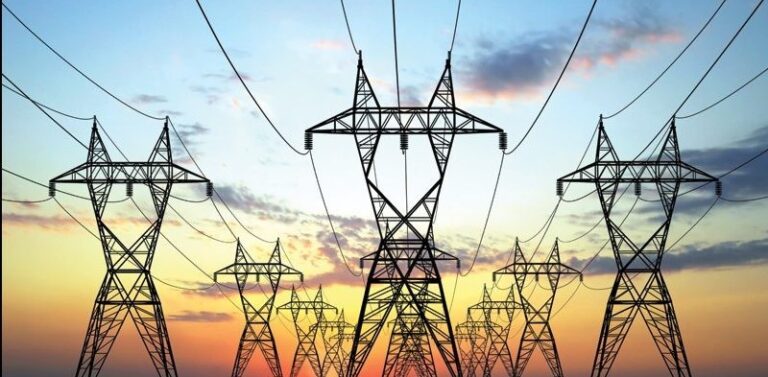
THE Transmission Company of Nigeria (TCN) has restored normal bulk electricity supply to the Northeastern states after a week of blackout.
The company made this known in a statement issued on Sunday, June 22, through its spokesperson, Ndidi Mbah.
It explained that the restoration of power to the zone came after the completion of the connection of the new Bauchi 330/132kV Transmission substation to the national grid, through the 330kV and 132kV Jos-Bauchi-Gombe Transmission Lines.
“The lines were initially switched off to enable TCN to energise the new Bauchi Substation – one of the biggest substations in the region – to the grid.
“The transmission lines have now been reconnected to the grid. Consequently, supply to the northeast has been restored since the 19th of June at about 16:45 hours,” TCN stated.
The ICIR reports that four out of the six states of the North-East geopolitical zone have been plunged into total darkness.
It affected individuals and businesses in Taraba, Adamawa, Borno, and Yobe states, and crippled other economic activities.
The outage, which started at 10:00 am on Tuesday, June 10, was expected to last until 5:00 pm on Saturday, June 14.
In its statement on Sunday, TCN maintained that with the project completed, bulk power transmission has been restored to Jos and Yola electricity distribution companies (DisCos), which supply electricity to customers in Bauchi, Gombe, Yobe, Damaturu, Adamawa, and Taraba States.
“This connection of the new substation to the national grid has enhanced power reliability, diversified transmission routes, and improved emergency response capabilities in the North Eastern region.
“We appreciate the patience and support of affected customers during the outage period,” TCN added.