Home Blog Page 2642

Why Gates Foundation is paying off Nigeria’s $76 million debt to Japan


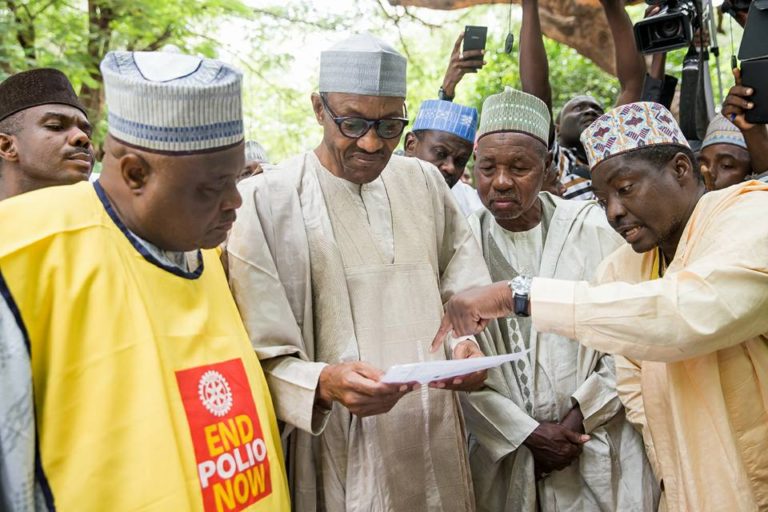
For meeting crucial targets on polio eradication campaigns, Bill and Melinda Gates Foundation (BMGF) will fulfill its agreement with Nigeria by paying off the country’s $76 million debt to Japan.

The Japanese government provided the loan to Nigeria in May 2014 with the agreement that BMGF would repay it to Japan on behalf of Nigeria if the project is successfully implemented by the Nigerian government.

The loan was to procure 476 million polio vaccine doses, which would be administered to children less than five years of age across the country.

An annual interest rate of 0.2 percent was attached to the loan under Official Development Assistance (ODA) by the Japan International Corporation Agency (JICA).

“After Nigeria has executed the loan agreement, the foundation will commit to repay the loan to Japan (principle and interest) on behalf of Nigeria,” Mario Mandara, Bill and Melinda Gates Foundation’s country representative had said back then.

The foundation gave Nigeria’s government the condition that it would pay off the loan if the required immunization coverage rates were met.

The project was to be completed with the end of all the polio campaigns by December 2015, while the repayment of the loan would begin four years after it was given.

By all indications, Nigeria achieved the performance indicators and followed all the steps in the agreement with BMGF.

For more than two years, Nigeria did not record any case of wild polio, from July 2014 to August 2016 when two cases were reported in Borno State. The outbreak affected two children in the territories liberated from Boko Haram in Gwoza and Jere. Two additional cases were reported in the state in 2016.

Throughout 2017, no case of polio was recorded in any part of the country, a strong indication that Nigeria is on course for polio eradication.

Kemi Adeosun, Minister of Finance, announced last week that Nigeria had authorised BMGF to start the repayment of the loan valued at $76 million.

This financing mechanism is the second of its kind by BMGF and JICA to support polio eradication efforts around the world, following the ODA loan to Pakistan in 2011.

Nigeria, Pakistan and Afghanistan are the only countries yet to have eradicated polio but with the progress so far, Nigeria is close to eradicating it.

Since 2012, Nigeria has made sustained progress in its polio eradication drive, as the number of confirmed infections decreased from 122 in 2012 and 53 in 2013 to just six in 2014.

Buhari begs Benue leaders ‘in the name of God’ to accommodate herdsmen

President Muhammadu Buhari has asked citizens of Benue State to “exercise restraint” over the recent killings in the state, allegedly by herdsmen, while urging them to “accommodate your countrymen”.

Buhari made the plea when a delegation of leaders in Benue State, led by Samuel Ortom, the State Governor, visited the State House on Monday.

According to a statement issued by Femi Adesina, Special Assistant to the President on Media and Publicity, Buhari assured his visitors that all the security agencies in the country were working round the clock to restore peace to the state and apprehend the perpetrators of the heinous crimes.

“Your Excellency, the governor, and all the leaders here, I am appealing to you to try to restrain your people,” Adesina quoted Buhari as saying during the meeting.

“I assure you that the Police, the Department of State Security and other security agencies had been directed to ensure that all those behind the mayhem get punished.

“I ask you in the name of God to accommodate your countrymen. You can also be assured that I am just as worried, and concerned with the situation.”

In response, Ortom commended Buhari for his intervention, and expressed optimism that it would help ease rising tension in the state.

However, in a chat with journalists after the meeting, Ortom expressed displeasure with the idea of cattle colonies brought up by Audu Ogbeh, Minister of Agriculture, who is also from Benue State.

Ogbeh had suggested that as part of efforts to mitigate the incessant herdsmen/farmers clashes and the attendant loss of lives, every state should map out hectares of land to be used as cattle colonies. But the suggestion has been widely criticised.

“The last time I came here, I did not understand what colonies was,” ortom said.


READ ALSO:


“Today, I was privileged to speak to him (Ogbeh) and he explained to me that colonies is about many ranches put in one place, restricted in one place, where the land is.

“So for us in Benue State, there is no 10 hectares. They are looking for 5,000 hectares, (but) for us in Benue State, we have no 10 hectares to allow for that kind of a thing to take place.

“People are free, other states have the land, we in Benue State, we don’t have, and that was what led us to enacting this (anti-open-grazing) law.”

The meeting with Buhari was attended by the likes of Benson Abounu, Benue State Deputy Governor; David Mark, former Senate President; Michael Aondoakaa, former Attorney General of the Federation and Minister of Justice; Barnabas Gemade, senator representing Benue North-East and George Akume, former Governor of the state.

30 arrested as ban on cart pushing takes effect in Lagos

Thirty cart pushers were arrested in Lagos on Monday as the new ban on cart/wheel barrow pushers took effect on Monday.

Olayinka Egbeyemi, Chairman of the State’s Task Force on Environmental and Other Special Offences (Enforcement Unit), said the defaulters were members of the Lagos State Waste Management Authority (LAWMA) who were sabotaging the efforts of the state government to keep the state clean.

Egbeyemi said the arrested offenders were alleged to have dumped refuse along the streets in some highbrow areas of Lagos, so as to paint a picture that the recent ban on cart pushers had left the state dirtier.

“There are reports that refuse are littering the Lekki, Victoria Island, Ajah and other parts of the state and investigations reveal that it is the handiwork of unscrupulous elements within Lagos State Waste Management Authority (LAWMA) and their outside sponsors who are not comfortable with the new arrangement for the management of waste in the state and are hell-bent on sabotaging government effort and frustrating them from carrying it out,” said Egbeyemi in a statement.

“The state government has vowed to go all out against the saboteurs and after their sponsors and punish them in line with the laws of the State.”

Egbeyemi said the new waste management policy would revolutionalise waste administration in line with global best practices.

He urged citizens of the state to cooperate with the government by refusing to patronize cart pushers, which is now illegal.

“We also need to let Lagosians know that it is illegal to use cart pushers to evacuate refuse and they should stop encouraging it; there are PSP vehicles that come around to pack refuse and they are the ones they should patronise and not these cart pushers,” Egbeyemi stated.

“We want to notify all these cart pushers that their activities are illegal in Lagos. Lagos is a mega city and we have all it takes to collect refuse.

“So, the issue of going to the streets and collecting refuse and then dump same on the road is an act of sabotage to the government.

“For the past two to three weeks, we have been noticing refuse on the roads and investigations have revealed that part of those carrying out such activities and sabotaging government efforts are these cart pushers and probably there might be some people behind them.”

TRIBUTE: Abu Ali, ‘intelligent’ lieutenant-colonel who ‘doesn’t brag’ but is killing off Boko Haram in Borno


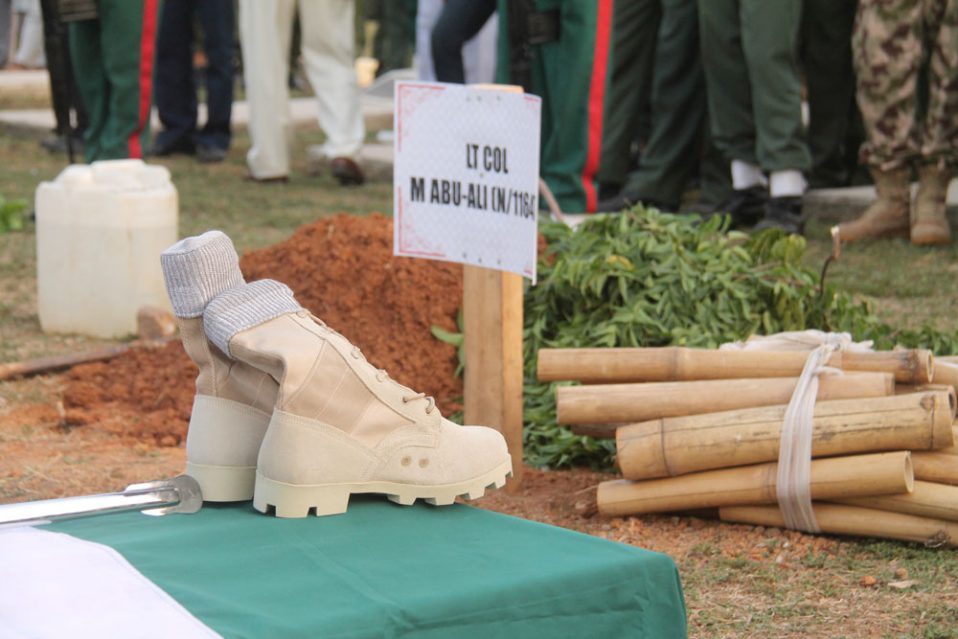
In the spirit of the Armed Forces Remembrance Day, we take you back to this tribute, first written in June 2016, for Muhammed Abu Ali, who was killed, alongside six other gallant officers, by Boko Haram in December 2016.


Muhammed Abu Ali is the name. You may have heard about him before: he is the officer who was granted accelerated promotion from rank of major to lieutenant-colonel in September 2015, for his courageous performance in a series of the army’s engagements with Boko Haram.

His elevation was first announced shortly after one of the army’s fiercest-ever battles with Boko Haram, in February 2015, culminating in the recapture of Baga from insurgents. But the official decoration was delayed until September when, after another monumental success — the capture of Gamboru-Ngala — Tukur Buratai, chief of army staff, visited the war front.

During that decoration, Buratai praised Ali for his “courage, bravery and exceptional performance in the fight against the Boko Haram terrorists”.

Tukur is not alone in his opinion; and it has now emerged that even soldiers, majority of whom have built an unwanted reputation for always criticising the army hierarchy, have tremendous respect for Ali’s professionalism.

Purest gold from miry clay

For all of the army’s hardline public relations tactic, discontent is high among soldiers and officers DIRECTLY involved in the ‘Operation Lafiya Dole’ (peace by force) in Borno state. But as Ali’s example shows, good work and truth require no trumpet; they always find their way to the public.

During TheCable’s recent investigative trip to the theatre of war, the first mention of Ali came at a time a sergeant was complaining about the crude equipment and archaic manner with which the army was prosecuting the war.

“Yes, the problem is that the Nigerian army still has this archaic idea of fighting, relying more in the numerical strength of its troops rather than on equipment,” he had said.

“There is nowhere in the world, a civilised or modernised army, where they want to lose soldiers in large numbers again, and that is where you need these equipment.

“If you have good equipment, it will reduce the number of casualities on your side but if the weapons are not there and you want to use the number of your soldiers, then definitely you are going to suffer casualties.”

He then cited the example of the recapture of Baga, but he was quick to recognise Ali’s “brilliance” in its success — even though the original intention was not to praise the officer.

“In the case of tanks, what one tank can do, 200 soldiers cannot do it; 300 soldiers cannot do it if the tank is functional and serviceable,” he said.

“In the case Baga, when it was recaptured from Boko Haram, the officer who led that operation, Abu Ali, a major at the time, told the soldiers that they should not worry, that they should only do five percent of the job, that he was going to do 95% of the job with the tanks.

“And that was exactly what happened. He did most of the work with the tanks. He was a major at that time and his promotion after the operation was automatic because he performed very well. One smallish guy like that o.

“After they recaptured Baga, the soldiers were so happy that they raised him up, telling the president to elevate him to the status of colonel, not even lieutenant-colonel, because he really performed; he tried. Even recent operations in Sambisa Forest, he led some of them.”

Respected by soldiers
Ali’s elevation was not just the decision of the chief of army staff or the rest of the army hierarchy; the soldiers fully supported it. According to a soldier who witnessed his “leadership qualities” in Baga, and two others who were with him in Sambisa, soldiers were generally “very happy for him”.

“He led us with the T-72 when we advanced to Monguno and Baga, and he collected those places,” he said.

According to Wikipedia, the T-72 is a Soviet second-generation main battle tank that entered production in 1971. About 20,000 T-72 tanks were built, making it one of the most widely produced post-World War II tanks, second only to the T-54/55 family.

There have been at least three upgrades to the tank, the most popular being in 1988 and 1995, although they are unavailable in Nigeria.

A second soldier who extolled Ali’s virtues said: “After he collected those places [Baga and Monguno] in 2015, they brought someone else to replace him and they took him to Sambisa area; we went with him to Sambisa.

“He is a brilliant fighter. When he began hanging his promotion emblem officially on September 9, we were together on that day and we were all very happy for him.”

A third soldier, who had spent time with him in Sambisa, went as far as touting him as a potential helmsman of the army: “The man is very active; very active. And he is a very calm and intelligent person. He doesn’t brag, he knows his job and he is very simple.

“He is a future chief of army staff, if I may say, but he has to be wary of the corruption that is the shortcoming of many good hands in the army.”

Like father, like son

It is interesting to know that Muhammed Abu Ali is the son of Colonel Abu Ali, who was governor of Bauchi state from August 1990 to January 1992 during the military regime of Ibrahim Babangida.

At this rate, no one would want to bet against the younger Ali surpassing his father’s achievements. He is already a lieutenant-colonel and should he continue his anti-Boko Haram heriocs, it won’t be long before he earns another elevation to the status of colonel, which his father was before retiring.

From then on, anything — just anything — is possible!

In new video, Chibok girls say they will never return home — ‘by the grace of Allah’

Boko Haram has released two video clips, one of which featured some teenage girls describing themselves as part of the schoolgirls kidnapped from Government Secondary School, Chibok, Borno State, in April 2014.

According to Ahmad Salkida, a journalist with deep-rooted knowledge of the insurgency and the sect, the second video clip showed wreckage of a military helicopter, as well as other military tanks, gun trucks and a drone that the insurgents say they had destroyed.

Salkida had earlier said that he had information that the insurgent group were planning to release the video clips.

“Shekau in new video says he is not tired. Chibokgirls said, they are not returning home. Terrified ‘policewives’ appealed to be rescued,” Salkida tweeted.

“The group apparently used a telescope and a drone to spy on military positions, which showed, for the first time, Boko Haram deploying drones to prey on military positions,” Salkida wrote on his website.

“The video did not, however, show the actual time the group claimed to have hit the aircraft, but showed the debris of the aircraft and that of several other destroyed military tanks, trucks and a drone, following what Boko Haram claimed, was the aftermath of a week long battle with the Army.

“The group fighters, as seen in the video, mostly underage boys, were brandishing different types of sophisticated weapons haphazardly as they defend their turf from the unrelenting push by the Army.”

Channels Television quoted one of the girls that spoke in the video as saying that they would not return home because they were being treated well and have all they need.

“We are the Chibok girls…. By the grace of Allah, we will not return to you. We live in comfort. He (Shekau) provides us with everything. We lack nothing,” the girl was quoted as saying.

Part of the video clip, lasting 22 seconds, was shared by Sahara Reporters on Twitter. It showed one of the girls calling on Nigerians and their parents to “repent and come worship your creator”.

This is the first time the Boko Haram group would be releasing a video since May 2017. Their last video featured an AK-47-wielding girl who claimed to be one of the Chibok girls, saying that she would never return to her family.

On armed forces remembrance day, Buhari reflects on ‘tragic’ civil war


President Muhammadu Buhari says he understands the challenges facing the Nigerian military as himself is one of them.

Speaking in Abuja on Monday during the 2018 Armed Forces Remembrance Day, Buhari reflected on the “tragic” Civil War of 1967 to 1970, and urged the people never again to allow such happen.

He assured the military of his administration’s commitment to their welfare as a way of rewarding them for their gallantry, loyalty and dedication to the country.

He charged them not to rest on their oars but to continue giving their best to protect the territorial integrity of the nation, as that would be the perfect way “to honour the memory of our distinguished veterans who paid the supreme sacrifice to keep the country united”.

Buhari explained that the Armed Forces Remembrance Day is usually held every November 11 in other commonwealth countries, but was fixed for every January 15 in Nigeria “to commemorate the end of the Nigerian civil war – a war that was fought to keep Nigeria one”.

“We must therefore cast our minds back at the events that led to the civil war, the immense human capital loss of the tragic war, and resolve that never again shall we allow our dear nation by our actions or inaction to experience another war,” he said.

“I appreciate your display of unparalleled loyalty to the country and dedication to duty. Being one of you, I understand what you have to undergo. This administration will continue to do all within its power and resources to ensure that your welfare is adequately catered for.

“As a government we desire to improve the capability of our Armed Forces. I am glad that our efforts are yielding positive results already in boosting the morale of men and women of the Armed Forces.

“We will continue to engage them in training and retraining to improve on their capacity to discharge their constitutional roles.”

TALK IS CHEAP, WAR IS EXPENSIVE

In Anambra State, Willie Obiano, Governor of the State, urged the citizens to desist from utterances capable of causing breakdown of law and order, stressing that “talk is cheap but war is expensive”.

He also used the opportunity to thank members of the security agencies for their efforts in the November 2017 governorship election and the January 13 senatorial re-run.

Remembering Charles Ilo, the brave soldier killed by Boko Haram on Val’s Day 2015


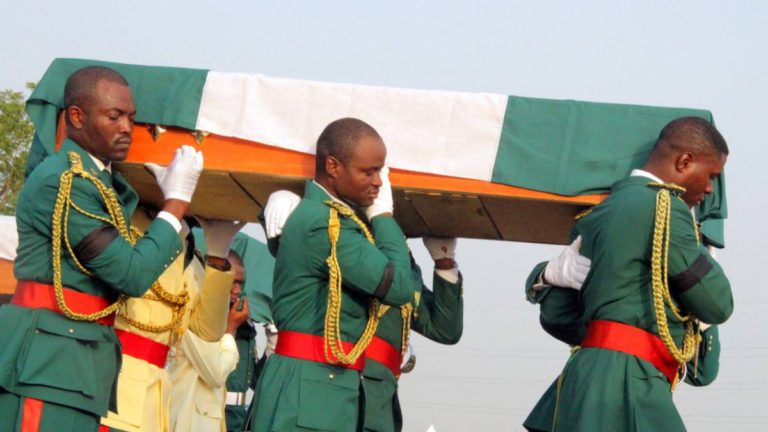
This piece, first published by TheCable in 2016, is republished today, on the occasion of the Armed Forces Remembrance Day, in honour of one of the many soldiers who have paid the supreme sacrifice for fatherland.


They were his final words. And they summarize the kind of life he lived, his commitment to his job and dedication to fatherland. With his sacrifices for his country and its people, it is fitting that he uttered those words on February 14, the Valentine’s Day of 2015.

As exuberant youth were having a ball from club to club or hanging out and making out at lounges and beaches and restaurants, Nigerian soldier, Charles Victor Uchenna Ilo, was bracing up for a battle with Boko Haram on lovers’ day. In his high spirits, he wrote on Facebook: “Well, nothing more 2say, we are going back 2 recapture our ‪#‎monguno base 2day, i must fullfill my vow 4my country…my faith is one and ever! THE FEDERAL REPUBLIC OF NIGERIA

That day, Ilo fell to Boko Haram’s bullets. On a day dedicated to the sharing of all kinds of love, he showed the greatest from of love for his country – sacrificing his life.

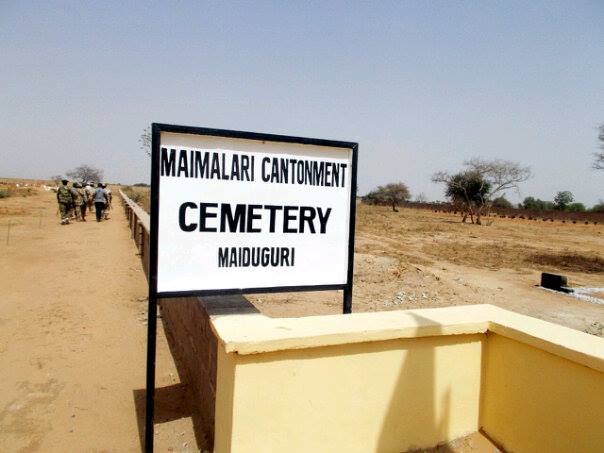
Maimalari Cantonment Cemetery
Ilo’s resting place… since February 19, 2015

Even in death, Ilo has been rightly hailed by his friends as a victor. His wish to have Monguno retaken from the insurgents was successful, after all.

After almost two days of fighting, the army announced that the town had been cleared of terrorists and it was back in Nigeria’s control. But while the army claimed to have killed “more than 300 terrorists”, there was no official announcement of the casualty figure of the soldiers.

As his friends refrained from speaking to the media, their description of Ilo Victor as victorious in death came off as the African tradition of never speaking ill of the dead – until the discovery of a Facebook post by Justice Emeka Obi in the heat of the arms deal scandal.

“My brother, Charles Victor Uchenna Ilo, you died not because Boko Haram fighters were better trained… but because those old men diverted and pocketed billions of dollars budgeted for arms procurement, thereby starving you of the necessary weaponry,” an embittered Obi wrote, appending pictures of three of the dozens of highly-placed Nigerians implicated in the $2billion arms deal scandal.

Charles Ilo Victor 4

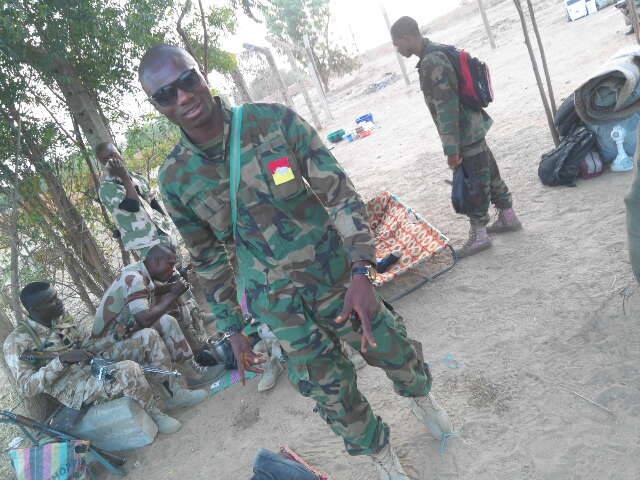
Ilo in the woods preparing for battle against Boko Haram

But if Ilo were to be alive, he would have handled with equanimity, the disappointment of seeing the country’s leaders mismanage funds meant to equip soldiers against Boko Haram.

He would, because it was his principle never to be broken by disappointment from mortals.

“Disappointment from a mere human should not worry you, rather [it should] encourage you…am always encouraged, my people,” he wrote in a Facebook post reproduced by his sister after his death.

It is very easy to see that the slain soldier was loved by his people. One of his friends, whose wife was pregnant during the battle and delivered a set of twins after Ilo’s death, named the male ‘Victor’, after Ilo, and the female ‘Victoria’.

Charles Victor Uchenna Ilo.jpg 3


After someone who continued to refer to Ilo as “my brother” was called up for the mandatory National Youth Service Corps (NYSC), he wrote on Facebook: “NYSC is a pride for every graduate. Want to use this opportunity to thank my beloved late brother, Charles Victor Ilo, who made my education possible. How I wish…May his gentle soul RIP.”

In a separate post, he also said Ilo made him who he was: “I’m so proud of you brother, a gallant man, a gallant officer. You left us exactly 7 months today; you died for your great nation, fighting for peace to rein. You will forever be remembered in my entire world. You made me what am I TODAY. May your gentle soul REST IN PEACE. Great #ojemba.”

Charles Victor Uchenna Ilo.jpg 2

A brave soldier embarks on the final journey home

More than a year after his death, Ilo’s Facebook page is dotted with tributes from friends and family, and it is hard to imagine them fading anytime soon. The one that is arguably the most moving reads: “If I remember u Ilo water run away my eye…. aye aye water runaway my eye….. when I remember you Ilo water runaway me eyes ayee ayeee water runaway me eyes… rest in peace my gallant trooper, rugged soldier, my boy, my brother…… sobs sobs sobs!!!!!!!!!!!! – in loving memory of trooper.

It is an emotion-laden message that not only releases the tension in Ilo’s friend but also overtakes the journalist. Chugha Michael Uchenna’s elegy leaves the journalist wondering if his job is to write a tribute or mourn the departed, watching helplessly as drops of tears trickle from his eyes to his spectacles and onto his keypads – not just for Ilo but for the thousands of slain soldiers who would have been alive today were they adequately equipped.

We’re victims of the ‘worst crime against humanity’, say herdsmen


The Miyetti Allah Cattle Breeders Association of Nigeria (MACBAN) says its members are the worst victims of violent clashes across the country but none of the attacks on them ever gets reported.

According to Baba Ngeljarma, National Secretary of MACBAN, thousands of herdsmen have been killed over the years, and millions of their livestock either killed or stolen, yet the herdsmen are always the ones accused of masterminding clashes with farmers.

“Miyetti Allah Cattle Breeders Association of Nigeria, as the premier pastoralist body in the country, has remained in unimaginable pains on daily basis as we receive communication of gory details of attacks, maiming and destruction of our members across the country,” Ngeljarma said.

“More worrisome is the fact that the pastoralist community, which has been the main target of the offensive, is also deliberately been pointed as the attackers at the same time.

“This horrible accusation in both intent and purpose is meant not only to smear the image of the herdsmen as a peace loving community, but to also allow further criminal justification to carry out total ethnic cleansing on our members, as witnessed in different parts of the country.

“Only very recently, we have lost over 1,000 people, including children, women and the aged and over 2 million cattle to this gang. We are more disturbed today as this state government hides under the self-created crises and blackmailing the Federal Government into releasing to them security operatives to achieve their illegal and wicked agenda on our people.

“The trend of attacks on our defenceless members by ethnic militias oiled by a deliberate profiling through coordinated media campaigns against our members, to say the least, is the worst crime against humanity.”

Ngeljarma lamented that herdsmen in Nigeria have been abandoned to “their predators” as nobody has been arrested “even when the perpetrators are well known to the victims”.

The group urged the Federal Government to “create a Federal Ministry of Livestock Development to attend to the multidimensional needs of the industry as is obtained in many countries”.

It also called for “the enactment of a national law to carter for the peculiar needs of pastoralists in particular and the livestock sub-sector in general”.

According to MACBAN “the mischievous anti-open-grazing laws promulgated by some states have woefully failed to address the contentious issues”.

“The anti-open-grazing law in Benue, Taraba and other states is nothing more than a symbol of intolerance and do not in any way intend to solve the farmers/grazers conflict, as the livestock breeders interest is neither captured in the law nor in its implementation mechanism.

“While, as a body, we are not against any law that can engender peace, create societal harmony and stability, we cannot oblige any self-centred regulation with primordial sentiments based on injustice, intolerance and infringement of people’s fundamental rights.

“It is no longer hidden that to achieve these, some state governments are sponsoring ethnic militia against our people, recruiting and arming locals to kill our people and rustle their livestock as seen recently in Benue and Taraba States.”

Among other things, MACBAN is calling for a federal judicial commission of inquiry into the killings with the aim so as to unravel the truth and the offenders. The group also wants government to “pay compensation to the victims of all crises to reduce their level of suffering”.

“We disassociate ourselves from any other group or individual that is out to foment trouble in the country (and) we condemn in totality any attempt of branding herdsmen as terrorists as is being clamoured from certain quarters,” it said. “We view this as the continuation of the hate agenda on our people and a very dangerous trend for the country.”

Are we really a ‘shithole’ country?

0
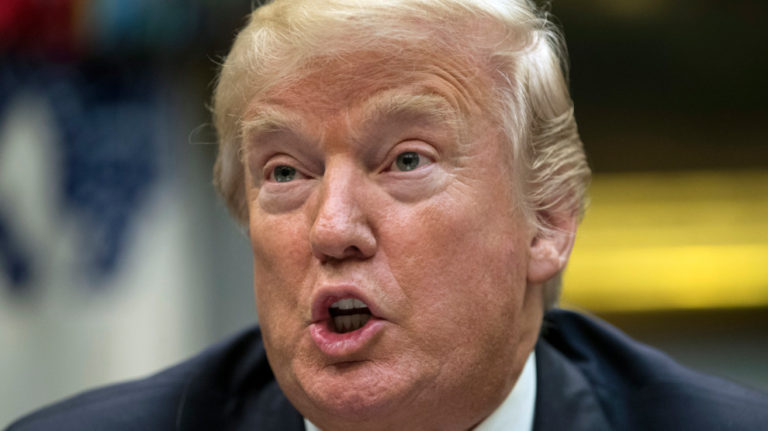
Are we one of the countries Donald Trump had in mind when he wondered why US lawmakers were seeking protection for “all these people from shithole countries” —  immigrants from Haiti, El Salvador and African countries?

To be clear, this question is not original to Nigeria. It has been appropriated — and I am thoroughly ashamed to admit this — from Botswana.

Following the latest of Trump’s trademark jibes at the black race on Thursday, Botswana was the first African country to formally and openly reprimand the US, dispatching a query to the American ambassador to its country and asking him to clarify if it was one of the countries classified by Trump as ‘shithole’. Up till yesterday, only officials of two more African countries — Uganda and South Africa — had spoken out in strong terms against Trump. The rest, among which Nigeria is sadly languishing, have been mute, hiding behind the African Union’s branding of Trump’s comment as “clearly racist”. The likelihood is high that South Africa and Uganda were emboldened by Botswana’s immediate response.

This isn’t the first time Botswana, a country of just over 2 million people, has recently stood up to America on behalf of Africa. In December, after majority of the United Nations voted against Trump’s decision to recognise Jerusalem as the capital of Israel, the US was so riled that it threatened to cut aid to the nations that voted against it. Before the vote, Nikki Haley, the US ambassador to the UN, had said Trump and the US were “taking this vote personally”. And, after, seeing it didn’t go their way, Haley said Trump “would be watching which countries voted against the US”, and had given instructions that he should be given the list. While other African countries hid away in the aftermath of the threat, Botswana called Trump’s bluff, branding Haley’s utterances “threatening and grossly inappropriate communication”, and affirming that it would “not be intimidated” in the exercise of its sovereign rights to vote. Botswana is certainly not a shithole country!

From Botswana, Nigeria can learn a few lessons. Like Nigeria, this southern African country is natural resource-endowed. But unlike us, Botswana doesn’t just export its gemstones and precious metals, it mines them. So, while Nigeria mostly exports crude oil in a garbage-in-garbage-out manner, Botswana has a robust in-country mining of its gemstones; it generates revenue from the end products, such as diamond, rather than from the raw resource itself.

Of the 50 large mines that account for 90% of the world’s diamond supply, the largest — the Orapa Diamond Mine — is in Botswana. A 50-50 partnership between the De Beers company and the government of Botswana, Orapa (meaning ‘resting place for lions’) began operating almost five decades ago. Nigeria, meanwhile, can’t boast anything close to a 50-50 stake in the total refining of its oil. Big as the mining industry is, it is only 40% of the Botswanan economy. But oil is Nigeria’s mainstay; without oil, our economy is gone. Botswana was a poor country at Independence in 1966, but decades of reinvestment of its resource in other sectors have seen it rise to a middle-income country. What it means is that Botswana, to a large extent, can remain in America’s bad books without batting an eyelid. That’s why it could summon the US ambassador. And that’s why Nigeria couldn’t.

That’s not all. Botswana has a unique understanding of foreign aid application that has perhaps eluded Nigeria’s foreign affairs ministry: western aid never goes to a country unless the donor is confident of some sort of future payback. For all of Botswana’s economic independence, it’s HIV/AIDS baggage is scary. Nearly one-quarter of its adults are infected with HIV, placing a heavy burden on social services and the economy — and this is where the US has been most useful. Aid from the US and other foreign donors has been critical to the process of alleviating the epidemic via the strengthening of local organizations and the government with technical expertise and financial resources to support the county’s response. Is that big enough a reason for Botswana to adopt a slave-master relationship with the US. Maybe.

But Botswana understands that America’s relationship with the rest of Africa is symbiotic; its stranglehold on the continent only enjoys permanence because of interventions like aid and other sundry assistance. Without the aid, the US can no longer be US. So, Botswana understands that despite Trump’s threat to cut aid, the US cannot afford to throw away its diplomatic relationship with Africa. Botswana understands that the greatness of America today does not only exist in part due to centuries of slavery and exploitative trading with Africa, it also exists due to the intellect and energy of the finest collection of Africans seduced to the States by the promise of a better life. It is this knowledge that emboldens Botswana to demand respect from the US. Still, has Nigeria’s anonymity in the diplomatic discourse of the year earned us shithole status?

Some Nigerians have answered ‘yes’ — not just because of the silence but for the hunger, joblessness, hopelessness, insecurity, inequality, anger and frustration in the land. While these are, without doubt, our realities, it would take a monumental underestimation of Trump as a racist and a similar misjudgement of the word ‘shithole’ for anyone to reach that conclusion. By varied dictionary definitions, ‘shithole’ relates to the physical dirt or shabbiness of a place; it is more about a place and its people than the conditions of living in that place. Trump’s ‘shithole’ comment is a reflection of his disdain for Africa as a place and Africans as a people — it bears no relationship with the problems besetting the continent. Nigeria does not qualify as a shithole, regardless of the opinion of a million Trumps!

Nevertheless, if African leaders will wake up from their slumber, Trump’s indiscretion can play to our advantage. We must ignore the messenger. We must, because Trump, were he a man of history, would remember that as a son of an unskilled German who emigrated to the US at 16 and started working as a barber, he is the least qualified to disparage or slam the doors of the US on shit-hole migrants. That’s why Trump, the messenger, must be ignored.

But we must never ignore the message. Never. And the hidden message in Trump’s vitriol is that Africans will continue finding themselves at the wrong end of outbursts like this until we’re serious about catching up with the rest of the world by building countries where personal and professional fulfillment can be attained without necessarily migrating abroad. Till then, every now and then, garrulous leaders like Trump will bank on that loophole to lump us all together as descendants of a shithole.

Soyombo, Editor of the International Centre for Investigative Reporting (ICIR), tweets @fisayosoyombo

Sanusi: Over 800 Fulani were murdered in one weekend but the media ignored it

Sanusi Lamido Sanusi, the Emir of Kano, says the media coverage of killings in the north central part of the country has not been balanced, as attacks on the Fulani went unreported.

In what Sanusi described as genocide, he said many Fulani were killed in Taraba State last year but the media did not report it.

“Some months ago in Mambilla, in one weekend, over 800 Fulani were murdered by Mambilla militias,” Sanusi told The Punch in an interview.  “The papers did not even go there to cover the story. Most of those wiped out were women, infants and the elderly.

“In one case, a pregnant woman was killed, her stomach was ripped open and the baby was brought out and slaughtered.”

He said despite his effort to get justice for the Fulani victims, government did nothing about it.

“I personally handed over to the Federal Government a dossier with the names and pictures of the 800 or so people slaughtered as well as the names and addresses of persons known to have participated in these acts of ethnic cleansing.

“Nothing has happened. I also ensured that authorities received video and audio evidence of senior politicians in Taraba State, who were involved in this act of genocide. No one has been arrested. Fulan were also murdered in Kajuru and Numan.

“In many of these cases, it was not about conflict but militias raiding settlements to kill women and children, and then later, attacking herdsmen and slaughtering them and their cattle.”

The emir denied the allegation that the killings by the herdsmen were a ploy to take over people’s land, adding that recent attacks by herdsmen were reprisals as well failure of government and security agencies to bring the perpetrators to justice.

“The point I am making is that we are living in a country that has failed to protect the lives of people on all sides and bring culprits to book.

“Also in the case of the Fulani, there is a deliberate attempt to ‘ethnicise’ criminality, and politicians, who are total failures, have found the anti-Fulani rhetoric to be the way to get popularity.”

Sanusi, who condoled with the people of Benue State over the recent killing of over 70 persons, said he shared the view of Governor Simon Lalong of Plateau State that the anti-grazing law in Benue was divisive and unfair to the Fulani herdsmen.

He said he had appealed to the Taraba State Governor to delay the implementation of the law in the state. but all his pleas had fallen on deaf ears.

He said he welcomed the idea of ranching, but the approach by the Taraba and Benue state governments was not the solution.

“This is what we all want. But in Benue and Taraba, the approach has not been one of including and supporting and regulating herdsmen but of isolation and hate. I am happy Governor Lalong of Plateau has publicly stated that he advised Governor Ortom of Benue to tread carefully.

“I can confirm that I personally spoke to Governor Darius Ishaku before his public hearings on his law and begged him to slow down until he has worked out proper implementation but he refused.”

The former CBN governor admitted that he is one of the patrons of the Miyetti Allah Cattle Breeders Association of Nigeria, alongside the Sultan of Sokoto, the Emir of Katsina, the Emir of Zazzau and the Lamido of Adamawa.

He said Miyetti Allah had never been involved in acts of violence and had always called on its members to eschew violence.