Home Blog Page 2656

UNDERCOVER INVESTIGATION: Cancer is the disease, Nigeria’s health system is the killer


EDITOR’S NOTE: All the names of cancer patients in the undercover parts of this story have been concealed as a mark of honour for their struggles and respect for their privacy. An undercover method was unavoidable, as it was the only way to ascertain the true quality of healthcare available to them in federal hospitals. The ICIR is in possession of video and audio evidence of ALL the findings of this story.

For a futile month in 2017 and two fruitful ones in 2018, ‘FISAYO SOYOMBO, Editor of the ICIR, was accompanied by a private oncologist in going undercover at two leading teaching hospitals in the country to ascertain the true quality of healthcare available to cancer patients. Together, they discover how the lack of functioning radiotherapy machines is impeding the treatment of numerous cancer patients and aiding the spread of the disease from a point in their bodies to others, leaving many of them stranded midway through their treatment and their families resorting to lobbying hospital officials. This is also a celebration of love — how cancer patients are fighting to see every new day by merely seeking to repay the care and faith and sacrifice of their lovers.


This is one of the most intense, riveting love stories you will ever read. Contrary to what you may be thinking already, it isn’t set in the Hotel President Wilson in Geneva, Switzerland — the world’s most expensive hotel — or in the famous Burj Al Arab in Dubai, the third tallest and fourth largest hotel in the world. It isn’t set in Paris, the fabled ‘city of love and romance’, either. Instead, this true life story is set in the frenetic city of Lagos, specifically domiciled at the gynecology ward of the Lagos University Teaching hospital (LUTH). Dateline, February 2018.

A dark, beautiful young lady from Edo State — confined to the bed by terminal sickness — writhes in agony. She twitches her right fingers but the rest of the arm is static; it’s swollen and bandaged, the source of enormous pain. She closes her eyes and grits her teeth as though mustering all the strength within her in an attempt to say something to the doctor, but she doesn’t. Weak and helpless, she gives up.

Her boyfriend — a dark, handsome, confident young man from Delta State — cut a forlorn picture. The agony in his eyes is palpable; it is clear he wants to help, but he can’t. He can’t even hold her hands in his; one touch and she’d scream in excruciating pains. Instead, he stares at her in consolation, wearing a sombre look suggesting he would rather bear the pains on her behalf.

THE POWER OF LOVE
One of his girlfriend’s breasts has been cut off; mastectomy is what the doctors call it. It is from there that the cancer raging through her body emanated. In all, she has undergone surgery, chemotherapy, radiotherapy — the three commonest medical solutions to cancer — yet her condition is deteriorating. She is becoming paler, losing weight, now unable to move — because the cancer has so spread round her body that she now suffers from metastatic neuro disease. Also, due to the cancer, she has lymphedema, responsible for the swelling of her eyes and right arm. She has intense chest pains and struggles for breath after weeing. She’s on oxygen as well. And what more? Breasts don’t regenerate; that breast is gone forever. Still, he loves her.

“I love her so much. She was my crush then when we were in Uniben but she used to play hard to get,” he says. “I never knew we would meet again in Lagos.” For the first time in a pain-laden 15 minutes, she blushes, her face lightening up and her lips slowly parting to release such glorious smiles that set one wondering just how pretty she must have been in her healthier days. Love, oh love! Such medicine even to the sick.

They have been dating for roughly six months. After losing track of each other back in Benin, where they both grew up, they met fortuitously on the streets of Lagos in January 2017. She had just undergone surgery at the time; and as the friendship blossomed, she told him she had cancer, and that one of her breasts had been removed.

“Trust me, it wasn’t an issue,” he says of the breast removal. “Even she was shocked [by my reaction] when she told me; I never felt anyway. If you love someone you have to accept them the way they are; it’s the truth. Life goes on. You can’t hold on to that, because it’s not her fault that she has cancer. I have accepted it.”

What he has accepted is often not so easy to deal with. As explained by the external oncologist who joined the journalist in entering the hospital undercover, there are ample examples of husbands who divorced their wives after mastectomy, despite already having kids after several years of marriage. In fact, there are cases of husbands who prevented their wives from undergoing the procedure, despite knowing that retaining the breasts literally meant a death sentence.

One more time she clenches her fists in pain and her man’s face contours into a frown. It’s such an unpleasant sight to behold. For how long will they endure this pain? When will she be strong enough to get out of the hospital and return to her normal life?

“I pity her a lot,” says the undercover doctor. “But I pity her boyfriend more. This lady I see has one year — probably two more — to live. The doctors handling her case must have told her, and I hope she has told her man — because no doctor will. The doctor tells the patient the truth but no one else. There is a doctor-patient confidentiality that forbids the doctor from opening up to anyone else other than the patient.”

BLAME CANCER, BUT BLAME THE HEALTH SYSTEM MORE!

When — or if — she dies, her death will be blamed on cancer, but make no mistake: the Nigerian health system would have been hugely complicit. Her death would have been fast-tracked by the many inadequacies of a comatose public health system. Why?

Last year, she was scheduled to undergo external beam radiotherapy (RT) treatment, ideally delivered by a machine called Linear Accelerator, or Linac for short. All linacs generate high energy x-rays (photons), which are then carefully aimed at the area of the patient’s body being treated by the Consultant Oncologist. First, LUTH’s RT machine is not linac, therefore incapable of producing the maximum result. Two, she was scheduled for 18 courses. But after 10 rounds, the RT machine broke down (in June 2017). Thus marked the end of her radiotherapy treatment — just at the halfway mark. Almost one year on, the machine hasn’t been fixed, neither has a new one been bought.

In any case, there is good reason to doubt the efficacy of those 10 sessions, as she recalls the difficulties faced by patients in the final days of the broken-down machine. “There were serious issues with the machine,” she says. “A lot of people were having complications; some were overdosed, others under-dosed.”

A LETHAL PAUSE

According to the undercover oncologist, the aborted procedure she was undergoing is called ‘adjuvant radiotherapy’, that is radiotherapy done following a debulking surgery (also known as tumor removal surgery).

“The courses are spread out in such a way as to target the remnant metastatic tumour cells,” he explains. “She was placed on 18 courses of radio, spread out over months, in order to deal with the problem cell by cell. So, what happened when the radiotherapy machine spoilt is that you stopped the process of clearing the metastatic cells.”

The implication is that those cells that had not been cleared after the 10 courses would continue giving her symptoms manifesting as pains in parts of the body. “Cancer cells feed on blood, so the person will still look sickly,” he says. That is the best scenario for the luckiest patient.

“But the worst — which is usually the case and which has clearly happened in this case — is that the metastasis continues, which means as the cells around her breasts were being targeted, the metastasis could have gone to the lungs and could have even gone as far as the brain — because the process of spread is through the blood or through the lymph nodes,” he adds. “The patient can start coughing blood because the cancer has gotten to the blood, or you start seeing signs of encephalopathy because it has got to the brain. You see she complained about back pains? It is because the cancer has spread to her back. These are all favourable areas for breast cancer spread; breast cancer likes the brain, the lungs, the bones.”

She is clearly a victim of the system. Unlike most patients who report to the hospital late, she sought medical advice once she noticed a lump in her breast in September 2015. After running a series of tests, she was diagnosed with cancer. She promptly began treatment, staying on chemotherapy for six months before going under the knife in February 2017. This was followed by took two courses of chemo after surgery, before enlisting for the botched radiotherapy treatment.

“I didn’t delay treatment at all,” she says emphatically. “Everything was rapid.”

STRUCK DOWN BY INDUSTRIAL STRIKE
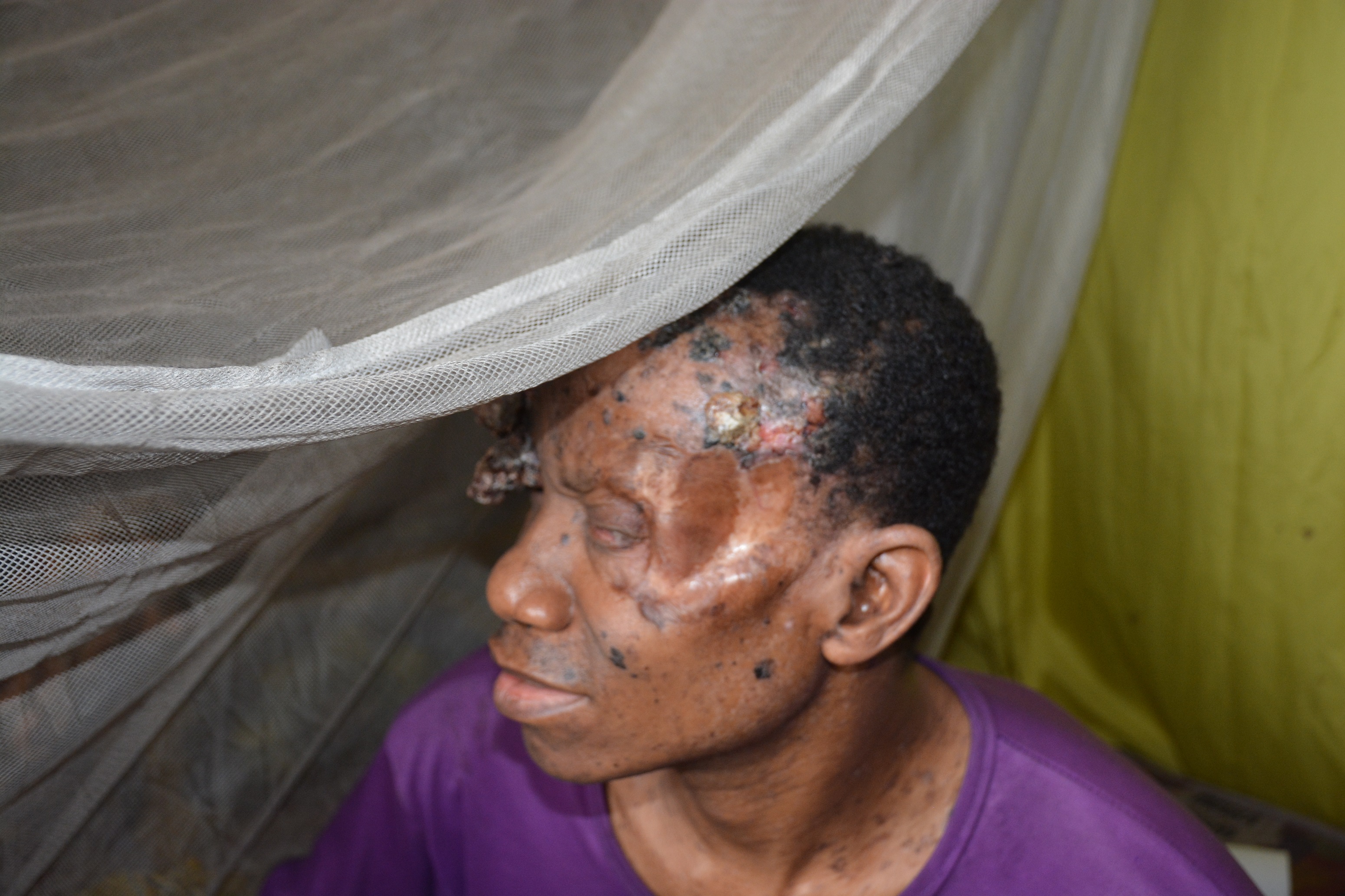
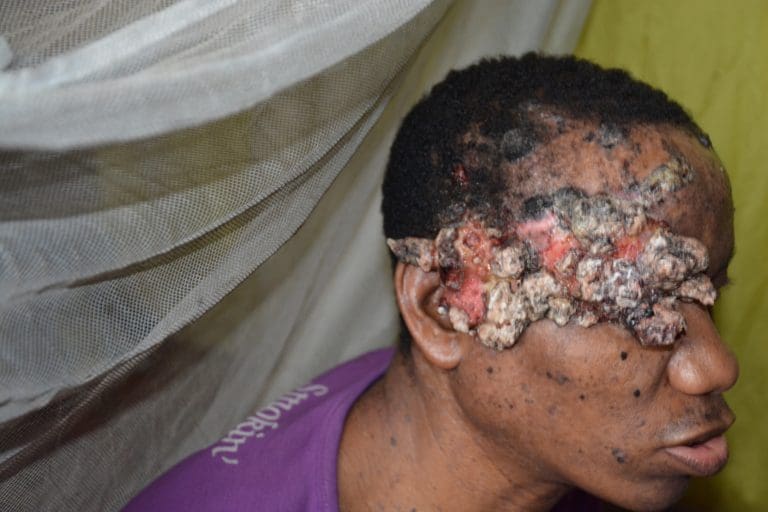
She’s not the only victim of the system, though. Of the dozen others whose stories would be touched in this piece, one decides to bare it all. As he explains, there’s nothing left of his human pride. All of it has been “taken away”.

Now 42, Muhammed Musa was only five years old when his parents noticed a small growth around his right eye. It was small but it wouldn’t leave. Best description to give it: “permanent pimple”. As the years passed, it initially didn’t hurt, neither did it rise in bulge. But as Musa approached adolescence, the pimple began to show that it wouldn’t be left out. Then it began to multiply. From the eyelids, similar sights suddenly began appearing on other parts of his body. Rashes! So his mother thought, and thus she sought native treatment in their Village in Edo State.

In his mid-20s — now a man and now in Lagos — Musa sought medical help. Cancer of the eyelids, the doctors said — with attendant tumours that needed to be removed. This was disturbing news because he couldn’t raise the funds. “None of my people had money, as I come from a really poor family,” he recalls.

However, by 2004, he had managed to raise just enough money to remove the tumour. It was a minor surgery. It looked like he had seen the end of his travails. If only he knew that was just the beginning.

Within two years, the tumour was back — this time on the left eye. He had barely recovered from his huge indebtedness courtesy of the 2004 operation. Musa frantically began job-hunting, hoping to be able to save enough to someday fund a second operation. But no one would employ a sick candidate. “That was how I suffered from 2006 till 2010/2011 when I eventually raised the money needed to remove the tumour,” he says.

AN EYE FOR THE SYSTEM
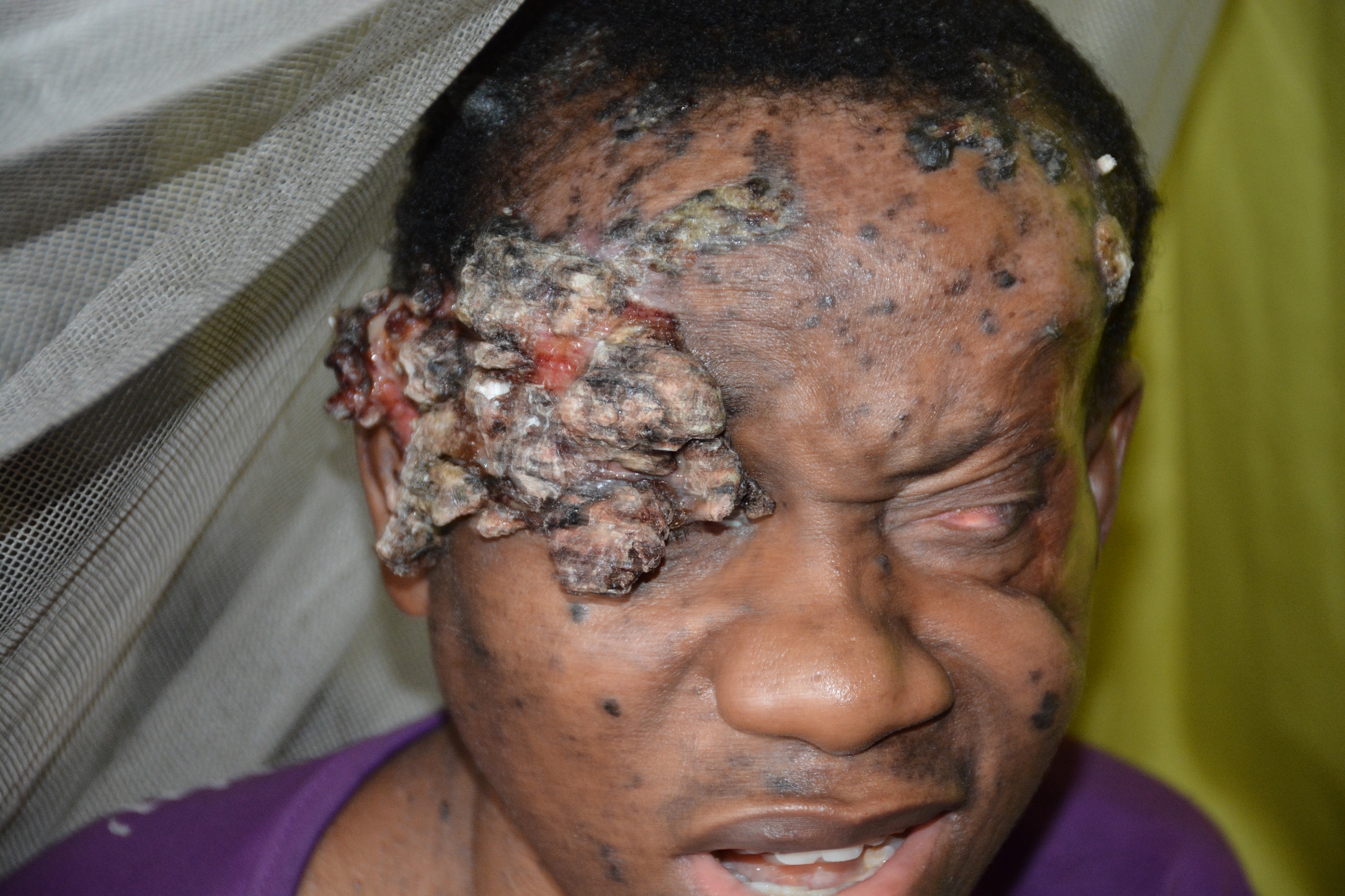
The cancer spread from an eye to another as Musa awaited the end of doctors’ strike actions

Then something heartbreaking happened. The National Association of Resident Doctors (NARD) embarked on a nationwide industrial action, after a series of warning strikes, to “draw the attention of the Federal Government to the deteriorating state of the health sector and low morale of doctors”. As the action coincided with Musa’s surgery date, he missed a big chance. That was in April 2010. Two more industrial actions followed, and on each occasion, the patients were discharged and no one reached out to them upon resumption of work. In all, Musa waited on the doctors for so many months, “almost a year”. Of course, the cancer wasn’t waiting. It spread so rapidly that it cost Musa his eye.

“When I started visiting the hospital, the tumour was quite sizeable, but not so big to the point where it would have affected my eye,” he says in a teary, regretful tone. “But the tumour became overlarge because of the strike action. The doctors would even admit us preparatory to surgery, but there would be strike so they discharged us each time.”

When the last of the industrial action was eventually called off, LUTH didn’t reach out to him. He was “lucky” that the tumour was giving rise to wounds that needed to be dressed, so he went to a private hospital where the wound was dressed for ₦10,500. Subsequent ones were to cost ₦5,000 per session. He didn’t have the ₦5,000 when the second session was due, so he risked an unsolicited visit to LUTH to see if someone could dress the “painful” wounds. “When I got there I met the doctor, and he said they were looking for someone to send to me, that the strike was over and they wanted to perform the surgery. So they gave me a date: March 14, 2011. But the tumour had grown so large that doctors said he would have to lose his eye.

FORTY-TWO AND STILL SINGLE
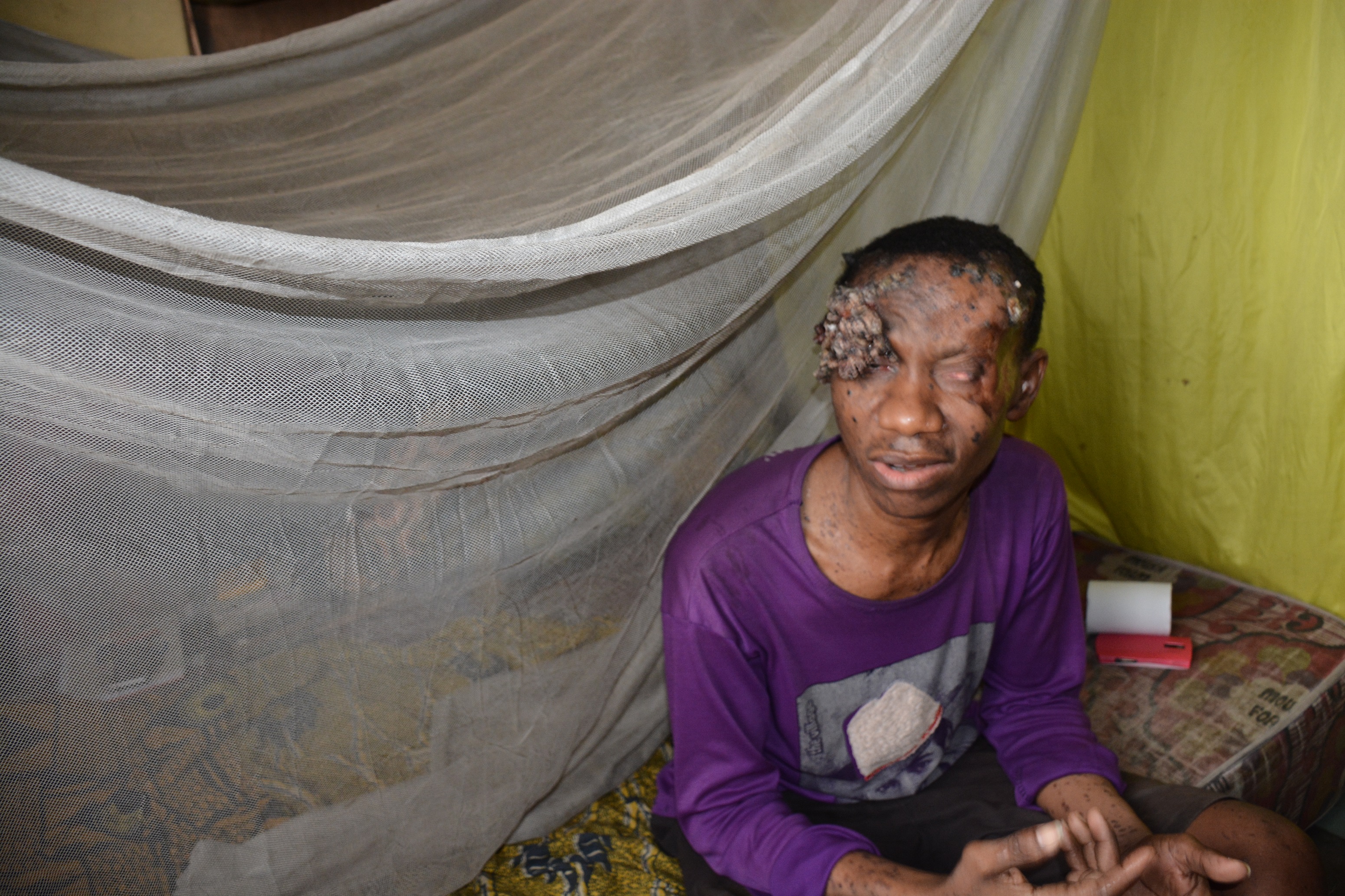
No wife, no kid at 42. Who will take care of Musa?

Musa eventually went under the knife, sacrificing his right eye for the decay in the system. One more development: his other eye had become badly affected by the wait; so, not long after the surgery, a tumour began developing there as well. In 2013, he was told another surgery would cost him ₦700,000. Unable to afford it, he opted to try the Lagos State University Teaching Hospital (LASUTH), where he didn’t know more bad news awaited him.

“Because the fees they charged was too much, I went to LASUTH at Ikeja. They said there would be consequences if they performed the surgery. One, the second eye would have to go. My ears would stop working. They would remove all the skin on my head, and use another to cover it. That was in 2013,” he explains, tears coursing down his eyes.

“I told them I couldn’t do it — because the left eye had already gone. If I should lose the right one, who will take care of me? Due to this problem, I am still single at 42. I don’t have a wife; I don’t have a child. So who would take care of me?”

‘I’M DYING BUT I DON’T WANT TO DIE’

Musa’s swollen legs

Back then in 2013, Indian doctors told him they could remove the tumour and also save his eyes. But it would cost him N3.8million. but to pay that was someone who couldn’t afford N700,000

By August 2016, the bill had risen to N8.5 million. Without a job, someone to take care of him, or even money to feed, Musa is all by himself at home — somewhere in Oshodi — resigned to fate.

“In June 2017, I started experiencing excruciating pains in both legs; they legs swelled up, and at the end of the day, this one burst. You can see the opening,” he says, then gives in to a cough he had be trying hard to suppress.

“I went to Gbagada General Hospital,” he continues, “but they refused to attend to me. They said I should go back to LUTH, being my first clinic. When I got to LUTH, they said there was no available bed for me, and that they would take me to a private hospital: ₦50,000 deposit first, and ₦1million or more if I spent more than 10 days there. Even ₦5000 I didn’t have on me on that day, where was I supposed to get ₦50,000? from”

Musa’s problem is beyond the tumour overshadowing his right eye. To prove this, he removes his shirt and folds up his knickers, revealing spots of rashes and tumours marauding his skin. A thick stench at once rents the air at the penthouse from which the landlord is already threatening to eject him for defaulting on rent.

NO FOOD, NO WATER, FAILING HEALTH
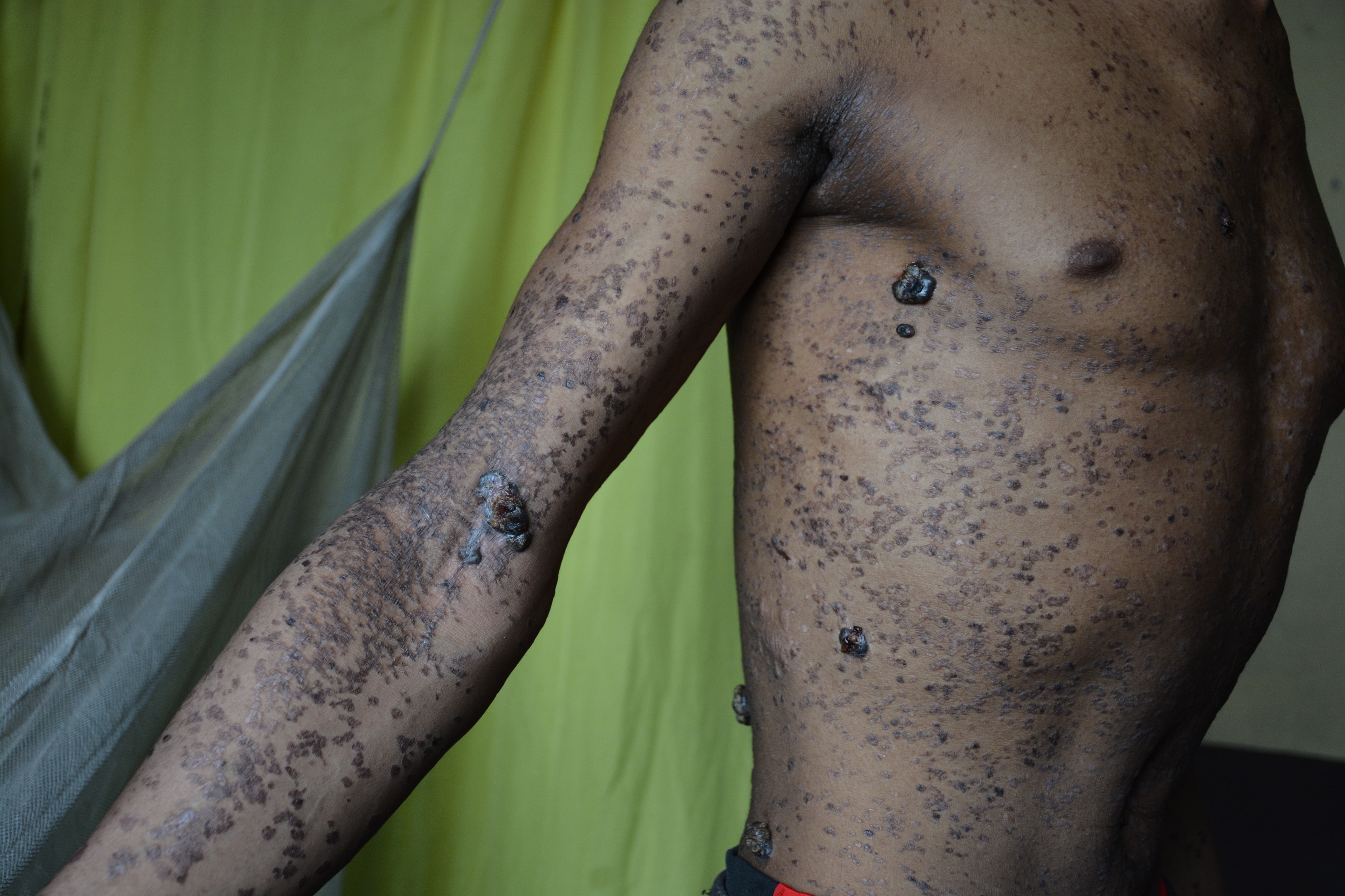
More tumours are appearing on Musa’s body, and they’re growing fast!

“I’m sorry, my brother, but I have nothing to hide any longer. If I die today, the people who will bury me will get to see the nakedness I’m hiding. Look at me, I’m dying here but I don’t want to die. Please help me,” he says tearfully.

“I’ve run everywhere possible… no one to help. I wrote to the Ministry of Health; I wrote to the Lagos State government. They said they had no funds to assist me. My brother, I swear to God, since yesterday, even sachet water I have not seen to drink.”

Musa did get some help along the way, though. A house officer at LUTH picked interest in his case, and continued sending him money even at the expiration of his housemanship and relocation from Lagos to Ibadan. That doctor is now jobless, and as such, Musa is feeling the heat.

“It is only this doctor that has helped me when capable. But since he lost his job, I have been in a bad situation here. It is only if someone remembers me and decides to visit, maybe one of my mosque members, that I get something to eat.”

The bad news is that it looks his condition may get worse. He knows as much, admitting: “You know, these skin rashes have now started developing tumours; the doctors said they have stayed too long on my body. The only thing they can face is the tumour on my eyes. And when they’re done facing that one, we will be dealing with more tumours from those rashes.”

NO RADIOTHERAPHY IN LAGOS, NO BIOTHERAPY IN ZARIA

“Please help me, please help me,” a 64-year-old woman says in Pidgin English amid fits of cries and screams. “Doctor, abeg make una help me oooooooooo.”

Were the basic cancer treatment procedures in place, this woman would have no business with admission at LUTH’s gynecology ward. By the woman’s account, LUTH referred her to the Ahmadu Bello University Teaching Hospital (ABUTH), Zaria, to undergo biological therapy (biotherapy for short) — a type of treatment that uses substances made from living organisms to treat disease. Biotherapy is considered superior to chemotherapy because chemo drugs can’t differentiate between cancer cells and healthy cells in the body. As a result, chemotherapy causes damage to normal cells, which can result in nausea, fatigue, hair loss and other side effects associated with this type of treatment. Biotherapy, meanwhile, generally makes use of natural, living substances that bolster the immune system’s ability to fight cancer. In addition, some forms of biotherapy prevent specific cancer cells from growing, or even kill them. Compared to other cancer treatments, the side effects of biotherapy are notably low.

After listening to the woman, the undercover doctor explains what the LUTH doctors must have been thinking, in sending the woman to Zaria. “Sometimes, as a doctor, you assess some patients and you see clearly that there is a limit to the external gimmicks that you can make. So you complement with biotherapy.”

Worried by how her two children, both adolescents — one male, the other female — would survive should she die — the woman, a roadside roasted plantain seller at Ojo-Alaba, Lagos, borrowed money and endured a tumultuous road trip to Zaria from Lagos. Without enough money for hotel accommodation, she slept out in the cold during her few days in Zaria. That was in 2016. On arriving the teaching hospital in Zaria, she was told, first, that they were not expecting any patient from LUTH. The LUTH authorities hadn’t pre-contacted them. This could have been sorted out in a matter of days, but the bigger problem was that Zaria’s biotherapy machine had broken down.

“It’s not only Zaria; I know two teaching hospitals in Nigeria with the equipment to carry out biotherapy, but none of them as functioned in the past three years,” the undercover oncologist adds. “In fact, presently, there is no functional biotherapy equipment in any public hospital in Nigeria. Long and short, biotherapy is currently unavailable in Nigeria — and this is a function of equipment, not expertise.”

Ever since, the woman has been frequenting LUTH for drugs, tests and admission. But, on the evidence of current pains, the cancer in her cervix is spreading fast.

‘I DON’T WANT TO DIE… MY CHILDREN ARE STILL IN SCHOOL’

“Since then, I have been constantly complaining, especially regarding my stomach. It’s getting bigger and the pain is so much,” she says, again in tears. “I have spent a lot of money too, and on many scans that cost ₦40,000, ₦30,000 each. There is nothing, including scans and injections, they recommended that I have not done or bought, but my belly is swollen now and won’t return to normal size.”

The woman bursts into another round of please-help-me tears. The stomach aside, her left leg has swollen up. Various scans on the leg have yielded no solution. She is also one of the victims of the breakdown of LUTH’s radiotherapy machine; she had only completed a little more than half of the recommended radiotherapy sessions when the machine broke down in June 2016. Twice — with biotherapy and radiotherapy — this country has failed her. And this is after spending well over N1million on her health. Bear in mind that this is a roadside roasted plantain seller, and that the stomach and leg swellings and pains weren’t there pre-Zaria, when she first reported to LUTH.

“Please help me,” she sobs again, louder this time, as undercover oncologist and doctor make their way out of the ward. “Please, help me. It is the small money I make from my work that I use to send my children to school. I don’t want to run out of funds for their education. I don’t want to die while they’re still in school.”

A DAY AT LUTH’S ONCOLOGY AND RADIOTHERAPHY DEPARTMENT
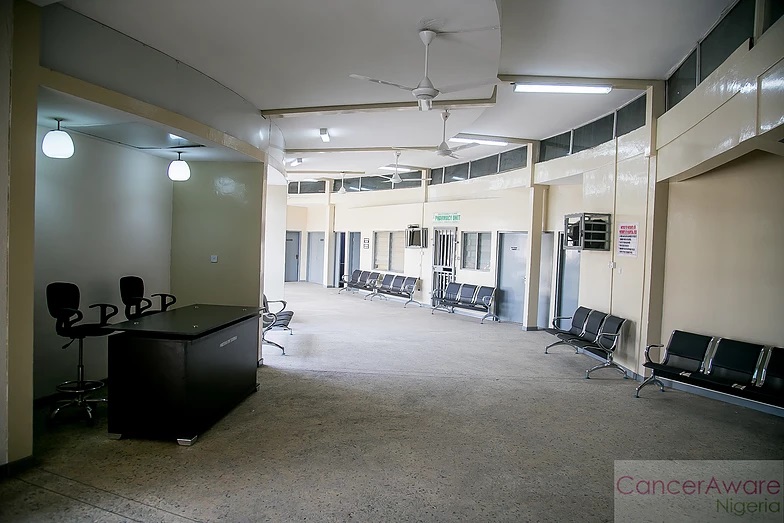
LUTH’s oncology/radiotherapy department… early in the morning

On an average day, the Oncology Department at LUTH is like a tripartite arena. First part, early in the morning, it takes on the semblance of a graveyard. We’re talking 7:00, 7:30, 8:00am — cancer patients, old and young, male and female, are trickling in, some for confirmation of next laboratory tests, some for the highly-dreaded chemotherapy sessions, others for confirmation of surgery dates or for post-surgery evaluation.

The ward is generally quiet at this stage, save when the familiar faces of long-term patients interlock, paving the way for exchange of mild-witted niceties. Globally, cancer is a generally deadly disease. But Nigeria is where the death ratio is highest: 805 of 1,000 cases — or four in five cancer cases — result in death. According to statistics from the World Health Organisation (WHO), over 100,000 Nigerians are diagnosed with cancer annually, with 80,000 of them dying from the disease — an average of 240 Nigerians/day or 10 Nigerians/hour. As if that wasn’t enough, WHO has predicted that Nigeria can expect a 75 per cent increase in cancer-induced death by 2030. Add that to the chaotic and comatose health system and it can be said that in Nigeria, cancer is somewhat a death sentence, the reason the oncology ward usually wears a sombre, gloomy look early in the morning.

Usually, from a few minutes past 8am till 10am or thereabouts, a first-time visitor can be forgiven for thinking he missed his way and ended up in a church! This is the second part, comprising praise and worship, sermon and altar call. Then the third and final part is where the ward looks both like a hospital-cum-market: filling the attendance list, roll call of patients, loud complaints by angry patients.

When the journalist visited the department one Thursday in March, all three scenarios played out. First, the initial silence. But at 8:20am when a nurse comes in and tells the patients ‘Let us pray’, everything changes. After the prayer comes a praise and worship session that begins thus at exactly 8:55am: O se o Jesu/a o ma yin o/o se o Jesu/Olorun ayo wa (Thank you Jesus we will praise you, the source of our joy…). Soon, nurses and patients invite God to their midst to perform miracles, singing: Yahweh/Your name is Yahweh/You are the miracle working God/Your name is Yahweh, and later Come and do your miracle today/Your miracle today….

PRAYERS FOR REPAIR OF RADIOTHERAPY MACHINE

One look at the patients and one could tell they looked more to God for help than to the doctors at LUTH. And it is easy to see why: those of them scheduled for radiotherapy sessions understand that the doctors can do no magic if the government continues ignoring the hospital’s broken-down RT machine. In any case, the nurse leading the session soon touches the matter as praise and worship morphs into full-blown prayers. “Let us continue to pray for Nigeria and for our government,” she charges the patients. “It is our right to have this radiotherapy machine but unfortunately our government is not up to date in this wise. We are optimistic that things will improve very soon, but we must pray so this can happen quickly.”

The end of prayers at 9:22am isn’t it for the day, no. A female doctor — tall, fair and with a thick Igbo accent — takes over. It’s sermon time! It lasts approximately 20 minutes and is followed by the altar call: those who want to surrender their lives to Christ have the chance now. Of course, for a population of people afflicted by a disease that translates to a death sentence in their country, quite a number presented themselves. Who would blame them? Better to hand one’s live to Christ since Nigeria places no value on it, anyway. Altar call ends at exactly 9:49am; time, now, for the day’s main activities.

As the patients watch out for their names to have their moments with the doctor, there is a huge conversation about how the lack of a radiotherapy machine at LUTH was compounding their woes. By the accounts of five patients, private hospitals are taking advantage of the gap.

HELPING PATIENTS SEE DOCTORS IS LUCRATIVE BUSINESS
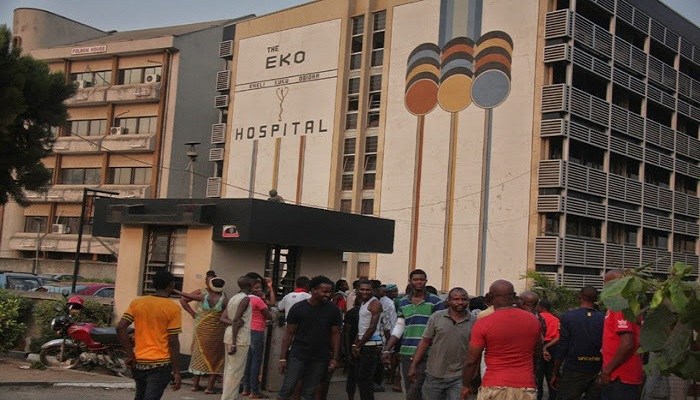
“I went to Eko Hospital after the breakdown of LUTH’s machine, and I was given a bill of N160,000,” says a slender, light-skinned woman. “But when I presented myself on appointment date, I was told that the cost had risen to N250,000. Apparently, Eko Hospital had become aware of the damage to LUTH’s machine, so they saw an opportunity to make quick money.”

“It’s blood money, I tell you!” another patient yells. “My own problem is that Eko Hospital is crowded these days; it’s so difficult to see the doctors.”

Having devised an underhand way around the challenge, the first patient offers some interesting advice: “There is this boy who lives not so far from the hospital; if you give him N500, he’ll go there around 2 or 3am to write your name on the patients’ list for the day. I can link you to him if you want, but that’s what I do.

“I started doing it since the day my husband and I spotted robbers around Jakande and Lawanson [on Victoria Island] when we left home around 4am because I needed to see the doctor early. We had to stop doing that; we won’t die before death comes.”

Were the boy to do that for 10 patients every day, that’s N5,000 daily — N25,000 at the end of the week.

Their conversation is interrupted by a woman who left her home in Ikorodu at 5am so she could arrive the hospital in time to see the doctor, but has now been told, at 11:06am, that her file is missing.

“What manner of nonsense is this?” the woman, dark, ostensibly in her mid-30s, says. “Can you imagine such utterance? As if I took my file home the last time!”

She returns to the hospital staff after 15 minutes but she is told to “stop disturbing us”. “This people are trying my patience,” she huffs. “I will leave them to their madness and go to my home, after all it is God who takes care of the sick.”

After about an hour of tussle, she is told to see the doctor; the file would be taken care of later.

File disappearances aren’t specific to LUTH. According to a doctor, who asked not to be named because of her close ties to the UCH, such disappearance once cost a patient’s life — indirectly.

“Few years back while working at UCH, I had this patient whom I suspected had breast cancer. But to be 100% sure, I sent her to the lab,” she recalls. “She did the test, but when the time came to collect it, UCH couldn’t find her result. She was told to pay a second time for another test.

“But this woman never came. Instead, her church members convinced her to focus on prayers. Guess what, she eventually died of cancer. If UCH hadn’t lost her test, she would have started treatment fairly early, and maybe she’d still be alive today.”

AT UCH, NO CONNECTION, NO RADIOTHERAPY
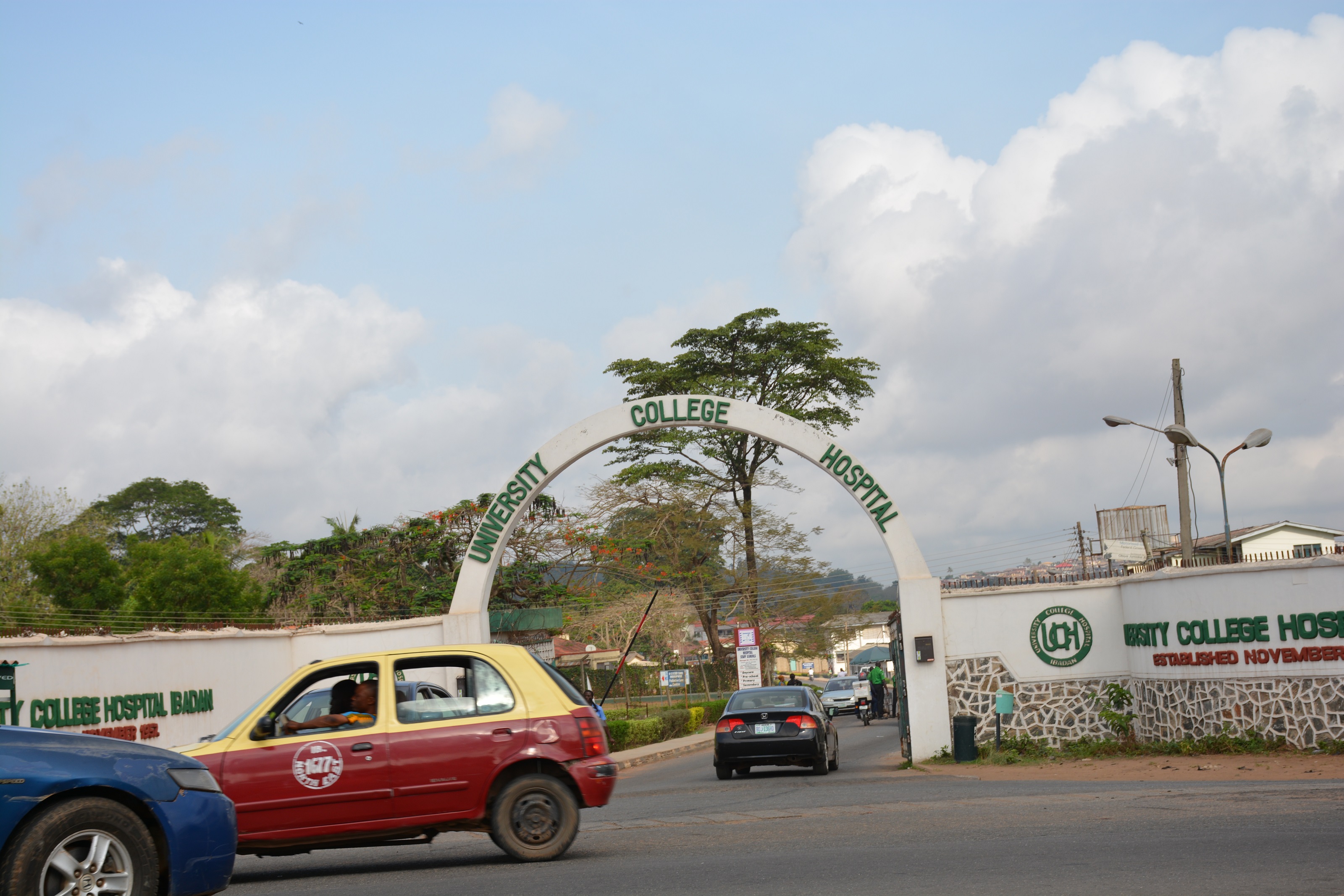
On his sick bed at the University College Hospital (UCH), this 54-year-old suffering from cancer of the anus cuts a frustrated figure. Since relocating to UCH in February (and this is March), he has taken in five pints of blood — in addition to seven at LUTH. And he has suffered. Each time he tries to talk, he finds that the strength left in him isn’t up to it. Then he resorts to tears. “I know I will get well,” he says intermittently, “and when I get well…”

His wife always cuts in: “Relax, honey; you will be fine.” She is his spokesman now. Not just that, his number-one caregiver, his manager, his comforter, his pillar. Another classic example of how listless life would be without love — how, without love, hospitals would be faster pathways to the graveyard.

“He was rejected at LASUTH because there was no bed space,” the undercover oncologist and journalist, who had found their way into UCH through the backdoor, overhear his wife say to a friend on the phone.

Even at LUTH, there was no bed space. But seeing how badly he needed to be admitted, the doctors took the difficult decision of searching round the ward to see who could be discharged. Finally, they found someone whose condition they thought was the least critical, and sent him home; but ordinarily, that patient would have remained on admission.

That admission at LUTH was short-lived, though. He needed radiotherapy and was told the machine would “soon” be repaired, but the wait was becoming endless. Earlier, he had also waited on the radiotherapy machine at the University of Nigeria Teaching Hospital (UNTH), Ituku-Ozalla, Enugu, for more than a month, but was eventually told it was “bad”. No longer willing to take risks, he decided to try UCH. But there was still one problem: it was January but UCH’s radiotherapy machine was already booked till April! Luckily, after his wife called a doctor-friend of hers, they received an expedited appointment. They arrived UCH in February, after more than three months of rejection by LASUTH and waiting on UCH and UNTH.

And so, while Eko Hospital is profiting from a lack of radiotherapy machine at LUTH, UCH is smarting from it. At UCH, there is increased competition for the machine to the extent that non-UCH patients have no chance of going under its radiotherapy machine early enough unless they’re connected to the hospital’s hierarchy.

On his sickness, they have spent more than N2million — more than half of that due to the endless wait for the machine. “We spent a lot of money on tests and drugs just to keep him in shape pending the readiness of the radiotherapy machine,” she says. “SO far, he’s had five radiotherapy sessions. Hopefully, he can get well soon.”

200 MILLION PEOPLE, FOUR RADIOTHERAPHY MACHINES

There are only four functioning radiotherapy machines all over the country to serve an estimated 200million Nigerians, yet the International Atomic Energy Agency (IAEA) recommendation is one RT machine per 1million people, meaning Nigeria should ordinarily have roughly 200 RT machines.

Of these four functioning machines in Nigeria, one is owned by Eko Hospital, a private hospital. This means that of the 20 federal teaching hospitals in the country, only three — UCH, Ahmadu Bello University Teaching Hospital Zaria and the National Hospital Abuja — currently have functional radiotherapy machines. The Usman Dan Fodio University Teaching Hospital Sokoto (under repairs), UNTH and LUTH have, but the machines have been down for varying long periods of time — that’s having like not having!

To put the situation in perspective, 17 of Nigeria’s 20 teaching hospitals cannot offer radiotherapy to cancer patients. Also, radiotherapy is unavailable in the entire South-South (comprising Akwa Ibom, Cross River, Bayelsa, Rivers, Delta and Edo states). Anyone diagnosed with cancer in this region must travel out of it — either to Enugu in the South-East, Lagos or Ibadan in the South-West, or Abuja in the North-Central. This trend is nothing new; there was a time in 2015 when only two radiotherapy machines were functioning in the whole country.

‘OLD SCHOOL’ RT MACHINES

A cobalt-60 RT machine purchased in 2017 by the Ugandan government

Painfully, of the four radiotherapy machines available all over Nigeria, only one — National Hospital Abuja’s — is useful for curing cancer; all other three cannot. They are only useful prolonging a patient’s life; more like ‘you’re going to die anyway but let’s try not to make you die too soon’.

So explains Runcie C. W. Chidiebe, a cancer control advocate and Executive Director, Project Pink Blue.

“The radiotherapy machines at Zaria and Eko hospital are cobalt machines,” Chidiebe moans.

“I have interacted with so many medical physicists, clinical oncologists and radiation oncologists, and they will tell you that the beam produced by cobalt radiotherapy machines is not sufficient to prevent spread or even ensure any treatment or therapy; it is just good for palliative care only — that is the situation whereby you’re no longer trying to achieve cure but just to prolong the patient’s life.”

Chidiebe was stunned to find out during a recent visit to Texas Oncology in Sherman, in US, that just one centre had two radiotherapy machines — one variam, the other linac accelerator — serving 100,000 people.

“None was cobalt!” he exclaims. “These are the newest machines that produce sufficient beams that can really contain the cancer and prevent it from spreading to other vital organs.”

THE RADIOTHERAPY HUSSLE IS REAL
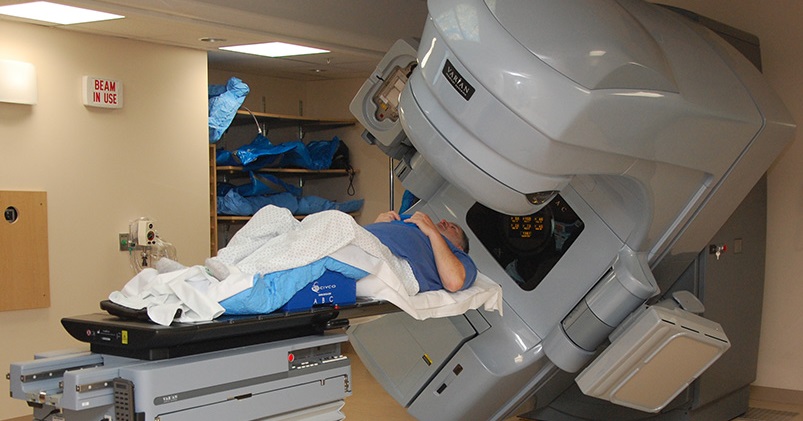
A varian linac RT machine in use at the National Life Cancer Treatment Centre of the Central Vermont Medical Centre, US

An expected consequence of the scarcity of RT machine is the huge competition for sessions in the three hospitals where the service is available. In those hospitals, an appointment is extremely difficult to secure, and officials try their best not to offer guarantees on the stability of their RT machines.

“The machine is working,” a UCH official said on the phone when asked for how soon an appointment could be booked, before quickly adding emphatically: “as of today!”

A contact in the radiotherapy department was supplied, and, although the doctor at the other end hesitated to pin a date for a patient that hadn’t been physically examined, he eventually said: “If the patient comes and we discover that it is not an emergency, he cannot get a RT appointment before July.” That is four months of offering the cancer unfettered access to spread!

FINANCING FOR ONCOLOGY MUST IMPROVE

Chidiebe laments: No bone scan working in the entire country

So, what can be done to bolster the quality of treatment available to cancer patients, particularly in terms of access to RT?

“Most of the RT machines break down intermittently,” says Chidiebe. “Some don’t even work up to one month. It takes months to get money out for maintenance, but cancer doesn’t wait; it keeps spreading. We have refused every year to invest in cancer control. Financing for oncology and radiotherapy is so poor; it has to be improved.”

Another step, he explains, is for government to buy the machine spare parts and keep them, instead of waiting for the machines to develop fault.

“As I speak to you, there is no bone scan working across the country. We have two bone scan centres — UCH and National Hospital — but the problem is that there are no reagents,” he says.

“Can you imagine? The machines are there but no reagents. Isn’t it shameful? The nuclear medicine guys have to travel to South Africa to get these things. The Nigeria Customs Service are not helping issues, too, with the way they frustrate you with their corrupt demands when you try to bring these machine in.”

WHERE IS THE MONEY???
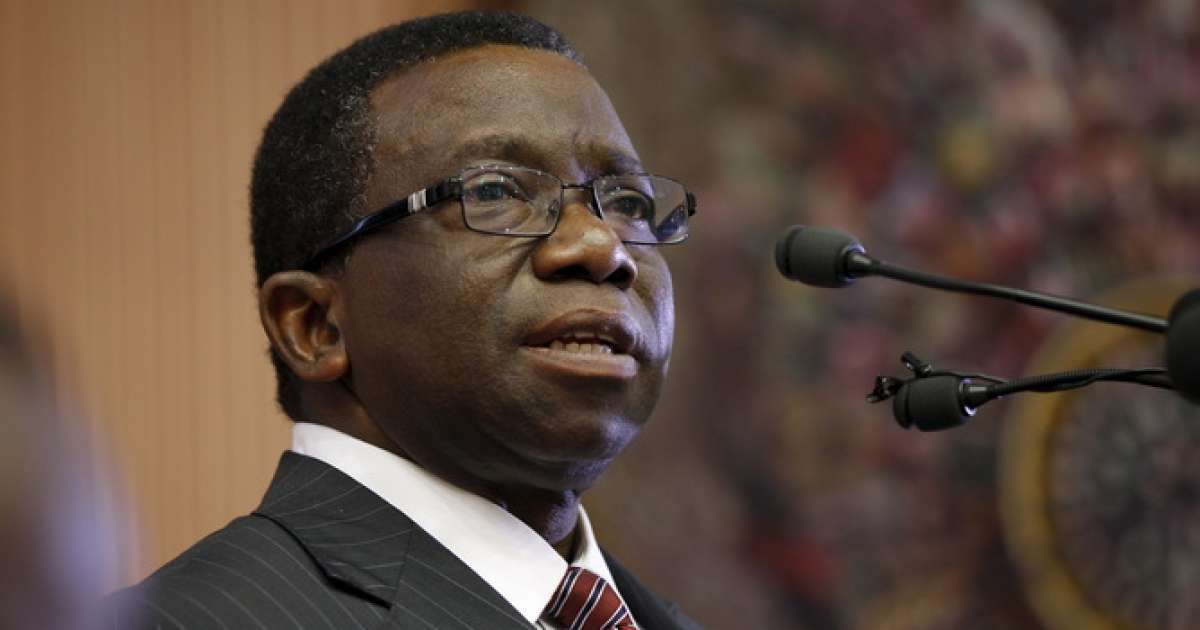
Adewole, Health Minister

The most expensive linac radiotherapy machines cost between of $750,000 and $1.5million (between N228 million and N456million, at the current CBN rate), excluding associated costs such as the vault that will house the system, treatment planning and oncology information system software, lasers, and other accessories.

However, only N55.6 billion was allocated to capital projects in the ministry of in the 2017 budget. In 2016, it was N28.7billion, N22.7billion in 2015, and N49.5billion in 2014. In 2017, a total of N4.01 billion was budgeted for all 20 teaching hospitals; it was N2.4billion in 2016, N1.8bn in 2015 and N9.3bn in 2014. That’s grossly inadequate, considering the enormous equipment deficiencies of those institutions, which perhaps explains why University of Port Harcourt Teaching Hospital, despite receiving the biggest share of the 2017 capital allocation (N492.8million), still doesn’t have a RT machine.

While the health sector is incontrovertibly underfunded, it would appear that the bigger problem is financial mismanagement, not under-funding. In the 2017 budget, N9 billion was specifically allotted to the purchase of radiotherapy machines for some teaching hospitals (and another N117 million was also budgeted for cancer-related issues).

Let’s make two unlikely assumptions: that the government purchases the most expensive linac RT machine in existence (N456million) and the associated costs are as expensive as the machine itself (another N456million). This would mean that at the very maximum, one RT machine would cost N912million. Therefore, the N9bn budget would have funded the purchase of nine radiotherapy machines.

But in 2017, the government bought only one RT machine — for the National Hospital! The question, then, is: where is the rest of the N8bn?

This was one of the many questions that would have been put forward to Isaac Adewole, a Professor of Gynaecology and Obstetrics and Minister of Health, and Osagie Ehanire, Minister of State for Health, but neither responded to the email and text message sent to them.

THE LONG-TERM SOLUTION
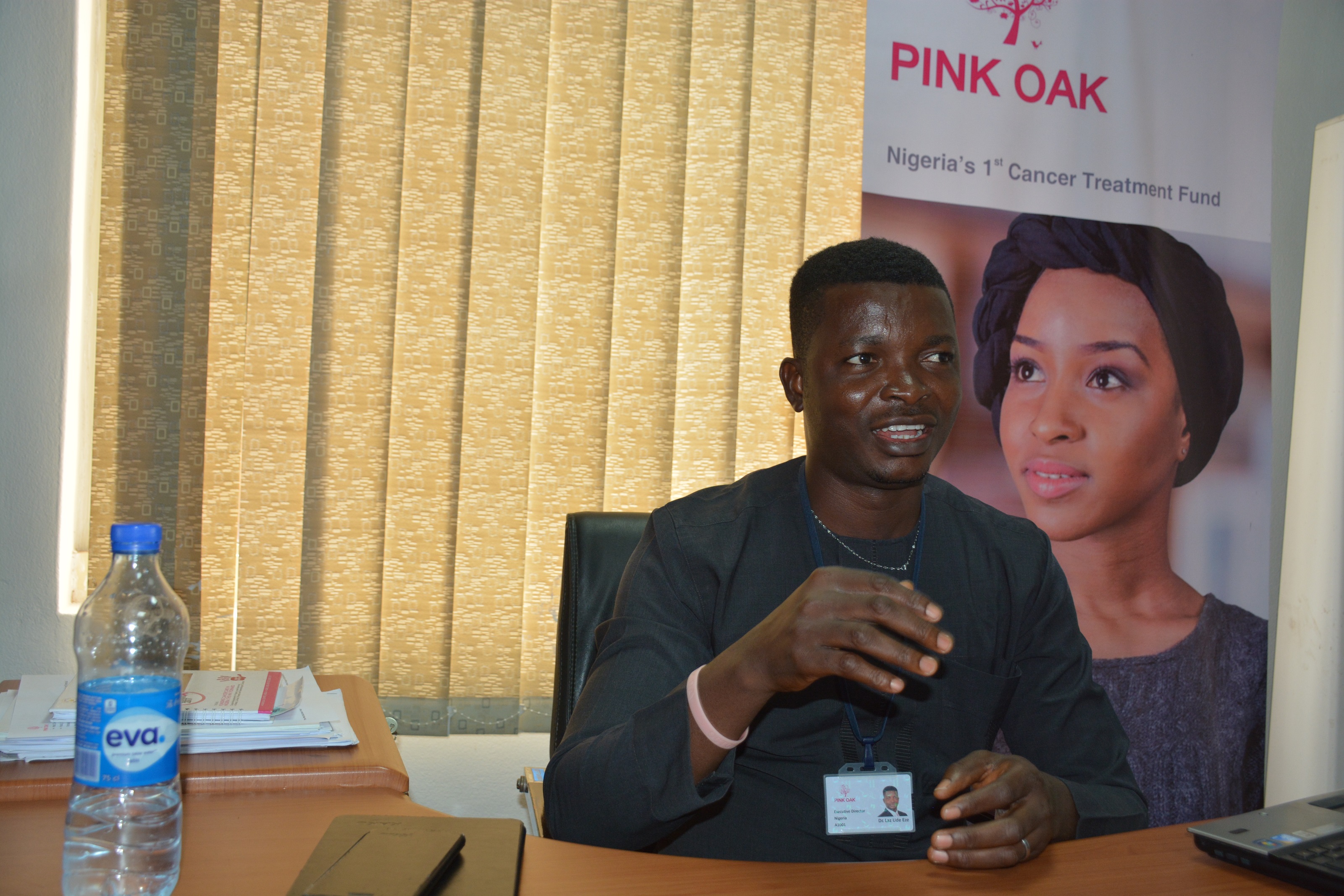
Universal Health Coverage (UHC) is the long-term solution, says Pink Oak’s Laz Eze

Dr. Laz Ude Eze, Executive Director of Pink Oak Cancer Trust — an NGO that raises funds to help cancer patients access better care — cannot understand why Nigeria can’t reproduce the success of even neighbouring African countries in making quality care available to cancer patients.

He recalls — and adds that “it is shameful” — that when all the radiotherapy machines in Nigeria broke down, Nigerians were travelling to Ghana for radiotherapy.

“These Ghanaian hospitals were not full-fledged government hospitals,” he says. “One was an initiative between the Swedish government and the Ghanaian government, bringing in some private investors. The hospitals where our presidents get treated abroad and all our public office holders run to with taxpayers’ money are not government hospitals. Most of them are private hospitals. So, why can’t we attract that level of investment here?”

The long-term solution to the cancer challenge, he is certain, is Universal Health Coverage (UHC), a mandatory health insurance for all Nigerians, enabling them to access the highest possible quality of healthcare without financial difficulty. He says the country’s decision-makers know this but the political will is lacking.

“That ‘without financial difficulty’ is a keyword. The health sector needs much more money than government currently allocates to it,” he says.

“With the UHC, everyone contributes to a medical fund. Everybody can’t get sick at the same time, therefore people with cancer can get treatment and don’t have to pay out of pocket; and if they have to, it will be something the person can afford.

“It doesn’t mean it has to be entirely free. But it has to be that no matter the level where the person operates, a patient will be able to afford healthcare. He doesn’t need to go bankrupt. You will not need to choose between feeding your family and paying for his health, or paying your child’s school fees and paying for your health. The opportunity cost will not need to be anything that is important to you. So it’s just like you want to buy coke — you know, that level — and you will not feel it. That’s the destination

“And it’s something that, if there’s political will to get it done, within two to three years, we can have it. We may say there is no money, but there is money for things that government considers important. If they don’t have money, they’d borrow to fund it. So, all the solution to this is for the government, at federal and state levels, to consider cancer as an important challenge.”

‘SOMEDAY IN THE FUTURE, WE’LL PAY FOR IT’
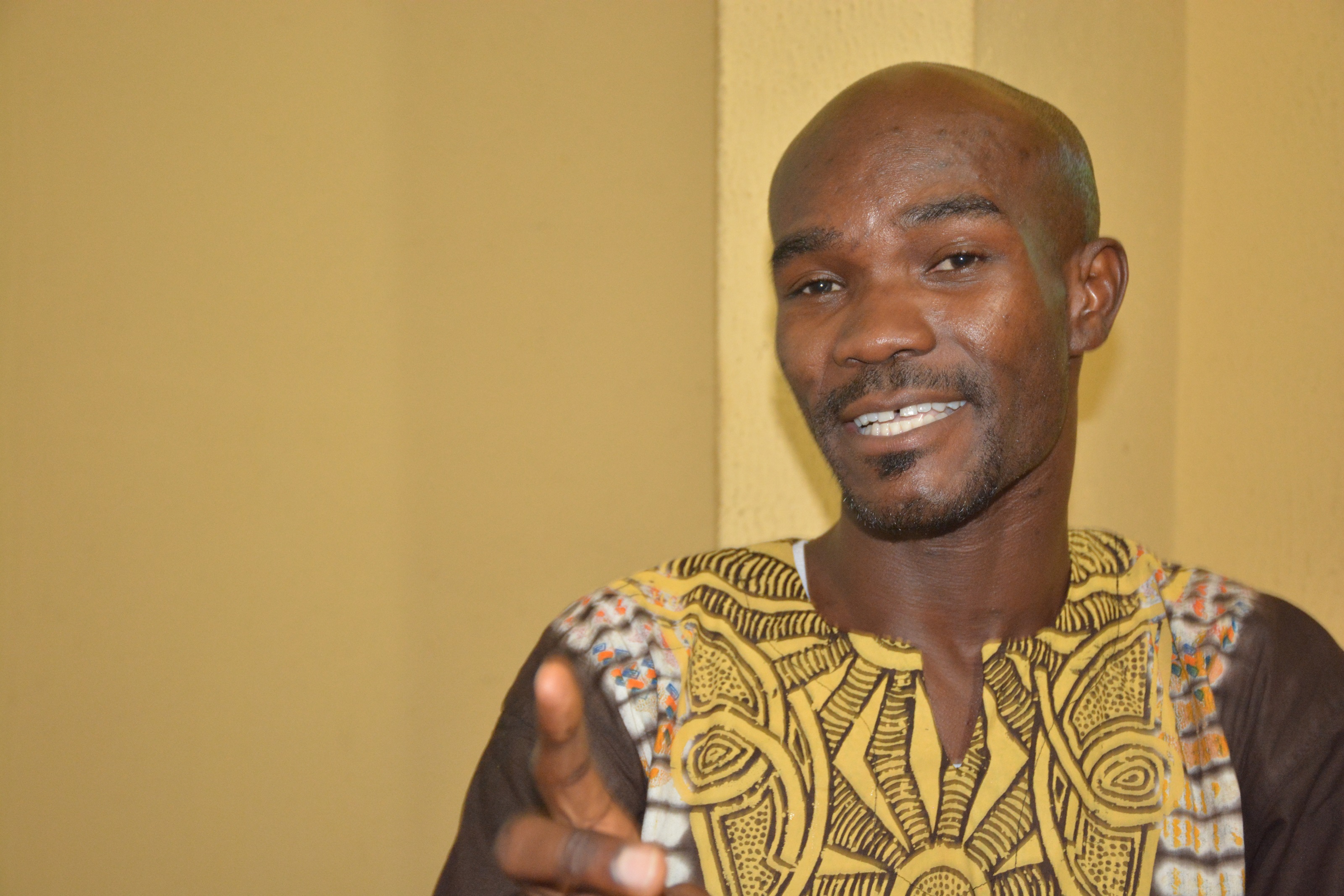
Would there be consequences if government continues ignoring the underwhelming quality of care available to cancer patients? Chidiebe says yes.

“It means people will continue to die unnecessarily, avoidably,” he says. “And you know the saddest thing? Most people who develop cancer are the aged whom we need to mentor the young ones. We’re raising a generation of youth lacking in mentoring by elders; and someday in the future, we will surely pay for it.”
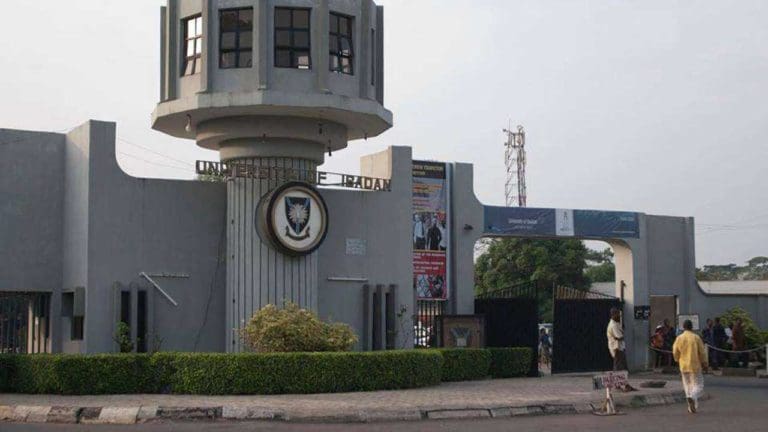
 

ASUU laments: A senator’ running cost is N13.5m/month while UI has N66m for capital projects


The Academic Staff Union of Universities (ASUU) says the administration of President Muhammadu Buhari is only preparing the country for a greater future doom with the poor funding of education in the last two years.

“While each senator is paid N13.5million as running cost per month, the same Senate appropriated a paltry sum of N66million for capital projects for University of Ibadan with students’ population of about 30,000,” said Deji Omole, Chairman of ASUU, University of Ibadan branch, on Monday.

He lamented that education funding is at its lowest under the Buhari-led administration, noting that the stifling of education funding under the administration is preparing the country for a greater future doom.

Omole said the nonchalant attitude of the Federal Government to education seems to be the worst in the country’s history, with only about seven percent allocation.

“It will be difficult to have a citizen that will love the country in the future if the current trend of abandoning the poor while taking care of the rich continues,” he warned.

“This can only happen where the ruling class lacks vision like Nigeria. This same government refuses to drop a kobo for the revitalization of public universities.”

The ASUU Chairman also noted that the failure to allocate enough money to public institutions is already causing a gradual crisis of confrontation between students and their respective administrations in some parts of the country.

“Now, many children of the masses are denied access because universities cannot admit beyond what the dilapidated infrastructure can take. Yet their parents cannot afford private university.

“The Federal Government owes about N800billion revitalization funds to public varsities as contained in the agreements with ASUU.”

Omole vowed that the union would resist any plan to force children of the masses out of school by imposing on them dues that are  Federal Government responsibilities just as he reiterated that the ruling APC has performed poorly in education.

He said that the President has continued to pay lip service to public education while pacifying militants and terrorists.

The ASUU chairman stated that the masses continue to groan in hardship, while the political class continues to increase their number and pile up enough money taken from the collective patrimony ahead of the 2019 general elections.

In 2016, N480bn was budgeted for education, representing 7.05 percent of the total budget, which was N6.8trn. In 2017, N550bn was allocated to education, representing 7.40 percent of the total budget, which was N7.4trn; while in 2018, the government proposed N605bn for the education sector out of the N8.6trn, the total proposed budget for the year. It represents 7.03 percent of the total

It was a mistake to stop teaching history in secondary schools, says Buhari


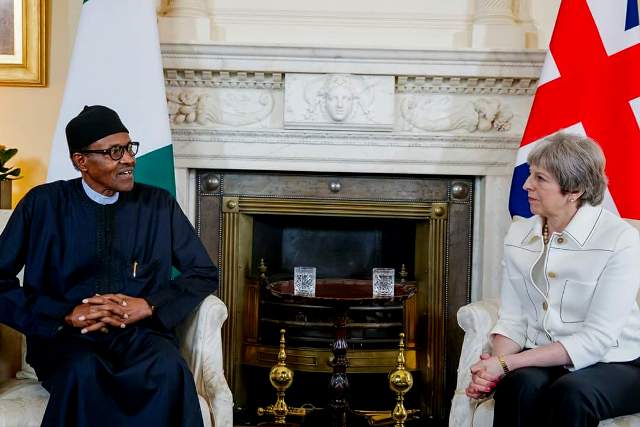
President Muhammadu Buhari says it was a mistake for Nigeria to have stopped the teaching of history in secondary schools, as “people ought to know how they arrived where they are, if they would move forward”.

Garba Shehu, Special Assistant to the President on Media and Publicity, quoted Buhari as saying this during his meeting on Monday with Theresa May, Prime Minister of Britain.

He was reminiscing on the long history of cordial relations between Nigeria and Britain, which have lasted several years “even when we fought a civil war”.

Buhari appreciated British companies such as Unilever and Cadbury “who have stood with Nigeria through thick and thin”.

“But like Oliver Twist, we ask for more investments. We are encouraging more British companies to come to Nigeria,” Buhari told May.

“We appreciate the support you have given in training and equipping our military, particularly in the war against insurgency, but we want to also continue to work with you on trade and investment.

“I am very pleased with the successes in agriculture. We have cut rice importation by about 90%, made lots of savings of foreign exchange, and generated employment.

“People had rushed to the cities to get oil money, at the expense of farming. But luckily, they are now going back to the farms. Even professionals are going back to the land. We are making steady progress on the road to food security.”

Buhari also pleaded with Britain to support Nigeria’s plea to the United Nations for the Lake Chad Basin, which is fast drying up as a result of climate change, to be recharged with water from the Congo Basin.

According to him, this would ensure that residents of Niger, Cameroun, Chad and Nigeria, no longer continue to flee to Europe, via Libya, as a result of the harsh conditions of living close to the Lake Chad, will stay.

“The Lake Chad is now about 10% of its original size, and it is perhaps one of the reasons our youths dare both the Sahara Desert and the Mediterranean, to get to Europe,” Buhari said.

“But if there is inter-basin water transfer, about 40 million people in Nigeria, Niger, Cameroon, Chad, and other countries stand to benefit. I made the case during the Climate Change Summit in France.

“If Lake Chad is recharged, it will reduce the number of youths coming to Europe to increase social problems. We brought back about 4,000 people from Libya recently. Almost all of them were below 30, and Libya was not their final destination. They were headed to Europe.”

Buhari reassured Theresa May that he was more focused on ensuring economic and security stability in Nigeria than on winning a second term in the 2019 general election.

“We campaigned on three major issues, to secure the country, revive the economy and fight corruption. We have elections next year, politicians are already preoccupied with the polls, but I am bothered more about security and the economy,” he said.

Dauda the sexy Prof drowns in Ife waterloo

0

By Tunde Odesola

(Chanting of anthem)

Great Ife! Great Ife

Africa’s most beautiful campus

Conscious, vigilant, progressive

Aluta against all oppression…

Another great Ife is a counterfeit…”

Student leader: Ever articulate gbagba! Ever militant gbogbo! Greatest gbagba gbogbo…

(Bursts into an office, panting)

Professor Ajanlekoko: Ha! Professor Dick, There’s fire on the mountain! I drove past Awo Hall just now and I saw highly charged students clutching cudgels, ready for mass protest. They’re calling for the head of Professor Dauda! This thing is getting out of hand! Ha! And I always warned Dauda that girls with crazy curvatures are volatile. That’s why I go for pregnant and married students only! How do we clear this mess now?

Professor Dick: The situation is unfortunate. As for me, I only go for the willing ones; many of the girls out there are brainless and poor, so they’re gladly ready to roll in the hay with you. God will take control, sha. I’ve told Prof Amu to use his contacts and appeal to the students. Hasn’t Amu got across to the students?

Prof Shoki: You can’t fully trust anybody in this matter! Some lecturers are happy that this is happening to Dauda, a leading figure in our camp…as if they too don’t eat biscuit bone.

(Dick cuts in sharply): Stop calling Prof Richie, Dauda! Call him by his real name! Dauda the Sexy Guy was only a nickname he got about 25 years ago when he impregnated his secretary and her three daughters. The woman pursued him to his Ikire home, stripped naked and cursed him. I suspect Prof Jack, Prof Sting and co are the ones pushing this girl.

Ajanlekoko: I suggest we continue to refer to him as Prof Dauda because we don’t even know if this office is bugged or not. As an expert in law, I know what I’m talking about. Let’s not call him by his real name, let’s continue to call him Dauda.

Shoki: Ok, I get your point, Ajanlekoko. Let’s stick to Dauda then. Has anybody spoken to him? I’ve been trying to get him since the news went viral this morning. His phone is switched off. I can’t imagine how’s going to face his wife, children and his church, where he’s the second-in-command to the bishop.

Dick: Let’s forget about the family matter for now! Let’s address this immediate crisis! I’ve been inundated with calls from the media, the police, the NDLEA…

Shoki: NDLEA? Why is the NDLEA looking for him?

Dick: They said they want to test him for hard drugs.

Shoki: Hard drugs? Why?

Dick: Because he said he was going to play five matches and potentially score 25 goals.

Shoki: I don’t understand.

Dick: But you listened to the audio now. Didn’t you hear him say he was going to play five solid matches? Knowing him for his killer instinct in front of goal, he would find the net five times during each match, and that makes a tally of 25 goals!

Shoki: Jeez! How could Dauda implicate himself like this? Even Messi and Ronaldo combined aren’t that deadly. This is what I’ve always said; how could you demand five matches for just seven marks? The foolish girl scored 33 marks and he said he was only going to give her seven more marks to make a pass mark of 40. So, why demand five matches? He should’ve played a friendly match and moved on. How can you play European Championship League in only one stadium? I guess that was why the girl refuse.”

Ajanlekoko: Can you believe I was eyeing this little girl, too? Her name is Eni. It’s God that saved me o. Is this how this final year student would have dabarued my life as she’s dabaruing Dauda’s life at 62 years of age? Can you imagine that this wayward girl admitted in the audio that she has a boyfriend? Is that what her parents sent her to school to do?

Dick: Do you want to hear the truth, comrades? Dauda should’ve known the mad girl was setting him up when she was mentioning his name repeatedly. Me, I don’t talk to any of my takeaways on the phone. I use a dedicated email. If any problem arises, I’ll deny. That’s how I escaped when that busty girl, Cossy, wrote the university Senate, alleging that I was demanding sex from her. Nothing came out of the senate inquiry! I just got some boys to subtly threaten her while I engage some girls to give her money. She never showed up at the senate inquiry!

Shoki: Really? You’re lucky. (Please, let me pick this call) Hello, who’s this? Ehn?! Who? Ha! Dauda! But this isn’t your number? Where’re you…? In your driver’s house? Where’s that in Ife? Moore? We’re at our off-campus secretariat in Moore, too. Text the address to me and I’ll come and fetch you immediately. Don’t leave the house o. Students are looking for you. I’ll be there in five minutes… Comrades, let me go and pick Dauda, he’s down the road.

Ajanlekoko: Ok. Please, be careful on the way; those students are very angry. (Shoki exits)

Dick: After this heat, Dauda should just retire.

Ajanlekoko: But he has eight more years to retirement?

Dick: His rod and staff need a rest. He should use the remaining years of his life to beg God for forgiveness.

(Knock)

Ajanlekoko: I think they’re back. Please, open the door for them.

(The office suddenly becomes agitated as Dauda sneaks in disguised like a woman. He removes his wig, blouse, bra, skirt, earrings, goggles and lipstick)

(Sweating, Dauda clears his throat) “Thank you, my people. The enemies will fail in Jesus name…”

Lecturers: “Amen!”

Dauda: I fled the campus barefooted this early morning after listening to the evil audio. I changed my line when calls and texts messages nearly ran me mad. My wife and daughters have been calling me all day. One of my three pets in the church choir texted, calling me a wicked man; she said I was destroying other people’s daughters while I ensured my daughters got married as virgins. My Lord Bishop has been calling, too.

(More of his colleagues offer words of sympathy)

Shoki: As a professor of law, let me give a legal perspective to the audio recording.

Dauda: Please, do.

Shoki: Ok. To start with, you must deny that you ever spoke to that girl. When going to appear before the senate, take along with you one or two Indian films wherein the actors spoke Yoruba. You’ll play the film before the senate, and show that if technology could make Indians speak Yoruba, technology could make your enemies speak in your voice. Comrades, we have to destroy the audio evidence with legal technicalities.

Dauda: What if she comes up with fresh evidence?

Shoki: That’s why we should appeal to the emotions of her parents; that they shouldn’t allow her kill your career. We should beg them with real money. We’ll appeal to them to pressure her not to appear before the senate panel. If she doesn’t appear, you’re in the clear. You’re lucky the Federal Government is busy with re-election now.

Dauda: What if she refuses?

Shoki: Then, you’ll need to go to Jebako.

Dauda: What for?

Shoki: To see Baba Kokonsari Iponri Iku, the great juju man! He’ll cage the senseless girl.

Dauda: But many people know me in Jebako, I can’t go there to do juju again. May be I should call the girl?

Ajanlekoko: Oh! Ok, call her.

(Dauda prostates on the floor) “I hope she picks my call. (Pause) It’s ringing…God, let her pick it …Ah! Aunty Eni, bawo ni, ma? Ma, it’s me, Prof. Em, em, I’m begging you ni, ma. I’m flat on the floor, ma!… Ha! She’s cut the line! Aye mi, t’emi bami!

Tunde Odesola can be reached via: tundeodes2003@yahoo.com

VIDEO: One ‘killed’ as Shiites confront police in Abuja


Another demonstration by members of the Islamic Movement of Nigeria (IMN) turned violent in Abuja on Thursday, following failed attempts by the Nigeria Police and Civil Defence Corps to quell it.

A footage made available by a Facebook user shows an Armoured Personnel Carrier (APC) firing bullets and teargas canisters to disperse the protesters, who in turn pelted the APC with stones and other objects.

Following the announcement of a ban on rallies and protests at the Unity Fountain, Wuse, on Friday, the police prevented Shi’ia protesters from gaining access to the garden. The protesters, however, stood their ground, leading the police to shoot sporadically into the air.

One of the protesters was said to have been shot dead during the clash. A witness said he was gunned down while trying to access to the Unity Fountain alongside other members of the sect.

Also, one of the bullets fired by the officers pierced through the window of an office at the Nigerian Communication Commission (NCC) headquarters.

Members of the Shi’ia group have staged a series of demonstrations to protest the continued detention of Ibrahim El-Zakzaky, their leader, who has been in detention since December 2015. Earlier, in January, the FCT Police Command arrested 52 suspects over violent conduct during a Shiite protest in Abuja.

El-Zakzaky was arrested in 2015 following a clash between members of his movement and Nigerian Army. Hundreds of his supporters were killed in the clash and he has, since then, remained in detention despite court orders ordering his release.

Borodin, Russian investigative journalist, dies in mysterious circumstances

Russian investigative journalist, Maksim Borodin of Yekaterinburg, has died of injuries sustained on April 12 when he fell from the window of his fifth-floor apartment.

 According to Radio Free Europe/Radio Liberty, Borodin, 32, died on Sunday in a hospital without recovering consciousness. Officially, his death was being investigated as a suicide. However, his editor suspects more.

A Sverdlovsk Oblast police spokesman said it was “unlikely that this story is of a criminal nature”.

He said the door to Borodin’s apartment was locked from the inside and there was no sign of forced entry. He added that the keys to the apartment were found inside and no suicide note had been found.

Polina Rumyantseva, Editor-in-Chief of Novy Den, where Borodin worked, said the same day that she did not believe Borodin committed suicide.

Vyacheslav Bashkov, a friend of Borodin’s, wrote on Facebook on Monday that Borodin contacted him at 5 a.m. on Wednesday to say his building was surrounded by “security forces” wearing camouflage and face masks.

He said that Borodin was alarmed but not hysterical or drunk. Borodin reportedly said he believed his apartment was about to be searched and that the security officers were waiting for a court order. He asked Bashkov to find him a lawyer.

An hour later, however, he called back and said he had been mistaken and that the security officers were conducting some sort of drill.


READ ALSO:


“I didn’t call him after that,” Bashkov wrote, “although I was waiting for him to write something on Facebook. But he didn’t write anything and on the 13th the media reported that Maksim had been found under his balcony and he was in the emergency room.”

Borodin regularly wrote on crime and corruption. In recent weeks, he wrote extensively about the deaths in February of Russian mercenaries fighting in Syria, identifying several fighters from the Urals city of Asbest who had been killed.

On February 7, a group of Russian mercenaries with tanks and artillery attacked territory held by US-backed opponents of the government of Syrian President Bashar al-Assad.

The US-led international coalition responded with air strikes that are believed to have killed dozens of Russian fighters.

According to some media reports, more than 200 Russian mercenaries died in the incident, although the Russian government has not confirmed the casualty toll.

‘She’s systematically destroying the capital market’ — Oando shareholders ask Buhari to sack Adeosun


Some shareholders of Oando Plc have called on President Muhammadu Buhari to sack Kemi Adeosun, Minister of Finance, for apparently shielding the company from probe, thereby systematically destroying the country’s capital stock market.

This was contained in a joint statement issued by leaders of the Trusted Shareholders Association of Nigeria (TSAN), Proactive Shareholders Association (PROSAN) and the Oando Shareholders Solidarity Group (OSSG), in reaction to the removal of Abdul Zubair, as Acting Director-General of the Securities and Exchange Commission (SEC).

Zubair had been appointed by Adeosun as replacement for Munir Gwarzo, who was alleged to have engaged in financial impropriety but  continues to insist his sack was due to his refusal to cooperate with Adeosun in suspending the probe against Oando.

Adeosun said Zubair had been replaced with Mary Uduk to ensure effective regulation of the capital market

But the shareholders described the removal of Zubair as a “show of shame”, adding that it betrayed Adeosun’s desperation to shield Wale Tinubu, owner of Oando Plc, from facing probe and possible prosecution.

“Zubair was sacked because he initially resisted Adeosun’s attempt to forcefully remove the technical suspension placed on the shares of Oando to preserve investors’ funds,” the shareholders stated.

“Unfortunately, she had her way and the lifting of the suspension is part of a grand plan to sweep the weighty allegations against Oando under the carpet.

“This is clearly a negation of the anti-corruption stance of the present administration and a systematic destruction of the Nigerian capital market.

“The show of shame exhibited last week where the Nigerian Stock Exchange was made to implement three different directives with regards to the suspension of Oando shares within 24 hours should worry the Federal Government and well-meaning Nigerians.

“It sent very bad and negative signals to investors all over the world. The attendant negative impact of Adeosun’s meddlesomeness to protect some entrenched interests will haunt the market for a long time to come.”

The shareholders advised Buhari to sack Adeosun as Finance Minister, saying it “is the only way to show [that] the federal government remains committed to the fight against corruption in all sectors of the economy”.

When contacted, Oluyinka Akintunde, Adeosun’s spokesman, described the allegations against his principal as “clannish sentiments and pedestrian issues that do not have any bearing with the matter at hand to tarnish her image”.

“The allegations are absolutely not true. The Minister has not interfered in the operations of any agency under the Ministry of finance, including SEC,” Akintunde said.

Shortly after Gwarzo was removed for alleged “multiple financial improprieties“, a memo leaked to the media exposed his refusal to play along with Adeosun when she asked him to drop the probe against Oando.

But Adeosun denied that he ever asked Gwarzo to step down the Oando probe, claiming she suspended him because he threatened to blackmail her.

INVESTIGATION: Empty govt promises, environmental hazards… bitumen already a curse before exploration


From Shehu Shagari to Ibrahim Babangida and Olusegun Obasanjo, and now President Muhammadu Buhari, exploring Nigeria’s bitumen reserves has been an impossible mission for the country’s leaders. As with previous governments, bitumen-bearing communities have now lost hope in government’s preparedness to break the jinx, while they keep enduring the side effects of huge bitumen deposits, reports YEKEEN AKINWALE, who recently visited Ogun, Ondo and Edo states.


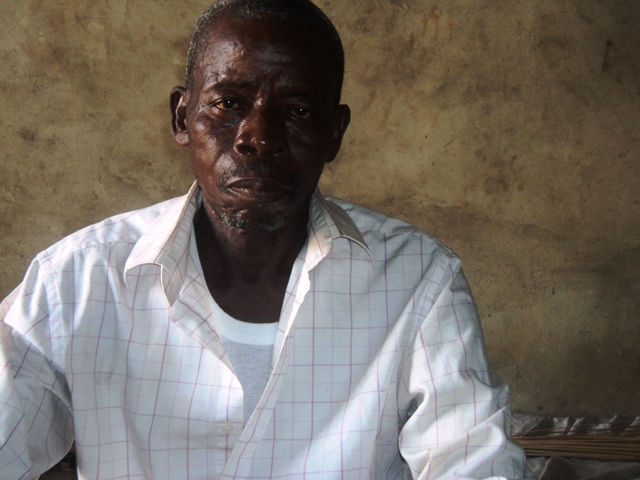
Oladele Onasaya, a 70-year -old cocoa farmer in Imeri, Ijebu East Central Local Government of Ogun State, is no longer interested in whether the government explores the enormous bitumen deposit in his community or abandons it forever.

Onasanya’s hopes of a better life and development to his community when the reserves are exploited have faded, having waited for better part of his life without seeing any of the promises by past administrations concerning the exploration.

Despite his position in the village, the Secretary, he does not believe the exploration of bitumen in his village or elsewhere can take place in his lifetime.

Elsewhere in Ilubirin, Odigbo Local Government of Ondo State, 65-year-old Rufus Olapade, whose hope of being employed by a bitumen refinery has also been shattered after years of waiting, believes the government has never been serious about bitumen exploration. Oloyede Olapade, his younger brother, is much more disenchanted about it, saying; “We all have become lazy men because of hope of working in bitumen plants.”

For over 100 years, Nigerian government has not found a way around exploiting its rich bitumen reserves.

Bitumen reserves in Nigeria, put at 42.47billion metric tons — largest in Africa and second largest in the world — after Venezuela, have been estimated to be almost twice more than the oil reserves of the nation. There were 37.2 billion barrels (5.91×10⁹ m3) of proven oil reserves in Nigeria as of 2011.

They are found in Lagos, Ogun, Ondo and Edo states, covering approximately 120km. Yet, according to Rotimi Akeredolu, Governor of Ondo State, Nigeria spends N300bn on importation of bitumen annually. Also, over 600,000 tons of asphalt are currently being imported to Nigeria, according to Kayode Fayemi, Minister of Mines and Steel Development.

READING FROM THE BOOK OF LAMENTATIONS

Sitting on the edge of a wooden bed in the expanse of his sitting room, Onasanya, after some moments of hesitation to talk on the issue and with clear feeling of disappointment written all over his face, finally opens up.

“Our fathers hoped on the bitumen until they died, I’m not interested in it any longer,” he says, sternly. “White people come, others will come, and they are just using us; I’m 70 years old now.”

Disappointed: Onasanya rues the failure of government to explore bitumen despite many promises

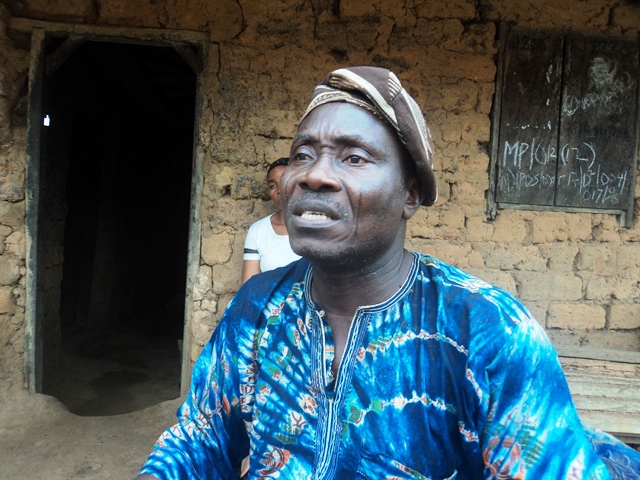
Olapade shares these sentiments too. “I don’t know why the government does not have interest in bitumen,” he says as he attempts to pull out a tar-sand sprouting from the ground — clear evidence of bitumen — in front of his house.

“They were saying the exploration will start today, tomorrow or next week, I realized that we could not even trust the government because I see no reason why up to this moment, nothing has been done and we say we want to move forward.”

After being part of crowds that received three past presidents who visited the bitumen sites in the village, the Village Head says the people’s expectations about exploration have since died (Former presidents Shehu Shagari, Ibrahim Babangida and Olusegun Obasanjo visited Agbabu village in Odigbo Local Government, Ondo State; all of them promised to explore the deposit but none fulfilled it.).

Over the years many young and old men retire from farming, hoping to get enlisted into companies that would begin exploration of bitumen. They are still waiting for such companies many years after several failed attempts by the government to kick-start the process, he tells ICIR.

Damendra Oluwatoyin, Lisa of Agbabu (second in command to the monarch), also shares these sentiments. He was around, too, when the former presidents visited his village, where bitumen was first discovered in commercial quantities. Agbabu bitumen is said to have the best quality, containing petroleum deposits too.

“It was only Goodluck Jonathan that we didn’t see when he was President,” he recalls. “Upon all their promises nothing was done.”

In June 2016, the visit of Kayode Fayemi, Minister of Mine and Steel Development, to the sites of bitumen in Agbabu, where the deposit spills out in its raw form, was the assurance the locals and investors needed to believe that the time might have actually come for the long-awaited exploration of the mineral resources.

It was Obasanjo who initially came close to breaking the jinx, but he, like others, missed the opportunity. BEECON Nigeria Limited and NISSANDS of Canada, the two firms that were licensed to explore bitumen, could not raise the N75 billion needed to commence operation.

Before leaving the sites, Fayemi had raised the morale of the locals, telling them that work would resume on the exploration of bitumen by February 2018, and that government was ready for the bidding process for prospective investors.

But February 2018 ended without a sign of an investor at any of the bitumen sites. “They promised us by this February that we will see changes. February is ending now, we have not seen anything,” laments Lisa.

STILL WAITING FOR THE PROMISED BLESSINGS

“New business would spring up at all the bitumen belts…the benefits are immense,” those were the promising words of Julius Ihonvbere, in June 2002. He was the Chairman of Bitumen Implementation Committee in the Presidency.

“More importantly, the bitumen bearing states and bitumen bearing communities would experience unparralled development,” he added.

Fast-forward to 2018 – 16 years after – none of the states and the community where bitumen is discovered has experienced any development influenced by the exploration of this natural resources.

On the contrary, they are bearing the brunt of having bitumen deposits in their domain, such as environmental degradation, pollution and health risks.

For instance, Agbabu, a community of about a thousand fishermen and farmers, several kilometres away from Ore in Ondo State where bitumen was first discovered in 1900 by Germans, is without amenities. Agbabu is believed to be home to the country’s largest reserves of deposit.

Even the Bitumen Field Office constructed at Ore directly opposite the Headquarters of Odigbo Local Government is wasting away unused. No one can say what it is meant for.

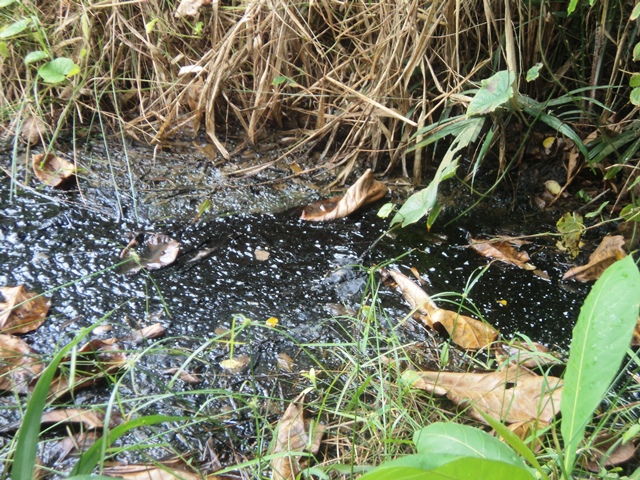
Villagers in Agbabu, where the first drilled site of bitumen has become a tourist centre, have perpetually lived without electricity, clean and safe water and good road; they fetch water for domestic use from Agbabu river, which is already contaminated by bitumen spillage.

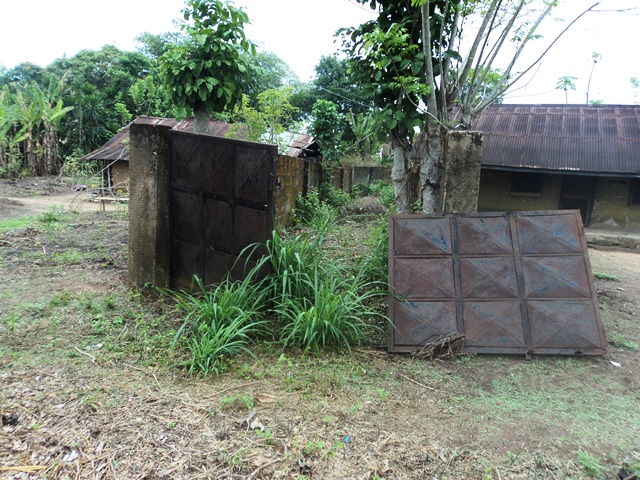
The bitumen site, with a completely bitumen coated pipe through which a bamboo pole has been used to feel the reserves since 1900, is taken over by grasses with broken-down gates. No one visits the site despite its economic potentials for the village – because the road is deplorable.

Broken: Gate to the site of the first bitumen rig – now a tourists attraction at Agbabu village

“Governor Mimiko gave us a small health centre, it is just for delivery and it is not administered by a professional doctor. It’s a two-bed facility,” he says, adding: “We have just one secondary school and a primary school, which I can rate as the worst in Ondo State.”

Ilubirin was among the villages from where a team of geologists, led by Professor Stephen Adegoke of Obafemi Awolowo University (OAU), picked samples of bitumen for testing in Canada,  in 1977. It remains a rustic village without a primary and secondary school, leaving children from the village trekking several kilometres every day to attend schools at Mulekangbo Village or Agbabu, .

Like Agbabu, Ilubinrin villagers fetch water for drinking and domestic use from a nearby river that is also being polluted by bitumen spillage.

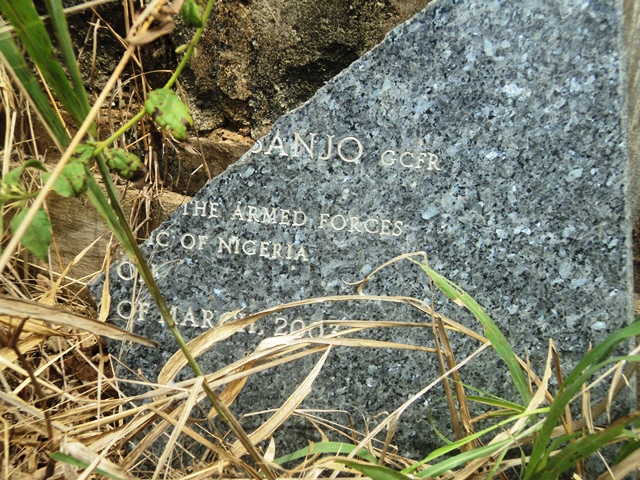
For Gbeledu-Loda in Irele Local Government, Ondo State, and Imeri in Ijebu Mushin, Ogun State, the situation is no less worrisome. In 2003, Obasanjo laid the foundation for the exploration of bitumen at Loda;  that effort later turned a failed adventure. The opening plaque erected to commemorate that day has since broken down.

Collapsed: The opening plaque erected in honour of Obasanjo in 2003 to kick-start the exploration of bitumen at Gbeledu-Loda village gave in afters years of waiting

The people of Gbeledu Loda have lost hope on anything good coming from bitumen; they rely on water from Araromi river.

According to Ayo Fada, a cocoa farmer at Loda, bitumen deposits have taken over all the wells sunk in the village, a situation that compels them to make use of water from the river. They live without electricity, although there is a secondary school and a primary school.

And despite being some kilometres away from Ijebu Ode town, Imeri has no school, no hospital; two water pumping machines were blocked by bitumen reserves when two boreholes were drilled in the village some years ago.

It has played host to investors and representatives of government who have at one time or the other come to check the bitumen deposit. The village needs a face-lift: motorable road, water, schools and healthcare facility. Illegal bitumen miners have also tricked the villagers to make away with some tons of the deposits at some point.

Sick children and pregnant women are often rushed to Imusin Esure where there are private hospitals, or Ijebu-Ode where there is a General Hospital. It takes crossing the express-road for kids to attend schools, too.

RISK OF ANOTHER NIGER DELTA CRISIS

Femi Akinbode, an environment activist, complains that government is not taking measures to avoid a repeat of mistakes of the past.

“Ignoring environment-related issues and needs of the residents” could create a situation that is unimaginable in terms of conflict and security, he warns.

Whenever the government decides to finally explore the country’s bitumen reserves, one of the major issues that will apparently play up is the readiness of the host communities to let go of their land.

Already, Buhari has granted licence to South West Bitumen Company Limited and BEECON Nigeria Limited to begin the extraction of bitumen as his government diversifies the economy.

But the government cannot afford to repeat the mistakes of Niger Delta in the exploration of bitumen in the four bitumen bearing states; legacy of the Niger Delta oil exploration is one of pollution, corruption and unfulfilled promises.

For Olapade and his kinsmen at Ilubinrin, the village, the knowledge of what happens to them, their homes and farmland given an eventual exploration of the tar sand is vague.

“We are not aware that we could be displaced or our land may not be useful again for farming if the exploration starts, the cocoa farmer says.

There is limited public understanding of what exactly Nigerians can expect during and after bitumen exploration,  Christina Milos writes in her book, ‘Bitumen in Nigeria: Weighing the true cost of exploration’.

She says the social and environmental impacts of bitumen exploration are anticipated to be serious and widespread.

Within the bitumen bearing communities, there’s a widespread lack of understanding of what impact the exploration of bitumen could have on the locals and their means of livelihood.

From Agbabu to Ilubinrin, Loda to Imeri, their experiences and stories are similar. They don’t know much about implications of exploration and are not likely to vacate their villages; over 30 villages in the four states are likely to be affected when government commences commercial exploration of bitumen.

What the community expects from the Federal Government, Olapade explains, is a Memorandum of Understanding (MoU).

“We expect government to send people down and create a forum where they will meet us and give us lecture on what is going to be the doom if this bitumen exploration starts.

“We have been looking forward to that MoU, but up till this moment, nothing was done.”

With a caveat to the government, he says: “If they ever come, we will engage them. We must have a talk; we have lawyers and we will involve valuers so that there is no loopholes, otherwise what happened in Niger Delta will repeat itself here, because this is our land.”

What impacts has bitumen had on the area at the moment? The community leader paints a disturbing picture.

“The water is not drinkable; during raining season all the well are filled with water but the water is not drinkable,” he reveals.

If the bitumen is floating and animals pass there, they get stuck there. Then the moment you plant some crops, and the tap roots start going down and hit the bitumen, the crop will die. Only palm tree has survived the toxic effects of bitumen.

Clearly, Olapade exudes ignorance of the implications of the exploration of bitumen. Onasanya, his compatriot at Imerin, does not know anything either.

He tells ICIR that he and his people are not willing to abandon their ancestral home and farmland for bitumen exploration.

“We are not interested in being relocated from here if they want to start the exploration. We are farmers, how are we going to have access to our farmland?” he asks. “We have told our Baale that we may not move from here.”

They are already experiencing the negative impacts of the deposits; ongoing spillage into Agbabu River coupled with high temperature are fast killing cocoa and other plantations.

Lisa, who says his three-year-old daughter was hospitalised for high body temperature, does not know that bitumen exploration can lead to displacement and relocation for the villagers.

“Relocation will lie in the hands of the experts. If they know that exploration will affect us, they should do that for us.

“The gas emission and oil spill from the place we call Mile 2 are already affecting our rivers and had affected the availability of fishes in those rivers.”

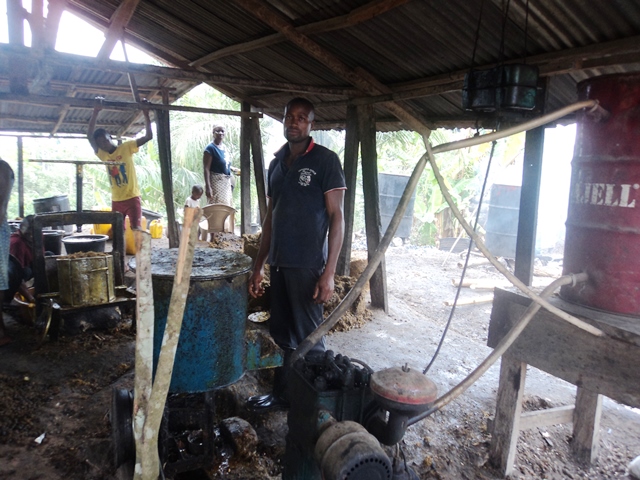
Zacheus Adebayo, a 40-year-old former cocoa farmer now a palm oil processor, has had a raw deal of the effects of bitumen in the village. After bitumen-generated heat killed over 400 of his cocoa plants, he switched to the cultivation of palm trees and now operates a local oil palm mill.

Zacheus at his local palm oil mill after heat from bitumen forced him to abandon his cocoa plantations

“Because of the high temperature that bitumen releases into the atmosphere, we are already replacing our cocoa trees with palm trees,” he says. “There is no solution to that. I have lost over 400 cocoa trees and that’s why I’m planting palm trees now. The heat is affecting us here, it is as if we are in the oven and there’s no electricity here.”

As for him, if the exploration will affect villagers and their means of livelihood, government must take all necessary measures to protect their interest. ” We don’t want the situation of Niger Delta to happen here,” he adds. “We are also part of Niger Delta, but we don’t want such to happen here.”

The young farmer says he and his people expect compensation from government after a thorough enumeration might have been carried out. “This is to avoid chaos,” Zacheus says with the hope that the exploration will take place anytime soon.

GOVERNMENT WON’T ALLOW RESTIVENESS

The Nigerian Mining Act 2007, which regulates mining and exploration activities in the country, sets out precondition for exploration — the submission and approval by the Mines Environmental Compliance Department of all Environmental Impact Assessment Studies and mitigation plans required under applicable environmental laws and regulations … and the conclusion of a Community Development Agreement approved by the Mines Environmental Compliance Department.

This, Yinka Oyebode, Special Assistant on Media to Kayode Fayemi, Minister of Mines and Steel Development, says will help to avoid any form of restiveness that may occur as result of exploration.

He stresses the need to engage the host communities by the companies because government only regulates and provides frame work but does not explore directly.

“The last time the Minister visited the communities, some of these issues — relocation and compensation — were tabled and government’s plans were also explained to them.

“Government has learnt from past experiences in other sectors, government is not just to leave it carelessly,”  Oyebode explains, adding: “We emphasise on corporate social responsibility because the community must be well taken care of for you to actually enjoy your work and prevent youths restiveness.”

Although the two firms given licences to explore bitumen are still perfecting their acts — they at least have 18 months to commence operation — locals and environment rights activists say the the risk of a crisis similar to that of Niger Delta is high if appropriate measures outlined by the Mining Act are not taken.

PROMO: At federal teaching hospitals, cancer patients are on ‘death row’


Tomorrow, the International Centre for Investigative Reporting (ICIR) will publish an undercover investigation on the travails of cancer patients seeking treatment at teaching hospitals, and how they are being short-changed daily by numerous weaknesses in the health system.

The investigation is a result of many months of painstaking planning by ‘FISAYO SOYOMBO, an investigative journalist and the Editor of ICIR.

The spine of the story was about gaining undercover entry into oncology wards to observe the natural cancer care available to patients at teaching hospitals, where the majority of Nigerians (due to funding limitations) seek treatment for the disease.

A first attempt at gaining undercover entry into these wards of these hospitals was made in October 2017, but it failed, leading to the suspension of the story. However, in February and March, Soyombo, joined by an undercover oncologist, gained entry into two leading federal hospitals, and spent days observing the entire cancer treatment setup. They also spent several days interacting with cancer patients who had sought treatment at teaching hospitals in other geopolitical zones of the country.

Their findings, many of them heartbreaking, reveal that undergoing treatment for cancer in Nigeria condemns patients to a status very similar to that of a death-row inmate — the care is usually palliative rather than curative, due solely to the use of obsolete equipment.

In this story, you will read about how, for example, the lack of a functional radiotherapy machine is destabilising the treatment of patients and enhancing the spread of cancer from a point in their bodies to other previously unaffected parts.

You will read about patients who were scheduled for many courses of radiotherapy but were left stranded midway, and their health deteriorating, due to the breakdown of machines and the government’s inability/failure/refusal to repair or replace them.

You will read about patients being referred from one teaching hospital to other, and being rejected by the host teaching hospital due to communication and equipment inadequacies.

This investigation also details the intense lobbying by families of patients for the scheduling of their loved ones for radiotherapy appointments.

Also, you will read about how patients risk their already cancer-endangered lives — one even ran into armed robbers — to travel in the wee hours of the day in a desperate bid to secure early appointments with doctors due to congestion at the only private hospital in the entire country with a radiotherapy machine.

In the most pathetic case of all, you will meet a patient suffering from cancer of the eyelids who first spent several years raising the funds required for surgery only to be sent home when he finally got the money because of a series of industrial actions at the federal hospital.

And, perhaps the only bright side of it all, you’ll read an intriguing, almost incredulous love story and learn, generally, about the understated status of romantic love as the cancer patient’s elixir, how cancer patients are drawing the strength to fight to see every new day by merely seeking to repay the care and faith and sacrifice of their lovers.

In all, it will be clear to readers why the masses have little hope for life if diagnosed with cancer in Nigeria, why Nigeria has the highest cancer death ratio in the world.

Finally, two cancer advocates list a series of steps that government can take to preserve the lives of cancer patients — that is if it has any interest in doing so.

The average northerner is poorer under Buhari than under Jonathan, says Kukah


Matthew Kukah, Catholic Bishop of Sokoto Diocese, says the average northerner has become far more impoverished under President Muhammadu Buhari than he was under former President Goodluck Jonathan, but they will still vote for Buhari.

He also said despite all their years of monopoly of power, the northern elite have brought shame to the entire North and made people of the region too weak to fight.

“…after all these years of monopoly of power under the military and civilians, we northerners are still the weakest, the most sickly, the poorest, the most illiterate, and the most vulnerable. We have the highest number of childhood stunting, which is a danger to the future. The elite have brought shame on us and made us too weak to fight,” Kukah told The Punch.

“There is a noble obligation that all elite owe to those they represent, those on whose shoulders they may have stood, those who voted for them or those who helped them get an education. In the rest of Nigeria, this elite have met these obligations by building schools, hospitals, clinics, and so on for their people. They have bridged the gap between government’s absence and the welfare of their people. This is the story of almost all of southern Nigeria and parts of the Middle Belt.

“In the North, the evidence of this dereliction of duty litters the entire landscape, millions of out-of-school children, federal and state government projects such as irrigation and power-generating dams that now lie abandoned in remote communities, structures, such as the Almajiri schools, all in decay in many communities, and so on.

“Look at the World Bank, UNDP and other reports on development in Nigeria and look at northern Nigeria. The sad thing is that for the elite, these lives of destitution, illiteracy and squalor are reservoirs of investment from where they draw their oxygen of political relevance.

“The grinding poverty leaves the people permanently below zero and all they do is continue to look at the stupendous wealth of the elite with awe. In exchange, they (the elite) pretend to offer them (the poor) dubious religiosity through the manipulation of pilgrimages and construction of mosques.”

He added that although majority of northerners are more impoverished under the administration of President Muhammadu Buhari than they were under former President Goodluck Jonathan, they will still vote for him in 2019.

“Indeed, the Buhari project presents us with an interesting view. The average northerner has become far more impoverished under Buhari than he was under (former President Goodluck) Jonathan. But they will still vote for Buhari because they see him as the only one who can help bring their derelict elite to order. It is a strange appeal but that is it,” he said.

“They believe their corrupt elite are above the law. They were seduced with Sharia because they believed it was going to help them punish their own elite, who they see as being above the law of Nigeria. These are the issues.”

Kukah also lamented that the elite have manipulated and distorted religion to the detriment of the masses, noting that such manipulation gave birth to the Boko Haram insurgency.

“In my view, it is the long historical experience of this distortion of the religion of Islam with its exclusionist tendencies that Boko Haram has exploited.

“Boko Haram exploited the fact that this elite proclaimed Sharia in 1999 and 2000, while in reality, they did not believe in the religion itself. So, Boko Haram simply has asked them to step aside.”