Abubakar Atiku, former Vice President of Nigeria, says he prevented Olusegun Obasanjo from perpetuating himself in office like Robert Mugabe of Zimbabwe.
Atiku said this in a letter he wrote to Francis Agoda, a Nigerian Comedian popularly known as ‘I go die’.
The comedian had written an open letter to Atiku last week after the latter’s return to the Peoples Democratic Party (PDP) from the ruling All Progressives Congress (APC).
In the letter, hecharged Atiku to list his achievements while in office as Vice President between 1999 and 2007.
“Don’t use sentimental empathy on the youths to express your political ambitions. Sir, you are one of those that have immensely benefited from Nigeria since your birth in 1946,” he had said.
“Remarkably, between 1999 and 2007 that you were the Vice President of Nigeria, it is recorded that tertiary institutions witnessed several strikes that wasted 17 months, three weeks and three days. Within this period, what did you do?
“If social support were given to youth then, their children will be between 18 and 20 years during the 2019 elections, obviously they would have willingly voted for you or anyone that you endorse in 2019.”
In reply, Atiku listed among his achievements, the thwarting of Obasanjo’s infamous third agenda that would have seen him remain in office beyond the constitutional eight years.
“I regret that we had that disagreement with my boss. Some say I was disloyal, but I looked at the events in Zimbabwe recently, and it gives me confidence that I did the right thing fighting the attempts to elongate the presidential tenure beyond eight years,” Atiku wrote.
“If I did not win that fight, do you think we would be having a discussion on young people getting into leadership today?”
Atiku also credited himself with bringing about the telecommunications revolution that afforded many Nigerian youth the opportunity to prosper.
He said: “I oversaw the telecoms revolution, which is why young people like you, I Go Die, now have a flourishing career.
“Under our tenure, we witnessed a large repatriation of Nigerians back to Nigeria, driven by the hope of the recovering economy.
“It is sad that many of those young people are heading back abroad now — this is to show you that leadership matters.
“As VP, I assembled what is arguably the best Economic Team ever in Nigeria. It was made up of young, world-class professionals, who came home to work.
“Some of those professionals are now political leaders, governors and world leaders in their own right.
“If you ask what our first task was, coming into government in 1999, it was to bring stability to the economy after decades of military rule.
“For example, between 1999 and 2003, oil prices then were hovering between $16 and $28 yet we managed to pay up salary arrears from decades back, clear up our national debts and built up foreign reserves. Our GDP grew at the fastest rate we’ve seen since the return to democracy.”
The whistle blowing policy is domiciled at the federal Ministry of Finance, under Kemi Adeosun
Almost one year after the Muhammadu Buhari administration formally launched a whistle-blowing policy as part of its anti-corruption campaign, the policy cannot be said to have succeeded yet.
This was the unanimous agreement reached at the end of a media dialogue organized to review the whistle-blowing policy and its performance so far.
The media dialogue was organised by the African Centre for Media and Information Literacy (AFRICMIL), under its Corruption Anonymous (CORA) project.
Speaking at the event, Theophilus Abba, Managing Editor of Daily Trust newspaper, noted that the whistle-blowing policy should not have been domiciled in the Ministry of Finance as is the case.
Abba also pointed out that the anti-corruption campaign should not be centred around theft of funds only.
“What has taken place in Nigeria over the years is much more than theft,” Abba said.
“For instance, one is given N33 million to build a Primary Healthcare Centre, now the healthcare centre is not built, government knows that the health centre was not built, government knows that the money has been released, why will government wait for a whistle-blower in order to recover the money?
“If government is really serious about whistle blowing, then we need to do much more than what we are doing right now.
“Journalists have published stories about corruption based on tips (from whistle-blowers) and I discover that nothing was done. People will do big stories exposing fraud here and there, and one would think that the National Assembly or the Presidency would take it up, but everybody will be looking at it.
“And you (as a journalist) will be like: ‘what’s the importance of what I’m doing’? So I’m thinking that government needs to do more to convince Nigerians that they really want to fight corruption using this policy.”
Also, participants at the dialogue picked holes in the Whistle-blower Act, wich was recently passed by the Senate, saying it leaves so much to be desired.
Catherine Agbo, former Editor at Leadership Newspaper, pointed out a clause in the Act that prohibits public officials from blowing the whistle to the media, arguing that ordinary citizens seem to trust the media more than government agencies.
“Many whistle-blowers prefer to go to the media because they feel safer, they are sure that their security is guaranteed especially when they want to give the information anonymously,” Agbo said.
Participants also criticized government’s handling of the Ikoyi cash recovery saga, and the failure of the finance ministry to reward the whistle blower whose information led to the recovery.
Chido Onumah, Coordinator of AFRICMIL, urged the government to do more to ensure that persons who volunteer useful information that exposes wrongdoing are protected.
He cited the example of Murtala Ibrahim and Teslim Anibaba, staff of the Federal Mortgage Bank of Nigeria (FMBN), who are yet to be reinstated months after being dismissed for blowing the whistle on the bank’s management.
Not even a directive from Babatunde Fashola, Minister of Power, Works and Housing, was enough to get them reinstated.
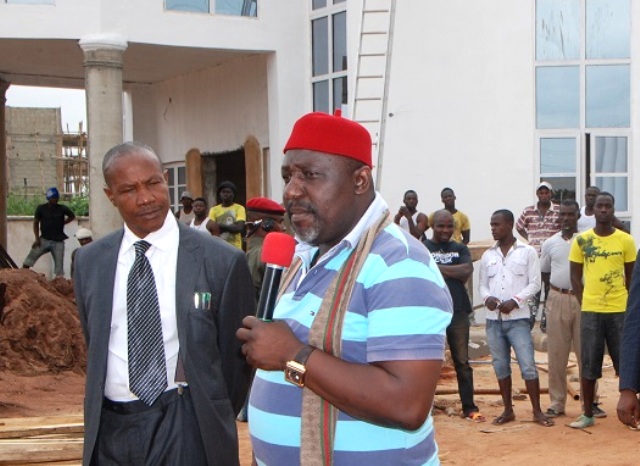
Rochas Okorocha, Governor of Imo State, says the newly created Ministry of Happiness and Purpose Fulfillment will record such ‘amazing” feats that its critics will be full of regrets.
“At the end of the day, the achievements of the new Ministry of Happiness and Purpose Fulfillment will be so amazing that the critics of the initiative will not only be shocked but will also regret to have drawn the curtain for the new Ministry even before it takes off,” Okorocha said in a statement issued on Thursday by Sam Onwuemeodo, his Chief Press Secretary.
“We accept all the criticisms in good faith and commend the critics. That is what makes the society dynamic and our democracy juicy.
“The truth is that the new Ministry is not an accidental discharge but a well-thought out idea that will benefit Imo people in particular and all men and women of goodwill in general. We only ask the critics to give us time.”
Okorocha expressed confidence that public criticism of the move will eventually be overshadowed by the applause and commendation that would come eventually.
He also explained his decision to honour Jacob Zuma, the South African President, with a statue in the state capital, Owerri.
“Some people have also talked about Jacob Zuma’s statue as a referenced case. The criticisms that greeted Zuma’s statue were all anchored on the corruption allegations against the South African President.
“Yet the fact remains that the man is still the President of that country. He has neither been sentenced to imprisonment nor impeached as President following these corruption claims,” he stated.
On the criticism by Ikedi Ohakim, his predecessor, Okorocha said Ohakim was not in any way qualified to criticize his policies.
Adeniyi Ademola, Justice of the Federal High Court, Abuja, tendered a letter of voluntarily retirement on Thursday, but given that his actual retirement date is March 2018, it ill not be out of place to suggest that this decision is the culmination of a series of unsavoury events that began in the wee hours of October 8, 2016.
It was the night that a team of masked operatives of the Department of State Services (DSS) raided the residences of several senior judges, across various states of the federation, on suspicion of corruption.
According to the DSS, the raid was ordered after months of investigations, during which it was credibly established that the affected judges were involved in questionable financial dealings.
The judges whose houses were raided were: Adeniyi Ademola and Nnamdi Dimgba, both of the Federal High Court, Abuja, Sylvester Ngwuta and John Okoro of the Supreme Court, Kabiru Auta of Kano State and A. I Umezulike, then Chief Judge of Enugu State, Muazu Pindiga of Gombe State and Mohammed Liman of the Federal High Court in Port-Harcourt, Rivers State.
However, the operation in Rivers State was thwartedby Nyesom Wike, Governor of the state, who, on getting wind of the operation, rushed to Liman’s residence and prevented DSS personnel from arresting him.
But the DSS personnel were able to gain entrance into Justice Ademola’s residence, and claimed to have recovered huge sums of money in local and foreign currencies.
According to the DSS, at least $400, 000 and N39 million in cash, in addition to documents of landed properties were recovered from Ademola’s residence.
However, in an open letter Ademola wrote to Mahmud Mohammed, the Chief Justice of Nigeria, he described the DSS operation at his home thus: “I saw about 45 masked officers of the State Security Services, all heavily armed pointing their guns at me.
“They flashed a document purported to be a search warrant and ordered me to sign a document claiming that they had already conducted a search downstairs.
“They also added that I was totally under their control today as I have always made orders against them.
“They threatened me if I did not sign it they would not leave me alone and whatever they did to me at that point would be recorded that I will not be alive to tell the story of what transpired between me and them that night.
“For fear and interest of my life, and unknown persons with masks on their faces, I collected the written items and signed the document.”
Ademola also claimed that his ordeal was being orchestrated by Abubakar Malami, Attorney-General of the Federation, whom he said had vowed to “bring me down”.
“What is more intriguing in this whole episode is that I see it as a vendetta/revenge from the Hon. Attorney General of the Federation, Abubakar Malami (SAN),” Ademola stated.
“Whilst I was in Kano between 2004 and 2008 as a Federal High Court judge, he was involved in a professional misconduct necessitating his arrest and detention by my order.
“However, with the intervention of Nigerian Bar Association, NBA, Kano Branch, the allegation of misconduct was later withdrawn by me.
“Consequently, the National Judicial Council,NJC, referred Abubakar Malami to the NBA Disciplinary Committee for disciplinary action.
“It was as a result of this he was denied the rank of SAN by the Legal Practitioners Privileges Committee for a period of four years until when he produced a fake letter of apology, purportedly addressed to me.
“It was then he was conferred with the rank. Since the above incident, Abubakar Malami (SAN) has threatened to revenge and swore to do anything to bring me down.”
Nevertheless, Ademola’s case, as well as that of the other arrested Judges, was transferred to the EFCC, who later filed corruption charges against him.
Ademola was arraigned before Justice Jude Okeke of the FCT High Court, in December 2016, alongside his wife Olabowale, and Joe Agi (SAN), on an 11-count charge bordering on conspiracy to receive bribe and receiving bribe.
Another set of charges was also filed against Ademola at the Code of Conduct Tribunal (CCT), where he was accused of engaging in private business as a public officer and making false assets declaration.
According to the charges, Ademola was said to have engaged in the purchase and sale of foreign exchange currencies while being a judge of the Federal High Court, thereby committing an offence contrary to Section 6 of the CCB and Tribunal Act.
Following the development, Ademola was suspendedby National Judicial Council (NJC) pending the determination of the cases.
However, Ademola was cleared of all the corruption charges in April 2017, after the presiding judge upheld a no-case submission he filed in relation to the charges against him.
Justice Okeke held that the evidences and witnesses produced by the EFCC were not enough to establish a prima facie against Ademola to warrant him to enter a defence.
He was subsequently recalled by the NJC and was due to retire in March 2018, before his voluntary retirement on Thursday.
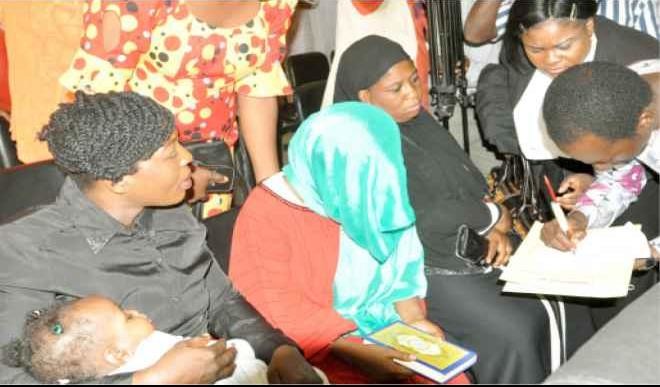
A Federal Capital Territory (FCT) High Court sitting in Jabi, Abuja, has ordered that Maryam Sanda, who allegedly killed her husband Bilyamin Bello, should be returned to Suleja Prison pending her re-arraignment next Thursday.
This was after the court refused an oral application for bail made on the accused’s behalf by Joseph Daudu, her new lawyer, when the matter was brought up for hearing on Thursday.
Maryam has been remanded at the prison since November 24, after pleading not guilty to the charge before the court.
In a two-count charge, the FCT Police Command accused Maryam, daughter Maimuna Aliyu Sanda, a former Executive Director of Aso Savings and Loans, of killing her husband, Bilyamin.
The Police alleged that Maryam had caused the death of Bello “by stabbing him on the chest with a broken bottle which eventually led to his death and you did with the knowledge that your act is likely to cause his death”.
At the resumed hearing, James Idachaba, Police Prosecutor, informed the court that an amended charge had been filed before the court where Maryam’s mother, Maimuna Aliyu, has been added as defendant together with two others.
Idachaba, a Chief Superintendent of Police (CSP), said all efforts to serve the charge on Maimuna and the others have proved abortive.
He asked the court to adjourn the matter to Thursday, December 14 to enable the Police bring all the defendants to court so they can take their pleas together.
After this, Daudu, a former President of the Nigerian Bar Association (NBA), asked the court to listen to the bail application filed on Maryam’s behalf.
But Idachaba urged the court to also adjourn the bail application to December 14 after new pleas must have been taken.
The trial judge, Justice Yusuf Halilu, ruled in favour of the Prosecutor and said the bail would be taken after the re-arraignment.
Again, Daudu pleaded with the judge, this time orally, to release Maryam on bail pending the Thursday. He said the prison conditions are unwholesome for Maryam’s six-month-old baby.
“It is unfortunate that a life has been lost already, but we should not take more lives,” the senior lawyer pleaded.
After another objection by the Police Prosecutor, Justice Halilu, held that he was not disposed to granting the oral bail application since issues had been joined on the formal application for bail.
“The defendant in the main time shall be returned to the prisons pending Thursday, December 14,” the judge held.
Earlier, the judge had ordered that Maryam’s daughter in the custody of a relative be taken out of court after the baby’s persistent crying.
The baby continued crying outside the court room throughout the court proceedings.
The court room was filled to capacity, with as many more people standing both inside and outside.
I was about leaving my office on Thursday, November 30, when a friend and former colleague called to ask if I was watching the Lagos-based Television Continental (TVC).
I was not! Why did he ask? Rather than answering, he riposted, “What is wrong with your state governor for God’s sake?” My friend, who is Yoruba, knows I am from Imo State and Owelle Rochas Okorocha is my governor. I asked him what the governor had done again, whether he had erected another statue.
He said there was a live broadcast of the 50th birthday anniversary of the governor’s wife, Nneoma Nkechi Okorocha, and wondered why in this very austere economic environment, a governor would waste a people’s patrimony on such vainglorious celebration.
I had no answer partly because the question, what is wrong with your governor, has become a daily burden for Imo indigenes. He sympathized with me and hung up.
The grandiose celebration of Nneoma’s birthday came just three months after the governor used almost the whole of September to lavishly celebrate his own 55th birthday with 27 giant cakes.
The question, what is wrong with Governor Okorocha echoed again on Monday, December 4, when he swore in 28 new commissioners, 10 months after the dissolution of the Imo State Executive Council, and 27 Transition Committee Chairmen for the local government councils in the state.
Curiously, Okorocha, the man who claims his vision drives him crazy, created a brand new “Ministry for Happiness and Couples’ Fulfillment,” to be manned by his younger sister, Mrs. Ogechi Ololo.
Okorocha, the man whose vision drives crazy
Many Nigerians are scratching their heads searching for reasons to explain Okorocha’s bizarre disposition to governance.
Besides, why is he reducing governance in Imo State to a family affair? Before this latest appointment, Mrs. Ololo had served as his Deputy Chief of Chief and Special Adviser on Domestic Affairs. Okorocha’s Chief of Staff, Mr. Uche Nwosu, who is his son-in-law, is the state’s de facto deputy governor. When the current deputy governor, Prince Eze Madumere, was the Chief of State, Nwosu was the commissioner for lands.
The worst kept secret in the state is that the governor will stop at nothing in ensuring that Nwosu, his daughter’s husband, succeeds him in 2019. The only minister from Imo State, Professor Anthony Anwuka (Minister of State for Education) is father-in-law to Okorocha’s second daughter, Uju. It was this same Mrs. Uju Anwuka that the All Progressives Congress (APC) government appointed a member of the Board of the Federal College of Education (Technical), Omoku, an appointment Okorocha said he rejected because he was “never consulted or briefed.” Many believe that the so-called rejection was because he didn’t see that particular board as a juicy one and, therefore, undeserving of his daughter’s membership.
In December 2016, the governor, through his Secretary to the State Government (SSG), Mr. George Etche, disclosed that his wife supervises four ministries – women affairs, works, health, as well as office of the SSG. And the question is, in what capacity? Nobody knows. Okorocha thinks he owes Imolites no explanation for his actions. He takes the people for granted because in his subconscious, he believes he is doing them a huge favour as their governor when the entire country is yearning for an Okorocha presidency.
Let us be clear here. There is nothing wrong in a governor appointing a relation into his government as long as the appointee is qualified and primed to add value to governance. But to think that in a state blessed with pristine human resource as Imo is, only members of the Okorocha family can play such roles is the height of self-delusion. To say the least, such contemplation is surreal.
Back to the extant issue! What does happiness and couples’ fulfillment mean? In real terms, what will be Mrs. Ololo’s job description? What will be her key duties and responsibilities? In what way(s) will the commissioner guarantee that Imo couples find fulfillment? What will be the yardstick for measuring success? Which committee of the Imo State House of Assembly would have oversight responsibility over this ministry?
Beyond all these, what does a state in a country struggling to extricate itself from the asphyxiating grip of self-inflicted recession do with 28 commissioners? How can a governor that is delinquent in the payment of salaries and pensions assemble such an unwieldy cabinet at this 11th hour?
In over six years as governor, Okorocha has refused to conduct local government election. It is only in an unserious country like Nigeria that this impunity can go on unchallenged. What manner of democracy makes an elected official a god whose actions, no matter how spurious and injurious to the wellbeing of the people, cannot be challenged?
To say that Okorocha is a clown in government is to be charitable because even clowning has its limits. What is going on in Imo State in the name of governance is beyond clowning. It is a tragedy.
To add insult to injury, he takes himself serious, thinking he is the best thing to happen to the state since its creation as he alluded to when he claimed that his administration had exceeded the achievements of all the previous administrations in the state, both civilian and military, put together.
Am I surprised at this sheer delusion of the grandeur?
No!
Many people have forgotten that this absurd theatrics didn’t start today. In July 2011, Okorocha stunned Nigerians when he appointed 70 advisers that included the position of Special Assistant on Comedy/Chief Comedian of the State.
How did we get to this sorry pass? Of course, many people have latched on the hackneyed refrain that people get the leadership they deserve. After all, this is a democracy and Okorocha is the governor only because the people voted for him.
Maybe!
But I just wonder how Archbishop Anthony Obinna of the Owerri Archdiocese feels now. Obinna, it was, who literally made Okorocha governor in 2011 by leading the assault of the Imo Catholics against the then governor, Ikedi Ohakim.
Okorocha and Ohakim
When all else seemed to have failed in the orchestrated campaign of calumny against Ohakim, the church pulled the joker from its bag of intrigues alleging that he physically assaulted a Catholic priest. The noise the allegation generated was so deafening that Ohakim’s feeble voice of protest was completely lost.
Ironically, nobody saw or heard from the Reverend Father who was assaulted. When Imo Catholics, wearing black, demonstrated in the state capital, Ohakim’s re-election bid was doomed irreversibly. The popular refrain then was that the man who beat a Reverend Father will never govern the state again.
But does that explain the lack of moral outrage in the state against the shenanigans of their governor? Or is it that the people are so ashamed of the role they played individually and collectively in enthroning Okorocha with his bizarre tendencies in office that they would rather keep quiet? Is Imo State now Okorocha’s conquered fiefdom?
What are the members of the state House of Assembly doing? Is the legislature no longer constitutionally obligated to act as a check and balance on the executive arm of government and to rein in executive lawlessness such as the one presently in full display? Aren’t the shenanigans in Imo in the name of quixotic governance already beyond the pale? When will the people say enough is enough?
It is really a tragedy that Imo, a state once governed by Samuel Onunaka Mbakwe, the Eastern Nigeria heartland, has become the butt of all national jokes courtesy of a man who claims to have come on a rescue mission. Ndi-Imo must retrieve their state from Okorocha’s clowning vice-grip and now is the time. Tomorrow will be too late.
Lai Mohammed, Minister for Information and Culture, says the Federal Government has given Ibe Kachikwu, Minister of State for Petroleum Resources, the “marching orders” to ensure that fuel queues at filling stations are eliminated before the week runs out.
He also said the government has no plans to increase the pump price of petrol.
Mohammed said this while addressing State House correspondents after Wednesday’s Federal Executive Council (FEC) meeting.
“The council gave him (Kachikwu) a matching order that this fuel scarcity should not last beyond this weekend and they are going to work very hard to ensure that it is curtailed,” Mohammed said, adding that “the government has no intention at all to increase the pump price of PMS.”
He said that Kachikwu had briefed the council on the current fuel scarcity and assured the public that the country has “enough products till next one month or even till the end of January”.
The Nigerian Army has removed Attahiru Ibrahim as the Theatre Commander of Operation Lafiya Dole, the counter-insurgency operation fighting Boko Haram in the North East.
The military radio in Borno made the announcements on Wednesday.
Ibrahim’s removal follows a series of brazen attacks by the insurgents in Borno and Adamawa states that have led to the death of many soldiers and civilians.
After taking over from Lucky Irabor in May, Ibrahim was expected to consolidate on the gains already made in the counter-insurgency operation. But it appear the reverse has been the case.
Under Ibrahim’s leadership, the operation failed to meet the 40-day deadline issued by Tukur Buratai, Chief of Army Staff, in July, for the capture of Abubakar Shekau, leader of Boko Haram.
Instead Shekau’s capture, the insurgents attacked the NNPC team exploring for oil at the Lake Chad Basin, killing almost 50 persons and kidnapping three members of the team who were lecturers in the Geography Department of the University of Maiduguri.
Also, some police women were captured by Boko Haram fighters after an attack on a convoy they were travelling in.
Just three days ago, a suicide bomber attacked Biu, a town in Borno State, killing at least 18 persons and injuring 52 others.
Also, 15 soldiers, including a commander, were killed in November when Boko Haram insurgents attacked troops’ location in Sassawa village, near Damaturu, the Yobe State capital,.
Again, four female suicide bombers attacked the Muna Garage area of Borno State sometime in November, killing 14 persons and injuring many others.
Over 50 persons were killed in an early-morning attack on Muslim worshippers in Yola Adamawa State in November after a suicide bomber managed to sneak into the mosque.
Though there were reports of raids on Boko Haram hideouts and the arrest and killing of some terrorists, more than 50 soldiers, including officers, were killed between May and December.
Rogers Nicholas, a Major-General, has been announced as Ibrahim’s replacement.
Until his new appointment, Nicholas was the Chief of Logistics at Army headquarters in Abuja, while Ibrahim is believed to have been redeployed to the Army headquarters as the Deputy Chief of Policy and Plans.
President Muhammadu Buhari says the mammoth crowd that welcomed him to Kano has convinced him that he still is loved by the electorate enough to win the 2019 election.
“I am overwhelmed by the sea of people I see,” Buhari said at the palace of Emir of Kano.
“I know Kano people are aware of the tremendous job we did on security and agriculture. And by what I see today, if elections are contested I will no doubt win it.”
The President was earlier received at Malam Aminu Kano International Airport by Abdullahi Ganduje, Governor of the state; Muhammadu Sanusi II, Emir of Kano, members of the State Executive Council, traditional rulers and politicians.
Buhari arrived Kano on Wednesday for a two-day official visit to the state.
He said he was at the Emir’s palace because the emirate council had been playing tremendous roles in his government’s success.
He explained that the stability of the North and the country is paramount, and restated his determination to make the country peaceful.
“If there is peace and stability in the North, there will be peace and stability in the whole country and if there is problem in the region it will affect the entire country,” Buhari said.
Meanwhile, the President pardoned 500 inmates in Kano and donated undisclosed cash to them to start businesses, according to Daily Trust.
The gesture was part of his efforts to decongest prisons across the country.
During the visit, the President is expected to inaugurate a number of projects executed by the Ganduje administration.
In this second part of two articles on malnutrition in Nigeria, CHIKEZIE OMEJE reports that food choices and lifestyle changes are increasing obesity among children, with serious consequences such as hypertension, diabetes and heart disease. The first story covered the underlying causes of undernutrition, which has assumed a dark dimension in the northwest region.
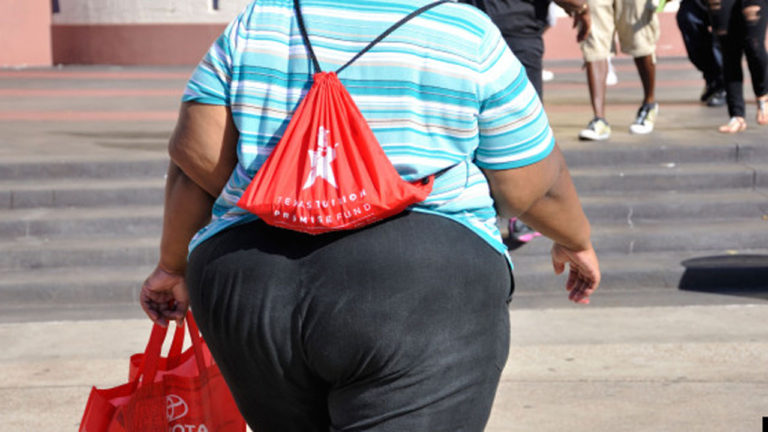
While an estimated 11 million children under the age of five in Nigeria are stunted due to inadequate nutrition, the number of overweight and obese children is also increasing. The World Health Organisation (WHO) has dubbed the simultaneous occurrence of these two extreme and opposite problems the “double burden of malnutrition” – a growing health problem that affects many developing countries.
“It’s a typical reflection of inequality in the country,” says Laz Eze, a public health specialist. “The poor face undernutrition, while rich people and the middle class have their own form of malnutrition in obesity.”
At the moment, undernutrition is the more widespread of the two problems. Two in every five children are not getting the right quantity of protein in their foods or not even eating enough to get the amount of energy they need. But there is this small but growing proportion of children – currently about 2 percent of the population – who have enough to eat but are not eating the right food.
For this second group, which eventually could outgrow the first, “the issue is not how much they eat but what kind of food they eat,” says Eze.
The main problem, he suggests, is that affluent people are increasingly eating processed food that has more carbohydrates, fats, and cholesterol than their bodies can use. When this happens, the bodies use what they need and deposit the rest as fat.
Both forms of malnutrition are a threat to the long-term socioeconomic development of the country. Undernourished children grow up with physical and mental deficiency, and are more likely to drop out of school and become less productive in adult life. But obese children are prone to lifestyle-related diseases such as hypertension, heart disease, diabetes, and kidney failure. Health workers say these diseases are already rising among young people. Over time, the result will be rising healthcare costs and reduced productivity and economic growth.
While the two forms of malnutrition most often occur in different population groups, some children experience both problems simultaneously. “You see children you are stuffing with fast food,” says Amaka Onyekwu, a nutritionist. “It will precipitate obesity because of carbohydrate and fat, but at the same time, the child isn’t getting enough micro-nutrients.”
“The child is undernourished and also obese,” she says, adding that such cases are particularly difficult to treat when children become ill and have to be admitted to hospitals.
She traces the rising cases of obesity in children to urbanisation, changes in dietary habits and change in lifestyles. Ironically, these problems are an unintended side effect of economic growth.
“People are trying to give an impression that they have arrived and they belong to the upper class,” says Onyekwu. “They have the tendency to abandon locally-available foods in favour of over-processed foods.”
While the extent of obesity in under-five children is still relatively low in Nigeria, public health experts warn that if current feeding practices for children continue, the problem will become an overwhelming public health challenge, like undernutrition, within the next 10 years.
Nigeria is not alone. While obesity was once considered a problem of Western, developed countries, it is becoming more common in developing countries too. Of the 41 million overweight children in the world, 10 million live in Africa, according to the 2017 Global Nutrition Report. The number of overweight children under the age of five years in Africa has increased by 50 percent since the year 2000.
Toyin Adenaike, a primary healthcare physician who practised in the United Kingdom for 25 years before returning to Nigeria to establish the Niyot Medical Centre, Lekki, Lagos, blames increasing childhood obesity on adoption of Western diets and lifestyles.
A growing tendency to substitute processed and instant foods for fresh and natural foods has contributed to the increase in obesity in countries like Nigeria, according to public health experts. They say packaged foods, which the middle class tends to buy from supermarkets, are a particular problem because they are especially high in sugar, salt, and fat — all of which contribute to diseases once considered Western.
On top of consuming more energy-dense foods, children have less opportunity today to do physical activities to expend the energy. “Now the children of the upper class and middle class are driven to school,” Adenaike told the ICIR. “They don’t have access to physical activities, but they have access to corn flakes, pizzas and so on.
“Even when children come home, they are playing with the computers, playing with the mothers’ phones or playing games,” adds Ifeanyi Nsofor, the CEO of EpiAfric, a public health consulting firm based in Abuja, and Director of Policy and Advocacy at Nigeria Health Watch. “Children don’t get to go out a lot compared to when we were growing up. So we need to increase physical activities for children.”
Nsofor points out that many schools in Abuja do not have sporting facilities for the children, and there are little or no parks in residential areas for children to have outdoor activities.
THE NEW STAPLE FOODS FOR URBAN CHILDREN?
The ICIR visited two nursery schools in Abuja and found that lunchboxes for the children contained mostly instant noodles, pasta, pastries, biscuits, and juices.
“You will hardly see a child come to school with beans or normal food,” says Onyiye Ugwu, a teacher in one of the schools. She says children prefer to eat noodles or snacks, and their parents usually give them what they want.
Another teacher, who does not want to be named, says parents are too lazy to cook a proper meal for their children. “They are easy to prepare in few minutes,” she says, pointing to the noodles some of the children are eating during the break. “They give their children all these junk foods because they don’t want to wake up on time to cook good food for their children.”
Vivian Uche, also a teacher, attributes the kind of foods that children bring to school to peer pressure. “Kids like noodles, chips, juice, candies. When they go to school and see what other kids bring, they come back home and want to be like the other kids.”
This puts added pressure on parents to offset such influences. Chiyere Eze, a parent, told the ICIR that though her children prefer noodles, she makes sure they take healthy meals to school.
“All kids like snacks, candies,” says Eze. “To make sure they eat healthy food, I make sure they have fruits and vegetables among the foods they take to school. Most kids want sweet things, but I give my kids the food they need to eat. They go to school with beans and plantain. I make sure they have fruits, oranges, pineapples, and watermelon.”
In Nigeria, noodles are popularly known as Indomie, the name of an Indonesian company that first started producing noodles in the country in 1995. With aggressive marketing that often targets children and working mothers, Indomie has become a staple food for children.
“It is normal food for children,” Ademola Olarewaju, a parent, told the ICIR. “When they are going to school, you package Indomie and plantain and put juice by the side. It is good for them. If you don’t give them what they want, they will take it to school and bring it [home] the same way you gave it to them.”
Victoria Okafor, another parent, says “every child nowadays prefers Indomie to other foods. So you just have to garnish it with egg, tomatoes, and carrot to give it nutrients. It is a carbohydrate, and it is not good to be eating only carbohydrates.”
Some other parents aren’t so conscientious. They appear not to care about the nutritional value of what their children eat. Happiness Ameh told the ICIR that children love sweet foods and her concern is to make sure that they eat. “Let it be that there is something in the system to sustain life,” she says.
Olufemi Akogu, a parent, says urban residents resort to fast foods to feed their children because they have become too busy. “Parents are working. Children are left to fast food. Parents are no longer bothered about what the children even eat at home. Sometimes they don’t cook at home. They take them to eateries.”
ARE NOODLES ADDICTIVE?
Sarah Abagai, a dietician with the National Hospital and author of ‘Basic Concepts of Healthy Nutrition: The Secrets of Eating to Live’, told the ICIR that noodles are dangerous to children’s health because they come with seasoning that contains monosodium glutamate (MSG).
Although many nutritionists believe that MSG has addictive and other harmful effects, these claims have not been sufficiently proven since MSG phobia started with the controversial ‘Chinese restaurant syndrome’.
In an article in 1968 on the New England Journal of Medicine, a doctor described the symptoms he experienced after eating in a Chinese restaurant. But the first placebo-controlled trial to study the effects of different doses of MSG shows that it does not cause irregular heartbeat or shortness of breath as suggested by believers in the Chinese restaurant syndrome. The study was published in November on PubMed.
“Do you think it is just coincidence that people are eating instant noodles the way they are eating it?” Abagai asks. “We have always asked people if I should take away that sachet of seasoning contained in the pack and say cook these instant noodles, would you eat? They say no. That’s the attraction, and that is where the problem is.”
She notes that the substantial amount of sodium salt in MSG puts people at the risk of developing high blood pressure, diabetes and neurological problems. While such effects may only appear over time, she says some teenagers are coming down with high blood pressure because of the foundation that was laid in the early years.
Abagai also faults parents for feeding their children noodles too readily. “Now when people want to beautify instant noodles they add an egg in it but at the end of the day it doesn’t take away other additives that constitute a threat to the health of the consumer.”
Not everybody accepts Abagai’s arguments. Ngozi Nnam, a Professor of Community and Public Health Nutrition at the Department of Nutrition and Dietetics, University of Nigeria, Nsukka, and former President of the Nutrition Society of Nigeria, told the ICIR that eating noodles is not a problem by itself. The problem, she argues, arises when people serve their children just the noodles without adding other nutritious food items.
“The problem with noodles is that many a time, people eat it without adequate supplementation,” she says. “It’s like just boiling rice and eating it like that. It’s not good for the health of your child.”
Nnam insists that she does not want to discourage people from eating noodles. “You don’t tell people not to eat rice, rather you tell them when you’re eating rice, add protein source, and add vegetables so that it will be nutritionally adequate.”
She says processed foods like noodles lay the foundation for obesity because they mainly contain carbohydrates. She adds that children need vegetables and fruits in their meals to supply micronutrients like iron, zinc, and vitamins for healthy brain and body development.
POLICY CHANGES NEEDED
Obesity in children has not received as much attention as undernutrition in Nigeria. However, WHO points out that tackling the double burden of malnutrition requires integrated action on malnutrition in all its forms.
A report by the Malabo Montpellier Panel, a group of agriculture and food experts, urges African countries to recognise obesity as malnutrition and make necessary policies to address the problem.
“What is required are policies and interventions that go beyond just increasing agricultural production to making actual improvements in the provision and quality of diets,” says the report.
The report advises policymakers to learn from Western and developed countries that have a long history of dealing with obesity-related problems.
Ignorance about what makes up healthy diet remains a major problem, as the rising childhood obesity is driven by excessive consumption of processed foods high in fat, salt and sugar.
Dieticians say individuals need to start ticking off packaged and canned foods on their shopping list and replacing them with fresh and natural foods. Parents also have to replace bottled and canned drinks in their refrigerators with fruits and vegetables.
Click here to read the first article on alarming undernutrition in the northwest region.
This report was made possible by Early Childhood Development Reporting Fellowship, a project by the International Center for Journalists (ICFJ).