Some shareholders of Oando Plc have called on President Muhammadu Buhari to sack Kemi Adeosun, Minister of Finance, for apparently shielding the company from probe, thereby systematically destroying the country’s capital stock market.
This was contained in a joint statement issued by leaders of the Trusted Shareholders Association of Nigeria (TSAN), Proactive Shareholders Association (PROSAN) and the Oando Shareholders Solidarity Group (OSSG), in reaction to the removal of Abdul Zubair, as Acting Director-General of the Securities and Exchange Commission (SEC).
Zubair had been appointed by Adeosun as replacement for Munir Gwarzo, who was alleged to have engaged in financial impropriety but continues to insist his sack was due to his refusal to cooperate with Adeosun in suspending the probe against Oando.
Adeosun said Zubair had been replaced with Mary Uduk to ensure effective regulation of the capital market
But the shareholders described the removal of Zubair as a “show of shame”, adding that it betrayed Adeosun’s desperation to shield Wale Tinubu, owner of Oando Plc, from facing probe and possible prosecution.
“Zubair was sacked because he initially resisted Adeosun’s attempt to forcefully remove the technical suspension placed on the shares of Oando to preserve investors’ funds,” the shareholders stated.
“Unfortunately, she had her way and the lifting of the suspension is part of a grand plan to sweep the weighty allegations against Oando under the carpet.
“This is clearly a negation of the anti-corruption stance of the present administration and a systematic destruction of the Nigerian capital market.
“The show of shame exhibited last week where the Nigerian Stock Exchange was made to implement three different directives with regards to the suspension of Oando shares within 24 hours should worry the Federal Government and well-meaning Nigerians.
“It sent very bad and negative signals to investors all over the world. The attendant negative impact of Adeosun’s meddlesomeness to protect some entrenched interests will haunt the market for a long time to come.”
The shareholders advised Buhari to sack Adeosun as Finance Minister, saying it “is the only way to show [that] the federal government remains committed to the fight against corruption in all sectors of the economy”.
When contacted, Oluyinka Akintunde, Adeosun’s spokesman, described the allegations against his principal as “clannish sentiments and pedestrian issues that do not have any bearing with the matter at hand to tarnish her image”.
“The allegations are absolutely not true. The Minister has not interfered in the operations of any agency under the Ministry of finance, including SEC,” Akintunde said.
Shortly after Gwarzo was removed for alleged “multiple financial improprieties“, a memo leaked to the media exposed his refusal to play along with Adeosun when she asked him to drop the probe against Oando.
But Adeosun denied that he ever asked Gwarzo to step down the Oando probe, claiming she suspended him because he threatened to blackmail her.
From Shehu Shagari to Ibrahim Babangida and Olusegun Obasanjo, and now President Muhammadu Buhari, exploring Nigeria’s bitumen reserves has been an impossible mission for the country’s leaders. As with previous governments, bitumen-bearing communities have now lost hope in government’s preparedness to break the jinx, while they keep enduring the side effects of huge bitumen deposits, reports YEKEEN AKINWALE, who recently visited Ogun, Ondo and Edo states.
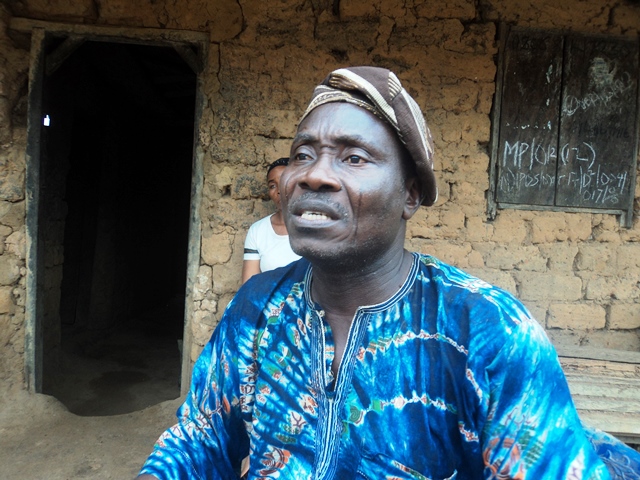
Oladele Onasaya, a 70-year -old cocoa farmer in Imeri, Ijebu East Central Local Government of Ogun State, is no longer interested in whether the government explores the enormous bitumen deposit in his community or abandons it forever.
Onasanya’s hopes of a better life and development to his community when the reserves are exploited have faded, having waited for better part of his life without seeing any of the promises by past administrations concerning the exploration.
Despite his position in the village, the Secretary, he does not believe the exploration of bitumen in his village or elsewhere can take place in his lifetime.
Elsewhere in Ilubirin, Odigbo Local Government of Ondo State, 65-year-old Rufus Olapade, whose hope of being employed by a bitumen refinery has also been shattered after years of waiting, believes the government has never been serious about bitumen exploration. Oloyede Olapade, his younger brother, is much more disenchanted about it, saying; “We all have become lazy men because of hope of working in bitumen plants.”
For over 100 years, Nigerian government has not found a way around exploiting its rich bitumen reserves.
Bitumen reserves in Nigeria, put at 42.47billion metric tons — largest in Africa and second largest in the world — after Venezuela, have been estimated to be almost twice more than the oil reserves of the nation. There were 37.2 billion barrels (5.91×10⁹ m3) of proven oil reserves in Nigeria as of 2011.
They are found in Lagos, Ogun, Ondo and Edo states, covering approximately 120km. Yet, according to Rotimi Akeredolu, Governor of Ondo State, Nigeria spends N300bn on importation of bitumen annually. Also, over 600,000 tons of asphalt are currently being imported to Nigeria, according to Kayode Fayemi, Minister of Mines and Steel Development.
READING FROM THE BOOK OF LAMENTATIONS
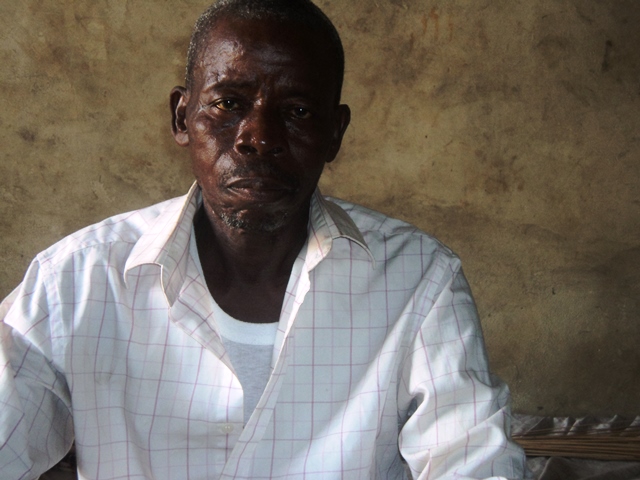
Sitting on the edge of a wooden bed in the expanse of his sitting room, Onasanya, after some moments of hesitation to talk on the issue and with clear feeling of disappointment written all over his face, finally opens up.
“Our fathers hoped on the bitumen until they died, I’m not interested in it any longer,” he says, sternly. “White people come, others will come, and they are just using us; I’m 70 years old now.”
Disappointed: Onasanya rues the failure of government to explore bitumen despite many promises
Olapade shares these sentiments too. “I don’t know why the government does not have interest in bitumen,” he says as he attempts to pull out a tar-sand sprouting from the ground — clear evidence of bitumen — in front of his house.
“They were saying the exploration will start today, tomorrow or next week, I realized that we could not even trust the government because I see no reason why up to this moment, nothing has been done and we say we want to move forward.”
After being part of crowds that received three past presidents who visited the bitumen sites in the village, the Village Head says the people’s expectations about exploration have since died (Former presidents Shehu Shagari, Ibrahim Babangida and Olusegun Obasanjo visited Agbabu village in Odigbo Local Government, Ondo State; all of them promised to explore the deposit but none fulfilled it.).
Over the years many young and old men retire from farming, hoping to get enlisted into companies that would begin exploration of bitumen. They are still waiting for such companies many years after several failed attempts by the government to kick-start the process, he tells ICIR.
Damendra Oluwatoyin, Lisa of Agbabu (second in command to the monarch), also shares these sentiments. He was around, too, when the former presidents visited his village, where bitumen was first discovered in commercial quantities. Agbabu bitumen is said to have the best quality, containing petroleum deposits too.
“It was only Goodluck Jonathan that we didn’t see when he was President,” he recalls. “Upon all their promises nothing was done.”
In June 2016, the visit of Kayode Fayemi, Minister of Mine and Steel Development, to the sites of bitumen in Agbabu, where the deposit spills out in its raw form, was the assurance the locals and investors needed to believe that the time might have actually come for the long-awaited exploration of the mineral resources.
It was Obasanjo who initially came close to breaking the jinx, but he, like others, missed the opportunity. BEECON Nigeria Limited and NISSANDS of Canada, the two firms that were licensed to explore bitumen, could not raise the N75 billion needed to commence operation.
Before leaving the sites, Fayemi had raised the morale of the locals, telling them that work would resume on the exploration of bitumen by February 2018, and that government was ready for the bidding process for prospective investors.
But February 2018 ended without a sign of an investor at any of the bitumen sites. “They promised us by this February that we will see changes. February is ending now, we have not seen anything,” laments Lisa.
STILL WAITING FOR THE PROMISED BLESSINGS
“New business would spring up at all the bitumen belts…the benefits are immense,” those were the promising words of Julius Ihonvbere, in June 2002. He was the Chairman of Bitumen Implementation Committee in the Presidency.
“More importantly, the bitumen bearing states and bitumen bearing communities would experience unparralled development,” he added.
Fast-forward to 2018 – 16 years after – none of the states and the community where bitumen is discovered has experienced any development influenced by the exploration of this natural resources.
On the contrary, they are bearing the brunt of having bitumen deposits in their domain, such as environmental degradation, pollution and health risks.
For instance, Agbabu, a community of about a thousand fishermen and farmers, several kilometres away from Ore in Ondo State where bitumen was first discovered in 1900 by Germans, is without amenities. Agbabu is believed to be home to the country’s largest reserves of deposit.
Even the Bitumen Field Office constructed at Ore directly opposite the Headquarters of Odigbo Local Government is wasting away unused. No one can say what it is meant for.
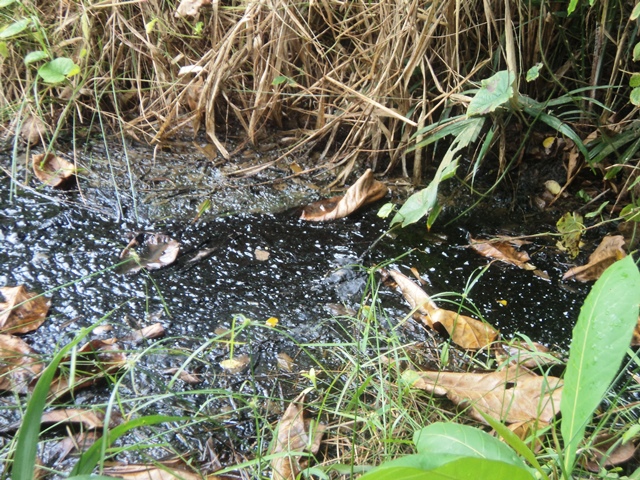
Villagers in Agbabu, where the first drilled site of bitumen has become a tourist centre, have perpetually lived without electricity, clean and safe water and good road; they fetch water for domestic use from Agbabu river, which is already contaminated by bitumen spillage.
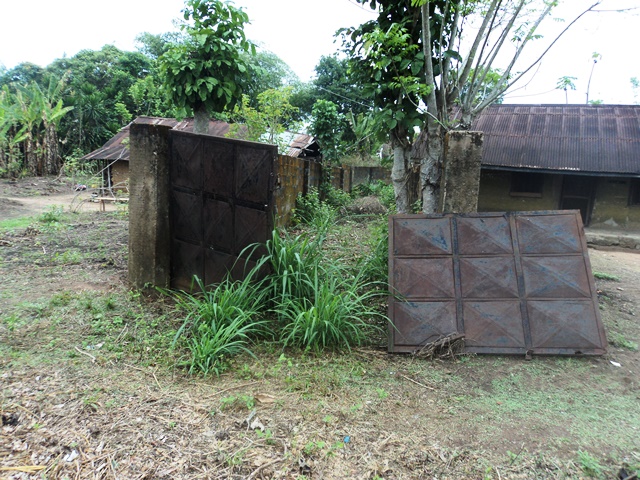
The bitumen site, with a completely bitumen coated pipe through which a bamboo pole has been used to feel the reserves since 1900, is taken over by grasses with broken-down gates. No one visits the site despite its economic potentials for the village – because the road is deplorable.
Broken: Gate to the site of the first bitumen rig – now a tourists attraction at Agbabu village
“Governor Mimiko gave us a small health centre, it is just for delivery and it is not administered by a professional doctor. It’s a two-bed facility,” he says, adding: “We have just one secondary school and a primary school, which I can rate as the worst in Ondo State.”
Ilubirin was among the villages from where a team of geologists, led by Professor Stephen Adegoke of Obafemi Awolowo University (OAU), picked samples of bitumen for testing in Canada, in 1977. It remains a rustic village without a primary and secondary school, leaving children from the village trekking several kilometres every day to attend schools at Mulekangbo Village or Agbabu, .
Like Agbabu, Ilubinrin villagers fetch water for drinking and domestic use from a nearby river that is also being polluted by bitumen spillage.
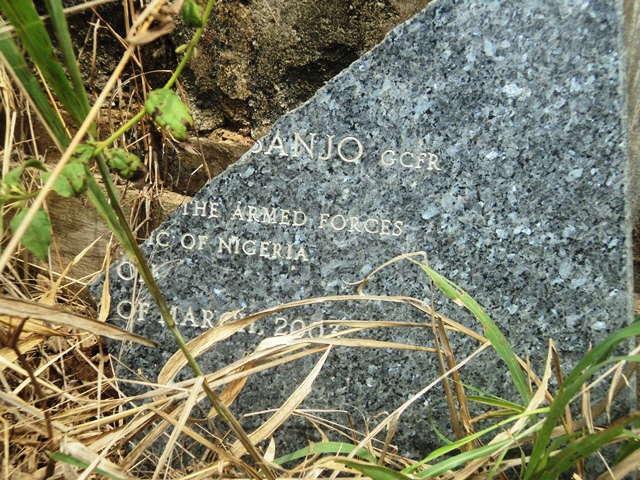
For Gbeledu-Loda in Irele Local Government, Ondo State, and Imeri in Ijebu Mushin, Ogun State, the situation is no less worrisome. In 2003, Obasanjo laid the foundation for the exploration of bitumen at Loda; that effort later turned a failed adventure. The opening plaque erected to commemorate that day has since broken down.
Collapsed: The opening plaque erected in honour of Obasanjo in 2003 to kick-start the exploration of bitumen at Gbeledu-Loda village gave in afters years of waiting
The people of Gbeledu Loda have lost hope on anything good coming from bitumen; they rely on water from Araromi river.
According to Ayo Fada, a cocoa farmer at Loda, bitumen deposits have taken over all the wells sunk in the village, a situation that compels them to make use of water from the river. They live without electricity, although there is a secondary school and a primary school.
And despite being some kilometres away from Ijebu Ode town, Imeri has no school, no hospital; two water pumping machines were blocked by bitumen reserves when two boreholes were drilled in the village some years ago.
It has played host to investors and representatives of government who have at one time or the other come to check the bitumen deposit. The village needs a face-lift: motorable road, water, schools and healthcare facility. Illegal bitumen miners have also tricked the villagers to make away with some tons of the deposits at some point.
Sick children and pregnant women are often rushed to Imusin Esure where there are private hospitals, or Ijebu-Ode where there is a General Hospital. It takes crossing the express-road for kids to attend schools, too.
RISK OF ANOTHER NIGER DELTA CRISIS
Femi Akinbode, an environment activist, complains that government is not taking measures to avoid a repeat of mistakes of the past.
“Ignoring environment-related issues and needs of the residents” could create a situation that is unimaginable in terms of conflict and security, he warns.
Whenever the government decides to finally explore the country’s bitumen reserves, one of the major issues that will apparently play up is the readiness of the host communities to let go of their land.
Already, Buhari has granted licence to South West Bitumen Company Limited and BEECON Nigeria Limited to begin the extraction of bitumen as his government diversifies the economy.
But the government cannot afford to repeat the mistakes of Niger Delta in the exploration of bitumen in the four bitumen bearing states; legacy of the Niger Delta oil exploration is one of pollution, corruption and unfulfilled promises.
For Olapade and his kinsmen at Ilubinrin, the village, the knowledge of what happens to them, their homes and farmland given an eventual exploration of the tar sand is vague.
“We are not aware that we could be displaced or our land may not be useful again for farming if the exploration starts, the cocoa farmer says.
There is limited public understanding of what exactly Nigerians can expect during and after bitumen exploration, Christina Milos writes in her book, ‘Bitumen in Nigeria: Weighing the true cost of exploration’.
She says the social and environmental impacts of bitumen exploration are anticipated to be serious and widespread.
Within the bitumen bearing communities, there’s a widespread lack of understanding of what impact the exploration of bitumen could have on the locals and their means of livelihood.
From Agbabu to Ilubinrin, Loda to Imeri, their experiences and stories are similar. They don’t know much about implications of exploration and are not likely to vacate their villages; over 30 villages in the four states are likely to be affected when government commences commercial exploration of bitumen.
What the community expects from the Federal Government, Olapade explains, is a Memorandum of Understanding (MoU).
“We expect government to send people down and create a forum where they will meet us and give us lecture on what is going to be the doom if this bitumen exploration starts.
“We have been looking forward to that MoU, but up till this moment, nothing was done.”
With a caveat to the government, he says: “If they ever come, we will engage them. We must have a talk; we have lawyers and we will involve valuers so that there is no loopholes, otherwise what happened in Niger Delta will repeat itself here, because this is our land.”
What impacts has bitumen had on the area at the moment? The community leader paints a disturbing picture.
“The water is not drinkable; during raining season all the well are filled with water but the water is not drinkable,” he reveals.
If the bitumen is floating and animals pass there, they get stuck there. Then the moment you plant some crops, and the tap roots start going down and hit the bitumen, the crop will die. Only palm tree has survived the toxic effects of bitumen.
Clearly, Olapade exudes ignorance of the implications of the exploration of bitumen. Onasanya, his compatriot at Imerin, does not know anything either.
He tells ICIR that he and his people are not willing to abandon their ancestral home and farmland for bitumen exploration.
“We are not interested in being relocated from here if they want to start the exploration. We are farmers, how are we going to have access to our farmland?” he asks. “We have told our Baale that we may not move from here.”
They are already experiencing the negative impacts of the deposits; ongoing spillage into Agbabu River coupled with high temperature are fast killing cocoa and other plantations.
Lisa, who says his three-year-old daughter was hospitalised for high body temperature, does not know that bitumen exploration can lead to displacement and relocation for the villagers.
“Relocation will lie in the hands of the experts. If they know that exploration will affect us, they should do that for us.
“The gas emission and oil spill from the place we call Mile 2 are already affecting our rivers and had affected the availability of fishes in those rivers.”
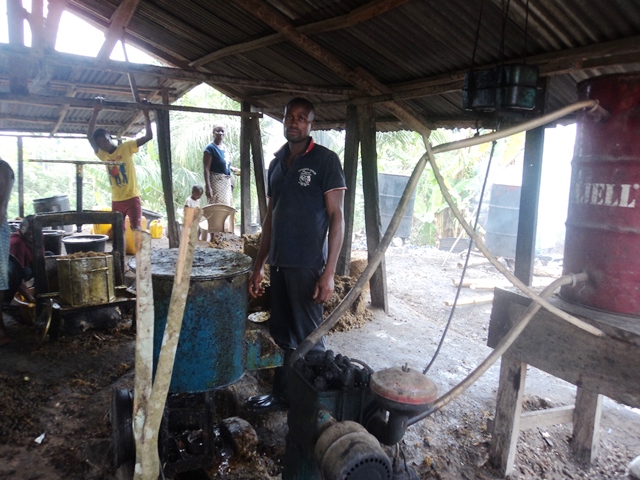
Zacheus Adebayo, a 40-year-old former cocoa farmer now a palm oil processor, has had a raw deal of the effects of bitumen in the village. After bitumen-generated heat killed over 400 of his cocoa plants, he switched to the cultivation of palm trees and now operates a local oil palm mill.
Zacheus at his local palm oil mill after heat from bitumen forced him to abandon his cocoa plantations
“Because of the high temperature that bitumen releases into the atmosphere, we are already replacing our cocoa trees with palm trees,” he says. “There is no solution to that. I have lost over 400 cocoa trees and that’s why I’m planting palm trees now. The heat is affecting us here, it is as if we are in the oven and there’s no electricity here.”
As for him, if the exploration will affect villagers and their means of livelihood, government must take all necessary measures to protect their interest. ” We don’t want the situation of Niger Delta to happen here,” he adds. “We are also part of Niger Delta, but we don’t want such to happen here.”
The young farmer says he and his people expect compensation from government after a thorough enumeration might have been carried out. “This is to avoid chaos,” Zacheus says with the hope that the exploration will take place anytime soon.
GOVERNMENT WON’T ALLOW RESTIVENESS
The Nigerian Mining Act 2007, which regulates mining and exploration activities in the country, sets out precondition for exploration — the submission and approval by the Mines Environmental Compliance Department of all Environmental Impact Assessment Studies and mitigation plans required under applicable environmental laws and regulations … and the conclusion of a Community Development Agreement approved by the Mines Environmental Compliance Department.
This, Yinka Oyebode, Special Assistant on Media to Kayode Fayemi, Minister of Mines and Steel Development, says will help to avoid any form of restiveness that may occur as result of exploration.
He stresses the need to engage the host communities by the companies because government only regulates and provides frame work but does not explore directly.
“The last time the Minister visited the communities, some of these issues — relocation and compensation — were tabled and government’s plans were also explained to them.
“Government has learnt from past experiences in other sectors, government is not just to leave it carelessly,” Oyebode explains, adding: “We emphasise on corporate social responsibility because the community must be well taken care of for you to actually enjoy your work and prevent youths restiveness.”
Although the two firms given licences to explore bitumen are still perfecting their acts — they at least have 18 months to commence operation — locals and environment rights activists say the the risk of a crisis similar to that of Niger Delta is high if appropriate measures outlined by the Mining Act are not taken.
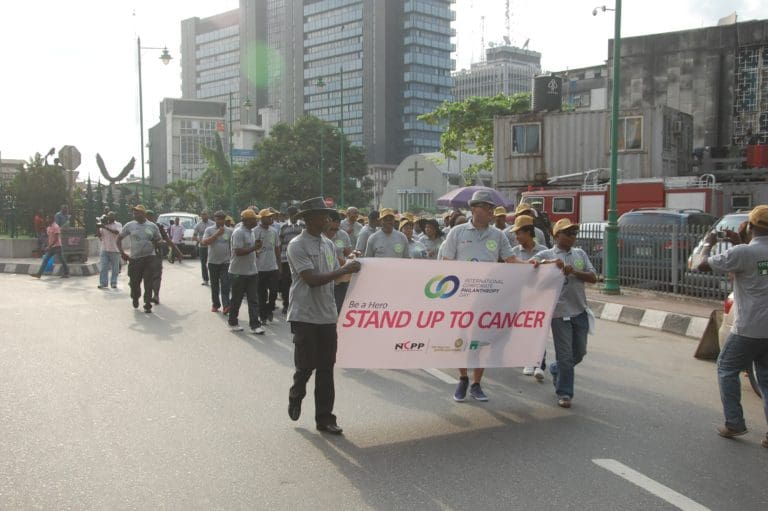
Tomorrow, the International Centre for Investigative Reporting (ICIR) will publish an undercover investigation on the travails of cancer patients seeking treatment at teaching hospitals, and how they are being short-changed daily by numerous weaknesses in the health system.
The investigation is a result of many months of painstaking planning by ‘FISAYO SOYOMBO, an investigative journalist and the Editor of ICIR.
The spine of the story was about gaining undercover entry into oncology wards to observe the natural cancer care available to patients at teaching hospitals, where the majority of Nigerians (due to funding limitations) seek treatment for the disease.
A first attempt at gaining undercover entry into these wards of these hospitals was made in October 2017, but it failed, leading to the suspension of the story. However, in February and March, Soyombo, joined by an undercover oncologist, gained entry into two leading federal hospitals, and spent days observing the entire cancer treatment setup. They also spent several days interacting with cancer patients who had sought treatment at teaching hospitals in other geopolitical zones of the country.
Their findings, many of them heartbreaking, reveal that undergoing treatment for cancer in Nigeria condemns patients to a status very similar to that of a death-row inmate — the care is usually palliative rather than curative, due solely to the use of obsolete equipment.
In this story, you will read about how, for example, the lack of a functional radiotherapy machine is destabilising the treatment of patients and enhancing the spread of cancer from a point in their bodies to other previously unaffected parts.
You will read about patients who were scheduled for many courses of radiotherapy but were left stranded midway, and their health deteriorating, due to the breakdown of machines and the government’s inability/failure/refusal to repair or replace them.
You will read about patients being referred from one teaching hospital to other, and being rejected by the host teaching hospital due to communication and equipment inadequacies.
This investigation also details the intense lobbying by families of patients for the scheduling of their loved ones for radiotherapy appointments.
Also, you will read about how patients risk their already cancer-endangered lives — one even ran into armed robbers — to travel in the wee hours of the day in a desperate bid to secure early appointments with doctors due to congestion at the only private hospital in the entire country with a radiotherapy machine.
In the most pathetic case of all, you will meet a patient suffering from cancer of the eyelids who first spent several years raising the funds required for surgery only to be sent home when he finally got the money because of a series of industrial actions at the federal hospital.
And, perhaps the only bright side of it all, you’ll read an intriguing, almost incredulous love story and learn, generally, about the understated status of romantic love as the cancer patient’s elixir, how cancer patients are drawing the strength to fight to see every new day by merely seeking to repay the care and faith and sacrifice of their lovers.
In all, it will be clear to readers why the masses have little hope for life if diagnosed with cancer in Nigeria, why Nigeria has the highest cancer death ratio in the world.
Finally, two cancer advocates list a series of steps that government can take to preserve the lives of cancer patients — that is if it has any interest in doing so.
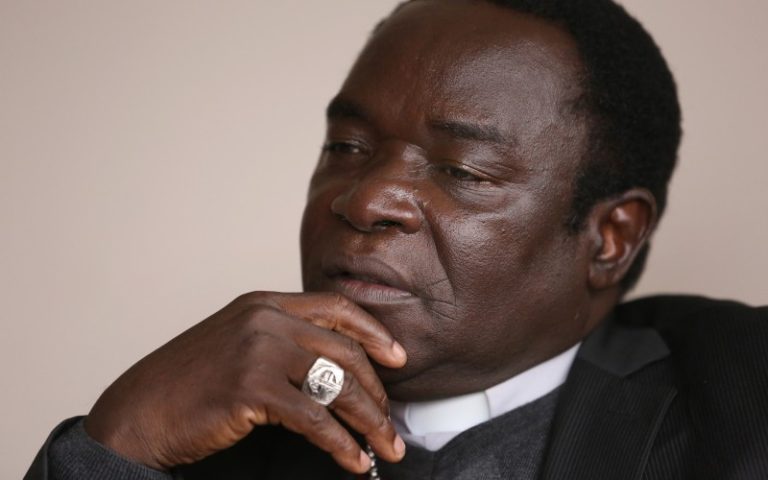
Matthew Kukah, Catholic Bishop of Sokoto Diocese, says the average northerner has become far more impoverished under President Muhammadu Buhari than he was under former President Goodluck Jonathan, but they will still vote for Buhari.
He also said despite all their years of monopoly of power, the northern elite have brought shame to the entire North and made people of the region too weak to fight.
“…after all these years of monopoly of power under the military and civilians, we northerners are still the weakest, the most sickly, the poorest, the most illiterate, and the most vulnerable. We have the highest number of childhood stunting, which is a danger to the future. The elite have brought shame on us and made us too weak to fight,” Kukah told The Punch.
“There is a noble obligation that all elite owe to those they represent, those on whose shoulders they may have stood, those who voted for them or those who helped them get an education. In the rest of Nigeria, this elite have met these obligations by building schools, hospitals, clinics, and so on for their people. They have bridged the gap between government’s absence and the welfare of their people. This is the story of almost all of southern Nigeria and parts of the Middle Belt.
“In the North, the evidence of this dereliction of duty litters the entire landscape, millions of out-of-school children, federal and state government projects such as irrigation and power-generating dams that now lie abandoned in remote communities, structures, such as the Almajiri schools, all in decay in many communities, and so on.
“Look at the World Bank, UNDP and other reports on development in Nigeria and look at northern Nigeria. The sad thing is that for the elite, these lives of destitution, illiteracy and squalor are reservoirs of investment from where they draw their oxygen of political relevance.
“The grinding poverty leaves the people permanently below zero and all they do is continue to look at the stupendous wealth of the elite with awe. In exchange, they (the elite) pretend to offer them (the poor) dubious religiosity through the manipulation of pilgrimages and construction of mosques.”
He added that although majority of northerners are more impoverished under the administration of President Muhammadu Buhari than they were under former President Goodluck Jonathan, they will still vote for him in 2019.
“Indeed, the Buhari project presents us with an interesting view. The average northerner has become far more impoverished under Buhari than he was under (former President Goodluck) Jonathan. But they will still vote for Buhari because they see him as the only one who can help bring their derelict elite to order. It is a strange appeal but that is it,” he said.
“They believe their corrupt elite are above the law. They were seduced with Sharia because they believed it was going to help them punish their own elite, who they see as being above the law of Nigeria. These are the issues.”
Kukah also lamented that the elite have manipulated and distorted religion to the detriment of the masses, noting that such manipulation gave birth to the Boko Haram insurgency.
“In my view, it is the long historical experience of this distortion of the religion of Islam with its exclusionist tendencies that Boko Haram has exploited.
“Boko Haram exploited the fact that this elite proclaimed Sharia in 1999 and 2000, while in reality, they did not believe in the religion itself. So, Boko Haram simply has asked them to step aside.”
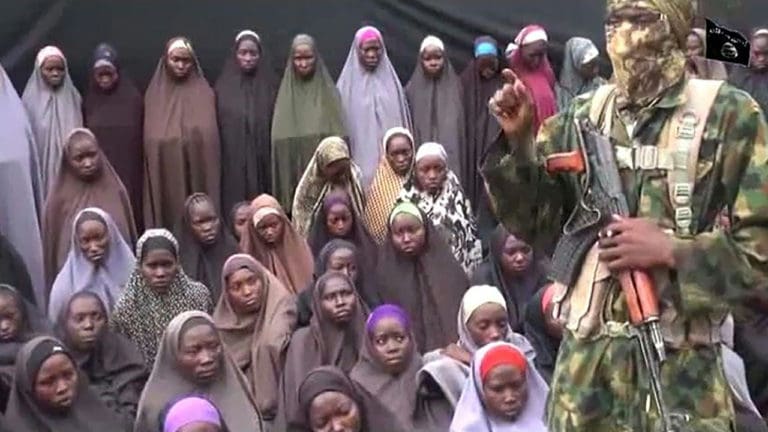
It is now four years since the Boko Haram kidnapped 276 girls from Government Secondary School, Chibok, Borno State.
Before the 2015 presidential election that brought the present government to power, Muhammadu Buhari, then candidate of the All Progressives Congress (APC), promised several times to defeat Boko Haram and rescue the girls.
“As a father, I feel the pain of the victims of insurgency, kidnapping and violence,” he said, for example, in March 2015 at a town hall meeting in Abuja. “Under my watch, no force, external or internal, will occupy even an inch of Nigerian soil. I will give it all it takes to ensure that our girls kidnapped from Chibok are rescued and reintegrated with their families.”
But not only did Buhari promise to rescue the abducted girls, he also kept track of the number of days the girls were spending in captivity. He regularly counted down to the potential release of the girls from captivity — often retweets of abduction-duration countdown by his party.
Sometimes, his Chibok-related tweets were separated by a day or sometimes by an interval of two days of three days. These days, though, the President only remembers the girls on their kidnap anniversaries, or when pushed to the wall by Oby Ezekwesili’s Bring Back Our Girls (BBOG) advocacy groups.
Four years on, more than half of the abductees have been recovered but 112 of them are still missing, with it emerging on Saturday that only 15 of those 113 are still alive, and that they have been married off.
Below are samples from the days of Buhari’s frequent pro-Chibok social-media advocacy. This no longer happens now that Buhari is President, and the citizens are asking: what has changed?
Ahmad Salkida, a Nigerian journalist who has a close relationship with Boko Haram, says Boko Haram’s abduction of 204 students of Government Girls Secondary, Chibok, was not the original plan but an afterthought.
In a series of tweets on Saturday, the fourth anniversary of the kidnap, Salkida said some insurgents were led by a middle-ranking commander in search of food and other supplies in Chibok before they came across the students, who were then preparing for their Senior Secondary Certificate Examination.
He said that in the first month of the girls’ abduction, the insurgents did not know what to do with them.
“Four years ago, a middle-ranking BH commander led dozens of fighters in search of food and other supplies in the remote town of Chibok; like an afterthought, they saw a chance to abduct school girls in GSS Chibok, the girls at the time were preparing for their exams,” he wrote on his Twitter handle.
He added that the Boko Haram members faced no opposition in abducting the girls.
“The dozens of BH fighters faced no opposition during the abduction, as they struggled to convey their captives to the forest of Alagarno, the insurgent’s first war capital, which they named Timbuktu. It was in Timbuktu that they organised most of the horror we experience today.
“Some of the girls were lucky to have escaped on their way to Timbuktu that night, because there were fewer fighters to hold more than 200 girls. At the beginning, the group didn’t know what to do with the girls, at least not in the first one month of their captivity.”
Contrary to what is held by the public, that the former administration of Goodluck Jonathan did nothing to rescue the girls when they were first abducted, Salkida clarified that the government reached out to him two weeks into the abduction to negotiate with Boko Haram.
“However, what many people did not know was that two weeks into the abduction, the Jonathan administration was already in touch with me for the peaceful release of the girls. By the way, I was in self-exile after pressure from the same Govt,” he said.
Salkida narrated how met with Jonathan and then with the insurgents to negotiate the release of the girls, and how the operations were aborted without explanations.
He tweeted: I took an excuse where I was doing a menial job in the UAE (but still reporting the insurgency), to see the President, which was facilitated by Aliyu Gebi and Labaran Maku. By the 3rd of May, I was already on my way from Abuja to Madagali, Marwa and finally to a BH camp.
I got a proof of life for the president and another for the media in case I didn’t get back. The demands of BH then were simple, they wanted detained members taken to Damaturu and they will move the girls to Buniyardi for swap somewhere in between. There was no word on ransom
I was provided with full military escorts frm Abj to Damaturu, Govt was supposed to make sure that 70 detainees were ready on my arrival in Damaturu to meet 30 there. The rest of the negotiating team was in Abj making sure the prisoners were on a plane before my arrival…
On arrival in Damaturu, the military commander there was not briefed about my work. He was merely told to expect a VIP? At that time, the girls have been moved by BH, but there was no prisoners for exchange and I got a call from the former CDS to abort the operation
The President later said before me that he did not call off the swap. There was a credible window, but zero Will to rescue the girls. BH were angry. I returned to the UAE to continue my hustle, but received invitatns not only by the former administratn, but the current govt.
Four out of five process that I was involved in, we came close to a swap deal, but Govt in most instances did not provide the platform I presented with the required expertise. And whenever Govt dragged its feet, Shekau will shift the goal post.
Ahmad Salkida, the Nigerian journalist with the deepest knowledge of the workings of Boko Haram, says only 15 of the missing 113 Chibok girls are still alive.
In a series of tweets on Saturday to commemorate the fourth year of the Chibok abduction, Salkida said his investigations in the last three months revealed that majority of the girls are dead.
“Many of the girls have died as a result of cross fires and bombardments of the security forces that no doubt were intent on rescuing them,” he said
“I regret to state here that only 15 out of the 113 #Chibokgirls are alive today, based on my investigations in the last 3 months and we have already seen some of them in a video, which I exclusively obtained and was published on SR website.
“What is the status of the remaining 15 girls as far as negotiations are concerned? My investigations also revealed that, they are no longer under the control of #AbubakarShekau. According to sources, they are now ‘married’ and only their ‘husbands’ can decide their fates.
“It will be unbearable to share the names of the 15 that are alive here; this is the responsibility of Govt. When I was involved I regularly provided proof of life. Govt must demand that to prove me wrong or stop negotiating for many of the girls that don’t exists.”
15/ Today, my painstaking investigations on the #Chibokschoolgirls revealed that just a handful of the 113 #ChibokGirls are alive. Many of the girls have died as a result of cross fires and bombardments of the security forces that no doubt were intent on rescuing them.
16/ I regret to state here that only 15 out of the 113 #Chibokgirls are alive today, based on my investigations in the last 3 months and we have already seen some of them in a video, which I exclusively obtained and was published on SR website.
17/ What is the status of the remaining 15 girls as far as negotiations are concerned? My investigations also revealed that, they are no longer under the control of #AbubakarShekau. According to sources, they are now ‘married’ and only their ‘husbands’ can decide their fates.
18/ If they are divorced or the men are killed that is when Shekau’s decision takes precedence, and in this instance, since the girls have been indoctrinated, their leader has no right to negotiate for their release, no matter the ransom offered, reliable multiple sources said.
19/ It will be unbearable to share the names of the 15 that are alive here, this is the responsibility of Govt. When I was involved I regularly provided proof of life. Govt must demand that to prove me wrong or stop negotiating for many of the girls that don’t exists… ????
Akin Osuntokun, Director of Media and Public Communications, Coalition for Nigeria Movement, says President Muhammadu Buhari cannot change his ways of doing things even if re-elected in 2019.
“Any Nigerian who says today that he thinks that Buhari will be better will be deceiving himself because he will even be worse than he was before (if he is re-elected),” Osuntokun said in an interview with The Punch.
He argued that “anybody who supports him to get re-elected will be doubly disappointed and jeopardised than the first time, if he gets it”.
Osuntokun, a one-time presidential adviser, now a Deputy Chairman of the Nigeria Intervention Movement, said the President is set in his ways, noting that some of the anomalies noticed in his government were not mistakes.
According to him, Buhari has been acting deliberately and couldn’t have been making mistakes all the time with some of his decisions.
His words: “He is set in his ways. Prof. Soyinka called the things he has done unforced errors. Those are not mistakes, this is Buhari acting deliberately.
“You cannot make a mistake with the kind of appointments he made in such a lopsided manner. That cannot be a mistake; it is a deliberate act. And this is reinforced by the position he has taken on this Fulani herdsmen crisis.
“What Taraba, Benue and the states in the Middle Belt are experiencing and the response of his government today has reinforced the kind of personality he has. Any Nigerian who says today that he thinks that Buhari will be better will be deceiving himself because he will even be worse than he was before [if he is re-elected].”
He also accused the President of polarizing the country more than anyone before him, warning that his re-election in 2019 would further deepen the division in the country.
“All those who supported him, from their testimonies today, have been given cause to regret. Everybody is saying now that Nigeria is divided now more than ever before. Why is it so? It has to do with the personality of the leader.
“I heard there was jubilation in Kano and don’t know of any other place where there was jubilation but you can all see this kind of division among Nigerians. His candidature is so polarising, almost to the extreme. So if Nigerians are saying that the country has never been this divided, so how will his seeking reelection help that?
“He wants to further deepen the division in the country. But all we are saying wouldn’t have mattered if attention had been paid to revising the constitutional structure of the country. The reason it has become such an issue and why we are so divided and bitter with one another is that nobody likes being oppressed.
“That is what it boils down to. We have a government at the centre that is oppressive. If we had a good nationalist and a detribalised leader, we wouldn’t feel it as such but if we had a divisive leader, the effects would become unbearable.
“So that is the problem. So since you cannot guarantee that we are going to have a pan-Nigerian nationalist as President, the most enduring solution is to take away what makes the government at the centre such a dysfunction.
“And that is devolution and decentralisation back to the regions and the states or whatever people have been talking about so that these problems don’t keep on recurring and becoming an issue until such a time that it would explode. The way things are going, the race to that centre is the most devastating, destabilising factor in Nigeria and it is going to remain so as long as this kind of oppressive power is there.”
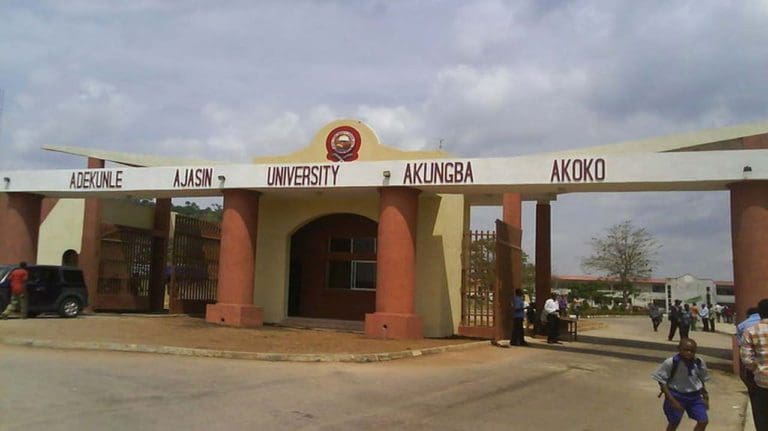
Rotimi Akeredolu, Governor of Ondo State, has finally bowed to pressure from students and parents by slashing the new schedule of fees for Adekunle Ajasin University, Akungba Akoko (AAUA) for returning students.
The student Union leadership had called for the suspension of the street protests after the government engaged them in a dialogue.
Releasing the reviewed schedule of fees, the students said the government had agreed to reduce the fees to between N70,000 and N100,000.
Students of the university protested the increase in the fees from between N25,000 and N35,000 to between N150,000 and N200,000, asking the government to revert to the old arrangement.
A statement signed by Ijanusi Olawale, President of the Students’ Union Government (SUG); Adekunle Ayo-Lawrence, General Secretary; and Adelowo Samson, PRO, said the review was in respect of the meeting held on Friday between Akeredolu, the leadership of the union and members of the governing council of the institution.
The statement read in part: “After much deliberation, the meeting resolved to review the tuition as follows: Returning students: Faculty of Law: N100, 000; Faculty of Science: N100, 000; Faculty of Social and Management Science: N100, 000; Faculty of Education: N80, 000; Faculty of Art: N80, 000, with an option to pay twice i.e N50,000 and N40,000 per semester respectively.
“Final year students across all faculties are to pay a sum of N70, 000 with an opinion of paying twice i.e N35, 000 per semester.
“The Governor said this is the lowest he can go and he urged every individual to should abide by this.”
Olawale said no decision would be taken on behalf of the students, until after an aggregated opinion of majority of the students was sought.
The union leaders urged the students to send their opinions to designated numbers on WhatsApp to enable them take a firm decision.
The objectives of the public procurement reforms in Nigeria are to ensure accountability, attain probity and transparency, encourage competitiveness, entrench value for money standards and professionalize the procurement practice. These objectives are in tandem with the principles of open contracting (disclosure + participation). As an opinion, I strongly believe that participation here should also include the private sector. Interestingly, bidders (contractors/ suppliers/ consultants) are key players in the public procurement process.
Now let us look at the benefits they stand to gain from these reforms/ open contracting.
MORE OPPORTUNITY FOR BUSINESSES: Opening the system will encourage competitiveness in public procurement, and competition drives innovation. Greater accessibility to tender information alone will largely increase the number of bidders competing for projects. Small and medium enterprises will also be able to “flex their muscles”, while already existing contractors will be held to higher standards in terms of project delivery. This will certainly spur up some innovative ideas as businesses will be left with no option than to show their creative abilities in delivering public services.
FAIRER COMPETITION: To meet the welfare and security needs of the citizenry, government is bound to transact/interact with private sector (a lot!). However, the lack of trust that exists between the government and private sector is currently at an all-time high. The aching question therefore is, “why would business owners or service providers want to deal with a government they don’t trust”? It is therefore apparent that, for this relationship to be mutually beneficial, a greater degree of trust is needed.
PROBITY AND TRANSPARENCY: in public procurement will most definitely increase the integrity of the government. This is of utmost importance because if the contractors feel like they are not being given a level playing field to compete in the process, then we have a problem. Opening up the contracting space is an avenue to address the issue of nepotism and possibly allow for greater business development. This means that expertise will be rewarded as the contract will eventually be awarded to the “lowest evaluated responsive bid” as stipulated by the Public Procurement Act 2007.
PROFESSIONALIZING THE PROCUREMENT PRACTICE IN NIGERIA: will also help the private sector in terms of saving costs and business time, this is because it will largely reduce the administrative burden on the contractor, in terms of time spent applying for bids etc. Opening up the system also allows for better decision making by the private sectors themselves, as data analysis and statistics that will aid them in making informed decisions will be available across all stages of the contracting cycle.
It will be in our common interest if the private sector can develop a “call out culture” after all the shouting side remains the winning side.
On May 17, 2017, Nigeria’s Acting President, Prof. Yemi Osibanjo signed anexecutive order on transparency and improving the business environment in Nigeria. The executive order contained far reaching measures with direct benefits for Nigerian businesses as a proof of the FG’s commitment and determination to ease the business environment. How do you ease the business environment without an open contracting system?
Just to digress a little bit, this same ease of doing business order says, “There shall be no touting at the airport”, can someone please raise their hands if they haven’t been harassed recently at the airport? From the officers in uniform to the lady patting down your body, there is always someone asking “anything for the boys”. The question here is how ready are we to implement?
You don’t even have to be a business owner or be a contractor per say, but I would like you to imagine for ten seconds only (any longer than that, you may think I placed you under a spell) if information on the entire contracting process was open? Information in this context refers to planning, tender, awards and contract implementation. If you are still unsure about the benefit of open contracting, you can look it up here.
We can all agree that the 2016 commitment to the OCDS was a step in the right direction and that, to a large extent, the government has played their role. In addition, civil societies are constantly calling for open and transparent systems, but what is the private sector doing? Contractors are certainly best placed to also bring to the fore issues of abnormalities and sharp practices in public procurement in Nigeria. Now, one must ask, where is their voice? Why is it not audible?
This is a call for collective action to ALL contractors/public service providers in Nigeria, a call to demand for the implementation of open contracting principles in Nigeria. The government, our government, YOUR government needs to hear you loud and clear in one voice!
You may be a contractor, business owner, ultimately you are a citizen and we are all accountable!
Gift Maxwell currently serves as the Budeshi Program Director with the Public and Private Development Centre (PPDC). She is very passionate about using Open Data advocacy to drive improved transparency, accountability and citizen participation in governance. An avid supporter of open government, she was a member of the team that successfully advocated for the Adoption of the Open Contracting Data Standards (OCDS) in Nigeria by using the Budeshi (www.budeshi.ng) platform to show the utility of the OCDS.