Home Blog Page 2682

Police declare Melaye wanted, place him on INTERPOL watch list


Dino Melaye, representative of Kogi West Senatorial District at the National Assembly, has been declared wanted by the Kogi State Police Command.

Ali Janga, Commissioner of Police in the state, made this known in a statement on Wednesday.

Also declared wanted alongside Melaye, is Mohammed Audu, son of Abubakar Audu, late former Governor of the state.

Janga also stated that both Melaye and Audu have been placed on Interpol watch list for allegedly providing false information to the police about an assassination attempt on Melaye in 2017.

While addressing reporters on Wednesday, Janga said the two suspects paraded earlier this month for illegal possession of firearms allegedly given to them by Melaye, had escaped from police custody.

Both men were part of six inmates who escaped from the detention facility at the headquarters of the Kogi State Police Command in Lokoja on Wednesday.

There had been reports that Melaye had fled the country in order to evade arrest, but he dismissed the reports as untrue, insisting he had committed no crime.

“Those who know me will never believe the lies of Sahara Reporters about calling some senators,” he tweeted. “I’m in Nigeria and been attending social functions across states. I have committed no offence so why should I run? They are after my life but God is my muscle.”

‘Many journalists not literate about budgets and procurement processes’

Tajudeen Suleiman, Director of Projects at the International Centre for Investigative Reporting (ICIR), says corruption thrives in public institutions across the three tiers of government because “many journalists are not literate about budgets and procurement processes”.

“Many journalists are not literate enough about budget and procurement, so they cannot ask relevant questions and hold government accountable,” Suleiman said on Tuesday at the opening of a three-day capacity training for the Nigerian Media themed ‘Open Contract Reporting (OCR)’, organized by ICIR and supported by the MacArthur Foundation.

He explained that journalists have the responsibility of holding government accountable and responsible on behalf of the people.

“As journalists, your role is to hold government accountable and responsible on behalf of the people,” he said.

“But how can you do that when you don’t know anything about the budget and the procurement process? How can you challenge them on their failed promises to the people without knowing the budget?

“It is very important you have to know what the budget of your country is, your state and local government.”

Speaking on the objectives of the training, which is a follow-up to the one held in 2017, Suleiman said it was organized to enable journalists understand how to interrogate the national, state and local government budgets.

“We must be able to question all the official figures that government is spinning out. This is why we have brought journalists together with the support of MacArthur Foundation for Nigerian journalists to be able to follow the money.

We have brought experts in Investigative Journalism and Procurement process to share their experiences and perspective with you,” he said

A total of 15 journalists drawn from print, electronic and online media are attending the training.

The children of Dapchi and a country that was

0


By Rotimi Olawale

There is something unrivalled about our collective sense of outrage as Nigerians. It does not exist. I could wage a bet that our gene for outrage has long been isolated and smashed. I’ll explain. Some of the reactions to the recent release of the Dapchi girls also leave ashes in the mouth.

For anyone who knows what it means to lose a dear one, the return of the children is nothing less of a miracle. For those who are likely to empathise with the parents of the 104 girls that were returned, they will agree that the least of their worries is who, if or where a ransom was paid, assuming that is true; or whether it was any political party or ethnic group using the girls to gain some political advantage. With 2019 around the corner, everything is tragically viewed from that prism.

Worrisome in all of these is what it means for education in northern Nigeria; especially the northeastern part of the country where Boko Haram has made its stage since 2009. By next year, the group will ‘celebrate’ 10 years of disrupting livelihoods, destroying properties and halting lives abruptly. My interest here is what this means for education in a region with a literacy rate that continually drags the entire country backward!

The blame cannot be placed at the feet of citizens in this region or linked to their cultural or religious preferences. It is simply a case of government failing the region and more recently the entire country. With about 75 million Nigerians being illiterates it is not far-fetched why it is easy to manipulate the citizenry using religion and ethnic bias.

It is instructive that it is not about the financial wherewithal even as the literacy level between southern and northern Nigerian is yet to close up. At a time when the quality of education in the south is also being questioned either for failing to meet with today’s workplace need or the industry’s failure to attract the best mind; it is sad to see the northern part of the country where the educational deficit is wide still further dragged down by a ragtag group and government’s lazy attention to the issues.

In 2016, Imo state, which has the highest literacy rate in the country got an allocation of 29.8 billion naira while Yobe state with the lowest literacy level got an allocation of 30.9 billion naira meanwhile Imo has about double the population of Yobe. The point here is not to paint a region or state horribly but to highlight the need for innovative ideas in the face of a widely growing problem. The young men who populate Boko Haram today are products of this same problem.

Education since the Paleolithic period – the earliest period of the Stone Age – has served the purpose for illumination of the mind. It is education that makes it possible to even interpret and appreciate religion and culture. The very marginal interest in education by the men and women in the corridors of power in northern Nigeria is criminal. Very criminal.

Governor Nasir El-Rufai will possibly be one of two to excuse given his recent hugging of the headlines with the sack of about 21,000 unqualified primary school teachers in Kaduna state. Even if one faults the naivety of his approach, the radical solution he seeks is not mistaken. He, however, needs to sign the Child Rights Bill, pushed by the Kaduna State House of Assembly, into Law to provide the political will and provide a strong legislative framework for the rights of children to decent, qualitative and 12 years of free education.

Doing this may be a hint for other northern states to commence the process. Sokoto state is also promising in the political will the governor brings to the table. In 2016, 29% was allocated to education from the state’s budget. In 2017, the highest allocation was also education with 27.3% of the total budget.

Governor Aminu Tambuwal’s choice to build a school in Gudu Local Government is also worthy of mention. Gudu at that time was the only LGA of the 23 local government areas in the state without a secondary school. 12 years of free, compulsory, safe and qualitative education is what the Nigerian state owes its citizen across the 9,572 wards in the country. It is defining for the rest of the beneficiary’s life. It is also defining for the life of any nation that understands what human capital development means.

In April 2014, the world rose in unison to decry the kidnap of 276 girls from Government Secondary School Chibok, Borno State, especially after the government, then kept quiet about the abduction for about two weeks. As I write this, about 112 of those girls are yet to reunite with their parents and their fates unknown.

The Dapchi incidence is a repeat script with 110 girls kidnapped from Government Girls Science and Technical College, Yunusari Local Government area of Yobe state except that this time government was quick in acknowledging and reacting. The parents of the murdered 59 Buni Yadi boys of Federal Government College, Buni Yadi, Yobe State will perhaps continue to blame themselves for allowing their kids to seek education.

In 2017, only 7.04% of the Federal government budget was allocated to Education at a time when the country had the highest out-of-school children in the world – 10.5 million. With respect to capital spending, education was allocated 50 billion Naira and Defense allocated 140 billion Naira.

Of what import is the several intelligence gathering agencies and security and para-military outfits in the country if the lives of vulnerable children, especially girls continue to be at stake. I am curious as to how our drones – Gulma and Tsaigumi are being put to use.

Incidences like Dapchi’s will continue to depopulate the schools in the north. The testimonials of the released girls that their captors warned them against returning back to the classroom becomes potent in the face of government’s frail commitment to providing safe education. Despite being from an educational disadvantaged region it is double tragedy that it is now dangerous for them to seek education. What has happened to the Safe School Initiative?

Communication, fortification and quality education are a must if we must get our children in northern Nigeria back to school. The commentary about girls who in their final year in senior secondary class cannot communicate with journalists in Basic English language is one we need to end. It is disturbing.

A country like Nigeria should adopt a foreign policy to grow its influence beyond population in the West Africa region for a start. In 2001, the government then signed a MoU for the inclusion of French in the school curriculum. That never took off.

I am excited the Dapchi girls are back and truly hope the government will do whatever it takes to secure the release of Leah Sharibu; the only girl left behind and the other 112 Chibok girls.

The Dapchi incidence should offer us an opportunity to reflect and get angry as a people. If we are not outraged by the kidnap of 110 girls, nothing else can push us to the streets to seek for valid change. Chinua Achebe says there was a country. I say, there can be a new country.

Olawale, a Gulmakai Network Champion, is the Executive Director of Youthhub Africa

‘Common sense vs Naija sense’ — knocks for Ambode over Buhari public holiday


Nigerian users on Twitter have reacted forcefully to the declaration of Thursday as a work-free day in Lagos state as the state prepares to host President Muhammadu Buhari for two days.

The declaration was made on Tuesday by Kehinde Bamigbetan, Commissioner for Information and Strategy. He said the declaration of a state-wide day-off was to enable residents to come out en masse to welcome the President.

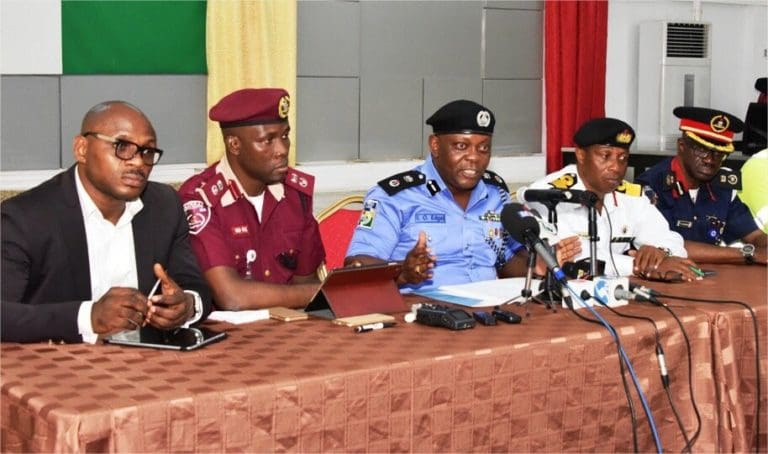
Imohimi Edgal, Commissioner of Police, also said on Tuesday that there would be temporary road closure and diversions in some areas, including Ikeja, Agege, Maryland, Ikoyi, and Victoria Island.

He said the President would be attending a colloquium to mark the 66th birthday of Asiwaju Bola Tinubu at Victoria Island, and the official flag-off of the construction of the Lekki Deep Sea Port Project in Epe.

Following the statement, the Lagos State Government (@followlasg) shared the declaration on Twitter, and reiterated that it is meant to enable Lagosians come out en masse to welcome the President, who is on “a historic two-day visit” to the state.

In reaction to this announcement, Nigerians, such as Pius Adesanmi, Japhet Omojuwa, Ayo Sogunro, Joe Abah and Reno Omokri, did not hide their disappointment. While some were blunt, others were tongue-in-cheek.

Here are some:

https://twitter.com/Tunnyking/status/978884344948363264


Lagosians applaud Ambode’s cleaner Lagos policy — but it’s not what you think


The Cleaner Lagos Initiative (CLI) of the Akinwumi Ambode administration has been controversial since its take-off mid last year, with many saying the policy has achieved the exact opposite of what it was originally intended to achieve.

While majority of the citizens accuse the state government of insincerity — for handing the CLI project to an incompetent contractor — the government claims some unscrupulous individuals are sabotaging its efforts.

So the citizens decided to take matters into their own hands by sharing pictures of how dirty the city of Lagos has become as a result of the cleaner Lagos initiative.

“How about we all post pictures of how dirty Lagos has been since the Cleaner Lagos thingy started and tag Ambode to it and use the hash tag #CleanerLagos,” wrote a Twitter user with the handle, ‘Portrait Artist’.

And so begun the social media protest laced with some doses of sarcasm.

Understanding Morocco’s application to join ECOWAS

0


By Chidi Anselm Odinkalu

My good and celebrated brother, Reuben Abati, returned from Morocco recently with a revelatory piece that verged on claiming a monopoly of insight, information, rationality and rigour on the subject of Morocco’s application to join the Economic Community of West Africa States (ECOWAS). He stopped short of saying who paid for his trip to Morocco. The article did indeed read like the product of another of Morocco’s efforts at public glad-handing. As a piece of advocacy for Morocco and on its behalf, it is excellent value for money.

Dr. Abati’s article invested considerable energy in debunking arguments that appeared to exist largely in the realm of fantasy. It did, however, admit to one “major argument on the Morocco question”, which is “whether or not the country would commit to the principles of the revised ECOWAS Treaty.” Having acknowledged the existence of this “major argument”, the article’s response to it was a collection of non-sequiturs, gratuitous slurs and soulful Kumbayas to Morocco. It studiously failed to address the issue. On the whole, the article made a determined effort to mis-lead on the essential issues that arise for consideration in relation to Morocco’s application to join ECOWAS.

AN AUDACIOUS APPLICATION

Three weeks after the African Union (AU) decided on January 30, 2017 to readmit it following a 33-year absence, Morocco, which until then enjoyed the status of a sovereign Observer, announced on February 24 that it had applied to join the 15-member Economic Community of West African States (ECOWAS). In Monrovia, Liberia, on June 5, the Summit of the 51st Ordinary Session of the Assembly of Heads of State and Government of ECOWAS decided “in principle” to grant Morocco’s application.

An impact report on Morocco’s application is now pending before a committee of five ECOWAS Heads of State comprising Côte d’Ivoire, Ghana, Guinea, Nigeria and Togo. On these matters, ECOWAS decides by consensus.

The decision by the Monrovia Summit was itself controversial. Morocco’s King Mohammed VI avoided the Summit because Israel’s Binyamin Netanyahu was there. Nigeria equally did. The rest of the Heads in Monrovia met in a closed session on the issue of Morocco’s application, so no credible record of what they considered exists. Unsurprisingly, their decision has attracted considerable comment and controversy, from across and beyond West Africa. Many object instinctively or reflexively to Morocco’s application and the Monrovia decision to grant it. Some of the objections have hewed to rational arguments, with varying degrees of factual and legal accuracy. The issues are serious and need to be clarified but doing so doesn’t have to await a happy journey to Morocco.

AN UNEASY TENSION BETWEEN TREATY AND HISTORY

Founded in 1975, ECOWAS last admitted a new member in 1976, when Cape Verde joined. With Morocco’s application, it confronts new territory and epic dilemmas having far reaching implications for Africa’s largest regional bloc. The requirement in the founding treaty limiting membership to “such other West African States as may accede to it” was removed when the ECOWAS Treaty was revised in 1992. As such, no question of regional contiguity necessarily arises at this time.

Nevertheless, the decision to consider Morocco’s application favourably pits West Africa’s rich historical affinity with Morocco against clear legal stipulations governing regional integration in ECOWAS treaties. How the Community resolves this tension will have significant implications for the future peace, security and stability of ECOWAS as a regional institution and of its member countries as they confront the shared challenge of stemming radicalisation in the Sahel.

Resolving this tension will not be easy. Recognising this reality, the Monrovia Summit requested the Commission of ECOWAS – as the Secretariat of the organisation is called – to “examine the implications” of Morocco’s accession in accordance with the provisions of the Revised ECOWAS Treaty of 1992 and report to the 52nd Ordinary Session of the Summit, at the end of the year. In doing so, the Commission is struggling to find ways to navigate the contradictions between history, geo-strategy and regional integration law.

A CLAIM OF GEO-STRATEGIC BENEFIT

Morocco’s application to join ECOWAS is in keeping with a history of diplomatic audacity under the ruling Alaouite Dynasty, which has controlled the affairs of the country since the mid-17th century. It was, for instance, the first country to recognise the United States as an independent country in 1777 and the Moroccan-American Friendship Treaty concluded nine years later in 1786 remains the oldest of such treaties binding on the USA. A little over 100 years later, just as the European countries were getting ready to share Africa among themselves in Berlin, the Moroccan city of Fez, which had long been well established as a site of high learning in Islam, became host to Sheikh Ahmad al-Tijani, the Algerian-born religious teacher who founded the Tijaniyya order. From here, the Tijaniyya fanned out through the West Coast of Africa, bearing both faith and trade in its spread across the region to Chad, Gambia, Ghana, Guinea, Mauritania, Niger, Nigeria, Senegal and Sudan.

All these countries, except Chad, Mauritania and Sudan, belong to ECOWAS. Mauritania, which shares common borders with Morocco, exited ECOWAS in 2000 in favour of the Arab Maghreb Union, better known by its French acronym, UMA, the regional organisation in North Africa, whose take-off has been bogged down by implacable rivalries between Morocco and Algeria. The ethnic Haratine and Gnawa of Morocco also have their origins in West Africa. This complex and rich history of faith, trade and demography easily inspires sentimental support for Morocco’s desire to join ECOWAS. Senegal, which has a large and influential Tinajiyya population, is naturally Morocco’s point guard within ECOWAS.

Even more importantly, the Tijaniyya are in the Sahel, an arid stretch of brutal desert covering the Atlantic coast of West Africa to the west and the Gulf of Aden to the east. With northern frontiers located in Algeria, Libya and Morocco and its southern borders in the countries of the Lake Chad Basin, including Nigeria and Cameroon, the Sahel is home to some of the most deadly sources of extremist violence in the world, including Al-Quaeda in the Islamic Maghreb (AQIM), the Al-Shabaab, Boko Haram, and a regional franchise of the Islamic State (IS) led by Habib Yusuf (Abu Musab Al-Barnawi), whose father, Mohammed Yusuf, founded Boko Haram.

By its application to join ECOWAS, Morocco dangles a geo-strategic benefit to the region in the fight against these extremist organisations through the shared expertise of its own security and faith-based networks. With Morocco’s accession, ECOWAS will potentially claim a contiguous stretch of territory to the Maghreb, giving it access to counter-terror capabilities that were hitherto not necessarily within its reach. Seen as a net contributor to regional security and counter-radicalisation capabilities, the likelihood is that Morocco’s application could receive diplomatic backing from the current U.S. administration.

COUNTING THE COST

The real question, however, is what price ECOWAS is willing to pay to acquire this capability. For a long time, the biggest problem in regional relations with Morocco has been its claim over the Western Sahara, the former Spanish territory annexed by the late King Hassan II in 1975. Nigeria, a leading advocate for Western Sahara’s self-determination, is also the undisputed leader in ECOWAS. It is significant that Nigeria was absent from the Monrovia Summit. Like the AU when it decided to readmit Morocco, ECOWAS will have to find a formula around this.

Also known in Arabic as al-Maghrib al-Aqṣá or “the Farthest (Kingdom) West”, Morocco is the only African country that sits astride the Atlantic Ocean, the Mediterranean Sea and the Sahara Desert. Separated by a mere eight kilometres from Europe at the Straits of Gibraltar, Morocco is a magnet to irregular migrants from West Africa seeking entry into the European Union. As a result, it is also a major focus of Europe’s perimeter policing efforts aimed at discouraging such migration.

However, the cornerstone of regional integration obligations in ECOWAS is free factor mobility, including the free movement of goods and of persons. By signing up to ECOWAS, Morocco will be under a duty to accept the ECOWAS Protocol on Free Movement of Persons, offering a regime of visa-free travel and, potentially, a right of establishment to citizens of all 15 ECOWAS countries. This would almost invariably put the Euro-Mediterranean migration system under pressure and is bound to meet with opposition from the European Union (EU), at a time that it faces serious crisis traceable largely to concerns over migration.

A MENU OF FIVE OPTIONS

The conflicting interests of the EU and the U.S. in Morocco’s ECOWAS application raises the stakes and gives ECOWAS serious decisions to make. Five options are open. First, it could insist that Morocco accepts all ECOWAS treaties, protocols and directives as a package. The likelihood is that the Protocol on Free Movement of Persons will present insurmountable problems for Morocco.

In response to this, a second option could be to offer Morocco an exemption from the Protocol. This will have the effect of creating a two-track ECOWAS, giving other member countries the possibility to re-open existing ECOWAS obligations. This result will almost certainly unravel the understandings that have underpinned Africa’s oldest regional bloc for over 40 years. If it is offered to Morocco, for instance, Cape Verde will almost surely exercise a right to denounce the Protocol on Free Movement of Persons. This option will spell the end of ECOWAS and is unlikely to be on the table.

A third option could be to have a period of negotiation and initiation, during which the scope of Morocco’s membership obligations and benefits could be progressively enhanced based on trial, monitoring and error.

Option four will be for ECOWAS to reverse the Monrovia decision. Morocco will then revert to its existing observer arrangements with ECOWAS.

There is a fifth option, which is for Morocco to negotiate a bilateral arrangement with ECOWAS as a bloc.

Morocco’s application could enlarge ECOWAS in geo-strategic terms but diminish it institutionally. It could also persuade Mauritania to re-join the bloc but will simultaneously weaken even further the UMA. Separately, the governance of factor mobility in ECOWAS will come under serious pressure from both within and beyond the region. The future of ECOWAS will depend on how the region navigates these contradictory pressures and options.

Odinkalu is a lawyer from Nigeria and specialises in the laws and institutions of regional integration in Africa.

Oyegun’s tenure elongation as APC chairman illegal, says Buhari


President Muhammadu Buhari says the recent elongation of the tenure of John Odigie-Oyegun, National Chairman of the All Progressives Congress (APC), is illegal and unconstitutional.

Buhari said this during Tuesday’s National Executive Committee (NEC) meeting of APC, held at the party’s secretariat in Abuja.

He said the tenure elongation “is against the party’s constitution and the Nigerian constitution”, and urged the party to avoid any issue capable of causing a legal battle that could dampen its chances in the 2019 general election.

At its meeting of February 27, the APC National Working Committee (NWC) had resolved to extend the tenure of the party’s national executive, which is due to expire in June, by one year.

“All officers will continue in acting capacity for another period of 12 months after the expiration of their current term,” the resolution read.

But Buhari said he took time to review and seek advice on the resolution “and what I have found is that it contravenes our party constitution and the constitution of the Federal Republic of Nigeria”.

“While the APC constitution article 17, in bracket 1 and 13 on two bracket b, limits the tenure of elected officers to four years, renewable once by another election, the 1999 constitution of Nigeria as amended, in Section 223, also prescribes periodic election for party executives at regular intervals, which must not exceed four years,” Buhari said.

“Furthermore, Article 31 of our party constitution provides that any principal officer wishing to re-contest or contest for another election must resign from his current post at least one month before the election. In this circumstance, what is expected of us is to conduct fresh election once the tenure of the current executives approaches its end.

“Furthermore, I think if we go against the constitutional provisions, we might be endangering the fortunes of our party. If the tenure of our party executive can be legally faulted then it means that any nomination and primary election can also be faulted.

“This is not to talk of the issues that will arise and are already arising within the party when some of our members felt that they are being denied the right to aspire to executive positions [or that] internal democracy is not explained within the party.


READ ALSO:


“I am therefore of the firm belief that it is better to follow strictly the dictates of our party and national constitution rather than put APC and its activities at grave risk. Fortunately, we have already approved a timetable for the holding of congresses and elections. I think this should be allowed to go forward and all efforts should now be geared towards making them a great success.”

The decision of the APC NEC to elongate the tenure of the party’s executive was vehemently opposed by the Lagos chapter of the party.

Citing Section 223 of the 1999 constitution, Tajudeen Olusi, leader of the APC in Lagos State Central Senatorial District, said they had “considered the issue of extension of tenure and we are of the firm belief that the decision is a breach of the constitution of our party and of the country”.

“We are against the elongation of tenure. We shall continue to make our decision known to the party and to the president,” he said at the time.

“Section 223 of Nigeria’s 1999 Constitution, as amended, specifically states that the constitution and rules of a political party shall make elections periodical on a democratic basis.”

Durotoye, Moghalu, Sowore… six political neophytes seeking to unseat Buhari


As the 2019 general election draws nearer, should President Muhammadu Buhari decide to run for a second tenure, which is all but certain to happen, he would have not just conventional politicians to contend with but also persons who, though considered political neophytes, could give him a good run for his money.

Already, the likes of Abubakar Atiku, former Vice President; Sule Lamido, former Jigawa State Governor; Ayodele Fayose, Ekiti State Governor, have all declared their intention to challenge Buhari for Nigeria’s number one political office. Rabiu Kwankwaso, former Kano State Governor, is also interested in running for the presidency.

But it is becoming increasingly clear that new arrivals are not intimidated by the challenge of supplanting Buhari. Whether they intend to merely test the murky waters of politics, or they are really convinced of a fighting chance, this is left to be seen.

FELA DUROTOYE

A graduate of Computer Science with Economics from the University of Ife (now Obafemi Awolowo University), FD, as he is fondly called by friends and associates, also has a master’s in Business Administration from the same university.

Having cut his teeth in private practice as a business consultant, leadership coach and motivational speaker, the 49-year old surprised not a few people when he declared his intention to run for president in the next election on the platform of the Alliance for New Nigeria (ANN).

“In line with our values, one of which is to ‘be a role model worthy of emulation’, I had to decide to get involved in the political arena rather than staying on the sidelines and only challenging others to go in,” Durotoye said.

He also re-echoed the sentiments already expressed by ex-President Olusegun Obasanjo and Oby Ezekwesili, former Minister of Education, that neither the ruling All Progressives Congress (APC) nor the opposition Peoples Democratic Party (PDP)  “with their old ideology of God-Fatherism also known as Selectocracy, Rulership, Money Politricks, would be able to deliver to us a New Nigeria”.

Though a newcomer in politics, Durotoye’s candidature cannot be waved aside, as youth, who constitute the highest voting population, are his for the taking.

OMOYELE SOWORE

Sowore, Publisher of Sahara Reporters, Nigeria’s topmost whistle-blowing newspaper, is another candidate that could leverage heavily on the youth population in Nigeria, if his presidential ambition would be realised.

Renowned for his student activism during his time as the Student Union Government (SUG) President of the University of Lagos, Sowore, who currently resides in the USA, says he has done his homework and is confident of victory.

He is counting on the support of at least 100,000 Nigerians who are willing to donate $200 each in order to raise funds to oust the current “under-performing” Federal Government.

“We will be sourcing funds directly from the Nigerian people. Nigerians have demonstrated a capacity to devote their resources to projects that they believe in,” Sowore said.

“The recent team that represented Nigeria in bobsledding at the Winter Olympics raised almost $200,000 – a lot of it from Nigerians. We are already seeing and receiving commitments for support.

“Barack Obama raised millions of dollars from Nigerians in the US alone in 2008/2009 and subsequently after.

“100,000 Nigerians contributing $200 per person can help fund a clean election devoid of dirty money. With that, we can win the Presidency and bring them back a lot of change!”

KINGSLEY MOGHALU

A former Deputy Governor of the Central Bank of Nigeria (CBN), Muoghalu says he is in the presidential race because the so-called ‘career politicians’ have failed.

“It is the turn of any competent Nigerian to aspire for the post of presidency because career politicians have failed Nigeria,’’ Moghalu said.

“The future of Nigeria rests in technocratic interventions. We need thinking people who will take Nigeria from the politics of stomach infrastructure to politics of mental infrastructure.”

Aside being a former CBN Deputy Governor, the 55-year-old Moghalu, who graduated from University of Nigeria Nsukka before proceeding to the London School of Economics, is also a Professor of Practice in International Business and Public Policy at the Fletcher School of Law and Diplomacy, Tufts University, Massachusetts, US.

MATHIAS TSADO

An Engineer by training, Mathias Tsado, 40, is contesting on the platform of the Action democratic Party (ADP).

Tsado, like Sowore, is banking on a 20-year experience of political activism dating back to his years as an undergraduate.

“My motivating factor is the need for this country to experience something new… the desire to see a country that is up there in the world,” Tsado said during an interview.

“Nigeria should be in the same league with the United States of America, same league with China, Russia and Germany.

“I have decided that whatever it takes I would put myself on this platform and present myself to Nigerians. We have an alternative. We have an option.”

JAYE GASKIA

Gaskia is a fairly popular name in the Nigerian civil society space. He declared his intention to run for president in a statement issued on New Year’s Day.

According to Gaskia, Nigeria has been brought to its knees by “decades of incompetent, selfish, greedy and light-fingered leadership” and needs “fresh ideas and fresh individuals and platforms” to move the country forward.

“This is one of the fundamental reasons why I am running for office as President of Nigeria, alongside the determination and conviction, that we can only build a prosperous nation, when we deliberately promote and build a common citizenship,” he stated.

REMI SONAIYA

A Professor of French Language and Applied Linguistics at OAU, Sonaiya does not exactly qualify as a political neophyte, as she was also a presidential candidate during the 2015 election, on the platform of KOWA Party.

Having finished in 12th position in 2015, with just above 13,000 votes (representing a paltry 0.5 percent of the total votes cast), Sonaiya has again declared her intention to have a second shot at the position.

Sonaiya, a vocal human and women rights activist and fierce critic of the Buhari administration, affirmed her intention to run again during a radio interview to mark this year’s International Women’s Day.

“Yes, I am coming out. I am planning to run as one of the aspirants in KOWA Party. Four other people have indicated their interest in the ticket, so let’s see what happens after our primary,” she said.

“By leaving the leadership position to men alone, we have denied ourselves our rights. I really hope that women will be determined and stand; not just to talk about the situation of things but to assume responsibilities.

“We should not be begged to take charge. We cannot have a developed nation without women’s involvement. We have the skills and abilities to prepare for leadership.”

It is already clear that even politicians are becoming aware that given a chance, women could outperform men in public office, and if Sonaiya is able to leverage on the renewed clamour for more women to run for elective positions, she could pull an upset in 2019.

There are other young Nigerians eyeing the number one position; such as Tope Fasua, a chartered accountant and entrepreneur.

Many, however, say it would require more than mere rhetoric and eloquent speech to bring about a major electoral upset like in 2015 when a sitting President lost power to the opposition for the first time in Nigeria’s history.

The trial of Leah Sharibu, the sacrificial lamb

0

By Azuka Onwuka

When the abducted Dapchi schoolgirls were returned last week by Boko Haram terrorists, a new story developed from the kidnap saga. Excluding the five dead girls that did not make it back, only one girl named Leah Sharibu was not brought back by the terrorists. The reason given was that she refused to renounce Christianity and convert to Islam. Consequently, Boko Haram members refused to release her.

Some people made comments describing her action as unwise, childish, and a result of indoctrination. There were those who felt that it was better for her to have renounced her faith, accepted Islam and come out alive first.

Some have compared Leah to Amasa Firdaus, the lady who refused to remove her hijab during the call to bar of lawyers in December 2017. But Leah’s case is different. Leah was abducted against her will and compelled to renounce her faith and accept another faith to gain her freedom. Amasa willingly chose to study law, knowing full well the dress code required at the university as well as at the swearing-in of lawyers and in the courtrooms.

She saw the rule that she must remove her hijab as being against her faith and decided to disobey it, which is her right to do. That act brought attention to the issue. It could end up making the Council of Legal Education to remove that requirement or retain it, thereby making her not to be called to bar. Whichever way it goes, she had made a point and will be remembered for challenging the status quo.

But the unfortunate angle is the blame heaped on little Leah instead of the Boko Haram people that abducted her in the first place and wanted her to renounce her faith and adopt their own faith to gain her freedom. It is the typical Nigerian attitude of blaming the victim instead of the oppressor and pointing out all the wrong things the victim did that caused his or her plight.

It is the choice of Leah to decide not to renounce her faith in the face of trouble, including death. It is not foolishness. Martin Luther King Jnr said: “If a man has not discovered something that he will die for, he isn’t fit to live.” Wisdom does not start and end in one renouncing what one stands for to save one’s neck. Being alive is not the most important aspect of life.

Interestingly, Nathan Sharibu, the father of Leah, said he was proud that his daughter did not renounce her faith even at the risk of death. So why are those not related to the girl and do not feel the pain of her abduction acting the role of the outsiders who cry more than the bereaved?

Over the weekend, Arnaud Beltrame, a French police officer, volunteered to trade places with a hostage taken by a gunman. He was eventually killed. He was not foolish. His brother, Cedric, was quoted as saying: “He gave his life for strangers. He must have known that he didn’t really have a chance. If that doesn’t make him a hero, I don’t know what would.” That some people cannot make such a sacrifice does not mean that they are wiser than those who do. It is just a matter of values.

When Nelson Mandela chose to reject the offer for freedom rather than renounce his struggle for the end of apartheid, he was neither foolish nor indoctrinated. He simply felt that his life was not more important than the freedom of his people.

When MKO Abiola rejected freedom by refusing to renounce his June 12, 1993 electoral mandate, he was not foolish or indoctrinated. He simply chose to stand for what he believed in. That he eventually died in detention was part of the sacrifice.

When Martin Luther King Jnr chose, at the risk of threats to his life, to challenge racial discrimination in the United States, he was neither foolish nor indoctrinated. He was eventually shot dead by one of those who hated his firm but peaceful message of racial equality. But even in death, his dream of ending official racial discrimination was actualised. If he and others had played it safe and “wise” by saving their necks, perhaps racial discrimination would still be in place in the US and many parts of the world, and Barack Obama could not have become the president of the USA.

Likewise, when Socrates chose to drink the cup of poison hemlock and die for his beliefs, he was neither foolish nor indoctrinated. In fact, he was known as the wisest man of his era. At his trial, he was given the option to choose his punishment and could have chosen exile. But he chose to die because he believed that one could die for his belief.

In August 2016, Boko Haram under its new leader, Abu Musab al-Barnawi, vowed not to attack mosques, Muslims or markets used by ordinary Muslims anymore, like Abubakar Shekau did, but to concentrate on attacking churches and Christians. The refusal to release Leah is in line with that.

Interestingly, Muslims quote the Quran to prove that there should be no compulsion in religion. Yet, the extremists who kill others because of their fate or force them to convert to Islam insist that they are following the dictates of the Quran.

It is an act of insensitivity and callousness for anyone to blame Leah Sharibu for choosing not to renounce her faith in exchange of her freedom. It is not everyone that has the capacity to stand for anything. That is understandable. But using one’s low standard to judge others is ironical.

What Leah needs is our support and prayers. She has displayed courage and bravery. She has shown that in spite of her age, she can stand for something.

The Federal Government should not let her remain with the terrorists. Some had argued that the Federal Government should not have accepted the released girls since Leah was not among them. But that would not have been a good option. There was nothing wrong with accepting the released girls. But that should not dampen the efforts at getting Leah released.

Even though Boko Haram released the Dapchi girls minus Leah, they used the freedom given to them to drive into town by the FG to score some points by preaching to the Dapchi locals and warning them never to send their children to schools anymore or they would not be merciful next time. The FG allowed them to come into Dapchi to interact with the Dapchi locals and shake hands with them. They are now seen as heroes by many people. That is a way of attracting more people as members.

In addition, they succeeded in instilling fear in the people as well as other parents and girls who heard their warning. Parents in the affected areas of the North-East would not want to send their children, especially girls, to school anymore. That will make Boko Haram achieve their aim of ensuring that children do not go to school.

One observation is that in recent times, no government official – from the President to the government-owned Nigerian Television Authority — calls Boko Haram “terrorists” anymore. They are now officially called “insurgents” or “militants”. It is obvious that it is an official directive.

The refusal of Boko Haram to release Leah Sharibu should be seen as a moral burden on both the political leaders and all Nigerians, especially those who negotiated the release of the girls. Her non-release is a breach of whatever agreement the negotiators had with the Boko Haram. The work of the negotiators is not ended until she is released.

—Twitter @BrandAzuka

We made a lot of mistakes and we’re sorry, PDP begs Nigerians


After 16 years of governance, Peoples Democratic Party (PDP), Nigerian’s main opposition party, has apologized to Nigerians for mistakes it committed while in power.

“We apologise to Nigerians that we have made mistakes. We have learnt our lessons and we are ready to begin on a new agenda; experience is the best teacher, no other party has it,” said Uche Secondus, National Chairman of PDP, at a public national discourse on ‘Contemporary Governance in Nigeria’.

He said, unlike the ruling All Progressives Congress (APC) that will make mistakes and cover it, the PDP has learnt from its mistakes.

His words: “I hereby, as the National Chairman, do admit that the PDP made a lot of mistakes; we are humans, not spirits and the ability to admit is key in moving forward.

“We admit that we have made several mistakes; we have passed through all our challenges and have acquired the experience no other party can boast of.

“We were sanctioned by Nigerians at the polls in 2015; let me use this opportunity to apologise for our past mistakes.

“It is the honest thing to do, a legacy to transfer to our children; we cannot continue like that. When we make mistakes, we should come out boldly to the people and apologise.

“It is important to do so because we have learnt from our mistakes, unlike the All Progressive Congress (APC) that will make mistakes and lie to cover it.”

Second expressed happiness with the timeliness of the public discourse, saying it provided the opportunity for members of his party to collectively “press the reset button’’ and set a new agenda for the nation.

He gave assurance that the party, under his watch, would not allow imposition of candidates or any form of impunity.