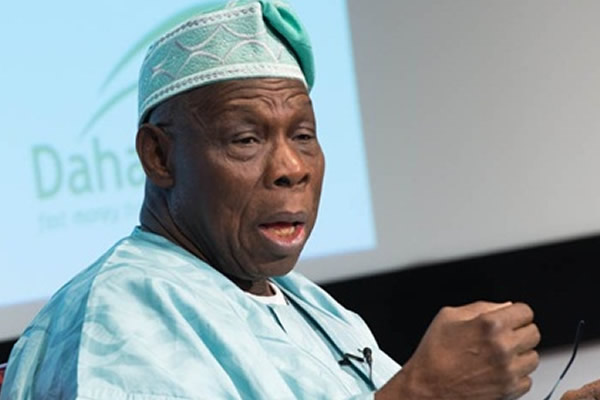
Olusegun Obasanjo, former President, has revealed that he worked for Shehu Shagari and late Umaru Musa Yar’Adua to succeed him as President in 1980 and 2007 respectively because he knew they could strengthen the unity, stability and democracy of the country.
In ‘The Need for Change’, a book authored by Okoi Obono-Obla and exclusively obatined by the ICIR, Obasanjo said “we incurred the displeasure of ethnic chauvinists for doing what was right for the country”.
“On two occasions, I have had the opportunity to work for my two successors to the government of Nigeria. On both occasions, I never took the easy and destabilizing route of ethnic, regional or religious considerations,” Obasanjo was quoted as saying.
“I worked for both President Shagari and President Yar’Adua to succeed me not just because they are Moslems, northerners or Hausa-Fulani, but because they could strengthen the unity, stability and democracy in Nigeria.
“We incurred the displeasure of chauvinists…that’s the nature of burden of leadership. A leader must lead no matter whose ox is gored.”
While warning those routing for the division of the country, Obasanjo said: “Let me appeal to those who have embarked on this dangerous road to reflect and desist from taking us on a perishable journey.
“With common identity as Nigerians, there is more that binds us than separate us.
“I am a Nigerian, born a Yoruba man, and I am proud of both identities as they are for me complimentary. Our duties, responsibilities and obligations to our country as citizens and, as leaders must go side by side with our rights and demands.
“There must be certain values and virtues that must go concomitantly with our dream. Thomas Paine said, ‘my country is the world’. For me, my country I hold dear.”
Ibadan, the capital of Oyo State in Nigeria, is a large metropolitan community with a rich historical heritage and considerable socioeconomic appreciation. It is the third largest city in Nigeria, with an estimated area of 3000 kilometres and a growing population of about 3 million. The city has a predominantly Yoruba population, with a generous mix of migrated residents. In an almost equal proportion, Muslims and Christians coexist peacefully.
In the heart of Ibadan lies Bodija, a highly commercial and high-brow residential district with an adjoining food and resource market. The Bodija market, which is widely regarded as one of the biggest markets in Oyo State, also houses a notable slum community and the controversial Bodija abattoir, also widely known as one of the most active and thriving abattoirs in Nigeria.
Much like in most parts of Nigeria, meat remains a delicacy, regardless of socioeconomic status, religion, and tribe. And especially for Ibadan indigenes and residents, the love for meat remains constant, as it forms a major part of their daily diet. Correspondingly, this city is especially acclaimed for its bukas and amala joints — local restaurants that serve indigenous foods such as amala, eba, and iyan in company with local soups and large portions of beef, goat meat and offal.
These bukas are particularly interesting because even though majority of them are sited in run-down shacks with highly questionable food hygiene and little or no health inspection, they are still largely patronised by all and sundry — irrespective of socioeconomic status. Ogunfe, eran, inu eran, fuku, edo, okan, isi-ewu, roundabout and others — all products of cattle and goat meat — are largely consumed by residents of Ibadan and are delicacies that visitors to Ibadan often look forward to. Furthermore, in most Ibadan households, meat is a constant presence in meals. In fact, it is seen either as a sign of disrespect or abject poverty for an Ibadan indigene or resident not to have meat in a plate of food when served.
A typical ‘buka’ in Ibadan. They are commonly found in the south-west, and there is little or no food and environmental inspection around thousands of them, such as this.
For the millions of meat consumers in Ibadan and its vicinity, hundreds of thousands of them get their meat source from the Bodija Abattoir community. The abattoir/market/slum community is in Bodija, one of Ibadan’s highly commercial and highbrow residential areas, situated two minutes’ drive away from the University of Ibadan and about five minutes’ from the Oyo State Government Secretariat. Note that the University of Ibadan is Nigeria’s premier university, while the government secretariat is the political seat of power in Oyo State and the official residence of most top government officials in the state. Therefore, for an abattoir community with proximity to such opportunities for infrastructural, health and environmental development, and where most people in that vicinity get their meat supply from, it is an astonishing paradox to discover that Bodija Abattoir is most likely the most dilapidated, unsanitary, and notorious abattoir in the country.
A FAILED SYSTEM
Upon entering the abattoir, one would be hit with the glaring evidence of a failed and broken-down system. The abattoir has been established since 1986 and the same housing and infrastructure are still in use till today without any attempt at renovation. Due to constant overuse by an over-crowded population of at least 500 abattoir workers daily, the infrastructure and housing remain in rundown and dilapidated, as expected.
BLOOD, FAECES, FILTH
Any visitor to the abattoir would be quick to notice the terrible state of environmental squalor and chaos in every direction. Now, as expected, the business of slaughtering animals and processing meat in the abattoir always generates huge amount of biological waste. This biological waste includes large amounts of blood, animal feces, ingesta (from the animal’s intestines), body fluids and inedible animal by-products. For the Bodija abattoir, instead of a proper and sanitary waste management system, this waste is scattered in huge piles and heavy splatters around and in the abattoir buildings, even right where the animals are being butchered and where the meat is being “cleaned”.
After the usual routine of slaughtering the animal and “cleaning” the meat, any attempt at washing off the waste and dirt usually means just directing the pile of waste into the run-off gutters in the abattoir building. Unfortunately, the gutters are constantly blocked due to poor maintenance, and with the large number of animals slaughtered daily, this pile of fecal and biological waste continues to fill up and block the gutters. In this case, it is not surprising and equally disgusting to see huge flies feasting and worms breeding in it. Even more shocking is seeing butchers and meat sellers “washing” their meat and offal (which will be for sale) in the water-logged areas of the gutters.
Blood, feaces, ingesta and filth in a disgusting splatter across the floor and in gutters, scooped by bare hands into buckets for disposal. Also, meat from the slaughtered animal is processed right here in this filthy waste without any protective gloves or clothing.
Also, at the times when some effort is made to drain the filth and clean the run-off gutters, the waste is just emptied in a makeshift dumpsite that is, unfortunately, located just in front of the main abattoir building. Over time, this accumulating pile of filth turns to a huge dump of fecal and biological waste from animals and even from humans who find it convenient to excrete and urinate on the same dumpsite. The smell that oozes therefrom and the public health implications on all meat consumers is enormous.
Dumpsite located just in front of the main slaughterhouse where all kinds of waste are dumped. Note that this waste dump was recently cleared and is therefore not at “full capacity”. Also, notice in the picture that some butchers are actually slaughtering and processing meat for public sale and consumption in this same waste dump.
NO MEAT INSPECTION IN MORE THAN TWO YEARS
Another confounding issue at Bodija Abattoir is the lack of meat inspection officers. Now, the core duties of meat inspection officers include the following:
To inspect every animal brought into the abattoir for slaughter,
To verify the animals as suitable for slaughter and processing into meat and,
To ensure that every meat and offal retrieved from the slaughtered animals is duly inspected and verified as suitable for sale for public consumption.
This means that in a functional working abattoir environment, any animal or meat that the meat inspection officer does not approve for slaughter or for sale is condemned and should be appropriately disposed of and destroyed. However, at the Bodija abattoir, there has been no functional meat inspection officer for more than two years. First, there are just about 10 employed meat inspection officers, a very few number assigned to cater to a population of over 500 butchers.
Secondly, there has always been a constant face-off between the meat inspection officers and the butchers because condemnation of a butcher’s meat means a loss of money (on the butcher’s part) without any government compensation. These confrontations sometimes get violent, with the inspector’s life in danger. Therefore, many inspectors might rather choose to be diplomatic and less forceful to protect both their lives and their jobs.
Furthermore, there is a big issue stemming from a purported relocation of the Bodija abattoir to another assigned location. According to informed sources, a new modernized abattoir was built in 2014 with location on the outskirts of Ibadan. It was built through a public-private partnership and was expected to host the abattoir workers and meat inspection officers after being compulsorily relocated.
However, till date, the Bodija abattoir workers have blatantly refused to relocate despite face-offs and attempts at forceful evacuation by the government with the police. Various reports from the abattoir workers indicate that they do not trust the government’s motives, as they believe the government intends to rip them off financially with exorbitant tariffs at the new location. More so, they feel left out and believe they should have been consulted in the plans for establishment of the new abattoir since they are also stakeholders.
Other contrary opinions state that the whole situation has been highly politicised to the detriment of the abattoir workers and the population of meat consumers. The meat inspection officers have since relocated their offices to the new abattoir but with no abattoir activity or operation to oversee. Therefore, this apparent gridlock between the abattoir workers and the government has resulted in the absence of meat inspection for more than two years now.
KILLING THE DEAD, SELLING INFECTED MEAT AND OTHER UNSCRUPULOUS BEHAVIOURS
There is the great issue of unscrupulous meat processing activities and unhealthy behaviour that are paramount among the abattoir workers. These activities include the following:
Slaughtering of animals that are dead or near dead or with apparent diseases or sickness for meat, to sell for public consumption;
This animal was rushed into the abattoir in a near-death, sick and highly emaciated state, and quickly slaughtered. The meat will be sold for public consumption. In an ideal situation, it is abominable to slaughter such an animal but there are no meat inspection officers to stop this. Even if a meat inspection officer was available, the butchers would probably start a fight.
Selling meat that has been infected with diseases such as tuberculosis, brucellosis, and intestinal worms. Some butchers even cut some parts of the raw infected meat and swallow it just to convince buyers that the meat is still edible;
Highly diseased offal (kidneys) from diseased and sick animals. As expected of the butchers, these offal would still be sold to the public for consumption as there is no meat inspection officer to stop them.
Washing of meat inside dirty, fecal or bloody water
This is the goat section of the abattoir. These women can be seen washing their slaughtered goat and meat (for ogunfe) with filthy water from the run-off gutters. This meat will be sold for public consumption. Also notice that they are standing and “washing from inside the gutters without boots, gloves or any form of protective clothing.
Human urination and defecation around and in the abattoir run-off gutters;
Hawking edible foodstuff and eating within the slaughter area.
Food sellers and hawkers located right in the filthy abattoir environment with flies buzzing around, and waste and worms on the abattoir floor. Abattoir workers eat the food right there without paying attention to handwashing and general hygiene
Indiscriminate dumping of refuse, fecal and biological waste as discussed earlier
Selling of dead foetus from slaughtered cows, ewes and sows
These are dead fetuses gotten from an ewe and cow respectively. These are commonly sold for suya – another popular Nigerian delicacy). In an ideal abattoir environment, it is illegal and unethical to slaughter pregnant cows, ewes and sow for meat, not to mention the sale of dead foetus.
In addition, the abattoir is located within a large slum community of about 5,000 people that lacks basic infrastructure and hosts an additional number of unscrupulous activities and developmental issues such as illiteracy, prostitution, drug abuse, fights and disputes, poor health, mental illness, extreme poverty, with the associated culture of begging. All these perpetuate a failed system with very poor meat hygiene and a calamitous public health situation.
OVERCROWDED AND INJURY-PRONE WORKING ENVIRONMENT
Another noteworthy issue is the lack of orderliness and decorum that makes the working abattoir environment very prone to injuries and accidents. The abattoir is usually bustling with an over-crowded population of workers going about their daily activities and swinging machetes, knives, and other sharp and dangerous instruments without any protective clothing. With the lack of organised and defined space to accommodate the high number of abattoir workers and their animals, any and every space can be utilised. The word ‘Ago’, which is a warning to “move out of the way”, is frequently heard.
Unheeding to that call quickly may lead to being shoved to the floor of filth, or a remarkable injury or a quick hit by some angry bull/cow being taken to slaughter. There are also reports that for an added macho show, some butchers sniff their cattle with Indian hemp (igbo) which charges the bulls/cows as they are driven into the abattoir area for slaughter. As expected, anyone who stands in the way of such a bull/cow is in a precarious position indeed. So, in this environment of chaos and danger where no one wears protective clothing, it is not surprising to find frequent incidents of remarkable injuries, slips, falls and with the scars to show for it. And though experience has taught most abattoir workers how to meander through swinging machetes and stabbing knives at angry bulls and cows taken to slaughter, working in the Bodija abattoir remains a dangerous and injury-prone working environment.
WATER SCARCITY
Another major issue at the abattoir is inadequate and inconsistent potable water supply. Naturally, an abattoir greatly needs a generous and constant supply of potable water because of the constant generation of high volumes of biological waste. But in this case, the Bodija abattoir is far from the ideal. There is no direct supply of water into the various buildings, and until recently, the abattoir workers fetched water from dug wells which were in highly unsanitary conditions – with shocking reports that for some reason, people defecated in the wells.
So, presently, the abattoir gets its water supply from an installed borehole that was eventually donated by the state government after much dialogue. However, there is no electricity in the abattoir, yet water can only be pumped using an electric generator. It is important to note that even with the advent of the borehole, the unsanitary environmental issues remain the same. Therefore, in frequent cases of a failing generator or technical issues with the pumping machine when water supply is very limited, the situation of poor sanitation, poor environmental hygiene and indiscriminate waste disposal is exacerbated.
QUESTIONS, ANSWERS AND SOLUTIONS? LET’S DISCUSS
These dreadful and shocking conditions in the Bodija abattoir where meat is produced elicits a variety of questions that beg for answers. Bodija Abattoir in Ibadan is just one of the many examples of the highly filthy and unhealthy states of the abattoirs and slaughterhouses around the country and in our individual environment. Therefore, this is even more of a precarious situation since most of us Nigerians consume meat as a major source of protein.
We need to ask ourselves — what have we really been eating in our meat all this time? What effect does this have on our health? Also, check around your vicinity, are conditions in your local abattoir the same as seen at Bodija Abattoir? What are the possible solutions to changing this abattoir situation? How do we protect ourselves from the possible diseases in our meat?
Join the discussion, tell your stories and feel free to engage us on this story on social media (Facebook, Twitter and Instagtram) using the hashtag – #AbattoirNigeria
Throughout last week, it didn’t feel good to be Nigerian. On Tuesday in particular, reading the international media was a painful experience.
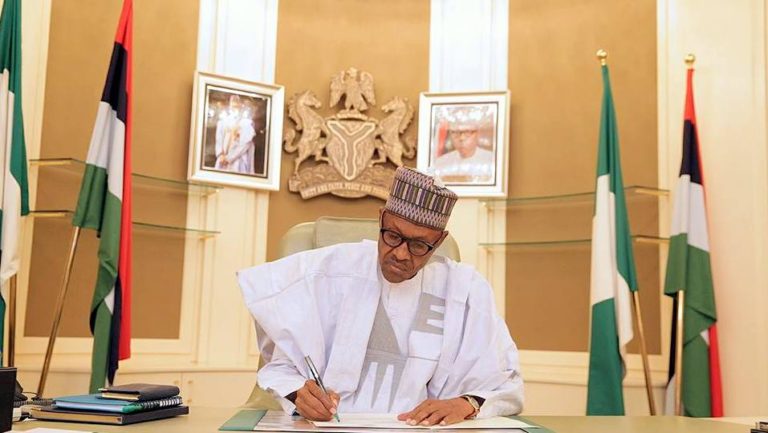
“Nigerian president to ‘work from home’ after rat infestation,” read the headline of a BBC report on Nigeria, with the lead going: Nigeria’s president will spend three months working from home after his office was damaged by rats.
“Rodents force Nigerian president to work from home,” Daily Mail wrote in its own version of the event. “Nigerian President Muhammadu Buhari will work from home after rodents damaged his official office during a more than 100-day overseas medical absence,” it reported, quoting a presidential spokesman as telling the AFP. “The animals damaged furniture and air conditioning fittings in the president’s official Abuja office while he was in London receiving treatment.”
Quoting the president’s spokesman like others, Xinhua, the official press agency of the People’s Republic of China, reported: “Nigerian president’s office damaged by rodents after long sick leave.”
The world must have summed Nigeria up as a huge joke: the people, the President, his spokesmen.
A BAREFACED LIE
Rodents are not free spirits who go where the wind takes them. They’re constantly in search of two things — food and shelter — and they settle wherever they find them. To have invaded Buhari’s office, there must have been holes in the walls or floors; everyone knows this is impossible. The other option is that there was leftover food, unwashed plates or unkempt waste bins in the President’s office; this, too, is outright impossible.
Were rats to have miraculously made their way to the President’s office, it would certainly have been in numbers not enough to wreak havoc. Even if furniture and air condition fittings were damaged by the rodents, a 103-day absence was enough to fix the damage. To tell Nigerians such unwholesome lie means this administration and its media machinery cannot be trusted one bit.
What this lie means is that something is desperately wrong somewhere. It means, matter-of-factly, that Buhari is still not strong enough to contain the everyday rigour of running the presidency. It means that when the President’s media team releases a photo of him meeting Vice President Osinbajo, we can imagine that the President retreated to his bedroom right after to catch some rest. It’s clear the President’s public appearances are being micromanaged — something that cannot be done in his office without drawing the notice of one or two notoriously nosy State House correspondents.
CULPRITS OF THE DAMAGE
There is clearly a damage to the President’s office — ‘office’ here being the honour and prestige that should normally be commanded by the President of the Federal Republic of Nigeria. But it can’t be blamed on rats. Instead, blame it on the President, a public official who continues to handle his health with privacy. Beyond the opening line, where he expressed gratitude “to God and to all Nigerians for their prayers”, Buhari addressed Nigerians on his return to the country without discussing his health, keeping in the dark millions of taxpayers on whose account he received treatment in London.
By obstinately adopting a policy of secrecy on his health, Buhari continues to inflict enormous damage on the President’s office. It is simple commitment to responsibility that a public official doesn’t leave the public guessing about any matter on which state funds are expended. It is this kind of responsibility deficit that has allowed Ayodele Fayose, Governor of Ekiti State, make wild claims on the President’s health, including once saying that he was on life support.
Elsewhere in mature democracies, public officials, even those of lower ranks, are living up to that responsibility. Just last month, John McCain, current Arizona senator (elected for his sixth term in 2016) and former US presidential nominee of the Republican Party, disclosed that he had been diagnosed with cancer (specifically glioblastoma). The disclosure by McCain’s media office fetched him support from all corners of America, with Barrack Obama, who ran against McCain in the 2008 election, emotively tweeting: John McCain is an American hero & one of the bravest fighters I’ve ever known. Cancer doesn’t know what it’s up against. Give it hell, John.
McCain returned to the senate days later to cast the decisive vote in the rejection of the proposal to repeal parts of the Affordable Care Act, the New York Times describing his speech on the day as “having the potential to go down as a Senate classic”. That’s an 80-year-old; at 73, who says Buhari can’t disclose his health status yet function effectively if the right conditions are in place?
Rather than blame the damage on the President’s office on rodents, blame it on his spokesmen, who have so far failed to display the courage to handle the President’s coverage differently from how “yesterday’s men” did. The average Nigerian President fails to succeed, in part, because he is surrounded by sycophants — yes-men who rarely disagree with him and hardly advise him to go the unpopular way even if it’s the right path.
Blame that sycophancy on our desperation to hang on to power regardless of the stakes. It’s something of a national culture; from the President to ministers and aides. Nigerian politicians never want to give up their jobs, even when their credibility is at stake; that is why Garba Shehu will confidently tell the media that rodents have infested the President’s office. He must keep his job; and to keep it he must defend the indefensible. But don’t blame him too much, knowing that even his principal would cling to power till 2019 at least, whether or not he is medically fit.
Blame it on the people — like the Buhari apologists in whose estimation the President can do no wrong; they are the people who embolden those in government to tell bewildering lies and act with impunity, knowing that they will always go scot-free.
Finally, blame it, one more time, on a President who cannot touch his own men regardless of the scale of embarrassment they cause the country. We’ve been there before. When Barack Obama’s 2008 victory speech was plagiarised in Buhari’s ‘Change Begins with Me’ speech in 2016, the President vowed to punish ‘those responsible”. Eleven months after, the presidency has not named — much less shame — the “deputy director” being touted to have “taken responsibility”.
The ridicule that has recently been brought to the office of the President is monumental. To parody the title of the legendary Ola Rotimi’s most famous book, the rats are not to blame. The occupant of the office and his aides are the chief culprits.
This is the second and final part of the investigation. Read the first part here.
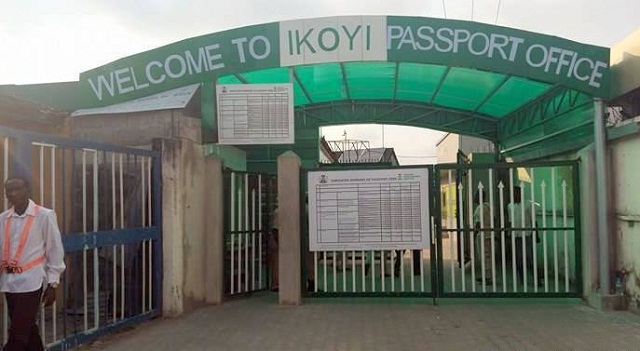
Welcome to Ikoyi, Nigeria’s oldest passport office
‘Hello sah,’ ‘passport sah,’ ‘I can help you to get it fast sah,’ pleading voices, obviously deceived by my appearance, beckon as I moved closer to the premises of the Ikoyi passport office.
In the next minute, I was with Ade, the one who appeared most suitable for my mission.
After the usual 32, 64 booklet explanation, ‘why one is scarce and the other is in abundance’, Ade offered to take me to his capturing office even before I explained my mission in details.
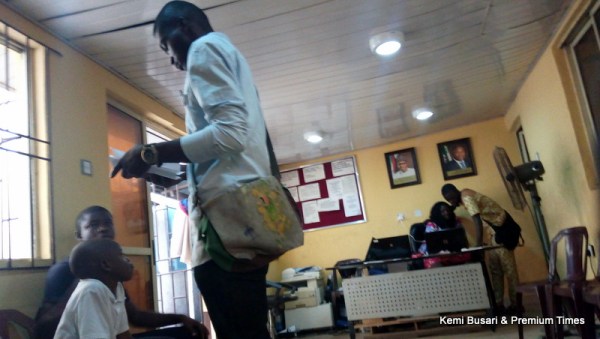
The process of passport acquisition at the Ikoyi office is divided into parts and each part is handled by immigration personnel or an affiliated tout.
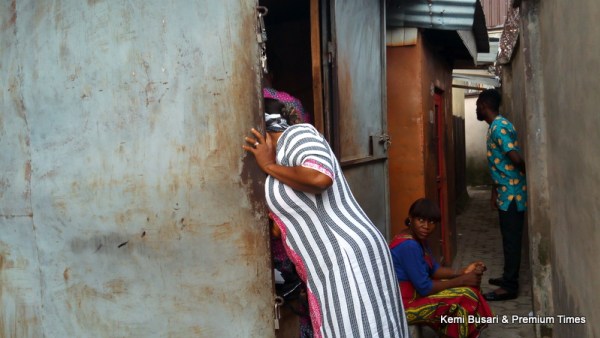
The first part, which is the actual registration, is done under the trees, inside abandoned vehicles, gate corners and a large shopping complex situated beside the passport office.
‘’This is where we do the registration. Let me bring the form for you so that we can talk,’’ Ade said while helping me to a seat in one of the shops in the complex.
Registration shops at the Alausa passport office
The form is almost like the one offered at the Alausa office, except for a few grammatical errors. And after feigning a careful look of it, I explained to Ade how he may ‘help’ me.
“I work in a big firm and in our last meeting, the management mandated us (workers) to get passports. In fact, they have started deducting it from our salaries. I told them I would handle it because I have a brother who does the runs but when I called him, he said the officer that helps him has been transferred. I want you to give me a cheaper price and explain how this money will be distributed so that you and I can do business.’’
My explanation worked like magic. Almost instantly, Ade’s countenance brightens, his eyes grow wider at the prospect of making brisk money.
Nobody would have doubted me anyway. While I explained to him, I presented an A-4 paper with a flourish on which I had listed 18 names of would-be-applicants; all fake names of course.
Now seeing me as a partner in the business, Ade would in the next 30 minutes take me further into the ring of money-making passport business at Ikoyi office.
“I will do the 32-page for N30, 000 and 64-page for N35, 000. The official payment is N18, 000 for 32-page while it is N23, 000 for 64-page but I advise you do the 64 so that all of you can get it the day you applied or the next. You will pay for it here and I will help you do all the running around from registration till you get your passport.’’
‘‘If the official payment is N23, 000, what do you use the remaining money, N12, 000 for?’’ I ask, adding that I needed to know to enable me convince my ‘superiors’ who would want to know why such the sum is being paid.
“The N23, 000 is the official price, government price. I will still have to give your file to someone who will runs it, after they run it, they will still take it to the production room, the capturing room and other stages. These stages will cost me N7, 000.
‘’The officer I will hand your file over to will collect the N7, 000 and pay N5, 000 to a junior officer at the production room who will distribute the money and handle other stages. That is how it works.
“Sometimes, the people at the production or capturing room also request for extra pay which I would have to remove from my own ‘workmanship’ (remaining N5, 000).’’
After this explanation, I informed Ade that I will give him the ‘contract’ of applying for the 18 of us, but on a final condition that I spoke with the officer he works with.
‘’I have a senior officer nah,’’ he smiled, obviously to douse my fear.
“Before I can do anything, I must pass through him. He is a two-star officer and his price doesn’t go below N7, 000. I can make you talk to him since you want to do more than one but that is when you are ready and I have the money with me.’’
With this, it was a done deal between me and Ade as he gave me his mobile number and I quickly save ‘Passport’ as his surname again.
AT IKOYI, YOUR MONEY BUYS YOU A GUARANTOR
After this discussion, Ade asked if I had my documents with me, so he could help with my application before others.
“Let me tell you all the documents you need so that you will bring everything next time,’’ he said after I replied in the negative.
“You will need a birth certificate, state of origin (certificate of origin), four passport photographs, and for your guarantor, your money has covered for that. We’ll provide you a guarantor so you don’t need to worry about that. Once you bring all these and pay, you will have your passport.’
“But where will you get a guarantor for me,” I probed.
“Just don’t worry about that,’ Ade replied, now sounding pissed off by my query.
Registration point used by touts as Ikoyi office
MAXIMUM SECURITY
Like Alausa, the Ikoyi passport office has no front desk for a new applicant to make inquiries. The office is always under heavy security with men of the Nigerian Army and combat-ready immigration officers on guard.
The officers are strategically placed such that it would be tedious, almost impossible for even a bird to pass through the main gate without their permission.
I decided my mission would not be complete until I had my way into the main premises and I was determined, so sure that I would be granted entrance. With this mind set, I headed for the main entrance.
I was wrong. No sooner had I stepped into the pathway than I was accosted by an immigration officer who demanded to know why I was there.
With what many would call a ‘tush’ accent and demeanour, I explained to him my intention of facilitating passport application for multiple persons.
I was lucky to have his audience, unlike other officers who usually hand over their ‘customers’ to touts after a short conversation, probably for fear of being caught in the act or to make way for other ‘customers.’
In the next few minutes, the immigration official (name withheld) would explain to me, like others, the basic knowledge required by applicants. He agreed to N30,000 for the 32-page passport and assured of the provision of a guarantor.
“You don’t need that,” he replied after I ask if I needed to first get my guarantor informed. “Just apply now, we’ll have it sorted,’’ he added.
I hesitated and told him I will make some calls for cash and come back shortly. He offered me the use of his phone number and asked me to ring him up whenever I’m ready.
“Save my number with (name) passport,’’ he said.
CORRUPTION, FRUSTRATION IN ONLINE REGISTRATION
Written on the home page of the NIS website, immigration.gov.ng, are instructions on how to make fresh applications for a passport.
Applicants are enjoined to follow three simple steps: complete passport application form online; make payment and obtain Application ID and Reference Number; print out Guarantor’s Form to be signed by a guarantor and commissioner of oath in a competent court of jurisdiction; and then submit completed passport application form with other requirements in person at passport office selected during online payment process for further processing.
Simple, you’d call it. But it doesn’t turn out to be so.
DIFFERENT STATES, DIFFERENT AMOUNTS
Even though the prices of passports are quoted on the website of NIS, as N17, 000 for 32-page booklets and N22, 000 for 64-page booklets, officers charge different prices in different states.
Investigations revealed that officers at the Ikoyi office charge between N28, 000 and N32, 000 for the 32-page booklets while the price of the 64-page booklets is fixed at N35, 000.
At the Alausa office, the booklets go for between N27, 000 and N30, 000 and N35, 000, respectively.
Further investigations into prices in other states show more disparities in the price regime of NIS.
The 32-page booklet goes for N25, 000 in Osun, N28, 000 in Oyo, N28, 000 in Ondo and N27, 000 in Ogun and Ekiti states.
The 64-page can be obtained for between N34, 000 and N42, 000 in these states.
NIS REACTION
Reacting to differences in fee and others allegations, the Public Relations Officer of NIS, James Sunday, said all the passport offices in the country operate “the same system.”
“As far as I know, all the passport offices throughout the Federation have the same rates and if anybody is doing something else, contrary to what we do at the headquarters, I cannot defend that,” he said.
“We don’t have discrepancies in passport fees. The Comptroller-General (CG) is magnanimous enough to have uploaded the fee on the service website and that is the correct fee. Since the introduction of e-passport, the prices have not been altered.
“The CG has vowed that no Nigerian should suffer in the hands of immigration officers and he won’t take it lightly with the officers who charged you (the reporter) high fee.
“The passport is the property of the Federal Republic of Nigeria so Nigerians are entitled to getting the best.’’
He further debunked claims that the 32-pages booklets were scarce at passport offices saying “It’s not true.”
According to him, the offices had adequate supplies of the 32-page booklet and “at no time should officers dictate for applicants which to choose.”
On specific allegations that the PCO of FESTAC office Lagos demanded extra money from online applicants to ‘run the office,’ Mr. Sunday was quick to defend the service.
He said, “That is the opinion of the officer. There is no office that is directed to request for money to run its services. The service headquarters send funds to maintain offices throughout the country.’’
On the Comptroller-General’s promise that official fees/categories of passports will henceforth be displayed at various passport offices to ensure transparency, he explained that the process “is in the pipeline.”
“It’s an executive order given to the service and there is a committee already set up to that effect, we call it SERVICOM. They are currently working on that,’’ Mr. Sunday said just as he assured Nigerians that once the committee swung to work, “the prices will be displayed.”
CORRECTING ANOMALIES
After the first part of this investigation was published, the Immigration Service made steps to correct some anomalies that allowed the passport scandal to continue, while promising official investigations to weed out corrupt elements within its ranks.
At the Alausa Passport Office, the Passport Control Officer, Abdullahi Dalhatu, has ordered the immediate closure of shops operated by touts within the premises.
When PREMIUM TIMES visited, the shops which initially housed touts who receive payments from applicants on behalf of NIS were under lock. The price board which displays different amounts for obtaining passports was also displayed at the entrance.
Similarly, authorities at the Ikoyi office have taken steps at checking corruption among immigration officers.
When a PREMIUM TIMES correspondent as conducted round the premises, new changes such as the display of permanent price board at the entrance, enhanced security and monitoring of officers’ activities through surveillance cameras had been put in place.
Also, the activities of touts around the premises had waned compared to when this reporter conducted the investigation.
Maimuna Aliyu, the rejected nominee to the board of the Independent Corrupt Practices and other related offences Commission (ICPC), has been charged to court for corruption.
A three-count charge of abuse of office, misappropriation of public funds and criminal breach of trust was slammed against her on August 15 by the ICPC.
On August 1, Aliyu, a former Executive Director of Aso Savings and Loans Plc, was announced as a nominee to the ICPC board, as part of 36 appointments made by Yemi Osinbajo, the then Acting President.
However, the ICIR exclusively reported that Aliyu — alongside Sa’ad Alanamu, another ICPC board appointee — were being investigated by the commission for alleged corruption in the region of N1billion.
While Alanamu was being investigated on corruption charges allegedly committed while he headed several institutions in Kwara State, Aliyu has had a longstanding case of abuse of office, misappropriation and diversion of public funds against her.
Charges were already being prepared against her by the ICPC in preparation to taking her to court when her name was announced as a member of the new board of the commission.
In addition to the ICPC, the Economic and Financial Crimes Commission (EFCC) and the Nigerian Police had investigated several corruption cases against Aliyu.
For example, in May, a police investigative report indicted her and recommended her for prosecution. The investigative report, dated May 31, 2017, and signed by Taiwo Oyewale, a Superintendent of Police, for the Deputy Commissioner of Police, IGP Monitoring Unit, said that Aliyu illegally converted to personal use a total of N58 million being proceeds of three plots of land belonging to her employers, Aso Savings and Loans.
The ICIR then confirmed that Aliyu made the new ICPC board in the first place because FG made the appointments without running security checks on the nominees.
Osinbajo subsequently “stepped down” the nomination of Aliyu and Sa’ad Alanamu; on Thursday, the ICPC charged her to court.
Defending herself, Aliyu claimed that allegations of corruption against her were false and that they were being orchestrated by corrupt persons she exposed while serving as a director at the Aso Savings and Loans.
The charges against her, according to court documents, read:
“That you Mimuna Aliyu (f); on the 7th of December, 2012 or thereabout in Abuja, being the Executive Director [Retail] of Aso Savings and Loans Plc, Abuja at the time, used your said position to confer corrupt advantage upon yourself when you received the sum of about $360,000 (Three Hundred & Sixty Thousand Dollars) the equivalent of N57,000,000.00 (Fifty – Seven Million Naira) at the time being the amount for the sale of Plots Nos 2432; 2433; and 2434 all in Cadastral Zone B08, Jahi District, Abuja, property of Aso Savings and Loans Plc; from one Banagana Bashir on behalf of Vincent Mshelia and you failed to remit the said amount to Aso Savings and Loans Plc as required; and you thereby committed an offence contrary to and punishable under section 19 of the Corrupt Practices and Other Related Offences Act 2000.
“That you Maimuna Aliyu (f); a former Executive Director [Retail] of Aso Savings and Loans Plc, Abuja; on the 10th of January, 2017 or thereabout in Abuja, made false statements to the operative of the Independent Corrupt Practices and Other Related Offences Commission (ICPC), in the course of their official duties that Plots Nos 2432; 2433; and 2434 all in Cadastral Zone B08, Jahi District, Abuja, properties of ASo Savings & Loans PLc were sold to Banagana Bashir acting as agent for Vincent Mshelia of Subwang Global Integrated Limited, and that you handed over the sum of about $360,000 (Three Hundred & Sixty Thousand Dollars) the equivalent of N57,000,000.00 (Fifty – Seven Million Naira) being the amount for the sale of the said plots at the time, to one Bilkisu Rimi ( Company Secretary, Aso Savings & Loans Pls), statements you know to be false; and you thereby committed an offence contrary to and punishable under section 25 (1) (a) & (b) of the Corrupt Practices And Other Related Offences Act 2000.
“That you Maimuna Aliyu (f); between the 7th of December, 2012 or thereabout in Abuja, being the Executive Director [Retail] of Aso Savings and Loans Plc, Abuja at the time, entrusted with the original copies of the offer in respect of Plots Nos 2432; 2433; and 2434 all in Cadastral Zone B08, Jahi District, Abuja, for purposes of selling same on behalf of Aso Savings and Loans Plc, did commit criminal breach of trust when you disposed of the said plots of land to Banagana Bashir acting as agent for Vincent Mshelia of Subwang Global Integrated limited and you dishonestly misappropriated the total sum of about $360,000 (Three Hundred & Sixty Thousand Dollars) the equivalent of N57,000,000.00 (Fifty – Seven Million Naira) at the time as you thereby committed an offence contrary to section 311 and punishable under section 312 of the Penal Code Act, Cap 532, Laws of Northern Nigeria 1990.”
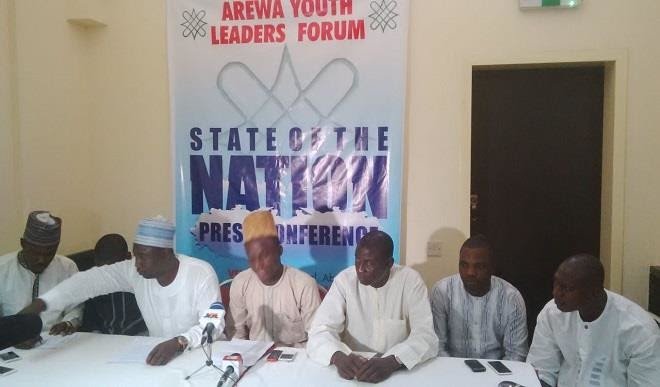
The Arewa Youth Consultative Forum (AYCF) has withdrawn the quit notice it issued to the south-easterners based in the north.
On June 5, northern youths organisations — Arewa Citizens Action for Change, Arewa Youth Consultative Forum, Arewa Youth Development Foundation, Arewa Students Forum and Northern Emancipation Network on the Igbo Persistence for Recession — had given Igbo residing in the region up till October 1, 2017, to leave.
They had cited the agitation by members of the Indigenous People of Biafra (IPOB) for the country’s division as the reason for their action.
The ultimatum was lifted on Thursday in Abuja after a meeting that was brokered by Kashim Shettima, Governor of Borno State.
Also in attendance at the meeting were elders from both the south-eastern and northern regions of the country.
The Nigerian Air Force (NAF) has lost a pilot in a plane crash that occurred in Kaduna on Thursday.
Olatokunbo Adesanya, spokesman of NAF, made this known in a short statement, saying that the cause of the crash was not yet clear
“A Nigerian Air Force (NAF) Air Beetle Aircraft today crashed in Kaduna while on a mission,” the statement read.
“The only soul on board the aircraft, one of the NAF’s experienced instructor pilots, was unfortunately lost during the mishap.
“The cause of the incident is unknown but the Chief of the Air Staff (CAS) has immediately directed the constitution of a board of inquiry to determine the immediate and remote causes of the crash.
“The unfortunate incident is a tragic reminder of the hazards associated with the flying profession. The CAS and the entire NAF family commiserate with the relatives of the late instructor pilot.”
Presenting a keynote address at the ongoing National Health Dialogue in Abuja, Shuaib likened the situation to having 10 plane crashes in the country every day.
The dialogue aims to bring major stakeholders in the health sector to brainstorm on ways of improving the quality of healthcare delivery.
According to Shuaib, the objective of the Universal Health Coverage (UHC), as mapped out by the World Health Assembly in 2005, is also in line with the Number 3 article of the Sustainable Development Goals (SDGs), which is to promote healthy well-being for all people of all ages.
In trying to achieve this, governments must ensure easy access to quality healthcare at a very affordable cost.
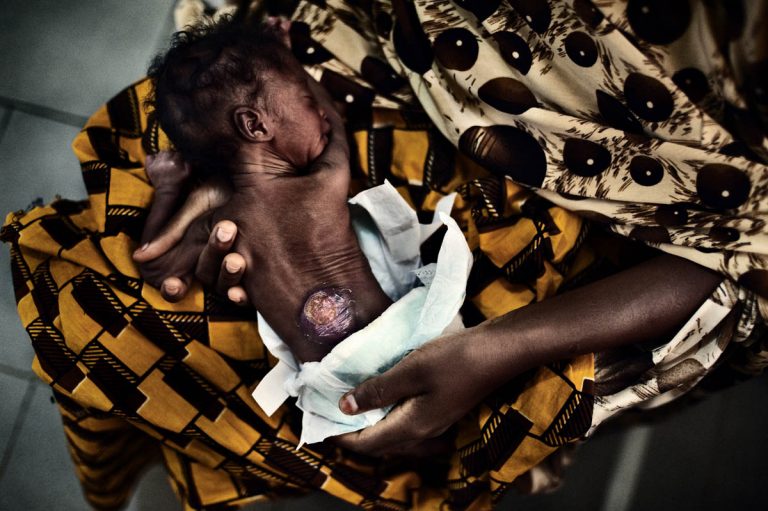
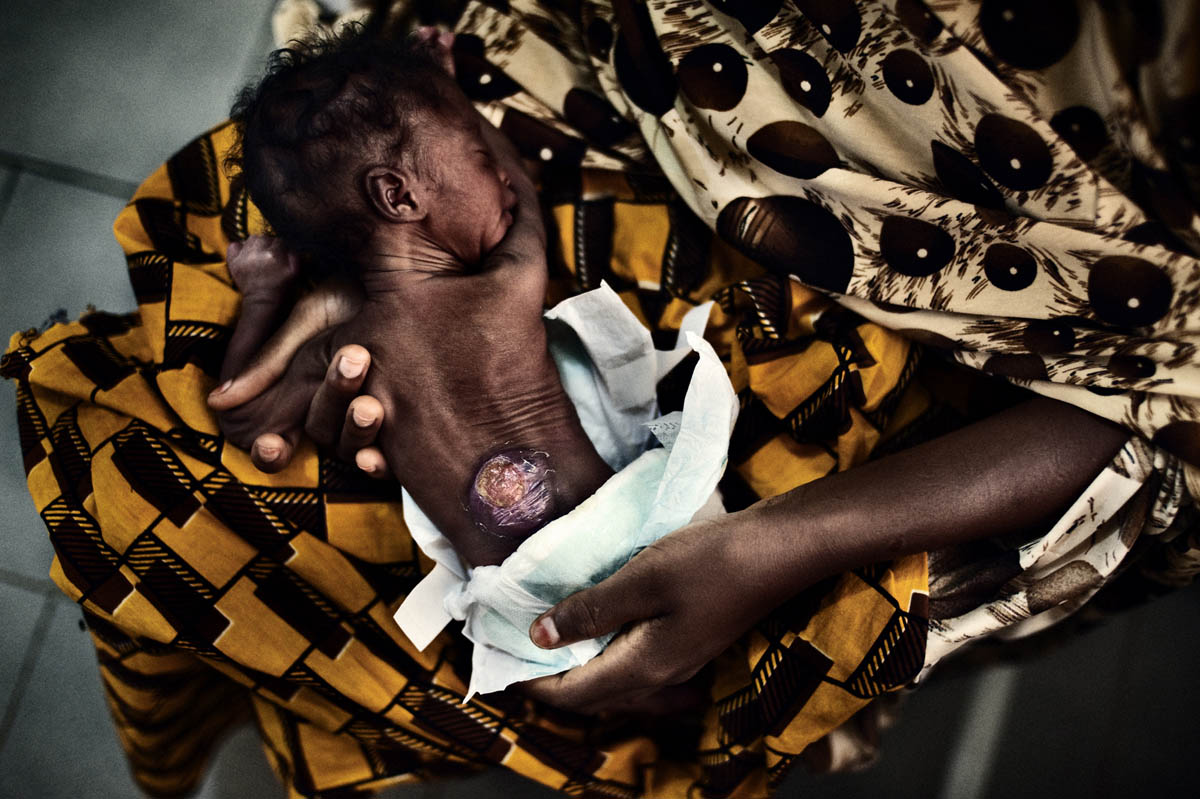
“But the current reality in Nigeria is the fact that every single day, 30,000 women and children die from preventable causes,” he said.
“That is not Universal Health Coverage; that is the reality that we live in, which is that our women are dying. It’s almost like having 10 plane crashes every day.
“I’ve been on the job for seven months and I’ve been saying this from Day 1, 10 plane crashes every single day but it never makes headlines. But this is the reality that we live in. The indices for maternal mortality, child mortality, infant mortality are there.”
Shuaib said this is the case because we of challenges on both the supply and the demand side.
“On the supply side we have issues with the quality of healthcare that we provide. We have problems and challenges with access, equity.
“But on the demand side s well, even where these health facilities exist, community members do not access them for one reason or the other.”
Shuaib said his agency was working in conjunction with state governments towards a project titled ‘Primary healthcare under one roof’.
He said the project is aimed at doing away with the “fragmented and multiple management structures, which result in poor provision of services”.
Shuaib further said the ministry of health had directed that one PHC be upgraded, first in each of the six geo-political zones of the country, then in each local government, and then in each political ward.
“We are working with our development partners and the private sector to identify 20 women in each ward, who will be trained over the course of three months to provide simple first-line interventions,” he said.
“We identified that women and children die every day in our communities and why they die; in a lot of instances, it is because of delay in deciding to seek healthcare, delay in reaching care and delay in receiving adequate care.
“So what the health promoters will be doing is to reduce the number of deaths in women and children. Once these women are identified and trained and rolled out in the communities, they go to the different households on a daily basis and knock on different doors and check for anyone that my be ill so that they can provide care before the patient gets worse.”
The Court of Appeal in Abuja has sacked George Thompson Sekibo, the senator representing Rivers East Senatorial Zone under the platform of Peoples Democratic Party (PDP).
The appellate court dismissed an appeal filed by Sekibo challenging the judgment of the Rivers State National Election Tribunal which removed him as the senator representing Rivers East.
The three-man panel headed by Justice Adamu Jauro also declared Andrew Uchendu of the All Progressives Congress (APC) as the winner of the December 2016 legislative election.
The court ordered the Independent National Electoral Commission (INEC) to immediately issue Uchendu a certificate of return.
As young children who grew up in one of Nigeria’s most atmospherically unpredictable neighborhoods, Lagos Island, we were exposed to life’s intricacies perhaps earlier than we should have. School was the virtual classroom and the streets were the real classrooms where you learnt what others paid handsomely for.
As young kids, we were also taught basic principles – fame, fortune and most often, power. If you’re conversant with the 80s, 90s and early 2000s Lagos Island, you must have heard stories of former street kids who rose to notoriety, commanded (and are still commanding) unbelievable sums of money with clandestine government backing for full measure. In the same vein, you must have heard of how these notorious kingpins recruit a teeming population of supporters and engineer their allowances through backdoor funding.
Rumour mongers would even have you believe their sponsors were government agents while others would mention the names of benefactors you’d never heard of in your entire life. While this situation lingers, one thing is certain, the mob bosses receive lump sponsorships from unspecified quarters. But we’ll come back to that.
As kids, we also played games – board, street, virtual and electronic – depending on the catalysts of the circumstantial euphoria. PS One, Nintendo and Sega Mega were fan favorites given the visual appeal they brought to those of us who had never imagined such animated digital paradise. And for those who either as a result of insufficient funds or individual preference, resorted to board games, we sunk our attention deeply into the convivial engagement as a cure for primal boredom.
Some played Dominos, Ludo, Snakes & Ladder and others simply preferred Whot. If you played the olden days Whot, you’d realize the kind of power the number 20 yields, though I can’t tell for sure whether it’s still of any value in the game today. Besides, I don’t want to bore you with the details of how the numbers 14, 2 and 5 earned you unwanted (and sometimes beneficial) one, two and three extra cards respectively with which you either disarmed or strengthened your opponent. Or how the numbers 1 and 8 heralded untimely suspension much to your detriment or advantage. I’ll instead reiterate the role of number 20, colloquially termed “whot”.
With that card, you could literally “command” your opponent and force them to tender a shape you wanted. And if they ever failed to present it, the game rules stipulated that they be sent to a “general market” where an extra card would be added to their deck while you dealt them a ghastly or wimpy blow, depending on how grounded your strategy was. What’s more, there were four or five number 20 cards in a deck. However, it’s one thing to possess the number 20 card, it’s another thing to have the sense to utilize it and that’s precisely where I’m going.
When Nnamdi Kanu first came into limelight, all we saw in him was an angry man blinded by the biased records of Nigerian history. And what incensed us further was his dual-citizenship which many thought was a rosy bed from which he could occasionally mumble his expletives. His vitriols eventually caught our attention and those who sought his deportation were constantly met with the disappointing reminder about how a UK citizen could not be deported from the UK. Unlike a country whose leaders exalted an hierarchal mode of operation amongst the numerous tribes, the Brits constantly dismissed public outrage from Nigerians who sought punishment for Kanu on U.K. soil.
Following repeated taunts asking him to “stop making mouth from abroad”, Kanu eventually brought the fight to us and made enemies in those (especially his kinsmen) who adjudged him for being no match for Buhari. He then began to grant several radical radio interviews until he successfully cursed his way into federal prison. Unless you believe dogs are synonymous with monkeys, then you can’t possibly believe Kanu didn’t know he’d end up in prison. With a despotic government that had no respect for human rights, disgust for Kanu’s personality soon became an indescribable interest, and later, support and admiration from a teeming number of young and old people who still feel agonizingly blighted by the travails of the civil war.
As of today, several video/audio recordings and online/traditional publications involving Nnamdi Kanu have been released on different platforms, arguably more than has been aired about Buhari since the latter became president. The Kanu we once knew for barbaric vituperations has now become a conduit of magnetic charm. Kanu used to be a deafening talker but has somewhat become a ferocious listener. While a flash of Buhari’s gap tooth once sent millions of Nigerians into unplanned orgasm, tens of thousands now roar whenever Nnamdi Kanu throws a fist in the air as an expression of solidarity. In our lifetime, we are watching a reenactment of King Saul and David. The more Buhari messes up, the better for Kanu.
Furthermore, if the “most recent” video you’ve watched featured Kanu’s expletives, then I dare say you watched a very old video. In fact, as things are, dozens of local and international journalists jostle for Kanu’s audience, except for those in support of Nigeria’s inept government. Kanu has arguably become more politically relevant than most politicians of today and if you doubt the cogency of this assertion, ask yourself whom you’d prefer between Kanu and any of Nigeria’s current serving senators, like Dino Melaye for example. Poetically, Kanu has morphed from a paper tiger to a societal behemoth. While others prefer to rant from the comfort of newspaper stands, offices and homes, Kanu has taken up the gauntlet with his seemingly proactive moves. Unfortunately, the most outspoken anti-Kanu proponents of Igbo extraction have become the society’s laughing stock. So, what more you, a closet noisemaker?
Don’t you for a second think the newly-militarized BSS (Biafra Secret Service) will go about wielding guns or fomenting havoc. Read more about the modes of strategic recruitment employed by powerful figures in history and see if you can sync it with Kanu’s. By the way, it’s no longer news that the BSS agents are being incentivized – above the national minimum wage. So, next time you make to ask why Kanu appears to be gaining grounds at an alarming rate, also ask to know what options Nigeria has made available for the BSS recruits. The details of who sponsors them is talk for another day.
For now, we need to start paying close attention to Kanu, for those who so far haven’t. There’s no sugar-coating the impending casualty that will be incurred if this despotic government decide to “recapture” Kanu from his base in the East for flouting bail conditions, so one reckons it mightn’t happen anytime soon – if ever at all. Now, the major litmus test for Kanu will be the guber elections in Anambra. I wager that whomever Kanu supports will not just win but by a mind-blowing landslide. Maybe then will we all begin to take that man seriously.
Just as the “whot” could make or mar the handler, so can the power being handed to Kanu catapult him to the hero or villain status.
For now, Kanu currently possesses one of Nigeria’s “whot”.