Home Blog Page 2722

It kills 5,000 every year… 10 things to know about Lassa Fever, Ebola’s ‘cousin’

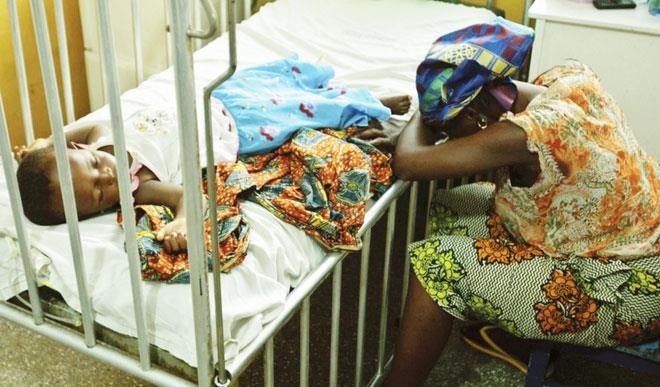
Lassa-fever-patient

An outbreak of Lassa fever has been reported in Lagos, with two deaths already recorded, including that of a 32-year-old pregnant woman

More than 100 people have been placed under surveillance, too.

To keep safe from this disease that has no established cure, here are a few things you need to know.

EBOLA AND LASSA FEVER BELONG TO ONE FAMILY

Lassa fever is as dangerous as Ebola and they both belong to a disease family called Viral Hemorrhagic Fevers (VHFs). VHFs in Nigeria include Lassa fever, Ebola, Dengue fever and Yellow fever.

The common feature of these diseases is that they are transmitted to human beings through animals or insects. Humans are not the natural reservoir of the viruses that cause diseases but are infected when they come into contact with infected animals or insects.  If a person is infected, the person can easily transmit the virus to another person.

The outbreak of VHFs is sporadic and irregular. According to Nigeria Centre for Disease Control (NCDC), there is no cure or established drug treatment for these diseases.

LASSA FEVER IS CAUSED BY RATS

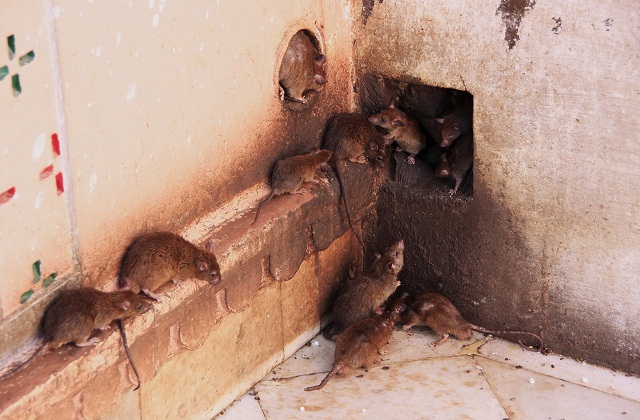
Lassa fever is known as a zoonotic disease because it is transmitted to humans by animals. Arenavirus, which causes the disease, is mostly carried by rats. According to WHO, the animal reservoir, or host, of Lassa virus is a rodent of the genus Mastomys, commonly known as the ‘multimammate rat’.

Mastomys rats infected with Lassa virus do not become ill, but they can shed the virus in their urine and faeces. Therefore, this disease is transmitted to humans via contact with food or household items contaminated with rodent urine or faeces.

FIRST DISCOVERED IN NIGERIA

The death of two missionary nurses led to the discovery of Lassa fever in 1969 in a town called Lassa in Borno State. It was named after the place where the first case was discovered. The disease has come to represent West Africa disease because it occurs mostly in this part of the world. Lassa fever is known to be endemic in Benin, Ghana, Guinea, Liberia, Mali, Sierra Leone, and Nigeria, but probably exists in other West African countries as well.

KILLS 5,000 PEOPLE ANNUALLY

Lassa fever affects many people annually and kills many infected people. According to NCDC, it is responsible for an estimated 300,000 to 500,000 infections annually, with 5,000 deaths.

WHO says Lassa fever occurs in all age groups and both sexes. Persons at greatest risk are those living in rural areas where infected rats are usually found, especially in communities with poor sanitation or crowded living conditions. Health workers are at risk if caring for Lassa fever patients in the absence of proper barrier nursing and infection prevention and control practices.

Death usually occurs within 14 days of onset in fatal cases. The disease is especially severe late in pregnancy, with maternal death and/or fetal loss occurring in more than 80% of cases during the third trimester.

21-DAY ULTIMATUM

Lassa fever is an acute viral haemorrhagic illness that has an incubation period of six to 21 days. WHO says the onset of the disease, when it is symptomatic, is usually gradual, starting with fever, general weakness, and malaise. After a few days, headache, sore throat, muscle pain, chest pain, nausea, vomiting, diarrhoea, cough, and abdominal pain may follow. In severe cases, facial swelling, fluid in the lung cavity, bleeding from the mouth, nose, vagina or gastrointestinal tract and low blood pressure may develop. It also manifests in protein’s presence in the urine. In the later stages of the disease, it can cause shock, seizures, tremor, disorientation, and coma.

CARRIERS ARE USUALLY IGNORANT

One may become infected with Lassa fever without knowing, as no symptoms occur. About 80% of people who become infected with Lassa virus have no symptoms. It is only one in five infections that result in severe disease that affects the liver, spleen, and kidneys of the infected patients. In severe cases, there is facial swelling, fluid in the lung cavity, bleeding from the mouth, nose, vagina, gastrointestinal tract and low blood pressure.

SURVIVORS MAY GO DEAF

Although the overall case-fatality rate of Lassa fever is 1% and observed case-fatality rate among patients hospitaliSed with severe cases is 15% but those who survive the disease often face other challenges. WHO notes that deafness occurs in 25% of patients who survive the Lassa fever but in half of these cases, hearing returns partially after one to three months. Lassa fever is also responsible for transient hair loss and gait disturbance during recovery.

HARD TO DETECT

It is often hard to tell if someone is suffering from Lassa fever because the symptoms can easily be mistaken for malaria or other fevers.  According to WHO, because the symptoms of Lassa fever are so varied and nonspecific, clinical diagnosis is often difficult, especially early in the course of the disease.

Lassa fever is difficult to distinguish from other viral haemorrhagic fevers such as Ebola virus disease as well as other diseases that cause fever, including malaria, shigellosis, typhoid fever and yellow fever. Definitive diagnosis of Lassa fever requires testing that is available only in reference laboratories.

NO VACCINE AGAINST IT

There is currently no vaccine that protects against Lassa fever. WHO notes that the antiviral drug ribavirin seems to be an effective treatment for Lassa fever if given early on in the course of clinical illness. However, WHO points out that there is no evidence to support the role of ribavirin as a post-exposure prophylactic treatment for Lassa fever.

PERSONAL HYGIENE THE MAIN DEFENCE

Personal hygiene and environmental cleanliness are the keys to preventing Lassa fever. The disease is transmitted by rats and as a matter of necessity; effort should be intensified to discourage rodents from entering homes.

Effective measures include storing grain and other foodstuffs in rodent-proof containers, disposing of garbage far from the home, maintaining clean households and keeping cats. it is not possible to completely eliminate them from the environment. Finally, family members should always be careful to avoid contact with blood and body fluids while caring for sick persons.

AT A GLANCE: Breakdown of all the cash, properties EFCC traced to Diezani

Diezani Allison-Madueke and her loot

A rare opinion by two staff of the public affairs directorate of the Economic and Financial Crimes Commission (EFCC) on Tuesday revealed that the commission traced a total of N47.2bn and $487.5m in cash and properties to Diezani Allison-Madueke, former Minister of Petroleum Resources.

The above does not include “boxes of gold, silver and diamond jewellery, worth several million pounds”, which the EFCC said it found in one of Allison-Madueke’s palatial residences in Abuja.

This is by far the largest amount ever recovered from a single individual in the country’s history.

Below is a table of everything traced by the commission to Allison-Madueke so far:

ITEM VALUE (IN USD) VALUE (IN NAIRA) YEAR ACQUIRED
15-storeyed mansion in Banana Island, Lagos $37.5 million 2011 – 2012
Rent on Banana Island Property $2, 74 million
Rent on Banana Island Property N84, 537,840.70
Two apartments at Bella Vista Court, Lagos  $350 Million November 2011
Block of six units serviced apartments in Ikoyi, Lagos N800 Million January 2012
21 mixed housing at Thurnburn and Raymond Street, Yaba, Lagos N1 billion May 2012
Twin four-bedroom duplex, Lekki, Lagos N200 million
Land expanse of Land at Victoria Island, Lagos N135 million February 2012
Penthouse on the 11th Floor of a building  in Ikoyi, Lagos N12 million December 2011
Duplex with Guest chalet, boys quarters, swimming pool, gym house, etc in Asokoro District, Abuja N400 million December 2009
Mini Estate at Mabushi area of Abuja N650 million April 2012
6-bedroom en-suite apartment at Aso drive, Abuja N80 million July 2011
Heritage Court Estate GRA, Diobu, Port Harcourt, Rivers State N900 million May 2012
Two blocks of flats at Yenagoa, Bayelsa State Real worth not known but estimated to cost hundreds of millions
Money allegedly laundered for Diezani by various banks N9 billion Permanently forfeited to FG on January 2017
Another sum traced to Diezani N34 billion Permanently forfeited to FG on February 2017
Money used to bribe INEC staff for 2015 general election $100 million  


REVEALED: The three states where the people are most unhappy with the police

0

Police

Lagos State, Federal Capital Territory (FCT), Abuja and Rivers State top the list of states with highest cases of public complaints against the police, a report by the police has revealed.

Released by the Police Public Complaint Rapid Unit (PCRRU) and tagged ‘2017 First Quarter Report’, the document shows that  Lagos State Police Command tops the state ranking with 90 complaints, which is 18.07 percent of total  complaints reported, followed  by  FCT  Abuja  with  69  complaints (13.86 percent) and Rivers  State with 59 (11.85 percent).

A total of 498 complaints were received and treated, representing a 52.8 percent decrease compared to the 822 complaints received for the last quarter of 2016.

In the last report, Lagos state with 153 complaints, topped the list of states with highest number of public complaints against the police. The Federal Capital Territory, (FCT), Rivers, Enugu and Anambra states followed Lagos on the list with 130, 116, 41 and 40 complaints respectively.

However, in the current report, Ekiti and Kwara States had no complaint against the police, while Kebbi recorded its first complaint of police misconduct since the inception of the unit in 2015.

The breakdown of the report shows that Lagos State has 22 cases of excessive use of force by the police, 28 cases of demanding money for bail and 38 cases for professional misconduct.

Abuja, on the other hand, recorded 18 cases of excessive use of force, 10 cases of demanding money for bail and 38 cases of professional misconduct, while Rivers had 10 cases of excessive use of force by the police, 33 cases of demanding money for bail and 16 cases of professional misconduct.

Police: Charly Boy’s protest group infiltrated by ‘hoodlums and criminals’

#OurMumuDonDo movement were unruly, violent - Police explains why it teargassed protesters

The Nigeria Police Force says it dispersed members of the #OurMumuDonDo movement protesting in Abuja on Tuesday because they were “exhibiting unruly behaviours capable of breaking down law and order”, having been “infiltrated by miscreants, hoodlums and criminal elements”.

The protesters, led by Charles Oputa, a popular entertainer better known as Charly boy, were calling for the resignation of President Muhammadu Buhari who has been out of the country on medical vacation for more than three months.

As early as 7 am on Tuesday, the protesters were teargassed by the police and attacked with water cannons. Charly boy was manhandled by the police and witnesses said he collapsed and had to be rushed out of the protest scene.

Charlie Boy
Charly Boy collapsed as a result of the tear gas by the police

However, in a statement, Anjuguri Manzah, the Police Public Relations Officer for the Federal Capital Territory, said the protesters were dispersed because they became violent and were harassing innocent passers-by.

Manzah recalled that the police provided the group with adequate security on the first day of their protest in order to “protect their rights to freedom of expression, rights to peaceful Assembly and Association, and right to freedom of movement as provided for in Sections 39, 40, and 41 of the 1999 constitution as amended”.

“However, today 8th August, 2017 the same group assembled at the same venue but allowed miscreants, hoodlums and other unruly individuals to infiltrate the protests, who started blocking the major roads adjoining the Unity fountain, obstructing traffic and preventing movements of other innocent citizens from going to their means of livelihood, and thereby exhibiting unruly behaviours and other violent acts very likely to cause the breakdown of law and order and disturbance of public peace,” the statement read.

“The Police personnel intervened at the point that the concerned Nigerians Group lost control of the crowd and prevented miscreants, hoodlums and other criminal elements from hijacking the protest to cause mayhem and chaos.”

Manzah further stated that though the police recognises and respects the constitutional rights of citizens assemble and express themselves, it “will not allow any protest under any guise to turn violent and jeopardise the prevailing peace, law and order currently being enjoyed in the FCT”.

He warned parents and guardians, as well as religious and political leaders, “to prevail on their children and wards, followers and adherents not to allow themselves to be used by any group to cause disturbance of public peace and break down of law and order”.

100 under watch in Lagos as Lassa Fever kills 32-year-old pregnant woman

Two dead, doctor infected,100 others under watch as Lassa Fever hits Lagos

Two patients have died as a result of Lassa Fever at the Lagos University Teaching Hospital (LUTH) in the past one week.

A resident doctor in the hospital is currently infected with the disease, while 100 hospital workers who were exposed to the affected patients have been placed under watch.

This was contained in a statement signed by.Chris Bode, Chief Medical Director of LUTH.

Bode said each of the deceased patients were brought to the hospital “very late and died in spite of efforts to salvage them”.

“The first was a 32-year-old pregnant lady with bleeding disorder who died after a stillbirth. Post-mortem examination had been conducted before her Lassa Fever status was eventually suspected and confirmed,” Bode said.

“No less than 100 different hospital workers exposed to this index case are currently being monitored. A resident doctor from the Department of Anatomic and Molecular Pathology who took part in the autopsy was later confirmed with the disease and is currently on admission and responding well to treatment at the Isolation Ward of LUTH.”

Bode visited the isolation centre on Monday in company of his top management staff, and spoke with the doctor and staff to boost morale and assure them of the hospital’s full support.

He enjoined all LUTH workers to maintain a heightened level of alert in the wake of this new outbreak, and observe universal precautions in handling all suspected cases of this viral hemorrhagic fever.

The outbreak of Lasser Fever in Lagos State is following reports of an outbreak of diarrhea, which killed some students of the Queen’s College, Lagos.

LUTH worked closely with officials of the Lagos State Ministry of Health to contain the outbreak at the time

“Both the Lagos State Ministry of Health and the Federal Ministry of Health have responded swiftly to contain this present Lassa fever outbreak by mobilising human and material resources to trace the sources and extent of the disease, follow up on potential contacts, identify early and test suspected cases,” he added.

“There are adequate materials for containment of the disease while drugs have been made available to treat anyone confirmed with the disease.

“The Centre for Disease Control (CDC) in Nigeria has also been contacted. Two other suspected cases from Lagos state are also presently admitted and quarantined while undergoing confirmatory laboratory tests.”

Lassa fever is an acute febrile illness, caused by the Lassa fever virus mostly transmitted by rats. The disease, which has an incubation period of six to 21 days, was first identified in Nigeria in 1969.

The virus is shed in the urine and droppings of the rats hence can be transmitted through direct contact, touching objects or eating food contaminated with these materials or through cuts or sores.

Transmission also occurs in health facilities where infection prevention and control practices are not observed. Person to person transmission also occurs most especially when a person comes in contact with the virus in the blood, tissue, secretions or excrements of an infected individual.

Symptoms of the disease include fever, general weakness, muscle and joint pains, prostration and malaise and after some days, headache, sore throat, muscle pain, chest pain, nausea, vomiting, diarrhoea, cough, and abdominal pain may follow.

In severe cases facial swelling, fluid in the lung cavity, bleeding from the mouth, nose, vagina or gastrointestinal tract and low blood pressure may develop.

Prevention of Lassa fever mainly involves good community and personal hygiene to discourage rodents from entering homes. Other effective measures include storing grain and other foodstuffs in rodent-proof containers, disposing of garbage far from the home, maintaining clean households.

In case of any suspected case of Lassa fever, the response team in LUTH can be notified on 08058019466, 08058744780, 07035521015 and 08023299445.

DIEZANI ALISON-MADUEKE: What an appetite!

0
Diezani Alison-Madueke

By Tony Orilade and Aishah Gambari

N47.2 Billion and $487.5 Million in cash and properties have so far been traced to the former Minister of Petroleum Resources in the Ex-President Goodluck Jonathan’s administration, Mrs. Diezani Alison-Madueke. This followed painstaking investigations by operatives of Nigeria’s Economic and Financial Crimes Commission, EFCC.


From time immemorial, precious metals – gold, silver and sparkling stones such as diamonds have delighted women.  Relationships have been built and destroyed, wars fought for and reconciliations cemented with gold and precious stones. Not too far back in history, Liberia was the theatre of war over Blood Diamonds.

Unlike Liberia however, the Nigerian nation is not at war.  But, it seems Mrs Diezani Alison-Madueke, until recently, Minister of Petroleum Resources, going by the sheer amount of her acquisition of gold and diamonds, may have been fighting a spirited war against millions of compatriots who are heavily and unevenly yoked by crass poverty.   To boot, the former minister is accused of having stolen – in broad daylight – the money that funded her acquisitive binge.

A search of one of Alison-Madueke’s palatial residences in Abuja, by the Economic and Financial Crimes Commission, EFCC, turned up boxes of gold, silver and diamond jewellery, worth several million pounds sterling.

Apart from the jewellery, the EFCC, Nigeria’s foremost anticorruption agency, has traced N47.2 Billion and $487.5 Million in cash and properties to the former Minister of Petroleum Resources in Ex-President Goodluck Jonathan’s administration.

The former minister who has been in London since the birth of President Muhammadu Buhari’s administration, has however continued to deny any financial misdeed.  She insists she is being severely maligned and persecuted by the EFCC. But, on the strength of weighty evidences placed before Nigerian courts, there are a string of judicial pronouncements ordering the forfeiture of all allegedly ill-gotten wealth to Alison-Madueke’s former employers, the Federal Government of Nigeria.

One of the constitutional requirements to be appointed to public office in Nigeria, is the total declaration of all personal assets. It does seem like that provision was observed more in the breach by Alison-Madueke.

The EFCC, in the course of investigation, traced another property valued at $37.5m to the former minister in Banana Island, Lagos. She was said to have purchased the 15-storey building, which comprises 18 flats and six penthouses, between 2011 and 2012from the developers, YF Construction and Real  Estate. The property was allegedly acquired in the name of a shell company, Rusimpex Limited, which is managed by one Afamefuna Nwokedim, Principal Partner, Stillwaters Law Firm, Lagos.

On August 7, 2017, Justice Chuka Obiozor, a vacation judge sitting at the Federal High Court in Ikoyi, Lagos, ordered the final forfeiture of a $37.5m (N11.75bn) (Eleven Billion, Seven Hundred and Fifty Million Naira) property on Banana Island, Ikoyi, Lagos allegedly belonging to Diezani Alison-Madueke. The order followed an exparte application filed on July 17, 2017 by the EFCC.

At the last adjourned sitting on July 19, 2017, counsel to the EFCC, A.B.C. Ozioko, while moving the ex-parte application, had urged the court to order the forfeiture of the total sum of US$2, 740,197.96 and N84, 537,840.70 respectively found by the Commission in Rusimpex USD account No. 1013612486 domiciled in Zenith Bank Plc suspected to be proceeds of unlawful activities. Ozioko had also urged the court to order an interim forfeiture of the assets and property. Ruling on the applications, Justice Obiozor had ordered the respondents- Deziani, Afamefuna Nwokedi and Rusimpex Limited- to show cause within 14 days why the properties should not be forfeited to the Federal Government.

The judge had further ordered the publication of the interim order in any national newspaper for the respondents or anyone who is interested in the property to appear before the court to show cause within 14 days why the final order of the property should not be made in favour of the Federal Government.

At the resumed hearing on August 7, counsel to the EFCC argued that the failure of the second and third respondent, Nwokedi and Rusimex meant that “they are not willing to contest the application”.

In his ruling, Justice Obiozor ordered the final forfeiture of the property to the Federal government, in view of the failure of any interested parties or persons to contest the interim forfeiture order as published in a national newspaper by the Commission. The court also ordered the permanent forfeiture of the sums of US$2, 740,197.96 and N84, 537,840.70 respectively realized as rent on the property.

But, by far the most numbing, record-shattering acquisitions of Alison-Madueke, is to be found in the ritzy,nouveaux riches playground of Banana Island, Lagos.  It consists of two apartments at the Bella Vista Court. The apartments which are Penthouses, are located on Block C-5, Flat 21, Plot 1, Zone N.  For them, a $350 Million (Three Hundred and Fifty Million US Dollar) hole was allegedly dug in the Nigerian treasury on November 22, 2011, by Alison-Madueke.

Also in Lagos, Alison-Madueke allegedly bought a block of six units serviced apartments at number 135, Awolowo Road, Ikoyi, just a few hundred metres away from the EFCC zonal operations hub. The apartment has a standby power generating set, sporting facilities, playground and a water treatment plant. The property was bought at the rate of N800 Million (Eight Hundred Million Naira) on January 6, 2012.

Other properties in Yaba, Lagos, also discovered by the eagle eyes of the Commission’s operatives, are located at number 7, Thurnburn Street and 5, Raymond Street. The Thurnburn Street property consists of 21 mixed housing units of eight 4-bedroom apartments, two penthouse apartments of 3-bedrooms each and six 3-bedroom (all en-suite) terrace apartments.

The Raymond Street property is made up of two en-suite 2-bedroom apartments and one 4-bedroom apartment.

The Yaba, Lagos properties, which dug a deep hole of an eye-popping N1 Billion (One Billion Naira), were paid for on May 30, 2012. The same day Alison-Madueke splashed N900 million for the Port Harcourt estate.

In Lekki Phase one, an upscale neighbourhood of Lagos, operatives found a twin four-bedroom duplex. The duplex is located on Plot 33, Block 112, Lekki Peninsula Residential Scheme Phase 1, Lekki, Lagos, with an estimated value of over N200 Million (Two Hundred Million Naira).

Also in Lagos, a large expanse of land at Oniru, Victoria Island, Lagos has also been traced to the former Petroleum Resources Minister. The land, which is located in Oniru Chieftaincy Family Private Estate, Lekki peninsular, Lagos and currently being utilized as a dumping site, was bought on February 16, 2012, for N135 Million (One Hundred and Thirty- Five Million Naira).

Plot 8, Gerard Road Ikoyi, Lagos, another property traced to Alison-Madueke, is a penthouse on the 11th Floor in the Block B Wing of the building. It was bought for N12 Million (Twelve Million Naira) on December 20, 2011.

On plot 10, Frederick Chiluba Close, in the serene, upscale Asokoro district of Abuja, lies a tastefully built and finished duplex. In the compound, there are also a Guest Chalet, Boy’s Quarters, an elegant swimming pool, fully equipped sports gym and a host of other amenities. Investigators have discovered that the property acquired by the ex-minister in December, 2009, at the cost of N400 Million (Four Hundred Million Naira) was never declared in any of the asset declaration forms filed by Alison-Madueke.

Also linked to the former Minister in Abuja is a mini estate at Mabushi, Abuja. The estate located on Plot 1205, Cadastral Zone B06, Mabushi Gardens Estate, houses 13 three-bedroom terrace houses, each with one bedroom en-suite maid’s quarters. It was purchased on April 2, 2012 at the princely sum of N650 Million (Six Hundred and Fifty Million Naira).

In Aso Drive, Maitama, Abuja, Alison-Madueke reportedly acquired a 6-bedroom en-suite apartment made up of three large living rooms, two-bedroom Guest Chalets, two bedroom Boys Quarters, two lock up garages and a car park. It was bought on July 20, 2011 for N80 Million (Eighty Million Naira).

Down South in Nigeria’s oil city of Port Harcourt, the former minister’s acquisitive appetite took her to Heritage Court Estate, located on Plot 2C, Omerelu Street, Diobu Government Residential Area, Phase 1 Extension, Port Harcourt. The Estate which is made up of 16 four-bedroom terrace duplexes is equipped with among other facilities, a massive standby power generating set. Alison-Madueke did not blink as she shelled out N900 Million (Nine Hundred Million Naira) for it on May 30, 2012.

In neighbouring Bayelsa State, an apartment with two blocks of flats, all en-suite, and with a Maid’s Quarters were also traced to her. The house located on Goodluck Jonathan Road, Yenagoa is sitting on a large expanse of land.  Realtors spoken to by EFCC investigators have placed estimated values running into hundreds of millions of Naira on the property. The apartments have four living rooms, eight bedrooms and gold-plated furniture.

Aside from jewelry and property, Alison-Madueke, EFCC operatives charge, has N23,446,300,000 and $5milion (about N1.5billion) in various Nigerian banks.

Based on evidence presented by the Commission before the court, Justice Muslim Suleiman Hassan on January 6 2017, ordered the funds’ temporary forfeiture to the federal government.

The EFCC again, on January 24, 2017, urged the Federal High Court in Lagos to order the forfeiture of yet another N9 billion allegedly laundered by some bank officials for Alison-Madueke.

A month later, on February 16, 2017, Justice Hassan ordered the final forfeiture to the federal government, of a whooping sum of N34 Billion naira which has been traced to the former minister.

Earlier in May 2016, the sum of over $100 Million (One Hundred Million US dollars) were traced to the accounts of several Independent National Electoral Commission (INEC) staffers, who were allegedly bribed by Alison-Madueke to compromise Nigeria’s 2015 general elections.

Justice Mohammed B. Idris of the Federal High Court, sitting in Ikoyi, Lagos, on April 27, 2017, ordered the final forfeiture of the bribe money traced to one staff of INEC, Christian Nwosu, who was arraigned on April 5, 2017.

In the course of the trial, Nwosu pleaded guilty to receiving the sum of N30 Million (Thirty Million Naira) from Alison-Madueke. Upon his confession, the court ordered the final forfeiture of his landed property situated at Okpanam, Oshimili North Local Government Area of Delta State. Also forfeited by Nwosu to the federal government was the cash sum of N5 Million (Five Million Naira).

Going by the continued unearthing of hard-to-ignore evidences of unexplained acquisitions, coupled with Justice Chuka Obiozor’s ruling on the final forfeiture of a $37.5m (N11.75bn) (Eleven Billion, Seven Hundred and Fifty Million Naira) to the federal government, ex-minister Alison-Madueke’s evidence-free counter-charge, that she is a victim of EFCC persecution, may be ringing hollower and hollower.

Orilade and Gambari are officers of the Public Affairs Directorate of the Economic and Financial Crimes Commission, EFCC.

Jacob Zuma survives no-confidence vote — the eighth time in eight years

ZUMA

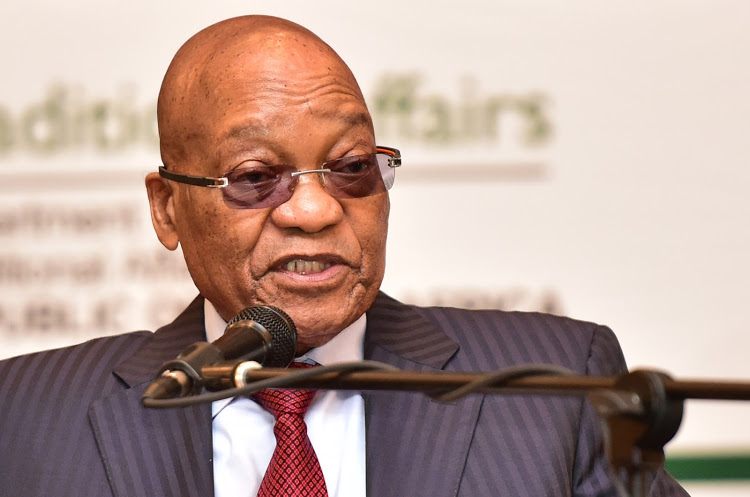
Jacob Zuma, South African President, has survived another no-confidence vote, the eighth time he has faced such political test in his eight-year presidency.

However, this was the first vote held through secret balloting, and the opposition parties had expected that the secret vote would enable MPs from the governing African National Congress (ANC) to vote against the president.

The motion, which was called amid repeated allegations of corruption, was defeated by 198 votes to 177.

The voting recorded nine abstentions in the secret ballot.

BBC reports that in order for the no-confidence motion to pass, at least 50 out of the ANC’s 249 MPs would voted against the president — leading to opposition parties pleading with ANC MPs to “vote with their conscience”.

The news of his triumph was welcomed with cheers and singing by ANC MPs

“Today our choice is between right and wrong; between good and evil,” the Democratic Alliance’s Mmusi Maimane was quoted as saying before the voting, while Andries Tlouamma, deputy president of the Agang party, warned if Mr Zuma survived then South Africa was “on a highway to hell”.

Zuma is expeceted to step down as head of the ANC in December, ahead of the 2019 general election.

The 75-year-old has been power since 2009 but his tenure has been tainted with accusations of monumental corruption and ruining of the economy.

Criticism of Zuma increased this year after he fired Pravin Gordhan, his widely-respected finance minister, in March.

This came amid accusations that the president had become too close to the wealthy Gupta family, who are accused of trying to influence politician decisions — including the sacking of Gordhan.

TRENDING: UNN’s best medical student gets N10,000 — but is it GTBank’s fault?

GTBank did not sponsor N10,000 prize for UNN best medical student

There is commotion online over a picture of the 2017 Best Graduating Medical Student of the University of Nigeria (UNN) being presented with a GTBank cheque of N10,000.

THE ASSUMPTION

The picture went viral on Tuesday — simply because the presence of the GTB logo on the cheque gave the impression that the award was sponsored by the bank.

Nigerians roundly criticised the sight, saying such paltry prize money was not commensurate with the toil that must have yielded the award.

Many compared the award to the prize money for various TV reality shows, including the recently concluded Big Brother Nigeria (BBN), which gifted Efe Ejeba, the winner, a cash prize of N25 million and a brand new SUV.

The angst may have been fueled, in part, by the report of a survey announced last week, which showed that over 2500 medical doctors would leave Nigeria between August and September in search of greener pastures in other developed countries, especially the United States and the United Kingdom.

THE ANGER

On Twitter, the reactions include:

THE TRUTH

But it has now emerged that all the angst at GTB was misplaced. When contacted by the ICIR, the bank denied sponsoring the award.

“Hello. Thank you for contacting us,” the bank said.

“Please note that this donation was not made by GTBank, but by the University of Nigeria Medical Students Association, who made use of their cheque leaflet to create a dummy cheque. We congratulate the young woman on her remarkable achievement and wish her the best in all.”

Similarly, a student of the university said the award was sponsored by the Medical Students Association of the university.

“No, the award wasn’t sponsored by GTBank,” the student told the ICIR, asking not to be named.

“It was courtesy of the Nigeria Medical Students Association UNN chapter. Though the university management promised to reward the girl with N200,000, that has not been redeemed.”

Anger misplaced, cased closed. Shall the people behind the torrent of anti-GTB abuse now render an ‘unreserved apology’ to the bank?


EXCLUSIVE: The police report nailing Maimuna Aliyu for ‘embezzling’ Aso Savings’ N58m

Maimuna Aliyu 4

Contrary to her claims that she was being persecuted for exposing corruption in the past, police documents show that Maimuna Aliyu, one of two people whose appointments to the Independent Corrupt Practices and Other Related Offences Commission (ICPC) board, cornered a sum of N58million belonging to Aso Savings and Loan.

Aliyu and Sa’ad Alanamu were part of a 14-member board of ICPC appointed last week by Acting President, Yemi Osinbajo but after the ICIR exclusively reported that two of them were being investigated by the ICPC for corruption, Osinbajo withdrew their nomination from the board.

Responding to the withdrawal of her nomination, Aliyu had said in a statement that “the news report pointing to a report in May 2017 indicting me is a mere fluke”.

She said the “highly-placed business men who have been variously found culpable by the investigations and also angry with me for exposing them have colluded to stop my appointment” because they were afraid that they would be further exposed”.

“That is the simple reason why they have resorted to media maligning of my person,” she added.

However, as proven by documents from the police, Aliyu, who was Executive Director, Marketing, at Aso Savings and Loans Plc until 2013, had been indicted many times by the bank for series of financial misappropriations, which led to her investigation by the Police, in May.


Police Report on Maimuna Aliyu 1

According to one of the documents, the bank lodged a complaint with the police that Aliyu was entrusted with three landed properties at Jahi District Abuja with title documents for sell.

The three lands, the bank said, were sold for N40million each, totaling N120million, but the proceeds were converted to her personal use without recourse to the bank that entrusted her with the authority to sell the land.

While Aliyu didn’t remit the proceeds from the sales of the land to the coffer of her employee, the bank said there were other transactions that she carried out on its behalf but she didn’t return the money, which amounted to N568 million.

Police Report on Maimuna Aliyu 11

Aliyu, Ibrahim Gaga, Bilikisu Rimi and Hassan Musa, all staff of Aso Savings and Loans, were invited by the police as witnesses while the duo of Babagana Basher and Vincient Mishelia, agent and purported buyer of the three plots of land, were also interrogated by the police.

The three staff all corroborated the claim that the three land documents were entrusted to Aliyu for sale for N19million each.

“Both the agent Babagana Basher and the buyer, Vincient Mishelia gave account on how they paid her in dollar equivalent of N58million which was $385,000 in her office,” the police said.

Police Report on Maimuna Aliyu 12

While quizzed by the police, Aliyu confessed that she received the money as claimed by the buyer, but she said she handed the proceeds over to Bilikisu Rimi, the Company Secretary — a claim denied by the latter.

According to police sources, she was recommended to be charged to court by the police for “fraud and abuse of office having fraudulently converted the money totaling N58million to her personal use”.

As also reported by the ICIR, the federal government failed to run a background check on the appointees before making a public announcement.

QUESTION: For how long can Buhari stay in London and remain president? Dicey


Muhammadu Buhari 4

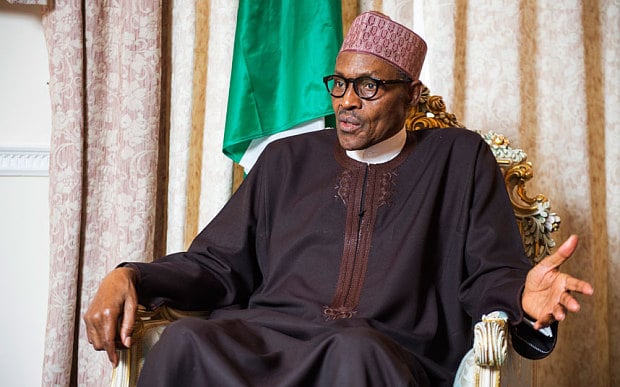
For how long can Muhammadu Buhari, Nigeria’s ailing President, stay in London for medical treatment? Is the answer indefinite, until the expiration of his first term in 2019?

After a 49-day medical vacation in London early this year, Buhari travelled to London again for an indefinite medical examination in May 7.

Buhari has so far spent 56 days in his second medical journey, with no definite return date.

This indefinite stay abroad has led to speculations that the president will be removed from office if he spends more than 60 days outside the country.

However, the duration his foreign stay is not specified in the 1999 Constitution as amended.

As long as he has duly transmitted power to the Vice-President, he can stay in London as much as he wants, unless he is impeached by the National Assembly.

PROCEDURE FOR REMOVING THE PRESIDENT

For the president to be removed from office on the ground of ill-health as specified in Section 144 of the Constitution, two-thirds majority of all members of the Federal Executive Council (FEC) must pass a resolution declaring that he is incapable of discharging the functions of his office.

This declaration by FEC will be verified by a five-man medical panel appointed by the Senate President.

The five members of the panel must be medical practitioners, including the personal physician to the president. The four others must be medical practitioners who have attained a high degree of eminence in the field of medicine related to whatever illness the president is suffering from.

This medical panel will then examine the president in accordance with international standards.

Should the medical panel certify that the president is incapable of discharging the functions of his office due to the illness, a notice signed by the Senate President and the Speaker of the House of Representatives shall be published in the Official Gazette of the Government of the Federation.

Immediately this notice is published, Buhari will cease to be the President of Nigeria and Yemi Osinbajo, the Acting President, will now assume the role of substantive President while a new Vice-President will be appointed.

HOW THE CONSTITUTION PRECISELY STATES IT

Chapter VI, Section 144

(1) The President or Vice-President shall cease to hold office, if –

(a) by a resolution passed by two-thirds majority of all the members of the executive council of the Federation it is declared that the President or Vice-President is incapable of discharging the functions of his office; and

(b) the declaration is verified, after such medical examination as may be necessary, by a medical panel established under subsection (4) of this section in its report to the President of the Senate and the Speaker of the House of Representatives.

(2) Where the medical panel certifies in the report that in its opinion the President or Vice-President is suffering from such infirmity of body or mind as renders him permanently incapable of discharging the functions of his office, a notice thereof signed by the President of the Senate and the Speaker of the House of Representatives shall be published in the Official Gazette of the Government of the Federation.

(3) The President or Vice-President shall cease to hold office as from the date of publication of the notice of the medical report pursuant to subsection (2) of this section.

(4) The medical panel to which this section relates shall be appointed by the President of the Senate, and shall comprise five medical practitioners in Nigeria:-

(a) one of whom shall be the personal physician of the holder of the office concerned; and

(b) four other medical practitioners who have, in the opinion of the President of the Senate, attained a high degree of eminence in the field of medicine relative to the nature of the examination to be conducted in accordance with the foregoing provisions.

(5) In this section, the reference to “executive council of the Federation” is a reference to the body of Ministers of the Government of the Federation, howsoever called, established by the President and charged with such responsibilities for the functions of government as the President may direct.

ANY OTHER MEANS?

Members of the National Assembly may decide to rely on Section 143 of the Constitution to remove the president if two-thirds of the members present signed a written allegation of gross misconduct against the president.

According to the Constitution, “gross misconduct” means a grave violation or breach of the provisions of this Constitution or a misconduct of such nature as amounts in the opinion of the National Assembly to gross misconduct.

Upon receiving the notice of this allegation,  the Senate President shall within seven days serve a copy to the president and give each member of the National Assembly another.

The president is expected to reply to the allegation and a copy of his reply will be made available to every member of the National Assembly.

Within 14 days of the presentation of the allegation, members of the National Assembly will resolve by motion without any debate whether or not the allegation shall be investigated.

If up to two-thirds of members of National Assembly agree that the allegation will be investigated, the Senate President shall within seven days request the Chief Justice of Nigeria to appoint a seven member panel to investigate the allegation.

Members of the panel must be persons with unquestionable integrity and not being members of any public service, legislative house or political party.

The panel will submit its reports within three months to the National Assembly.

If the report by the panel concludes that the allegation has not been proved, then the president cannot be impeached and the National Assembly shall suspend all proceedings in respect to the impeachment.

But if the report proves the allegation, then the National Assembly shall consider the report within 14 days after receiving it from the panel.

And if up to two-thirds members of the National Assembly support the resolution, the report will be adopted and the President will cease to hold his office.

This process of removing shall not be challenged in a court of law.

ANSWER

Having handed over power to Osinbajo in acting capacity, President Muhammadu Buhari can stay in London or anywhere else for as long as he wants — so long two-thirds of the national executive council do not have a problem with it.

EDITOR’S NOTE: This piece was originally published on July 4. It has been republished in the light of the ongoing return-or-resign protests against President Muhammadu Buhari.