Home Blog Page 2721

Ecobank security guard steals staffer’s ATM card, withdraws N30,000 to ‘treat ill mother’

A woman takes Nigerian Naira from a bank's automated teller machine (ATM) in Ikeja district in the commercial capital Lagos November 12, 2014. Nigeria's naira currency weakened slightly on the interbank market on Tuesday due to strong demand for dollars from foreign investors. REUTERS/Akintunde Akinleye (NIGERIA - Tags: BUSINESS) - RTR4DUX1


Ifeoma Ezeanaka, an Eco bank staffer based in Aba, Abia State, almost lost N30,000 to an unknown withdrawal from her account on Thursday, July 27, 2017 but the bank’s security apparatus came to her rescue.

According to a security report seen by the ICIR, Ezeanaka received a debit alert of N30,000 when she was certain she had not sent anyone to the ATM.

Therefore, she immediately rushed down to the bank branch where the withdrawal had been made and entered a complaint.

“It was thanks to the Close Circuit Television (CCTV) camera that it was revealed that the withdrawal had been courtesy of Nwaobi Maxmillian, a security guard attached to bank where Ifeoma works,” said the report.

Maximillian had removed Ifeoma’s ATM card from her handbag while she was in the bank’s vault, and then proceeded to an ATM machine not very far from the bank to withdraw N30,000 from her account.

“He then hurried back and carefully returned the ATM card without her notice and perhaps was congratulating himself on a well-executed operation before the alert came in and ruined his party.”

When confronted, Maxmillian confessed to the crime but explained that he was pushed to the act because his mother was “ill and required money urgently for an operation”.

Further probing revealed that Ifeoma had also compromised her PIN in the past, as she usually sent security men and cleaners to make withdrawals for her from the ATM.


An official of the bank, who did not want to be named, told the ICIR that the bank would “discipline the security guard”, as it “does not tolerate acts of dishonesty from staff, no matter the circumstances”.

Humanitarian work suspended in Borno as soldiers ‘lay siege’ on UN building


Army

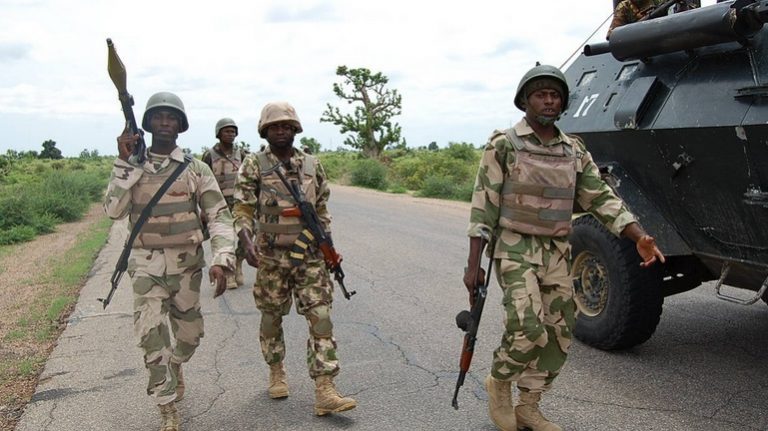
Nigerian soldiers have raided a building in Maiduguri, Borno State, where personnel of the United Nations are being housed.

According to Premium Times, the raid was prompted by allegations that weapons were being smuggled into the building.

Consequently, the UN has temporarily suspended all its humanitarian activities in the state.

The search of the UN building happened a day after rumours went wild on social media that Abubakar Shekau, the wanted Boko Haram leader, was taking refuge in the said building.

Soldiers arrived the rented building known as Red Roof, which also serves as a hostel for UN workers in the city, at about 2am on Friday.

A UN official who pleaded anonymity told journalists that the soldiers said they had intelligent information from the Department of State Security (DSS) that some suspicious activities were going on in the massive building, which is well fortified with high fences.

The Red Roof building belongs to late Mala Kachalla, former Borno State Governor.

“The soldiers came at about 2 a.m. and surrounded the entire area around the UN building. And at about 3 a.m., they demanded that they wanted to go into the building to search for arms.

“But the UN officials denied them access, insisting that it was against their policy to allow armed soldiers invade their offices or buildings, especially at such odd hours of the night.”

The soldiers had said they had information that arms were being ferried into the Red Roof building in large, wooden boxes.

But the UN source who spoke to journalists dismissed the allegations.

“We all know there was nothing like that because the containers that they were referring to were building materials which the UN is using to upgrade or build some structures sitting the acquired property,” he said.

“Presently the property serves as a place of accommodation for all the UN humanitarian workers in Maiduguri. When the soldiers wanted to force their way into the property, the security men had to lock the gate.”

The source said the soldiers were later allowed to enter the building by 7 am.

“They searched the entire building and found nothing. The soldiers later withdrew from the area at about 7.45 a.m,” he said.

Ahmed Shehu, a civil society leader in Borno State, who arrived the building early at dawn, condemned the soldiers’ action, saying: “Whatever may be the soldiers’ reason, the invasion was not a good indicator for security.”

Shehu added that a meeting of all civil society organizations in the state with UN officials would hold later in the day, and an official statement would be issued.

Onyema Okechukwu, spokesperson of the military command and control centre in Borno state, was not available for comments as his phone was switched off.


24-year-old Cynthia Muge second youth to win seat in Kenyan parliament

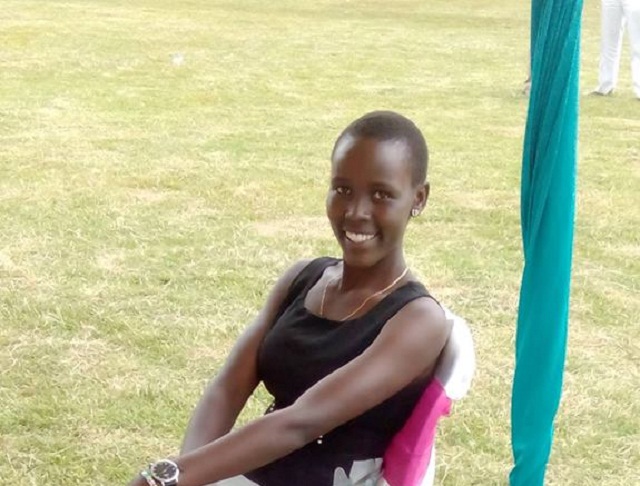
Cynthia Muge - 24-year-old female candidate defeat powerful ruling party candidate in Kenya

The news of the electoral victory of 23-year-old John-Paul Mwirigi in the Kenyan general election was yet to settle when that of Cynthia Jepkosgei Muge also broke.

Like Mwirigi, Muge, 24, also ran as an independent candidate because she could not afford the cost of her party’s nomination.

However, after the people had voted and the votes counted, the ruling Jubilee party were left regretting why they had favoured Emmanuel Kipchumba to flag the party’s flag instead of Muge.

Cynthia Muge 24-year-old female candidate defeat powerful ruling party candidate in Kenya4

“I took a chance as an Independent candidate and won after a difficult penniless campaign,” Muge told journalists.

Her friends also lent her a helping hand by using the social media, especially Facebook, to solicit votes.

Muge has a Bachelor’s degree in Planning, City/Urban, Community and Regional Planning from the University of Nairobi.


He’s 23, ‘broke’, jobless and an orphan — meet John Paul Mwirigi, Kenya’s youngest MP

john paul mwirigi kenya youngest lawmaker

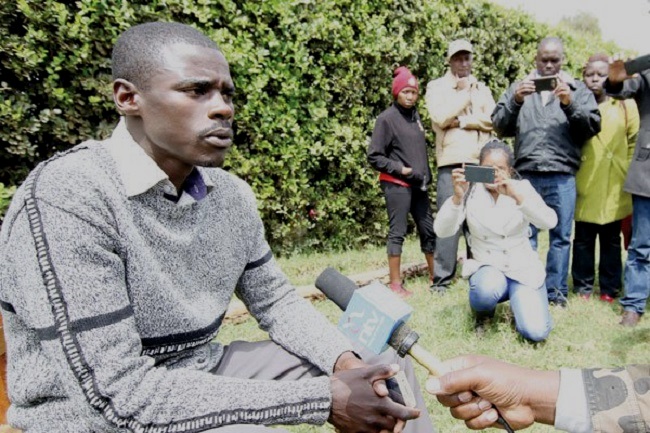
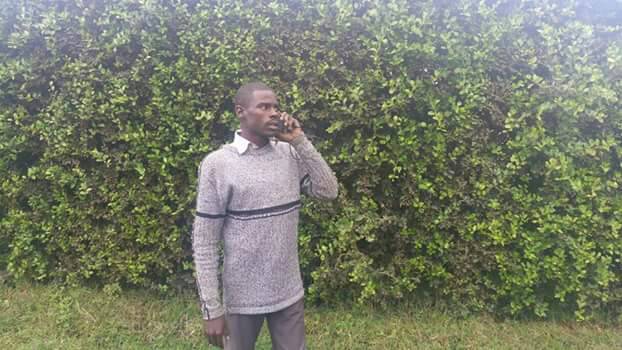
Ever heard the saying “if one wants something, he’ll find a way”? Well that aptly summarizes the inspirational grass-to-grace story of John Paul Mwirigi, who just broke Kenya’s record for the youngest elected member of parliament. He is yet to turn 24.

Mwirigi ran against veteran politicians who are members of established political parties, yet he managed to secure a resounding victory, polling a total of 18,867 votes (39.39%) and will soon be headed off to represent his people in Nairobi, Kenya’s capital city.

POOR FAMILY, ‘POOR’ CAMPAIGN

John Paul Mwirigi

Mwirigi is the sixth child of eight children from his parents. He still lives in his family home – a local granary in the community.

His campaign may well be the cheapest in the history of Kenyan politics. Reports had it that the youngster printed no campaign posters because he was broke and could not afford it.

To make up for his lack of cash, Mwirigi opted for a door-to-door campaign and according to reports, he knocked on the doors of almost every household in his Igembe South constituency.

Also, Mwirigi told reporters that he carried out his campaign home visits on foot until he received support from his former colleagues – commercial motorcycle operators also known as boda boda (or in Nigeria, okada) riders.

Mwirigi said he usually rode boda boda whenever he was on holiday in order to raise money.

I HAD A DREAM

John Paul Mwirigi1

Speaking to newsmen shortly before the elections, Mwirigi said he first expressed interest in politics while in Form 3 (Nigeria’s equivalent of Junior Secondary three) at Kirindine Day Secondary School.

“I had a dream where I was tabling a motion in parliament while I was in Form 3. That is when I started asking my fellow students to start campaigning for me since I would need their vote in 2017.

“I have held leadership positions in school and in my neighbourhood. Since I come from a humble background, I understand the issues that affect the residents. My key agenda will be to transform the lives of the people.”

Mwirigi said his first agenda would be supporting agribusiness activities, promote entrepreneurship and nurturing talents.

DEFEATED CURRENT DEPUTY GOVERNOR, RULING PARTY


Mwirigi’s victory can best be likened to the popular innuendo of man biting a dog. Among his many contenders was Raphael Muriungi, a veteran politician by all standards who is currently the Deputy Governor of Meru County.

Muriungi, a graduate of the University of London, was also former Member of Parliament between 2003 and 2007 as well as former Assistant Minister of Tourism from 2005 to 2008.

But all those counted for nothing as he finished fifth in the election with a paltry 2,202 votes, many places behind the undergraduate Mwirigi.

The closest challenger to Mwirigi was Joseph Mwereria of the Jubilee Party, which is President Uhuru Kenyatta’s party. He scored a total of 15 977 votes, more than 3000 less than Mwirigi.

NOT TOO YOUNG TO RUN

Sarakit not too young to run

Mwirigi’s electoral victory has yet again added another fillip to the ongoing agitation for the removal or lowering of the constitutional age requirement for running for elective positions in Nigeria.

Nigeria appears to be the biggest African country where it is very difficult, if not impossible, for young people to run for elective positions.

In the recently concluded general election in Ghana, history was made when Francisca Oteng-Mensah, a female law student, defeated an incumbent lawmaker to become Ghana’s youngest ever legislator at the age of 22.

As it stands currently in Nigeria, one is not eligible to run for a seat into a state house of assembly or the house of representatives until one is 30 years old. To run for the senate, one must have attained the age of 35 and for Presidency, 40.

However, a constitutional amendment to reduce the age requirements has been approved by both chambers of the National Assembly. The amendments also include provision for independent candidature in the electoral process. The President is yet to sign the amendments into law.

90% of lecturers’ research proposals very poor and unfundable, says TETFund


Baffa

Eight years after the Tertiary Education Trust Fund (TETFUND) instituted the N3billion National Research Fund (NRF) to enhance research activities in tertiary institutions, only N1.72billion of the fund has so far been accessed by lecturers due to the poor quality of research proposals.

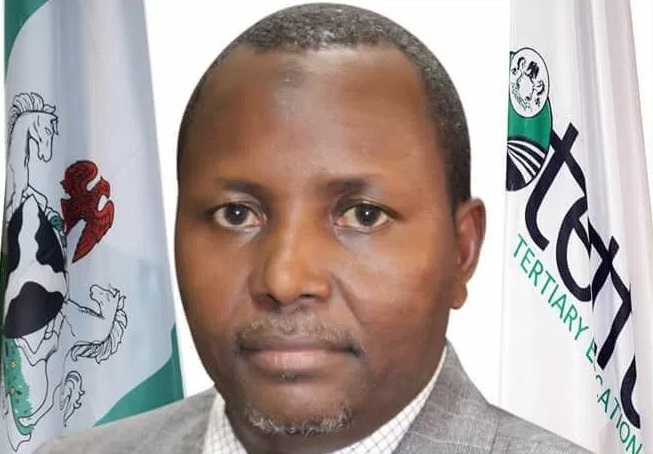
Abdullahi Baffa, Executive Secretary of TETFUND, said this in Abuja on Thursday at the inauguration of NRF screening committee and Technical Advisory Group on Book Development.

He lamented the quality of research proposals submitted by Nigerian lecturers to access the research intervention fund, saying: “Since its establishment in 2009 with the seed fund of N3billion, about N1.72billion has so far been disbursed to finance researches in different thematic areas, and an additional N1billion was allocated in 2016 to beef up the intervention.

“One of the key concerns of the TETFund in respect of the implementation of this intervention is quality of research proposals that are being submitted by applicants.”

He explained that NRF and National Book Development interventions, among 12 other intervention lines, were put in place to assist the fund in the screening and selection process for the purposes of administering the interventions.

“The vision of this intervention is to deliberately promote the evolution of a knowledge-based, globally-competitive, research and development-driven socioeconomic development process in Nigeria,” he said.

“This, we believe, can only be achieved through coordinated, properly-focused and cutting-edge researches in all critical areas, and anchored by scholars in the higher education institutions.”

Femi Bamiro, former Vice Chancellor of University of Ibadan and member of one of the committees, spoke further on the poor turnout of Nigerian lecturers to accessing the research grant, noting that less than 100 proposals were received when applications were invited for grants.

Speaking on behalf of other members of the committees, he said less than 10 of the proposals were fundable, due to their poor quality.

“If you are talking of knowledge economy, what drives it is research. If research is to translate into development, it cannot just be publications. It has to be research, development and innovations,” he said.

“The burden of research lies on the shoulder of tertiary institutions. Funding research started around 2009 but we must also not forget that prior to then research was probably nothing to think about in tertiary institutions.

“Only three institutions were lucky to attract foreign grants. I’m speaking for the University of Ibadan, you found out that most of the grants for meaningful research in the system were from WHO and so on. We used to have senate research grant in the university but when the Vice Chancellor cannot even pay salary, how can he get money for allocation of research until TETfund came with that N3billion.”

“But when we started calling for proposals, initially we got less than 100 from out of the system; whether universities, polytechnics or colleges of education, and out of the 100 we found less than 10 fundable.

“But I must say that by the time institutions started taking proposal writing seriously, we saw significant improvement. By 2015 we received 817 proposals from the system. Then in 2016, we received 1,846 proposals, which meant that the Nigerian higher education system was now ready for research.”

The Academic Staff Union of Universities (ASUU) campaigned for enhanced funding of research in the universities before TETFund put in place NRF.

UPDATED: Unemployed 23-year-old set to become Kenya’s youngest lawmaker


John Paul Mwirigi

John Paul Mwirigi is set to be announced Kenya’s youngest-ever member of parliament, following provisional election results released by the country’s Independent Electoral Boundaries Commission (IEBC).

According to a report by Buzz Kenya, the 23-year-old orphan contested as an independent candidate and did not have enough money to even print campaign posters.

Published election results show he is currently in the lead, having polled a total of 18,659 votes or 39.09 percent; his closest rival, Joseph Mwereria of the Jubilee Party, has a total of 15,635 votes or 32.76 percent.

“We decided to elect him (even though) he had no money for campaigns but he offered good pledges and his manifesto was good,” said one voter who asked not to be named.

Mwirigi’s potential electoral victory has been attributed to the fact that he is relatable to the people, and his door-to-door campaign strategy through which he spoke to almost every voter in the constituency.

His major campaign promises centred on improvement in water supply and investment in education.

However, if he eventually secures the parliamentarian seat, Mwirigi will have to combine the functions of a legislator with his academic workload, as he is still a student at Mount Kenya University.

Meru County, where Mwirigi hails from, is popular for producing young parliamentarians. In 2013, the Buuri constituency elected Boniface Kinoti Gatobu, aged just 26, to the 11th parliament.

Meanwhile, Wafula Chebukai, Chairman of the IEBC, has said that the election results so far released are not final, especially as there are claims that the agency’s system may have been hacked.

Violent protests erupted in capital Nairobi after initial results showed that President Uhuru Kenyatta was slightly ahead of his rival, Raila Odinga.

Two persons have died in the protest since it began two days ago.

2019: PDP needs strong leadership

0

2019 - PDP needs strong leadership

By Olumide Johnson

The Peoples Democratic Party (PDP) is set for a significant national convention this week Saturday, 12 August, 2017. Why is the convention significant if it is a non-elective or what could be described as a mini convention? For those who can still remember, this will be the first gathering of the whole house in almost two years which will not hold under controversial circumstances. It is significant that the Supreme Court judgment of July 12 has put everyone in his rightful place, no more mischief from anyone, at least for now.

The authentic leadership of the party under Senator Ahmed Makarfi, Chairman of the National Caretaker Committee, must be commended for its patience perseverance and magnanimity. It will be recalled that after the post judgment meetings of the National Caucus, Board of Trustees and National Executive Committee, Makarfi declared forgiveness and amnesty for everyone and anyone considered to have engaged in acts that hurt the party before the judgment. But he also insisted that anyone found engaging in such acts after the judgment must face disciplinary action for the offence, if proven. That was why he set up both the reconciliation committee and the disciplinary committee simultaneously. These are significant bold steps aimed at reestablishing the party on solid ground.

The reconciliation process is reported to have kicked off across the states. Even the chairman himself is reported to have granted audience to some state delegations or groups at the national secretariat for that purpose. This is a good new beginning for the party. However, the reconciliation process must be closely monitored in the states so that it is not marred by personal animosity or power show by any individual or group, no matter how highly placed. Genuine reconciliation without vindictiveness or pretension on all sides should be the watch word.

In the spirit of reconciliation, this convention should be a happy reunion of all stakeholders but more importantly it should be an occasion for all, leaders, members and supporters alike to rededicate themselves to the party as an institution, with serious commitment to upholding its constitution, creed and ethos, promoting its interest above all personal or individual interests and serving it with integrity. I do not know Makarfi’s thoughts on the convention. Neither do I have an insight into the speech he will deliver. But I believe, like any other genuine and well-meaning supporter of the party, that it is imperative for Makarfi to drum it to the ears of all that the new PDP emerging from the valley of the shadow of death must not only do away totally with impunity but also be seen to protect the interest of all stakeholders as laid down by its founding fathers. That is the only way it can regain the confidence of the people.

The party needs a strong leadership that will insist on these conditions in all its activities particularly in the primaries that are expected to bring up credible candidates for the next elections up to the 2019 general elections. I think this convention is the starting point to begin to do things right. As an honourable man, Makarfi has said publicly on national television that he is willing and ready to handover as soon as a new national leadership can be elected. As the process for enthroning the new leadership begins from this convention, it is his duty to ensure that the process will bring up a respectable and strong leadership, one that will eventually emerge from the will of the majority and be committed to the party and not to some individual strongmen or oligarchs who want to use the party machinery to achieve their selfish desires.

In this task, Makarfi should be ready to face challenges from serving and former governors as well as ex-ministers, many of who see themselves as the inheritors of the party and have assumed the self-appointed mission of directing and guiding it as if it is their personal or joint stock enterprise. We cannot forget in hurry how the PDP governors plunged the party, willy nilly and against wise counsel from the elders, into the crises from which the Supreme Court finally rescued it. Rather than learn from that mistake, even when it was yet to be resolved, the governors were also fingered in attempts to scuttle the will of the majority and impose a national chairman of their disposition on the party at Port Harcourt in August last year.

Recent media reports, which no one has denied, are again replete with insinuations that the governors are at it again shopping for a possible pliant tool they can install as national chairman who will do their bidding. If Makarfi is not to be seen or suspected to be in league with the governors, he must investigate these reports and take legitimate constitutional steps to safeguard the integrity of the party. If the truth must be told, the PDP governors are beneficiaries and not benefactors of the party. They should be grateful to the party for what they have used the platform of the party to achieve in terms of position, power, influence and social status. They should not use these benefits to block or exclude other potential beneficiaries who are not their friends and cronies. And they should see whatever support they render to the party as a way of giving back to their benefactor without extracting or extorting questionable concessions and favours.

As for the Forum of PDP ex-ministers, which is not recognized by any statute or book of the party, it was laughable to hear them say, in a statement credited to them, that they will produce the party’s 2019 presidential candidate from within their ranks. How many of them performed well in their positions? What was the contributions of some of the most vocal among them to the fortunes of the party in the last presidential election and how many of them can openly stand before the electorate in their states to campaign without heavy police security presence? The group appears to be another power and influence peddling group with ulterior motives, which must be watched with suspicion until it proves otherwise.

However, this is not to say that the various power groups in the party such as the governors forum, ex-ministers forum, national Assembly caucus and the fora of state party chairmen, local government functionaries and other political appointees don’t have a say in party affairs. But they should do so without seeking to impose their will and preferences on members of the party. Otherwise the party will soon begin to experience a new dimension of crises involving power struggles and conspiracies amongst them.

Makarfi has made encouraging strong statements since the Supreme Court verdict but he should not allow his statements fall to the ground like in August last year when he said there will be no anointed candidates for the party leadership election. This time around he needs to be vigilant and action the talk. He must bequeath an acceptable leadership that can move the party forward.

Olumide Johnson writes from Lagos via midejohnson990@gmail.com

Odinkalu praises Jonathan for ‘holding institutions in high regard’

During my time at NHRC Jonathan didn’t suppress reports that criticized his administration – Odinkalu

Chidi Odinkalu, former Chairman of the National Human Rights Commission (NHRC), has narrated how Goodluck Jonathan, former President, supported the commission even when it produced reports that criticised his government.

Odinkalu made the revelation in an interview with Next Edition, at a time the current federal government has reacted with high-handedness and sometimes brutality to criticism from the people.

On Tuesday, the Nigeria Police Force unleashed its arsenal of dogs, teargas and water canons on peaceful protesters who were calling for President Muhammadu Buhari’s resignation if he is too ill to continue in office.

During his chairmanship of the NHRC, Odinkalu led investigations into several incidents of human rights abuse by government agencies, including the Nigerian military.

The reports published by the commission at the time include that of serial human rights violations by soldiers taking part in the counter-insurgency operation in the North East, the Apo killings in the FCT, and the killings by herdsmen in Southern Kaduna.

“The job (of the NHRC chairman) required professionalism and I’ve got to give due credit to Goodluck Jonathan,” Odinkalu said.

“Irrespective of the number of things I didn’t agree with him and his government, he supported our programmes and campaigns to the hilt.

“And to the occasion where I had to go tell him that ‘we need your support’ or ‘we want to embark on something,’ he absolutely did give us hundred percent.

“There were occasions where people were very unhappy with me, there were occasions where I had to be fired and I was under investigations for quite many times, although nothing was found, that was okay by him.

“I never met him before I was appointed so I can’t say because he knew me somewhere. He is definitely not from my state or from the same ethnic background. So, I’ve got to give him praise for holding institutions in high regard.

“We did the Baga investigation against all odds, even in the face of opposition from some members in my own governing council. We did the Apo killings investigation, again in the face of considerable odds, we took on the Southern Kaduna killings and we have the most extensive analytics and reports on what transpired in the North-East.

“I personally took that to the leadership of the Nigerian government.and I met one-on-one with the then president and I told him, ‘look, we need your full support to do this,’ and he told me to go right ahead.”

Still, Jonathan continues to receive criticism by many Nigerians, who describe his administration as the weakest and perhaps the most corrupt in the country’s history.

In one of the fiercest of late, Nnamdi Kanu, leader of the Indigenous People of Biafra (IPOB), said Jonathan was so weak that his wife, Patience, would have made a better president.


READ ALSO:

At Badagry prison, children are left sick, stinking and dying — and in company of convicted murderers

Badagry-inmates-2

Children imprisoned with convicted armed robbers and murderers at the Badagry prison in Lagos are hungry, sick and dying with chicken pox, ringworm, scabies and leprosy, a report by the Nigerian Tribune has revealed.

According to the report, many of the children and teenagers allegedly committed offences that are bailable. Several others were held for minor offences like loitering, wandering, street trading and in some cases, alleged stealing, for which they were charged before mobile courts which imposed a fine of N35,000 or less on them.

“Many of the children are from poor homes while their parents continued to find means of perfecting their bail conditions, the children continued to rot in jail,” the report says.

The Tribune journalist who made the revelation accompanied Funmilayo Atilade, the Lagos State Chief Judge, to the prison, where 80 of the children were recently granted pardon.

The report points that Atilade initially planned to free 28 children but the sight of hundreds of emaciated and haggard-looking children moved everyone who accompanied the chief judge to tears.

Eighty of the children were eventually freed but others who are obviously younger than 18 years are still languishing in the prison.

“I am from the East. I came to stay with my distant relative. I was made to start hawking. My people do not know that I am here, I want to go back home,” one 14-year-old inmate said.

Another teenager who had open sores all over him exposed his private parts to the visitors and with tears in his eyes, said: “Aunty look, my tin don finish. To piss dey pain me. E dey scratch me and the wound no gree go.

The report said child-inmates were getting infections because of the poor feeding and poor sanitary conditions in the prison, as the children slept by sitting upright due to overcrowded space and went days without bathing.

“Signs of chicken pox, ringworm, scabies, possibly leprosy and a host of undiagnosed skin could be seen all over their skins,” it said.

“There were some with open sores oozing thick and yellow pus. There were others with open bullet wounds. Some also have had their legs amputated legs. All were expectant and hopeful for freedom.

“At the back of the prison chapel was a boy not less than 13 years old, suffering from stroke. According to his friend who brought him, he was physically fit, but had become sick, more or less a vegetable, depending on others for survival.”

The report added that “the sight of the children, lined up like criminals, their shaven heads bowed, was a wake-up call for concerned authorities to do something urgent about the nation’s judicial system.”

Funmi Tejuosho, a member of the Lagos State House of Assembly who accompanied the chief judge to the prison, stated that the Lagos State Government was not aware of the abnormality.

“A prison is not a place for a child. Their minds are young and still in the formative stage. I am going to carry put this message back to the governor that something urgent has to be done,” Tejuosho said.

“The issue of keeping children in prison is condemnable in its totality. These are the leaders of tomorrow. This is a sad situation that should not be. On no condition should a child, below 18 years, be kept in prison either on conviction and awaiting trial.

“Please, anytime a child is brought here, send a message to either the office of the Public defender or the High Court. Children who commit an offense are not meant to be kept in prison but in correctional facilities for reformation.”

The Badagry prison was built to hold 320 inmates but is currently occupied by 584 inmates. The convicted inmates are 389 males while 195 are awaiting trial.

SERAP: Nigeria in darkness because Obasanjo, Yar’Adua, Jonathan squandered N11trn


Obasanjo-Jonathan

Between 1999 and 2015, more than N11 trillion meant to provide regular electricity supply for the country was squandered under the administrations of former presidents Olusegun Obasanjo, Umaru Musa Yar’Adua and Goodluck Jonathan, according to the Socio-Economic Rights and Accountability Project (SERAP).

In a report released on Wednesday, SERAP said “the total estimated financial loss to Nigeria from corruption in the electricity sector, starting from the return to democracy in 1999 to date, is over N11 trillion”.

This amount, the organisation, said represents public funds, private equity and social investment (or divestments) in the power sector.

It further said that the amount may reach over N20 trillion in the next decade, given the rate of government investment and funding in the power sector amidst dwindling fortune and recurrent revenue shortfalls.

According to the report, presented to the media by Yemi Oke, a lecturer at the Faculty of Law, University of Lagos, “Nigeria has lost more megawatts in the post-privatisation era due to corruption, impunity, among other social challenges reflected in the report”.


The 65-page report, launched in Lagos, is titled: ‘From Darkness to Darkness: How Nigerians are Paying the Price for Corruption in the Electricity Sector’.

“The much-publicised power sector reforms in Nigeria under the Electric Power Sector Reform Act of 2005 is yet to yield desired and anticipated fruits largely due to corruption and impunity of perpetrators, regulatory lapses and policy inconsistencies,” the report said.

“Ordinary Nigerians continue to pay the price for corruption in the electricity sector–staying in darkness, but still made to pay crazy electricity bills.”

Speaking at the presentation, Femi Falana, lawyer and human rights activist, said he would lead in the follow-up litigation efforts to ensure the full implementation of the recommendations of the report

“This report is a must-read, and I promise to lead in the follow-up litigation efforts to ensure the full implementation of the recommendations of the report,” he said.

The report accuses Ransom Owan-led board of the Nigerian Electricity Regulatory Commission (NERC) of allegedly “settling officials with millions of naira as severance packages and for embarrassing them with alleged N3million fraud”.

It recommended that the authorities must undertake a thorough, impartial and transparent investigation as to the reasons why corruption charges were withdrawn, and to recover any corrupt funds.

It also called for the reopening and effective prosecution of corruption allegations, including the alleged “looting of the benefits of families of the deceased employees of Power Holding Company of Nigeria (PHCN) levelled against, Godknows Igali, a former Permanent Secretary in the Ministry of Power”.

“The Obasanjo administration spent $10 billion on NIPP with no results in terms of increase in power generation. $13.278, 937,409.94 was expended on the power sector in eight years while unfunded commitments amounted to $12 billion,” the report said.

“The Federal Government then budgeted a whopping N16 billion for the various reforms under Liyel Imoke (2003 to 2007), which went down the drains as it failed to generate the needed amount of electricity or meet the set goals.”

Imoke was alleged to have personally collected the sum of $7.8 million for the execution of the contract for the construction of the Jos-Yola Transmission Line, which was never executed.

“Professor Chinedu Nebo handed over the assets of the PHCN to private investors on November 1, 2013. Prof. Nebo is alleged to have corruptly funded the privatized power sector with over N200 Billion despite privatization,” it continued.

“The allegation of N200 billion funding of the privatized power sector during Prof Nebo’s tenure should be thoroughly and transparently investigated and anyone suspected to be responsible prosecuted. Any corrupt funds should be fully recovered.”

SERAP said the research also revealed that the sum of N1.5 billion with which the vehicles were acquired was allegedly sourced from the diverted N27 billion insurance premium of deceased workers of the defunct Power Holding Company of Nigeria (PHCN).