Home Blog Page 2725

The wealthy will be the biggest losers if Nigeria sinks, says Oshiomhole

Oshiomhole warns ruling class, if the Nigerian vessel sinks, you will suffer more loss

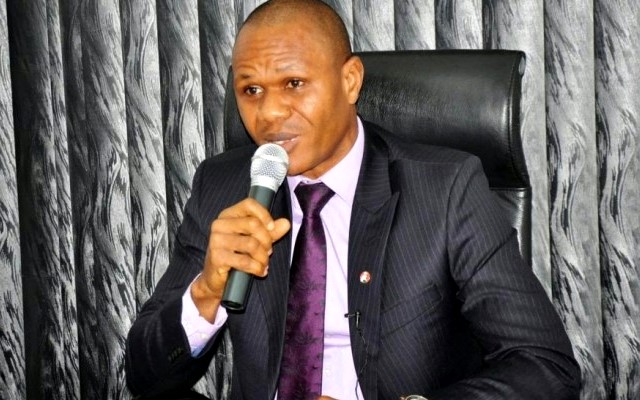
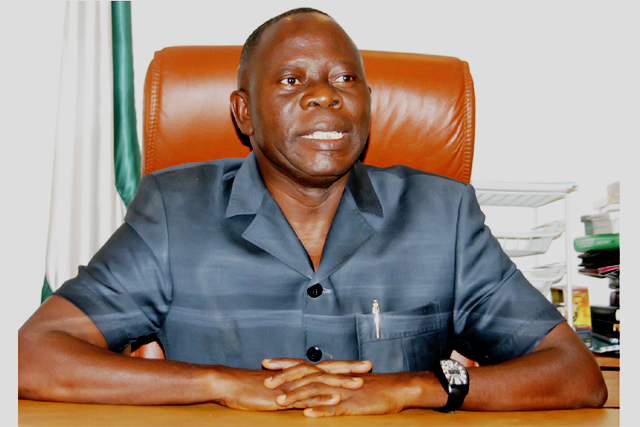
Adams Oshiomhole, the former Governor of Edo State, says the political elite will be the worst hit if Nigeria crumbles.

He has therefore warned them against pretending that all is well with the country and consistently ignoring the numerous calls for restructuring.

Oshiomhole gave the warning on Thursday in Lagos State at a lecture on fiscal federalism and Nigeria’s stability organised by the Department of State Services (DSS).

Quoting Fidel Castro, former President of Cuba, Oshiomhole likened Nigeria to a ship that is on sail but with various passengers who are occupying cabins of varying degrees of comfort.

“Obviously, this vessel is carrying too much injustice to remain afloat and it pursues such an irrational and senseless route that it cannot call on a safe port,” he said.

“This vessel seems destined to crash on an iceberg; if that happens, we will all sink with the vessel.

“The reason that people are invoking all kinds of sentiments, vocabularies, diversions and all that is the fact that, it seems to me that it is becoming increasingly clear to many that the Nigerian ship, if we do not reorder the way it is and redistribute the passengers such that everybody will have some minimum comfort within the vessel, when the vessel sink, the wealthier you are, the more your losses.”

Oshiomhole however added that Nigerians must bear in mind that, though the present system of government needs to be re-discussed, “there is no ideal federalism and therefore you can’t speak to true federalism”.

“Every federal system has its own peculiarities and those peculiarities flow from history and from the particular unique environment that the particular country finds itself,” he said.

“So if you chose to copy America, it is your choice. There is no political theory that says America’s model is universally accepted.

“My own position is, you are never going to have neither a perfect federal system, nor will you have a perfect constitution…  because I’ve heard people blame the constitution, that it is responsible for our problems. And you are not going to have perfect structural arrangement such that if all other things remain the way they are, Nigeria will be delivered.”

Other speakers at the lecture include Ken Nnamani, former Senate President and Lawal Daura, Director General of the DSS.
QUESTION: Was Saraki right to award scholarships with his ‘dubious’ pension? Well…

Bukola Saraki Pension

Congratulations to the Socio-Economic Rights and Accountability Project (SERAP)! It has succeeded in proving to us all that advocacy does work.

Last month, SERAP accused former governors who are currently senators or ministers of dubiously earning N40 billion by drawing payments based on retirement and pension laws they crafted while in office.

It specifically named Bukola Saraki, Senate President; Rabiu Musa Kwankwaso (Kano), Kabiru Gaya (Kano), Godswill Akpabio (Akwa Ibom),Theodore Orji (Abia), Abdullahi Adamu (Nasarawa), Sam Egwu (Ebonyi), Shaaba Lafiagi (Kwara) as some of the culprits.
It also asked Abubakar Malami, Attorney-General of the Federation and Minister of Justice, to institute legal action against them to recover the money.
However, on Tuesday, Saraki said he had stopped receiving pension in Kwara. “No, I’m not collecting pension; the moment I saw that allegation, I wrote to my state to stop my pension,” he said at a NAN forum in Abuja.

Not yet satisfied, SERAP asked Saraki to donate his past pensions to charity or refund the sum total to the public treasury.

It was a statement the Kwara State chapter of the All Progressives Congress did not find funny; it immediately tweeted media reports of Saraki’s use of his pension to award scholarship to students.

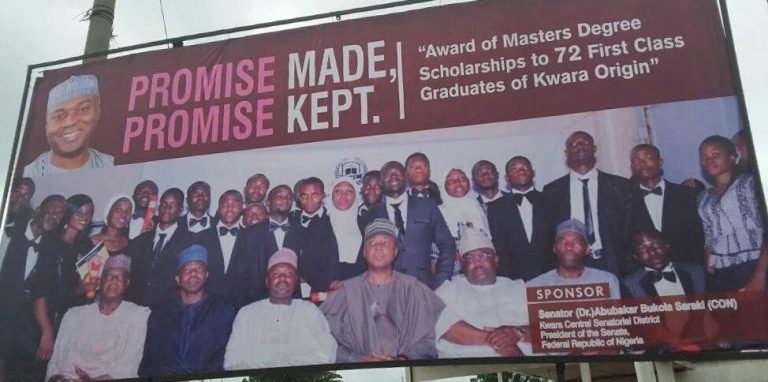
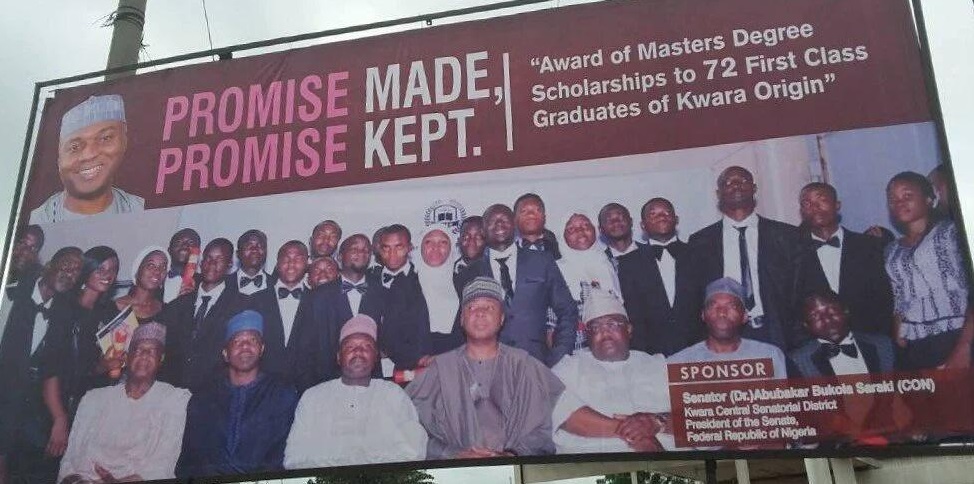
In once instance, two best graduating students for Unilorin’s faculty of law, received a N500,000 scholarship courtesy of the Abubakar Bukola Saraki Pension Scholarship Scheme (ABSPSS). And in another, Saraki offered postgraduate scholarships to 73 indigenes who graduated with first class degrees from various universities in the country. Although the worth of each scholarship was not stated, he said earlier that he had donated N45illion to the project.

Therefore, to APC Kwara, there is no issue: Saraki never touched the money in the first place, so case closed. Just like that? Well… not without debating the propriety of the scheme itself.

NO OFFENCE COMMITTED

APC is not alone in its position that there’s nothing more to discuss. The law entitling Saraki to pension in Kwara came into force after it scaled all legislative hurdles. So, in a way, the Senate President can’t be blamed for a law he didn’t make but only assented to.

He has also not made personal use of the money — or so we have been made to believe. How then can SERAP, or anyone else for that matter, ask him to refund all the pension he has received since 2011 or donate it to charity?

Saraki is busy touching dozens of lives; with the scholarship scheme funded from the pension, scores of brilliant but indigent students have found succour.

Truly, like APC said, this pension controversy is absolutely a moral rather than legal matter.

OFFENCE COMMITTED — ROBBING PETER TO PAY PAUL

First, what exactly is a pension? It is a fund into which a sum of money is added during an employee’s employment years, and from which payments are drawn to support the person’s retirement from work in the form of periodic payments.

In the real sense, can an ex-governor-turned-senator claim to have retired from public life? Is it appropriate to receive salary as senator while simultaneously receiving pension as a former governor? Would it have been possible for a civil servant, having retired from a federal agency, to receive pension while simultaneously collecting salary from another? If the latter scenario cannot happen, why should the former?

In any case, Saraki’s pension was paid from public funds, and no individual outside a government should decide how its funds are spent? Collecting dubious pension to fund scholarships is like robbing Peter to pay Paul. That moral argument can’t be won by Saraki and the Kwara APC.

WORTH OF THE PENSION

Kwara’s 2010 pension law gives a former governor two cars and a security car replaceable every three years, a well-furnished five-bedroom duplex, furniture allowance of 300 per cent of his salary, five personal staff, three SSS, free medical care for the governor and the deputy, 30 percent of salary for car maintenance, 20 per cent for utility, 10 percent for entertainment, 10 per cent for house maintenance.

Based on the approved ‘Remuneration Package for Political, Public and Judicial Office Holders’ prepared by the Revenue Mobilisation Allocation and Fiscal Commission (RMAFC), a state governor currently earns an annual salary of N11.5 million per annum.

When the maths is done based on all the percentages in the afore-stated pension, the sum total is a huge amount of money — too much for one person to expend on a scholarship on behalf of the public.


READ ALSO:

ALERT: 2,500 doctors WILL leave Nigeria between August and September


Doctors

Between August and September, a total of 2,500 Nigerian medical doctors are going to leave the country in search of greener pastures abroad, an Emigration Doctor Survey report has revealed.

According to the report, released in Abuja on Thursday by NOIPolls in collaboration with Nigeria Health Watch, eight out every 10 medical doctors — representing 88 percent of medical doctors in Nigeria — are currently seeking work opportunities abroad.

Nigeria has about 72,000 medical doctors registered with the Medical and Dental Council of Nigeria but only approximately 35,000 are currently practising in the country.

While releasing the report at a press conference, Bell Ihua, Chief Executive Officer (CEO) of NOIPolls, said the finding cuts across junior, mid and senior level in both public and private medical institutions such as house officers, corps members, medical and senior medical officer, residents, registrars, consultants and medical doctors.

The survey, Ihua said, revealed that United Kingdom and the United States are the top destinations where Nigerian medical doctors seek work opportunities.

“Consequently, many Nigerian doctors are currently registered to write foreign medical exams such as PLAB for the UK (30 percent), USMLE for the United States (30 percent), MCCE for Canada (15 percent), AMC for Australia (15 percent) and DHA for Dubai (10 percent) among others.

He further said that the National Population Commission (NPC0 has projected current population to be about 182million at a 3.5 percent rate from the 2006 census.

“This means we need about 303,333 medical doctors now and at least 10,605 new doctors annually to join the work force,” Ihua said.

“Only at this level can we expect good quality patient care that is not compromised by errors occasioned by fatigued and overworked medical doctors.”

But this, he said, can only be achieved if the Federal Government moves to address the factors leading to the exodus of medical doctors from the country, by providing better facilities and work environment, higher remuneration, career progression, professional advancement and better quality of life.

Majority of respondents (87 percent) believe government is unconcerned about mitigating the challenges facing medical doctors in the country.

“The trend has been on since 80s and 90s and it was Saudi Arabia that was the destination of most senior medical doctors then, who would just go and spend two years on sabbatical and come back with a lot of money,” he said.

“Doctors who left the country then were seen as unpatriotic but now it is an exodus. Between now, August and September this year, 2500 medical doctors will leave Nigeria for better opportunities abroad.

“Medical training here is highly subsidized because government has made it inexpensive through funding of teaching hospitals while people pay through their nose to go to medical schools abroad. Yet, Nigerian doctors trained with public funds are being taken by other countries.”

Speaking at the event, Abimbola Olajide, a medical doctor and northern Ccucus leader of the National Association of Resident Doctors (NARD), lamented that while Nigerians embark on medical tourism abroad, they ended up being treated by Nigerian medical doctors who have relocated abroad.

“Even doctors that are treating President Muhammadu Buhari in London are Nigerians,” Olajide said.

EFCC: No rift with the AGF but corrupt elements want to ‘knock our heads together’

Wilson Uwajuren, EFCC spokesman

Wilson Uwajuren, spokesman of the Economic and Financial Crimes Commission (EFCC), says there is no rift between the commission and Abubakar Malami, Attorney-General of the Federation and Minister of Justice.

However, he said corrupt elements were angling to knock their heads together in furtherance of their own pro-corruption agenda

In a statement issued on Thursday, Uwajuren said such false insinuations are handiwork of “some unscrupulous persons (who) have continued to push the false narrative into media headlines”.

“The attention of the EFCC has been drawn to the near-daily reportage of either the existence of a face-off or an impending and damaging conflict between the Commission and the office of the Attorney-General of the Federation and Minister of Justice, Abubakar Malami (SAN),” he said.

“Notwithstanding the fact that EFCC has been consistent in its position that there is absolutely no conflict (actual or impending) with the AGF, some unscrupulous persons have continued to push the false narrative into media headlines.

“For the avoidance of any doubt, the EFCC wishes to categorically state that it is compliant with all provisions of law and has no intention to stoke a misunderstanding over requests from the office of the Attorney-General and Minister of Justice.

“Furthermore, the Commission’s mandate, operational philosophy and the conduct and pronouncements of its officials do not countenance any activity on the fringes of the law. It is therefore untenable for there to be any suggestion that the EFCC or the Commission’s principal officials are either in conflict with or readying for a ‘showdown’ with the AGF or other officials of government.”

Uwujaren said “any such conflicts being paraded in the media exist only in the apparently fertile imaginations of corrupt elements angling to knock heads together in furtherance of their own pro-corruption agenda”.

“All the brouhaha raised in recent days over a non-existent conflict between the EFCC and the office of the AGF only go to underline the fact that corruption can and is fighting back in a variety of ways,” he continued.

“The Commission wishes to underscore that the EFCC is a creation of statute and is operations and officials being as they are, guided by the firm, unambiguous provisions of those laws and regulations, are not and can never be in contravention of the law or opposition to constituted authority.Uwajuren reiterated that the EFCC, being a creation of the law, is guided by rules and regulations, and therefore ‘can never be in contravention of the law or opposition to constituted authority.'”

FLASHBACK: Two times Saraki donated his pension to Kwara students

Two times Saraki donated pension to Kwara State students

On Tuesday, Bukola Saraki, Senate President, told journalists that he no longer receives pension from the Kwara State Government, where he was Governor for eight years.

But the Socio-Economic Rights and Accountability Project (SERAP) urged him to return the pensions he had already collected to the state government or donate it to charity.

No sooner had SERAP released its press statement than the state chapter of the All Progressives Congress (APC) took to its Twitter handle to correct SERAP, saying that Saraki does fund several charity projects using his pension.

The party shared two of such instances.

SEPTEMBER 2015

In September 2015, two best graduating students for the 2014/2015 academic session of the Faculty of Law, University of Ilorin, of Kwara State origin, were each granted scholarship courtesy of the Abubakar Bukola Saraki Pension Scholarship Scheme, (ABSPSS).

The students, Mohammed Abdullahi-Tosin from Irepodun Local Government Area and Adam Ndakuku from Edu Local Government, were presented with a cheque of N500, 000 each by Saraki, who noted that the award could be an endowment for life.

Saraki said his aim was to ensure that the serves “as a form of social security to support existing state Scholarship Scheme.”

DECEMBER 2016

Similarly, in December 2016, Saraki offered postgraduate scholarships to 73 Kwara State indigenes who graduated with first class degrees from various universities across the country in the 2015/2016 academic session.

Saraki said the gesture was based on his belief that human resources is of greater worth than natural resources.

“What we have here is worth more than many barrels of oils and worth more than many carats of gold,” he said at the ceremony.

It is however not clear when Saraki wrote the Kwara State government instructing it to stop his pension payment.

On Tuesday, Saraki told newsmen that he no longer collects pension. He said: “No, I’m not collecting pension; the moment I saw that allegation, I wrote to my state to stop my pension.”

However, in a facebook post in December 2014, prior to the 2015 general election, Saraki said he was using his accumulated pension benefits of N45 million to kick-start the Abubakar Bukola Saraki Students Foundation (ABSSF).

“Senator Saraki … will be donating his accrued pension arrears from the time of his Governorship (45 Million Naira) which he has not taken a kobo of, to kick-start the start-up funding of the foundation,” read a message by Bamikole Omisore his media aide.

Saraki later tweeted: “Since I left office in 2011, I have not accessed any portion of my pension. It has now accrued over N45 million, which I am donating.”

It is not immediately clear whether Saraki continued to receive pension from the Kwara State government afterwards.

More than a month after reinstatement, sacked whistle-blower still awaiting unpaid salaries


Ntia Thompson 4

The ministry of foreign affairs has still not settled the unpaid seven-month salaries of Ntia Thompson, the staff who was sacked for blowing the whistle on the looting of a total of $229,000 and N800,000 meant for crucial projects in the ministry.

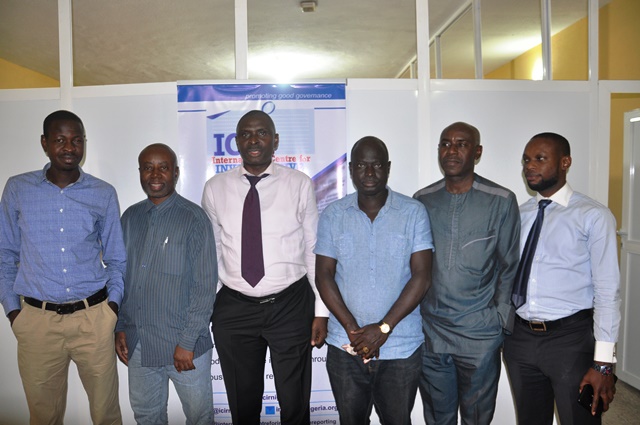
Chido Onumah, Executive Director of the African Centre for Media and Information Literacy (AFRICMIL), made this known during a courtesy visit to the International Centre for Investigative Reporting (ICIR) in Abuja on Wednesday.

According to Onumah, Ntia was recalled but was redeployed from the SERVICOM department, where he worked, to the library department.

“We’ve been sending press releases to you on this matter but luckily, Mr Ntia has been recalled,” he said.

“He was recalled and was posted to the library. They removed him from the SERVICOM unit where he was. Up until last week, his salaries from December when he was suspended hasn’t been paid.

“When he started having this problem, he made a request to be transferred to the Ministry of Budget and National Planning and I think that request was granted two days ago.”

However, Onumah said that the other case of Murtala Ibrahim, who was suspended by the Federal Mortgage Bank (FMB) had still not been resolved.

Murtala had exposed his firm for misleading Babatunde Fashola, the Minister for Works, Power and Housing, into believing that the FMB had recorded a huge profit when the reverse was actually the case.

Murtala Ibrahim
Murtala Ibrahim

He said: “The Federal Mortgage Bank has never had any surplus or profit. The current executive managed to swindle the Minister of Works, Power and Housing to say that they made about N500 million; I’m not sure of the figures but the figures are there.

“And they went to the minister and the minister was happy to go on national television to congratulate them.. So some of the things that Murtala had raised is also that issue that they deceived the Minister and maybe that’s why the Minister is finding it difficult to take up the case, because in Murtala’s petition, he insisted that these people deceived the Minister by claiming that they made profit.

“We have written to the Minister asking for Mr Murtala’s recall or even an investigation into the allegations but up until now, there hasn’t been anything so far.”

AFRICMIL ICIR
Onumah (2nd left) and Dayo Aiyetan (3rd left), Executive Director ICIR, during the courtesy visit 

Onumah said it is important for civil society groups to collaborate with the media to put pressure on government agencies and institutions to maintain the integrity of the whistle-blower policy so as not to discourage members of the public who may have valuable information.

“There are three things we are looking at in terms of this whistle blowing project,” Onumah said.

“One is to create awareness about the whistle-blower policy to ensure that Nigerians know about it because the only way people can take advantage of the policy is to know that such a policy exists.

“The second is how to maintain the integrity of the process. We are all Nigerians and we know how government initiatives end up, they come and go. So what we intend to achieve with this second part is just to keep the people involved on their toes and let them know that people are watching also.

“The last part, which is equally as crucial as the other parts, is the protection of whistle-blowers. It is one thing to ask people to blow the whistle but when people are over and over again, being victimised for blowing the whistle, particularly when they see what is happening to other people, it becomes a disincentive.”

In his reply, Dayo Aiyetan, Executive Director of ICIR, commended Onumah for AFRICMIL’s good work, and assured him that the ICIR would continue offering its support.


BAT faces prosecution for ‘bribing’ government officials in African countries


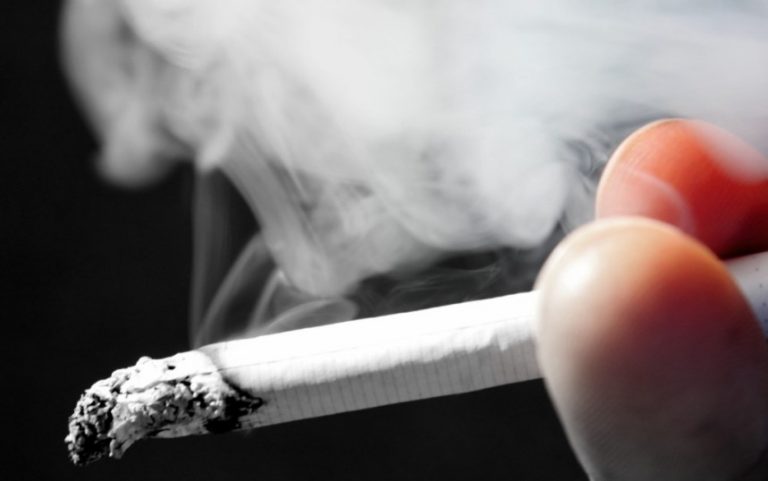
Matthew Myers, President of the Campaign for Tobacco-Free Kids, has called for full prosecution of British American Tobacco (BAT), a UK tobacco company, for allegedly bribing politicians and government officials to suppress regulations and health warnings against cigarette-smoking in many African countries.

This call came after formal investigations launched by the UK’s Serious Fraud Office (SFO) into the company’s alleged bribing of local officials to gain market share and capture the growing youth population in Africa.

The SFO announced Monday that it was “investigating suspicions of corruption in the conduct of business by BAT p.l.c, its subsidiaries and associated persons”. It also solicited assistance on the investigation from the public, and provided a “secure and confidential reporting channel for relevant information“.

BAT is the market leader in Nigeria, with brand such as as Dunhill, Pall Mall, Benson & Hedges, Rothmans, St. Moritz, Consulate, London King Size, Sweet Menthol, Royal Standard, and Excel Three Rings.

“The allegations that British American Tobacco paid illegal bribes to influence members of parliament and gain advantage over competitors in multiple African countries are truly shocking,” Myers said on Tuesday while reacting to the latest development.

“British American Tobacco should be investigated and prosecuted to the fullest extent of the law,” he added, urging the US Department of Justice “to also investigate the company’s alleged misconduct, especially as BAT recently merged with Reynolds American and now operates one of the largest publicly traded tobacco companies in the US”.

Myers stated that the investigation into BAT’S bribery and other illegal activity “is a reminder to the public that tobacco companies cannot be trusted” adding that it should “prompt governments to stand up to the industry and take strong action to reduce tobacco use and save lives.”

BBC reports that the allegation of bribing government officials to influence laws around tobacco use was first made in 2015 by the former staff of the company.

In May, civil society organisations in Nigeria raised alarm over dubious schemes by tobacco companies to derail the implementation of the National Tobacco Control (NTC) Act signed into law in 2015 by Goodluck Jonathan, the former President.

Although British America Tobacco was not specifically mentioned, the CSOs accused tobacco companies of coercing government officials to advocate on their behalf, interfering in policy making through trade committees and third parties, and aggressively lobbying and bribing policymakers.

NTC Act has not been implemented after two years of being signed into law as the Ministry of Health, through the National Tobacco Control Committee (NATOCC), is still working out modalities for the implementation of the Act. The activities of the committee had seriously been criticised by people who were believed to be sponsored by the tobacco industry.

Meanwhile, the Ministry of Health launched a campaign to ban smoking in public places, including motor parks, shopping malls and health care centres in June, but there has been little and no awareness of the campaign.

Section 9 of the NTC Act stipulates fine of at least N50,000 and/or six-month imprisonment for offenders but there is no record of anybody who has been arrested for smoking in public place.

The World Health Organisation estimates that worldwide, second-hand tobacco smoke is currently responsible for the deaths of about 600,000 people yearly, 80 per cent of which occur in low-income and middle-income countries like Nigeria.

Investigations by the BBC, Guardian UK and Reuters have revealed how British America Tobacco and other tobacco companies bribe government officials in Africa to capture the growing number of young people as Western countries tighten control on tobacco use.

There are an estimated 77 million smokers in Africa and those numbers are predicted to rise by nearly 40% from 2010 levels by 2030, which is the largest projected such increase in the world, according to the Guardian.

Despite service chiefs’ relocation to Maiduguri, Boko Haram beheads seven in Madagali

Boko Haram attacks Madagali kills seven

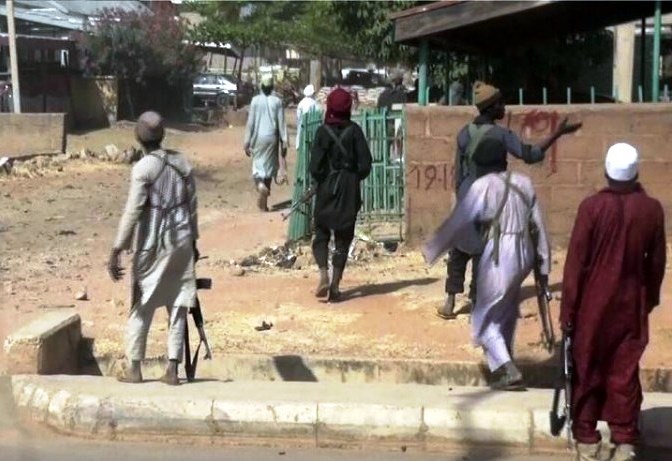
Boko Haram terrorists have beheaded seven people in Mildo community in Madagali Local Government Area of Adamawa State just three months after a similar attack on the community was repelled by the army.

The attack, which took place between Tuesday night and Wednesday morning, comes less than 24 hours after service chiefs temporarily relocated to Maiduguri the Borno State capital on the orders of Acting President Yemi Osinbajo.

Two women were also injured in the attack, while the insurgents torched many houses in the area.

In April, Akintoye Badare, a Major and Army Public Relations Officer of the 28 Task Force Brigade Mubi, told journalists that the troops successfully repelled a Boko Haram attack on Madagali and Liman Kara, a town in neighbouring Borno state.

Badare, a Major, had said the operation lasted one and half hours, adding that the soldiers also captured three Chadians who were members of the terrorist group.

Madagali was first captured by the Boko Haram insurgents in 2014 but the town was liberated by the Nigerian military months later.

In January, Madagali witnessed a series of suicide bomb attacks that led to the loss of several lives.

On Monday, Osinbajo ordered the service chiefs to relocate to Maiduguri, following an ambush by the terrorists on a federal government oil exploration team .

More than 50 members of the team were killed by the insurgents while some of them were kidnapped.

In a video released by Boko Haram after the attack, three of the abducted persons were seen begging the government to cooperate with the terrorists to facilitate their release.

Graduate at 21, master’s holder at 24, professor at 38… meet Owasanoye, the new ICPC chairman

Bolaji Owasanoye, Professor at 38, women-children activist, pastor

On Tuesday, Acting President Yemi Osinbajo appointed Bolaji Owasanoye to succeed Ekpo Nta as Chairman of the Independent Corrupt Practices and other related offences Commission (ICPC).

The new ICPC chairman was Executive Secretary of the Presidential Advisory Committee Against Corruption (PACAC), and has been a research professor at the National Institute of Advanced Legal Studies (NIALS) for the past 25 years. But that is just one feather on the cap of the erudite legal practitioner.

GRADUATE AT 21, MASTER’S HOLD AT 24 AND PROFESSOR AT 38

Bolaji-Owasanoye

Born in 1963, Owasanoye graduated with a second class upper degree in Law from the University of Ife (now Obafemi Awolowo University) in 1984 and was called to the Nigerian Bar in 1985.

He then proceeded to the University of Lagos in 1986, beginning his career as an Assistant Lecturer. It is from UNILAG that Owasanoye bagged a master’s degree in Law in 1987, at the age of just 24.

From UNILAG, he moved over to NIALS in 1991; 10 years later, in 2001, he became a Professor of Law, aged 38.

He also had stints at various international institutions, including the Royal Institute of Public Administration in the UK and the International Law Institute, Washington, USA.

WOMEN/CHILD RIGHTS ACTIVIST

In 1997, Owasanoye co-founded the Human Development Initiative (HDI), a not-for-profit organisation with the main objectives of championing human capacity development, especially at the grassroots.

The organisation focuses more on widows, youths and teenagers – especially in-school adolescents and children in worst forms of labour. HDI’s mission statement reads: To strengthen vulnerable humans, in society by social development programmes and initiatives that promote equality, justice, solidarity and opportunities.

Owasanoye has presented many papers at United Nations events on the need for the right of children to be upheld in all the nations of the world.

ANTI-CORRUPTION CAMPAIGNER

Owasanoye

At PACAC, where he served as the Executive Secretary, Owasanoye was one of the vocal and courageous members of the committee. He was an advocate of the whistle-blower and witness protection bills recently passed by the senate.

He never backed off from criticising even his own primary constituency – the Judiciary – especially when the matter has to do with incidents of corruption.

In an interview on the failure of the prison decongestion project of the federal government, Owasanoye said: “The Prison decongestion project situated in the FMOJ for a number of years gulped billions over a five-to-six-year period without impacting the prison situation.

“Systemic corruption entrenched within the FMOJ and collaborating lawyers in private practice effectively truncated the project.

“The NBA, as a major stakeholder, failed to play the role of a watchdog of the process in spite of its avowed commitment to criminal justice administration. Rather NBA leaders and former Attorneys-General of the Federation used the project as patronage for lackeys and supporters.”

Owasanoye’s NGO has successfully implemented over 50 advocacy projects on human rights, rule of law, governance and anti-corruption.

These include the ‘Stop Impunity Nigeria Campaign’, aimed at eliminating impunity in public finance management; and the ‘LG budget-watch’ designed to tackle corrupt practices at the local government level.

CLERGYMAN

What many do not know about Owasanoye is that during his lecturing days at the University of Lagos, he was the Assistant Chaplain at the UNILAG Chapel of Christ our Light. He is also a member of the clergy at the Aso Villa Chapel in the State House Abuja.

AWARDS

Owasanoye has won several national and international awards, including the University of Lagos Scholarship Award (1986/1987), UN Institute for Training and Research Fellowship Award (1991, 1994), US Information Service International Visitors Award (1991), British Council Fellowship Award (1992) and Senior Special Fellowship, United Nations Institute for Training and Research (2001).

He has published over 100 academic and research projects in national and international journals and has authored/edited over 10 books.

From January 2007 to date, Owasanoye has been the Secretary of the National Working Group on the Review of Investment Laws in Nigeria. Through his professional and social activities, he has worked in anti-corruption circles and his appointment as ICPC Chairman should turn out the fixing of a square peg to a square hole.

SERAP asks Saraki to refund six years of ‘illegal’ pension

Adetokunbo Mumuni

The Socio-Economic Rights and Accountability Project (SERAP) has welcomed Senate President Bukola Saraki’s move to stop receiving pensions from Kwara state, where he was Governor between 2003 and 2011.

In July, SERAP had asked Abubakar Malami, Attorney-General of the Federation and Minister of Justice, to institute legal action on behalf of the Nigerian people to recover over N40 billion dubiously earned in double payments by former state governors who are now either senators or ministers.

It alleged that the former governors and their deputies were drawing the dubious payments based on retirement and pension laws they crafted while in office.

The organisation said Malami must, within seven days of receipt of the letter, institute the legal action. It warned that it would institute legal proceedings to compel the discharge of constitutional duty and full compliance with Nigeria’s international anti-corruption obligations and commitments if the Attorney General fails to take action.

The human rights group specifically alleged that Bukola Saraki, Senate President; Rabiu Musa Kwankwaso (Kano), Kabiru Gaya (Kano), Godswill Akpabio (Akwa Ibom),Theodore Orji (Abia), Abdullahi Adamu (Nasarawa), Sam Egwu (Ebonyi), Shaaba Lafiagi (Kwara) are among former governors receiving double emoluments and large severance benefits from their states.

However, on Tuesday, Saraki said he had stopped receiving pension in Kwara.

“No, I’m not collecting pension; the moment I saw that allegation, I wrote to my state to stop my pension,” he said at a NAN forum in Abuja.

“I speak for myself on that part. I’m not doing that; I am not receiving pension from my state. I think I will leave everybody to their individual decision. Morally, if you have got another job, you should give it up until when you are truly a pensioner.”

SERAP has now gone a step further, asking Saraki to donate his past pensions to charity or refund it to the public treasury.

“It’s good news that Dr Saraki has publicly made known that he has stopped drawing pensions from Kwara state,” read a statement by Adetokunbo Mumuni, SERAP’s Executive Director.

“We hope that other public officials still receiving double emoluments will follow Dr Saraki’s example and renounce such practice. We also urge the Senate President to publicly commit to donating to charities of his choice all pensions and allowances he has so far collected or to such emoluments to the public treasury.”

SERAP also asked “the Senate President to use his leadership position to urgently facilitate a resolution by the National Assembly condemning the practice and laws on double pay and life pensions for former governors now serving public officials”.

It urged state assemblies to abolish such laws, and called on those that have received such emoluments to return them to the public treasury.

“Dr Saraki should work with us to put meaningful pressure on other states to abolish their unfair and discriminatory life pensions laws as well as on serving senators and ministers who continue to receive double emoluments to end the practice and return all the emoluments they have so far received to the public treasury,” SERAP said.

“Dr Saraki can start by putting pressure on the Governor of Kwara state Mr Abdulfatah Ahmed and the state house of assembly to move swiftly to abolish the law that has facilitated the payment of the unjust pensions in the first place.”