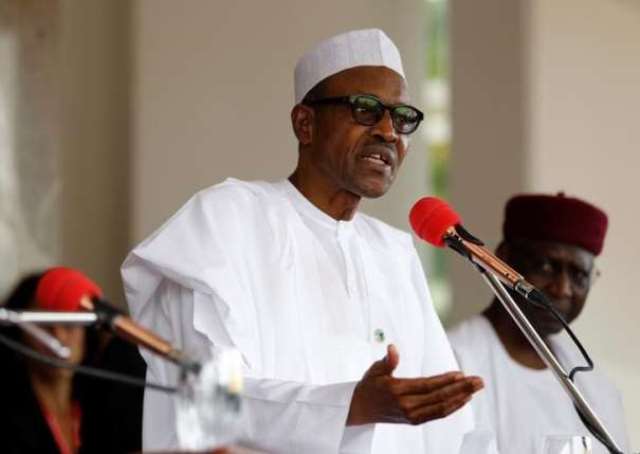
President Muhammad Buhari has said that the upcoming elections in Ondo and Rivers states would serve as litmus test for 2019 election.
He said “if we can’t conduct an election in one state then we should forget about 2019.’’
Buhari has directed security agencies to do their utmost in ensuring violence-free elections in Ondo and Rivers states.
The Senior Special Assistant to the President on Media and Publicity, Garba Shehu, said Buhari issued the directive at a state dinner in Benin, the Edo state capital, on Monday.
Shehu said the president was disturbed by what happened in Kogi, Bayelsa and Rivers states during past elections.
‘‘What happened in [the last elections] Kogi, Bayelsa and Rivers State disturbs me a lot.
‘‘I think we should go beyond these actions. Why do we kill each other? Putting tyres on people and setting them ablaze.”
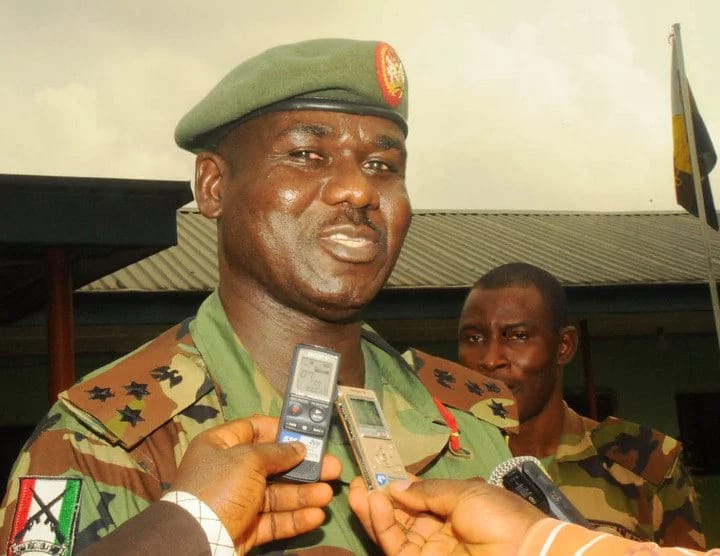
Nigeria’s Chief of Army Staff, Tukur Buratai, has attributed the renewed attacks by the Boko Haram Terrorist group to the support of some wealth- to- do Nigerians.
The army chief made this revelation after he met with a security delegation from the Atlantic Council, African Centre in the United States of America.
He stressed that there was the need for more local and international support in order to effectively combat terrorism both in Nigeria and across the globe.
Buratai said: “We have some elements who are within this society and are still supporting them (Boko Haram) clandestinely.
“So the support of every Nigerian is very key to the end of this terrorism.”
He also clarified the role of the Army in prosecuting the counter-terrorism crusade in the northeast, which according to him had been misinterpreted by some people.
“There have been many misgivings on the role of the Nigerian Army as it relates to human rights abuses, rules of engagement, (and) treatment of civilians and Internally Displaced Persons.
“Hence, the need to conduct an assessment on the threats of Boko Haram insurgency in Nigeria with emphasis on roles of (the) Nigeria Army has become imperative,” he said.
Leader of the delegation, John Peter-Pham, stressed that one of the ways to decimate the terrorists is by blocking their sources of funding.
Peter-Pham noted that the Boko Haram insurgency does not pose a threat to Nigeria alone but also to its neighbours in the international community, adding that terrorism has caused untold human suffering and is a setback for regional integration and economic growth.
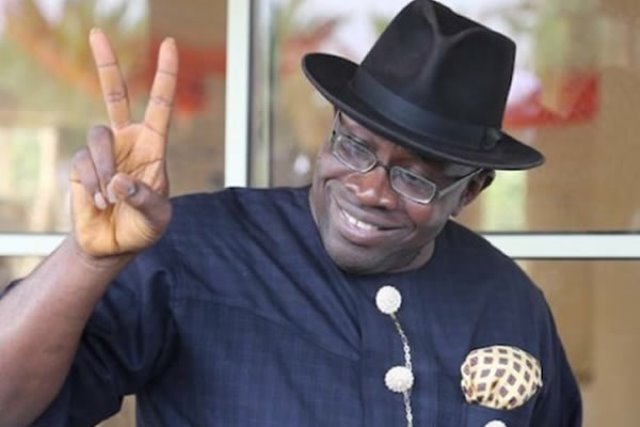
The Supreme Court has upheld Seriake Dickson as the validly elected Governor of Bayelsa State.
The court upheld the judgement of the appeal court, which had also held that Dickson’s victory in the governorship election held in Bayelsa State in January this year was valid.
Timipre Sylva, candidate of the All Progressives’ Congress, APC, had appealed Judgments delivered by the Election Petition Tribunal and the Court of Appeal, both of which affirmed Dickson’s election.
The court is expected to give it’s reasons for the judgement on November 18, 2016.
Earlier on Tuesday, the Peoples Democratic Party had alleged that the APC was trying to manipulate the Supreme Court ruling.
National Publicity Secretary of the party, Dayo Adeyeye, wrote in a statement: “We are aware that these people and other senior members of APC are again, putting pressure on Justices of the Supreme Court to pervert the course of justice by overturning the decisions of the Election Petition Tribunal and the Court of Appeal to nullify the Mandate freely given to Governor Seriake Dickson by the people of Bayelsa State.
“We reiterate our belief that the Judiciary is the last hope of the common man and the bastion upon which our entire democracy rests. We believe that there are men and women of integrity, with proven track records in the dispensation of justice who ensure that justice is not only done but is also seen to be done.
“We urge the Justices of the Supreme Court to ignore this pressure and give judgment in line with the dictates of our Constitution, electoral laws and good conscience,” he stated.
Chairman of the Code of Conduct Tribunal, CCT, Danladi Umar, has adjourned the ongoing trial of Senate President Bukola Saraki, to January 11, 2017, for continuation of hearing.
This followed the end of the cross examination of the chief prosecution witness, Michael Wetkas, an investigator with the Economic and Financial Crimes Commission, EFCC.
During the cross examination at the resumption of hearing on Tuesday, counsel to the Senate President, Paul Usoro, asked the witness if he still stood by his claims that Saraki received salaries four years after his tenure as Kwara State Governor, even while still receiving salaries and allowances as Senator, and the witness answered in the affirmative.
Thereafter, Usoro told the tribunal that he is done with the cross-examination.
The chairman of the tribunal then asked the prosecution whether it wanted to cross-examine the witness, but the prosecution counsel, Umar Ibrahim, standing in for the lead prosecutor, Rotimi Jacobs, asked for an adjournment to enable the prosecution prepare for a re-examination
Umar then informed the parties in the case that the tribunal would not be able to adjourn to any date in 2016 and subject to the agreement of parties the trial has been adjourned to January 11, 2017.
The senate president is accused by the EFCC of false assets declaration dating back to his time as governor of Kwara State.
He is also accused of receiving salaries from the Kwara State government even after his tenure as governor had elapsed.
The Nigerian Senate has resolved to investigate the concession agreement between the Transportation Ministry and a US company, General Electric, which was intended to revive the country’s railways.
The lawmakers are worried that the agreement may have been unilaterally entered into between the Transportation Minister, Rotimi Amaechi and GE.
At plenary on Tuesday, Chairman of the Senate Committee on Gas, Akpan Bassey, raised a motion claiming that the Transport Minister violated the Public Enterprises (Privatization and Commercialization) Act, 1999 by “unilaterally engaging General Electric for the concessioning of the Western and Eastern Rail Lines.”
Bassey said that the Bureau of Public Enterprises, BPE, and the Nigeria Infrastructure Advisory Facility had developed a roadmap for the project, when it was first introduced by the National Privatization Council in April 2015, during the last days of Goodluck Jonathan as President.
He maintained that the BPE had engaged the Global Infrastructure Facility and the World Bank in discussions on how to access funds to manage the project before Amaechi’s “unilateral” deal with GE.
Following the motion, the Senate resolved to refer the matter to its committees on privatization, finance, land transport, anti-corruption and financial crimes, trade and investment for further actions.
Amaechi, in an interview with an international media organisation in June this year, had announced that Nigeria was engaging GE with regards to the concession of Western and Eastern rail lines – Lagos to Kano and Port Harcourt to Maiduguri respectively – worth around $2 billion.
“GE is already in; we are trying to get the government agencies to allow us negotiate with GE,” Amaechi was quoted as saying in the interview.
“The company is going to bring in over $2 billion in the Nigerian railway sector in which they are going to revive the Lagos-Kano narrow gauge and revive the Port Harcourt-Maiduguri narrow gauge by private investment,” he added.
The concession agreement has however been supported by President Muhammadu Buhari.
In his Independence Day speech, Buhari said: “General Electric is investing $2.2 billion in a concession to revamp, provide rolling stock, and manage the existing lines, including the Port Harcourt-Maiduguri Line. The Lagos-Calabar railway will also be on stream soon.”
It would be recalled that members of the National Assembly clashed with the Transport Minister during the 2016 budget process, over the Lagos-Calabar coastal rail project which was not in the original appropriation bill presented to the lawmakers by President Buhari, but was forwarded through the committee on land transport as a supplementary proposal of the transport ministry.
Nnamdi Kanu, leader of the Indigenous People of Biafra, IPOB, has been re-arraigned on an amended 11-count charge bordering on terrorism, treasonable felony and publication of defamatory matter.
The News Agency of Nigeria, NAN, reported that Kanu, along with Chidiebere Onwudiwe, Benjamin Madubugwu and David Nwawuisi, were re-arraigned on Tuesday before Justice Binta Nyako of the Federal High Court, Abuja.
They, however, pleaded not guilty to the amended charges.
Nyako is the third judge to handle the case against the IPOB leader.
She fixed Nov. 17 to hear the bail applications filed by counsel to all the defendants.
Nwawuisi, who is the 4th defendant, was added in the amended 11-count charge, as he had not been previously charged with the other three in the earlier six-count charge.
In the amended charge, in count one, all four defendants were accused of conspiracy to commit treasonable felony, contrary to Section 516 of the Criminal Code Act.
In count three, they allegedly managed an unlawful society, while count eight borders on possession of unlawful firearms and count 11 hinges on acts of terrorism.
They allegedly committed the offences in Nigeria and London between 2014 and 2015.
Counsel to the defendants, Chucks Muoma,SAN, Inalegwu Adoga, E.I Esene and Maxwel Okpara, complained to the judge that the prosecution was bent on frustrating the case by employing unnecessary delay tactics.
But Nyako said that since the case was before her for the first time, she was not interested in what had happened in the past.
“The case is coming before me for the first time so let us start on a clean slate, forget what happened previously,” Nyako said.
The first judge that handled Kanu’s matter was Magistrate Shuiabu Usman of Wuse Zone 2, Magistrate Court, Abuja.
Usman squashed all the charges against Kanu after the Prosecutor, the Department of State Services, DSS, filed a motion challenging the court’s jurisdiction to hear the matter.
The case was later filed in the Federal High Court, Abuja, where it was assigned to Justice Adeniyi Ademola.
Kanu, however, during one of sittings told the court that he was no longer confident in the court saying he got information that he would not receive fair hearing.
The case file was then returned to the Chief Judge of the Federal High Court, Justice Ibrahim Auta who reassigned it to Justice John Tsoho.
However, following an alleged conflicting ruling given on the issue of secret trial in favour of the DSS, Kanu in a petition asked the National Judicial Council, NJC, to investigate Tsoho.
He also filed an application asking the judge to disqualify himself from the matter.
Tsoho then hands off the matter on Sept. 26 and sent the case file to Auta, who reassigned it to Nyako.
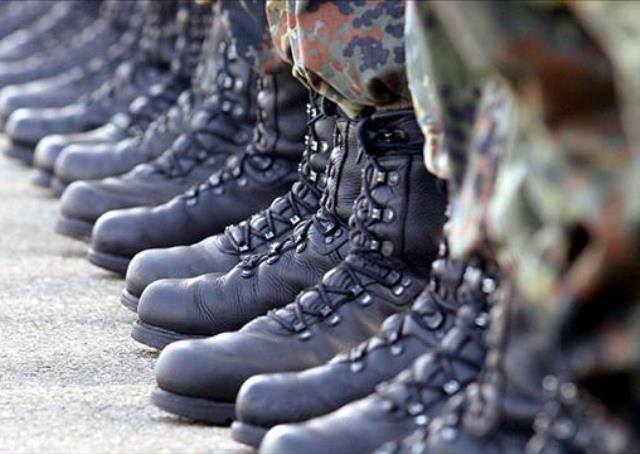
Footwear Manufacturers Association of Nigeria, FMAN, has accused the Federal Government of not following due process over recent award of 50,000 pairs of military combat boots, worth over N500 million to a shoe company in the country.
The spokesman of the association, Muhammadu Haruna, who is the Director of Footwear and Accessories Manufacturing and Distribution PLC, a Lagos-based company, described beneficiaries of the contract as, “clusters and cobblers who cannot be identified with a genuine manufacturing trade mark.”
The group claimed that the Minister of State for Trade and Investment, Aisha Abubakar, met with them and had promised them that the government would patronize shoe manufacturing companies.
The association said it was “saddened” that the government still went ahead to award the contract to an “Aba-based shoe company” without following due process.
Haruna said the association is frustrated by government’s attitude to local manufacturers who desire to contribute to the diversification and stabilization of the country’s economy.
He stated: “It is worrisome that Bata Shoe Company, which was established in 1960, and which was acquired by a Nigerian, with a staff strength of 5000, but can no longer boast of 100 staff
as a result of lack of patronage by the Federal Government. I think there is need for government to retrace its steps and encourage Made-in-Nigeria goods.”
He noted that the association has made several efforts to approach successive governments, “right from 1999 to date for us to discuss with the government and provide a blue-print for Nigerian shoe manufacturing companies, but all these efforts have proved abortive.”
The association also berated the FG’s decision to award contract for the manufacturing of Nigerian Military boots to a foreign company that will import sub-standard products when there are local companies that can do the job.
He said: “We have the capacity to produce footwear that can meet international standard, but we are not being patronized. As I am speaking to you, we have about 10 footwear companies that have the capacity to produce quality military boots.
“Let me also tell you that all over the world, Nigerian leather is one of the best, especially, the Kano leather. Give us the order to produce 200, 000 pairs of military combat boots and the whole companies that collapsed will be revived and every Nigerian will feel the impact.”
Suspected Niger Delta militants have again bombed a state-run oil pipeline at Batan, a community close to the southern port city of Warri, the second attack within a week.
According to the chairman of the community, Dickson Ogugu, the pipeline which was undergoing repair after previous attacks “was billed for commissioning either today or tomorrow,” before the latest attack.
Ogugu narrated to newsmen that four of the surveillance guards that were deployed to protect the Trans-Forcados export line narrowly escaped death after the militants opened fire on them.
He said: “The hoodlums after chasing them from the spot came down from their speedboat, (and) planted dynamite on swamp boogie, barge, crane and on the line.
“Unfortunately, only the dynamite on the barge exploded and immediately sank into the water.
“As I speak to you, the military are at the scene of the incident trying to dismantle the other dynamites,” he added.
Also, an army officer, who pleaded anonymity, confirmed the incident.
“We heard the shots in the middle of the night, but as you know, we do not patrol the area at night, so there was nothing we could do,” he said.
Last week, the same pipeline was bombed just hours after President Muhammadu Buhari met with stakeholders in the Niger delta to discuss how to end the militancy situation in the region.
The pipeline is being run by the state-owned Pipelines and Product Marketing Company, PPMC, receiving crude from the Batan flow station and feeding the Forcados export terminal.
There had been several attacks by different militant groups on the line since the beginning of the year, leading to a drastic reduction in the nation’s crude oil output and its attendant loss of revenue.
The militants say they are angry over the seeming marginalization of the Niger-Delta region despite the fact that the bulk of the Nation’s revenue comes from there.
President Buhari’s administration has begun peace talks with stakeholders in the region with a view to bringing the crisis to an end.
Hundreds of protesters gathered at the headquarters of the Independent National Electoral Commission, INEC, in Abuja, over the alleged production of fake election result sheets for the Rivers re-run elections.
The protesters under the aegis of Citizens for Good Governance demanded for the resignation of INEC’s Chairman, Mahmood Yakubu, whom they described as incapable of heading the electoral institution.
They alleged that the INEC National Commissioner in charge of Electoral Operations, Amina Zakari, as well as the Minister of Transportation, Rotimi Amaechi, were planning to rig the rescheduled legislative rerun election in favour of the All Progressives Congress, APC.
Rivers State Governor, Nyesom Wike had on Monday accused INEC, the Nigerian Police and the All Progressives Congress, APC, of colluding to rig the forthcoming Rivers Rerun elections.
The legislative re-run election in Rivers State has been rescheduled to hold on December 10, following a threat issued by the Nigerian Senate to suspend sitting if the election was not conducted on or beforeDecember 10.
INEC have had to reschedule the polls twice, citing the violence that characterized elections in the state; an NYSC member, who was co-opted as an ad-hoc INEC staff during the governorship election in the state last year.
The United States has spent over $30 million to promote family planning and other health interventions in the country.
Nancy Lawanthal, the Director of Health, Population and Nutrition of the US Agency for International Development, USAID, in Nigeria, made this known during a chat with journalists at the ongoing 4th National Family Planning Conference in Abuja on Tuesday.
Lawanthal said the agency had overtime made significant investment in reproductive health in Nigeria.
She said, “In Nigeria, USAID has devoted over $30 million on reproductive health. That is significant but it is not just for one aspect of reproductive health service.
“The money was used for promotion of programmes to have behaviour change towards investment in healthcare by private sector operators.”
She added that Nigeria was among the countries that is benefiting most from USAID’s interventions and programmes around the world.
She however regretted that Nigerians were not leading the programme as expected, saying that no other donor agency had been able to front for USAID in Nigeria.
Lawanthal added that the agency needed stronger commitment from Nigerians to derive the values and benefits of reproductive health services in the country.
“As donor partners, we also need to see more resources on the table to create more demand for family planning services in Nigeria,” she said.