Two of the eleven aircraft on the presidential fleet have been advertised for sale.
Presidential spokesman, Garba Shehu said that the adverts for the two aircraft – “a Falcon 7x executive jet and Hawker4000 were duly authorized by the Presidency.”
Shehu posted on his social media handle that the advert directed by President Muhammadu Buhari is in fulfillment of his campaign promises to cut down on economic wastages.
“When he campaigned to be President, the then APC candidate, Buhari if you recall, promised to look at the presidential air fleet with a view to cutting down on waste.
“His (President Buhari’s) directive to a government committee on this assignment is that he liked to see a compact and reliable aircraft for the safe airlift of the President, the Vice President and other government officials that go on special missions,” Shehu added.
When asked whether the 9 aircraft remaining on the presidential fleet were necessary, he said that “This exercise is by no means complete.
Shehu added that “I am sure the Commander of the Presidential air fleet will, any time from now, call you to a ceremony at which he will hand over some other aircraft to the Airforce for their operations.
There have been repeated calls on the president to lead by example and cut down the number of aircrafts in his fleet as part of measures to cut down on government spending.
The African Development Bank, AfDB, has promised to help Nigeria out of its economic recession, but wants the country to adopt more people-friendly monetary policies, and lower interest rate.
President of the bank and former minister of agriculture, Akinwumi Adesina, said this in an interview in London, adding that “Nigeria is too big to fail”, but noting that the country’s current interest rate was “way too high”.
“The African Development Bank will rally strongly around Nigeria to overcome its recession,” Adesina said.
“They (Nigeria) have a liquidity problem. We (AfDB) want to make sure Nigeria gets resilient.”
He added that the government of Nigeria should lift hard currency curbs imposed by the central bank, adding that such a move would end the pressure on the naira.
The AfDB president said, “In our view it would be better to have gradual (customs) tariffs as opposed to (Forex) restrictions.
“Attracting investment was the only way for the central bank to lower its interest rates. The interest rate is way too high.
“You cannot drag the economy out of recession with those interest rates.”
Adesina noted that Nigeria had agreed on several reforms such as increasing its value-added and corporation taxes to make up for the shortfall in oil revenues, pointing out that Nigeria’s present tax-to-GDP ratio was four to five per cent, less than other countries in the region at around 15 per cent.
Nigeria revenue generation has dipped in recent times, no thanks to the decline in the global price of crude oil, as well as renewed attacks on oil and gas infrastructure in the Niger Delta region.
Last month, the Monetary Policy Committee of the Central Bank of Nigeria, CBN, voted unanimously to retain its benchmark of 14 per cent interest rate, despite calls from different sectors of the economy for a downward review.
President Muhammadu Buhari has sent the 2017-2019 Medium Term Expenditure Framework, MTEF, and Fiscal Strategy Paper, FSP, to the National Assembly, ahead of the 2017 budget.
A letter to this effect was read by the Speaker of the House of Representatives, Yakubu Dogara, at plenary on Tuesday.
The letter pointed out that the documents were designed against the backdrop of an adverse global economic environment, and would provide the framework for the development of 2017 budget.
“In this regard, the 2017-2019 MTEF and FSP articulates the Federal Government’s economic, social and developmental objectives as well as the strategies for achieving these defined objectives and priorities,” the president’s letter read.
“I hereby forward the 2017-2019 MTEF and FSP to the House of Representatives and trust that it would be kindly considered and expeditiously approved so as to move the 2017 federal budget preparation process forward.”
Minister of Industry, Trade and Investment, Okechukwu Enelamah, on Tuesday announced that the federal government has set up a N25 billion revolving loan scheme to enable transport companies in the country purchase mass transit vehicles.
Enalamah said that the scheme would be administered through the Infrastructure Bank at zero percent interest rate.
He said this in Abuja on Tuesday at the opening of a two-day national workshop for chief executives of mass transit companies, organised by the National Automotive Design and Development Council in conjunction with the Nigerian Institute for Transport Technology, Zaria.
This is not the first time the federal government would roll out a transport scheme designed to support the local industry. A similar initiative in 2012 by the Goodluck Jonathan-led administration failed to yield any positive result, and instead led to a waste of public resources.
The fund, just like this present initiative, was administered as a revolving loan by The Infrastructure Bank, TIB, and was given out in form of mass transit vehicles to 31 beneficiaries, mostly commercial transport operators.
A total of 1,179 vehicles were released to the beneficiaries under the scheme, with a repayment plan covering four years.
But as at May 2016, only two of the beneficiaries namely: ABC Transport PLC and Young Shall Grow Transport Limited have fully liquidated their loans. The others complained that the vehicles given to them were not durable, and that most of them packed up less than a year into the scheme. The vehicles they complained about were Hyundai and Innoson buses.
They blamed the Infrastructure Bank for not consulting them before taking the decision to supply them the vehicles.
Beneficiaries who could not pay back fully include: the Nigerian Union of Road Transport Workers, NURTW; National Association of Road Transport Owners, NARTO; Road Transport Employees Association of Nigeria, RTEAN; Greenline Bus; Global Ginikana, and Classic Link Express.
Enalamah said that the aim of the initiative was to boost the mass transit system in Nigeria as well as encourage patronage of local vehicle assembly plants.
“Government is determined to develop the automotive industry because of its extensive linkages, impact on job creation, technology transfer as well as foreign exchange savings and earnings.
“Many of the new assembly plants produce buses and mini-buses. I hereby call on all Nigerians to patronise the products of these assembly plants,” Enalamah said.
Also speaking at the workshop, Minister of Transportation, Rotimi Amaechi, said that the mass transit sector has been faced with lots of challenges in recent times, despite being one of the major drivers of the country’s socio-economic development.
“This workshop is, therefore, organized to appraise the mass transit perspective of the Nigeria Automotive Policy,” he said
“It is a platform for stakeholders to meet and exchange ideas on the effective implementation of the policy and make recommendations for realising a sustainable mass transport agenda for Nigeria.
Amaechi added that the leadership of President Muhammadu Buhari is poised to address the challenges facing the transport sector and is willing to invest heavily in this sector.
Stakeholders in the transport sector are of the view that unless government learns from the mistakes of the past, the new scheme may suffer the same fate
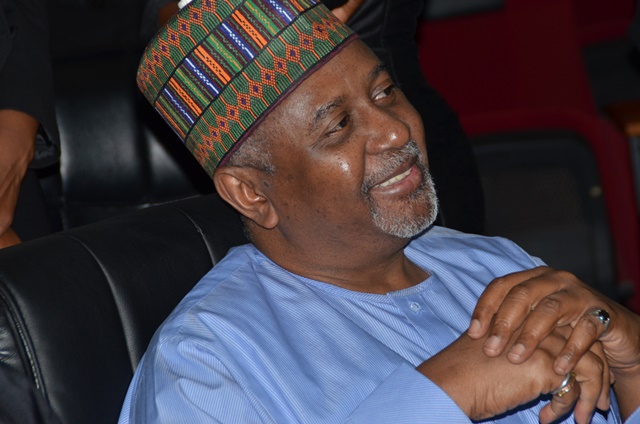
Embattled former National Security Adviser, NSA, Sambo Dasuki, got a reprieve on Tuesday from the ECOWAS Community Court of Justice when it ruled that his arrest and detention was unlawful and arbitrary.
The court also ruled that the Federal Government should pay a sum of N15 million as damages to the former NSA, and that the cost of litigation will be summed up and charged against the Nigerian government.
The court added that the federal government’s re-arrest of Dasuki on November 4, after he was granted bail by a court of law amounts to a mockery of democracy and the rule of law.
Dasuki, who is facing multiple trials over an alleged diversion of $2.1 billion meant for the purchase of arms during the administration of former President Goodluck Jonathan, had approached the ECOWAS court after he was rearrested by members of the Department of State Services, DSS, shortly after meeting his bail conditions in November last year.
The court had in April ruled that it had jurisdiction to hear the suit brought before it by Dasuki, who is seeking the enforcement of his fundamental rights to liberty and to own property as enshrined in the provisions of the Nigerian 1999 Constitution and African Charter on fundamental rights of persons.
The former NSA, who is also accused of illegal possession of fire arms, has remained in the custody of the DSS since his arrest.
A three-member panel of the ECOWAS court led by Justice Friday Nwoke on Tuesday, said the Nigerian government erred by arresting Dasuki without a search warrant, adding that the pattern of arrest negates the provisions of Section 28 of the Nigerian Police Act.
The section stipulates that a superior police officer may authorise the search of a residence belonging to a suspect assumed to be in illegal possession of an item, if the officer so authorised has a search warrant.
The court also noted that Section 143 of the Administration of Criminal Justice Act, ACJA, allows that where such a search is proposed by the police or other authorities, an application must first be made to a court of law and and granted after due consideration of the said application, in compliance with section 144 of the ACJA.
The court further said the submission of Nigerian government that it came with the search warrant to Dasuki’s house but could not give it to him, because officers at his residence resisted the security operatives, was ineffective in proving its points.
The judge, who pointed out that the search warrant presented before the ECOWAS court was not certified and therefore lacks verifiable authenticity, stated that government failed to prove its reasons for arresting and detaining Dasuki, as documents presented before it only emphasised the allegations of fraud and illegal possession of arms.
He added that the ECOWAS court was not set to determine whether or not the possession of arms by Dasuki amounted to an offence or not, even as the panel decided that the arrest was unlawful, arbitrary and a violation of local and international rights to liberty.
The federal government could reopen a N100 billion embezzlement case against former governor of Rivers State, Peter Odili.
THE PUNCH newspaper, quoted Itse Sagay, a Senior Advocate of Nigeria and Chairman of the Presidential Advisory Committee Against Corruption, PACAC, as faulting a Federal High Court Judge for granting a perpetual injunction which has scuttled the ex-governor’s prosecution.
Justice Ibrahim Buba had given an order of perpetual injuction preventing the Economic and Financial Crimes Commission, EFCC, and any other government anti-corruption agency from prosecuting or arresting Odili, who was accused of allegedly embezzling about N100bn of Rivers State money during his eight-year tenure as governor.
The PACAC chairman said, “That judgment was unconstitutional. The judge who gave that perpetual injunction did what was unconstitutional.
“In effect, he was saying that the police should not do their work. He was removing the prosecutorial powers of the police and the prosecution in Nigeria.
“It is illegal and Supreme Court judgments have said so. So, the whole thing we should do now is to restore legality so that if you are charged, you should be able to come to court and defend yourself instead of asking that you should not be investigated.
“That is totally illegal and unconstitutional and not acceptable.”
Sagay urged anti-corruption agencies not to be demoralized by such developments, adding that efforts were on to ensure that such orders would never again be given by the law courts.
“The important thing is not to give up because if you give up, the whole system will collapse,” he said.
“Personally, I have said any judge that gives an order of perpetual injunction against investigation, interrogation and arrest, should be regarded as having committed a serious act of wrongdoing, which should merit disciplinary action by the NJC.
“I can assure you that under the new system that we are all running, there is no case that will be allowed to remain permanently under injunction. They will have to go through the process and be declared guilty or not guilty.
“This case can be reopened, definitely,” the Professor stated.
The PUNCH reports that On December 12, 2006, the EFCC had issued an interim investigative report and prepared a draft of 223 charges against Odili, accusing him of embezzling N100bn during his tenure.
But in a counter move, the then Attorney General of the state, Odein Ajumogobia, SAN, on February 23, 2007, sued the EFCC, the then Speaker of the Rivers State House of Assembly, Rotimi Amaechi, and other defendants in a Federal High Court in Port Harcourt.
In the suit, Buba of the Federal High Court in Port Harcourt granted Odili’s prayer to bar the EFCC from investigating, prosecuting or ever harassing him and officials of his administration.
It was learnt that the EFCC had filed an appeal at the appellate court since 2008 but the case had not been assigned to anybody.
The 2016 Nobel Prize in Physics has been awarded to three British-born scientists for discoveries about strange forms of matter.
David Thouless, Duncan Haldane and Michael Kosterlitz, will share the £727,000 prize money.
They were named at a press conference in Sweden, and join a prestigious list of 200 other Physics laureates recognised since 1901.
The Nobel Committee said the work had “opened the door on an unknown world”.
When matter is in extreme conditions, such as when it’s very cold or flat, scientists start to see unusual behaviour from the atoms.
These phenomena complement the more familiar phases of matter, namely when things change from solid to liquid to gas.
The laureates’ discoveries had helped scientists in designing new materials.
Old work, new uses
Prof Haldane commented: “I was very surprised and very gratified.”
“The work was a long time ago but it’s only now that a lot of tremendous new discoveries are based on this original work, and have extended it.”
All three researchers used maths to explain strange physical effects in rare states of matter, such as superconductors, superfluids and thin magnetic films.
Kosterlitz and Thouless focused on phenomena that arise in flat forms of matter – on surfaces or inside extremely thin layers that can be considered two-dimensional.
This contrasts with the three dimensions (length, width and height) with which we usually describe reality.
Haldane also studied matter that forms threads so thin they can be considered one-dimensional.
Acting chairman of the Nobel committee, Nils Mårtensson, commented: “Today’s advanced technology – take for instance our computers – relies on our ability to understand and control the properties of the materials involved.
“And this year’s Nobel laureates in their theoretical work discovered a set of totally unexpected regularities in the behaviour of matter, which can be described in terms of an established mathematical concept – namely, that of topology.
“This has paved the way for designing new materials with novel properties and there is great hope that this will be important for many future technologies.”
Although British in origin, the three individuals all now live and work in the US.
David Thouless was born in 1934 in Bearsden. He is an emeritus professor at the University of Washington.
Duncan Haldane was born in 1951 in London. He is a professor of physics at Princeton University.
Michael Kosterlitz was born in 1942 in Aberdeen. He is currently affiliated to Brown University.
The federal government has said that the arrest of two Nigerian students in Turkey may not be unconnected to Nigeria’s refusal to shut down some Turkish schools and institutions in Nigeria as demanded by the Turkish government.
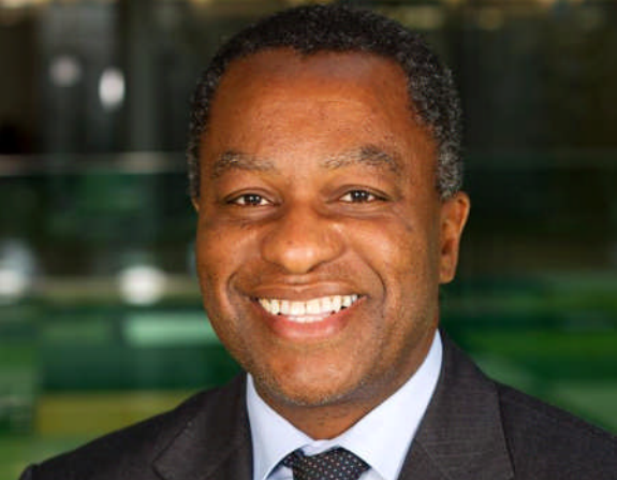
Permanent Secretary of the Federal Ministry of Foreign Affairs, Sola Enikanolaye, made this known in a submission to the Minister of Foreign affairs, Geoffrey Onyeama, in Abuja following the arrest of some 50 Nigerians studying in Turkey last Friday, for an alleged link to a terrorist organization in the country.
Also, the Charge D’Affaires of the Nigerian Mission in Turkey, Ibrahim Isah, revealed that two Nigerian students had been in detention for more than two months at a Prison in Istanbul, Turkey, for allegedly being members of the Fethulla Terrorist Organisation, a group accused of the failed coup attempt in Turkey.
Many of the Nigerians were said to be students of Fatih University, one of the many schools shut down by the Turkish government after the failed coup attempt in July.
Enikanolaye stated, “Surely, accusing the students of links to a terrorist organisation is serious even though we know the state of paranoid that has beset the leadership of Turkey following the failed coup attempt. Our students seem to have been caught in the web of internal politics of Turkey and the clampdown on FETO that was accused of the coup.
“This has severely fractured the country, putting it on a collision course with the civilised members of the international community. The action against our students must have been a reaction to our refusal to close Turkish schools and institutions in Nigeria as arrogantly demanded by the Turkish Government.’’
In a separate report sent to the Foreign affairs minister by the chief of Nigeria’s mission to Turkey, Isah, the two Nigerian students who have been in detention for over one month, had completed their programmes and were waiting for their certificates before their arrest.
According to Isah, the Nigerians, Hassan Adamu and Muhammad Abdullahi, were on the scholarship of the Yobe State Government, and their offence was that they were living in a hostel facilitated by the International Students’ Association, an organisation believed to have links with FETO.
The report read in part: “According to Mohammad, they were preparing to vacate the hostel on that fateful day, having heard that the so-called International Students’ Association was being linked to FETO and that the hostel was under investigation.
“Unfortunately for them, the hostel was raided before they could move out. They believed that the police were given prior information of the presence of foreign students in the hostel.
“After the raid, nothing implicating was found on them except three religious books that the police believe were incriminating. Both denied ownership of the books which seemed to put to rest any doubts in the minds of the police that they were members of FETO. Thus, they were immediately arrested and taken to the police station for interrogation and subsequently transferred to Silivri Prisons.”
It would be recalled that that Turkey, through its ambassador to Nigeria, had demanded that the federal government closed down 17 Turkish schools in Nigeria, alleging that they were owned by terrorists who tried to overthrow the country’s democratically elected president.
But the demand was not acceded to because the Nigerian government said the said institutions were owned by private individuals who had not been proven to have violated any Nigerian or international law.
Former Bayelsa State Governor, Timipre Sylva has denied ownership of 48 houses in Abuja as alleged by the Economic and Financial Crimes Commission EFCC.
There were reports on Monday that three Federal High Courts had struck out the corruption cases against Sylva, meaning that the former governor has regained access to the 48 houses, which were hitherto sealed off by the EFCC during its investigations.
Sylva, in a statement by his media aide, Doifie Buokoribo, said he owned only three houses in Abuja, but the EFCC spokesman, Wilson Uwujaren, insisted that the ex-governor owned the 48 houses, allegedly returned to him.
Uwujaren added that the commission had begun fresh moves to challenge the return of the said houses to Sylva before the Court of Appeal.
Buokoribo said in the statement that Sylva did “not own 48 buildings in Abuja or anywhere in the world” as neither he nor the courts had, at any time, confirmed his ownership of such properties.
“For the avoidance of doubt, Sylva does not own 48 buildings in Abuja or anywhere in the world. So the issue of reclaiming ‘48 houses’ does not arise.
“He has only three houses in Abuja, which he built before he became the governor of Bayelsa State.
“This point has been made several times before, and neither the EFCC nor those who had used EFCC as a tool of persecution against Sylva during the Goodluck Jonathan administration have contradicted this fact,” the ex-governor’s aide stated.
However, spokesman for the EFCC, Uwujaren, in a telephone interview with a correspondent from the PUNCH newspaper, confirmed the existence of the houses, adding that the agency plans to appeal the judgment.
He said: “I have just spoken to Mr. Rotimi Jacobs (SAN), who is in charge of the case. He confirmed to me that the EFCC has begun moves to appeal the case which means that he (Sylva) should have no access to the houses.”
Some of the houses, according to Uwujaren, include a mansion at 3 River Niger Street, Plot 3192 Cadastral Zone AO, Maitama District, Abuja; nine units (comprising six one-bedroom and three two-bedroom apartments) at 8 Sefadu Street, Wuse, Zone 2, Plot 262 Cadastral Zone AO2, Wuse, Abuja, and two duplexes at 5 Oguta Street, Plot 906 Cadastral Zone, Wuse II, Abuja.
Others include a duplex on Plot 1271 Nike Street, Cadastral Zone AO5, Maitama District, Abuja; a duplex at Phase 1 Unit No. 1 (Villa 1) Palm Springs Gold Estate, Cachez Turkey Projects Limited, Mpape, Abuja; 10 units of one-room apartments at 8 Mistrata Street, Plot 232 Cadastral Zone, Wuse II, Abuja; five units duplexes on Plot No 1070 Dakibiyu District, Cadastral Zone B10, Abuja; 16 units service apartments at Plot 1181 Thaba Tseka Crescent, off IBB Way, Wuse II, Abuja, and three units of three-bedroom flats at No. 1 Mubi Close, Plot 766 Cadastral Zone A01, Garki, Abuja.
Former minister of Niger Delta affairs, Godsday Orubebe, has been found guilty of false declaration of asset by the Code of Conduct Tribunal, CCT.
Chairman of the tribunal, Danladi Umar, gave the judgement in Abuja on Tuesday.
The federal government had filed a one-count charge of false declaration of asset against Orubebe, claiming that he committed the offence while he was a public officer.
Umar said: “I hereby seize, on behalf of the federal government, the property known as plot 2057.
“The prosecution proved its case beyond reasonable doubt, and all evidence tendered are admitted.”
He held that Orubebe committed an offence for not declaring a piece of property in Abuja, which he claimed he had sold.
Orubebe will be remembered for his infamous lash-out on former Chairman of the Independent National Electoral Commission, INEC, Attahiru Jega, during the 2015 presidential election collation exercise; a failed attempt to disrupt the proceedings that eventually saw President Muhammadu Buhari emerging victorious.