Home Blog Page 316

Teenager detained in Kirikiri over ‘baseless’ robbery charge – Lawyer

0

A TEENERGER, Alabi Quadri, has been held at the Kirikiri Minimum Security Custodial Centre in Lagos since January over alleged armed robbery, a charge his lawyer says is baseless.

In a social media post, on Wednesday, April 9, his legal counsel, human rights lawyer Inibehe Effiong, stated that the arrest and detention of Quadri stems from a long-standing dispute with local area boys who allegedly abducted him and took him to the police.

Effiong claimed that Quadri was picked up near his home while returning from work and accused of participating in a street fight.

“We can confirm that Alabi has been in detention since January. He was abducted by ‘Area Boys’ close to his home while returning from work.

“According to Alabi and his mother, his painful walk to prison can be attributed to the prolonged malice nursed by some self-acclaimed area boys of his locality who felt entitled to a share of the unexpected fortune that came Alabi’s way when he halted and stood in front of the convoy of the 2023 presidential candidate of the Labour Party, Peter Obi, during the last electioneering campaign.

“Since he failed to properly “settle” some people, it has been one attack to another. After abducting Alabi, the same area boys who have been threatening to deal with him for not sharing the money he was gifted dragged him to the Amukoko Police Station (Pako Police Station) where he was detained,” Effiong wrote.

The area boys initially claimed that Alabi was one of the young men who had been involved in street fights.

But when the police arraigned him, he was charged with robbery involving four adults he does not know. 

The police alleged that the group robbed two individuals of four mobile phones and cash, totaling N579,000, using cutlasses.

“I spent about two hours interviewing Alabi about the veracity of the charges brought by the police. Speaking objectively, we all left Kirikiri with a strong conviction that this gentleman is just another victim of Nigeria’s criminal justice system.

“The last point that we want to state on the record is that Alabi is a minor. He is less than 18 years.

According to Effiong, Quadri’s predicament began following his viral picture during the 2023 campaign event when he stood in front of Labour Party presidential candidate Peter Obi’s convoy and later received financial support from the public. 

The lawyer said some area boys felt entitled to a share and have since harassed him for not “settling” them.

He further described the case as another example of Nigeria’s flawed justice system. 

Effiong stated that Quadri has now appeared before the magistrate three times and is being held alongside adult suspects, pending legal advice from the Lagos State Directorate of Public Prosecutions (DPP).

He added that his legal team would pursue all lawful means to secure Quadri’s release and ensure justice is served.

The ICIR reports that Alabi Quadri’s detention in Kirikiri became public on Monday, April 7, when an X user, @Hausa_girl, posted his viral photo taken in front of Peter Obi’s convoy with the caption,“Do you guys remember this picture? Well the boy in front of this convoy is languishing in Kirikiri prison.”

She stressed that “The court is awaiting advice from DPP on how to proceed with the case. 

“He was coming back from work the day some guys in the street apprehended him and took him to the police station. The guys told the police that he’s among the people stealing and fighting in the area which is not true.  He’s being charged with stealing and fighting.”

Her post generated widespread reactions, including one from Obi, who said he had contacted Inibehe Effiong to take up the case.

Obi further appealed to the police and other agents of the government to always operate within the law and the rules.

NIMC raises fraud alert, warns against unauthorised identity number sharing

0

The National Identity Management Commission (NIMC) has raised an alarm about National Identification Number (NIN)-related fraud. The commission issued a warning to Nigerians, cautioning them against sharing their NIN with unauthorised individuals and groups.

The Head of Corporate Communications for the NIMC, Kayode Adegoke, said the warning comes after security agencies arrested several individuals across various states for NIN-related fraud.

NIMC, in a statement posted on X on Wednesday, April 9, specifically raised concerns about individuals in Anambra State soliciting NINs from residents in exchange for money.

The commission said this practice is unauthorised and potentially fraudulent.

NIMC warns against such activities, emphasising that only official channels should be used for NIN-related matters.

The commission said the action violates the NIMC Act No. 23 of 2007, the Data Protection Act 2023, and the Cybercrime Act 2023.

The Identity management regulatory body further said that security agencies are arresting those involved in the unauthorised NIN solicitation and advised the public to be cautious and report any suspicious NIN-related requests to the authorities.

“Upon receiving the information on the activities of the unscrupulous individuals, NIMC, in conjunction with the Department of State Services (DSS) and the Nigeria Police Force (NPF), swiftly arrested the culprits behind the illegal collection of the NIN,” the statement reads.

NIMC added that those caught are currently being questioned and would be made to face the law.

It warned that sharing NINs for money is illegal and that those caught will face consequences.

According to the commission, NINs are only for accessing government and private services and must be verified. He added that the commission is taking action against those involved in this unauthorised activity.

The NIMC advised the general public to reach out to the commission whenever they notice the indiscriminate collection of NIN.

The National Identity Management Commission (NIMC) was established in 2007 to manage Nigeria’s national identity database and assign unique National Identification Numbers (NINs) to citizens and legal residents.

The NIN is designed to streamline the national identity database, discourage double identity, prevent identity fraud, and serve as a lifetime identifier for holders to establish or verify identity.

The NIN can be used for various purposes, including processing international passport applications, linking SIM cards, opening personal bank accounts, obtaining driver’s licenses, getting permanent voters’ cards, and participating in the National Health Insurance Scheme (NHIS).

Labour Party crisis: Obi, Otti, others endorse caretaker, as Abure kicks

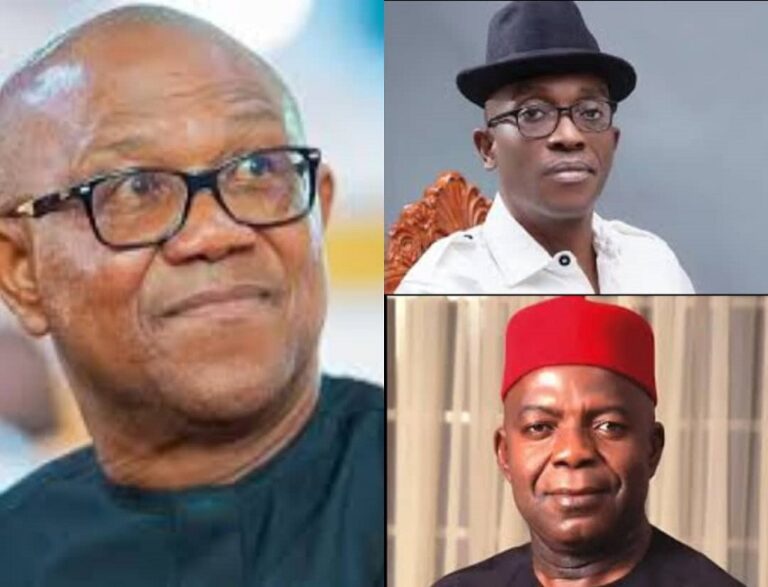
THE presidential candidate of the Labour Party (LP) in the 2023 presidential election, Peter Obi; Abia State Governor Alex Otti; and other stakeholders have endorsed the Nenadi Usman-led National Caretaker Committee.

They have mandated committee to manage the affairs of the party until a national convention is held.
The decision was reached during the LP National Executive Committee (NEC) meeting and Stakeholders’ Interactive town hall held in Abuja on Wednesday, April 9, 2025.

Otti said the Supreme Court’s recent judgment on the Labour Party’s leadership dispute has effectively settled the issue.

He referenced the Certified True Copy (CTC) of the judgment to support his claim.

According to him, the court’s decision removed the Julius Abure-led National Working Committee, paving the way for peace, unity, and order within the party.

Otti welcomed the ruling, stating it validates the creation of a new caretaker committee led by Usman.

“The decisions in favour of Abure were struck out, and his cross-appeal dismissed. The trial courts’ recognition of Abure was set aside,”

“Our Caretaker Committee is not here to hold power but to midwife the emergence of new leadership,Otti stated.

He also revealed that he had previously offered Abure an opportunity to remain part of the party leadership, either as Deputy Chairman or by contesting again, but that Abure declined.

In his remarks at the meeting, Obi reassured the gathering of his loyalty to the party.

He also assured the party members that he had not left the LP.

Obi emphasised the need for a unified Labour Party driven by a clear ideology, urging stakeholders to work together from local to national levels to rebuild trust and strengthen the party’s structure.

He also highlighted Nigeria’s dire economic situation, expressing concern for ordinary citizens’ welfare and encouraging party members to promote justice and compassion.

“We must speak up when things are wrong. Even if we fail, we must fail doing the right thing,Obi stressed.

Meanwhile, the National Publicity Secretary of the Abure-led faction, Obiora Ifoh, has disputed the interpretation of the Supreme Court verdict, claiming it didn’t state that Abure’s leadership had lapsed or that the Usman-led committee should take over.

Ifoh insists the Supreme Court respected the party’s autonomy and right to appoint leaders, upholding the precedence of lower court decisions recognising Abure’s leadership.

Ifoh said the LP’s national convention in March 2024 elected new leaders in line with the constitution and the Electoral Act, and their tenure remains valid.

Apapa declares self leader

The leadership crisis took a new turn with Lamidi Apapa declaring himself the party’s leader following the Supreme Court’s judgment sacking Abure as National Chairman.

Apapa cited the apex court’s ruling as his reason for taking over, stating that all court pronouncements have nullified Abure’s actions and decisions since April 2023.

In a press conference on Wednesday, Apapa announced that the party’s National Working Committee as of 2022 will meet on April 14, 2025.

The ICIR reports that the Supreme Court sacked Abure as the national chairman of the LP on Friday, April 4.

The court set aside the judgment of the Court of Appeal in Abuja, which recognised Abure as chairman of LP.

The apex court, in a unanimous judgment, held that the Court of Appeal lacked the jurisdiction to declare Abure as the national chairman of the LP, having earlier decided that the case was about the party’s leadership.

The Supreme Court ruled in favour of Usman, a former senator who heads the caretaker committee of the LP.

INEC had earlier claimed that the LP’s national convention held in Nnewi violated the Nigerian Constitution and Electoral Act and failed to meet legal requirements.

The electoral body claimed Abure’s tenure as LP chairman expired in June 2024 and refused to recognise him as the party’s national chairman.

The commission stated this in response to a lawsuit filed by the LP challenging its exclusion from INEC’s refresher training for uploading party agents ahead of the Edo and Ondo governorship elections.

The INEC’s legal team, led by Tanko Inuwa, a senior advocate, said that the LP’s lawsuit seeking declaratory reliefs would not be granted.

Why Niger military junta drops French, adopts Hausa as national language

THE military government of Niger Republic has announced that the country will adopt Hausa as its national language.

According to the junta its decision to adopt Hausa as the national language is a move to distance the country from France, with whom Niger had maintained a complicated diplomatic relationship since gaining independence in 1960.

The change was revealed in a new charter issued on March 31, which stated, “Hausa is the national language” and “English and French are the working languages.”

This decision follows a national conference held in February, which bolstered the junta led by Abdourahamane Tchiani, allowing them to remain in power for the next five years.

The ICIR reports that Tchiani who was Niger’s military ruler since 2023 after he deposed Niger’s elected President, Mohamed Bazoum, was officially sworn in on March 26 as the country’s president for a transitional period of five years.

Tchiani took the presidential office under a new charter that replaced the West African country’s constitution.

He was also promoted to the country’s highest military rank of army general, and signed a decree ordering that all political parties be dissolved.

The ICIR reported that Niger’s relationship with the Economic Community of West African States (ECOWAS) broke down when the junta proposed a three-year transition period to democratic rule straight after the coup.

ECOWAS called this plan a “provocation” and threatened to intervene with the use of force, before later backing down.

The recent conference also acknowledged nine other local languages as “the spoken languages of Niger,” among them Zarma-Songhay, Fula, Kanuri, Gourmanche, and Arabic.

Hausa is the most widely spoken language in Niger, with an estimated 26 million speakers, especially concentrated in the central-southern regions of Zinder and Maradi, as well as in the western region of Tahoua and only about 13 per cent of the population, just over three million people, speak French.

The ICIR reports that Niger has been actively distancing itself from France by expelling French troops, cutting diplomatic ties, and renaming streets and monuments that previously carried French names.

Niger is not alone in this effort, as other former French colonies in the region like Mali and Burkina Faso are also taking similar measures.

All three countries have withdrawn from the Organisation Internationale de la Francophonie (OIF), a post-colonial institution similar to the Commonwealth.

The ICIR reported that ECOWAS imposed economic sanctions on Niger Republic in 2023 after its presidential guards ousted President Mohamed Bazoum, as well as on Mali, Burkina Faso, and Guinea.

ECOWAS lifted the economic sanctions in February 2024, at its extraordinary summit after which  Niger, Mali and Burkina Faso first announced their intent to withdraw in that month and have since rejected calls from ECOWAS to reverse their decision. 

However, ECOWAS formally recognised the withdrawal of the three nations in January  2025 after more than a year of diplomatic tensions. 

They also created a confederation called the Alliance of Sahel States and strengthened alliances with Russia, Turkey, and Iran to address internal security threats such as jihadists and armed gangs, as well as external pressures.

FG gives federal institutions nod to advertise vacancies

0

THE Federal Government has ordered all federal tertiary institutions granted waivers to recruit new staff to publicly advertise available vacancies in at least one national newspaper.

The directive by the Minister of Education, Maruf Tunji Alausa, was contained in a statement issued on April 9, 2025, by the Director of Press and Public Relations in the Federal Ministry of Education, Boriowo Folasade.

According to the statement, institutions are further directed to publish the job openings on their official websites and in relevant academic and professional journals.

This, the ministry noted, is aimed at ensuring transparency, openness, and fairness in the recruitment process within Nigeria’s higher education system.

The move followed waivers approved for federal universities, polytechnics, and colleges of education to fill critical manpower gaps in their institutions, according to the statement.

“In addition, all Federal Tertiary Institutions are reminded to submit their recruitment needs to the ministry for review by the committee on waiver and recruitment. The ministry has put in place adequate mechanisms to ensure compliance and will not hesitate to apply sanctions against any institution that fails to adhere to this directive.

“The Federal Ministry of Education remains firmly dedicated to promoting integrity and fairness in all matters related to the Nigerian higher education system,” the statement added.

The ICIR reports that this development builds on an earlier announcement made by President Bola Tinubu during the 39th convocation ceremony of the University of Ilorin in October 2024. 

At the event, the president, represented by the Minister of State for Education, Yusuf Sununu, stated that the federal government had granted recruitment waivers to universities to tackle staff shortages and support uninterrupted academic calendars.

Tinubu reiterated the administration’s commitment to revitalising the education sector, while also calling for peaceful engagement between academic unions and the government to avoid industrial actions that disrupt learning.

FG signs $328.8 million deal with Chinese firm to boost power supply

THE federal government has signed a $328.8 million contract with Chinese firm, China Machinery Engineering Corporation (CMEC), to rehabilitate and expand the electricity transmission network under Phase 1 of the Presidential Power Initiative (PPI).

The agreement was reportedly sealed on Wednesday, April 9.

It will cover the aspects of engineering, procurement, construction, and financing for the development of 330kV and 132kV transmission lines across the country.

It aims to improve grid reliability and reduce stranded generation capacity.

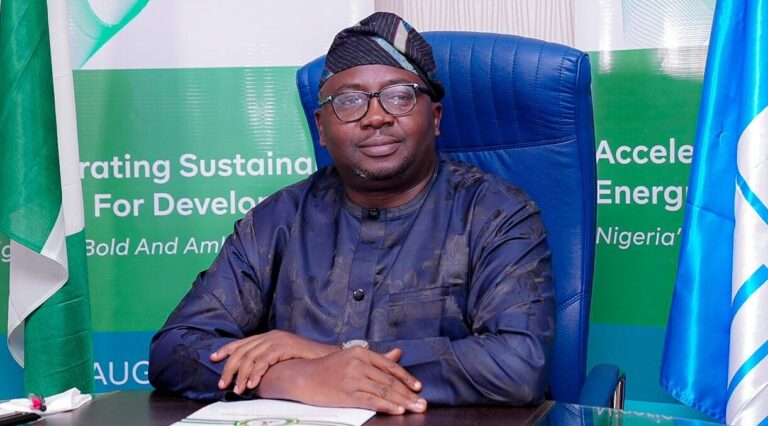
At the signing of the contract signing ceremony in Abuja, the Minister of Power, Adebayo Adelabu, said the agreement would cover 544 kilometres of transmission lines with a load capacity of 7,140 megawatts, spanning both brownfield and greenfield sites.

“The Federal Government and China Machinery Engineering Corporation (CMEC) on Wednesday signed a contract agreement worth 328.8 million dollars aimed at improving power supply across the country.”

He said the projects would act as the main arteries for delivering increased power from midstream transmission directly to homes, businesses, and industries.

Adelabu described the agreement as a vital step toward resolving persistent bottlenecks in Nigeria’s power value chain.

He stressed that enhancing the transmission network is essential to ensure that generated electricity is delivered efficiently to end-users.

He added that the signing of the agreement demonstrated the federal government’s commitment, under the leadership of President Bola Tinubu, to providing stable and reliable electricity to Nigerians.

On his part, the vice president of SINOMACH, Li Xiaoyu, commented that the project would play a significant role in improving electricity delivery across the country.

The ICIR reports that the PPI aims to modernise and expand Nigeria’s electricity grid through a partnership with Siemens Energy, which comes to increase electricity supply and boost economic growth, managed by the FGN Power Company.

However, Nigeria’s electricity supply has been in a sorry state for the past years.

Last year, the national grid collapsed about 11, raising concerns over grid stability and reliance on a centralised grid system.

Each time the grid collapses, it affects households, businesses, and critical sectors like healthcare, where a consistent power supply is essential.

Fresh Israeli airstrikes kill 26 in Gaza as ceasefire talks hit deadlock

AN Israeli airstrike has reortedly killed at least 26 Palestinians, including children, in a house in Shejaia in Gaza City.

Local health authorities revealed this on Wednesday, April 9, noting that dozens were injured in an airstrike that struck a multi-story residential building in eastern Gaza City.

Medics reported that many people are still believed to be missing and trapped beneath the rubble, as the strike also damaged several nearby homes.

On March 18, Israel resumed heavy airstrikes on the Gaza Strip, effectively ending a two-month ceasefire with Hamas. 

On March 31, Israel proposed a prolonged truce in Gaza in exchange for the release of its remaining citizens held as hostages.

Israeli officials who spoke on the condition of anonymity revealed that the proposal included the return of half of the 24 hostages still believed to be alive in Gaza, nearly 18 months after they were taken by Hamas-led gunmen.

Israel has said that Hamas military and governmental infrastructure must be completely dismantled and insisted that the group, which has ruled Gaza since 2007, would have no role in the enclave’s future governance.

However, Hamas has expressed willingness to step aside for another Palestinian administration but refuses to disarm and insists on having a say in selecting the next government.

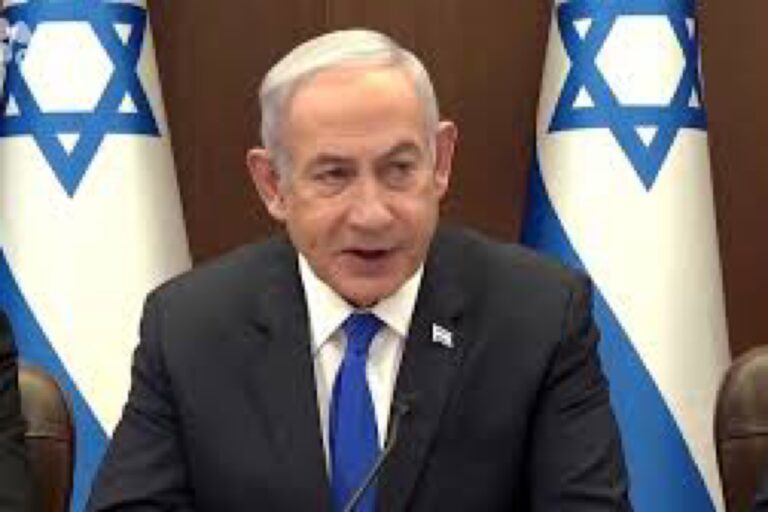
Israeli Prime Minister,, Benjamin Netanyahu, said on March 30, that his nation would intensify pressure on Hamas while continuing negotiations “under fire.” 

He said sustained military pressure was the most effective way to secure the return of the hostages.

However, a member of Hamas’s political bureau, told AFP on Tuesday April 8, that it was “necessary to reach a ceasefire” in Gaza.

He added that “communication with the mediators is still ongoing” but that “so far, there are no new proposals.”

Badran said Hamas “is open to all ideas that would lead to a ceasefire and stop the genocide enacted against our Palestinian people”.

The ICIR reports that on Monday, United States President Donald Trump and Israeli Prime Minister announced that fresh negotiations are underway to secure the release of more hostages held in Gaza.

Out of the 251 hostages taken during Hamas’s attack on Israel, 58 remain in captivity in Gaza, including 34 who the Israeli military says have died.

The health ministry in the Hamas-run territory said on Wednesday that at least 1,482 Palestinians have been killed in the renewed Israeli operations, taking the overall death toll since the start of the war to 50,846.

Hamas’s October 2023 attack that triggered the war resulted in the deaths of 1,218 people on the Israeli side, mostly civilians, according to an AFP tally based on Israeli official figures.

Trump mulls ‘tailored deals’ with trading partners, as tariff kicks off

UNITED States President, Donald Trump, has announced that his administration was working on “tailored deals” with trading partners, emphasising that allies such as Japan and South Korea would be given priority.

The ‘tailored deals’ come as his administration’s tariffs on several countries took effect on Wednesday, April 8, including massive 104 per cent duties on Chinese goods.

The move triggered fresh turmoil in global markets, and escalated the ongoing international trade war, fueling recession fears, and erasing trillions of dollars from the market value of major companies.

The ICIR reported that on April 2, Trump announced a 14 per cent tariff on Nigerian exports to the United States in response to Nigeria’s imposition of a 27 per cent tariff on United States exports, an imbalance that Trump claims has long disadvantaged American businesses and consumers.

He also announced the beginning of what he termed a new era of “fair trade,” vowing to “supercharge America’s industrial base” and compel foreign markets long accused of blocking United States goods to open up.

Along with the 14 per cent tariff on Nigerian exports, President Trump also introduced a broader trade policy that includes a standard 10 per cent tariff on all US imports. 

According to the policy, the new tariffs, effective immediately, apply to over 50 countries, including major trade partners such as China, the European Union, India, and Japan, along with developing economies across Asia, Africa, and Latin America.

According to Reuters, since Trump announced the new tariffs last Wednesday, the stock market index has experienced its steepest decline since the index was created in the 1950s, edging closer to a bear market, defined as a drop of 20 per cent from its recent peak.

Even global benchmark bonds, typically seen as safe-haven assets, were swept up in Wednesday’s market turmoil, signaling a troubling wave of forced selling that has investors on high alert.

However, Trump has downplayed the market turmoil and sent mixed messages to investors about the longevity of the tariffs, calling them “permanent,” while claiming they’re successfully pressuring other world leaders to seek negotiations.

“We have a lot of countries coming in that want to make deals,” he said at a White House event on Tuesday afternoon. He said at a later event that he expected China to pursue an agreement as well.

China,  Washington’s top economic rival but and a major trading partner, is the hardest hit, with tariffs imposed on its products since Trump returned to the White House now reaching a staggering 104 per cent.

Trump said Tuesday his government was working on “tailored deals” with trading partners, with the White House saying it would prioritise allies like Japan and South Korea.

As a result, Trump’s administration has scheduled talks with South Korea and Japan, and Italian Prime Minister Giorgia Meloni is due to visit next week.

In response to the massive 104 per cent duties on Chinese goods, on Wednesday, China pledged to take firm and effective action to protect its rights and interests.

China has vowed to resist what it considers an act of blackmail. “The U.S. continues to abuse tariffs to pressure China, We firmly oppose this and will never accept this kind of bullying,” Chinese Foreign Ministry spokesperson Lin Jian told a news conference.

Dying to mqke a deal

Trump told a dinner with fellow Republicans on Tuesday night that countries were “dying” to make a deal.

“I’m telling you, these countries are calling us up kissing my ass,” he said.

But Beijing has shown no signs of standing down, vowing to fight a trade war “to the end” and promising counter measures to defend its interests.

China’s retaliatory tariffs of 34 per cent on US goods are due to enter into force at 12:01 am local time on Thursday (1601 GMT Wednesday).

The ICIR reported the existing levies imposed in February and March, which take the cumulative tariff increase for Chinese goods during Trump’s second presidency to 104 percent.

Trump has insisted the ball was in China’s court, saying Beijing “wants to make a deal, badly, but they don’t know how to get it started.”


Ibas defies court order, appoints administrators for 23 Rivers LGAs

THE Rivers State Sole Administrator, Ibok-Ete Ibas, a retired Vice Admiral, has approved the appointment of administrators for the 23 Local Government Areas (LGAs) of the state.

The action came after a Federal High Court in Port Harcourt blocked Ibas from appointing administrators to manage the 23 local government areas, citing a breach of the constitution.

The court ruling, delivered by Adam Muhammed on Tuesday, April 8, 2025, in suit No. FHC/PH/CS/46/2025 came after the PILEX Centre for Civic Education Initiative, led by Courage Msirimovu, filed a lawsuit against Ibas.

Despite the court ruling, Ibas announced appointments of administrators for the local governments.

The Sole Administrator also endorsed the constitution of some boards of agencies, commissions, and parastatals, which he had earlier suspended.

The appointments were announced by Secretary to the State Government Ibibia Worika, a professor, in a government announcement on Wednesday, April 9.

The ICIR reported that President Bola Tinubu declared a state of emergency in Rivers State in March 2025 due to prolonged political instability and appointed Ibas as the Sole Administrator.

The move came after months of tensions between the embattled governor, Siminalayi Fubara, and his predecessor, Nyesom Wike, who is now the Minister of the Federal Capital Territory (FCT).

Tinubu, in a nationwide broadcast on Tuesday, March 18, announced that he had forwarded the decision to the National Assembly by constitutional provisions.

Tinubu cited prolonged political instability in the state as the reason for his decision, vowing to restore governance, peace, and security. 

In approving the emergency rule, the Senate joined the House of Representatives, which earlier endorsed the decision through a voice vote on Thursday, March 20.

Abuja school ordered to pay N100m for negligence over death of student

0

A HIGH Court of the Federal Capital Territory (FCT), sitting in Maitama, Abujesday, April 8, ordered an Abuja-based secondary school, Louisville Girls Secondary School, Gwagwalada, to pay the sum of N100 million in general damages for negligence in the death of one of its students, Kamzie Ikpeatusim.

According to Premium Times, the court, headed by Sylvanus Oriji, accused the school of negligence, which led to the death of Kamzie.

The judge also awarded the sum of N300,000 against the school as the cost of the action.

The judgment was delivered in the suit, marked CV/1738/18, filed by the father of the deceased pupil, Ifeanyi Ikpeatusim, against Louisville Girls Secondary School, Gwagwalada.

Ikpeatusim had sued the school, claiming their negligence caused his 9-year-old daughter’s death. The deceased girl, Kamzie, became severely ill just weeks after starting as a boarding student and passed away in October 2017.

Delivering his judgment, the trial judge, Oriji, held that the school’s negligence of duty and lack of care was indeed responsible for the death of Kamzie.

According to the judge, evidence available before the court showed that the deceased was not given adequate attention when she complained of illness.

While awarding costs against the school, Oriji admitted that no amount of money could bring the deceased back to life.

The judge ordered that 10 per cent interest be applied to the judgment sum from April 8 until full payment is made.

Oriji lauded the school management for improvements made to its sick bay following the unfortunate death of Kamzie, stressing that the introduction of doctors attending to students twice a day is praiseworthy.

On a relief sought by the bereaved father that a school structure be named in honour of his late daughter, the judge declined and instead suggested that improvements to the school’s sick bay were sufficient tribute to her memory.