THE International Press Institute (IPI) Executive Board, including Nobel Peace Prize laureate Maria Ressa, has declared supports for journalists around the world over what it described as an unprecedented global assault on press freedom.
In a joint statement released on Thursday, April 10, the IPI board expressed solidarity with journalists and media professionals facing growing threats, harassment, and censorship around the world.
The statement came as the institute celebrates its 75th anniversary.
Comprising leading editors, journalists, and publishers from 21 countries, the board said the role of the media in safeguarding democracy and holding the powerful accountable is more critical than ever, especially amid rising authoritarianism and global instability.
“We are in an unprecedented moment of geopolitical instability and change. Authoritarianism is on the rise and the institutions of free society — including the rule of law and fundamental human rights principles — are under tremendous strain. At this moment, the work that journalists and media do is more critical than ever.
“IPI was founded 75 years ago, also at a time of great global uncertainty and division, in the aftermath of the Second World War and as the Cold War loomed. IPI was founded on the belief that freedom of the press and quality, fact-based journalism helps build a better, freer, and more peaceful world,” the statement said.
The board further reaffirmed IPI’s founding mission of defending press freedom and supporting journalists wherever their rights are threatened.
The board stated that for over seven decades, the IPI has stood with journalists reporting from war zones, confronting dictatorship, and resisting censorship in some of the world’s most hostile environments.
“We have stood with journalists seeking to report the truth from behind the Iron Curtain, with those fighting censorship in apartheid-era South Africa, with reporters braving dictatorships in all corners of the globe, and with those risking their lives to document the truth in wars past and present.
“Throughout these decades, IPI has remained steadfast to its mission of defending press freedom and the rights of journalists wherever they are threatened,” the statement added.
The board commended journalists who continue to work in difficult environments despite efforts by governments and powerful interests to discredit, intimidate, or silence them.
They also pledged continued support for journalists under threat and called on democratic governments, institutions, and civil society to stand firm in defending press freedom.
In Nigeria, concerns over press freedom have escalated in recent years. Journalists have faced arrests, physical assaults, and threats over their reporting, particularly on issues involving security agencies, corruption, and human rights violations.
Laws such as the Cybercrimes Act have been wrongly used to clamp down on dissenting voices, including journalists.
The 2024 data by Reporters Without Borders (RSF) placed Nigeria as one of West Africa’s most dangerous and difficult countries for journalists.
By this, Nigeria ranks 112th out of 180 countries where journalists are regularly monitored, attacked and arbitrarily arrested.
In 2020, The ICIRreported that 160 journalists were attacked in two years, as the country was ranked 115th out of 180 countries on the Global Press Freedom Index.
Also, The ICIR reported that 63 journalists and three media houses experienced various attacks in 2022. According to The ICIR findings, at least 39 Nigerian journalists were harassed across the country by state and non-state actors in 2023.
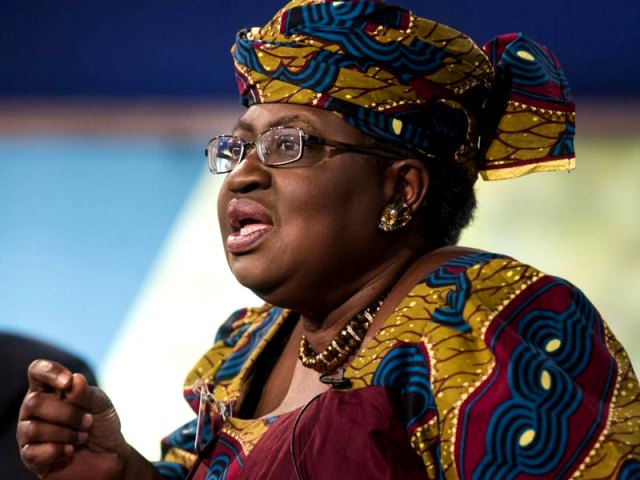
THE Director-General of the World Trade Organization (WTO), Ngozi Okonjo-Iweala, has expressed serious concern about the growing trade tensions between the United States and China. She warns that these tensions could dramatically reduce the trade volume by 80 per cent between the two countries.
In a statement released on Wednesday, April 9, the former Nigerian Minister of Finance emphasised that the actions taken by the U.S. and the resulting reactions from China pose a significant risk of a sharp decline in their bilateral trade.
“Our preliminary projections suggest that merchandise trade between these two economies could decrease by as much as 80 per cent,” she said.
Okonjo-Iweala pointed out that this back-and-forth approach between the world’s two largest economies, whose combined trade accounts for approximately three percent of global trade, carries wider implications that could severely damage the global economic outlook.
“Our assessments, informed by the latest developments, highlight the substantial risks associated with further escalation,” she said.
She further explained that the negative macroeconomic effects would not be limited to the U.S. and China. Other economies, particularly the least developed nations, would also be affected.
Of particular concern is the potential fragmentation of global trade along geopolitical lines. She warned that dividing the global economy into two blocs could lead to a long-term reduction in global real Gross Domestic Product (GDP) by nearly seven percent.
The WTO Director-General also stated that trade diversion is an immediate and pressing threat, requiring a coordinated global response.
“We urge all WTO members to address this challenge through cooperation and dialogue,” she said.
Okonjo-Iweala stressed the importance of the global community working together to preserve the openness of the international trading system.
She added, however, that the “WTO members have agency to protect the open, rules-based trading system. The WTO serves as a vital platform for dialogue. Resolving these issues within a cooperative framework is essential.”
Background on US-China tariffs
Previously, U.S. President Donald Trump had on April 2, intensified a global trade war by imposing sweeping tariffs on imports from various countries, including allies and adversaries. This action, reported by The ICIR, disrupted markets and challenged established free trade norms.
The new tariffs, effective immediately, were applied to over 50 countries, including major trade partners such as China, the European Union (EU), India, and Japan, along with developing economies across Asia, Africa, and Latin America.
On Wednesday, April 9, Trump annouced a 90-day pause in all the “reciprocal” tariffs that he rolled out with massive fanfare last week.
However, China was excluded from this pause. Instead, the U.S. increased tariffs on Chinese goods from 104 per cent to 125 per cent, escalating the ongoing trade dispute between the two superpowers.
In retaliation, China increased its tariffs on U.S. goods entering the country to 84 percent from 34 percent, effective April 10.
The 50 per cent hike comes in response to the latest U.S. tariff increase on Chinese goods to more than 100 per cent that began at midnight.
In a statement by the State Council Tariff Commission, China said, “The US escalation of tariffs on China is a mistake upon mistake, severely infringing upon China’s legitimate rights and interests, and seriously damaging the multilateral trading system based on rules.”
China also published a white paper on its trade and economic relations with the U.S., asserting that the relationship had been damaged by “unilateral and protectionist measures” taken by Washington.
“If the US insists on further escalating trade restrictions, China has the firm will and ample tools to take resolute countermeasures — and will see it through to the end,” said the official.
THE Presidency has apologised for errors in President Bola Tinubu’s appointments list, released, promising to rectify.
The Special Adviser to the President on Media and Public Communication, Sunday Dare, released a list of Tinubu’s appointees and their geopolitical zones to clarify allegations of lopsided appointments made by President Tinubu since he assumed office on May 29, 2023.
However, critics highlighted errors in the list.
Some of the inaccuracies noted on the list released by Dare include the omission of key appointees like the Chief of Staff (CoS)to the President, Femi Gbajabiamila. Also missing was the name of the Comptroller General of the Nigeria Immigration Service (NIS), Kemi Nandap.
The list showed 35 appointments from the North West, 29 from the South West, 22 from the South-South, 16 from the South East, 25 from North Central, and 24 from the North East.
The errors sparked outrage on social media.
Dare in a clarification post on X on Thursday, April 10, admitted the errors, “We have noticed several errors in the list of appointments tweeted. We are sorry. We will provide an updated list later. Thank you,” he tweeted.
The ICIR reported that the Senator representing Borno South, Ali Ndume, had urged President Tinubu to adhere to the federal character principle in political appointments, warning that failure to do so could have repercussions in the future.
Ndume, who criticised President Tinubu for what he termed a failure to adhere to the federal character principle in political appointments, stressed that such actions are necessary to ensure equitable representation for all Nigerians.
The lawmaker who appeared on Arise TV’s Prime Time, Monday, April 7, insisted that the current appointments did not comply with the federal character principle by the law, accusing the President of violating the constitutional mandate for fair representation in government appointments.
Ndume referred to Section 14(3) of the 1999 Constitution, which stipulates that political appointments should mirror the country’s diversity.
He further emphasised that his remarks were not intended as a personal attack on the President, but rather as part of his responsibility as a lawmaker.
He expressed concerns that his comments might provoke attacks from individuals loyal to the President, stating, “But from tomorrow, those so-called Tinubu boys or people will start attacking Ndume. These are the facts.”
The ICIR reports that on March 28, President Tinubu appointed Felix Morka, the National Publicity Secretary of the All Progressives Congress (APC), as Board Chairman of the Nigerian Television Authority (NTA).
Tinubu approved the appointment of Fatuhu Mohammed Buhari from Katsina State as Director-General of the National Agricultural Seed Council and other Nigerians as board chairmen of various federal government institutions.
The federal government’s pending nominations and appointments, reported on April 6, indicate that screening has begun for applicants to diplomatic posts across all 109 missions, including 11 international consulates, 22 high commissions, and 76 embassies.
Although the names of all nominees remain confidential, presidency sources reveal that the list includes a mix of career diplomats and political appointees.
THE Federal Government has announced that it will officially launch an electronic visa (e-visa) system on May 1, 2025, as part of ongoing efforts to modernise the country’s immigration process.
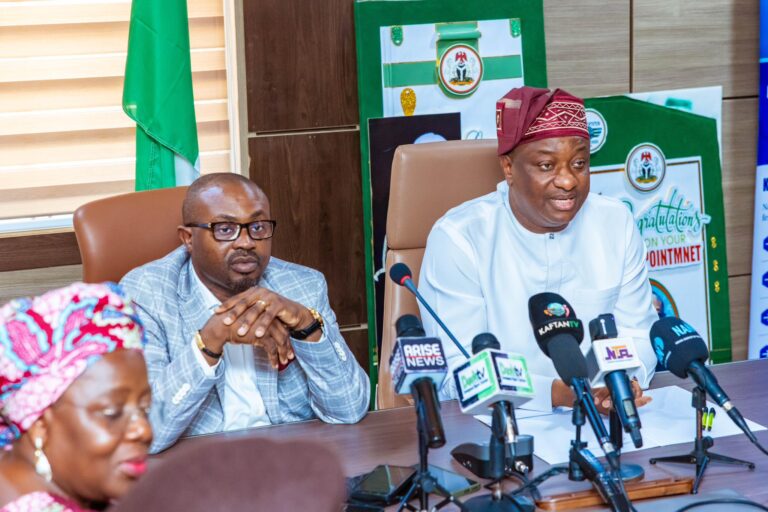
The Minister of Aviation and Aerospace Development, Festus Keyamo, announced this on Wednesday during a joint press briefing with the Minister of Interior, Olubunmi Tunji-Ojo.
The ministers, in separate statements on Thursday, April 10, said the initiative will see the digitalisation of landing and exit cards at Nigeria’s international airports.
Keyamo said the intervention would be carried out by the Ministry of Aviation as well as the Ministry of Interior.
“In continuation of the series of collaborative efforts both Ministries have made since the inception of this administration, earlier today, I held a joint Press briefing with my brother, the Minister of Interior, Olubunmi Tunji-Ojo, and our teams from our agencies.
“We announced plans to launch the e-visa system and also to digitalise the landing and exit cards at our international airports. We also set up a joint team to work on the protocols that will be transmitted to airlines in this respect for strict compliance,” he said.
Tunji-Ojo, in a separate statement, confirmed that the e-visa system rollout is scheduled for May 1. He described the development as a testament to the benefits of inter-ministerial cooperation.
“Aside from demonstrating inter-ministerial collaboration, we showed the possibilities of re-engineering processes for optimal success, even as independent government bodies in an endless pursuit of excellence,” the minister said.
“During the session, we explained how the newly automated landing and exit card will enhance processes as well as help the government in areas of documentation and intelligence gathering of foreigners in and out of the country.”
The Minister of Interior also applauded the Nigeria Civil Aviation Authority (NCAA) and the Federal Airports Authority of Nigeria (FAAN) for partnering with the Nigeria Immigration Service (NIS) to support the initiative.
He further expressed appreciation to Minister Keyamo for his role in making the collaboration possible.
THE Nigerian Electricity Regulatory Commission (NERC) said it has placed over N628 million fine on eight electricity distribution companies (DisCos) for failing to comply with monthly energy caps for unmetered customers between July and September 2024.
The electricity regulator disclosed this in a statement on Thursday, April 10.
It said the affected DisCos include Abuja, Eko, Enugu, Ikeja, Jos, Kaduna, Kano, and Yola and were required to issue credit adjustments to affected customers by May 15, 2025.
The NERC said it acted under section 34(1)(d) of the Electricity Act 2023, which underscores its unwavering commitment to regulatory compliance and consumer protection within the Nigerian Electricity Supply Industry.
“The public may recall that in 2020, the Commission issued the Order on capping of Estimated Bills and subsequently issued monthly energy caps which aimed to align the estimated bills for unmetered customers with the measured consumption of metered customers on the same supply feeder. A review of Discos’ billing of unmetered customers for July-September 2024 revealed non-compliance with the monthly energy caps issued by the Commission.
“The non-compliant DisCos have been sanctioned to pay fines amounting to N628,031,583.94, which is equivalent to 5% of the naira value of the gross overbilling for the period under review. The Commission has also mandated the DisCos to issue commensurate credit adjustments to all customers affected by the overbilling by 15th May 2025 – the end of the April 2025 billing cycle,” NERC explained.
The ICIRreported in January this year that NERC revealed approximately 53.85 per cent of registered electricity customers across Nigeria remain unmetered.
It said 6,156,726, representing 46.15 per cent of 13,339,635 registered electricity customers, had been metered as of September 30, 2024, meaning that 7,182,909, representing 53.85 per cent, were unmetered electricity customers across the country.
In February 2024, The ICIR also reported that following the non-compliance of the 11 DisCos to cap estimated billing for unmetered customers in the country, NERC slammed N10.51 billion fines on them.
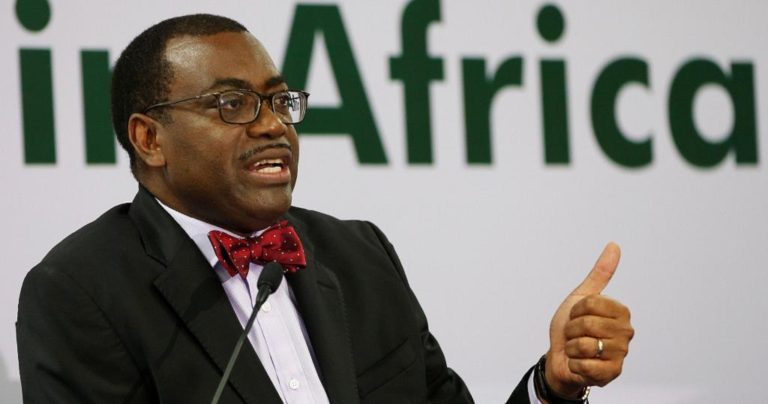
NIGERIAN youths and their counterparts in other African countries need funding to drive their ideas and not N5,000 or N10,000 empowerment, the president of the African Development Bank (AfDB), Akinwumi Adesina, has said.
He specifically noted that the migration phenomenon known as ‘Japa’ in Nigeria is a big loss for the country and the continent.
The former agriculture minister expressed his concern during an interview monitored by our correspondent on Channels Television’s Sunrise Daily on Thursday, April 10.
“You cannot turn your demographic asset into somebody else’s problem. We have to put our money behind our young people to create opportunities for them.
“They don’t need N5,000, N10,000. You want to create youth-based wealth. If you don’t, who are the people to pay the taxes in the future? Where are you going to get the capital mobilisation in the future? You have to, therefore, invest in the same demography so you can reap in the future,” Adesina said.
He stressed that youths in Nigeria and others in 51 African countries do not need freebies under the guise of empowerment schemes, but capital to fund their ideas and translate same into enduring wealth.
“In the case of young people and the japa syndrome, it’s a big loss for us. Young people don’t need freebies; they don’t need people saying ‘I just want to give you an empowerment programme’.
“They have skills, they know, they have entrepreneurship capacity, they want to turn their ideas into great businesses. What young people need is not those empowerment programmes; they need capital, they need you to put your money at risk on their behalf,” Adesina maintained.
He asserted that the African continent has over 465 million young people between the ages of 15 and 35, warning that these demographic assets should not be turned into “somebody else’s problem” due to the inability to believe in young people and invest in their ideas for continental prosperity.
“I do not believe that the future of our young people lies in Europe; it doesn’t lie in America, it doesn’t lie in Canada, Japan, or China; it should lie in Africa growing well, growing robustly and able to create quality jobs for our young people,” Adesina said.
The AfDB president defended that Africa’s youth population is not a problem for the continent because India’s and China’s populations have not been a problem for their countries.
“It is what you do with your population; how you skill them up,” he said, explaining that if young people in Africa are skilled with good jobs and social protection, it would lead to prosperity for the continent because the demography has high purchasing power.
He posited that in a world of rising tariffs, it is important for Africa to build consumption as part of its gross domestic product (GDP).
Adesina pointed out that the financial system in Africa is not designed to support young people on the continent, lamenting that the financial system has failed young people in Africa.
“We have over 465 million young people between the ages of 15 and 35. Where is the financial market for them? Why is it suddenly a surprise to us that they are leaving? It’s because you are not putting anything down for them.
“We must recognise that the young people are our biggest asset; the demographic asset has to become an economic asset, and to do that, you have to put down capital,” he said.
In a recent report by The ICIR, young Nigerian professionals interviewed bared their minds on why most of their colleagues are eager to leave the country once they acquire the requisite skills.
This concern has been fuelling Nigerians ‘ exodus to foreign lands and has been a subject of concern over the years.
Also, there are further worries over getting the right funding to finance entrepreneurship in Nigeria, which The ICIR spotlighted in a recent interview with a former top bank official, Anthony Chinwe, who revealed where the bottlenecks lay in small businesses getting funds for their enterprise.
DANGOTE Petroleum Refinery and Petrochemicals has again reviewed its ex-depot (gantry) loading cost of petrol to ₦865 per litre.
The ICIR confirmed that the refinery management informed its marketers and customers of the slash on Thursday, April 10.
The price reduction, energy analysts said, is connected to the global drop in oil price, with oilprice.com affirming the current Brent crude oil price at $ 63.86 per barrel.
“What the Federal Government is losing through the drop in global oil price, with a sharp drop from the budget benchmark of $75/barrel, is a gain to the domestic market which must inadvertently see price drop for Nigerian consumers,” an oil sector governance expert, Oft Henry Ademola Adigun told The ICIR.
Other economic watchers noted that the drop is also linked to a meeting between representatives of the Dangote Refinery and the Minister of Finance and the Coordinating Minister for the Economy, Wale Edun, on Tuesday, over the naira-for-crude policy.
“The policy will firm up the naira against the dollar and serve as a hedge to the volatility of the naira against the dollar. This policy will encourage local indigenous petroleum refiners,” an energy analyst, Kingsley Obiakor, said.
At the end of the meeting, the coordinating Minister of the Economy said that the naira-for-crude was still in effect and that the initiative was not a temporary measure but a “key policy directive designed to support sustainable local refining.”
The government also said the initiative is still in effect and will continue immediately, overruling the decision of the NNPCL under its former boss, Mele Kyari, who tenured the initiative.
Recall that as part of moves to reduce the strain on the US dollar and guarantee price stability of petroleum products, the Federal Executive Council (FEC) in July 2024 directed the NNPCL to sell crude oil to Dangote Refinery and other local refineries in naira and not in the United States greenback.
However, in March 2025, the Nigerian National Petroleum Company Limited (NNPCL) said its Naira-denominated crude sales agreement with the Dangote Refinery was structured for six months, with March 2025 as the expiration date. Subsequently, the $20 billion Dangote Refinery temporarily halted the sale of petroleum products in Naira.
“This decision is necessary to avoid a mismatch between our sales proceeds and our crude oil purchase obligations, which are currently denominated in US dollars,” the company had said in a statement reported earlier by The ICIR.
The pump price of petrol jumped from around ₦860 to about ₦1,000, making consumers pay at least ₦70 more than what it used to cost them to buy a litre of the premium commodity days earlier.
The refinery, however, said it would resume the sale of its product to the local market in Naira as soon as it received crude cargoes from the NNPCL in Naira.
Days later, President Bola Tinubu fired Kyari and the entire NNPCL board.
In their stead, the president appointed an 11-man board with Bashir Ojulari as the Group Chief Executive Officer and Ahmadu Kida as non-executive chairman.
The resumption of Naira-denominated crude sales, experts believe, would reduce the strain on the US dollar and guarantee the price stability of petroleum products.
The ICIR had reported that Wale Edun said the federal government is committed to full implementation of the naira-for-crude as a policy to maximise the benefits of supporting sustainable local refining in the country
THE European Union (EU) has urged Nigerian electorate to choose their leaders through ballot amidst concerns about ‘contradictory decisions of courts’.
The EU made this known through its Ambassador to Nigeria and ECOWAS, Gautier Mignot, who spoke in Abuja on Wednesday April 9 during the launch of a report titled, “From Ballot to the Courts: Analysis of Election Petition Litigation from Nigeria’s 2023 General Elections” put together by the Policy and Legal Advocacy Centre (PLAC).
Mignot who was represented by the acting Head of Cooperation of the European Union Delegation to Nigeria and ECOWAS, Ruben Alba, stated that the protracted electoral issues undermined the independence of the Independent National Electoral Commission (INEC) to conduct well organised elections due to logistical challenges.
He further stressed that contradictory decisions of courts serve pose a threat to election administration, making the exercise of INEC regulatory responsibilities extremely tough.
He stressed that democracy largely depends on its judicial system, maintaining that the judiciary must maintain its constitutional responsibilities and enhance the protection of democratic values and the rule of law.
According to him, the important role of the judiciary in Nigeria’s democratic process has been confirmed by various judgments with great impact on the country’s democratic process. The courts have, through several groundbreaking decisions, strengthened and deepened democracy in Nigeria.
The EU ambassador stressed that the role played by the judiciary in the electoral process has given rise to positive and crucial transformation in the development process of Nigeria, but the country still has a lot to work on.
He added that it is also equally important to note that an effective judicial system is a collective responsibility, while the judiciary has a significant role to play in ensuring a timely, efficient, and transparent dispensation of justice.
“Citizens must also remain inform of their rights as enshrined by the Constitution, and this is also to hold the system accountable with electoral judiciary, there needs to be adequate information that forces compliance with the free spirit of the legislation so that cases are not just dismissed based only on technicalities, the conflicted decisions in respect of the same set of facts is also weighing heavily on the quality of the country’s democratic experience and the trust of voters, and as it was mentioned before, leaders should be elected through the ballot and not by the courts,” he stated.
Also speaking, the Executive Director of PLAC, Clement Nwankwo, stated that the report offered a wide analysis of the judgments delivered by the Election Petition Tribunals, the Court of Appeal, and the Supreme Court over petitions arising from the general elections held in February and March 2023.
The EU has been promoting credible elections in the country.
In January 2025, the EU Ambassador to Nigeria and ECOWAS, Mignot, met with the Chairman of INEC, Mahmood Yakubu, highlighting the EU’s interest in Nigeria’s electoral process.
NIGERIA’s Minister of Finance and the Coordinating Minister of the Economy, Wale Edun, said the federal government is committed to full implementation of the naira-for-crude as a policy to maximise the benefits of supporting sustainable local refining in the country.
Edun assured of this at a meeting with representatives of the Dangote Refinery on Tuesday, April 8, according to a statement by the ministry on Wednesday, April 9.
He said the minister met with officials of the Dangote Refinery over the suspension of the naira-for-crude initiative by the Nigerian National Petroleum Company Limited (NNPCL).
Edun stressed that the deal with local refineries was not a temporary measure but a key policy directive designed to support sustainable local refining in the country.
He said the Technical Sub-Committee on the Crude and Refined Product Sales in Naira initiative met on Tuesday to review progress and address ongoing implementation matters.
The initiative is still in effect and will continue immediately, he said, overruling the decision of the NNPCL under its former boss, Mele Kyari, that suspended the initiative.
“The stakeholders reaffirmed the government’s continued commitment to the full implementation of this strategic initiative, as directed by the Federal Executive Council (FEC).
“Thus, the Crude and Refined Product Sales in Naira initiative is not a temporary or time-bound intervention, but a key policy directive designed to support sustainable local refining, bolster energy security, and reduce reliance on foreign exchange in the domestic petroleum market, Edun stated.
He stressed that, as with any major policy shift, the committee acknowledges that implementation challenges may arise from time to time.
He said, however, that such issues were being actively addressed through coordinated efforts among all parties.
“The initiative remains in effect and will continue for as long as it aligns with the public interest and supports national economic objectives,” the minister added.
The NNPCL suspended the naira-for-crude oil swap deal with domestic refiners, including Dangote Refinery, The ICIRreported.
The decision, which has immediate effect, has sparked discussions about its implications for Nigeria’s energy sector and the broader economy, triggering importation and higher fuel costs.
The ICIR reports that the naira-for-crude arrangement, introduced on October 1, 2024, ended on March 31, 2025.
The meeting Tuesday was attended by Edun, the chairman of the implementation committee; the chairman of the technical sub-committee and chairman of Federal Inland Revenue Service (FIRS), Zacch Adedeji; the chief financial officer of NNPCL, Dapo Segun; coordinator of NNPC refineries; management of NNPC Trading; and representatives of Dangote Petroleum Refinery and Petrochemicals.
Others were senior officials from the Nigerian Upstream Petroleum Regulatory Commission (NUPRC), the Nigerian Midstream and Downstream Petroleum Regulatory Authority (NMDPRA), the Central Bank of Nigeria (CBN), the Nigerian Ports Authority (NPA), representative of Afreximbank, as well as the Secretary of the Committee, Hauwa Ibrahim.
AMIDST the widespread economic challenges plaguing many African nations due to the recent global downturn, this report by The ICIR turns its attention to Ghana, where citizens are also voicing concerns over escalating living costs. This analysis compares the prices of essential goods in Ghana, a country rich in gold, with those in Nigeria, a country rich in oil.
Background
The economic hardship experienced by Ghanaians was one of the factors in the defeat of the ruling New Patriotic Party (NPP) by the National Democratic Congress (NDC) in the December 7, 2024, presidential and parliamentary elections. Simultaneously, Nigeria witnessed a series of protests against the policies of incumbent President Bola Tinubu throughout the same year.
The ICIR survey in both countries reveals that Ghanaians are paying more for food and other basic necessities compared to Nigerians. This is despite the Ghanaian cedi having a stronger value than the Nigerian naira. When the survey was conducted in December 2024, 16 Ghanaian cedis equated to one US dollar, while the Nigerian naira traded at N1,600 to the dollar, making one cedi equivalent to approximately N100.
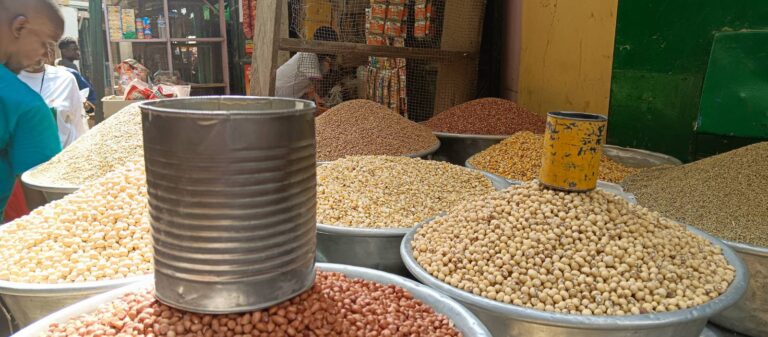
To gather price data, The ICIR visited Nima Market, known locally as Kasoa Mamudu, in Accra and Old Garki Model International Market in Abuja. These markets are among the largest and busiest in the capitals of both nations.
A section of Nima Market in Accra, Ghana. Photo credit: Marcus Fatunmole
Ghana and Nigeria: Economic Indicators
As of November 2024, Ghana’s inflation rate stood at 23 per cent, while Nigeria’s was higher at 34.6 per cent. The daily minimum wage in Ghana is 18.15 cedis. This translates to roughly 490 cedis per 27 working days (per month as applicable in the country). In contrast, Nigeria operate a monthly minimum wage which is N70,000 per month.
Converting the Ghanaian minimum wage to naira gives 18.15×100 = 1,815 x 27 = N49,005. This means that the monthly minimum wage in Ghana is N49,005, while it is N70,000 in Nigeria due to a recent update, it was previously N30,000.
Ghana’s gross foreign reserve was $7.92 billion as of November 2024, while Nigeria’s exceeded $40 billion. Nigeria’s current population is approximately 236,386,904, about seven times the population of Ghana, which stands at nearly 34,914,969.
As of the end of the first half of 2024, Nigeria’s foreign debts stood at $42.9 billion. Ghana owed742 billion cedis, equivalent to approximately $50 million.
The entrance and parking lot of the Old Garki Model International Market, Abuja Photo credit: Marcus Fatunmole/The ICIR.
Ghanaians, Nigerians speak about hardship
Grace Addo said Ghanaians faced an acute economic crisis under the past administration headed by Akufo-Addo. She desired to witness better leadership under the new President John Mahama.
“Life has been hard. It hasn’t been this bad for Ghanaians. You can feel the hardship everywhere. Almost all prices have doubled in a few years. We aren’t the nation we used to be. Things are too tough for our people,” she said.
For Debra Joseph, the new government of Mahama has much to do to turn the economic tide around in the country.
He said, “We’re very surprised how the prices of goods, especially essential needs, are skyrocketing in Ghana. It was so bad that even two days before the presidential and parliamentary election, the government still increased the fuel price.”
Joseph noted that a government that wanted its party to retain power would not take such an decision. He said Ghanaians voted in anger, leading to the NPP’s overwhelming loss to the NDC in both presidential and parliamentary polls.
Another Ghanaian, Victoria Aboagye, told The ICIR that she anticipated the fall of Akufo-Addo’s party following growing hardship in the country.
“No country would endure the economic pains foisted on us by the NPP government. Instead of focusing on judicious use of our resources, the government kept taking loans and plunging our nation into further crisis. Feeding has been difficult. It’s been very hard for an average citizen to live a decent life.”
The story is not different in Nigeria. At the Garki International Market visited by the reporter, some residents of the country’s capital – Abuja – shared their views about the nation’s economy.
Auwal Ibrahim said, “Our pains worsened the day Tinubu took over power and announced subsidy removal. We didn’t expect that, and we have yet to recover from the shock. Life has been very tough for even the rich in the country.”
Bukola Abigail said seeing families who could not afford the basic needs of life, including shelter and food, was her headache.
“We thought we’d had it all under the former President Muhammadu Buhari. The emergence of Tinubu’s government has only worsened the pains we patiently endured for eight years under Buhari.
“Paying for healthcare, education, feeding, accommodation, water, electricity and other utilities has been difficult for the majority of citizens.”
Similarly, Yomi Faith said she hoped to see a change to the nation’s economic misfortunes, given some of the government policies. “I sincerely hope it won’t get to a point where Nigerians won’t be able to continue to cope with the current economic situation. The government should do all within its power to reverse the trend. I hope the government policies work.”
Table showing prices of some essential commodities in both countries – Nigeria and Ghana