Home Blog Page 314

FCTA to land owners: Develop your land in 2 years or risk revocation

0

THE Federal Capital Territory Administration (FCT) has announced some land reforms, including a new law which seeks to revoke undeveloped plots after two years of issuance of Rights of Occupancy.

Addressing a news conference in Abuja on Friday, April 11, the Director of Land Administration in the FCTA, Chijioke Nwankwoeze, said the reforms will become operational from April 21, 2025.

He said the reforms cover specific areas like conditions of grant of Statutory Right of Occupancy, contents of the Statutory Right of Occupancy Bill, contents of Letter of Acceptance/Refusal of offer of grant of Right of Occupancy, titling of Mass Housing and sectional interests, as well as regularisation of Area Council Land documents.

The director noted that before now, the deadline for payment of bills, rents, and fees was not specified in the Statutory Right of Occupancy bill, and there was no penalty for failure to make payment promptly.

He explained that the development has caused a delay in revenue receivable due to non-collection of Right of Occupancy and non-payment of bills, slower pace of infrastructural development, sustained land speculation, and racketeering.

He further said that as a result, the FCT administration has incurred huge expenses through repeated advertisements and publications notifying the public on the need for collection of R-of-O and timely payment of bills and charges.

“Consequently, as against the unspecified period within which to collect the Right of Occupancy and make full payment of the Statutory Right of Occupancy bills and charges, land allottees now have 21 days from the date of offer, to make full payment of all bills, fees, rents and charges prescribed on offers of Statutory Rights of Occupancy and submit a duly completed Letter of acceptance alongside evidence of payments, or lose the offer.

“Also, as against the lengthy period within which to develop allocated lands, the period within which to erect and complete developments on any land granted in the FCT is now two years from the date of the commencement of the R-of-O.

“Therefore, any R-of-O bills and any other payments made outside the stipulated 21 days shall be considered invalid, while any land granted should be developed within two years”, he stated.

On lands previously allocated by Area Councils, Nwankwoeze said the law stipulates that all lands in the FCT are urban land.

He said it, therefore, becomes necessary that all land documents issued by the Area Councils are considered for regularization to statutory titles in line with relevant statutes.

“It should be noted that in 2006, the Zonal Land, Planning and Survey offices of the six Area Councils were directed to submit all Area Council allocation lists, layouts, files, and registers to Abuja Geographic Information System (AGIS)/Lands Department, and the Area Councils did this.

“However, to date, out of the 261,914 Area Council land documents submitted for regularization, only 8,287 have been vetted, out of which only 2,358 were cleared, validated and regularized to statutory titles. The 8,287 were vetted from 2006 to 2023 (17 years), and this represents just 3.2% of the total land documents submitted for vetting and regularization as of today; the FCT Administration is still left with 253,627 submissions in its database.

“Area Council land documents successfully vetted and confirmed would have statutory titles on such lands issued, and the allottees will have sixty days to make full payments of all bills, fees, rents, and charges prescribed, failure of which the offers shall become invalid,” he said.

The ICIR reported that  Minister of FCT, Nyesom Wike, has approved the revocation of 4,794 land titles in the nation’s capital due to alleged non-payment of ground rent for over 40 years.

The minister’s Senior Special Assistant on Public Communications and Social Media, Lere Olayinka, and the Federal Capital Territory Administration (FCTA) Director of Lands, Chijioke Nwankwoeze, disclosed this at a press briefing on Monday, March 17.

Olayinka noted that the revocation followed multiple publications and announcements on broadcast media by the FCT Administration since 2023, adding that payment of ground rents was backed by extant laws.
Trade war: China hits back at Trump with 125% retaliatory tariff hike

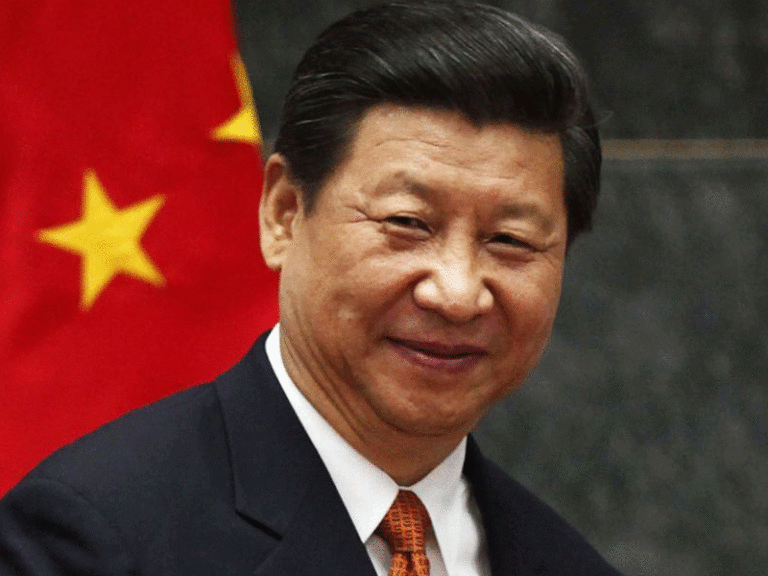
BEIJING has increased tariffs on imports from the United States to 125 per cent, in response to President Donald Trump’s decision to raise tariffs on Chinese goods to 145 per cent.

The announcement was made by China’s Ministry of Finance on Friday, 11 April, with officials stating this would be the last time China would match further U.S. tariff hikes.

“Even if the U.S. continues to impose even higher tariffs, it would no longer have any economic significance and would go down as a joke in the history of world economics,” the finance ministry statement added.

“If the U.S. continues to play a numbers game with tariffs, China will not respond,” it added, however, leaving the door open for Beijing to turn to other types of retaliation, and reiterating that China would fight the U.S. to the end,” the ministry said.

While China signalled it would stop matching further U.S. tariff increases, it hinted at the possibility of other forms of retaliation. The ministry stressed that China is ready to fight to the end, should tensions continue to escalate.

This latest move deepens the U.S.–China trade war, sparking more uncertainty in global supply chains. Markets continued to decline, with foreign leaders scrambling to respond to what many see as the most serious threat to global trade in decades.

Earlier in the week, Trump announced a 90-day tariff pause for countries that had not retaliated against U.S. tariffs, including Nigeria, but confirmed that China would not be spared, raising duties on Chinese imports to 145 per cent.

After days of vowing to stick to his hardline trade approach, Trump announced that all countries that hadn’t retaliated against United States tariffs would be granted a reprieve, facing only a flat 10 per cent United States tariff until July.

White House press secretary Karoline Leavitt defended the decision, saying, “When you punch at the United States of America, President Trump is going to punch back harder.”

The announcement shook global markets. According to Reuters., U.S. stocks fell, the dollar weakened, and there was a sharp sell-off in government bonds.

Despite market instability, U.S. Treasury Secretary Scott Bessent dismissed concerns, suggesting that new trade deals with other countries would soon restore confidence.

At the White House, President Trump struck a more optimistic tone, saying he hoped for a mutually beneficial deal with China.

“In a true sense, [President Xi] has been a friend of mine for a long time. I believe we’ll work out something very good for both countries,” he said.

In his first public response, Chinese President Xi Jinping criticised Trump’s tariffs during a meeting with Spanish Prime Minister Pedro Sánchez in Beijing.

“There are no winners in a trade war,” Xi said, urging China and the European Union to work together against “unilateral acts of bullying.”

Meanwhile, Trump’s administration is working on “tailored deals” with key allies such as Japan and South Korea. Talks have already been scheduled with both countries, and Italian Prime Minister Giorgia Meloni is expected to visit Washington next week.

Japan’s Prime Minister Shigeru Ishiba has also set up a trade task force and is planning a visit to the U.S. soon.

Stay too long, pay the price: Nigeria to fine visa overstayers $15 daily from August

THE Nigerian government has announced that from August 2025, travellers who overstay their visas will be fined $15 for each extra day they remain in the country.

The Minister of Interior, Olubunmi Tunji-Ojo, made the announcement during a stakeholders’ meeting held on Friday, 11 April. He said the fine is part of the new Nigeria Visa Policy (NVP) 2025, aimed at curbing visa abuse.

In addition to the daily fines, overstayers may also face entry bans:

  • A five-year ban for overstaying by three months,
  • A ten-year ban for overstaying by one year or more.

Grace period before enforcement

Although the policy will officially come into effect in May 2025, Tunji-Ojo explained there will be a grace period lasting until August 2025.

During this time, travellers who overstay their visas will not be fined. The minister said the grace period is to allow visa holders to adjust and comply with the new rules.

Part of broader immigration reforms

The ICIR reports that the meeting also covered other reforms led by the Ministry of Interior and the Nigeria Immigration Service (NIS). These include updates to the Expatriate Quota system and a fully revised Nigeria Visa Policy 2025.

Tunji-Ojo noted that the fine system is part of broader efforts to improve compliance, enhance national security, and promote responsible migration. The NIS will be in charge of enforcing the new penalties.

E-Visa system launching in May

As part of the visa reform process, the minister in a separate statement also announced that Nigeria will launch a digital visa system (e-visa) on May 1, 2025. The system will allow travellers to:

  • Apply for visas online,
  • Track their applications in real time,
  • Receive approvals electronically.

In addition, the government plans to digitise landing and exit cards at international airports across the country, as part of efforts to modernise immigration services and improve efficiency at border points.

JP Morgan warns naira could hit ₦1,700/$1 if oil prices keep falling

0

GLOBAL financial services giant, JP Morgan Chase, has raised concerns that Nigeria’s exchange rate could worsen significantly if global crude oil prices continue to fall below $60 per barrel.

In its latest publication titled “Frontier Local Market Strategy: Reducing Risk Further”, released on 9 April, JP Morgan warned that sustained low oil prices may push the USD/NGN exchange rate beyond ₦1,700/$1 and place Nigeria’s current account at risk of slipping into a deficit within months.

At present, the naira trades around ₦1,500/$1, but this level is highly dependent on foreign currency inflows.

“While Nigeria may well avoid a recession,” the report stated, “he substantial decline in oil prices below its break-even of US$60/bbl… would push Nigeria’s current account balance into deficit.”

Budget and oil production woes

As reported by The ICIR, the falling oil price now below $65 per barrel, poses a threat to Nigeria’s 2025 budget, which is based on an oil price benchmark of $75 per barrel.

Compounding the challenge is Nigeria’s failure to meet its 2.06 million barrels per day (bpd) oil production target, even as the naira continues to weaken beyond the budgeted exchange rate of ₦1,500/$1.

A mixed economic picture

JP Morgan’s warning comes despite signs of economic recovery. Nigeria recorded a Balance of Payments (BOP) surplus of $6.83 billion in 2024, a major turnaround from deficits of $3.34 billion in 2023 and $3.32 billion in 2022.

The bank noted that the naira has depreciated by 3.6 per cent against the dollar in the past week, which it considers relatively moderate compared to other similar markets. However, it acknowledged that the currency had been as much as 6.5 per cent weaker at certain points.

“In our view, it’s been as much as 6.5 per cent weaker at some points.

“More importantly, as expected, given the FX market’s significant dependence on CBN flows, the central bank has had to increase its dollar sales interventions to avoid convertibility risks and limit a disorderly move higher,” the firm said

JP Morgan estimates that the CBN sold around $550 million into the market in the past week alone – more than half the $1 billion sold in the entire month of March.

The bank expects further intervention, especially as foreign portfolio outflows are projected to rise. It estimates that foreign portfolio investment (FPI) holdings still stand at over $10 billion, though some of these may be tied up in private placements and not immediately available for sale on the open market.

CBN reports stronger external position

Earlier this week, the CBN announced an improvement in the country’s Balance of Payments, highlighting stronger trade performance, increased investor confidence, and the impact of macroeconomic reforms.

During the review period, Nigeria recorded a current and capital account surplus of $17.22 billion, driven by a $13.17 billion trade surplus in goods.

  • Petroleum imports dropped by 23.2 per cent to $14.06 billion,
  • Non-oil imports fell by 12.6 per cent  to $25.74 billion,
  • Gas exports surged by 48.3 per cent to $8.66 billion,
  • Non-oil exports rose by 24.6 per cent to $7.46 billion.

Strong remittances support economy

Remittance inflows also showed resilience:

  • Personal remittances increased by 8.9 per cent to $20.93 billion,
  • IMTO (International Money Transfer Operator) inflows climbed by 43.5 per cent to $4.73 billion, up from $3.30 billion in 2023.

Outlook hinges on reforms, external factors

JP Morgan concluded that Nigeria’s economic outlook will depend largely on how well the country manages external shocks and maintains momentum on economic reforms amid global uncertainties.

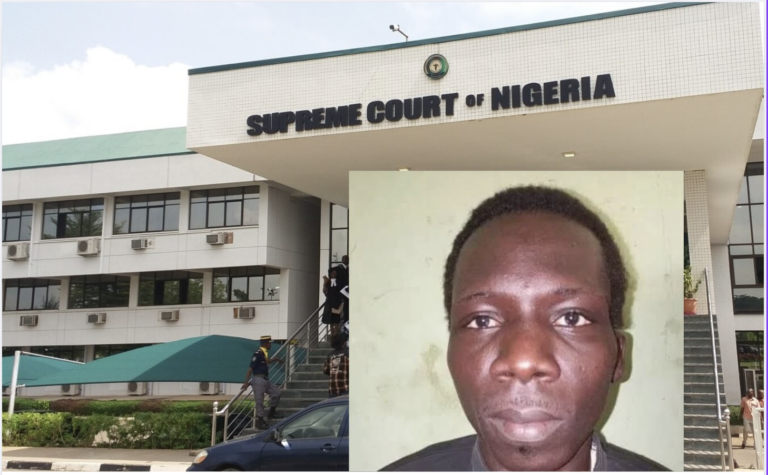
Stabbed twice, then sentenced to death: The controversial story of Sunday Jackson

CAN you be guilty of murder for defending yourself after being stabbed twice? In Sunday Jackson v. The State, the Supreme Court upheld a death sentence, rejecting a self-defence claim many legal experts say should have stood.

However, one of the judges, Helen Ogunwumiju’s dissent has sparked fresh debate over what counts as reasonable force in life-or-death moments. The core of the controversy lies in the Supreme Court’s affirmation of lower court decisions that convicted Jackson of culpable homicide, a verdict many legal minds find inconsistent with the principles of self-preservation.

Background 

The case originated from an incident in January 2015 in Kodomti village, Adamawa State. Jackson was charged under Section 221(a) of the Penal Code Laws of Adamawa State 1997 for the death of a herdsman.

According to court documents, Jackson testified that the deceased approached him on his farm, questioned him about the whereabouts of some passerby, and then allowed his cattle to graze on Jackson’s land. When confronted, the man allegedly drew a knife and attacked Jackson, stabbing him in the back of the head and then the leg as Jackson tried to flee.

“On the 27th January 2015, I went to the farm, I was working, one Fulani (Buba Barowa) man rushing with his cattle, then he asked me, that there are some people that came through here, where are they? I answer that I don’t know, then he put his cattle into my farm, then I asked him why did he put his cattle in my farm, he did not say anything, then I pursued the cattle out of my farm,” Jackson was quoted. 

Jackson recounted that, fearing for his life during a subsequent attack, he managed to disarm the Barowa and, in the struggle, stabbed him. During cross-examination, Jackson stated he did not believe his actions would result in the man’s death.

However, the prosecution presented Jackson’s confessional statement  to the police where he admitted to the stabbing. The trial court, relying on this statement and rejecting the self-defence plea, found Jackson guilty and sentenced him to death.

Dissatisfied, Jackson proceeded to the Court of Appeal, seeking to overturn the trial court’s decision. However, the appellate court upheld the initial conviction and sentence, leading to the final appeal at the Supreme Court.

Again, Jackson approached the Supreme Court, which would ultimately render the judgment that is now the subject of intense legal scrutiny.

In a majority judgment delivered by a justice, Mohammed Baba Idris, the Supreme Court sided with the lower courts. The crux of their reasoning was that once Jackson had dispossessed the deceased of the knife, any subsequent fatal stabbings were deemed to exceed the bounds of justifiable self-defence. The court emphasised the disproportionate nature of stabbing the deceased multiple times in the throat after the initial threat had been neutralised.

Key component of the supreme court ruling

Idris stated that “once the appellant dispossessed the deceased of the knife, the subsequent stabbing of the deceased thrice on the throat was disproportionate to the initial threat.”

The court also highlighted the absence of a medical report corroborating Jackson’s injuries from the initial attack and noted the availability of an escape route for him after disarming the deceased.

“The Appellant has no medical report to show or prove that the stab wound was sustained from the actions of the deceased and unfortunately, there are no eyewitnesses to the incident between the appellant and the deceased. Only the appellant knows what happened between him and the deceased and he made an unequivocal statement in exhibits B1 and B2 about what transpired and the same was admitted in evidence without any objection. It is trite that a court can convict on the extra judicial confession of an accused person which is voluntary and true but inconsistent with his evidence in court…

Furthermore, the majority judgment dismissed the self-defence argument, stating, “Contrary to the argument of the appellant, the defence of self-defence is not available to the appellant on a closer consideration of the evidence, and in the light of the circumstances of this particular case.” 

Ogunwumiju’s dissenting opinion

In contrast, Helen Moronkeji Ogunwumiju, one of the lead judges on the case at the Supreme Court, offered a different perspective on the issue of self-defence. 

She argued that the lower courts had correctly identified the deceased as the initial aggressor who inflicted injuries on Jackson. Ogunwumiju questioned the majority’s assessment of proportionality in the context of a life-threatening situation.

She argued that a person who has already been stabbed twice and is still under attack cannot be expected to immediately cease fighting for their life the moment they gain a temporary advantage.

According to her, the deceased was the initial aggressor, and Jackson was acting in reasonable fear for his life.  

She also addressed the issue of the confessional statement, arguing that it consistently maintained Jackson’s self-defence claim.  

Ogunwumiju further highlighted the necessity and proportionality of self-defence, suggesting that Jackson’s actions were justifiable in the face of imminent danger.  

Ogunwumiju criticised the lower courts for not adequately evaluating the evidence ofJackson’s injuries. She stated, “In this case, since the evidence of the wounds on the appellant which he claimed were inflicted by the deceased was not evaluated by the trial Judge, and it deals with evidence on record, this Court is on the same footing as the trial Judge and I choose to believe the evidence of the Appellant in that regard as the trial Court after making a record of seeing the wounds, did not evaluate the evidence or make a finding on it.”

She challenged the notion that Jackson’s failure to immediately flee after disarming his attacker indicated premeditation. Citing legal precedent, she noted that while fleeing is a primary reaction in self-preservation, the possibility of disengagement depends on the specific circumstances.

“I cannot agree that a reasonable man who had been stabbed twice already and who was still being attacked with a herdsman’s stick would hesitate to fight for his life. It would have been a different thing altogether if there had been an intervening period in the fight. The appellant took advantage of the fact that the person who had stabbed him on the back of his head, an equally dangerous place to be stabbed, had become temporarily weak and took the opportunity to save his own life,” she noted.

“I acquit and discharge the Appellant. Since I appear to be in the minority, I recommend this Appellant as a proper candidate for the Governor of Adamawa State to exercise his prerogative of mercy,” the judge ended her judgement. 

The dissenting opinion of  Ogunwumiju has resonated with many legal experts who believe it offers a more pragmatic and humane understanding of self-defence.  There have been calls and concerted efforts to get clemency for Jackson.  This will mean the governor granting him pardon.

We moved annual conference from Rivers to Enugu due to emergency rule-NBA

0

THE Nigerian Bar Association (NBA) has shifted its 2025 Annual General Conference (AGC) from Port Harcourt to Enugu amidst the declaration of Emergency Rule in Rivers State.

The ICIR reports that registration is currently ongoing for the members of the bar who will be participating at the conference scheduled for August 22-28,2025.

The NBA, in a statement released on Thursday, April 10, jointly signed by NBA President Mazi Afam Osigwe, a senior advocate; the General Secretary, Mobolaji Ojibara; and Emeka Obegolu, stated that the conference was moved to Enugu due to concerns over the governance in the state under a sole administrator appointed by President Bola Tinubu.

Osigwe stated that the decision was made after meetings with the Rivers State NBA branch chairmen and an emergency National Executive Council (NEC) session on March 27, 2025.

The NBA expressed deep concern over the Sole Administrator’s command-style approach, allegedly disregarding constitutional provisions, court decisions, and pending litigation.

The association also cited violations of Section 305 of the 1999 Constitution, which prohibits emergency rule declaration without proper justification.

The NBA noted that the suspension of elected officials and democratic institutions in Rivers State contravenes Sections 11 and 188 of the Constitution.

It added that the overwhelming consensus was that the NBA could not, in good conscience, proceed with the AGC in a state governed by a sole administrator.

The ICIR reported that President Tinubu declared a state of emergency in Rivers State on Tuesday, March 18.

The declaration followed protracted political turbulence in the state.

Tinubu, in a nationwide broadcast, suspended Governor Siminalayi Fubara; his deputy; and all members of the State Assembly for six months.

Tinubu who blamed the governor for allowing the political crisis in the state to escalate particularly faulted Fubara for failing to take action after an oil facility was blown up in the state.

Shortly after the declaration, the NBA described the suspension of Fubara and his deputy as illegal.

The NBA said it was gravely concerned about the president’s action, adding that the 1999 Constitution did not give him the power to remove an elected governor, deputy governor, or members of a state’s legislature under the impression of a state of emergency.

The NBA said a declaration of emergency did not automatically dissolve or suspend elected state governments.

The NBA called the suspension unconstitutional and a threat to democracy.

Nigerian children at risk from junk food marketing

0

By Humphrey UKEAJA

ACROSS Nigeria, from the bustling streets of Lagos to the quiet neighbourhoods of Enugu and the vibrant markets of Kano, ultra-processed food (UPF) companies are saturating the country with flashy adverts for sugary drinks, snacks and products targeted at children. These  items are everywhere—in schools, churches, and on social media—and they are cheap.

Yet behind the bright colours and sweet flavours lies a growing threat to children’s health. Global health authorities, including the World Health Organization (WHO), have repeatedly warned that the widespread consumption of these unhealthy diets is driving a surge in poor nutrition, obesity, diabetes, cardiovascular diseases, and other long-term health risks worldwide, a trend now clearly visible among Nigeria’s youngest.

Ultra-processed foods are industrial formulations made with little to no whole foods. They are typically loaded with additives, preservatives, artificial flavours, and excessive amounts of sugar, salt, and unhealthy fats. Common examples include sugary cereals, carbonated drinks, instant noodles, and packaged snacks. According to a 2021 report by the Global Nutrition Report, Nigeria is experiencing a rapid increase in the consumption of UPFs, with children emerging as the main targets. The tactics employed by food companies to reach this demographic are both calculated and manipulative.

Brightly coloured packaging featuring popular cartoon characters, free toys, and school-based promotions are just a few of the carefully crafted strategies adopted to capture and captivate young minds. Celebrities and influencers often viewed as role models are also paid to normalise and endorse these products, making them appear desirable, aspirational, and harmless. For instance, a recent campaign by a leading carbonated drink brand featured a popular Nigerian musician encouraging children to “share the joy” by consuming the product.  Even institutions that should serve as protective and nurturing spaces for children, such as schools and religious centres, have become conduits for these aggressive marketing campaigns.

The consequences of this unchecked exposure are dire. A  2023 study published in The Lancet revealed that children who consume high amounts of UPFs are 45 per cent more likely to develop obesity and related health complications. In Nigeria, the statistics are equally grim. A 2022 report by the Nigerian Ministry of Health and Social Welfare found that childhood obesity rates have tripled in the past decade, with UPFs identified as a key contributor. Type 2 diabetes, once rare among children, is now on the rise and has a become a growing concern for many.

What makes these commercial bombardments by the ultra-processed foods industry particularly insidious is how they tap into children’s psychological vulnerabilities. By linking their products to happiness, fun, and social belonging, they create powerful emotional associations.

Schools, often underfunded and under-resourced, have become prime targets. Companies sponsor school events, provide free samples, and even distribute branded educational materials.

Online, the problem is even more pervasive. Social media platforms like Instagram and TikTok are flooded with advertisements featuring influencers who glamorise the consumption of UPFs. A study by Ada Mac -Ozibgo found that 70 per cent of food advertisements targeting children on social media are for unhealthy products.

Given the scale and urgency of this challenge, regulatory action could not be more urgent. Countries like Mexico and Chile have already taken bold steps by banning the advertisement of UPFs within school environments and during children’s television programs. These policies reflect a clear understanding of the long-term health costs of inaction. Nigeria must follow suit. The federal government, alongside public health authorities, must enact and enforce similar restrictions to shield children from a health crisis that is both preventable and rapidly worsening.

Parents, caregivers, and guardians also have a critical role to play. By educating the children in their care about healthy eating habits and limiting their exposure to UPFs, they can help foster healthier choices and build resilience against the overwhelming pressure of corporate marketing. Likewise, schools and religious institutions must prioritize the health of children by rejecting exploitative sponsorships from food companies.

After all, every time a child reaches for a sugary drink or a packet of instant noodles, they are not just consuming empty calories, but also ingesting a future fraught with health complications. No child should be left to navigate a food environment deliberately engineered to hook them early and keep them hooked. Nigeria’s children deserve better than a lifetime of diet-related illnesses packaged in glossy wrappers. They deserve protection, accountability, and a food system built around their healthy development.

Ukeaja is a healthy food advocate and Industry Monitoring Officer at Corporate Accountability and Public Participation Africa (CAPPA)

UPDATED: Consumer Advocates call for transparency as FG set to rollout of 3.2 million electricity meters

THE President of the Electricity Consumer Protection Advocacy Centre (ECPAC), Princewill Okorie, has called for proper customer enumeration as the Federal Government prepares to distribute over three million electricity meters across Nigeria.

Speaking to The ICIR on Friday, Okorie emphasised that the Nigerian Electricity Regulatory Commission (NERC) must ensure a thorough enumeration of electricity consumers to accurately track the progress of the metering initiative.

“The power sector has multifaceted issues. Metering is one of them and needs to be done transparently” he said. “The government needs to do a proper customer enumeration of consumers to determine how much gap we have filled since the commencement of the mass metering programme.”

He added that Nigeria should have clear data indicating how many households have been metered, how many are still unmetered, and the overall metering shortfall.

Okorie also highlighted the need for transparency and accountability in the implementation of the metering programme, noting that the funding comes from a World Bank concessionary loan.

“The metering funds are from the World Bank as a concessionary loan facility that would be repaid. This is why we must be transparent with the funds,” he said.

Recall, the  Federal Government said it is ready to receive the first batch of 3,205,101 meters it had procured to bridge the metering gap in the country.

The Minister of Power, Adebayo Adelabu, confirmed this development in a statement by the Special Adviser, Strategic Communications and Media Relations, Bolaji Tunji, on Sunday, April 6.

According to Adelabu, 75,000 meters under the International Competitive Bid 1 (ICB1) is expected by April 2025, followed by the second batch of 200,000 meters in May 2025.

He noted there have been concerns about metering in the electricity sector, which suggests that the industry is in crisis.

He said the narrative has overlooked the significant progress made in bridging the metering gap in the country.

“While challenges persist, the facts tell a more balanced story – one of sustained effort, financial commitment, and structured implementation plans by the Federal Government of Nigeria to close the metering gap.

“Despite claims of stagnation, metering installations have been progressing steadily. As of December 2024, a total of 5,502,460 customers had been metered, representing about 55 per cent of the 10,114,060 active electricity customers in Nigeria. In 2024 alone, 572,050 meters were installed. While the government acknowledges the existing metering gap, it is actively working to close it as quickly as possible,” Adelabu said.

He, however, asserted that a sizeable portion of active electricity users already have meters, as against the narrative of an industry in crisis.

The minister also asserted that the sector maintains a yearly average of about 668,000 meters installed.

He hinted that structured financing and government-backed initiatives are expected to accelerate deployment beyond the current pace, ensuring that the metering gap is addressed efficiently.

“To bridge this gap, the government has put in place key initiatives aimed at significantly improving metering across the country. The Distribution Sector Recovery Program (DISREP) is set to deliver 3,205,101 meters by 2026.

“This will be achieved through different procurement models, including 1,437,501 meters through International Competitive Bid 1 (ICB1), 217,600 meters through National Competitive Bid (NCB), and 1,550,000 meters through International Competitive Bid 2 (ICB2). As part of this plan, the first batch of 75,000 meters under ICB1 is expected by April 2025, followed by the second batch of 200,000 meters in May 2025,” he said.

In addition to the DISREP, Adelabu said the N700 billion presidential metering initiative (PMI) is another key intervention designed to accelerate metering, explaining that the initiative, which is from the Federation Account Allocation Committee (FAAC), is structured to ensure large-scale meter procurement and deployment.

“A Special Purpose Vehicle (SPV) has been established to oversee the implementation of the initiative. The government has set a target of deploying two million meters annually for five years, with the tender for the first batch of two million meters expected to be released by the third quarter of 2025.

“These structured interventions provide a clear roadmap for addressing the metering gap effectively and sustainably,” he hinted.

While the metering gap remains a concern, Adelabu argued that the notion that it would take over a decade to resolve was misleading.

He believes that with the ongoing DISREP and PMI initiatives, Nigeria’s metering landscape is set to experience significant improvement before the end of the year.

“The focus should be on the execution of these well-structured plans rather than a blanket critique that overlooks the real progress being made,” the minister added.

About a year ago, the federal government expressed concern about closing the metering gaps, de-risking the power sector, and addressing the financial liquidity challenges facing the power sector.

In March 2024, The ICIR reported that Olu Verheijen, the special adviser on Energy to President Bola Tinubu, gave the assurance during a session at the 2024 edition of CERAWeek by S&P Global held in Houston, the United States, revealing the government was working on several initiatives to decentralise energy transmission.

Note: The reprot was updated to include the part from Princewill Okorie

Amid ban, Nigerians amplify Eedris Abdulkareem’s ‘Tell Your Papa’ song on social media

0

A DIRECTIVE by the National Broadcasting Commission (NBC) banning the airplay of Eedris Abdulkareem’s latest politically charged song, ‘Tell Your Papa,’ has sparked mixed reactions and defiance on social media, as Nigerians continue to amplify the song in solidarity.

In a letter dated April 9, 2025, and signed by the coordinating Director of Broadcast Monitoring, Susan Obi, the NBC ordered all broadcast stations to desist from airing the song, citing its ‘objectionable content’ and claiming it violated Section 3.1.8 of the Nigeria Broadcasting Code. 

The commission classified the song as ‘Not To Be Broadcast’ (NTBB).

“The National Broadcasting Commission has identified the song ‘Tell Your Papa’ by Eedris Abdulkareem, currently trending on social media, as content deemed inappropriate for broadcast due to its objectionable nature.

“It is therefore classified as Not To Be Broadcast (NTBB), as it violates Section 3.1.8 of the Nigeria Broadcasting Code.

“The commission requests that your station exercises discretion and refrains from airing this song to maintain responsible broadcasting standards,” the statement posted on Abdulkareem’s Instagram page reads.

However, the ICIR gathered that the ban has instead fueled online promotion, making Tell Your Papa a trending topic across social media, particularly on X and TikTok.

Clips of the track, which contain pointed social commentary, criticise President Bola Tinubu and his son, Seyi Tinubu, over the economic hardships Nigerians are going through.

In the song, Abdulkareem directly addresses President Tinubu’s son, Seyi, calling on him to relay the plight of the average Nigerian to his father.

Part of the lyrics said:“ Seyi, tell your papa country hard.

“Tell your papa people dey dying. 

“Tell your papa this one don pass jagajaga.

“Seyi, how far? I swear your papa no try. Too many empty promises.

“On behalf of Nigerians, take our message to him. 

“Kidnappers dey kill Nigerians.”

The veteran rapper also highlighted insecurity and inequality in access to public infrastructure: ⁷“Seyi, try travel by road without your security make you feel the pains of fellow Nigerians.

“You dey fly private jets, insecurity no be your problem.”

Reacting on social media, many Nigerians, including popular influencers, described the NBC’s restriction as an attempt to stifle freedom of expression and suppress dissenting voices.

They also noted that the song is a reflection of current realities in Nigeria.

In a now viral short video, a social media influencer, Martins Otse, popularly known as VaryDarkMan, said ‘First of all, we don’t even need radio, we are going to take it all over social media. “Dear Eedris Abdulkareem, we are going to shoot another video, this time we will sponsor it, and I go dey inside the video, we go find somebody wey resemble Bola Ahmed Tinubu since we no fit get the real president. We go dance, inside that video, Tell your papa part two, then we will come highlight other problems.”

Another X user, @Ogundamisi, said that Abdlkareem should thank the Commission for the ban on his song, as it gave him nationwide promotion.

“Eedris Abdulkareem should thank NBC. Until today, I’ve never heard the song ‘Tell your Papa’. A cry for help from Eedris Abdulkareem to Nigeria’s Vice President (Political empowerment), to deliver to his dad, President Tinubu, on the current state of Nigeria,” he wrote.

Meanwhile, on TikTok, users are using snippets of the song in satirical videos mocking Nigeria’s economic hardship, perceived as government failures. 

Others have used it as the soundtrack to promote their handles and also to spread the reach of the song.

The ICIR reports that ‘Tell Your Papa’ followed in the tradition of Abdulkareem’s 2004 hit Jaga Jaga, which was banned from radio and Television stations during the Olusegun Obasanjo administration for its criticism of governance and social decay, but it continued to play in the street and nightclubs. The song also annoyed Obasanjo, and he reportedly cursed Abdulkareem. 

In 2012, Obasanjo would further react to the song, attacking Abdulkareem again for releasing that song years back.

Speaking at an event organised by Nigeria Leadership Initiative (NLI) in 2012, Obasanjo said, “one of the worst problems Nigeria is facing is disbelief. Nigerians no longer believe in themselves, nor do they believe in their country.

“That takes me back to that song ‘jaga jaga’. How could a sane man dare to call his country jaga jaga? It is the height of blasphemy.”

Stakeholders push for School-PHC linkage after research reveals gap in schoolchildren healthcare

0

NEW research shows gaps in schoolchildren’s healthcare. Stakeholders say it’s time to link schools with PHCs.


Experts in policy development, health, education and other relevant sectors have said that schools and local health centres (known as primary healthcare, or PHC) need to work much more closely together.

This suggestion comes after new research showed worrying gaps in how school-aged children in Nigeria can get health care.

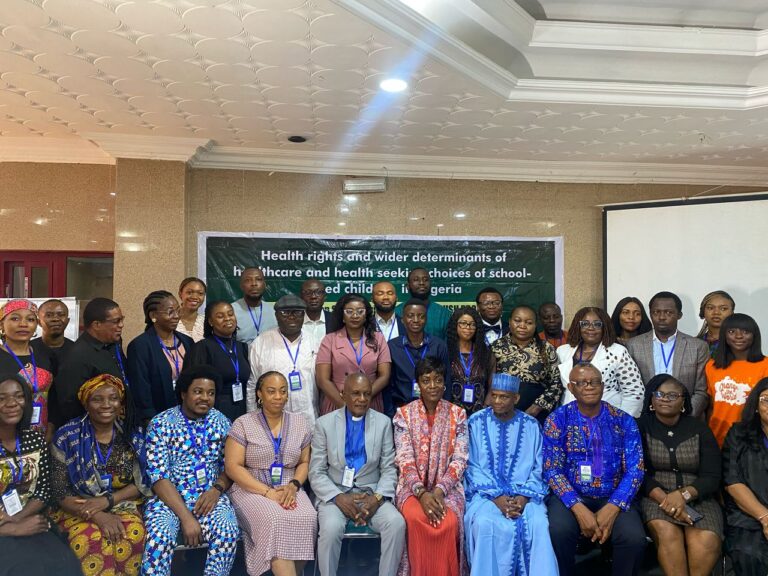
The findings were discussed at a two-day meeting in Abuja. The meeting, which took place 9-10 April, was organised by the Health Policy Research Group (HPRG) from the University of Nigeria, working with the CHORUS project.

The research looked at both slums and non-slum communities in Rivers State. It used different methods to gather information, to highlight both quantitative and qualitative evidence of the healthcare challenges facing children aged 5–17.

The event brought together policymakers, researchers, and representatives from development agencies to review findings of the new study.

The study, called the PUSH Project (Protect Urban School Children’s Health), involved interviews, group discussions, classrooms observation, and surveys with 408 schoolchildren and 156 school staff.

Introducing the project, the lead researcher, Prince Agwu, stressed that the Nigerian government needs to pay more attention to children older than four. He said that many illnesses, both those that spread (like infections) and those that don’t (like some chronic diseases), affect children in this age group, including malaria, fever, and respiratory infections.

Agwu pointed out that while Nigeria has made some progress with children’s health, most of the focus has been on children under five. Less attention has been paid to the health of school-aged children (5-17 years), who make up a large part of all children.

He also highlighted that the laws and plans that exist for children’s health, such as the Child Rights Act, the National School Health Policy, and the National Policy on the Health and Development of Adolescents and Young People in Nigeria (2019), aren’t having enough of a positive impact on children’s health.

Referring to data from the ‘Kids Rights Index’ and ‘Child Flourishing Index’ on children’s rights, he said that Nigeria is among the worst countries in the world and is ranked alongside ‘war-torn countries’.

According to researcher,  Chinelo Obi, who presented what people said in the research (qualitative findings), the health of children in urban slums is made worse by several factors.

She pointed to the prevalence of substance abuse, risky sexual behaviours, and harmful health practices such as the use of herbal concoctions. 

She added that some caregivers and even health workers exhibit negative attitudes, driving children and guardians toward informal and unregulated care providers like patent medicine vendors (PMVs).

Key findings

Another researcher, Ifunanya Agu, presenting the numbers from the research (quantitative findings), said that schools in Rivers, especially in slum communities, often don’t have proper sickbays or trained health staff. She added that most children who felt unwell were often sent home, taken to a chemist, or left without unattended.

About 66.2 per cent of students and 60.9 per cent of school personnel confirmed the unavailability of sickbays, while 70 per cent said there were no qualified health personnel in their schools.

The data also showed that when children fall ill, 14.5 per cent are sent home, 24 per cent have their parents called, and only 13.5 per cent are taken to PHCs. Only 43.9 per cent gave their pupils first aid.one of the students surveyed had any formal link with a local health centre near their school.

The study also showed that 88.2 per cent of children expressed willingness to report bad healthcare practices, but lacked clear avenues to do so​. 

In the same development, only 38 per cent of students confirmed their schools checked the nutritional value of their meals, while 56 per cent of school personnel admitted to also checking meals brought by the students.

More alarmingly, 39 per cent of children had never been taught about the levels of healthcare (primary, secondary, tertiary), suggesting widespread gaps in healthcare literacy.

The findings further revealed the alarming patronage of Patent Medicine Vendors (Chemists) by those looking after the children, showing that 41 per cent of the school personnel use chemists to provide first aid treatment to the children. Accessing PHC came third with just about 13 per cent of them using it for children’s health needs.

Existing health plans for children needs improvement – Former Rivers Commissioner

Speaking to reporters, the former Rivers State Commissioner for Health, Adaeze Oreh, said that the state government supported the HPRG’s PUSH project because they needed policies to be based on evidence and facts.

While Nigeria has made progress in children’s healthcare, especially for babies and young children under five, Oreh said that most school-aged children are still being overlooked.

She described a gap in policy that has meant children aged 5–17, who make up over 70 per cent of Nigeria’s child population, are not getting the care they need.

She mentioned findings from a meeting in Rivers in 2024, where it was found that although plans exist, poor teamwork between different government departments and a lack of clear responsibility for funding have stopped these plans from being properly put into action.

We’re not trying to undermine the very valid emphasis and attention that’s being given to newborn, infant, and under five health, but also drawing attention to this middle – the 70 per cent who are aged between five years and 17, that are mainly domiciled, about 60 to 65 million children in schools in this country, and we do not have effective means of addressing their health and well-being, but we have existing primary health care structures, and we can use that as a leverage to providing their health needs,” she said.

According to Oreh on the new research and the workshop, the goal was to shift from policy discussions to implementable strategies tailored for states across Nigeria.

She called for urgent attention to the use of existing PHC structures as a viable way to bridge the healthcare gap for school children.

“If this evidence that is gathered from sound, robustly conducted research is applied to policy making and decision making, we should see a turnaround in the population, child health population statistics. The reason is, if we are witnessing improvements in newborn health, in infant health, in under-five child health, and there is, like I said before, 70 per cent of the population, who don’t have or who have minimal access,” she said.

Without this shift, she warned, the nation’s progress in reducing child mortality could be reversed by the poor health outcomes of its older children.