Home Blog Page 3191

Obasanjo Dumps PDP, As Party Expels Him

0

In what appears to be a pre-emptive move, former President Olusegun Obasanjo on Monday dumped the ruling Peoples Democratic Party, PDP, announcing his decision to henceforth play the role of a statesman while staying out of active politics.

But in a dramatic move, the PDP in Ogun State has also suspended the former Head of State, who has shown open opposition to President Goodluck Jonathan’s re – election bid, from the ruling party for what it termed anti party activities.

Obasanjo, who announced his decision to dump the PDP when members of the party from his Ward in Abeokuta North local government area of Ogun State, led by the chairman, Usman Oladunjoye, visited him at his Hilltop mansion residence in Abeokuta, hinted that his announcement was occasioned by reports of a plan by the party leadership to expel him for alleged anti-party activities.

“They said they want to expel me from PDP. Although I have not been told but I have my ears on ground. We’ve been trying to run away from a man but he pleads we wait for him at the other side of the river. I have told you before that I became president on the platform of PDP, once I leave PDP I will not join any party,” Obasanjo told journalists.

“I will only be a Nigerian. I am ready to work with anybody regardless of political affiliation. Why would some people say they want to send me away, they don’t need to bother themselves, here’s your membership card, take it,” he said.

In a dramatic move calculated to show that his decision was irreversible, Obasanjo directed Oladunjoye to tear his PDP membership registration card.

The PDP ward chairman, thereafter, went ahead to publicly tear the former President’s membership card to thunderous applause by those present.

Obasanjo has been embroiled in a protracted dispute with Jonathan ostensibly over what he considered as the President’s lacklustre performance in office.

Many attempts at fence-mending between the two party leaders failed and the dispute became apparent when Obasanjo resigned from his position as chairman, Board of Trustees, BOT, of the PDP on April 3, 2012, saying that time to work at attracting business investments to Nigeria.

The former President has accused Jonathan of mismanaging the nation’s resources, not acting boldly regarding the nation’s security and generally encouraging corruption.

In an open letter to the president dated December 2, 2013, Obasanjo had raised an alarm that there were reports that Jonathan had compiled a list of ‘troublesome’ opposition politicians and assembling a sniper squad for the purpose of dealing with perceived foes.

Obasanjo also recently launched an autobiography titled “My Watch’ in which he took President Jonathan to the cleaners, giving damaging appraisals of his stewardship since 2010. The memoirs are the subject of an on-going libel suit, and have been banned from being published or sold in Nigeria.

President Jonathan had also made certain remarks directed at Obasanjo in which he (Obasanjo) was referred to as “an elder statesman who was behaving like a motor park tout”.

Recently the former president accused President Jonathan of having perfected certain plans to instigate crisis in the nation to encourage a military takeover, in the event of his defeat at the forthcoming polls.

But President Jonathan in turn on Saturday accused Obasanjo of working to create an interim national government which he had intentions to lead.

Announcing his retirement from politics, the former president denied the allegation that he was plotting to establish and head an interim government.

Reacting to Obasanjo’s exit in Abeokuta, the Ogun State chairman of the party, Bayo Dayo, stated that form today “Obasanjo Aremu Olusegun stands expelled and excommunicated from the party thereby losing all rights previous, privileges and respect of our teeming party members.”

According to Dayo, Obasanjo’s ward had earlier sent a letter dated February 12, 2015 to express concerns at his “anti-party activities” and “uncomplimentary utterances” targeted at the leader of the party, President Jonathan.


ICPC Uncovers N924.98 Million Fraud In Environment Ministry                            

0

By Samuel Malik, Abuja

Four people are being held by the Independent Corrupt Practices and Other Related Offences Commission, ICPC, in connection with a N924 million fraud at the federal Ministry of Environment.

The sum of N924 million is believed by investigators to have been transferred from the ministry’s First City Monument Bank, FCMB, account without permission to the accounts of some organisations in four banks.

The ICPC had on December 1, 2014 received a complaint from the ministry, notifying it of an unauthorised transfer of N924.98 million from its coffers, and the commission immediately swung into action by first freezing the said bank accounts and inviting, arresting and interrogating several staff of the banks and officials of the ministry.

Similarly, FCMB had reported the transfer of the funds to the Economic and Financial Crimes Commission, EFCC, which also commenced an investigation but later transferred the case to the ICPC at the request of the ministry.

According to the statement by the resident consultant at the ICPS, Folu Olamiti, a key suspect, Adeolu Adeyanju, who had earlier fled to a neighbouring country following the unearthing of the fraud, was among those detained.

Adeyanju is chief executive of Detwinx Global Services Ltd, which received N465, 193, 460.05 in its Zenith Bank account, which he withdrew on the same day.

“The three other suspects are Usman Omoh Sani, who is the brother to a key suspect named Murphy Sani ((alias Murphy Ozi Opene) who is at large (and subsequently declared wanted); Raphael Orim, Managing Director of De-Ormat Furniture and Abubakar Mamman Mutari of Afazuwa Ventures (Bureau De Change),’ according to the commission.

While Adeyanju was arrested by the ICPC, the other three were apprehended by EFCC and handed over to the ICPC.

Details of how the money was distributed showed that  De- Ormart Furniture Company Ltd received N143,562,532.50 through its Access Bank account; Felitex Global Enterprises Ltd through First Bank got N39,051,359.00; Afazuwa Ventures received N43,182,404.00 through Fist Bank; Detwinx Global Services Ltd received N468,794,613.79 through Zenith Bank; Alozen Pharmacy Nig. Ltd also through Zenith Bank received N1397,899,494.00; and Federal Board of Inland Revenue got N92,499,553.60 through UBA.

“The ICPC has so far blocked the sum of N459, 789, 456.76 in most of the banks they were transferred to. This includes the sum of N92, 490, 553.60 transferred to UBA purportedly as tax remittance in an account designated as Federal Board of Inland Revenue Account and which has been returned to FCMB as the Federal Inland Revenue Service (FIRS) denied operating such an account in UBA,’ the ICPC said.

‘The sum of N358, 695, 789.50 has been mopped up and transferred to the ICPC’s Recovery Account to prevent any further diversions while investigation is still on-going,’ it added.

The anti-graft agency also disclosed that it is aware of efforts made by some persons to stall its investigation, including threats to witnesses and its officers handling the case, but warned that such people risk the wrath of the commission,’ adding that it had directed ministries, departments and agencies of government to ensure proper monitoring of institutional processes that will block future occurrences of unauthorized financial transactions.


Why It Will Be Difficult To Rig During 2015 Elections – INEC

0

By Adedayo Ogunleye

The Independent National Electoral Commission, INEC, has assured Nigerians that it would not be business as usual for politicians who have plans to rig during the rescheduled general elections.

The commission’s Resident Electoral Commissioner, REC, in Benue State, Istifanus Defwang, who gave the assurance when he paid a visit to the state governor, Gabriel Suswam, stated that the recent introduction of card readers that would be used to identify fake Permanent Voters Cards, PVCs, would ensure less than one per cent failure rate.

Stating that the commission was prepared to checkmate all plots to perpetrate electoral fraud such as use of fake PVCs, double voting, and voting by proxy, the REC warned that INEC officials would not condone any act of indiscipline from politicians but adhere strictly to all laid down procedures that would ensure the success of the election.

Further disclosing that Benue State had the highest zero polling unit non-collection of PVCs in the country and stating that out of the 3,188 polling units in the state, 659 units were yet to collect PVCs, he said that with the shift in the dates of the elections the commission was ready to distribute PVCs to registered voters who are yet to collect them.

He therefore called on registered voters to ensure that they collect their PVCs within the stipulated time frame.

“INEC has the capacity to conduct a free, fair and credible election with the level of our preparation, the new card reader machine will go a long way in fishing out people who are ready to commit fraud during the election.”

Calling on the state government to sensitize the residents on the need to collect their PVCs before the elections, Defwang also warned that INEC would not accept collection of cards by proxy even as he advised voters to go to the polling units where they registered to collect their cards.

Responding, the state governor, Gabriel Suswam, assured the REC that his administration and the People’s Democratic Party, PDP, would provide a conducive atmosphere for peaceful and non-violent elections.

Drawing attention to recent alleged provocation by the opposition All Progressives Congress, APC, which he alleged, shot two of PDP members in Konshisha and Guma local government areas of the state, Suswam promised that his party and supporters would not seek any vengeance.

Suswam charged INEC to conduct more enlightenment for the residents of the state on new voting system to ensure better understanding, especially by rural dwellers.

In a related development, the INEC Resident Electoral Commissioner, in Oyo State, Rufus Akeju, has promised that prosecution awaits any voter caught with fake PVCs during the elections.

Vowing that the electoral body would not condone electoral fraud during the elections, he warned all those who had plans to use fake PVCs to shelve the idea or risk conviction and imprisonment.

“Any voter who is thinking of voting with a fake PVC during the general elections should shelve the idea now because doing so would land them in jail,’’ he said.

Announcing that a total of 1,563,800 PVCs had been distributed by INEC in Oyo State, the REC also assured the public that several strategies had been devised by the commission to check rigging and ensure credible elections.


READ ALSO:


“For instance, it will be impossible for anybody to steal ballot papers in the name of rigging because there cannot be more than 750 ballot papers in any polling unit,” he said.

The presidential and National Assembly elections, which had earlier been scheduled for February 14, have been rescheduled  to hold on March 28 while the governorship and state Houses of Assembly polls, which had been slated for February  21, will now hold on April 11.


Jos: A Century Of Tin Exploration And Environmental Neglect

By Janet Faden, Jos

[youtube width=”533″ height=”300″ video_id=”gV5FN7uU4SU”]

Until it became synonymous with violent ethno-sectarian clashes, Jos, capital of Plateau State, was more widely known for its sultry weather and tin mining. Tin mining started in the “Tin City” way back in1902 and by the mid-1940s the British government formally entered into exploration and mining in the region, making it the number one foreign export from Nigeria.

But the discovery of oil in the mid-1950s resulted in a shift in emphasis from tin mining. With the shift, Jos was caught cold and left blighted with challenge of degradation and devastation to the soil and the environment.

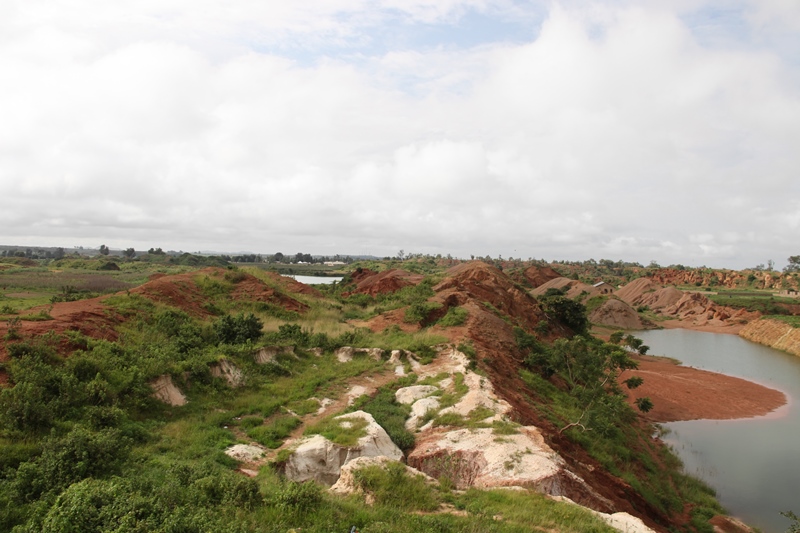
Tin exploration and mining left a grotesque legacy of over 4,000 abandoned mining ponds, which have continued to pose a serious threat to the environment and the inhabitants.

Quite a lot of damage was done to the land, particularly around Jos.

Dozens of people have drowned in the deep unmanned ponds and there are speculations that the ponds have radioactive elements, which represent further danger to the people in the area.

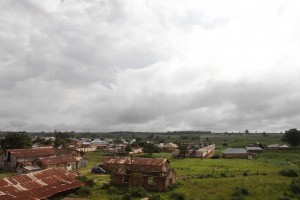
A recent visit to mining settlements of Gidan Adudu, Rafin Zeti, Zawan, Gidan Mai Gandu, and Gyel District of Jos South and Barkin Ladi local government areas provided a bold hint of the extent of damage on the land.

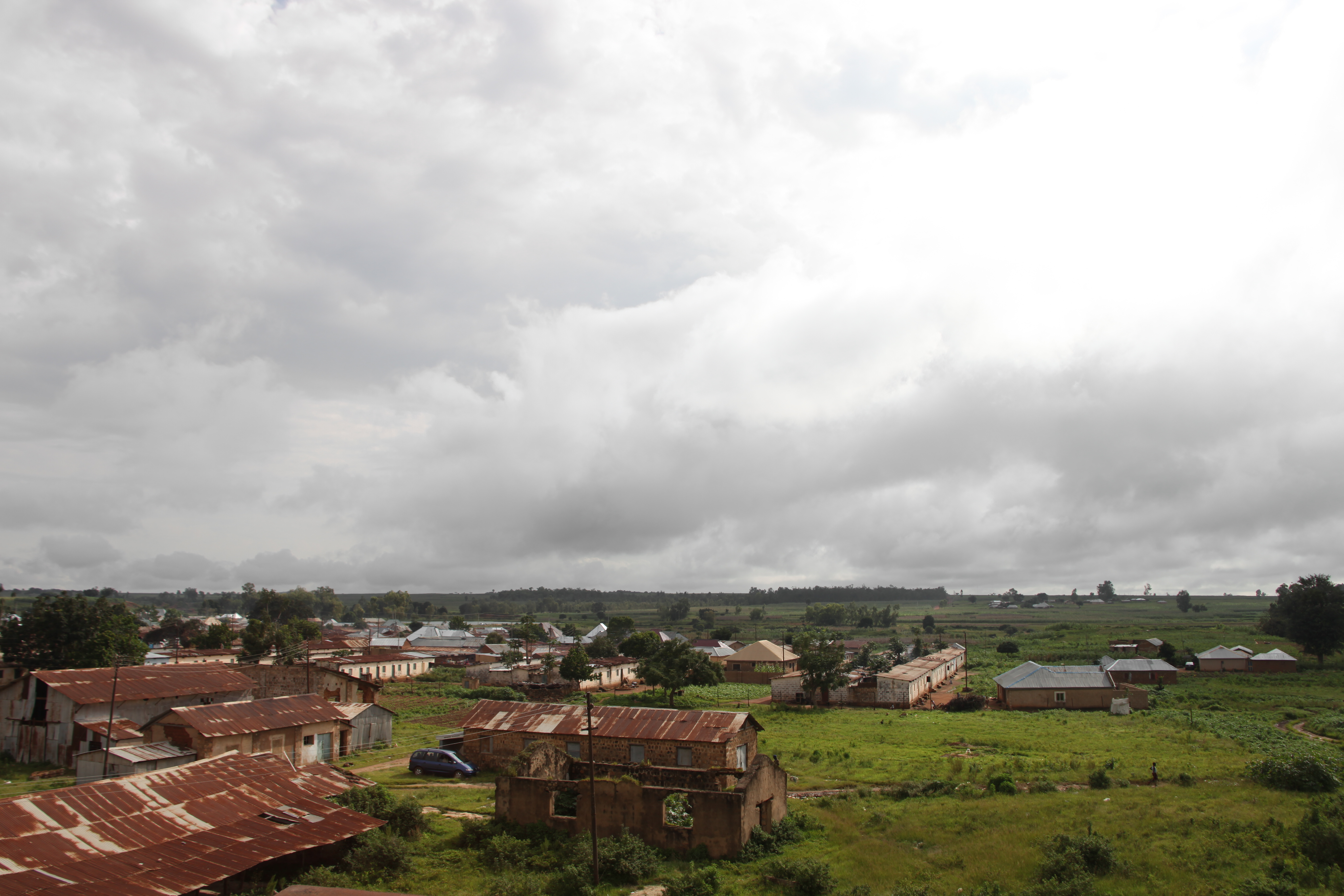
It showed almost half of the land mass-littered with dumps from abandoned mining activities.  The continuous neglect of the abandoned mines present a threat not only to the illegal miners, but to the families of laid off miners still living in the cramped mining quarters erected by mining companies as early as the 1930s.

The abandoned mines are also death traps, as children and adults occasionally drown and the ever increasing population of people living around the ponds means more and more people are exposed to dangerous radioactive particles

The picture in the affected areas is grim, as years of mining and exploration activities have created numerous erosion sites which have grown into huge gullies.

Farmlands discovered to have tin deposits or are situated close to tin deposits are seized from the indigenes without adequate compensation to service the interest of the mining activities and, most times, the owners of the lands are helpless and have no idea the amount of wealth that has been plundered from their land.

The ecological damage to the land in Jos and its environs is massive and started as early as the 1950s, when miners started cutting down trees for mining and fuel purposes, as well as digging the earth, causing various levels of  erosion.

The Plateau State Commissioner for Environment, Sylvanus Dangtoe, expressed worry at the state of the abandoned mining pits

“When the land was excavated, they dug quite deep. Only God knows the depth of some of the pits and that has exposed some of the chemicals that were buried deep in the ground. Some of these chemicals are quite dangerous, the radioactive elements can even cause cancer,” he said.
Tin Mining 2

Studies taken at different times over the years indicate that tin ore, one of the several minerals found around Barkin Ladi Local Government Area, contains toxic crystalline silica, which has been associated with lung cancer and other respiratory diseases. For decades, mine workers have been working with little or no protection against this toxic substance.

In 2012, the then Minister of Health, Professor Onyebuchi Chukwu, told his audience at the 55th Annual National Council of Health meeting that years of tin mining in Plateau State have exposed residents to danger and the increase in cancer cases is linked to radioactive waste in the area.

At Sacred Heart Community Health Clinic, Gidan Adudu, one of the few facilities catering for thousands in the entire district, Musa Atang, a medical doctor, confirmed the minister’s assertion about increasing incidence of cancer.

‘There is indeed increase in mortality from various lung-related diseases, which has given us reasons to believe that there is a relationship between long-term inhalation of silicon dust found in tin and lung cancer. Other respiratory diseases like pneumonia are evident here,” he said.

He stated further that because the mining companies had no medical data of workers before closing down, it is difficult to give an exact figure of the number of workers affected in his jurisdiction because they always referred patients with severe cases to specialist hospitals in Jos.

But, certainly, he said, the rate of lung-related diseases is higher in Plateau North than the south where mining activities are less prevalent.

Mallam Abdullahi, a retired miner who hails from Bauchi but worked at at Ganan Daji, a mining village in Barkin Ladi local government area, said the miners are aware of the dangers but have no choice because it is the only source of livelihood they know.

“The white people don’t come close to the toxic materials, but they allow us to mix it with our bare hands. We knew it was dangerous but we needed the money,” he said.
Tin mining 3

Dangtoe observed that retired mine workers who still live around the mining ponds have no access to basic amenities and drink water from the ponds, something clearly injurious to their health.

“On several occasions we have warned people living close to the area and have drawn the attention of the Federal Government, as a matter of urgency, to look at these areas. If the person in the Niger Delta is crying that his land has been degraded by oil exploration, the Plateau man has every right to cry out for justice,” Dangtoe argued.

Continuing, he said: “Tin was the backbone of the economy of this country during that era, but mining has done a lot of harm. It has caused devastation and degradation. The federal government should really look into how we can solve some of the problems that is caused by mining activities.”

Efforts towards addressing this challenge through the Ecological Fund given to the states by the federal government as well as the move towards the call by civil society for the establishment of the Land Reclamation and Ecological Development Board in Plateau State have yielded precious little or nothing in tackling mining-induced devastation in the state.

A total of N1.6 billion Ecological Fund meant for the state disappeared during Joshua Dariye’s tenure as governor. He told investigators of the Economic and Financial Crimes Commission, EFCC, that the money was spent on the 2003 campaign of President Olusegun Obasanjo.

A staff of the budget committee at the Plateau State Ministry of Finance told our reporter that since Dariye’s scandal, the federal government has stopped disbursing ecological funds to the state and made the copies of the state’s annual budgets available since the inception of this present administration to prove his point.

He said the federal government had taken over the intervention in ecological damage sites in the state, citing the abandoned Domkat Bali Road Pond Project, which he said is funded directly by the federal government, as example.

Many residents of Plateau State think that the tin deposit on their land has been more of a curse than a blessing. Jos is famously known as Tin City because the city and the surrounding communities sit atop huge deposits of tin ore. However, the people complain that it has hardly translated into wealth, development or opportunities for residents.

The Plateau State Commissioner for Solid Minerals, Sani Agwom Zandi, is one of those who believe that the people have not derived much benefit from tin exploration.

‘We have not maximally benefitted from the mining industry because licences were given only to multinationals to mine under the supervision of the Federal Government. The proceeds go to the Federal Government. So, we do not directly benefit from mining activities.

“If you look at the environmental problems we have, you will know that the companies did a lot of damage to the land and left without any reclamation plan,” he lamented.

Human rights organizations such as the League for Human Rights have shown interest in the affected area through advocacy between 2000 and 2006, but were forced to discontinue due to lack of funding for their work in this area.

Added to this is the seeming tepid interest of the government in the mining sector. This has also weakened the resolve and resilience of mine workers in the struggle for their rights.

The mining companies are gone, leaving over 4,000 ponds are still abandoned and dangerous. The miners are still living close to exposed radioactive particles, while there are  no records to track and regulate the number of people whose health have been affected mining on the Plateau. And with the accusations of embezzlement of ecological funds buzzing back and forth, the hope of the government making a case for the miners to be compensated by the multinational companies is mirage. At least, for now.



Borno Declares Holiday For Buhari’s Campaign Rally

0

The government of Borno State has declared Monday as work free day preparatory to campaign rally of the presidential candidate of the All Progressives Congress, APC, Muhammadu Buhari.

The government made this known in a statement signed by the secretary to the state government, Ahmed Jidda, which was made available to journalists in Maiduguri on Sunday.

The government scribe explained that the one day holiday was to enable residents of the state welcome the APC presidential candidate to the state on his campaign rally.

“The Borno Government has declared Monday as a work Free Day,” the statement read, adding that the holiday is “to enable the people of the state welcome the APC Presidential Candidate, General Muhammadu Buhari  who will arrive Maiduguri on a campaign visit on Monday.”

While in the state, Buhari is expected to commission some projects built by the Governor Kashim Shettima.- led administration.

As at Sunday afternoon, the Ramat Square venue of the campaign rally had been prepared for the occasion.

An earlier campaign visit by the APC flag bearer was rescheduled due to security concerns


Eight persons killed by a suicide bomber in motor park attack

0

By Musdapha Ilo, Maiduguri

At least eight persons were killed on Sunday when a female suicide bomber detonated a bomb at the Damaturu Central Motor Park in Yobe State. More than 30 others were injured in the attack, some of them critically.

The suicide bomber is said to have boarded a bus in the park and shortly thereafter detonated the explosive device strapped to her body.

The Police Public Relations Officer in the state, Toyin Gbadegesin, an Assistant Superintendent of Police, ASP, confirmed the incident and said that it occurred around 12:20pm.

The police spokesperson said eight people were killed in the attack, while 32 who were injured had been taken to the General Sani Abacha Specialists’ Hospital in Damaturu.

Independent sources, however, put the number of those who died at more than 12.

Damaturu, the Yobe State capital came under massive terrorist attack on January 10, as Boko Haram insurgents tried to take over the town but they were successfully repelled by Nigerian troops.

It would be recalled that in June, last year, a suicide bomber detonated a bomb at a viewing centre in the Yobe State capital where soccer fans were watching an encounter between Mexico and Brazil during the 2014 World Cup, killing nine persons


Curfew Imposed On Gombe After Boko Haram Attack

0

A 24-hour curfew has been imposed on Gombe, the capital of Gombe State, and its environs following a failed attempt by the deadly Boko Haram insurgents to capture the town.

The secretary to the state government, Abubakar Bage, who announced the imposition of the curfew in a statement, said that the state governor, Ibrahim Dankwambo, who was out of the state, had directed that all movements be restricted in the state capital except for essential services.

Residents said that Nigerian troops battled the insurgents for hours before they could be dislodged. Ground troops were aided by Nigerian Fighter Jets which helped locate the insurgents before taking them down.

Residents of Gombe said that hundreds of Boko Haram insurgents in several Hilux trucks launched an attack on the state capital as early as 8.00 am, shooting indiscriminately and detonating improvised explosive devices, IEDs.

“We were preparing to go out when I heard the first explosion. That was around 8 in the morning. The next thing we heard were sporadic gunshots,” Maryam Umar, a resident told our reporter on the phone, adding, “We have been forced to remain indoors.”

Another resident, Bello Yakong, said he was on his way from Billiri when somebody called him not to make the journey, as the town was under siege.

“I was planning to travel back to Abuja tomorrow (Sunday), so I decided to leave for Gombe today to pass the night so that I would be at the park early. But as we approached Kumo, a town about 20km to the state capital, my cousin called and said Gombe was a no-go area. Our driver had to make a U-turn,” he said.

However, as at the time of filing this report, the situation had calmed down, with residents reporting that there were no more sounds of explosion or gunshots.

“We just heard there is curfew but we do not know for how long, even though there are no more explosions or gunshots heard,” Maryam said.

The insurgents apparently targeted military and other security installations and are believed to have attacked the 301 Artillery Regiment barracks and the Quarter Guard of the Nigerian Army along Biu road in Gombe, where several vehicles were said to have been destroyed. The insurgents also attacked some police posts in the town.


READ ALSO:


The police public relations officer in Gombe, Fwaji Atajiri, a Deputy Superintendent, who confirmed the attack, told journalists that security forces were working hard to restore peace in the town.

Gombe has come under attacks in the past, with the most recent being when President Goodluck Jonathan went for a rally in January.


Nigeria’s Backward March

0

By Eric Teniola

Historic continuity with the past is not a duty, it is only a necessity by Justice Oliver Wendell Holmes (1841-1935).

During the tenure of General Yakubu Gowon from 1976 to 1975, the two best friends of Nigeria were Emperor Haile Selassie of Ethiopia (1892-1975) “power of the trinity” and Alhaji Hamani Diori (1916-1989), the first President of the Republic of Niger.

Their frequent visits to Nigeria during that time made them to be regarded as Nigeria’s best friends. In short their frequent visit to Lagos kept the agile Ikeja airport correspondents on their toes.

Those correspondents include Dapo Aderinola now in America, Pastor Jimi Aderinokun, Rabiu Bako, Godwin Esiri, Tayo Falade, Banji Ojewale, Late Sesan Ogunro, EmeliFonwo, Chief Oloyede, Kunle Egbeyemi,James Bello, Godfrey Odu, Late Kola Adeshina, Kunle Adekoya, Seinde Dagunduro, Toye Akiode, Demola Osinubi and the present Kabiyesi of Akinale in OgunState Oba Femi Ogunleye among others.

So intense was the friendship that in 1972, a detachment of the Brigade of Guards under Major General Joseph Nanven Garba (1943-2002) was sent by General Gowon to Niamey, capital of Niger Republic, that land locked country, to quell a coup attempt on Alhaji Hamani Diori.

He survived the coup at that time but was eventually toppled on April 15, 1974 in an army coup led by Lt Col. Seni Kountche in which Diori’s wife, Aissa was killed.

That General Gowon  could send a detachment of a Nigerian Army, that is the Brigade of Guards,  to Niger at that time speaks volumes of the power of the then Nigeria Army.

The Brigades of Guard was formed in September 1962. It has two battalions, 3 and 26 battalions.

The Nigerian Brigade of Guards is unique in its customs and traditions. It is the only formation in the Nigeria Army where commissioned officers carry walking stick as part of their dress regulation. Officers are allowed to wear web belt in the Mess, an exception (to) the rule in all other Messes.

The brigade is also one of the few formations in the Nigerian Army where all ranks fly plums (Green-red in colour). It is customary for all officers posted to the brigade to be decorated with its insignia, walking sticks, lanyards and plums on assumption of duty. Another unique feature of Brigade of Guards is a very high level of proficiency in drills of all types. It has highest level of espirit-de-corps in the Nigeria Army.

It was established as a special formation, tasked to provide security for the Head of State as the highest political office holder in the country in conjunction with other security agencies. It mounts other ceremonial duties as may be required by the office.

The brigade has undergone several changes and transformation in terms of nomenclature, location and strength. The successive commanders have therefore tried to improve the efficiency of the brigade and maintained the vision of its founding fathers.

The Brigade has become the pride of the Nigerian Army. Thus, in addition to its assigned roles, it is seen as an epitome of regimentation in the Nigerian Army.

In the first four years of its formation after it was established in 1962, Lt. Col. Wellington U. Bassey, Major David S. Ogunewe, Captain Mobolaji Johnson, Captain Frank Obioha, Major Donatus O. Okafor, and Major B. Ochei all had the privilege of leading it.

Following the appointment of Major General Garba as a foreign Minister in 1975, the leadership of the Brigade of Guards fell on Major General Paul Tarfa from Garkinda in the North-East, whose entire family was recently wiped out by the Boko Haram.

If the Brigade of Guards could be so effective years ago, one can imagine the mighty strength of the entire Nigerian Army in days gone by.. How are the mighty fallen.

The Economic Community of West Africa Monitoring Group, ECOMOG, was formed on May 29, 1981 during the tenure of President Shehu Shagari. The group is made up of Ghana, Sierra Leone, Gambia, Niger, Mali, Chad, Burkina Fasso, Guinea, Liberia and others.

Because of the mighty strength of the Nigeria Army then, Nigeria has supplied nine out its eleven field Commanders. They include Major General Felix Muajhperuo, Major General Abdul One Muhammed, Major General Timothy Shenpidi, Major General Rufus Kupolati, Major General Idowu Adetunji Olurin, Major General Victor Malu, Major General Joshua Dongoyaro, Major General John Inieger and Major General Isaac Obiakor.

Now the same country that supplied all these field commanders is at the receiving end. The ugliest aspect of the war on Boko Haram was when I saw on BBC troops sent by President Muhammadu Issoufou of Niger Republic to Nigeria in our plight against Boko Haram. It made me wonder. I am still perplexed. It was as if I was in a dream. I kept asking myself, is it this same Nigeria?

Just imagine the Niger Republic sending troops to liberate us from the claws of Boko Haram; a country with a population of less than 17million which is not up to the population of Lagos state.

Same with Chad, another landlocked country with a population of less than 12 million. And Cameroun too. It’s as if we have fallen to the bottomless pit.

The country which we know and are proud of is falling before our eyes. Certainly something is wrong with us. We should be marching forward not backwards. No doubt we have mismanaged ourselves. We should be the ones liberating and not be the ones being liberated.

We should maintain our status as a regional power with all our resources, population and effective personnel. Nigerians abroad are excelling in all their callings and the world is aware, why cant we exhibit such brilliance here at home?

In spite of all, I believe the last days of our republic have not come and the inevitable doom is not around us. Not at all. The present could redefine us and spring us to action. We must wake up from our slumber and take up our positions in the committee of nations. Our case is not truja fuit meaning “troy was; troy is no more”.

Eric Teniola, a former director at the presidency, resides in Lagos.

Oba Irediauwa Is not Dead – Benin Traditional Council

0

By Jefferson Ibiwale, Benin

The Traditional Council in Benin Kingdom has denied media reports that the Benin Monarch, Oba Erediauwa, is dead.

Secretary to the council, Frank Irabor, dismissed rumours of the monarch’s death, which he said had been on for about six months, as mere speculation.

There had been reports in the media, particularly online and social media that the respected traditional ruler passed on during the week.
Rumours of his death were given fillip when the monarch failed to personally receive the presidential candidates of the All Progressives Congress, APC, Muhammadu Buhari, and President Goodluck Jonathan, presidential candidate of the Peoples Democratic Party, PDP, who visited him on January 29 and February 4 respectively.‎

Reacting further to speculations about Oba Erediauwa’s death, Irabor stated that it was the responsibility of the Council to issue a formal statement if, indeed, the Benin King passed on.

“If there is anything like that, there is usually a statement from the palace or from the Benin Traditional Council,” he said.

He added, “The fact that he has not been coming out, even when the President came last week, does not mean that there is anything like that‎.”

The council secretary, however, did not provide any information about Oba Irediauwa’s condition of health or why he did not personally receive the President and APC presidential candidate.


Nigerian Military Accuses Niger Of Aiding Boko Haram

0

The Defence Headquarters has launched an astonishing diatribe against Niger Republic following reports credited to the country’s military chiefs that its soldiers, unlike Nigeria’s, do not run away from battle.

The small West African country had agreed to contribute 750 troops to the fight against Boko Haram insurgents.

In a rather surprising response, Christopher Olukolade, Nigeria’s defence spokesperson, accused poor Niger of looting and aiding the insurgents by providing them with mercenary support.

At a time when the world is hoping that the African Union’s combined forces can finally take on the Abubakar Shekau-led Boko Haram and defeat it, this latest dispute may prove an unwanted distraction.

A rather angry Olukolade took to his Twitter page with the handle @GENOlukolade to berate Niger’s Defence Ministry and exalt Nigerian military’s professional conduct in tackling the insurgence in spite of the “attacks and insults”.

He said it was unacceptable for anybody to accuse the Nigerian military of cowardice and challenged the Nigerian military to defend the country.

“It is unacceptable for any Foreign Government to say our Soldiers run. This is your Motherland! Defend Her! It is sad a few partisan elements join the Poor Country to insult our Troops,” he said.

He said further: “Our troops have with due decency and professionalism respected borders, unlike others reputed for looting, mercenary engagement/collaboration with terrorists as a way of surviving the poverty in their country.”

While calling on the Nigerian soldier not to be deterred and to defend the country, the defence spokesperson also did not spare those he said were responsible for giving the Nigeriens the opportunity to scorn our military.

According to Olukolade, “Treacherous ones amongst us accorded them effrontery to insult our troops to gain bad press. Don’t compromise your Patriotism!”

Although it is not known what impact this war of words will have on relations between the two neighbours or the effect on the war against Boko Haram, Olukolade said the Nigerian military remains the envy of others and that very soon the battle will be worn, especially with participation from other countries.