Home Blog Page 328

Want to recall your lawmaker? Here’s how to do it in Nigeria

0

IN Nigeria, voters have the power to remove a lawmaker from office via a ‘recall’, but it’s a complicated process.

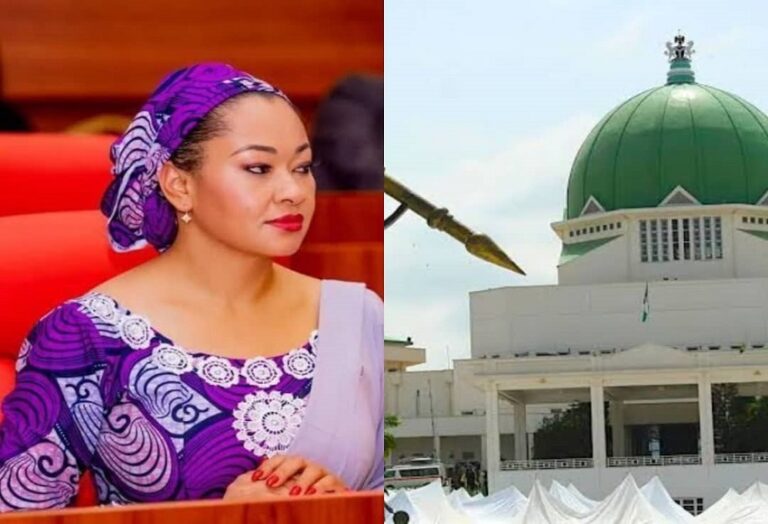
On Monday, March 24, a group from Kogi Central submitted a petition to the Independent National Electoral Commission (INEC) to recall the suspended senator representing their region, Natasha Akpoti-Uduaghan 

The petition, dated March 21, 2025, was submitted at INEC headquarters in Abuja by a group calling themselves ‘Concerned Kogi Youth and Women’.

Speaking on their behalf, Charity Ijoshe Omole, said they had lost confidence in Natasha because ofgross misconduct” that led to her suspension from the Senate.

Omole argued that the district couldn’t afford to be without representation in the Senate for six months.

The petitioners stated that their request to recall Akpoti-Uduaghan was based on Section 68 of the 1999 Constitution of the Federal Republic of Nigeria and INEC’s guidelines for recall petitions.

This attempt to remove the senator has already caused concern among Nigerians, with many suggesting that political actors are behind it

The ICIR reported that the Nigerian Senate suspended Akpoti-Uduaghan for six months claiming she had broken its rules.

Despite a court order preventing the suspension, the Senate went ahead, citing breaches of its standing orders.

The move has been criticised by the Nigerian Bar Association (NBA), opposition parties, and various lawyers, who argued that the suspension was hasty and unfair.

The ICIR reported on February 20th that Akpoti-Uduaghan caused an uproar in the Senate when she found her seat had been changed without prior notice

She resisted the relocation, arguing that it was an attempt to silence her.

Her refusal led to a heated argument with Senate President Godswill Akpabio, who ordered security staff to remove her from the chamber

Following this seating dispute, the Senate voted to refer Akpoti-Uduaghan to the Committee on Ethics, Privileges, and Public Petitions for a disciplinary review. This committee later recommended her suspension for six months.

Akpoti-Uduaghan’s suspension came just days after she accused the Senate President of sexual harassment

How to recall a lawmaker in Nigeria

According to INEC, Nigeria Constitution and the Electoral Act gave the electoral body the authority to oversee recall proceedings.

Specifically, Sections 69 and 110 of the Constitution and Section 116 of the Electoral Act 2010 (as amended) empower INEC to conduct recall proceedings against members of the National Assembly, State House of Assembly, or the Area Council of the Federal Capital Territory (FCT).

The process of recalling a senator in Nigeria involves six key steps:

  1. Starting the recall: A petition must be started by registered voters in the MP’s constituency. It needs signatures from at least 50% of the voters, stating the reasons for the recall.
  2. Submitting the petition: The petition is then submitted to INEC for them to check.
  3. Verifying the signatures: INEC checks the signatures to make sure they are genuine.   
  4. Holding a recall vote: If the petition is verified, INEC organises a vote within 90 days. This allows voters to decide if the lawmaker should be removed.
  5. Announcing the result: If a majority vote for the recall, INEC confirms this and sends the result to the speaker of the relevant parliament.
  6. By-election: Following this, a by-election is held to fill the now vacant seat

INEC flags gaps in recall petition

According to INEC, if a petition does not meet up with the requirements, the petitioners are notified accordingly, but they can represent the petition if they so wish.

This was the case in the matter of Senator Akpoti-Uduaghan. INEC raised concerns over gaps in the petition seeking her recall.

While the electoral body acknowledged receiving the petition, which it said was accompanied by six bags of documents purportedly containing the signatures of over half of the district’s 474,554 registered voters, it stated that there was omission of contact addresses and phone numbers of the petitioners’ representatives.

In a press statement on Tuesday, March 25, INEC stated that the petitioners’ representatives failed to provide their verifiable contact addresses, telephone numbers, and email addresses, except for a number belonging to the lead petitioner. 

The INEC deemed the only address provided by the petitioners,Okene, Kogi State,” too vague for official correspondence.  

It is noteworthy that despite being enshrined in the Constitution, no legislator has been successfully recalled since 1999.

INEC notifies Natasha

By press time, the electoral umpire confirmed it had notified the embattled senator of the recall petition.

The notification, dated March 26, was issued by the INEC’s Secretary, Rose Oriaran Anthony.

In the letter addressed to the senator and copied to the presiding officer of the Senate, INEC confirmed receiving a petition from her constituents seeking her recall from the National Assembly.

“Pursuant to Section 69 of the Constitution of the Federal Republic of Nigeria 1999 (as amended), I write to notify you of the receipt of a petition from representatives of registered voters in your constituency seeking your recall from the Senate.

“This notification is in line with the provision of Clause 2(a) of the Commission’s Regulations and Guidelines for Recall, 2024. This letter is also copied to the presiding officer of the Senate and simultaneously published on the Commission’s website,” the letter read.

In another letter, INEC confirmed that it had received a letter providing the contact details of the petitioners’ representatives.

The statement, released by the National Commissioner and Chairman of INEC’s Information and Voter Education Committee, Sam Olumekun, on Wednesday, March 26, stated that the next stage involved verifying the signatures submitted by the petitioners to ascertain that the recall request was endorsed by more than half (over 50 per cent) of the registered voters in Kogi Central Senatorial District.

FG declares 2-day public holiday for Eid-el-Fitr  

0

THE Federal Government has declared Monday, March 31, and Tuesday, April 1, as public holidays to mark the Eid-el-Fitr celebration.  

The Minister of Interior, Olubunmi Tunji-Ojo, announced this in a statement signed by the ministry’s permanent secretary, Magdalene Ajani, on Wednesday, March 26.

Eid-el-Fitr, meaning ‘festival of breaking the fast,’ is one of the most important feasts in Islam. 

The festival marks the end of Ramadan, a sacred month of fasting, prayer, and spiritual reflection observed by Muslims worldwide.

During Ramadan, Muslims fast from dawn to sunset, abstaining from food, drink, and other physical needs as an act of devotion to Allah.

The period also emphasises increased prayer, self-discipline, and charity.

Eid-el-Fitr is a time of joy and gratitude, beginning with a special congregational prayer at mosques and open prayer grounds.

It is also marked by feasting, gift-giving, and charitable acts, particularly the giving of Zakat al-Fitr, a mandatory charity given to the less privileged before the Eid prayer. 

Congratulating Muslims on the successful completion of Ramadan, Tunji-Ojo urged them to “embrace the virtues of self-discipline, compassion, generosity, and peace.”

He also emphasised the importance of love, forgiveness, and solidarity in building a harmonious society.

He further called on Nigerians to use the festive period to pray for peace, stability, and prosperity in the country, expressing hope that the occasion would inspire unity and cooperation across religious and ethnic divides.  

“Dr. Tunji-Ojo also encouraged citizens to celebrate safely and responsibly, while remembering the less privileged through acts of kindness and charity, in keeping with the true spirit of Ramadan and Eid.  

“On behalf of the Federal Government, he extended heartfelt Eid Mubarak wishes to all Muslim faithful and prayed that the blessings of the season bring happiness, success, and fulfillment to everyone,” the statement read.

FG suspends Financial Council’s new levies on private firms

THE Federal Government has temporarily suspended the implementation of the new annual levies which the Financial Reporting Council (FRC) of Nigeria intends to impose on private firms.

The levy raised concerns recently, especially from the organised private sector, including the Nigeria Employers’ Consultative Association (NECA) and the Manufacturers Association of Nigeria (MAN).

Also, the Nigerian Association of Chambers of Commerce, Industry, Mines, and Agriculture (NACCIMA), Oil Producers Trade Section (OPTS), and Association of Licensed Telecommunications Operators of Nigeria (ALTON) shared similar concerns.

At a stakeholders’ forum on Wednesday, March 26, in Abuja, the Minister of Industry, Trade, and Investment, Jumoke Oduwole, said the Federal Government had ordered the suspension of the levies.

She explained that the suspension was to allow for a review of the growing concerns.

“The government has decided to direct the Financial Reporting Council to pause in the implementation of the new annual dues. You know that I am a lawyer, and a suspension request by the organised private sector would be in contravention of legislation duly passed by the National Assembly. A pause is an administrative process simply to review, in line with what we discussed today,” Oduwole said.

She explained that the private sector had requested the suspension of the levies from the initial three months to an indefinite time. He said he expected the pause to be for 60 days.

“We are going to set up a technical working group comprising the FRC and the organised private sector who have formally written in, and this will be reviewed,” assured the minister.

The FRC Amendment Act 2023 imposes cumulative annual charges on non-listed entities and includes a contentious provision for a 10 per cent penalty on unpaid dues for every month of default until full payment is made.

The measure, stakeholders said, could negatively impact businesses, especially with the challenging economic environment in the country.

At the heart of the argument lies Section 33(1)(c) of the FRC Act, which mandates quoted companies to pay annual dues based on 0.002 per cent of their market capitalisation or N25 million, whichever is lower.

However, stakeholders have been wary of how this would affect companies’ financial stability.

The ICIR reported that the FRC had set January 1, 2024 to commence “effective and comprehensive” compliance monitoring with its new Act.


Former President Muhammadu Buhari signed the 2023 amended Act into law in May 2023.

MTN, Airtel team up to share network infrastructure

0

MTN Group and Airtel Africa have agreed to share mobile phone network infrastructure in Nigeria and Uganda. This partnership is a cost-saving measure for both companies, aiming to improve service coverage for customers.

The telecommunication giants revealed this in a statement on Wednesday, March 26.

This Network Infrastructure Sharing Deal is designed to reduce investment costs while still expanding the reach of mobile services

According to the statement, mobile operators in Africa are experiencing a consistent increase in demand for digital and financial services. However, building and maintaining the necessary networks, especially for fast 5G connections, is expensive.

The companies also suggested they might explore similar opportunities in other markets, including Congo-Brazzaville, Rwanda, and Zambia

The potential collaborations include sharing radio access networks, which represent the largest cost in setting up and running a network; commercial and technical agreements for sharing fibre optic infrastructure; and, if necessary, jointly constructing fibre networks

“This engagement does not preclude the parties from collaborating with other operators in any respective market,” the companies pointed out.

“As MTN, we are driven by the vision of delivering digital solutions that drive Africa’s progress.

“We continue to see strong structural demand for digital and financial services across our markets. To meet this demand, we continue to invest in coverage and capacity to ensure high-quality connectivity for our customers,” MTN Group chief executive officer (CEO) Ralph Mupita said.

He also noted that there were opportunities within the existing regulations to share resources, which would lead to greater efficiency and better returns.

On his part, Airtel Africa CEO Sunil Taldar remarked that the agreement would avoid duplication of expensive infrastructure.

He stressed that sharing infrastructure would allow the operators to extend their network coverage more quickly, especially in rural or less densely populated areas where it might not be economically viable to build separate networks.

Meanwhile, a recent disclosure by MTN Nigeria Communications Plc, a subsidiary of MTN Group, indicates that all has not been well with the company’s operations.

Its year-end financial performance, released recently, revealed that MTN Nigeria posted a loss after tax of N400.44 billion in 2024, The ICIR reported.

According to MTN Nigeria CEO Karl Toriola, the company has remained agile to navigate the uncertainties ahead.

These challenges include successfully renegotiating contracts for their mobile phone towers, obtaining approval for adjustments to their tariffs, and making progress in reducing their exposure to fluctuations in foreign exchange rates, among other operational and regulatory issues.

FG raises N1.09 trn from Sukuk for infrastructure growth since 2017- DMO

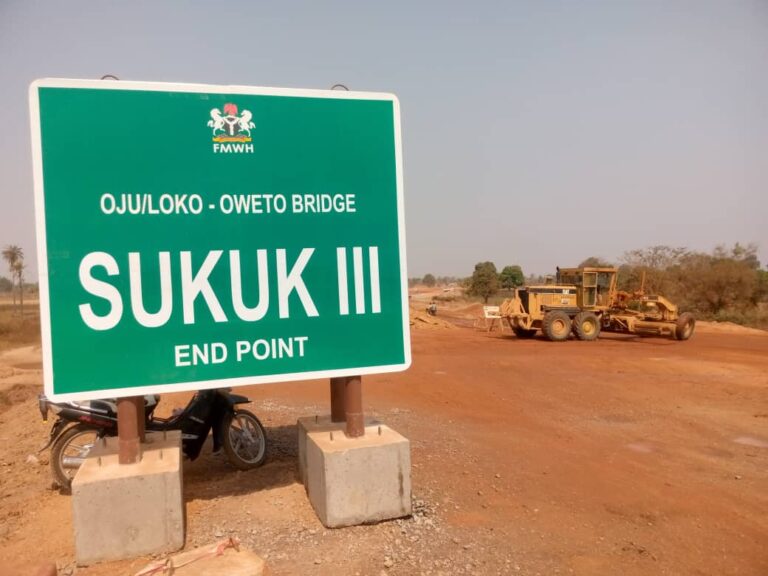
THE Debt Management Office (DMO) has announced that the Nigerian government has successfully raised N1.09 trillion  through Sovereign Sukuk since they were first introduced in 2017.

In Nigeria, a Sovereign Sukuk, issued by the DMO, is a financial tool that complies with Islamic law (Sharia). It represents shared ownership in specific assets, mainly used to fund infrastructure projects like roads.

Several important roads across the country have been financed using Sovereign Sukuk bonds, with the DMO and the Federal Ministry of Finance overseeing the process.

The DMO states that these funds have been allocated to crucial infrastructure projects, including roads and bridges, throughout Nigeria.

Speaking on Wednesday, March 26, in Lagos during “an all-parties meeting” for the issuance of the seventh series of the Sovereign Sukuk, Director-General of the DMO, Patience Oniha, revealed that the latest series aims to raise approximately N300 billion to finance capital projects.

Reflecting on the progress made, Oniha said, “We recall that the first Sukuk was issued in September 2017. After extensive marketing, the offer, which was for N100 billion with a tenor of seven years, received a total subscription of N105.878 billion.”

Oniha highlighted the achievements over the years, noting, “Following the modest success of the first Sukuk and the achievement recorded from September 2017 to December 2023, the DMO has raised a total of N1.09 trillion.

With this amount, over 4,100 km of roads and nine bridges across Nigeria’s six geopolitical zones and the Federal Capital Territory have either been constructed or rehabilitated.”

The DMO emphasised the significant impact of the infrastructure projects funded by the Sukuk. Benefits include reduced travel times, improved road safety, job creation, and better access to markets for farmers in remote areas.

Furthermore, these projects have increased access to essential public services like education and healthcare, further boosting economic growth.

Oniha pointed out that investors benefit in two ways from their investments in Sukuk: they contribute to the development of infrastructure and receive returns in the form of income paid twice a year.

She noted that the issuance of the Sovereign Sukuk is supported by financial advisers such as Lotus Financial Services Limited, Buraq Capital Limited, Stanbic IBTC Capital Limited, Greenwich Merchant Bank Limited, and Vetiva Capital Management Limited.

She further explained that the firms play a vital role by advising on the Sukuk’s structure, managing the offering process, and facilitating investor participation.

The ICIR recently reported that the total public debt portfolio has risen by 24.99 per cent in a space of three months to N121.67 trillion as of March 31, 2024.

DMO disclosed this in its report released on Thursday, June 20.

The report stated that the federal government and the 36 states, including the Federal Capital Territory (FCT), owe $91.46 billion in US dollar terms.

INEC notifies Natasha of recall petition, begins verification process

0

THE Independent National Electoral Commission (INEC) said it had notified the senator representing Kogi Central, Natasha Akpoti-Uduaghan, of a recall petition initiated by registered voters in her district. 

The notification, dated March 26, was issued by the INEC’s Secretary, Rose Oriaran Anthony.

In the letter addressed to the senator and copied to the presiding officer of the Senate, INEC confirmed receiving a petition from her constituents seeking her recall from the National Assembly. 

“Pursuant to Section 69 of the Constitution of the Federal Republic of Nigeria 1999 (as amended), I write to notify you of the receipt of a petition from representatives of registered voters in your constituency seeking your recall from the Senate.

“This notification is in line with the provision of Clause 2(a) of the Commission’s Regulations and Guidelines for Recall, 2024. This letter is also copied to the presiding officer of the Senate and simultaneously published on the Commission’s website,” the letter read.

This was as the commission, in another letter, confirmed that it had received a letter providing the contact details of the petitioners’ representatives. 

The statement, released by the National Commissioner and Chairman of INEC’s Information and Voter Education Committee, Sam Olumekun, on Wednesday, March 26, stated that the next stage involved verifying the signatures submitted by the petitioners to ascertain that the recall request was endorsed by more than half (over 50 per cent) of the registered voters in Kogi Central Senatorial District. 

Recall that the commission, while acknowledging the receipt of the petition, which it said was accompanied by six bags of documents purportedly containing the signatures of over half of the district’s 474,554 registered voters, stated that there was an omission of contact address and phone numbers of the petitioners’ representatives.
The INEC deemed the only address provided by the petitioners, “Okene, Kogi State”, too vague for official correspondence.  

The commission has, however, noted that the verification process would take place in the coming days, with the outcome determining subsequent actions.  

“As provided in Clause 2(a) of the Commission’s Regulations and Guidelines for Recall 2024, a letter has been written to notify the senator sought to be recalled about the receipt of the petition and delivered to her official address. The same letter has been copied to the presiding officer of the Senate and published on the Commission’s website.

“The next step is to scrutinise the list of signatories submitted by the petitioners to ascertain that the petition is signed by more than one-half (over 50 per cent of the registered voters in the constituency. This will be done in the coming days. The outcome, which will be made public, shall determine the next step to be taken by the commission,” the statement added.

The INEC reassured Nigerians that the recall process would be conducted transparently and in accordance with legal provisions.

FG begins payment of N77,000 to corps members, but many yet to receive new allowance

0

THE Federal Government has commenced the payment of N77,000 to National Youth Service Corps (NYSC) members, nearly a year after the approval of the new minimum wage.

However, while some corps members have confirmed receiving the new allowance for the month of March, many said they had yet to get it, hoping they would receive the payment alert before the end of today.

Some of the corps members who spoke with The ICIR, in Abuja, Gombe, Sokoto and Adamawa claimed that they had yet to get their monthly stipend but said some of their colleagues in other states received the new allowance.

Corps members serving in Katsina, Kano, and Cross Rivers confirmed to The ICIR, that they had received the new allowance.

The payment of N77,000 followed earlier reports that the NYSC would begin disbursing the new allowance in March, in line with the Federal Government’s decision to adjust corps members’ stipend to reflect the new minimum wage proposal.

The Director-General of the NYSC, Olakunle Nafiu, a brigadier-general, assured corps members last week that the new monthly allowance of N77,000 would take effect from this month.

Speaking during an interactive session with corps members at the Wuse and Garki NYSC Zonal Offices in Abuja, Nafiu reaffirmed the commitment of the NYSC and the Federal Government to the welfare of corps members.

According to a statement by the NYSC’s Acting Director of Information and Public Relations, Caroline Embu, the approval of the N77,000 allowance was outlined in a letter from the National Salaries, Incomes and Wages Commission, dated September 25, 2024. 

This development also came in the wake of a controversy involving a corps member, Ushie Rita Uguamaye, who publicly criticised President Bola Tinubu, calling him a “terrible president” due to the worsening economic conditions in the country. 

Uguamaye, popularly known as Raye, went viral after expressing her frustrations over the rising cost of living, stating that the previous N33,000 paid corps members was insufficient to meet basic needs.

She had lamented how prices of essential goods skyrocketed, narrating how the cost of a crate of eggs rose from N800 to N6,500. Following her comments, Uguamaye claimed she received threats from NYSC officials instructing her to delete her post.

The ICIR reports that since assuming office in May 2023, President Tinubu has embarked on a series of economic reforms aimed at stabilising the nation’s economy. 

These measures, which include the removal of subsidy from petrol, exchange rate unification, and increased reliance on food importation to lower consumer prices, have been highly criticised as inflation, food prices and cost of living remained high.

Despite signing the new minimum wage of N70,000 into law in June 2024, which is expected to reflect in the allowance of serving corps members from the day he signed the new wage, the Tinubu government failed to begin its implementation for the NYSC until today.

Corps members nationwide had continued to survive on the N33,000 monthly allowance from the Federal Government, except for those fortunate enough to receive additional stipends from the states where they serve or their places of primary assignment.

Lawmakers want states to control oil, mineral resources as bill passes second reading 

0

A proposed law that would shift control of natural resources like oil fields, minerals, and natural gas from the federal government to state governments in Nigeria has passed its second reading in the House of Representatives.

This bill  seeks to amend the 1999 Constitution  to change how Nigeria manages its resources, giving states more independence in deciding how to explore, manage, and earn money from the natural assets within their borders.

The bill, titled “A Bill for an Act to Alter the Provisions of the Constitution of the Federal Republic of Nigeria, 1999 to Decentralise the Governance of Natural Resources in the Federal Republic of Nigeria to transfer Mines and Minerals, Including Oil Fields, Oil Mining, Geological Surveys and Natural Gas from the Exclusive Legislative List to the Concurrent Legislative List and for Related Matters (HB. 200, 1310, 1446 & 1546)” was sponsored by Abbas Tajudeen, the House speaker and three others.

The ICIR reports that currently, certain natural resources, such as mines, minerals, oil fields, oil mining, geological surveys, and natural gas, are solely managed by the federal government.

They are on what’s called the “Exclusive Legislative List,” meaning only the federal government makes laws and decisions about them. Part 1 of the Second Schedule (Exclusive Legislative List) of the 1999 Constitution, Item 39 currently states: “Mines and minerals, including oil fields, oil mining, geological surveys, and natural gas.” This provision gives the federal government exclusive control over these resources, meaning that states have no direct authority to regulate, tax, or manage them.

Therefore, this new bill wants to remove Item 39 from the Exclusive List and put it on the “Concurrent Legislative List.” If it’s on this list, both the federal and state governments would have the power to make laws and regulate how resources are extracted and managed.

If the bill becomes law, it could mean states can issue licences for mining and oil exploration, control how resources are taken out of the ground, and collect money from these activities without needing to go through the federal government.

It’s worth noting that a similar bill was suggested in 2016 but didn’t progress beyond the second reading. Some people argue that giving states more control could create inequalities, with richer oil-producing states benefiting much more than others.

Having passed this stage, the bill will now go to the Committee Stage, specifically the committee responsible for constitutional amendments. If approved there, it will return to the House for a third reading before being sent to the Senate for their agreement.

For the bill to become law, it also needs to be approved by two-thirds of the 36 State Houses of Assembly, as required for changes to the constitution under Section 9 of the 1999 Constitution.

The ICIR reports that if the bill eventually becomes law, it’s expected to increase the amount of money states can generate. Many states could grow their income without being restricted by the federal government.

A similar approach was taken when the President approved the Electricity Act 2023. This law gives states more power to improve electricity supply within their own borders and rely less on the national grid

The ICIR reported that the  Electricity Act consolidates all legislation dealing with the electricity supply industry to provide an ideal institutional framework to guide the post-privatisation phase and encourage private sector investments in the sector.

New police commissioner assumes office in FCT

0

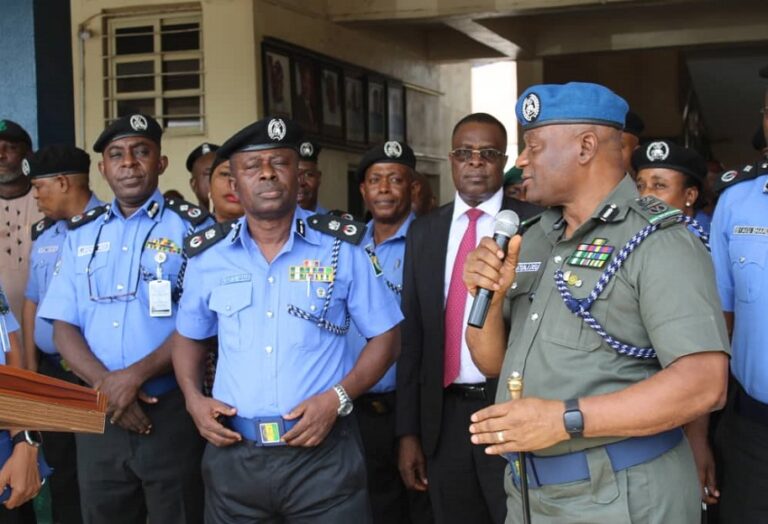
A NEW police commissioner for the Federal Capital Territory (FCT), Ajao Saka Adewale, has assumed office.

Adewale assumed duty on Wednesday, March 26, pledging to enhance security through intelligence-driven and proactive policing.

He took over from Tunji Disu, who has been promoted to Assistant Inspector General (AIG) and redeployed to head the Special Protection Unit at the Force Headquarters.

During the handover ceremony in Abuja, Adewale lauded his predecessor and promised to build upon his accomplishments to ensure seamless and effective policing in the nation’s capital.

The new police chief vowed to provide top-notch leadership to his team and ensure they are well-equipped to serve.

He also reassured the FCT residents that they should expect a more responsive and efficient policing approach aimed at keeping the city safe and building trust.

In his farewell speech, Disu encouraged the command’s personnel to give the new CP maximum support and cooperation.

He also expressed gratitude for the support he received and requested that the team extend the same level of cooperation to the new commissioner.

The ICIR reported that Disu assumed duty as the 32nd commissioner of police for the FCT on Monday, October 7.

He replaced Benneth Igweh, who was promoted to assistant inspector-general (AIG) of police and posted to Zone 7 headquarters.

The ICIR reports that residents of the FCT have been struggling with a rising spate of insecurity in the city’s area councils, especially Bwari and Kuje.

A 2022 report by this organisation showed the magnitude of insecurity in the city.

The ICIR reported cases in Mpape, Sauka, Chikakore, among other communities in the FCT.

In January, the minister of FCT, Nyesome Wike, berated the FCT area council chairpersons while addressing stakeholders at an emergency security meeting in his office.

He expressed concern over the lack of proactive measures taken to address the rising insecurity issues within their jurisdictions.

Bill seeking vice-president, governors’ immunity removal passes second reading

0

THE House of Representatives has moved to strip the vice president, governors, and their deputies of immunity from prosecution, a privilege currently enshrined in the 1999 Constitution.

A bill seeking to amend Section 308 of the constitution scaled second reading on Wednesday, March 26.

If eventually passed by both chambers and signed by President Bola Tinubu, it would allow law enforcement agencies to investigate and prosecute these officials for corruption and financial mismanagement while they are still in office.

Under existing laws, the president, vice president, governors, and their deputies cannot be prosecuted while in office. 

This wasn’t the first time the National Assembly would be moving to strip the vice president, governor, and their deputies of immunity. 

In 2020, the Nigerian Senate approved a bill that would strip the officials of immunity if found guilty of misappropriation of government funds.  

The bill was consequently referred to the Committee on Constitution Review for further legislative consideration.

The recent proposal is part of a broader set of 42 constitutional amendment bills that were passed today.

Other amendments considered by lawmakers include a bill to separate the offices of the Attorney-General of the Federation and the Minister of Justice, a Bill for an Act to alter the provisions of the Constitution of the Federal Republic of Nigeria, as well as proposals to create new states such as Ijebu, Ife-Ijesa, Tiga, Orlu, and Etiti.

With this latest development, a total of 81 constitutional amendment bills have now passed second reading in the House.

The House passed 39 constitutional amendment bills after they scaled second reading on Tuesday, March 25.