Home Blog Page 329

My encounter with senator Nwebonyi reveals women’s struggles in politics – Ezekwesili

0

FORMER Minister of Education, Oby Ezekwesili, has expressed satisfaction with her encounter with Onyekachi Nwebonyi, a senator, during Senate Committee on Ethics, Privileges, and Public Petitions panel in Abuja on Tuesday, March 25.

She said the incident shed light on the challenges women face in a patriarchal society.

Ezekwesili revealed this when she appeared on Channels Television’s Sunrise Daily programme on Wednesday, March 26, while recounting her perspective on the altercation between her and Nwebonyi during the panel’s session on the sexual harassment allegations involving suspended Senator Natasha Akpoti-Uduaghan of Kogi Central and Senate President Godswill Akpabio.

The former minister, Akpoti-Uduaghan’s counsel, Abiola Akiyode-Afolabi, and Zubairu Yakubu, who identified himself as a concerned Nigerian citizen from Kogi Central Senatorial District, appeared before the Senate panel in Abuja on Tuesday after being summoned by the Senate.

The ICIR reported that Akpoti-Uduaghan presented the petition on the Senate floor on March 5, just minutes before her controversial suspension from the upper legislative chamber.

The petition was subsequently referred to the Ethics Committee, chaired by Edo South Senator Neda Imasuen, for review.

Yakubu, who signed the petition, declined to proceed with his testimony unless his principal witness, Akpoti-Uduaghan, was permitted to be present at the National Assembly.

The petitioner accused the committee chairman, Neda Imasuen, of bias, referring to previous public statements where Imasuen reportedly described the petition as “dead on arrival”.

“If the chairman has already declared the petition dead before even hearing it, how can we expect fairness? One of the committee members even went on national television to claim that he was a principal witness for the Senate President. How then can we trust this process?” Zubairu queried.

Following heated verbal exchanges between committee members and Yakubu, the panel dismissed the petition because the matter was already before a court.

“If they knew the matter was in court, why did they invite me in the first place? This only confirms their bias and lack of respect for due process,” he stated.

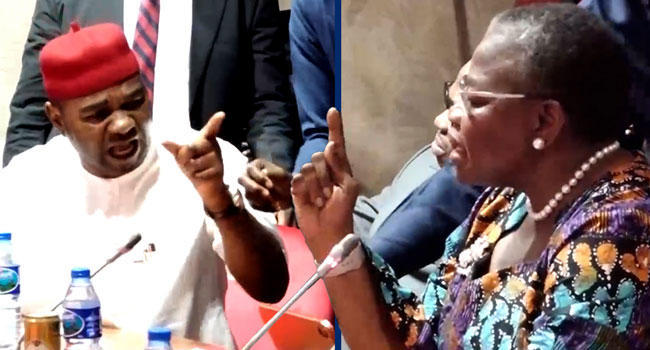
Moments before the panel adjourned, a heated verbal exchange erupted between Ezekwesili and Nwebonyi.

The confrontation began after Ezekwesili accused the committee of bias, leading Nwebonyi to challenge her over her choice of words.

The lawmaker and Ezekwesili used unprintable words to attack each other.

Recounting the incident during the TV programme on Wednesday, Ezekwesili stated that the committee refused to allow her to speak.

She accused the Senate of diverting attention from the core issue of sexual harassment, which Akpoti-Uduaghan alleged against Akpabio, emphasising that the suspended Kogi lawmaker must receive justice.

The former minister said that society has a long-standing attitude toward dissenting voices, not just those of women, but also individuals who challenge the status quo or, like her, who persistently demand public accountability from leaders of institutions serving the public.

“It is a historic more or less function. And so, that attitude pervades the way our lawmakers are behaving. I was actually very pleased with what happened yesterday because now it is in the public domain what women endure in many instances, and the rest of society may know little about it but has not focused on it,” she said.

While advocating for public accountability and emphasising that no group or individuals, regardless of their power, should silence voices demanding transparency, Ezekwesili accused Imasuen of bias.

She argued that, in the interest of justice and fairness, he should recuse himself from presiding over the matter.

The suspended lawmaker’s lawyer, Akiyode-Afolabi, who was also a guest on the same TV programme, condemned the panel’s conduct, calling it unwarranted.

Akiyode-Afolabi, who was present at the Senate sitting with the former minister on Tuesday, criticised the committee for being unwelcoming, alleging that the senators had prearranged a plan and sought to draw her team into it.

She said, “The attitude of the panel was not what you would expect from any responsible chamber in the world. They were not friendly. They already had a plan, and what they wanted us to do was just to walk into that plan. They had a plan not to allow us to speak at all.

“They were quite disrespectful and spoke to us as if they were speaking to some slaves that they brought from somewhere.

“One of the things that this is showing at that very high level of people who are making decisions in this country, to have people there who are so patriarchal, who don’t mind the kind of language when speaking to people in public, who don’t give respect to citizens, was not something you would respect.”
 

I’m yet to decide on 2027 presidential bid, says Atiku

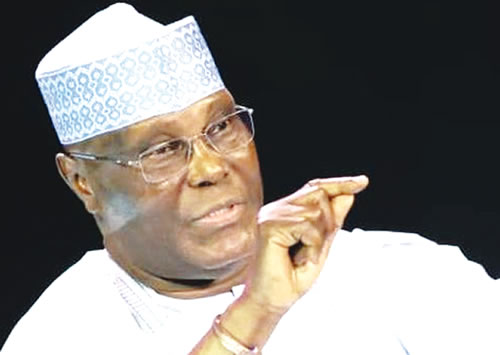
FORMER Vice President Atiku Abubakar said that he had yet to decide if he would contest the presidency in 2027.

He disclosed this in a yet-to-be-aired interview with Arise TV, scheduled for broadcast later today, Wednesday, March 26.

In the snippet of the interview aired Wednesday morning, Abubakar said,I don’t know because there has to be, first of all, a viable platform, more than any other time in the political history of this country, particularly since the return of democracy.”

Abubakar, the presidential candidate of the People’s Democratic Party (PDP) in the 2023 general election, added that Nigeria urgently needed experienced and credible leadership.

He noted that the country’s current situation is more dire than ever.

He also referenced the 2014 merger, where multiple presidential aspirants came together, and one emerged as the winner with their collective support.

Additionally, Abubakar concurred with former President Olusegun Obasanjo’s assessment that Nigeria’s democracy is deteriorating, describing the situation asvery dire“.

He expressed doubts about the credibility of the current legislative leadership, particularly regarding the National Assembly’s swift approval of the state of emergency in Rivers State.

He alleged that the Senate leadership was corrupt, stating that its actions didn’t surprise him.

The former vice president defended his decision not to choose Federal Capital Territory (FCT) Minister Nyesom Wike as his running mate in the 2023 election.

According to him, he has no regrets about picking former Delta state governor Ifeanyi Okowa instead.

The ICIR, in a special report after the 2023 election, reported that after six unsuccessful attempts, Abubakar became the only politician in Nigeria who had sought the presidency the most times and had yet to win it.

The report titledHope dims for Atiku’s presidency bid after six failed attemptsrevealed that the former vice president had had two more shots at the country’s most exalted office than former President Muhammadu Buhari, who ran four times before winning it.

Abubakar, 78, has contested for the top office for 33 years and has had his hopes dashed.

He vied for the presidency on the PDP platform in the election conducted on February 25, 2023.

He came second with 6,984,520 votes, trailing the All Progressives Congress (APC) candidate, Bola Tinubu, who polled 8,794,726. 

He was one of the 18 presidential candidates in the election.

He vowed to challenge Tinubu’s victory declared by the Independent National Electoral Commission (INEC) in court but lost at the Supreme Court.

While Abubakar has failed all six times he has contested for the seat since 1992, Tinubu only contested once and won.

The ICIR reports that Atiku came into politics about the same time as Tinubu.

Kenya’s decision to make maths optional in high school is a bad idea – what should happen instead

0

By Moses NGWARE, African Population and Health Research Center

KENYA’S education ministry announced in March 2025 that mathematics would be an optional subject in senior secondary school, which begins in grade 10. Most students in this grade are aged 15 years. The education minister said the mathematics taught from grade 4 to grade 9 was sufficient for foundational “numeracy literacy”.

The change, in January 2026, is part of a shift to a new education system styled as the competence based curriculum. The decision is not to scrap maths altogether but rather to make it optional. However, given the poor performance in this subject, it is expected there will be few takers.

Maths is a compulsory subject in the first 12 years of basic education in many African countries. This is the case in Mauritius, Nigeria and South Africa, which opted for a choice between maths and mathematical literacy for grades 10-12.

The older education system, known as 8-4-4, featured eight years of primary school and four each at high school and university. Under this, core maths, dubbed Alternative A, is compulsory for all schoolgoing children until the second year of high school (form 2). Most students in this grade are aged 16 years. In the final two years of high school, one has the option of switching to Alternative B, a simplified version of Alternative A introduced in 2009. Alternative B is similar to South Africa’s mathematical literacy subject.

The decision has triggered heated debates in the country, in favour and against.

As a researcher who has taught high school maths and researched maths teaching for over 20 years, I have the view that making maths optional is not a good idea. This is because both individuals and society need maths, regardless of the career path they might choose.

It’s been argued that the change applies to the last two senior years of high school, which was the case in the old system too. For the new curriculum, however, this should not have been a problem as it is competence-based. This implies that what matters is the specific skills and knowledge mastered by a student, and not the examination scores.

The Kenyan education department should establish the root causes of the low performance in maths, and fix them. Research shows that chief among these are resource allocation; weak teacher preparation and support for foundational numeracy instruction; a learning disability known as dyscalculia; and the behavioural performance of maths teachers.

Kenya’s maths problem

In the 2022 Kenya Certificate of Secondary Education exams, graded between A (highest) and E (lowest), over half of the 881,416 candidates’ maths scores fell in the lowest two grades, D and E. This improved only marginally in 2023. To put the performance in context, the pass rate in high school certificate maths examinations in Mauritius improved from 81.4 per cent to 91.8 per cent between 2019 and 2022.

There are a number of reasons for this dismal performance in Kenya:

Resource allocation: The better-resourced national schools can only admit a small number of students, leaving out over 70 per cent who join low-resourced day schools. Resources for learning maths range from teachers to interactive teaching and learning materials inside the classroom. With the support of partners such as the Global Partnership for Education, the government aims to achieve a 1:1 textbook-per-student ratio goal. However, the flow of capitation grants to secondary schools has been wanting, jeopardising access to resources at the school level.

Teacher preparation: Teachers aren’t well prepared to support learners in foundational numeracy (maths in early grades). Foundational numeracy skills are critical in creating strong building blocks for future learning and success in later grades.

Teacher behaviour: Classroom observation studies reveal that maths teachers favour boys. Furthermore, above average learners sit in the front closer to the chalkboard, and learners are denied positive reinforcement that would motivate them to learn maths. There are also negative attitudes about maths as a difficult subject, reinforcing the stereotype that it is only suitable for boys and “bright” children.

Dyscalculia: Worldwide, 3 per cent -7 per cent of the general population are affected by a disability known as dyscalculia. In Kenya, 6.4 per cent among primary and secondary school children have the disability. It is a condition that affects a person’s ability to understand numerical concepts. By implication, the number of the 962,512 Kenya Certificate of Secondary Education candidates of 2024 with this disability works out to between 28,000 and 68,000 candidates. But Kenya’s education system doesn’t support teachers in diagnosing learners with dyscalculia, or managing their disability.

Policy options

There are alternatives to making maths an optional subject in senior secondary school.

The system needs to focus on the root causes of low performance, and then on how to fix them.

I suggest the following solutions.

  • Avoid unnecessarily using achievement in maths to determine access to academic and training programmes. This way, one’s career will not solely be determined by performance in maths.
  • Keep a simpler maths alternative, or maths literacy, for senior secondary instead of making maths optional.
  • Teachers should continue to develop their competence in maths, focusing on content knowledge as well as knowledge of how to teach numeracy.
  • The general public should communicate effectively to eliminate negative stereotypes and unhelpful attitudes in society. The aim is to shift mindsets so that maths is perceived as part of life – making it necessary to support all children to succeed in maths.
  • Help learners to overcome dyscalculia, using multisensory teaching approaches – a way of teaching that engages more than one sense at a time: sight, hearing, movement and touch.The Conversation

Moses Ngware, Senior Research Scientist, African Population and Health Research Center

This article is republished from The Conversation under a Creative Commons license. Read the original article.

South Korea wildfires kill 18, cause ‘unprecedented damage’

SOUTH Korean Prime Minister and Acting President Han Duck-soo has announced that a wildfire outbreak in the Asian nation claimed 18 lives, destroyed over 200 structures, and forced 27,000 people to flee their homes.

On Wednesday, March 26, Duck-soo revealed that the wildfires, among the worst in the country’s history, ravaged southern regions and caused “unprecedented damage.”

He urged response agencies to “assume the worst-case scenario and act accordingly.”

Reports indicate that a helicopter crashed while battling wildfires in the southeastern town of Uiseong, killing the pilot and prompting the Korea Forest Service to suspend helicopter operations nationwide.

Officials told AFP that authorities in Andong and other southeastern cities and towns ordered evacuations on Tuesday as firefighters struggled to contain multiple wildfires fueled by dry winds.

The fires have burned more than 17,400 hectares (43,000 acres) of land and destroyed hundreds of structures, including a 1,300-year-old Buddhist temple.

The ICIR reports that the South Korea’s Ministry of the Interior and Safety said more than 5,500 people were forced to leave their homes in Andong, the neighboring counties of Uiseong and Sancheong, and the city of Ulsan, where the fires were most severe.

Earlier on Tuesday, South Korean officials reported that firefighters had extinguished most of the flames from the largest wildfires in these areas.

However, dry and windy conditions caused setbacks, allowing the fires to reignite and spread further.

The fires began on March 21, when dozens of wildfires erupted across South Korea as dry winds swept through the country, killing four people and injuring nine others.

The conflagrations prompted mass evacuations and led to the deployment of thousands of personnel and over 100 helicopters to contain the blazes.

The fires follow a similar incident in Los Angeles, United States, earlier in January this year.


INEC flags gaps in Natasha’s recall petition

THE Independent National Electoral Commission (INEC) has raised concerns over gaps in a petition seeking the recall of the senator representing Kogi Central, Natasha Akpoti-Uduaghan.

While the electoral body acknowledged receiving the petition, which it said was accompanied by six bags of documents purportedly containing the signatures of over half of the district’s 474,554 registered voters, it stated that there was omission of contact address and phone numbers of the petitioners representatives.

In a press statement on Tuesday, March 25, INEC stated that the petitioners representatives failed to provide their verifiable contact address, telephone numbers, and email addresses, except for a number belonging to the lead petitioner. 

The INEC deemed the only address provided by the petitioners, “Okene, Kogi State”, too vague for official correspondence.  

““The Commission’s immediate observation is that the representatives of the petitioners did not provide their contact address, telephone number(s) and e-mail address(es) in the covering letter forwarding the petition through which they can be contacted as provided in Clause 1(f) of our Regulations and Guidelines.

“The address given is ‘Okene, Kogi State’, which is not a definite location for contacting the petitioners. Only the telephone number of ‘the lead petitioner’ is provided as against the numbers of all the other representatives of the petitioners,” the statement read in part.

But the commission noted that it was making efforts to use other means to notify the representatives of the petitioners of the flaws.

It explained further that if the petition met the requirements set out by law, its officials would proceed to the senatorial district to verify the alleged signatures presented by the petitioners.

It added, “The petitioners and the member whose recall is sought shall be at liberty to nominate agents to observe the verification, while interested observers and the media will also be accredited. At each polling unit, signatories to the petition shall be verified using the Bimodal Voter Accreditation System (BVAS).

“Consequently, if the petitioners fully comply with the requirements of Clause 1(f) of the Regulations and Guidelines regarding the submission of their petition, the Commission will announce the next steps in line with the extant laws, regulations and guidelines.”

The INEC further assured the public that it remained committed to the legal framework of the recall.

The recall attempt has already sparked concerns among Nigerians, as they noted that the development was being driven by political actors. 

Recall that the Nigerian Senate suspended Akpoti-Uduaghan for six months over alleged violation of its rules.

The move has been criticised by the Nigerian Bar Association (NBA), opposition parties, and various lawyers, who argued that the suspension was hasty and unfair.

Human rights lawyer and activist, Femi Falana, condemned the suspension and described it as legislative recklessness, and demanded its immediate reversal.

The ICIR reported on February 20 that during a plenary, Akpoti-Uduaghan caused an uproar at the Senate when she discovered that her seat had been reassigned without prior notice.

She resisted the reassignment and argued that it was an attempt to silence her.

Her refusal led to a tense confrontation with Senate President Godswill Akpabio, who ordered the sergeant at arms to order her out of the chamber.

Before her suspension, the lawmaker had accused Akpabio of making sexual advances to her severally.

According to her, her refusal to yield to the alleged proposals is the reason for her predicaments in the Senate.

The female lawmaker was at the Inter-Parliamentary Union (IPU) on March 11, seeking international intervention over her suspension from the Senate, which she said was politically motivated.

Akpoti-Uduaghan spoke at an IPU Assembly held at the United Nations headquarters in New York, where she restated her allegation of sexual harassment by the Senate President.

Since then, she has appeared in interviews with different international media platforms, including BBC and DW to speak about her ordeals.

Emergency rule: Workers threaten to shut down Rivers

1

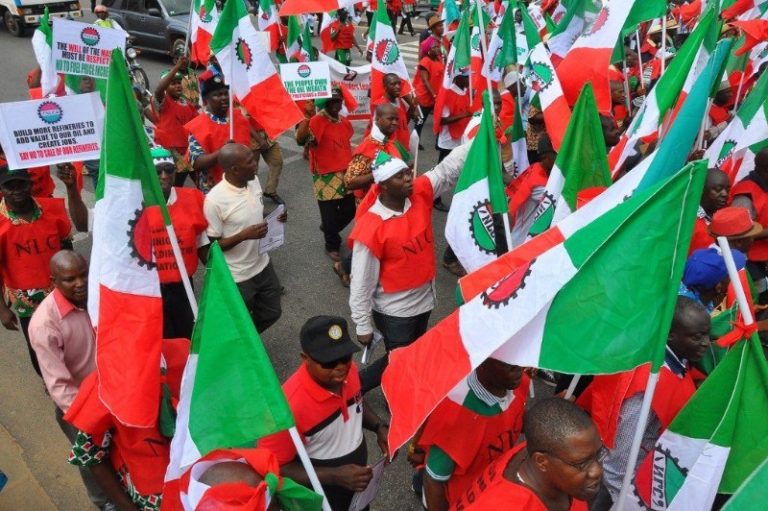
WORKERS in Rivers State under the aegis of Joint Negotiation Council (JNC), Nigeria Labour Congress (NLC), and Trade Union Congress (TUC) have demanded immediate reversal of the state of emergency imposed on the state by President Bola Tinubu.

The workers warned that failure to  heed the call could result in industrial action that would ground the state’s economy.

The warning was conveyed in a statement jointly signed by the JNC, NLC and TUC chairpersons in the state, Chuku Emecheta, Alex Agwanwor, and Ikechukwu Onyefuru, respectively, on Tuesday, March 25.

The ICIR reported that President Bola Tinubu, while declaring state of emergency in Rivers State, in a nationwide broadcast, on Tuesday, March 18, suspended the state Governor Siminalayi Fubara, his deputy, Ngozi Odu, and all members of the State House of Assembly. However, he retained the state judiciary.

Tinubu blamed the governor and his predecessor – the Minister of the Federal Capital Territory (FCT), Nyesom Wike – for allowing the political crisis in the state, which led to the emergency rule, to escalate.

He particularly criticised Fubara for failing to take action after an oil facility was blown up in the state a day before the declaration.

But the organised labour’s leaders criticised the president’s action, and described the Federal Government’s move as unconstitutional and a direct attack on democracy.

According to them, the officials were duly elected by the people, and any attempt to remove them outside constitutional procedures is against the spirit of democracy.

The labour unions said the emergency rule had inflicted economic hardship on the state, particularly on civil servants and local government employees, adding that many workers had not received their salaries.

They stated that withholding wages amid rising inflation and economic hardship was worsening their suffering. 

The labour leaders further noted that Rivers State, being a key player in Nigeria’s oil and gas sector, was crucial to national economic stability, and any prolonged crisis in the state could have far-reaching economic repercussions.

Calling on Tinubu, the National Assembly, and the judiciary to take urgent action, the unions demanded an immediate reversal of the state of emergency and the reinstatement of the suspended officials. 

They further urged the Federal Government to dialogue with relevant stakeholders to prevent further escalation of the crisis.

Dangote enters U.S. market, ships 1.7m barrels of jet fuel amid naira-for-crude delays

0

DANGOTE Refinery is extending its market dominance beyond Nigeria, having reportedly shipped approximately 1.7 million barrels of jet fuel across six vessels to ports in the United States this month.

Owned by Aliko Dangote, Africa’s wealthiest individual, the refinery is already establishing a market presence beyond Nigeria’s borders. This development comes as a delay in finalising a naira-for-crude oil agreement with the Nigerian National Petroleum Company Limited (NNPCL) is impacting the refinery’s local pricing in naira.

According to data from the ship-tracking service Kpler, as reported by Reuters, another vessel, the Hafnia Andromeda, is scheduled to arrive at the Everglades terminal on 29 March, carrying a cargo of around 348,000 barrels of jet fuel.

U.S jet fuel imports are on track to reach a two-year high in March, driven by shipments from the Dangote Refinery to North America.

The data indicates that U.S jet fuel imports so far in March have reached approximately 226,000 barrels per day (bpd), the highest figure since February 2023.

The ICIR, the U.S. appetite for products from the Dangote Refinery has emerged amidst uncertainty surrounding the renewal of the naira-for-crude oil sales agreement with the state-owned oil company, NNPCL.

On 1st October 2024, Dangote Refinery and NNPCL concluded a deal for the former to supply crude oil to the latter, with payment to be made in naira instead of U.S dollars.

This initiative was designed to bolster domestic refining capacity, reduce reliance on imported petroleum products, and stabilise the local currency by easing pressure on foreign exchange reserves, among other benefits.

The current agreement is due to expire this month, March, with the possibility of renewal. However, a renewal deal has not yet been finalised.

A meeting scheduled for Monday, March 24, to further discuss the agreement did not take place.

Following the uncertainty surrounding the renewal process, Dangote Refinery temporarilysuspended the sale of petroleum products in naira to oil marketers on March 19. This suspension is pending the resumption of naira-denominated crude oil cargo allocations from the NNPC.

Since the suspension, pump prices for petrol products have increased, as motorists and other consumers now face higher costs due to the halt in naira-based sales to marketers.

In the heat of the recent developments, the Dangote Refinery has lately been sourcing crude oil from multiple international suppliers, including Angola, Algeria, and America, to ramp up production at its 650,000 barrels per day (bpd) refinery.

The ICIR reported that the Dangote Refinery has taken delivery of more than three million barrels of American crude since the start of the month.

The cost of loading petrol at private depots in Lagos has risen to approximately ₦900 per litre, up from less than ₦850 per litre.

Similarly, retail outlets have increased the pump price of petrol from around ₦860 to over ₦900 per litre.

“Dangote is unlikely to be a regular jet fuel supplier to the U.S., but a maintenance-related shutdown of the Phillips 66 Bayway refinery in New Jersey helped open a rare arbitrage opportunity for flows from Nigeria to the U.S., Sparta Commodities analyst James Noel-Beswick said.

“The window is likely to close soon or shrink significantly due to elevated U.S. inventories of aviation fuel, Noel-Beswick added.

The Chief Operating Officer of TankTiger, Steven Barsamian, was also quoted as having stressed that demand to lease storage tanks for jet fuel in Houston and New York Harbor in April is averaging around 700,000 barrels on storage broker TankTiger’s platform, five to six times the average monthly demand.

The surge in demand, partly due to the influx of supply from Nigeria, is likely to lower jet fuel prices in the U.S. ahead of peak summer travel season, Barsamian maintained.

U.S. jet fuel stocks ended February at 45.2 million barrels, the highest for the month since 1999, data from the U.S. Energy Information Administration (EIA) also reportedly showed.

The agency adds that U.S. refiners’ yield of jet fuel hit a record last year, reflecting stronger demand relative to other transportation fuels, and expecting the country’s jet fuel consumption to touch a record in 2026.

Nigerians overstaying visa risk permanent ban, criminal prosecution, says US

THE United States Mission in Nigeria has cautioned travellers that overstaying their visas in America could lead to a permanent ban and potential criminal prosecution.

In a statement released on Monday, US Ambassador to Nigeria, Richard Mills, emphasised that the US would not accept any excuse from those found guity.

“If you overstay your US visa, you could face a permanent ban on travel to the United States as well as criminal prosecution.

“Consular officers have full access to your immigration history and will know about past violations.

The ICIR reported that mass raids had been taking place in homes, schools, workplaces, and shopping centres in the US, targeting undocumented immigrants for deportation.

This followed President Donald Trump administration’s clampdown on illegal immigrants in the US.

Since he took over power on January 20, Trump has vowed to carry out mass deportations of “criminal aliens” among other sweeping reforms by his government.

On January 28, United States Immigration and Customs Enforcement, Enforcement and Removal Operations reported that about 3,690 Nigerians in the US could be deported.

Data shows that as of 2015, approximately 376,000 Nigerian immigrants lived in the US, making Nigeria the largest source of African immigration to the country.

The Minister of State for Foreign Affairs, Bianca Odumegwu-Ojukwu, in February revealed that 201 Nigerians were held in US immigration camps, with 85 already cleared for deportation.

On Friday, March 21, the United States announced the termination of legal status for hundreds of thousands of immigrants, giving them only weeks to leave the country.


Judge steps down from Natasha’s case over bias claims

0

FOLLOWING allegations of bias, a judge of the Federal High Court Abuja, Obiora Egwuatu, has recused himself from the case filed by the senator representing Kogi Central, Natasha Akpoti-Uduaghan.

Egwuatu withdrew from the case during proceedings on Tuesday, March 25, due to allegations of bias raised by Senate President Godswill Akpabio.

The judge said the case file would be returned to the Chief Judge of the Federal High Court for reassignment to another judge.

Akpabio had reportedly questioned the court’s ability to handle the matter fairly, prompting the judge to step aside.

The ICIR reported that on March 4, Egwuatu gave an order restraining the Senate from commencing disciplinary proceedings against Akpoti-Uduaghan following an ex parte application filed by the senator’s counsels.

Despite the court order, the Senate went ahead with its investigation and, based on its committee’s findings, voted to suspend the female lawmaker for violating Senate rules. 

The suspension, which took effect from March 6, means that the lawmaker will be barred from accessing the National Assembly premises, and her office will be locked. 

The punishment also extends to her salaries and those of her legislative aides being withheld for the duration of the suspension.

The Senate further ruled that Akpoti-Uduaghan would not be allowed to represent Nigeria in any official capacity while serving the suspension. 

The committee noted that she might submit a written apology, which could lead to a review of her punishment.

Background

The crisis began on February 20 when Akpoti-Uduaghan protested a reassignment of her seat in the Senate without prior notice. 

She resisted the change, calling it an attempt to silence her, while Senate Chief Whip, Tahir Monguno, justified the move, citing Senate rules and party affiliations.

Her protest led to a heated exchange with Akpabio, who ordered the sergeant-at-arms to remove her from the chamber.

This led to the Senate’s unanimously referring her to the Ethics Committee for disciplinary review, which later recommended her suspension.

Amid the dispute, in an interview on Arise Television, she accused Akpabio of making repeated sexual advances toward her, which she said she rejected. 

She alleged that her refusal was the reason behind their frequent clashes at plenary sessions.

According to her, some of Akpabio’s love proposals were made with her on the phone and face-to-face in her husband’s presence. She further alleged that she had all the evidence for her claims.

Although the Kogi senator, on Wednesday, March 5, submitted an official petition regarding the sexual harassment and abuse of office by Akpabio, the Ethics Committee threw out the petition, citing key procedural oversights that allegedly undermined the petition’s legitimacy.

Akpoti-Uduaghan, however, resubmitted the petition shortly before her suspension.

The ICIR reported that, amid the crisis, the lawmaker filed a N100 billion defamation lawsuit against Akpabio and his aide, Mfon Patrick.

Akpoti-Uduaghan claimed that a Facebook post by Patrick allegedly contained defamatory remarks about her legislative competence and personal appearance.

The lawsuit sought damages and a public apology, claiming the publication harmed her reputation and subjected her to public ridicule.

On Friday, March 24, The ICIR reported that Akpoti-Uduaghan’s constituents submitted a recall petition to the Independent National Electoral Commission (INEC)


Trump administration accidentally leaked war plans to journalist before Yemen strike

IN a clear breach of United States (US) security, President Donald Trump’s National Security Adviser, Mike Waltz, shared war plans in a messaging group that included a journalist days before the US attacked Houthis in Yemen.

This was revealed on Monday in a first-person account by the Atlantic’s editor-in-chief, Jeffrey Goldberg, who was erroneously added to an encrypted Signal chat group on March 13.

The group, named “Houthi PC small group,” included national security adviser Mike Waltz, who instructed his deputy, Alex Wong, to assemble a “tiger team” to coordinate US actions against the Houthis.

Goldberg wrote that the group chat included accounts seemingly representing Vice President JD Vance; US Secretary of State Marco Rubio; CIA Director John Ratcliffe; Director of National Intelligence Tulsi Gabbard; Treasury Secretary Scott Bessent; White House Chief of Staff Susie Wiles; and senior National Security Council officials.

The ICIR reports that on March 15, Trump launched a military onslaught against Yemen’s Houthis in response to its attacks on Red Sea shipping, and he issued a warning to Iran, the Houthis’ primary supporter, demanding an immediate end to its backing of the group.

Goldberg revealed that just hours before the attacks, the US Defense Secretary, Pete Hegseth, shared operational details in the messaging group “including information about targets, weapons the US would be deploying, and attack sequencing.”

While noting that messages were set by Waltz to disappear from the Signal app after a while, Goldberg described the use of a Signal chat for such sensitive information as “shockingly reckless.”

The screenshots of the chat, as reported by The Atlantic, revealed that officials in the group debated whether the US should proceed with the strikes. At one point, Vance appeared to question whether US allies in Europe, who are more vulnerable to shipping disruptions in the region, truly deserved US assistance.

“@PeteHegseth if you think we should do it, let’s go. I just hate bailing Europe out again,” a person identified in the group as Vance wrote, adding: “Let’s just make sure our messaging is tight here.”

A person identified as Hegseth replied: “VP: I fully share your loathing of European free-loading. It’s PATHETIC.”

The Atlantic reported that the individual identified as Vance also expressed concerns about the timing of the strikes, suggesting there was a strong case for delaying them by a month.

“I am not sure the president is aware how inconsistent this is with his message on Europe right now. There’s a further risk that we see a moderate to severe spike in oil prices,” the account wrote, before saying he was willing to support the group’s consensus.

While the discussions were ongoing for days, Goldberg (the journalist) had doubted the platform was genuine because he could not believe that classified information such as national security, including war plans, could be discussed by officials on Signal.

He had thought the discussions were AI-generated and had presumed they were misinformation by some criminals attempting to masquerade as security experts.

But he eventually realised that they were genuine after discovering that the attacks on Yemen were applauded on the platform and the time of the bombardments tallied with discussions on the platform.  He thereafter exited the group.

He then emailed most of the officials and demanded to know why he was added to the group and why sensitive information such as war plans could be discussed on the app.

Some of the officials responded and confirmed he was added in error.

All lawyers interviewed by The Atlantic over the issue condemned the officials’ actions.

Responding, Trump told reporters on Monday that he was unaware of the incident, stating, “I don’t know anything about it. I’m not a big fan of The Atlantic.” However, a White House official later confirmed that an investigation was underway and that Trump had been briefed on the matter.

The United States National Security Council spokesperson, Brian Hughes, said in a statement: “At this time, the message thread that was reported appears to be authentic, and we are reviewing how an inadvertent number was added to the chain.”

“The thread is a demonstration of the deep and thoughtful policy coordination between senior officials. The ongoing success of the Houthi operation demonstrates that there were no threats to our service members or our national security.”

However, Hegseth denied sharing war plans in the group chat.

“Nobody was texting war plans, and that’s all I have to say about that,” he told reporters on Monday.

Goldberg responded to Hegseth’s denial in an interview on CNN late on Monday by saying, “No, that’s a lie. He was texting war plans.”