Home Blog Page 330

UPDATED: UBA fined over N149 million by CBN for breaking rules

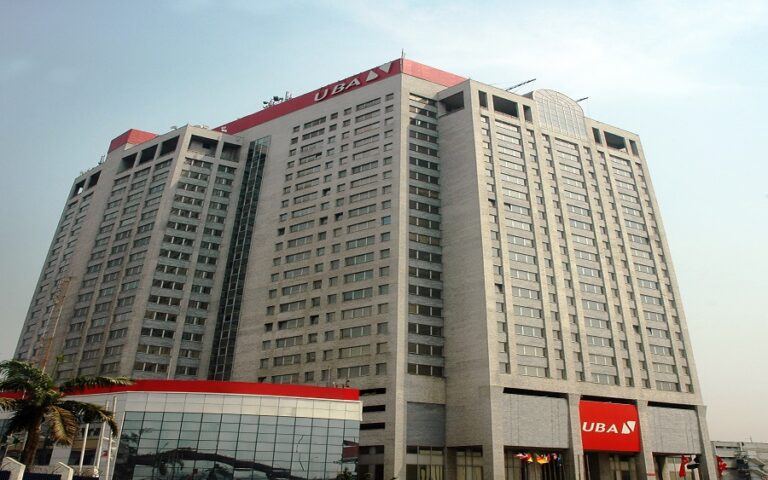
UNITED Bank for Africa (UBA) has been fined a total of N149.65 million for failing to comply with banking regulations set by the Central Bank of Nigeria (CBN), according to findings by The ICIR.

Details of these penalties were included in the bank’s audited financial statements for 2024, which were made public on Monday, March 24.

Analysis of the report reveals that UBA was penalised for several different breaches.

The largest fine, N122 million was for not having proper documentation and up-to-date information for customer accounts and transactions. The bank also received a N16 million fine related to customer complaints that were resolved by the Consumer Protection Department.

Analysis of the report shows that UBA was penalised for various contraventions.

The bank received a fine of N122 million for inadequate documentation and update of customer account and transaction, and N16 million for consumer complaint resolved by consumer protection department.

Further penalties included N9.65 million for submitting its cyber security self-assessment report late, and N2 million for wrongly selling personal travel allowance to two customer accounts.

Separately, The ICIR previously reported that UBA, along with eight other banks, was fined for not making enough naira notes available through ATMs during the last Christmas period.

In that instance, the CBN fined UBA N150 million, as part of a total of N1.35 billion levied against the nine banks, for hoarding cash from customers.

The CBN stated that this fine followed repeated warnings to ensure that cash was readily available, especially during times of high demand.

…N1.14 billion lost to fraudsters

UBA’s financial statements released on Monday also showed that the bank lost N1.14 billion to fraudsters. This involved fraudulent activities totalling N4.904 billion, carried out around 29,359 times.

Electronic fraud cases were the most common, occurring approximately 29,322 times, followed by fraudulent transfers and withdrawals.

Other types of fraudulent activity included cash theft/suppression, cash theft, and dry posting.

This indicates that UBA’s losses to fraudsters increased by 23 per cent in 2024 compared to the previous year.

Additionally, the bank received a total of 3,210,708 complaints, up from 2,946,318 in 2023. The total amount claimed in these complaints was N262.87 billion, higher than the N178.09 billion claimed against it in 2023.

As of the end of the 2024 financial year, 643,719 complaints remained unresolved, compared to 15,375 carried over from 2023.

The pan-African bank stated, “We understand that to effectively serve our customers, we must have the capacity to resolve customer complaints and generate insightful feedback to improve customer experience and support product, channel and process development and innovation.”

Update: The headline and lead of the report was updated to reflect that the numbers are in millions and not billions. 

Nigeria stock market takes four-week straight hit, loses N1.8trn

NIGERIA’s stock market lost approximately N1.794 trillion in value over the past four weeks. This drop was mainly due to worries about the global economy, decisions made by Nigeria’s central bank (CBN), and how investors felt about Nigeria’s economic future.

This is the first time the Nigerian stock market has seen a losing streak this long since the beginning of the year.

Throughout these weeks, bank shares were particularly affected, causing the share prices of companies like FCMB Group, First HoldCo, and Access Holdings to fall.

The drop in the value of bank shares was largely because investors were adjusting their portfolios. They were trying to understand how the falling prices of everyday goods (Consumer Price Index or CPI) and the continuing good performance of the money market and fixed-income investments would affect things.

In the oil and gas sector, the decline was mainly due to investors selling off shares in major oil-producing companies. This caution came as a result of ongoing political and economic issues in Nigeria’s oil-rich areas.

Analysis by The ICIR shows that the total value of shares listed on the Nigerian Exchange Limited (NGX) was N65.82 trillion when trading closed on Friday, March 21.

Compared to the N67.61 trillion it was at the end of February, when the market started its downward trend, the total value of the stock market has fallen by 2.65 per cent.

On the positive side, the consumer goods index slightly appreciated. This was driven by upward price movements in stocks such as Neimeth International Pharmaceuticals, Northern Nigeria Flour Mills, NASCON Allied Industries, and Dangote Sugar, which benefited from renewed investor interest in the company’s stocks.

Analysts believe that the prevailing negative sentiments have exerted pressure on stock prices, stressing that the persistent downturn was primarily driven by investors reacting to evolving global economic conditions.

Despite the CPI report for February putting inflation at ease for a second consecutive month, bearish sentiment persisted in the stock market, leading to an extended sell-off across various sectors of the market.

With negative sentiment dominating market activity during the four weeks under review, the All-Share Index (ASI) equally declined.

The movement saw the ASI dropping from 108,497.40 basis points in the last week of February to 104,962.96 basis points as of March 21.

This points to an overall decline in investors’ confidence, reinforcing a cautious approach among market participants, analysts maintained.

According to analysts at Cowry Asset Management, the prevailing market conditions indicate that the market is currently in an oversold state, presenting a potential buying opportunity for discerning investors.

They stressed that the ongoing pullback has created an environment where dividend-paying stocks are becoming increasingly attractive, as their yields are likely to improve in response to the recent price corrections.

“As the market enters the final trading week of March and concludes the first quarter of 2025, many investors may begin repositioning their portfolios to take advantage of dividend season, which typically offers prospects for capital appreciation and income generation.

“Looking ahead, the equities market is expected to experience continued corrections and portfolio adjustments, as investors digest corporate earnings reports and assess the broader impact of macroeconomic data releases.”

They believe that the direction of the market in the near term will likely be influenced by the performance of global financial markets, monetary policy decisions by the Central Bank of Nigeria (CBN), and investor sentiment surrounding Nigeria’s economic outlook.

“Given these dynamics, we continue to advise investors to focus on stocks with strong fundamentals,” the Cowry analysts advised.

Constituents submit petition seeking Natasha’s recall to INEC

A PETITION to recall the suspended senator representing Kogi Central, Natasha Akpoti-Uduaghan, has been submitted to the Independent National Electoral Commission (INEC) by a group of registered voters from her region. 

The move marks a significant attempt to remove her from office.

The petition dated 21 March 2025 was submitted on Monday, March 24 at the INEC headquarters in Abuja. 

The petition was submitted by a group known as Concerned Kogi Youth and Women.

Speaking on behalf of the group, Charity Ijoshe Omole said they had lost confidence in Natasha because of “gross misconduct” that led to her suspension from the Senate.

Omole said the district could not afford not to be represented in the Senate for six months.

“We, the people of Kogi Central, voted her in, and we are here to recall her. We have 488,000 registered voters, and as I speak to you now, we have more than 250,000 voters who have signed for her recall,he stated.

The group in the petition addressed to the INEC Chairman, Mahmood Yakubu, demanded the recall of Akpoti-Uduaghan.

According to the petitioners, the petition for Akpoti-Uduaghan’s recall is filed under Section 68 of the 1999 Constitution of the Federal Republic of Nigeria and INEC’s guidelines for recall petitions.

The ICIR reported that the Nigerian Senate suspended Akpoti-Uduaghan for six months over alleged rule violations.

Despite a restraining court order, the Senate went ahead with the suspension, citing a breach of its standing orders.

The move has been criticised by the Nigerian Bar Association (NBA), opposition parties, and various lawyers, who argued that the suspension was hasty and unfair.

Human rights lawyer and activist, Femi Falana, condemned the suspension, describing it as legislative recklessness, and demanded its immediate reversal.

The ICIR reported on February 20 that during a plenary, Akpoti-Uduaghan caused an uproar at the Senate when she discovered that her seat had been reassigned without prior notice.

She resisted the reassignment, arguing that it was an attempt to silence her.

Her refusal led to a tense confrontation with Senate President Godswill Akpabio, who ordered the sergeant at arms to order her out of the chamber.

Following the seating arrangement dispute, the Senate unanimously voted to refer Akpoti-Uduaghan to the Committee on Ethics, Privileges, and Public Petitions for a disciplinary review.

The committee, led by Neda Imaseun, was tasked with submitting its findings within two weeks.

The ICIR reported that despite the court restraining the Senate, Akpoti-Uduaghan was suspended for six months on Thursday, May 6.  

The committee ignored the court order and recommended a six-month suspension, adding that the punishment could be reduced if the lawmaker publicly apologised.   

The Senate approved the committee’s report and suspended Akpoti-Uduaghan forgross misconductduring plenary.

Akpoti-Uduaghan’s suspension came days after he accused the Senate President of sexually harassing her.

125km Benin-Asaba road project ready in 30 months – Official

Barring any unforeseen circumstances, the newly flagged-off 125-kilometre ultra-modern Benin-Asaba expressway will be completed within 30 months.

The Managing Director of Africa Plus Partners, Adeniran Ajakaiye, announced this at the weekend.

Speaking at the official handover of the project site to his company in Benin, Ajakaiye described the road as a central economic corridor designed to connect multiple regions.

He assured that the road would meet world-class standards, and ensure safety, durability, and efficiency for all users.

According to Ajakaiye, the road will feature a 10-lane carriageway with five lanes on each side, including three main carriageways and two service lanes in city areas.

It will also have a tolling system to ensure proper maintenance for the next 25 years under a concession agreement.

He said some of the features would include adequate corridor control to prevent unauthorised access and preserve road integrity.

The road will have solar-powered street lighting for sustainability, illumination, and a reduced carbon footprint.

Besides, there will be enhanced security measures, including CCTV surveillance, patrol teams, and emergency response units, to ensure user safety.

Ajakaiye noted that the project would create jobs, open new economic opportunities, and significantly reduce travel time upon completion.

He highlighted the importance of public-private partnership (PPP) models in driving infrastructure development in Nigeria.

“With a 30-month construction, Nigeria-based asset and fund management firm, we are committed to delivering this project on schedule and maintaining it efficiently over the next 25 years.

“Unlike conventional government-built roads, where maintenance is often delayed due to budget constraints, this model ensures continuous upkeep and service delivery,” he added.

He urged government agencies, investors, host communities, and road users to support the project for its successful execution.

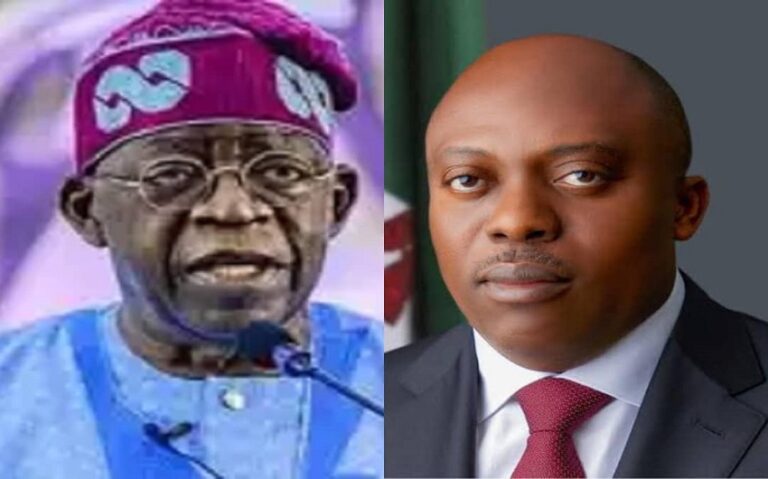
Edo State Governor Monday Okpebholo, who flagged off the project on behalf of President Bola Tinubu, emphasised the economic importance of Edo as a gateway to several states in Nigeria.

He lauded the president for initiating the project and described the road as a crucial decision for the nation’s economy.

The ICIR reports that the Benin-Asaba highway is a major economic route that links up the economy of the South-South and the South-Eastern part of the country.

The highway is also notorious for gridlock as the travellers en route to Lagos and the Southeastern part of the country always travel through it.

Economic watchers believe the road would lead to further economic alignment between the South-East and South-South parts of the country.

“It is a good development and there are lots of economic pathways in that corridor. We believe that the road will help in the transportation of farm products from the rural area to rrban market clusters linked to the road,” a development economist, Celestine Okeke, told The ICIR.

Commissioner confirms 12 inmates escaped from Kogi jailbreak

0

TWELVE inmates have escaped from the Correctional Centre in Kotonkarfe, Kogi State.

The prison break occurred early in the hours of Monday, March 24.

According to Channels TV, the Kogi State Information Commissioner, Kingsley Fanwo, in a statement, described the jailbreak asunfortunate’ and assured citizens that the government, in collaboration with security agencies, would take steps to prevent a repeat.

Fanwo said authorities had recaptured one of the escaped inmates and launched a thorough investigation into the incident.

The probe aims to uncover the circumstances surrounding the escape, apprehend the remaining inmates, and identify potential collaborators within the system.

He added that the governor, Usman Ododo, has instructed security agencies to prevent similar breaches in the future.

Fanwo urged the public to report suspicious individuals around them to law enforcement agents.

He encouraged residents of the state to remain calm and go about their lawful businesses.

He assured everyone that the government’s top priority remained the security of lives and property.

In a chat with The ICIR on Monday, the spokesperson of the Kogi State Police Command, William Ovye Aya, said he was on his way to the facility.

He promised to give further details after assessing the facility.

The ICIR reports that prison breaks have been recurring in Kogi State. The ICIR reported that the Nigerian Correctional Service (NCoS) confirmed a daring attack on one of its facilities in Kabba, Kogi State, by gunmen in September 2021.

The former NCoS Spokesperson, Francis Enobore, said that no fewer than 240 inmates escaped from the Medium Security Custodial Centre (MSCC) after the attack.

He noted that the attackers arrived at the custodial centre heavily armed and immediately engaged the guards in a fierce gun battle.

The jailbreak comes months after gunmen attacked the Nigerian Correctional Service and the police headquarters in Imo State, freeing 1,844 inmates, after which the hoodlums set the facilities ablaze.

The gunmen also razed the Imo State Police Command headquarters and burnt almost all the vehicles parked at the command’s headquarters. No fewer than 50 cars were set ablaze in the process.

In April 2021, similar attack was carried out at the correctional centre in Ubiaja, Edo State, but was foiled by officers at the facility.

Democracy is dying in Africa, not just failing – Obasanjo

0

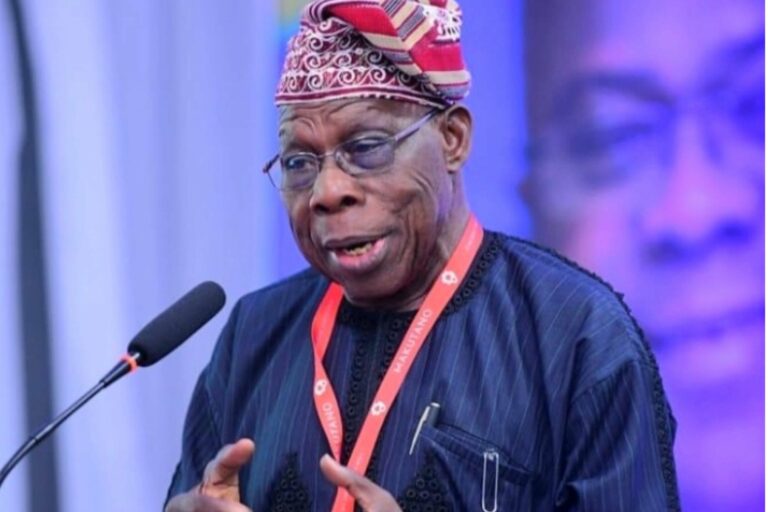
FORMER President Olusegun Obasanjo has said that democracy in Africa is not just failing but on the verge of collapse.

He blamed its failure on the adoption of liberal democracy which he said did not align with African values.

Obasanjo, who spoke at the 60th birthday celebration of former Imo State Governor, Emeka Ihedioha, in Abuja, on Monday, March 24, argued that before colonial rule, Africa had its governance systems that effectively catered to the needs of the people. 

He described these systems as a form of democracy that was more inclusive and community-driven.

“When we talk of democracy, we should remember that in Africa before the colonial rule and the colonial power, we had a forum of government which attended to the needs of our people and whatever you called it, to me it’s democracy. Because of what democracy is about, (former) American President Abraham Lincoln defined it as the government of the people, by the people, and for the people.

“Democracy is meant to be a system of government that delivers and delivers to all the people, not just a section of the people, not just a few,” Obasanjo said. 

The former president criticised modern democracy in Africa. He said the system had become an exclusive system where a small group of elites governed at the expense of the majority. 

He lamented that the system was riddled with corruption, injustice, and a lack of accountability, leaving ordinary citizens powerless.

“Democracy has now become representative democracy. And representative democracy has not taken care of everybody. Today we have democracy which is a government of small numbers of people by small numbers of people over large numbers of people who are deprived of what they need to have in life,” he added.

He further condemned the judiciary’s role in sustaining this system, arguing that corruption had made it nearly impossible for ordinary citizens to get justice.

“What sort of democracy brings you and you grab everything, and then illegally, and you say ‘go to court’ when you know that even in court, you can’t get justice.”

Obasanjo warned that if Africa continued to operate under this system, democracy on the continent would not survive. 

He called for a re-evaluation of governance structures and leaders to create a system that reflects Africa’s unique cultural and social realities.

His remarks were at the heel of several African countries grappling with governance crises, military takeovers, and growing controversies on democratic presidents’ excessive interference in sub-regional politics. 

In the past few years, military putsches abruptly terminated democracy in three African countries namely Burkina Faso, Niger and Mali. Their leaders consequently had strained relationships with their colonial master – France, forcing them to terminate diplomatic relations with the European nation.

The nations also pulled out of the Economic Community of West African States (ECOWAS) and formed a new bloc.

Most recently, President Bola Tinubu, on Tuesday, March 18, declared a state of emergency in Rivers State and suspended the state Governor Siminalayi Fubara, his deputy Ngozi Odu, and all members of the state House of Assembly for six months.

He said the protracted political crisis between Fubara and his predecessor – the Minister of the Federal Capital Territory (FCT), Nyesom Wike – was responsible for the decision.

He particularly criticised Fubara for failing to take action after an oil facility was blown up in the state a day before the declaration.

The president appointed Ibok Ekwe Ibas, a retired rear admiral, as the state administrator.

Many Nigerians, especially leading opposition figures condemned the decision, as they said it subverted the true principles of federalism.

They posited that the president abused the Constitution by suspending elected officials.

Meanwhile, Obasanjo’s government also had a tense relationship with state governors who allegedly refused to align with his political agenda.

In 2006, he suspended Plateau State Governor Joshua Dariye and allegedly orchestrated the removal of Oyo State Governor Rashidi Ladoja through questionable legislative manoeuvres.

US begins ceasefire talks with Russia in Saudi Arabia day after meeting Ukraine 

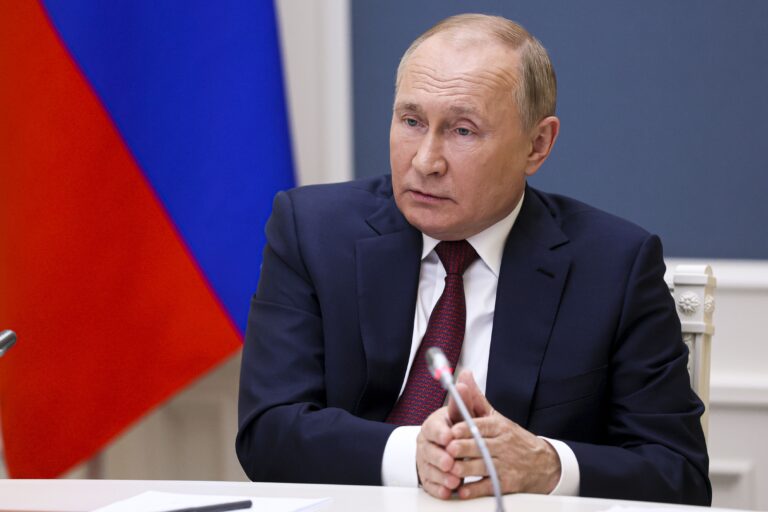
UNITED States officials began talks with Russia in Saudi Arabia around 07:30 GMT on Monday, March 24, on the need for a ceasefire in the latter’s war in Ukraine.

The meeting followed separate talks between the US and Ukrainian delegates a day earlier.

The ICIR reports that the US negotiation with Ukraine in Saudi Arabia on Sunday was part of President Donald Trump’s efforts to end the three-year conflict, after speaking with Ukrainian President Volodymyr Zelenskiy and Russian President Vladimir Putin last week.

Trump expressed satisfaction with the progress of the talks and lauded Putin’s involvement in the process so far.

However, major European powers remain sceptical about whether Putin is willing to make meaningful concessions or will maintain what they view as his maximalist demands, which have remained unchanged since he deployed tens of thousands of troops to Ukraine in 2022.

Putin has stated that he was open to peace talks but insisted that Ukraine must formally abandon its North Atlantic Trade Organisation (NATO) membership ambition and withdraw its troops from four Ukrainian regions that Russia has conquered.

White House National Security Adviser Mike Waltz told CBS on Sunday that US, Russian, and Ukrainian delegations were gathered in the same facility in Riyadh.

In addition to discussing a Black Sea ceasefire, he said the teams would address “the line of control” between the two countries, which involves “verification measures, peacekeeping, and freezing the lines where they are.”

Waltz also noted that “confidence-building measures” were on the agenda, including the return of Ukrainian children taken by Russia.

Recall that in July 2022, Turkey and the United Nations mediated the Black Sea Grain Initiative, which enabled the safe export of nearly 33 million metric tons of Ukrainian grain across the Black Sea despite the ongoing war.

However, Russia withdrew from the agreement in 2023, citing significant obstacles to its food and fertilizer exports.

Despite these complaints, Russia is not currently experiencing major difficulties in exporting its grain through the Black Sea.


How FG can position SMEs to achieve $1 trillion economy target

ACHIEVING the Federal Government’s ambitious goal of a $1 trillion economy in the coming years hinges on strategically positioning small and medium-sized enterprises (SMEs), a recent report by The ICIR has highlighted. This sector already makes a significant contribution to the nation’s economy.

President Bola Tinubu has repeatedly stated his confidence in reaching this milestone, first mentioning it at the 2023 Nigeria Economic Summit, where he envisioned a $1 trillion economy within three years and a $3 trillion economy by the end of the decade in 2030. He reiterated this stance in his 2025 New Year message, urging Nigerians to support efforts in establishing the country as a $1 trillion economy.

In a recent conversation with The ICIR, Anthony Chinwe, the Chief Executive Officer of De-SME Facilitators Limited, offered insights into how the government can maximise the potential of SMEs to achieve this economic target.

Chinwe, a former group head of SME banking at Fidelity Bank, suggested that the government needs to establish a regulatory environment that facilitates SMEs’ access to appropriate funding, whether through equity, debt, or hybrid options.

He believes that creating this enabling environment, through a robust legal and regulatory framework, would allow SMEs to access markets more smoothly, particularly international ones. He explained that this would benefit Nigeria through increased foreign exchange earnings contributing to the Gross Domestic Product (GDP), job creation, and the overall positive impact SMEs can bring.

“For instance, a friend who conducted research revealed that if you go to African markets in the United States, most of the goods in stock are from Ghana.

“He informed me that 60 per cent of the goods sold in that market, coming from West Africa, are from Ghana,” Chinwe recalled.

He questioned why it is easier for commodities to be exported from Ghana to the United States (US) than from Nigeria, expressing concern about Nigeria’s failure to fully leverage the African Growth and Opportunity Act (AGOA), which grants duty-free access to the US market for Nigerian exports.

He further inquired, “What are the bottlenecks in the export of products of the agricultural value chain in Nigeria? Is it that the goods don’t meet international standards? Then, what are we doing to create a proper certification framework that makes our goods acceptable in the international market?”

Chinwe emphasised that these are crucial issues the government should address, finding solutions and collaborating with the private sector to overcome them. He also noted the potential of the African Continental Free Trade Area (AfCFTA) agreement, a treaty aimed at boosting trade and economic integration across Africa, for Nigeria to maximise its benefits.

Another key suggestion from Chinwe to position SMEs for a $1 trillion economy is for the government to adopt a cluster approach, creating dedicated workspaces for businesses operating in similar sectors.

He highlighted Japan’s success with its “one-village, one-product” policy, which enabled the development of unique agricultural or mineral products specific to different villages.

“That’s the law of comparative advantage. Sometime between 2010 and 2011, when Modupe Adelaja was the Director-General of Small and Medium Enterprises Development Agency of Nigeria (SMEDAN) she came up with an amended version of that policy that would be domesticated in Nigeria.

“That is, one local government, one product, but it was never driven to a conclusion by way of implementation,” Chinwe said.

He argued that when the government establishes clusters for businesses, it fosters valuable linkages and facilitates access to shared services, which in turn improves technology and innovation and reduces the cost of doing business.

The government needs to take concrete steps to establish clusters for different products in various regions, he asserted, stressing that every region, state, and local government in Nigeria possesses unique produce that gives it a strategic advantage.

He believes that if this cluster creation is allowed to run and merge with the larger economy, it will boost the entire Nigerian economy.

“Those are the areas – cluster creation, market access, and access to suitable funds – that the government should look into,” he maintained.

Chinwe emphasised the importance of cluster creation because many SMEs currently have to generate their own electricity and water, build their own roads, and provide their own security, all of which present significant challenges that hinder business growth.

“The present government seems to be doing a lot and working on reforms. But if the right things are in place and there’s a segment of the capital market dedicated to SMEs even if you have a furniture company and you retired and your children are not interested in running it, you should have a platform that will enable you to sell it not as a scrap but as an ongoing business just as one will sell a big company in the capital market,’ he added.

In Rivers State, a republic of anomaly renews its methods

0

By Chidi Anselm ODINKALU

IN Nigeria, history tends to repeat itself with unerring accuracy and in tiresome syntax. When he wrote his Report on the Amalgamation of Northern and Southern Nigeria and Administration in 1919, Frederick Lugard described Nigeria as an “anomaly… of a country with aggregate revenue practically equal to its needs, but divided into two by an arbitrary line of latitude.” While one portion was fiscally viable, he suggested, the other “was dependent on a grant paid by the British taxpayer.” Through the Amalgamation in 1914, Lugard created a Customs Union in which extraction could be sustained by administering mechanisms of fiscal compensation to smooth over these disparities.

From the get-go, the invention of Nigeria was about the exploitation of resources and property. Rivers State is at the centre of these resources. Towards this goal, the powers of government have historically been mobilised. More than 111 years after the Amalgamation, this raison d’être of the Nigerian estate remains resilient. It is both evident and explicit in the machinations that have now eventuated in the declaration of a state of emergency over Rivers State.

When he addressed the country on March 18, 2025 to proclaim a state of emergency in Rivers State, Bola Ahmed Tinubu, Nigeria’s president, claimed that he acted on “security reports made available to [him]” showing “disturbing incidents of vandalisation of pipelines by some militant without the governor taking any action to curtail them.” Importantly, he had not bothered to speak to the State Governor to hear his own side of the story, nor did he indicate that any humans had been injured or killed.

Security reports in such situations are provided by the State Security Service, (SSS). It is currently headed as Director-General by Oluwatosin Ajayi, whose stint as State Director of Security (SDS) in Rivers State coincided with the tenure as governor of Nyesom Wike, a principal belligerent in the political conflict in the State.

As a result, the President continued, “no good and responsible President will standby and allow the grave situation to continue without taking remedial steps prescribed by the Constitution to address the situation in the state, which no doubt requires extraordinary measures to restore good governance, peace, order and security.”

These words were not new. When he moved the motion in the federal parliament on 29 May 1962 for the declaration of a state of emergency in the old Western Region, Prime Minister, Abubakar Tafawa-Balewa uttered the original version of the same sentence. After rendering his version of the events in the regional parliament in Ibadan the previous week, the Prime Minister declared: “No responsible Government of the Federation could allow an explosive situation such as that which now exists in Western Nigeria to continue without taking adequate measures to ensure that there is an early return to the Region of peace, order and good Government.”

Then in the Western Region, as today in Rivers State, there was a political dispute between a predecessor and his successor, both of them of the same party. The predecessor was Obafemi Awolowo, leader of the Action Group, who had transitioned from the office of regional Premier to being leader of the Opposition in the federal parliament. His successor as Premier was Ladoke Akintola. Although both lawyers, these men had fundamental differences of both provenance and ideology. Awolowo was Ijebu from the south of Yoruba-land. Akintola, who grew up in Northern Nigeria, was from Ogbomosho in the north of Yoruba-land. Ideologically, Akintola’s politics tended towards conservative populism; Awolowo was more towards democratic socialism.

In May 1962, the National Executive Committee of the Action group resolved to request Akintola to resign as both deputy leader to Awolowo in the party and as premier of the Western Region. Rival factions emerged in the party claiming a majority in the regional parliament. Akintola sought to have the parliament convened for the purpose of procuring a vote of confidence on his government. Both the regional governor and the Speaker of the parliament rebuffed his overtures. Instead, outside the parliament, some party officials led by Bola Ige, secured the signatures of a majority of elected members withdrawing support from Akintola’s administration.

The party presented these signatures to the Governor, Oba Adesoji Aderemi, then the Ooni of Ife who thereafter invited Dauda Adegbenro to form a new government as regional Premier. Attempts to re-convene the regional parliament ended in fracas. As recalled by Awolowo, “one Mr. Oke, a supporter of Chief Akintola, a Member from Ogbomosho, jumped on the desk and was running about on the desk and then lifted a chair and struck somebody on the head. That is how it started, and then thereafter one Mr. Ebubedike, the Member for Badagry, who lives in Ajeromi, took the Mace and then in an attempt to strike the Speaker with the Mace, the Mace struck the table and broke into two.”

On receiving notification of the governor’s decision removing him and designating Adegbenro as regional premier on 21 May 1962, Akintola began proceedings at the High Court of the Western Region. The Chief Justice of the Region – they were called Chief Justice then –Samuel Okai Quashie-Idun, had acted as Chief Justice of Ghana under the government of Kwame Nkrumah. He headed to Nigeria after resigning from Ghana’s judiciary in 1958 over disagreements with the Nkrumah government in the first flush of post-colonial authoritarianism. In 1960, Quashie-Idun became Chief Justice of the Western Region in succession to Robert Yorke Hedges. As Chief Justice, he was said to enjoy the support and patronage of Premier Akintola.

The expectation of Akintola was reportedly that the Chief Justice would afford him expedited hearing and a favourable verdict, handing him under colour of law the boost he needed in this battle of his political life. Instead, Chief Justice Quashie-Idun decided to distil the legal issues and, rather than rule on them, transmitted those to the then Federal Supreme Court for decision. The case eventually travelled up to the Privy Council where Akintola lost the legal dispute. It is said that a disappointed Ladoke Akintola withdrew patronage from Quashie-Idun and their relationship never recovered. The following year, Quashie-Idun left the judiciary of the Western Region to East Africa, becoming the President of the East African Court of Appeal, where he died in 1966.

It is thought that Quashie-Idun tried, albeit unsuccessfully, to recover the relationship. In June 1963, he dismissed the action by Adegbenro of the Action Group seeking to invalidate the appointment of Odeleye Fadahunsi as regional governor, and denied Adegbenro leave to appeal to the Federal Supreme Court. 

The disagreement between Quashie-Idun and Akintola was in reality unbridgeable. As Chief Justice, he saw a legal dispute which deserved judicial dispassion. For Akintola, it was a political dispute in which the role of the judiciary was to serve as his instrument. In 1962, Quashie-Idun chose to stick with his judicial brief. Today in Nigeria, judges at the highest levels have chosen to discard judicial robes and purchase sides in the political dispute in Rivers State, becoming shamefully complicit in instrumentalising the highest courts for a proverbial mess of political pottage.

When he addressed the country this past week, therefore, the President was not content with merely plagiarising Tafawa-Balewa; he found comfort in the partisanship of a wilful judiciary.

On 28 February, the Supreme Court restrained the Central Bank from releasing the federal allocations of Rivers State until the State House of Assembly had passed a lawful budget. In his address declaring the state of emergency, the president said his newly appointed military administrator in Rivers State would not be able to make any laws. In effect, he could not pass a budget to implement the Supreme Court judgment.

Yet, the day after he was installed, the Central Bank released the withheld allocation to the military administrator. On the same day, the National Assembly approved the emergency proclamation on an unlikely voice vote after what was reported to be a splurge of money to sweeten that outcome. If the statutory allocation of Rivers State was used to purchase an emergency proclamation over the state, it is entirely in keeping with the project originated by Frederick Lugard to preserve Nigeria as a proposition in extractive anomaly.

A lawyer and a teacher, Odinkalu can be reached at chidi.odinkalu@tufts.edu

Security forces rescue naval officer, 2 others, recover N3.2m ransom from Fulani camp

0

SECURITY Forces, comprising the Federal Capital Territory (FCT) Police Command and the military, have rescued a kidnapped naval officer and two civilians abducted by gunmen in Mpape, Abuja, on Friday, March 21.

The FCT Police Command disclosed this in a statement by its spokesperson, Josephine Adeh, on Sunday, March 23.

The statement noted that at about 7:35 p.m. on Friday, gunmen stormed the Maman Vatsa Estate gate, obstructed Mpape Road, and fired at motorists before whisking away three people, including the naval officer.

Following the attack, the kidnappers contacted the victims’ families and demanded ₦500 million for the naval officer and ₦200 million each for the two civilians.

“Upon receiving the distress report, the Deputy Commissioner of Police (Operations) FCT Police Command, DCP Isyaku Sharu, in collaboration with military authorities, mobilised a joint operation led by the Police Command’s Anti-Kidnapping Unit and comprising personnel of the Nigerian military, DSS hunters, and members of the local Hunters’ Group.

An intense search-and-rescue operation was conducted across Mpape, Gidan Bawa, Anguwan Mu’azu, and Yelwa Hills, covering areas in the FCT and Nasarawa State,” the statement read in part.

The police further noted that acting on credible intelligence, security operatives conducted a raid between 2:00 a.m. and 5:30 a.m. on March 23, and traced the suspects to a Fulani resettlement in Anguwan Mu’azu and Yelwa Hills, Nasarawa State.

During the operation, four suspects were arrested, and the kidnapped victims were safely rescued.

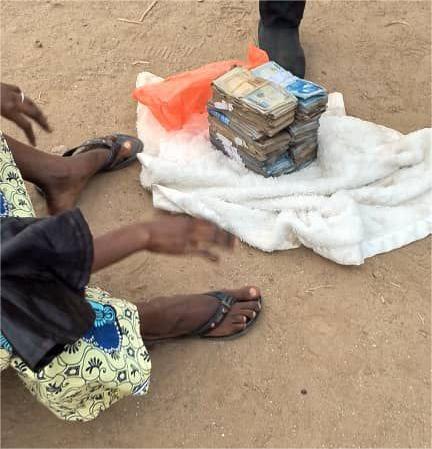
It also disclosed that ₦3.2 million, suspected to be ransom proceeds from previous kidnappings, was recovered from the suspects. The victims were said to be in stable condition and had been placed on medical care at the Nigerian Army Clinic.

The police further assured the public that efforts were underway to apprehend the remaining suspects and that security deployments had been reinforced in Mpape and its environs to prevent future attacks.

Residents were urged to continue their lawful businesses without fear and to stay alert while promptly reporting any suspicious activities to the following emergency numbers for assistance: 08032003913, 08028940883, and 07057337653.

The ICIR reports that Mpape is among communities in Nigeria’s capital that have been under the siege of kidnappers, armed robbers and other criminals.

There have been several cases of kidnappings in all six area councils in the FCT, including Bwari, Kwali, Abaji, Gwagwalada, Kuje, and the Abuja Municipal Area Council (AMAC), notably in the past five years.

However, while the government, under the FCT Minister, Nyesom Wike, has been able to rein in the criminals in five area councils, the menace of kidnapping has persisted in Bwari Area Council.

This report highlights some of the insecurity incidents in the city as of December 2023.