Home Blog Page 34

Wike under fire over Wuye Hospital land converted to private estate

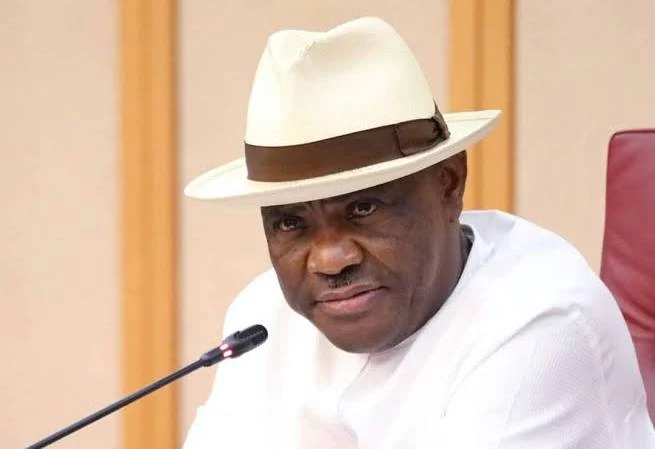
OUTRAGE has continued to trail the conversion of a plot of land originally designated for a public health facility in Abuja’s Wuye District into a private residential estate under the administration of the Minister of the Federal Capital Territory (FCT) Nyesom Wike.

In April, the Federal Capital Territory Administration converted a large parcel of land originally designated for public use and allocated it to a private developer, Full Moon Estate Developers Ltd, for a residential project.

The land, identified as Plot 546, Cadastral Zone B03, Wuye District, Abuja, covers 3.171 hectares, located directly opposite the Wuye Ultra-Modern Market and adjacent to the Wuye Police Station. Reports show that the entire site has been fenced with barbed wire, while construction activities by the developer are already underway.

According to Daily Trust, information displayed on the project signboard lists the development as a “Residential Development” on “Plot No. 546 CAD Zone B03 Wuye. A developer, Full Moon Estate Developers Ltd is handling the project, with file number FCDA/DC/BP/RSD/PHSII/31854. Approval date for the project was March 5, 2026, and the site engineer is listed as Ose Peter Afeanaje.

Construction has been ongoing at the site, with trucks transporting building materials and heavy equipment into the premises. A review of the Abuja Master Plan for Wuye District by the newspaper indicates that Plot 546 was originally designated for the construction of a health facility, consistent with provisions made for similar districts across the FCT.

Critics say the conversion of the land from public healthcare use to private residential development undermines the integrity of the capital city’s planning and raises broader concerns over the increasing alteration of lands originally reserved for public infrastructure.

A 2025 report shows that healthcare delivery has remained a huge challenge in the nation’s capital as public hospitals, including the National Hospital Abuja and the University of Abuja Teaching Hospital, are frequently overwhelmed, forcing some patients to wait in hallways, sit on floors, or be referred elsewhere because of a lack of available bed space.

The crisis had become so severe that the House of Representatives recently called on the Federal Government and the FCT Administration to declare a state of emergency in Abuja’s health sector.

Lawmakers warned that hospitals in the city are “overwhelmed and understaffed,” citing inadequate infrastructure, shortages of doctors and nurses, and insufficient medical equipment. They also noted that Abuja’s population has grown significantly over the last two decades without a corresponding expansion in public healthcare facilities.

Experts said that instead of establishing more healthcare facilities to reduce pressure on existing hospitals and improve emergency response capacity across the capital city, the minister and his team at the FCTA are focused on allocating land to private developer.

Urban development stakeholders have also raised concerns over what they describe as growing encroachment on lands earmarked for public utilities, including healthcare, green areas, drainage systems, and recreational facilities.

Town planners and architects familiar with the Abuja Master Plan argue that plots designated for hospitals are strategically selected based on population projections, accessibility, and emergency response considerations, warning that replacing such infrastructure with residential housing could have long-term consequences for residents.

The controversy has further intensified scrutiny of the Wike administration’s land allocation policies, with critics accusing the FCT Administration of prioritising commercial interests over public welfare.

Analysts warn that the ease with which a plot reserved for public healthcare could be converted into a private estate raises concerns about the security of other lands designated for schools, parks, and essential infrastructure within the capital city.

The Abuja Master Plan, conceived to guide orderly urban development in the nation’s capital, has long been regarded as a foundational framework intended to protect Abuja from the chaotic expansion and infrastructural pressures experienced in other major Nigerian cities.
 

Court convicts ex-power minister Saleh Mamman over N33.8bn fraud

0

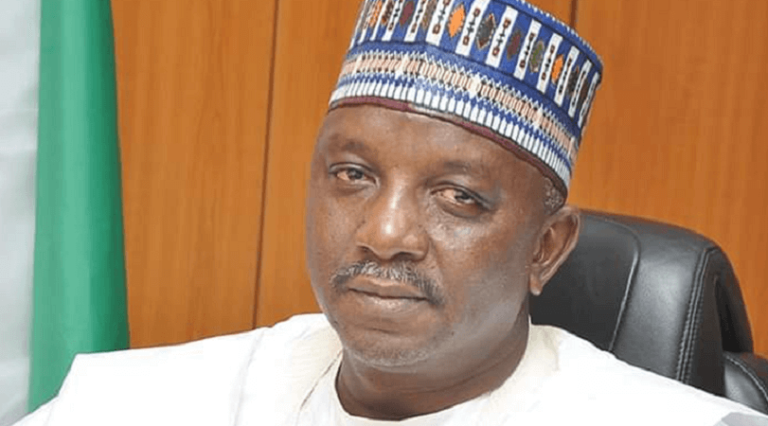
THE Federal High Court in Abuja has convicted a former minister of power, Saleh Mamman, on a 12-count charge bordering on money laundering involving ₦33.8 billion.

Mamman served as minister of power between 2019 and 2021 and was arrested by the Economic and Financial Crimes Commission (EFCC) in May 2021 shortly after he left office.

A statement by the commission on Thursday, May 7, stated that the presiding judge, James Omotosho, found Mamman guilty of offences bothering on alleged diversion and laundering of funds linked to major power infrastructure projects, including the Mambilla and Zungeru Hydroelectric Power Plant projects.

It noted that the court, however, deferred sentencing until May 13, 2026, after noting that the former minister was not physically present in court at the time of judgment.

During the trial, counsel to the EFCC, Rotimi Oyedepo applied for a bench warrant for Mamman’s arrest to ensure he is produced in court for sentencing to prevent what it described as a possible flight risk ahead of sentencing.

The conviction comes amid months of proceedings marked by repeated delays and procedural disputes. Just weeks earlier, on April 16, 2026, proceedings were stalled when Mamman failed to file his final written address before the court.

At the sitting, scheduled for adoption of final written addresses, Mamman’s counsel, Femi Atteh, a senior advocate, informed the court that although the defence had received the prosecution’s final written address, they had filed a motion on April 1 seeking an extension of time to respond.

Background

The ICIR reports that Mamman was initially arraigned by the EFCC on July 11, 2024, on charges of conspiracy and money laundering involving ₦33,804,830,503.73.

The prosecution alleged that while serving as power minister, he conspired with ministry officials and private companies to indirectly convert funds believed to be proceeds of unlawful activity.

The EFCC also accused him of making a cash payment of $655,700 without going through a financial institution, in violation of the Money Laundering (Prohibition) Act.

At the time of arraignment, Mamman pleaded not guilty to all charges, leading to a full trial. Proceedings had earlier been marked by drama, including a reported collapse of the defendant within the court premises, which briefly stalled proceedings and led to adjournments.


Channels TV counters Wike, says Abuja headquarters land legally acquired

CHANNELS Television has countered the claims by Minister of the Federal Capital Territory (FCT), Nyesom Wike, over the allocation of a parcel of land housing its headquarters in Abuja.

Wike had questioned the allocation of the Guzape plot to the television station during a media chat on Wednesday, arguing that the media organisation was benefiting commercially from government-allocated public property.

“The land that you built Channels on is public land. You are making money out of the public property. Did you buy it? No. It was allocated to you,” the minister alleged.

He also defended the payments made for the live broadcast of the media chat, stating that media organisations do not provide such coverage free of charge.

Responding to the minister’s claim on Thursday, Channels Television in a statement described the minister’s claim as inaccurate, stating that the land was legally allocated to the station for commercial use on March 6, 2007.

“It is not correct. The property which houses our national headquarters in the Guzape area of Abuja was allocated to CTV on March 6, 2007, for commercial purposes by the then FCT minister,” the station said.

It added that all statutory charges and required fees related to the property had been fully paid.

“We can confirm that all required fees and charges were fully paid,” it added.

The organisation also defended the payments it received for the live broadcast of the minister’s media chat, explaining that such transmissions require the deployment of outside broadcasting vans, technical personnel, and airtime resources.

“Our fees are out there. We are a news and broadcast media organisation. So, if you are going to lock down one, two, or three hours of airtime, of course you will pay,” the statement added.

Channels Television added that it would continue to ask “the right questions” while upholding the credibility and public trust it has built over the past three decades.

The ICIR reports that during the media chat, Wike also ordered a crackdown on abandoned and poorly developed areas surrounding Jabi Lake, calling the situation an eyesore that is unbefitting of Nigeria’s capital city.

Wike’s directive followed a viral video in which a popular pastor appealed to the minister to “leave Jabi Lake for Nigerians,” warning against developments that could restrict public access to the recreational hub.

The minister revealed that plots of land around the lake, originally allocated for high-end projects, had remained undeveloped for years and were filled with makeshift structures.

“For 15 years, nothing happened. We cannot continue like that. If you are not ready to develop, we will take back the land and give it to those who are serious,” Wike said.


Stakeholders raise alarm over rising attacks on journalists, push for stronger media protection

MEDIA stakeholders have raised concerns over the increasing attacks on journalists and the growing threats to media safety in Nigeria.

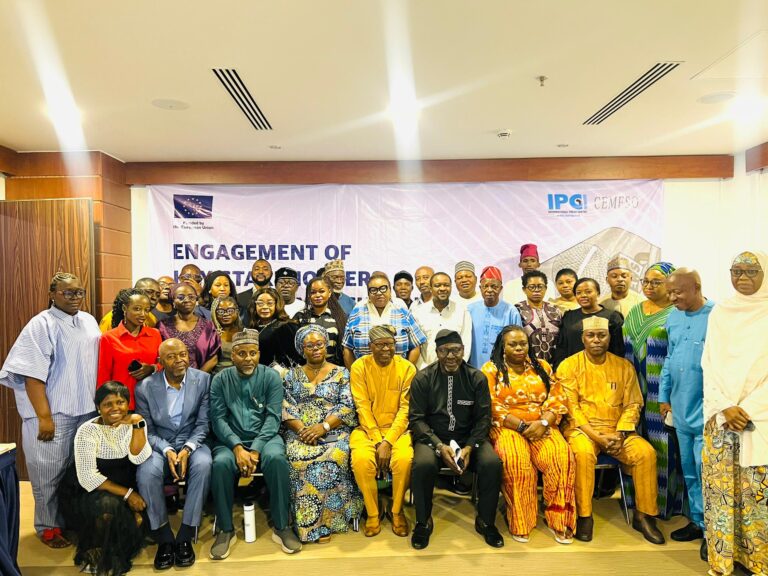
The concerns were raised during a stakeholder engagement organised by the International Press Centre (IPC) and the Centre for Media and Society (CEMESO) on Wednesday, May 6, in Abuja.

They also proposed solutions to strengthen protection mechanisms and improve institutional response to violations against media professionals.

The event, themed “Engagement of Key Stakeholders to Tackle Attacks on Media Professionals and Strengthen Media Protection”, brought together key media professionals, regulators, and civil society organisations.

Speaking at the event, the Executive Director of the Centre for Media and Society, Akin Akingbulu, said the engagement was convened as a direct response to mounting pressure on press freedom and the need for institutional accountability.

According to him, the current situation demands more than statements or communiqués that are “filed and forgotten,” stressing that institutions represented at the meeting must confront documented evidence and take responsibility for their role in either enabling or curbing violations against journalists.

Akingbulu emphasised that press freedom is not merely a media-sector issue but a constitutional and democratic necessity. Citing Sections 22 and 39 of the 1999 Constitution, he noted that freedom of expression and the media’s watchdog role are fundamental to accountability and governance.

He warned that continued attacks on journalists and the failure to investigate and prosecute perpetrators undermine democratic accountability and weaken the quality of information available to citizens.

Every erosion in the ability of journalists to report freely, every legal instrument turned against legitimate expression, every act of violence that goes uninvestigated and unpunished compounds into an information environment that is less equipped to support informed democratic participation. What we do — and do not do — in this room today has a direct bearing on the quality of Nigeria’s democratic process in 2027,” he said.

The CEMESO director also drew attention to findings from field engagements with journalists ahead of upcoming off-cycle elections in Ekiti and Osun states, showing widespread anxiety among reporters over safety, harassment, and impunity experienced during previous electoral cycles.

He cautioned that without urgent institutional reforms, patterns of intimidation and violence against journalists risk becoming entrenched in Nigeria’s electoral process.

“The journalists of Ekiti deserve to cover that election freely. So do the journalists of Osun and every state that will go to the polls after them,” he added.

Akingbulu explained that the engagement would proceed through a structured format, beginning with the presentation of verified data on attacks against journalists, followed by contextual analysis, testimonies from affected media practitioners, and a policy dialogue culminating in working group recommendations and formal resolutions.

Also speaking at the event, the Executive Director of International Press Centre, Lanre Arogundade, noted that journalism in Nigeria had become increasingly dangerous due to rising cases of harassment, intimidation, and attacks on reporters.

He also stressed that media protection should not be treated as a narrow sectoral issue but as a broader societal responsibility tied to democratic governance. 

According to him, a protected media environment is essential for accountability, informed citizenship, and the proper functioning of democracy.

“The International Press Centre, through its Safety and Protection of Journalists (IPC-SPJ) Hub documented not less than 20 attacks on journalists during the last 2023 general elections in Nigeria. These attacks vary from physical assaults, unlawful arrest and detention, and several other forms of attacks,” he said.

Arogundade further described the engagement as timely, noting that it was designed to move beyond discussion to actionable outcomes involving government institutions, security agencies, civil society, and the media.

He further presented report titled “Nigeria’s Media Under Pressure: Press Freedom and Digital Rights in 2026”, which shows that journalists and media organisations in Nigeria face increasing threats from security agencies, political actors, and surveillance systems. 

The report shows that 74 per cent of attacks against journalists were allegedly carried out by security forces, particularly the police, while attacks on journalists have surged by 40 per cent between 2022 and 2026. It also alleges that political and corporate interests have compromised the editorial independence of about 42 per cent of media outlets in the country.

On digital rights, the report states that Nigeria has invested over $470 million in surveillance technologies, including facial recognition and tracking systems, raising concerns about privacy and state monitoring.

The Director-General of the National Orientation Agency, Lanre Onilu, represented at the event by Olukemi Afolayan, stressed the need for ethical journalism alongside protection efforts.

“While advocating for the protection of journalists, we must continue to promote ethical and responsible media practice. Professionalism, fact-checking, fairness, patriotism and conflict-sensitive reporting remain essential in strengthening public confidence in the media ecosystem,” he said.

A representative of the National Human Rights Commission, Fatimah Mohammed, also underscored the human rights implications of attacks on journalists.

“A free, safe and independent press is not a privilege. It is a constitutional guarantee… When journalists are attacked or harassed, it is not only the media that suffers. Truth suffers, accountability suffers, and democracy suffers,” she said.

The engagement also featured multiple sessions focused on examining the state of media safety and press freedom in Nigeria, including presentations of documented evidence of attacks and discussions on institutional responsibilities in addressing them.

A stakeholder dialogue session brought together representatives of security agencies, regulatory bodies, civil society groups, and media associations to examine accountability gaps, barriers to effective response, and the need for stronger coordination and rapid response mechanisms to protect journalists.

Stakeholders at the event stressed the need for stronger collaboration, improved protection frameworks, and concrete, implementable commitments to ensure a safer environment for journalists across Nigeria.

Aisha Yesufu joins NDC, declares for FCT Senatorial seat

NIGERIAN activist, Aisha Yesufu, has announced her defection from the African Democratic Congress (ADC) to the Nigeria Democratic Congress (NDC)

She also declared her intention to contest for the Federal Capital Territory (FCT) senatorial seat in the 2027 elections.

In a video shared on Facebook, Yesufu described her decision as deliberate and driven by a “deeper understanding” of Nigeria’s political future, stressing that the coming days would be critical in shaping the country’s direction.

“I’ve moved from ADC, I’m now in NDC, Nigeria Democratic Congress. The next couple of days we define the future of this nation. This deeper understanding is why I resigned from the African Democratic Congress, ADC, to join the Nigeria Democratic Congress, NDC,” she said.

She linked her defection to her continued support for former Anambra State governor Peter Obi, whom she described as embodying “the hope and aspiration of a Nigeria that works.” 

She added that her initial alignment with the ADC was influenced by her commitment to supporting Obi, and her latest move to the NDC is a continuation of that pledge.

She added, “To continue to honour that promise, I am joining the NDC. This time, I am joining the NDC not just as a member, but as one running for the FCT senatorial seat. I have tidied up all my obligations to the ADC, ensuring a clean transition,” she said.

She expressed gratitude for the roles she previously held, including subcommittee chair, deputy committee chair, and secretary at different levels in the ADC.

Yesufu also acknowledged colleagues within the ADC, appealing directly to citizens as she framed her candidacy as a call for constitutional authority to represent the people.

“I’m putting myself forth. I’ve always used my constitutional voice to make demands, to speak for a better country. Today, I’m asking you for constitutional  authority,” she added.

She urged residents of the FCT to support her ambition, pledging to be their voice in the National Assembly.

“I want to serve, and I need your support. I need you to give me the authority to be able to stand in the Red Chamber and fight for our country, and be there for our country, and be there for our people, and be the voice of our people, and represent,” she said.

IPI Nigeria renews campaign against Eno, Bago, Egbetokun, others for ‘violating’ press freedom

THE International Press Institute (IPI) Nigeria has announced a global escalation of its campaign against actors it accused of violating press freedom in Nigeria.

The organisation named Niger State Governor Mohammed Bago, Akwa Ibom State Governor Umo Eno, and the former Inspector General of Police, Kayode Egbetokun, among those it said violated press freedom in the country.

The President of IPI Nigeria and Editor-in-Chief of Premium Times, Musikilu Mojeed, accused the officials of engaging in actions undermining media independence and vowed that they would be held accountable through a renewed global advocacy campaign.

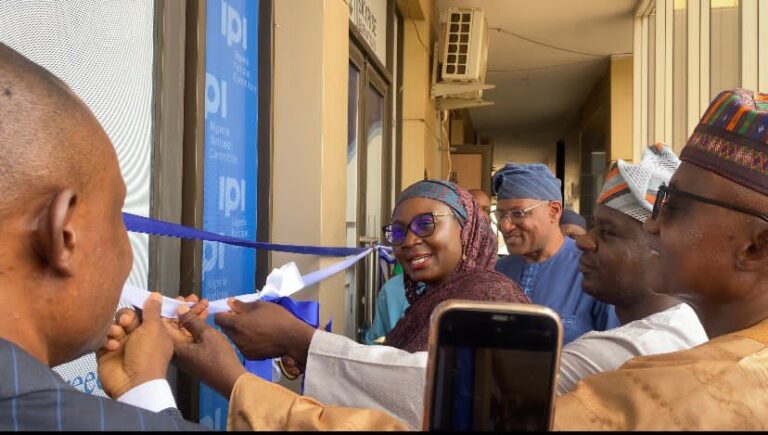
Mojeed made the vow on Wednesday, May 6, at the commissioning of IPI Nigeria’s new headquarters in Abuja.

The commissioning was part of activities marking 2026 World Press Freedom Day.

He recalled that in December 2025, IPI Nigeria named the three individuals in its “Book of Infamy” for clamping down on the media.

Mojeed said the organisation had refrained from a broader campaign out of deference to Vice President Kashim Shettima, who had intervened earlier.

However, the group’s leader noted that no corrective measure had been taken since the intervention, leading to the decision to broaden the scope of advocacy against their actions.

He said: “Regrettably, no such action has been taken. As we stand here today, the concerns that led to their inclusion in that list remain valid, unaddressed, and ongoing. Therefore, from this very platform, we are announcing the relaunch and escalation of our efforts against these individuals and others whose names are in the Book. IPI Nigeria will initiate a global campaign to hold these individuals accountable.”

Speaking on the new facility, Mojeed said it represented the first permanent office established by IPI Nigeria in the country since the 1970s.

On her part, the Deputy Director of the MacArthur Foundation, Amina Salihu, applauded her organisation’s long partnership with the IPI Nigeria, emphasising that the work of philanthropy only holds meaning when paired with “worthy partners and pathfinders.”

Highlighting the link between journalism and national stability, Salihu described the media as the essential information infrastructure for any surviving democracy.

“Every work that philanthropy would do in this country only makes meaning when you find worthy partners, and IPI has been an ally and a friend, and also a pathfinder in terms of how best to use resources in this country,” Salihu said.

“Without it, you cannot have an enduring democracy. And without an enduring democracy, you cannot have development. And if there’s no development, what then is a nation?


SERAP, editors react as court bars NBC from punishing broadcasters for expressing views

0

A FEDERAL High Court in Lagos has barred the National Broadcasting Commission (NBC) from implementing its recent directive seeking to penalise broadcast organisations and on-air personalities for expressing their views on the nation’s politics.

The decision was delivered by a judge, Daniel Osiagor, who approved temporary order stopping the regulator from taking action under the disputed sections of the broadcasting rules. The order followed an urgent application brought before the court by the Socio-Economic Rights and Accountability Project (SERAP) and the Nigerian Guild of Editors.

Recall that The ICIR reported that the NBC issued a notice warning broadcasters over alleged rising violations of its codes.

It said some programmes had fallen short of accuracy and fairness, calling for stricter enforcement of the codes ahead of the 2027 elections. The commission also flagged presenters for pushing personal views as facts, intimidating guests, and limiting opposing opinions, warning that such actions would attract sanctions.

The litigation, filed by Adeyinka Olumide-Fusika, a senior advocate, questioned the legality of the commission’s move, which the litigants said attempted to gag presenters.

In granting the order, the judge directed that the NBC and its representatives must not enforce or rely on the identified sections of the 6th edition of the Nigeria Broadcasting Code to issue fines or sanctions against any station until the court fully decides the matter.

“It is hereby ordered as follows: That an order of interim injunction is granted restraining the defendant [NBC], its officers, agents, privies, assigns, associates or any other person or group of persons from enforcing, imposing sanctions, or levying fines on any broadcasting station based on the provisions of Sections 1.10.3, 3.3.1(b), 3.4.1(b), 5.3.3(b), 3.1.1, 3.11.1(a), 5.4.1(f), 3.11.1(b), and 5.5.1(b) of the 6th Edition of the Nigeria Broadcasting Code pending the hearing and determination of the Motion on notice for an order of interlocutory injunction filed simultaneously in this suit.”

The matter has been fixed for June 1, 2026, when the court will hear further arguments on whether those provisions should be permanently set aside.

In their suit, SERAP and the editors’ body are asking the court to decide if the rules being used by the NBC go against the Nigerian Constitution and international treaties on human rights.

They argued that without the court’s intervention, broadcasters could continue to face punishment for simply carrying out their duties and exercising their rights.

“Unless the reliefs sought are granted, the NBC will continue to use the provisions of the 6th Edition of the Broadcasting Code to threaten and sanction broadcast stations and presenters solely for carrying out their constitutional responsibilities and exercising their rights,” they said.

The groups also stressed that freedom of expression covers more than just reporting facts.

“The Nigerian Constitution and international human rights law protect both the absolute right to hold opinions and the qualified right to express ideas of all kinds. Journalistic opinion is protected expression.”

Court documents further explained why they believe the restrictions are excessive.

“Value judgments are not susceptible of proof and enjoy heightened protection. Journalism necessarily includes analysis and commentary. The right to impart ideas necessarily includes opinions, commentary, and analysis. A blanket prohibition on the expression of personal opinions by anchors and presenters’ amounts to an impermissible restriction of this right.”

They maintained that media professionals should not be stopped from analysing issues or sharing informed perspectives, as that forms a key part of journalism and democratic engagement.

“Journalists are entitled to express their opinions as a matter of professional standard, including commentary and analytical expression, which lie at the very core of journalistic practice and democratic discourse.”

Reacting to the ruling, SERAP and the Nigerian Guild of Editors described it as a major step for press freedom and accountability.

“This is a significant victory for freedom of expression, media freedom, and the rule of law in Nigeria. The court’s decision to restrain the NBC from enforcing these vague and overly broad provisions affirms the fundamental principle that regulatory powers must be exercised within constitutional limits.”

They urged the NBC to obey the court’s directive and review its guidelines to align with constitutional protections and global human rights standards.

“This ruling sends a clear message: freedom of expression is not a privilege to be granted or withdrawn by regulators, it is a fundamental right that must be respected, protected, and upheld at all times.”

Nigeria gains in passport rankings as visa-free reach dips

NIGERIA’S passport has improved from 95th to 89th in global rankings but its real travel access is declining.

The country’s visa-free destinations currently stand at 44.

According to the latest Henley Passport Index, Nigeria moved from 95th in January 2024 to 89th in April 2026. Despite this upward movement, Nigeria’s visa-free destinations stand at 44, down from 46 in January 2025 and 45 in January 2024.

The Henley Passport Index revealed that several countries like Ethiopia, Zambia, Zimbabwe, Lesotho, Somalia, Mauritania, and São Tomé and Príncipe have all shifted Nigerians into the “visa required” category.

Ethiopia ended visa-on-arrival for Nigerians in October 2022, requiring travellers to obtain visas before departure, Zambia now mandates visas for all West African passport holders, while Zimbabwe has also removed visa-on-arrival access.

Data from successive editions of the index show that Nigeria’s higher position is partly due to other countries falling further down the rankings, rather than a significant improvement in Nigeria’s passport strength.

Now in its 21st year, the Henley Passport Index Nigerian passport dropped 27 positions, falling from 62nd place in 2006 to 89th in 2026. It ranks 199 passports worldwide using exclusive data from the International Air Transport Association.

Although Nigeria gained access to new destinations between 2025 and 2026 including Fiji, Micronesia, Mozambique, Rwanda, Togo, Samoa, Palau, Niue and Montserrat, it ranks low among its West African peers, as Ghana ranks 67th globally with access to 67 destinations, while The Gambia ranks 66th with 68 destinations, Senegal, Burkina Faso and Côte d’Ivoire also outperform Nigeria.

Across Africa, South Africa maintains the strongest passport, ranked 46th globally with access to 100 destinations, followed by Botswana, Namibia, Morocco, Kenya and Ghana. Globally, Singapore holds the most powerful passport, with visa-free access to 192 destinations, while Japan and South Korea follow closely, alongside the United Arab Emirates.

At the bottom of the ranking, Afghanistan remains the weakest passport globally, with access to just 23 destinations. Other low-ranking countries include Syria, Iraq, Pakistan and Yemen.

INEC resumes voter registration nationwide May 11

0

THE INDEPENDENT National Electoral Commission (INEC) has fixed May 11, 2026, for the restart of voter enrollment across Nigeria, marking the last stage of the Continuous Voter Registration (CVR) exercise scheduled to end on July 10.

The update was shared on Tuesday in a statement by the commission’s head of Information and Voter Education Committee, Mohammed Haruna, as activities gradually build toward the 2027 general elections.

“The Independent National Electoral Commission wishes to inform the general public that the current nationwide Continuous Voter Registration exercise will resume for its third and final phase on Monday, 11th May 2026,” the statement read in part.

The electoral body noted that the earlier phase was put on hold on April 17 to allow for proper review and correction of the voters’ list after it had been published for verification.

Nigerians who recently turned 18 and those who were unable to register previously have been encouraged to make use of the fresh opportunity.

INEC also urged already registered voters who need to make changes to their records to act within this period. This includes people who want to move their registration to a new location, replace missing or damaged Permanent Voter Cards, or fix errors in their personal information.

The commission advised such individuals to access its online portal or visit INEC state and local government area offices nationwide more information on the exercise.

In addition, it disclosed plans to open the voter register again for public verification later in July as part of its transparency process.

The commission expressed confidence in its level of preparedness for the 2027 elections. It also called on Nigerians to take part actively in strengthening the electoral system.

The announcement comes after the conclusion of the second phase of the exercise, during which a total of 3,748,704 registrations were successfully processed nationwide through both digital pre-enrolment and physical capture.

Court awards N100m damages against SERAP in SSS defamation suit

THE Federal Capital Territory (FCT) High Court in Abuja has awarded N100 million damages against Socio-Economic Rights and Accountability Project (SERAP) in a defamation suit filed against it by Nigeria’s secret police – the State Security Service (SSS) and two of its officers. 

Delivering the judgment on Tuesday, the judge, Yusuf Halilu, awarded N100 million damages against SERAP, a leading public accountability non-profit. The court also ordered SERAP to apologise to the SSS in national dailies and on television.

“From the context of the documents before the court, it is settled there was a publication,” Halilu said.

The ICIR reports that in October 2024, SSS operatives filed a lawsuit against SERAP, accusing the organisation of falsely alleging that its agents invaded the accused’s Abuja office in September 2024.

Two SSS operatives, Sarah John and Gabriel Ogundele, who were said to have been defamed by the claim, were listed as co-claimants in the suit that sought N5 billion in damages. The litigants argued that the allegation harmed their reputations.

They said SERAP had alleged that the SSS invaded its office, a claim that was widely circulated on Twitter and reported by several media organisations, adding that the allegation had a serious impact on them.

The agency denied invading SERAP’s office or harassing its staff, with two officers testifying in support.

The SSS argued further that the incident occurred after SERAP had written to President Bola Tinubu, urging him to investigate alleged corruption in the Nigerian National Petroleum Company Limited and to reverse the increase in petrol prices.

However, SERAP presented a rebuttal during the trial.

In his judgment, Halilu said defamation remained a distinct cause of action, “legally and historically,” and involved exposing a person to hatred or ridicule, stressing that it covered libel (written) and slander (spoken)

He explained that the key issue was whether the claimants proved defamation and were entitled to be granted their prayers, explaining that the defendants did not challenge the evidence on oath put forward by the plaintiffs.

He said libel becomes actionable once a false and harmful statement is published, pointing to March 21, 2025, when Sarah John submitted social media posts as evidence. He added that Exhibit 3 showed that SERAP published statements about the officers.

The judge opined further that although SERAP did not mention names, the description identified the officers and the court must decide whether the words in question were defamatory, noting that they could amount to a derogatory innuendoes.

“The evidence of the SSS officer is tall, large, dark, slim, dark skin. I have taken judicial notice of their features, and all suit the claimants in this case. It cannot be challenged that there was defamation against the claimants,” the judge ruled.

He said the publication implied that the officers unlawfully occupied SERAP’s office and intimidated its staff, portraying them as acting without proper authority and lacking professionalism.

“Allegations of intimidation and harassment should not be attributed to SSS officers as in this case. The publication clearly injured the claimants in their profession. Once there is publication, it does not require further proof. The publication is indeed libellous,” he added.

He ruled that the statements might have spread widely beyond Nigeria, potentially affecting the claimants’ physical and psychological well-being.