THE National Drug Law Enforcement Agency (NDLEA) has discovered a shipment of cannabis-infused candies meant for sale at a children’s store in Lagos State.
The agency’s spokesperson, Femi Babafemi, disclosed this on Sunday, March 9, on X.
Babafemi said the imported candies, marketed as sweet treats for children, contained a potent strain of cannabis, sparking serious concerns about the safety of children’s snacks.
“One of the latest seizures by @ndlea_nigeria officers is candies confirmed to contain a strong strain of cannabis,” he said.
He urged parents to stay vigilant in monitoring their children’s snacks, revealing that the importer brought the candies in for sale at his kiddies’ shop in Lagos, where he sells children’s items, suggesting that school kids were the intended target.
“Parents, let’s stay alert to the sweets and snacks our kids take to school or bring home,” he added.
The ICIRreported in January, that the NDLEA arrested a traditional chief priest of the Igunuko Shrine, Bariu Aliu, in the Alpha Beach area of Ajah, Lagos State, and recovered 2,760 kilograms of skunk from his shrine.
In February, ICIR also reported the arrest of a 24-year-old Thai lady, Pattaphi Wimonnat, at the Murtala Muhammed International Airport, Lagos State, with 43 parcels of Canadian Loud, a synthetic strain of cannabis, weighing 46.60 kilograms.
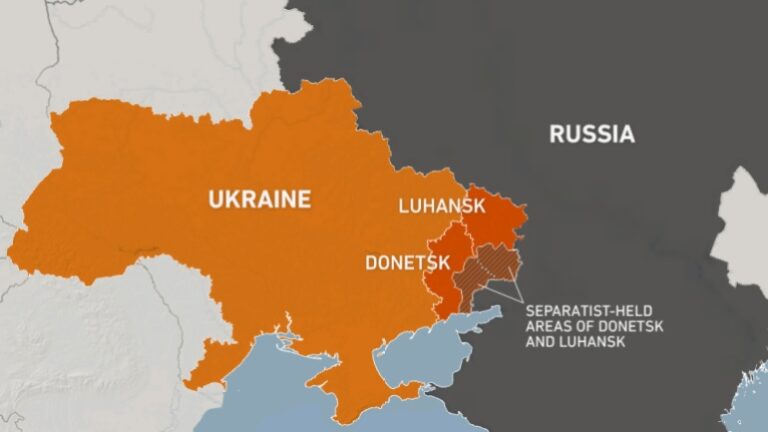
UKRAINE’S Air Force said Russian forces launched multiple strikes on Dobropillia, a city in Donetsk Oblast, Friday night, resulting in casualties and injuries.
The development has raised intense worries, following intelligence sharing withdrawal by the U.S. authorities to Ukraine as recently hinted by President Donald Trump.
Governor Vadym Filashkin of Donetsk Oblast reported that at least 11 people were killed and 30 injured, adding that more victims might be trapped under the rubble of eight damaged apartment buildings.
This comes amid a week of intensified Russian aerial assaults on Ukraine, following U.S. President Donald Trump’s decision to halt intelligence sharing with Kyiv, raising concerns that Russian missile strikes could now hit cities without prior warning.
Ukraine’s Air Force reported that Russia launched two ballistic Iskander missiles and one cruise missile from the Rostov region into Ukraine, along with a total of 145 drones, including Shahed attack UAVs and dummy drones, from multiple locations.
Ukraine said the cruise missile and 79 drones were intercepted by fighter jets and mobile fire groups on the ground.
Ukrainian diplomat and politician Maj Volodymyr Omelyan, speaking in a BBC Breakfast interview on Saturday, stated that Ukraine will continue fighting “because there is no other option for us.”
“Russians are extremely inspired by recent statements of Trump that he’s leaving Europe, he’s going to remove sanctions against Russia, cutting Ukrainian intelligence and also supplies,” Omelyan says.
Reacting to reports that Washington has revoked access to satellite imagery, Omelyan said it now feels “like fighting blind.”
“We don’t see what Russia is preparing to do on its territory anymore,” he adds. “It’s very difficult to see the main direction of their future attacks and supplies.
“You hear the noise and feel the enemy but you cannot see it.”
The ICIRreported that a much-anticipated meeting between Ukraine’s president and Donald Trump seven days ago escalated into a public dispute.
Hopes for the signing of a highly anticipated minerals deal and a step toward peace were dashed as the U.S. president criticised Volodymyr Zelensky for being “disrespectful” to the U.S.
The following day, the UK’s Sir Keir Starmer welcomed Zelensky, and a day later, European and Canadian leaders convened for a summit to discuss the continent’s support for Kyiv.
And yesterday, March 7, the European leaders met again with the group backing plans to jointly borrow €150 billion to lend to European Union governments for military expenditure against the backdrop of the US pausing military aid and intelligence sharing with Ukraine.
Also, the latest sign of the tide turning, the US and Ukraine said their teams will meet in Saudi Arabia next week for talks on ending the war in Ukraine.
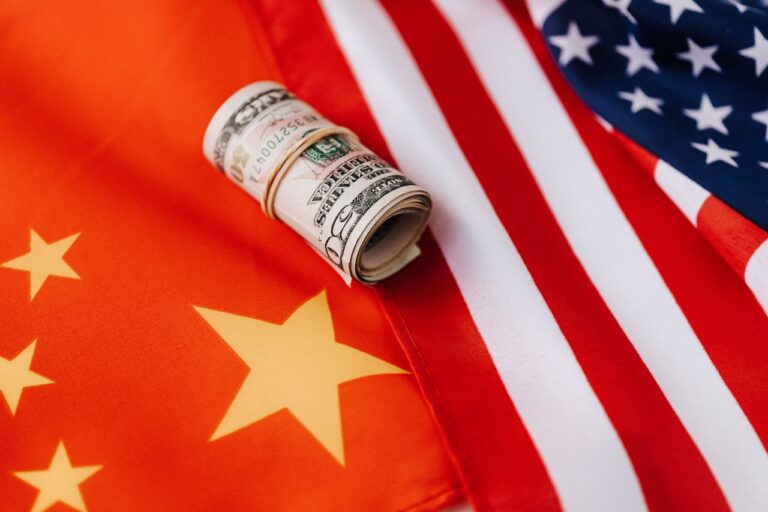
SINCE taking office, US president Donald Trump has implemented policies that have been notably hostile towards China. They include trade restrictions. Most recently, a 20 per cent tariff was added to all imports from China and new technological restrictions were imposed under the America First Investment Policy. This isn’t the first time US-China tensions have flared. Throughout history the relationship has been fraught by economic, military and ideological conflicts.
China-Africa scholar and economist Lauren Johnston provides insights into how these dynamics may also shape relations between Africa and China.
How has China responded to hostile US policies?
First, China tends to have a defiant official response. It expresses disappointment, then states that the US policy position is not helpful to any country or the world economy.
Second, China makes moves domestically to prioritise the interests of key, affected industries.
Third, China will sometimes impose retaliatory sanctions.
In 2018, for instance, China imposed a 25 per cent tariff on US soybeans, a critical animal feed source. The US Department of Agriculture had to compensate US soybean farmers for their lost income.
Another example is how, following US tech sanctions, China took a more independent technology path. It has channelled billions into tech funds. The goal is to make financing available for Chinese entrepreneurs and to push technological boundaries in areas of US sanction, such as semiconductors. These efforts are backed up by subsidies and tax reductions. In some cases, the Chinese state will invest directly in tech companies.
More recently, China retaliated to the US trade war by announcing tariffs on 80 US products. China is set to place 15 per cent tariffs on certain energy exports, including coal, natural gas and petroleum. An additional 10 per cent tariffs will be placed on 72 manufactured products including trucks, motor homes and agricultural machinery.
Agricultural trade has been hard hit. The day the US announced a 10 per cent tariff on Chinese imports, China announced “an additional 15 per cent tariff on imported chicken, wheat, corn and cotton originating from the US”. Also, “sorghum, soybeans, pork, beef, aquatic products, fruits, vegetables and dairy products will be subject to an additional 10% tariff”.
How have these Chinese responses affected Africa?
We can’t say for certain that China’s response to US trade tensions has explicitly affected its Africa policy, but there are some notable coincidences.
Less than one month after Trump’s return to the White House in 2025, and soon after the first tariffs were slapped on China’s exports to the US, China announced new measures to foster China-Africa trade efforts. The policy package aims to “strengthen economic and trade exchanges between China and Africa.”
This is the latest in a series of Chinese actions.
Later the same year, China imposed 25 per cent tariffs on US soy bean imports and took steps to reduce dependence on US agricultural products. China also took steps to expand trade with Africa, agricultural trade in particular.
Hunan province has since taken centre stage in China-Africa relations. It’s now the host of a permanent China-Africa trade exhibition hall and a larger biennial China-Africa economic and trade exhibition (known as CAETE).
Finally, the zone is located in a bigger free-trade zone that is better connected to Africa by air, water and land corridors. African agricultural exports to China pass through Hunan, where local industry either uses these imports or distributes them across the country to retailers.
Companies in Hunan are well placed to play a key role in supporting China-Africa trade, capitalising on the opportunities left by China-US hostilities.
Hunan’s agritech giant Longping High-Tech, for instance, is investing in Tanzanian soybean farmers.
Hunan is also home to China’s construction manufacturing and electronic transportation frontier. This includes global construction giant Sany, which produces heavy industry machinery for the construction, mining and energy sectors. China’s global electronic vehicle manufacturing BYD and its electronic railway industry are also in Hunan. They have deep and increasing interests in Africa and can also support China’s key minerals and tech race with the US.
As US-China hostility enters a new era, what are the implications for China-Africa relations?
As my new working paper sets out, African countries are, for example, responding to the new opportunities from China.
At the end of 2024, while the world waited for Trump’s second coming, various African countries made moves to strengthen economic ties with China, Hunan province especially.
In December 2024, Tanzania became the first African country to open an official investment promotion office in the China-Africa Cooperation Pilot Zone in Changaha.
As China moves away from US agricultural produce, for instance, African agricultural producers can benefit. Substitute African products and potential exports will enjoy a price boost, and elevated Chinese support.
China’s newly elevated interest in African development and market potential will bring major prospects. The question will be whether African countries are ready to grasp them, and to use that potential to foster an independent development path of their own.
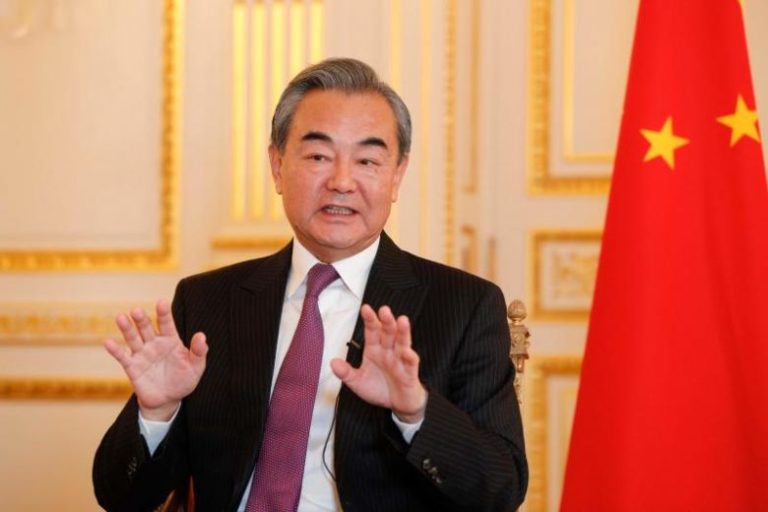
IN a retaliatory move, China has announced plans to impose tariffs on Canadian products, including rapeseed oil and pork, following an investigation into the tariffs Canada placed on Chinese goods last year.
Beijing’s commerce ministry announced on Saturday, March 8, that it would impose a 100 per cent tariff on Canada’s imported rapeseed oil, oil cakes, and peas.
The ministry said the measures would take effect on March 20, with aquatic products and pork facing a 25 per cent tariff.
Canada announced 100 per cent tariffs on Chinese electric vehicle imports last August, aligning with U.S. measures aimed at curbing the influx of state-subsidised Chinese cars into North America.
Canada also imposed a surtax on imports of steel and aluminum products from China. A surtax is an additional tax on something already taxed. The surtax can be calculated as a percentage of a certain amount or can be a flat dollar charge.
In its latest announcement, Beijing’s commerce ministry stated that an investigation into these measures revealed that Canadian policies had “disrupted the normal trade order and harmed the legitimate rights and interests of Chinese enterprises.”
“China urges Canada to immediately correct its bad practices, lift its restrictive measures, and eliminate its negative effects,” a ministry spokesperson said.
Canada is one of the world’s leading producers of canola, an oilseed crop used for cooking oil, animal feed, and biodiesel fuel, with China historically being one of its largest buyers.
However, the bilateral relations deteriorated in 2018 after Canada detained a senior executive of Chinese tech giant Huawei, Meng Wanzhou, leading Beijing to arrest two Canadian nationals in retaliation.
According to reports that in December 2024, China exported $4.05 billion and imported $6.11 billion worth of goods from Canada, resulting in a negative trade balance of $2.06 billion.
The ICIR reports that this development comes just four days after President Donald Trump imposed new tariffs, further escalating trade tensions between Canada, China, and the United States.
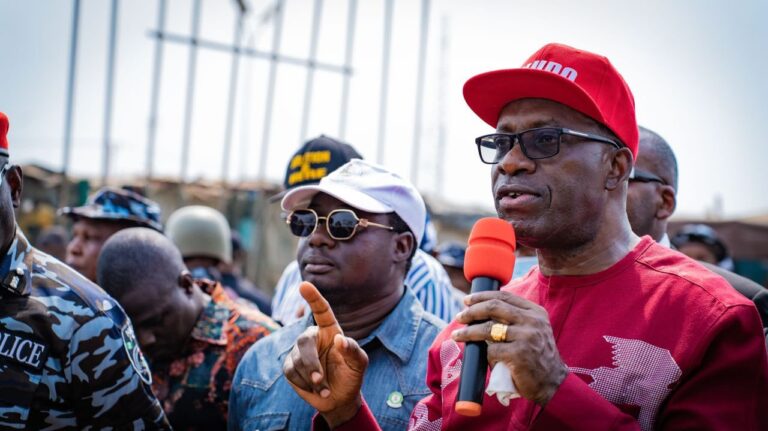
ANAMBRA State Governor Chukwuma Soludo has issued a strong warning to roadside preachers using loudspeakers in public spaces, especially markets.
The governor said using loudspeakers for preaching in public places contributed to noise pollution and disruption of residents’ peace.
A viral video circulating on social media on Saturday, seen by The ICIR, captured the governor warning an unidentified roadside preacher in a market to stop disturbing traders with his preaching.
Soludo advised the preacher to either preach in a church or rent an open field, adding that those interested in listening would seek him out there.
“If you want to preach the word of God, go to your church. Those who want to listen will come to you; you cannot force people in the market to hear your message. You are causing noise pollution here. You cannot come to a marketplace and disturb everyone,” the governor said.
The governor stressed that taking over a public space and turning it into a church is a violation of the law. He warned that anyone caught violating the noise pollution order would face a ₦500,000 fine.
“You will pay ₦500,000 because we cannot allow this. We have banned loudspeakers in markets due to noise pollution, which affects people’s eardrums. You cannot force people to listen to your preaching. We are cracking down on fake pastors and prophets in Anambra,” he added.
The ICIRreported on February 23, that Governor Soludo expressed shock over the infiltration of illicit drugs into Nigerian markets following the National Agency for Food and Drug Administration and Control (NAFDAC)’s closure of over 11,000 drug shops in Onitsha (Anambra State), Aba (Abia State), and Idumota (Lagos State), along with the seizure of 77 truckloads of counterfeit drugs and the arrest of 40 suspects.
Soludo said this when he visited the Ọgbọ Ogwụ Market in the Onitsha area of the state on Saturday, February 21.
The ICIR also confirmed that the NAFDAC has officially announced the reopening of the Ogbo Ogwu Market in Onitsha, Anambra State, after a one-month closure.
The South-East Zonal Director of NAFDAC, Martins Iluyomade, confirmed the market reopening after a meeting with state government officials, led by the Commissioner for Health, Afam Ben Obidike, and market leaders at the market premises.
The electoral body, made this known in a statement on Saturday, March 8, to mark International Women’s Day, saying the future of democracy is deeply tied to the empowerment of women and their full participation in the electoral process.
The statement was jointly signed by the Director of Voter Education and Publicity, Victoria Eta-Messi.
The commission said it is dedicated to fostering an inclusive environment where women can actively contribute to shaping the country’s electoral landscape.
To achieve this, INEC said it has prioritised gender equality in all aspects of its work, ensuring women have equal opportunities to participate in the electoral process.
“As the theme for the 2025 International Women’s Day is ‘Accelerate Action,’ INEC recognises that gender equality is not only a matter of fairness but also a critical pillar in strengthening democracy.
“Leadership that reflects gender balance, where women equally participate in decision-making, leads to more inclusive and responsive governance. INEC continues to make efforts to ensure that women hold leadership positions within the Commission,” the statement said.
INEC assured that it was committed to breaking down the barriers women face, including societal expectations, a lack of support systems, and gender-based violence.
It urged Nigerians to promote gender equality in all areas of life, not just in elections
On inclusivity, the electoral body said its current leadership composition shows some progress in achieving gender balance, but there’s still more work to be done.
According to INEC, currently, two out of 12 National Commissioners are women, making up 16.7 per cent of the total leadership.
The commission said the position of secretary, overseeing its operations, is currently being held by a woman, and while four out of 32 Resident Electoral Commissioners (RECs) are also women, accounting for 12.5 per cent of this critical leadership group.
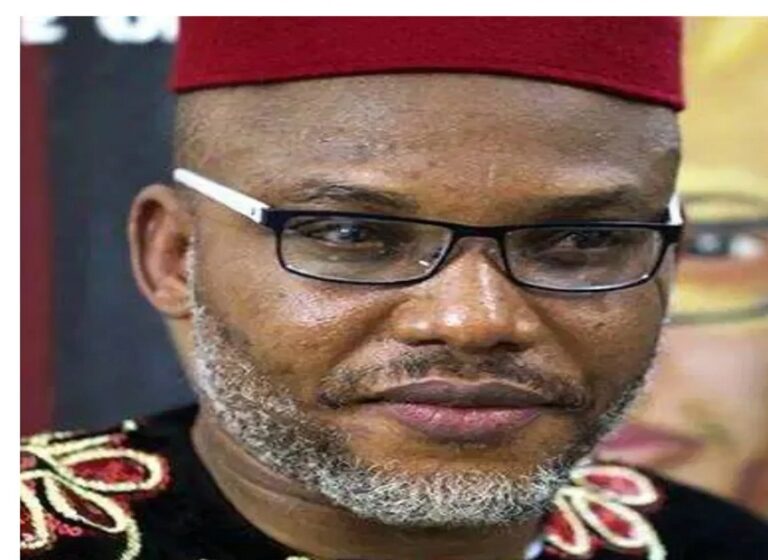
THE Chief Judge of the Federal High Court (FHC), John Tsoho, has finally reassigned the case of the leader of the Indigenous People of Biafra (IPOB), Nnamdi Kanu, to another judge.
This was disclosed in a statement on Saturday, March 8, by Kanu’s lawyer, Aloy Ejimakor, on behalf of his team.
According to the statement, Kanu is ready to face trial because he’s convinced of his innocence.
Ejimakor stated that on Friday, March 7, before the legal team conducted their routine visitation to Kanu, they received two separate official letters regarding his case. He described the letters as “momentous and somewhat pyrrhic.”
According to him, the first letter was from the Chief Justice of Nigeria (CJN), Kudirat Kekere – Ekun who responded to the team’s request for her administrative intervention in reassigning Kanu’s case after the previous judge recused.
The second letter was from the Chief Judge of the FHC, informing the team that Kanu’s case had been reassigned to another judge.
He also disclosed Kanu’s instruction to his legal team to appreciate the CJN for her prompt response and to the public for their support in demanding a lawful reassignment of his case.
“It was given these untoward developments that we were propelled to resort to taking extraordinary measures to ensure that his case is properly reassigned and conducted by the law,” Ejimakor stated.
He added that since the first steps have been taken by the authorities to do the ‘lawful’ thing, Kanu and his legal team shall take stock and prepare his defense.
The ICIR reported that at the last hearing of the case, a judge of the FHC in Abuja, Binta Nyako, adjourned the trial of Kanu indefinitely.
Nyako adjourned the suit on Monday, February 10, following Kanu’s insistence that the judge could not preside over his case since she had recused herself.
Kanu challenged Nyako to take a definitive stance regarding his detention, specifically requesting that she either restores his bail conditions or directs his release from custody.
Kanu stressed that Nyako lacked the jurisdiction to review or revisit his case, owing to her prior recusal from the case.
Nyako had initially recused herself from Kanu’s trial on September 24, 2024, in response to a request from the defendant, who had expressed a lack of confidence in her ability to preside over the case impartially.
Following her recusal, the case file was returned to the Chief Judge of the FHC, Tsoho, for reassignment.
However, in a subsequent development, the case file was returned to Nyako, who has since been asked to continue the trial.
The ICIR reported that Nyako stepped down as the judge handling Kanu’s trial when Kanu declared he no longer trusted the judge and challenged her to step down.
Kanu is facing a seven-count charge concerning terrorism, brought against him by the Nigerian government.
The charges against him include treason, inciting public violence through radio broadcasts, and defamation of Nigerian authorities.
Kanu’s troubles began in 2015 when he was arrested by Nigeria’s secret police and the State Security Service (SSS), in Lagos State.
He was granted bail but later fled Nigeria after his home was raided by the Nigerian military in September 2017.
In June 2021, Kanu was rearrested in Kenya and extradited to Nigeria to face trial.
His trial, which began in October 2021, has been marked by protests and sit-at-home in the South-East by his supporters.
THE Minister of Interior, Olubunmi Tunji-Ojo, has directed the Nigerian Immigration Service (NIS) to ensure foreigners pursuing visas into Nigeria get them within 24 to 48 hours.
The minister stated this on Friday, March 8, while flagging off an intensive training for 162 officers of the NISon electronic visa applications for foreigners coming to Nigeria.
Tunji-Ojo described the difficulties people face when trying to obtain a Nigerian visa as unacceptable, adding that it negated the federal government’s vision of ease of doing business.
The minister emphasised the importance of opening Nigeria’s borders to legitimate travellers, entrepreneurs, and tourists, focused on promoting a more inclusive and business-friendly environment.
He explained to the officers that the ultimate goal is to implement a seamless and efficient electronic visa application process, where applicants should be able to submit their applications online and receive approval within a maximum timeframe of 24 to 48 hours.
He further reiterated his commitment to innovative leadership and driving meaningful change within the ministry, with continuous capacity development of officials.
“An efficient and vibrant NIS is possible. I know the time for the actualisation is now. It is either we get it now or we forget about it.
“For the e-visa, I want you to do a good job because, honestly speaking, a population of 230 million people is the biggest economy in Africa. The frustration people go through to get a visa into Nigeria is unacceptable. Let us call a spade a spade. It is unacceptable,” he stated.
He charged the officers of the NIS to be dedicated, honest, and represent the country well and emphasised that visiting Nigeria should be a straightforward process, as long as visitors meet the necessary requirements.
Noting that the country’s hospitality potential is huge, the minister expressed the commitment of NIS to welcome people to Nigeria, with the focus of building an economy that encourages tourism and investment drive.
He, however, warned the officers not to compromise the nation’s national security and not approve terrorists and other criminals into Nigeria.
Speaking at the event, the NIS Comptroller General, Kemi Nana-Nandap, highlighted the importance of the training, noting that the selected officers underwent rigorous vetting before commencing the intensive program.
She explained that the new system marks a significant improvement, featuring thorough vetting and secure documentation storage within the NIS.
This is not the first time Nigeria will be emphasising 48-hour e-visas for foreigners.
ICIR reported on Tuesday, February 4, 2020, that the Federal Government unveiled a new visa policy as part of its Economic Recovery and Growth Plan (ERGP) to mainly give the economy an uplift and boost foreign direct investment in Nigeria.
It was expected that the visa policy would also boost tourism, promote foreign relations with other nations and make visas into the country easier through the 48-hour visa issuance policy.
In 2003, Apara, a town in Atakunmosa West Local Government of Osun State State, was plunged into darkness after the transformer serving the community was carted away. Two decades after, the affected the community has been badly impacted, forcing businesses to shut down, families to relocate, and those left behind to navigate a daily struggle for survival.
Seventeen-year-old Monday Isaya has lived his entire life in darkness. Born and raised in Apara, a town in Osun State, Monday says he has never had the opportunity to say “Up NEPA”, the popular phrase Nigerians use to express excitement when electricity is restored after a prolonged blackout.
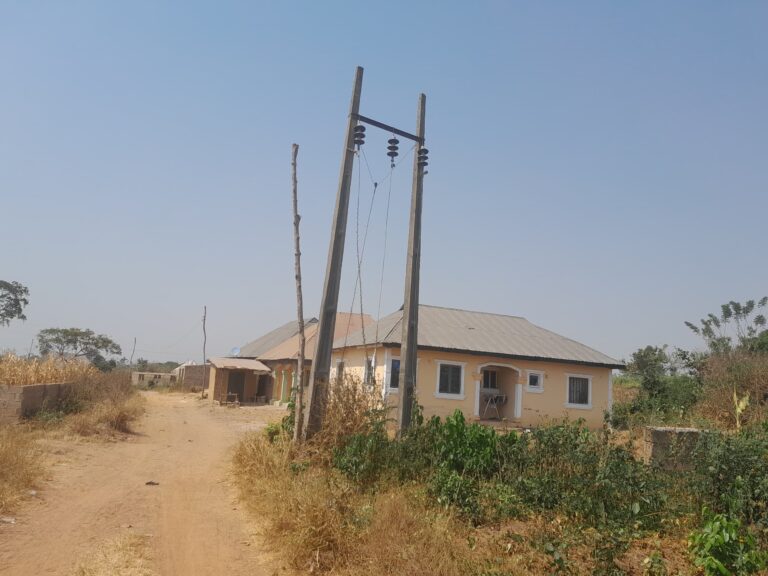
The community once had a transformer, but it was stolen 22 years ago. Since then, criminals have taken advantage of the situation, stripping the area of critical infrastructure.
Electric pole erected by the community in anticipation of a transformer
“After the transformer was stolen, people started removing cables, pipes, pumping machines, and even building materials. They came before the property owners notice and took everything,” Monday explained.
Monday told The ICIR that the lack of electricity has driven people away, leaving the area sparsely populated.
“Skilled workers like welders and aluminium fabricators, who once thrived here, have abandoned their businesses. They couldn’t continue without electricity, so they left,” he said.
Monday’s plight mirrors the situation of other residents in the Apara community who have been living in darkness for two decades. They are one of the 86 million Nigerians who were estimated to be without access to electricity in Nigeria, according to a joint report by multiple international agencies.
In October 2023, during a retreat, President Bola Tinubu said about 90 million people in Nigeria do not have access to electricity.
He said, “The national grid only serves about 15 per cent of the country’s demand. This has left households and factories to rely on expensive self-generation, which supplies a staggering 40 per cent of the country’s demand.
In addition, the Nigerian Electricity Report of Q2 OF 2024 indicated that only 12.99 million customers in Nigeria have access to electricity. A customer here can refer to a household which has an average of 5 individuals.
The quality of life of a large number of Nigerians is greatly affected by the lack of access to electricity. Imagine waking up to a stifling heatwave with no fan to cool you, struggling to preserve food without a refrigerator, or stepping out in wrinkled clothes because you couldn’t iron them. The people of the Apara community don’t have to imagine because life in perpetual darkness is their daily reality.
The Genesis
Twenty two years ago, a transformer which once powered the Apara consisting of Ifowosowopo and Temitope communities, was stolen, plunging the community into an electricity crisis. Since then, residents have struggled with basic needs that depend on electricity, forcing many to relocate to places where power is more stable.
Efforts to restore electricity have been met with frustration. Several letters have been sent to government officials, commissioners, and elected representatives, pleading for intervention. Despite promises, no concrete action has been taken.
Ifowosopo Community in Apara. Photo: Nurudeen Akewushola/TheICIR
The community has tried to live with the situation, purchasing wooden poles and electric cables to show its commitment. However, the major obstacle remains—the transformer.
The lack of electricity has crippled businesses and daily life. Skilled workers have abandoned the community in search of better opportunities, leaving behind a struggling local economy. Welders, frozen food vendors, and other traders who rely on electricity have either shut down or relocated.
Simple conveniences, like buying a cold drink, require a long journey to nearby towns. Women hoping to start small businesses are left with limited options, as many trades require electricity to function effectively.
Remains of the looted transformer. Photo: Nurudeen Akewushola/The ICIR.
In response to these challenges, some residents have turned to alternative energy sources like solar panels and mini lamps. However, these solutions are not enough to meet the needs of the entire community. Rising fuel prices have also made generators unsustainable, leaving many households to ration their power usage. With limited access to electricity, even basic tasks like charging mobile phones or preserving food have become difficult.
Security implication
Beyond economic struggles, security has become a growing concern. Darkness has made the community vulnerable to theft and criminal activities. In the absence of streetlights, thieves have taken advantage of the situation, forcing residents to organise vigilante groups for protection. The community has seen cases of stolen property, and while some culprits have been identified, the lack of funds to hire professional security has left them exposed to further threats.
Living in darkness
Life in Apara village, has been anything but easy for 37-year-old woman known as Mutiatu, a mother of four. Moving to the area five years ago, she never imagined how much the absence of electricity would affect every aspect of her family’s life.
Mutiatu, moving to Apara five years ago never imagined how much the absence of electricity would affect every aspect of her family’s life. Photo: Nurudeen Akewushola/ The ICIR.
“When I had my last baby, the situation was terrible,” she began adding, “There were so many mosquitoes that even using a net didn’t help. And the heat was too much for the baby.”
The conditions soon took a toll on her child’s health, leading to frequent trips to the hospital.
“I spend extra money almost every month for anti-malaria drugs,” she said, frustration evident in her voice. “It’s a lot for us because my husband can’t afford solar power. We have to rely on charged accessories from the city to get by.”
Agboola Balqees, had been in Apara for just a year. After moving to the community, she began to sell soft drinks beside her makeshift kiosk. Photo: Nurudeen Akewushola/ The ICIR.
Their original plan of starting a business from home had also been derailed by the lack of electricity. “We had hoped I could sell things at home to support the family, but without light, it’s impossible. I feel completely stranded,” she said.
“There was a time we had light here,” recalled Grace John, one of the residents of the community. “But one morning, we woke up, and the transformer was gone. Even the connection cables were carted.” The theft marked the beginning of years of darkness that the community has struggled to overcome.
Grace said they reported to politicians who visited the area. “We told them we needed electricity and boreholes. They brought some machines, but they’re just sitting there. We don’t even know who brought them or what will happen next,” she explains.
Another resident, Balqees Agboola , said she had been in Apara for just a year. After moving to the community, she began to sell soft drinks beside her makeshift kiosk.
“In Osogbo where I was initially, it was easier to buy and store ice blocks for my drinks. But here, it’s like starting all over again. There’s no electricity, so I have to depend on buying ice blocks from the next town, which adds to my costs and reduces my profit.”
Agboola noted that apart from the lack of electricity, insecurity has been a persistent challenge. “When I first came here, I heard stories about thieves breaking into shops and homes. At first, I didn’t believe it, but one night, someone tried to break into my kiosk. Thankfully, they didn’t succeed because we had just started a night patrol in the area. Still, I’ve lost some things to theft—money, drinks, and even the little lamp I use at night to light up the shop.”
“It’s not just me. A lot of us are struggling to make ends meet here. There are welders and tailors in this area who can’t work because there’s no power. Some have left the community entirely to look for better opportunities. It’s as if the government doesn’t even know we exist. We feel abandoned.”
Blackout fuels safety concerns
Mistura Okunola, 57, has seen more than her share of hardship in the Ifowosowopo community, Apara village, where she has lived for the past eight years. A mother of six and a trader, she has lived for over two decades without electricity.
Mistura Okunola, 57, has seen more than her share of hardship in the Ifowosowopo community, Apara village, where she has lived for the past eight years. Photo: Nurudeen Akewushola/ The ICIR
“What I heard is that the blackout started after the transformer was stolen,” she explained. “It happened during a festive season, about 22 years ago, when people in the village had travelled for the holidays. By the time they returned, the transformer was gone.”
Since then, darkness has defined life in Apara, creating discomfort and security risks. Mistura recounted a frightening experience of being unable to return home one night. “My burglaries were broken into, and thieves used the opportunity to steal my cooking gas and other kitchen materials,” she said, her voice heavy with frustration.
The community has since relied on local security personnel, but the lack of electricity has made their work more difficult. “The darkness has worsened insecurity here,” Mistura added. “Even transportation is a problem. Bike and cab drivers refuse to come to Apara at night because of the risks.”
For Lateefat Soliu, a 38-year-old mother of six, the five years she has spent living in Apara have been marked by struggles tied to the village’s persistent blackout.
“One evening, I was coming back from town on a bike,” she recounted. “The bike man dropped me inside the village, but on his way out, armed robbers stopped him, took his bike, and even injured him. Since that day, we don’t stay outside later than 6 p.m. If you don’t have a car, you might not make it home.”
Common lamp used by residents of the communities in Apara. Nurudeen Akewushola/The ICIR.
Like many others in the community, Lateefat relies on neighbours who use mini solar power to charge their phones and lamps. “I don’t have solar because I can’t afford it,” she said, noting how much the lack of electricity has disrupted her trade.
“I used to sell from home,” she explained. “But now, because there’s no light, I have to go to town to sell. Sometimes I can’t go, and that leaves me hungry.”
Thirty five -year-old Kafilat Akintayo, who has been living in Apara for 12 years recalled how her husband’s block moulding machine was stolen in the middle of the night.
“What made it easy for the criminals was the darkness,” she believes. “Since then, our finances haven’t been stable.”
The absence of electricity has also caused serious difficulties in times of emergency. “When I was about to give birth, it was in the middle of the night. The hospital I used is in Owode Osogbo, and we had to walk there,” she said.
“My husband tried to call a bike man, but he refused to come because of the darkness in our community. It was one of our neighbours that later helped us out.”
Community leaders seek intervention
The chairman of Temitope community in Apara village, Adetunji Adebayo Ojo, shared the community’s struggles with a prolonged electricity outage that has lasted for over 20 years.
“We can’t continue living without electricity,” Ojo lamented. “Since we arrived here, there has been no electricity. Many of those who were here before, especially the elderly, have relocated to places where there is light.”
Chairman of Temitope community in Apara village, Adetunji Adebayo Ojo
Ojo explained that the lack of a transformer was the main reason for the outage, and despite multiple efforts, the community had been unable to secure a replacement.
“The transformer is the major cause,” he said. “We have struggled to buy one, but we aren’t capable. We have written letters to the government, but there has been no response.”
“Many skilled workers have left this community and this village. If we want to buy cold drinks, if we don’t reach Ilesha garage, we won’t be able to get it. We even want to empower our wives but they need electricity for their businesses. Social amenities aren’t functioning, and those selling frozen foods, have no electricity to help them thrive in their businesses.”
He added that several government officials, including Ganiy Ayobami Ola-Oluwa, the Commissioner for Rural Development; Sanmi Àrè Oyè, the local representative in the House of Assembly; and Governor Ademola Adeleke, had been contacted, but no action had been taken.
On his part, Iwa Lesin, the Vice Chairman of Temitope community, narrated the struggles and challenges faced by his subjects due to the lack of electricity.
When he arrived in the area roughly five years ago, the community had already been battling the absence of electricity for many years. Though a transformer once existed in a part of the village known as Oju Aba, the village has since expanded, and the transformer has long been defuncted.
Vice chairman of Temitope community
To address the problem, the community took steps, including contacting government officials and media outlets such as Rays FM. However, despite their efforts, they received only promises.
Residents began contributing money—₦20 or ₦40 at a time—to erect wooden poles, hoping to demonstrate their commitment to solving the issue.
“The government kept promising us that the transformer was coming, but till now, we’ve received nothing. We just keep praying for God’s guidance,” Iwa Lesin lamented.
He narrated how people struggled to operate businesses like welding or selling cold drinks, and even basic needs like charging devices have become burdensome.
In response to the rise in crime, the Iwa Lesin said the community had organised night patrols to guard their homes and businesses, noting that financial constraints and mistrust have prevented them from hiring professional hunters for additional security.
“Our efforts have brought some peace, but we’re managing. To pay for hunters is another burden we can’t afford. May God continue to protect us,” Iwa Lesin said.
In Nigeria, Electricity Distribution Companies (DisCos) are officially responsible for supplying, installing, and maintaining transformers as part of their infrastructure to distribute electricity to consumers. Nigeria has 11 DisCos, each covering different regions. Apara community being a community in Osun is under the Ibadan Electricity Distribution Company.
Speaking with The ICIR, the Spokesperson of IBEDC in Osun State, Kiki Owoeye promised that the company will look into the matter.
“At IBEDC, a key part of our business goal is to ensure excellent service delivery and as such we focus on the unserved and underserved communities within our franchise. Therefore, for communities like Apara, we are looking at ways to ensure they are serviced,” she said.
When contacted, the Osun State Commissioner of Energy, Festus Adeyemo, told The ICIR that the ministry was not aware of the community’s situation and promised to investigate the matter.
Lawmaker donates new transformer
By the press time, the community received cheering news as its chairman, Adetunji Adebayo Ojo informed The ICIR that a new transformer had been delivered to the community.
He said the transformer was facilitated by Sanmi Areoye, the member representing Atakumosa West at the Osun State House of Assembly.
Ojo told The ICIR that he is one of the politicians that the community had written to for intervention. However, the new transformer was yet to be installed while the community remains in darkness as of the time of filing this report.
The Council for the Advancement of Science Writing (CASW) has announced the opening of applications for the 2025 Sharon Begley Science Reporting Award.
The award honours mid-career science journalists and celebrates the legacy of Sharon Begley, a pioneering science writer known for her insightful and rigorous reporting. It includes a grant of at least $20,000 to support an in-depth reporting project.
Journalists with eight to ten years of experience in science reporting are eligible to apply.
To apply for the 2025 Sharon Begley Science Reporting Award, visit the Council for the Advancement of Science Writing’s (CASW) application portal here