THE Dangote Petroleum Refinery said it has reduced its ex-depot (gantry) price of petrol to N825 per litre.
The ex-depot price is at which the marketers buy the product at the refinery depots before putting their mark-up price for sales at filling station retail outlets.
The management announced this in a statement on Wednesday, February 26.
It said the price drop takes effect from Thursday, February 27.
The reduction came barely one month after the company slashed its ex-depot petrol price to N890.
Precisely on February 2, the Dangote refinery dropped its ex-depot price of petrol from N950 to N890, citing the decline in the price of crude oil at the international market, The ICIRreported.
“This strategic price adjustment is designed to provide essential relief to Nigerians in anticipation of the upcoming Ramadan season, while also supporting President Bola Ahmed Tinubu’s economic recovery policy by alleviating the financial burden on the Nigerian populace.
“It is important to note that Dangote Petroleum Refinery has consistently lowered the prices of petrol and other refined petroleum products to the benefit of Nigerians. This marks the second price reduction of PMS in February 2025, following a previous decrease of N60.00 earlier in the month,” the management said.
The Dangote refinery had extended a similar gesture during the last Christmas season when it reduced the gantry price of its petrol by N70.50, from N970 to N899.50 per litre.
It was part of its commitment to easing the cost of living and providing relief to Nigerians during the yuletide season, it stated.
“This reduction has positively impacted the overall cost of living, benefiting various sectors of the economy, and has also ensured that Nigerians did not experience the perennial fuel scarcity and price hikes typically associated with the yuletide season.
“Nigerians will be able to purchase the high-quality Dangote petrol at the following prices in all our partners’ retail outlets,” Dangote refinery said.
With the new adjustment in its ex-depot price of petrol, the refinery said the MRS Holdings filling stations would now sell for N860 per litre in Lagos, N870 in the South-West, N880 per litre in the North, and N890 per litre in the South-South and South-East respectively.
“The same product will also be available at the following prices in AP (Ardova Petroleum) and Heyden stations: N865 per litre in Lagos, N875 per litre in the South-West, N885 per litre in the North, and N895 per litre in the South-South and South-East,” it added.
The refinery said it is assuring the public of a consistent supply of petroleum products, with sufficient reserves to meet domestic demand, as well as a surplus for export to enhance the country’s foreign exchange earnings.
It called on oil marketers to support its initiative, ensuring that Nigerians remain the primary beneficiaries of the effort.
“This collective action will contribute to the broader economic recovery plan led by His Excellency, President Bola Ahmed Tinubu, who is committed to making Nigeria self-sufficient in refined petroleum products and establishing the country as a leading oil export hub,” the management of Dangote added.
With the consistent drop in the price and export of its refined petroleum products, the Dangote Petrochemical refinery company is gradually showing its market dominance in the Nigerian petroleum industries while the state-owned oil firm, Nigerian National Petroleum Company Limited (NNPCL), is behind.
Lately, the Dangote refinery sold two cargoes of aviation fuel to Saudi Aramco, the national oil company of Saudi Arabia.
In its monthly report for January 2025, the Organisation of Petroleum Exporting Countries (OPEC) noted that the emergence of Dangote refinery has reduced the importation of petroleum products from Europe to Nigeria.
“The ongoing operational ramp-up efforts at Nigeria’s new Dangote refinery and its gasoline (petrol) exports to the international market will likely weigh further on the European gasoline market.
“Continued gasoline production in Nigeria, a country that has relied heavily on imports to meet its domestic fuel needs in the past, will most likely continue to free up gasoline volumes in international markets which will call for new destinations and flow adjustments for the extra volumes going forward,” OPEC stated.
The 650,000-barrel-per-day refinery built by billionaire businessman Aliko Dangote is eying eyes full capacity operations by next month, but it is currently operating at 85 per cent capacity.
When it finally starts operating at full capacity, the refinery is expected to enhance its supply links to both local and international supply chains while also influencing market pricing and control mechanisms across the country.
In recent times, there have been pockets of petrol queues in retail outlets loading petrol products from the Dangote refiner,y, which is not unconnected to the price mechanism and availability of the product as most NNPCL filling stations are most times not open to motorists to buy products.
The ICIR observed earlier this week that motorists in some parts of Lagos experienced petrol queues as the Petroleum Tanker Drivers (PTD) branch of the National Union of Petroleum and Natural Gas Workers (NUPENG) embarked on strike action.
The strike began on Sunday after tanker drivers accused police officers of extortion and harassment, citing frequent cases of intimidation and illegal levies imposed on them while transporting petrol.
According to NUPENG, despite repeated appeals to law enforcement agencies and the federal government, the situation has persisted, forcing them to halt operations.
In a related development, the Independent Petroleum Marketers Association (IPMAN), Southwest zone, had on Monday, February 24 threatened to shut down its operations across the Southwest over the arrest of 30 tankers by the Lagos state government.
The 30 tankers bearing 45,000 litres of petrol product were reportedly towed out of the Dangote Refinery by the Lagos State Traffic Management Authority (LASMA).
These incidents have led to queues being witnessed in some suburbs in Lagos state amid fewer operations of NNPCL retail outlets.
THE management of Joseph Sarwuaan Tarka University of Agriculture, Makurdi, formerly known as the Federal University of Agriculture, Makurdi, has ordered the immediate closure of the institution following the abduction of three students by unidentified armed men.
The management granted a one-week mid-semester break and directed that all students vacate their hostels by 4:00 p.m. on Wednesday, February 26.
In an internal memo titled “Security Situation on Campus,” issued on Wednesday and signed by Registrar John David, the university confirmed that three students were abducted by the kidnappers.
It noted that the abduction occurred at around 8:00 pm on Tuesday, February 25, between Zamfara Hostel and Ring Road in the North Core area of the campus.
The memo reads: “Sequel to the unfortunate incident that occurred on campus (Tuesday, February 25th, 2025) at about 8:00 pm, where unknown armed men abducted three students between Zamfara Hostel and Ring Road in North Core, the university management, after a series of consultative meetings with security agencies and stakeholders, resolved the following: “The university management condemns the incident in its entirety. The government and the security agencies have been duly informed about the unfortunate incident.
“All staff, students, and the general public are enjoined to remain calm as security agencies are working tirelessly to secure the release of the abducted students.”
It further announced that the inaugural lecture scheduled for February 26, had been postponed indefinitely.
“The inaugural lecture scheduled for today, February 26th, 2025, is postponed indefinitely. In solidarity with the students and parents of the abducted students, the university management has granted a one-week mid-semester break to all students to adequately address the security challenges on campus.
“Consequently, all students are to vacate their hostels by 4:00 pm today, Wednesday, February 26th, 2025,” the memo added.
The Police Public Relations Officer in the state, Sewuese Anene, confirmed in a telephone conversation with The ICIR that a team of investigators had been dispatched to the scene.
The ICIR reported that the incident ignited protests on campus, with students rallying and brandishing tree branches to demand immediate action from university authorities.
The latest incident came amid a chain of insecurity in Benue State, which has seen a spate of kidnappings in recent years.
In a similar incident last August 2024, over 20 medical and dental students from the University of Maiduguri and the University of Jos were abducted while en route to an annual conference in Enugu State.
FORMER Acting Accountant-General of the Federation (AGF), Anamekwe Nwabuoku, facing trial for alleged N1.96 billion fraud, has pleaded with the Federal High Court (FHC), Abuja, to grant him time to negotiate with the Economic and Financial Crimes Commission (EFCC).
Nwabuoku, who is facing a nine-count charge, made the plea on Wednesday, February 26, after the EFCC lawyer, Ekele Iheanacho, a senior advocate, told the court that it brought five more witnesses to testify against him.
Through his lawyer, Isidore Udenko, Nwabuoku informed the court that he had hired a senior advocate to facilitate negotiation with the EFCC.
According to him, this development comes after the defendant’s initial attempt to reach an agreement with the EFCC failed, leading to the trial.
The EFCC’s lawyer, Iheanacho, expressed no opposition to the defendant’s request.
Consequently, the trial judge postponed the case, scheduling a future date to either receive a settlement report or continue the hearing.
Nwabuoku was appointed in May 2022 to temporarily oversee the Office of the Accountant-General of the Federation after his predecessor, Ahmed Idris, was suspended and tried for allegedly laundering N80.2 billion in public funds.
However, shortly after his resumption, the EFCC alleged that he abused his office by stealing public funds.
EFCC investigations led to his removal from office in July 2022, just weeks after he took over.
Nwabuoku was subsequently charged with fraud alongside Felix Nweke, a director of the Federal Civil Service. However, Nweke later agreed to testify against Nwabuoku and was dropped as a co-defendant.
The EFCC alleged that Nwabuoku violated the Money Laundering Prohibition Act by using four companies to siphon off N1.96 billion in public funds.
Nweke testified that the stolen funds were channelled into bank accounts controlled by one Gideon Joseph, the sole signatory.
This is not the first time accused persons have pleaded with the EFCC to utilise plea bargaining or agreement in resolving fraud cases against them.
In several high-profile cases in the country, including those of former Inspector General of Police (IGP) Tafa Balogun, former Bayelsa State governor Diepreye Alamieyesagha, and former Deputy Governor of Osun State, Iyiola Omisore, the plea bargain strategy was employed.
A plea bargain is a negotiated agreement between the prosecutor and the accused, where the accused pleads guilty to a charge in exchange for a reduced sentence.
The EFCC employs this approach to recover looted resources from criminals. However, critics argue that plea bargaining has led to lighter punishments for criminals and may inadvertently encourage corrupt practices.
For instance, the former Inspector-General of Police, Balogun, was initially charged with 70 counts of corruption, but the charges were reduced to 8 counts of money laundering after reaching an agreement with the court and EFCC. He was later convicted and jailedfor only six months.
Others who received lesser punishment after a plea bargain include a former Managing Director (MD) of Oceanic Bank, Cecilia Ibru.
Ibru faced a 25-count chargebut secured a plea bargain. The court convicted her on three counts and sentenced her to six months imprisonment. She also forfeited 94 properties and shares valued at N191.4 billion.
Also involved in the plea bargain is a former deputy governor of Osun State, Iyiola Omisore, who was accused of laundering money allegedly misappropriated by former National Security Adviser (NSA) Sambo Dasuki. Omisore later entered a plea bargain with the EFCC to refund over N1.3 billion.
However, despite its benefits, the EFCC’s use of plea bargaining has raised concerns about the leniency of punishments and the potential for corrupt practices to persist.
THE Dart Center for Journalism and Trauma is currently accepting applications for the 2025 Ochberg Fellowship.
This is a weeklong seminar designed for senior and mid-career journalists aiming to deepen their understanding of emotional trauma and upscaling their reporting on conflict, tragedy, and violence.
The Ochberg Fellowships are open to exceptional journalists from any part of the world. with at least five years of professional journalism experience working across all media.
The fellowship would take place from July 29 to August 3, 2025, at Columbia University in New York City.
The application deadline is March 3, 2025, at 5:00 pm ET.
To apply, please visit the official application portal here.
For detailed guidelines and eligibility criteria, refer to the Ochberg Fellowship Guidelines. If you have any questions, you can contact the Dart Center at programs@dartcenter.org.
At least two students of Joseph Saawuaan Tarka Federal University, Makurdi, formerly the Federal University of Agriculture, were abducted from campus on Tuesday, February 25, by yet-to-be-identified gunmen.
The Benue State Command Police Public Relations Officer (PPRO) Sewuese Anene, confirmed the incident in a telephone conversation with The ICIR, noting that a team of investigators had been mobilised to the scene.
She also noted that a detailed update about the abduction would be provided in due course.
”Yesterday, we received information that two students were kidnapped but I don’t have the details yet. We have sent a team of investigators there to investigate,” she said.
According to reports, the abduction occurred around 8:30 pm on Tuesday, as the students were moving from their hostels to the area designated for reading in the North Core section of the campus.
The incident has sparked protests on campus, with fellow students rallying and marching around the campus with tree branches to demand immediate action from the university authorities.
Meanwhile, the university has yet to officially react to the incident and efforts to seek updates from the university Head of Information, Rosemary Waku, proved abortive as of the time of filing this report.
The ICIR reports that Benue has been one of the epicentres of conflict and insecurity in Nigeria in recent years. While armed herdsmen are on the rampage in one part of the state, local bandits are wreaking havoc in the other.
This latest kidnapping adds to a chain of kidnappings in the state. In a similar incident in August 2024, over 20 medical and dental students from the University of Maiduguri and the University of Jos were abducted in the state while en route to Enugu for an annual conference.
The students were subsequently released a few days later. Confirming the release to The ICIR in a chat on Saturday, August 24, the spokesperson for the Benue State Police Command said the students were rescued on Thursday, August 23.
THE Independent National Electoral Commission (INEC) has released the timetable for the Federal Capital Territory (FCT) Area Council elections, scheduled to take place on February 21, 2026.
In a statement on Wednesday, the commission said that voting would commence at 8:30 a.m. across all polling units within the FCT, emphasising that the elections would cover the six area councils in the nation’s capital.
While urging voters to ensure they possess their PVCs to participate in the exercise, the commission confirmed that the Bimodal Voter Accreditation System (BIVAS) would be employed for the elections.
“Only eligible voters with valid Permanent Voter Cards (PVCs) and whose names are listed on the voter register will be permitted to vote,” said the commission.
The ICIRreported in 2024 that INEC said it would not conduct chairmanship elections for the six area councils in the FCT in 2025 due to the provisions of the Electoral Act 2022 (as amended).
According to the commission, instead of the three years specified by the Electoral Act of 2010, the Electoral Act 2022 (as amended) provides a four-year term for chairmen and other elected council members.
Yakubu said the current elected council leaders’ tenure would end in June 2026.
NIGERIANS have reacted to the nomination of 22-year-old Zuriel Oduwole for the 2025 Nobel Peace Prize.
While some congratulated her, others expressed doubts about her ability to clinch the prestigious award.
This came after the chairman of the Nigerians in Diaspora Commission (NIDCOM), Abike Dabiri-Erewa, congratulated Oduwole on her nomination for the prize.
Dabiri-Erewa, in her congratulatory message, said the nomination was not a surprise to her due to Oduwole’s tireless work in advocating for girls’ education over the last 12 years across Africa and the Caribbean.
She also commended her work in the area of mediation between nations in South America and the Middle East.
Dabiri-Erewa expressed optimism that Zuriel would win the topmost prize going by her determination, zeal and enthusiasm for success.
She appealed to youths to imitate the impactful spirit of the nominee and ignore any acts capable of tarnishing the country’s image.
Meanwhile, Nigerians reacted to the nomination on X with divergent views.
An X user withthename@Wale_Aduroja congratulated her.
“Congratulations as@ZurielOduwoleis nominated for the Nobel Peace Prize. The@NobelPrizerecognises innovative and intellectual youths who have contributed to well-meaning developments and socio-economic growth among the global UN features of global goals on peace and security,” he tweeted.
Another X user, @JahBoi08199585, questionedOduwole’s nomination. “But my question is where and when is she advocating all these and no one has ever heard about her? We knew Malala Yousufzai from her work in Pakistan. Even in Nigeria, she was big. But this lady, whoever is throwing her up is trying to deceive Nigerians and the world at large,” he posted.
In his tweet, an X user @Jaybraj1 declared the nomination a great accomplishment.
“Great achievement. She has put her name on the map. Greater height and I hope she wins,” he tweeted.
For X user @Chukslahero, he believes the nominee will not win the award.
“Let me be the first to say it here; shewon’t win any Noble Laureate. Come back to this my quote when it’s all over,” he boasted.
In another tweet, X user @ChurchillNwagwu stated that young Nigerians are creative and could hold their own on the global stage if the right opportunities are given for them to unleash their potential.
“Congratulations, my sister; you will surely bring the prize home. Your nomination is a testament that our young Nigerians are still creative and can still hold their own on the global stage if the right opportunities are given for them to unleash their potential.
The ICIR reports that Oduwole’s dedication has earned her prestigious awards, including the Forbes Leadership Award, CARE Global Impact Award, and UN Secretary-General Ban Ki-Moon Award.
Throughout her 12-year journey, Oduwole has had the privilege of meeting with 36 presidents and prime ministers, using these opportunities to learn about and address pressing socio-economic challenges.
Her family’s rich history also played a significant role in shaping her perspective as her grandfather, Michael Oduwole, left Nigeria in 1954 to pursue a medical degree in Scotland, where her father, Ademola Oduwole, was born.
She is an advocate for peace, education, and gender equality.
At just 22 years old, she has already made a significant impact on global diplomatic efforts, focusing on education and peace.
Born in Los Angeles to Nigerian parents, her efforts have been instrumental in improving education access for marginalised communities and promoting systemic change.
One of her notable achievements was mediating a territorial dispute between Guyana and Venezuela at just 13 years old.
The Nobel Peace Prize is one of the world’s most esteemed honours, acknowledging individuals and organisations that have made significant contributions to peace and human rights. Past recipients include notable figures such as Nelson Mandela, Jimmy Carter, Barack Obama, Wangari Maathai, and Kofi Annan.
Oduwole’s nomination is a significant milestone, not just for her but also for Nigeria, reflecting the country’s growing influence on the global stage.
The Norwegian Nobel Committee will announce the 2025 laureate later this year. While the outcome is uncertain, Oduwole’s nomination is widely seen as a victory for youth advocacy.
Equal Measures 2030 (EM2030) offers its Storytelling with Data Fellowship, a six-month programme designed to empower feminist advocates and journalists from Latin America, the Caribbean, Asia and Africa.
The programme aims at transforming gender data into compelling narratives that drive action and policy change.
The fellowship provides mentorship, training, and a $500 stipend to support the creation of diverse storytelling formats, including blogs, videos, podcasts, and infographics.
Participants will engage in hands-on workshops, one-on-one mentorship, and collaborative projects, which will culminate in the dissemination of their work across EM2030’s platforms.
The 2025 fellowship is set to begin on April 1, 2025, with applications due by March 9.
WHILE the current Minister of the Federal Capital Territory (FCT), Nyesom Wike, battles sleepless nights over the rising influx of indigenous beggars into the nation’s capital city, their foreign counterparts have found their way into Abuja and are taking refuge at some satellite locations within the the city.
The federal government on Tuesday, February 11, 2025, announced the setting up of a committee which comprises the Nigerian Police, Nigerian Security and Civil Defence Corps, Department of State Service (DSS), amongst others, to tackle the menace of beggars within the metropolis.
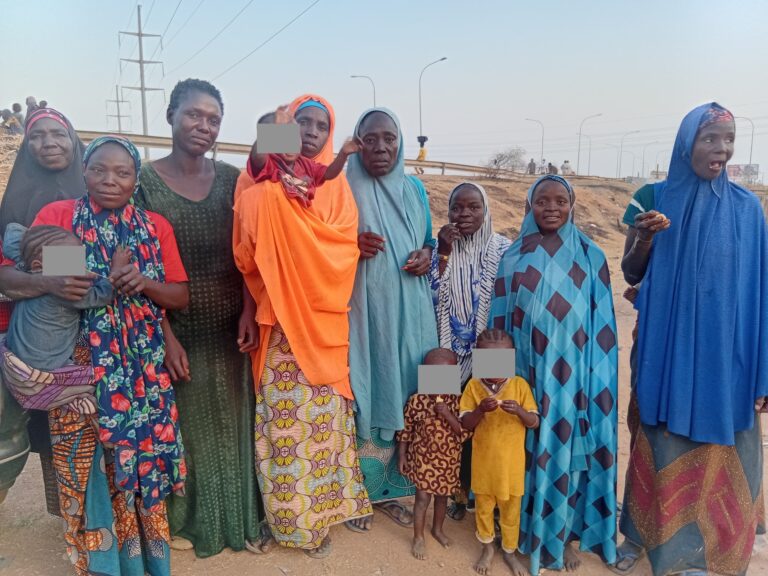
Incidentally, a community of beggars from neighbouring Niger Republic has also found their way into Abuja and are taking refuge in different locations, including the Federal Housing Authority (FHA) flyover bridge at Lugbe.
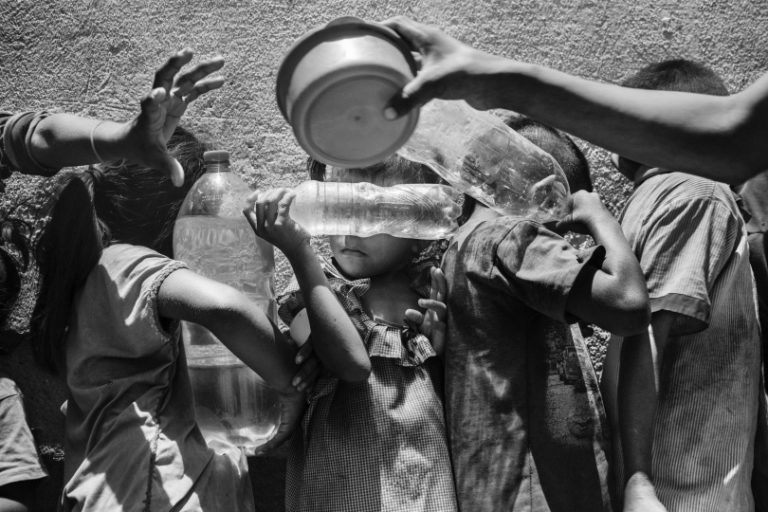
These beggars comprising of young, aged, and disabled, mount both sides of the bridge from 7:am daily. Some squat on the hard concrete, while others stand, plates stretched out, in silent plea for alms from commuters.
A visit to the location showed mothers cradling crying infants, their weary faces etched with struggles, while barefoot children weaved between the clusters of pedestrians.
‘How we are ‘smuggled’ into Abuja to beg’
On a cool evening in 2022 at Matameye, Niger Republic, a 35-year-old Fatima Ibrahim, was busy with house chores alongside her five children when the deep hum of an approaching truck startled her. It was the same truck that had smuggled her neighbour across the border months earlier. The vehicle rumbled to a stop in front of her neighbour’s door.
“That day, my neighbour and several others, were brought back from Abuja. Another neighbour, who didn’t return, sent money through the driver for the five children she left behind,” Fatima told The ICIR.
According to her, she came to Abuja, Nigeria’s capital city, after her neighbour informed her that the truck would be returning the following week.
Fatima holding her baby Photo credit: Nanji Nandang/The ICIR
“I took three of my children along with my crippled husband and left the rest with their grandparents. Since I arrived, I’ve been sending money to them,” she explained.
Like Fatima, Zaria Ado, the leader of the beggars, who sat hunched on the pavement, her frame thin and weary, said she doesn’t have official papers. However, she revealed that she had been traveling to Niger and back to check on the children she left back home.
\Begging Without Borders: Is Abuja the New destination for foreign beggars?While it is unclear how many of these Nigerien beggars are scattered throughout the capital city, she confirmed that there are over thirty women on her side of the bridge. But she could not say the number of beggars on the other side, which appeared more crowded.
“Everyone here is from Niger. Many of our people are here in Abuja. We are only here to find food to feed our children because the severe hunger in our country is too much to handle,” she said, as she adjusted the tattered, faded hijab, revealing the toll hunger and hardship had taken on her.
Zaria, leader of the beggars, narrating their story. Photo credit: Nanji Nandang/The ICIR
While pointing out that security operatives do not chase or disturb them, Zaria acknowledged that some Nigeriens have been in Abuja longer than she. She said she arrived Lugbe two years before the end of the Presidnet Muhammdu Buhari’s administration.
‘Tragedy led me to begging’
On that fateful day, in 2023 when attackers stormed Mai Adua, Ryahia Dairu’s village without warning, firing their lethal weapons indiscriminately, setting homes on fire, and causing panic among the villagers, Ryahia’s life took a different turn. She said her husband, in an attempt to protect his family, was killed in the crossfire. Her two sons, caught in the brutality of the attack, also lost their lives.
Ryahia narrating her story. Photo credit: Nanji Nandang/The ICIR
Amidst the confusion, Ryahia told The ICIR that her remaining children were forced to flee for their lives, and she was yet to reunite with them.
“The attackers showed no mercy, and many villagers were either killed or abducted. I narrowly escaped as I quickly fled with my surviving child in the direction of a nearby town,” she recalled.
She said the trauma of witnessing such violence and losing so many family members in one brutal assault left her devastated.
“We followed a truck that brought us and other people to Abuja, to beg on the streets as a means of survival,” Ryahia narrated.
‘Our struggles for survival’
“We go without bathing for days. There’s no time, no place, no water. We just sit there, waiting for someone to give us something, anything,” Zaria said.
Another beggar, Mariam Ibrahim, 34, told The ICIR that a truck brings more Nigeriens into the FCT every night.
For Mariam, sitting on the bridge all day was even harder. She said that the lack of movement and the scorching sun made it unbearable.
“I couldn’t bear it. Sometimes, people don’t even move around, but you sit there all day with nothing.”
Instead of staying in one place, Marian started walking around, scavenging empty water bottles and plastic containers, for sale.
Mariam speaking to the ICIR Photo credit: Nanji Nandang/The ICIR
“It wasn’t easy, but it paid off. I make up to N3,000 a day that way,” she said, with a weary smile. “It’s better than sitting on the bridge.
“Not more than five people here are from Katsina State; the rest are all from Niger Republic. Every night, trucks bring more of them into the city. Just yesterday, three trucks arrived with more people. Now, they are scattered across Abuja, begging for alms,” she said.
Mariam said that all the beggars pay a monthly fee of N1,000 to their group leader for permission to beg on the bridge.
“The beggars in the other wing also contribute dues to the leaders, who claim they need the money for bail whenever almajiri children were arrested and detained,” she said.
Leza Ibrahim, a widow, revealed that in 2024, she travelled for two days by road in a truck that brought over twenty Nigeriens to Lugbe. After a brief return home, she came back in January 2025.
The 50-year-old, formerly a petty trader, explained that the severe hunger in her country led her to this begging situation.
“I used to sell beans cakes, also known as akara, but the business collapsed because of debts. With no benefactor to turn to and children to support, I had no choice but to resort to begging for alms to feed them.”
The widow said this was the first time she ever begged in her life. She recounted how she manages to feed her children with less than N1,000, which is the much she sometimes earned in a day.
She explained that after each day’s begging, they head to a nearby truck garage; an abandoned space filled with the sound of idling engines and the smell of oil and rust.
“Some days, I prepare a mixture of Garri with a sprinkle of salt and water for my children because I make less than N1,000,” she said.
Talatua Basiri, who earns at least N1,500 daily, says she sends money and food to her children through the truck driver that regularly checked on them.
Talatua, another beggar from Niger Republic speaking to the ICIR Photo credit: Nanji Nandang/The ICIR
“My husband is in our village with our seven children. We have the truck driver’s phone number, so I call him whenever I need to send money home to my family.”
Nana Baraka, who lost her only son—who had been providing for her and her seven children—in 2024, joined the beggar’s community eleven months ago.
“I have never begged in my life, but the hunger became too much for me to bear. My son had worked at a block industry here in Abuja for several years, sending food and money to us in the village. However, he was diagnosed with lung cancer and passed away in 2024. That is why I came to Abuja to beg for alms, as I no longer have any other benefactor.”
Nana, whose daughter was hit by a bike two weeks ago while begging on the bridge, said the girl hasn’t been able to walk since the accident and has been in the garage without proper medical attention.
“I never knew how to beg for alms in my life; this is my first time. Life has been very difficult.”
Beggars ferried into Nigeria despite border closures
Former President, Muhammadu Buhari, in 2019, ordered the closing of Nigeria’s international land borders against all the country’s neighbours in the Economic Community of West African States (ECOWAS).
He said that the move was to encourage Nigerians to produce food for their consumption. However, in spite of the border closure, Zaria and other Nigeriens not only found their way into the country but made it straight to the capital city, right under the nose of the Nigerian Immigration Service. The Niger–Nigeria border is over 1,600 kilometres, irrespective of which border crossing they used they would have passed an average of two Nigerian states to get to the FCT.
Even though the ECOWAS Protocol on Free Movement stipulates the right of ECOWAS citizens to enter, reside, and establish economic activities in the territory of other member states, it however offers a three-step roadmap to achieve freedom of movement of persons after fifteen years. The protocol allows citizens of ECOWAS countries to move freely and visit any other ECOWAS country without requiring a visa.
For up to 90 days, citizens can stay in any ECOWAS member state without any prior administrative or police formality linked to the stay. The right to reside in an ECOWAS member state is based on the presentation of a residence card or residence permit issued to all citizens who desire one.
President Bola Ahmed Tinubu reinforced the border closure when he assumed office in 2023 as part of the sanctions on the Niger military junta.
This was in accordance with the ECOWAS sanction on Niger Republic after its presidential guards toppled President Mohamed Bazoum.
Despite the reinforcement of this sanction, The ICIR investigation in February 2024, revealed how smugglers and commuters operate at the Nigeria, Niger border, paying between N200 to N500 at each border checkpoint under the watch of the Nigerian security operatives.
It is unclear whether the beggars were smuggled into the country or possibly trafficked by a syndicate that brings them in and exploit them for their own gains.
Not long after assuming office, President Tinubu directed the opening of Nigeria’s land and air borders with the Republic of Niger and the lifting of other sanctions against the country.
He said that the directive was in compliance with the decisions of the ECOWAS Authority of Heads of State and Government at its extraordinary summit in February 2024, to also lift economic sanctions against Mali, Burkina Faso, and Guinea.
Even with the reopening of the border, the ECOWAS Protocol clearly states that the right of entry, residence and establishment are progressively established in the course of a maximum transitional period of fifteen (15) years from the definitive entry into force of this protocol by abolishing all other obstacles to free movement of persons and the right of residence and establishment.
A source in the Nigeria Immigration Service (NIS), who chose to be anonymous, said the provisions of this Protocol allows the repatriation of citizens of the Community whose actions are not in accordance with the laws of the resident state, especially if they exceed the 90 days free movement.Street begging in Nigeria is an offence under sections 249 and 250 of the Criminal Code Act 1986 in the Southern region of the country.Recall that ECOWAS recognised the withdrawal of Niger, Mali, and Burkina Faso, from its bloc in January 2025 after more than a year of diplomatic tensions.Relations between the trio and the regional bloc soured after the July 2023 coup that ousted Niger’s president, Mohamed Bazoum, prompting ECOWAS to demand his reinstatement and threaten military intervention.In response, Niger, Mali, and Burkina Faso announced their exit in January 2024 and accused ECOWAS of failing to safeguard member states and of aligning too closely with foreign powers.They also created a confederation called the Alliance of Sahel States and strengthened alliances with Russia, Turkey, and Iran to address internal security threats such as jihadists and armed gangs, as well as external pressures.Despite maintaining an open border with Nigeria, new immigration measures are being implemented at crossings such as Illela (Nigeria) and Konni (Niger) as at Tuesday, February 19, 2025, as Niger reportedly rejected ECOWAS passports from Nigerians.
FCT’s many battles with beggars
Nasiru El-Rufai, who served as the FCT Minister between 2003 and 2007, under the late Umar Musa Yar Adua administration launched the fight against street begging and repatriated a large number of street beggars to their various states.
Aliyu Umar, who was the FCT minister between 2007 and 2008, returned 395 beggars to their states while 113 were prosecuted.
Adamu Aliero, who was the FCT minister between 2008 and 2010, also banned street begging and raised a 150-member corps to arrest offenders.
Similarly, under Senator Bala Muhammad, in 2014, there was an arrest of 172 beggars.
The Buhari administration launched its fight against street begging in May 2016, and over 200 beggars were arrested and returned to their states.
In October 2024, Wike gave street beggars one week ultimatum to vacate the streets of the capital city while expressing concern over the growing presence of beggars in the city.
He said he launched a sweeping crackdown on 34 beggars, scavengers, and street vendors across various parts of Abuja.
Not long after that, a group of scavengers, beggars, and petty traders, among others, filed a suit against the Wike, the Inspector-General of Police (IGP); Director-General, Department of State Services and Nigeria Security and Civil Defence Corps (NSCDC), demanding N500 million in damages over an alleged breach of their fundamental rights.
A human rights lawyer, Abba Hikima, filed the suit on their behalf before Justice James Omotosho of a Federal High Court in Abuja on 20th November 2024.
Expert raises security concerns
“This highlights the porous nature of the capital city,” said the Managing Director Beacon Security and Intelligence Limited, Kabir Adamu.
He noted that Lagos is the only state in Nigeria that has begun developing an advanced security system spread across its local government areas, adding that the FCT, on the other hand, lacks such a system, making it particularly vulnerable in situations like this.
While maintaining that alms begging reflects the country’s socioeconomic condition, the security expert emphasised that the absence of a coordinated security system allows begging to foster criminal activities, making the city vulnerable to security threats.
“It could be an organised begging network where individuals work for someone who pays them monthly. This suggests that criminals could exploit the situation by strategically placing beggars across the city to coordinate terrorist attacks,” he added.
Adamu further highlighted irregularities with the National Identity Management Commission (NIMC) and negligence in the country’s data and security systems. He urged the government to conduct a scientific sociological investigation into the effectiveness of checkpoints in Nigeria.
“During a recent road trip to a neighbouring state, I encountered 46 security checkpoints where officers were collecting money from trucks and public vehicles. This practice has contributed to the rising cost of food across the country and has also created loopholes that allow criminals to gain entry,” he said.
The ICIR reports that in January 2025, the NIMC identified over 6,000 Nigeriens registered on its database with the National Identification Number (NIN).
FCT Minister, NIS, Police keep mum
On Wednesday, February 12, 2025, this reporter contacted the Chief Press Secretary to the FCT Minister, Tony Ogunleye, to inquire how the ministry deals with local and foreign beggars in curbing street begging. Ogunleye promised to respond on Thursday, February 13, but never did, despite multiple follow-ups.
In the same vein, the Public Relations Officer of the Nigeria Immigration Service, A.S. Akinlabi, was contacted on Wednesday, February 12, 2024 to give clarity on ECOWAS Protocol but had yet to get an official response as at press time.
Also, on Wednesday February 18, a text message was sent to the Public Relations Officer (PPRO) of the FCT command, Josephine Adeh, seeking comments on the matter. The message was not responded to.
NIGERIA’s gross domestic product (GDP) grew by 3.84 per cent year-on-year in real terms in the fourth quarter (Q4) of 2024, driven mainly by the services sector, the National Bureau of Statistics (NBS) said in its latest report.
The report, ‘Nigerian Gross Domestic Product (GDP) Report fourth quarter 2024, was released on Tuesday, February 25.
It shows that Nigeria’s fourth quarter GDP growth of 3.84 per cent was higher than the 3.46 per cent recorded in the fourth quarter of 2023.
The ICIRreports that the growth rate was also higher than the 3.46 per cent reported in the third quarter of 2024.
The service sector recorded a growth of 5.37 per cent and contributed 57.38 per cent to the aggregate GDP, NBS stated.
It said the services sector contributed more to the aggregate GDP in the review quarter compared to the corresponding quarter of 2023 in terms of share of the overall GDP growth rate.
The agriculture sector recorded 1.76 per cent growth compared to 2.10 per cent recorded in fourth quarter 2023.
Similarly, the industry sector settled at 2.00 per cent, declining from 3.86 per cent in the corresponding quarter of 2023.
For the overall year, Nigeria’s GDP grew by 3.40 per cent in 2024 compared to 2.74 per cent in 2023.
Oil sector performance
In the review quarter, NBS said the country recorded an average daily oil production of 1.54 million barrels per day (mbpd).
The figure is lower than the daily average production of 1.56 mbpd recorded in the same quarter of 2023.
It is, however, higher than the oil production volume of 1.47 mbpd recorded for the third quarter of 2024.
The real growth of the oil sector was 1.48 per cent year-on-year) in Q4 2024, NBS stated.
It indicates a decrease of 10.64 per cent points relative to 13.11 per cent recorded in the Q4 of 2023.
When compared to the 5.17 per cent recorded in Q3 2024, it decreased by 3.70 per cent.
On a quarter-on-quarter basis, the oil sector recorded a negative growth rate of -7.19 per cent in Q4 2024.
Its annual growth rate stood at 5.54 per cent, higher than the negative -2.22 per cent recorded in 2023.
The oil sector also contributed 4.60 per cent to the total real GDP in Q4 2024, down from the 4.70 per cent recorded in Q4 2023.
Its contribution was also lower when compared to the 5.57 per cent reported in the third quarter of 2024.
Overall, the oil sector contributed 5.51 per cent for the full year of 2024, higher than 5.40 per cent for the whole year of 2023,
Non-oil sector performance
The non-oil sector grew by 3.96 per cent in real terms during the review quarter.
This rate was higher than the 3.07 per cent reported in Q4 2023.
It was also higher than the 3.37 per cent recorded in the third quarter of 2024.
The NBS stated that the non-oil sector was driven mainly by financial institutions, telecommunications, crop production, road transport, trade, and manufacturing.
The sub-sector growth accounted for the GDP positive growth in the review quarter.
In real terms, the non-oil sector contributed 95.40 per cent to Nigeria’s GDP in Q4 2024, higher than 95.30 per cent recorded in Q4 of 2023.
It was also higher than the 94.43 per cent recorded in the third quarter of 2024.
On the aggregate, 94.49 per cent was contributed by the non-oil sector in the full year of 2024, lower than the 94.60 per cent reported in 2023, the statistics office added.
The ICIR can report that the statistics office had hinted at its plans to unveil a rebased GDP for the country.
This will mean using a new methodology to calculate the GDP.
The revised framework is expected to take effect from the first-quarter GDP report of this year.