Home Blog Page 354

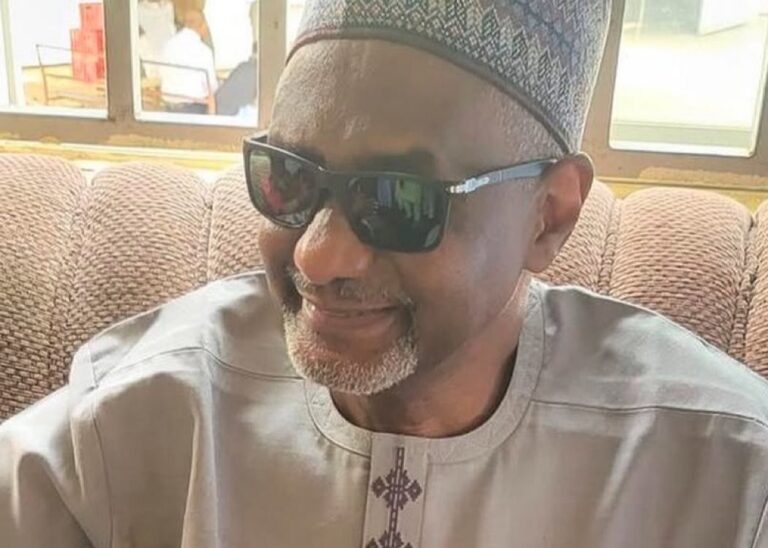
Alleged fraud: Court grants former NHIS boss, Usman Yusuf, N5m bail

0

A FEDERAL Capital Territory (FCT) High Court in Abuja has granted ₦5 million bail with two sureties to the former Executive Secretary of the National Health Insurance Scheme (NHIS), Usman Yusuf, a professor facing corruption allegations.

The trial judge, Chinyere Nwecheonwu, gave the ruling on Thursday, February 27.

Multiple charges were filed against the accused by the prosecutor – the Economic and Financial Crimes Commission (EFCC).

The ICIR reported that Yusuf was arraigned on five counts of corruption, including embezzlement and abuse of office, on Thursday, January 30.

Operatives of the EFCC stormed his Abuja home at about 4:30 p.m. and picked him up for alleged fraud, among other infractions.

His arrest followed an ongoing investigation into allegations that he inflated the NHIA’s ICT budget from N4.975 billion to N8.7 billion and approved payments beyond his approval limit.

Following his arraignment, Yusuf was remanded in the Kuje Correctional Facility while awaiting the court’s ruling on his bail application, which was initially adjourned until February 27.

Arguing the bail, the defence counsel, O.I. Habeeb, a senior advocate, appealed for Yusuf’s release, saying the alleged offences brought against him were bailable.

On his part, the prosecution counsel, Francis Usani, informed the court that Yusuf did not comply with the terms of an administrative bail granted to him by the EFCC to report bi-weekly to its office. 

He added that the defendant had bragged about his political connections and would abscond from the trial if granted bail. 

Usani said it took the respondent’s (EFCC) officers’ discreet surveillance and high-powered intelligence to apprehend the defendant and bring him to court.

The judge, Nwecheonwu, while ruling on the bail application, declared that the two sureties must furnish the court with proof of means of livelihood and valid identification.

“The sureties must also provide valid means of identification, and their addresses are to be verified by the prosecution or court staff,” the judge stated.

Although the case was initially adjourned until April 3, the date was vacated due to the Sallah break, which falls within that period.

Despite the allegations against him, Yusuf has claimed his arrest was politically motivated.

He accused the government of using security agencies to silence him over his views on national issues.

In a statement, Yusuf described his subsequent arrest by EFCC operatives as a result of a speech at a youth summit in Bauchi, where he criticised the Tinubu administration’s economic policies and alleged marginalisation of Northern Nigeria.

He claimed that security agents trailed him after the summit and took him from his home without warning.

 He argued that the EFCC aimed to dehumanise him and tarnish his reputation.

Yusuf, a professor of hematology/oncology and bone marrow transplant, is also being held for financial mismanagement and abuse of office. He allegedly used his position for personal gains, approving contracts without following due process and awarding contracts to firms that lacked the competence to execute projects.

He was appointed as the head of the NHIS (new NHIA) on July 29, 2016. His tenure at the agency was plagued by controversies.

He had several confrontations with the former minister of health, Isaac Adewole, a professor, and the chairperson of the board of the former NHIS, Enyantu Ifenne, who jointly accused him of high-handedness, mismanagement, corruption, and other infractions.

Several petitions were submitted to former President Muhammadu Buhari and the Federal Ministry of Health, alleging misconduct and fraudulent practices against him.

Buhari eventually sacked him in July 2019, ten months after the agency’s governing council suspended him from office.

Lagos Assembly in turmoil as lawmakers reject Obasa’s re-emergence as Speaker

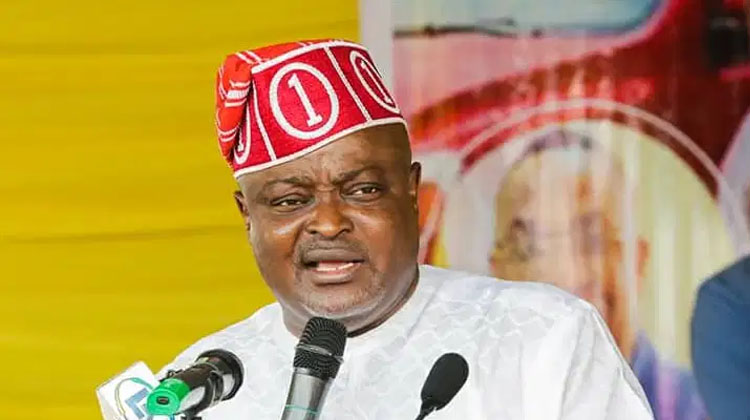
THE crisis rocking the Lagos State House of Assembly deepened on Thursday, February 27, as majority of the lawmakers firmly rejected Mudashiru Obasa’s claim that he remained the Speaker of the House. 

The legislators reaffirmed their support for Mojisola Meranda, insisting that she is the legitimate Speaker.

Obasa, who was removed on February 17, made a dramatic return to the Assembly complex on Thursday, accompanied by security operatives and two lawmakers – Ayinde Akinsanya (Mushin Constituency I) and Noheem Adams (Mushin Constituency II) – according to Punch newspaper. 

Despite his removal, he proceeded to preside over a plenary session with just four lawmakers present, with reports indicating that security operatives forcibly opened the chamber doors to grant him and his supporters access.

Meanwhile, over 26 lawmakers boycotted the session and gathered at the Assembly’s garden to reaffirm their confidence in Meranda’s leadership. The lawmakers condemned Obasa’s attempt to reclaim the position, describing it as a desperate move to override the will of the majority.

Chairman of the House Committee on Information, Security, and Strategy, Steven Ogundipe, dismissed Obasa’s claims and decried his situation.

Speaking with reporters, Ogundipe stated that they remained committed to ensuring that Obasa’s removal stands.

“He was not elected as Speaker by his constituency. We endured his master-slave leadership for nearly a decade. Now, we’ve had enough, and we’re not backing down,” he stated.

Amid the standoff, Obasa told the press that he had never been impeached, stating the impeachment was undemocratic.

“I have told you repeatedly, I have never been removed, there’s nothing like impeachment, I don’t know what you’re saying. Removing, impeachment or whatever was undemocratic and unconstitutional because to have achieved that you must follow due process,” he said.

Recall that on January 13, Obasa, who had served for nearly 10 years as the state speaker, from June 2015 to January 2025, was suspended by more than two-thirds of the 40-member legislative House over alleged misconduct and sundry offences.

However, during a welcome rally at his residence in GRA, Ikeja, held on Saturday, January 25, Obasa declared that he remained the speaker despite his replacement by his deputy.

He later challenged his suspension in court.

Obasa filed a suit against the Assembly and the new speaker at the Lagos State High Court in Ikeja, arguing that his suspension was improper since the Assembly was in recess at the time.


Unity bank financial health in question with over N62bn loss

0

THE financial health status of Unity bank Plc has raised some unanswered questions about the risk exposure of shareholders’ and depositors’ funds as it posted an N62.64 billion loss in its 2023 financial year, The ICIR findings revealed.

The bank reported the loss in its 2023 annual report for the year ended December 31, 2023, released to the investing public on Tuesday, February 25.

A cursory look at the report shows Unity bank reported negative performance across its profit lines.

It posted a net operating loss of N28.59 billion in 2023 relative to a net operating profit of N28.47 billion in 2022.

Its operating expenses widened to N33.75 billion from N27.09 billion, while its loss before tax to N62.64 billion from a profit before tax of N1.101 billion.

Its loss for the year settled at N62.64 billion in the review year from a N941.38 million profit in 2022.

A further analysis of the Unity bank’s annual report showed it also reported a negative financial position, widening its debt obligation.

Its total liabilities widened to N799.46 billion, exceeding its total assets of N472.58 billion, resulting in a negative equity of N326.87 billion.

Compared to 2022, its debt obligation increased by 18.89 per cent from N274.95 in 2022 as total liabilities of N785.09 billion outdo its total assets of N510.14 billion.

The ICIR earlier did an analysis on the debt trend of Unity Bank which now shows that it had been for more than five years.

Its five-year summary shows that in 2019, Unity Bank reported a negative equity of N284.37 billion as total liabilities of N495.18 billion exceeded its assets.

In 2020, it posted a debt obligation of N278.86 billion as liabilities of N571.91 billion surpassed its assets.

In 2021, it reported a negative equity of N275.41 billion after its liabilities of N767.43 billion exceeded its assets.

Unity Bank has also been reporting operating losses in the past five years.

In 2019, it posted an operating loss of N20.71 billion. It widened to N19.59 billion in 2020, N23.24 billion in 2021, N27.09 billion in 2022, and N33.75 billion in 2023.

A financial analyst had told The ICIR that the negative worth of Unity Bank was a worry for many of its investors.

Its debt liabilities and poor financial performance have continued to create concern for investors who see this level of asset deficiency as worrisome.

Some analysts believe that the bank’s negative cash flow from investing activities has been a challenge, raising warning signs and pointing in the direction of management’s inefficiency in using the bank’s assets to generate revenue.

These signs of financial distress have raised fear that the bank might default on its obligations to creditors and be headed for bankruptcy.

In August 2024, following Unity Bank’s unhealthy financial position, the Central Bank of Nigeria (CBN) granted a lifeline to the bank to merge with Providus Bank Limited.

The apex bank anchored its action with the provisions of Section 42 (2) of the CBN Act, 2007, and said the merger was contingent upon its financial support, which was essential for the financial health and operational stability of the post-merger of the two banks.

The scheme of the merger, which has yet to be revealed to the investing public, analysts believe should be examined to understand the details.

A financial expert and capital market operator told The ICIR that shareholders of Unity Bank were pleased with the merger but expect a seamless transformative process that would be beneficial to all parties.

Another analyst who commented unanimously on Unity Banks’ financial mess said, “You can see that they have foreign currency liabilities more than foreign currency assets, so the value of those liabilities will increase more than the assets due to the devaluation of the naira.”

Shareholders said they are hoping that the bank’s merger with Providus Bank would reverse the trend of debts and poor financial performances.

As of December 31, 2023, Unity Bank’s shareholding structure reveals no shareholder held more than five per cent of the bank’s shares.

None of its board of directors except Halima Babangida held 0.33 per cent or 38,191,947 unit shares.

Its managing director/chief executive officer, Tomi Somefun, holds no single share in the bank having held the role since August 12, 2015, as the first woman appointed to that position in the history of the bank.

As of the end of the 2023 financial year, the Asset Management Corporation of Nigeria (AMCON) has the largest substantial stake with 34.22 per cent or 4,000,130,848 units of the shares of the bank.

Amid the Unity Bank’s financial mess, shareholders anticipate that the merger deal to lead to better performance for the bank.

“To us as shareholders, it is our earnest prayer that the merger talk between the two banks will be fruitful.  It is better for us as shareholders than to see the bank go into liquidation or an unceremonious takeover by CBN.

“We look forward to much better merger talk that will remain promising, fruitful, and beneficial to us minority shareholders,” the national president of New Dimension Shareholders, Patrick Ajudua, said.

I’ve resumed office as Speaker, says Obasa as he storms Lagos Assembly

1

THE suspended speaker of the Lagos State House of Assembly, Mudashiru Obasa, has declared that he had resumed office as the leader of the parliament.

Obasa made the declaration on Thursday, February 27, after making his way back into the Assembly complex for the first time since his removal on January 13, according to Punch Newspaper.

The embattled lawmaker arrived at the complex around noon, flanked by security officials, and proceeded straight to the Speaker’s office.

“I’ve resumed, and I remain the Speaker of the Assembly,” Obasa was quoted to have said.

Following his return, Segun Ajiboye, Chief Press Secretary to Mojisola Meranda, Deputy Speaker who took over when Obasa was removed, confirmed the development to Punch, alleging that Obasa and his team had forcefully entered the office.

Obasa’s supporters also gathered at the Assembly complex, holding placards and chanting songs in his favour, with viral videos capturing the scene at the entrance of the legislative building.

This development was on the heels of the withdrawal of security details attached to Speaker Meranda earlier in the day. 

According to reports, police officers assigned to her were no longer on duty as of Thursday morning. Reports further indicated that Obasa’s security details were reinstated. 

Meranda’s fate now hangs in the balance amid the unfolding political power struggle in the Lagos Assembly.

Following his removal, Meranda made history as the first female speaker of the Lagos State House of Assembly after a unanimous election.

The Lagos State House of Assembly has been adjourned indefinitely since her ascension to the speakership.

The ICIR reported on January 13 that Obasa, who had served for nearly 10 years as the state speaker, from June 2015 to January 2025, was suspended by more than two-thirds of the 40-member legislative House over alleged misconduct and sundry offences.

However, during a welcome rally at his residence in GRA, Ikeja, held on Saturday, January 25, Obasa declared that he remained the speaker despite his replacement by his deputy.

He later challenged his suspension in court.

Obasa filed a suit against the Assembly and the new speaker at the Lagos State High Court in Ikeja, arguing that his suspension was improper since the Assembly was in recess at the time.

Attempts to confirm the withdrawal of security details attached to the Lagos speaker were not successful, as the Lagos Police Command spokesperson, Benjamin Hundeyin, did not pick up his call nor respond to messages sent to his phone by The ICIR.

Lagos Assembly: Meranda’s security details reportedly withdrawn amid speakership crisis

0

SECURITY details attached to the Speaker of the Lagos State House of Assembly, Mojisola Meranda, have reportedly been withdrawn.

According to reports, the security details attached to the speaker, including police officers, were withdrawn as of the morning of Thursday, February 27.

According to PUNCH, a source close to the speaker confirmed that Meranda had been without her security.

Meanwhile, there are reports that the former speaker, Mudashiru Obasa, who was removed on January 13, is set to return.

Obasa’s security details have reportedly been restored.

Meranda served as Deputy Speaker under Obasa before his removal.

Following his removal, Meranda made history as the first female speaker of the Lagos State House of Assembly after a unanimous election.

Although she hasn’t officially stepped down, her tenure may be ending soon, as some All Progressives Congress (APC) leaders reportedly decided her fate over the weekend amidst the House of Assembly imbroglio.

In attendance at the meeting were notable figures such as former chairman of the APC, Bisi Akande, former governor of Ogun State, Olusegun Osoba, and former Lagos State Commissioner for Justice, Muiz Banire, alongside members of the Governance Advisory Council (GAC) and some members of the state House of Assembly.

The Lagos State House of Assembly has been adjourned indefinitely since Meranda’s ascension to the speakership.

The ICIR reported on January 13 that Obasa, who had served for nearly 10 years as the state speaker, from June 2015 to January 2025, was suspended by more than two-thirds of the 40-member legislative House over alleged misconduct and sundry offences.

However, during a welcome rally at his residence in GRA, Ikeja, held on Saturday, January 25, Obasa declared that he remained the speaker despite his replacement by his deputy.

He later challenged his suspension in court.

Obasa filed a suit against the Assembly and the new speaker at the Lagos State High Court in Ikeja, arguing that his suspension was improper since the Assembly was in recess at the time.

Attempts to confirm the withdrawal of security details attached to the Lagos speaker were not successful, as the Lagos Police Command spokesperson, Benjamin Hundeyin, did not pick up his call nor respond to messages sent to his phone by The ICIR.

Reps order Wike to appoint auditor-general for FCT area councils

0

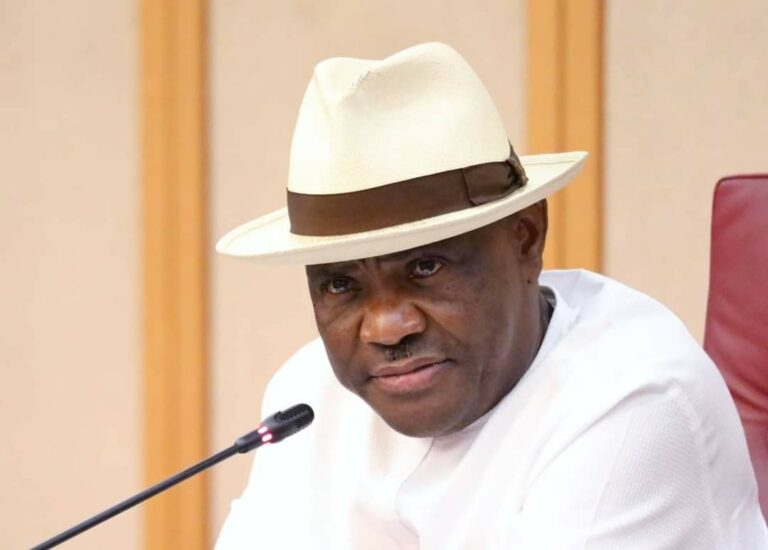
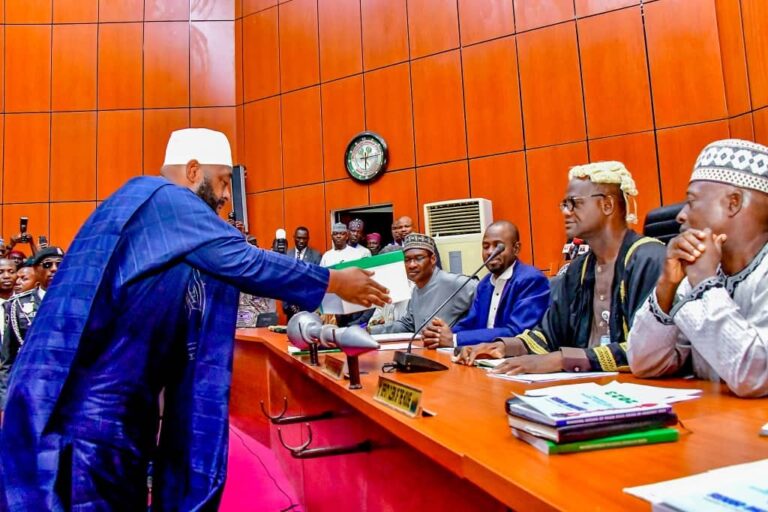
THE House of Representatives has called on the Minister of the Federal Capital Territory (FCT), Nyesom Wike, to appoint a substantive auditor-general for the area councils in accordance with extant laws. 

The House resolution was based on a motion by Obordor Mitema, who represents Ogbia Federal Constituency, and seconded by Usman Bala during the Public Accounts Committee’s hearing on Wednesday, February 26. 

The panel observed that the absence of a substantive auditor-general had delayed the signing and transmission of audited account reports, as required by the Constitution.

While receiving a presentation from the Acting Auditor-General for the Area Councils, Abdullahi Salihu, the committee chairman, Bamidele Salam, emphasised the need for the committee’s intervention to resolve the issue.

“Honourable colleagues, I think we should step into this. As I said, when we resumed in October 2023, the Office of the Auditor-General for the Federation in Nigeria was vacant for about two years.

“The former President Muhammadu Buhari refused to make an appointment. And so, audit reports were not submitted. When we came in, my Senate counterpart decided to write letters to the President and make some advocacy upon which a substantive one was appointed.”

He further said that the committee might need to summon the minister to explain the reasons behind the delay in the appointment.

In his presentation, the acting auditor-general highlighted several breaches, including the non-submission of audited financial reports for 2023–2024, failure to remit pension deductions to the pension commission, and the non-submission of available audited reports to the committee.

He also explained that most of the infractions occurred under previous administrations, as he has only served in an acting capacity for six months.

Responding, a committee member representing Orhionmwon/Uhunmwode Federal Constituency. Billy Osawaru, urged the committee to enforce the full weight of the law on the Office of the Auditor-General for the infractions committed, emphasising that such actions must be addressed.


Unity Bank Posts N59.3B in Gross Earnings, Grows Deposits by 23% in 2023 FY

0
Retail lender, Unity Bank Plc posted gross earnings of N59.3 billion for the full year ended December 31, 2023, representing a growth of 3.84% year-on-year.
In its audited financials submitted to the NGX Group Limited, the Bank also witnessed improvements across key performance indicators, including a significant appreciation of customer deposits by 23% to N402.9 billion from N327.4 billion within the period under review – an indication of sustained retail growth and customer confidence.
Other key highlights of the full-year results include the total assets which stood at N472.5 billion; net fee and income commission, N5.2 billion and an increase in interest income by 9.6% to 53.7 billion from N48.8 billion within the period.
Commenting on the result, the Managing Director/Chief Executive Officer of Unity Bank Plc, Mrs. Oluwatomi Somefun said the Bank had issued a profit alert to reflect revaluation loss arising from Naira devaluation which was due to acute shortage of Forex that created an inclement business environment and, on the aggregate, set in an economic headwind.
 She noted, however, that in the full-year statement, this has bottomed out and the key performance indicators are rebounding from the low level of growth and negative trends that characterised the year.
Mrs. Somefun stated: “As we begin to see the margins being closed, it is an indication that the measures being taken to revamp all aspects of the business is being well received by the market: be it workable recapitalisation plan, aggressive drive for asset creation, product innovation, or digital banking.”
“We will need to covet the improvements and further build upon it. As a corporate brand, we have a lot that is keeping us going: the positive sentiments and optimism, the growing franchise of the business and steady growth in different segments of the retail market across all the geo-political zones of Nigeria,” She said.
She added, “We have the right indicators to reclaim lost grounds – innovating with the development and soon to be launched omnichannel digital app to improve reliability, customer experience, support diverse products functionality which will impact earnings, income and profitability.”
The Central Bank of Nigeria (CBN) has recently approved a business combination with another innovative Bank in Nigeria, marking a significant milestone in the Bank’s growth strategy as it advances its recapitalization plans.
This partnership is built on a shared vision to redefine the banking experience for our customers and will drive the transformation of the consolidated entity.
By leveraging Unity Bank’s extensive branch network and strong customer relationships alongside the entity’s digital expertise and commitment to innovation, we aim to create a seamless integration of traditional and modern banking services.
Amid a review of key highlights that support the steady growth of the retail business, analysts are of the view that the Bank has continued to reflect a good outlook in terms of perception and confidence in the market, which by and large creates an entity with remarkable resilience whilst investors’ sentiments remain positive.

Niger State’s 2025 budget: A delicate balance between expenditure and revenue

NIGER State’s 2025 budget has again raised concerns, with the government proposing an ambitious N1.56 trillion expenditure, despite a history of low budget performance and heavy reliance on federal allocations. 

Given the state’s weak internally generated revenue (IGR) and inconsistent foreign investments, analysts are questioning whether this budget is grounded in financial reality or political optimism.

A review of Niger State’s financial performance in recent years shows recurring gap between budget projections and actual execution. In 2023, the government revised its budget from ₦243.6 billion to ₦473.95 billion, yet only 40.29 per cent was implemented.

Similarly, in 2024, despite increasing the budget to ₦829.43 billion, performance by the third quarter stood at just 30.42 per cent, raising concerns over the feasibility of the 2025 proposal.

Reliance on FAAC, weak IGR, low FDI

The ICIR reports that the state has struggled to boost its internally generated revenue, with earnings between N5.7 billion and N21.6 billion from 2014 to 2023. The earnings saw a gradual increase over the years, starting from NGN 5.7 billion in 2014 and rising to NGN 5.9 billion in 2015.

In 2016, there was a slight decrease to NGN 5.8 billion but earnings picked up again in 2017, reaching NGN 6.5 billion.

A significant jump occurred in 2018, with earnings surging to NGN 10.4 billion, followed by further growth in 2019, reaching NGN 13.6 billion. However, 2020 saw a decline to NGN 10.5 before a recovery in 2021, where earnings climbed to NGN 16.2. This upward trend continued in 2022, with earnings reaching NGN 16.9. before peaking at NGN 21.6 in 2023.

In contrast, the state’s total Federation Account Allocation Committee (FAAC) allocations between 2015 and August 2024 reached N544.54 billion, making FAAC the primary revenue source. 

The allocations from FAAC stood at N66.09 billion between January and August 2024, according to The ICIR analysis. In 2023, the state got N78.9 billion while in 2022, it got N63.2 billion from the same FAAC allocation. The trend shows an increase from 2020, when the state got N54.5 billion.

Similarly, the state’s FDI inflow has been inconsistent. Between 2019 and 2024, Niger State secured only $17.92 million (approximately N25 billion) in Foreign Direct Investment (FDI), with zero inflows recorded in 2021, 2022, and the third quarter of 2024.

In 2020, the state recorded $16.36 million, but the inflows dropped drastically to $1.5 million in 2023.

With a projected N140 billion in total revenue for 2024, Niger State is already struggling to finance its revised 829.43 billion budget. 

The new N1.56 trillion proposal for 2025, however, raises question of where  the extra funding will come from as experts say even in an optimistic scenario where FAAC increases and IGR improves, the state still faces a funding gap of over N1.4 trillion.

Meanwhile, this isn’t the first time Niger State has set high financial targets without meeting them. In 2023, the government revised its budget from N243.6 billion to N473.95 billion, but actual performance stood at just 40.29 per cent. The same pattern continued into 2024, with only 30.42 per cent of the budget executed by the Q3.

This was the same situation in 2019 and and 2022 when the state recorded 42.27 per cent and 41.84 per cent respectively.

While the government may be banking on increased federal allocations or borrowing, experts warn that an over independence on FAAC makes the budget vulnerable to external economic shocks. 

Harrison Edeh, a financial and economic  journalist, explained that without a significant boost in internal revenue and sustained foreign investment, the ambitious budget targets will remain out of reach.

He further highlighted concerns over the ambitious nature of the budget, which largely depends on federal oil revenue allocations. 

He noted that fluctuations in oil prices, combined with Nigeria’s inconsistent fulfillment of OPEC quotas, could jeopardise state funding if not offset by robust internal revenue streams.

He also emphasised the urgent need for Niger State to capitalise on its vast mineral and agricultural resources to reduce its heavy reliance on Federal Allocation (FARC) for revenue.

Edeh argued that tapping into agribusiness and other local industries could dramatically boost the state’s economy, noting that given Niger State’s extensive arable land, there is significant potential for large-scale agricultural ventures. 

“The budget is overly ambitious because most of the budget estimates and the budget generalists relied on allocations from the federal government  allocation so when you look at what the state is generating internally and their domestic debts you may not be convinced that they will be able to fund that kind of budget without relying on maybe developmental agencies. So the most important thing is that they cut their clothes according to their size and focus on maintaining a trajectory that will enable them to meet at least 80 or 90 percent of the budget because with the oil price fluctuations many states may not be able to fund the budget if Nigeria for instance did not meet up with OPEC quota of oil many states will not be able to fund their budgets.”

“Niger State is blessed with lots of mineral resources. They can look into agriculture, instead of depending holistically on FAAC allocation. It’s very important that they look at other sources of revenue for the states, so that they cannot just be relying on FAAC for their needs. They had arable land, which is larger than some countries. So, they can do farming as an agribusiness,” he added.

Again, Dangote drops petrol price to N825

0

THE Dangote Petroleum Refinery said it has reduced its ex-depot (gantry) price of petrol to N825 per litre.

The ex-depot price is at which the marketers buy the product at the refinery depots before putting their mark-up price for sales at filling station retail outlets.

The management announced this in a statement on Wednesday, February 26.

It said the price drop takes effect from Thursday, February 27.

The reduction came barely one month after the company slashed its ex-depot petrol price to N890.

Precisely on February 2, the Dangote refinery dropped its ex-depot price of petrol from N950 to N890, citing the decline in the price of crude oil at the international market, The ICIR reported.

“This strategic price adjustment is designed to provide essential relief to Nigerians in anticipation of the upcoming Ramadan season, while also supporting President Bola Ahmed Tinubu’s economic recovery policy by alleviating the financial burden on the Nigerian populace.

“It is important to note that Dangote Petroleum Refinery has consistently lowered the prices of petrol and other refined petroleum products to the benefit of Nigerians. This marks the second price reduction of PMS in February 2025, following a previous decrease of N60.00 earlier in the month,” the management said.

The Dangote refinery had extended a similar gesture during the last Christmas season when it reduced the gantry price of its petrol by N70.50, from N970 to N899.50 per litre.

It was part of its commitment to easing the cost of living and providing relief to Nigerians during the yuletide season, it stated.

“This reduction has positively impacted the overall cost of living, benefiting various sectors of the economy, and has also ensured that Nigerians did not experience the perennial fuel scarcity and price hikes typically associated with the yuletide season.

“Nigerians will be able to purchase the high-quality Dangote petrol at the following prices in all our partners’ retail outlets,” Dangote refinery said.

With the new adjustment in its ex-depot price of petrol, the refinery said the MRS Holdings filling stations would now sell for N860 per litre in Lagos, N870 in the South-West, N880 per litre in the North, and N890 per litre in the South-South and South-East respectively.

“The same product will also be available at the following prices in AP (Ardova Petroleum) and Heyden stations: N865 per litre in Lagos, N875 per litre in the South-West, N885 per litre in the North, and N895 per litre in the South-South and South-East,” it added.

The refinery said it is assuring the public of a consistent supply of petroleum products, with sufficient reserves to meet domestic demand, as well as a surplus for export to enhance the country’s foreign exchange earnings.

It called on oil marketers to support its initiative, ensuring that Nigerians remain the primary beneficiaries of the effort.

“This collective action will contribute to the broader economic recovery plan led by His Excellency, President Bola Ahmed Tinubu, who is committed to making Nigeria self-sufficient in refined petroleum products and establishing the country as a leading oil export hub,” the management of Dangote added.

With the consistent drop in the price and export of its refined petroleum products, the Dangote Petrochemical refinery company is gradually showing its market dominance in the Nigerian petroleum industries while the state-owned oil firm, Nigerian National Petroleum Company Limited (NNPCL), is behind.

Lately, the Dangote refinery sold two cargoes of aviation fuel to Saudi Aramco, the national oil company of Saudi Arabia.

In its monthly report for January 2025, the Organisation of Petroleum Exporting Countries (OPEC) noted that the emergence of Dangote refinery has reduced the importation of petroleum products from Europe to Nigeria.

“The ongoing operational ramp-up efforts at Nigeria’s new Dangote refinery and its gasoline (petrol) exports to the international market will likely weigh further on the European gasoline market.

“Continued gasoline production in Nigeria, a country that has relied heavily on imports to meet its domestic fuel needs in the past, will most likely continue to free up gasoline volumes in international markets which will call for new destinations and flow adjustments for the extra volumes going forward,” OPEC stated.

The 650,000-barrel-per-day refinery built by billionaire businessman Aliko Dangote is eying eyes full capacity operations by next month, but it is currently operating at 85 per cent capacity.

When it finally starts operating at full capacity, the refinery is expected to enhance its supply links to both local and international supply chains while also influencing market pricing and control mechanisms across the country.

In recent times, there have been pockets of petrol queues in retail outlets loading petrol products from the Dangote refiner,y, which is not unconnected to the price mechanism and availability of the product as most NNPCL filling stations are most times not open to motorists to buy products.

The ICIR observed earlier this week that motorists in some parts of Lagos experienced petrol queues as the Petroleum Tanker Drivers (PTD) branch of the National Union of Petroleum and Natural Gas Workers (NUPENG) embarked on strike action.

The strike began on Sunday after tanker drivers accused police officers of extortion and harassment, citing frequent cases of intimidation and illegal levies imposed on them while transporting petrol.

According to NUPENG, despite repeated appeals to law enforcement agencies and the federal government, the situation has persisted, forcing them to halt operations.

In a related development, the Independent Petroleum Marketers Association (IPMAN), Southwest zone, had on Monday, February 24 threatened to shut down its operations across the Southwest over the arrest of 30 tankers by the Lagos state government.

The 30 tankers bearing 45,000 litres of petrol product were reportedly towed out of the Dangote Refinery by the Lagos State Traffic Management Authority (LASMA).

These incidents have led to queues being witnessed in some suburbs in Lagos state amid fewer operations of NNPCL retail outlets.

Benue varsity shuts down over students abduction

0

THE management of Joseph Sarwuaan Tarka University of Agriculture, Makurdi, formerly known as the Federal University of Agriculture, Makurdi, has ordered the immediate closure of the institution following the abduction of three students by unidentified armed men. 

The management granted a one-week mid-semester break and directed that all students vacate their hostels by 4:00 p.m. on Wednesday, February 26.

In an internal memo titled “Security Situation on Campus,” issued on Wednesday and signed by Registrar John David, the university confirmed that three students were abducted by the kidnappers.

It noted that the abduction occurred at around 8:00 pm on Tuesday, February 25, between Zamfara Hostel and Ring Road in the North Core area of the campus.

The memo reads: “Sequel to the unfortunate incident that occurred on campus (Tuesday, February 25th, 2025) at about 8:00 pm, where unknown armed men abducted three students between Zamfara Hostel and Ring Road in North Core, the university management, after a series of consultative meetings with security agencies and stakeholders, resolved the following: “The university management condemns the incident in its entirety. The government and the security agencies have been duly informed about the unfortunate incident.

“All staff, students, and the general public are enjoined to remain calm as security agencies are working tirelessly to secure the release of the abducted students.”

It further announced that the inaugural lecture scheduled for February 26, had been postponed indefinitely. 

“The inaugural lecture scheduled for today, February 26th, 2025, is postponed indefinitely. In solidarity with the students and parents of the abducted students, the university management has granted a one-week mid-semester break to all students to adequately address the security challenges on campus.

“Consequently, all students are to vacate their hostels by 4:00 pm today, Wednesday, February 26th, 2025,” the memo added.

The Police Public Relations Officer in the state, Sewuese Anene, confirmed in a telephone conversation with The ICIR that a team of investigators had been dispatched to the scene. 

The ICIR reported that the incident ignited protests on campus, with students rallying and brandishing tree branches to demand immediate action from university authorities.

The latest incident came amid a chain of insecurity in Benue State, which has seen a spate of kidnappings in recent years. 

In a similar incident last August 2024, over 20 medical and dental students from the University of Maiduguri and the University of Jos were abducted while en route to an annual conference in Enugu State.