Home Blog Page 36

Court awards N100m damages against SERAP in SSS defamation suit

THE Federal Capital Territory (FCT) High Court in Abuja has awarded N100 million damages against Socio-Economic Rights and Accountability Project (SERAP) in a defamation suit filed against it by Nigeria’s secret police – the State Security Service (SSS) and two of its officers. 

Delivering the judgment on Tuesday, the judge, Yusuf Halilu, awarded N100 million damages against SERAP, a leading public accountability non-profit. The court also ordered SERAP to apologise to the SSS in national dailies and on television.

“From the context of the documents before the court, it is settled there was a publication,” Halilu said.

The ICIR reports that in October 2024, SSS operatives filed a lawsuit against SERAP, accusing the organisation of falsely alleging that its agents invaded the accused’s Abuja office in September 2024.

Two SSS operatives, Sarah John and Gabriel Ogundele, who were said to have been defamed by the claim, were listed as co-claimants in the suit that sought N5 billion in damages. The litigants argued that the allegation harmed their reputations.

They said SERAP had alleged that the SSS invaded its office, a claim that was widely circulated on Twitter and reported by several media organisations, adding that the allegation had a serious impact on them.

The agency denied invading SERAP’s office or harassing its staff, with two officers testifying in support.

The SSS argued further that the incident occurred after SERAP had written to President Bola Tinubu, urging him to investigate alleged corruption in the Nigerian National Petroleum Company Limited and to reverse the increase in petrol prices.

However, SERAP presented a rebuttal during the trial.

In his judgment, Halilu said defamation remained a distinct cause of action, “legally and historically,” and involved exposing a person to hatred or ridicule, stressing that it covered libel (written) and slander (spoken)

He explained that the key issue was whether the claimants proved defamation and were entitled to be granted their prayers, explaining that the defendants did not challenge the evidence on oath put forward by the plaintiffs.

He said libel becomes actionable once a false and harmful statement is published, pointing to March 21, 2025, when Sarah John submitted social media posts as evidence. He added that Exhibit 3 showed that SERAP published statements about the officers.

The judge opined further that although SERAP did not mention names, the description identified the officers and the court must decide whether the words in question were defamatory, noting that they could amount to a derogatory innuendoes.

“The evidence of the SSS officer is tall, large, dark, slim, dark skin. I have taken judicial notice of their features, and all suit the claimants in this case. It cannot be challenged that there was defamation against the claimants,” the judge ruled.

He said the publication implied that the officers unlawfully occupied SERAP’s office and intimidated its staff, portraying them as acting without proper authority and lacking professionalism.

“Allegations of intimidation and harassment should not be attributed to SSS officers as in this case. The publication clearly injured the claimants in their profession. Once there is publication, it does not require further proof. The publication is indeed libellous,” he added.

He ruled that the statements might have spread widely beyond Nigeria, potentially affecting the claimants’ physical and psychological well-being.

17 ADC Rep members defect to NDC

0

SEVENTEEN members of the House of Representatives have defected from the African Democratic Congress (ADC) to the Nigerian Democratic Congress (NDC).

The defections were announced during Tuesday’s plenary by Deputy Speaker, Benjamin Kalu, who read out the notices on the floor of the House.

Kalu also announced the defection of Leke Abejide from the ADC to the All Progressives Congress (APC).

Lawmakers who joined the NDC include Yusuf Datti, Uchenna Okonkwo, Adamu Wakili, Thaddeus Attah, George Ozodinobi, Lilian Orogbu, Oluwaseyi Sowunmi, Peter Aniekwe, Mukhtar Zakari, George Oluwande, Munachim Umezuruike, Emeka Idu, Jesse Onuakalusi, Ifeanyi Uzokwe, Afam Ogene and Abdulhakeem Ado.

The development followed recent political alignments involving top opposition figures, including former governors Peter Obi and Musa Kwankwaso, who quit the ADC for NDC just a day apart.

They were received into the party by the NDC National Leader, Seriake Dickson, a senator and former Bayelsa governor, after a closed-door meeting with party leaders.

They were issued their membership cards in a video shared on Facebook by Dickson on Sunday evening. Footage from the event showed Kwankwaso receiving his card first, followed by Obi, marking their formal entry into the party, as they brace up to face other heavyweights, possibly President Bola Tinubu of the APC and former vice president Atiku Abubakar of the ADC in the 2027 poll.

There are indications that Kwankwaso may be Obi’s running mate for the NDC’s ticket.

Obi, who had earlier left the Labour Party to join the ADC in December 2025, said his exit was driven by worsening internal conflicts, external interference, and rising hostility within the party. He also pointed to what he described as a toxic political environment marked by intimidation, insecurity, and constant scrutiny.

He said systems meant to protect citizens were increasingly failing, while individuals committed to public service faced growing pressure both publicly and privately.

The ICIR reports that APC, currently with 31 of Nigeria’s 36 governors, controls the major seats in the lower and upper chambers of Nigeria’s National Assembly.

US, Iran intensify fight for control of Strait of Hormuz

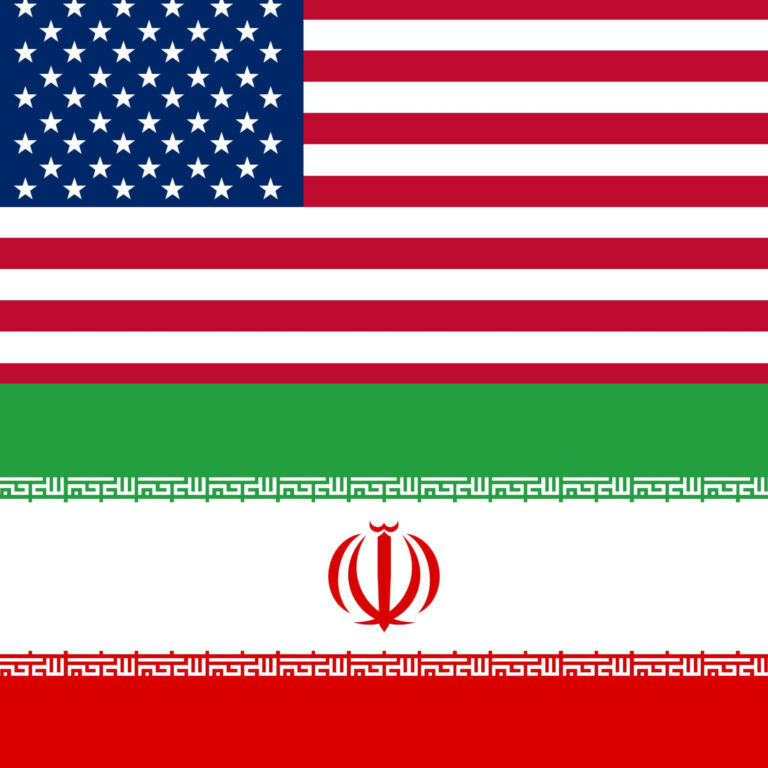
FRESH clashes between the United States and Iran on Tuesday raised tensions over the control of the Strait of Hormuz.

Iran’s Parliament Speaker, Mohammad Baqer Qalibaf, said in a social media post that violations of the four-week ceasefire by the United States and its allies had put the safety of maritime shipping and energy flows at risk.

The ICIR reported that US military said on Monday that it destroyed several Iranian boats, along with cruise missiles and drones, after President Donald Trump ordered naval escorts for stranded oil tankers through the Strait in a campaign he called “Project Freedom”.

The Strait of Hormuz, crucial for transporting global supplies of oil, fertilizer, and other commodities, has been largely shut since hostilities escalated earlier this year, contributing to rising fuel prices worldwide.

According to Reuters, on Monday, multiple commercial vessels in the Gulf reported explosions, while an oil facility in the United Arab Emirates was set ablaze following missile strikes attributed to Iran and Tehran.

The US said some merchant ships successfully transited the Strait under naval protection. Iran denied that any vessels had successfully passed through the waterway, but shipping company Maersk said its US-flagged vessel, Alliance Fairfax, left the Gulf via the Strait of Hormuz on Monday under US military escort.

Meanwhile, the commander of US forces in the region said American troops had destroyed six small Iranian boats, an account Tehran denied. Iranian media, citing a military official, claimed instead that US forces struck civilian vessels, killing five people.

Iranian Foreign Minister Abbas Araqchi said the situation underscored the need for a diplomatic solution, noting that talks mediated by Pakistan were ongoing. He also cautioned against deeper US or UAE involvement.

Iranian officials published a map showing what they described as a widened maritime zone under their control, stretching well beyond the Strait and covering extensive sections of the UAE’s coastline.

Iran’s state television said military officials confirmed the strike on the UAE was carried out in retaliation for what they described as “US military adventurism.”

Following the reports of drone and missile strikes across the UAE during the day, including one that sparked a fire at the key oil port of Fujairah, the Emirati government said the Iranian attacks represented a major escalation and warned it reserved the right to respond.

Oil prices eased one per cent on Tuesday after climbing by as much as six per cent in the previous days on signs the US Navy was loosening Iran’s grip on the Strait of Hormuz.

The conflict in the Middle East has claimed thousands of lives and unsettled the global economy. Although US and Iranian officials have held one round of direct peace talks, efforts to arrange further negotiations have so far been unsuccessful.

Soldier assaults TheCable editor in Lagos

A NIGERIAN soldier has assaulted Olalekan Fakoyejo, assistant business editor with TheCable, following alleged about traffic obstruction in Ikeja, Lagos State.

According to a report by TheCable, the incident occurred on Saturday, May 2, while Fakoyejo commuted from Ikeja to Ogba in a commercial tricycle, popularly known as “Keke Napep”.

TheCable reported that soldiers were controlling traffic near Pleasant Event Centre, off Ajao Road, when one of them stopped a tricycle rider and ordered him to carry a soldier as punishment.

This move reportedly worsened traffic congestion in the area.

Fakoyejo’s tricycle became trapped in the resulting gridlock, which prompted the journalist to have told other passengers that the soldier’s action contributed to the standstill.

A soldier who overheard the comment allegedly ordered Fakoyejo and other passengers to disembark before dragging the journalist aside and confronting him.

Despite explaining himself, Fakoyejo was asked to report to other soldiers nearby. However, as he attempted to speak with another officer approaching the scene, the soldier allegedly slapped him.

TheCable further reported that a video recorded by an eyewitness showed the soldier pushing the journalist repeatedly and attempting to strike him with a stick. During the altercation, Fakoyejo’s phone reportedly fell and shattered.

The ICIR also sighted a video showing two soldiers harassing and dragging the journalist while attempting to hit him with a long stick. In the footage, bystanders are seen intervening and urging Fakoyejo to leave the scene to avoid further assault.

As he tried to exit the area, he was again confronted by other soldiers, who reportedly threatened him before members of the public stepped in to de-escalate the situation.

The assault came amid growing concern over soldiers’ conduct following the killing of Abdulsamad Jamiu, a 24-year-old member of the National Youth Service Corps (NYSC), in Dei-Dei, Abuja.

Jamiu was killed in the early hours of April 25, 2026, at his family residence in Shagari Quarters.

The Guards Brigade of the Nigerian Army had stated that its troops were responding to a distress call over an alleged armed robbery when they engaged fleeing suspects in a “brief but intense exchange”, during which the corps member was reportedly caught in crossfire.

However, the family rejected the Army’s account, describing it as false and misleading, and has demanded an independent investigation.

In a statement on April 27, the family alleged that soldiers scaled the fence of their residence around 2:00 a.m. and entered without warning. They claimed that Jamiu was inside his room when a soldier fired through the closed door, hitting him in the head and killing him instantly.

According to the family, the trajectory of the bullet contradicts claims of a gun battle, insisting that only a single shot was heard and that there was no evidence of any exchange of gunfire in the area.

They called for the identification, suspension, and prosecution of the officers involved, as well as a retraction of the Army’s initial statement and a public apology.

IPI Nigeria unveils Press Freedom Hub as media crackdown concerns mount

THE International Press Institute (IPI) Nigeria has announced plans to commission a new Press Freedom Hub in Abuja as part of activities to commemorate 2026 World Press Freedom Day.

In a statement on May 4, the organisation said the facility, located along Kado Expressway, Abuja, would be officially opened on Wednesday, May 6.

IPI Nigeria is affiliated with the International Press Institute, a global network of editors, media executives, and journalists operating in over 100 countries.

Established in 1950, the organisation has played a significant role in promoting press freedom worldwide.

According to IPI Nigeria’s Secretary, Ahmed Shekarau, the new headquarters will serve as a central base for advancing press freedom and supporting journalists and media professionals across the country.

“The centre will anchor our media advocacy programmes and accelerate efforts to promote press freedom and protect journalists facing threats and censorship,” the President of IPI Nigeria, Musikilu Mojeed, said.

Mojeed added that the hub would also function as a platform for periodic assessments of media freedom and journalist safety, while promoting policy and legal reforms aimed at strengthening independent journalism.

He noted that it would further provide a space for dialogue between the media and government institutions.

The development is against the backdrop of persistent harassment, intimidation, and arrests of journalists in Nigeria.

The ICIR reports that in recent years, media practitioners have reported increasing pressure from security agencies and public officials, with cases ranging from unlawful detention to the use of cybercrime and defamation laws to silence critical reporting.

According to a recent report by the Reporters Without Borders (RSF), Nigeria currently ranks 112th out of 180 countries in the 2026 World Press Freedom Index.

US, Iran may resume hostilities as ceasefire falters

0

TENSION is rising again between the United States (US) and Iran, following fresh attacks around the Strait of Hormuz, a key route for nearly 20 per cent of global oil movement.

In Dubai, authorities confirmed that US forces engaged Iranian units on Monday while trying to reopen the waterway. During the operation, American helicopters brought down six small boats after they moved close to vessels under protection.

US Central Command leader, Brad Cooper, an admiral, said the boats were part of a wider attempt to disrupt shipping. He explained that Iranian forces also launched cruise missiles, drones, and small boats toward civilian vessels being escorted by the US.

The operation also saw two American-flagged commercial ships pass through the Strait safely, as part of a new plan to move stranded vessels out of the area.

Iran, however, pushed back. A military official denied the US account, while state media described the American move as part of Trump’s ‘delirium.’

The situation quickly spread beyond the water. The United Arab Emirates (UAE) reported that it came under attack for the first time since the ceasefire began early April.

According to the UAE Defence Ministry, four cruise missiles were launched. Three were intercepted, while one fell into the sea. In Fujairah, a drone strike caused a fire at a major oil facility and left three Indian workers injured. At the same time, the British military reported two cargo ships burning off the UAE coast.

The UAE authorities also issued missile alerts, asking residents to seek shelter – the first such warning since the ceasefire started. Some flights heading into the country were forced to turn back mid-air.

The Strait of Hormuz, which lies between Iran and Oman, has remained tense for weeks. Iran had earlier restricted movement through the route, leading to a rise in global fuel prices and concern across international markets.

Despite US efforts to reopen the passage, many shipping companies remain cautious. Iran has already warned that any foreign military presence in the area would be treated as a threat.

Meanwhile, Washington has continued to apply pressure through a naval blockade, stopping dozens of ships from reaching Iranian ports since mid-April.

Diplomatic efforts are still ongoing, but there are signs of slow progress. Iran is asking for sanctions to be lifted, the blockade to end, and foreign troops to leave the region.  However, the US has yet to show clear agreement, and talks remain uncertain.

The ICIR reported that US President Donald Trump had paused strikes on Iran while maintaining a naval blockade, saying the move followed a request from Pakistani mediators to allow talks to continue.


Nigerians to face continuous security vetting after visa approval – US

THE United States Mission in Nigeria has announced that all visa applicants, including Nigerians, are subject to security checks even after their visas have been approved.

In a statement shared on its official X account on Monday, the mission explained that visa security vetting is a continuous, multi-layered process.

“All visa applicants, no matter the visa type and where they are located, are continuously vetted. Security vetting runs from the time of each application, through adjudication of the visa, and afterwards during the validity period of every issued visa, to ensure the individual remains eligible to travel to the United States,” the statement read.

The mission explained that security vetting is used by US authorities to assess applicant’s background, including criminal history, potential security risks, and other factors.

It added that the vetting applied to all applicants regardless of visa type or location and is intended to ensure that applicants are eligible to travel to the United States.

The ICIR reports that the development comes amid growing concerns over a travel policy introduced by former US President Donald Trump in December 2025, which placed Nigeria on a list of countries facing partial entry restrictions into the United States.

On December 16, 2025, the White House announced a sweeping expansion of US travel restrictions affecting dozens of countries. Nigeria was not fully banned but placed under partial restrictions, limiting Nigerians’ entry for several visa categories, including B-1/B-2 business and tourism visas, and F, M, and J student visas. It cited concerns over national security, visa overstays, and gaps in identity verification systems.

Nigeria was grouped among about 15 countries facing partial restrictions, while others, mostly in Africa and the Middle East, faced outright bans.

Washington cited terrorism threats, religious violence, and instability as part of the broader justification for tightening immigration controls involving Nigeria.

In late December 2025, Trump recalled several ambassadors across Africa, including its envoy to Nigeria, Richard Mills Jr, as part of a wider policy shift by the Trump administration which affected nearly 30 diplomats globally. The policy aimed at restructuring the country’s foreign service and installing new envoys aligned with its agenda.

Following Mill Jr’s departure in January 2026, the US embassy in Abuja has since been led by a chargé d’affaires, reflecting a temporary downgrade in diplomatic representation.

The ICIR reported that the mission said in March 2026 that visa restrictions were not permanent. It added that travel policies remained under review and could be eased if security and identity management standards improved.

It further noted that strengthening systems around screening, vetting, and information-sharing would enhance global safety, suggesting that Nigeria could see changes in its status if it meets required benchmarks.

Court remands influencer ‘Justice Crack’ in SSS custody

0

A FEDERAL High Court in Abuja on Monday, May 4, ordered the remand of social media influencer, Justice Chidiebere, popularly known as “Justice Crack,” in the custody of the State Security Service (SSS) over alleged cybercrime-related offences.

Chidiebere was arraigned on a three-count charge bordering on cybercrime, breach of public peace and felony. He pleaded not guilty to the charges.

During the court session, prosecution counsel, Mark Oruba, urged the court to remand him in SSS custody on security grounds, but the defence opposed the request, noting that he intended to file bail application later this week. 

In a brief ruling, the presiding judge, Joyce Abdulmalik, granted the application and adjourned the case until May 25 for trial and hearing of the bail request.

According to reports, tension broke out at the court premises as a group of youths blocked SSS operatives from taking the defendant away.

The protesters formed a human barricade, chanting “Free Justice Crack” and demanding his release. 

Reports further indicated that security operatives made several attempts to move through the crowd without using force. After a brief standoff, they succeeded in escorting the defendant into a waiting vehicle and left the premises.

Background

The case followed growing controversy surrounding the influencer’s recent social media posts on the welfare of Nigerian soldiers.

Chidiebere, known for his commentary on public affairs, had shared viral videos in late April in which some soldiers complained about poor feeding and treatment in conflict areas. The posts sparked widespread reactions online.

Amid the backlash, he was reported missing on April 28 after leaving his Abuja residence, with his family raising concerns over his whereabouts.

The Nigerian Army later confirmed his arrest, stating that he was picked up alongside some soldiers featured in the videos. While the soldiers remain in military custody for internal disciplinary processes, the Army said the influencer was handed over to civil authorities for further investigation.

In a statement released by the Army Acting Director of Public Relations, Appolonia Anele, a colonel, the military stated that the activist was being investigated for a potential breach of the Armed Forces’ Social Media Policy.

The military authorities alleged that Chidiebere’s interactions with the soldiers went beyond reporting welfare issues, claiming he actively incited personnel toward acts of subversion. 

“Preliminary report reveals that the soldiers discussed wide range of issues with Justice Chidiebere who seemed to be inciting soldiers to create discontent within the system. An example was a chat bothering on subversion which Chidiebere had with the soldiers,” she stated.

It further emphasised the danger of such interactions, stating, “A situation where civilians cultivate vulnerable personnel towards acts of subversion has far-reaching implications on discipline and national security.”

PDP crisis deepens as Makinde bloc names Turaki caretaker chairman

THE crisis within the Peoples Democratic Party (PDP) has further deepened as the faction aligned with Oyo State Governor Seyi Makinde appointed Tanimu Turaki, a senior advocate, as the chairman of its 13-member caretaker committee.

The decision was taken at the factional 103rd National Executive Committee (NEC) meeting held on Monday, May 4, in Abuja, amid continued leadership tussles within the opposition party.

The meeting, according to a Punch report, followed a motion moved by Edo State PDP Chairman, Tony Aziegbemi, and seconded by ex-officio member, Clement Fagboyede. 

Taofeek Arapaja was named National Secretary, while other members of the committee include Daniel Ambrose, Hamza Abuya, Ihediwa, Isah Abubakar, Theophilus Dakashan, Ini Ememobong, Aribisala Adewale Idowu, Baru Shaffi and Okechukwu Obiechina.

The latest development comes against the backdrop of a deepening internal crisis in the PDP, which has seen rival factions battle for control of the party’s structure ahead of the 2027 general elections.

The dispute gained fresh momentum following a recent Supreme Court ruling that nullified the Ibadan convention organised by Makinde-backed faction of the PDP in November 2025. The court had lampooned the faction for disobeying subsisting court orders.

The convention produced a National Working Committee led by Turaki. The court also struck out the majority judgment of the Court of Appeal, which in December had upheld the removal of Samuel Anyanwu as the PDP’s national secretary.

Following the judgment, both Makinde and Minister of Federal Capital Territory (FCT) Nyesom Wike-aligned blocs have continued to assert control over the PDP, with each side interpreting the ruling in its favour.

While the Makinde faction has insisted on restructuring the party through its organs, the camp loyal to the minister maintained that the Supreme Court decision validated its control and structures.

The ICIR reported the Turaki-led group’s Board of Trustees announced its readiness to assume the party’s leadership.

The BoT, through a statement by its charman, Adolphus Wabara, a former senator, said it would assume the PDP’s leadership to avoid a vacuum, and “pursuant to the empowering provisions of the constitution of the PDP (As amended in 2017)”

It posited that the Supreme Court verdict nullified both the Ibadan Convention and the Wike-backed convention in Abuja.

Similarly, The ICIR reported that shortly after the Supreme Court verdict, Wike addressed a press conference where he claimed that the ruling had resolved all disputes surrounding the party’s leadership structure.

“Today, the Supreme Court has brought to an end the so-called factions of the PDP. There is no more faction in the party. There is only one PDP. The Supreme Court has validated our (Abuja) Convention and set aside all claims to any parallel structure. What this means is that the PDP has come to stay as one united party,” he said.

Wike added that the PDP remained Nigeria’s leading opposition party and a “credible alternative” to the All-Progressives Congress (APC) – the party he is currently serving in.

Nigeria ranks lowest in global life expectancy

A CHILD born in Monaco can expect to live 30 years longer than a child born in Nigeria.

This is according to the World Bank Group’s 2023 life expectancy data, which puts Nigeria’s average life expectancy as 54.5 years, nearly 20 years less than the global average, as the country sits outside the world’s top 20 for life expectancy.

Monaco leads the world with an average life expectancy of 86.4 years, followed closely by San Marino and others in the top 20. Countries in the top 20 include Liechtenstein, Switzerland, Japan, Spain, Italy, Sweden, and Norway, all of which average above 83 years.

They leave countries like Nigeria and Chad where systemic failures, poverty, and instability continue to shorten lives at 30 on the global scale.

The World Bank Group compiled its data using sources such as the United Nations Population Division and Eurostat. It revealed that countries at the top are typically wealthier, with strong healthcare systems and low rates of early-life deaths while nations at the bottom often struggle with a mix of disease, malnutrition, and conflict factors that continue to shorten lives.

These countries share similarities like universal or near-universal healthcare coverage, low maternal and infant mortality, strong public health systems, high-income levels and education, and clean environments and stable governance.

The report revealed that in Japan, life expectancy hovers around 84 years, driven by preventive healthcare, diet, and social systems that prioritise ageing populations. In Switzerland and Norway, strong welfare systems and healthcare access ensure survival even in old age.

However, the United States ranks around 48th globally, with an average life expectancy of 78.4 years, significantly lower than many peer nations in Europe and Asia.

Africa’s best performers, but still behind

Across Africa, the data shows that while the continent carries the burden of some of the lowest life expectancies globally, a few countries are steadily outperforming others.

Countries often ranked among Africa’s highest life expectancy levels include Mauritius which ranks mid-to-high 70s. It is followed by Algeria, Tunisia, and Morocco, which is around mid-70s. Their performances are linked to expanded primary healthcare systems, improved maternal and child health services, rising literacy and female education rates, and better control of infectious diseases.

At the lowest end of the global scale, life expectancy drops sharply into the 50s and early 60s, as Nigeria ranks 30 with 54.5 years, Chad at 55, Central African Republic at 57.4 years, South Sudan at 57.6 years, Somalia at 58.8 years, Mali at 60.4 years, and Niger at 61.2 years.

The data shows that these countries face overlapping crises like high maternal and infant mortality, limited access to healthcare facilities, malnutrition and food insecurity, conflict and displacement, weak infrastructure and underfunded public systems.

For instance, in Chad and Nigeria, preventable diseases such as malaria, tuberculosis, and complications during childbirth continue to claim thousands of lives annually.