Home Blog Page 360

CBN holds interest rate at 27.5% despite sharp decline in inflation

THE Central Bank of Nigeria (CBN) has retained the benchmark interest rate at 27.5 per cent despite a sharp drop in headline inflation in January as confirmed in the latest rebasing methodology.

The CBN governor, Olayemi Cardoso, said at the end of the 2-day monetary policy meeting (MPC) meeting on Thursday, February 20 held in Abuja.

He said the committee, after its 299th meeting to review recent economic and financial developments as well as assess the risks to the outlook for 2025, unanimously decided to hold all parameters.

All 12 members of the committee were in attendance, he noted.

The committee thus retained the monetary policy rate, known as the benchmark interest rate, at 27.50 per cent.

It retained the asymmetric corridor around the MPR at + 500/-100 basis points, the cash reserve ratio (CRR) of deposit money banks at 50 per cent, and merchant banks at 16 per cent.

It also retained the liquidity ratio at 30 per cent, he announced.

“At this meeting, the Monetary Policy Committee noted with satisfaction recent macroeconomic developments which are expected to positively impact price dynamics in the near to medium term.

“These include the stability in the foreign exchange market with the resultant appreciation of the exchange rate and the gradual moderation in the price of PMS (premium motor spirit),” Cardoso said.

He hinted, however, that the committee members were not oblivious to the risk of persisting inflationary pressures driven largely by food prices.

He said the committee noted the recent rebasing of the Consumer Price Index (CPI) by the National Bureau of Statistics, (NBS), which reviewed the weights of items in the consumption basket to reflect current consumption patterns.

“The Committee further noted that as the federal government continues to invest in PMS, security in food-producing communities, supported by other measures to enhance food supply, food prices are expected to continue to moderate,” Cardoso said.

Since April 2022, when the benchmark interest rate was at 11.5 per cent, the CBN has been tightening the benchmark interest rate to rein in inflation, The ICIR can report.

Nigeria’s inflation has surged since then and has worsened significantly since President Bola Tinubu came into office on May 29, 2023, with his dogged performance on fuel subsidy removal and exchange rate devaluation.

Between May 2023 and December 2024, headline inflation rose from 22.4 per cent to 34.80 per cent.

Its impacts on households and businesses have led to increasing costs of food items, commodities, energy, and transportation and the general slowdown in economic activities.

But following the recent rebasing of the economy by the NBS, headline inflation declined to 24.48 per cent year-on-year in January.

The apex bank committee had waited for the report of the rebasing exercise to hold its MPC meeting.

It postponed the MPC meeting in January to February but later shifted the earlier date to February 19-20.

The sharp decline in the headline inflation rate from 34.8 per cent in December 2024 to 24.48 per cent in January 2025 did not come as a surprise given the rebased of the economy, a renowned economist, Muda Yusuf, explained.

He explained that the transaction demand in December 2024 was typically much more intense because of the festivities while the spending momentum in January was predictably much slower because of lower disposable incomes following intense spending in the previous month.

“However, it is important to clarify that a drastic reduction in inflation figures is not tantamount to a reduction in the price level,” Yusuf, who is the managing director/chief executive officer of the Centre for the Promotion of Private Enterprise (CPPE), said.

According to him, inflation reduction simply means a reduction in the rate of increase in the general price level, not a price reduction.

“The drastic deceleration in inflation should, therefore, be cautiously celebrated.  The reality of high prices has not changed and remains a major factor in the cost of doing business, cost of living, and poverty equation in the country.

“Households and firms are still concerned about high energy costs, the strength of the naira, high interest rate, cost of imports, transportation costs, and insecurity,” the CPPE boss said.

It is only hope that the government will recalibrate its strategies to address the major cost drivers of inflation, he said.

“What businesses and households desire at this time is a reduction in the general price level from the incredibly high levels in 2024 to a substantial moderation in 2025, which is defined in technical parlance as disinflation.

“The good news, however, is that we are beginning to see indications of such reductions in PMS, diesel, some food items, and pharmaceutical products.  It is hoped that this trajectory will be sustained in the year,” Yusuf pointed out.

Other experts reactions

The managing director and chief economist for Africa and the Middle East at Standard Chartered Bank, Razia Khan, said the rescheduling of the meeting has created additional interest in what the CPI rebasing might reveal.

“On balance, however, we expect the CBN to cite the inflation data as a justification for keeping interest rates on hold. With the CBN having raised the monetary policy rate by a modest 25bps to 27.5 percent only at its last meeting of 2024, we think any frontloaded easing might be considered premature by foreign portfolio investors and may put at risk recent hard-won stability in Nigeria’s FX market,” she said.

She expects the CBN to start easing in the second half (H2) of 2025, noting that a faster-than-expected improvement in inflation could see the date of the first rate cut brought forward.

A senior relationship manager at FSDH Merchant Bank, Ayodele Akinwunmi said if economic stability continues into the second quarter of the year, marked by stability in the forex market and a reduction in commodity prices, the CBN could consider reducing interest rates.

“By the second half of the year, we may see enough stability in the economy for the CBN to consider lowering interest rates,” he said.

Abiola won June 12 election, Babangida confesses in new book

FORMER military president, Ibrahim Badamasi Babangida (IBB), has publicly admitted for the first time that the late Moshood Kashimawo Olawale (MKO) Abiola won the June 12, 1993, presidential election. 

This revelation is contained in his new autobiography, ‘A Journey in Service’, launched in Abuja on Thursday, February 20.

The book, reviewed by former Vice President Yemi Osinbajo, said Babangida dedicated a full chapter to the transition to military rule and the annulment of the June 12 election, widely believed as the most credible, freest and fairest in Nigeria’s democratic history. 

Osinbajo described the annulment as a decision with ‘cataclysmic consequences’ that led to a ‘military interregnum’ considered one of the most vicious in Nigeria’s nationhood.

In the book, Babangida was said to have acknowledged that Abiola, the candidate of the Social Democratic Party (SDP), met all constitutional requirements to be declared Nigeria’s president.

He wrote: “Although I am on record to have stated after the elections that Abiola may not have won, upon deeper reflection and a closer examination of all available facts, particularly the detailed election results published as an appendix to this book, there was no doubt that M.K.O. Abiola won the June 12 elections.”

Babangida further noted that Abiola secured the mandatory one-third of the votes cast in 28 states, including Abuja, thereby fulfilling the constitutional requirement for victory.

“Upon closer examination of the original collated figures from the 110 polling booths nationwide, it was clear that he satisfied the two main constitutional requirements for winning the presidential elections, namely majority votes and geographical spread,” he added.

Babangida had in 2018 said there could have been consequences if he had allowed the election results to stand. He refused to say what those consequences could have been, saying rather that they would be contained in his memoir.

The former leader, however, refused to admit that Abiola won the poll (in 2018), saying, rather that “he was on the verge of winning the election.

“By the time it was assumed that he (Abiola) won, officially, the official thing was not done. Results were still coming in, and they weren’t declared. So, I think I would be deceiving myself if I say he has won.”

For decades, Babangida has faced criticism for annulling the poll. His military government, which ruled from 1985 to 1993, never officially declared a winner before cancelling the process, citing national security concerns. 

It is noteworthy to state that Babangida and Abiola were very close friends.

Annulling the poll outcomes triggered nationwide unrest, leading to the brutal military regime of the late Sani Abacha.

Abiola was later arrested in 1994 while trying to reclaim his mandate and died in detention in 1998 under unclear circumstances. His wife, Kudirat Abiola, was also assassinated in her struggle to reclaim her husband’s mandate.

Osinbajo, in his review, noted that Babangida “answers these questions fully” for the first time, including disclosing his reasons for doing so. 

However, he urged readers to get the book for the full details.

The ICIR reported that Babangida’s admission came seven years after President Muhammadu Buhari posthumously recognised Abiola as a Grand Commander of the Federal Republic (GCFR), the highest national honour in Nigeria, customarily awarded to sitting or former Presidents, or Heads of State.

Buhari also declared June 12 as the country’s official Democracy Day, changing from the traditional May 29, the day Nigeria’s Fourth Republic was birthed in 1999.

Nigeria still reliant on fuel imports as local refineries supply less than 50% – Regulator

0

Nigeria still reliant on fuel imports as local refineries supply less than 50% – Regulator

DESPITE  the widely praised rehabilitation efforts of Nigerian-owned refineries, local production still falls short, supplying less than 50 per cent of the country’s fuel consumption, according to the Nigerian Midstream and Downstream Petroleum Regulatory Authority (NMDPRA).

The NMDPRA chief executive, Farouk Ahmed, said at a press conference on Wednesday, February 19, in Abuja where he was represented by the executive director of distribution System, Storage, and Retailing Infrastructure, Ogbugo Ukoha.

According to him, the significant shortfall is being filled through the importation of refined petroleum products in line with the 2021 Petroleum Industry Act (PIA) provisions.

“Just before the current administration came in. The daily PMS supply sufficiency was always more than 60 million. “Averaging about 66 million a day for PMS. And following Mr. President’s withdrawal of subsidy, the announcement of May 29th, 2023, we immediately saw a steep decline in consumption. And between then and as we speak, we’ve continued to do plus or minus 50 million.

“Of these 50 million litres averaging for each day, less than 50 per cent of that is contributed by domestic refineries. And so the shortfall by the PIA is sourced by way of imports,” Ahmed was quoted to have said.

In September 2024, the 650,000 barrels per day (bpd) Dangote Refinery started the production of petrol after months of delay to reach an agreement.

The Port Harcourt and Warri refineries also came on stream after being moribund for decades and following a $1.5 billion turnaround maintenance cost in 2021.

The ICIR reported that there have been skeletal operations of the Port Harcourt refinery months after commissioning despite officials claiming that the facility is working at advanced levels of production, supplying products to Nigerians.

While the refinery was once loading over 100 trucks of petroleum products daily, current output struggles to reach 30 trucks, the report spotlighted.

Confirming Nigeria is still heavily dependent on petrol imports, with over 50 per cent coming in from foreign countries, the NMDPRA boss, however, asserted that no oil company that owns a refinery has imported petroleum products into the country this year.

Other oil marketing companies (OMCs) are the ones that are importing the shortfall to bridge the gap and avert a scarcity, he said.

“Let me also say that none of the oil marketing companies, the companies that own refineries in the country for this year have imported any PMS. The other OMCs are the ones that are importing the shortfall. And if we do nothing to bridge that shortfall, we will have scarcity in our hands.

“And that’s something that the regulator is mindful of, to ensure that there is sufficient supply of petroleum products across the country. So just for clarity, what I am saying is that the contribution of local refineries towards sufficiency is less than 50 per cent. That is between January and February 2025, which is less than 50 per cent of what we require daily. And that shortfall is sourced by way of imports,” the NMDPRA boss maintained.

He explained that even though none of the local refineries have imported petrol this year, they could if the situation arises.

Ahmed further refutes reports on substandard petrol products in the country.

He said all the petroleum products imported into the country this year were of standard quality, insisting that all petroleum products meet the specifications of the Standard Organisation of Nigeria (SON) and the Petroleum Industry Act 2021.

“People who dabble within the social media space must be reminded that it is disrespectful if you imagine that Nigerians are gullible,” he warned.

Access Bank Lagos City Marathon at 10: A race with potential, but still falling short

0

By Jahnedu IBEKWELU

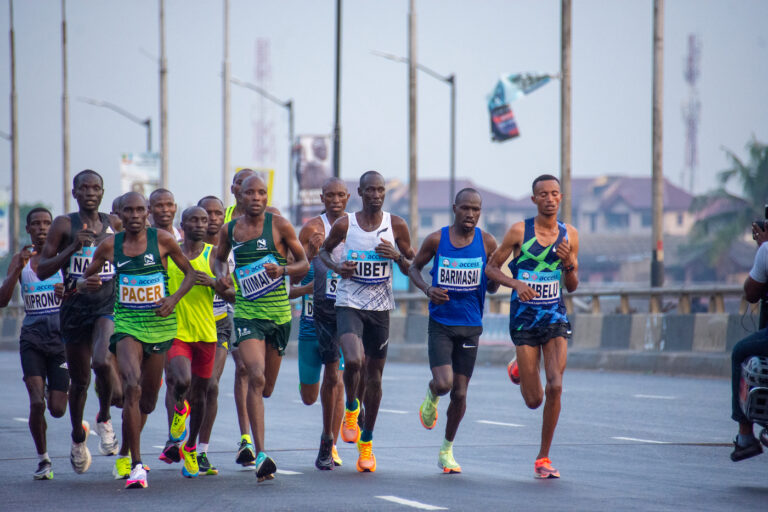
THE Access Bank Lagos City Marathon (ABLCM) recently marked its 10th anniversary, a milestone that should have been a celebration of growth, excellence, and global recognition. Instead, it served as a stark reminder of how much work remains to be done to elevate this event to the standard of other world-class marathons.

As someone who has participated in multiple editions of the race, I can attest to its potential. However, after a decade, the marathon continues to grapple with fundamental issues that undermine its credibility and frustrate its participants.

The story of my experience with the ABLCM begins in 2023, when I first decided to run the race. A fellow runner had warned me about the challenges I might face, particularly the lack of water on the course. Her advice—”Put money in your pocket. You’ll need it to buy water”—was both practical and prophetic. In all my years of running, that was the strangest advice I’ve ever received from a fellow runner. It wasn’t the suggestion itself that struck me as odd—hydration is non-negotiable for any serious runner. No, what made it peculiar was the context. It befuddles the mind to imagine buying water on the course of a big city marathon. At the time, I dismissed it as an exaggeration, but by the time I crossed the finish line, I realised how accurate her warning had been.

tart line from 2024 Lagos City Marathon. Photo: Lagos City Marathon gallery.

The 2023 edition of the marathon was a mixed bag. While the race organisers managed to close the roads (for the first 32km, at least) and provide water stations (with no water at them after the 30km mark), the execution left much to be desired. Water points were spaced too far apart—4 kilometres, to be exact—a decision that defies the basic principles of marathon organisation. In a city like Lagos, where humidity often exceeds 75 per cent, proper hydration is not a luxury; it is a necessity. Handing runners room-temperature water bottles at such intervals was not only inadequate but also counterproductive. Carrying a 60cl bottle for kilometres added unnecessary weight, making an already gruelling race even more challenging.

The most egregious issue, however, was the practice of ferrying runners who had given up to the finish line and awarding them medals. This practice, which I witnessed firsthand, is unheard of in reputable marathons worldwide. It undermines the integrity of the event and devalues the achievements of those who actually complete the race. A marathon is a test of endurance, discipline, and determination. Allowing participants to skip the majority of the course and still receive medals is a disservice to the sport and its athletes.

A marathon is a test of endurance, discipline, and determination. Allowing participants to skip the majority of the course and still receive medals is a disservice to the sport and its athletes.

Fast forward to 2024, and the situation had not improved. If anything, it had worsened. The race started an hour earlier than the time stated in the registration email, leaving many runners, including myself, scrambling to catch up. Once again, water stations ran dry after the 34-kilometre mark, forcing runners to rely on local vendors. The most shocking development, however, was the absence of medals at the finish line.

Exhausted runners who had just completed 42.2 kilometres in sweltering heat were met with chaos and disappointment. To add insult to injury, street urchins were seen hawking medals at ₦3,000 to desperate participants. Exhausted runners, desperate for a memento of their achievement, reluctantly paid up. The organisers claimed they had been “overwhelmed” by the street boys, a feeble excuse given the presence of armed police and soldiers.  How these boys gained access to the medals—and the finish line—remains a mystery.

To add insult to injury, street urchins were seen hawking medals at ₦3,000 to desperate participants.

The 2025 edition, billed as the 10th-anniversary race, offered a glimmer of hope but ultimately fell short of expectations. While there were improvements—such as better road closures and more consistent water stations—the organisers still failed to address critical issues. The roads were closed to traffic until 1 p.m., but buses continued to ferry “runners” to the finish line. To get there, the buses had to clog the roads, pushing the actual runners to broken sidewalks. The medals, though of higher quality than in previous years, were still being sold by unauthorised individuals, only that the prices were probably adjusted for inflation: they were on sale for ₦5,000 this year. These recurring problems highlight a lack of accountability and a failure to learn from past mistakes.

The ABLCM has potential. It could be a flagship event for Lagos, a city teeming with energy and ambition. But after a decade, it still behaves like a toddler—unsteady, unpredictable, and prone to missteps. The organisers need a complete overhaul, starting with the inclusion of experienced runners in the planning process.  After 10 years, the ABLCM should be a source of pride for Lagos and Nigeria. Instead, it remains a work in progress, plagued by the same issues that have marred it from the beginning. The organisers must take responsibility for these shortcomings and implement meaningful changes. Here are a few suggestions:

  1. Hydration:

Water stations should be placed at intervals of no more than 2 kilometers, and the water should be cold. This is not an unreasonable demand, especially given the resources available to the organizers, and the very harsh weather in Lagos on February.

2. Road closures:

The roads must remain closed for the entire duration of the race. Allowing buses to ferry runners to the finish line is unacceptable and undermines the integrity of the event. It also endangers the actual runners. A runner should not be running off a marathon course from a bus.

  1. Medals:

Every runner who completes the race should receive a medal. The fact that this basic expectation is still not being met after 10 years is inexcusable. For many, the medal remains the only justification for running a marathon. Only 1 per cent or so of the world’s population have ever run a marathon. Those who challenged themselves enough to do it should be given a medal.

  1. Transparency and accountability:

The organisers must be more transparent about their processes and hold themselves accountable for their mistakes. This includes addressing the issue of unauthorised individuals selling medals at the finish line. A finish line of a marathon is a sanctuary that should be accessible only to those who made the sacrifice required to access it. Opening it up to all undermines the event.

  1. Technology:

Every marathon worth its name has introduced technology in their planning and execution. I sit in the comfort of my home and track friends on marathon courses across the globe. The introduction of an app and the use of timing chips would go a long way in improving the organisation of the race. These tools would not only enhance the experience for participants but also lend legitimacy to the event.

The ABLCM has the potential to be a world-class marathon, but realising that potential will require a concerted effort from all stakeholders. Access Bank, as the primary sponsor, must take a more active role in ensuring that the event meets international standards. The organisers must prioritise the needs of the runners and address the issues that have plagued the race for years.

The ABLCM at 10 is like a child who, despite reaching a significant developmental milestone, still exhibits the behavioural patterns of a toddler. Parents expect certain milestones as their children grow: walking, talking, feeding themselves, and eventually, demonstrating independence and responsibility. A 10-year-old who cannot perform these basic functions would rightly be a cause for concern. Similarly, a 10-year-old marathon that still struggles with the basics—hydration, road closures, and medal distribution—is a cause for concern.

The marathon’s inability to provide adequate hydration is akin to a 10-year-old who cannot feed themselves. The failure to keep roads closed is like a child who cannot walk steadily. And the absence of medals at the finish line is comparable to a toddler who throws a tantrum instead of communicating their needs. These are not just minor hiccups; they are fundamental failures that call into question the event’s maturity and readiness to be taken seriously on the global stage.

The shortcomings of the ABLCM are not just a matter of inconvenience for runners; they reflect broader issues of governance, accountability, and professionalism in Nigeria. The marathon is a microcosm of the challenges we face as a nation: a lack of attention to detail, a disregard for excellence, and a tendency to prioritise optics over substance.

The Access Bank Lagos City Marathon at 10 is a race with immense potential, but it is also a race that continues to fall short of expectations. The issues that have plagued it for years—poor hydration, inadequate road closures, and the absence of medals—are not insurmountable, but they require a concerted effort to address.

It is time for the organisers, sponsors, and government to come together and take the necessary steps to elevate the ABLCM to the standard of other world-class marathons. Until then, it will remain a source of frustration for runners and a missed opportunity for Lagos and Nigeria.

Jahnedu is an active runner and budding cyclist. He has participated in many marathons both within and outside Nigeria. He is also a mainstay in the annual charity half marathon organised by Run Club Abuja (RCA). The 2025 Access Bank Lagos City Marathon is his third participation in the event (2023, 2024, 2025). He can be reached via  jahneduibekwelu@gmail.com.

US Ambassador denies USAID funding of Boko Haram, cites lack of evidence

0

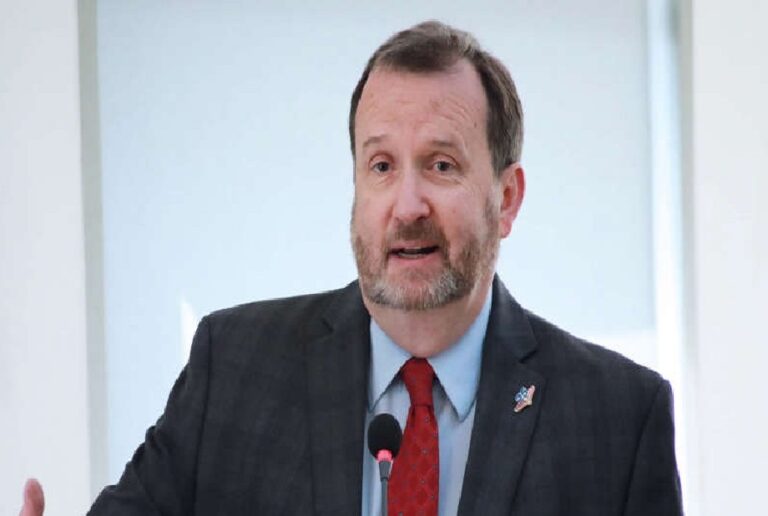
THE United States (US) Ambassador to Nigeria, Richard Mills, has denied allegations that the United States Agency for International Development (USAID) funded Boko Haram or any other terrorist organisation.

Mills said the US had strict policies in place to prevent diversion of funds to terrorist groups and that there was no evidence to support the claim.

His submission followed Congressman Scott Perry’s accusation that USAID funded terror groups, including Boko Haram.

The allegation sparked controversies that led to the Nigerian Senate summoning security chiefs to investigate the development.

Addressing journalists after a meeting with the Nigeria Governors Forum (NGF) in Abuja on Wednesday, February 19, Mills said no nation condemned Boko Haram’s violence more strongly than the US.

He explained that President Donald Trump’s administration did not cut assistance but implemented a 90-day break to develop ways to make USAID more functional.

“US Secretary of State, Marco Rubio, has said that this is not about ending foreign assistance to our partners like Nigeria. It’s about making our assistance more effective and aligning it with US government policies and interests.

That’s what this 90-day pause is for. However, there are waivers for life-saving assistance, such as support for HIV patients, maternal and child nutrition, and internally displaced people. So that continues. In 90 days, we will know where we stand,he stated.

Mills reassured that the US and Nigeria would continue to work closer on counterterrorism and that if any evidence of diverted funds was found, the US would immediately investigate in collaboration with Nigerian authorities.

Recall that a US Congressman, Scott Perry, accused the embattled USAID of allegedly funding terrorist organisations, including Boko Haramalthough he did not provide any evidence to back his claims. 

Perry made the allegation during the inaugural hearing of the Subcommittee on Delivering on Government Efficiency (DOGE) on Thursday, February 13.

In his presentation titled “The War on Waste: Stamping Out the Scourge of Improper Payments and Fraud,“ Perry, a Republican from Pennsylvania, asked several questions about USAID’s operations. 

In a viral video, Perry queried,Who gets some of that money? Does that name ring a bell to anybody in the room? Because your money, your money, $697 million annually, plus the shipments of cash funds in Madrasas, ISIS, Al-Qaeda, Boko Haram, ISIS Khorasan, and terrorist training camps. That’s what it’s funding.”

He claimed that USAID spent $136 million to build 120 schools in Pakistan, but there was no evidence that the schools were ever constructed.

Perry in the past has made allegations without evidence. The Washington Post noted that he played a key role in promoting false claims of fraud following the last US presidential election. In 2018, he was also accused of linking ISIS with the Las Vegas massacre without substantiating the claim.

Following his allegation, the Nigerian Senate on Wednesday, February 19, summoned the country’s security chiefs over an allegation that the USAID funded terrorism in Nigeria.

Security chiefs invited include the National Intelligence Agency (NIA), Directorate of Intelligence Agency (DIA), State Security Services (SSS), and the National Security Adviser (NSA).

The ICIR reports that Boko Haram is a terrorist organisation based in northeastern Nigeria.  The group has carried out numerous violent attacks, including massacres and mass abductions, such as the killing of 59 schoolchildren and the kidnapping of 276 schoolgirls in 2014.

The USAID has been under fire since Donald Trump was sworn in as president on January 20.  The administration immediately revealed its plan to dismantle the organisation.

The ICIR reported that USAID announced that it would be placing its staff on administrative leave, both in the US and abroad, following Trump’s decision.

The move, seen as controversial by many, sparked widespread criticisms from Democrats and human rights organisations, who argued that it would have a devastating impact on global humanitarian efforts.

The USAID supports health and emergency programmes in over 120 countries, including some of the world’s poorest regions.

The decision to restrict USAID’s activities is led by billionaire Elon Musk.

Musk, considered aspecial government employee” by the White House, heads the Department of Government Efficiency (DOGE).

He has been vocal in his criticism of USAID, describing it as a hub of “radical-left Marxists” who are anti-American.


Officials react as Niger reportedly bars Nigerian travellers with ECOWAS passport

0

ECONOMIC Community of West African States (ECOWAS) and Nigeria’s Foreign Affairs Ministry officials have reacted to reports that Niger Republic has introduced stricter immigration rules requiring visitors from Nigeria to present a valid international passport’ different from the ECOWAS passport before they could be allowed into the country.

The new order allegedly came on the heels of Niger’s recent withdrawal from ECOWAS alongside Mali and Burkina Faso following military putsches in the countries.

According to reports, Nigerians willing to enter Niger must have a valid international passport in addition to an ECOWAS passport.

The Punch newspaper quoted several sources who claimed the Nigerien authorities had tightened immigration measures at its key borders, including Illela in Nigeria and Konni in Niger, despite maintaining an open border with Nigeria.

This has reportedly caused significant difficulties for cross-border traders and commuters, as border officials no longer recognise the ECOWAS passport as a valid travel document.

Daily Trust also reported that immigration officials at the Ilella-Niger border confirmed the development.

Travellers fear the situation could deteriorate further, disrupting trade and movement across the two nations.

Reports indicate that Nigerian travellers are forced to pay bribes to Nigerien immigration officials before they are allowed to pass since they could not produce the new passport demanded by the country.

Reacting to the development in a chat with The ICIR on Thursday, February 20, the ECOWAS head of communication, Joel Ahofodji, described it as a rumour.

“ECOWAS is not reacting to rumours. No, ECOWAS does not work with rumours. What’s more, ECOWAS is an institution and the Nigerian authorities have not officially referred the matter to it,” he stated.

He urged reporters to visit the borders and see things for themselves.

Also speaking on the matter in a chat with The ICIR, the acting head of Crisis Monitoring and Public Communications at the Foreign Affairs Ministry, Kimiebi Imomotimi Ebienfa, said there was no official report on the issue yet.

The ICIR reports that the new restrictions on Nigerian travellers using ECOWAS passports are likely to have significant economic implications, particularly for cross-border traders and businesses.

The African Continental Free Trade Area Agreement (AfCFTA) and the ECOWAS regional trade agreements aim to promote economic integration and the free movement of goods and services among member states. However, if Niger chooses to tighten its borders, it may hinder the implementation of these agreements and disrupt trade flows.

Niger has strong economic links with several northern states in Nigeria, and such restrictions could lead to a decline in trade volumes and revenue losses for businesses that rely on cross-border trade.

The restrictions may also increase the cost of doing business, as traders may need to obtain additional documentation or pay bribes to facilitate their movements.

Nigeria states bordering Niger are Kano, Katsina, and Sokoto.

The states have historically maintained strong trade relationships with Niger, with many businesses relying on the ECOWAS passport to facilitate the movement of goods and services.

Following the exit of Burkina Faso, Mali, and Niger from ECOWAS, The ICIR reported that Nigeria’s fight against insurgency could suffer and the exit could negatively impact its economy.

Niger, Mali and Burkina Faso were sanctioned by ECOWAS for enforcing a military regime and severing diplomatic ties with France, their colonial masters.

They officially pulled out of ECOWAS on January 28.

Court blocks Trump from restoring birthright citizenship ban

A UNITED States (US) Appeals Court has rejected an emergency request from President Donald Trump to vacate a ruling blocking his birthright citizenship order as part of the Republican’s hardline crackdown on immigration and illegal border crossings.

According to AFP, the San Francisco-based 9th US Circuit Court of Appeals rejected the request for an emergency order putting on hold an injunction issued by a federal judge in Seattle blocking the president’s directive.

The ICIR reported that Trump issued an executive order on January 20 – the day he assumed office as the 47th US president, directing relevant public institutions to deny citizenship for children born in the US to undocumented immigrants or people with temporary status in the country. It was one of the 42 orders issued by the president that day.

According to Reuters, this was the first time an appellate court had weighed in on Trump’s executive order on birthright citizenship, whose fate may ultimately be decided by the Supreme Court. Judges in Maryland, Massachusetts and New Hampshire have likewise blocked the order, and appeals are underway in two of the cases.

About the executive order 

Trump is seeking to end birthright citizenship for children whose parents are undocumented or are in the United States temporarily.

Under an 1868 constitutional amendment, anyone born on American soil is deemed a US citizen.

The ICIR reported that 22 Democratic-led states, along with the District of Columbia and the city of San Francisco, on January 21, filed lawsuits in federal courts in Boston and Seattle claiming Trump violated the U.S. Constitution.

On February 5, another federal judge, Deborah Boardman, placed a lid on the order, which compelled Trump’s legal team to take the case to the Appeal Court.

The three-judge panel in the 9th US Circuit Court of Appeals ruled that birthright citizenship “is beyond the president’s authority to condition or deny” because it is “about citizenship.

The ICIR reports that anyone born in the U.S. is considered a citizen at birth, which derives from the Citizenship Clause of the 14th Amendment that was added to the Constitution in 1868. 

The amendment reads: “All persons born or naturalized in the United States and subject to the jurisdiction thereof, are citizens of the United States and of the State wherein they reside.”  

FG bans 60,000-litre tankers from roads to curb crashes

0

THE Federal Government has announced a ban on fuel tankers carrying 60,000 litres of petroleum products on Nigerian roads, effective March 1. 

The decision aims at curbing accidents involving heavy-duty petroleum trucks, was reached after consultations with key industry stakeholders on Wednesday, February 19.  

Speaking after the meeting, the Executive Director of Distribution Systems, Storage, and Retailing Infrastructure at the Nigerian Midstream and Downstream Petroleum Regulatory Authority (NMDPRA), Ogbugo Ukoha, said the measure was introduced following a rise in road crashes involving fuel tankers.

”The first stakeholder’s technical committee met today to drill down and put timelines for about 10 resolutions that had been taken on how to drive down the significant increase that had been recorded in relation to trucks and transit incidents and fatalities, ” he said.

He noted that discussions with agencies such as the Department of State Services (DSS), Federal Fire Service, Federal Road Safety Corps (FRSC), National Association of Road Transport Owners (NARTO), and National Union of Petroleum and Natural Gas Workers (NUPENG), among others, led to a unanimous resolution that from March 1, any tanker with an axle load exceeding 60,000 litres of hydrocarbon will be barred from loading at petroleum depots.  

Ukoha emphasised that yesterday was the first time all stakeholders reached a consensus on the issue and assured that collaboration would continue to ensure the safe transportation of petroleum products across the country.  

”The important thing about this is that, for the first time, consensus was built amongst all stakeholders, and we’re continuing to encourage that we will work together cohesively to deliver safe transportation of petroleum products across the country,” he said.

Regulator dismisses fuel quality concerns

Addressing concerns about the quality of fuel in circulation, Ukoha dismissed recent claims questioning fuel standards as bogus, misleading, and unscientific.

He reaffirmed that all imported and locally refined petroleum products met regulatory standards before distribution to consumers.  

The NMDPRA, he stated, remained committed to enforcing petroleum industry standards, ensuring product quality, and supporting local refineries in line with the Petroleum Industry Act (PIA) 2021. 

He urged Nigerians to disregard unfounded social media claims regarding fuel quality.  

”As a regulator, we’re working very hard in compliance with the presidential and statutory mandates to support the local refineries and build capacity to a point that Nigerians will have sufficient products. Not just quality, but pricing is also done in a transparent, competitive and fair way. That’s the priority we have as the regulator, and that is what we concern ourselves with every day, ” he said.

Ukoha further assured that the regulatory authority adhered to the specifications set by the Standards Organisation of Nigeria (SON), which include parameters such as the Research Octane Number (RON), sulfur content, density, and oxygenate levels.

”Before any product is distributed in Nigeria, the regulator ensures that from the load port of the product, whether from a domestic refinery or imported from outside the country, and as well as at the discharge port, accredited laboratories must test every product and duly issue certificates of quality to indicate that the product on board the vessel meets those specifications. 

”It’s only on that basis that products are then discharged and distributed across the country,’’ he said.

Recent tanker explosions in Nigeria  

The Federal Government’s decision to ban fuel tankers carrying over 60,000 litres followed a series of tragic explosions that have resulted in significant loss of lives and properties in recent months. 

The nation has witnessed a disturbing trend of fuel-related explosions, often linked to poor road conditions, reckless driving, inadequate enforcement of safety regulations, and public ignorance of the dangers associated with scooping fuel.  

One of the most recent incidents occurred in Dikko junction, Niger State, in January, when a fuel tanker overturned, leading to a massive explosion that killed over 86 people and injured dozens who were scooping fuel. 

Similarly, in October 2024, a fuel tanker explosion in Taura Local Government Area, Jigawa State, claimed over 160 lives who were also attempting to scoop fuel from the tanker.

Portable surrenders to Lagos Police, transferred to Ogun Command

0

NIGERIAN singer Habeeb Okikiola, popularly known as Portable, has surrendered to the Lagos State Police Command after he was declared wanted by the Ogun State Police Command.  

Confirming the development, on Wednesday, February 19, the Lagos State Police Public Relations Officer, Benjamin Hundeyin, noted that the singer had turned himself in and was set to be transferred to Ogun State.  

The Ogun State Police Command also confirmed Portable’s arrival at the State Criminal Investigation Department (SCID), Eleweran, Abeokuta, in a statement by its spokesperson, Omolola Odutola.

“His presence at the SCID is connected to an ongoing investigation. The command assures the public that due process will be followed in handling this matter, and updates will be provided as necessary.”

While reiterating the command commitment to fairness and justice, Odutola urged the public to remain calm and avoid spreading unverified information.  

“We urge members of the public to remain calm and refrain from spreading unverified information. The Ogun State Police Command remains committed to upholding justice and maintaining public order,” Odutola stated.

Background

The ICIR reports that Portable’s arrest followed an incident on February 5, 2025, in which he was accused of leading a violent attack on government officials from the Ogun State Ministry of Physical Planning and Urban Development during an enforcement exercise in Ota. 

The officials were reportedly inspecting buildings when they were assaulted by the singer and a group of men armed with dangerous weapons.  

Nine of his associates were arrested and charged in court, but Portable, who had escaped arrest on the day of the incident, was said to have evaded multiple police invitations.

This prompted the Ogun State Police Command to declare him wanted on Monday, February 17. The police noted that it had secured a court order declaring him wanted.

The command further urged the public to provide any useful information that could lead to his immediate arrest. 

Reacting to the declaration, the singer took to social media and declared himself a mentally unstable person undergoing treatment at the Federal Neuropsychiatric Hospital, Aro, Abeokuta.   

He said, “I fear government. I am a federal government liability. Then I’m a madman; I have medications that I usually take. You can confirm from Aro Hospital. I have a card that certifies me as one of their patients.

“I am from Abeokuta and they are taking care of me there. I am not a thief, I help people around me without even looking at their background.”

Portable has had several legal run-ins in the past, including arrests for assaulting police officers and failing to settle debts. 

Senate summons security chiefs over alleged terrorism funding by USAID

0

THE Nigerian Senate has summoned the country’s security chiefs over an allegation that the United States Agency for International Development (USAID) funded terrorism in Nigeria.

The decision followed a motion by the senator representing Borno South Senatorial District, Mohammed Ali Ndume, over the issue.

Ndume emphasised that the allegation was too significant to ignore, given the devastating impact of terrorism on the country, particularly in the hands of Boko Haram fighters.

Security chiefs invited include the National Intelligence Agency (NIA), Directorate of Intelligence Agency (DIA), State Security Services (SSS), and the National Security Adviser (NSA)

While endorsing the motion, the Senate President, Godswill Akpabio, noted that security issues should be discussed behind closed doors rather than in public to ensure a more informed and effective approach to addressing the situation.

The ICIR reported that a US Congressman, Scott Perry, accused the embattled USAID of allegedly funding terrorist organisations, including Boko Haramalthough he did not provide any evidence to back his claims. 

Perry made the allegation during the inaugural hearing of the Subcommittee on Delivering on Government Efficiency (DOGE) on Thursday, February 13.

In his presentation titled The War on Waste: Stamping Out the Scourge of Improper Payments and Fraud,Perry, a Republican from Pennsylvania, asked several questions about USAID’s operations. 

In a video that has gone viral, Perry queried, “Who gets some of that money? Does that name ring a bell to anybody in the room? Because your money, your money, $697 million annually, plus the shipments of cash funds in Madrasas, ISIS, Al-Qaeda, Boko Haram, ISIS Khorasan, and terrorist training camps. That’s what it’s funding.”

Perry also claimed that USAID spent $136 million to build 120 schools in Pakistan, but there was no evidence that the schools were ever constructed.

The lawmaker alleged that the programmes under Operation Enduring Sentinel, specifically the Women’s Scholarship Endowment and Young Women Lead, which receive $60 million and $5 million annually, respectively, were not benefiting the women in Afghanistan as intended.

He stated that according to the inspector general’s report, the Taliban did not allow women to speak in public, making it unlikely that the funds were used for their betterment.

Perry argued that the money was being used to fund terrorism through USAID and that the issue was not limited to Afghanistan but also affected neighbouring Pakistan.

Perry in the past has made allegations without evidence. The Washington Post noted that he played a key role in promoting false claims of fraud following the last US presidential election. In 2018, he was also accused of linking ISIS with the Las Vegas massacre without substantiating the claim.

The ICIR reports that Boko Haram is a terrorist organisation based in northeastern Nigeria.  The group has carried out numerous violent attacks, including massacres and mass abductions, such as the killing of 59 schoolchildren and the kidnapping of 276 schoolgirls in 2014.

The USAID has been under fire since Donald Trump was sworn in as president on January 20.  The administration immediately revealed its plan to dismantle the organisation.

The ICIR reported that USAID announced that it would be placing its staff on administrative leave, both in the US and abroad, following Trump’s decision.

The move, seen as controversial by many, sparked widespread criticisms from Democrats and human rights organisations, who argued that it would have a devastating impact on global humanitarian efforts.

The USAID supports health and emergency programmes in over 120 countries, including some of the world’s poorest regions.

The decision to restrict USAID’s activities is led by billionaire Elon Musk.

Musk, considered a “special government employee” by the White House, heads the Department of Government Efficiency (DOGE).

He has been vocal in his criticism of USAID, describing it as a hub ofradical-left Marxists” who are anti-American.