Home Blog Page 366

NLC condemns telecom tariff hike, threatens strike

0

THE Nigeria Labour Congress (NLC) has condemned the recent 50 per cent tariff hike by telecommunication companies in the country and called for an immediate reversal to avoid the nation’s shutdown.

The labour union in a communique signed by its president, Joe Ajaero, and general secretary, Emma Ugboaja, accused the firms of betraying trust and disregarding due process by enforcing the hike before the completion of the review process. 

The congress also lambasted the Federal Government for failing to protect citizens from corporate exploitation.

The NLC said it received with grave concern the news that telecommunications companies had commenced the implementation of a 50 per cent tariff hike, despite an earlier agreement reached with the Federal Government and the Nigerian Communications Commission (NCC).

“The CWC strongly condemns this action by the telecommunications companies, describing it as a betrayal of trust, an affront to the principles of negotiation, a direct slap on the government and its institutions, and a disdain for Nigerian people,the communique partly reads.

The workers consequently issued a March 1 deadline for a total shutdown of the country if the tariffs are not suspended. 

To resist the hike, the NLC directed its members and other Nigerians to do the following: boycott MTN, AIRTEL, and GLO services daily from 11:00 am to 2:00 pm, starting Thursday, February 13, until the end of the month.

It also called for the suspension of data purchases from the companies.

The group warned that if the tariff hike is not reversed by February 28, it would commence a nationwide telecom shutdown from March 1.

The congress urged civil society groups and all Nigerians to join the protest against what it termed exploitative economic policies.

The NLC also reviewed the tax reform bills and warned against policies that could further burden Nigerian workers.

While acknowledging the need for fiscal reforms, it called for fair and worker-friendly tax policies that would not hurt Nigerian workers.

The ICIR reported that MTN Nigeria refused to respond to inquiries after it reflected a data price increase, which appeared to be above the 50 per cent recommended by the Nigerian Communications Commission (NCC).

Following the demand for tariff hikes by the telecommunications companies, the NCC had agreed that internet data and other related charges be increased by 50 per cent.

The companies had demanded a 100 per cent increment, citing prevailing economic and market conditions.

Blackout in Nigeria’s cities as national grid collapses again

0

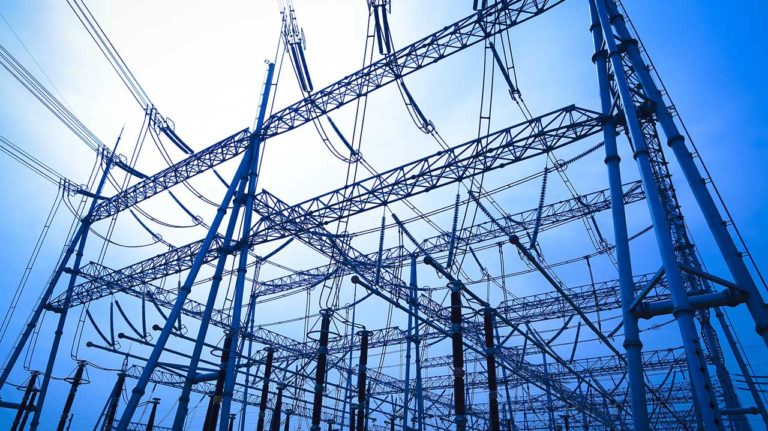
Many Nigerian cities have been thrown into darkness as the national grid experienced a collapse again on Wednesday, marking the second time in the year.

According to data from the Nigerian System Operator’s portal (niggrid.org), the collapse occurred around 11:30 am on Wednesday.

The cause of this grid disturbance is yet to be disclosed by the Transmission Company of Nigeria (TCN).

The ICIR reports that each grid collapse affects households, businesses, and critical sectors like healthcare, where a consistent power supply is essential.

The Abuja Electricity Distribution Company, AEDC, already confirmed that the grid disturbance happened around 11:30 am on Wednesday.

The ICIR reports that they had already alerted customers about the blackout.

“We regret to inform you that a system disturbance occurred on the national grid at 11:34 am today (Wednesday), causing a power outage across our franchise areas.

“While the gradual restoration of power supply has commenced, please be assured that we are working closely with relevant stakeholders to fully restore electricity as soon as the grid is stabilised,” AEDC said in a statement on X on Wednesday. Similarly, a popular Nigeria National Grid account on X wrote on Wednesday, “There was a “GRID DISTURBANCE” before noon today (Wednesday). Parts of the country experienced an outage, “AEDC statement said.

The official spokesperson of TCN, Ndidi Mbah, did not respond to official calls and messages sent to her for comment on the development.

The grid disturbance comes after the one that occurred on January 11, 2025.

The ICIR reported that the national power grid has experienced several collapses in recent times. This comes at a huge cost to power infrastructure and businesses relying essentially on grid power.

Last year, the national grid collapsed about 11, raising concerns over grid stability and reliance on a centralised grid system.

Energy analysts say the decentralisation of the grid is feasible with states now keying into the new electricity and establishing their regulatory commissions to attract investments.

Further findings revealed that one of the major causes of grid collapse is instability and overload.

When the electricity demand exceeds the capacity of the transmission lines, they can become overloaded. It may lead to overheating, equipment failure, or cascading outages.

FG takes over full ownership, control of Keystone Bank

0

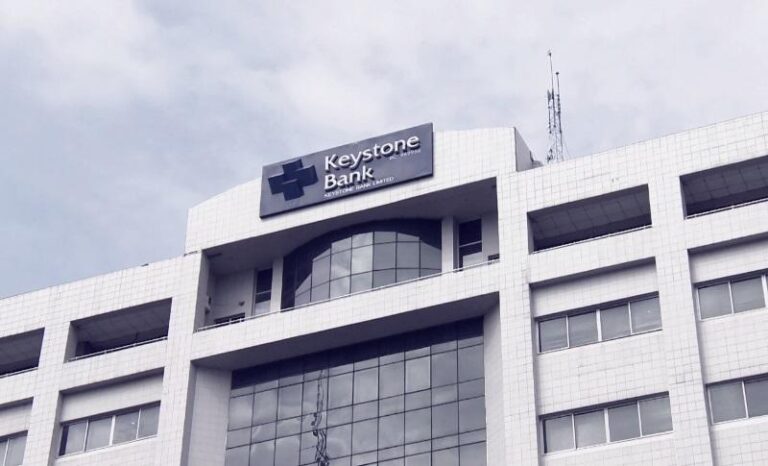
THE Federal Government of Nigeria has now taken over the ownership of Keystone Bank following a court’s dissolution of the stake of its former shareholder, Sigma Golf Nigeria Limited.

The bank announced this in a statement on Tuesday, February 11.

It said the dissolution and forfeiture of Sigma’s stake to the federal government followed a series of actions initiated by the Central Bank of Nigeria (CBN) in its bid to further strengthen the institution and the banking sector.

It also represents a major turning point for the bank to strengthen its stability and set the stage for a smooth recapitalisation process.

“Recall that on January 10, 2024, the Central Bank of Nigeria (CBN) announced the dissolution of the previous Board and Management of the Bank for corporate governance breaches. The CBN followed this action with the appointment of a new Board and Management for the Bank.

“Subsequently, the Federal Government, through the Economic and Financial Crimes Commission (EFCC), filed a court action at the Lagos State High Court, Ikeja, against the former owners challenging the acquisition of the bank,” the bank said.

It maintained that at the sitting of the court on Tuesday, February 11, the court ordered the forfeiture of the shares of the Keystone Bank previously held by the shareholders in favour of the federal government.

“The implication of this judgment is that Keystone Bank Limited is now fully owned by the Federal Government of Nigeria.

“This development marks a significant milestone in our journey, reinforcing our stability and paving the way for a seamless recapitalisation process. With this clarity, we are well-positioned for sustained growth, stronger partnerships, and enhanced profitability,” the bank said

Keystone Bank added that it would strengthen its balance sheet, maintain a strong financial position, and adhere to all regulatory requirements, assuring its customers that the bank remains safe, healthy, strong, and resilient.

The CBN, on Wednesday, January 10, 2024, dissolved the management of Keystone Bank over the bank and its board’s non-compliance to the provisions of Section 12(c), (f), (g), (h) of Banks and Other Financial Institutions Act, 2020.

It stated specifically that the bank’s infractions varied from regulatory non-compliance, corporate governance failure, disregarding the conditions under which their licenses were granted, and involvement in activities threatening financial stability.

It subsequently appointed a new management team for the bank.

Since then, the fear that the apex bank would revoke the licence of Keystone Bank has continued to be a matter of concern.

In a report, The ICIR analysed why the apex bank might consider revoking the licence of Keystone Bank along with two other struggling banks.

The report pointed to the Keystone Bank’s adherence to corporate governance rules as well as its negative financial performance and debt liabilities in the most recent report disclosed by the bank.

CJID seeks pitches on press freedom, freedom of expression, access to information  

The Centre for Journalism Innovation and Development (CJID) is inviting journalists to submit compelling story pitches focused on press freedom, freedom of expression, and access to information in Nigeria.  

The initiative seeks to support investigative and in-depth reporting on challenges facing media practitioners, government policies affecting press freedom, cases of censorship, and other threats to free speech.  

CJID has consistently provided journalists with resources to pursue critical stories that hold power to account, and this call for pitches is another opportunity for media professionals to spotlight press freedom issues with data-driven and well-researched narratives.  

Focus areas  

Applicants are encouraged to pitch stories on:  

– Government policies and their impact on press freedom.  

– Threats to journalists, censorship, and legal battles.  

– Access to information laws and their enforcement.  

– Digital rights, online surveillance, and media regulation.  

– Misinformation, disinformation, and challenges to ethical journalism.  

Interested applicants should submit a detailed pitch outlining their story idea, proposed sources, methodology, and expected impact. Submissions should be sent via this link before the application deadline on the 28 of February 2025.  

Selected applicants will receive funding of 500,000 Naira to develop their stories for publication.  


Shifting gears: Inside Trump’s policy shockwaves in 20 days

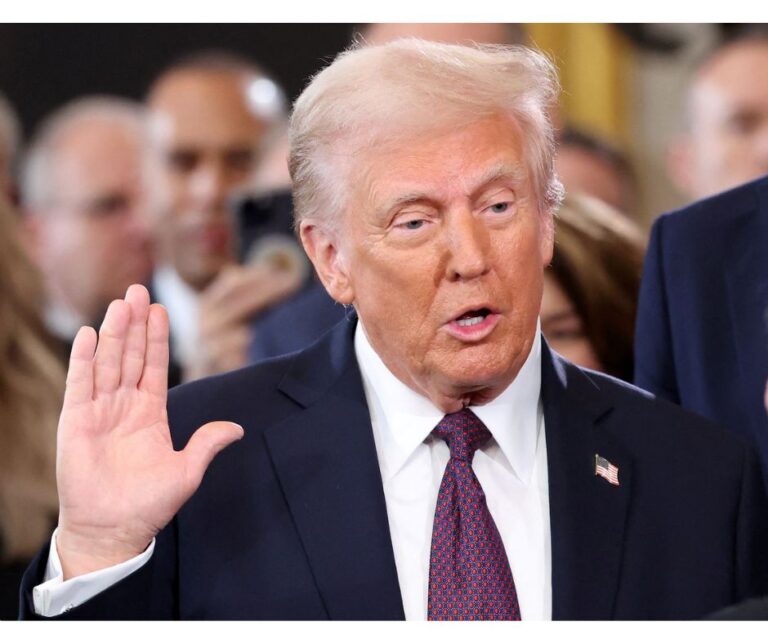
PRESIDENT Donald Trump’s first 20 days in office have been marked by a series of daily controversies, public outrage, and commendations.

On his first full day in office, he signed about 42 Executive Orders and issued multiple directives through the White House Press Secretary, Karoline Leavitt, who has continued to relay Trump’s directives and actions.

Some of these executive orders are rescinding dozens of former president Joe Biden’s executive orders, including on racial equity, protections for LGBTQ+ individuals, and artificial intelligence (AI).

The Trump-Vance administration prioritises key policies such as border security by reinstating strict immigration measures, enhancing deportation efforts, suspending refugee resettlement, and deploying military personnel, including the National Guard, to assist with border enforcement.

The White House stated that the administration aims to overhaul the federal bureaucracy by freezing non-essential hiring, rescinding diversity, equity, and inclusion (DEI) programmes, and holding government workers accountable by requiring in-person attendance.

Additionally, the administration intends to enforce policies that define traditional gender identities and ban transgender athletes from participating in women’s sports.

These plans were not long in coming, as Trump has already set the ball rolling. During this period, he has instilled fear among immigrant (illegal) communities, including Nigerians, frozen U.S. aid and funding for global projects, withdrawn from the World Health Organization (WHO), dismantling of the U.S. Agency for International Development (USAID) and plans to ‘take over’ Gaza.

USAID ‘shut down’

In recent days, pressure from the Trump’s administration has fuelled many allegations around the United States Agency for International Development (USAID) projects. This includes allegations that USAID-funded reporting is biased or politically motivated and also embezzlement of public funds under execution of fake projects.

His planned dismantling of USAID could take hundreds of jobs worldwide as most of USAID’s staff have been placed on administrative leave.

Following Trump’s inauguration and the subsequent attack on the agency, USAID stated that thousands of employees would be put on leave, with the agency recalling its workers from missions across the world. 

USAID supports health and emergency programmes in over 120 countries, including some of the world’s poorest regions and independent journalism in over 30 countries.

Taking over of Gaza

On Tuesday, February 4, Trump held a joint press conference with Israel’s Prime Minister, Benjamin Netanyahu, where he said that the U.S. plans to take over the Gaza Strip to “dismantle and develop it.”

While unveiling the plan to Netanyahu, who visited the White House for a bilateral meeting, he also vowed to relocate the original inhabitants – the Palestinians – to neighbouring countries.

However, many people, especially in the Middle East, have described the plan as ethnic cleansing, with Hamas also strongly condemning the plan, saying it would only worsen chaos and tension in the region. 

Cutting aid to South Africa

In what has been described as a retaliatory move by many, the U.S. president suspended all future funding to South Africa. Trump’s administration accused the South Africa government of confiscating land and mistreating certain groups.

Trump stated that the United States would withhold aid until these issues are thoroughly investigated; emphasising that such actions would not be tolerated. 

However, in response, South African President, Cyril Ramaphosa, while expressing his concerns over the development, stated that the recently signed expropriation law aimed to ensure equitable and just access to land in accordance with the country’s constitution, rather than to confiscate property.

Pulling out of WHO

Similarly, Trump, as part of his first executive orders, withdrew the United States from the World Health Organization (WHO).

The order reverses the Biden administration’s 2021 decision to rejoin the global health body, citing the WHO’s handling of the COVID-19 pandemic and alleged political influence from member states, including China, as key reasons for the withdrawal. 

Under the order, all U.S. funding and resources to the WHO will be paused, and American personnel working with the organisation will be recalled.

Freezing HIV funding and subsequent lifting 

Another move that sparked reaction, was the decision by the Trump’s government to halt U.S. foreign aid funding for 90 days, particularly for life-saving health programmes like the President’s Emergency Plan for AIDS Relief (PEPFAR). 

The funding freeze stemmed from an executive order signed by Trump on January 20, 2025, directing a review of all foreign aid programmes to align with his “America First” policy. 

The ICIR reports that the proposed funding freeze was viewed as capable of putting millions of people, including Nigerian HIV patients, at immediate risk, with fears of treatment disruption and possible deterioration of the health of people with the virus. 

However, after so much outrage, reactions and appeal, the U.S. reportedly exempted PEPFAR.

Pulling out of climate agreement 

President Trump also pulled out the US from the Paris Climate Agreement.

The Paris Agreement is a legally binding international treaty on climate change. It was adopted by 196 parties at the UN Climate Change Conference (COP21) in Paris, France, on 12 December 2015, and entered into force on 4 November 2016.

Like several other orders, the move has sparked reactions, as critics warned it could weaken international cooperation on public health crises.

Redefining birthright citizenship 

Trump has also given an order seeking to redefine birthright citizenship in the United States. The order sought to limit automatic citizenship to children born to parents who are U.S. citizens or permanent residents. 

The ICIR reported that this policy shift has far-reaching implications for immigrant communities, particularly unlawful immigrants.

Redefining gender ideology 

President Trump also enacted an executive order that redefines sex and gender within federal policies, aiming to diminish legal protections for transgender, nonbinary, and intersex individuals. 

The directive mandates federal agencies to recognise only two sexes—male and female as assigned at birth—and to eliminate references to nonbinary identities. It also prohibits acknowledging gender identity as distinct from biological sex. 

This policy shift has led to the removal of LGBTQ+ content from numerous federal websites, affecting resources related to health, education, and human rights, among others.

Keeping men out of women’s sports 

On February 5, 2025, Trump issued another executive order “Keeping Men Out of Women’s Sports,” with the aim of prohibiting transgender women from participating in women’s sports teams. 

The order mandates that educational institutions receiving federal funds must restrict women’s sports to individuals assigned female at birth, aligning with Title IX provisions. 

This executive order has also elicited varied responses from different stakeholders.

Sanctioning ICC

The U.S president has also imposed sanctions on the International Criminal Court (ICC) in response to its arrest warrants against Israeli Prime Minister Benjamin Netanyahu and former Defense Minister, Yoav Gallant. 

The ICC accused them of depriving Gaza civilians of essential needs during the Gaza war. The executive order authorises economic and travel sanctions against individuals involved in ICC investigations targeting U.S. citizens or allies, including Israel. 

These measures include asset freezes and visa restrictions affecting ICC officials and their families. 

Parting way with UNHRC

Similarly, the United States has chosen to part ways with the UN Human Rights Council (UNHRC) and a cessation of funding to the UN Relief and Works Agency for Palestine Refugees (UNRWA). 

New tariff law

Trump, on February 1, announced through his social media that he has implemented new tariffs under the International Emergency Economic Powers Act (IEEPA). 

The new tariffs include a 25 per cent levy on imports from Mexico and Canada, with a reduced 10 per cent tariff specifically on Canadian energy products.

Also, a 10 per cent tariff was imposed on imports from China. He noted that the measures aim to address the pressing issues of illegal immigration and the proliferation of deadly drugs, such as fentanyl, which have been detrimental to American communities. 

UNIZIK probes viral video showing student assaulting lecturer

0

THE management of Nnamdi Azikiwe University (UNIZIK), Awka, Anambra State, said it had launched an investigation into a viral video showing a third-year student of its Department of History and International Studies, Goddy Mbakwe Precious, assaulting a lecturer of the school’s Department of Theatre Arts and Film Studies, Chukwudi Okoye. 

The altercation began when Okoye walked into Precious who was taking a video along the university hallway. 

Footage showed Okoye tapping the student on the shoulder, saying “Excuse me” as he passed, but Mbakwe reacted, saying “Can you imagine? He just hit me.”

The situation escalated, with other videos showing Precious grabbing Okoye’s shirt and tearing it. She also bit the man on the wrist. 

Throughout the process, Okoye was seen as maintaining his composure and not retaliating.

The ICIR, however, could not independently confirm how the incident degenerated as the lecturer was seen to have passed by the young student in the first footage.

However, social media posts attributed to the lecturer and Precious provided differing accounts of the incident. 

Precious, in a post attributed to her, claimed that someone attempted to grab her phone from behind, and eventually realised it was the same lecturer who had interrupted her video.

She further alleged that Okoye grabbed her “breast region,” and scratched her chest with his nail.

“I was devastated and at the same time still lamenting in pain as I picked up the pieces of my shattered phone. But the situation took a dark turn when the lecturer grasped my breast region, saying unspeakable things.

“I was left stunned, trying to comprehend the horror unfolding before me. As I realised my cleavage was exposed, I begged him to let me go, but he ignored my pleas, holding me firmly. His nails and clutches left certain prints and scratches on my chest rather.

“I was mortified. I tried to cover myself, pulling my dress together, and exclaimed in desperation, ‘Sir, I’ll hold you oh!’. I didn’t mean to threaten him; I just wanted him to release me. But he wouldn’t budge. In a split second, I bit his hands, hoping he’d let go. That was when I held his clothes and accidentally tore his shirt,” she reportedly said.

However, the lecturer, in a post linked to him, claimed that he overheard her insulting him and decided to return to ascertain if she was one of his students and also to demand that she delete the video that showed him passing by.

 “My theatre Arts people, I had just left Hall 19, where Dr Ebekue (another lecturer) was teaching. Walking along the passage, I saw a girl doing a video with her phone,” he said.

He added, “Tapping her slightly, I asked her to excuse me as I walked past. After about two or three steps, I heard her say, ‘Who does this man think he is?’ I walked back to ascertain first if she was my student and second to make sure she deleted the video showing where I passed.”

According to him, the student bit him on both arms, tore his clothes, slapped him, and scratched his face in the process.

“I then demanded and reached for her phone, only to be bitten by the girl on both arms in quick succession. I then held on to her left hand so she wouldn’t get away. That was when she lost it; she tore my clothes, slapped and scratched my face, and generally went berserk on me – all which I received with calm.”

Reacting to the incident in a statement signed by its spokesperson, Njelita Louis, on Tuesday, February 11, the university emphasised its commitment to upholding its core values of discipline, self-reliance, excellence, and justice. 

It announced a full-scale, transparent, and unbiased investigation into the matter, urging all parties and the public to remain calm. 

The management further assured that appropriate sanctions would be implemented based on the investigation’s outcome.

APC director abductors demand N350m ransom

0

THE kidnappers of the director of administration at the All Progressives Congress (APC) national secretariat in Abuja, Adekunle Raif Adeniji, are reportedly demanding N350 million ransom for his release.

They have been in touch with his family and threatened that the payment must be made for him to be freed.

Adeniji’s family member told Daily Trust he would not be released until the ransom was paid.

The ICIR reports that Adeniji was appointed as the APC director of administration in August 2024. He took over after Alaba Adediwura resigned from the post.

Meanwhile, the National Working Committee (NWC) at the party’s secretariat has yet to issue an official statement regarding the ransom demand.

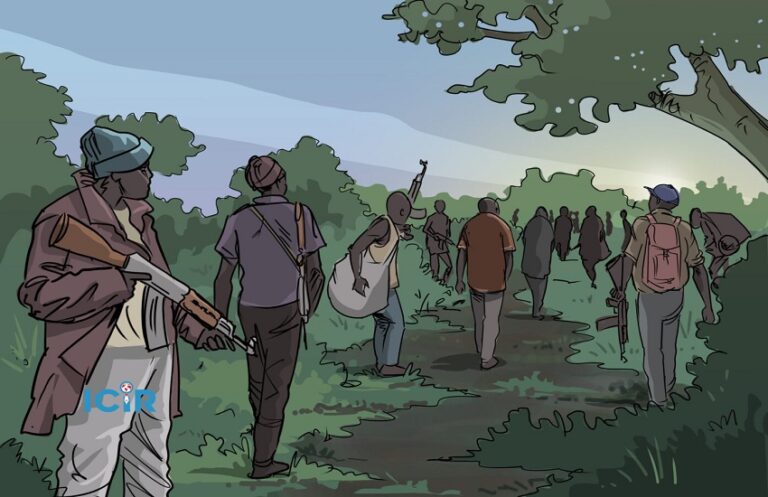
Adeniji was abducted by gunmen armed with AK-47 rifles in the Chikakore area of Kubwa within the Bwari Area Council of the Federal Capital Territory two weeks ago.

The bandits attacked the community on Sunday, January 26, and abducted five residents.

According to police sources, the bandits raided the Health Center extension area of Chikakore at around 11 pm, abducting a family of four, including one Adesiyan Akinropo, his wife, their son, and Adeniji, who visited them. A neighbour to the abducted family was also whisked away.

A woman was reportedly brutally hit with a gun butt during the attack, leading to a severe head injury that left her bleeding profusely. She was rushed to the hospital for treatment.

The ICIR reported that the FCT Police Command confirmed the incident in a statement through its spokesperson, Josephine Adeh.

Adeniji’s brother’s wife, Esther, reportedly lost her life in the incident, and her body was found the following morning in the Ijah-Gbagyi community of Tafa Local Government Area in Niger State.


Wits Centre offers health reporting grants to African journalists

The Wits Centre for Journalism is offering 12 health reporting grants of US$2,000 each to  investigative journalists based in Africa. 

The application process is as follows:

  1. Submit a 300-word motivation statement and a budget breakdown to chris.kabwato3@wits.ac.zain in either English or French. The motivation statement should cover the subject you wish to investigate, its relevance and the location(s).
  2. Attach a copy of your curriculum vitae.
  3. A review committee will select the best proposals and inform the winning applicants.
  4. The selected journalists will sign a letter of commitment to complete the health reports within a period of two months. The reports should be between 1,200 to 2,000 words and can be written in English or French.

Application closes on Friday, February 28.

Customs suspends 4% importation charge amid public outcry

0

THE Nigeria Customs Service (NCS) has suspended the controversial four per cent Free-on-Board (FOB) charge on imports.

The charges is provided in Section 18(1)(a) of the Nigeria Customs Service Act (NCSA) 2023.

In a statement of Tuesday, February 11 by its national public relations officer, Abdullahi Maiwada, the NCS said it has suspended the charge.

It said the decision was sequel to ongoing consultations with the Minister of Finance and Coordinating Minister of the Economy, Wale Edun and other stakeholders.

It stressed that the suspension would enable comprehensive stakeholder engagement and consultations on the framework regarding the implementation.

“The timing of this suspension aligns with the exit of the contract agreement with the Service providers, including Webb Fontaine, which were previously funded through the 1% Comprehensive Import Supervision Scheme (CISS).

“This presents an opportunity to review our revenue framework holistically,” the NCS stated.

Importers, manufacturers association, and other stakeholders had criticised the new charge, declaring it as outrageous.

They believe the levy could lead to increase in prices of goods and heighten inflation.

Under the previous funding arrangement repealed by the NCSA 2023, the NCS said separating the one per cent CISS and seven per cent cost of a collection created operational inefficiencies and funding gaps in customs modernisation efforts.

It noted that the new Act addresses the challenges by consolidating “not less than 4% of the Free-on-Board value of imports.”

The charge was designed to ensure sustainable funding for critical customs operations and modernisation initiatives.

It however, said, “This transition period will allow the Service to optimise the management of these frameworks to serve our stakeholders and the nation’s interests better.”

The Act further empowers the Service to modernise its operations through various technological innovations.

Specifically, Section 28 of the NCSA 2023 authorises developing and maintaining electronic systems for information exchange between the service, other government agencies, and traders.

The service is already implementing several digital solutions, including the recently deployed B’Odogwu clearance system, which stakeholders are benefiting from through faster clearance times and improved transparency.

Other innovative solutions authorised by the Act include single window implementation (Section 33); sisk management systems (Section 32); non-intrusive inspection equipment (Section 59); and electronic data exchange facilities (Section 33(3)).

The ICIR reported on Tuesday that the Manufacturers Association of Nigeria (MAN) had called for the suspension of the implementation of a four per cent charge on all FOB value of imports.

The association argued that implementing the levy would led to further rise in Inflation and an increase in the cost of doing business, which is at variance with the government’s ease of doing business drives.

“We had expected that the NCS would give priority to trade facilitation given the prevailing economic downturn, rather than exacerbating the spiraling cost of production.

“The indiscriminate increase in levy is contradicting the government’s preaching on ease of doing business. It will also make our cost environment less attractive for investors, thereby facilitating smuggling and loss of revenue for the Customs,” MAN had warned.

The association further expressed worries that the levy would cause heavy disruption in the supply chain, trigger raw materials stock-out in many manufacturing concerns, inflict higher cost of demurrage, increase the huge volume of unsold inventories, and worsen the competitiveness of Nigerian manufacturers.

NGX suspends Thomas Wyatt’s shares over non-compliance

0

THE Nigerian Exchange Limited (NGX) has suspended the trading of Thomas Wyatt Nigeria Plc’s shares on the Nigeria stock exchange over the company’s failure to file its financial statements.

The suspension raises concerns about the company’s transparency and compliance with regulatory requirements.

Announcing this on Tuesday, February 11, the NGX said Thomas Wyatt shares’ suspension takes immediate effect.

The action follows Rule 3.1, which provides the rules for the filing of accounts and treatment of default filing, known as Default Filing Rules.

NGX noted that the rule mandates it to suspend trading in a company’s securities if it fails to submit its financial reports within the stipulated timeframe.

“This suspension is a necessary step to maintain the integrity of the market and ensure investors have access to timely and accurate information.

“We have clear rules in place regarding financial reporting, and we must enforce them to protect the investing public,”  NGX said.

Thomas Wyatt has yet to file its audited financial statements for the year ended March 31, 2024, as well as its unaudited financial statements for the periods ended June 30, and September 30 for the same year.

The NGX usually allow three months for listed companies to submit their audited financial statements after the close of the financial in every December and one month after the close of quarterly reports.

“We understand that companies may face challenges in meeting reporting deadlines.

“However, timely and accurate financial reporting is crucial for investor confidence. We urge Thomas Wyatt Nigeria Plc to submit their outstanding reports as quickly as possible,” the NGX added.

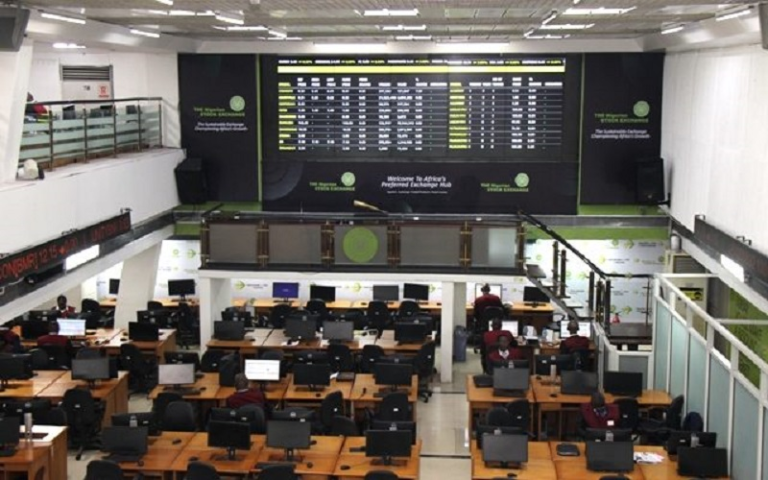
On Tuesday, The ICIR observed that the company’s shares were not traded on the floor of the exchange.

Aside from the concern about the company’s internal controls and financial management, the suspension has resulted in investors being unable to trade their shares until the ban is lifted.

Market analysts suggest that this incident could negatively impact investor sentiment towards the company and potentially the broader market and erode investor confidence.

The ICIR can report that in November 2018, the NGX similarly suspended Thomas Wyatt’s shares from trading on the exchange over non-compliance in filing its financial reports.

Listed on the Nigeria stock exchange in October 1978, Thomas Wyatt currently has a market capitalisation of N732.60 million on the exchange.

Its share price has dropped by 2.12 per cent since the start of the year to close at N1.85 on Monday, February 10.

Thomas Wyatt’s line of business includes large-scale printing and the manufacturing of school and office stationery, hitherto printed in the United Kingdom and imported into Nigeria.

Meanwhile, the Nigeria stock market rebounded on Tuesday from yesterday’s losses.

The All-Share Index increased to 106,574.98 basis points from 105,891.33,  indicating a year-to-date return of 3.54 per cent.

Similarly, the market capitalisation increased by N66.495 trillion from N66.069 trillion, which closed the previous trading day.

This left investors to gain N426 billion at the close of the day’s trading.

Access Holdings and Transnational Corporation recorded the highest volume and value of shares trading on the exchange respectively, while Ellah Lakes topped the gainers’ list with 10.00 per cent.