Home Blog Page 37

Army arrests activist over video of soldiers alleging poor feeding, accuses him of subversion

0

THE Nigerian Army has confirmed the arrest of activist and blogger, Justice Mark Chidiebere, popularly known as Justice Crack, following his viral posts regarding the welfare and feeding conditions of Nigerian soldiers.

The confirmation followed growing concerns over the whereabouts of the Abuja-based activist, who was reported missing by family and associates after he posted a video on social media highlighting complaints from personnel within the service.

His post showed how the soldiers claimed they were poorly fed by the authorities, among other allegations of mistreatment.

In a statement released by the Army Acting Director of Public Relations, Appolonia Anele, a colonel, the military stated that the activist was being investigated for a potential breach of the Armed Forces’ Social Media Policy.

The military authorities alleged that Chidiebere’s interactions with the soldiers went beyond reporting welfare issues, claiming he actively incited personnel toward acts of subversion.

The Army explained that a preliminary report suggested the activist’s actions were aimed at creating internal discontent, which it viewed as a threat to national security.

“Preliminary report reveals that the soldiers discussed wide range of issues with Justice Chidiebere who seemed to be inciting soldiers to create discontent within the system. An example was a chat bothering on subversion which Chidiebere had with the soldiers,” she stated.

It further emphasised the danger of such interactions, stating, “A situation where civilians cultivate vulnerable personnel towards acts of subversion has far-reaching implications on discipline and national security.”

While the soldiers involved in the viral video remain in military custody for internal disciplinary action, the Army disclosed that Chidiebere had been handed over to civilian law enforcement for further investigation and possible prosecution.

“Justice Chidiebere was picked by the Nigerian Army alongside the soldiers for investigation. While the soldiers remain in own custody, Chidiebere has been handed over to the relevant civil authorities for further investigation and possible prosecution,” the statement added.

The Army reaffirmed its commitment to the rule of law, maintaining that it would continue to act within legal boundaries while safeguarding national sovereignty.
Bauchi governor defects to APM after Supreme Court ruling

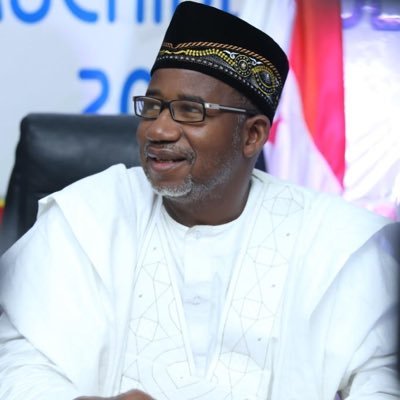
BAUCHI State Governor, Bala Mohammed, has defected from the Peoples’ Democratic Party (PDP) to the Allied Peoples Movement (APM) following the Supreme Court judgment on the PDP leadership crisis.

Mohammed, who was the Chairman of the PDP Governors’ Forum, announced his defection on Saturday, May 2, after a stakeholders meeting convened to review the implications of the court’s ruling and determine a way forward.

The development leaves Oyo State Governor, Seyi Makinde, as the only remaining PDP governor, marking a significant shift in the party’s political strength.

The Bauchi governor said he had spent the past eight days in Abuja consulting with key stakeholders in efforts to resolve the crisis but noted that the situation worsened after the apex court nullified parallel conventions conducted by rival factions within the party.

According to him, the judgment stripped both factions of legal standing, leaving the party’s Board of Trustees to temporarily oversee its affairs, a development he said had deepened uncertainty.

“After careful consideration and wide consultations with leaders and stakeholders across the country, it has become clear that our efforts to restore stability have not yielded the desired results,” he said.

While appreciating the PDP for providing a platform for his political rise, Mohammed said the decision to leave became necessary to ensure continuity in governance.

“However, as responsible leaders, we cannot allow our people to be left without a credible and effective political platform,” he added.

He described his move to the APM as strategic, noting that the party offered a viable platform free from legal encumbrances.

“We remain PDP at heart. We are leaving not out of bitterness, but out of necessity – to continue the struggle for good governance,” the governor said.

Announcing his new political platform, he declared, “Consequently, after extensive consultations, we have taken a firm and strategic decision to join the Allied Peoples Movement.”

Mohammed also disclosed that members of the State Executive Council seeking elective offices had resigned in line with the law.

He outlined measures to ensure a smooth transition, including the establishment of a compliance committee, commencement of membership registration, engagement with APM leadership, and the constitution of a team to interface with the Independent National Electoral Commission.

He urged his supporters to remain calm and united, describing the move as a deliberate political repositioning.

Meanwhile, the National Chairman of the APM, Yusuf Dantalle, formally received the governor and his supporters, describing the party as a “clean, democratic party” guided by the motto “Nigeria First.”

The ICIR reported that there appeared to be no end in sight to the crises rocking the PDP as it joins its contemporaries to prepare for the 2027 elections.

The conflicts took another turn on Thursday, April 30, shortly after the Supreme Court nullified the Ibadan Convention of a faction of the party, backed by Oyo State Governor Seyi Makinde and other stalwarts, in November 2025.

The convention produced the Kabiru Turaki-led National  Working Committee of the faction.

In its ruling, the court lampooned the faction and voided the convention over what it described as deliberate disobedience of subsisting court orders.

Consequently, the Turaki-led group’s Board of Trustees announced its readiness to assume the party’s leadership.

However, the rival faction belonging to the Minister of the Federal Capital Territory (FCT), Nyesom Wike said the apex court’s ruling simply affirmed its control of the PDP.

Yahaya Bello picks APC senatorial form amid EFCC corruption case

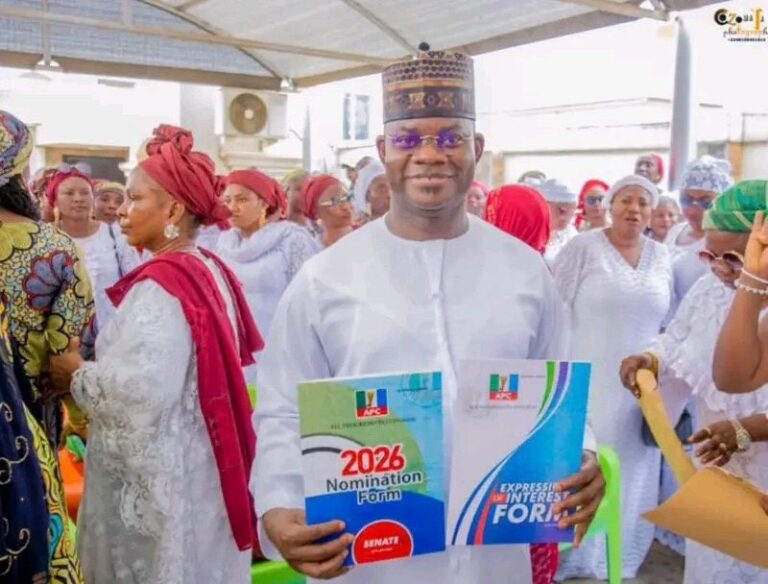
A FORMER Governor of Kogi State, Yahaya Bello, has picked the All Progressives Congress (APC) nomination form for the state’s central senatorial seat ahead of the 2027 general elections.

Bello reportedly received the form on Saturday and is said to have emerged as the party’s consensus candidate for the race.

He is expected to face the incumbent lawmaker, Natasha Akpoti-Uduaghan of the Peoples’ Democratic Party (PDP) and other contestants.

The former governor, who served two terms between 2016 and 2024, handed over to his successor, Usman Ododo, in January 2024.

Bello’s senatorial ambition comes amid an ongoing corruption case involving the Economic and Financial Crimes Commission (EFCC).

The ICIR reports that the EFCC is prosecuting Bello on 19 counts of alleged money laundering amounting to N80.2 billion.

The anti-graft agency had in April 2024 declared him wanted over alleged financial crimes, including misappropriation of public funds during his tenure as governor.

The EFCC later filed charges against him at the Federal High Court in Abuja, accusing him of laundering large sums through multiple bank accounts and shell companies. The commission alleged that some of the funds were used to acquire high-value properties in Abuja and other locations.

Bello, through his lawyers, has consistently denied the allegations, describing them as politically motivated and lacking merit.

Following months of legal back-and-forth, he eventually appeared before the court after earlier controversies surrounding his arrest, including a standoff involving security operatives at the Kogi State Government Lodge in Abuja.

The case is ongoing, with the court yet to reach a final determination on the charges.

NAF pummels terrorist hideouts in North-East

THE Nigerian Air Force (NAF) has intensified its air campaign in the North-East, using precision strikes to dismantle terrorist networks in Sambisa Forest and the Tumbuns around Lake Chad.

Under the Air Component of Operation HADIN KAI, the Nigerian Air Force said it carried out heavy attacks that destroyed hideouts, crippled logistics, and neutralised scores of fighters between April 30 and May 1.

In a statement on Friday, the NAF’s Director of Public Relations and Information, Ehimen Ejodame, an air commodore, stated that the NAF used credible intelligence to hit insurgent enclaves.

“NAF aircraft struck decisively at insurgent enclaves, obliterating hideouts, crippling logistics hubs, and neutralising scores of fighters in relentless, coordinated attack runs,” Ejodame said, adding that the offensive followed a major strike on April 27, 2026, targeting the Guduf axis within the Mandara Mountains.

The Air Component executed a coordinated operation that identified multiple terrorist structures and logistics hubs actively supporting insurgent activities within the area. The NAF spokesperson explained further that building on that success, the mission continued in Alafa, within the Sambisa axis, where air assets wiped out confirmed terrorist infrastructure and supply lines.

He said the NAF followed up the operation with a raid on a fortified island in Metele, located in the Tumbuns, after surveillance spotted fighters hiding in trenches.

According to Ejodame, the Intelligence and surveillance exposed a fortified island stronghold with entrenched fighters, storage facilities, and defensive trench systems. “With scores of insurgents confirmed within the target area, NAF aircraft delivered precise and overwhelming firepower, striking and decimating the location.”

The Chief of Air Staff, Sunday Kelvin Aneke, an air marshal, praised the troops and vowed that the military would continue the onslaught until the threat is completely eliminated.

“The Service’s unyielding resolve is to dominate the battlespace, stressing that operations will persist with increased intensity until all terrorist capabilities are dismantled and threats to national security fully neutralised,” Aneke was quoted as saying.

Nigeria faces tough start at World Relays as Tinubu urges athletes to deliver

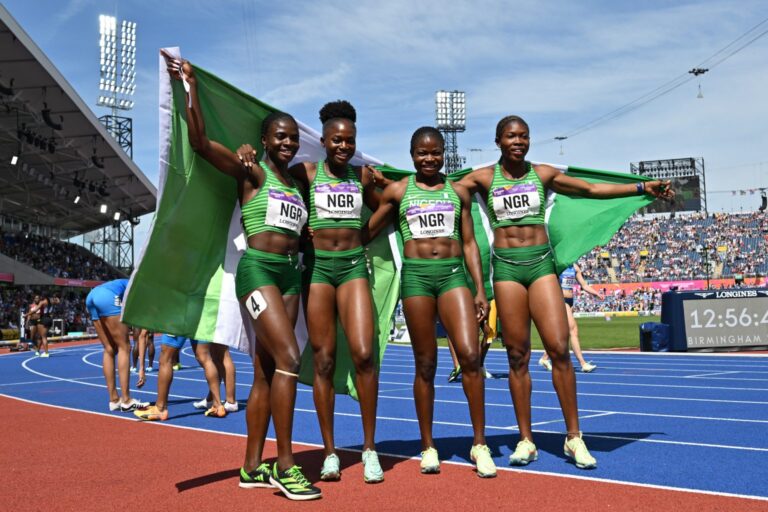
NIGERIA’S relay teams will face stiff competition at the 8th World Athletics Relays Championship, which kicks off today at the National Stadium in Gaborone, Botswana, with qualification spots for major global events at stake.

The competition features 743 athletes from 40 countries, with Nigeria competing in all six relay events as it seeks to improve on its modest record of two medals — a bronze in 2014 and gold in 2015.

Team Nigeria has been drawn in highly competitive heats, starting with the mixed 4x400m, where it will battle the Netherlands, Jamaica, Poland, China, Japan and Canada in one of the most decisive opening races. Only the top two teams in each heat, alongside the two fastest losers, will qualify for the final and secure World Championship spots.

The Netherlands head into the race as favourites with a personal best of 3:07.43 set at the Paris 2024 Olympics, while Poland (3:09.43) and Jamaica (3:11.06) underline the depth of competition. Nigeria, with a personal best of 3:11.99 and a season’s best of 3:16.13, will rely on a mix of experience and youth.

The squad is expected to feature Chidi Okezie alongside Ezekiel Asuquo, Gafari Badmus, Victor Ime, Samson Nathaniel and Emmanuel Ojeli on the men’s side, while Patience Okon-George leads the women’s team with support from Anita Enaruna, Toheebat Jimoh, Taiwo Kudoro, Jecinta Lawrence and Esther Okon.

In the men’s 4x100m, Nigeria faces another difficult draw in heat three alongside Great Britain, South Africa, Brazil, Ghana, China, India and Northern Ireland. The race is widely regarded as one of the most competitive of the opening round.

Great Britain and Northern Ireland lead with a time of 37.36s, followed by South Africa (37.57s) and Brazil (37.72s), while Nigeria’s best of 37.94s keeps it in contention for qualification.

The Nigerian team is expected to feature Enoch Adegoke, Favour Ashe, James Emmanuel, Chidera Ezeakor and Tejire Godwin. Adegoke, an Olympic finalist with a personal best of 9.98s, brings experience, while Ashe’s 9.94s adds pace to the squad.

Beyond the heats, the United States are expected to set the global standard, with strong competition also coming from Canada and Jamaica, as teams battle for slots at both the 2027 World Championships and the inaugural World Athletics Ultimate Championship.

Despite the tough draws, the Federal Government has expressed confidence in the team’s chances.

President Bola Tinubu, through the Director General of the National Sports Commission, Bukola Olopade, urged the athletes to rise to the occasion.

“I want to appeal to you athletes to do this for yourselves, for the country, for your various states, and above all, do this for President Bola Ahmed Tinubu, GCFR. The president’s words are always very clear, do well and come back to a grateful nation,” Olopade said after the team’s final training session.

He also stressed the importance of the relays to Nigeria’s sporting success.

“The relays are a big deal because Nigeria at every major multi-sport competition always looks forward to the relays. As you know, this is not just about this relay because it is a qualifier for the World Championship,” he added.

Reno Omokri makes false claim about Nigeria’s debt reduction under Tinubu

Nigeria’s ambassador-designate to Mexico, Reno Omokri, has claimed that Nigeria’s total public debt has significantly dropped under President Bola Ahmed Tinubu’s administration.

Omokri said this during an interview with the News Central at the induction course for ambassadors and high commissioners designate at the Ministry of Foreign Affairs on April 27, 2026.

He further alleged that while the debt stood at $113 billion in June 2023, it dropped to $103 billion in April 2026.

He argued that critics like former governor Peter Obi misled the public by calculating the debt profile in naira rather than dollars.

“When this administration came into being on May 29, 2023, Nigeria owed $113 billion. So, if you go to DMO, the Debt Management Office, and go to their website, which is dmo.gov.ng, on March 31, 2023, Nigeria’s total debt was $108 billion. And then, because the DMO gives those figures every quarter, the next quarter, which was June 31, 2023, our debts had ballooned to $113 billion. Right now, as I speak to you, April 27, 2026, our debt is $103 billion.

“So, you can see that our debt under President Tinubu has reduced by 10 billion dollars. What people like Peter Obi tend to do is they calculate our debt in naira.”

As of April 28, the post has garnered over 90,000 views, 100 likes, and 70 quotes, causing lots of ruckus as financial debates erupted.

CLAIM

Nigeria’s total public debt has been reduced by $10 billion under President Tinubu, moving from $113 billion in June 2023 to $103 billion in April 2026.

Screenshot of the viral post on x.

THE FINDINGS

Findings by The FactCheckHub show that the claim is FALSE.

To verify the claim, The FactCheckHub analysed data from the Debt Management Office (DMO).

Established on December 4, 2000, the Debt Management Office (DMO) of the Federal Government of Nigeria is responsible for managing and storing information regarding the country’s local and international debts.

Nigeria’s debt profile, also known as total public debt, is calculated by summing the total domestic and external debts of the federal government of Nigeria, the thirty-six states and the Federal Capital Territory.

Data from the DMO shows that as of June 30, 2023, the total public debt was indeed $113.42 billion.

A Detailed Breakdown

On March 31, 2023: Two months before Tinubu took office, the debt stood at $108.30 billion. In naira terms, this was N49.85 trillion, calculated at an exchange rate of N460.35/$1.

By the end of the first month of the new administration, on June 30, 2023, the USD figure rose to $113.42 billion. However, the naira value saw a jump to N87.38 trillion. This was primarily due to two factors: the unification of the foreign exchange windows (shifting the rate to N770.38/$1) and the securitisation of “Ways and Means” (Central Bank loans) which were moved into the official public debt record.

As of the end of September 2025, the debt dropped to $103.94 billion. At this point, the exchange rate had shifted further to N1,474.83/$1, bringing the naira debt to N153.29 trillion.

According to the DMO report released on April 13, 2026, the debt surged again in the final quarter of 2025, that is, by the end of December 2025, reaching $110.97 billion (N159.28 trillion), and not $103 billion quoted by Omokri.

December public debt portfolio. credit: DMO

Reno Omokri’s assertion of a $10 billion reduction is based on a comparison between the June 2023 figure ($113.42 billion) and the September 2025 figure ($103.94 billion). This data cannot be used to assess the current economy in Nigeria.

At the end of 2025, the debt had climbed back up to $110.97 billion. This means that between June 2023 and the latest reported period, the actual reduction is only $2.45 billion, not $10 billion.

While Omokri argued that the debt should be viewed in USD to avoid misleading naira calculations, the naira perspective is critical for domestic economic assessment.

Since June 2023, the debt in naira terms has increased by 82.3 per cent from N87.38 trillion to N159.28 trillion.

VERDICT

The claim by Reno Omokri that Nigeria’s debt has reduced by $10 billion between June 2023 and April 2026 is FALSE. He used an outdated data point from September 2025 to frame a narrative of significant debt reduction. The latest official DMO data, released in April 2026, shows that the debt has since surged to $110.97 billion, making the actual reduction since June 2023 only $2.45 billion.

This report is republished from FactCheckHub. The original story can be read here.

PDP’s cracks widen after Supreme Court ruling

THERE appears to be no end in sight to the crises rocking the Peoples’ Democratic Party (PDP) as the party joins its contemporaries to prepare for the 2027 elections.

The conflicts took another turn on Thursday, April 30, shortly after the Supreme Court nullified the Ibadan Convention of a faction of the party, backed by Oyo State Governor Seyi Makinde and other stalwarts, in November 2025.

The convention produced the Kabiru Turaki-led National  Working Committee of the faction.

In its ruling, the court lampooned the faction and voided the convention over what it described as deliberate disobedience of subsisting court orders.

Consequently, the Turaki-led group’s Board of Trustees announced its readiness to assume the party’s leadership.

However, the rival faction belonging to the Minister of the Federal Capital Territory (FCT), Nyesom Wike said the apex court’s ruling simply affirmed its control of the PDP.

The Turaki-led BoT, through a statement by its charman, Adolphus Wabara, a former senator, said it would assume the PDP’s leadership to avoid a vacuum, and “pursuant to the empowering provisions of the constitution of the PDP (As amended in 2017)”

It posited that the Supreme Court verdict nullified both the Ibadan Convention and the Wike-backed convention in Abuja.
“While the Supreme Court invalidated the Ibadan Convention, it also in a unanimous decision of the five justices on the panel, upheld the suspension of Senator Samuel Anyanwu, Hon. Umar Bature, Kamaldeen Ajibade as National Secretary, National Organising Secretary and National Legal Adviser respectively from the party.
“The implication of today’s judgment by the Supreme Court is that all actions taken by Senator Samuel Anyanwu, Hon. Umar Bature and Barr. Kamaldeen Ajibade including the appointment of Abdulrahman Mohammed as Acting National Chairman, the composition of the National Caretaker Working Committee and the conduct and outcome of the March 29, 2026 Convention in Abuja are illegal, null and ab initio void.
“The consequential invalidation of both the Abdulrahman Mohammed-led as well as the Kabiru Tanimu Turaki-led Working Committees directly places the statutory onus of leadership of our great party on the shoulders of the Board of Trustees (BoT) as the Second Highest Organ of the Party, pursuant to the express and unambiguous provision of Section 32 (5) of the PDP Constitution (as amended in 2017),” the Turaki faction’s BoT said.
The BoT noted that it was convening an emergency meeting to appoint an Interim National Working Committee to take charge of the National Secretariat of the PDP and pilot its affairs.
Late Thursday night, the Turaki-led faction held an emergency stakeholders’ meeting, which further ratified the decision for its BoT to step in and lead the party pending the appointment of a caretaker committee.
Some of the faction’s organs at the meeting are its BoT members, Governors’ Forum, members of the National Assembly Caucus, the National Executive Committee (NEC), the National Caucus, State Chairmen, and Ex-Officio members.
 Meanwhile, shortly after the Supreme Court verdict, Wike addressed a press conference where he claimed that the ruling had resolved all disputes surrounding the party’s leadership structure.

“Today, the Supreme Court has brought to an end the so-called factions of the PDP. There is no more faction in the party. There is only one PDP. The Supreme Court has validated our (Abuja) Convention and set aside all claims to any parallel structure. What this means is that the PDP has come to stay as one united party,” he said.

Wike added that the PDP remained Nigeria’s leading opposition party and a “credible alternative” to the All-Progressives Congress (APC) – the party he is currently serving in.

The ICIR reports that Abdulrahman Mohammed emerged as National Chairman, and Samuel Anyanwu as National Secretary of the Wike-backed PDP.

Whereas, nother statement signed by Wike’s faction BoT members on Thursday evening affirmed Mohammed and Anyanwu as the party’s leader following the apex court verdict.

The statement, signed by its chairman, Mao Ohuabunwa, a former senator, averred that the Ibadan Convention was annulled as ruled by the court.

According to him, the verdict also validated the convention held in Abuja by Wike’s block.

“The leadership structure of the party under Alhaji Abdulrahman Mohammed – National Chairman, Senator Samuel Nnaemeka Anyanwu, FCIPA – National Secretary remains the valid and stabilising authority to guide the affairs of the party at the national level.
“The party remains fully functional and will continue to operate through its recognised organs in line with the constitution of our party (as amended in 2017) Necessary constitutional steps will be taken, as appropriate, to further strengthen the party’s unity, stability, and preparedness for upcoming electoral engagements,” part of the statement said.
.

Workers’ Day 2026: Atiku, Obi knock Tinubu over hardship, failed promises, others

0

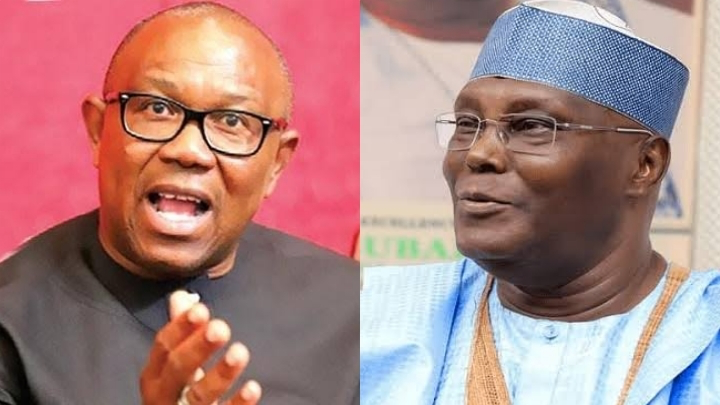
FORMER Vice President, Atiku Abubakar, and Labour Party’s 2023 presidential candidate, Peter Obi, on Thursday criticised the economic policies of President Bola Tinubu’s administration, saying his government pushed Nigerians into deeper hardship. 

In separate Workers’ Day messages, on Friday, May 1, both opposition figures said the government’s reforms, especially the removal of fuel subsidy, worsened living conditions for workers across the country. 

In a statement titled “Broken Promises, Shattered Hopes: The Nigerian Worker’s Burden Under the Tinubu Administration,” Abubakar said this year’s Workers’ Day should be a moment of grief rather than celebration.

He argued that the “Renewed Hope” slogan of the government had translated into “renewed hardship” for citizens, adding that Nigerian workers, including teachers, nurses, civil servants, artisans and factory workers, had borne the brunt of economic reforms without adequate protection.

Abubakar acknowledged that the removal of fuel subsidy was, in principle, a necessary reform but faulted the manner of its implementation, describing it as “reckless and callous.” 

He said the policy was introduced without proper planning, social safety nets or cushioning measures, leading to a sudden spike in transport, food and living costs.

According to him, while the government claimed to have saved trillions of naira from the subsidy removal, ordinary Nigerians have yet to feel its benefits. 

He alleged that instead, the funds were largely shared among tiers of government and directed toward projects such as the controversial Lagos-Calabar Coastal Highway, which he claimed lacked competitive bidding and due process.

“While the Nigerian workers pay more to transport themselves to and from work, more to eat, more to keep their children in school, the administration is signing off on an $11 billion contract that bypassed every safeguard of transparency and accountability that should protect the public purse,” he wrote.

He added that “increasing taxes during an economic crisis, when citizens are already struggling to survive, is not fiscal responsibility. It is an act of cruelty masquerading as policy.

“What makes this administration’s economic record even more alarming is that, alongside all the new revenues generated, from subsidy savings, from a floating exchange rate that boosted naira receipts on dollar-denominated revenues, and from aggressive taxation, government borrowing has also increased dramatically. Nigeria’s debt profile has worsened. And, yet, for two consecutive years, the government has been unable to fully fund its own budget. Nigerians are owed a full and transparent account of where all this money has gone.”

In his remarks, Obi described workers as “the backbone of every nation,” but lamented that Nigerian workers are increasingly unable to survive on their wages due to rising inflation and cost of living.

He said the minimum wage could no longer guarantee a decent standard of living, stressing that no country could develop beyond the strength and welfare of its workforce.

“It is deeply painful that those who wake up every day to teach, heal, build, farm, produce, transport, protect, and serve our nation are still denied the dignity and fair reward their labour deserves. In today’s Nigeria, the minimum wage can no longer guarantee even the most modest standard of living, as inflation, rising food prices, transportation costs, and economic hardship continue to erode the value of honest work.

“No nation can truly develop beyond the strength, productivity, and wellbeing of its workforce. The progress of any society rests on the quality of its human capital, the skill of its people, and the commitment of its workers. When workers suffer, the nation suffers. When workers are empowered, the nation prospers,” he wrote.

INEC reinstates Mark, Aregbesola as ADC chairman, secretary

0

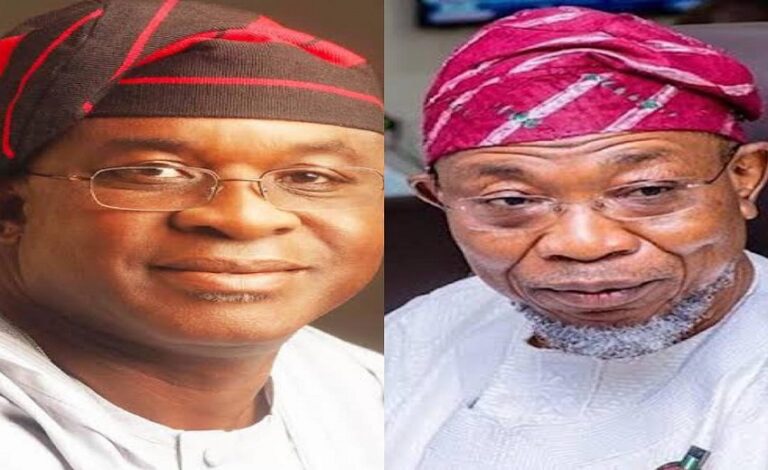
THE Independent National Electoral Commission (INEC) has updated its website to reflect David Mark as the National Chairman of the African Democratic Congress (ADC) and Rauf Aregbesola as the party’s National Secretary.

The decision followed Thursday’s Supreme Court’s ruling on the party’s leadership dispute.

The change reverses the electoral body’s earlier stance in April to remove the Mark-led leadership from its portal after citing an Appeal Court judgment on the party’s leadership tussle.

The ICIR reported that the appex court set aside the Court of Appeal’s order directing parties to maintain the status quo ante bellum.

In a unanimous ruling, the court ordered the return of the litigation on the crisis to the Federal High Court for determination.

It held that the matter must proceed at the trial court for full hearing and determination. The court frowned at the “unnecessary, improper and unwarranted” ante bellum order by the Appeal Court.

The leadership crisis in the party had deepened after controversial orders were issued by courts.

In the suit before the Federal High Court, the party’s factional leader, Nafiu Gombe asked the court to restrain Mark’s faction from parading itself as the party’s leaders and compel INEC to recognise him instead.
Upon hearing the matter, the Federal High Court ordered all parties to maintain the status quo pending the determination of the substantive suit, to prevent actions that could undermine judicial process.
Dissatisfied with the proceedings at the trial court, Mark’s faction approached the Court of Appeal, challenging the jurisdiction of the Federal High Court to hear the case.
However, the Court of Appeal dismissed the challenge and upheld the proceedings at the trial court, affirming that the Federal High Court was competent to entertain the suit.
The appellate court further directed all parties, including INEC, to maintain the status quo to avoid rendering the outcome of the case useless.

Relying on the Appeal Court’s directive, INEC announced it would not recognise any faction of the ADC and subsequently removed the names of Mark and his executives from its official portal, effectively leaving the party without a recognised leadership.

Dissatisfied, the Mark-led faction approached the Supreme Court to challenge the decision.

In a unanimous ruling on Thursday, the Supreme Court described the ante bellum order as “unnecessary, improper and unwarranted,” while it asked parties in the suit to return to the Federal High Court for proper hearing of the case.

Tinubu nominates Joseph Tegbe as power minister

PRESIDENT Bola Tinubu has nominated Joseph Olasunkanmi Tegbe as Nigeria’s Minister of Power.

Tegbe will succeed immediate past power minister, Adebayo Adelabu, if his appointment is confirmed by the Senate.

Announcing his appointment in a statement on Thursday, April 30, Tinubu’s Special Adviser on Information and Strategy, Bayo Onanuga said Tegbe was expected to strengthen ongoing efforts to reform the nation’s power sector, enhance grid stability, and attract sustainable investment.

It also noted that the nomination had been forwarded to the Senate in line with constitutional procedures.

Tegbe, from Oyo State, is an experienced economist and policy expert with over three decades of work across government and private sector.

“He is a former Senior Partner and Head of Advisory Services at KPMG Africa, where he led wide-ranging initiatives in fiscal policy reform, institutional transformation, and governance. He has also advised key government institutions and private sector organisations on strategic reforms, regulatory frameworks, and investment structuring.”

“He is currently serving as Director-General and Global Liaison for the Nigeria-China Strategic Partnership, where he coordinates development efforts between Nigeria and China,” the Presidency said.

The ICIR reported that the former minister Adelabu resigned to pursue governorship ambition in Oyo State.

Another report by The ICIR highlighted the challenges in the nations’ power sector and tasks awaiting the new minister.