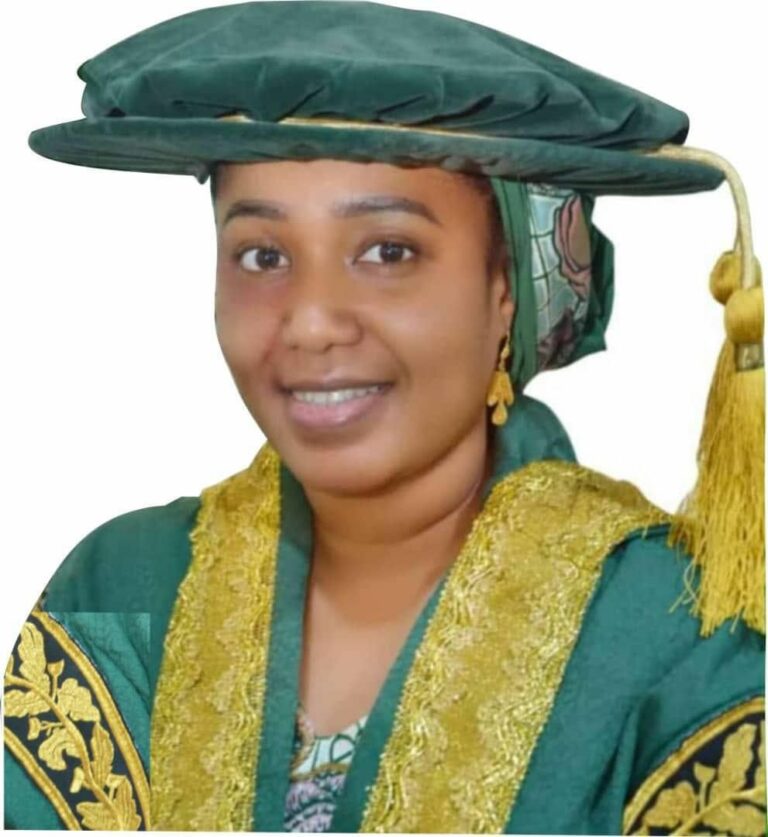
THE Nigerian Bar Association (NBA) has ordered all lawyers to boycott the court of Oluwadare T.O., a chief magistrate at the Ikole Magistrate Court in Ekiti State for issuing an order to freeze a bank account and arrest any lawyer who approaches the bank with a “lift order without police permission.”
A “lift order” is a court decision that removes a previous restriction on someone’s assets, such as bank accounts or property.
The NBA issued the boycott order at the end of its National Executive Committee (NEC) on Thursday, February 6.
The body of lawyers led by its president, Afam Osigwe, described Oluwadare’s order as a grave violation of legal ethics and due process that would not be condoned.
In a series of tweets on X, the NBA president also said a formal petition would be filed against the magistrate before the chief judge of Ekiti State to relieve him of all judicial duties.
Osigwe added that the Judicial Service Commission of Ekiti State would also be petitioned to investigate and take disciplinary action against the magistrate.
“If it is confirmed that the applicant in the case is a lawyer, the NBA will petition the appropriate authorities for disciplinary action.
“The NBA will also write to the chief judges of Nasarawa and Kogi States to address the growing concerns over fake and outrageous court orders emanating from those jurisdictions,” the NBA stated.
The group noted that it remained unwavering in its commitment to upholding the rule of law and protecting the independence of the legal profession.
It warned that any attempt to intimidate lawyers or subvert due process would not be tolerated.
Oluwadare’s court order, which he granted on January 23, on a case between the inspector general of police (IGP) Kayode Egbetokun, and both Keystone Bank and Nineteenth Kid Estate Residents Association, went viral on social media on Wednesday, February 5, sparking outrage.
The magistrate had ordered that Keystone Bank provide certified true copies of the account opening package, statement of account from November 1, 2024, to date, and certificate of identification for the Nineteenth Kid Estate Residents Association to the assistant inspector general of police, Zone 2 Headquarters, Onikan, Lagos State.
He also ordered the bank to place a post-no-debit (PND) on the account and deactivate all internet/electronic transactions on it, and that the PND should not be lifted if the suspect had not reported to the police and arrested [sic] any persons who come with a lift order without police permission.
Recall that another judge, Inyang Ekwo, of the Federal High Court in Abuja on October 8, 2020, in a suit marked FHC/ABJ/CS/1635/2019, ruled that magistrates lacked the power to freeze bank accounts.
Ekwo also declared that banks should not act on “bankers’ orders” served on them by the police to freeze or place a post-no-debit on personal accounts.
The judge ruled in favour of five siblings who sued their brother and several banks for freezing their bank accounts.
The siblings claimed that their accounts were frozen after their brother petitioned the police, and they were arrested and detained.
The banks had frozen the accounts based on a “banker order” from a magistrate court, but the judge ruled that magistrates lacked the power to make such orders under Nigerian law.
THE Independent Corrupt Practices and Other Related Offences Commission (ICPC) has arrested Adam Imam Yusuf, a former Deputy Commandant of the Nigerian Security and Civil Defence Corps (NSCDC) in Kogi State and currently the Commandant in Akwa Ibom State, over his alleged involvement in a N3 billion fraud.
Yusuf, along with a former Chief of Naval Staff, Usman Jibrin, and a retired Brigadier General, Ishaya Gamgum, were issued with a bench warrant by the Federal High Court Abuja in May last year.
The warrant, which was issued by Justice Inyang Ekwo, followed money laundering charges brought against the trio by the ICPC after investigating a petition against them by a whistle blower.
Since then, the accused had remained defiant, evading arrest and failed to appear in court, a development that raised questions as to whether they are above the law.
However, the ICPC said Imam was taken into custody from his residence in Gwagwalada, Abuja, and is now set to face prosecution.
A statement by its Director of Public Enlightenment and Education, Demola Bakare, on Friday, February 7, said the former Chief of Naval Staff, Vice Admiral Usman Jibrin, had allegedly masterminded the fraud through Yusuf and Gangum.
He said the alleged scheme involved the diversion of public funds using 92 fictitious companies that were not registered with the Corporate Affairs Commission (CAC).
The ICPC said it was able to trace these funds to several affiliated companies, including Lahab Integrated and Gate Coast Properties, which led to the acquisition of over 18 properties, including filling stations.
The commission said four of these properties have already been forfeited to the government, while legal proceedings are ongoing for the remaining assets.
The anti-corruption commission said with the NSCDC Commandant’s arrest it is intensifying efforts to apprehend the other suspects who are still at large.
ICIR investigation
This arrest comes after an investigation by The ICIR that exposed how Jibrin, Bauka, and Yusuf had defied a court order and refused to appear in court to face trial.
The ICIR‘s investigation revealed that Jibrin, who became the Chief of Naval Staff in 2014 and retired in 2015, had allegedly used Yusuf and Bauka to amass illicit wealth within and outside Nigeria.
Court documents seen by The ICIR indicate that while the ex-naval chief, Jibrin, is standing trial on a 10-count charge of money laundering, Yusuf and Bauka are respectively facing two count charge prosecution over the same offence.
Also listed in the suit as defendants are companies allegedly involved in the laundering activities. They are Lahab Integrated and Multi-Services Ltd, Gate Coast Properties International Services Ltd, and Ummays Hummayd Energy Ltd.
The ICIR was also informed that following its investigations, the ICPC came up with “damning evidence,” which indicated that Jibrin, Bauka, Yusuf, and their accomplices illegally acquired properties through money laundering activities, using companies in which they had stakes.
Among others, the ICPC’s investigation threw up evidence on how the ex-Naval chief impersonated his wife, Lami Idum.
In a surprising twist, Jibrin had even threatened an ICIR reporter who had reached out to him for comment, saying “I will come after you; I am not a democrat; you can write any rubbish you like.
“Don’t ever try calling me again. If you want any details, go to court; find a way of getting in touch with me through the Nigerian Navy or the courts,” he fumed.
The ICIR reports that in January, the arrested Adam Imam was deployed to Akwa Ibom State NSCDC command where he became the 14 Commandant.
THE Federal Government is reviewing Nigeria’s education system and considering phasing out Junior Secondary Schools (JSS) and Senior Secondary Schools (SSS) in favour of an uninterrupted 12-year basic education model.
The move seeks to increase the years spent on acquiring basic education from nine to 12 years.
Minister of Education, Tunji Alausa, disclosed this on Thursday during the 2025 extraordinary National Council on Education (NCE) meeting in Abuja, where key stakeholders gathered to discuss education sector reforms, according to the Guardian newspaper.
The proposed shift would replace the current 6-3-3-4 system with a 12-4 model, integrating secondary education into the basic education framework.
Alausa explained that this would help reduce dropout rates, eliminate systemic barriers, and expose students to more vocational and entrepreneurial skills.
The government has also sought the approval of the National Council on Education to officially adopt 16 years as the minimum entry age requirement into the country’s tertiary institutions.
“This (extending basic education to 12 years)will also facilitate early exposure to vocational and entrepreneurial skills, preparing students for both higher education and employment.
“Many developed nations have implemented similar systems where basic education spans 12 years, ensuring that students acquire foundational knowledge before specialising at tertiary levels.
“This reform also aligns Nigeria’s education system with international standards, fostering better educational outcomes and global competitiveness.”
According to him, the new development will have a valued economic and social impact, adding that “When students receive an extended period of compulsory education, they are better equipped to join the workforce with relevant skills. This reform will also reduce child labour and other social vices resulting from premature school dropouts.”
However, while media reports initially suggested that the government had already abolished the 6-3-3-4 system in favour of a 12-4 model, Alausa later clarified in an interview with THISDAY that no final decision had been made.
“We haven’t even got to the implementation phase. The National Council on Education, the highest decision-making body on education policies, must first approve any change,” he explained.
He further noted that the proposal was driven by concerns over the declining quality of foundational education. “That means we’re just training people that have no clue, that need training. We have nine years now, but we’re proposing to increase it to 12 years of compulsory education,” Alausa said.
The minister also addressed the challenge of exceptional students facing delays due to age restrictions for university admission.
“Bright students completing secondary school at 16 are forced to wait until they turn 18. This delays their development and could worsen mental health issues,” he added.
Update: The Ministry in a statement said aside from the proposal to increase basic education to 12 years, the proposed reforms also include raising the Universal Basic Education Commission (UBEC) access fund from 2 per cent to 5 per cent of revenue to enhance support for schools.
The statement from the spokesperson, Kabiru Haruna, said there are also plans to allow for “special provisions for talented students under 16, allowing them to take examinations for early academic progression”.
THE Federal Government of Nigeria has approved a 15 per cent tariff increase for all port charges.
The managing director of the Nigerian Ports Authority (NPA), Abubakar Dantsoho, disclosed this on Thursday, February 6 during a stakeholders engagement in Lagos state.
The tariff increase, Dantosho said, is aimed at ensuring competitiveness and infrastructure upgrades.
He said, “The 15 per cent upward increase, which is to cut across all NPA Rates and Dues, is premised on the urgent need to address the undesirable reality of aged and weak Infrastructure, obsolete equipment, and slow Port capacity expansion, which has continued to diminish the performance and indeed competitiveness of Nigerian Ports.”
According to Dantsoho, the authority was compelled by the exigency of bringing Nigerian ports up to speed with those of its peers in terms of infrastructure and equipment.
Represented by the Executive Director of Marine and Operations, Olalekan Badmus, he noted that the agency had maintained the same rates for over three decades despite significant economic changes, including exchange rate fluctuations, rising wages, fuel and lubricant costs, and inflation.
He asserted that port authorities globally depend on revenue from operations to stay alive to their responsibilities which include construction and maintenance of port infrastructure, dredging of channels, provision of aids for safe navigation, provision of modern marine crafts for efficient harbour services, automation and digitisation of port transactions, port security, energy efficiency and training and retraining of its employees.
Maritime experts believe that the NPA needs funds for improved port infrastructure, procurement of tug boats, and other operational platforms to achieve efficiency.
The value of NPA’s present tariff has since been suppressed by inflation which is at about 35 per cent, a maritime stakeholder, Joshua Asanga, said.
Asanga pointed out that liabilities like wages, fuel and other areas of expenditure have been on upward adjustment without a commensurate rise in NPA charges for over thirty years.
The ICIR can report that several challenges hinder efficient operations in Nigerian ports, particularly in Apapa, Lagos.
Added to the infrastructure decay and effectively digitalised information communication technology system are high levels of corruption across the port corridors.
Others include violent toll collection, frequent harassment and attacks on business owners, forceful collection of illegal taxes, truck congestion, indiscriminate extortion and other corrupt practices frustrating importation and exportation activities carried out at the ports.
In 2022, a former NPA managing director, Mohammed Bello-Koko, said the agency was committed to eliminating systemic corruption at the ports, however, a report by The ICIR in 2023 revealed that the issues continue to impede operations in Apapa port.
AS the blackout in Kaduna and neighbouring states entered day four today, Thursday, February, 6, a group under the aegis of Concerned Residents of Kaduna have petitioned Governor Uba Sani to prevail on Kaduna Electricity Distribution Company (KADECO) to address the crisis.
The National Union of Electricity Employees (NUEE) started an indefinite strike on Monday, February 3, to protest KADECO’s disengagement of 900 of its staff.
The protesters grievances also include non-payment of outstanding pensions to retirees, inadequate provision of necessary work tools, lack of promotions and non-implementation of the 2024 national minimum wage by KADECO.
The spokesperson of KADECO, Abdulhazeez Abdullahi, in a statement on Tuesday, February 4, confirmed the dismissal of 450 staff across four states of KADECO’s franchise region, made up of Kaduna, Kebbi, Zamfara and Sokoto.
He assured customers that the company was working to resolve the dispute with the labour union to restore electricity supply as soon as possible.
Despite this assurance, the blackout has continued, causing widespread frustration among residents, with many households and businesses suffering significant losses.
In a petition released to journalists on Thursday, the petitioners urged Kaduna State Governor to ensure the distribution company restore electricity in the state.
“Your Excellency, while we acknowledge the challenges faced by the electricity distribution company, it is unfair that ordinary citizens, who diligently pay their electricity bills, continue to suffer due to poor power supply. Many hardworking individuals and small businesses depend on electricity to earn a living, and prolonged outages are crippling their means of survival” part of the petition reads.
According to reports, residents in the affected states are facing water crisis as women, children and other residents struggled to get water from the few boreholes and other outlets where prices have skyrocketed.
The petitioners further urged the government to prevail on KADECO to address the concerns of the aggrieved staff.
“Furthermore, we are deeply concerned about the recent developments within the power sector, particularly the dismissal of staff, which should not translate to punishing innocent consumers. We implore you to urgently call Kaduna Electric to order and ensure that electricity is fairly and adequately distributed to all.”
Meanwhile, the governor has directed his deputy, Hadiza Balarabe, to immediately interface with KADECO’s management and the striking workers in order to end the industrial action.
The ICIR reports that several states including those under KADECO franchise witnessed two-week power outage in October 2024 when bandits allegedly destroyed power infrastructure in the North.
PRESIDENT Bola Tinubu has sacked the newly appointed vice-chancellor of the University of Abuja, Aisha Sani Maikudi, a professor, and dissolved the institution’s governing council.
The decision, which takes immediate effect, also includes leadership changes at several other federal universities, in a sweeping leadership overhaul, according to a statement by the president’s media aide, Bayo Onanuga, on Thursday, February 6.
The president consequently appointed Lar Patricia Manko, another professor, as acting vice-chancellor of the University of Abuja, recently renamed Yakubu Gowon University, for a six-month term.
Manko will not be eligible to apply for the permanent vice-chancellor position once the term expires, the president added.
The restructuring also saw Lanre Tejuoso, the current pro-chancellor of the University of Agriculture, Makurdi, appointed as pro-chancellor of Yakubu Gowon University, while Joy Emordi, who previously served as pro-chancellor at Alvan Ikoku University of Education, will succeed Tejuoso in Makurdi.
Recall that the governing council of the University of Abuja, chaired by Saddiq Ismaila Kaita, had on Tuesday, December 31, announced Aisha Sani Maikudi, a professor, as the institution’s seventh substantive vice-chancellor.
Maikudi emerged as the top candidate among 10 people shortlisted and interviewed by the joint council and senate selection board, in line with the university’s established guidelines, with her appointment taking effect on January 1, 2025.
While the institution revealed that the decision on Maikudi’s appointment was made during the 77th extraordinary meeting of the governing council held on Tuesday, December 31, The ICIR reports that her appointment followed a series of controversies.
Some university senior officials had accused the governing council of favouring Maikudi, alleging that she lacked the required years of experience necessary for the position of vice-chancellor.
Leadership changes in other universities
Tinubu has also sacked Polycarp Emeka Chigbu, a professor, from his position as acting vice-chancellor at the University of Nigeria, Nsukka (UNN), ahead of his tenure which ends on February 14.
Chigbu is replaced by Oguejiofu T. Ujam, who will serve as acting vice-chancellor for six months but, like Manko, will not be eligible for the permanent role.
The president further reassigned Ike Nwachukwu as pro-chancellor of the University of Uyo, while Olubunmi Kayode Ojo has been appointed the UNN pro-chancellor. Ojo had served in the same capacity at both the Federal University of Lokoja and the Federal University of Oye-Ekiti.
“Professor Zubairu Tajo Abdullahi, currently the pro-chancellor of the University of Uyo, has been appointed to succeed Ojo at the Federal University of Lokoja. Senator Sani Stores is the new pro-chancellor of Alvan Ikoku University of Education, succeeding Senator Joy Emordi. Senator Stores is a council member at the University of Nigeria, Nsukka.
“Additionally, Barrister Olugbenga Kukoyi, a current council member at the University of Nigeria, Nsukka, has been appointed the new pro-chancellor of Nnamdi Azikiwe University in Awka, Anambra State,” the statement added.
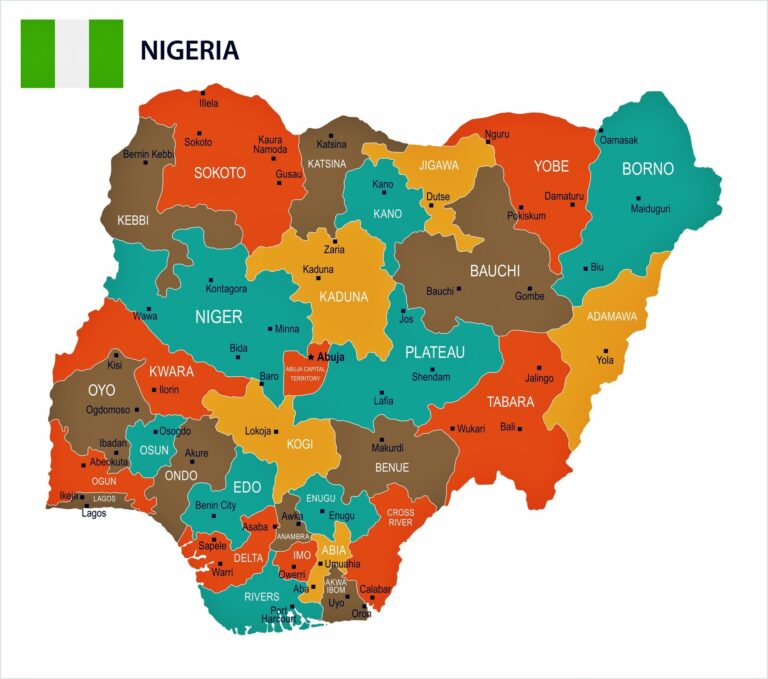
THE House of Representatives Committee on Constitution Review has proposed the creation of 31 additional states across Nigeria.
If approved, it would increase the number of states in Nigeria to 67.
During Thursday’s plenary session, deputy speaker, Benjamin Kalu, who presided in the absence of the speaker Tajudeen Abbas, read a letter outlining the recommendations of the committee.
Kalu, who also chairs the committee, detailed the proposed distribution of the new states, with six allocated to the North-Central, four to the North-East, five to the North-West, five to the South-East, four to the South-South, and seven to the South-West.
The House proposal for the creation of new states in Nigeria outlined a rigorous process that must be followed to meet the constitutional requirements.
The process involves securing the approval of at least a two-thirds majority in the National Assembly, as well as endorsements from the House of Representatives, State Houses of Assembly, and Local Government Councils.
In accordance with Section 8 of the Nigerian Constitution, any new state creation must be preceded by a referendum conducted by the State Houses of Assembly.
The proposal also called for the resubmission of proposals in line with the prescribed guidelines, which includes submitting hard copies and electronic copies of memoranda to the committee’s secretariat.
The proposed new states require many contemporary states to concede much of their territories, with multiple states being proposed in Kogi, Benue, Adamawa, Bauchi, Borno, and Taraba, among others.
The proposed new states are New Kaduna and Gujarat from Kaduna State, Tiga and Ari from Kano, Kainji from Kebbi State, and Etiti, Orashi, Adada, and Orlu from the South-East.
Others are Okun, Okura, and Confluence states from Kogi; Benue Ala and Apa states from Benue; Amana state from Adamawa; Katagum from Bauchi state; Savannah state from Borno; and Muri State from Taraba.
Also included are Lagoon from Lagos, Ogun, Ijebu from Ogun state as well as Oke Ogun/Ijesha from Oyo/Ogun/Osun States, Ogoja from Cross River State, Warri from Delta, Ori and Obolo from Rivers, Torumbe from Ondo, and Ibadan from Oyo State.
Nigeria currently has 36 states and the Federal Capital Territory (FCT).
The last time Nigeria created new states was in 1996, by the late Sani Abacha, a general. He created six new states namely Bayelsa, Ebonyi, Ekiti, Gombe, Nasarawa and Zamfara.
CONSERVATIVE Party leader Kemi Badenoch has announced a proposal to extend the minimum time required for immigrants to apply for British citizenship to 15 years.
The move, unveiled in a video shared on her X account, on Thursday, February 6, forms part of a broader effort to tighten immigration rules and ensure that only “net contributors” gain long-term residency and citizenship in the UK.
Badenoch stated that under the proposed policy, the wait time for indefinite leave to remain (ILR) would double from five to ten years, adding that those granted ILR would need to wait another five years before becoming eligible to apply for British citizenship.
Immigrants with criminal records and those who overstayed their visas will be banned from making such an application under the new policy.
The ICIR reports that under the current law, immigrants seeking British citizenship would have to obtain an Indefinite Leave to Remain (ILR), after having worked in the country for five years. Although, the duration can be lower – two or three years – depending on the visas.
According to the current immigration law, immigrants can apply for British citizenship, a year after they have been granted indefinite leave (ILR) to remain.
But with Badenoch’sproposal, immigrants may now have to work for 10 years and wait for another five before obtaining British citizenship.
“I want to reduce immigration and make living here actually mean something. We need to change the way our immigration system works. So I am announcing that the conservative party is going to do the following things differently:
“1. If you want to stay in our country permanently and apply for indefinite leave to remain, the time you have to live here before you apply would increase from five years to 10 years. 2. You will have to be a net contributor with a high enough salary, especially if you want to bring family members with you. And if you have a criminal record, you are banned.
“We would increase the time you can apply for a British passport from 12 months to five years, meaning it will take a minimum of 15 years to start an application. If you enter this country illegally or overstay your visa, you will be banned from ever getting leave to remain or a passport,” she said.
According to reports, the Conservatives are pushing for the government to implement the changes retroactively from 2021 by amending the Border Security, Asylum, and Immigration Bill, which is set for debate in Parliament next week.
A ‘conveyor belt’ system
Earlier in an interview with the BBC, Badenoch expressed concern over the current immigration system, calling it a “conveyor belt” to citizenship for newcomers.
She argued that too many individuals were obtaining citizenship through this route, putting unnecessary pressure on public services.
Badenoch, born to Nigerian parents in the UK, emphasised the need to ensure that people coming to the UK have a meaningful connection to the country.
“We need to make sure that people coming here have a real, meaningful connection to the UK. So no criminal records, they should be net contributors to the economy, not relying on benefits but people who care about our country and our communities.”
The ICIRreports that this development was on the heels of the United States President Donald Trump implementing stricter immigration controls.
The executive order, signed just hours after his inauguration on January 20, 2025, sought to limit automatic citizenship to children born to parents who are U.S. citizens or permanent residents.
This policy shift has far-reaching implications for immigrant communities, particularly illegal immigrants, with Trump’s order stopping the State Department from issuing passports and directing the Social Security Administration to no longer recognise the babies born by immigrants as U.S. citizens.
Children born to undocumented immigrants, as well as those on temporary visas, may no longer qualify for U.S. citizenship by birth.
This also means that the children denied citizenship may face deportation alongside their parents under Trump’s broader immigration policies.
In less than 20 days, Trump’s government has reportedly deported over 6,000 illegal immigrants.
A UNITED States (US) lawmaker, Al Green, is planning to file impeachment articles against President Donald Trump, citing the president’s decision to take over Gaza as the reason.
Green’s move marks another chapter in the long-standing controversy surrounding Trump’s presidency and policies in less than 20 days he took over power.
It also adds to the crises he faced before and after clinching the presidency. He was accused and charged by his predecessor – Joe Biden’s government. Though he was convicted, he escaped jail.
Two courts have blocked one of his decisions – birthright citizenship – and he faces more litigations over other sweeping actions he took through executive orders.
According to The Guardian, Democratic lawmaker Green described Trump’s plan on Gaza as a terrible act. He said ethnic cleansing in Gaza was a serious issue that should not be taken lightly, especially if it came from the President of the United States.
He also said Israeli Prime Minister Benjamin Netanyahu should be ashamed for welcoming such a statement from Trump.
Green emphasised that injustice in one place threatened justice everywhere and that the injustice in Gaza posed a threat to justice in the US.
“I rise to announce that the movement to impeach the president has begun. I rise to announce that I will bring articles of impeachment against the president for dastardly deeds proposed and dastardly deeds done,” Green stated.
The lawmaker has a history of attempting to impeach Trump, having launched several efforts during Trump’s first term, but none of them was successful.
The impeachment articles are likely to spark intense debate in the coming days, with many wondering what this could mean for Trump and the US.
The ICIR reportedthat at a joint press conference with Netanyahu on Tuesday, February 4, Trump said the US would take over the Gaza Strip to “dismantle and develop it.”
He also vowed to relocate the original inhabitants – the Palestinians – to neighbouring countries.
According to Aljazeera, Trump unveiled the plan to Netanyahu, who visited the White House for a bilateral meeting.
Many people, especially in the Middle East, have described the plan as ethnic cleansing.
Hamas has strongly condemned the plan, saying it would only worsen chaos and tension in the region. They vowed that the people of Gaza would resist the decision.
The United Arab Emirates (UAE) is among the Middle East nations resisting the plan.
The ICIR reports that Israel’swar on Gaza has killed more than 61,700 people, according to an adjusted toll by the Gaza Government Media Office, which said thousands of missing people had been considered dead.
Trump’s controversial decisions
Most of Trump’s decisions since he assumed power on January 20 have been termed controversial by many.
His planned dismantling of the United States Agency for International Development (USAID) could take hundreds of jobs worldwide as most of USAID’s staff have been placed on administrative leave.
The plan to refocus the organisation’s activities to only local needs has sparked widespread criticisms from several Americans and people from across the globe who argued that the decision would have a devastating impact on global humanitarian efforts.
USAID supports health and emergency programmes in over 120 countries, including some of the world’s poorest regions.
Trump’s decision to dismantle the agency is part of a long-standing narrative among hard-line conservatives and libertarians, who believe that US taxpayer money should be spent on domestic priorities rather than foreign aid.
The agency, in a statement on its website on Tuesday, said that the staff leave would begin before midnight on February 7, 2024.
Trump also signed 42 executive orders on his inauguration day on Monday, January 20, reversing several policies of his predecessor, Joe Biden.
Some of the orders include pulling out the US from the World Health Organisation (WHO), the Paris Climate Agreement, ending birthright citizenship for children of illegal immigrants, and recognising only two genders – male and female.
The list includes defending women from gender ideology extremism, reinstating the ban on transgender military service, and renaming the Gulf of Mexico to the Gulf of America, among others.
In addition to these, he has pulled the US from the United Nations Human Rights Council.
In what appears to be a negation of the Nigerian Police Service Commission (PSC) directive, embattled inspector-general of police, Kayode Egbetokun, has blocked the retirement of all police officers who have either exceeded 35 years in service or are above 60 years.
According to Sahara Reporters, Egbetokun made a volte-face on his earlier decision to allow the officers to quit service.
The latest decision came amidst raving controversy trailing Egbetokun’s continuation in office as the nation’s police chief.
The ICIR reports that President Bola Tinubu appointed Egbetokun as acting IGP in October 2023, pending his confirmation by the National Assembly. The appointment took effect on the 31st of the same month.
Egbetokun should have left office on September 4, 2024, the day he clocked 60.
Rather than allow him to go, the Tinubu-led Federal Government pushed a bill to amend the Police Act, which consequently paved the way for the IGP’ to remain in office for four uninterrupted years, meaning he will quit office in October 2027.
Many citizens who opposed this speedy amendment of the Police Act by the National Assembly claimed the move was to aid Tinubu, who is likely to seek a second term and use Egbetokun and the entire police to his advantage in the 2027 presidential poll before Egbetokun’s tenure will elapse.
The ICIR reports that Egbetokun was Tinubu’s chief security officer when he was Lagos State Governor in 1999.
He was promoted to deputy inspector-general of police shortly after Tinubu won the February 25, 2023, presidential election, with many Nigerians suspecting he could be the next IGP’ because of his closeness to Tinubu.
Egbetokun’s volte-face on senior officers retirement
In compliance with the PSC directive, Egbetokun had earlier ordered the immediate retirement of senior police officers allegedly implicated in bypassing service regulations.
He also ordered the immediate retirement of senior police officers who were either over 60 years old or had served for more than 35 years.
Some of the senior officers reportedly affected include the head of the NPF Legal Section, Simon Lough, a senior advocate, and a former Federal Capital Territory (FCT) police commissioner, Benneth Igweh.
Lough was supposed to have retired on January 8, 2022, while Igweh should have retired on January 5, 2023.
The directive was contained in a letter dated February 1, signed by the deputy force secretary, Bode Akinbamilowo, on behalf of the IGP.
The letter was titled “Re: Police Service Commission Decision At Its 1st Extra Ordinary Meeting Of The 6th Management Board On The Regularisation Of Date Of First Appointment Of Cadet ASPs/Inspectors Force Entrants.”
The officers were reminded of the “comprehensive implementation” of the Police Service Commission (PSC) instructions dated January 31, 2025, with particular emphasis on paragraphs three and four of the letter.
Paragraphs three and four of the PSC letter read: “Accordingly, the Commission, at its 1st extraordinary meeting of the 6th Management Board held on Friday, 31st January 2025, has approved the immediate retirement of those officers who have spent 35 years in service and those above 60 years of age.
“Any omission discovered subsequently on this issue also falls within this approval.”
However, a contrary police signal dated February 5 from Egbetokun directed that all actions listed in his February 1, letter be put on hold till further notice.
The fresh signal with reference CH:8400/FS5/FHQ/AB3/VOL.2/293 revealed that Egbetokun instructed officers to “stay action” on the PSC’s directive, pending further directives from police headquarters in Abuja.
Photo credit: Sahara Reporters
Why PSC wants senior officers retired
The ICIR reported on Friday, January 31, that the Police Service Commission approved the immediate retirement of officers above 60 or those who have served for 35 years.
In a statement signed by its spokesperson, Ikechukwu Ani, the PSC said at its 24th plenary meeting on 27th and 28th September 2017, it approved that recruits and other officers of the NPF should have their date of appointment in the Force against the date of their enlistment documented.
“The commission has passionately revisited its decision and has come to the conclusion that the said decision in its intent and purpose contradicted the principle of (the) merger of service in the Public service and it is in violation of Public Service Rule No 020908 ( i & ii) which provides for retirement on (the) attainment of 35 years in service or 60 years of age.”
“Accordingly, the commission, at its 1st extraordinary meeting of the 6th management board held today, Friday, 31st January 2025, approved the immediate retirement of those officers who have spent more than 35 years in service and those above 60 years of age.” the PSC said.
The commission added that it had conveyed the 2017 decision to Egbetokun, for implementation.
The PSC’s latest decision came amid controversy surrounding Egbetokun’s tenure as the NPF chief.
Sowore labels Egbetokun ‘illegal IGP’
Egbetokun has continued to face the heat since Monday, January 27, when a human rights activist and the presidential candidate of the African Action Congress (AAC) in the 2023 election, Omoyele Sowore, honoured a police invitation in Abuja.
Sowore was later charged by the police for alleged cyberstalking and false publication against Egbetokun on Tuesday, January 28.
The charges, filed at the Federal High Court in Abuja and shared by Sowore’s handle on X, showed that the lawsuit stemmed from his posts on X, where he was said to have referred to Egbetokun as an “illegal IGP.”
According to the charge sheet seen by The ICIR, the police accused Sowore of making statements capable of causing a breakdown of law and order.
Sowore, in a fresh post on his Facebook handle on Thursday, January 30, insisted that the IGP’s tenure was illegal.
However, in a statement signed by police spokesperson Muyiwa Adejobi, the NPF said Sowore’s claim was unfounded and sought to undermine the legitimacy of the IGP’s appointment as well as public confidence in the police.
He referred to Part III, Section 7 (6) of the amended Police Act, 2020, which states, “The person appointed to the office of the inspector-general of police shall hold office for four years.”
According to the police, this amendment aims to provide stability and continuity in the leadership of the NPF, enabling the IGP to implement long-term plans and policies without fear of abrupt termination.
Quoting relevant portions of the amended Police Act, the attorney-general of the federation, Lateef Fagbemi, a senior advocate, also averred that Egbetokun’s continued stay in office was legal.