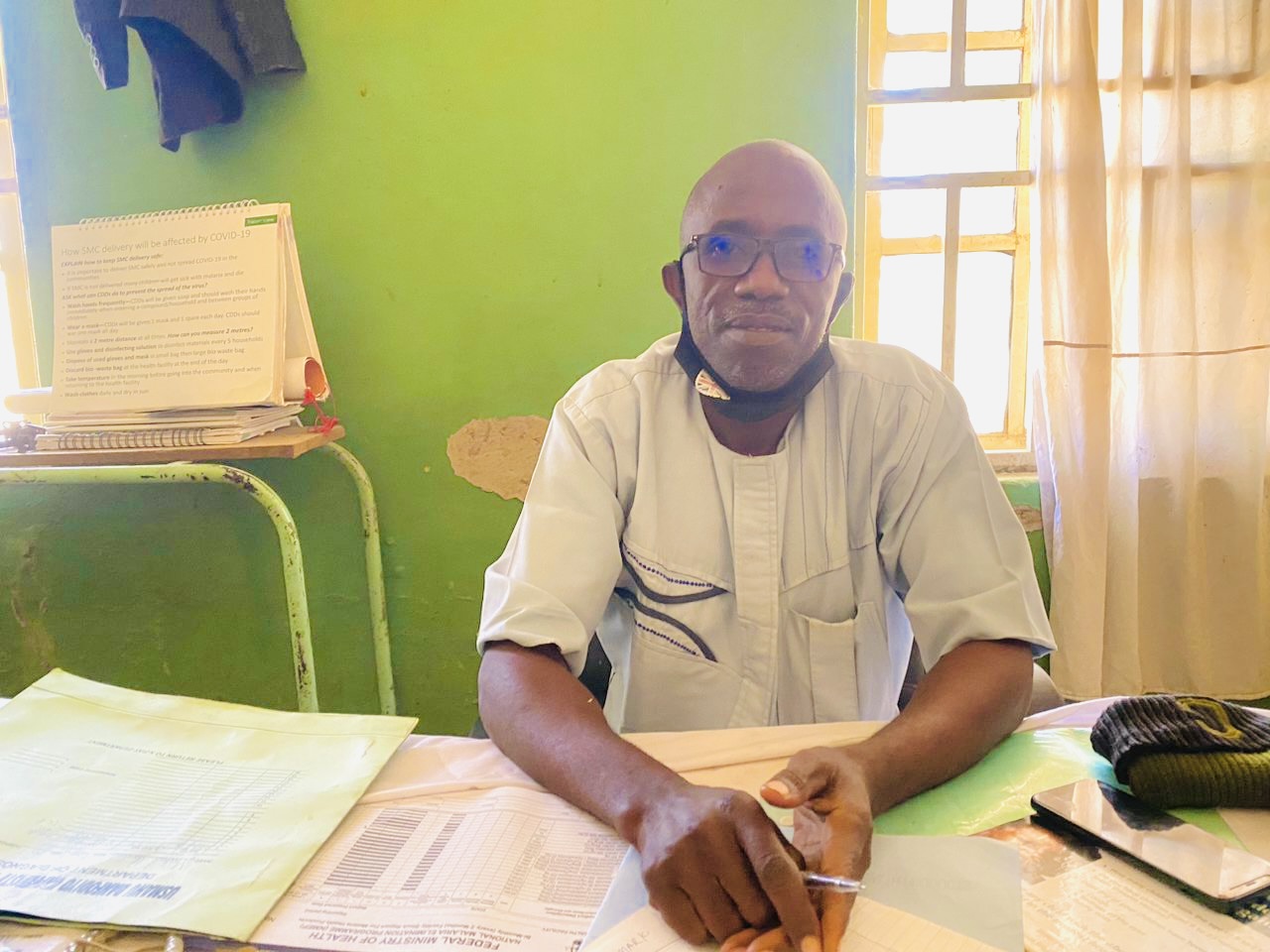
A TEACHER from Ogun State, Kayode Adewale, has been named among the top 50 finalists for the prestigious 2025 Global Teacher Prize.
The prize honours educators creating transformative change in their communities.
Adewale, who teaches Mathematics and STEM at Imagbon/Imaka Comprehensive High School, Ogun State, is celebrated for his innovative teaching approach and dedication to uplifting underprivileged students.
This recognition by the Varkey Foundation, in partnership with the United Nations Educational, Scientific and Cultural Organization (UNESCO), highlights exceptional educators making transformative impacts worldwide.
He joined an elite group of educators from diverse parts of the globe who have demonstrated outstanding innovation, inclusivity, and dedication in their teaching.
The finalists, 30 males and 20 females, selected from thousands of nominees, are recognised for driving change in their schools and societies by addressing key global challenges, promoting equity, and inspiring the next generation.
Adewale’s teaching journey, rooted in making complex Mathematical concepts accessible, is said to have redefined education for students from low-income farming families in his semi-urban community, according to a short profile that accompanies his selection.
Through culturally relevant pedagogy, he is said to have integrated local languages such as Yoruba and Hausa into lessons, creating relatable and engaging learning experiences.
He also taught students to use smartphones as academic tools, leveraging apps and virtual platforms to improve their performance in national and regional exams.
According to the profile, beyond the classroom, Adewale has trained over 30,000 teachers through his Transformation1090 Initiative, equipping them to incorporate technology into their teaching practices.
He also founded the Ogun517GoToSpace programme, where he inspires students to explore space science by collaborating with NASA experts. His environmental advocacy includes climate change simulations and tree-planting initiatives to promote sustainability.
“Kayode’s achievements have gained national and international recognition. He was named the 2nd runner-up for Best Teacher in Nigeria and has received awards for excellence in Mathematics education. His selection for prestigious programmes like the Fulbright Teaching Excellence and Achievement Program and the Limitless Global Educators Program reflects a commitment to lifelong learning and sharing best practices.
“Beyond academic excellence, Kayode’s dedication to community development is remarkable, serving in leadership roles for educational organisations and organising initiatives like annual quiz competitions to foster academic curiosity among students. As a radio presenter, he further extends his influence, providing young people with entrepreneurial skills and raising awareness about global challenges. including climate change and digital literacy,” his profile reads.
In a statement announcing the selected finalists, founder of the Global Teacher Prize, Sunny Varkey, commended the finalists, saying, “The Global Teacher Prize was created to spotlight the critical role of education in addressing the major challenges of our time – from combating climate change to reducing inequality and navigating technological change. I congratulate all top 50 finalists, who are joining a global community of educators leading the way to build a better future.”
The UNESCO assistant director-general for education, Stefania Giannini, reiterated the importance of investing in teachers, stating, “In a time of global teacher shortages, challenging conditions and technological advances, recognising and investing in teachers is essential to building a just, inclusive, and sustainable future. Teachers matter as they shape not only the next generation but the future of our societies.”
THE Managing Director of the Federal Airports Authority of Nigeria (FAAN), Olubunmi Kuku, has said it would require N580 billion to rehabilitate airport runways across the country.
Kuku said on Wednesday, January 15, while receiving the newly appointed permanent secretary of the Ministry of Aviation and Aerospace Development, Ibrahim Kana.
She lamented the state of the runways as well as infrastructure decay in the Nigerian airports, maintaining that it has been affecting the operational efficiency and safety of travellers.
She noted most of the runways were built in the late 1970’s and have outlived their lifespan.
Kuku further lamented that other infrastructures, such as terminals, needed major rehabilitation.
She said, “N580bn is required to fix runways across all airports; their life span is between 20 to 25 years, but most of the airports were built in 1978. Many of FAAN’s facilities, including terminals and runways, are ageing and in need of significant repairs and upgrades.
“This affects operational efficiency and safety and necessitates substantial investment for modernisation.”
According to her, despite efforts to enhance security at airports, FAAN continues to face challenges in managing security risks, particularly with the increase in air travel and the potential for terrorist activities.
FAAN MD and PS
Other threats at key airport locations include on-land encroachment, due to the lack of a perimeter fence.
She hinted that the authority’s landmass is constantly being encroached on all over the country.
“Obsolete equipment such as old fire tenders, generators, air conditioning systems conveyor lines with worn-out slats, belts, and motors, can be found in many airports that have low efficiency and have high maintenance cost,” Kuku stressed.
Kuku further hinted that FAAN has plans to modernise the airports’ infrastructure, renovate terminals, expand runways, and upgrade navigational aids this year.
Also to be prioritised in 2025 is the building of the FAAN head office.
“Priority will be given to improving critical facilities at major international airports and enhancing regional airport capacity to meet growing passenger and cargo demands.
“We need to be deliberate about it. So many haphazard jobs and abandoned projects at the airports. The runways require major rehabilitation,” she added.
However, in the proposed 2025 budget being debated at the National Assembly, President Bola Tinubu had only appropriated N93.03 billion as capital expenditure for the Federal Ministry of Aviation and Aerospace Development.
FAAN falls under the purview of this ministry alongside other agencies including the Nigerian Civil Aviation Authority (NCAA) and Nigerian Airspace Management Agency (NAMA).
The ICIR can report that there have been frequent incidents of aircraft skidding off the runways in the last year.
On Tuesday, April 23, Dana aircraft 5N BKI aircraft, carrying 83 passengers from Abuja, suffered a runway excursion at the Lagos Airport that led to the grounding of the plane.
Among others, on Saturday, May 11, a 5N-BZZ Airbus, carrying 52 passengers and three crew members belonging to XEJet Airlines, skidded off runway 18L at the Murtala Muhammed Airport (MMA), Lagos.
ON November 20, 2024, the Nigerian Air Force (NAF) launched an airstrike that resulted in civilian casualties and left many injured in Shawu village, Ruwan Godiya district, Faskari Local Government of Katsina State. The narrative advanced by the state government was that the airstrike ‘precisely’ targeted and eliminated terrorists in the community. This investigation by The ICIR, however, reveals that while the NAF denied any civilian casualties, the victims of the military action were civilians, including women and young children.
The early dawn light enveloped Shawu village, as villagers prepared to head to their farmlands. The air buzzed with the chirping of birds and the quiet footsteps of residents returning from the mosque after early morning prayer.
But, the serenity was abruptly shattered when three aircraft appeared in the sky, hovering ominously. Moments later, they unleashed bombs, followed by a relentless spray of bullets that thrust the community into a state of destruction and sent residents scampering for safety, villagers who spoke with The ICIR noted.
On that tragic morning, Isah and his heavily pregnant wife, Hafsat had barely woken up when they were jolted by the wailing of residents. “I thought it was bandits as usual,” Isah said, his voice trembling. “But when I saw the aircraft, I knew it was something else.”
Amid the carnage, Hafsat was hit by three bullets. One tore through her leg, another pierced through her belly, destroying her seven months pregnancy even as a third bullet lodged in her chest, slicing through her armpit.
Isah said he knelt on the dusty ground, his hands trembling as he lifted his wife’s bullet-ridden body from the ground while he made frantic efforts to save her.
Hafsat’s picture obtained via her passport photograph
Isah eventually took her to the community hospital, but he was told that her injuries were beyond what the facility could handle. She was referred to another hospital in Funtua, a nearby area, where doctors closed her exposed intestines and later transferred her to Katsina, the state’s capital.
“She fought for her life because the pain was unbearable,” Isah recalled, adding, “She doesn’t deserve this because she is an obedient and kind-hearted woman who always stood by me and cared for our children.”
Isah, Hafsat’s husband
The couple buried their unborn child at the Federal Medical Centre in Katsina. Isah, now with five children to care for, has spent over N500,000 on medical bills, a sum that wiped out the family’s savings and harvest meant for the next farming season.
“We are farmers. That’s all we know. But now, we have nothing left,” he said while expressing bitterness towards the government, which he believes has abandoned them. “They keep lying, saying they killed terrorists. But they shot my wife and others who were innocent. Why can’t they come to the hospitals and see the truth?”
In a statement released after the incident, the Katsina State Government expressed their excitement over the operation and described it as a “highly successful airstrike operation that decisively targeted a known bandit enclave.”
The statement also claimed that the operation orchestrated by NAF’s “FARAUTAR MUJIYA” was precise and significantly degraded criminal elements’ operational capacity in the region.
Before conducting this investigation, The ICIR contacted NAF’s Director of Public Relations and Information (DOPRI), Olusola Akinboyewa and he also stated that the “airstrike was on target and executed based on extensive surveillance.” However, when we probed further, we found out that the claim was an outright falsehood.
The ICIR visited the community and gathered, through interviews with dozens of residents, that the terrorists had evacuated the community before the operation. Residents said it was as if they knew the attack was going to happen.
Findings showed that contrary to the falsehood spread by the state government and NAF, the main casualties of this airstrike were unarmed residents including children and women. Residents confirmed that five locals died from the airstrike while 19 others sustained injuries.
The villagers identified the five civilian victims who died as Abasyya Gambo, Maryam Mukhtar, Hadiza Alhassan, Rafia Audu and Amina Kurma.
List of victims of NAF airstrike on Shawu village, Ruwan Godiya district, Faskari Local Government of Katsina State
Authorities have launched multiple offensives into the enclaves of armed gangs also known as bandits and introduced measures, such as designating them as terrorists, to enforce stiffer sanctions and put an end to their operations.
For over a decade, bandits have terrorised many states in northwestern Nigeria sacking villages, sexually assaulting women, imposing levies on communities, killing locals, and running a multi-million-dollar kidnap-for-ransom enterprise to sustain their operations.
Since their activities escalated in 2010, more than 13,000 people have been killed. The crisis has also displaced over 600,000 people across Kaduna, Kebbi, Sokoto, Zamfara and Katsina where the airstrike occurred.
The state alone recorded over 300 armed attacks in 2024 resulting in more than 1,000 deaths which is higher than what was recorded in previous years according to the data from the Armed Conflict Location and Event Data (ACLED) Project.
The terrorists who operate from different camps, wield considerable influence in some rural areas, and even run parallel governments, forcing helpless locals to live at the mercy of their harsh laws.
However, in an attempt to eliminate the problem, the Nigerian Armed Forces including NAF, charged with the mandate of protecting citizens have killed countless innocent people and devised misleading press statements and social media narratives to cover up these operational errors.
Trails of blood and destruction
Umar Saheed suffered the most devastating tragedy of his life from the airstrike. His 8-year-old granddaughter, Maryam Mukhtar, died instantly after she was shot from the air. But that was only the beginning of his sorrow.
Soon after, Umar’s daughter, Abassya who gave birth to Maryam also passed away in the evening after frantic efforts to save her proved abortive. This tragedy left him to grapple with the heavy weight of two profound losses.
“Maryam was a cheerful girl, full of energy — always running all over the place,” Umar recalled, his voice breaking. “She was so young, just eight years old. After she died, her mother, who was kind and loving, passed away too.”
Aisha Buhari: Her hand was hit by a bullet while her child was also hit. Apart from the injuries they suffered from the attack, she is now displaced and homeless.
The attack also left his other relatives who he named Zulai, Suwaiba, Umma, and Halima injured.
“We just woke up to see a plane, and then everything changed,” Umar recalled. “We lost our homes, and our loved ones, and many were injured. Since then, life has become unbearable.”
The road to recovery remains agonisingly slow for Umar. In the weeks following the airstrike, he found himself engulfed in unbearable grief, often sitting alone under the tree staring at the sky. Some nights, he would cry until his body ached, pleading with God for relief from the weight of his losses.
Seated on the mat in front of her new settlement, Aisha Buhari’s face bore the marks of sorrow and dashed hope as she cradled her child in her arms. She recounted the tragedy, still fresh in her memory, as though it had happened only moments ago.
She remembered that the plane appeared from the east when she and others were still inside their homes, preparing to start the day. As it drew closer, fear gripped the villagers, and they began praying. Moments later, the shooting began from the air and the community was engulfed by sand and dust.
“We ran out of our house as it crumbled. Our belongings were all gone. We couldn’t even save anything,” Aisha recalled as she held her child close. Her hand was hit by a bullet while her child was also hit. Apart from the injuries they suffered from the attack, she is now displaced and homeless.
Hadiza Dini had a similar ordeal. She and her daughter were hit in their legs during the explosion. She recalled being at home moving around the room when the earth-shattering roar of the aircraft emerged.
With her child clutched to her arms, she barely had time to react. The plane had come out of nowhere, and within seconds, it was hovering dangerously close, dropping bombs that would change everything. “It was as if time stood still. We saw the plane coming from the east, and then it released the bomb. The force knocked us all back. My body went cold, weak… I didn’t even realise my child was hit until later.”
Hadiza Dini: She and her daughter were hit in their legs during the explosion. The ICIR/2024
“I didn’t know what to do. The plane was so close. Then, the dust and sand rose up, covering everything. I was holding my child, and we just ran to hide behind the trees, hoping we wouldn’t be seen.”
Nigerian military’s disinformation strategy
Civilian deaths from military airstrikes in Nigeria’s conflict zones have become a tragic pattern. Under the guise of targeting armed groups operating in ungoverned areas, countless Nigerians seeking safety from violence have instead fallen victims to the very forces meant to protect them.
This is a blatant violation of international humanitarian laws. The Geneva Convention, for instance, emphasises the need to safeguard civilians during armed conflicts. Article III of the convention explicitly states the protection of “persons taking no active part in the hostilities, including members of armed forces who have laid down their arms and those placed hors de combat by sickness, wounds, detention, or any other cause, shall in all circumstances be treated humanely.”
Human Rights Watch (HRW), a prominent international rights organisation called out the Nigerian military for these blunders, urging it to accept responsibility and compensate the victims.
“The military must provide full accountability for its actions, as well as adequate compensation and support to meet the needs of affected families,” said Anietie Ewang, HRW’s Africa researcher.
SBM Intelligence, a Nigerian research organisation that focuses on crisis and conflict issues, documented an increase in erroneous airstrikes by the Nigerian air force since 2017, when an airstrike hit a displacement camp in Rann, Borno State killing over 70 people. The persistent aerial attacks over the years have left over 500 civilians dead and hundreds injured, violating international humanitarian laws designed to protect non-combatants during armed conflict.
Documented airstrike by Nigerian Air Force
Despite public outrage and repeated calls for justice, the authorities have shown little commitment to addressing these incidents. In October 2022, the Nigerian Air Force announced an investigation into accidental airstrikes, but no findings have been released. This lack of transparency and accountability defines the military’s response which has left victims and their families without answers or redress.
While charged with combating terrorism, the actions of the Nigerian military have fostered widespread public distrust. Instead of acknowledging errors, they often employ disinformation to control the narrative. Through official communication channels, they disseminate misleading accounts that obscure their mistakes.
This disinformation campaign systematically conceals atrocities committed during counterterrorism operations, thwarting efforts to secure justice for affected communities. Women, children, and unarmed civilians have borne the brunt of these abuses, with many villages rendered desolate in the aftermath.
Military airstrike shattered houses at Ruwan Godiya
In several cases, the military fabricates victories over terrorists to mask egregious human rights violations. This calculated misinformation undermines public trust and obstructs critical efforts to reform military operations and minimise civilian harm.
The ICIR contacted the Commissioner for Internal Security and Home Affairs, Nazir Mua’zu, who had signed the state’s government press release. However, after hearing the questions posed by this reporter, he denied owning the contact, ended the call, and blocked the reporter.
Despite this, the reporter verified through Open Source Intelligence that he is, in fact, the owner of the contact.
When contacted, the director of Media to the state governor, Maiwada Dan Malam replied by saying the press release was “self-explanatory and there was nothing more to add.”
However, when asked how the state government concluded that the casualties were terrorists, he responded by saying that they stood by the information given to them by the official source (Nigerian Air Force) and that they were not in a position to do an independent investigation regarding the incident.
“NAF is a government agency, and I should be responsible enough to accept what they dished out as official information. This case was resolved about a month ago. I stand by the position of the Kaduna State Government and Nigerian Airforce,” he concluded and ended the call.
The NAF’s spokesperson, Akinboyewa who earlier claimed that the airstrike was on target and no casualties also kept mum after he was confronted with the findings.
“Specific details of military surveillance techniques and procedures are classified, for operational and security reasons. Thank you, and God Bless,” he responded.
Speaking with The ICIR, a community activist and resident of Faskari Local Government Area in Katsina State, Ahmad Yantuwaru expressed outrage over the airstrike, which he described as a tragic error that claimed the lives of innocent civilians.
He argued that the inability to distinguish between bandits and innocent civilians reflects incompetence in the government’s response to insecurity. Yantuwaru lamented that residents of affected areas face dire living conditions, with many struggling to afford one square meal a day due to displacement and extortion by bandits.
Accidental Airstrikes across Nigeria
“They have to pay money before they can work on their farms, harvest their crops, or even stay in their villages. These bandits will attack them, take their money, and violate their families. This is what is happening,” he added.
Yantuwaru noted that bandits had controlled the area but fled shortly before the airstrike, suggesting prior knowledge of the attack. “The most painful thing is that the bandits were seen walking around with their cattle, and a day before the incident, they disappeared. This shows they knew what was going to happen,” he said.
He emphasised the need for a strategic approach to tackling insecurity, including temporarily evacuating residents from conflict-prone areas and deploying security personnel to eliminate bandit hideouts systematically.
“My appeal to the government is that they need to redouble their efforts. They should evacuate people from these areas for one month, deploy security forces, and reclaim the areas. I am sure this will tackle the problem,” he suggested.
Destruction caused by a military airstrike in Shawu village, Ruwan Godiya, Katsina state
He criticised the use of airstrikes, stressing the need for precision to avoid harming civilians. “Those in charge of helicopters should be able to identify bandits from innocent civilians. The airstrikes should target bandits, not locals,” he urged.
Yantuwaru urged the government to learn from its weaknesses and implement measures that ensure the safety of citizens, particularly in rural areas.
“We are not trying to tarnish the government’s image, but we want them to address these weaknesses so that Katsina State and Nigeria in general can overcome insecurity,” he said.
Medical records confirm multiple casualties
Speaking with The ICIR, the officer in charge of the Ruwan Godiya Medical Centre, Shehu Dahiru narrated the challenges of providing medical care amid scarce resources in the wake of the attack.
Dahiru noted that the general security situation in the area had improved compared to the past and described the November 20 incident as unprecedented and devastating.
He highlighted the medical centre’s role as the first point of call for injured victims in the community, especially during emergencies like the airstrike. He admitted that coping with the aftermath of such incidents was overwhelming. “I always try to do what I can do,” he said.
Shehu Dahiru: Dahiru noted that the general security situation in the area had improved compared to the past and described the November 20 incident as unprecedented and devastating. The ICIR/2024
Recalling the November 20 airstrike, Dahiru explained that the medical centre received multiple victims, many of whom required urgent care.
“We had like 16 victims, and we tried to manage the cases we could. But for others, we had to refer them elsewhere. Some were already dead by the time we attended to them,” he confirmed.
He expressed shock over the airstrike, which he said was unexpected in the area. “As a resident of this state, we’ve not experienced something like this. There were bombs and shells. We were even surprised this thing happened, and nobody talked about it. The councillors and all these politicians didn’t say anything. And I’m sure they’ve been noticing the problem,” he added.
Medical records obtained from Ruwan Godiya Hospital, Faskari Local Government confirming Civilian Casualties/ Note: Two patients were admitted for malaria on the same day as indicated in the record
Dahiru pointed out that the financial burden of treating the victims fell on the victims’ families and, in some cases, on the hospital. “It’s from their pocket. We paid from our pocket too,” he said.
He called on the government to take swift and decisive action to address the issue and provide support for the victims and their families. “The government needs to take action on this issue. Because if not, there is a possibility of this incident happening again. People are shot, and nobody talks about it. Nobody even shows concern for the families,” he lamented.
Dahiru urged authorities to assist the injured victims and the families of those who lost their lives.
Left to suffer
“The community has received no help from the government,” said the chief Imam of the community, Lawal Magaji. “Despite knowing about the attack, no news, no compensation or condolences,” he lamented.
“The chief of our district is the only one who helped, offering prayers and urging us to be patient, reminding us that it was God’s will.”
He and other victims who spoke to The ICIR in the community said that they had to bear the cost of the tragedy alone. Apart from the lie told by the state government to the media, there was no commiseration from the government to the bereaved families and the residents who were hit by the airstrike had to deal with the consequences alone.
Lawal recalled that it was just after they had returned from the mosque after morning prayer when they first heard one of the children shout about an aeroplane approaching. Initially, they thought nothing of it. But as the plane got closer, they could see it from the horizon, heading toward them, and soon it dropped a bomb.
Lawal Magaji: “The community has received no help from the government.” The ICIR/2024.
He rushed out of his house as it began to crumble and led his group to the safety of the nearby bush. “I told them to stay low, not to raise their heads because they might see us,” he recalled.
Unfortunately, one of the injured people in the group lifted his head and stepped on a piece of wood, which made them a target. The plane returned and began shooting at them, injuring several people, including Lawal’s son, who was shot in the hand.
The plane circled the area, but they were fortunate to have escaped detection. When it eventually left, Lawal realised how miraculous their survival had been. “It was God who protected us,” he said.
Before the incident, Lawal noticed that the terrorists who used to bother them with their cattle and destroy their crops had miraculously disappeared. “We thought it was a sign of relief, but what we saw next was this airstrike that destroyed our community.”
Now, with their homes destroyed and no food to survive on, Lawal and his community are left to cope as best as they can. “We are crawling to survive,” he said. “Our beds, our cooking utensils, everything is buried under the debris. We couldn’t even dig them out.”
A resident, Karima Haruna, still felt the echoes of that fateful morning. She and her family were inside their room when the sound of an approaching aeroplane broke the silence.
“People rushed out into the open trying to escape being shot. Immediately, I just entered the room to carry my daughter but at that moment they had already begun to bombard the village, and the town was already covered with smoke. I joined the rest to run. When we went out, I saw one Suwaiba (a fellow resident) lying helplessly in a pool of blood.
Karima Haruna: No state, local, or federal official has come to help us. Only the town’s traditional ruler visited us to offer his condolences. But from the government? Nothing.” The ICIR/2024
A piece of flying debris hit Karima as she ran for her life. The sound of helicopters overhead added to the terror, and as the bombs continued to fall, Karima and the others sought refuge under a tree, lying down to shield themselves from the carnage. In the chaos, Karima felt a searing pain—she had been shot in the knee and shoulder.
Despite their suffering, no support has come from the government. “We have nothing,” Karima said. “No state, local, or federal official has come to help us. Only the town’s traditional ruler visited us to offer his condolences. But from the government? Nothing.”
The ICIR met Isah at Ruwan Godiya Hospital where a healthcare worker was helping him to dress his wounds. The 70-year-old was shot in the leg during the airstrike and his wounds failed to heal.
Isah and others have received no help from the government. He criticised the government’s actions, saying they should have done more to assist the villagers instead of only claiming to have killed terrorists. “We need help, but the government is silent,” he said.
Isah receiving treatment at Ruwan Godiya Hospital. The ICIR/2024
His wife, Aminat, said all their savings had gone while trying to take care of her husband since he was admitted after the incident. She added that she had not been able to sleep comfortably at night since the tragedy occurred as her husband suffered excruciating pain at night.
Aminat said all their savings had gone while trying to take care of her husband since he was admitted after the incident. The ICIR/2024.
She expressed sadness over how the government acted as if nothing happened and allowed the residents to bear the loss alone without any support.
AFTER over a year of conflict, a ceasefire agreement that includes the release of hostages has been reached between Israel and Gaza.
Sky News reported that the truce, announced by Qatari Prime Minister Sheikh Mohammed bin Abdulrahman Al Thani, is set to begin from Sunday,, January 19
This latest development followed prolonged negotiations in Doha, with the conflict leaving thousands dead, injured, or displaced in Gaza.
The conflict has seen several airstrikes in Gaza, destroying infrastructure, homes, hospitals, and public facilities. Hospitals and humanitarian centrea have reported severe shortages of essential supplies like water, electricity, and medical aid.
The ICIR reported how Israel’s ground offensive, launched in response to Hamas attacks on October 7, 2023, resulted in the deaths of 1,200 people and the abduction of around 250 hostages.
More recently in November, 2024, the crisis in Gaza and Lebanon intensified, with Israeli airstrikes killing dozens within days.
On Sunday, November 10, an Israeli strike in Lebanon’s Aalmat village – located far north of Hezbollah’s stronghold, resulted in at least 23 fatalities.
This airstrike, part of Israel’s extensive offensive across Lebanon, expanded further into northern part of Gaza.The escalation follows months of tit-for-tat violence between Israel and Hezbollah, spurred by Hezbollah’s show of solidarity with Gaza, including missile and drone strikes targeting Israel.
The conflict has resulted in the deaths of over 3,000 people in Lebanon, according to the Health Ministry, and more than 70 fatalities in Israel.
On August 16, the health ministry in Gaza said that over 40,000 Palestinians were killed since the beginning of the hostility.
Meanwhile, the ceasefire deal reportedly includes a six-week initial phase during which Israeli forces will gradually withdraw from central Gaza, enabling displaced Palestinians to return to northern parts of the territory.
According to Reuters, Hamas has agreed to release 33 hostages, including women, children, and men over 50, while Israel will free hundreds of Palestinian detainees.
Humanitarian aid is also set to increase significantly as part of the agreement, offering some relief to Gaza’s beleaguered population.
Also, the deal includes plans for a second phase, to begin on the 16th day of the truce, focusing on the release of remaining hostages, including male Israeli soldiers, a permanent ceasefire, and the complete withdrawal of Israeli forces.
A third phase is expected to address the return of the bodies of deceased hostages and the commencement of Gaza’s reconstruction, supervised by Egypt, Qatar, and the United Nations.
Reacting to the development, Israeli President Isaac Herzog urged the government to approve the agreement, calling it “the right move” despite its inherent difficulties.
“Let there be no illusions. This deal when signed, approved, and implemented will bring with it deeply painful, challenging, and harrowing moments.
“It will also present significant challenges. This is not a simple situation; it is among the greatest challenges we have ever known,” he added.
THE Media Rights Agenda (MRA) has accused the Federal Government of undermining the effectiveness of the Freedom of Information (FOI) Act by persistently underfunding its implementation.
The group noted that only one per cent of federal public institutions had allocations in their 2025 budget proposals for FOI implementation and related activities.
This was disclosed in a statement announcing the release of its 22-page report titled “A Vote Against Transparency: A Report on Allocations for Freedom of Information Implementation in 2025 Federal Budget,” released on Wednesday, January 15, and signed by the MRA’s communications officer, Idowu Adewale.
In the statement, the MRA observed that only 13 out of over 1,300 Federal public institutions had provisions for FOI implementation in their budgets, with a proposed total allocation of about 230 million (N230,825,750.00), representing 0.000464 per cent of the Federal Government’s budget of N49.74 trillion.
The MRA’s programme officer, John Gbadamosi, said in the statement that some people might think that the government should prioritise spending on tangible projects like infrastructure and capital projects over implementing the FOI Act. He argued that if the government failed to invest enough in making the FOI Act work, it could put all the other projects at risk of being mismanaged or having their funds misappropriated.
He explained that this was because transparency and accountability were crucial in ensuring that government funds were usedproperly.
According to MRA’s 2024 report, without adequate investment in the FOI Act, the government’s lack of transparency and accountability could lead to problems with all other allocations and expenditures.
Gbadamosi insisted that effective implementation of the FOI Act would bring many benefits, including increased government transparency, public participation, and trust, and would contribute to a knowledge society, making it essential to allocate more resources to make the Act effective.
He listed public institutions that had allocations for FOI implementation and related activities as the Federal Government Staff Housing Loans Board, Bureau of Public Service Reforms, Small and Medium Enterprises Development Agency of Nigeria, Federal Ministry of Labour and Employment, Federal Ministry of Works, and Federal Ministry of Budget and Economic Planning.
Others are the Federal Ministry of Housing and Urban Development, theFederal Ministry of Environment, theNational Library of Nigeria, theNational Commission for College Education Secretariat, theFederal Ministry of Steel Development, theOffice of the Surveyor General of the Federation, and the Nigerian Law Reform Commission.
Gbadamosi noted that the level of funding in the Federal Government’s 2025 budget proposals for FOI implementation and FOI-related activities by public institutions recorded a significant increase of 96.76 per cent over the level for 2024 in terms of the amount allocated, while the number of institutions with provisions in their budgets rose from 10 to 13.
He insisted that the total amount budgeted for FOI implementation overall nonetheless remained extremely poor.
He said the FOI Act would be ineffective without adequate resources, undermining Nigeria’s democracy and fueling secrecy and corruption.
“It is quite disheartening that nearly 14 years after the FOI Act became law, the Federal Government has, for the most part, failed to provide the necessary financial, technical, and human resources, as well as infrastructure and political will, to ensure its full and effective implementation, thereby displaying a clear lack of commitment to transparency, accountability, and good governance,” Gbadamosi stated.
The MRA report recommended allocating resources to the Ministry of Justice to strengthen oversight and ensure compliance.
The FOI Act, signed into law in 2011, provides that public institutions make public records and information more freely available and provide access to public records and information.
Section 1(1) of the act states that “Notwithstanding anything contained in any other Act, law, or regulation, the right of any person to access or request information, whether or not contained in any written form, which is in the custody or possession of any public official, agency, or institution howsoever described, is established.”
Section 2(4) states that “public institution shall ensure that information referred to in this section is widely disseminated and made readily available to members of the public through various means, including print, electronic and online sources, and at the offices of such public institutions.”
Sections 4 and 5 of the FOIA mandate all public institutions to grant or give reasons for denying a request within seven days.
The ICIR reports that most public institutions have always ignored FOI requests sent to them, thereby undermining transparency and accountability in the public space.
In October 2024, The ICIR reported that the Nigerian Investment Promotion Commission (NIPC), the Revenue Mobilisation, Allocation and Fiscal Commission (RMAFC), and the Development Bank of Nigeria emerged as the top three winners of the 2024 ranking.
NIGERIA’s headline inflation rose to 34.80 per cent in December 2024, the National Bureau of Statistics (NBS) has reported.
The NBS gave the latest figure in its Consumer Price Index (CPI) report released on Wednesday, January 15.
The statistics office uses the CPI to measure the rate of change in prices of goods and services within a month.
The data shows that Nigeria’s headline inflation rose marginally by 0.20 per cent from 36.60 per cent in November 2024.
According to the NBS, increases in demand for goods and services during the festive season were primarily driven by the rise in the December inflation figure.
The data showed that the 34.80 per cent inflation in December 2024 was 5.87 per cent higher than the 28.92 per cent rate recorded in December 2023.
This year-on-year increase indicates a significant rise in the cost of living compared to the same month in the previous year.
On a month-on-month basis, headline inflation slightly slowed to 2.44 per cent in December 2024 compared to 2.64 per cent in November 2024, representing a slight deceleration in prices.
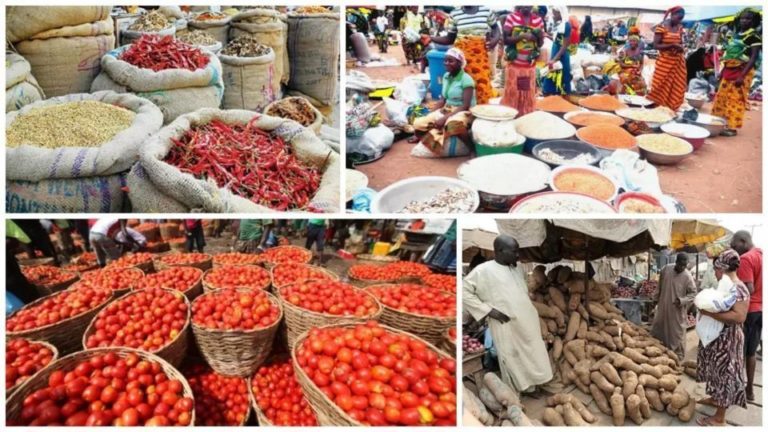
A further check on the NBS report indicated that the food inflation rate rose to 39.84 per cent in December 2024 compared to 33.93 per cent in December 2023.
According to the statistics office, the rise in food inflation on a year-on-year basis was caused by increases in prices of yam, water yam, sweet potatoes, beer, pinto, guinea corn, maize grains, rice, and dried fish-sardine, catfish dried, and other classes of the food items.
“On a month-on-month basis, the food inflation rate in December 2024 was 2.66 per cent compared to 2.98 per cent recorded in November 2024.
“The decline can be attributed to the rate of decrease in the average prices of local beer (burukutu), pinto (tobacco class), fruit juice in tin, malt drinks, etc (soft drinks class), rice, millet, maize flour, etc (bread and cereals class) and water yam, Irish potatoes, coco yam, etc (potatoes, yam & other tubers class),” NBS added.
Analysts believe that inflationary pressure will continue on the upward trend for the better part of this year before it can begin to moderate, The ICIR reported in its 2024 economic outlook.
Despite the disbursement of millions of naira for the execution of development projects, residents of Sokoto face many challenges due to poor or deteriorating infrastructure. Curiously, the state government claimed to have spent multi-million naira on non-existent projects after allegedly diverting funds to other projects
Rufai Ruwaya, a 49-year-old roadside tricycle mechanic, at Waziri Maccido Road in Sokoto, Northwest Nigeria, had just rescued an injured tricyclist, whose tricycle was damaged while trying to dodge large potholes on the road. Ruwaya expressed sadness over the incident, knowing it could happen to him as well, given his proximity to the road.
Having lived in the community for three years, Ruwaya recalled that the last time the road was repaired was during the administration of former military president, Ibrahim Badamasi Babangida, between 27 August 1985 – 26 August 1993 as he heard from the residents when gravel was laid, and gutters were constructed.
Now the road is in bad shape, and he said: “It causes serious trouble for motorists.” Pointing at several potholes he said often lead to accidents, Ruwaya noted that he had lost count of the number of accidents on the road.
“People try to avoid them and end up crashing,” he said of the potholes. It was gathered that the deplorable state of the road has forced other motorcyclists to avoid it.
Muhammad Nasir, a motorcyclist, said, “It’s not just difficult for cars and bikes, it’s even hard for people on foot. We are unhappy with the state of the road, especially considering the funds they claimed to have spent on it.”
Junaidu Bunu, the community leader in Waziri Maccido, however, said there had been no recent road construction. Despite meeting with government officials in October 2023 to discuss infrastructure challenges in their community, he said no work had been done.
The dilapidated road of Waziri Maccido Road
“The road’s condition is dangerous, especially for children walking to school. During the rainy season, it turns into a river due to the lack of drainage. If a contract was awarded for this road, I have no idea who got it,” Bunu said.
N116.1 million disbursed?
The Sokoto State Government through the Ministry of Land and Housing claimed it had disbursed N116,125,834.94 out of a budgeted N150 million for the construction of Waziri Maccido Road, according to the 2023 third-quarter budget performance report. But a visit to the site reveals a dilapidated road that residents say has not seen any work done on it in the last few years. During a visit to the site, it was observed that no construction had taken place, and residents and business owners continued to suffer from the road’s deteriorating state.
The story is the same for Ahmad Rufai Road in Wamakko LGA where Isah Muhammad, a 35-year-old furniture maker, decried what he described as “substandard work” done by the contractor, who only filled some potholes, leaving the road in worse condition.
Muhammad, who has lived in the area for a decade said, “The poor state of this road is affecting my business. There are no proper culverts, and during the rainy season, everything floods. This road is one of the busiest in Sokoto, so it should be dualised,” he said.
The furniture maker believes that a proper renovation would boost businesses and ease the movement of commuters. Residents and shop owners echoed these concerns, noting that the road’s condition worsens due to a lack of drainage, causing flooding and accidents. They called on the government to dualise the road and for proper drainage systems to be installed to alleviate traffic congestion and improve safety.
The signpost of the abandoned internal revenue service
When told the Sokoto government had paid nearly N200 million for the dualisation of Ahmad Rufai Road, Nura Aliyu, a 30-year-old motorcyclist was shocked.
“They only patched a few potholes. The road is congested, and they should have dualized it,” he said.
Officials of the state Ministry of Finance, the Director of Budget and Planning, the Office of the Secretary to the State Government, SSG, and the Ministry of Lands, Housing, and Survey could not account for the funds when contacted.
The Director Budget and Planning in Sokoto State, Buhari Umar, confirmed that the budget performance report reflects funds disbursed by the government. But he clarified that the finance ministry handles payments while his office is responsible for compiling the budget report.
“Every budget item has a responsible agency. If it’s a contract, the relevant ministry or agency handles it, and finance releases the funds based on their processes. If there’s a project where money has been spent, but no work is visible, I assure you it will be investigated and reported,” he said. He said it was unacceptable for expenditures incurred to show no result on site.
Umar stated that the effectiveness of governance hinges on financial management, with both the Ministry of Finance and Budget and Planning playing key roles in approving and tracking expenditures.
“This process is the same at both state and national levels. The finance ministry disburses funds, while budget and planning consolidates and finalises the budget,” he explained.
On 17 October 2024, a Freedom of Information Act (FOIA) request was submitted to the Ministry of Land and Housing seeking details of the projects listed in Sokoto State Government’s Q3 2023 and Q1 2024 budget performance report.
Specifically, the FOIA request asked for details on the dualisation of Ahmad Rufai Road with N197,612,234.00 and construction of Waziri Maccido Road with NI16,125,834.94 paid.
The dilapidated road and drainage at Ahmad Rufai road
Muhammad Garba, Director of Planning for the Ministry of Land and Housing confirmed that the request was received and promised to respond. He said that he was aware of the projects and confirmed that the Ministry of Land and Housing was the client ministry but clarified that the finance ministry usually made payments directly to the contractor. When asked about the contractors awarded the project, he could not provide details, stating that any discrepancies likely originated from the ministry of finance.
“We don’t handle contract funds directly. We are aware of the project and will locate the supporting documents,” Garba said.
Building and signpost at abandoned internal revenue service.
In addition, the construction of an office complex for the state’s Internal Revenue Service Board has also been abandoned. The 2023 third-quarter budget performance report shows that over N300 million was paid for the construction of the new office complex. However, a visit to the site revealed an abandoned building which it was gathered had been in the same state since the tenure of a former Governor of Sokoto State, Aminu Tambuwal.
Although there is a signpost at the site, the company’s name had faded, and the new contractor had not resumed work at the time of filing this report.
A senior official of the Internal Revenue Service who preferred anonymity, due to fear of victimization, confirmed that the project was started and abandoned during the tenure of Tambuwal, who was governor of Sokoto State from 2015-2023. He said the project was intended to be a three-story building with a planned completion time of three to four months. But the construction has yet to reach the second floor as of the time of filing this report.
“They decided to build it because the current office near Taj Bank is overcrowded, and staff struggle with space. We’re just managing, but we need a more conducive environment to work efficiently. Unfortunately, the project has stopped, and there’s nothing we can do but wait for the government to resume,” the official said.
He added that an older building, which was to be replaced by the new one, is still in use. “I recently relocated to the old building because we’ve been waiting for the new one to be completed. If they had demolished this one, you wouldn’t have found me here,” he added.
The site is now overgrown, and there are concerns about possible reptiles. The official noted that while he doesn’t know the contractor, he had seen the commissioner of finance visiting the site.
The Public Relations Officer of Sokoto State Internal Revenue Service, Saidu Muazu, said that he and the Executive Chairman do not know anything about the construction of the Internal Revenue Service office because the project is under the Ministry of Finance.
Contacted, Sirajo Ibrahim Gada, the Public Relations Officer for the Ministry of Finance, said he would verify details from the Commissioner. However, when contacted again, he said that the commissioner had warned him not to disclose anything about the project. However, he hinted that the Director of Planning for the Ministry of Finance had better knowledge of the issue.
Faruku Garba, the Director of Planning for the Ministry of Finance, confirmed that once a budget performance report is released, it indicates that funds have been disbursed, either to contractors or supervising ministries, and evaluations have been completed. He added that payments for projects were often made directly to the responsible ministries, and if they withhold information, it is because they are the supervising agency and are aware of the contractors and valuation amounts.
“Each ministry has its files and agreements. When they submit evaluations and vouchers, we process the payments. Our role is to disburse the money. If they refuse to provide information, it’s because they don’t want you to know about it. They are the ones supervising the project,” Garba explained.
Significantly, Garba’s assertion contradicts the claim by Muhammad Garba, Director of Planning for the Ministry of Land and Housing that the finance ministry disbursed payments directly to contractors.
He further requested this reporter to send details of the projects with the promise to disclose the contractors and agencies involved. However, when contacted the following day for a response, Garba retracted his earlier promise, stating that the Commissioner of Finance had warned him not to respond to anything. Despite acknowledging that something was wrong, he declined providing further information, explaining that he did not want to get involved in the issue.
“I can’t respond to anything. The Commissioner gave me a directive, and if you try calling him, he won’t pick up. I don’t want to get involved in these issues. Sometimes, they publish budget performance reports to show projects were completed, but in reality, nothing has been done,” he stated.
A Freedom of Information request was submitted to the Sokoto State Ministry of Finance on October 17, 2024, seeking details on the funds disbursed for projects through the Secretary to the State Government, the Ministry of Land and Housing, and Ministry of Higher Education. However, no response had been received by the time of filing this report.
Students suffer dilapidated, inadequate hostels despite multi-million-naira disbursement
Students residing at Usmanu Danfodiyo University, Sokoto’s halls of residence suffer from inadequate hostel facilities, with 14 students occupying rooms designed for eight due to a lack of space and dilapidated infrastructure.
The hostel building is in poor condition, and the bathrooms and toilets are in such a decrepit state that they add to the problems faced by students who reside in Jubril Aminu Hostel, apart from their academic hurdles. The other option, privately owned hostels, are not affordable for average students and those who live there are also battling with unstable electricity and inadequate water supply.
A student of the Usmanu Danfodiyo University, Sokoto (UDUS), who sought to remain anonymous, described the condition of Jubril Aminu Hostel as deplorable. He noted that the toilets are so bad that students prefer to use the bush to ease themselves. The student explained that overcrowding has worsened, with rooms meant for eight students now being occupied by up to 14.
“Some students even sleep in the hostel corridors because there is no space. Mosquitoes are everywhere, making students vulnerable to malaria,” he said.
Theft is also a growing concern, with several reports of stolen property, worsened by the cramped living conditions.
The student expressed frustration with the failure of the Sokoto State government to build new hostels as they had claimed to have disbursed funds for, urging them to fulfill their promise, especially since millions of naira had already been disbursed for the project.
A professor and Dean of Student Affairs at UDUS, Umar Aliyu, said the Sokoto State government has not done any hostel construction, despite Governor Ahmad Aliyu’s promise during the university’s convocation ceremony earlier last year.
The same situation applies to Ahmadu Bello University Zaria (ABU Zaria), where students live in Tafawa Balewa Hostel, which is on the verge of collapse due to infrastructure decay.Findings at ABU’s Samaru campus, coupled with interviews of students on both campuses, show that the Sokoto State government is not constructing any hostels at the university.
A law student at ABU, who does not want to be named to avoid victimisation by the authorities, confirmed that no new hostel projects were being constructed by the Sokoto State Government on campus. The student noted that ABU’s Samaru campus has two hostels: Tafawa Balewa and Ali Akilu, with Tafawa Balewa Hostel particularly in poor condition. Block A is at risk of collapse, and overcrowding has become a major issue, with rooms designed for six students now accommodating eight due to squatters.
“The situation in Tafawa Balewa Hostel is bad—the roofing and windows are in poor condition, and there are issues with electricity. Some blocks, like B and C, have electricity, but others like D and E do not. Ali Akilu Hostel is in better shape, but the windows and doors are still in bad condition,” the student said.
Tafawa Balewa hostel in ABU Zaria.illboard
This reporter spoke with five other students at ABU, all of whom confirmed that the Sokoto State government has not started constructing new hostels on their campus. When contacted, the Dean of Student Affairs at ABU Zaria, Sahalu Junaid, a professor, declined to comment on the matter.
Students at both universities suffer from inadequate hostels and infrastructure decay that could have been addressed if the Sokoto State government had built the promised hostels. The government claimed in its budget performance report that it paid N85 million for hostel construction at UDUS and N100 million for ABU Zaria. However, investigations revealed that no work has been done on either project. Both projects are under the supervision of the Secretary to the State Government (SSG).
All calls and text messages put across to the Secretary to the Sokoto State government, Bello Sifawa, to account for the funds received for the construction of student hostels in UDUS and ABU were ignored. After various attempts, he eventually picked up the call and without allowing this reporter to say anything, after introduction, he said, “Go to the Ministry of Information” and he hung up. Several calls and text messages put across to him afterwards were ignored.
A Freedom of Information Act, FOIA, request submitted to the office of the SSG on October 17, 2024, seeking details about the funds allocated for the construction of student hostels at UDUS and ABU Zaria, had not been responded to at the time of filing this report.
The Chief Press Secretary to the State Governor, Abubakar Bawa, reached out to this reporter afterwards and promised to give the responses with supporting documents regarding this reporter’s inquiry.
A week later, he promised to get back in the evening. The following week, another call was made to him, but he failed to pick answer. On December 23, 2024, when this reporter called him again, he said he had not received any response yet and asked the reporter to resend the details of the projects. After sending the details of the projects, several calls made to him afterwards were ignored.
How did the Sokoto government spend N90 million on 7,000 UTME forms?
In the 2023 Budget Performance Report, N100 million was budgeted for the purchase of 16,000 JAMB/DE forms, and N99,352,000 was disbursed for the project. However, state government reports claimed that only N90 million was spent to obtain 7,000 forms, raising questions about the 16,000 forms contained in the budget performance report. At the time, JAMB/DE forms were sold at N6,200 each, meaning that 7,000 forms should have cost N43,400,000. This leaves a surplus of N46,600,000 unaccounted for.
The Director of Planning for the Ministry of Higher Education, Abubakar Muhammad Gagi, confirmed that N100 million was budgeted, but when confronted with the discrepancy in the purchase of 7,000 UTME forms for 90 million, he claimed his office was not responsible for handling UTME forms.
The Director of Planning (Academic) for the Ministry of Higher Education, Zayyanu Bello Sifawa, declined to comment on how N90 million was spent on just 7,000 forms when N99,352,000 was disbursed, according to the budget performance report.
The Sokoto State Commissioner for Higher Education, Abdullahi Aminu, admitted that N90 million was disbursed for JAMB forms but added that part of the funds was used for the pre-UTME training for students across Sokoto, which took place at the Magartakada Centre. However, when asked about the N99,352,000 disbursed, he failed to respond.
The report published by the State government on its official website confirmed that only 7,000 JAMB forms were purchased for N90 million, contradicting the budget performance report, which showed a disbursement of N99,352,000 for 16,000 forms.
There is no mention of funds being allocated for training in the official budget performance nor the report released on the official website of the Sokoto State government.
Money inputted for projects in budget performance was a mistake, diverted to execute other projects— Director of Budget and Planning
Buhari Umar, the Sokoto State Director of Budget and Planning, disclosed that he had asked the finance department to bring all the payment vouchers to check correspondences for the construction of a hostel in UDUS and ABU Zaria. Upon checking the vouchers, he said that they discovered they had mistakenly copied an incorrect quote for that project. He added that the money inputted for that project was meant to execute other projects.
According to him the amount should not be attributed to those projects in the budget performance, as it was intended for other projects.
“If it is a mistake, you will know. If it is a cover-up, you will know. When we went through the state book, we noticed that in making the entries, it was wrongly copied. But this will help us improve next time. We don’t mind releasing a press statement on our website clarifying that the entries for those projects were misplaced and wrongly copied.
“That amount has been expended on other projects. There is no agenda; it is just human error. Instead of putting it under the correct line of activity, they now put it under a different one. At times, we may not even have time to cross-check. We will never allow them to do such a thing again before publication. A provision has to be made against those projects so that they will not show zero balances.”
He noted that there were discrepancies in the budget entries, where funds meant for one project were wrongly attributed to another. After reviewing the documents, it was confirmed that the expenditure was for other projects, not the one listed. He stated further that inflating the budget would cause harm to them and made it clear he could not be involved in such practices.
He added that the projects for the construction of the hostel in UDUS and ABU would still be executed but not for that particular amount, noting that the department did not do due diligence because there is a limit to how they can manoeuvre things. He placed the blame on the Ministry of Finance, as they handle the actual budget while his office only does estimates, and payments end with them.
He also stated that he was going to confirm the two projects for the dualisation of Ahmad Rufai Road and the construction of Waziri Maccido Road under the Ministry of Land and Housing subsequently.
He said the two projects under the Ministry of Land and Housing are a function of virement, which simply means that the funds meant to execute these two projects have been diverted to other projects without reflecting this on the budget performance report. He noted that the right procedure in the case of virement is to put a minus in the line of expenditure used to execute another project and add it to the project where the money was expended. He added that they had failed to do this, and that some people use this practice for their personal advantage.
“Virement is provided by law. If you want to incur expenditure but there is no provision for it, and if you have enough money for another project under your agency, you can now lift that money and use it for the other project,” he explained.
When asked to provide details of the virement documents where the funds were diverted to and after providing him with the law stating that virement is illegal according to Section 22(5) of the ICPC Act without the consent of the State House of Assembly, he stated that all his earlier statements were merely assumptions about what could happen in that circumstance and were not from the finance department. He asked that the journalist should listen to the recordings of their previous interviews again to confirm his wording.
When this reporter replayed the tape, the recording states: “I checked that yesterday with the finance people. I asked them to bring all the payment vouchers so that we could trace the correspondence. When they submitted the vouchers, they copied a wrong quote, and that amount is not for that project; it was meant for other projects. Based on your observations, which are true, I called for the vouchers.”
In another interview, he said: “By now, they will not make that mistake again. I have asked them to bring me all the virement documents (referring to finance), and we are going to trace the virements and send the documents to you.”
He promised to provide details of those projects in the last interviews before tagging his statement as a mere assumption.
As of the time of filing this report, he had not sent the virement document to show where the money was diverted.
Findings show that putting expenditure on non-existent projects amounts to budget padding which is contrary to the Public Procurement Law of Sokoto State and the Audit Law of Sokoto State. The Sokoto State Audit Law states that inflation of contracts, inflation of the price of surcharge, payment for jobs not executed, poor quality of work executed, assets paid for but not received, and failure to account for government revenue amount to offences punishable under the law, including the imposition of appropriate rates and a written warning to the affected officer, recovery from the beneficiary and the officer who recommended the payments, criminal prosecution for economic fraud, blacklisting of the contractor, calling of the advance payment guarantee, and demotion of the officer who certified the work.
Also, recovery of the money, criminal prosecution of the vendor, transfer of the officer to another schedule, a full-scale investigation, and the recovery of all such monies, criminal prosecution of the officers involved, and recommendation for dismissal as may be appropriate.
The law also states that the Auditor General shall ensure that all reasonable precautions have been taken to safeguard the collection of public monies and that the laws, directions and instructions relating to it have been duly observed and complied with all monies appropriated or otherwise disbursed have been expended on and applied for the purpose for which the grant made by the Executive Council of the State and House of Assembly were intended and that the expenditure conforms to the authority which governs it.
On 20th December 2024, this reporter spoke with the Sokoto Commissioner for Finance, Muhammad Jabbi Shagari, to respond to the whereabouts of the multi-million naira claimed to have been disbursed for the project. He said he was traveling and asked the reporter to call him back. When called again on the 24th, he said he had just lost a brother and asked to be called back.
On December 24, when another call was made to him on the matter, he said he could not address anything. He stated that the issue of budget performance is with Budget and Planning because they have the specifications and data. The reporter reminded him that he had already reached out to them on the matter.
“The government executes the budget, but you should call them and let me know what has been done, or we will meet together with the team and give answers. I am not in a position to speak freely because I am not really with my team. I only returned to Sokoto from Abuja on Friday, and I told you what I am facing. I never identify you,” he said, before hanging up. Several calls made to him afterward were ignored.
This same commissioner had warned the Public Relations Officer and Director of Planning in the ministry not to give this reporter any information.
This investigation is supported by the John D. and Catherine T. MacArthur Foundation and the International Centre for Investigative Reporting( ICIR).
THE International Center for Journalists (ICFJ) seeks nominations for the 2025 ICFJ Knight International Journalism Awards.
The programme seeks nominees whose pioneering coverage or media innovations have a significant impact on the lives of people around the world.
Candidates can be reporters, editors, technologists, media managers or citizen journalists from countries where they face major challenges doing their work.
The award reflects the mission of ICFJ’s Knight Fellowships, which create and spread news innovation to better engage communities and improve lives.
The programme is supported by the John S. and James L. Knight Foundation.
Journalists whose reporting or innovations are making an impact on the lives of people in their countries or regions can be nominated for an award.
The winners will be honoured on November 13, 2025, at ICFJ’s 2025 Tribute to Journalists.
Candidates who meet the awards criteria may nominate themselves.
The deadline for the application is February 6, 2025. Interested applicants can apply here.
THE family of Salome Adaidu, a 24-year-old corps member murdered in New Karshi, Nasarawa State, has dismissed claims by the suspect, Timileyin Ajayi, that he was in a relationship with their daughter.
The family described Ajayi’s actions as inhumane and demanded justice for the lady whose life was cut short in a gruesome manner.
The family, while speaking with Channels TV, during Ajayi’s parade at the Nasarawa State Police Command headquarters in Lafia, noted that the accused had never made contact with them before the incident.
“This so-called Timi guy, we don’t know him. We have never seen him until we were called and informed that this guy murdered and dismembered our sister,” said Adaidu’s elder sister, Esther Adaidu.
“I demand and need justice to be served to this guy sitting over there because he is the one that murdered my sister and he confirmed it to me.”
Also, Adaibu’s uncle, Samson Adaji Adaidu, while giving the harrowing account of the crime, revealed that Ajayi butchered the victim into over 50 pieces.
“He has succeeded in destroying our daughter, not ordinary killing, he butchered her into pieces. He cut that body into more than 50 pieces and when you look at the whole thing, he is preparing that body for consumption because he cut them and left them in about six polythene bags.”
Ajayi, who was arrested on January 12 while attempting to dispose of Salome’s severed head, confessed to killing her during his parade at the Nasarawa State Police Command headquarters in Lafia.
He claimed his actions were fueled by jealousy and accusations of infidelity. “I killed her because we don’t have each other all the time. She was cheating. I don’t have any regrets because life is reciprocal,” he said.
Meanwhile, the Nasarawa State Police Command has assured the family and the public that justice would be served.
The command noted that the suspect would be arraigned in court for prosecution, adding that he would not be spared if found guilty.
Salome Adaidu’s tragic death has drawn widespread outrage, with many Nigerians calling for justice.
The ICIRreported that Ajayi, who lives in the Pablana area, was caught around Angwan Bako near the Kaja Estate in the New Karu LGA when conveying the severed head of Salomey to an undisclosed destination on a commercial motorcycle, popularly known as ‘okada’.
“Consequently, an angry mob descended on the suspect, and upon receipt of the information, the Commissioner of Police directed police personnel to move to the scene immediately.
“They raced to the scene and rescued the suspect from being lynched. The suspect was then taken to an undisclosed hospital for treatment. A follow-up investigation led to the execution of a search warrant at the suspect’s residence, where the remains of the lady who was later identified as Eliojo Salomey, 24 years old of Yanyan, FCT, Abuja, and a serving corp member, were recovered,” the Nasarawa police spokesperson Nansel Ramhan, said in a statement sent to The ICIR in the evening of Monday, January 13.
THE National Endowment for Democracy (NED) is inviting proposals for projects that advance democratic goals and strengthen democratic institutions.
The NED encourages applications from organisations working in diverse environments including newly established democracies, semi-authoritarian countries, highly repressive societies and countries undergoing democratic transitions.
Grant amounts vary, depending on the size and scope of the projects, but the average grant lasts 12 months and is around US$50,000.
Independent media organisations, civic groups and associations can apply.
The NED is interested in proposals from organisations for nonpartisan programmes that seek to promote and defend human rights and the rule of law; support freedom of information and independent media; and promote accountability and transparency.
The next deadline for applications is January 28, 2025. Interested applicants can apply here.