NIGERIA’s headline inflation rose to 34.80 per cent in December 2024, the National Bureau of Statistics (NBS) has reported.
The NBS gave the latest figure in its Consumer Price Index (CPI) report released on Wednesday, January 15.
The statistics office uses the CPI to measure the rate of change in prices of goods and services within a month.
The data shows that Nigeria’s headline inflation rose marginally by 0.20 per cent from 36.60 per cent in November 2024.
According to the NBS, increases in demand for goods and services during the festive season were primarily driven by the rise in the December inflation figure.
The data showed that the 34.80 per cent inflation in December 2024 was 5.87 per cent higher than the 28.92 per cent rate recorded in December 2023.
This year-on-year increase indicates a significant rise in the cost of living compared to the same month in the previous year.
On a month-on-month basis, headline inflation slightly slowed to 2.44 per cent in December 2024 compared to 2.64 per cent in November 2024, representing a slight deceleration in prices.
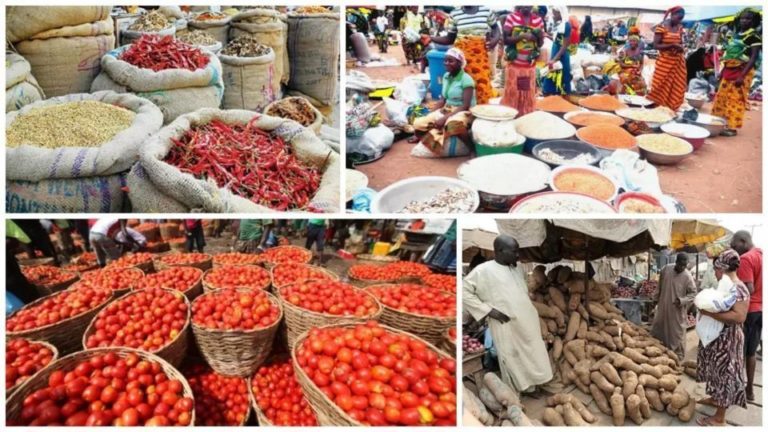
A further check on the NBS report indicated that the food inflation rate rose to 39.84 per cent in December 2024 compared to 33.93 per cent in December 2023.
According to the statistics office, the rise in food inflation on a year-on-year basis was caused by increases in prices of yam, water yam, sweet potatoes, beer, pinto, guinea corn, maize grains, rice, and dried fish-sardine, catfish dried, and other classes of the food items.
“On a month-on-month basis, the food inflation rate in December 2024 was 2.66 per cent compared to 2.98 per cent recorded in November 2024.
“The decline can be attributed to the rate of decrease in the average prices of local beer (burukutu), pinto (tobacco class), fruit juice in tin, malt drinks, etc (soft drinks class), rice, millet, maize flour, etc (bread and cereals class) and water yam, Irish potatoes, coco yam, etc (potatoes, yam & other tubers class),” NBS added.
Analysts believe that inflationary pressure will continue on the upward trend for the better part of this year before it can begin to moderate, The ICIR reported in its 2024 economic outlook.
Despite the disbursement of millions of naira for the execution of development projects, residents of Sokoto face many challenges due to poor or deteriorating infrastructure. Curiously, the state government claimed to have spent multi-million naira on non-existent projects after allegedly diverting funds to other projects
Rufai Ruwaya, a 49-year-old roadside tricycle mechanic, at Waziri Maccido Road in Sokoto, Northwest Nigeria, had just rescued an injured tricyclist, whose tricycle was damaged while trying to dodge large potholes on the road. Ruwaya expressed sadness over the incident, knowing it could happen to him as well, given his proximity to the road.
Having lived in the community for three years, Ruwaya recalled that the last time the road was repaired was during the administration of former military president, Ibrahim Badamasi Babangida, between 27 August 1985 – 26 August 1993 as he heard from the residents when gravel was laid, and gutters were constructed.
Now the road is in bad shape, and he said: “It causes serious trouble for motorists.” Pointing at several potholes he said often lead to accidents, Ruwaya noted that he had lost count of the number of accidents on the road.
“People try to avoid them and end up crashing,” he said of the potholes. It was gathered that the deplorable state of the road has forced other motorcyclists to avoid it.
Muhammad Nasir, a motorcyclist, said, “It’s not just difficult for cars and bikes, it’s even hard for people on foot. We are unhappy with the state of the road, especially considering the funds they claimed to have spent on it.”
Junaidu Bunu, the community leader in Waziri Maccido, however, said there had been no recent road construction. Despite meeting with government officials in October 2023 to discuss infrastructure challenges in their community, he said no work had been done.
The dilapidated road of Waziri Maccido Road
“The road’s condition is dangerous, especially for children walking to school. During the rainy season, it turns into a river due to the lack of drainage. If a contract was awarded for this road, I have no idea who got it,” Bunu said.
N116.1 million disbursed?
The Sokoto State Government through the Ministry of Land and Housing claimed it had disbursed N116,125,834.94 out of a budgeted N150 million for the construction of Waziri Maccido Road, according to the 2023 third-quarter budget performance report. But a visit to the site reveals a dilapidated road that residents say has not seen any work done on it in the last few years. During a visit to the site, it was observed that no construction had taken place, and residents and business owners continued to suffer from the road’s deteriorating state.
The story is the same for Ahmad Rufai Road in Wamakko LGA where Isah Muhammad, a 35-year-old furniture maker, decried what he described as “substandard work” done by the contractor, who only filled some potholes, leaving the road in worse condition.
Muhammad, who has lived in the area for a decade said, “The poor state of this road is affecting my business. There are no proper culverts, and during the rainy season, everything floods. This road is one of the busiest in Sokoto, so it should be dualised,” he said.
The furniture maker believes that a proper renovation would boost businesses and ease the movement of commuters. Residents and shop owners echoed these concerns, noting that the road’s condition worsens due to a lack of drainage, causing flooding and accidents. They called on the government to dualise the road and for proper drainage systems to be installed to alleviate traffic congestion and improve safety.
The signpost of the abandoned internal revenue service
When told the Sokoto government had paid nearly N200 million for the dualisation of Ahmad Rufai Road, Nura Aliyu, a 30-year-old motorcyclist was shocked.
“They only patched a few potholes. The road is congested, and they should have dualized it,” he said.
Officials of the state Ministry of Finance, the Director of Budget and Planning, the Office of the Secretary to the State Government, SSG, and the Ministry of Lands, Housing, and Survey could not account for the funds when contacted.
The Director Budget and Planning in Sokoto State, Buhari Umar, confirmed that the budget performance report reflects funds disbursed by the government. But he clarified that the finance ministry handles payments while his office is responsible for compiling the budget report.
“Every budget item has a responsible agency. If it’s a contract, the relevant ministry or agency handles it, and finance releases the funds based on their processes. If there’s a project where money has been spent, but no work is visible, I assure you it will be investigated and reported,” he said. He said it was unacceptable for expenditures incurred to show no result on site.
Umar stated that the effectiveness of governance hinges on financial management, with both the Ministry of Finance and Budget and Planning playing key roles in approving and tracking expenditures.
“This process is the same at both state and national levels. The finance ministry disburses funds, while budget and planning consolidates and finalises the budget,” he explained.
On 17 October 2024, a Freedom of Information Act (FOIA) request was submitted to the Ministry of Land and Housing seeking details of the projects listed in Sokoto State Government’s Q3 2023 and Q1 2024 budget performance report.
Specifically, the FOIA request asked for details on the dualisation of Ahmad Rufai Road with N197,612,234.00 and construction of Waziri Maccido Road with NI16,125,834.94 paid.
The dilapidated road and drainage at Ahmad Rufai road
Muhammad Garba, Director of Planning for the Ministry of Land and Housing confirmed that the request was received and promised to respond. He said that he was aware of the projects and confirmed that the Ministry of Land and Housing was the client ministry but clarified that the finance ministry usually made payments directly to the contractor. When asked about the contractors awarded the project, he could not provide details, stating that any discrepancies likely originated from the ministry of finance.
“We don’t handle contract funds directly. We are aware of the project and will locate the supporting documents,” Garba said.
Building and signpost at abandoned internal revenue service.
In addition, the construction of an office complex for the state’s Internal Revenue Service Board has also been abandoned. The 2023 third-quarter budget performance report shows that over N300 million was paid for the construction of the new office complex. However, a visit to the site revealed an abandoned building which it was gathered had been in the same state since the tenure of a former Governor of Sokoto State, Aminu Tambuwal.
Although there is a signpost at the site, the company’s name had faded, and the new contractor had not resumed work at the time of filing this report.
A senior official of the Internal Revenue Service who preferred anonymity, due to fear of victimization, confirmed that the project was started and abandoned during the tenure of Tambuwal, who was governor of Sokoto State from 2015-2023. He said the project was intended to be a three-story building with a planned completion time of three to four months. But the construction has yet to reach the second floor as of the time of filing this report.
“They decided to build it because the current office near Taj Bank is overcrowded, and staff struggle with space. We’re just managing, but we need a more conducive environment to work efficiently. Unfortunately, the project has stopped, and there’s nothing we can do but wait for the government to resume,” the official said.
He added that an older building, which was to be replaced by the new one, is still in use. “I recently relocated to the old building because we’ve been waiting for the new one to be completed. If they had demolished this one, you wouldn’t have found me here,” he added.
The site is now overgrown, and there are concerns about possible reptiles. The official noted that while he doesn’t know the contractor, he had seen the commissioner of finance visiting the site.
The Public Relations Officer of Sokoto State Internal Revenue Service, Saidu Muazu, said that he and the Executive Chairman do not know anything about the construction of the Internal Revenue Service office because the project is under the Ministry of Finance.
Contacted, Sirajo Ibrahim Gada, the Public Relations Officer for the Ministry of Finance, said he would verify details from the Commissioner. However, when contacted again, he said that the commissioner had warned him not to disclose anything about the project. However, he hinted that the Director of Planning for the Ministry of Finance had better knowledge of the issue.
Faruku Garba, the Director of Planning for the Ministry of Finance, confirmed that once a budget performance report is released, it indicates that funds have been disbursed, either to contractors or supervising ministries, and evaluations have been completed. He added that payments for projects were often made directly to the responsible ministries, and if they withhold information, it is because they are the supervising agency and are aware of the contractors and valuation amounts.
“Each ministry has its files and agreements. When they submit evaluations and vouchers, we process the payments. Our role is to disburse the money. If they refuse to provide information, it’s because they don’t want you to know about it. They are the ones supervising the project,” Garba explained.
Significantly, Garba’s assertion contradicts the claim by Muhammad Garba, Director of Planning for the Ministry of Land and Housing that the finance ministry disbursed payments directly to contractors.
He further requested this reporter to send details of the projects with the promise to disclose the contractors and agencies involved. However, when contacted the following day for a response, Garba retracted his earlier promise, stating that the Commissioner of Finance had warned him not to respond to anything. Despite acknowledging that something was wrong, he declined providing further information, explaining that he did not want to get involved in the issue.
“I can’t respond to anything. The Commissioner gave me a directive, and if you try calling him, he won’t pick up. I don’t want to get involved in these issues. Sometimes, they publish budget performance reports to show projects were completed, but in reality, nothing has been done,” he stated.
A Freedom of Information request was submitted to the Sokoto State Ministry of Finance on October 17, 2024, seeking details on the funds disbursed for projects through the Secretary to the State Government, the Ministry of Land and Housing, and Ministry of Higher Education. However, no response had been received by the time of filing this report.
Students suffer dilapidated, inadequate hostels despite multi-million-naira disbursement
Students residing at Usmanu Danfodiyo University, Sokoto’s halls of residence suffer from inadequate hostel facilities, with 14 students occupying rooms designed for eight due to a lack of space and dilapidated infrastructure.
The hostel building is in poor condition, and the bathrooms and toilets are in such a decrepit state that they add to the problems faced by students who reside in Jubril Aminu Hostel, apart from their academic hurdles. The other option, privately owned hostels, are not affordable for average students and those who live there are also battling with unstable electricity and inadequate water supply.
A student of the Usmanu Danfodiyo University, Sokoto (UDUS), who sought to remain anonymous, described the condition of Jubril Aminu Hostel as deplorable. He noted that the toilets are so bad that students prefer to use the bush to ease themselves. The student explained that overcrowding has worsened, with rooms meant for eight students now being occupied by up to 14.
“Some students even sleep in the hostel corridors because there is no space. Mosquitoes are everywhere, making students vulnerable to malaria,” he said.
Theft is also a growing concern, with several reports of stolen property, worsened by the cramped living conditions.
The student expressed frustration with the failure of the Sokoto State government to build new hostels as they had claimed to have disbursed funds for, urging them to fulfill their promise, especially since millions of naira had already been disbursed for the project.
A professor and Dean of Student Affairs at UDUS, Umar Aliyu, said the Sokoto State government has not done any hostel construction, despite Governor Ahmad Aliyu’s promise during the university’s convocation ceremony earlier last year.
The same situation applies to Ahmadu Bello University Zaria (ABU Zaria), where students live in Tafawa Balewa Hostel, which is on the verge of collapse due to infrastructure decay.Findings at ABU’s Samaru campus, coupled with interviews of students on both campuses, show that the Sokoto State government is not constructing any hostels at the university.
A law student at ABU, who does not want to be named to avoid victimisation by the authorities, confirmed that no new hostel projects were being constructed by the Sokoto State Government on campus. The student noted that ABU’s Samaru campus has two hostels: Tafawa Balewa and Ali Akilu, with Tafawa Balewa Hostel particularly in poor condition. Block A is at risk of collapse, and overcrowding has become a major issue, with rooms designed for six students now accommodating eight due to squatters.
“The situation in Tafawa Balewa Hostel is bad—the roofing and windows are in poor condition, and there are issues with electricity. Some blocks, like B and C, have electricity, but others like D and E do not. Ali Akilu Hostel is in better shape, but the windows and doors are still in bad condition,” the student said.
Tafawa Balewa hostel in ABU Zaria.illboard
This reporter spoke with five other students at ABU, all of whom confirmed that the Sokoto State government has not started constructing new hostels on their campus. When contacted, the Dean of Student Affairs at ABU Zaria, Sahalu Junaid, a professor, declined to comment on the matter.
Students at both universities suffer from inadequate hostels and infrastructure decay that could have been addressed if the Sokoto State government had built the promised hostels. The government claimed in its budget performance report that it paid N85 million for hostel construction at UDUS and N100 million for ABU Zaria. However, investigations revealed that no work has been done on either project. Both projects are under the supervision of the Secretary to the State Government (SSG).
All calls and text messages put across to the Secretary to the Sokoto State government, Bello Sifawa, to account for the funds received for the construction of student hostels in UDUS and ABU were ignored. After various attempts, he eventually picked up the call and without allowing this reporter to say anything, after introduction, he said, “Go to the Ministry of Information” and he hung up. Several calls and text messages put across to him afterwards were ignored.
A Freedom of Information Act, FOIA, request submitted to the office of the SSG on October 17, 2024, seeking details about the funds allocated for the construction of student hostels at UDUS and ABU Zaria, had not been responded to at the time of filing this report.
The Chief Press Secretary to the State Governor, Abubakar Bawa, reached out to this reporter afterwards and promised to give the responses with supporting documents regarding this reporter’s inquiry.
A week later, he promised to get back in the evening. The following week, another call was made to him, but he failed to pick answer. On December 23, 2024, when this reporter called him again, he said he had not received any response yet and asked the reporter to resend the details of the projects. After sending the details of the projects, several calls made to him afterwards were ignored.
How did the Sokoto government spend N90 million on 7,000 UTME forms?
In the 2023 Budget Performance Report, N100 million was budgeted for the purchase of 16,000 JAMB/DE forms, and N99,352,000 was disbursed for the project. However, state government reports claimed that only N90 million was spent to obtain 7,000 forms, raising questions about the 16,000 forms contained in the budget performance report. At the time, JAMB/DE forms were sold at N6,200 each, meaning that 7,000 forms should have cost N43,400,000. This leaves a surplus of N46,600,000 unaccounted for.
The Director of Planning for the Ministry of Higher Education, Abubakar Muhammad Gagi, confirmed that N100 million was budgeted, but when confronted with the discrepancy in the purchase of 7,000 UTME forms for 90 million, he claimed his office was not responsible for handling UTME forms.
The Director of Planning (Academic) for the Ministry of Higher Education, Zayyanu Bello Sifawa, declined to comment on how N90 million was spent on just 7,000 forms when N99,352,000 was disbursed, according to the budget performance report.
The Sokoto State Commissioner for Higher Education, Abdullahi Aminu, admitted that N90 million was disbursed for JAMB forms but added that part of the funds was used for the pre-UTME training for students across Sokoto, which took place at the Magartakada Centre. However, when asked about the N99,352,000 disbursed, he failed to respond.
The report published by the State government on its official website confirmed that only 7,000 JAMB forms were purchased for N90 million, contradicting the budget performance report, which showed a disbursement of N99,352,000 for 16,000 forms.
There is no mention of funds being allocated for training in the official budget performance nor the report released on the official website of the Sokoto State government.
Money inputted for projects in budget performance was a mistake, diverted to execute other projects— Director of Budget and Planning
Buhari Umar, the Sokoto State Director of Budget and Planning, disclosed that he had asked the finance department to bring all the payment vouchers to check correspondences for the construction of a hostel in UDUS and ABU Zaria. Upon checking the vouchers, he said that they discovered they had mistakenly copied an incorrect quote for that project. He added that the money inputted for that project was meant to execute other projects.
According to him the amount should not be attributed to those projects in the budget performance, as it was intended for other projects.
“If it is a mistake, you will know. If it is a cover-up, you will know. When we went through the state book, we noticed that in making the entries, it was wrongly copied. But this will help us improve next time. We don’t mind releasing a press statement on our website clarifying that the entries for those projects were misplaced and wrongly copied.
“That amount has been expended on other projects. There is no agenda; it is just human error. Instead of putting it under the correct line of activity, they now put it under a different one. At times, we may not even have time to cross-check. We will never allow them to do such a thing again before publication. A provision has to be made against those projects so that they will not show zero balances.”
He noted that there were discrepancies in the budget entries, where funds meant for one project were wrongly attributed to another. After reviewing the documents, it was confirmed that the expenditure was for other projects, not the one listed. He stated further that inflating the budget would cause harm to them and made it clear he could not be involved in such practices.
He added that the projects for the construction of the hostel in UDUS and ABU would still be executed but not for that particular amount, noting that the department did not do due diligence because there is a limit to how they can manoeuvre things. He placed the blame on the Ministry of Finance, as they handle the actual budget while his office only does estimates, and payments end with them.
He also stated that he was going to confirm the two projects for the dualisation of Ahmad Rufai Road and the construction of Waziri Maccido Road under the Ministry of Land and Housing subsequently.
He said the two projects under the Ministry of Land and Housing are a function of virement, which simply means that the funds meant to execute these two projects have been diverted to other projects without reflecting this on the budget performance report. He noted that the right procedure in the case of virement is to put a minus in the line of expenditure used to execute another project and add it to the project where the money was expended. He added that they had failed to do this, and that some people use this practice for their personal advantage.
“Virement is provided by law. If you want to incur expenditure but there is no provision for it, and if you have enough money for another project under your agency, you can now lift that money and use it for the other project,” he explained.
When asked to provide details of the virement documents where the funds were diverted to and after providing him with the law stating that virement is illegal according to Section 22(5) of the ICPC Act without the consent of the State House of Assembly, he stated that all his earlier statements were merely assumptions about what could happen in that circumstance and were not from the finance department. He asked that the journalist should listen to the recordings of their previous interviews again to confirm his wording.
When this reporter replayed the tape, the recording states: “I checked that yesterday with the finance people. I asked them to bring all the payment vouchers so that we could trace the correspondence. When they submitted the vouchers, they copied a wrong quote, and that amount is not for that project; it was meant for other projects. Based on your observations, which are true, I called for the vouchers.”
In another interview, he said: “By now, they will not make that mistake again. I have asked them to bring me all the virement documents (referring to finance), and we are going to trace the virements and send the documents to you.”
He promised to provide details of those projects in the last interviews before tagging his statement as a mere assumption.
As of the time of filing this report, he had not sent the virement document to show where the money was diverted.
Findings show that putting expenditure on non-existent projects amounts to budget padding which is contrary to the Public Procurement Law of Sokoto State and the Audit Law of Sokoto State. The Sokoto State Audit Law states that inflation of contracts, inflation of the price of surcharge, payment for jobs not executed, poor quality of work executed, assets paid for but not received, and failure to account for government revenue amount to offences punishable under the law, including the imposition of appropriate rates and a written warning to the affected officer, recovery from the beneficiary and the officer who recommended the payments, criminal prosecution for economic fraud, blacklisting of the contractor, calling of the advance payment guarantee, and demotion of the officer who certified the work.
Also, recovery of the money, criminal prosecution of the vendor, transfer of the officer to another schedule, a full-scale investigation, and the recovery of all such monies, criminal prosecution of the officers involved, and recommendation for dismissal as may be appropriate.
The law also states that the Auditor General shall ensure that all reasonable precautions have been taken to safeguard the collection of public monies and that the laws, directions and instructions relating to it have been duly observed and complied with all monies appropriated or otherwise disbursed have been expended on and applied for the purpose for which the grant made by the Executive Council of the State and House of Assembly were intended and that the expenditure conforms to the authority which governs it.
On 20th December 2024, this reporter spoke with the Sokoto Commissioner for Finance, Muhammad Jabbi Shagari, to respond to the whereabouts of the multi-million naira claimed to have been disbursed for the project. He said he was traveling and asked the reporter to call him back. When called again on the 24th, he said he had just lost a brother and asked to be called back.
On December 24, when another call was made to him on the matter, he said he could not address anything. He stated that the issue of budget performance is with Budget and Planning because they have the specifications and data. The reporter reminded him that he had already reached out to them on the matter.
“The government executes the budget, but you should call them and let me know what has been done, or we will meet together with the team and give answers. I am not in a position to speak freely because I am not really with my team. I only returned to Sokoto from Abuja on Friday, and I told you what I am facing. I never identify you,” he said, before hanging up. Several calls made to him afterward were ignored.
This same commissioner had warned the Public Relations Officer and Director of Planning in the ministry not to give this reporter any information.
This investigation is supported by the John D. and Catherine T. MacArthur Foundation and the International Centre for Investigative Reporting( ICIR).
THE International Center for Journalists (ICFJ) seeks nominations for the 2025 ICFJ Knight International Journalism Awards.
The programme seeks nominees whose pioneering coverage or media innovations have a significant impact on the lives of people around the world.
Candidates can be reporters, editors, technologists, media managers or citizen journalists from countries where they face major challenges doing their work.
The award reflects the mission of ICFJ’s Knight Fellowships, which create and spread news innovation to better engage communities and improve lives.
The programme is supported by the John S. and James L. Knight Foundation.
Journalists whose reporting or innovations are making an impact on the lives of people in their countries or regions can be nominated for an award.
The winners will be honoured on November 13, 2025, at ICFJ’s 2025 Tribute to Journalists.
Candidates who meet the awards criteria may nominate themselves.
The deadline for the application is February 6, 2025. Interested applicants can apply here.
THE family of Salome Adaidu, a 24-year-old corps member murdered in New Karshi, Nasarawa State, has dismissed claims by the suspect, Timileyin Ajayi, that he was in a relationship with their daughter.
The family described Ajayi’s actions as inhumane and demanded justice for the lady whose life was cut short in a gruesome manner.
The family, while speaking with Channels TV, during Ajayi’s parade at the Nasarawa State Police Command headquarters in Lafia, noted that the accused had never made contact with them before the incident.
“This so-called Timi guy, we don’t know him. We have never seen him until we were called and informed that this guy murdered and dismembered our sister,” said Adaidu’s elder sister, Esther Adaidu.
“I demand and need justice to be served to this guy sitting over there because he is the one that murdered my sister and he confirmed it to me.”
Also, Adaibu’s uncle, Samson Adaji Adaidu, while giving the harrowing account of the crime, revealed that Ajayi butchered the victim into over 50 pieces.
“He has succeeded in destroying our daughter, not ordinary killing, he butchered her into pieces. He cut that body into more than 50 pieces and when you look at the whole thing, he is preparing that body for consumption because he cut them and left them in about six polythene bags.”
Ajayi, who was arrested on January 12 while attempting to dispose of Salome’s severed head, confessed to killing her during his parade at the Nasarawa State Police Command headquarters in Lafia.
He claimed his actions were fueled by jealousy and accusations of infidelity. “I killed her because we don’t have each other all the time. She was cheating. I don’t have any regrets because life is reciprocal,” he said.
Meanwhile, the Nasarawa State Police Command has assured the family and the public that justice would be served.
The command noted that the suspect would be arraigned in court for prosecution, adding that he would not be spared if found guilty.
Salome Adaidu’s tragic death has drawn widespread outrage, with many Nigerians calling for justice.
The ICIRreported that Ajayi, who lives in the Pablana area, was caught around Angwan Bako near the Kaja Estate in the New Karu LGA when conveying the severed head of Salomey to an undisclosed destination on a commercial motorcycle, popularly known as ‘okada’.
“Consequently, an angry mob descended on the suspect, and upon receipt of the information, the Commissioner of Police directed police personnel to move to the scene immediately.
“They raced to the scene and rescued the suspect from being lynched. The suspect was then taken to an undisclosed hospital for treatment. A follow-up investigation led to the execution of a search warrant at the suspect’s residence, where the remains of the lady who was later identified as Eliojo Salomey, 24 years old of Yanyan, FCT, Abuja, and a serving corp member, were recovered,” the Nasarawa police spokesperson Nansel Ramhan, said in a statement sent to The ICIR in the evening of Monday, January 13.
THE National Endowment for Democracy (NED) is inviting proposals for projects that advance democratic goals and strengthen democratic institutions.
The NED encourages applications from organisations working in diverse environments including newly established democracies, semi-authoritarian countries, highly repressive societies and countries undergoing democratic transitions.
Grant amounts vary, depending on the size and scope of the projects, but the average grant lasts 12 months and is around US$50,000.
Independent media organisations, civic groups and associations can apply.
The NED is interested in proposals from organisations for nonpartisan programmes that seek to promote and defend human rights and the rule of law; support freedom of information and independent media; and promote accountability and transparency.
The next deadline for applications is January 28, 2025. Interested applicants can apply here.
NORTHERN Nigeria Flour Mills led the gainers’ table at Tuesday, January 14 trading session on the floor of the Nigerian Exchange Limited (NGX) despite a sustained bearish sentiment that saw investors lose approximately N1. 06 trillìon at the close of the market.
The day’s trading activities saw the market capitalisation drop by 1.66 per cent to N63.19 trillion; from N64.25 trillion, it opened trading on the floor of the Nigerian Exchange Limited (NGX).
It also saw the All‐Share Index decline by 1.66 per cent to close at 103,622.09 basis points.
The share prices of 23 companies appreciated as against 41 companies’ stock prices that fell.
The Northern Nigeria Flour Mills led the gainers table with a share price rise of N4.10 to close at N45.10.
On the contrary, Dangote Cement led the losers’ table as its share price declined by N47.80 to N431.00.
While Julius Berger Nigeria’s share price shed N15.50 to close at N139.80, Honeywell Flour Mill lost N1.06 to close at N9.54.
On Monday, January 13, the Nigerian stock market opened the week in a negative territory.
Monday’s trading session saw investors lose over N51 billion as the market capitalisation dropped to N64.251 trillion from N64.303 trillion.
“The market extended its losing streak for the third session, with over a trillion naira profited off in market capitalisation.
“The equities markets started the week on a downbeat note, with stocks across various sectors experiencing losses due to prevailing market uncertainties,” GTI research analysts noted.
The analysts anticipate a rebound of trading activities within the remaining days of the week but urged investors to remain cautious, evaluating earnings forecasts and macroeconomic trends.
FOLLOWING his arrest by the Nasarawa Police Command, a gospel singer, Timileyin Ajayi, 32, has admitted to killing 24-year-old Salome Adaidu, a corps member serving in Abuja.
Ajayi, arrested on Sunday, January 12, while conveying Adaidu’s severed head to an unknown location, claimed jealousy and infidelity pushed him to commit the crime when the deceased visited his residence in New Karshi, Karu Local Government Area (LGA) of Nasarawa State.
According to a video shared by Channels TV, Ajayi while speaking during his parade at the Nasarawa State Police Command headquarters in Lafia, confessed to dismembering the deceased body after the murder.
The ICIRreported how Ajayi, who lives in the Pablana area, was caught around Angwan Bako near the Kaja Estate in the New Karu LGA when conveying the severed head of Salomey to an undisclosed destination on a commercial motorcycle, popularly known as ‘okada’.
“Consequently, an angry mob descended on the suspect, and upon receipt of the information, the Commissioner of Police directed police personnel to move to the scene immediately.
“They raced to the scene and rescued the suspect from being lynched. The suspect was then taken to an undisclosed hospital for treatment. A follow-up investigation led to the execution of a search warrant at the suspect’s residence, where the remains of the lady whowas later identified as Eliojo Salomey, 24 years old of Yanyan, FCT, Abuja, and a serving corp member, were recovered,” the Nasarawa police spokesperson Nansel Ramhan, said in a statement sent to The ICIR in the evening of Monday, January 13.
According to the police report, Ajayi used a knife and machetes to kill and dismember her body, placing the parts in multiple polythene bags.
He was subsequently paraded at the Nasarawa State Police Command headquarters.
“I killed her because we don’t have each other all the time. It’s not something I planned. It happened on that day and it happened. Not that I had the plan in mind, she was cheating.
“She hides most of the things from me most times. I got to know from her phone. I saw her chats with other guys on the phone, that was why I decided (to kill her),” he said.
When asked if he regretted his actions, he said he had no regret as he explained that the victim must reap the consequence of her infidelity.
“I don’t have any regrets because life is reciprocal that is what I thought. If you must do something to someone, you have to be reciprocal with that person (sic).
“You have to understand what that person is going through so that you can actually put yourself in the position that the person is going through. That is why I don’t have any regrets because we were actually compatible,” he replied.
Meanwhile, the confession has sparked outrage, as Ajayi tried to justify his actions by blaming the victim.
Many Nigerians who reacted to his confession urged the Nigerian police to investigate further as they alleged that the suspect must be hiding something.
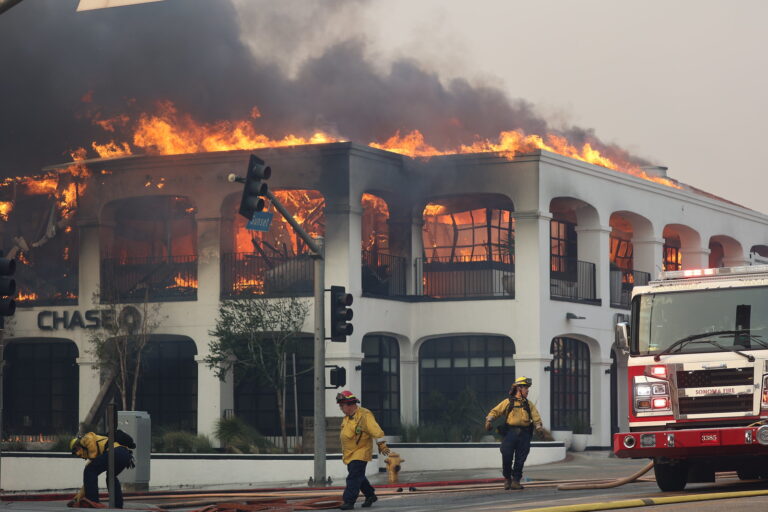
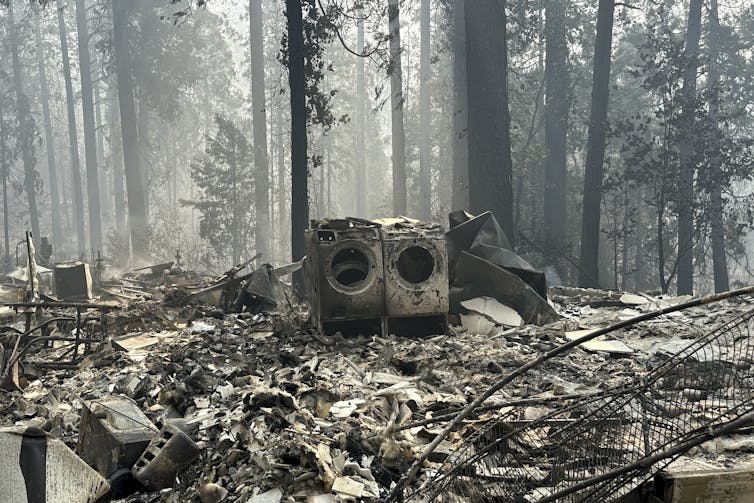
INVESTIGATORS are trying to determine what caused several wind-driven wildfires that have destroyed thousands of homes across the Los Angeles area in January 2025. Given the fires’ locations, and lack of lightning at the time, it’s likely that utility infrastructure, other equipment or human activities were involved.
California’s wildfires have become increasingly destructive in recent years. Research my colleagues and I have conducted shows U.S. wildfires are up to four times larger and three times more frequent than they were in the 1980s and ’90s. Fast-moving fires have been particularly destructive, accounting for 78 per cent of structures destroyed and 61% of suppression costs between 2001 and 2020.
Lightning strikes are a common cause of U.S. wildfires, but the majority of wildfires that threaten communities are started by human activities.
What makes these wildfires so destructive and difficult to contain?
The answer lies in a mix of wind speed, changing climate, the legacy of past land-management practices, and current human activities that are reshaping fire behavior and increasing the risk they pose.
Fire’s perfect storm
Wildfires rely on three key elements to spread: conducive weather, dry fuel and an ignition source. Each of these factors has undergone pronounced changes in recent decades. While climate change sets the stage for larger and more intense fires, humans are actively fanning the flames.
Climate and weather
Extreme temperatures play a dangerous role in wildfires. Heat dries out vegetation, making it more flammable. Under these conditions, wildfires ignite more easily, spread faster and burn with greater intensity. In the western U.S., aridity attributed to climate change has doubled the amount of forestland that has burned since 1984.
Compounding the problem is the rapid rise in nighttime temperatures, now increasing faster than daytime temperatures. Nights, which used to offer a reprieve with cooler conditions and higher humidity, do so less often, allowing fires to continue raging without pause.
Finally, winds contribute to the rapid expansion, increased intensity and erratic behavior of wildfires. Wind gusts push heat and embers ahead of the fire front and can cause it to rapidly expand. They can also create spot fires in new locations. Additionally, winds enhance combustion by supplying more oxygen, which can make the fire more unpredictable and challenging to control. Usually driven by high winds, fast-moving fires have become more frequent in recent decades.
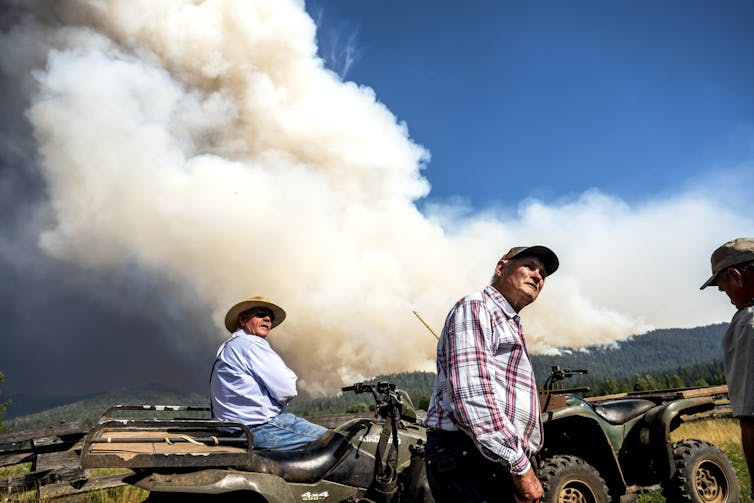
Ranchers watch as firefighting planes battle the Park Fire, which was fueled by extremely hot, dry conditions in Butte County, Calif., in July 2024. AP Photo/Noah Berger
Fuel
Fire is a natural process that has shaped ecosystems for over 420 million years. Indigenous people historically used controlled burns to manage landscapes and reduce fuel buildup. However, a century of fire suppression has allowed vast areas to accumulate dense fuels, priming them for larger and more intense wildfires.
Additionally, human development in fire-prone regions, especially in the wildland-urban interface, where neighborhoods intermingle with forest and grassland vegetation, has introduced new, highly flammable fuels. Buildings, vehicles and infrastructure often ignite easily and burn hotter and faster than natural vegetation. These changes have significantly altered fuel patterns, creating conditions conducive to more severe and harder-to-control wildfires.
More than 600 homes and buildings burned in the Park Fire, one of California’s largest fires on record. Officials say the fire was started by a man pushing a burning car into a ravine near Chico. AP Photo/Eugene Garcia
Lightning-started fires often coincide with storms that carry rain or higher humidity, which slows fires’ spread. Human-started fires, however, typically ignite under more extreme conditions – hotter temperatures, lower humidity and stronger winds. This leads to greater flame heights, faster spread in the critical early days before crews can respond, and more severe ecosystem effects, such as killing more trees and degrading the soil.
Human-ignited fires often occur in or near populated areas, where flammable structures and vegetation create even more hazardous conditions. Homes and the materials around them, such as wooden fences and porches, can burn quickly and send burning embers airborne, further spreading the flames.
As urban development expands into wildlands, the probability of human-started fires and the property potentially exposed to fire increase, creating a feedback loop of escalating wildfire risk.
Whiplash weather
A phenomenon known as whiplash weather, marked by unusually wet winters and springs followed by extreme summer heat, was especially pronounced in Southern California in recent years.
A wet spring in 2024 fostered vegetation growth, which then dried out under scorching summer temperatures, turning into highly combustible fuel. This cycle fueled some of the biggest fires of the 2024 season, several of which were started by humans.
That dryness continued in Southern California through the fall and into early winter, with very little rainfall. Soil moisture in the Los Angeles region was about 2% of historical levels for that time of year when the fires began on Jan. 7, 2025.
As the factors that can drive wildfires converge, the potential for increasingly severe wildfires looms ever larger. Severe fires also release large amounts of carbon from trees, vegetation and soils into the atmosphere, increasing greenhouse gas emissions and exacerbating climate change, contributing to more extreme fire seasons.
FIDELITY, First Bank, Keystone Bank, and Union Bank Plc have been sanctioned by the Central Bank of Nigeria (CBN) for failing to make naira notes available through automated teller machines (ATMs), during the last Yuletide season.
Others sanctioned for similar violations include: Globus Bank, Providus Bank, Zenith Bank, United Bank for Africa, and Sterling Bank Plc.
The acting director of corporate communications at the CBN, Hakama Sidi Ali, confirmed the development in a statement on Tuesday, January 14, noting that “ensuring seamless cash flow is paramount to maintaining public trust and economic stability.
Banks fined by CBN
“The CBN will not hesitate to impose further sanctions on any institution found violating its cash circulation guidelines,” she stated.
She stressed that the apex bank’s investigations and monitoring would continue to scrutinise cash hoarding and rationing, both at bank branches and by point-of-sale (POS) operators.
She also disclosed that the CBN was working with security agencies to crack down on illegal cash sales and operational violations, including enforcing POS operators’ daily cumulative withdrawal limit of N1.2 million.
According to the spokesperson, each bank was fined ₦150 million for non-compliance, in line with the CBN’s cash distribution guidelines, following spot checks on their branches.
The enforcement action followed repeated warnings from the CBN to financial institutions to guarantee seamless cash availability, particularly during periods of high demand, she noted.
“Communication with the banks revealed that the fines would be debited directly from their accounts with the apex bank,” she added.
The CBN, governor, Olayemi Cardoso, in his address at the annual bankers’ dinner of the Chartered Institute of Bankers of Nigeria (CIBN) in November 2024, warned banks to strictly adhere to cash distribution policies or face severe penalties.
He underscored the CBN’s commitment to maintaining a robust cash buffer to meet Nigerians’ needs. “Our focus remains on fostering trust, ensuring stability, and guaranteeing seamless cash circulation across the financial system,” Cardoso.
The CBN further urged all financial institutions to comply with its guidelines, warning that further violations would attract swift and decisive sanctions.
The ICIR in December 2024 reported that the apex bank had been largely silent over the cash scarcity that hit businesses and households in the 2024 Yuletide season across the country.
The scarcity prompted PoS operators to adjust their charges to almost 100 per cent higher.
Nigerians were left at the mercy of the PoS merchants as commercial banks rationed cash dispensing to consumers.
Most automated teller machines (ATM) dispensing spots in Abuja Federal Capital Territory (FCT) did not dispense, forcing most businesses to rely on PoS merchants for their transactions.
SCAVENGERS, beggars and other vulnerables in Abuja have sued the Federal Capital Territory (FCT) Minister, Nyesom Wike, and demanded N500 million in damages for alleged breaches of their fundamental rights.
The lawsuit, filed at the Federal High Court in Abuja, challenges the treatment of vulnerable citizens in the nation’s capital, citing arbitrary arrests, illegal detentions, and extortion.
This followed Wike’s ban on street begging in the city, which has sparked controversy and criticism from human rights advocates.
Besides the street begging ban, the Federal Capital Territory Administration had also banned scavenging in the city centre.
In the suit marked: FHC/ABJ/CS/1749/3024, the lawyer to the plaintiffs, Abba Hikima, on behalf of the vulnerable residents in the originating motion dated Nov. 19, 2024, but filed Nov. 20, 2024, said he was suing in the public interest for the protection of vulnerable Nigerians.
Listed as first to fourth respondents.defendant in the originating motion are Wike; inspector-general of police; director-general, State Security Services; and Nigeria Security and Civil Defence Corps (NSCDC)
In the case filed before Justice James Omotosho of the Federal High Court in Abuja, the lawyer also joined the attorney-general of the federation and the Federal Government of Nigeria as the fifth and sixth respondents, respectively.
The plaintiffs’ lawyer is seeking a court order to compensate the affected citizens with N500 million in damages, citing the government’s alleged infringement on their fundamental rights.
The lawyer argued that the way homeless people, scavengers, petty traders, beggars, and other vulnerable Nigerians in the FCT were being treated was a clear violation of their fundamental rights.
He claimed that arresting them without a reason, detaining them without charges, and harassing them violated their rights.
He said their rights were guaranteed under Sections 34, 35, 41, and 42 of the Constitution of Nigeria 1999 (as altered).
Hikima, in his affidavit, said he witnessed a disturbing scene on November 12, 2024, around 11 pm, while he was passing through Ahmadu Bello Way in Abuja.
According to him, he saw a joint task force, made up of security operatives and enforcement officers, including military and police personnel, arresting a group of people who appeared to be homeless, scavengers, and beggars.
He said it was troubling because the people they arrested weren’t just those who were begging or scavenging and sellers who looked for daily bread.
He argued that being homeless, begging, or doing petty trading was not a crime in Nigeria.
Hikima declared that the government failed to provide vulnerable Nigerians with basic security and a decent life, which was the reason they were struggling.
When the case was brought up in court, Usman Chamo, the applicant’s lawyer, said everything was ready for a hearing and that all the respondents had been notified.
The lawyer for the SSS, A.P. Korobo-Tamono also mentioned that his organisation had filed a counter affidavit and handed it to the applicant’s lawyer.
However, no lawyers showed up to represent the minister, the inspector-general of police, the NSCDC, the AGF, or the Federal Government.
Thereafter the judge sent out a hearing notice to the respondents who weren’t in court and postponed the case until February 4 for a hearing.
Recall that in October 2024, Wike declared war on beggars and accused them of desecrating Abuja city and posing a security risk.
Wike made the declaration during the official commencement of the access road construction from Nnamdi Azikiwe Expressway by N16 to Judges Quarters in Katampe District.
The minister said the move was necessary over concerns that Abuja was turning into a beggars’ city.
The minister on Monday, January 13, also banned used items markets, popularly known as ‘Panteka,’ in the FCT for two weeks.
Wike said the ban on Panteka markets in the FCT took effect from Tuesday, 14th January 2025.
He announced the ban during the FCT Security Council meeting.
According to his media aide, Lere Olayinka, scavenging has been restricted only to dump sites.