Home Blog Page 394

Disengaged CBN staff were not forced out – Cardoso

THE Central Bank of Nigeria (CBN), governor, Olayemi Cardoso, said the 1,000 staff who left the bank were not forced out of office.

Cardoso made this known on Friday, January 3, at the resumed Federal House of Representatives investigative hearing on the disengagement of the 1,000 workers by the CBN.

The apex bank, had on December 4, 2024, said its early exit package (EEP), was entirely voluntary and without any negative consequence for eligible staff.

The clarification followed the controversies from  reports that 1,000 staff were sacked from the apex bank.

Reacting to the development, however, the House of Representatives ordered the CBN to suspend the planned retirement of 1,000 staff.

Accordingly, the House of Representatives  had also established an ad hoc committee to probe the process and legality of the exercise.

At the resumption of the investigative hearing on Friday, the CBN governor, however, said the 1,000 members of staff were not forced to quit.

Cardoso, represented by CBN’s deputy director of corporate service, Bala Bello, the apex bank boss also said the early exit programme, the restructuring and reorganisation was to optimise the bank for enhanced efficiency.

“They are basically ways and means through which the performance of an organisation is optimised by putting, ensuring that round pegs are put in right holes.

“The manpower requirement of the bank is actually met. I’m very happy to mention, Mr. Chairman and members of the committee, that the early exit program of the central bank is 100 percent voluntary,” he stressed.

According to the apex bank governor,”It’s not mandatory as nobody has been asked to leave, and nobody has been forced to leave. It’s a completely voluntary programme that has been put in place.

He added; “I believe several organisations across the world, and even within this country, both in the private sector and the public sector, are undertaking similar exercises.

“So nobody has been asked to leave. With a lot of humility, I will tell you that this same program that is taking place is not at the instance of the bank,” Cardoso added.

The ICIR reports that some of the disengaged staff had sought redress in court, as some Nigerians expressed worry  over the controversial manner of their disengagement before official retirement age of 60 years.

THE ICIR in April, 2024 reported a growing apprehension among the CBN staff as 50 additional employees were sacked, adding to the long list of ongoing disengagement at the apex bank as at that time.

The sacking under the leadership of CBN governor Olayemi Cardoso cuts across 29 departments as the organisation restructures to shift away from the development finance role, it was learnt.

Ghana announces visa-free entry for African passport holders

0

OUTGOING Ghanaian President Nana Akufo-Addo has announced the implementation of a visa-free policy for all African passport holders, effective from January, 2025.

Akufo-Addo made the announcement during his final State of the Nation Address on Friday, fulfilling a pledge he made at the Africa Prosperity Dialogues a year ago. 

The move, according to Akufo-Addo, is part of efforts to enhance regional integration and ease movement across the continent.

“I am proud to have approved visa-free travel to Ghana for all African passport holders, with effect from the beginning of this year,” Akufo-Addo told lawmakers in his last address to parliament.

“This is the logical next step to the African Continental Free Trade Area and the workings of the largest trading bloc in the world,” he said.

He added that the policy aligns with the African Union’s Agenda 2063, which envisions an integrated and connected Africa by 2063.

The visa-free policy also supports the African Union’s vision for greater economic integration, particularly under the African Continental Free Trade Area (AfCFTA), headquartered in Ghana. 

Ghana had previously permitted visa-free entry for citizens of 26 African nations and offered visas on arrival for travellers from 25 others. Only Eritrea and Morocco required Ghanaians to apply for a visa before entry.

But with the new policy, Ghana is now the fifth African country to allow visa-free travel for all African nationals, joining Rwanda, Seychelles, The Gambia, and Benin.

“All these are essential elements to the realisation of the AU’s Agenda 2063, which envisages an integrated and connected Africa by 2063,” the president added.

The ICIR reports that Visa-free travel has long been advocated as vital for fostering economic collaboration and promoting pan-African unity. 

Ghana, ranked fifth in Africa’s visa-openness index last year, has positioned itself as a hub for African visitors and members of the diaspora.

In 2022, the Ghanaian government introduced visa-on-arrival for visitors during the 2022 festive season, allowing travelers to enter the country without prior visa arrangements from December 22, 2022, to January 15, 2023.

The move, announced by the Ministry of Transport, was part of the government’s then ongoing efforts to attract tourists and strengthen diaspora connections under the “Beyond the Return” initiative. 

AVOI 2024 top 20 

According to the Africa Visa Openness Index 2024 ranking, Benin, Gambia, Rwanda and the Seychelles continue to occupy the top spot on the AVOI even this year. 

Nigeria stands 6th on the 2024 AVOI ranking, after scoring 0.864.

Among the top 20 countries, 16 are equally distributed between West and East Africa, with each region contributing eight nations. Southern Africa is represented by Madagascar, Mauritius, and Mozambique, while Mauritania stands as the sole representative from North Africa.

The majority of the top-ranked countries (18 out of 20) fall under the lower-middle-income or low-income categories. This suggests that nations with lower income levels are more likely to adopt liberal visa policies, potentially to boost tourism, trade, and regional integration.

In contrast, wealthier nations tend to maintain stricter visa regulations, often citing concerns about incentivizing economic migration or irregular movement, according to the report.


READ ALSO:


Lakurawa terror group attacks Kebbi, kills 2 policemen, rustles cattle

0

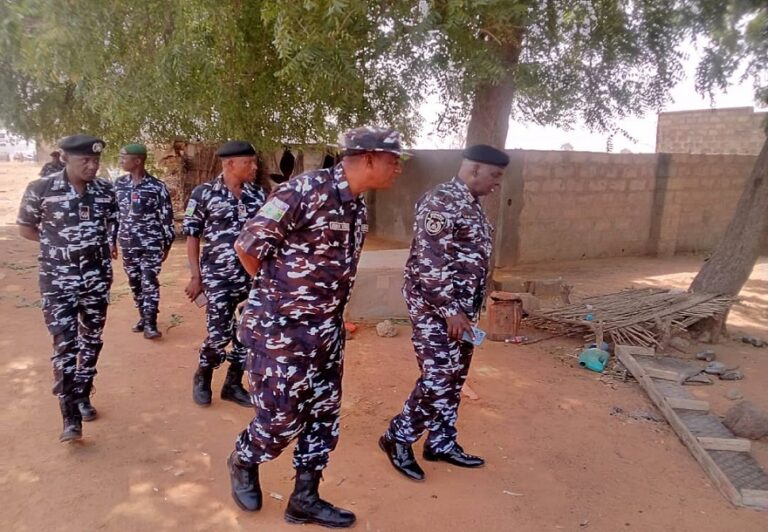
A NEW terrorist group, Lakurawa, has attacked Natsini village in Argungu Local Government Area of  Kebbi State, killing two policemen and rustling over 200 cows in the process.

The attack reportedly occurred on Thursday, January 2, around 11 p.m. but became public knowledge on Saturday.

Reports say the policemen were at a checkpoint on the Augie/Kangiwa road when over 50 assailants on motorcycles attacked them, killed two officers, and then rustled cows.

Natsini village is reportedly about 5 kilometers from Argungu town.

A resident of the community, Abubakar Augie, told Daily Trust that the cows stolen belonged to a prominent civil servant in the area, Lawali Black.

Augie confirmed that the terrorists were more than 50 in number and arrived on motorcycles, overpowering the few policemen at the checkpoint before making their way to the ranch and stealing the cows.

Aliyu Gulma, the local government chairman, reported that the incident had occurred and that a security meeting was being held at the council level to address the situation.

He also stated that the state government had given orders for security forces to pursue the terrorists and recover the stolen cattle.

According to Wikipedia, Lakurawa is affiliated with the Islamic State according to the Nigerian Defense Headquarters. They enforce zakkat payment, confiscating cattle from non-compliers. Similar to Boko Haram, they communicate in Azbinanci, Zabarmanci, Barbanci, and Hausa. Lakurawa recruits youths with ₦1,000,000.

Kebbi Police Command confirms attack

Responding to the attack, the state police command, through its public relations officer, Nafiu Abubakar, confirmed the incident in a statement obtained by The ICIR on Saturday, January 4.

According to Abubakar, on January 3, 2025, Lakurawa bandits attacked a farm and nearby settlements in Natsini village, rustling cows.

He said the police responded, engaging the bandits in a shootout and recovering some cows, but lost two officers in the attack.

“In view of the above, the Commissioner of Police, Kebbi State Command, CP Bello M Sani, condemned the unfortunate incident, prayed for the soul of the deceased police officers to have an eternal rest and gave their immediate families and well-wishers the fortitude to bear the irreparable loss,” the command stated.

Abubakar said the Commissioner of Police, Kebbi State Command, Bello M Sani, has paid an on-the-spot assessment visit of the scene, after which he visited the Emir of Argungu, Sama’ila Muhammad Mera.

He added that while at the emir’s palace, the CP condoled and briefed him on the efforts of combined security agencies towards combating crimes in the area.

Lakurawa is an emerging terrorist group operating between Sokoto and Kebbi states in Nigeria; they are known for carrying out attacks, cattle rustling, and other criminal activities.

Thousands of Abuja residents face two-week power outage from January 6 – AEDC

0

THOUSANDS of Federal Capital Territory (FCT) residents will witness a two-week blackout from Monday, January 6, as the Abuja Electricity Distribution Company (AEDC) announced an imminent disruption in power supply.

The disruption is due to the relocation of the 33KV DC Airport Feeder and 132KV Kukwaba-Apo Transmission Line Towers along the Outer Southern Expressway by the Federal Capital Development Authority (FCDA)

The AEDC disclosed this in a statement on its official X handle on Friday, January 3.

According to the company, the operation would occur from January 6 to 21.

The statement listed areas to be affected by the outage to include Lugbe, Airport Road, Kapwa, NNPC, Games Village, National Stadium, Eye Clinic, Indoor Complex, Christ Embassy Church, American International School, Spring Court, American Embassy Quarters, EFCC Headquarters, Coca Cola, Railway, and Federal Medical Centre (FMC), Jabi.

Parts of Apo, Gudu, Gbazango, Kubwa, Bwari, Jahi, Jabi, Karu, Nyanya, Mararaba, Keffi, among others will also experience outages.

The AEDC apologised to affected residents for the inconvenience the disruption would cause.

Power outage has been a recurring decimal not only in the FCT but across Nigeria.

The ICIR reported in December 2024 that businesses and households groaned as Nigeria’s national grid collapsed 11 times between February and December, worsening the country’s electricity crises.

Each collapse affects households, businesses, and critical sectors like healthcare, where a consistent power supply is essential.

The last of such a collapse was recorded on Wednesday, December 11, throwing many parts of the country into darkness.

Owerri Catholic Archdiocese confirms priest shot boy dead for throwing ‘knockout’ in church

0

THE Catholic Archdiocese of Owerri has confirmed the shooting incident involving a priest in Imo State which led to the death of a young man who allegedly threw ‘knockout’ into the church premises during a crossover mass to mark the New Year.

The incident happened at St. Columba’s Catholic Church Amaimo in Ikeduru Local Government Area of Imo State.

An official letter personally signed by the Catholic Archbishop of Owerri, Lucius Iwejuru Ugorji, on Thursday, January 2, confirmed the incident and called for a thorough investigation into the incident.

Owerri Archdiocesan official statement on shooting incident involving a Priest of the Archdiocese.
Owerri Archdiocesan official statement on shooting incident involving a priest of the Archdiocese.

“The Catholic Archdiocese of Owerri highly regrets the shooting incident that took place on the eve of the New Year at the premises of St. Columba’s Catholic Church Amaimo, leading to the death of a young man and leading to the wounding of another.

“The Archdiocese of Owerri condoles with the bereaved family and prays for the happy repose of the dead, and the speedy recovery of the injured,” part of the statement reads.

The Archdiocese also called for calm within the church premises and confirmed the police were investigating the shooting.

The public relations officer of the Imo State Police Command, Henry Okoye, while confirming the incident, said: “Yes, a detailed investigation has been initiated to ascertain the remote facts surrounding the incident. Further development on the case will be communicated in due course.”


Nigeria deports French passenger over unruly behaviour at airport

0

A FRENCHMAN has been deported from Nigeria after causing chaos at the Nnamdi Azikiwe International Airport, Abuja. 

The passenger, whose identity remains undisclosed, arrived on January 1 aboard an Air France flight but was denied entry because he failed to present a valid Nigerian visa.

The director of public affairs and consumer protection at the Nigeria Civil Aviation Authority (NCAA), Michael Achimugu, on Friday, January 3, confirmed that a medical doctor examined the passenger.

He was sedated, and returned to France on an Air France flight to Charles de Gaulle Airport, Paris, on Thursday night.

“Examined by a doctor and placed on a sedative, the unruly French national has finally boarded an Air France flight to CDG, Paris…

“I was physically present to witness his boarding at 10 pm tonight, along with the very capable terminal head, Miriam Anosike who did a yeoman’s job in this case, Ifueko Abdulmalik, and gallant men of the Nigeria Immigration Service.”

The Frenchman’s troubles reportedly began when he was refused entry into Nigeria and temporarily accommodated at a hotel within the airport after visits from French Embassy staff and a doctor. 

However, his erratic behaviour persisted, disrupting airport activities and forcing multiple airlines to refuse to fly him.

He was consequently declined transport by British Airways and Asky Airlines, which cited his unruly behaviour. 

On January 2, Asky Airlines further refused to board him after he failed to provide proof of payment for his ticket.

Achimugu also reported that Immigration officials faced significant challenges managing the passenger, who was seen littering the terminal with tissue paper and loudly demanding his passport. 

Achimugu, in a post on X on Wednesday, January 1, described the passenger as disruptive, stating that he littered the terminal with tissue paper, shouted at officials, and demanded his passport. 

According to him, immigration officials, who had withheld his passport to prevent him from illegally leaving the airport, faced challenges managing him.

“Today, he was supposed to depart via Asky but could not present evidence of payment for the e-‘ticket’ he presented. The airline declined to airlift him.

“Immigration officials had quite a hectic time handling the erratic passenger who can be seen littering our clean terminal with what seems to be tissue paper and screaming, “My passport, my passport.”

“Apparently, the Immigration officers wanted to ensure that he boarded his flight before handing the passenger his international passport to prevent him from escaping through the exit gate and into the city,” he said on Wednesday.

Providing an update on the incident, Achimugu added that the cabin crew was advised to have some of the sedatives administered to the passenger in case he displayed unruly behaviour during his deportation flight.

This development came barely two months after Nigeria began 24-hour operations of the Regular Migration Command and Control Centre, at the Nigerian Immigration Service (NIS) headquarters in Sauka, Abuja.

The centre, according to Interior Minister Olubunmi Tunji-Ojo, who appeared on Politics Today on Channels Television, on November 11, 2024, would enable real-time monitoring of all international airports in the country, with plans to extend coverage to land and sea borders.

Tunji-Ojo stated that the centre which is located at the Nigerian Immigration Service (NIS) headquarters in Sauka, Abuja, went live for 24-hour operations following an induction programme held about two weeks ago.

He explained that the centre allows comprehensive oversight across international airports in Nigeria. 

He further noted plans to integrate the system with Nigeria’s land and sea borders, which he said would further enhance its reach.

The ICIR also reports that the incident occurred two days after the Nigerian government approved the creation of mobile courts at the nation’s airports to try unruly passengers like the Frenchman.

Key events that will shape entertainment, sports in 2025

0

The Nigeria’s entertainment and sports landscapes in 2025 is brimming with anticipation and uncertainty, from Netflix’s evolving role in Nollywood to the casting of Idris Elba as Okonkwo in Things Fall Apart, and the milestone 10th season of Big Brother Nigeria, the year promises pivotal moments that could redefine cultural narratives and industry benchmarks.

The ICIR explores the key developments and challenges shaping Nigeria’s creative and athletic arenas in the coming year, providing insights into what lies ahead for the nation on both local and global stages.

Impact of reduced film funding in Nollywood

In December, rumours circulated that Netflix was exiting Nigeria after comments by filmmaker Kunle Afolayan were misinterpreted. Afolayan had mentioned that Netflix had cancelled some commissioned projects, sparking concerns about its commitment to Nollywood. However, he clarified that Netflix was not leaving Nigeria but reassessing its funding and operational strategies. This, he explained, may include reducing the number of projects it finances. He also stressed the importance of developing robust local distribution systems.

This may bring about some implications for the industry as fewer resources from Netflix may affect the industry’s ability to sustain high-quality productions, progress in achieving better standards, driven by Netflix, could slow down. 

Local filmmakers might face reduced chances to reach international audiences and a decline in globally competitive content could weaken Nigeria’s cultural influence. Despite these challenges, Netflix’s continued presence offers a chance for Nollywood to innovate and build stronger local infrastructure to maintain growth.

Things Fall Apart movie adaptation release

The ICIR reports that Idris Elba has been cast as Okonkwo in the movie adaptation of Chinua Achebe’s iconic novel, Things Fall Apart. Nigerians expressed mixed reactions to this announcement, particularly regarding the casting of the British actor in such a culturally significant role.

Many Nigerian creatives, however, have praised the decision, considering Elba a perfect fit for the character. They believe his involvement will not compromise the story’s authenticity but instead bring global attention to Achebe’s timeless work.

The movie, already available on Apple TV’s streaming service, is set for wider release in 2025. Expectations are high as this adaptation aims to balance the preservation of African cultural heritage with global cinematic appeal. 

Big Brother Naija 10th season

Big Brother Naija is set to celebrate its milestone 10th season in 2025, marking a significant journey since its debut in 2006 as Big Brother Nigeria.  After its initial run, the show was paused as it transitioned to the broader platform of Big Brother Africa. However, it made a triumphant return in 2017 with its second season and has remained a consistent part of Nigeria’s entertainment landscape ever since.

The ninth season faced criticisms from fans, who expressed dissatisfaction with the entertainment value and overall dynamics of the housemates. Despite efforts by the organisers to enhance the show’s appeal, many viewers remained unimpressed.

As the 10th season approaches, expectations are high, with fans hopeful for a revival of the excitement and originality that first made the show a cultural phenomenon.

While details about the upcoming season remain under wraps, anticipation continues to build for what promises to be a defining moment in the franchise’s history.

International award shows

The 67th Annual Grammy Awards, scheduled for February 2 at the Crypto.com Arena in Los Angeles, will honour excellence in music.

The ICIR reports that Nigerian artists have made a strong impact, particularly in the Best African Music Performance category. Tems has achieved a historic feat with three nominations in global music categories. Her debut album, Born in the wild, is nominated for best Global Music Album, while her song, Burning contends for best R&B Song.

Exactly a month later, the Oscars will take place at the Dolby Theatre, celebrating outstanding achievements in cinema. Among the submissions for the International Feature Film category is Mai Martaba, representing Nigeria in 2025. This marks a hopeful moment for the country, as no Nigerian film has yet advanced to the long-list or shortlist for this prestigious category. Previous submissions, such as Genevieve Nnaji’s Lionheart (2019) and CJ Obasi’s Mami Water (2024), made notable strides but fell short of selection.

If Mai Martaba secures a spot or wins, it would not only elevate Nigeria’s creative industry but also open new opportunities for investment in the nation’s film sector, particularly the northern-based Kannywood industry, further cementing Nigeria’s presence on the global cinematic stage.

2026 FIFA world cup qualifiers

In 2025, countries will be locked in qualifiers for the expanded 2026 FIFA World Cup to be jointly hosted by USA, Canada and Mexico.

Nigeria seeking to be one of the nine African representatives are currently second from bottom after taking just three points from 4 games.This underwhelming performance has raised concerns among fans and analysts about the Super Eagles’ chances of making it to the tournament, especially after missing out on the last edition in Qatar. With crucial matches ahead, the team will know their fate in 2025, as they face immense pressure to turn their fortunes around and secure a spot in the 2026 World Cup.

Nigerians react as NNPCL invites Obasanjo for Port-Harcourt Refinery tour

0

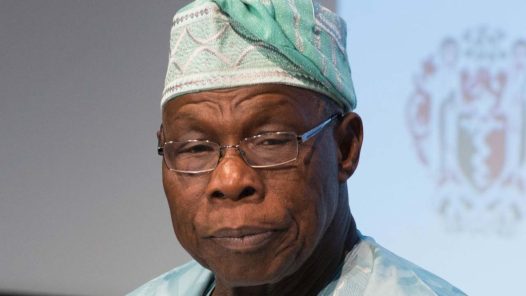
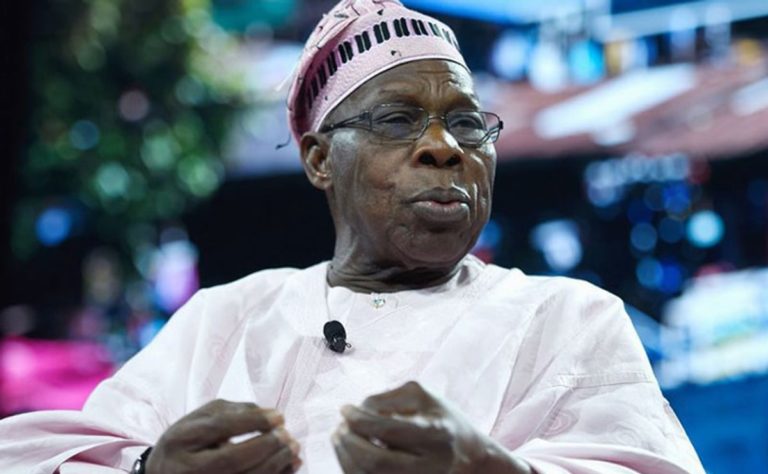
AMID the controversies and cynicism that followed the rehabilitation of the PortHarcourt Refinery, some Nigerians have been reacting to former President Olusegun Obasanjo’s invitation to tour the refinery.

The former President had criticised the functionality of the rehabilitated refinery and accused the Nigerian National Petroleum Company Limited (NNPCL) of lacking in capacity to manage the nations’ refineries.

In a monitored interview with Channels Television on Thursday January 2, the former President also revealed that his successor, Umaru Musa Ya’ardua rejected a $750 million offer from Aliko Dangote, chairman of the Dangote Group, to manage the Port Harcourt and Kaduna Refineries in 2007, with NNPCL convincing him of better management as a ground for the rejection

“When I was president, I wanted to do something about the three refineries we have: Port Harcourt, Warri, and Kaduna. Aliko got a team together after I asked Shell to come and run it for us. And Shell said they wouldn’t,” Obasanjo said.

He recalled asking Shell to come and run the refineries or take equity in it but the company said it would not citing  inefficient management of the refineries as a reason.

The former President said he had confidence in Dangote’s ability to manage his privately owned refinery, contrasting it with government’s inefficiency.

While reacting  to the former President’s invitation of tour by the national oil company, some Nigerians took to social media and expressed how they feel about the development.

“That’s very good. Let him to and tour it first hand. He said it will never work because he was unable to make it work as a President,” an X user @ab_rashiid wrote in response to NNPCL’s invitation to the former President.

While expressing further cynicism, another X user@KabiruMisali wrote in response to the open invitation of the former President, “Do you really believe that audio running of Warri and PH refineries?”

Another X user@ohluwasheun111 also said in response,”I can put my savings on this that OBJ won’t accept the invitation.”

In the same vein, another X user,@Savage108 wrote, “But the old folks said our refinery can’t work anymore.”

The Chief Corporate Communications Officer of NNPCL, Olufemi Soneye, confirmed to the ICIR that he respectfully invited the former president to visit the facility, emphasisng the company’s commitment to transparency and accountability.

Soneye also invited Obasanjo to join the NNPCL in its determination to guarantee the country’s energy security.

“We invite our esteemed former president to join us in this effort as we continue to deliver energy security for our nation and provide tangible benefits to Nigerians.

“His wisdom and experience are invaluable, and we assure him that his advice will always be welcomed and appreciated,” he said.

Soneye stressed that the NNPCL did not only carry out a turnaround maintenance on the plant but it embarked on a complete overhaul of the refinery.

He said: “As part of this transformation, NNPC Limited has gone beyond oil and gas to become an integrated energy company.

Soneye noted that NNPCL will ensure their sustainable operation and contribute significantly to Nigeria’s energy security.

He said, “Regarding his recent comments, we would like to respectfully clarify the current state of the NNPC.

The NNPC has undergone a transformative journey, evolving from a government corporation into a private entity—NNPC Limited.

“This transition has marked a significant shift from being a loss-making organization to a profit-oriented global energy company.”

“He has every right to share his perspectives on national issues, and we value his insights and counsel.”

He said: “We remain grateful for his leadership and enduring commitment to the growth and development of Nigeria. Together, we can continue to build a brighter future for our great nation.

NNPC ignored Dangote’s $750m offer to manage moribund refineries, says Obasanjo

0

FORMER President Olusegun Obasanjo has disclosed how billionaire businessman Aliko Dangote offered $750 million to manage the Port Harcourt and Kaduna refineries in 2007 but was ignored.

Obasanjo revealed this during an interview with Channels Television on Thursday, January 2.

He said the refineries managed by the then Nigerian National Petroleum Corporation (NNPC) is now operated by the Nigerian National Petroleum Company Limited (NNPCL).

According to Obasanjo, the old NNPC was aware of its limitations in managing the nation’s refineries but rejected Dangote’s offer.

He said, “When I was president, I wanted to do something about the three refineries we have: Port Harcourt, Warri, and Kaduna. Aliko got a team together after I asked Shell to come and run it for us. And Shell said they wouldn’t.

“Aliko got a team together and they paid $750m to take part in PPP (public–private partnership) in running the refineries. My successor refunded their money and I went to my successor and told him what transpired. He said NNPC said they wanted the refineries and they could run it. I now said but you know they cannot run it.”

However, Obasanjo said his successor, late Umaru Musa Yar’Adua, reversed the decision and refunded Dangote’s investment.

He recalled asking Shell to come and run the refineries or take equity in it but the company said it would not.

“Later on, I called the boss of Shell to come and tell me what the problem was, and he gave me four or five reasons.

“He said, first of all, they make a major profit from upstream, not from downstream. He said they run downstream just to keep their head above water.

“Two, our refineries were too small: 60,000 barrels, 100,000 barrels and I think 120,000 barrels..Three, he said our refineries were not well maintained. Four, he said that there was too much corruption around the activities of our refinery and they would not want to get involved in that,” he added.

The former president said he had confidence in Dangote’s ability to effectively manage his privately owned refinery, contrasting it with the government’s inefficiency.

“I was told not too long ago that since that time, more than $2 billion have been squandered on the refinery and they still will not work.

“If a company like Shell tells me what they told me, I will believe them. If anybody tells you now that it is working, why are they now with Aliko? And Aliko will make his refinery work; not only make it work, he will make it deliver,” Obasanjo maintained.

In December, 30, the NNPCL announced that the 125,000-barrel-per-day Warri Refining and Petrochemicals Company in Delta State had resumed operations.

The development followed the restart of operations at the 60,000-barrel-per-day Port Harcourt Refinery a month earlier.

The ICIR reported that the operational capacity of the later refinery came under intense scrutiny after its reopening.

The scrutiny followed controversies that petroleum products loaded from the facilities were not newly refined but products stored in the storage tank of the facility in the last three years.

Obasanjo served as Nigeria’s democratically-elected president from May 1999 to May 2007, during which he focused on reforming critical sectors of the economy.

The statesman was also a former military head of state between February 1976 and October 1979.

His administration commenced the efforts to deregulate the downstream sector.

Nigerians react as Tinubu named among world’s five most corrupt leaders in 2024

NIGERIANS on social media have expressed concerns after President Bola Tinubu was named one of the five finalists for the 2024 “Corrupt Person of the Year” by the Organised Crime and Corruption Reporting Project (OCCRP).

The announcement, made on Tuesday, December 31, has drawn mixed reactions from Nigerians. Many expressed disappointment and affirmation over the inclusion of the country’s leader in such a ranking.

 Tinubu, who secured the third-highest number of nominations, was shortlisted alongside Kenya’s President William Ruto, former Indonesian President Joko Widodo, former Bangladeshi Prime Minister Sheikh Hasina, and Indian businessman Gautam Adani.

The OCCRP noted that the finalists were selected from over 55,000 nominations submitted by journalists, readers, and the project’s global network. 

According to the report, more than 40,000 people nominated Kenyan President William Ruto for “Person of the Year” in organised crime and corruption.

The nominations were driven by widespread frustration over soaring youth unemployment, a controversial Finance Bill, and anger at his government seen as deeply corrupt.

Ruto’s administration faces allegations of greed and corruption, which critics say have led to failures in economic policies, healthcare, and education, as well as political instability and the reported abduction of opposition figures.

This consequently led to young Kenyans taking to the streets in June and July 2024, staging weeks of protests demanding his resignation.

The demonstrations were met with force, as security operatives used tear gas, water cannons, arrests, and even live bullets. Many protesters were killed, injured, or went missing during the unrest.

While Ruto, Widodo and Tinubu secured the highest votes in the nomination, the judges named ousted Syrian leader, Bashar Al-Assad, as the most corrupt leader.

The organisers stated that the award is reserved for the individual who has caused “the most to wreak havoc around the world through organised crime and corruption.”

They noted that Al-Assad’s roles in destabilising Syria, its neighbours, and the entire Middle East, along with the far-reaching consequences of his actions, earned him the top position.

While the reports didn’t factor in the complaints submitted alongside the nominations received for Tinubu, his placement among the indicted leaders could be attributed to many controversies, past and present allegations, and the lack of transparency surrounding Tinubu’s wealth and government.

A report by OCCRP had linked his family to multi-million-dollar properties in London, including a $10.8 million mansion acquired under questionable circumstances.

A Bloomberg investigation exposed that Seyi, Tinubu’s son, is the main shareholder of Aranda Overseas Corp – an offshore company he used in purchasing a $10.8 million property under probe by the Economic and Financial Crimes Commission (EFCC).

Other reports, including Seyi’s

These allegations had fueled public outrage, with many calling for the President’s disqualification before the 2023 presidential poll.

Following his swearing-in as President, Nigerians accused his administration of perpetuating economic hardship, high inflation, and controversial policies. 

The ICIR reported how 2024 was marked by widespread protests under the banner of #EndBadGovernance, where citizens decried rising poverty and poor governance.

The administration’s handling of the protests, including mass arrests of protesters, human rights abuses, and attacks on journalists also deepened public discontent.

Nigerians react

Meanwhile, some Nigerians on X have reacted to Tinubu’s nomination by the OCCRP.

A lawyer @AbdulMahmud01 posted on X “I mentioned the OCCRP who announced BAT as the organised crime person of2024 in my op-ed: “This is how the Organised Crime and Corruption Reporting Project (OCCRP) gave clarity to it in one of its reports last year: “Tinubu’s history is not entirely clean”.

Another X user @Nattychemical said drug and certificate forgery allegations against Tinubu helped in the nomination process for the OCCRP ranking.

Mr Tinubu’s history as a cocaine dealer in Chicago also helped inform participants in the nomination process for the OCCRP ranking, submissions showed. He was also rocked by allegations of certificate forgery shortly after he was inaugurated…This is the character some clowns are supporting. Very sad.,” he tweeted.

An X user @aakpodea said, “A country where power isn’t available for critical things like surgery but we budget billions for helipads. Propagandist-in-chief Tinubu is indeed who he is, the world’s most corrupt organised crime personality in the year 2024.”

In his reaction, Ebuka Oledibe attributed the ranking to why Nigeria’s GDP is dropping.

“Bola Tinubu tops world’s most corrupt organised crime person of the year in 2024. No wonder Nigerian GDP dropped from $277 billion to $199 billion with lots of killings and kidnappings that happened this year.”

Meanwhile, an X user Abdulrahman Khalid queried why Israeli Prime Minister Benjamin Netanyahu is excluded from the list.

“Amazing! I wonder how corruption is perceived in this era. So Netanyahu who is the No. 1-10 of most corrupt people in the world for the crimes against lives, humanity, property, healthcare, arrest-evasion, violation of children, women’s and clergy, livestock, forests..is excluded?” he asked.

Abbey Odeyemi an X user in his tweet on the subject said speaking ill of the President because some people lost an election would not augur well for the nation.

Sanusi Altine in his view said the rankings were based on public nominations and had been criticised for trying to undermine the Tinubu administration’s legitimacy.

“The OCCRP placed President Tinubu third on its 2024 “Corrupt Person of the Year” list, citing allegations of drug trafficking, forgery and financial malpractice. The rankings are based on public nominations and have faced criticism for attempting to delegitimise his administration.”