THE Nigerian Senate, on Thursday, November 21, approved a $2.2 billion (equivalent to N1.7 trillion) loan request by President Bola Tinubu.
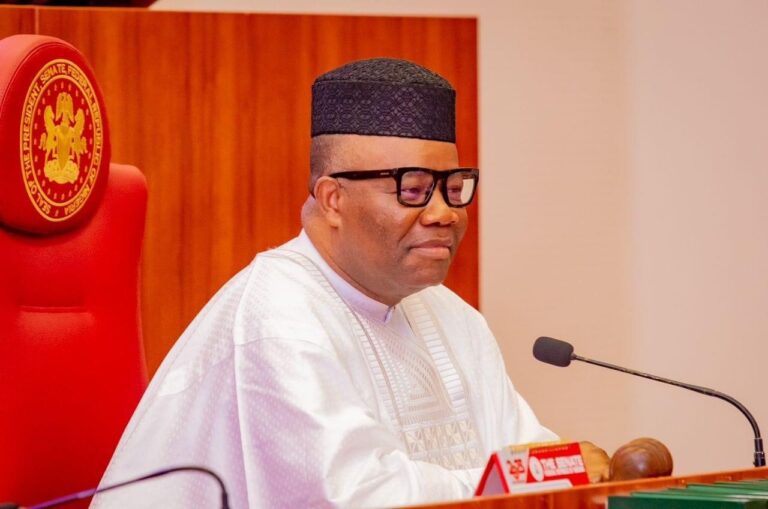
The Red Chamber approved the loan request following consideration of the report from the senate committees on local and foreign debt.
In a report to the Senate, Aliyu Wamakko, the committee on local and foreign debts chairman, explained that the funds would be raised through instruments like Eurobonds and Sukuk.
The ICIRreported on Tuesday, November 19, that Tinubu sought the National Assembly’s approval for a fresh N1.767 trillion as a new external borrowing plan in the 2024 Appropriation Act.
The President’s letter containing the request noted that the loan would be used to part-finance the budget deficit of N9.7 trillion.
The loan request, however, raised further questions as the Central Bank of Nigeria (CBN) recently said the Federal Government spent $3.58 billion servicing the country’s foreign debt in the first nine months of 2024.
Data sourced from the (CBN) report on international payment statistics showed that the amount represents a 39.77 per cent increase from the $2.56 billion spent during the same period in 2023.
According to the report, while the highest monthly debt servicing payment in 2024 occurred in May, amounting to $854.37 million, the highest monthly expenditure in 2023 was $641.70 million, recorded in July.
The trend in international debt servicing by the CBN highlights Nigeria’s rising cost of debt obligations.
Further breakdown of international debt figures showed that in January 2024, debt servicing costs surged by 398.89 per cent, rising to $ 560.52 million from $ 112.35 million in January 2023. February, however, saw a slight decline of 1.84 per cent, with payments reducing from $288.54 million in 2023 to $283.22 million in 2024.
March recorded a 31.04 per cent drop in payments, falling to $276.17 million from $400.47 million in the same period last year. April saw a significant rise of 131.77 per cent, with $215.20 million paid in 2024 compared to $92.85m in 2023.
The highest debt servicing payment occurred in May 2024, when $ 854.37 million was spent, reflecting a 286.52 per cent increase compared to $ 221.05 million in May 2023. June, on the other hand, saw a 6.51 per cent decline, with $50.82 million paid in 2024, down from $ 54.36 million in 2023.
July 2024 recorded a 15.48 per cent reduction, with payments dropping to $542.50 million from $641.70 million in July 2023.
In August, there was another decline of 9.69 per cent, as $279.95 million was paid compared to $309.96 million in 2023.
However, September 2024 saw a 17.49 per cent increase, with payments rising to $515.81 million from $439.06 million in the same month last year.
Given rising exchange rates, the data raises concerns about the growing pressure of Nigeria’s foreign debt obligations.
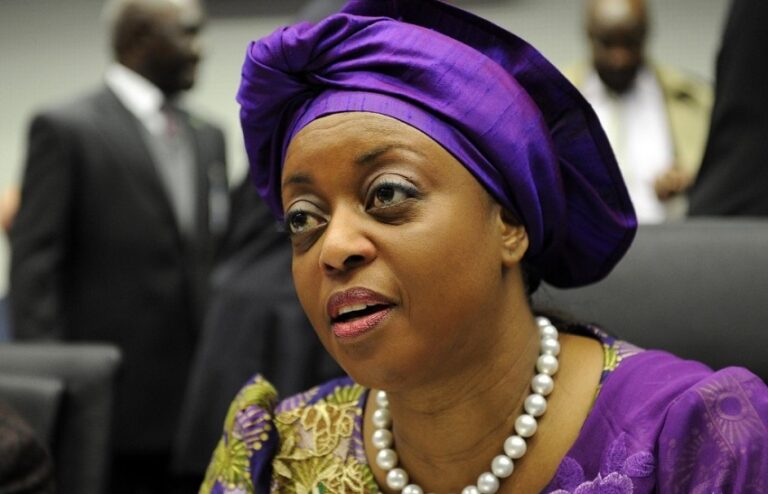
A FORMER Minister of Petroleum, Diezani Alison-Madueke, has filed a motion to amend her lawsuit challenging the Economic and Financial Crimes Commission’s (EFCC) order for the final forfeiture of her seized assets.
This development comes after Mobolaji Olajuwon, a judge of the Federal High Court (FHC), Abuja, ordered the final forfeiture of her properties, including Abuja homes and cars, in October 2022.
Alison-Madueke’s amended suit is now before Inyang Ekwo of the FHC, Abuja.
At the resumed hearing, the EFCC was absent, and Ekwo inquired if Diezani’s counsel, Godwin Iyinbor, had received documents from the EFCC. Iyinbor confirmed the receipt.
Iyinbor informed the court that they had filed a motion to amend their processes, and the EFCC had been duly served.
As a result, the judge, Ekwo, adjourned the matter until February 17, 2025, to hear the motion.
The ex-minister is seeking to extend the time to appeal the EFCC’s public notice for the sale of her properties, claiming she wasn’t given a fair hearing in the proceedings.
In the previous sitting, through her lawyer, Mike Ozekhome, she sued the EFCC, seeking to extend the time to appeal the sale of the assets.
In the motion dated and filed on January 6, 2023, marked FHC/ABJ/CS/21/2023, Alison-Madueke claimed she wasn’t given a fair hearing in the proceedings leading to the orders and argued that the various orders were made without jurisdiction.
She requested five orders from the court, including setting aside the EFCC’s public notice for the sale ¹.
However, the EFCC disputed her claims, stating that most of the allegations in her suit were untrue.
The EFCC urged the court to dismiss her application.
Rufai Zaki, the detective handling the case, claimed the ex-minister was involved in criminal activities, prompting charges in 2018.
Zaki said Alison-Madueke’s lawsuit contained false claims, contradicting her affidavit.
He argued that the cases leading to the final forfeiture of her assets were heard and determined by the court at various times, labelling her assertions as untrue.
The EFCC had obtained orders for the final forfeiture of her properties, including Abuja homes and cars, valued at $2.5 million, and also traced over $2 billion and $487.5 million in cash and properties linked to her.
In 2021, the EFCC saidit recovered $153 million and 80 houses valued at $80 million from Alison-Madueke.
The former EFCC chairman Abdulrasheed Bawa, stated this in the April edition of the EFCC Alert, a monthly publication of the commission.
Bawa said the commission was still pursuing another case of $115 million INEC bribery by the fleeing ex-minister, who had been outside the shores of the country since leaving office in 2015.
He noted that efforts were ongoing to extradite her to answer for her crimes in the country.
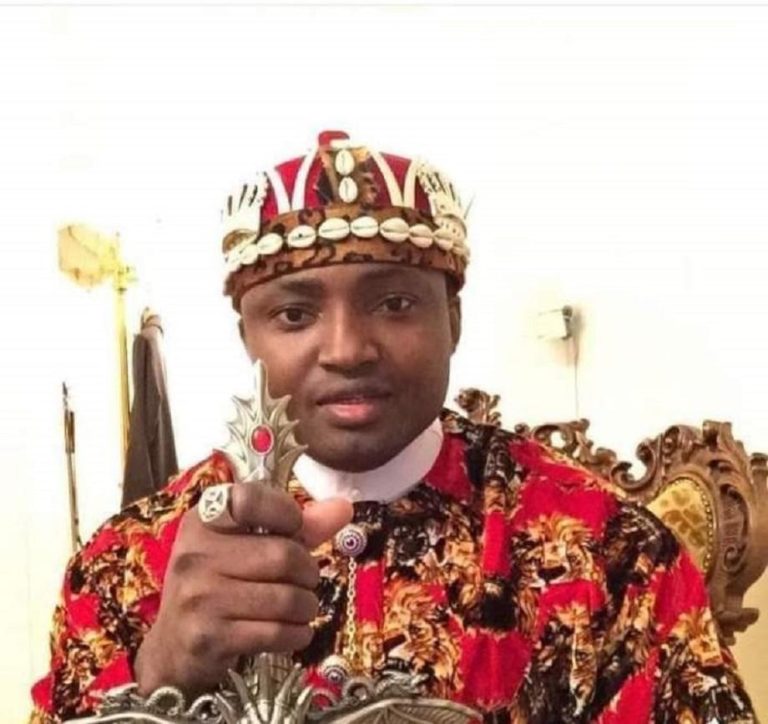
FINNISH authorities have detained Simon Ekpa, a pro-Biafra separatist agitator, alongside four others over suspected involvement in terrorism-related activities in Nigeria.
The Päijät-Häme District Court made the decision following a hearing in Lahti, Finland, where Ekpa was alleged to have incited crimes with terrorist intent, according to reports from Finland.
Yle reported that the Finnish National Bureau of Investigation (NBI) accused Ekpa of leveraging his leadership in a Nigerian separatist group to promote violent activities in southeastern Nigeria.
According to the NBI, these activities, which reportedly targeted civilians and government forces, were coordinated through social media from Finland.
Otto Hiltunen, detective chief inspector, revealed that the investigation focused on Ekpa and four other suspects, all of whom are accused of financing terrorism
According to him, all five suspects were apprehended earlier this week, adding that the accused are residents of Lahti and Helsinki, with one suspect having no registered address in Finland.
Meanwhile, this was not the first time the Finnish government had arrested Ekpa.
The pro-Biafra agitator was arrested in Finland days after the Nigerian government expressed concern over his inciting comments and the imposition of a sit-at-home order on residents of Nigeria’s South-East, which could disrupt the elections scheduled for February 25, 20223, in the region.
Ekpa was detained by authorities in Lahti in February 2023, and would later be released in the evening of that day.
Ekpa’s arrest also came weeks after an investigation revealed how Ekpa and his men raise funds for their operations under the Biafra Republic Government in Exile (BRGIE), through fundraising meetings held worldwide.
According to the report, the group collects funds to support their militia activities, while also seeking alternative revenue streams such as cryptocurrency launches, merchandise sales, extortion, and international lobbying, to expand their operations.
The ICIR reports that Ekpa, a faction leader of the pro-Biafra group known as IPOB Autopilots, has continuedto enforce the sit-at-home order in the southeastern part of the country, with what started as a peaceful exercise for the release of Nnamdi Kanu, leader of the proscribed Indigenous People of Biafra (IPOB) eventually became a bloody affair.
Residents of the South-East and visitors who decide to flout the order by stepping out for business, work, or personal reasons on Mondays risk losing their lives and property.
Several lives have been lost, and property destroyed at the hands of militias widely described as “unknown gunmen” who insist on enforcing the sit-at-home.
A report published by The ICIR in 2023 noted that micro businesses in the South-East states lost an average of N4.618 trillion ($10.495 billion) in one year to the sit-at-home order.
THE sacked vice-chancellor of Nnamdi Azikiwe University (UNIZIK), Awka, Bernard Ifeanyi Odoh, has faulted his disengagement by President Bola Tinubu, describing the decision as procedurally improper and influenced by wrong advice.
Speaking on AriseTV on November 21, Odoh argued that his appointment was legitimate and challenged the legality of his removal through ‘a press statement.’
Odoh, who was appointed vice-chancellor on October 29, 2024, dismissed claims that he was unqualified for the position, adding that his credentials and the appointment process adhered to the university’s statutes.
Odoh stated that he was qualified for the position, noting that three assessors evaluated him and that he became a professor on October 1, 2015.
“I applied for the position. I applied and was appointed. I’m not imposing myself on the institution. But the issue of not being a professor is all lies. People paid to remove my records from a university.”
The sacked vice-chancellor insisted that only the university’s governing council, “not a presidential press release,” could recommend his removal, adding that the Federal Ministry of Education acted prematurely.
“The minister jumped the gun. The court has not ruled on this matter. I cannot be removed through a press release…There was no panel of inquiry. I was not appointed through a press release. The visitor has not invited me to hear my side of the story.”
Tinubu, had in a statement on Wednesday, November 20, expressed concern over the council’s alleged disregard for the university’s governing laws in its selection process.
The president, consequently sacked Odoh as the vice chancellor, and the registrar, Rosemary Ifeoma Nwokike, alongside the school’s governing council.
The council, chaired by Greg Ozumba Mbadiwe, including members Hafiz Oladejo, Augustine Onyedebelu, Amioleran Osahon, Funsho Oyeneyin, a retired general, faced allegations of appointing an unqualified candidate without adhering to the university’s statutory requirements.
Odoh, however, dismissed the allegations as baseless, maintaining that his appointment followed due process and accusing those opposing him of playing the ethnic card.
“I’m from Ebonyi state. We are regarded as third class people. People feel I’m not qualified because I come from Ebonyi State,” he added.
Odoh also criticised the government’s decision to dissolve the council and remove key officials, warning of a looming crisis in the university.
“I am going to the university to ensure that activities and accreditation go on. No vice-chancellor, no registrar, no governing council?
“People have ganged up to remove me at all costs. The Federal Ministry of Education is introducing a crisis on campus. I am an alumnus of this university. It pains me that the university is being destroyed.
“Mr. President must have been ill-advised. He can remove me but only through the council. The governing council is being punished for following due process to appoint me. I don’t know the offence I have committed,” he added.
THE Nigerian Army (NA) has reopened the Umuahia-Mbaise Road, shut down after a military checkpoint in Ekenobizi came under attack last Wednesday, November 13.
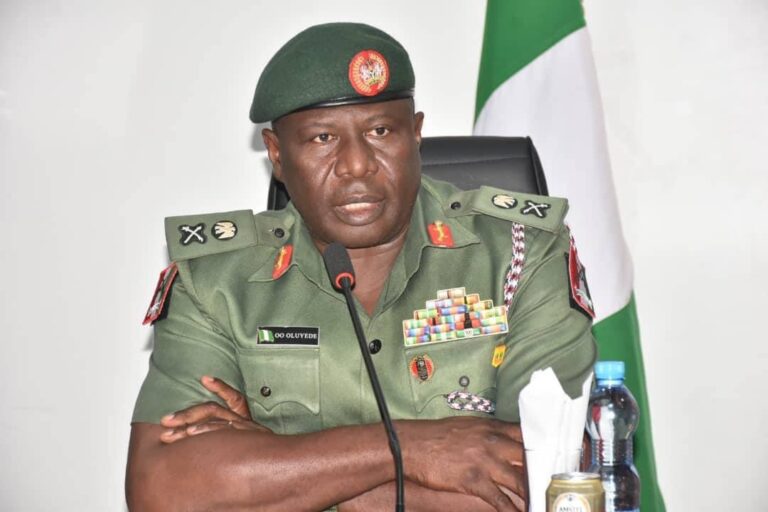
The road was reopened after a visit by general officer commanding (GOC) 82 Division, Nigerian Army Enugu, Hassan Dada, a major- general, and other senior military officers, including Olusola Diya, a brigadier general.
They met with MacDonald Ubah, special adviser to the Abia State Governor on security, and decided to move the military checkpoint from Ekenobizi to the Onuimo River, providing a clearer view and boosting security.
According to Ubah, the original military checkpoint location in a densely populated area hindered the military’s response to the attack.
He added that this prompted the relocation of the checkpoint.
Community leaders, including the traditional ruler of Ezeleke autonomous community, Eze Ibeakanma, cooperated with the military to facilitate the relocation, acknowledging the inconvenience associated with the road closure..
Ubah said local communities were supporting security efforts in the area and volunteering to clear the new checkpoint location near the Onuimo River and promised to provide valuable intelligence to security operatives to enhance safety.
Ubah also encouraged the public to continue backing the Nigerian Army and other security agencies in their fight against insecurity.
Commanding ifficer of the 145 Battalion in Umuahia, Martin Domkat, a major, and other senior military officers accompanied the GOC during the visit.
Two soldiers were killed in the attack that led to the road closure.
The incident had previously forced motorists to find alternative routes via Ekenobizi. With the road reopening, traffic is expected to return, easing movement in the area.
The incident occurred when gunmen attacked the Army checkpoint at Ekenobizi, a border community between Abia and Imo states in Umuopara, Umuahia South Local Government Area.
Sources said the attack occurred around 6:18 am.
The incident is reminiscent of the May 30, 2024, attack in Aba, where gunmen and militants killed five soldiers and six civilians.
THE Lagos State commissioner for Energy and Mineral Resources, Biodun Ogunleye, has met the leadership of Transmission Company of Nigeria ( TCN) in Abuja to explore more opportunities in the new Electricity Act.
The TCN confirmed to The ICIR on Wednesday, November 20, that the meeting followed the state government’s expectation of the Nigerian Electricity Regulatory Commission (NERC)’s order on the transfer of regulatory oversight of the electricity market in line with the Electricity Act.
The Electricity Act, 2023 (“the Act”) was signed into law by President Bola Ahmed Tinubu, on 6 June 2023. The Act was passed in light of the Federal Government’s initiatives to accelerate Nigeria’s energy transition process as well as consolidate the regulation of the Nigerian Electricity Supply Industry (NESI) for optimum functionality and effective service delivery.
Welcoming the delegation, led by the commissioner for energy and mineral resources, Biodun Ogunleye, TCN’s managing director/chief executive officer,. Sule Abdulaziz, an engineer, assured of TCN’s support as Lagos prepares to take up regulatory responsibilities under the new Electricity Act.
In his remarks, Ogunleye said the purpose of the visit was to seek TCN’s collaboration to improve power supply in the state as well as tap into the company’s huge resources.
THE ICIRreported how state governments could attract more investments into Nigeria’s power sector and improve access to electricity in their respective states with the 2023 Electricity Act.
The Act consolidates all legislations dealing with the electricity supply to provide an ideal institutional framework to guide the post-privatisation phase and encourage private sector investments in the sector.
The primary aim of the Act, as stated in its first section, is to create a comprehensive legal and institutional framework to guide the Nigerian electricity supply industry (NESI).
Nigeria has been having energy supply challenges, with about 86 million people unconnected to the national grid and lacking access to electricity.
The electricity sector has remained stagnant over time with the government still paying subsidy of N70 billion annually to keep the sector afloat, despite privatisation.
Already, Osun, Enugu, Lagos, Akwa Ibom, Rivers, Delta, and Kogi are among states have commenced the implementation of the Act.
The implementation ushers the respective states into a new era of decentralised electricity market regulation, devoid of the Federal Government’s monopoly.
THE Federation Account Allocation Committe (FAAC) has shared for the month of October , a total sum of N1.411 trillion, among the federal government, states and local government councils.
A statement issued by the office of the Accountant-General of the Federation (AGF) on Wednesday, November 20, said the revenue was shared at the November meeting of the Federal Accounts Allocation Committee (FAAC) held in Bauchi State, and chaired by the Accountant General of the Federation, Oluwatoyin Madein.
The statement was signed by the director of press and public relations in the office of the Accountant-General,Bawa Mokwa.
According to the statement, the November 2024 FAAC meeting was held after the 2024 National Council on Finance and Economic Development (NACOFED) hosted by the Bauchi State government.
The N1.411 trillion total distributable revenue comprised distributable statutory revenue of N206.319 billion, distributable Value Added Tax (VAT) revenue of N622.312 billion, Electronic Money Transfer Levy (EMTL) revenue of N17.111billion and exchange difference revenue of N566.000 billion.
The communique stated that a total gross revenue of N2.668 trillion was available in October 2024.
Total deduction for the cost of collection was N97.517 billion while total transfers, interventions and refunds were N1.159 trillion.
According to the communiqué, gross statutory revenue of N1.336 trillion was received for October 2024. This was higher than the sum of N1.043 trillion received in September 2024 by N293.009 billion.
Gross revenue of N668.291 billion was available from the Value Added Tax (VAT) in October 2024. This was higher than the N583.675 billion available in the month of September 2024 by N84.616 billion.
The communiqué stated that from the N1.411 trillion total distributable revenue, the federal government received a total sum of N433.021 billion and the state governments received a total sum of N490.696 billion.
The Local government councils received a total sum of N355.621 billion, and a total sum of N132.404 billion (13% of mineral revenue) was shared among the benefiting states as derivation revenue.
On the N206.319 billion distributable statutory revenue, the communiqué stated that the federal government received N77.562 billion and the state governments received N39.341 billion.
The local government councils received N30.330 billion and the sum of N59.086 billion (13 per cent of mineral revenue) was shared among the benefiting States as derivation revenue.
From the N622.312 billion distributable Value Added Tax (VAT) revenue, the federal government received N93.347 billion, the state governments received N311.156 billion and the local government councils received N217.809 billion.
A total sum of N2.567 billion was received by from the N17.111 billion Electronic Money Transfer Levy (EMTL). The state governments received N8.555 billion and the local government councils received N5.989 billion.
From the N566.000 billion exchange difference revenue, the communiqué stated that the federal government received N259.545 billion and the state governments received N131.644 billion.
The local government councils received N101.493 billion, while the sum of N73.318 billion (13% of mineral revenue) was shared among the benefiting states as derivation revenue.
In October 2024, oil and gas royalty, excise duty, value added tax (VAT), import duty, petroleum profit tax(PPT), and companies income tax (CIT) increased significantly while electronic money transfer Levy (EMTL) and CET levies decreased considerably.
It would be recalled that the Governor of the Central Bank of Nigeria CBN, Olayemi Cardoso, had earlier expressed worry over the negative impact of the disbursement on exchange rate stability with naira continuously depreciating against the dollar.
According to Cardoso, the apex bank had observed that the correlation between the FAAC allocation and liquidity in the banking system were causing demand pressure in the exchange rate market.
“The MPC noted the continued growth in money supply recognising the need to curtail excess liquidity in the system as well as address foreign exchange demand pressures.
“Furthermore, members observed a strong correlation between FAAC releases and liquidity levels in the banking system as well as it impacts on the exchange rates,” he said.
THE erosion and flood control project in Akwakuma, Imo State, awarded to Saicom Integrated Services Limited remains largely unfinished despite payments made. The incomplete project has worsened flooding, impacting economic activities and posing a threat to lives in the community.
Clement James stood in front of his shop, steering into the atmosphere when this reporter arrived at Akwakuma, one of the communities in Owerri North local government, Imo State this August.
The clouds were gathering. Soon, it began to drizzle and Clement thought of what would be the consequences of yet another flooding. For almost a decade now, he and other residents and business owners in the community have witnessed several flooding incidents which have left severe consequences in their wake – building collapses and submerged roads.
Whenever it rains in Akwakuma, a beehive of activities, road networks take weeks before they completely dry up due to the absence of well-constructed drainage systems. Economic activities are often affected.
Although there has not been any case of death, findings show that a resident almost lost his life three years ago after he was swept away by flooding. He was saved by other residents.
“We never pray it rains in Akwakuma,” James told TheInvestigator. “When it does, we remain indoors till the rain stops and try to be alert so as not to lose household items. The flood has swept away cars,” he added soberly.
Contract awarded, not executed
In 2022, in what looked like an answered prayer, a contract for erosion and flood control works at Akwakuma/Umudagu, one of the adjoining roads where heavy flooding occurs in the community was awarded to Saicom Integrated Services limited by the Anambra Imo River Basin Development Authority (AIRBDA) a parastatal under the Federal Ministry of Water Resources.
The project was attracted by Ikenna Elezieanya, who was a member of the representing Owerri Federal Constituency at the National Assembly at the time, but later lost his re-election bid. He is currently the Commissioner for Science and Technology in Imo State.
James and other business owners and residents of the community had hoped that the project, when completed, would help to tackle the perennial challenge of flooding which has caused them pain and tears.
According to data available on the GovSpend platform – which tracks and analyses federal government spending over time – a total of N15 million was paid to the contractor including N7.8 million (N7,837,506) on April 13, 2023, and N8.5 million (N8,555,150) on 26, Jun 2023, with payment code 0252037001.
Sadly, on a visit to the location, it was discovered that the only work done on the project was an incomplete drainage system. According to residents, the contractor left the site after he completed an already existing drainage on one end of the road and worked a bit on the second end of the road.
Where the drainage constructed by AIRBDA ended.Where the second drainage stopped.
“We have not seen him since then till date,” said Veronica Jonathan, who owns a provision store along the road. “One time, he told us that he was leaving because there was no material and funds to continue the project.”
Before the contractor finally came and did the drainage, sources say they had come severally and taken measurements of the road, leaving residents with high hopes of a construction, with proper drainage systems.
TheInvestigaor’s further show that the erosion project may have been subcontracted by the original contractor it was awarded to. While available data shows that Saicom Integrated Services Limited got the contract and received payment, the project signboard has Greycube Dynamics Limited as the contractor.
While available information on NG Check shows that the company was registered with the Corporate Affairs Commission (CAC) on November 20 2003, with Ibegbulem Samuel Ahamefula and Ibegbulem Rosemary Uzoma both serving as directors, its activity was unspecified. Further searches on the website of the CAC did not show any information about the company.
State Government unkept promise and worsening flooding
In the build-up to the Imo State governorship election in 2023, community residents told TheInvestigator that the current governor, Hope Uzodinma promised to reconstruct the major road linking Akwakuma to Okigwe and Enugu State.
However, after the election, Uzodinma failed to keep to his promise. What this reporter saw on a visit to the community was a poorly constructed and one-sided drainage.
James said that the contractor handling the state government project had told him at the time that Uzodimma, the governor, said there was no money and that the project would resume immediately after the election and when he returned to power.
“The drainage is the only thing that the contractor did,” James said. “To date, we are still hoping that they will return to the site to complete the project.”
Clement speaks on the poor drainage construction.
Worsening flooding affects businesses
With the major road left unattended and the AIRBDA projects abandoned, residents say the flooding situation is worsening. Now, the road has completely left its original position and continues to sink in whenever it rains, forcing business owners to construct staircases to enable customers to access their shops.
Shop owners who spoke to this reporter said that tippers and trucks now come to excavate sand from the Akwakuma/Umudagu road to make it motorable as cars often get stuck on the road.
Agnes Oluchi has severally considered changing location for her business. She owns a store along the Akwakuma-Umudagu road where she has run her events management and confectioneries venture since 2017.
“But the cost of relocating and finding a new store is out of pocket. Many people who can afford it have relocated, including families. Those of us left behind are suffering,” she said.
She has constructed staircases at least five times to allow her and customers access the shop, but they have all fallen because they usually cannot withstand pressure from the volume of water in the area. In February, she spent over N150,000 constructing another staircase, hoping it would not be destroyed again.
Buffers constructed by Agnes.
“I even pay indigenes for them to approve of the construction,” she stated.
Agnes used to sell beverages, but she stopped after her suppliers stopped delivering to her because of the state of the road. She says she has fixed her car several times after it developed a fault due to the state of the road.
She, however, said that apart from the contractor’s failure to complete the project, residents of Akwakuma were partly to blame because of their poor waste management culture.
“It is common to see residents dumping their refuse inside the drainage systems and so, whenever it rains, it becomes difficult for water to pass through them,” she revealed, maintaining that “We also need to learn how to manage our waste.”
Grace Joseph owns a provision store along the road. She says business is no longer booming as it used to due to the state of the road. According to her, customers often become discouraged from climbing her shop to get what they want.
“Rather than control erosion, Joseph and other residents of Akwakuma say the AIRBDA project is worsening it. A complete two-side drainage system would have helped to deal with the challenge because we are suffering,” she said.
Findings show that many car owners living in the community no longer drive them out, they jump on buses to get to their destination to avoid damaging it on the road. Motorcyclists who regularly ply the Akwakuma-Umudagu road said that its dilapidated state has more than doubled transport fair. Some of those who spoke to this reporter said that distances that used to be covered with N200 are now N300. They say it is worse when it rains as the road becomes impassable.
Contractor reacts as AIRBDA fails to respond To FOI request
When contacted for a response, an engineer with SaicomIntegrated Services Limited said that the one-sided drainage executed was what was contained in the bill of quantities and what available funds- that is the N15 million could afford.
The engineer didn’t disclose his name and designation but told this reporter that the project stalled after Elezieanya, who had attracted it lost his bid to return to the National Assembly, adding that there was no way to insert it as a constituency project again.
“We cannot do more than what is in the bill of quantities or available funds. AIRBDA would not have also released money if we did not do the work we were expected to do,” he revealed.
When asked why a different company executed the project instead of Saicom which got the contract, he said “What matters is that the job has been executed, it is still the same.”
TheInvestigator contacted Elezieanya, the facilitator, and he said that the project stalled because of the paucity of funds. He also confirmed that the N15 million paid for the project could only construct a small drainage system.
“I planned to attract more funding for the project if I had returned to the national assembly, now, because there is non-continuity, the project has been abandoned. “The new representative will be concerned about the development of some priority areas of his constituency,” Eleizeanya maintained.
He noted that he would not have used the whole allocation for his constituency to construct the Akwakuma road when other locations within his constituency also deserve development.
“There are a lot of projects that have not been completed due to paucity of funds,” he said, adding that the project would require huge investment.
This reporter sent an FOI request to Gerald O. Osuagwu, who is the Managing Director of AIRBDA on August 19, requesting specific details of the contract, including the contract execution period, contract value, the amount paid and the level of completion.
However, there was no response at the time of this publication. TheInvestigator also tried to reach the agency via the contact available on its website multiple times, but it failed to connect.
PRESIDENT Bola Tinubu has dissolved the governing council of Nnamdi Azikiwe University, Awka, Anambra State.
He has also sacked the school’s vice-chancellor, Bernard Ifeanyi Odoh, a professor, and the registrar, Rosemary Ifeoma Nwokike, over allegations of procedural breaches in their appointment processes.
The council, chaired by Greg Ozumba Mbadiwe, including members Hafiz Oladejo, Augustine Onyedebelu, Amioleran Osahon, Funsho Oyeneyin, a retired general, faced allegations of appointing an unqualified candidate without adhering to the university’s statutory requirements.
According to a statement by the special adviser to the President on information and strategy, on Wednesday, November 20, the sacking of the governing council and officials followed reports that the council illegally appointed an unqualified vice-chancellor without following due process.
Background
Recall that The ICIR reported the controversies that surrounded Odoh’s appointment as the vice chancellor and Rosemary as the registrar of the university.
Odoh was appointed on Tuesday, October 29, 2024, by the university’s governing council led by the pro-chancellor and chairman of the council, Greg Mbadiwe, during an interview with the candidates shortlisted for the position of vice-chancellor.
However, challenging the council’s move, the incorporated trustees of the Medical and Dental Consultants Association of NAUTH, Nnewi, along with Victor Modekwe, filed a lawsuit at the National Industrial Court of Nigeria (NICN), according to reports.
The litigants sought an interlocutory injunction to prevent the 1st and 4th defendants/respondents, along with their agents, assigns, servants, representatives, or anyone acting on their behalf, from proceeding with the vice-chancellor’s appointment process based on the publication from September 12, 2024, until the court hears and determines the case.
The Academic Staff Union of Universities (ASUU) at the institution also, on October 29, filed a lawsuit challenging the appointments of Odoh and Ifeoma Nwokike as vice-chancellor and registrar, respectively.
The claimants sought a perpetual injunction to prevent the duo from representing themselves as or carrying out the duties of the vice-chancellor and registrar of the university, among others.
Subsequently, a memo from the Federal Ministry of Education declared Odoh’s appointment as the institution’s vice-chancellor null and void.
In a letter dated November 1 and addressed to the pro-chancellor/chairman of the council, on behalf of the ministry’s permanent secretary, it was stated that no appointments would be made without reconciling with the aggrieved parties within the institution.
The letter, which also contained the annulment of the appointment of the university registrar described the process leading to her appointment as a “gross disregard for constituted authority.”
However, the embattled registrar insisted that the process that brought the new vice chancellor was valid and duly followed.
Tinubu sacks VC, registrar, dissolves council
Tinubu, in a statement on Wednesday, however, expressed concern over the council’s apparent disregard for the university’s governing laws in its selection process.
“After the controversial appointment, the Federal Government stepped in to address tensions between the university’s Senate and the governing council of the 33-year-old institution.
“The government expressed concern over the council’s apparent disregard for the university’s governing laws in its selection process,” the statement read.
Otukpo pro-chancellor fired
In a related development, Tinubu also approved the removal of Ohieku Muhammed Salami as pro-chancellor and chairman of the governing council of the Federal University of Health Sciences, Otukpo, Benue State.
According to the presidency, his removal followed his illegal actions, including suspending the vice-chancellor without following the established protocols.
“Despite the Federal Ministry of Education’s call for the unlawful suspension to be revoked, Engr. Salami refused to comply. Instead, he resorted to abusive and threatening behaviour towards the ministry’s directors, including the permanent secretary.
“The Federal Government reiterated that the primary responsibility of university councils is to ensure the smooth operation of university activities in accordance with the act establishing each university,” the presidency added.
THE Ebonyi State Police Command has confirmed the fatal shooting of a middle-aged bystander by a police officer during an altercation between police officers and a soldier at the Ugwuachara axis of the old Enugu-Ogoja Expressway in the South-East state.
The state police commissioner, Adaku Uche-Anya, said the incident occurred during a routine stop-and-search operation conducted by police officers along the axis.
The altercation began when a soldier riding a motorcycle approached the checkpoint and was signalled to stop by the officers, ultimately leading to the shooting.
Channels Television reported an eyewitness as saying the soldier refused to comply with the police stop-and-search and attempted confiscation of his bike sparked a confrontation with the officers.
Confirming the incident, the police commissioner stated, “He refused, and there was a scuffle. During the scuffle between them, the soldier was trying to disarm one of them, and the bullet went off and hit a bystander.
“It’s not as if they just opened fire on an innocent bystander; it’s just that during the scuffle, the bullet went off and hit a bystander.
“One person died during the process, and three others were injured, but they’re responding to treatment. We’ve confirmed that the purported soldier is actually a soldier; both the soldier and the policeman are in our custody and we’re investigating what happened.”
The special assistant to the Ebonyi State Governor on internal security in Ebonyi Local Government Area, Obinna Mbam, also confirmed the incident and assured that those responsible would face justice.
According to Mbam, the situation is now under control and normalcy has been restored to the area.
Clashes between soldiers and policemen resulting in fatalities are a recurring issue in Nigeria.
Recently, two people lost their lives following a violent confrontation between an Army officer and a police special constabulary at Agyaragu Market in the Obi Local Government Area of Nasarawa State.
According to the police spokesperson in the state, Ramhan Nansel, the altercation started with a reported motorcycle theft, prompting an investigation.
He said a suspect was apprehended by a police operative and a police special constabulary attached to the Jenkwe Division.
Nansel added that while en route to the police station, a soldier on leave from Borno State intervened, attempting to prevent the arrest, and the situation escalated as the soldier allegedly brought out a knife and stabbed the police special constabulary.