Home Blog Page 44

US-Iran planned talks under threat

IRAN has vowed it would not engage in renewed diplomatic negotiations with the United States anytime soon, following recent developments that characterise the two-week truce brokered between both nations.

Confrontations have been escalating after US forces disabled and boarded an Iranian-flagged cargo vessel bound for Bandar Abbas on April 19.

Tehran described the operation as “armed piracy” and signaled potential retaliation, while noting that the presence of civilians on board limited its immediate response options.

The ICIR reported that shipping sources reported renewed Iranian military restrictions and fresh insecurity in the Strait of Hormuz, just a day after indications that limited shipping movement had resumed.

Shipping industry sources revealed that vessels transiting the corridor received direct radio messages from Iran’s Navy, declaring the Strait closed again to commercial traffic.

It noted that no ships were officially blocked, but maritime operators described the situation as highly unstable.

Washington had aimed to relaunch negotiations in Islamabad ahead of the ceasefire’s expiration, but Iranian Foreign Ministry spokesman Esmaeil Baghaei accused Washington of acting in bad faith, arguing its conduct undermined claims of commitment to diplomacy, and reiterating that Tehran would stand firm on its established demands and rejects any attempt to impose deadlines or ultimatums when core national interests are involved.

Iranian officials maintained that key issues, particularly its missile programme and broader defensive capabilities remained non-negotiable.

The continued US maritime blockade has been at the centre of the tension, which Tehran views as fundamentally incompatible with any meaningful diplomatic process, suggesting that the blockade has eroded trust and undermined prospects for de-escalation.

Pakistan, acting as a principal intermediary, has attempted to revive talks, as the military chief Asim Munir reportedly conveyed to US president Donald Trump that the blockade was a primary obstacle.

Trump indicated openness to reconsideration, but no policy shift has been confirmed.

US enforcement of port restrictions has prompted intermittent Iranian countermeasures in the Strait of Hormuz, a vital corridor carrying roughly 20 per cent of global energy supplies. The escalation has quickly reverberated through markets, driving oil prices higher and eroding investor confidence amid concerns of sustained disruption.

Trump has continued issuing explicit warnings, including threats against Iranian infrastructure, reinforcing a pattern of coercive signaling, but Tehran has countered with deterrent messaging, indicating potential retaliation against energy infrastructure in Gulf states hosting US assets.

Despite extensive security preparations in Islamabad, uncertainty clouds the planned diplomatic engagement, while US officials initially indicated that JD Vance would lead the delegation alongside Steve Witkoff and Jared Kushner.

However, conflicting statements from Trump have cast doubt on the delegation’s final composition and commitment level.

On the Iranian side, parliamentary speaker Mohammad Baqer Qalibaf acknowledged incremental progress in prior discussions but underscored persistent gaps, particularly on nuclear policy and maritime security.

European allies remain wary, expressing concern that Washington may be pursuing a rapid, politically expedient agreement that lacks technical depth and long-term viability.

Now entering its eighth week, the conflict has evolved into a systemic shock to global energy markets, largely driven by restricted access through the Strait of Hormuz. The broader regional conflict spanning Iran, Israel, and Lebanon continues to exact a high human and economic toll, while reinforcing the risk of further escalation.

Zenith Bank faces criticism after N1.24trn loan write-off linked to repayment failures

By Odinaka Anudu

ONE of Nigeria’s biggest lenders, Zenith Bank, wrote off loans totalling N1.24 trillion in 2025 after it became obvious that the debtors would not pay back. As a result, the bank was forced to declare the loans delinquent and subsequently classified them as lost, the 2025 audited financial statement of the bank revealed.

Financial experts have criticised the bank for the write-off of the humongous amount, faulting the increase in write-offs by nearly 13 times to N1.24 trillion in 2025 from N96.5 billion reported in 2024.

“This is a pretty huge amount of money to write off,” said a Lagos-based financial expert, Lizzy Aigbe. “This shows significant non-performing loans,and can also put pressure on the bank’s capital adequacy. It also questions the bank’s risk management measures. However, I think this is a cumulative impairment write-off, similar to what First Bank did.”

A screenshot from the report.

She, however, pointed out that the bank may be trying to clear bad loans and have a cleaner balance sheet going forward.

First Holdco, the parent company of First Bank, wrote off N748.125 billion loan for the whole of 2025 and N459.206 billion for the last quarter of 2025. Like the case of Zenith Bank, this means that loans had been granted to entities who did not repay them.

Zenith Bank said it writes off a loan balance when the group’s credit department determines that the loan is ‘uncollectable’ and has been declared delinquent and subsequently classified as lost. This determination is made after considering information such as the continuous deterioration in the customer’s financial position, such that the customer can no longer pay the obligation, or that proceeds from the collateral will not be sufficient to pay back the entire exposure.

It noted that board approval is required for such write-off. For insider-related loan (loans by the bank to its own officers and directors), the Central Bank of Nigeria (CBN) approval is required.

The lender added that loans and debt securities are written off (either partially or in full) when there is no realistic prospect of recovery. This, according to Zenith Bank, is generally the case when the group determines that the borrower does not have assets or sources of income that could generate sufficient cash flows to repay the amounts subject to the write-off.

However, financial assets that are written off could still be subject to enforcement activities in order to comply with the group’s procedures for recovery of amounts due, Zenith Bank said.

“It is unhealthy for a bank to have this kind of write-off or expected credit loss,” said a former banker, Livinus Odegbami. “This is a reflection of how loans have been granted over the years. On the other hand, it may be that the bank is too much exposed to the oil and gas sector, or that loans were granted without due diligence.”

Impairment charges

The impairment numbers show how much Zenith Bank set aside to cover loans and other assets it expected might not be fully recoverable. In 2025, impairment charges on financial instruments rose to N742.19 billion, up from N657.00 billion in 2024, indicating that the bank became more conservative or faced higher credit risk during the year. This rise suggests more borrowers were either defaulting, delaying repayment, or were reassessed as higher risk, financial analysts noted.

On non-financial instruments, impairment charges were relatively small at N578 million in 2025, compared to N1.80 billion in 2024, showing that most of the pressure came from loan-related (financial) assets rather than other balance sheet items.

Bank’s revenue, profit jump

However, Zenith Bank reported a 6 per cent increase in revenue to N4.192 trillion in 2025 from N3.971 trillion in 2024. The lender’s profit before tax stood at N1.263 trillion.

However, it paid an income tax of N222.824 billion, lower than N293.956 billion reported in 2024, leaving it with a profit after tax of N1.041 trillion. Profit attributable to the equity holders of the parent was N1.039 trillion.

A Zenith Bank spokesperson did not respond to requests for comment.

This report is republished from the Economy Post.

Bandits attack Kwara community, ‘kill soldiers’, residents flee

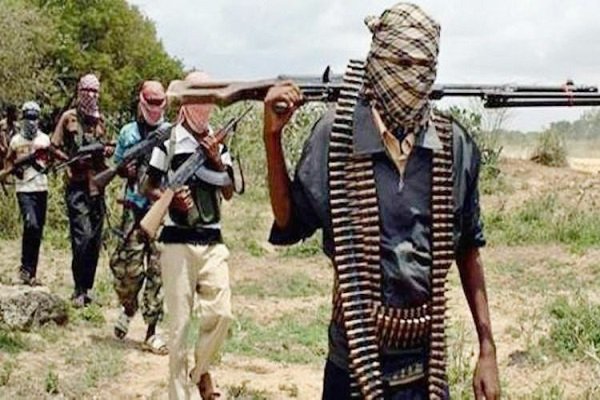
SUSPECTED bandits have reportedly attacked Kemanji community in Kaiama Local Government Area of Kwara State, leaving several people dead.

The attack was said to have occurred in the early hours of Monday, around 3:00 a.m., days after the community allegedly received a threat notice that heightened fear among residents.

Gunmen stormed the community, fired indiscriminately and forced villagers to flee.

Security operatives, including soldiers and local vigilantes, responded swiftly and engaged the attackers in a gun duel.

Punch reported that accounts from the scene showed that several soldiers were killed while repelling the attack, while a member of a local vigilante group was also shot.

“It’s very pathetic and disheartening. The entire community is in a state of panic, and many villagers have fled. No one can yet predict the number of victims involved,” Aliyu, a resident of Kaiama, said.

The attackers also reportedly made away with military patrol vehicles and motorcycles before fleeing.

“The terrorists came directly to the military camp and opened fire on soldiers,” a forest guard who fights alongside military operatives said”, adding, “They killed three soldiers and injured four others (three soldiers and a local vigilante).”

Another local vigilante source noted that some of the attackers were killed during the gun battle.

Although multiple armed groups operate in the area, the attack has been linked to Ansaru fighters, who have previously engaged security forces in the village in fierce gun battles.

The ICIR reports that Kwara State has faced a major security crisis for months.

In February, gunmen attacked villages in the Kaiama area, killing over 160 people in Woro and Nuku communities because the villagers refused to obey their orders.

There have been many kidnappings and raids in other parts of the state including Ifelodun LGA.

Attempts to get the reaction of the Kwara State Police Command to the incident failed as its spokesperson, Adetoun Ejire-Adeyemi, did not answer calls or reply to messages sent to him by The ICIR reporter.


Who governs the watchers? Nigeria’s independence problem is structural, not constitutional

0

By Odeh FRIDAY

THREE decades of constitutional amendments have rearranged the furniture of governance in Nigeria without unlocking the front door. The answer is simpler and more uncomfortable than another cycle of amendments. 

Nigeria boasts numerous ostensibly independent institutions. The Independent National Electoral Commission (INEC), the National Broadcasting Commission (NBC), the Economic and Financial Crimes Commission (EFCC), the Independent Corrupt Practices Commission (ICPC), public broadcasters such as the Nigerian Television Authority (NTA), and the Federal Radio Corporation of Nigeria (FRCN). Yet what is defined as independence in statute often amounts to independence at the executive’s pleasure. This is not a failure of law. It is a failure of design. 

The Nigerian President appoints the leadership and governing boards of most federal agencies, with the Senate confirming nominees through processes that rarely alter executive preference. The result is a system in which independence formally exists but operates within boundaries set by the appointing authority. Institutions are expected to act as checks while remaining structurally dependent on the very power they are meant to constrain, chaining the watchdog to the throne it guards. 

The NBC revoked licences of 52 television and radio stations weeks before the 2023 general election. None of its board members was chosen by a journalist, a civil society representative, or a citizen panel. When regulators are appointed through political channels, neutrality becomes difficult to demonstrate and even harder to sustain. 

The same structural tension defines electoral governance. The credibility of elections is fatally compromised when the President nominates the body that adjudicates whether the President’s party has won or lost. At that point, the issue is not competence. It is design. No amount of digital reform or administrative efficiency can fully resolve a system where the appointing authority and the subject of oversight are too closely aligned. 

Elsewhere, democracies have reached a different conclusion: independence cannot rely on restraint alone. It must be engineered. The Czech Republic offers a useful reference point, in which I had the opportunity to observe elements of this system firsthand as part of the 2025 Cool Czechia Programme, an initiative of the Czech Ministry of Foreign Affairs that convened young African leaders to engage with public institutions, media organisations, and governance actors. 

Visits to Czech Television and Czech Radio made one thing clear: independence is not a slogan; it is architecture. In the Czech model, candidates for public media councils are nominated not by the executive but by a broad range of civil society actors, including universities, cultural bodies, professional associations, labour unions, and civic organisations. Parliament then elects members from this pool. 

The state does not own the entry point to governance. Members serve fixed six-year terms, with one-third rotated every two years. Institutional memory survives political change. Council members are restricted from holding political office. Their mandate includes appointing leadership, approving budgets, and safeguarding editorial independence. 

The system does not remove politics. It disperses it, making it contestable rather than concentrated. Nigeria’s system does the opposite. 

The institutions that must be reformed

Media and broadcasting institutions are the clearest starting point. NTA, FRCN, Voice of Nigeria, and NBC cannot claim editorial or regulatory independence while their governing structures remain tied to executive appointment. Their boards should be constituted through nominations from journalism associations, civil society coalitions, academic institutions, and professional bodies, with transparent legislative confirmation. This should not be symbolic consultation but real selection power. 

Electoral governance sits at the centre of democratic legitimacy. INEC cannot continuously operate under an appointment pipeline controlled by the same political system it is meant to regulate. In 2022, late President Buhari nominated a member of his media team as a national commissioner of INEC. It is difficult to argue for neutrality. A multi-stakeholder nomination system is not an innovation; it is a correction. 

Anti-corruption institutions face the same design tension. The EFCC and the ICPC investigate politically exposed persons while remaining structurally dependent on political appointment systems. That does not invalidate their work, but it weakens public confidence in their independence. 

Even civic institutions such as the National Orientation Agency (NOA) reflect the same pattern: centralised appointment, decentralised accountability. The point is not that these institutions are non-functional. It is that their design assumes political neutrality will emerge from political control. That assumption no longer holds. 

Constitutional amendments keep missing the point

Nigeria’s constitutional amendment cycles have been frequent, resource-intensive, and politically heavy. Meanwhile, they rarely address the core issue: who controls institutional entry points. The House of Representatives of the 10th National Assembly has approved over 80 constitutional amendment bills while considering more than 200 proposals, as the Senate runs a parallel process through its Constitution Review Committee. Yet, the core structural flaw, the executive monopoly on appointments to nominally independent institutions, has not been the centrepiece of any major reform package. This omission is not incidental. It is the wound that all other amendments fail to close. 

Most reforms instead focus on administrative adjustments, eligibility rules, or procedural updates. Institutions may be renamed, timelines adjusted, or oversight rebalanced on paper, but the architecture of control remains intact. This is why reform in Nigeria often feels like motion without transformation. The system changes its language without changing its logic. 

In the 11th National Assembly, Nigeria does not need another amendment cycle. It needs legislation that takes board appointments out of the presidency’s gift and returns them to the public that funds these institutions. 

Many of the changes required do not need constitutional revision to begin. They can be implemented through enabling legislation that redefines nomination processes, strengthens tenure security, and introduces staggered leadership cycles for independent institutions. Constitutional change may eventually be necessary to entrench these reforms. But waiting for it has already become a familiar form of delay. 

The politics of reform: 2027 elections and institutional memory loss

As Nigeria approaches the 2027 Nigerian general elections, political parties will again present manifestos promising reform. The language will be familiar: restructuring, accountability, efficiency, renewal. The unresolved implementation of the Oronsaye Report by President Tinubu, especially its recommendations on merging and scrapping redundant agencies, is a reminder that it is easier to announce than to execute. It shows the lack of sustained political incentives to implement reform blueprints. 

Institutional reform often survives only until it begins to reduce control. At that point, it becomes negotiable. That is why the timing matters, not because reform is new, but because its target has become clearer. The question is no longer whether institutions should be independent. It is whether those who benefit from current appointment structures are willing to redesign them. 

The choice Nigeria keeps delaying

The question is straightforward: Should institutions that regulate speech, oversee elections, and investigate corruption be governed by the same authority they are meant to constrain, or by structures that distribute power beyond the executive? What is at stake is not the creation of more institutions or better laws, but a redesign of how power is appointed, insulated, and held to account in practice. 

Nigeria has answered that question for decades. The result is something more enduring: a permanent tension between formal independence and practical dependence. Changing this requires more than the language of reform. It requires a willingness to confront how power is currently distributed. 

Independence is often described as a principle. In practice, it is a design choice. And design choices, unlike political promises, tend to outlast the people who make them. 

 Odeh Friday is the Country Director, Accountability Lab Nigeria 

WSCIJ seeks pitches for investigative stories

THE Wole Soyinka Centre for Investigative Journalism (WSCIJ) is inviting applications from local investigative journalists for story support under the Collaborative Media Engagement for Development Inclusivity and Accountability (CMEDIA) project.

This call opened on April 16, 2026, and will close on April 2026. CMEDIA seeks to strengthen accountability journalism at the local level by supporting high-quality investigative stories that interrogate governance, amplify underreported voices, and drive measurable change.

Through this call, selected journalists will receive support to produce in-depth, evidence-based reports that uncover systemic issues and promote transparency and accountability.

Applicants are expected to propose investigative story projects that (i) address pressing local issues, including governance, service delivery, human rights, public spending, environment, health, education, and social justice.

(ii) Interrogate national policies, decisions, or trends through a local lens, demonstrating how broader systemic issues affect specific communities or populations.

(iii) Amplify affected communities and underreported voices, ensuring those most impacted are meaningfully represented.

(iv) Show clear potential for accountability outcomes, such as exposing wrongdoing, highlighting implementation gaps, or prompting institutional or community-level responses.

(v) Are evidence-driven and feasible, with identifiable sources, data points, or access pathways within the programme timeline.

(vi) Demonstrate originality and relevance, offering depth, context, and fresh insight into recurring or emerging issues.

(vii) Include potential for follow-up reporting and impact tracking beyond initial publication.

The deadline for applications is April 30, 2026. Interested applicants should apply here.

FG: No ‘hidden spending’, World Bank report misinterpreted

0

THE Federal Ministry of Finance has dismissed claims that Nigeria is engaging in “hidden spending” or diverting federation revenue, describing such reports as a misrepresentation of the latest Nigeria Development Update by the World Bank.

In a press statement issued on Sunday, April 19, the Minister of State for Finance, Taiwo Oyedele, said recent media commentaries misunderstood key aspects of the report, particularly deductions made by the Federation Account Allocation Committee (FAAC).

“The misreporting in question incorrectly characterises Federation Account Allocation Committee (FAAC) deductions as “waste” or missing funds. This is incorrect,” Oyedele said.

The ICIR reports that the ministry’s clarification follows public debate triggered by the latest Nigeria Development Update released by the World Bank.

The report examines Nigeria’s fiscal position, revenue flows, and macroeconomic outlook, highlighting concerns around deductions from the federation account while also noting ongoing reforms to improve transparency and efficiency.

Some analysts interpretations of the report suggest that a significant share of FAAC revenues was being diverted or not transparently accounted for, sparking criticism from civil society groups.

Their arguments focused on the scale of deductions and raised questions about fiscal transparency, prompting reactions from stakeholders and now the federal government.

The ministry maintained that FAAC deductions are legitimate fiscal transactions and not evidence of waste or missing funds. It explained that the deductions cover statutory transfers, savings and investments, security-related expenditures, cost-of-collection charges, refunds to Ministries, Departments and Agencies (MDAs), and transfers benefiting state and local governments.

“It is important to emphasise that refunds and transfers to states and other tiers of government are not leakages. They represent legitimate fiscal flows, including repayments of obligations and statutorily backed allocations,” the minister said.

Oyedele also accused some analysts of selectively using outdated data while ignoring ongoing reforms highlighted in the World Bank report, pointing to new public financial management measures introduced in early 2026.

“Some commentaries selectively relied on past data while ignoring the forward-looking analysis and ongoing public financial management reforms highlighted in the report. The World Bank explicitly notes that reforms implemented in early 2026, including the recently signed Executive Order to safeguard remittance of petroleum revenues, are already addressing concerns around deductions, and are expected to improve transparency while increasing revenues available to all tiers of government by about 0.4 per cent of GDP annually,” he added.

Highlighting broader findings from the report, the minister said Nigeria’s economic outlook is improving, with growth becoming more diversified across sectors and inflation gradually easing due to policy interventions.

“The broader message of the World Bank report is positive and forward-looking: Economic growth is becoming more broad-based across sectors. Inflation, while still elevated, is declining due to deliberate policy actions. Nigeria’s external position has strengthened significantly, with improved reserves and a current account surplus,” Oyedele said.

Contrary to claims of fiscal distress, he stressed that the World Bank report does not suggest a collapse of Nigeria’s fiscal system but instead acknowledges that ongoing reforms are yielding results.

“The World Bank does not conclude that Nigeria’s fiscal system is collapsing or that reforms have failed. Rather, it states that reforms are working, and they must be sustained and deepened to translate macroeconomic gains into inclusive growth,” he said.

Oyedele reaffirmed the commitment of the Federal Government to fiscal transparency, improved revenue mobilisation, and efficient public spending, as it urged media organisations and stakeholders to avoid “twisted interpretations” of fiscal data that could undermine public confidence and reform efforts.

NBC directive: SERAP threatens lawsuit as Amnesty, Atiku kick

0

THE Socio-Economic Rights and Accountability Project (SERAP) has called on President Bola Tinubu to instruct the National Broadcasting Commission (NBC) to withdraw its recent directive warning broadcast stations against bias, bullying, and breaches of the broadcast code.                                                        The organisation gave the government a 48-hour ultimatum to withdraw the directive, warning that it would pursue legal action if there is no response.

This move follows a formal notice issued by the NBC on April 17, where the regulator warned that anchors expressing personal opinions or intimidating guests would face sanctions as the country prepares for the 2027 general elections.

The ICIR reported that the commission categorised such actions as Class B breaches and emphasised that editorial responsibility remains strictly with the broadcaster.

In a letter dated April 18, 2026, and signed by its Deputy Director, Kolawole Oluwadare, the organisation urged the President to direct the Minister of Information, Mohammed Idris, and the NBC to withdraw the notice.

SERAP described the NBC’s order as an unlawful attempt to silence independent media and restrict freedom of expression.

“The NBC’s notice represents a dangerous attempt to impose prior censorship on the media and suppress legitimate journalistic expression.”

SERAP maintained that the commission’s threat of sanctions over personal opinions undermines the role of the media in a democratic society. The organisation argued that the Nigerian Constitution and international human rights law protect both the absolute right to hold opinions and the qualified right to express ideas of all kinds.

“The Nigerian Constitution and international human rights law protect both the absolute right to hold opinions and the qualified right to express ideas of all kinds.”

“We would be grateful if the recommended measures are taken within 48 hours. If we have not heard from your government and the NBC by then, SERAP shall take all appropriate legal actions to compel compliance,”

It also criticised Section 1.10.3 of the Broadcasting Code, which the NBC cited to restrict presenters from expressing personal views, and urged the NBC to amend sections of the Code to align with constitutional and international human rights standards.

“This amounts to prior restraint that impermissibly excludes commentary, analysis, and value judgments, the core of journalism and democratic discourse,” SERAP added.

Although the NBC’s initial warning emphasised neutrality and the prevention of hate speech, SERAP argued that the threat of sanctions for broadly defined conduct could create a “chilling effect” on journalists and broadcasters.

Amnesty International also condemned the commission’s directive, arguing that the move appears designed to pressure media houses into self-censorship, which poses a significant threat to press freedom and democratic accountability.

The organisation highlighted that the independence of editorial content is a cornerstone of a functional society, allowing the public to engage in the free exchange of ideas.

Isa Sanusi, the Executive Director of Amnesty International Nigeria, noted that the country’s broadcast media should enable people to

“freely seek, debate, receive and impart information and ideas as envisaged by the African Charter on Human and Peoples’ Rights and the International Covenant on Civil and Political Rights.”

He urged the government to end the misuse of regulatory powers to suppress independent journalism.

Sanusi stated that “the Nigerian authorities must stop using the NBC in an unrelenting quest to silence journalists and media organisations that are crucial to ensuring an independent and diverse media space that fulfills people’s right to information.”

The group further maintained that the recent directive is both authoritarian and unconstitutional, encouraging broadcasters across the country to not waver.

Similarly, former Vice President Atiku Abubakar described the NBC’s advisory as “yet another troubling attempt to muzzle the media and shrink the space for free expression in Nigeria.”

He expressed concern that the regulator frequently resorts to heavy-handed directives as elections approach, suggesting that such actions do more to silence dissent than to uphold ethical journalism.

Atiku emphasised that ethical standards should not be treated as seasonal tools to be weaponised during campaigns, but rather as constant obligations. He warned that the timing of these regulations signals a government more focused on controlling narratives than on permitting a transparent electoral process, affirming his support for the media platforms.


JAMB apologises for delay in UTME result release, warns against result fasification

3

THE Joint Admissions and Matriculation Board (JAMB) has issued an apology to candidates following a delay in the release of results for those who sat for the Unified Tertiary Matriculation Examination (UTME) on Friday, April 17, 2026.

The board had previously indicated that the second batch of the 2026 results would be available by midnight on Saturday. However, the failure to meet this timeline caused concern among candidates and parents.

In a statement released on Sunday, the Board’s spokesperson, Fabian Benjamin, attributed the delay to the official engagement of the Board’s chief executive.

“We sincerely apologise for the delay in releasing the results for Friday April 17, which is the second batch in the series as earlier promised. Our Chief Executive was unavailable due to an important engagement but would be in the office today, and we assure you that the results will be released later in the day,  before nightfall,” the statement reads.

The board further expressed regret for the anxiety caused to candidates who stayed up expecting their scores.

The delay affects only the second batch of the series. JAMB confirmed that the first batch, consisting of 632,788 results for candidates who wrote the examination on Thursday, April 16, has already been processed and released.

Candidates from the first batch have been checking their results via SMS, as the board noted that result slips are not yet available for printing at this stage.

JAMB advised candidates to check their results by sending “UTMERESULT” as an SMS to 55019 or 66019 using the phone number linked to their registration.

The board also issued a stern warning against the manipulation of result messages. It revealed that security agencies are already taking action against individuals attempting to forge scores.

“Currently, two candidates and one parent are in custody for engaging in result falsification using AI and other electronic means. Any candidate found culpable will face the full consequences of the law,”

The 2026 UTME is currently ongoing nationwide. JAMB assured all stakeholders that the examination process is being closely monitored and that subsequent results will be released in batches as they are cleared.

FCT teachers begin indefinite strike Monday over unmet demands

0

PRIMARY and secondary school teachers in the Federal Capital Territory (FCT) have been directed to commence an indefinite strike from Monday, following unresolved welfare issues and delays in implementing agreed reforms.

The directive was issued by the State Wing Executive Council (SWEC) of the Nigeria Union of Teachers (NUT), FCT chapter, jointly signed by Chairman Abdullahi Shafa, Secretary Margaret Jethro, and Publicity Secretary Ibukun Adekeye. After an emergency meeting held in Gwagwalada, Abuja, on Friday, the union instructed all teachers to comply fully with the strike and await further directives.

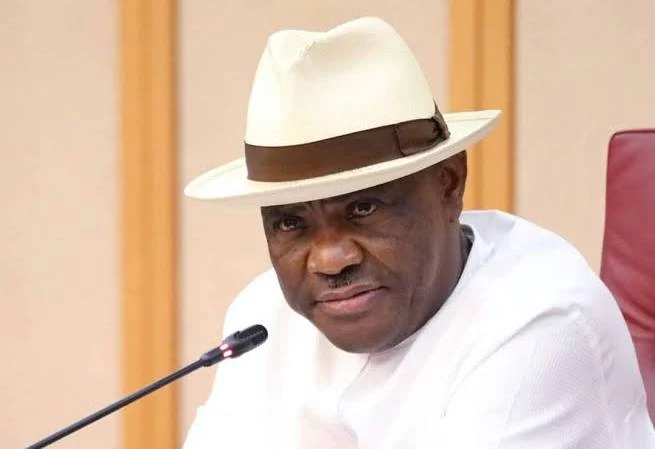
The union said the decision followed the expiration of a seven-day ultimatum issued to the FCT Minister, Nyesom Wike, over the non-implementation of key agreements affecting teachers’ welfare.

While acknowledging the minister’s intervention in approving the N70,000 minimum wage and settling nine months’ salary arrears, the union expressed concern over the government’s failure to act on the report of a committee set up in July 2025.

“The Minister constituted a committee on July 7, 2025 with a mandate to, within two weeks, harmonise all outstanding entitlements of primary school teachers. The committee was also directed to make appropriate recommendations that would lead to a permanent solution to the frequent industrial disputes involving FCT primary school teachers,” the statement read.

According to the union, the committee was mandated to harmonise outstanding entitlements and propose lasting solutions to recurring disputes involving FCT primary school teachers. Although the panel submitted its report in August 2025, its recommendations have yet to be made public or implemented.

“The committee concluded its assignment and submitted its report in August 2025, however, the report is yet to be made public,” it added.

The union said it had demanded that the Wike-led FCT Administration, within the seven-day ultimatum, release and begin implementation of the report addressing outstanding entitlements of primary school teachers.

It also called for the removal of the “vacancies” condition attached to the promotion of classroom teachers, and a comprehensive review of the 2024 promotion exercise conducted by the FCT Civil Service Commission to ensure eligible teachers are promoted without hindrance.

The union expressed concern that despite the expiration of the initial seven-day ultimatum on March 19, and an additional 28-day grace period granted to the authorities, there has been no concrete response to the issues raised.

The NUT said the prolonged delay, coupled with the government’s silence on teachers’ outstanding demands amid worsening economic conditions, left it with no option but to resume strike action, adding that teachers will remain off duty until all pending issues are addressed.

“After exhaustive deliberations on the industrial issues and the silence on the legitimate demands of teachers’ welfare, the Council resolved that all public primary and secondary school teachers in the FCT shall, with effect from Monday, proceed on an indefinite strike until our demands are met,” the union said.

Parents were also advised to keep their children at home until further notice, as schools will remain shut during the industrial action.