Home Blog Page 455

AMCOW executive secretary in the eye of the storm over ‘misconduct’ allegations

THE executive secretary of the African Ministers Council on Water (AMCOW), Rashid Mbaziira, is battling to save his name from a barrage of allegations of misconduct levelled against him before the council’s authorities.

Mbaziira, who leads the organisation in Nigeria’s capital, Abuja, hails from Uganda. He was appointed in 2021, and his tenure ends on November 8, 2025. He took over from Canisius Kanangire, a Rwandan.

His tenure can be renewed for another four years, at the recommendation of the ministers representing member states.

The ICIR reports that AMCOW, supported by the Africa Union, rotates its leadership among member states. The incumbent president, Hani Sewilam – a minister of water resources and irrigation – is from Egypt.

Workers at the AMCOW headquarters, especially senior officials, are recruited from member states. But petitioners have claimed Mbaziira ignored this arrangement and employed only his cronies while sacking some Nigerians and nationals of other countries working at the institution.

Mbaziira has, however, denied all the allegations.

According to aggrieved staff his tenure has been dogged by high handedness, profligacy, staff intimidation and bullying, favouritism, disregard for regulations, and wilful dismissal of staff.  

The ICIR obtained two petitions against Mbaziira. One was written by “concerned staff of AMCOW”, while the other was from Moshood Tijani, a professor and immediate past programme lead on groundwater at the AMCOW secretariat.

In the petition by concerned staff, addressed to AMCOW president (Hani Sewilam) and other leaders of the organisation, Mbaziira was accused of committing several infractions, including making AMCOW have a strained relationship with its strategic partners; un-procedural termination of staff contract;  and questionable hiring of staff, bullying and intimidation.

Others are paralysing the oversight function of management and governance structures, acts of insubordination to the office of the AMCOW president, mismanagement of financial resources, and other acts calling into question integrity and professionalism.

About AMCOW

The AMCOW was formed in 2002, primarily to promote cooperation, security, social and economic development, and poverty eradication among member states through effective management of the continent’s water resources and provision of water supply services. It is supported by the Africa Union (AU).

In 2008, at the 11th ordinary session of the African Union (AU) Assembly in Sharm el-Sheikh, heads of state and government of the AU agreed on commitments to accelerate the achievement of water and sanitation goals in Africa and mandated AMCOW to develop and follow up an implementation strategy for these commitments.

Among others, AMCOW has been accorded the status of a specialised committee for water and sanitation in the AU.

Mbaziira denies allegations

After receiving a query from the AMCOW leadership on the accusations, Mbaziira, through a letter he addressed to the AMCOW president, Sewilam,  on April 28, 2024, denied all allegations.

He said all claims against him were false, and said he had exceeded the target set for him by AMCOW and had improved on relationship with funders and other partners.

Quoting several AMCOW laws, Mbaziira detailed how all his actions aligned with the organisation’s guidelines and staff regulations and rules.

He said the AMCOW authorities did not grant him access to the petitions to enable him provide an appropriate response. 

“The pertinent provisions of the AMCOW Staff Regulations and Rules (SRR) stipulate that I should have access to ‘all relevant documents. What I have instead received are interpretations of the contents of the petitions, presented as annexures 1a and 1b to your letter.

“This leaves me considerably handicapped in a way that I am confident your Excellency did not intend. This approach means I respond, not to the contents of the petitions but to interpretations of those contents.

“Given that interpretations vary, from one person to another, in terms of fairness and due process, the approach does seem sub-optimal. Nonetheless, I take all feedback seriously. I have provided detailed explanations, together with the means of verification to refute the allegations. At the same time, I acknowledge that a thorough response requires a full understanding of the specific claims made against me.

“Therefore, to ensure that any actions relating to this matter address legitimate concerns, I kindly request further details regarding the nature and specifics of the allegations. Of vital importance is the need to avail information substantiating the claims.”

Mbaziira, proceeded to make a 52-page response to the petitions, citing several AMCOW laws and regulations backing his claims.

He also attached supporting evidence to each response he provided.

Mbaziira used clauses such as “allegations having no basis”, “distortion of facts”, “claims rest merely on speculation”, “totally unfounded”, “petition lacks reasonable basis”, “the assertion is false,” allegation is unfounded and has no basis”, and allegation “based solely on hearsay,” among others, to refute the claims.

The ICIR reports that when confronted with Mbaziira’s claims of lack of evidence in their petitions, the petitioners said they attached evidence to their claims. The ICIR saw the annexures attached but could not not independently verify if they were evidence of the claims.

The petitioners also provided some documents they claimed were evidence of their petitions to The ICIR. However, this organisation could not defend their validity.

AMCOW orders probe

Despite Mbaziira’s response, at the 5th extraordinary meeting of the executive committee of the governing council of AMCOW, held virtually on May 7 2024, the  governing council described the accusations as “very delicate and unprecedented.”

It constituted a committee comprising its Technical Advisory Committee (TAC) members to probe the petitions, to look at the following:

  • Identify and procure an international independent consultant and independent auditor to carry out necessary financial and administrative audits related to the petitions and documents submitted against the AMCOW executive secretary. Hence after, submit a report to the fact-finding committee.
  • Look into all AMCOW’s documents and rules of procedures to determine the processes that could be applied in this situation.
  • Review the report submitted by the recruited international independent consultant and independent auditor and all related documents and may discuss the audit for further clarifications.
  • Submit a comprehensive report with recommended procedures to an extraordinary council meeting that will be held to review the comprehensive report and take a final decision on the petition. 

Tijani, a professor and immediate past programme lead on groundwater at the AMCOW Secretariat, claimed Mbaziira sacked him.  He said his sack was communicated to him via mail, which he shared with The ICIR as evidence.

The ICIR reports that in his petition, Tijani said Mbaziira lied about his “false narratives about non-existence and/or inactive groundwater programme at the AMCOW Secretariat.”

He added, “Such false statements are clear deceit to cover up his hidden agenda of refusing to renew my contract despite that I had attracted funding to sustain and enhance the groundwater programme under a GEF-supported project, in conjunction with IWMI.”

Mbaziira fails to respond to ICIR’s queries

The ICIR reached out to Mbaziira through his Nigerian, and Ugandan phone lines and email address but he did not respond to any of the messages sent to him. 

Similarly, 10 members of the AMCOW’s Technical Advisory Committee (TAC) contacted by The ICIR failed to respond to enquiries on the state of the probe into the allegations against the executive secretary.

Officials contacted include Sam Cheptoris, minister of water and environment, Uganda; Ms. Tahani Moustafa Sileet, ministry of water resources and irrigation, Arab Republic of Egypt; Ms. Ndiyakupi Nghituwamata, Executive Director, ministry of agriculture, water and land reform, Namibia, Ms Lindiwe Lusenga, deputy director general department of water and sanitation, South Africa; Kolawolé Saïd, directeur general de l’Eau (DGEau) Ministère de l’Energie, de l’Eau et des Mines (MEEM), Benin Republic;

Others are M. Harsen Nyambe, director of sustainable environment and blue economy-SEBE-African Union Commission, Mr. Sylvain Guebanda, chargé de mission en matière de l’Hydraulique, ministère du développement de l’Energie et des ressources hydrauliques, Central Africa Republic; Armel Alouna, Directeur Général de l’Hydraulique Ministere de l’ Energie et de l’Hydraulique, Congo; Hlaimi Aissa, director water resources, Tunisia; and M. Yusupha Bojang, AMCOW focal point at the ministry of water resource, The Gambia.

None of the TAC members responded to enquiries seeking the status of the investigation.

What petitioners told The ICIR

Some of the petitioners told The ICIR that the investigation has faced significant challenges, primarily influenced by regional politics and efforts to obstruct the process.

According to the petitioners, who wouldn’t want their identities revealed for fear of victimisation, when the decision to proceed with the investigation was made, Mbaziira enlisted Uganda’s Minister of Water and Environment, Hon. Sam Cheptoris, despite the fact that Cheptoris is not part of the current EXCO.

They said his presence was widely seen as an attempt to halt the investigation, positioning the Eastern African bloc in defence of Mbaziira, who they believe serves their regional interests rather than the broader mandate of AMCOW.

“This move was met with disapproval from many stakeholders, as it represented a conflict of interest. Staff members felt increasingly marginalised by the political machinations. While efforts to completely stop the investigation were unsuccessful, the insistence that Mbaziira should not be suspended or asked to step aside during the investigation process has caused further division,” they said.

The petitioners expressed concerns over the future of AMCOW, claiming that some member states were advocating for Mbaziira to step aside to allow the investigation to proceed without interference.

They claimed further that with donor confidence waning and internal divisions deepening, the future of AMCOW hangs in the balance.

Senate adopts motion compelling governors to embrace local government autonomy

0

THE Nigerian Senate has adopted a motion to compel state governors to comply with a recent Supreme Court ruling which granted full financial autonomy to local government councils.

During its plenary session on Wednesday, October 9, the Senate urged all states and local governments to fully implement the Supreme Court’s July 2024 ruling.

The motion was sponsored by the Labour Party (LP) senator for Anambra North Senatorial District, Tony Nwoye, who emphasised the need for adherence to the rule of law to foster democratic principles at the local government level.

Nwoye said his motion had the support of nine other senators who co-sponsored it. 

He highlighted that certain state governments were attempting to undermine the Supreme Court judgment by passing conflicting laws through their respective state Houses of Assembly. 

The lawmaker pointed out that despite the Supreme Court’s clear ruling, several governors were already leveraging their legislative bodies to create laws that would require local government councils in their states to deposit funds into the state/local government joint account—a practice explicitly prohibited by the Supreme Court’s decision.

The motion was seconded by Osita Izunaso (APC Imo West).

The ICIR reported that the apex court’s ruling restored financial and administrative independence to the nation’s 774 local government areas (LGAs) and also compelled state governments to hold elections.

This marked a departure from the previously pervasive practice of appointing caretaker committees who were mainly the governors’ stooges and tools for squirrelling public funds. 

Senate’s Resolutions 

Meanwhile, following a mild drama in the Senate due to the motion raised by Nwoye, the Nigerian Senate resolved to call on the Nigerian governors to respect the judgment of the Supreme Court on the disbursement of funds to all the local governments in Nigeria.

The Senate resolution read, “That all states and local governments should fully comply with the recent Supreme Court judgment on the disbursement and utilisation of funds accruing to all local governments in Nigeria.

“That the Senate ensures alterations to relevant provisions of the Constitution to provide for the full autonomy of the local governments in Nigeria.”

Addressing the plenary after the senators unanimously approved the voice vote, the Senate President, Godswill Akpabio, declared that all states and tiers of government in the federation must immediately comply with recent Supreme Court rulings, particularly those related to local government accounts. 

He stressed that local government funds should be directed straight to the local government administrations for the betterment of Nigerians.

Akpabio said, “In other words, the Nigerian Senate stands strongly behind the Supreme Court’s position on its efforts, through judicial pronouncement, to sanitise the administration of local governments in the country and stop further abuse of local government councils…

“In addition to that, we have looked at the motion (as earlier presented by Nwoye), and we agreed that some of the prayers in the motion are such that could conflict with existing regulations, including the constitution.

“We believe strongly that if there is any legacy that this administration will leave behind, including the 10th Senate, it is the legacy of sanitising the local governments.”


FG finalises zero VAT policy for pharmaceutical products amid soaring drug prices

0

THE Ministry of Health and Social Welfare has announced the completion of an executive order to eliminate value-added tax (VAT) on pharmaceutical products and medical devices. 

This policy, according to a statement by the ministry, on Wednesday, October 9, is now set for implementation, is expected to reduce the cost of essential drugs and medical supplies in a country struggling with skyrocketing medication prices.

The finalised executive order harmonized implementation framework is said to have been cleared for gazetting, allowing the Federal Inland Revenue Service (FIRS) and the Nigeria Customs Service to implement zero VAT and excise duties on pharmaceutical products. 

This policy is also expected to encourage local production, lower drug costs, and ultimately make quality healthcare more accessible to millions of citizens.

“With the implementation of this executive order, we anticipate a notable reduction in the prices of essential pharmaceutical products and medical consumables. This development aligns with the ministry’s unwavering commitment to reducing both the physical and financial pain faced by millions of Nigerians who depend on these critical health supplies.

“Furthermore, the gazetting of the harmonized implementation framework represents the realisation of the third pillar of the ministry’s four-point agenda, which focuses on unlocking the healthcare value chain. By creating an environment that supports local manufacturers, we are fostering a healthier, more self-reliant nation, and ensuring that quality healthcare becomes more accessible and affordable for all,” the statement added.

This announcement comes against the backdrop of rising drug prices in Nigeria, a situation exacerbated by inflation, currency devaluation, and supply chain disruptions. 

Nigeria has witnessed a surge in the cost of essential medications, with some life-saving drugs becoming unaffordable for low-income families. 

On Wednesday, June 5, Bloomberg reported that the federal government was considering a six-month suspension of import duties on staple food items, drugs, and other essential items to curb inflation.

According to a presidential document, the government was also considering waiving levies on fertilisers, poultry feed, flour, and grains. 

The basic and semi-processed staple foods and other items highlighted in the document included raw materials and other direct inputs used for manufacturing; inputs for agriculture production including fertilisers, seedlings, and chemicals; pharmaceutical products; and poultry feeds, flour, and grains.

The document, ‘Inflation Reduction and Price Stability Order’ sought to mandate the Ministry of Finance and the Central Bank of Nigeria (CBN) to devise a plan for offering low-interest loans to the agriculture, pharmaceutical, and manufacturing sectors.

It further stated that the government would likely suspend value-added tax (VAT) on automotive gas oil.

Nigeria, largely an import-dependent economy with much of the finished products imported from overseas, imposes different import tariffs amid surging inflation figures and naira devaluation.

Following the reported move, The ICIR analysis shows that the prices of the proposed items could drop by an average of 18 per cent, a gesture that could relieve Nigerians from the hardship they faced.

Findings from the NCS website show that tariffs on imported goods range from five per cent to 35 per cent, categorised into five, 10, 20, 30, and 35 per cent rates for different items, and a 7.5 per cent VAT rate on some of the items.

Meanwhile, the Health Ministry noted that the gazetting of the harmonized implementation framework was a “huge win for the health sector,” emphasising the government’s dedication to improving the accessibility and affordability of healthcare in Nigeria. 

The ministry also pledged to distribute copies of the gazetted framework to relevant agencies like FIRS and Customs to expedite its implementation process.

NLC demands immediate reversal of fuel pump price

0

THE Nigeria Labour Congress (NLC) has demanded an immediate reversal of the fuel price hike by the Nigeria National Petroleum Corporation Limited (NNPCL) 

The NLC, through its president, Joe Ajaero, said it appeared that President Bola Tinubu’s government did not know anything more than increasing petrol prices.

In a statement signed by Ajaero on Wednesday, October 9, the workers expressed dismay over the hike.

“Even following the logic of market forces, we find it an aberration that a private company (NNPCL) is the one fixing prices and projecting itself as a hegemonic monopoly.

“We challenge the government to go to the drawing board and present us with a blueprint for inclusive economic growth and national development instead of this spasmodic ad hocism and palliative policy.

“It needs no stating the fact that the latest wave of increase has grossly altered the calculations of Nigerians once again at a time they were reluctantly coming to terms with their new realities,” the group said.

The NLC pointed out that the hike would further deepen poverty and more jobs would be lost with multidimensional negative effects.

While calling on the government to ‘immediately’ reverse the hike, it noted that previous increases did not produce any good results, adding that people only got poorer.

“But more fundamentally, the government should be bold enough to tell Nigerians in advance the destination it wants to take the country.”

Meanwhile, Ajaero reportedly said protesting against the petrol price increase was beyond the NLC, challenging Nigerians to support the workers.

He stated this in Abuja earlier on Wednesday at the launch of a book titled, “The Tripartite: Understanding the Interplay between Workers, employers, and Government.
The book was authored by Sharon Ijasan.

Ajaero said, “Nigerians are expecting the labour movement to react to this hike. But the issue at stake is more than labour movement… What I think Nigerians should do is to mobilise and react as a collective.”

He decried the Nigerian government’s failure to revive the nation’s ailing refineries.

The ICIR reported that the NNPCL hiked the price of a litre of petrol to N998 in Lagos State and N1,003 in Abuja on Wednesday.

Many Nigerians saw the development as compounding the hardship they faced.

Until now, the NNPCL had sold the product for N855 in Lagos. The new development resulted from the anticipated total deregulation of the sector, which removes the NNPCL as the middleman and permits independent marketers to purchase the product directly from the Dangote Refinery.

Reports showed that fuel stations owned by independent marketers were also adjusting their prices beyond N1,000.

The spokesperson of the NNPCL, Olufemi Soneye, did not pick up calls and did not respond to text messages for comments when contacted by our reporter on Wednesday.

The state-owned oil company had, on September 4, hiked the pump price, which resulted in an adjustment by oil marketers to above N1,000, which made transportation costs jump by over 50 per cent or more.

Its executive vice president, downstream, Adedapo Segun, on September 5, said Nigerians should expect a potential hike in the pump price as the NNPCL moved towards a market-reflective price.

The ICIR reports that in the past, especially when the current senator representing Edo North and a former Edo State governor, Adams Oshiomhole, led the NLC, workers always opposed the government’s policies seen as unfavourable to the Nigerian masses.

They could protest for days while downing tools to compel the government to rescind its decision.

Oshiomhole-led NLC had repeated confrontations with the former President Olusegun Obasanjo who governed Nigeria while he was headed the NLC’s leadership.

The ICIR reports that such confrontations have been drastically minimal since the days of former President Muhammadu Buhari, with many Nigerians calling the labour union a “toothless bulldog”.


Appeal Court sacks Enugu PDP Reps member. reinstates LP candidate

0

THE Court of Appeal in Enugu State has upheld the sack of the House of Representatives member representing Igboeze North/Udenu federal constituency, Simon Atigwe, of the Peoples Democratic Party (PDP).

The court declared Dennis Agbo of the Labour Party (LP) as the winner of a rerun held in February.

The court affirmed the ruling of the House of Representatives tribunal that sacked Atigwe.

In August, the election tribunal, headed by H. N. Kunaza, sacked Atigwe and declared Agbo as the winner.

Dissatisfied with the ruling, Atigwe filed an appeal at the Court of Appeal in Enugu State to challenge the judgment.

In its ruling on Wednesday, October 9, the three-member panel of the appellate court, in a judgement read by Joseph Eyo Ekanem, affirmed Agbo’s victory at the poll.

Recall that Agbo was declared winner of the February 25, 2023, National Assembly Election by the Independent National Electoral Commission (INEC).

However, the All Progressives Congress (APC) candidate in the election, Oby Ajih, challenged the outcome of the election at the Court of Appeal in Lagos.

Ajih argued that the election did not follow the right process as the logo of her party was not on the INEC’s EC8A form for the exercise.

In November 2023, the court voided the election and ordered a re-run in the constituency within 90 days.

In the re-run held on February 3, 2024, Atigwe was declared the winner.


READ ALSO:


According to INEC, Atigwe polled 23,863 votes, while Agbo garnered 23,226 votes in the rerun.

Atigwe was subsequently sworn in but not satisfied with the court ruling, Agbo headed to the tribunal to challenge Atigwe’s victory.

Agbo claimed that the rerun was tainted by significant non-compliance with the Electoral Act 2022, and incorrect results computation, among others.


INEC refutes claim of obstructing BVAS inspection, election materials in Edo

0

THE Independent National Electoral Commission (INEC) in Edo State has described claims that it obstructed the inspection of the Bimodal Voter Accreditation System (BVAS) machine and other materials used for the recent governorship election as baseless, misleading, and devoid of truth.

A statement by the resident electoral commissioner in the state, Anugbum Onuoha, on Wednesday, October 9, noted that the commission was committed to upholding the highest standards of transparency, fairness, and integrity of electoral processes.

The ICIR reports that the People’s Democratic Party (PDP) and its candidate, Asue Ighodalo, on Monday, October 7, accused INEC of refusing access to the election materials, including the BVAS machine.

The party further alleged that the electoral body colluded with the All Progressives Congress (APC) to manipulate the data in the BVAS machines, results sheets, ballot papers, and other crucial information from the election to benefit the defeated APC candidate.

Recall that Ighodalo and the PDP had on September 29, 2024, secured a tribunal order instructing INEC to provide a complete inventory of all electoral materials in its possession for Ighodalo and the PDP’s review, along with the issuance of a “certified true copy” of those materials.

Responding to allegations of obstruction to those materials by INEC officials, Onuoha stated that the commission, in line with its commitment, had scheduled Wednesday for the inspection of the materials at its headquarters in Benin.

The statement read in part: “The attention of INEC and my office has been drawn to certain unfounded allegations suggesting that I have refused political parties and their representatives access to inspect the BVAS devices and other election materials used during the recent elections.

“We wish to categorically state that these allegations are baseless, misleading, and completely devoid of truth.

“(The) INEC under my leadership in Edo, remains committed to upholding the highest standards of transparency, fairness, and integrity of all electoral processes.”

Onuoha emphasised that inspecting election materials was a fundamental right for all political parties involved in the poll, highlighting that INEC was legally bound to facilitate the process. 

According to him, INEC understands the legal implications of obstructing parties from inspecting materials, noting that it was committed to upholding the lawful procedures that allow parties to seek judicial redress.

“In furtherance of this commitment, I wish to inform the public that the inspection of the election materials, including the BVAS devices, has been formally scheduled for Wednesday (today), at the INEC headquarters in Benin.

“All political parties and their representatives are invited to participate in this exercise, as per the legal procedures, to ensure transparency and adherence to the rule of law, ” he added.

He further assured the political parties and their candidates that they would have unrestricted access, provided that they adhere to the procedures established by the election petition tribunal and applicable legal frameworks.

APC supporters storm INEC office 

Meanwhile, on Monday, October 7, several supporters of the APC in the state stormed the INEC headquarters in Benin to protest an alleged scheme by the PDP to alter result sheets and other materials from the September 21 governorship election won by the APC candidate, Monday Ekpebholo. 

The protest was led by the deputy governor-elect, Dennis Idahosa, joined by other demonstrators who blocked the entrance to the INEC office, creating a traffic jam in the area.

The protesters urged the commission to prevent tampering with the materials.

The ICIR reported that 17 political parties competed for votes in the poll, and three candidates – PDP’s Asue Ighodalo, APC’s Monday Okpebholo, and Olumide Akpata of the Labour Party (LP) – led the race.

Okpebholo polled 291,667 votes to defeat his closest rival – Ighodalo – who won 247,274 votes.

The LP’s Akpata garnered 22,763 in the election to occupy a distant third position.

Agency plans local cartoons to counter foreign values among young Nigerians

0

THE National Orientation Agency (NOA) is planning to create local cartoons to counter the influx of foreign values among young Nigerians.

The NOA director general, Lanre Issa-Onilu, revealed this while featuring on the Kwara Television News Beat programme recently.

According to him, the project aims to instil local values in children and help them to cultivate homegrown heroes to emulate.

Speaking on the newly introduced Citizen Value Brigade (CVB) by the NOA, Issa-Onilu advised parents to find local heroes for their children rather than looking elsewhere.

He said the CVB would  kick off with 1,000 children per state and the Federal Capital Territory (FCT)

Meanwhile, Issa-Onilu said Nigerians seeking to use the national anthem must seek permission from the government. 

He argued that the decision was taken to avoid misrepresenting the anthem.

The ICIR reported that President Bola Tinubu signed the bill to revert to the old national anthem into law on Wednesday, May 29.

The assent was part of activities marking the President’s one year in office.

The ICIR reported that the Nigerian Senate passed the National Anthem Bill 2024 seeking to revert the new anthem, with the lawmakers arguing that the old anthem evoked more emotional connections with Nigerians.

Speaking further on the television programme, Issa-Onilu reiterated the need to maintain the national flag’s colour – green, white, and green, with the correct shade of green being Emerald 2.0.

He urged Nigerians to participate equally in nation-building and also highlighted the agency’s significant progress since his appointment as DG.

He noted the transformation from the “neglected state” in which he said he met the agency, citing key achievements such as the establishment of audio-visual studios, the launch of an optimised NOA website featuring the CLHEEAN-NOA Artificial Intelligence voice and chat assistant, and the recent approval of institutionalisation policies by the Federal Executive Council (FEC).

The DG stated that previous governments prioritised building infrastructure while neglecting the importance of instilling values, leading to a decline in social support systems like the Boys’ Scouts, Girls’ Brigade, WAI Brigade, and even the NOA itself.

According to Isaa-Onilu, President Tinubu’s administration has addressed the previous oversight, supporting value orientation and national identity through recent FEC approvals.

He promised that NOA would hold press conferences in all states to launch a sensitisation campaign on the agency’s new policies.

He emphasised that the NOA was the custodian of Nigeria’s national symbols, with the agency tasked with preventing all forms of their misuse.


NNPCL hikes fuel price to N998 in Lagos, N1,003 in Abuja

THE Nigerian National Petroleum Company Limited (NNPCL) on Wednesday, October 8, hiked the litre price of petrol across its retail outlets.

The ICIR gathered that some NNPCL outlets raised the price to N998 in Lagos State and N1,003 in Abuja, and the price could be higher in Sokoto and Borno states.

Until now, the NNPCL had sold the product for N855 in Lagos. The new development resulted from the anticipated total deregulation of the sector, which removes the NNPCL as the middleman and permits independent marketers to purchase the product directly from the Dangote Refinery.

Reports indicate that fuel stations owned by independent marketers are also adjusting their prices beyond N1,000.

The spokesperson of the NNPCL, Olufemi Soneye, did not pick up calls and did not respond to text messages for comments when contacted by our reporter on Wednesday.

The state-owned oil company had, on September 4, hiked the pump price, which resulted in an adjustment by oil marketers to above N1,000, which made transportation costs jump by over 50 per cent or more.

Its executive vice president, downstream, Adedapo Segun, on September 5, said Nigerians should expect a potential hike in the pump price as the NNPCL moved towards a market-reflective price.

Deregulating the oil sector

The pump price hike by the NNPCL comes barely three days after the state-owned oil company reportedly pulled out from the sole off-taker arrangement with the Dangote Refinery, although no official statement has yet been released from any of the parties.

However, the NNPCL action raises concern about whether Nigeria’s downstream oil and gas sector is now fully deregulated as previously indicated by the government.

In a recent conversation, the minister of state for petroleum resources (Oil), Heineken Lokpobiri, reiterated that the Nigerian oil and gas sector had been fully deregulated

“The oil and gas sector is fully deregulated, and the Nigerian government remains committed to promoting in-country refining.

“We encourage companies, including NNPCL, to operate independently, following global best practices,” Lokpobiri said.

Experts views

Commenting on the NNPCL pump price adjustment and whether the oil and gas sector has been fully deregulated, an economist, Muda Yusuf, explained that if the NNPCL had quit its off-taker arrangement and subsequently hiked the pump price of petrol in its retail outlets, it means the industry has been deregulated.

“However, whether we are ready for that now is another concern,” Yusuf pointed out.

He said the NNPCL should have considered the social and political implications the hike in the pump price would have on the economy rather than focusing on the commercial benefits.

An energy expert, Joe Nwakwue, believes that full deregulation would be attained only when prices are set by market forces and that requires market competition.

“We are on the journey to full-price deregulation,” he added.


Women farmers in Jigawa struggle to access markets despite gender policy

By Khadija Ishaq Bawas

SMALLHOLDER women farmers in Jigawa State are facing obstacles in accessing markets and achieving economic empowerment. Despite promises made in the national policy on gender in agriculture to improve market access and value chain development, these women continue to struggle due to a lack of empowerment and infrastructure.


Ramatu Dahiru is a smallholder farmer in Dutse, the capital of Jigawa State. Besides her investments in livestock and home-based irrigation farming, Dahiru annually cultivates acres of land around the state capital, growing millet, sorghum, groundnut, beans, and other cash crops.

Last year, she faced a significant farming crisis due to encroachment on her land.

“My neighbour felt that because I am a woman and there’s nothing I can do about it, he simply encroached on parts of my land by farming there, thus extending his own into mine unfairly,” Dahiru said as she took this reporter around her farm.

She was the only woman farmer in the area.

As the rainy season began, marking the start of the farming season, Dahiru worried about a possible recurrence of the same issue. The previous conflict took various interventions to settle and delayed her cultivation.

Dahiru explained that the delay in accessing her farmland frustrated her efforts to earn income from her produce. She noted that although she had previously sought intervention from community leaders, she still faced the challenge of encroachment on her farmland, which she partly attributed to her gender as a woman farming in an area traditionally dominated by men.

Her experience points to a broader pattern of gender-based discrimination and barriers that women farmers like her face in accessing and retaining control over their land and agricultural resources.

Section 1.3, sub section 5 of the National Policy on Gender in Agriculture condemns all forms of gender-based violence in the agricultural sector. It recognises the need to address and eliminate violence against women in agriculture, ensuring a safe and conducive environment for their participation.

However, there are no clear indications of how this policy is being enforced, especially for women like Dahiru who say that only the intervention of community leaders has had some effect in addressing the persistent challenge they face.

Without a reliable source of produce due to the unauthorised takeover of their farmland, women farmers’ access to markets, which is crucial for selling their crops at competitive prices, generating steady income, and reinvesting in their farms, remains severely constrained.

As the national policy on gender in agriculture states, gender equality is essential for the sustainable development of the agricultural sector. Yet, the experiences of women farmers like Dahiru suggest that gaps remain in translating the policy’s commitments into tangible outcomes and protections on the ground.

Even when Dahiru and other women farmers like her manage to harvest farm produce, other barriers such as lack of transportation, storage facilities, and market information systems greatly hamper their ability to efficiently transport and store their produce.

“To move our produce to the market, we rely on donkeys but it is time-consuming,” Dahiru quipped.

Such infrastructural deficiencies not only limit their market access but also hinder their participation in value-added activities such as processing and marketing, which could significantly increase their income and overall economic opportunities.

“We do not have dedicated places where we can keep our crops safely after they are harvested especially our perishable crops, like fruits and vegetables, that will spoil quickly if not stored properly.

“Without good storage, we have to sell our crops right after harvest, even if the prices are low, because we have nowhere to keep them,” Dahiru explained.

This is worsened by a much wider gap where women farmers constantly face exploitation in negotiations and limited access to crucial resources.

According to findings, women farmers lack the necessary negotiation skills to secure fair prices for their crops. This leaves them vulnerable to buyers who may take advantage, offering significantly less than the market value.

The situation is further complicated by a lack of access to legal representation when faced with land disputes, such as encroachment or seizure; women farmers have limited options for resolving such conflicts. Yet, section 1.4 national gender policy emphasises the need for gender-responsive programming, including legal support for women in agriculture.

Furthermore, the unequal distribution of resources is a lingering one. Government support programs, like fertilizer distribution and mechanised farming equipment, often prioritise men, leaving women with insufficient supplies to meet their agricultural needs.

Dahiru, an active member of the Small-Scale Women Farmers Organisation in Nigeria (SWOFON), emphasises the gender disparity in resource allocation.

“For example, they (the government) can give only 10 bags of fertiliser to over 100 women to share. How can it be adequate?” she questioned.

This limited access to resources, coupled with the lack of negotiation skills and legal protection, creates a situation where women farmers are disproportionately burdened. The gender policy calls for equitable access to resources and opportunities, ensuring that both men and women can achieve their potential and sustain suitable livelihoods (Section 1.3).

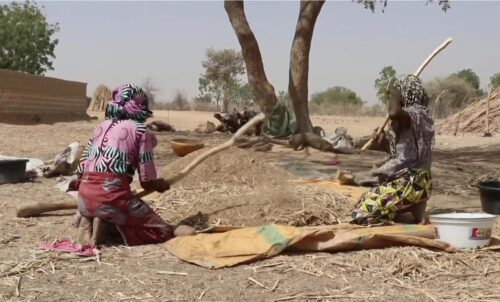
For Sadiya Adamu, another smallholder farmer in Kafin Gana, Birnin Kudu LGA, lacking storage facilities and wanting to earn more money means she has to pound some of her farm produce by hand to process it.

“Here in Kafin Gana, the work never seems to end; I cannot continue pounding and hitting by hand every day. It’s a constant worry. How much longer can I keep this up before it’s too much?” she quizzed.

Typically, Adamu pounds staple crops such as millet or sorghum, spending an average of 4-6 hours a day to pound and package it. Depending on the quality and quantity of the produce, she might realise between N5,000 and N10,000 per week.

While pounding is not the only way to process these crops – alternatives like grain mills or motorised decorticators exist. However, Adamu’s lack of access to such machinery limits her productivity and takes a toll on her health.

With the aid of better machinery, Adamu says she could potentially earn between N20,000 and N50,000 per week, and she would also have more time to focus on other aspects of her personal life.

Again section 1.4 of the policy advocates for gender-responsive delivery of agricultural services, including access to appropriate technologies and equipment.

Sharing in Adamu’s challenge, Halima Baso, another smallholder farmer in Baso – Kiyawa local government area, lamented the absence of proper storage facilities which is another major hurdle faced by women farmers.

“The lack of silos forces us to sell our harvest right after reaping, even if the market price is low. We have no choice; our crops will spoil if we can’t store them properly,” Baso said.

This pressure to sell quickly puts women farmers at a disadvantage, as they have less bargaining power and are forced to accept lower prices.

With respect to the gender gap in market access, Baso says many men in these communities are able to participate in a barter system, exchanging their crops for other necessities. However, this option is often unavailable to women.

As Baso points out, “The men take their crops to the market and trade them for things we need, like cooking oil or fabric. But for us, it’s just cash. We have to pay the high transport costs, which eats into our profits,” she explained.

These high transportation costs stem from the rising price of petrol, forcing many farmers to rely on donkeys to transport their goods. This not only adds significant time to the journey but also damages the quality of the produce.

“The donkeys can only carry so little,” says Hajiya Hadiza Giwa, the Jigawa State Coordinator of SWOFON.

“By the time we reach the market, our fruits and vegetables are bruised and wilted. It’s frustrating, because we know we could get a better price if they were still fresh,” Giwa emphasised.

She, however, said that in recent times, there has been improvement in supporting women farmers in the state by the government, particularly through programs like NGCares, calling on the government to do more.

Agricultural interventions in Jigawa State

The NG-Cares initiative in Jigawa State is part of the Nigerian COVID-19 Action Recovery and Economic Stimulus programme which aims to support the recovery of the state’s agricultural sector from the COVID-19 pandemic.

The programme’s objectives include empowering young people to engage in agriculture, producing high-quality rice seeds, creating jobs, providing training, inputs, and market linkages to farmers.

Some of the programme’s achievements, according to a statement published on the NG-Cares Initiative website, include 10,730 vulnerable households receiving agricultural inputs, 4,220 beneficiaries being selected to receive inputs and agricultural assets, 2,000 beneficiaries receiving seeds, fertilizers, and crop production chemicals, and 2,220 beneficiaries receiving critical farm assets like water pumps and processing machines.

However, the gender balance in the distribution to beneficiaries remains unclear.

Agricultural experts speak

In a telephone interview, Umar Gambo, a retired agricultural extension worker at the Jigawa Agricultural and Rural Development Authority (JARDA) and now an Agric Officer with Agro- Climatic Resilience in Semi-Arid Landscapes (ACReSAL), a World Bank assisted Project aimed at addressing the challenges of land degradation and climate Change in Northern Nigeria on a multi-dimensional scale, attributed some of the challenges faced by women farmers to religious and cultural attachments.

He noted that these are powerful forces influencing human behaviour, particularly in regions in the north, where the mingling of women and men is discouraged.

This deeply entrenched norm makes it difficult for women to go to the market and interact with men. However, he added that there is a growing awareness among some families.

He further emphasised that this could be worse when a married woman is involved because if she engages in such activities without her husband’s consent or support, it may lead to divorce.

However, with cooperative societies and women organisations springing up, there is growing awareness and support. He further called on the government to intensify awareness campaigns to make people understand that allowing women to participate in profitable farming does not mean they will lose their identities, emphasising that religious scholars and traditional authorities also have a role to play.

This reflects the policy’s emphasis on addressing gender differences and ensuring equal opportunities in the agricultural sector as seen in Policy’s Conceptual Framework

On his part, Abubakar Usman Karfi, the chief executive officer of Silvex International, an agricultural firm in Kano and Jigawa, says it has been a norm that men tend to get bigger size farms even when inheritance is shared and due to a phenomenon he dubbed “absentee ownership.”

“Most of these women farmers don’t go to the farm themselves; they delegate men to manage the farm on their behalf, and because of that absentee ownership, they are not there themselves to manage the farm, which poses an opportunity for some of the challenges identified to thrive,” he said.

However, he is of the opinion that access to market in a technology-driven century should not be a cause for concern because with the right training, skills, access to information, pricing surveillance, and market intelligence, women can thrive. But he says unholy practices of middlemen which eliminate fair trading frameworks that regulate and guide everybody on where to buy, how to buy, and what should be the transaction dynamics lead to the shortchanging of farmers.

While calling for the full implementation of the National Policy on Gender in Agriculture by relevant stakeholders, Karfi opines that a multi-pronged approach to achieve effectiveness and address lingering issues is key.

He supports the idea of training programmes that can equip women farmers with the skills they need to negotiate effectively, ensuring access to legal representation to help them defend their rights and resolve land disputes, and designing resource distribution initiatives by the government to be more inclusive, ensuring women farmers receive the support they need to thrive.

National Gender Policy in Agriculture

This aligns with the Nigerian National Gender Policy in Agriculture, as highlighted in the 2019 CGIAR Research Programme on Policies, Institutions, and Markets Annual Report. The policy aims to promote the adoption of gender-sensitive and responsive approaches in the agricultural sector, ensuring that both men and women have equal access to and control of productive resources.

In 2019, Nigeria took a significant step towards gender equality in agriculture with the launch of the National Gender Policy in Agriculture. This policy recognises the crucial role women play in the agricultural sector, often as smallholder farmers, and aims to bridge the gap in access to resources and opportunities.

Prior to the policy, women faced numerous challenges. They often lacked access to land ownership, credit facilities, and essential tools like water pumps and storage silos. Additionally, limited negotiation skills left them vulnerable to unfair pricing for their produce. The National Gender Policy seeks to address these issues by promoting equal access to resources, training programs, and legal representation.

The policy’s ultimate goal is to empower women farmers and unlock their full potential. By fostering gender equity in agriculture, Nigeria can not only improve food security but also drive economic growth and create a more sustainable and just food system for all.

While the Jigawa State government may have made some good strides, it is still far away from consolidating the intentions of the gender policy.

When reached for comments concerning the efforts the state government is making to consolidate the policy in the state and address issues identified by this investigation, Muttaka Namadi, the Jigawa state commissioner for agriculture and natural resources initially gave an appointment for a meeting in Abuja on May 15, 2024. However, subsequent calls to the commissioner on the meeting were not successful as his line was not reachable.

A follow-up call was made and a text message sent to the commissioner on May 18, informing him of the presence of the reporter in Dutse, Jigawa state, having learned that he had returned to the state, but he did not reply. Similarly, on the 21st and 22nd of May, text messages with the accompanying questions for the commissioner’s attention were sent by WhatsApp and SMS, but there was no response.

This was followed by several calls on the 15th, 18th, and 22nd of May 2024, all of which went unanswered.

However, the Technical Adviser to the Governor on Agriculture, Saifullahi Umar, said that under the leadership of Governor Umar Namadi, Jigawa State has taken a targeted approach to empower women farmers, aligning with the National Gender Policy on Agriculture to meet the specific needs of women in the region.

He further highlighted the administration’s efforts since taking office in August 2023 to prioritise agricultural development with a strong focus on gender inclusivity.

He explained that Jigawa State has adapted the National Gender Policy on Agriculture to suit its unique local context, ensuring that women are integral to every aspect of agricultural development.

He said the government has achieved a 50 per cent inclusion rate for women through the NG-CARES FADAMA initiative, which focuses on supporting women and youth from vulnerable and high-risk communities by providing essential agricultural assets, inputs, services, and capacity-building opportunities.

“The FADAMA initiative is central to Jigawa State’s strategy to empower women in agriculture.

Nearly 40,000 women and youth have benefited from the programme, engaging in various agricultural enterprises, including rice, sorghum, millet, and maize production, as well as goat livestock farming. The government equips these beneficiaries with essential agricultural tools and training, enhancing productivity and income”.

Umar emphasized the government’s commitment to addressing challenges such as land encroachment and gender-based discrimination.

To protect women’s land rights and ensure equitable access to resources, he said that the government has implemented specific measures, including legal support and collaboration with local authorities to enforce land rights and reduce disputes.

To improve market access and infrastructure for women farmers, the government is enhancing transportation networks and storage facilities, he stated.

Umar conceded that access to markets and efficient transportation are significant barriers for women farmers and noted that by improving the road networks and providing processing equipment, the government enables women to bring their produce to market more effectively, add value to their products, and increase their income.

Security and safety are also key priorities Umar said, stressing the importance of creating a safer environment for women in agriculture. He said that the government is working with local security agencies to protect women farmers from harassment, theft, and crop destruction, particularly in rural areas. Perpetrators of such unlawful acts will face strict legal consequences.

Recognising additional challenges faced by women, such as limited access to premium seedlings and agricultural technology, the government, he stated, has launched initiatives to improve access to quality inputs. Programs have been established to provide women farmers with necessary agricultural inputs and offer training and capacity-building sessions to enhance their farming practices. The aim is to empower women farmers to be resilient and self-sufficient, significantly contributing to the state’s agricultural output.

One notable programme is the Rice Millennial Programme, which has empowered 1,000 youth, including young women, to produce rice seeds. This initiative highlights the potential for financial independence through rice cultivation.

Moreover, the state has strengthened its agricultural extension services by recruiting 1,435 extension agents and 300 community animal health workers to operate mobile veterinary clinics. This initiative ensures that women farmers receive timely advice and support on best farming practices and animal health.

Umar observed that Jigawa State’s focus on women farmers represents a comprehensive approach to agricultural development, ensuring inclusivity and sustainability. By addressing gender-specific challenges and providing the necessary support and resources, the government is paving the way for a more inclusive and resilient agricultural sector, he said further.

He concluded by reaffirming the government’s commitment to fostering an inclusive agricultural sector that supports both men and women farmers, aiming for sustainable growth and food security in Jigawa State.

However, analysists say it remains to be seen how the Jigawa State government and stakeholders at all levels will embrace the National Gender Policy on Agriculture, address challenges which can empower women farmers, promote agricultural development, and create a more equitable food system for all.

To truly empower women farmers in Jigawa and across Nigeria, some say there’s need for implementation of the National Policy on Gender in Agriculture in full. This requires concerted efforts from government institutions, development partners, civil society organizations, and the private sector to address the specific challenges faced by women farmers.

‘Serial paedophile’ head teacher bags life jail for defiling 2 seven-year-olds

0

A PRIMARY school head teacher, Benjamin Ogba, has been sentenced to life imprisonment by a judge, Abiola Soladoye, of the Ikeja Sexual Offences and Domestic Violence Court for defiling two minors.

On Tuesday, October 8, Soladoye ruled that the prosecution proved the case beyond a reasonable doubt, with the ingredients of defilement to the court’s satisfaction.

Describing the defendant as a “serial paedophile”, the judge held that his witnesses were tainted with lies.

“The convict and his fellow defence witnesses were not truthful and credible in their testimonies, during the trial. Their testimonies were a pack of lies and fell asunder like a pack of cards.

“This serial paedophile, a head teacher, who is expected to teach his students morals, stooped so low and defiled the underage girls. What a shame!

“This irresponsible and randy teacher, who teaches his students nonsense, should be locked away,” she ruled.

In addition, Soladoye said all cases of sexual abuse should be reported and not ignored, advising parents to report such incidents to the proper authorities without giving up.

“Continuous education and awareness of this issue of sexual menace must be at the forefront of all stakeholders in the administration of justice to advocate the rights of young children.

“The defendant, having been found guilty of the two counts bordering on defilement, is hereby sentenced to life imprisonment on each of the counts.

“The sentencing, will, however, run concurrently and his name registered in the Sex Offences Register as maintained by the Lagos State,” she added.

The state prosecution counsel, Olusola Soneye during the trial stated that the convict committed the offence sometime between April and May 10, 2019, at Shalom Private School, Oke-Ira Road, Ebutte Metta in Lagos.

Ogba defiled two underage girls who were both seven years old by having unlawful sexual intercourse with them.

The prosecutor noted that the offence contravened Section 137 of the Criminal Laws of Lagos State, 2015.

The ICIR reported that the Lagos State Domestic and Sexual Violence Agency (DSVA) has been publishing the names and pictures of sex offenders who have been convicted for their offences.

Although Lagos began publishing names of offenders in 2022, its register had been open since 2014.

In 2019, the Nigerian government launched its first National Sex Offenders Register to name and shame rapists and other forms of violence against persons offenders across the country.

Some other states, including Delta, Ogun, Ekiti, Bayelsa, Edo, Akwa Ibom, Bauchi, Adamawa, Abia, and Kaduna, also keep a register of sex offenders.

Another report by The ICIR shows that in Nigeria, six out of every 10 children suffer from one or more forms of physical, sexual or emotional violence before the age of 18. More than 70 per cent of children experience this violence repeatedly, according to the United Nations Children’s Fund (UNICEF).