Home Blog Page 499

SSS releases journalist’s passport, describes seizure as ‘mistaken identity’

0

OPERATIVES of the State Security Service (SSS) have returned the seized passport of investigative journalist, Adejuwon Soyinka, blaming his arrest on “possible mistaken identity.”

Soyinka reclaimed his passport on Friday, August 30, after being accompanied by human rights lawyer, Inibehe Effiong, on a visit to the DSS office in Ikoyi, Lagos.

The SSS’ explained that Soyinka’s arrest was because his name was placed on its watchlist at the request of an unnamed government agency, after which the entire saga was blamed on a possible mistaken identity.

But Inibehe said the secret police’s decision to blame the incident on possible mistaken identity did not surprise him.

The ICIR reported that the SSS arrested Soyinka on Sunday, August 25.

One of his friends sent a distress message, stating that he was taken into custody shortly after he arrived from the United Kingdom, without being informed of the reason for his arrest, and was held in isolation without access to communication.

However, he was released from detention on the same day. The SSS agreed to release him on bail through the efforts of the International Press Institute (IPI) Nigeria, which intervened on his behalf.

As part of his bail conditions, the agency seized his passport and asked him to provide his Nigerian address and reliable phone number through which he could be reached anytime.

“I have just been released by the DSS in Lagos. They are holding on to my passport, though. I am on an Uber ride ordered for me by the deputy director of SSS in Lagos. I will speak better when I get home,” Soyinka wrote on his social media handle after his release.

The ICIR reported in December 2023 how security agents abused their power and flouted the Nigerian Constitution by harassing 39 journalists in the line of duty, nationwide.

Four reporters with The ICIR were harassed by state actors in the line of duty that year.

Meanwhile, in 2024, the Nigeria Police Force National Cybercrime Centre (NPF-NCCC) in Abuja invited and detained The ICIR’s executive director, Dayo Aiyetan, and reporter, Nurudeen Akewushola, over an investigation of sleazes in which its former Inspector-Generals were complicit.


READ ALSO:


This organisation reported that a reporter, Daniel Ojukwu, was abducted by officials of the Intelligence Response Team (IRT) of the Inspector-General of Police (IGP) Kayode Egbetokun on May 1, two days before World Press Freedom Day.

His abduction only became known on Friday, May 3, after spending four days with the police in Lagos State.

These are a few incidents among several cases of attack on the media in Nigeria by President Bola Tinubu’s government.

On August 25, this organisation published a report asking the government if it could ever guarantee press freedom as journalists are persistently harassed and incarcerated under a President who owns some of the biggest media outfits in the country.


Children more at risk of mpox infection than adult – NCDC

0

THE Nigerian Centre For Disease Control (NCDC) has said children between ages zero to five are mostly affected by the mpox disease outbreak in the country.

The Centre stated this in a statement on Friday, August 30.

According to the NCDC, out of the 48 confirmed cases of mpox recorded in Nigeria in 2024, the most affected age group is children between 0 -5 years old.

Mpox spreads easily through contact with infected persons or contaminated materials.

Giving an update on the disease, the NCDC reported that during week 34 (August 19-25), eight new confirmed cases were recorded across five states, bringing the total number of confirmed cases this year to 48.

A further breakdown of the data revealed that 57 new suspected cases were reported in week 34, 2024, compared to 25 cases in week 33.

The eight confirmed cases recorded showed an increase from the single confirmed case in week 33, 2024.

So far in 2024, at least one confirmed case has been reported in twenty states plus the Federal Capital Territory, spanning 35 Local Government Areas.

Since September 2017, 4,685 suspected cases have been reported across 36 states and the FCT, with 1,134 confirmed cases from 35 states and the FCT, resulting in 17 deaths. Males account for approximately 70 per cent of the cases.

Symptoms of the disease usually include an acute illness with fever >38.3°C, intense headache, lymphadenopathy, back pain, myalgia, and intense asthenia, followed by a progressively developing rash often beginning on the face and then spreading elsewhere on the body and soles of feet and palms of the hand.

On August 13, 2024, the NCDC declared mpox a public health emergency, acting under its mandate to address significant public health threats.

The NCDC noted that the national mpox multi-sectoral and multi-partner emergency operation centre continued to coordinate the response in the country.

Meanwhile, the National Primary Health Care Development Agency has set October 8, 2024, as a tentative date to commence vaccination for mpox.

On August 27, The ICIR reported that the United States Government donated 10,000 doses mpox vaccine to the country.

We’ve unlocked exotic new beer flavours using genetics

0

By Jennifer MOLINET, Stockholm University

ONE of my favourite summer pastimes is enjoying a cold beer in a bar with friends after work. But not just any beer – it has to be a lager. And I am not alone. With its crisp and refreshing profile, lager accounts for more than 90 per cent of the global beer market.

However, all lager beers taste quite similar, and the diversity of flavours and aromas is limited. This is mainly due to the small numbers of commercial yeast available for production. But what if we could break free from these constraints and create completely new and exciting flavours?

Our recent study, published in PLOS Genetics, takes an approach that does just that, using wild yeast from Patagonia to create new lager yeast.

The problem with traditional lager yeast

Yeast are unicellular fungi that ferment sugar into alcohol and carbon dioxide. For centuries, humans have used yeast, consciously or unconsciously, to produce fermented foods, such as wine, beer and bread.

The traditional lager yeast, Saccharomyces pastorianus, is a hybrid cross between two yeast species: S. cerevisiae (used for producing wine and ale beer) and S.eubayanus (a wild species found on trees).

The hybrid lager yeast was domesticated hundreds of years ago and has since been optimised for brewing under cold conditions.

However, this long history of selective breeding, similar to what we see in our livestock, crops and pets has also narrowed the genetic diversity of lager yeast, resulting in a strongly limited range of available flavours and aromas – leaving little room for innovation.

Enter wild Patagonian yeast

Until a few years ago, it was impossible to create new lager beer, simply because the maternal species of lager yeast, S. eubayanus, had not yet been discovered.

But in 2011, this species was found on the bark of trees in Patagonia, Argentina. Since then, hundreds of strains have been isolated from Chilean and Argentinian forests, carrying a stunning amount of genetic diversity.

Our research used this genetic diversity to expand the flavour and aroma profiles for lager. We specifically focused on three S. eubayanus lineages from southern Chile that had distinct characteristics, very promising for beer brewing. They are tolerant to cold temperatures, which is necessary for lager production which normally happens at temperatures between 8-15°C. They were also efficient at turning maltose into alcohol and carbon dioxide as well as producing unique aroma profiles.

By creating hybrids of this wild lineage with the ale-yeast S. cerevisiae, we produced a brand new lager yeast that not only retained the robust fermentation characteristics needed for commercial brewing, but also offered novel flavour profiles never before smelled or tasted in lagers.

Brewing the future

That said, our first attempts to generate new hybrids did not create strains with the characteristics we wanted – they were not adapted to the conditions of fermentation. But that can happen.

However, we could improve this process in the lab; we call it experimental evolution. We grew the new hybrids in a medium similar to beer wort for six months, to enhance their brewing performance. This created several new strains thanks to the natural process of evolution.

Then, we selected those strains that demonstrated superior fermentation capacity and the ability to produce higher alcohol levels. We also found that those hybrids that inherited mitochondria (the “engine” of the cell) from their S. eubayanus parent showed larger evolutionary potential and became more efficient in converting sugar into alcohol, able to create a higher alcohol content.

But the most exciting thing for us was that the new lager strains we made showed a much broader spectrum of aroma profiles, towards a more herbal, spicy and clove-like character.

Implications for the beer industry

We believe our new hybrid yeast has the potential to revolutionise lager brewing. Craft brewers in particular, could use these strains to develop new unique lager styles, making their products stand out in a crowded market and even attract those who prefer the more fruity and hoppy ale beers (such as New England, Indian and Belgian Pale).

We have already used the new hybrid strains to produce lager beer on a small scale (500 litres) in association with local breweries in Chile.

Our study not only opens up new possibilities for the lager beer industry but also underscores the importance of biodiversity in brewing. By tapping into the natural genetic diversity of wild yeasts, we can create innovative products that meet consumers’ ever-evolving taste.

As the beer industry continues to grow and diversify, these new hybrids could play a crucial role in shaping the future of brewing.The Conversation

Jennifer Molinet, Postdoctoral Researcher in Microbiology, Stockholm University

This article is republished from The Conversation under a Creative Commons license. Read the original article.

FG signs MoU with Boeing company to support Nigerian airlines

THE federal government of Nigeria said it had entered into a memorandum of understanding (MoU) with Boeing company, a major aircraft manufacturer, to guarantee financial, technical and other support for the airlines in the country.

The minister of aviation and aerospace development, Festus Keyamo, disclosed this in a statement on Thursday, August 29 on his X handle.

The agreement was signed in Seattle, State of Washington, United States.

Keyamo said, “Yesterday, in Seattle, State of Washington in the USA, I led a delegation of the executives of major airlines in Nigeria under the auspices of Airline Operators of Nigeria and other important stakeholders in the civil aviation ecosystem in Nigeria to sign an important Memorandum of Understanding with THE BOEING Company, one of the major aircraft manufacturers in the world.

According to Keyamo, the highlights of the MoU include leveraging Boeing’s network of financiers and lessors to better position Nigerian airlines to acquire newer-generation Boeing aircraft.

It will provide enhanced technical support to help airlines introduce new or used Boeing Aircraft; and training in airline operations and business models to enhance airline business practices.

The agreement also contains the provision of technical support via access to Boeing data such as maintenance documents, engineering drawings, parts purchasing, and flight operations documents to streamline maintenance practices.

Other supports are the provision of Boeing field services representation in Nigeria or close by as on-site support and leadership-development training to help airlines enhance their leadership pipeline.

The minister stated further that the agreement provides collaboration with airlines’ in-flight operations, maintenance, and engineering to enhance safety and operational efficiency.

It also makes provision for collaboration with the Nigeria Civil Aviation Authority (NCAA) and the Nigerian Safety Investigation Bureau (NSIB) in close partnership with the International Civil Aviation Organization (ICAO) and regional regulators to enhance safety oversight in the region.

Keyamo added that the agreement provides consultation via Boeing’s airports’ engineering team to open and/or expand airport capabilities and advisory on maintenance, repair, and operations (MRO) development.

Nigerian airlines operate under a difficult terrain as many struggle to survive the harsh economic environment.

Some of the challenges include the surging cost of aviation fuel, the exchange rate volatility, and other issues that impact airline operations.

In January, key players in the foreign aviation sectors had threatened to pull out their services from Nigeria due to their funds trapped.as a result of shortage of dollar in the system.

Many industry experts have decried the operating environment in the aviation industry and have argued the system was designed to frustrate airlines.

In recent times, some airlines have recorded technical problems that have led to their suspension.

The ICIR reported of Dana Air airline skidding off the Lagos airport and the aircraft grounded by its management and suspended by the Nigerian aviation authorities.

Another aircraft belonging to XEJet Airlines had also recently skidded off the runway at the Lagos airport.

The incident also led to the suspension of the airlines by the NCAA.

NNPCL to transfer Warri, Kaduna refineries to other operators

THE Nigerian National Petroleum Company Limited (NNPCL) has revealed plans to hand over the operations and maintenance of the Warri and Kaduna refineries to other operators.

The NNPCL disclosed this in a notice shared on its official X handle on Friday, August 30.

The aim is to engage other operators to manage the refineries which have been moribund for decades.

The notice stated that the transfer was “for the provision of operations and maintenance (O&M) services for NNPC Limited Refineries.”

It added that the combined tender is for “Warri Refining and Petrochemical Company (WRPC), and Kaduna Refining and Petrochemical Company (KRPC).”

The state-owned oil company had held a grip on mismanaging Nigeria’s refineries for many years and had been reluctant to hand them over to private firms competent to efficiently run the refining business.

The refineries had refused to function despite all the money spent on turn-around maintenance.

Industry experts have been lamenting the poor maintenance culture of the refineries and have been calling for the takeover of the refineries by private hands.

The new plan to transfer maintenance of Warri and Kaduna refineries to private operators may come as a surprise to many Nigerians as the NNPCL had recently promised that the two refineries would come on stream towards the end of the year.

“Specific to NNPCL Refineries, we have spoken to a number of your committees, that it is impossible to have the Kaduna refinery come to operation before December, it will get to December, both Warri and Kaduna; but that of Port Harcourt will commence production early August this year,” the NNPCL group chief executive officer (GCEO), Mele Kyari, when he appeared before the finance committee of Nigerian Senate on July 15, The ICIR reported.

He added that Nigeria would become a net exporter of petroleum products by December 2024.

Notably, the state-owned refineries had been persistent in posting poor financial records, despite billions of naira spent on the much touted turn-around maintenance.

The latest  NNPCL 2023 audited financial statements released on Tuesday, August 20, showed that the state-owned oil company currently owes N3.89 trillion in crude oil forward sale agreements to foreign creditors.

The contract liabilities surged by 34.44 per cent compared to N2.89 trillion it was in December 2022.

The ICIR earlier reported that the  NNPC has been borrowing to fund activities at the refinery, even when its operations do not show any capacity to pay back.

Net income is negative, meaning that other metrics of assessing profitability of the company turned out negative.

The Warri refinery was commissioned in 1978 with a nameplate distillation capacity of 6.25 million metric tons per annum equivalent to 125,000 barrels per day.

The Kaduna refinery, commissioned in 1980 with an initial capacity of 50,000 barrels per day, has been expanded to a 110,000-per-day refining capacity.

Court orders SSS to freeze 20 bank accounts linked to suspected female terrorist

A FEDERAL High Court, Abuja, has ordered the State Security Service (SSS) to freeze 20 bank accounts linked to a suspected female terrorist, Aisha Abdulkarim.

The judge, Peter Lifu, gave the order following an ex-parte application brought and argued before him by the SSS.

The court ordered the freezing of the accounts domiciled in eight different banks for 60 days, to facilitate forensic investigations by the secret service.

In the application marked FHC/ABJ/CS/1036/2024, the SSS lawyer, Yunus Ishaku Umar, sought an ex-parte order to freeze the bank accounts to aid investigations.

Two suspects, Yehusa Idris and Abdullahi Babayo Umar, were also arrested and taken into custody in connection with alleged terrorist activities in which the female suspect is undergoing investigations.

In his ruling, the judge approved a 60-day freezing order, directing the security agency to conduct a swift and diligent probe.

Lifu emphasised that the suspects were presumed innocent and should not face undue hardship.

Insecurity created by terrorist activities has affected Nigeria’s growth and development and created fear among citizens.

The ICIR reported in May that the director-general of the Manufacturers Association of Nigeria (MAN), Segun Ajayi-Kadir, said about 56-60 per cent of its registered manufacturers in the North-East have ceased production due to escalating insecurity in the region. 

Ajayi-Kadir emphasised that continued insecurity could further cripple the region’s economy and lead to significant job losses.

In an interview with Channels Television, published on Saturday, May 18, Ajayi Kadir emphasised the urgent need for improved security measures to restore confidence and enable the resumption of manufacturing activities, urging the government to come up with policies that will help improve the performance of the manufacturing sector.

 “Insecurity is a major challenge, I can tell you that we lost between 56 to 60 per cent of our members in the North-East to insecurity, they just stopped production. You now look at the cost that you need to incur to be secure, this was something that many years ago was non-existent,he said.

He also noted that despite some of the manufacturers paying more for security, persistent threats of violence and instability have severely disrupted operations, forcing many businesses to shut down. 


#EndBadGovernance: Over 30 minors arrested for protesting – Activist

0

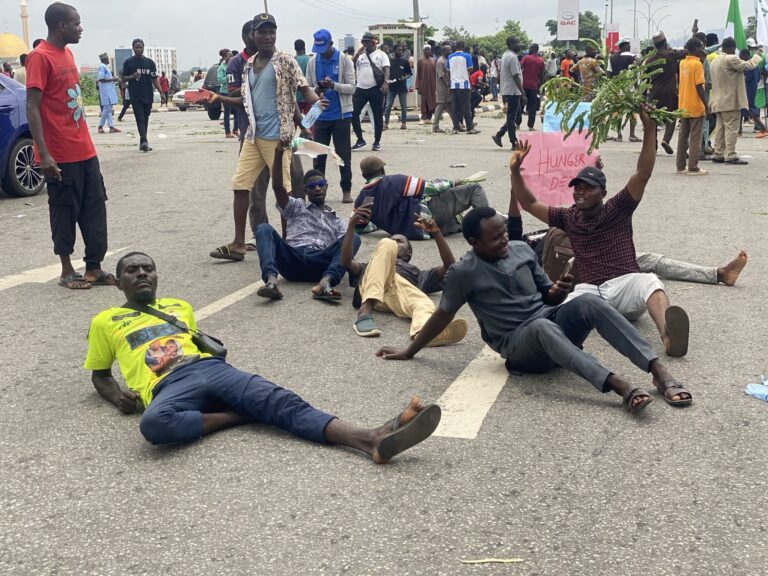
OVER 30 minors were allegedly arrested during the nationwide 10-day #EndBadGovernance protest in Nigeria in the first two weeks of August this year.

This was revealed during a town hall meeting hosted by News Central TV in Abuja on Friday, August 30. The meeting was tagged, ‘Speak Up Nigeria: Addressing the Nationwide Protests’.

Addressing participants, a human rights activist, Serah Ibrahim, said she had a list of about 37 minors who were arrested for partaking in the protest and were slammed with various charges.

“Currently, I do not know if there are more people but I have names of 37 young people. These are people that are between the ages of 13 and 15 who were arrested by the Tinubu-led government.

“You tell us as Nigerians that we cannot go to university if we are not up to 18 years but the Tinubu-led government can allow the people who are younger than 18 years to be locked up, just because they came out to peacefully request for a better Nigeria. You’re putting so many charges including treasonable felonies on them simply because they joined the #EndBadGovernance protest,” she said.

She stated that Nigerians’ demands during the protest were a good Nigeria where the masses could afford to live without issues, adding that Nigerians did not need negotiation, but a better Nigeria.

“You cannot negotiate your freedom, you can not negotiate your human rights. There is no negotiation, it is as simple as it is, a better Nigeria. End the hunger, reduce the cost of living, sort out the price of fuel,” she added.

The ICIR reports that many Nigerians trooped to the streets in the first and second weeks of August to protest against the lingering hunger crisis experienced since the assumption of President Bola Tinubu into office in May 2023.

The protests were marred with violence, largely caused by the security operatives in places like Lagos and Abuja, where security operatives attacked protesters and journalists and several teargas to disperse them from the protest grounds.

The News Central’s event, centred on the way forward following the #EndBadGovernance protest had representatives from different civil society organisations, journalists, and some victims of the violence during the protests who shared their experiences.

Also speaking at the event, the founder of Connected Development (CODE), Hamzat Lawal, noted that the time for the next protest against the Tinubu’s government would not be disclosed as the one held in August.

“The protesters came forward, I think they were patriotic to even give a date and a time. I bet you that the next protest that will happen will not have a date or time,” he stated.

SSS, NIA DGs ‘resignations’: Tinubu needs his men to succeed – Security analysts

0

SECURITY analysts have shed light on reasons for recent changes in the State Security Service (SSS) and the National Intelligence Agency (NIA) leadership.

Recall that President Bola Tinubu, on Monday, August 26, appointed Adeola Oluwatosin Ajayi as the new director-general (DG) of the SSS, and Mohammed Mohammed as the new DG of the NIA.

According to a statement by the special adviser to the President on media and publicity, Ajuri Ngelale, Ajayi and Mohammed’s appointments followed the resignation of the former NIA and the SSS DGs, Ahmed Abubakar and Yusuf Bichi, respectively.

It is a routine thing – Analyst

But in a chat with The ICIR, a security analyst, Senator Iroegbu, claimed the incidents were beyond resignations.

According to him, the resignations and appointments were expected because every President would like to work with security and intelligence chiefs they appointed and are comfortable with. 

Iroegbu, the editor-in-chief of Global Sentinel, said although government is a continuum, when it comes to matters of security and intelligence, it is a serious issue and no President will leave them in the hands of people he cannot trust.

“I think it is expected because every president would like to work with security and intelligence chiefs they either appointed or are very comfortable with.”

 He commended the President for leaving the former security chiefs in their positions for a year.

“The President has been patient. It is not as if it is compulsory he must retire them, but I’m sure he wanted to at least understand the ground because these are Buhari’s men. So he would like to have his men.

He argued that the President must have instructed them to resign, citing his preference for his own people.

In his opinion, a security expert, Oladele Fajana said there was nothing new in the replacements, stating that it is a normal practice.

Fajana said the problem with the country is that serious issues are always politicised.

“Ordinarily, that is what is obtainable all over the world. Security is not a matter of politics. Another thing is that politically, they have to go because they were there during the time of Buhari.

“They have spent a year with this man (Tinubu) too. So they can never continue to be there till eternity. The baton has to change hands; there is nothing wrong with that,” Fajana stated.

He noted that to succeed, the President has no choice but to put somebody he can trust in sensitive positions such as the NIA and the SSS.

Security implications

Speaking on the security implications of changing heads of two critical security agencies in one week, Fajana said it is not an issue provided the new appointees are ready to work.

Fajana said the new DG of SSS had been in the organisation for a long time and had occupied various positions that had prepared him for the intelligence organisation.

Concurring with Fajana’s claim, Iroegbu stated that there was no security implication provided the new security chiefs were competent enough to take charge and execute the President’s goals.

Advise for new intelligence chiefs

 Iroegbu urged the new DGs to be accountable to the nation in the overall interest of the country and not only to the President who appointed them.

“Sometimes they need the fact that yes, they are accountable to the President, but not at the detriment of the country. They should be able to stand up to the President and advise him appropriately if the administration is taking the wrong route.

“Sometimes when they are appointed, they feel their loyalty is only to the President, even if the President’s action negates the good or the integrity of the state.

“So your loyalty to the President should be to the extent that his actions and that of administration is in the overall interest of the country. So this is where I think there should be a delicate balance,”,” Iroegbu urged.

He acknowledged the President’s symbolic role but emphasised that advisory bodies must intervene if his actions harm national interests.

The new appointees

According to Tinubu’s spokesperson, Ngelale, the new DG of SSS Ajayi rose through the ranks to attain the post of assistant director-general of the Service before his latest appointment.


READ ALSO:


He said Ajayi had, at various times, served as state director in Bauchi, Enugu, Bayelsa, Rivers, and Kogi. 

Meanwhile, the new NIA boss, Mohammed, has had an illustrious career in the foreign service since joining the NIA in 1995, said Ngelale. 

He served in various capacities, culminating in his promotion to the rank of director and his subsequent appointment as the head of the Nigerian mission to Libya.

Environmental Photography grant seeks proposals

Vital Impacts, a women-led non-profit focused on harnessing the power of art and storytelling, is accepting applications for its environmental photography grants.

The grants will fund documentary projects that spotlight solutions-based environmental narratives. They are particularly interested in projects about the Pacific Northwest and the Amazon rainforest.

The Vital Impacts Environmental Photography Grants aim to champion the power of visual storytelling in driving positive change for the planet.

“We’re offering one grant totalling $20,000 and six grants worth $5,000 each, all dedicated to nurturing documentary projects that spotlight solutions-based environmental narratives,” said the organisation.

Recipients will have the opportunity to work on their projects for twelve months, bringing these impactful stories to life.

In addition to the grants, Vital Impacts will select ten emerging photographers to participate in an intensive mentorship program and will invite all applicants to participate in an online mentorship series.

One established photographer will receive a US$20,000 grant and five emerging photographers will receive a US$5,000 grant each to develop their projects.

Established and emerging environmental photographers around the world can apply for this grant.

The application deadline is September 15, 2024. Interested applicants can apply here.

Okon’s 400m gold for South Africa sparks reactions on social media

0

EIGHTEEN-year-old South African sprinter of Nigerian descent, Udeme Okon, has secured a gold for South Africa in the men’s 400m gold at the World Athletics U20 Championships.

Okon came from behind to win the gold medal at the event held at Lima in Peru, running 45.69 to win the gold ahead of two Americans, Jyaden Davis (46.08) and Sidi Njie (46.29).

Announcing Okon’s victory on X, World Athletics wrote: “It’s Okon’s moment.

“South Africa’s Udeme Okon claims the 400m gold with an incredible comeback in the home straight 45.69.”

Okon has now succeeded Lythe Pillay who won it for South Africa at the 2022 edition of the World U20 Championship in Columbia. 

While Nigerian athletes faltered at the ongoing World U-20 Athletics Championships, South Africa has now won the men’s 100m and 400m golds.

On Wednesday, August 28, Paris Olympics finalist, Prestina Ochonogor, finished fifth in the women’s long jump with a 6.21m leap.

In the women’s 100m final, Justina Eyakpobeyan, who also ran in the women’s 4x100m in Paris, couldn’t fulfil expectations as she placed seventh at 11.63s.

Seeded in lane two, Eyakpobeyan was the only Nigerian, male or female, to make the 100m final in the competition. She had secured an automatic spot, getting to the line at 11.56s to finish 2nd in her semi-final heat. 

In the men’s 400m, Gafar Badmus was reported to have secured fifth place in his semi-final heat within 47.43 seconds, falling short of the finals. 

Meanwhile, Caleb Joshua, who initially finished third in his heat, was later disqualified for a lane violation.

The victory of South African sprinter Okon, who was born to a Nigerian father, has sparked mixed reactions on social media, with many believed to be from South Africa applauding his feat, while some Nigerians are calling them for not throwing him out.

Recall that The ICIR reported that the Nigerian-South African model, Chidinma Adetshina, withdrew from the Miss South Africa pageant following a series of xenophobic attacks after making it to the top 16 at the pageant competition.

“After much careful consideration, I have made the difficult decision to withdraw myself from the competition for the safety and well-being of my family and, with the support of the Miss South Africa Organisation, I leave with a heart full of gratitude for this amazing experience,” she had said.

Before that, the South Africa Department of Home Affairs in a statement signed by the spokesperson for the Minister, Duwayne Esau, claimed that Adetshina’s mother illegally obtained South African citizenship.

These actions led to a series of cyber attacks from both Nigerians and South Africans on X.

Reactions trail Okon’s victory 

An X user, Bobo Ekong, wrote “Where are the South Africans that bullied Chidinma out of Miss Universe pageant? Where is Gayton Makinzie the Sports Minister? What is he doing now that Udeme Okon is winning Gold for SA, I was thinking they will investigate Okon based on name,does that name sounds Zulu,Xhosa etc.”

Another user, Oceans, said, “So a Nigerian is still representing South Africa and they are not complaining. So why the noise about Chidinma and no noise about Udeme Okon?”

A South African user on X, Tebogo Koma, said although the name ‘Okon’ doesn’t sound like South Africa’s, they will fully accept him.

“That name doesn’t sound South African “Udeme Okon”, but if he’s legal, then we fully support him,” Koma wrote