THE Coalition for Whistleblowers Protection and Press Freedom (CWPPF) has condemned the recent harassment and intimidation of Abdulrasheed Hammad, a freelance journalist by security operatives, including the State Security Services (SSS) in Sokoto State.
In a statement jointly signed by 26 civil society organisations (CSOs) and media organisations, including The ICIR, Socio-Economic Rights and Accountability Project (SERAP), Media Rights Agenda, International Press Institute and Nigeria Union of Journalists (NUJ), Hammad was invited by an SSS agent on Sunday, August 18, after exposing unregistered sachet water factories operating without NAFDAC approval.
His ordeal also included detention and physical abuse by the police under the instruction of a factory owner in Sokoto State.
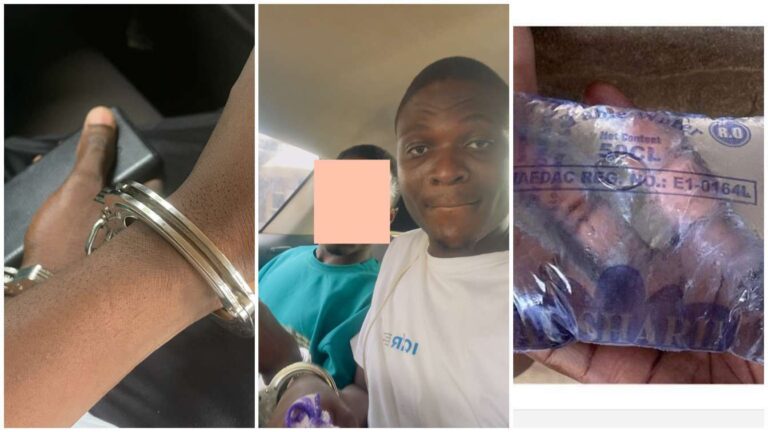
The ICIR reports that Hammad and his fixer while working on the report for The Cable on how unregistered and expired sachet water factories operate in the state, were detained, beaten, and forced to pay a bribe for their release.
The incident happened when Hammad visited Al-Sheriff Pure Water Factory, on June 15, to investigate the company’s NAFDAC registration status.
The factory owner ordered workers to assault Hammad and his fixer, who were then forcibly taken to the Arkilla Police Station, handcuffed, and subjected to further harassment.
The police subsequently demanded N5,000 for bail and forced Hammad to write an apology letter to the factory owner, despite identifying himself as a journalist, working to safeguard the quality of water consumed by Nigerians.
Similarly, according to a tweet posted on his X handle, Hammad got a call from one Muhammed Ahmed on August 15, inviting him to the SSS office in Sokoto State.
When Hammad explained that he was not in Sokoto and couldn’t attend on the specified date, the SSS agent responded with a threat of arrest if he did not comply.
The coalition expressed concern over this invitation and threat by the SSS, stating that investigative journalism is not a crime and called on the Inspector General of Police, Kayode Egbetokun, and the Director General of the SSS, Yusuf Magaji Bichi, to hold those responsible accountable.
The coalition further noted that it observed that powerful individuals used security agents, especially SSS officials to intimidate journalists via phone calls – where they are summoned and threatened without official communications established with their newsrooms.
It added that the approach was not only alarming but also unacceptable.
“While we acknowledge the role of security agencies in maintaining law and order, we reiterate that investigative journalism is not a crime under any known law in Nigeria and as such should not be criminalised.
“The leadership of the State Security Service and the Nigerian Police Force will therefore have to do more with educating their personnel on best practices of engaging journalists and direct them to stop harassing and intimidating journalists who are simply discharging their constitutional duties in the interest of the public.
“For future engagements where journalists may be required to provide insight to help with investigations, security agencies should follow the appropriate invitation procedure of sending an official invite to journalists and their newsrooms. This will enable them to prepare adequately before appearing. Such appearance should also not be turned into interrogation sessions because accountability journalism is not a crime,” the statement added.
The coalition also demanded that the Inspector-General of Police and the SSS Director-General hold the DPO of Arkilla Police Station and Muhammed Ahmed accountable for their actions against the journalist.
THE Streeze duo consisting of Mayor Frosh and Toby Forge and the Flourish duo namely DJ Flo and Ruthee have been evicted from the Big Brother Naija ‘No Loose Guard’ Season 9 house.
The host, Ebuka Uchenndu, announced their eviction during the live eviction show on Sunday, August 18.
He also announced that there would no longer be any custodian challenge, as housemates would start nominating each other for eviction as done in previous seasons, The Head of House challenge will resume on Mondays and the Head of House gets immunity, which means that they are free from eviction.
Nelita (Nelly and Anita) had won the Head of House challenge (HOH), emerging the HOH for the week and were also the first HOH to win immunity, thereby not being up for eviction.
The Streeze and Flourish duos are the 3rd and 4th pairs of housemates to be evicted from the show, leaving 10 pairs battling for the coveted prize of N100 million and a brand-new SUV, among other prizes.
The four pairs that had the least votes were Beta (Tjay and Ben), Flourish (Dj and Ruthee), Streeze (Mayor Frosh and Toby Forge) and Radicals (Mickhy and Fairme David).
However, the custodians for the week, Wanni X Handi, exercised the power granted by Big Brother, saving Beta (Tjay and Ben) from eviction.
The dynamic duos, Tomi, comprising Toyosi and Damilola, and Chinne and Nne of the Ndi Nne pair have been evicted from the show.
The season launched with a plot twist, welcoming housemates in pairs amongst many other exciting events and now with 22 housemates setting the stage for intense competition as the show continues.
The ICIRreports that for this season, the contestants are paired into teams of two and are expected to compete together.
They will complete every task and challenge together, as well as being nominated for eviction together, making teamwork key to their stay in the house.
THE Pharmacists Council of Nigeria (PCN) is frustrating efforts to obtain information on a contract it awarded in 2023 after failing to respond to a Freedom of Information Act (FOIA) request sent to it by the International Centre for Investigation.
The Council is a federal government agency supervising pharmaceutical education and practice in Nigeria.
Contrary to its vision and mission, in 2023, the PCN awarded a contract for the provision of a Primary Health Centre (PHC) at Adedeji Community in Ikirun, Ifelodun Local Government Area (LGA) of Osun State to an Abuja-based company, A3 Interbiz Link Services Ltd.
According to data obtained from govspend, a website showing daily financial transactions of the federal government, the sum of N88,354,814 was paid to A3 Interbiz Link Services Ltd on the 29th and 30th of December, 2023 to construct a well-equipped PHC at Adedeji Community, which is yet to be executed.
For detailed information and progress on the contract, a Freedom of Information Act (FOIA) request was submitted to the office of the PCN Registrar, Ibrahim Ahmed, on June 28, 2024.
Though the request was received and acknowledged by the agency, it has refused to respond or provide the requested information.
Among other details, the Centre requested for the contract description, name of the contractor, date of contract award, contract execution period, the contract amount paid and the date(s) of payment as well as the current status of the project.
According to Section 20(1) of the Public Procurement Act 2007, Mr Ahmed doubles as the accounting officer and Section 20(2) confers on him the responsibility to ensure compliance with the Act and is liable to be held in case of breach or contravention.
In an attempt to garner information from the Osun State office of the PCN in Osogbo, the state capital, our reporter put a call through to a state officer of the Council, Kayode Atere, and he directed the reporter to the council headquarters in Abuja while claiming ignorance of the project.
“I am at the state office and I don’t have any knowledge about it. Maybe you have to speak to the head office in Abuja,” Atere said.
On the same day, a call was put across to the Registrar’s phone number but the line was switched off. Like Atere’s number, the Registrar’s number was obtained from the PCN website.
Weeks after the second attempt to contact the PCN, on August 13, the Centre sent another reporter to the PCN headquarters in Abuja, to get detailed information on the project but he was told to return the next day due to the Registrar’s absence.
On the 14th of August, the reporter showed up at the Registrar’s office at 10.00 am and was delayed for hours before meeting the Special Assistant to the Registrar, who confirmed that his principal was out of town and redirected the reporter to a staffer of the council identified as Mr Edet.
This reporter was told to submit an official letter but he explained that an FOIA request had been submitted in the past. A search was conducted and it was confirmed that the FOIA request was received and had been minuted to the Department of Planning, Research and Statistics of the agency.
Led by Edet, our reporter was accompanied to the office of the Head of the Department (HOD). To his dismay, he was informed that the HOD was also not around and would not be available till the following week. This happened to the reporter after several hours of waiting.
Thus, all efforts by The ICIR to obtain the information it needs to conclude its investigation have been frustrated by the PCN and its registrar.
About the FOIA
Since Nigeria’s return to democracy in Nigeria in May 1999, citizens, media and civil society organisations have been engaging tiers of government to achieve transparency and accountability.
In 2011, replicating a law that was already in force in many parts of the world, former President Goodluck Jonathan signed the FOI Bill into law to give the Nigerian people access to information on government activities in the custody of any public institution or where the public fund was (or is being)utilised.
The law also mandates public institutions to disclose essential information on their websites.
The law gives a person, group, association or organisation the right to access information from all government institutions and private firms utilising public funds.
It provides a platform to hold leaders accountable, but public institutions like PCN have continued to disregard the law, especially when they have something to hide from Nigerians.
Section 1, subsection (1) of the FOI Act, states that “Notwithstanding anything contained in any other Act, law or regulation, the right of any person to access or request information, whether or not contained in any written form, which is in the custody or possession of any public official, agency or institution howsoever described, is established.”
Also, Section 2, subsection 4, of the same Act mandates public institutions to ensure that information requested by an individual or organisation is widely disseminated and made readily available to the public through various means, including print, electronic and online sources, and at the offices of such public institutions.
Should there be any reason an FOI request will not be granted, the Act stipulates that the affected institution must give written notice to the applicant on why the information will not be granted, referencing the section of the Act under which the denial is made.
Furthermore, Section 4 of the Act states: “Where information is applied for under this Act, the public institution to which the application is made shall, subject to sections 6, 7, and 8 of this Act, within 7 days after the application is received- (a) make the information available to the applicant (b) Where the public institution considers that the application should be denied, the institution shall give written notice to the applicant that access to all or part of the information will not be granted, stating reasons for the denial, and the section of this Act under which the denial is made.”
Similarly, Section 5, provides for a public institution to transfer a FOI request to another public institution if the organisation has a greater interest in the information within at least seven days after the application is received.
“(2) Where an application is transferred under subsection (l), the application shall be deemed to have been made to the public institution to which it was transferred on the day the public institution received it.
“(3) For the purpose of subsection (l), a public institution has a greater interest in information if – (a) the information was originally produced in or for the institution; or (b) in the case of information not originally produced in or for the public institution, the institution was the first public institution to receive the information.”
Despite the clear position of the FOIA that any Nigerian who requests information through the Act from relevant institutions be availed the information they seek, the law has been severally flouted as reported by The ICIR in this report and here.
A multi-million-naira project for establishing a data centre by the Nigeria Extractive Industries Transparency Initiative (NEITI) has been shrouded in controversy even as questions are being raised over delayed completion despite its appropriation in two budget cycles.
This is even as the management of NEITI refutes allegations of misappropriation of funds, maintaining that the project has reached 90 per cent completion and will be commissioned in September.
The project, conceived by the agency’s board of directors (National Stakeholders Working Group), 2022 kicked off with the initial release of N141 million through the 2023 national budget, findings show.
The ICIR reports that NEITI is a Nigerian government agency affiliated with the Oslow, Norway, based Extractive Industries Transparency Initiative (EITI) founded in June 2003.
It came into existence in Nigeria in 2004 with the primary mandate of promoting transparency and accountability in the country’s extractive industries, including oil, gas and mining.
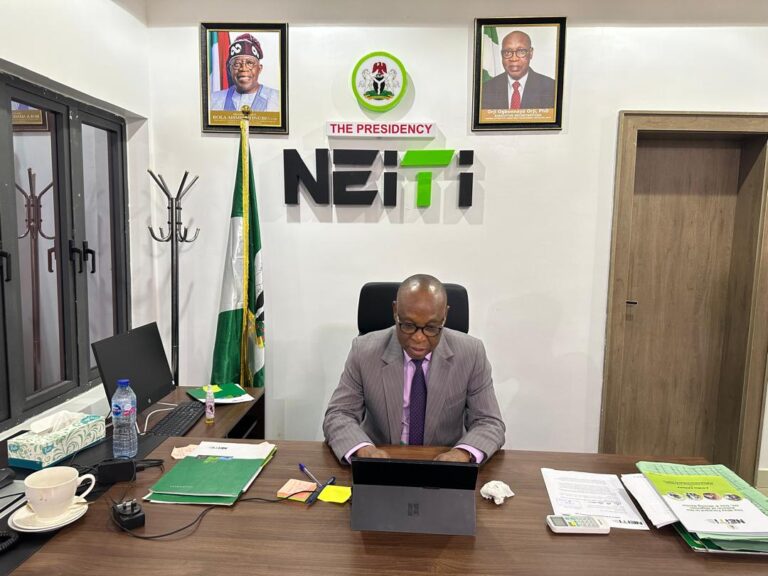
The Executive Secretary of NEITI, Orji Ogbonaya Orji
The agency, also referred to as the extractive industry’s watchdog, is also responsible for auditing extractive industry revenues, publishing reports on extractive industry activities, tracking revenues and benefits from extractive industries as well as providing data and information for informed decision making.
How data centre project was conceived
Findings reveal that the multi-million-naira data centre project was conceived and approved by the previous National Stakeholders Working Group (NSWG)), NEITI’s board, to serve as a springboard for compliance with the requirement of EITI Standard 2023.
Requirement seven of the EITI Standard 2023 document, harps on data accessibility and open data, requiring implementing countries to ensure that EITI disclosures are made publicly accessible.
It also mandates the multi-stakeholder group to agree on a clear open data policy on the access, release and re-use of EITI data while government agencies and companies are expected to publish the data under an open licence.
The ICIR gathered that a project concept for the centre was initially developed with the hope that NEITI could secure funding from the Word Bank for execution.
However, at the time NEITI applied, the world funding for extractive sector reforms had closed, hence a submission was made to the federal government for funding under the 2023 budget.
Concerned staff raise eyebrows, two years’ after
Not a few insider sources have raised eyebrows over the manner in which the project is being dragged, describing it as a conduit.
Findings by The ICIR indicate that the sum of N141,639,720 million was appropriated for it and released in the 2023 budget, even as the same project reappeared in NEITI’s 2024 budget with the sum of N81,400,229 million appropriated.
NEITI’s helmsman, Orji, who confirmed the the allocation by the federal government from the 2023 budget, however, said the funds appropriated for the centre in the 2024 budget were yet to be released.
Although he had indicated that work on the data centre commenced in 2023, and would be completed as at March 2024 – It was initially billed for completion/commissioning in March this year but Orji has now said this would be in September – insider sources are wondering why the project was foot dragging despite the release of funds appropriated in the 2023 and 2024 budgets.
A source who wouldn’t want to be named for fear of victimisation said, “This project started in 2023 but as we speak no data centre is yet in place. In fact, the centre project has become a conduit to divert public funds through annual budgets. I won’t be surprised if it reappears in next years budget…”
Another source revealed that other allocations have been made for the purchase of software and ICT equipment for the data centre.
“For instance, a sum of N80 million was appropriated for computer software acquisition- purchase and upgrade of ICT equipment and software-while another sum of N75 million was appropriated for purchase of computer printer/communication equipment.
“Similarly, another N90 million was appropriated for the purchase of computers, all in 2024,” said the source who sought identity protection.
Questionable contracts
Aside the data centre project, The ICIR gathered that allegations of misappropriation of funds and contract splitting are also raising concerns at the extractive industry’s watchdog.
On November 26, 2023, the sum of N5,340,000 was said to have been paid to a firm called Lvrobert Resources Limited for the training of NEITI’s board members (National Stakeholders Working Group).
But the training was claimed to have been held in November 2023, when the affected NSWG (NEITI’s board) was no longer in existence; having earlier been dissolved alongside other federal agencies on June 16, 2024.
Similarly, the management of NEITI was accused of expending huge amounts on producing large numbers of its audited financial statements.
On May 18, 2024 a firm called Ernest O. Agbede Chattered Accountants was paid the sum of N6,675,000 for the production of additional 500 copies of NEITI’s audited financial statement for 2022 & 2023.
Earlier on April 29, 2024, three chattered accounting firms were paid various sums of money for the production of NEITI’s audited financial statements.
According to the online open treasury data source, a firm named Tajudeen Badejo Chattered Accountants was paid the sum of N8,800,000 for the production of additional 500 copies of NEITI’s audited financial statements for 2012 to 2015.
On the same date, another firm, Olufemi Adeniji Chattered Accountants, was paid twice for the production of additional 500 copies (each) of NEITI’s audited financial statements for 2018 & 2019.
While the firm was paid N5,295,000 for the production of additional 500 copies of NEITI’s audited financial statement for 2018 & 2019 in one instance it also received N5,220,000 for the production of additional 500 copies for 2016 & 2017.
“What is NEITI doing with these large numbers of its audited financial statements it claims to be producing? Why is the contract for production of the statements being split among several firms? Why is NEITI using chattered accountants’ firms for the projects, are they printing firms?” a source queried.
NEITI boss responds to allegations
Justifying the data centre project in an exclusive interview with The ICIR, NEITI’s executive secretary, Orji, said it was conceived to serve as a one- stop shop for information and data reservoir on the extractive sector.
According to him, work on the centre was currently at 90 per cent completion stage and that the project would be commissioned in September this year.
“The centre is also to serve as warehouse for all information and data from NEITI industry reports from the first one published (1999-2004) till date and going forward in aggregated and disaggregated formats for easy access by multi-stakeholders.
“Also to benefit from it is the general public especially the civil society, extractive industry companies, government agencies and the legislature who have come to invest enormous trust on NEITI’s capability to provide timely, credible information and data for informed decision making, engagements and advocacy.”
Orji further explained that NEITI embarked on the project to align with Nigeria’s commitments to comply fully to the open data requirements as provided for in the EITI 2023 Standard.
Why centre appeared in 2023, 2024 budget cycles
On why the sum of N141 million was released for the project in the 2023 budget yet it reappeared in the 2024 budget he admitted that the federal government provided the amount for the 2023 budget.
“However, at this point NEITI was able to secure its permanent office building at Wuye and there was no other provision for ICT infrastructure to serve the entire building except for provisions under the data centre.
“To address this problem, the project was re-scoped to provide basic required up-to-date ICT infrastructure as prelude to the main data centre.
“These included; NEITI server room, the main data centre control, provision of CCTV cameras and allied devices, access control for the whole office building to ensure security and protection of the centre.
“I am pleased to report that all these preliminary and important perquisite activities were duly achieved and fully implemented under the 2023 capital budget,” he said.
Orji, who confirmed that the project has also been appropriated for in the 2024 budget, however, said: “It is worthy of note that under the 2024 budget no funds has been released by the federal government.
“We hope to launch the project, hopefully, in September when our newly constituted board (NSWG) would have settled down.”
On the capacity training for the dissolved NSWG members in September last year, he said it was an ICT training for recruited staff on the use of NEITI web applications.
“The NSWG narration is for accounting purposes because the recruitment exercise was a special NSWG project. The training was held at NEITI conference hall,” Orji said.
‘No contract splitting’
The executive secretary also denied alleged misappropriation of funds through contract splitting saying the various reports referenced were printed by the respective accounting/auditing firms for the particular period.
“During those periods of ten years, our records show that three different accounting firms were involved. We contacted each of them to provide us the number of copies. Note that accounting firms can only append their stamps on the jobs they have done.”
He said the large quantity of the documents were printed based on requests mostly from interested members of the public; especially various committees at the national assembly “who always demand for these and similar documents.”
RESILIENCE Fund is inviting applications to its Journalism Fellowship in West Africa.
The fellowship aims to support journalists in investigating illicit economies and instability in West Africa. The initiative seeks proposals for in-depth investigative pieces, specifically from Ghana, Côte d’Ivoire, Togo, Benin, and Nigeria.
This fellowship aims to address the lack of financial support by providing grants for each successful applicant €8 000 to journalists who submit successful proposals that link organised crime to instability issues.
The grantees will have access to specially tailored capacity-building sessions. The Resilience Fund will provide each fellow with a mentor to support them in navigating their specific challenges and help them with opportunities to raise the profile of their work.
The Resilience Fund’s liaisons will support the fellows by providing one-on-one project management technical assistance when needed.
The fellowship grants are aimed at supporting local journalists – in print and broadcast media – to cover the local dynamics of illicit economies, conflict and instability in the northern areas of the targeted countries.
Fellows will be encouraged to use a range of audio-visual media to enhance the impact of their investigations and diversify their outputs.
This fellowship is designed for journalists from Ghana, Côte d’Ivoire, Togo, Benin and Nigeria. Applicants must therefore be based in, and a national of, one of these countries. Preference may be given to those based in or reporting on the northern areas of these countries.
The deadline for the submission of the application is August 20, 2024. interested applicants can apply here.
THE Kano State government is seeking justice for a nine-year-old girl, Rumaisa Sadiq, reportedly raped to death by a local chemist.
She was defiled while receiving treatment for malaria in Jaba, Fanisau Ungogo local government area of the state.
The state commissioner of women affairs, disabled and children, Aisha Sani, confirmed the victim’s death in a statement, on Saturday, August 18, vowing to ensure the perpetrator faces the full wrath of the law.
While noting attempts to divert the case, she assured that Governor Abba Yusuf’s administration is committed to following up on the matter to serve as a deterrent to others.
The victim’s father reportedly took her to the chemist’s shop for malaria treatment, a practice common among some Nigerians who opt to avoid hospital visits to sidestep high medical costs.
“Despite moves by some individuals to infuse diverters into the reported case of a fatal rape against nine year old Rumaisa Sadiq, the commissioner of ministry of women, children and the disabled, Hajiya Aisha Lawan Saji Rano has insisted that there must be justice for the late victim and her family.”
During a condolence visit to the victim’s family, the commissioner was quoted as saying there must be justice for the little girl who lost her life simply because someone chose to display his animalistic instinct on her.
“In fact, full and quick dispensation of justice in this case is necessary in order to serve as a deterrence to others like this person that carried out this merciless act.
“The Kano State government under the justice-loving Governor Abba Kabir Yusuf will follow up the case in court to a conclusive end,” the statement said.
In Nigeria, six out of every 10 children suffer from one or more forms of physical, sexual or emotional violence before the age of 18. More than 70 per cent children experience this violence repeatedly, according to the United Nations Children’s Fund (UNICEF).
PRESIDENT Bola Tinubu has warned government officials who have no business at the forthcoming United Nations General Assembly (UNGA) meetings to steer clear of the event in New York
According to a statement issued on Saturday, August 17 by media aide to the president, Ajuri Ngelale, the directive was announced by the Chief of Staff to the president, Femi Gbajabiamila.
The decision, according to the statement, was made during a one-day retreat organised by the State House management for heads of government agencies under its jurisdiction.
While addressing participants at the retreat, Gbajabiamila explained that the decision to streamline Nigeria’s delegation to the coming UNGA session reflects the administration’s dedication to prudent resource management and reducing the cost of governance.
“Highlighting the need for the State House and agencies under its supervision to ensure that its functions are guided by statutes, regulations, policy decisions and presidential directives, Gbajabiamila hinted at upcoming policy announcements aimed at ensuring efficient service delivery in government operations.
“During the recent protests, there were talks about reduction in cost of governance. Everyone is waiting to see if Nigeria, as in the past, will send the ‘largest delegation’ to UNGA,” the statement reads.
Gbajabiamila further noted that, based on past experience, some individuals take advantage of international meetings to pursue personal interests.
He emphasised that President Tinubu has issued a directive to be firm this time as those with no official business at the UN General Assembly should not set foot in the United States.
While urging the heads of agencies to strictly adhere to this directive, he said the president is attentive to the concerns of Nigerians and is dedicated to addressing them diligently.
The Police have refunded the N5,000 collected from the reporter as bail.
Following the publication, the Police Complaint Response Unit (CRU) contacted the Divisional Police Officer (DPO) of the Arkilla police station, where the incident occurred.
The DPO of Arkilla Police Station, Abubakar Tijjani, reached out to the reporter apologised and refunded the the money.
ON June 15, 2024, I set out to speak with several table water factory owners about their products not being registered with National Agency for Food and Drug Administration and Control (NAFDAC). I wanted to hear their side of the story after my thorough investigation. I was working on an investigative report about some Sokoto factories producing contaminated sachet water.
My first stop was at SABUUZ, where I informed the manager that from my findings their water NAFDAC registration had expired, and their soda drink was also not registered with the agency. He confirmed the expired registration but claimed that their soda drink, Stars Flavour Pineapple Drink, was registered and asked me to recheck.
My next stop was at Al-Sheriff pure water factory, located at No. 10 Kalabaina Road Arkilla NEPA Grid Sokoto state. This is a few minutes walk from SABUUZ. After speaking with the manager, I was taken to the owner. I was going to ask him about the status of his registration, basically why the registration number E1-0164L on the Al-Sharif Pure Water is not on NAFDAC database.
He confronted me by saying, “What are you doing here? Are you a NAFDAC staff member? What do you want? Go and write what you want to write and publish what you want to publish” .
The NAFDAC registration number printed on Alsherif water, not found on the NAFDAC database.
Suddenly, he ordered the boys who work in a car wash stand nearby – I think the carwash is also owned by him – to beat me and my fixer (local guide), seizing our money, phones, and Orodata identity tag, and dragging us into his compound.
In the process, my fixer lost his wristwatch.
A tall man, I presumed to be a friend of the owner, handcuffed us without stating any offence we had committed. During the interrogation that followed, we were asked how we got our information. I showed them how to access the NAFDAC portal, I also inputed the number on Al-Sherrif pure water and showed them that the the registration was not officially recognised.
During the process, they allowed the people in their community to take our pictures while being handcuffed.
Afterward, they returned all our belongings except my fixer’s wristwatch.
Police pocket N5,000 bail, rally behind unlicensed water factory owner, Al -Sherrif
We were handcuffed, taken inside a car, and then taken to Arkilla police station, where we were questioned by the divisional police officer (DPO) and other officers on duty.
After the interrogation, they decided to transfer our case to the state Criminal Investigation Department (CID), Sokoto, for no tangible reason or informing us of any offence we had committed.
Despite explaining the importance of the work I was doing which is to ensure safe drinking water for Sokoto residents and encourage factories to register with regulatory bodies, the police officers harassed us as we were handcuffed while being taken to the State CID Sokoto.
This is a breach of our fundamental human right to the dignity of a human person as enshrined in Section 34(1)(a) of the Constitution, which states that (1) Every individual is entitled to respect for the dignity of his person, and accordingly – (a) no person shall be subject to torture or to inhuman or degrading treatment.
This also violates several laws, including Section 34 of the Police Act, Section 5 of the Administration of Criminal Justice Act, and relevant sections of the Administration of Criminal Justice Laws in Lagos and Kano. These laws stipulate that a suspect or defendant may only be handcuffed, bound, or restrained if there is a reasonable apprehension of violence, an attempt to escape, a necessity for safety, or by court order. This arrest and detainment were illegal neither I nor my fixer had violated any law to warrant such degrading treatment.
The reporter and fixer.
When I saw that the situation was getting out of hand, I quickly called a friend, a security official, who came to the State CID office and intervened, calling for an amicable settlement. Even though I presented my Orodata identity tag and letter of introduction showing that I am a freelance journalist working on a fake and unlicensed pure water factories in Sokoto, the police labeled me a fake journalist.
The police had called the tricycle rider to carry us to State CID after we were handcuffed. This was before my friend who I called informed them that they should call the tricycle rider to return.
I was forced to write an apology letter to Al-Sheriff pure water factory as a condition for bail. I was also forced to pay N5,000, despite claims that bail is free, but bail is not free at the Arkilla police station.
The police insisted the money was for bail, and we were only released after paying the N5,000.
The police officer counting the N5,000 collected as bail money at the Arkilla police division, in Sokoto.The face of the police officer who collected N5,000 as bail from the reporter at Arkilla police division.
This is in spite of the Nigeria Police Force’s stance against bail payment. On June 22, 2024, the the police spokesperson, Olumuyiwa Adejobi, reiterated the stance of the force that bail is free. He tweeted, ”I have said it several times that the police force doesn’t support or approve the payment of bail money at any stage. We only grant administrative bail and with no payment attached. We need to collectively put an end to the problem of bail money.”
The unbelievable experience left me highly traumatised. And I was not myself for days. Following this incident, I visited Usmanu Danfodiyo University Teaching hospita, Sokoto on June 19, 2024, where a doctor confirmed my blood pressure was high at 156/88, and my pulse had risen to 101.
A doctor’s prescription for high blood pressure medication following assault and harassment by the owner of Al-Sheriff Pure Water Factory and the Police.
He prescribed medication. The inhuman treatment faced at the hands of the owner of the Al-Sheriff Pure Water Factory and harassment from the police has deeply affected my mental health and resulted in me developing high blood pressure.
LABOUR Party’s presidential candidate in the 2023 general election, Peter Obi, has charged the Nigerian government to declare ‘massive war’ against insecurity and economic downturn facing the country.
Obi, citing recent cases of kidnappings, including the abduction of medical students in Benue, a state commissioner and his wife in Edo, in a post, on Saturday, August 17, bemoaned the continued insecurity crisis that has plagued the nation.
“When I say we should declare war on the economy, power, and insecurity, some people spin the narrative, while others complain. But what else can we do?
“In the last 24 hours, several people have been kidnapped across Nigeria, including about 20 dental students from Maiduguri and Jos in Benue State.
“An Anambra State commissioner and his wife were abducted in Edo State, and others travelling with them were killed. These are just a few of the many tragic incidents happening across the country,” he wrote.
Recall that The ICIR reported that gunmen kidnapped over 20 medical and dental students and a house officer in Benue State.
The students who are from the University of Maiduguri and that of Jos were travelling to Enugu for the annual meeting of the Federation of Catholic Medical and Dental Students (FECAMDS) when they were ambushed by gunmen around 5:30 p.m. in the Otukpo area of the state.
Confirming the incident to The ICIR in a chat on Friday, August 16, the spokesperson for the Benue State Police command, Catherine Anene, said an investigation had been launched into the abduction.
Reacting to this, the former Anambra State governor stated that the country can’t continue in this manner and urged for a united effort to tackle the challenges facing the nation.”
“We cannot continue living in fear, poverty, and darkness. It’s time for bold action, collective resolve, and a united front against these challenges.
“We must declare war on this massive insecurity and other ills that threaten our society and work tirelessly to build a safer, more prosperous, and just society for all,”Obi said.
THE ECOWAS Regional Centre for Surveillance and Disease Control has reported that Mpox is still spreading in the region, with 44 confirmed cases and one death recorded by the end of Epi Week 33, 2024.
The report made available to journalists on Saturday, August 16, notes that Nigeria, Côte d’Ivoire, Liberia, and Ghana are the most affected countries in ECOWAS.
The ICIR reports that Mpox is a viral illness caused by the monkeypox virus, with two distinct clades: Clade I and Clade II. The disease can be transmitted through close contact, such as sex, skin-to-skin contact and talking or breathing close to another person.
Unlike the previous mpox public health emergency, declared in 2022, caused by the relatively mild Clade 2, the recent outbreak in Congo began with the spread of an endemic strain, known as clade I.
“As of August 15, 2024, the ECOWAS Regional Centre for Surveillance and Disease Control continues to monitor the Mpox situation in the ECOWAS region, as well as continental and global level.
As at Epi Week 33, a total of 44 confirmed cases and one death have been reported in the ECOWAS region since the beginning of the year; Nigeria (24), Cote d’Ivoire (11), Liberia (5) and Ghana (4), the report read”.
The African continent has faced major difficulties in controlling the spread of Mpox, with a significant rise in both cases and deaths since the start of 2024. This year, there have been 37,583 cases and 1,451 deaths, marking a severe public health emergency.
The Democratic Republic of Congo is disproportionately affected, responsible for 96.3% of all cases and 97% of deaths across Africa in 2024.
In the first half of 2024, Africa experienced a dramatic surge in Mpox infections, with 14,250 cases and 456 deaths—an increase of 160% in cases and 19% in fatalities compared to the same period last year. The Democratic Republic of Congo continues to be the epicenter of the outbreak, with a case fatality rate of 3.2%, highlighting the severity of the crisis.
A total of 37,583 cases and 1,451 deaths have been reported across 15 African Union Member States. The Democratic Republic of Congo (DRC) is the most affected, accounting for 96.3 per cent of all cases and 97 per cent of deaths in 2024 alone.
“In the first half of 2024, the continent saw 14,250 Mpox cases, including 2,745 confirmed cases and 456 deaths, representing a significant increase in both cases 160 per cent and deaths 19 per cent compared to the same period in 2023. The case fatality rate stands at 3.2 per cent for 2024, with the highest burden in DRC,” the report added.
In June 2024, the African region saw 567 new Mpox cases, underscoring the ongoing spread of the virus. The Regional Centre has urged a rapid increase in response efforts and emphasized the need for urgent public awareness campaigns to educate communities on prevention and symptoms.
On Wednesday, August 14, The ICIR reports that the World Health Organization declared mpox a global public health emergency for the second time in two years while also reporting that at least 39 confirmed Mpox cases have been recorded across 33 states and the Federal Capital Territory since the beginning of 2024, with the the Federal Government intensifying monitoring and screening procedures at all entry points in the country.