FACEBOOK’S parent company, Meta, on Thursday, June 27, ticked Nigeria blue in its professional dashboard, thereby approving the country’s eligibility for content monetisation.
Creators can now earn money through in-stream, ads, live ads, ads on reels, bonuses and subscriptions.
In March, Meta announced that it would enable content creators in Nigeria and Kenya to monetise their content on Facebook and Instagram with options and services scheduled to be launched by June 2024.
Meta in 2023, launched a new feature, “Ads on Reels”, a performance-based programme which pays creators based on the total number of views their reels garner, leading to the development the monetisation option.
“With a performance-based model, creators can focus on the content that resonates with their audience and help them grow,” Meta said after months of testing the programme.
The feature saw a positive response and has been active in America, Australia, Canada, and South Korea, paying content creators in these countries first with about a 30 per cent rise in the creator’s earnings within the first six months of its launch.
Kenya and Nigeria have a strong creator economy, with creators producing content in various categories, from skits and fashion to educational videos and other creative expressions.
Users must have at least 5,000 followers, share five or more eligible videos, and get up to 60,000 minutes of video views to be eligible to earn from the platform.
Every requirement that is fulfilled will have a green checkmark next to it, and the requirements that have not been completed will have an ‘x’ next to them.
Facebook technology periodically verifies that pages and profiles in professional mode meet the requirements.
The latest approval by Meta came weeks after The ICIR published a report on how social media turned ‘digital oil’ for Nigeria content creators.
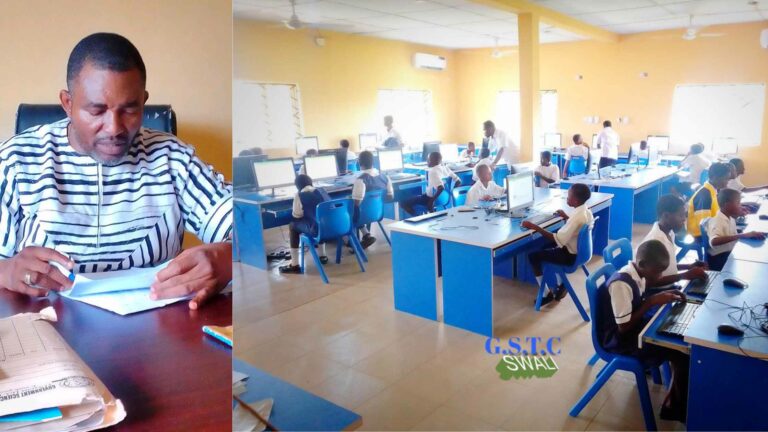
PEDRO Dennis’ emergence as the pioneer principal of Government Science and Technological College Swali, Yenagoa in Bayelsa State was not mere happenstance. It was a result of his leadership capacity, proven track record, and integrity.
Dennis worked as a teacher, and head of the Mechanical Department from 2000 to 2018, and as vice principal of the Government Science and Technical College, Okaka, one of two technical colleges in the state from 2018 to 2020.
Between 2012 and 2015, the Universal Basic Education (UBE) built and fenced classrooms, halls, offices, hostels, and a generator house in Swali. The UBE Programme was introduced by the Federal Government of Nigeria under former President Olusegun Obasanjo in 1999 as a reform programme aimed at tackling the menace of out-of-school children by providing free, universal and compulsory basic education for every Nigerian child aged 6-15 years.
By 2020, the Bayelsa state government took over the UBE facility, turned it into a technical college, and sent Dennis over as principal. The structures had been abandoned; some were already dilapidating.
When Dennis and his team of teachers from other technical colleges came on board, they had one major task – to attract students and grow the school. It was not rosy, especially given that other schools already existed in the area, but Dennis was prepared to beat the odds.
“First, me and my team made flyers and distributed them along the streets and from house to house to create awareness about the college,” Dennis said. “We also made announcements on the radio and students came with their chairs and tables.”
Additionally, Dennis and his team met with community leaders of Swali who gathered his subjects and spoke to them about the school and what they stood to benefit by allowing their children to enrol. With this effort, the school attracted 30 students whom they trained with technical skills. When others saw what these students could do back home, they wanted to attend the same school.
Gradually, the numbers kept increasing.
GSTC, Swali.
Thinking outside the box
At inception, before the school started receiving funding, Dennis and his team needed to find ways to stay afloat. They invited the parents of the students and spoke to them about their challenges. This birthed the school’s Parents Teachers Association (PTA) and each child was taxed to pay N1,500 per term.
This solves part of the problem, but there is still the issue of basic equipment needed to facilitate and aid learning. For this, Dennis went back to his former school where he was able to lease some equipment.
This not only aided learning but also served as an income-generating stream. Products the students made were sold and the money was used for the day-to-day running of the school, fuelling, provision of water, and cleaning of the facilities.
“The students also improvised,” he said. “There were seven departments, including catering, garment making, welding and fabrication, electrical and installation, building, computer craft, and bookkeeping.”
Ensuring transparency
For transparency and accountability, Dennis ensured that the funds generated were controlled by the parents themselves and the vice principal, administration while he kept records and monitored spending. A bank account was opened for the PTA.
In 2022, a year after academic activities fully kick started, the government stepped in, demolished and rebuilt some structures, and built new ones like the school library and ICT centre, workshop, all equipped. It also created an access road, provided water, electricity, equipment for the hostels and furniture, and renovated existing structures, having seen how committed Dennis and his team were.
The numbers grew exponentially after the formal inauguration with new facilities/structures and security architecture. Today, the school boosts of over 800 students and 40 teachers, 15 out of which are volunteers Dennis had brought in.
As more support came in, Dennis established the school basement committee that manages the funds and a project implementation committee that executed all projects and kept all records and documents. These moves were opposed by some teachers who felt entitled to some share of the funds.
A stickler for excellence
Abusi Ebiegberi says he has worked with five principals, but Dennis stands out because of his penchant for excellence and propensity for the truth. He was transferred to Swali from Ekpetiama Comprehensive High School, Tombia in October 2020.
“I had heard so much about Dennis even before I met him, he always listens and corrects,” he said. “When he resumed, he gathered me and other teachers together and spoke to everyone about his vision for the school.”
Ebiegberi says Dennis has united teachers in the college by making sure that they care for one another, especially in times of need and if an issue arises, he calls for an emergency meeting and makes sure it is addressed.
“He tells us to always be committed to our jobs and see ourselves as a family,” said Ebiegberi, who is currently the Vice Principal of Welfare at the college. “He treats everyone with respect, including the students.”
To cover up areas where the school lacked teachers, Ebiegberi said that Dennis recruited more volunteer teachers and spoke to parents who contributed money with which they are being paid stipends for their efforts.
Testimony Charles, one of the college’s pioneer students, graduated from the Garment Making Department and currently owns her outlet in Bayelsa. She says Dennis usually visited her parents whenever she missed classes.
“He always made sure that me and other students were up to speed and that no one was left behind,” she said. “Regularly, he also visited our classes to ensure the teachers were doing their jobs.”
Henry Ogbodo’s two children are attending the technical college—one of his sons, Richmond graduated in 2023 from the Welding and Fabrication Department. He says that Dennis has shown great leadership ever since he became the principal of the college and that has built confidence in the minds of parents.
“One of the times I visited, he was upset at one of the teachers who left without taking permission, it shows how committed he is to the project of transforming the school into one of the best and that is why I decided that my other children also enrol and they are doing well.”
Although managing Government Science and Technological College Swali was Dennis’s primary assignment, he was also at the forefront of the fight for the welfare of unfairly treated teachers whose salaries were often deducted for no reason.
“Now, some teachers reject the offer when posted to my school because of my zero tolerance for corruption, but I am undeterred and committed to pushing for integrity in the public sector,” Dennis said.
This report republished from The Investigator is championed by Accountability Lab and sponsored by The John D. and Catherine D. MacArthur Foundation and Luminate.
SOME Economists have criticised the defence by the Debt Management Office (DMO), over N121 trillion Nigerian debt, despite Nigeria spending a large chunk of its revenue in debt servicing.
According to the DMO, Nigeria’s public debt stock rose from N97.35 trillion in December 2023 to N121.67 trillion in March.
The Director-General of DMO, Patience Oniha, on Tuesday, June 25, defended the debt spike despite Nigeria’s usage of over 97 per cent of accrued revenue to service debts.
Oniha argued that if the overall debt is discounted from foreign exchange impact, it is within the normal limits and not overshooting threshold.
Some economists countered DMO’s stance and wondered why the government kept borrowing even for consumption and other recurrent expenditures without maximum impact on economic growth.
A professor of management economics, Emmanuel Abolo, warned the government to stop borrowing, arguing that threatens Nigeria’s economic sovereignty.
According to the professor, “It is a weak argument to compare our debt standard with international institutions’ rating when we can hardly show what we do with the debt.
“One of the implications is the fiscal strain these excessive debts will put Nigeria into. You look at the servicing costs of these debts which outweigh revenues. It’s already causing a huge budget and fiscal deficit.
He added that the huge debt is going to crowd out public investments in critical areas of the economy. That is going to slow down economic growth and development.
“In terms of currency and development, we can say that the high debt can lead to currency depreciation. The currency is now stabilising around N1,500/$ and that is extremely high, ”
“There’re going to be currency risks because part of the debts is the external debts. When there is exchange rate volatility, you’re going to be exposed to currency and risks,” he added.
A development economist who consults for the British Department for International Development (DFID), Celestine Okeke berates the DMO’s comments and wonders why the government keeps defending the “indefensible”.
“The foreign and external debts keep surging because of exchange differentials which it caused by the way and manner it has managed the subsidy removal incidence and currency depreciations which created huge problems for the economy.
The government needs to come up with clear economic plans so that we can question all the steps and borrowings they make,” he said.
These two, in particular, affect the debt stock and debt service,” she said.
Notably, Oniha, in a further clarification earlier said the increase in Naira Terms of N24.33 trillion between the fourth quarter of 2023, and the first quarter of 2024, did not strictly represent new borrowing.
She said that the total external debt stock was relatively flat at 42.50 billion dollars and 42.12 billion dollars in the fourth quarter of 2023, and the first quarter of 2024 respectively.
THE ICIR has earlier reported that a cursory look at the data indicates that the total public debt dropped to $91.46 billion in dollar terms as of March 2024 from $108.23 billion as of December 2023. It, however, increased in naira term to N121.67 trillion as of March 2023 from N97.34 trillion as of December 2023.
The increase in the debt profile in naira terms resulted in the loss in value of the Nigerian currency against the dollar in the three months between December 2023 and March 2024.
In December 2023, the DMO calculated the public debt profile at the rate of N899.393/$1, but at N1,330.26/$1 as of March 2024.
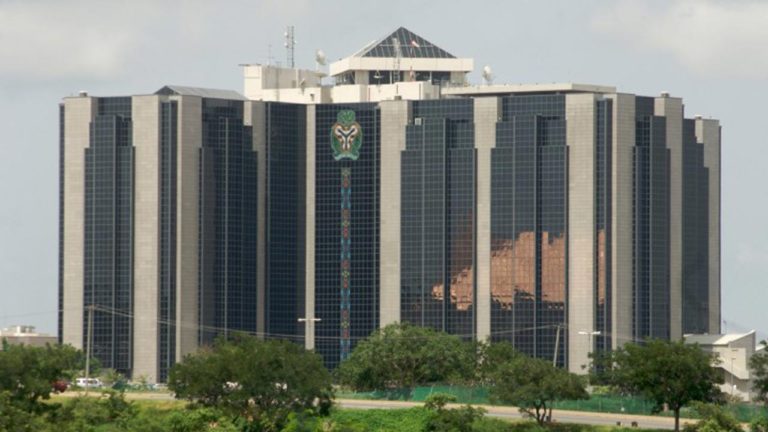
FOLLOWING the revocation of Heritage Bank Plc’s licence over its failure to improve its financial performance, indications quickly emerged that the Central Bank of Nigeria (CBN) had plans to revoke the licences of three other banks.
But CBN refuted the allegations that it had plans to revoke the licence of Unity Bank Plc, Polaris Bank Limited, and Keystone Bank Limited, calling it a false rumour intended to trigger panic in the financial system.
In a statement on June 4, the apex bank said the Nigerian financial system remains safe, sound, and resilient without recourse to the state of the financial health of Unity, Keystone, or Polaris Bank.
On June 3, the CBN revoked the banking licence of Heritage Bank with immediate effect over the bank’s failure to improve its financial performance.
According to the apex bank, it acted under the powers invested in it under Section 12 of the Banks and Other Financial Act (BOFIA) 2020, adding that its action became necessary due to the bank’s breach of Section 12 (1) of BOFIA.
It states, “Notwithstanding the provisions of this Act or any other law, the Governor may, with the approval of the Board and by notice published in the Federal Government Gazette, or print and electronic media, revoke any licence granted under this Act if a bank–.”
Section 12(1) of the BOFIA as contained in the Federal Republic of Nigeria Official Gazette, November 2020
This comes on the heels of the CBN’s move to recapitalise the deposit money banks to ensure their financial soundness and safety of depositors’ funds, deepen financial intermediation, and enhance the banks’ capacity to support economic growth through investment funding.
It pegged the minimum capital base at N500 billion for commercial banks with international exposure, N200 billion for banks with national authorisation, N50 billion for regional banks and merchant banks, and N20 billion and N10 billion for non-interest banks with national and regional operations, respectively.
The move could lead to the withdrawal of more banks’ licences as it happened in 2006 when CBN’s recapitalisation led to the revocation of about 14 banks’ licences which were financially unhealthy at the time.
The ICIR reports that between 1994 and 2018, about 53 banks had their licenses revoked by the regulatory umpire.
The financial position and corporate governance of the Unity Bank, Polaris Bank, and Keystone Bank raise quite a few concerns should the apex bank act by Section 12 of the BOFIA.
Financial position: Unity Bank
A cursory look at Unity Bank’s financial summary for the past five years shows that the bank has been in a financial dilemma over the years.
In the five years, 2018 to 2022, the bank has consistently reported negative net equity that has wiped off investors’ funds.
In 2018, Unity Bank’s total liabilities exceeded its total assets by N-284.37 billion, in 2029 by N-278,86 billion, in 2020 by N-275.41 billion, in 2021 by N-276.15 billion, and in 2022 by N-274.95 billion, according to the bank’s Annual Report and Accounts 2022.
This points to the fact that Unity Bank has consistently breached Section 12(d) of the BOFIA, which states that CBN can revoke a bank licence if it “has insufficient assets to meet its liabilities.”
Five years financial summary of Unity Bank shows the bank posted negative net equity. Source: Unity Bank’s Annual Report and Accounts 2022
Also, in its 2022 independent auditor’s report signed by its professional services chartered accountant, Akinyemi Ashade, KPMG raised concerns over the bank’s financial health as total liabilities continue to exceed its assets.
The KPMG noted that Unity Bank did not meet the required minimum Capital Adequacy Ratio (CAR) of 10 per cent and the minimum capital requirement of N25 billion for a national bank as required by the CBN, The ICIRreported.
Financial position: Polaris Bank
In its performance for the last five years, Polaris Bank reported a positive net equity as its financial position showed that the bank’s total assets were slightly higher than its total liabilities.
In 2018, Polaris Bank’s assets exceeded the liabilities by N58.76 billion, in 2019 by N86.89 billion, in 2020 by N99.94 billion, in 2021 by N102.04 billion, and in 2022 by N100.197 billion.
Financial position: Keystone Bank
A check by The ICIR shows that Keystone Bank is not disclosing its financial statement or annual reports to the public being a limited liability company that is not under any compulsion to do so.
However, in March 2018, Keystone Bank had liabilities of N298.5 billion that exceeded its assets base of N258.9 billion, Proshare, a news and research platform, reported.
In June 2018, its liabilities of N331.2 billion also exceeded its assets of N286.2 billion but its assets, and by September, its liabilities rose to N357.1 billion higher than its assets of N316.7 billion.
The ICIR reports that when the CBN dissolved the management board of Keystone Bank, along with two other banks earlier this year over various infractions, the decision echoed a pattern of regulatory interventions to ensure the stability and integrity of the Nigerian banking sector.
Corporate governance
While Keystone Bank financial position is not easily available for public scrutiny and Polaris Bank posted positive net equity in last five years, however, CBN’s worries over their corporate governance led to the removal of their boards for breach of the Section 12 of BOFIA.
The ICIRreported earlier in January that the CBN had the course to unseat the boards’ of Polaris Bank, Union Bank, and Keystone Bank for various infractions.
The infractions varied from regulatory non-compliance, corporate governance failure, disregarding of the conditions under which their licenses were granted, and involvement in activities threatening financial stability.
The regulatory umpire stated specifically that its action became necessary due to the non-compliance of these banks and their respective boards with the provisions of Section 12(c), (f), (g), (h) of the BOFIA, The ICIRreported.
Financial rating
In its latest financial rating, Agusto & Co. affirmed the ‘Bb-’ rating assigned to Unity Bank with a positive outlook.
It further attached a ‘3’ environmental, social, and governance (ESG) score which denotes that environmental, social, and governance issues have a material impact on the assigned credit rating.
“The rating is hinged on the bank’s low level of impaired credits, adequate liquidity position, and growing retail brand franchise. However, suppressing these factors are the Bank’s negative capital, sectoral and obligor concentration in the loan book amidst the prevailing macroeconomic and regulatory headwinds,” the rating agency stated.
A pan-African credit rating agency, Agusto & Co. upgraded Polaris Bank’s rating to ‘Bbb-’, with a stable outlook.
It said the upgrade was upheld by improving asset quality, which involved resolving significant impaired assets and recoveries, stating that the rating reflects adequate capitalization, the new shareholders’ capacity and intent to transform the Bank, and a strong retail funding base.
Agusto & Co. said, however, that the rating assigned was constrained by prevailing macroeconomic headwinds as well as a significant loss of market share due to the governance issues that the bank contended with in the past.
“We have also assigned a “3” ESG score, reflecting our view that environmental, social, and governance issues have a material contribution to the Bank’s credit rating.”
Likewise, Agusto & Co. affirmed the “B-” rating assigned to Keystone Bank with a stable outlook.
It said the rating reflects the experienced management team overseeing the turnaround of the Bank’s performance and strong retail franchise.
Agusto & Co. said, “The rating also recognises the lack of any capital buffer to absorb shocks and support growth plans, particularly in a period of heightened risks and weak macroeconomic fundamentals. In addition, the rating is constrained by Keystone Bank’s lingering asset quality issues and weak profitability.
“We have also assigned an ESG score of “3” as we adjudged environmental, social, and governance issues to have a material contribution to the rating of Keystone Bank.”
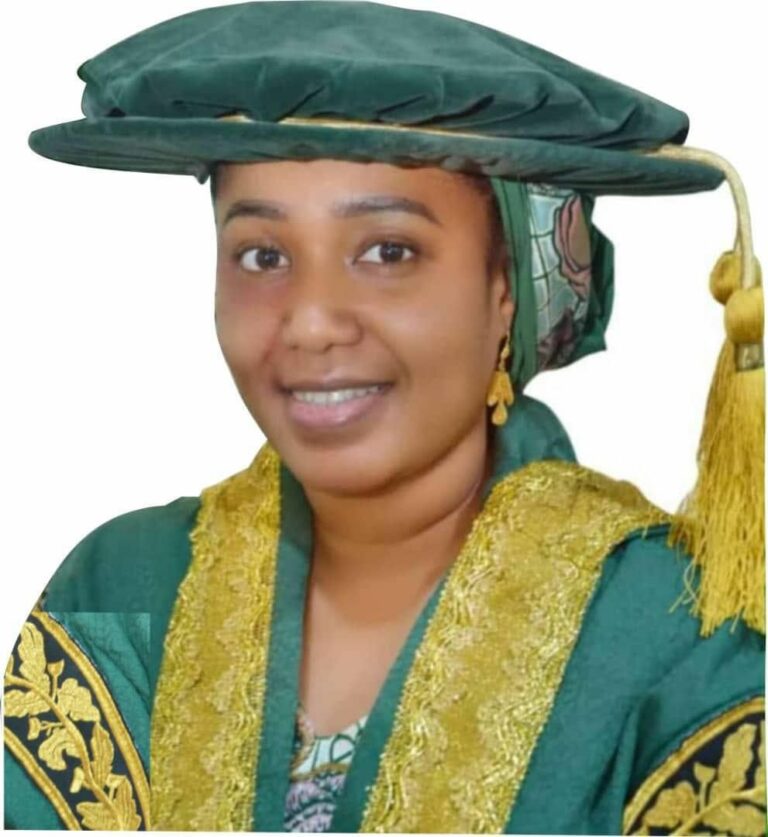
PROFESSOR of International Law, Aisha Sani Maikudi, was appointed as the Acting Vice-Chancellor of the University of Abuja (UNIABUJA) on Wednesday, June 26.
A statement on UNIABUJA’s social media handles disclosed that her appointment was announced by the university’s Senate, during a meeting held on Wednesday, and she is to temporarily occupy the position until it is approved by the institution’s governing body.
She is to succeed Abdul-Rasheed Na’Allah, the outgoing Vice-Chancellor, whose tenure will expire on June 30.
Maikudi was the Deputy Vice-Chancellor (Academic) of the institution at the time of her appointment.
Born in January 1983, Maikudi hails from Katsina State. She had her secondary education at Queens College, Lagos, where she obtained her West African Senior School Certificate Examination (WASSCE).
She graduated from the University of Reading in the United Kingdom with her Bachelor of Laws (LLB) in 2004, and in 2005, she obtained her Master of Laws degree (LLM) from the London School of Economics and Political Science (LSE).
She served as a corps member under the National Youth Service Corps (NYSC) in 2007 at the Nigerian National Petroleum Corporation Headquarters in Abuja.
Maikudi joined UNIABUJA in 2008 as Lecturer II and acquired her Doctor of Philosophy (PhD) in 2015 from the same institution.
In 2014, Maikudi was Head of Department in the university’s Faculty of Law. She became the first female deputy dean of the faculty in 2018 and the following year served as the first director of the institution’s International Centre.
In 2022, Maikudi became a professor at the institution.
She is a member of professional bodies including the Nigerian Law Teachers Association (NLTA), the Nigerian Bar Association (NBA) and the International Federation of Women Lawyers (FIDA).
Her predecessor, Na’Allah, is involved in a lawsuit filed by six senior lecturers of the institution following a dispute over the university’s internal council elections.
THE Nigerian Senate approved the extension of the implementation of the capital component for the 2023 Appropriation Act and the 2023 Supplementary Appropriation Act to December 31, 2024.
This was disclosed during a plenary sitting today, June 27, 2024.
The senators suspended their recess, originally scheduled to end on July 2, 2024, and reconvened for an urgent session to deliberate on a bill aimed at amending the 2023 Supplementary Appropriation Act.
The proposed amendment seeks to extend the implementation deadline to December 31, 2024, in response to President Bola Tinubu’s request.
Note that the 2023 budget of N28.1 trillion was signed into law by former President Muahammadu Buhari in January 2023. The 2023 budget had a capital expenditure of N5.9 trillion.
Meanwhile, Tinubu signed the 2023 supplementary budget of N2.17 trillion in November 2023.
With the extension of these budgets by the Red Chamber, The ICIR understands that Nigeria would be simultaneously running three budgets this year.
These include the capital component of the 2023 budget, the 2023 supplementary budget and the 2024 budget of N28.7 trillion signed by the president in January.
Approval for presidential aircraft
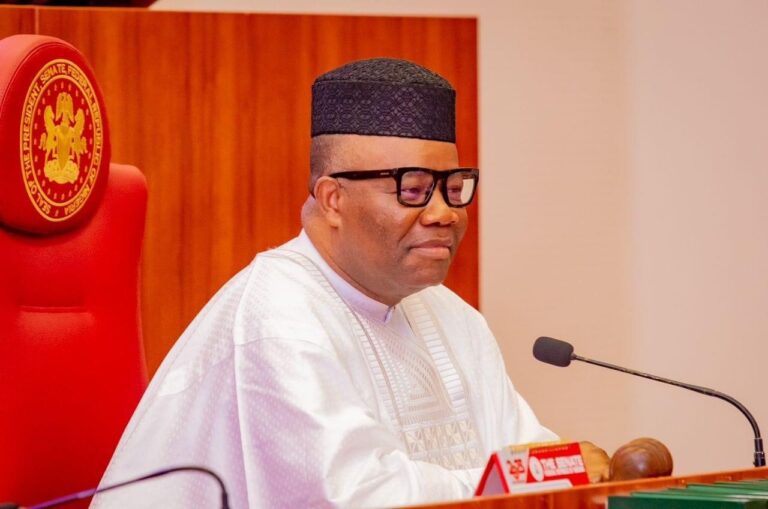
In a separate development, the Senate President, GodsWill Akpabio, also stated that the chamber would consider the approval for the purchase of presidential aircraft if requested.
He stated this to clarify social media comments on the purchase of the plane following recommendations of the Committee on National Security and Intelligence after its technical subcommittee conducted a hearing on the status and airworthiness of aircraft in the Presidential Air Fleet (PAF).
Akpabio said, “We care about the president and we care about the Nigerian people. We will approve things that will benefit the Nigerian people. We will approve things that would improve the living standard of the people. At the same time, we will also take cognizance of the duties of the president.
“If his vehicle is bad, we will repair the vehicle. If his plane is bad, we will approve money for the repair of the plane. So that is not an issue. There is nothing before us. I don’t think you should worry about it.”
The ICIR reported how the National Assembly leadership ‘hijacked’ the 2022 supplementary budget. Also, The ICIR’s 2024 budget series uncovered several frivolities and misappropriations contained in the budget.
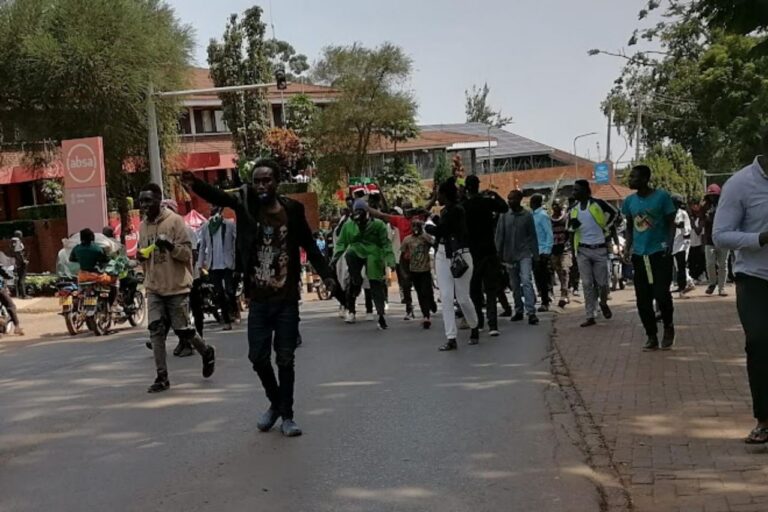
POLICE in Kenya have fired teargas on some citizens who took to the streets to protest despite the country’s President William Ruto bowing to pressure and declining to sign the controversial Finance Bill.
On Thursday, June 27, the protesters returned to the streets demanding that the President and other leaders step down from their positions.
They claimed they no longer believed in the administration and it must quit.
“Forcing down a bad Bill was evil enough for us. It indicts the conduct of the leaders. Let them do us a favour and resign.
“Deploying the Armed Forces to quell riots in the streets marks a significant low for the Kenya Kwanza administration. If they have decided to deploy the Army, let them take over the management of the country and in 90 days we conduct a fresh election,” a protester said, according to Kenyan local media, The Star.
The ICIR reports that the protests in Kenya began about a week ago when citizens demanded Ruto’s resignation over a controversial Finance Bill at the country’s Parliament, which the citizens believed would hike taxes and worsen the already harsh economic realities.
Despite the killing of many citizens as a result of the protest and the President declining to sign the bill into law, the protesters still demanded a peaceful march to be held today, Thursday, in memory of those killed during the protest on Tuesday, June 25.
After the destructions and killings that trailed the protest on Tuesday, June 25, the President addressed the country the following day saying he would not sign the bill into law.
“Having reflected on the continuing conversation regarding the content of the Finance Bill 2024, and listening keenly to the people of Kenya who have said loudly that they want nothing to do with this Finance Bill 2024, I concede, and, therefore, I will not sign the 2024 Finance Bill,” he said.
He added that following the bill’s passage by the Parliament, the country experienced widespread dissatisfaction, regrettably resulting in the loss of lives, the destruction of property, and the desecration of constitutional institutions.
During the nationwide protests on Tuesday, the protesters set a part of the Parliament on fire, while lawmakers were inside passing reviews to increase taxes.
In a chaotic scene, the protesters outnumbered the police, chasing them away as they sought to enter the Parliament premises in Nairobi, the country’s capital.
Several other cities and towns across Kenya witnessed protests and clashes, with many citizens demanding Ruto’s resignation and opposing tax increases.
Addressing the nation, the President noted that the debate on the tax had been “hijacked by dangerous people”, describing the intrusion into Parliament as an act of treason and vowed to take action against the organisers and financiers of the protests.
In Nairobi, police resorted to firing when tear gas and water cannons proved ineffective in dispersing the crowds after they succeeded in driving protesters away from the Parliament Building, and lawmakers were evacuated through an underground tunnel.
Also, the country’s Defence Minister, Aden Duale, stated that the Army had been called in to assist the police in handling a “security emergency” that had led to the “destruction and breaching of critical infrastructure”.
THE Economic Community of West African States (ECOWAS) has donated $2 million to the Red Cross and World Food Programme (WFP).
The fund is to support victims of flooding in Nigeria in 2022, and those who faced violence in 2023.
“The ECOWAS Commission is set to provide financial assistance, including $906,205 for flood disaster relief in Nigeria from 2022 and $1,000,000 to support victims of violence in Nigeria in 2023. These funds aim to help stabilise the affected individuals,” said the ECOWAS Commissioner for Human Development and Social Affairs, Fatou Sarr.
The cheques containing the fundswere presented to the WFP and the Nigeria Red Cross Society at a brief ceremony at the Federal Ministry of Humanitarian Affairs and Poverty Alleviation in Abuja recently.
In her remark, Sarr said ECOWAS had reaffirmed its dedication to alleviating the suffering of people impacted by humanitarian crises.
The Nigerian Red Cross which aims to reach 3,500 households in Adamawa, Anambra, Oyo, Kebbi, Kogi and Riversstates got a cheque of $906, 205.
The Red Cross is also expected to provide 12 water boreholes with the fund to ensure access to clean water, thereby reducing the risk of water-borne diseases in selected communities.
According to the director for disaster management of the Nigerian Red Cross, Benson Agbro, the support exemplifies their shared commitment to humanitarian principles and the well-being of citizens.
“It is a testament to what we can achieve through collaboration and solidarity. Together, we are not just responding to a disaster; we are building a foundation for a more resilient and prosperous future for our nation,” he stated.
Sarr also presented a cheque for $1 million to the deputy country director of the WFP, Guy Adoua.
Adoua said the partnership would continue to deliver essential food, nutrition and resilience-building support to the communities in Katsina and Sokoto states and strengthen state government institutions and programmes for greater sustainability.
“ECOWAS and the Government of Nigeria have once again demonstrated their unwavering commitment to the welfare of the people with a generous contribution. Together, we are creating sustainable solutions that will ensure long-term food security and resilience in the region,” Adoua stated.
In the project to be implemented by WFP, over 14,000 people will receive food and nutrition assistance for six months.
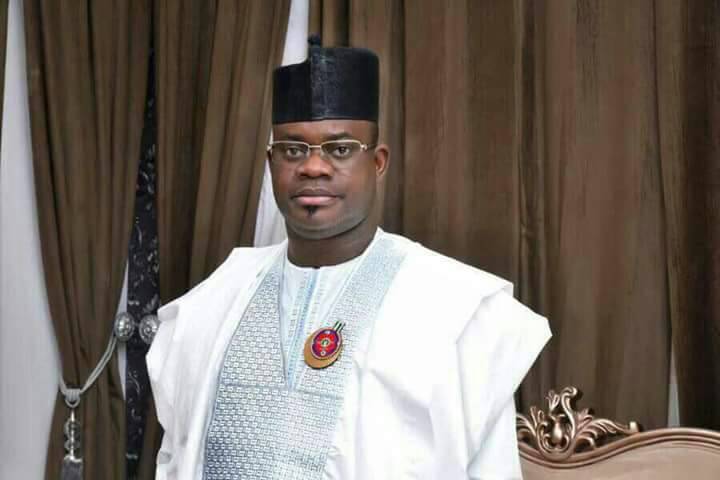
THE former governor of Kogi State, Yahaya Bello, has told a Federal High Court (FHC) sitting in the Federal Capital Territory (FCT) to transfer his case with the Economic and Financial Crimes Commission (EFCC) to Kogi State.
Bello, currently facing a 19-count charge, wrote to the Chief Judge (CJ) of the FHC, John Tsoho, pleading to be allowed to face his trial in Kogi.
The former governor argued that only the Lokoja Division of the High Court had the jurisdiction to consider the accusations made against him by the EFCC.
At the resumed proceeding on Thursday, June 27, Bello, who failed again to appear before the court, sent the letter through his legal team, led by Abdulwahab Mohammed, a senior advocate, as he entered his plea to the charge.
A lawyer who announced his appearance for Bello, Adeola Adedipe called the attention of the trial judge, Emeka Nwite, to the letter his client had sent to the CJ.
“However, I was made to understand that a letter had been written on behalf of the defendant to the honourable Chief Judge of the Federal High Court requesting in substance, that this matter be administratively transferred to the Federal High Court, Lokoja Judicial Division, which we believe has territorial jurisdiction to handle this matter.
“My lord, as of this morning, I am not aware whether there has been a response by the prosecution team in compliance with the directive of the CJ.
“We are also not in receipt of any decision that has been made on this request by the CJ.
“I am also aware that this administrative directive of the CJ has been formally communicated to this court,” the lawyer stated.
Responding, the EFCC lawyer, represented by Kemi Pinheiro, a senior advocate, urged the court to order the defence lawyer to explain the defendant’s non-appearance in court despite his assurance on June 13 to guarantee his presence in court for arraignment.
He prayed the court to dismiss “the story of the defence lawyer as dilatory and a further attempt to treat this court with scorn.”
Pinheiro claimed that the commitment made by the senior lawyer was not fulfilled by the letter to the CJ.
The counsel for the EFCC further contended that filing of a petition against a judge with the National Judicial Council (NJC) does not halt the judge’s caseload from moving forward.
As a result, he requested that the court invite the two senior lawyers representing Bello to justify not being charged with contempt of court.
The EFCC lawyers insisted that the court dock the defendant’s lawyer for failing to produce the former governor after five sittings and make him a scapegoat.
The ICIR reported that Bello, who governed Kogi State for eight years, is accused of money laundering, breaching trust, and embezzling N80.2 billion worth of public fund.
The EFCC accused the former governor of money laundering allegedly perpetrated in connivance with his nephew, Ali Bello, and two others, Dauda Suleiman and Abdulsalam Hudu.
Bello insisted that when the EFCC filed the allegation against him and requested the issuance of a bench warrant for his arrest, it was acting in violation of an existing ruling from a Kogi State High Court.
The ICIR reported that the Federal High Court Abuja refused to revoke the arrest warrant on Bello’s corruption case filed against him.
The judge, Nwite, gave the ruling on Friday, May 10, after hearing an application by the EFCC that preliminary objections by the former governor should not be heard until he shows up to defend the 19-count charge filed against him.
BOLIVIA’s President Luis Arce has slammed a coup attempt against his government as soldiers and armoured military vehicles pulled away from surrounding government buildings in La Paz.
On Wednesday, June 26, military troops led by the country’s Army Commander, Juan José Zúñiga, gathered around the presidential palace with a tank slammed at the palace doors.
Addressing the country, Arce said his government would be “firm” in its opposition to any coup attempt and urged Bolivians to stand “in favour of democracy”.
Zuñiga, who was earlier stripped of his position as the country’s Army Commander confronted the President and rejected his order that hewithdraw thetroops.
He told reporters that the military sought to install a new cabinet and “restore democracy.”
The President, however, appointed new commanders of the Army, Navy and Air Force, who instructed their personnel to return to their units.
The officers retreated from the government palace.
Zuñiga alongside a cabinet member, Eduardo del Castillo, were arrested.
In a news conference, the Bolivian Defence minister, Edmundo Novillo, said the Armed Forces were “under control.”
“We now have total and absolute control over our Armed Forces. Everything is under control now. We urge the population that everything goes back to normal,” he said.
Both the Bolivian government and other world leaders condemned the coup attempt with the Bolivia’s Attorney General’s office stating that Zuñiga and “all the other participants” in the incident were the subject of a criminal investigation.
The recent political clash in Bolivia occurs as hostilities increase over leftist former President Evo Morales’ hopes to challenge former ally Arce in general elections next year.