THE Nigeria Labour Congres (NLC) has rejected the attempt by Nigerian governors to take over the lingering minimum wage negotiations.
The workers union rejected the suggestion by governors that they should be permitted to determine the wages of their workers, saying it is not only oppressive but against the idea of the minimum wage.
In a statement released on Thursday, June 29, following their meeting in the capital of Ogun State, Abeokuta, the Southern Governors Forum argued that each state should be free to bargain over how much it could pay
The Forum maintained that each state should be able to negotiate its minimum wage and that it should be commensurate with the cost of living.
However, the 36 states of the federation under the Nigerian Governors’ Forum pledged to continue supporting the process and guaranteed that the ongoing talks would lead to higher compensation.
In response to the Southern Governors’Forum’s stance, the NLC in a statement signed by Benson Upah, NLC’s Head, of Information and Public Affairs, issued a warning to state governors on Friday, June 28, cautioning them against making any more provocative remarks regarding the minimum wage to prevent igniting labour unrest.
The NLC pleaded with President Bola Tinubu not to give in to pressure or be forced into a corner by disloyal governors, as he had pledged a living wage higher than a minimum salary.
“This notion is not only dictatorial but also undermines the very essence and the model adopted for creating a national minimum wage in Nigeria.
“The concept of a national minimum wage is not arbitrary. It represents a national wage floor, a baseline below which no worker in the law should be paid,” the NLC stated.
The Union said the governors’ demand to determine the minimum wage unilaterally negates this principle and threatens the welfare of Nigerian workers and the national economy.
According to the statement, the national minimum wage is not synonymous with the individual pay structures of the states which they implement religiously.
“We urge President Tinubu who had promised a living wage (which is superior to a minimum wage) not to allow himself be blackmailed or boxed into a corner by unpatriotic governors. We urge the federal government to stop dithering on the issue of the national minimum wage because of the gang up by some selfish governors.
“The NLC urges the Governors to abandon any inclination towards dictatorial practices as the process remains a tripartite one. Accordingly, we call for policies and actions driven by equity and fairness,” the statement added.
NLC said it stands firm in its commitment to protecting the rights and welfare of Nigerian workers and will continue to advocate for a fair and equitable wage system that reflects the true spirit of our nation’s values.
The ICIR reported that the Tripartite Committee set up by the Federal Government (FG) to negotiate a new minimum wage urged the labour unions to consider economic realities during their negotiations and discussions.
The tripartite committee was established by the federal government to review the minimum wage and urged labour unions to reassess their demands.
THE Independent National Electoral Commission (INEC) has said it would not conduct chairmanship elections for the six Local Councils Areas (LCAs) in the Federal Capital Territory (FCT) in 2025 due to the provisions of the Electoral Act 2022 (as amended).
According to the commission, instead of the three years specified by the Electoral Act of 2010, the Electoral Act 2022 (as amended) provides a four-year term for chairmen and other elected council members.
The INEC chairman, Mahmood Yakubu, revealed this on Friday, June 28, at a meeting with the Inter-Party Advisory Council (IPAC) in Abuja.
Yakubu declared that the present council members’ and chairmen’s tenure would end in June 2026.
The INEC chairman said the commission had previously been contacted over the area council leaders’ terms by a few legal firms, contenders for the offices and others.
He added that the commission was also being pressured to make public the agenda and schedule of events for the LCAs.
Yakubu explained that the grounds for their inquiries were found in the terms of the Electoral Act 2010 (as modified), which was in effect as of Saturday, February 12, 2022, the day the area council elections were held.
“Nigerians are aware that the National Assembly has since repealed and re-enacted the Electoral Act 2010 (as amended) as the Electoral Act 2022.
“In particular, in the exercise of its powers as the law-making body for the FCT, the National Assembly extended the tenure of the area councils from three to four years, thereby aligning it with executive and legislative elections nationwide,” Yakubu stated.
According to him, this is one of the important provisions of the Electoral Act 2022.
“By the time the elected chairmen and councillors were sworn-in four months later on 14th June 2022, they took their oath of allegiance and oath of office on the basis of the new electoral Act (i.e. the Electoral Act 2022) which provides for a four-year tenure. Consequently, their tenure therefore expires in June 2026,” the INEC chair declared.
He emphasised that the date of the inauguration for legislatures or executives determines tenure rather than the election date.
In April 2024, INEC received a request to urgently release a notice of election for the 2025 elections in the FCT area councils.
The request wascontained in a letter addressed to the INEC chairman by a lawyer, Elom Aleke.
In the letter, received at the INEC headquarters on April 17, it was noted that the tenure of the current chairmen of area councils and councillors in the FCT, who assumed office in 2022 will soon lapse.
CORPORATE Accountability and Public Participation Africa (CAPPA) has urged the Lagos State government to look beyond privatisation in solving the state’s water challenges.
The group frowned at the state government’s purported promotion of privatising water utilities and ignoring other management approaches, supposedly to the detriment of the state’s underprivileged areas.
CAPPA raised serious concerns over remarks made during the recently concluded Lagos International Water Conference (LIWAC), held from June 25–26, 2024, and hosted by the Lagos State Water Regulatory Commission (LASWARCO).
In a statement dated Thursday, June 27, and signed by its media and communications officer, Robert Egbe, CAPPA said though the just-concluded Lagos International Water Conference, titled “Financing Water and Sanitation for a Greater Lagos,” convened government representatives, private sector investors, diplomats, and international non-governmental organisations to investigate creative funding options for the state’s water sector, the conference solely showcased Public-Private Partnerships (PPPs) as the only practical choice.
According to the group, this bias was evident in the speeches of the state Governor, the Minister for Water Resources, representatives of the United States Agency for International Development (USAID), the state Commissioner for Environment and Water Resources, and other pro-privatisation speakers.
The CAPPA said although it is true that Lagos State is experiencing a potable water problem, the overwhelming number of stakeholders’ voices are in favour of privatising public water utilities.
The group said alternative approaches, such as public control and community management of water have consistently proven effective in addressing water challenges across the world and offered a more inclusive and sustainable intervention in the face of a global water crisis.
“It is crucial to remind the Lagos State Government that credible evidence from Africa and elsewhere demonstrates that water privatisation does not enhance community access to water. If anything, examples from Gabon, Cameroon, Ghana, Mozambique, and Tanzania show governments struggling with legal and financial challenges to de-privatise after failed privatisation attempts.
“Only recently, Niger re-municipalised its water utilities following decades of privatisation, and Senegal, often cited as a privatisation success in Africa, faces public backlash over rising costs and water scarcity, prompting an audit of all PPP contracts,” CAPPA submitted.
It bemoaned the absence of frontline communities from the conference and criticised the absence of water justice activists and civil society groups that support public water use including women, girls, people with disabilities, and members of informal communities at the LIWAC 2024.
The group urged the Lagos State administration to adopt sustainable water funding approaches that prioritise deep interactions with these important groups and stakeholders.
Meanwhile, The ICIRreportedthat CAPPA blamed the recurring cholera outbreaks in Nigeria on the government’s failure to invest in safe water for the citizens.
In a statement it mailed to The ICIRon Thursday, June 20, CAPPA noted that the government’s failure to invest in public water and sanitation had resulted in the federal government’s confirmation of cholera outbreaks in more than 25 of the nation’s 36 states, including Lagos.
According to the World Health Organisation (WHO), cholera is an acute diarrheal infection characterised, in its severe form, by extreme watery diarrhoea and potentially fatal dehydration.
THE Joint Admissions and Matriculation Board (JAMB) has released the results of candidates who took part in the supplementary Unified Tertiary Matriculations Examinations (UTME) written in June 2024.
The Board’s spokesperson, Fabian Benjamin, disclosed this in a statement on Friday, June 28.
He stated that the supplementary examination was conducted for over 28,000 candidates, comprising those who could not be biometrically verified or those suspected of being involved in malpractices.
“The exercise, which recorded a huge success nationwide, was marked by heightened security measures put in place by the Board to preclude any instance of examination infractions.
“As such, some nefarious characters, who had attempted to impersonate bona fide candidates were apprehended and handed over to law enforcement agencies for further investigation and prosecution,” Benjamin said.
The ICIRreported that the supplementary examinations became necessary due to non-compliance with criteria by the examination centres of affected candidates.
Benjamin urged candidates to refrain from examination malpractices and avoid making attempts to upgrade their scores fraudulently.
“To check their supplementary UTME results, candidates are to send UTMERESULT to either 55019 or 66019 through the same phone number they had used to generate their profile codes at the start of registration,” the statement read.
During its policy meeting on June 24, the Board announced that it would determine cut-off marks for the 2024 admission year on July 18.
During the policy meeting, candidates’ performances will also be examined as reports on the year’s UTME and Direct Entry (DE) examinations will be presented by the Board’s Registrar, Ishaq Oloyede.
Critical stakeholders including the National Board for Technical Education (NBTE), National Council for Colleges of Education (NCCE), National University Commission (NUC), Heads of tertiary institutions in the country, and the National Youth Service Corps (NYSC) will be present at the meeting.
The Board also earlier disclosed that it was investigating the Imo State University (IMSU) along with the Independent Corrupt Practices and Other Related Offences Commission (ICPC) over allegations of admission racketeering.
About 10 employees of the university were arrested by the ICPC according to a report.
FACEBOOK’S parent company, Meta, on Thursday, June 27, ticked Nigeria blue in its professional dashboard, thereby approving the country’s eligibility for content monetisation.
Creators can now earn money through in-stream, ads, live ads, ads on reels, bonuses and subscriptions.
In March, Meta announced that it would enable content creators in Nigeria and Kenya to monetise their content on Facebook and Instagram with options and services scheduled to be launched by June 2024.
Meta in 2023, launched a new feature, “Ads on Reels”, a performance-based programme which pays creators based on the total number of views their reels garner, leading to the development the monetisation option.
“With a performance-based model, creators can focus on the content that resonates with their audience and help them grow,” Meta said after months of testing the programme.
The feature saw a positive response and has been active in America, Australia, Canada, and South Korea, paying content creators in these countries first with about a 30 per cent rise in the creator’s earnings within the first six months of its launch.
Kenya and Nigeria have a strong creator economy, with creators producing content in various categories, from skits and fashion to educational videos and other creative expressions.
Users must have at least 5,000 followers, share five or more eligible videos, and get up to 60,000 minutes of video views to be eligible to earn from the platform.
Every requirement that is fulfilled will have a green checkmark next to it, and the requirements that have not been completed will have an ‘x’ next to them.
Facebook technology periodically verifies that pages and profiles in professional mode meet the requirements.
The latest approval by Meta came weeks after The ICIR published a report on how social media turned ‘digital oil’ for Nigeria content creators.
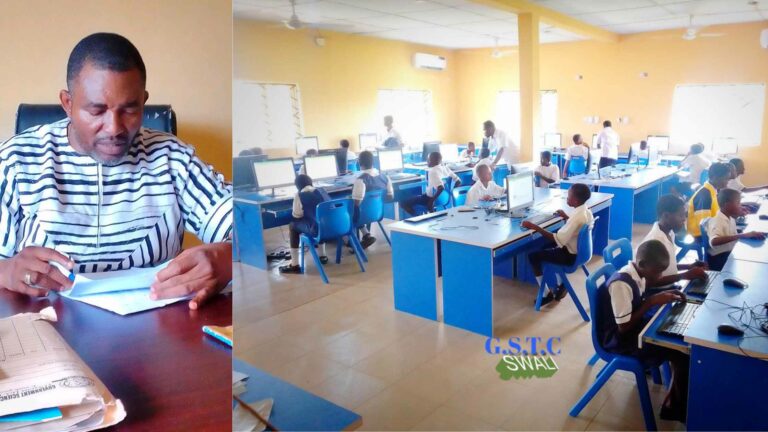
PEDRO Dennis’ emergence as the pioneer principal of Government Science and Technological College Swali, Yenagoa in Bayelsa State was not mere happenstance. It was a result of his leadership capacity, proven track record, and integrity.
Dennis worked as a teacher, and head of the Mechanical Department from 2000 to 2018, and as vice principal of the Government Science and Technical College, Okaka, one of two technical colleges in the state from 2018 to 2020.
Between 2012 and 2015, the Universal Basic Education (UBE) built and fenced classrooms, halls, offices, hostels, and a generator house in Swali. The UBE Programme was introduced by the Federal Government of Nigeria under former President Olusegun Obasanjo in 1999 as a reform programme aimed at tackling the menace of out-of-school children by providing free, universal and compulsory basic education for every Nigerian child aged 6-15 years.
By 2020, the Bayelsa state government took over the UBE facility, turned it into a technical college, and sent Dennis over as principal. The structures had been abandoned; some were already dilapidating.
When Dennis and his team of teachers from other technical colleges came on board, they had one major task – to attract students and grow the school. It was not rosy, especially given that other schools already existed in the area, but Dennis was prepared to beat the odds.
“First, me and my team made flyers and distributed them along the streets and from house to house to create awareness about the college,” Dennis said. “We also made announcements on the radio and students came with their chairs and tables.”
Additionally, Dennis and his team met with community leaders of Swali who gathered his subjects and spoke to them about the school and what they stood to benefit by allowing their children to enrol. With this effort, the school attracted 30 students whom they trained with technical skills. When others saw what these students could do back home, they wanted to attend the same school.
Gradually, the numbers kept increasing.
GSTC, Swali.
Thinking outside the box
At inception, before the school started receiving funding, Dennis and his team needed to find ways to stay afloat. They invited the parents of the students and spoke to them about their challenges. This birthed the school’s Parents Teachers Association (PTA) and each child was taxed to pay N1,500 per term.
This solves part of the problem, but there is still the issue of basic equipment needed to facilitate and aid learning. For this, Dennis went back to his former school where he was able to lease some equipment.
This not only aided learning but also served as an income-generating stream. Products the students made were sold and the money was used for the day-to-day running of the school, fuelling, provision of water, and cleaning of the facilities.
“The students also improvised,” he said. “There were seven departments, including catering, garment making, welding and fabrication, electrical and installation, building, computer craft, and bookkeeping.”
Ensuring transparency
For transparency and accountability, Dennis ensured that the funds generated were controlled by the parents themselves and the vice principal, administration while he kept records and monitored spending. A bank account was opened for the PTA.
In 2022, a year after academic activities fully kick started, the government stepped in, demolished and rebuilt some structures, and built new ones like the school library and ICT centre, workshop, all equipped. It also created an access road, provided water, electricity, equipment for the hostels and furniture, and renovated existing structures, having seen how committed Dennis and his team were.
The numbers grew exponentially after the formal inauguration with new facilities/structures and security architecture. Today, the school boosts of over 800 students and 40 teachers, 15 out of which are volunteers Dennis had brought in.
As more support came in, Dennis established the school basement committee that manages the funds and a project implementation committee that executed all projects and kept all records and documents. These moves were opposed by some teachers who felt entitled to some share of the funds.
A stickler for excellence
Abusi Ebiegberi says he has worked with five principals, but Dennis stands out because of his penchant for excellence and propensity for the truth. He was transferred to Swali from Ekpetiama Comprehensive High School, Tombia in October 2020.
“I had heard so much about Dennis even before I met him, he always listens and corrects,” he said. “When he resumed, he gathered me and other teachers together and spoke to everyone about his vision for the school.”
Ebiegberi says Dennis has united teachers in the college by making sure that they care for one another, especially in times of need and if an issue arises, he calls for an emergency meeting and makes sure it is addressed.
“He tells us to always be committed to our jobs and see ourselves as a family,” said Ebiegberi, who is currently the Vice Principal of Welfare at the college. “He treats everyone with respect, including the students.”
To cover up areas where the school lacked teachers, Ebiegberi said that Dennis recruited more volunteer teachers and spoke to parents who contributed money with which they are being paid stipends for their efforts.
Testimony Charles, one of the college’s pioneer students, graduated from the Garment Making Department and currently owns her outlet in Bayelsa. She says Dennis usually visited her parents whenever she missed classes.
“He always made sure that me and other students were up to speed and that no one was left behind,” she said. “Regularly, he also visited our classes to ensure the teachers were doing their jobs.”
Henry Ogbodo’s two children are attending the technical college—one of his sons, Richmond graduated in 2023 from the Welding and Fabrication Department. He says that Dennis has shown great leadership ever since he became the principal of the college and that has built confidence in the minds of parents.
“One of the times I visited, he was upset at one of the teachers who left without taking permission, it shows how committed he is to the project of transforming the school into one of the best and that is why I decided that my other children also enrol and they are doing well.”
Although managing Government Science and Technological College Swali was Dennis’s primary assignment, he was also at the forefront of the fight for the welfare of unfairly treated teachers whose salaries were often deducted for no reason.
“Now, some teachers reject the offer when posted to my school because of my zero tolerance for corruption, but I am undeterred and committed to pushing for integrity in the public sector,” Dennis said.
This report republished from The Investigator is championed by Accountability Lab and sponsored by The John D. and Catherine D. MacArthur Foundation and Luminate.
SOME Economists have criticised the defence by the Debt Management Office (DMO), over N121 trillion Nigerian debt, despite Nigeria spending a large chunk of its revenue in debt servicing.
According to the DMO, Nigeria’s public debt stock rose from N97.35 trillion in December 2023 to N121.67 trillion in March.
The Director-General of DMO, Patience Oniha, on Tuesday, June 25, defended the debt spike despite Nigeria’s usage of over 97 per cent of accrued revenue to service debts.
Oniha argued that if the overall debt is discounted from foreign exchange impact, it is within the normal limits and not overshooting threshold.
Some economists countered DMO’s stance and wondered why the government kept borrowing even for consumption and other recurrent expenditures without maximum impact on economic growth.
A professor of management economics, Emmanuel Abolo, warned the government to stop borrowing, arguing that threatens Nigeria’s economic sovereignty.
According to the professor, “It is a weak argument to compare our debt standard with international institutions’ rating when we can hardly show what we do with the debt.
“One of the implications is the fiscal strain these excessive debts will put Nigeria into. You look at the servicing costs of these debts which outweigh revenues. It’s already causing a huge budget and fiscal deficit.
He added that the huge debt is going to crowd out public investments in critical areas of the economy. That is going to slow down economic growth and development.
“In terms of currency and development, we can say that the high debt can lead to currency depreciation. The currency is now stabilising around N1,500/$ and that is extremely high, ”
“There’re going to be currency risks because part of the debts is the external debts. When there is exchange rate volatility, you’re going to be exposed to currency and risks,” he added.
A development economist who consults for the British Department for International Development (DFID), Celestine Okeke berates the DMO’s comments and wonders why the government keeps defending the “indefensible”.
“The foreign and external debts keep surging because of exchange differentials which it caused by the way and manner it has managed the subsidy removal incidence and currency depreciations which created huge problems for the economy.
The government needs to come up with clear economic plans so that we can question all the steps and borrowings they make,” he said.
These two, in particular, affect the debt stock and debt service,” she said.
Notably, Oniha, in a further clarification earlier said the increase in Naira Terms of N24.33 trillion between the fourth quarter of 2023, and the first quarter of 2024, did not strictly represent new borrowing.
She said that the total external debt stock was relatively flat at 42.50 billion dollars and 42.12 billion dollars in the fourth quarter of 2023, and the first quarter of 2024 respectively.
THE ICIR has earlier reported that a cursory look at the data indicates that the total public debt dropped to $91.46 billion in dollar terms as of March 2024 from $108.23 billion as of December 2023. It, however, increased in naira term to N121.67 trillion as of March 2023 from N97.34 trillion as of December 2023.
The increase in the debt profile in naira terms resulted in the loss in value of the Nigerian currency against the dollar in the three months between December 2023 and March 2024.
In December 2023, the DMO calculated the public debt profile at the rate of N899.393/$1, but at N1,330.26/$1 as of March 2024.
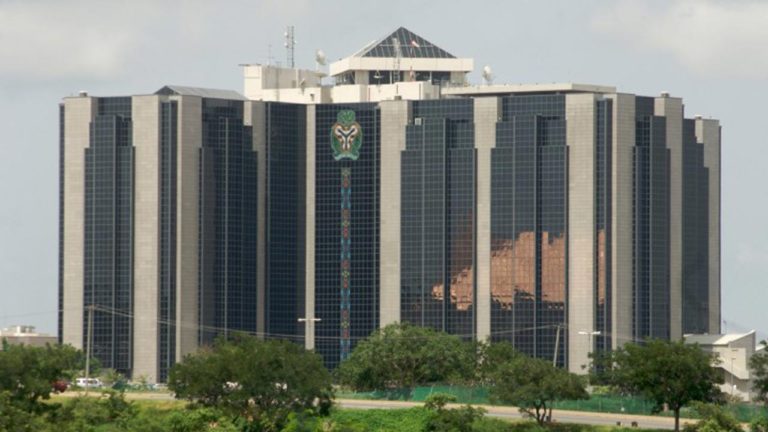
FOLLOWING the revocation of Heritage Bank Plc’s licence over its failure to improve its financial performance, indications quickly emerged that the Central Bank of Nigeria (CBN) had plans to revoke the licences of three other banks.
But CBN refuted the allegations that it had plans to revoke the licence of Unity Bank Plc, Polaris Bank Limited, and Keystone Bank Limited, calling it a false rumour intended to trigger panic in the financial system.
In a statement on June 4, the apex bank said the Nigerian financial system remains safe, sound, and resilient without recourse to the state of the financial health of Unity, Keystone, or Polaris Bank.
On June 3, the CBN revoked the banking licence of Heritage Bank with immediate effect over the bank’s failure to improve its financial performance.
According to the apex bank, it acted under the powers invested in it under Section 12 of the Banks and Other Financial Act (BOFIA) 2020, adding that its action became necessary due to the bank’s breach of Section 12 (1) of BOFIA.
It states, “Notwithstanding the provisions of this Act or any other law, the Governor may, with the approval of the Board and by notice published in the Federal Government Gazette, or print and electronic media, revoke any licence granted under this Act if a bank–.”
Section 12(1) of the BOFIA as contained in the Federal Republic of Nigeria Official Gazette, November 2020
This comes on the heels of the CBN’s move to recapitalise the deposit money banks to ensure their financial soundness and safety of depositors’ funds, deepen financial intermediation, and enhance the banks’ capacity to support economic growth through investment funding.
It pegged the minimum capital base at N500 billion for commercial banks with international exposure, N200 billion for banks with national authorisation, N50 billion for regional banks and merchant banks, and N20 billion and N10 billion for non-interest banks with national and regional operations, respectively.
The move could lead to the withdrawal of more banks’ licences as it happened in 2006 when CBN’s recapitalisation led to the revocation of about 14 banks’ licences which were financially unhealthy at the time.
The ICIR reports that between 1994 and 2018, about 53 banks had their licenses revoked by the regulatory umpire.
The financial position and corporate governance of the Unity Bank, Polaris Bank, and Keystone Bank raise quite a few concerns should the apex bank act by Section 12 of the BOFIA.
Financial position: Unity Bank
A cursory look at Unity Bank’s financial summary for the past five years shows that the bank has been in a financial dilemma over the years.
In the five years, 2018 to 2022, the bank has consistently reported negative net equity that has wiped off investors’ funds.
In 2018, Unity Bank’s total liabilities exceeded its total assets by N-284.37 billion, in 2029 by N-278,86 billion, in 2020 by N-275.41 billion, in 2021 by N-276.15 billion, and in 2022 by N-274.95 billion, according to the bank’s Annual Report and Accounts 2022.
This points to the fact that Unity Bank has consistently breached Section 12(d) of the BOFIA, which states that CBN can revoke a bank licence if it “has insufficient assets to meet its liabilities.”
Five years financial summary of Unity Bank shows the bank posted negative net equity. Source: Unity Bank’s Annual Report and Accounts 2022
Also, in its 2022 independent auditor’s report signed by its professional services chartered accountant, Akinyemi Ashade, KPMG raised concerns over the bank’s financial health as total liabilities continue to exceed its assets.
The KPMG noted that Unity Bank did not meet the required minimum Capital Adequacy Ratio (CAR) of 10 per cent and the minimum capital requirement of N25 billion for a national bank as required by the CBN, The ICIRreported.
Financial position: Polaris Bank
In its performance for the last five years, Polaris Bank reported a positive net equity as its financial position showed that the bank’s total assets were slightly higher than its total liabilities.
In 2018, Polaris Bank’s assets exceeded the liabilities by N58.76 billion, in 2019 by N86.89 billion, in 2020 by N99.94 billion, in 2021 by N102.04 billion, and in 2022 by N100.197 billion.
Financial position: Keystone Bank
A check by The ICIR shows that Keystone Bank is not disclosing its financial statement or annual reports to the public being a limited liability company that is not under any compulsion to do so.
However, in March 2018, Keystone Bank had liabilities of N298.5 billion that exceeded its assets base of N258.9 billion, Proshare, a news and research platform, reported.
In June 2018, its liabilities of N331.2 billion also exceeded its assets of N286.2 billion but its assets, and by September, its liabilities rose to N357.1 billion higher than its assets of N316.7 billion.
The ICIR reports that when the CBN dissolved the management board of Keystone Bank, along with two other banks earlier this year over various infractions, the decision echoed a pattern of regulatory interventions to ensure the stability and integrity of the Nigerian banking sector.
Corporate governance
While Keystone Bank financial position is not easily available for public scrutiny and Polaris Bank posted positive net equity in last five years, however, CBN’s worries over their corporate governance led to the removal of their boards for breach of the Section 12 of BOFIA.
The ICIRreported earlier in January that the CBN had the course to unseat the boards’ of Polaris Bank, Union Bank, and Keystone Bank for various infractions.
The infractions varied from regulatory non-compliance, corporate governance failure, disregarding of the conditions under which their licenses were granted, and involvement in activities threatening financial stability.
The regulatory umpire stated specifically that its action became necessary due to the non-compliance of these banks and their respective boards with the provisions of Section 12(c), (f), (g), (h) of the BOFIA, The ICIRreported.
Financial rating
In its latest financial rating, Agusto & Co. affirmed the ‘Bb-’ rating assigned to Unity Bank with a positive outlook.
It further attached a ‘3’ environmental, social, and governance (ESG) score which denotes that environmental, social, and governance issues have a material impact on the assigned credit rating.
“The rating is hinged on the bank’s low level of impaired credits, adequate liquidity position, and growing retail brand franchise. However, suppressing these factors are the Bank’s negative capital, sectoral and obligor concentration in the loan book amidst the prevailing macroeconomic and regulatory headwinds,” the rating agency stated.
A pan-African credit rating agency, Agusto & Co. upgraded Polaris Bank’s rating to ‘Bbb-’, with a stable outlook.
It said the upgrade was upheld by improving asset quality, which involved resolving significant impaired assets and recoveries, stating that the rating reflects adequate capitalization, the new shareholders’ capacity and intent to transform the Bank, and a strong retail funding base.
Agusto & Co. said, however, that the rating assigned was constrained by prevailing macroeconomic headwinds as well as a significant loss of market share due to the governance issues that the bank contended with in the past.
“We have also assigned a “3” ESG score, reflecting our view that environmental, social, and governance issues have a material contribution to the Bank’s credit rating.”
Likewise, Agusto & Co. affirmed the “B-” rating assigned to Keystone Bank with a stable outlook.
It said the rating reflects the experienced management team overseeing the turnaround of the Bank’s performance and strong retail franchise.
Agusto & Co. said, “The rating also recognises the lack of any capital buffer to absorb shocks and support growth plans, particularly in a period of heightened risks and weak macroeconomic fundamentals. In addition, the rating is constrained by Keystone Bank’s lingering asset quality issues and weak profitability.
“We have also assigned an ESG score of “3” as we adjudged environmental, social, and governance issues to have a material contribution to the rating of Keystone Bank.”
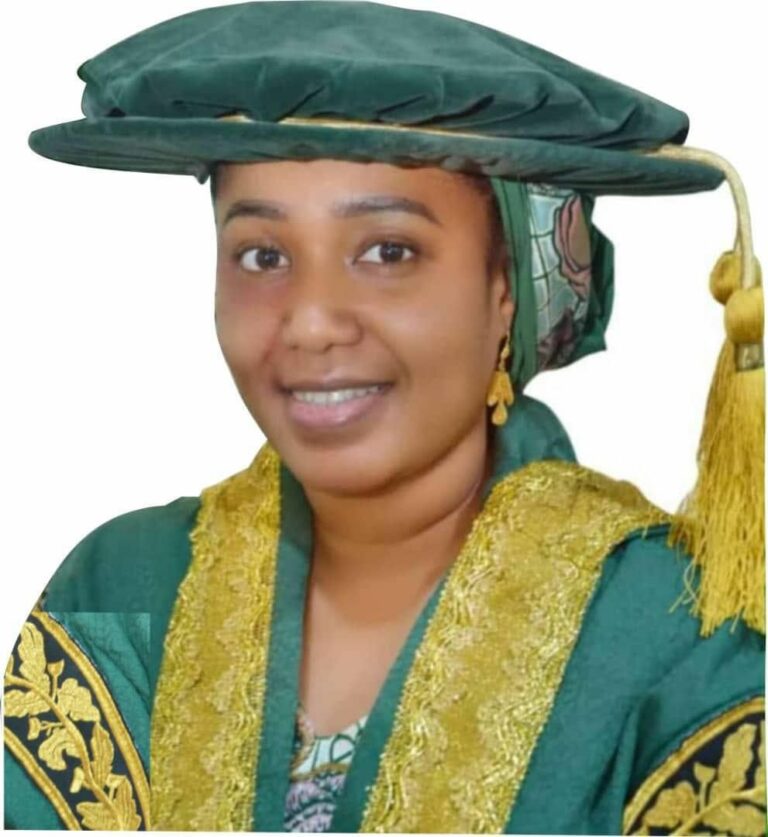
PROFESSOR of International Law, Aisha Sani Maikudi, was appointed as the Acting Vice-Chancellor of the University of Abuja (UNIABUJA) on Wednesday, June 26.
A statement on UNIABUJA’s social media handles disclosed that her appointment was announced by the university’s Senate, during a meeting held on Wednesday, and she is to temporarily occupy the position until it is approved by the institution’s governing body.
She is to succeed Abdul-Rasheed Na’Allah, the outgoing Vice-Chancellor, whose tenure will expire on June 30.
Maikudi was the Deputy Vice-Chancellor (Academic) of the institution at the time of her appointment.
Born in January 1983, Maikudi hails from Katsina State. She had her secondary education at Queens College, Lagos, where she obtained her West African Senior School Certificate Examination (WASSCE).
She graduated from the University of Reading in the United Kingdom with her Bachelor of Laws (LLB) in 2004, and in 2005, she obtained her Master of Laws degree (LLM) from the London School of Economics and Political Science (LSE).
She served as a corps member under the National Youth Service Corps (NYSC) in 2007 at the Nigerian National Petroleum Corporation Headquarters in Abuja.
Maikudi joined UNIABUJA in 2008 as Lecturer II and acquired her Doctor of Philosophy (PhD) in 2015 from the same institution.
In 2014, Maikudi was Head of Department in the university’s Faculty of Law. She became the first female deputy dean of the faculty in 2018 and the following year served as the first director of the institution’s International Centre.
In 2022, Maikudi became a professor at the institution.
She is a member of professional bodies including the Nigerian Law Teachers Association (NLTA), the Nigerian Bar Association (NBA) and the International Federation of Women Lawyers (FIDA).
Her predecessor, Na’Allah, is involved in a lawsuit filed by six senior lecturers of the institution following a dispute over the university’s internal council elections.
THE Nigerian Senate approved the extension of the implementation of the capital component for the 2023 Appropriation Act and the 2023 Supplementary Appropriation Act to December 31, 2024.
This was disclosed during a plenary sitting today, June 27, 2024.
The senators suspended their recess, originally scheduled to end on July 2, 2024, and reconvened for an urgent session to deliberate on a bill aimed at amending the 2023 Supplementary Appropriation Act.
The proposed amendment seeks to extend the implementation deadline to December 31, 2024, in response to President Bola Tinubu’s request.
Note that the 2023 budget of N28.1 trillion was signed into law by former President Muahammadu Buhari in January 2023. The 2023 budget had a capital expenditure of N5.9 trillion.
Meanwhile, Tinubu signed the 2023 supplementary budget of N2.17 trillion in November 2023.
With the extension of these budgets by the Red Chamber, The ICIR understands that Nigeria would be simultaneously running three budgets this year.
These include the capital component of the 2023 budget, the 2023 supplementary budget and the 2024 budget of N28.7 trillion signed by the president in January.
Approval for presidential aircraft
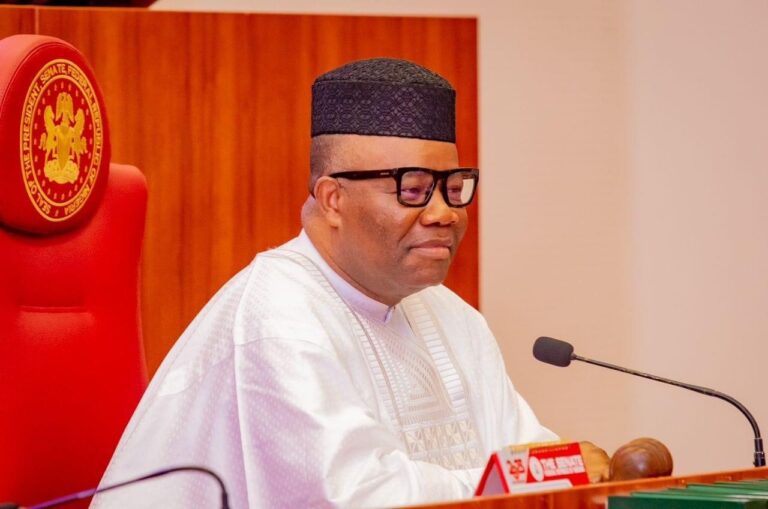
In a separate development, the Senate President, GodsWill Akpabio, also stated that the chamber would consider the approval for the purchase of presidential aircraft if requested.
He stated this to clarify social media comments on the purchase of the plane following recommendations of the Committee on National Security and Intelligence after its technical subcommittee conducted a hearing on the status and airworthiness of aircraft in the Presidential Air Fleet (PAF).
Akpabio said, “We care about the president and we care about the Nigerian people. We will approve things that will benefit the Nigerian people. We will approve things that would improve the living standard of the people. At the same time, we will also take cognizance of the duties of the president.
“If his vehicle is bad, we will repair the vehicle. If his plane is bad, we will approve money for the repair of the plane. So that is not an issue. There is nothing before us. I don’t think you should worry about it.”
The ICIR reported how the National Assembly leadership ‘hijacked’ the 2022 supplementary budget. Also, The ICIR’s 2024 budget series uncovered several frivolities and misappropriations contained in the budget.