Home Blog Page 587

Nigeria to vaccinate over 80% girls against cervical cancer by December – UNICEF

0

OVER 80 per cent of Nigerian girls aged nine to 14 are expected to receive the Human Papillomavirus vaccine (HPV) against cervical cancer by December 2024, according to the United Nations Children’s Fund (UNICEF)

Addressing journalists on Tuesday, May 21, at a two-day media dialogue in Lagos, UNICEF’s Health Specialist, Ijeoma Agbo, said HPV “is the most common viral infection of the reproductive tract and causes more than 95 per cent of cases of cervical cancer.”

The media dialogue had the theme: “Combating the Most Preventable Form of Deadly Cancer Affecting Women and Girls Through Vaccination”.

Developed in a woman’s cervix (the entrance to the uterus from the vagina), almost all cervical cancer cases (99 per cent) are linked to infection with high-risk human papillomaviruses (HPV), a widespread virus transmitted through sexual contact.

According to the World Health Organisation (WHO), cervical cancer is the fourth most common cancer in women, with around 660,000 new cases and around 350,000 deaths in 2022.

Although it is one of the most successfully treatable forms of cancer, WHO said effective primary (HPV vaccination) and secondary prevention approaches would prevent most cervical cancer cases.

Meanwhile, Agbo said with collaboration among stakeholders against HPV infection, Nigeria might prevent persistent infection with high risk types.

She further noted that the high burden of cervical cancer had been attributed to several factors, including poor access to HPV vaccination services, poor screening and treatment, and low awareness among others.

“There are over 100 HPV types that have been identified to date, and two human papillomavirus types (16 and 18) account for about 70 per cent of all cervical cancer cases.

“It is estimated that 604,000 new cases with 342,000 deaths occurred globally in 2020 and an estimated 12,075 cases and 7,968 deaths recorded in Nigeria,” she said

The ICIR reported that the Federal Government in October 2023 introduced the HPV vaccine into its routine immunisation system, aimed to reach 7.7 million girls.

The figure translated to the largest number in a single round of HPV vaccination in the African region.

Girls aged nine to 14 would receive a single dose of the vaccine, which is highly effective in preventing infections with HPV types 16 and 18, known to cause at least 70 per cent of cervical cancers.

In Nigeria, cervical cancer ranks as the third most prevalent cancer and the second leading cause of cancer-related deaths among women aged 15 to 44 years.

In 2020, the country registered 12,000 new cases and 8,000 deaths attributed to cervical cancer, according to the most recent data.

Reacting to the burden of the disease in the country, Agbo said the HPV vaccine roll-out was geared towards eliminating cervical cancer in Nigeria.

She said there was an urgent need for all stakeholders to come together to sensitise Nigerians on the need to take the vaccine.

While speaking on the objective of the HPV vaccine in Nigeria, Agbo said that the main goal was to reduce morbidity and mortality of the condition by providing HPV vaccine to girls between ages nine and 14.


READ ALSO:


She, however, expressed concern over the spread of misinformation about the vaccine, emphasising that the WHO conducted numerous tests and trials before introducing it.

“We had some other states in the North and East that did much better and even got as far as 70-80 per cent. We found out that what caused this was the distrust in the system and a lot of misinformation which went around even on social media”, she said.

On his part, the Immunisation Programme Coordinator of the Lagos State Primary Health Care Board, Dr Adetola Akinpelu, said the state had so far vaccinated 44.8 per cent of the targeted population. 

Banex Plaza shut down for investigation into attack on our officers – Army

0

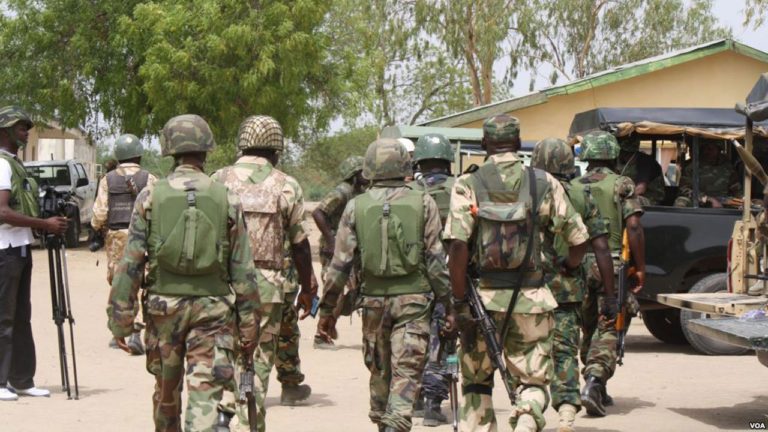
The Nigerian Army has said that the Banex Plaza in the Wuse Area of the Federal Capital Territory (FCT) was closed to enable it to conduct a thorough investigation into the immediate and remote causes of the recent attack on its personnel at the plaza.

In a statement released on Tuesday, May 21, by its director of public relations, Onyema Nwachukwu, the Army said there was a need to apprehend the ‘hoodlums’ who have been using the Banex neighbourhood as a sanctuary to pose a security threat to the FCT. 

The ICIR reported how a viral video shared on X, on Saturday, May 18, showed several unidentified individuals assaulting at least two people wearing military camouflage in a ‘free-for-all fight’ at the Banex, a popular phone and accessories market.

The mob was seen beating up the men in uniform.

According to reports, the clash broke out following a disagreement over a phone sale.

However, since the incident on Saturday, the Army has shut down the entire market and positioned its officers to man the place.

The closure, which continued till when filing this report, has generated mixed reactions among Nigerians on social media, with many describing the act as excesses by the Army and a violation of human rights.

Some also called on the Army to allow the police to handle the case as it involved civilians, instead of shutting down economic activities in the area.

Meanwhile, reacting to the incident on Tuesday, the Nigerian army said the soldiers, who were attacked were unarmed, did not engage in any form of aggression, and posed no threat to anyone. 

It described the attack on its officers as a cruel, unwarranted and unjustifiable.

“This is in furtherance of the need for extensive investigation to be conducted at the scene to determine both the immediate and underlying causes of this mayhem. This investigation ultimately aims at ensuring the security of the Federal Capital Territory and to prevent such unwarranted attacks on our personnel and other security operatives, as has been observed in other areas, such as the unfortunate attack in Okuama.

“The Nigerian Army will equally ensure that it diligently investigates the circumstances surrounding the presence of the personnel at the plaza and the attack that ensued,” the statement added.

The Army noted that such acts of violence against its personnel were not only condemnable but could also lead to a breakdown of law and order, posing significant threats to national security.

It further enjoined Nigerians to restrain from assaulting military personnel and other security operatives, adding that there are established channels through which grievances or misconduct by personnel could be reported to the appropriate authorities.

Earlier today, Tuesday, Daily Trust reported how one of the military personnel keeping watch of the business area, slapped a lady into a coma.

According to the report, soldiers accosted the lady who crossed a barricade at the plaza.

After questioning her, one soldier slapped her, causing her to collapse.

The lady was then hurried into a van, which quickly departed, with her destination remaining unknown as of the time of filing the report.

CBN raises MPR by 150-basis-point to 26.25% 

THE Central Bank of Nigeria (CBN) has raised the monetary policy rate (MPR), also known as the benchmark interest rate, to 26.25 per cent.

The CBN Governor, Olayemi Cardoso, announced this as the decision taken by the Monetary Policy Committee (MPC) members after its two-day meeting in Abuja on Tuesday, May 21.

He said the committee raised the MPR by 150 basis points from 24.75 per cent to 26. 25 per cent.

He also said the committee retained the cash reserve ratio (CRR) of deposit money banks (DMBS) at 45 per cent and put the asymmetric corridor around the MPR at +100 and –300 basis points.

“The Monetary Policy Committee (MPC) of the Central Bank of Nigeria (CBN) held its 295th meeting on the 20th and 21st of May 2024 to review recent economic and financial developments and assess risks to the outlook,” Cardoso said.

The ICIR reports that this is the third straight time the committee has hiked the benchmark interest rate to rein in the country’s soaring inflation.

Nigeria’s inflation surged to 33.69 per cent in April 2024, putting further pressure on the country’s economy and worsening the hardships Nigerians face as the prices of commodities, energy costs and other economic goods further skyrocketed.

In February, the CBN raised the benchmark interest rate by 400 basis points to 22.75 per cent, CRR to 45 per cent, adjusted the asymmetric corridor to +100 to -700 and retained the liquidity ratio at 30 per cent.

In March, it raised the benchmark interest rate by 200 basis points to 24.75 per cent, adjusted the asymmetric corridor to +100 to -300, retained the CRR of DMB at 45 per cent and the liquidity ratio at 30 per cent but adjusted the CRR of merchant banks from 10 to 14 per cent.

The ICIR reported on May 16 that Cardoso, who doubles as the chairman of the MPC, said that the apex bank would continue its orthodox policies to tame inflation.

Usyk becomes undisputed champion after defeating Fury by split decision

0

OLEKSANDR Usyk became boxing’s first four-belt undisputed heavyweight champion after successfully edging Tyson Fury in a split-point decision in Saudi Arabia.

With this result, Fury has just lost for the first time in a 16-year professional career while Usyk continues to maintain his perfect streak in almost 25 years as the sport’s sole heavyweight world champion.

The thirty-seven-year-old Usyk winning the WBC belt from Fury, also means he has now added to his WBA, WBO and IBF collection.

Fury began well but was given a standing 10 count and saved by the bell after an Usyk onslaught in the ninth round.

Usyk had a slow start in the game and was severely hurt by an uppercut in the sixth round as the match seemed to be slipping away from him, before his spectacular comeback in the ninth round.

Although Fury appeared assured of his victory, as they anxiously awaited the reading of the scorecards, but Usyk broke into tears when he was confirmed as the winner.

The scorecards, according to reports, read 115-112 and 114-113 for the Ukrainian, with a third judge scoring it 114-113 to Fury.

However, he will get an immediate opportunity for revenge with a rematch planned for later this year.

Speaking after his defeat, Fury said he believed he won the fight. “I believe he won a few of the rounds, but I won the majority,” Fury said.

“His country is at war, so people are siding with the country at war. Make no mistake, I won that fight in my opinion,” he said.

He also said the decision was one of ‘dafted decisions in boxing,’ noting that he will be back.

Meanwhile, Usyk appeared unbothered in his post match interview, having announced that he’s ready for rematch.

“Thank you so much to my team. It’s a big opportunity for my family, for me, for my country. It’s a great time, it’s a great day,” Usyk said.

“I am ready for a rematch,”he noted.

The ICIR gathered that with his latest win, the Ukraine’s Usyk joins the likes of Muhammad Ali, Joe Louis and Mike Tyson as the undisputed heavyweight champion, the first since boxing recognised four major belts in the 2000s.

Among the crowd of 20,000 at Riyadh’s Kingdom Arena were the famous Cristiano Ronaldo and Neymar Jr., two of the finest football players.

Sanusi: Kano Assembly to amend Emirs Appointment, Deposition Law

0

KANO State House of Assembly has resolved to amend the Kano State Emirs (Appointment and Deposition) Law.

The House made the resolution following a motion by the Majority Leader and member representing Dala constituency, Hussien Dala, during the plenary on Tuesday, May 21.

The decision is amidst the call for the return of the deposed 14th Emir of Kano, Muhammad Sanusi.

On March 9, 2020, the former Kano governor, Abdullahi Ganduje deposed Sanusi, who was appointed during the tenure of former Governor Rabiu Musa Kwankwaso, following his removal from the position of Governor of the Central Bank of Nigeria (CBN) in April 2014.

Ganduje deposed him for alleged insubordination and banished him from the state.

The deposed emir moved to Awe in Nasarawa State, where he lived in a private home until March 13 when he obtained an interim court order for his release from house arrest.

According to Ganduje, Sanusi’s appointment was made out of spite towards Jonathan, stressing that he removed Sanusi from his position in order to protect the system and traditional institutions from being abused. 

Additionally, he criticised Sanusi for publicly speaking out about missing funds in Jonathan’s government over which many Nigerians believe the former President removed him from office and suggested that he should have discussed the matter privately with the former President.

Meanwhile, before Sanusi was removed as the Emir of Kano, Ganduje, in 2019, approved a bill for the creation of four new emirates for Gaya, Rano, Karaye and Bichi, all of which were previously under the Kano Emirate Council.

But following the emergence of Governor Abba Kabir Yusuf of New Nigeria Peoples Party (NNPP), both Yusuf and his political godfather Rabiu Kwankwaso, had hinted that the removal of Sanusi and the new law would be reviewed.

“Kwankwaso said in a viral video: “As elders, we will continue to advise them to do the right thing. We tried not to intervene in the issue of bringing or removing any Emir, but now, an opportunity has come.

“Those who were given this opportunity will sit down and see to the issues. They will look at what they are expected to do. Besides the Emir, even the emirate has been divided into five places. All these need to be studied. Usually, a leader inherits good, bad and issues that are hard to reconcile.

“Any of you that visits the headquarters of these new emirates will believe me that we have brought development to these places. These emirates were created for unity, progress, history, and also for the recovery of the reputation of the traditional institutions. We created them to honour the people of these regions.”

However, in an apparent reaction to Kwankwaso’s statement in May 2023, Ganduje, while speaking at the Workers’ Day celebration, reassured residents of the state that the new emirates will be protected.

“I want to assure you that these emirates are permanent, they have come to stay. And anybody that will destroy them, God Almighty will not bring him to Kano State. We assure you that these emirates were created because of you, because of your progress,” Ganduje had said.

The White Lion, the youth’s Poster Boy, does a lam

0

By Ayodele Akinkuotu

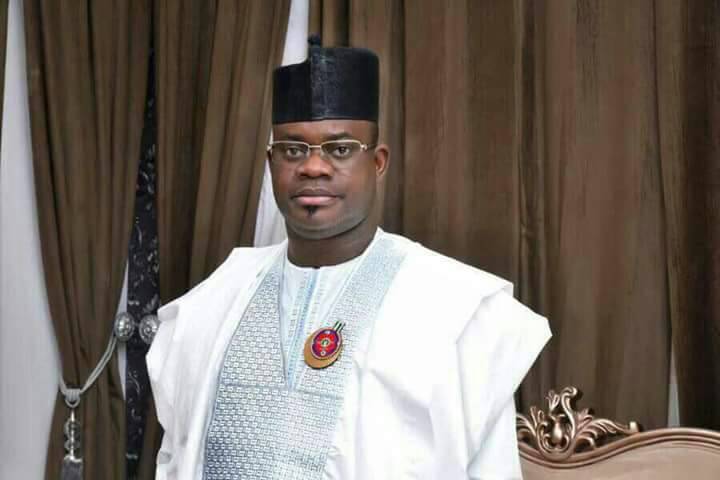
ORDINARILY, with the refund of some $760,910 (seven hundred and sixty thousand, nine hundred and ten dollars) by the American International School Abuja (AISA), to the coffers of the Economic and Financial Crimes Commission (EFCC) anti-corruption crusaders ought to be congratulating both the Commission and the people of Kogi state.

The refund was part of the $845,852 (eight hundred and forty-five thousand, eight hundred and fifty-two dollars) paid by Yahaya Bello, ex-governor of the State as school fees in advance for five of his children in primary school. The payment is believed to have been money stolen from the coffers of the state. But can we congratulate Kogi for this refund? The simple answer is, No! Those currently holding the levers of power in the state, in a kind of rear-guard battle, have come out in strong defence of the immediate past governor.

According to Kingsley Fanwo, commissioner for information, no money is missing from the state’s coffers. Thus, in the fullness of time, the final forfeiture of this sum, which at today’s exchange rate would be about a billion Naira, would be a boon to the federal government rather than boost Kogi state’s coffers.

That is likely not going to be the only loss to Kogi; some choice properties in Abuja, Lagos and Dubai valued at billions of naira, ownership of which has been traced to Bello may also swell the State’s losses. Those properties have been cited in the 19-count charge against Bello and three others at a Federal High Court in Abuja.

Bello, who has failed to show up for either interrogation at the EFCC or put up an appearance in court on two occasions, has been declared wanted by the anti-corruption commission. How did the dashing debonair ex-governor arrive at this impasse?

His mandate in 2015 as governor of Kogi state had all the imprimatur of providence.

Here is a man who lost the primary election of the All Progressives Congress (APC), to Abubakar Audu. Audu had been a one-time governor of the state, but at the time, Yahaya Bello was relatively unknown in political circles, even in Kogi. And just before the announcement of the governorship election results, in which the APC was already coasting home to victory, Audu, the candidate, died suddenly. His running mate, James Faleke, thought he deserved to step into Audu’s shoes. He was advised by the powers that be to bury the thought. No thanks to the political intrigues which came on the heel of Audu’s death.

That was how 40-year-old Bello emerged as the new candidate, thus becoming governor-elect. He became an instant sensation for the youth, especially the “Not-too-Young-to-Run” campaigners. Claiming him as one of their own, they pointed out that he was the first product of the 6-3-3-4 system of education, introduced by former military president, a general, Ibrahim Babangida, to become an elected governor. Eight years later, Bello is in the news, and for all the wrong reasons.

The youth’s Poster Boy is now on the run from the EFCC. He is not the only accused in the 19-count charge. There are three others, Ali Bello, said to be the ex-governor’s nephew, Dauda Suleiman and Abdulsalam Hudu. The latter, like the ex-governor, is also on the lam. Before he disappeared, Hudu was a cashier at the Government House in Kogi.

What is at stake in the 19-count charge, on which investigations first started in 2019? At the heart of the charge is N80 billion money laundering. Part of that huge sum has been traced to the acquisition of 14 choice properties. The properties located in Lagos, Abuja and Dubai allegedly belonging to ex-governor Bello and the sum of N400 million were slammed with an interim forfeiture order in 2023. Only one of those properties was listed on Bello’s Asset Declaration Form in 2016.

The “White Lion”, the ex-governor’s moniker, is not the first chief executive of a State that had been dragged to court after their stint in office for looting the states they presided over. Only two of them, out of scores that had been fingered for dipping their hands in the kitty, had been successfully prosecuted and jailed.

One of them who escaped from Nigeria to Dubai while answering to the charges against him, only succeeded in jumping from frying pan into fire. He was prosecuted and jailed in the United Kingdom for the same money laundering offence. Not a few of his friends blamed him for panicking. They were so sure if he had waited to see his case through, he would have gotten away with a slap on the wrist.

Bello is seemingly toeing the line of this former governor who fled from Nigeria. On the day operatives of the EFCC moved to arrest him in his Abuja residence, the ex-governor of Kogi State was believed to have been spirited away from his house in Abuja ably aided not only by his godson, Usman Ododo, his successor, but the policemen charged with his security. The inspector general of police has since withdrawn those officers. While many people have wondered aloud at Ododo’s aiding and abetting an accused, some others are not surprised.

On the day Ododo took the mantle of office, he publicly showed his appreciation to his predecessor by not only prostrating for him at the swearing in ceremony but declaring that if any declaration by him as incumbent conflicts with that of Bello, his predecessor, the people should ignore his directives and follow that of Bello. Nigerians have interpreted this to mean that, through Ododo, Bello is now serving a third term in office. It is unfortunate for him that it is a third term bereft of immunity.

Thus, having been declared wanted by the anti-corruption agency like a common criminal, the police, the immigration and all security agencies are now on the lookout for him.

In spite of that hunt for him, the ex-governor enjoys strong official backing in his state. The Kogi House of Assembly, in a strongly worded statement, has asked the EFCC to stop witch-hunting Bello. In fact, the legislators have insinuated that the Commission has developed a penchant for hounding the State’s public officials. Part of the statement reads thus, ‘’Kogi over the years has witnessed a worrisome trend and torrent of with-hunt by the anti-graft agency, unrepentantly striving to force corruption claims on the State government officials and now an ex-governor’’. If the lawmakers are convinced that Bello has done extremely well for Kogi in his two terms, they are at liberty to pass a retroactive law that could save Bello a lot of headaches in this matter. The sole essence of that law should be that both the dollars paid to AISA and the State’s monies believed to have been looted by the ex-governor are part of his retirement benefits, which he has only taken in advance. Has it not been said that the law is an ass. And asses are noted for being ridiculous.

They are not alone in their support for Bello. The Ebira Youth Coalition has warned the inspector general of police that no harm must come to their son and compatriot. This warning was in response to the withdrawal of policemen and security operatives who blocked the ex-governor’s arrest by the EFCC. The social media has been awash with diviners performing rituals to ward off Bello’s arrest and his likely eventual arraignment. It would not be too far-fetched to posit that marabouts are equally at work on the same matter. Although the services of the latter do not come cheap, the ex-governor is of course loaded.

The absurdity in the kind of support Bello is getting from some of the downtrodden indigenes of Kogi is the dilemma of anti-corruption crusade in Nigeria. While Bello and his cronies were feeding fat on the State’s commonwealth, for several years, civil servants were being paid only a small percentage of their monthly salaries, thus making them and their dependants live in abject poverty. And like in most states in Nigeria, government is said to be the largest employer of labour in Kogi state. Therefore, the failure of the government to pay salaries as at when due has led to the impoverishment of a huge part of the population.

While some government officials led by Governor Ododo, who used to be auditor general of local government authority in the State, and some equally ignorant indigenes of Kogi are strongly defending Bello, a chieftain of the opposition Peoples Democratic Party, PDP has commended the move against the former governor. Austin Okai, in a statement, declared that ‘’the misappropriation of public funds cannot be tolerated, and those responsible must be held to account irrespective of their former positions’’. It is the voice of people like Okai which represents the deprived downtrodden people of Kogi; and that is why they deserve some congratulations because no matter how long it takes what has been stolen from them will eventually become theirs.


Retired police officers protest unpaid pension in Abuja

0

RETIRED police officers in Nigeria under the contributory pension scheme, on Tuesday, May 21, expressed their displeasure over several months of unpaid pensions.

The retired officers stormed the National Assembly in Abuja, to protest the “severe hardships” they had faced due to the alleged failure of the National Pension Commission (PENCOM) to pay their entitlements.

The retirees representing various state chapters called on the federal government to remove them from the Contributory Pension Scheme.

The retirees, seen with various placards, lamented being denied their money after giving their best while serving the nation.

The Contributory Pension Scheme (CPS) was introduced in 2004 as part of the pension reform to ensure that both the employer and the employee contribute a portion of the employee’s monthly salary to the scheme, which the employee gets after retirement

Although the scheme’s main objective is to ensure that every person who works in either public or private organisations gets what will support them after they have retired, the scheme has faced criticisms from Nigerian retirees.

Many retirees have reported significant delays in receiving their pension benefits from the scheme.

In September 2021, retirees, under the Association of Retired Police Officers of Nigeria (RPON), Niger State chapter, took to the street to protest neglect by the federal government.

They also demanded the immediate removal of the Police Force from the PenCom’s contributory pension scheme.

Some of the placards displayed by retired police protesters on Tuesday in Abuja stated that PenCom had not declared any dividend for the past five years.


READ ALSO:


Other placards read ‘Police Pensioners Reduced to Beggers’, NPF Pension No AGM, ‘After Serving the Nation for 35years Why Paying Ourselves from What We Contributed’.

Similarly, in September 2021, some retired officers from 27 states stormed the National Assembly in Abuja, demanding their pension payments.

They also demanded that the federal government remove them from the contributory pension scheme.

SLAPP: Court dismisses Landwey’s N100m libel suit against FIJ

0

A High Court in Lagos state has dismissed a N100 million libel suit brought before it by real estate firm Landwey against the Foundation for Investigative Journalism (FIJ).

A ruling delivered by the court through its judge, Y. Oshoala, on Monday, May 20, held that the case lacked diligent prosecution and the sum of N500,000 was awarded to indemnify [FIJ].

“I have considered in the interest of justice Order 27(1)(3) cited by counsel and I agree. The kind of lack of diligence in prosecution displayed by the claimant should never be encouraged by any court of law whatsoever,” the court held.

According to a report by FIJ, Landwey filed the libel suit, but only appeared before the court once.

The legal battle between both organisations began in 2023.

Before Landwey instituted the lawsuit, FIJ had published a report in 2022, which revealed that the real estate organisation owned by Olawale Ayilara, failed to provide a property to a Nigerian based abroad, nearly two years after receiving N42 million for it.

FIJ published a follow-up to this report in 2023 in which several other Landwey clients spoke on not receiving property they had paid for years before.

Following the first report, Landwey sent emissaries to FIJ’s founder Fisayo Soyombo with an appeal to take down the story, which was declined.

Months later, FIJ raised an alarm that Ayilara provided fake information to its service provider Digital Ocean, which suspended its website.

The service provider accused FIJ of copyright infringements, adding that someone had sent an email, claiming ownership of its investigation on Landwey, titled, ’21 Months After Taking N42m, Wale Ayilara’s Landwey Fails to Give UAE-Based Nigerian His Property.’

Digital Ocean had identified the claimant as Luis Felipe Colina from Venezuela, who claimed to have published the article in a private newsletter a day before FIJ.

However, the FIJ described the letter as fake and a retaliation by Ayilara over the report published against Landwey.

FIJ also noted that Digital Ocean had previous records of pulling down investigations written by journalists.

“In FIJ’s case, Digital Ocean did not only block FIJ’s website, it rejected all our defences of being the original copyright owner. It then went ahead to blacklist FIJ,” the media organisation had noted.

In Nigeria, there have been several attempts to clamp down on the media and civic space, through harassment, attacks, illegal detentions and Strategic Lawsuits Against Public Participation (SLAPP), which includes frivolous lawsuits against newsrooms.

A survey conducted by The ICIR in 2023 on SLAPPs in Nigeria revealed that at least 40 organisations had been sued within 12 months for reporting or advocating about issues of public concern.

2024 budget: How N100 billion ‘constituency projects’ are shared across MDAs

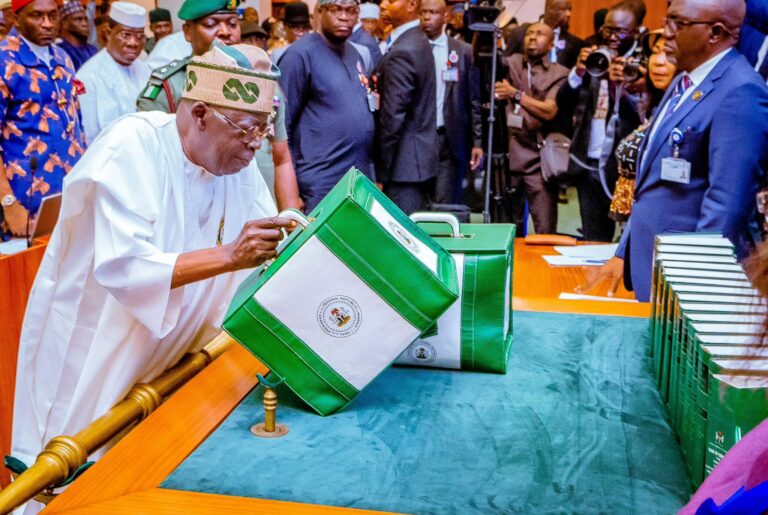
A breakdown of the 2024 approved budget has shown that thirty-two Ministries, Departments and Agencies (MDAs) would implement over 1,000 constituency projects worth N100 billion.

Constituency projects are also known as Zonal Intervention Projects (ZIP), mostly nominated by the members of the legislature and inserted into the budget for implementation in their respective constituencies.

The ICIR findings from the 2024 budget showed that 1,120 projects would be implemented across various consistency for the 2024 fiscal year. 

Data analysis of the 2024 ZIP budget shows that members allocated the largest amount to the Federal Ministry of Agriculture and Food Security with N38.24 billion. 

This is followed by the Federal Ministry of Innovation, Science and Technology with N12.68 billion allocation, the Federal Ministry of Labour and Employment with N9.95 billion allocation, Secretary to the Government of the Federation (SGF) with N7.11 billion and Federal Ministry of Education with N6.37 billion allocation. 

The table below shows the breakdown of the amount allocated to each MDA.  

MDA Amount
Federal Ministry of Labour and Employment N9.95 billion
Federal Ministry of Youth N113 million
Federal Ministry of Agriculture and Food Security N38.24 billion
Secretary to the Government of the Federation N7.11 billion
Federal Ministry of Innovation, Science and Technology N12.68 billion
Federal Ministry of Information and National Orientation N1.86 billion
Federal Ministry of Water Resources and Sanitation N3.77 billion
Federal Ministry of Tourism N1.05 billion
Ministry of Humanitarian Affairs and Poverty Alleviation N3.198 billion
Federal Ministry of Power N281 million
Federal Ministry of Special Duties and Inter-Governmental Affairs N1.35 billion
Federal Ministry of Housing and Urban Development N750 million
Federal Ministry of Works N554 million
Federal Ministry of Industry, Trade and Investment N1.395 billion
Federal Ministry of Women’s Affairs N577 million
Federal Ministry of Education N6.37 billion
Federal Ministry of Transportation N2.34 billion
Ministry of Petroleum Resources N113 million
Federal Ministry of Budget and Economic Planning N1.35 billion
Presidency N974.5 million
Federal Ministry of Environment N225 million
Federal Ministry of Health and Social Welfare N1.899 billion
National Security Adviser N113 million
Federal Ministry of Art, Culture and Creative Economy N100 million
Ministry of Foreign Affairs N222 million
Ministry of Defence N163 million
Federal Ministry of Solid Minerals Development N240 million
Federal Ministry of Communications, Innovation and Digital Economy N182 million
Federal Ministry of Justice N450 million
National Assembly N250 million
National Judicial Council N1.88 billion
Presidency (NASENI) N303 million
Total N100 billion


The ICIR has reported that after signing the 2024 budget of N28.78 trillion, the federal government failed to publish the constituency projects’ details, following an alarm raised by BudgIT, a civic society organisation.

BudgIT has pointed out that it is the first time, in 10 years, that this has happened.

The  federal government, in response confirmed to BudgIT that the details were scanned in the approved budget provided on the website.

However, the civic organisation noted that the details were lumped together as a scanned document making it non-machine readable unlike in previous years.

Students of federal government schools will enjoy Loan Act for now – NELFUND

0

THE Nigeria Education Loan Fund (NELFUND) has said students of federal tertiary institutions will be the first beneficiaries to access loans as the scheme takes off on Friday, May 24.

NELFUND’s managing director and chief executive officer Akintunde Sawyerr disclosed this on Monday, May 20, at a pre-application sensitisation press conference held in Abuja.

He urged students of federal universities to visit the NELFUND website at www.nelf.gov.ng from Friday, to begin application for the loans, early enough to hasten the processing.

“The loan application process has been streamlined to ensure easy access for all eligible students in federal tertiary institutions. Applicants can access online support to assist with any questions or concerns during the application process,” he said.

Sawyerr said the requirements for the application are the national identity number (NIN), bank verification number (BVN), Joint Admission and Matriculation Board (JAMB) admission letter, and a properly filled application form on its website.

The loan will be paid directly into the institution’s account and the students will receive monthly stipends for upkeep.

“And that will be paid at the maximum of that fee per session. We will only pay for a session at a time. Because people drop out of institutions, they change institutions,” he further said.

President Bola Tinubu signed the Student Loans (Access to Higher Education) Act (Repeal and Re-Enactment) Bill, 2024, into law for the second time on Wednesday, April 3.

Tinubu first signed the bill into law in June 2023 to enable students in need to access interest-free loans to pursue their education in any tertiary institution in the country.

However, its implementation was postponed, and during the postponement, Sawyer had said he could not give a specific date for its commencement.

Unlike the initial bill that was passed and subsequently repealed, the new Act removed the provision that required applicants’ families to earn an annual income of less than N500,000 before they could be eligible for the loan.

It also allows applicants to access loans that cover other fees aside from tuition, unlike the previous Act that limited applications to just tuition.