MINISTER of Women Affairs, Uju Kennedy-Ohanenye, has filed for a court injunction to stop the planned marriage of 100 orphans said to be children by the Speaker of Niger State House of Assembly, Abdulmalik Sarkindaji.
The minister also petitioned the Inspector-General of Police (IGP), Kayode Egbetokun, seeking his support to stop the planned marriage.
The ministry’s head of press and public relations Grace Njoku confirmed this while speaking with The ICIR on Tuesday, May 14.
“She has written to seek a court injunction to stop it,” she stated.
On Friday, May 10, Sarkindaji announced plans to marry off the 100 orphans as part of his empowerment project.
The orphans whose ages were not disclosed were said to have lost their parents to banditry in the Mariga Local Government Area of the state.
Sarkindaji promised to pay their bride price and claimed to have procured all necessary materials for the mass marriage.
However, the minister described the plan as unacceptable, and contrary to the Childs Rights Act.
“These children must be considered, their future must be considered, the future of the children to come out of their marriage must be considered. So I have gone to court. I have written him a letter and written a petition to the IG of Police,” she said on Monday, May 13.
She also stated that her ministry would take up the burden of educating the orphans.
“Those that do not want to go to school, we will train them in a skill, empower them with sustainable empowerment machines to enable that child build his or her life and make up her mind who and when to get married.
“If for any reason the Speaker tries to do contrary to what I have just mentioned, there will be a serious legal battle between him and the Federal Ministry of Women Affairs.”
The Speaker’s announcement to marry the orphans off as an empowerment project generated public outrage from Nigerians over the weekend.
A Civil Society Organisation, the Take It Back Movement, also called on Sarkindaji, to rescind his decision to marry off the orphans.
In a statement signed by its head of the gender department, Omolola Pedro, the group condemned the Speaker’s action and called for sustainable investment in women and girls.
However, the Speaker said he was only funding the wedding ceremony, not forcing orphans into it.
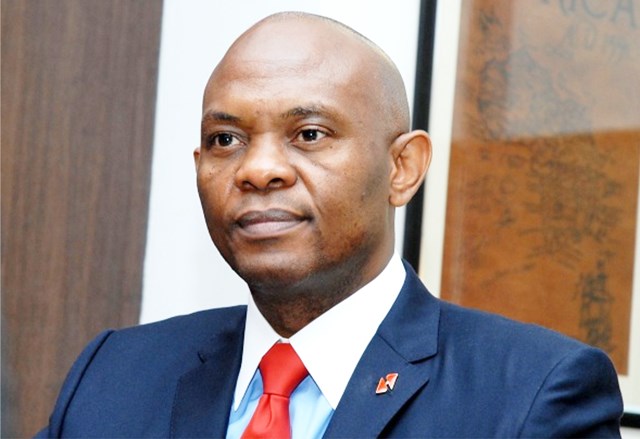
CHAIRMAN of the United Bank for Africa Group and Founder of the Tony Elumelu Foundation, Tony Elumelu, has called for incentives for big pharmaceutical companies to enable them to partner on research and development (R&D) for diseases prevalent in lower-income countries.
Speaking at the Abu Dhabi Health Forum in the United Arab Emirates, on Monday, May 13, Elumelu emphasised the need for appropriate capital allocation and investment in innovation to drive global health improvements, particularly in Africa.
According to him, big pharmaceutical companies have a role to play in ensuring a sustainable health future for all, adding that “there is a need to review the current patent system and effect reforms while still incentivising innovation.
“There also needs to be incentives for big pharma to partner on R&D for diseases from lower-income countries.
“Incentives for investing in R&D and manufacturing facilities for big pharma in developing countries are also important — so leveraging the global trade system is also an important element of global health equality.”
Elumelu further urged the delegates to leverage the global trade system to achieve global health equality, suggesting that incentives for investing in R&D and manufacturing in developing nations are crucial.
“We need to work innovatively across social sectors to achieve results. A high per cent of health care facilities in Africa do not have reliable power supply (I think it’s around 40 per cent) — without power, the health outcomes will be low,” he said.
The UBA boss added that similar measures should be taken to open up access to medical device research and manufacturing, healthcare business model innovation, and related areas.
On global health equity and implications for health outcomes, Elumelu explained that there were significant imbalances in the quality of health outcomes, excessive investments in R&D in pharma, medical devices and practices for health conditions in rich countries, while poor countries miss out.
The ICIR reports that Nigerians currently face the challenge of paying more for drugs.
Some of the reasons are ballooning inflation and the exit of pharmaceutical companies from the country because of skyrocketing costs of doing business.
For instance, in 2023, a major pharmaceutical firm, GlaxoSmithKline(GSK), producer of prescribable medicine such as Augmentin and Amoxil, disclosed its strategic plan to stop the commercialisation of its prescription medicine and vaccines in Nigeria and transition to a third-party distribution model for its pharmaceutical products, citing foreign exchange concerns.
The development, according to a report, was traced to the steady depreciation of the naira against major global currencies since President Bola Tinubu took office, along with the deregulation of the foreign exchange market, which has triggered a series of economic crises.
This was also as less than 10 per cent of Nigeria’s population had health insurance, putting much financial burden on citizens to pay out-of-pocket for health.
While highlighting his foundation’s efforts to support the healthcare system, Elumelu disclosed that his foundation has funded 700 healthcare entrepreneurs, with a gender distribution ratio of 49 per cent male to 51 per cent female.
He noted that these entrepreneurs have significantly contributed to advancing healthcare delivery in their communities and countries.
Elmelu advocates climate funding for healthcare
Speaking further on raising funds for healthcare deliveries, Elumelu said climate change had complicated access to healthcare, adding that climate funds could be allocated to address healthcare problems.
“We hear so much about available climate financing for renewable energy projects, as well as climate change adaptation and resilience projects — but what about unlocking climate funding for healthcare delivery as well, particularly on the margins where climate change is leading to new diseases, or diseases appearing in place they were not seen before.
“…With private sector innovation, startup funding from foundations and financial institutions, health care policies from national and global health systems, investments from all as well as cross-sector collaboration, we can definitely move humanity forward,“ Elumelu added.
THE naira on Monday, May 13, depreciated against the dollar, falling to N1,515/$ on the parallel market, despite various interventions by the Central Bank of Nigeria (CBN).
The apex bank has rallied efforts to save the naira from decline with its interventions and below official rate sale of dollars to the Bureau de Change Operators (BDCs). However, this has failed to save the naira from further decline.
This decline represents 2.97 per cent (N45/$1) depreciation against the US dollar when compared with the level of N1,470 exchanged on Friday, May 10.
The fall came despite a marginal increase in Nigeria’s external reserves by 0.4 per cent week-on-week to settle at a four-week high of $32.4 billion as of May 8.
Economy watchers had expected the naira to extend its depreciation against the dollar to this week with a slight drop in the intervention by the Central Bank of Nigeria (CBN).
“We must intensify the export of finished commodities to strengthen the naira. The CBN interventions are not enough, “an economist, Kingsley Obiakor, told The ICIR.
Last week, the foreign exchange (FX) witnessed persistent weakness in the weaker naira due to a shortage of dollars in the market.
At the close of the FX market on Friday, the naira fell flat by 0.45 per cent as the dollar was quoted at N1,466.31, weaker than N1,459.73 closed on Thursday at the Nigerian Autonomous Foreign Exchange Market (NAFEM), according to the market summary released by FMDQ Securities Exchange Limited.
The intraday high closed at N1,490 on Friday, weaker than the N1,465 closed on Thursday, May 9.
The intraday low strengthened marginally to N1,322 per dollar as against N1,351 on Thursday.
Dollar supplied by willing buyers and willing sellers increased by 34.84 per cent to $113.78 million on Friday from $84.38 million recorded on Thursday.
The naira on Friday fell to a month-low of 1,470 against the dollar, on the parallel market also known as the black market, following the dollar shortage and the activities of speculators. The local currency depreciated to as low as N1,510 as of March 21, 2024, at the parallel market.
The FX market activity level waned as average turnover at NAFEM declined by 31.0 per cent week-on-week to close at $894.3 million as of May 9, according to a report by Afrinvest Securities Limited.
“We expect the naira to extend its decline barring any interventions,” analysts at Afrinvest said.
PRESIDENT Bola Tinubu has directed ministries, departments and agencies (MDAs) of government to ensure mandatory procurement of compressed-natural-gas CNG-powered vehicles.
The Special Adviser to the President on Media and Publicity, Ajuri Ngelale, in a statement on Monday, May 13, said that the directive was in line with the President’s commitment to ensuring energy security and cutting high fuel costs.
According to the statement, “The President’s directive is also in furtherance of Nigeria’s effort to transition to cleaner energy as CNG-enabled vehicles have been adjudged to produce lower emissions, even as they present a more affordable alternative for Nigerian energy consumers.”
Addressing members of the Federal Executive Council (FEC) at the Presidential Villa, Abuja, President Tinubu affirmed that there was no turning back in the energy reforms initiated by his administration.
“This nation will not progress forward if we continue to dance on the same spot. We have the will to drive the implementation of CNG adoption across the country, and we must set the example as public officials in leading the way to that prosperous future that we are working to achieve for our people. It starts with us, and in seeing that we are serious, Nigerians will follow our lead,” the President stated.
“The President further directed the rejection of all memos brought by members of FEC seeking the purchase of traditional petrol-dependent vehicles, tasking the affected members of the council to go back and diligently seek value-driven procurements of CNG-compliant vehicles.
“The President remains committed to effectively harnessing the nation’s gas potential, alleviating the burden of high transportation costs on the masses while enhancing the standard of living of all Nigerians.”
The Presidency had noted that the deployment of CNG buses and tricycles and the vision to get at least one million natural gas-propelled vehicles on Nigerian roads by 2027 would mark a major energy transition era in the country’s transportation industry.
“The use of more expensive diesel and PMS will gradually be phased out, when many vehicles, including trucks, run on natural gas, which our nation has in abundance in at least 30 out of the 36 states of the federation,” the Presidency had said.
NIGERIA’s Ministry of Aviation and Aerospace Development has said the newly introduced $300 helicopter landing levies were in line with global best practices and cost recovery measures.
The ministry took the stand in a statement on Monday, May 13 by its head of press and public affairs in Lagos, Odutayo Oluseyi.
It insisted that the levies were in tandem with global best practices as seen in the U.S., the United Kingdom, India and other countries.
The ICIR reports that the decision comes against the backdrop of helicopter operators’ refusal to comply, questioning the rationale behind the imposition of the new levy.
The operators had said the new charge amounted to multiple taxations, threatening to cease operations and seek legal action.
In the statement on Monday, Oluseyi noted that the Nigerian government had granted NAEBI Dynamic Concepts Limited the exclusive rights to collect helicopter landing levies.
He said this was in line with the memorandum of understanding between NAEBI Concept and the Nigerian Airspace Management Agency (NAMA), Federal Airport Authority of Nigeria (FAAN) and Nigeria Civil Aviation Authority (NCAA).
“It is instructive to note that NAMA, under the Act as amended in 2022, is empowered to collect aeronautical revenues in both the upper and lower airspace to support her self-sustainability,” he said.
According to Oluseyi, NAMA has, over the years, relied on the upper airspace for its revenue generation.
“Government in her wisdom, having discovered a lacuna on the lower airspace where helicopter operations are dominant, directed NAMA to live up to its responsibilities, to enable them to generate enough resources; to sustain their aeronautical architecture, enhance security and surveillance and improve the overall quality of helicopter operations in Nigeria,” he said.
Oluseyi said the ministry was confident that the initiative would improve capacity, efficiency, safety, and security and attract more investment in the aviation industry.
“We encourage all stakeholders to be committed to this laudable initiative, that has followed due processes and procedures and should embrace the new normal.”
The government had granted NAEBI Dynamic Concepts the exclusive rights to collect helicopter landing levies for federal agencies, according to a statement earlier issued by the minister, Festus Keyamo.
All operators and stakeholders in the industry are to comply with the mandate, Keyamo had said. “Non-compliance with this directive will constitute a breach of this mandate and will be met with appropriate sanction.”
He warned that the ministry would enforce compliance without exception and would pursue all available remedies against any party that fails to adhere to the directive.
BANKS’ credit to the private sector decreased in March amid the policy rate hike by the Central Bank of Nigeria (CBN).
The decrease is expected to continue in the coming months as the CBN tightens its monetary policy rate (MPR) or benchmark interest rate, to control inflation.
After its monetary policy committee (MPC) meeting in February, CBN raised the benchmark rate by 400-basis-point to 22.75 per cent and by 200-basis-point to 24.75 per cent in March.
The increase directly affected interest rates banks use for lending to the private sector.
As interest rates increase, banks will try to limit their credit risk exposures to guard against higher non-performing loans.
Data from the CBN shows that loans to the private sector dropped to N71.21 trillion in March, from N80.86 trillion in February.
The drop could be linked to the effect of the CBN rate hikes to 24.75 per cent in March from 18.75 per cent in July 2024 to achieve price stability, some analysts pointed out.
The ICIR reported that CBN failed to hold its by-monthly MPC meetings in September and November 2023. It also failed to hold it in January 2024 and shifted it to February.
Analysis of the data by The ICIR shows that credit to the private sector consistently rose since CBN’s July 2023 meeting except in November 2023.
The data shows that banks’ loans to the private sector which stood at N56.46 trillion in July 2023, increased to N56.95 trillion in August, N59.51 trillion in September and N63.57 trillion in October.
While it dropped to N59.69 trillion in November, it increased to N62.54 trillion in December, N76.48 trillion in January 2024, and N80.86 trillion in February.
Analysts believe that the full impact of CBN’s policy rate hikes will continue to reflect on the country’s economy as borrowing costs trend higher while businesses seek alternative funding options in the local debt market.
The alternative funding could be through the issuance of commercial papers for the short term to keep their business operations afloat.
Analysts at Cowry Asset Management said, “While we think a continued slow growth in total credit to government and private sector will continue, businesses will explore further funding options amidst rising prices.
“On the other hand, we think the federal government will continue exploring various funding options with lower debt servicing requirements just to meet its project funding and investment obligations.”
Interest rates to remain high – Cardoso
In a Financial Times report on Monday, May 13, the CBN Governor, Olayemi Cardoso, dashed hope and said that interest rates would remain high until inflation is tamed.
The country’s headline inflation has throttled to 33.20 per cent in March this year and is expected to rise further when the figure for April is released by the National Bureau of Statistics.
Cardoso reiterated that the apex bank’s orthodox policies would continue to be implemented to tame inflation.
This indicates that the apex bank is likely to raise the benchmark rate when it meets next week Monday and Tuesday, May 20 and 21 for another MPC meeting.
There is “every indication” that MPC would “do whatever is necessary” to rein in inflation, Cardoso said.
“They will continue to do what has to be done to ensure that inflation comes down. Let’s face it: for a long period of time, the CBN did not embrace orthodox monetary policies.
“We want to go back to using an orthodox method, and it will take us to where we want to go,” he maintained.
He stressed that the apex bank had been ‘reoriented’ to focus on “price and monetary stability.”
Cardoso maintained that raising interest rates had been crucial, hoping that high interest rates would not linger for too long and act as a disincentive to investment and production.
“Hiking interest rates obviously has had a dampening effect on the foreign exchange market, so that has begun to moderate. It’s not a zero-sum game. You lose on one side, you get on the other,” the CBN governor said.
He added inflation was higher than he had hoped, blaming “distortions” mainly due to high food prices, and adding that it was not directly within CBN’s control.
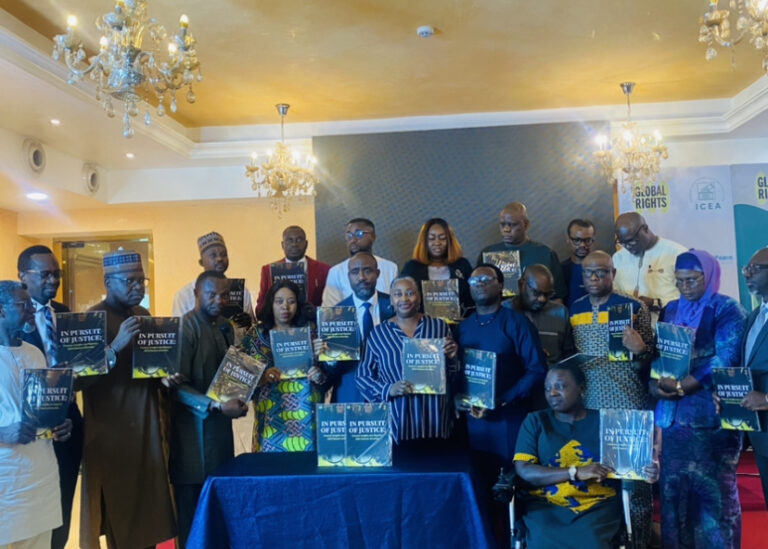
A forensic analysis conducted by Global Rights has revealed how widespread election violence and impunity marred Nigeria’s 2023 election.
The findings, presented on Monday, May 13, in Abuja, detailed a concerning pattern of electoral malpractice and human rights abuses, across the country, particularly in Lagos, Imo, Ebonyi and and Enugu states.
The report also highlighted the government’s failure to address these violations, with many perpetrators going unpunished.
In her opening remarks, the Executive Director of Global Rights, Abiodun Baiyewu, cited the case of Bago Adenuga, now the Senior Special Assistant to President Bola Tinubu on media, who, despite inciting hate and violence during the pre-election period, escaped the consequences.
According to her, several Nigerians lost their lives for merely exercising their fundamental human rights to vote for their preferred party.
The forensic analysis found systemic flaws in the electoral process and a culture of impunity that undermines democracy and human rights.
Key findings highlighted in report
While presenting the forensic analysis of the report, titled ‘In pursuit of justice: Forensic Insights into Nigeria’s 2023 Election Atrocities,’ the Executive Director of We The People/Lead Researcher, Ken Henshaw, highlighted hate speech/fake news, violence and voter suppression and ethnic profiling/discrimination as characterising the poll.
Speaking on the organisation’s findings on hate speech and fake news, Henshaw cited several instances of public and political figures inciting electoral violence and misconduct in their speeches and posts.
He made an example of how the Lagos State governorship candidate, Gbadebo Rhodes-Vivour, was targeted by various fake news and hate campaigns.
He noted that some of the hate campaigns were done by leveraging on some basic facts about the candidate, including the fact that his mother is Igbo, he has an Igbo middle name, Chinedu, and his marriage to an Igbo woman.
“All these were twisted into a narrative that Mr Gbadebo is an Igbo man, sympathetic to the cause of the outlawed Indigenous People of Biafra, and on a mission to take over Lagos State to promote Igbo interests,” the report stated.
Another instance exposed was how a senator-elect, Okey Ezea, incited ethnic hate in Enugu State ahead of the 2023 governorship election.
“Young men, please, you must prepare yourselves very well. We are going into a war on March lI, and it is a do-or-die game. Nobody can come from outside to Nkanu to intimidate us here,” he quoted the senator-elect telling his supporters in Itchi, Igboeze South LGA of Enugu State.
On violence and voter suppression, the report showed how a community executive council in Umuokpo Amaisii in Abia state, suppressed voters by threatening not to invite opposition candidates to campaign in the community.
The analysis, among others, found the secessionist group, Indigenous People of Biafra (IPOB) guilty of suppressing voters after earlier issuing a warning of ‘No election in Biafraland.’
While highlighting other violence, the report detailed an audio recording from February 2023, where two men threatened ‘non-indigenous residents’ of Gbara, Eti-Osa community, Lagos State, urging them to vote for their political party or leave.
Panelists weigh in on drivers of election atrocities, proffer solutions
CSOs and media stakeholders at the Global Right event on documented 2023 election atrocities.
Following the presentation of findings, a panel of experts highlighted the drivers of election atrocities in Nigeria.
The panel included representatives from the International Centre for Investigative Reporting (ICIR), lawyers and human rights researchers, SBM Intelligence, Goodluck Jonathan Foundation, Sustainable Gender Action Initiative and Yar’ Adua Foundation.
They identified hate speech, fake news and the emergence of deep fake and artificial intelligence, violence among the major drivers of election atrocities, particularly during the 2023 election.
Speaking on the impact of misinformation during the 2023 election, The ICIR editor, Bamas Victoria, noted that the coalition of fact-checkers identified over 100 pieces of misinformation intended to mar the election.
According to her, the spread of fake news is a deliberate effort that extends beyond the individuals spreading it; such information originates from those who finance or direct them, she stated.
Also, Amara Nwankpa of Yar’dua Foundation pointed out that the financial incentives associated with spreading fake news pose a challenge in addressing its negative impact on elections.
He explained how elites utilise Nigerians to disseminate disinformation and misinformation for their gains.
While speaking about the religious and cultural values that go against hate speech, a representative of the Sustainable Gender Action Initiative, Mufuliat Fijabi, said there were misinterpretations of some religious injunctions which had turned out to be misinformation.
She noted that these misinterpretations had affected women’s participation in politics and governance, adding that there was a need for value reorientation.
The panellists, therefore recommended enhancement of basic education, focus on building the next generation with civic duties, and evolution of homegrown methods in solving election violence ahead of the 2027 general election.
They also highlighted the need for media literacy, prebunking of fake news, research and documentation of hate speech, effective implementation of laws and prosecutions of offenders, and effective collaborations among CSOs.
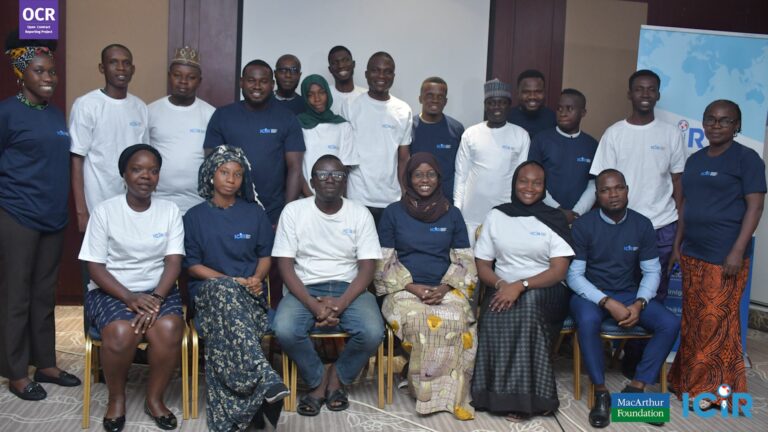
The International Centre of Investigative Reporting, with support from the MacArthur Foundation, has completed its two-day workshop and experience-sharing event on procurement fraud with 20 Nigerian journalists.
The journalists who were fellows in the previous cohorts of the Open Contract Reporting Project (OCRP) were drawn from Kano, Sokoto, Abuja, Borno, Cross River, Jigawa, Enugu, Anambra, Osun, Rivers, Bauchi, Lagos and Akwa Ibom, across print, electronic and digital media.
The OCRP is a three-year project funded by the John D. and Catherine T. MacArthur Foundation under its “On-Nigeria Anti-corruption Programme”.
The Centre’s accountability reporting project promotes fiscal transparency and accountability in Nigeria’s budget and procurement processes.
In the last seven years, the Centre has worked to build journalists’ capacity to investigate and report effectively on budget and procurement issues, thus strengthening open contracting processes and engendering effective service delivery for the welfare of citizens, particularly at the subregional level.
The ICIR trains and provides grants for trained journalists to undertake impact, data-driven, evidence-based reporting on procurement fraud.
The ICIR has trained over 250 journalists in different newsrooms in Nigeria and published more than 300 investigative reports holding power to account.
The Centre spoke with some fellows, Bawas Khadijat Bawas from KAMED TV and Simon Ekimini Enobong, who works with Ripples Nigeria, Enugu at the just-concluded training.
They applauded MacArthur’s Foundation for the initiative through The ICIR for launching them into investigative reporting, which they said had had a significant impact on their career and communities by holding leaders to account.
At the workshop, the Executive Director of The ICIR, Dayo Aiyetan, outlined past investigations and the impacts of the fellowship on procurement and accountability reporting.
He encouraged the fellows to conduct due diligence with evidence-based reporting in producing their work.
Addressing the fellows, the Country Director of Macarthur Foundation, Kole Shettima, emphasised the need for the media to be the watchdog of society by writing compelling and impactful stories which hold leaders accountable.
At the OCRP experience-sharing workshop, a trainer, Yetunde Mosunmola, gave a presentation titled, “Investigating Procurement Fraud: Case Studies One and Two.”
Her session embraced a peer learning approach, drawing insights from stories produced by one of the journalists aimed at dispelling misconceptions surrounding investigations into procurement fraud.
The Executive Director of The ICIR took the fellows on “The Investigative Process: From Start to Finish.”
He explained how journalists could deal with sources, source map their stories, maintain anonymity, engage in evidence-based reporting, navigate challenging sources, and understand the nuanced distinctions between investigative journalism and other forms of reporting.
Mojeed Musikilu, Editor in Chief of Premium Times, took the cohort on “Writing for Impact”, which emphasised the importance of concise writing, effective multimedia utilisation, integrating human narratives with data, iterative rewriting, meticulous fact-checking, crafting compelling beginnings and endings, and steering clear of common pitfalls in impactful journalism and beneficial ownership.
In addressing procurement fraud in Nigeria, Damilola Ojetunde, a data journalist, conducted a session titled “Telling Stories with Data One: Navigating Procurement Data Sources.”
His session explored techniques for enhancing journalists’ proficiency in data analysis, identifying requisite data types, integrating data into their narratives, locating reliable data sources, and turning data into stories.
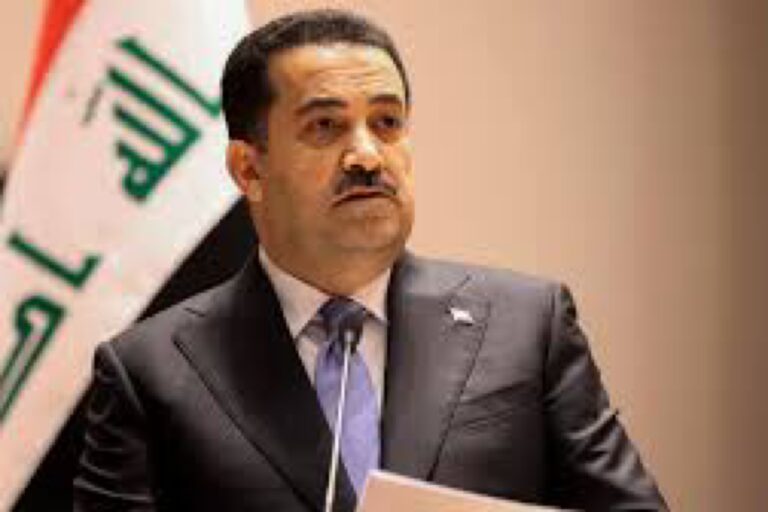
THE government of Iraq has requested the termination of the United Nations Assistance Mission for Iraq (UNAMI), operations by the end of 2025.
According to a statement by the country’s Prime Minister, Mohammed Shia’ Al-Sudani, based on the findings by the UN-formed Independent Strategic Review Team, Iraq’s request for UNAMI to end by 2025 is a timeline sufficient for a responsible closure.
“Unami is no longer required as the Middle East country has made significant progress towards stability and wants to deepen cooperation with other UN organisations.
“Iraq has managed to take important steps in many fields, especially those that fall under Unami’s mandate,” the prime minister said in his statement.
The prime minister also noted that the government of Iraq anticipated a UN Security Council resolution by the end of May in response to Iraq’s request and the Independent Strategic Review Team’s recommendations.
UNAMI is a special political mission established by the UN Security Council Resolution 1500 in 2003 at the request of the Iraqi government.
Its mandate is to prioritise the provision of advice, support and assistance to the government and people of Iraq on advancing inclusive, political dialogue and national and community-level reconciliation.
It also assists in the electoral process, facilitates regional dialogue between Iraq and its neighbours and promotes the protection of human rights with judicial and legal reforms.
The Mission is also mandated to work with government partners and civil society to coordinate the humanitarian and development efforts of the UN agencies, funds and programmes.
This request by the government of Iraq has elicited a range of responses from politicians and other citizens in the country, with some applauding it and others condemning it.
THE family of Namtira Bwala, a student of Lead British International School, Abuja, who her schoolmates bullied in a video that went viral recently, has sued the institution, demanding N500 million.
This was disclosed in a statement by the founding partner of the law firm handling the case, Marvin Omorogbe, on Monday, May 13.
The suit demanded that the sum be paid as general damages for negligence and a breach of duty of care which, otherwise, would have prevented the assault and trauma suffered by the student.
The claimant also requested a public apology from the school to be published in two national newspapers.
“Our client hopes that this lawsuit will bring about drastic changes and adequate measures to prevent a reoccurrence of similar issues in the school,” the statement read in part.
In April 2024, videos showing some of the school students bullying their colleagues went viral.
Bwala was recorded being slapped repeatedly by other students in the video, which generated public outrage.
Some social media users alleged that bullying has been one of the biggest issues in the school.
The school was shut for three days following the incident and the school announced that it had commenced investigations into the videos.
A few days after the incident, Bwala threatened legal action against the school via a letter from her legal representatives, if it failed to punish her bullies.
“Sequel to the preceding, we have our client’s instruction to demand the immediate investigation and the pronouncement of the stiffest possible sanctions in the student’s rule book on Ms Maryam Hassan, Miss Faliya and nine other students who have formed a cult of bullies in Lead British International School, Gwarimpa, Abuja.
“Please note that if the school fails to sanction the student bullies within 48 hours of the receipt of this letter, we have our client’s further instruction to seek an immediate and severe legal redress against Lead British International School, Gwarimpa, without further recourse to you,” the letter read.