Home Blog Page 593

Nigeria ranks 9th among African countries attracting infrastructure investments – Report

NIGERIA has been ranked ninth among countries that attracted private infrastructure investment in Sub-Saharan Africa (SSA) in 2023.

This is according to the 2023 annual report on Private Participation in Infrastructure (PPI) released by the World Bank on Tuesday, May 14.

It shows that private infrastructure investment dwindled in the SSA among other low and middle-income countries in the review year.

The report reveals that the SSA secured $3.5 billion in infrastructure investments in 2023,  recording a decrease of $1 billion from the $4.5 billion logged in 2022.

Nigeria attracted $133 million in three projects, representing 3.84 per cent of the PPI commitments secured by the SSA.

South Africa, which topped the list, attracted $1.04 billion across 11 projects, and Senegal and Tanzania each secured over $300 million.

“In 2023, SSA saw investments in 66 projects totalling $3.5 billion. This marked a 24 per cent decrease from the investment levels of the previous year and a 46 per cent decrease from the past five-year average.

“The largest contributor to the region’s PPI was South Africa, responsible for 30 per cent of the regional PPI, followed by Senegal and Tanzania. The sector receiving the largest share of PPI was energy, followed by the ICT sector,” the report read.

The ICIR reports that while every country has its investment climate peculiarity, notably, Nigeria saw a shift in foreign investment trends amid the dogged reforms of fuel subsidy removal and exchange rate unification by the new administration of President Bola Tinubu, coupled with other economic and security challenges.

The country recorded $3.9 billion in capital importation in 2023, which decreased from $5.3 billion in 2022.

It faces an infrastructural deficit that the World Bank said might take the country 300 years to fix if it continues at the pace at which it allocates resources to capital expenditure.

As such, the country’s ability to attract and secure international finance is crucial for its ongoing and future infrastructure projects.

While Nigeria seems not to be intentional about economic development by putting the necessary infrastructure in place, South Africa, for instance, is showcasing a diversified approach to infrastructure development with significant commitments in both the energy and ICT sectors.

Similarly, Senegal and Tanzania are becoming increasingly attractive to investors with their focus on energy and transport infrastructure.

Despite the decline in total investment, the World Bank report shows that more countries received private investments in infrastructure across a wider sample of projects.

In the review year, 68 countries received investments across 322 projects, compared to 54 countries and 260 projects in 2022.

Nigeria had 3.4 million internally displaced persons as of 2023 – Report

AT the end of 2023, no fewer than 457,000 internal displacements were reported in Nigeria, a report by the International Displacement Monitoring Centre (IDMC) has revealed. 

Internal displacement refers to the forced movement of people within the country they live in. This could be due to conflict, violence, development projects and climate-related disasters.

The report noted that not less than 3.4 million people in Nigeria fled their residences as of the end of the year, and about half of the incidents occurred in Borno State. 

Breaking the figures down, 291,000 displacements were caused by conflict, almost double the 148,000 displacements recorded in 2022.

Meanwhile, climate-related disasters in 2023 caused 166,000 displacements, a significant drop from the 2.4 million recorded in the preceding year. 

The report said, “Conflict persisted in the North-Eastern states of Adamawa, Borno and Yobe, where various non-state armed groups (NSAGs) operate. The number of attacks against military and government installations in Borno fell, but clashes between NSAGs and attacks on civilians continued and, in some areas, intensified.

Nigeria displacement in 2023

“Most displacements in Nigeria a decade ago were associated with armed conflict, particularly in the North-East, but nearly three-quarters of the total for 2023 was triggered by criminal and communal violence, including clashes between herders and farmers, in North-western states.”

The ICIR reported how over 7,000 people were killed in violent attacks across Nigeria within the first ten months of 2023.

Also, another report analysed how over 380 persons were kidnapped between December 1, 2023, and January 3, 2024. Some of these violent attacks by terrorist groups and bandits contribute to internal displacement within the country.

Year Conflict Internal Displacement Conflict IDPs Disaster Internal Displacement Disaster IDPs
2023 291,000 3,340,000 166,000 81,000
2022 148,000 3,646,000 2,437,000 854,000
2021 376,000 3,228,000 24,000 107,000
2020 169,000 2,730,000 279,000 143,000

Table showing Nigeria’s internal displacement in four years. Source: IDMC report

Global outlook

On the global scale, 75.9 million were internally displaced globally as of the end of 2023, up from 71.1 million in 2022. 

The report noted that the figure continued to rise, as people forced to flee by disasters, conflict or violence joined those who had been living in displacement for years or even decades and had no clue of when the crisis would be over.

About 68.3 million people lived in internal displacement as a result of conflict and violence at the end of 2023, with countries like Sudan, Syria, the Democratic Republic of the Congo (DRC), Colombia and Yemen hosting nearly half of the world’s internally displaced people. 

Also, 7.7 million people lived in internal displacement globally due to disasters at the end of 2023.

Disasters triggered 26.4 million new internal displacements, or movements, across 148 countries and territories during 2023. This is the third-highest figure in the last decade. 

Subsharan Africa

At the end of 2023, the number of internal displacements in Sub-Saharan African countries had reached 19.5 million, from 16.5 million reported in 2022. The figure was about 42 per cent of the total global displaced record that year. 


The top five countries where this displacement was recorded are Sudan, the Democratic Republic of Congo, Somalia, Ethiopia and Burkina Faso. 

Sub Sharan displacements in 2023

The report said. “Conflict and violence triggered 13.5 million movements, the highest figure for the past 15 years. Sudan made up 45 per cent of this total and the Democratic Republic of the Congo (DRC) recorded the second-highest figure. Between them, they accounted for almost half of all conflict displacements worldwide. 

“Disasters triggered six million displacements across the region, the second-highest figure since records began in 2008 and nearly double the average of the past decade. They were mainly the result of heavy flooding in the Horn of Africa after years of drought. Cyclone Freddy was the largest storm to hit the region, with most displacements reported in Malawi and Mozambique.”

However, conflict and disasters left 34.8 million people living in internal displacement across the region as of the end of 2023. While 32.5 million people were displaced by conflict, 2.3 million were displaced by disasters. 

Niger Speaker bows to pressure, halts planned marriage for 100 orphaned girls

0

SPEAKER of the Niger State House of Assembly Abdulmalik Sarkindaji has halted plans to marry off 100 orphaned girls in his constituency.

He disclosed this during a press briefing held in the state on Tuesday, May 14.

His decision comes shortly after the Federal Minister of Women Affairs Uju Kennedy-Ohanenye stated that she had filed for a court injunction to stop him from continuing with the planned marriage of the orphans, said to have lost their parents as a result of insecurity in the state.

The minister had also petitioned the Inspector-General of Police, Olukayode Egbetokun, over the plan.

In addition to the minister, many Nigerians condemned the decision, arguing that the orphans, who are believed to be children, should be supported to have a promising future rather than being given out in a marriage.

“The Minister has decided to drag me to court over this matter, which I believe is beyond the scope of her office,” the Speaker said on Tuesday.

He told journalists that he had already made funds for the wedding available to the girls’ families through traditional leaders and clerics, but would not withdraw the money.

He also claimed that he only offered to sponsor the marriage due to the poverty confronting them, and not as a constituency project.

Sarkindaji had announced that he would be sponsoring girls’ weddings in the state as a means of “alleviating the suffering of the impoverished.”

The announcement generated a lot of outrage from Nigerians, many of whom demanded that the planned marriage be called off.

The ICIR reported that Kennedy-Ohanenye, in addition to writing that the marriage ceremonies be cancelled, called for an investigation into the ages and willingness of the orphan girls.

“These children must be considered, their future must be considered, the future of the children to come out of their marriage must be considered. So I have gone to court. I have written him a letter and a petition to the IG of Police,” she said on Monday, May 13.

She also stated that her ministry would take up the burden of educating the girls, and train those who would rather learn a skill.

“If for any reason the Speaker tries to do contrary to what I have just mentioned, there will be a serious legal battle between him and the Federal Ministry of Women Affairs,” Kennedy-Ohanenye threatened.

Sirika, brother’s absence stalls alleged ₦19.4bn fraud trial

THE arraignment of former Minister of Aviation, Hadi Sirika, and his brother, Ahmad Sirika, for yet another case of contract fraud in the sum of N19.4 billion was stalled due to their absence in court on Tuesday, May 14.

The former minister and his brother are standing trial on eight counts to the tune of N19.4 billion by the Economic and Financial Crimes Commission (EFCC).

The sum is said to be connected to several Aviation ministry’s contracts awarded by the former minister to Enginos Nigeria Limited, owned by his younger brother, Abubakar.

However, on Tuesday, counsel for the EFCC, Oluwaleke Atolagbe, informed the presiding judge, Suleiman Belgore, that the ex-minister and his brother had yet to be served with the charges.

He, therefore, prayed for an adjournment, which was granted by the judge.

Consequently, the presiding judge Belgore fixed Thursday, May 23, 2024, for arraignment.

This latest arraignment follows a similar trial the former minister is facing before another judge, Sylvanus Oriji, on an alleged ₦2.7 billion fraud.

On Wednesday, May 8, The ICIR reported that the EFCC charged Sirika, his daughter and two other suspects in court on a six-count charge.

The other two defendants in the case are Jalal Hamma and Al-Duraq Investment Ltd.

Sirika pleaded ‘not guilty’ when the charges were read to him.

His counsel, Kanu Agabi, urged the court to grant him bail on self-recognition as a former minister.

After the arguments, the trial judge, Sylvanus Oriji, granted the accused bail of N100 million each and two sureties in like sum.

According to the court, in addition to the money, they must make sureties available who must have landed properties in Abuja and be responsible citizens.

The sureties must hold legally registered landed holdings within the Federal Capital Territory. 

The court also prohibited the accused from leaving the country without authorisation.  

The court ordered that the defendants be remanded in prison if they failed to meet their bail conditions, with the trial scheduled to start on June 10, 11, and 20.

How companies shut down by LIRS over tax evasion operate in the shadows

LAGOS, Nigeria’s commercial nerve centre, is a city where making money is swift, but doing business comes with a price tag. A shadowy narrative of tax evasion and business closures has recently emerged in the state. 

On October 31, 2023, the  Lagos Inland Revenue Service (LIRS) made headlines when it announced the closure of 34 companies and hotels for non-payment of consumption and personal income taxes totalling about N356.12 million. However, an investigation by TheCable’s BUSOLA ARO reveals a more nuanced story, shedding light on discrepancies in the shutdown claims and the challenges faced by businesses in navigating the complex tax landscape of  Lagos.


The Lagos Ministry for Commerce, Industry, and Cooperatives estimates that 3,224,324 microbusinesses and over 11,663 SMEs are operating in the state. These businesses, ranging from small shops to large corporations, are essential to Lagos’ economic machinery, contributing significantly to its vibrant business ecosystem.

Staying afloat in  Lagos’ competitive business environment is no easy feat. Many businesses struggle to turn in a significant profit while grappling with a myriad of tax obligations imposed by the government. This challenge is exacerbated by the current state of inflation and economic volatility, making it increasingly difficult for businesses to thrive.
Five ways to avoid paying high transport fares this festive season

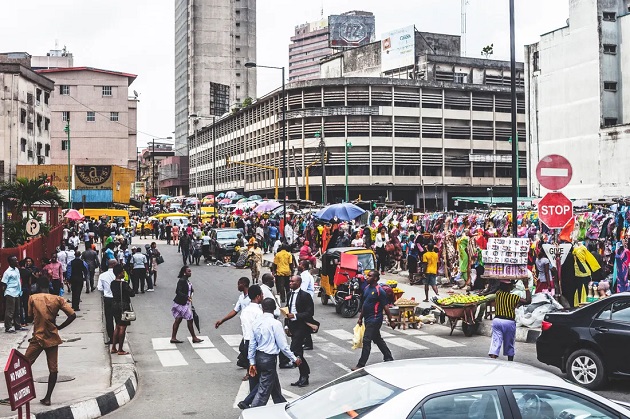
Lagos is Nigeria’s economic capital, with thousands of small businesses in every corner of the city

Lagos state has a myriad of tax obligations that individuals and corporate entities are expected to meet. This includes the personal income tax, which falls under pay as you earn (PAYE) or direct/self-assessment. Every employer is expected to collect their employee’s tax by deducting 8 per cent from their salaries. But if an individual (employee/ employer) has other incomes, he/she could be under direct assessment for one and PAYE for the other.

Also, there is Withholding tax (WHT). There are different types of withholding taxes, such as withholding on dividends, withholding on rent, withholding on consulting, etc. For each of these, there are different percentages to pay. Where the company or person providing the technical services is an enterprise, the withholding tax would go to the state. But if it is a company, the WHT goes to the federal government.

The development levy is another tax collected by the state. The sum of N100 is collected per individual. For instance, if a company has 10 staff, N1,000 is collected for all in a year.

Also, companies and businesses resident in the state are supposed to pay business premises tax. This is paid to the LIRS with N10,000 in the first year and N5,000 subsequently.

Lastly, a consumption tax of 5 per cent is collected by the  Lagos state government. It’s a tax on hotels, restaurants and eateries that sell food and drinks, or any bar operating in the state.

According to the 2022 internally generated revenue (IGR) report published by the National Bureau of Statistics (NBS),  Lagos had the highest IGR with N651.15 billion in the year, representing 34 per cent of N1.92 trillion, the total IGR of the 36 states of the federation and the Federal Capital Territory (FCT).

Out of the N651.15 billion IGR recorded in Lagos, N524.87 billion (80.61 per cent) came from taxes.

A further breakdown of the total tax revenue contribution to the IGR shows that PAYE is N360 billion (55.29 percent), direct assessment, N27 billion (4.15 percent); stamp duties, N12 billion (1.84 percent); capital gain tax, N1 billion (0.15 percent); Withholding tax, N86 billion (13.21 percent); other taxes, N25 billion (3.84 percent), and LGA revenue is N11 billion (1.69 percent).

The shutdown claims: a closer look

The announcement of the shutdown of 34 companies and hotels by the LIRS sent shockwaves through  Lagos’ business community. According to Monsurat Amasa-Oyelude, LIRS’ head of corporate communications, the tax liabilities of these companies and hotels amounted to over N356.12 million, representing a significant loss in revenue for the state.

However, a detailed investigation into these claims revealed discrepancies that cast doubt on the accuracy of the government’s position.

A check with the Corporate Affairs Commission (CAC) showed that six companies were actively filing annual tax reports.

Additionally, 17 companies appeared inactive on CAC records; but more significantly, nine out of the 34 companies were found to be unregistered with the CAC, raising questions about their existence and legitimacy.

The reporter visited 10 hotels, seven companies on the list (ranging from construction, media, pharmaceuticals, and consulting firms), two restaurants, and one event centre – all within Agege, Ogba, Oshodi, Ikotun, Ikoyi, Obalende, Ikeja, Victoria-Island, and Ketu areas of the state.

During the visits, it was discovered that a company named Business Intelligence Technology, located at Allen Avenue, Ikeja, was not found at any of the addresses provided online. Even neighbouring offices are unaware of the company’s presence in the area.

Also, a hotel listed by LIRS, Chelsea Hotel, was not found in  Lagos. There is a Chelsea Hotel in Abuja, though. The same also applies to Offshoroomz Hotel located in Ketu. The hotel has been converted into a residential apartment.

At Chez Moi Apartment located in Ikeja, the owner of the place, who spoke to the reporter, said she bought the property eight years ago from Chez Moi which had ceased to exist since then. She said the place is currently a residential apartment.

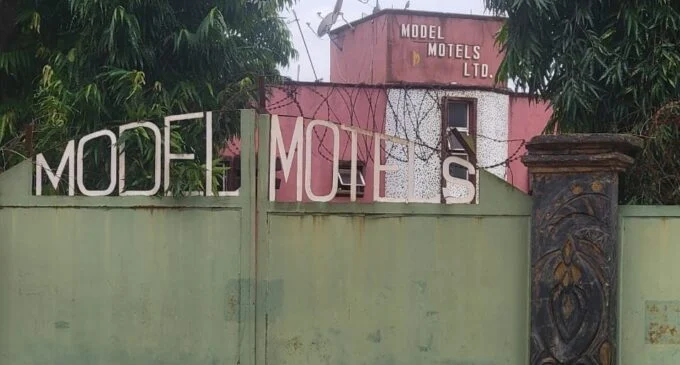
In the Ikotun area of the state, where Model Motels is located, the building was locked, and confirmations from residents around the area revealed that the business had stopped operating for more than a year.
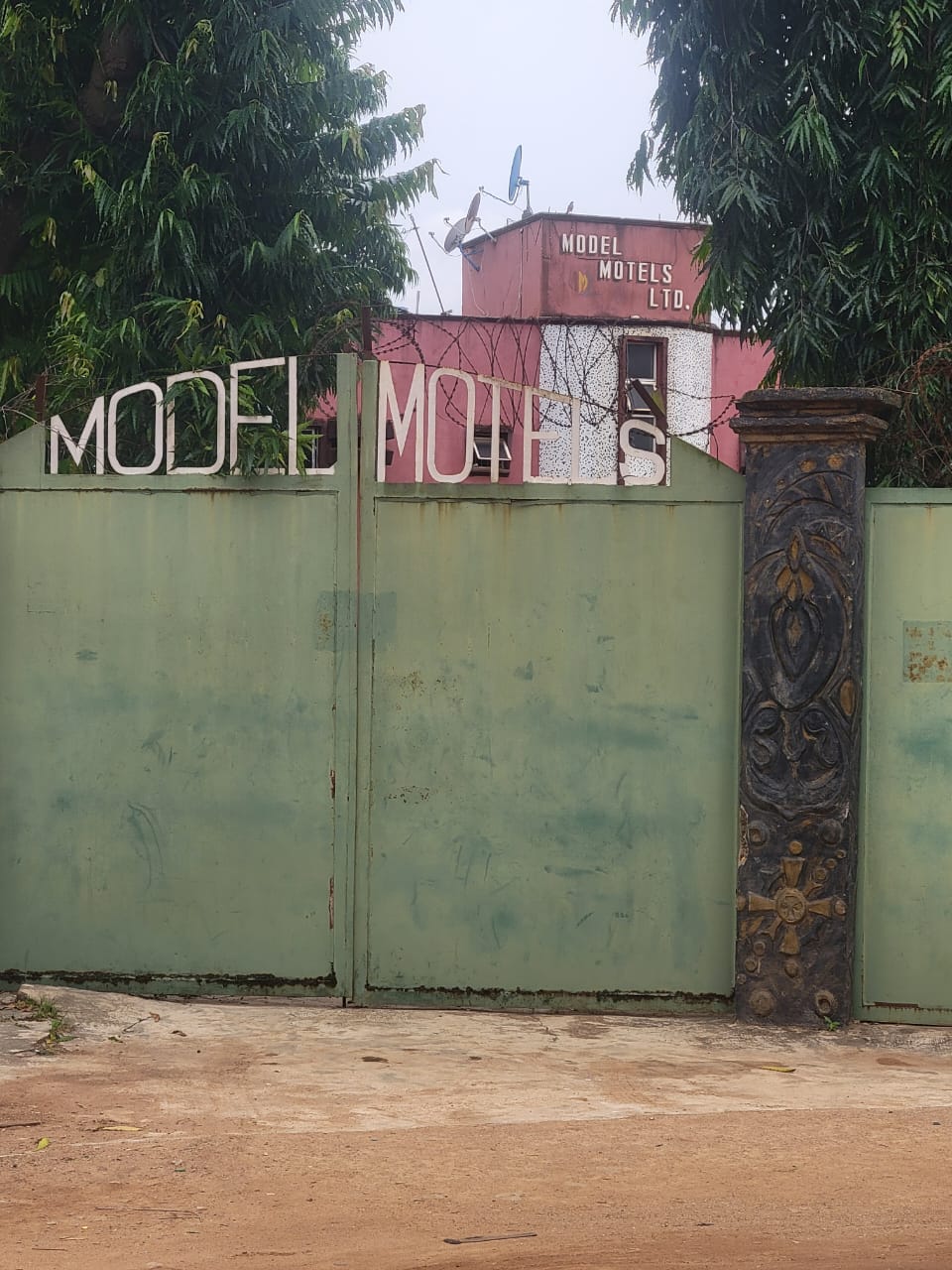
Model Motels is now strictly residential

After due diligence, the reporter also discovered that Falode Hotel and Bereans Venture neither had addresses nor records on CAC.

This discovery underscores the challenges faced by regulatory agencies in monitoring and enforcing compliance among businesses operating in  Lagos.

Apparently, the state government needs to design an efficient, technology-driven business information tracking system to improve its tax administration.

The human cost of tax enforcement

Behind the headlines and official statements lies the human cost of tax enforcement in  Lagos. TheCable’s investigation revealed stories of businesses struggling to comply with tax obligations while staying afloat in a challenging economic climate.

The managing director of Danvic Petroleum, one of the companies allegedly shut down by LIRS, Mayowa Afe, recounted the encounter his company faced because of the government’s action. He described how the company responded immediately to LIRS’ claims, clearing its name within hours of being shut down.

“That day, they (LIRS) came and said they wanted to stop our company from operating, but we said no,” Afe retorted.

“They said we didn’t give the correct payment and didn’t pay at the right time, which we didn’t dispute because we didn’t want to go into any issues with the government.

“That day, we were stopped in the morning, but we cleared ourselves before noon because we were sure of responding to every letter or notice. Because we never wanted any case with the government, we submitted the required document, which I cannot remember, and paid for them to open the company, and this happened in the morning.”

Similarly, the manager of High Climax Hotel, Olaoye Olabisi, shared how the company was unexpectedly billed almost N1 million in unpaid taxes since 2016, leading to negotiations for payment in instalments.

“Since I took over the payment of taxes for the hotel, I have never owed; but when they (LIRS) came, they also confirmed that I do not owe them but that there is an outstanding payment for 2016 that we have not paid,” he said.

“We were caught unaware, and the bill they gave me was about N940,000, almost N1 million. They also said that the auditor has been keeping them waiting on that, claiming that he is looking for a document.”

Despite the financial strain, Olaoye remains committed to meeting the tax obligations.

“Right now, I have about N100,000 to balance up and will do so this year. If not for the bad market and the slow economy, I should have completed the payments,” he added.

A staff member at De Orange Events Centre, James Philip, said the business premises were shut down for three days due to tax issues, costing the company N3 million in payments to the state before it could reopen.

James confirmed that the business was shut down for 3 days before reopening.

At the Four Seasons Hotel, the dilapidated state of the facility tells how well the hotel is doing in terms of profitability or viability—much less paying taxes.

When the reporter arrived at the hotel, the gate flung open without any stress, as there was no security office. The receptionist, Esther Ibeanu, who struggled to respond to questions, was able to speak to the reporter about the events that happened at the hotel.
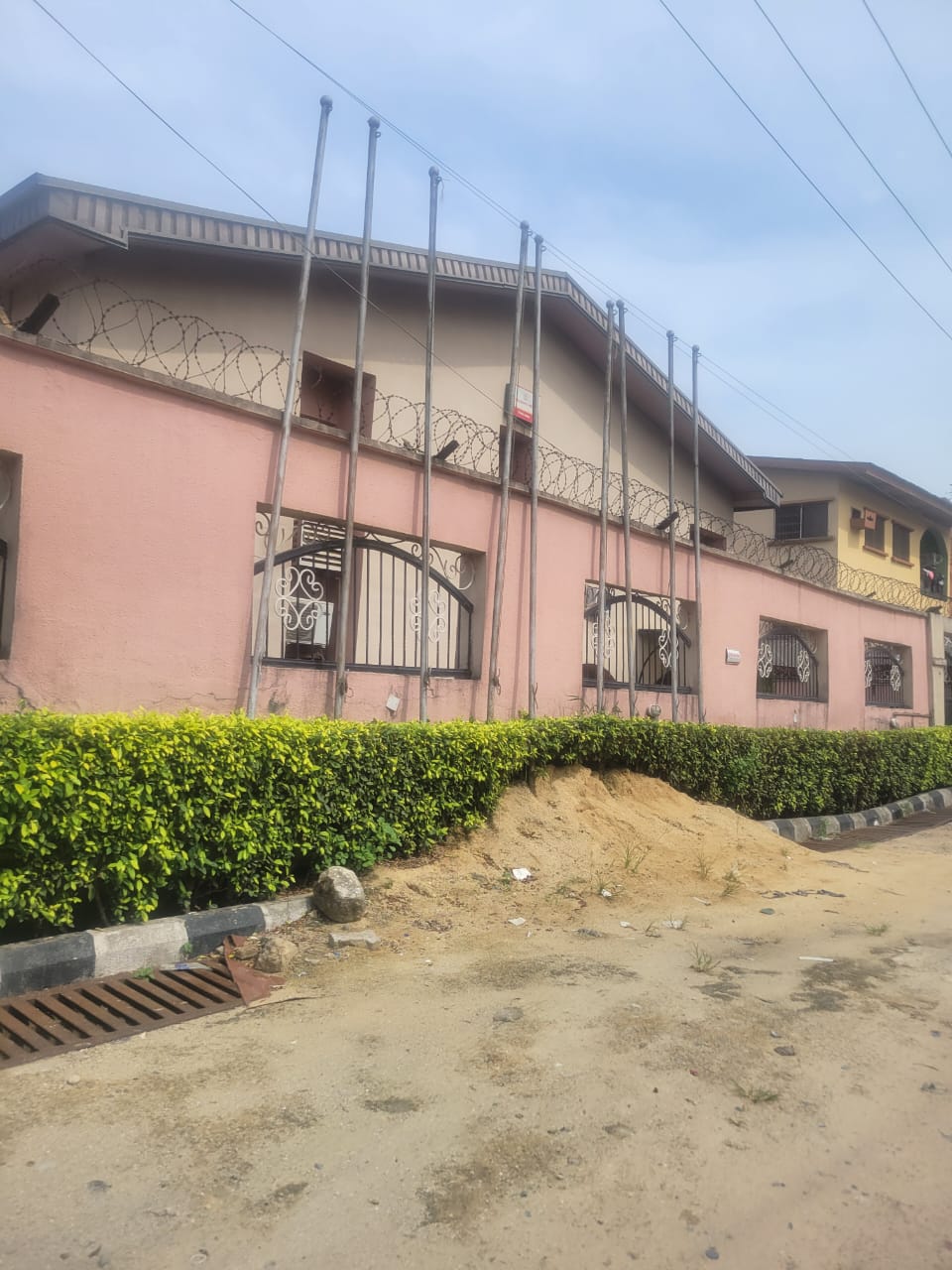
Four Seasons Hotel trying to get back to business after settling tax debt

“The hotel was closed for about a month before we could open again. Although I don’t know how much was paid, the tax officials had requested about N4.5 million,” Esther said.

“For more than a month, we’ve not made any proper sales. We cannot even boast of making N100,000 not to mention N200,000 in a day. Is that not poor for a hotel?

“We charge just N15,000 per room; but lately, we rarely get patronage. I cannot remember the last time we sold out all the rooms. Last year, things were fair, but it turned out worse this year.”

These stories highlight the challenges faced by businesses in meeting their tax obligations and the impact of enforcement actions on their operations.

Meanwhile, contrary to others, Emmanuel, manager at Jade Place, a Chinese restaurant, who claimed to have worked in the company for more than 10 years, said the place has never been shut down at any point. Yet, the company’s name was on the list made public by the LIRS.

“Anything tax, we’ve never been disturbed. Health, environmental, and FIRS officials come every month,” he said.

“I go to the bank to pay all the levies and taxes and we have the receipt for everything paid. Whenever they come, we show them receipts.  I am 100 per cent sure LIRS never shut us down.

“We pay value-added tax (VAT) of 7.5 per cent to FIRS and 5 per cent VAT or consumption tax to LIRS.”

Emmanuel, the manager, confirmed that taxes were always paid and the company never went out of business.

Like Jade Place, four other companies and three hotels on the list denied that they were ever out of operation between October, when the tax authority claimed to have shut them down, and the period in which the reporter visited these places.

The legal landscape of tax enforcement

A tax lawyer, Faith Zekeri, in an interview with TheCable, noted the importance of obtaining legal counsel in tax matters, adding that companies often fall into legal trouble due to a lack of understanding of their rights.

She said the LIRS and FIRS do not have the power to shut down a company without a court order, underscoring the need for due process in tax enforcement actions.

“The problem is that a lot of people and companies do not know their rights. A lot of them do not engage their lawyers when they encounter these kinds of problems,” she said.

“However, LIRS and FIRS do not have the power to stop a company from operations without an order of court.

“So, while there is authority for distraint and restraint, they must have gone to court and got the court order before they can do that. Generally, only CAC can shut down a company. The penalty for not filing returns is even more than not paying your taxes.

“So, it is illegal if there is no order of court for LIRS to shut down companies. Also, whether a company is registered or not, it is compulsory to file taxes.”

The tax lawyer also claimed that the LIRS is majorly obligated to collect PAYE tax and “has no business with other taxes”.

However, Zekeri said that although the idea of calling out companies and hotels is a way of being transparent in their job, it would be defamatory for LIRS to call out companies if they had complied with the tax agency’s court order.

“So, the question is, what they did, was it legal? And when it comes to fighting the illegality of things, it also goes to the process. What was the process that was followed?  Did they go to court and get a court order?” she added.

“If they did, then the companies must have been allowed to defend themselves because of the rule of fair hearing.”

Contributing, the executive secretary of the International Centre for Tax and Development, Mike Falade, acknowledged the role of naming and shaming tax evaders as a deterrent but cautioned against illegal enforcement actions.

He also stressed the need for collaboration and data synchronisation among regulatory agencies to ensure a seamless tax process.

“VAT is not for LIRS but for FIRS. LIRS does not have the right to shut down companies for not paying consumption tax if they already pay VAT,” Falade told TheCable.

“The calling out of companies is just to bite. They need to portray a story to the public so that companies will turn up.

“But from my record, I am not sure LIRS shut down any company to the best of my knowledge; that is why some of the companies mentioned do not exist or are not operating.”
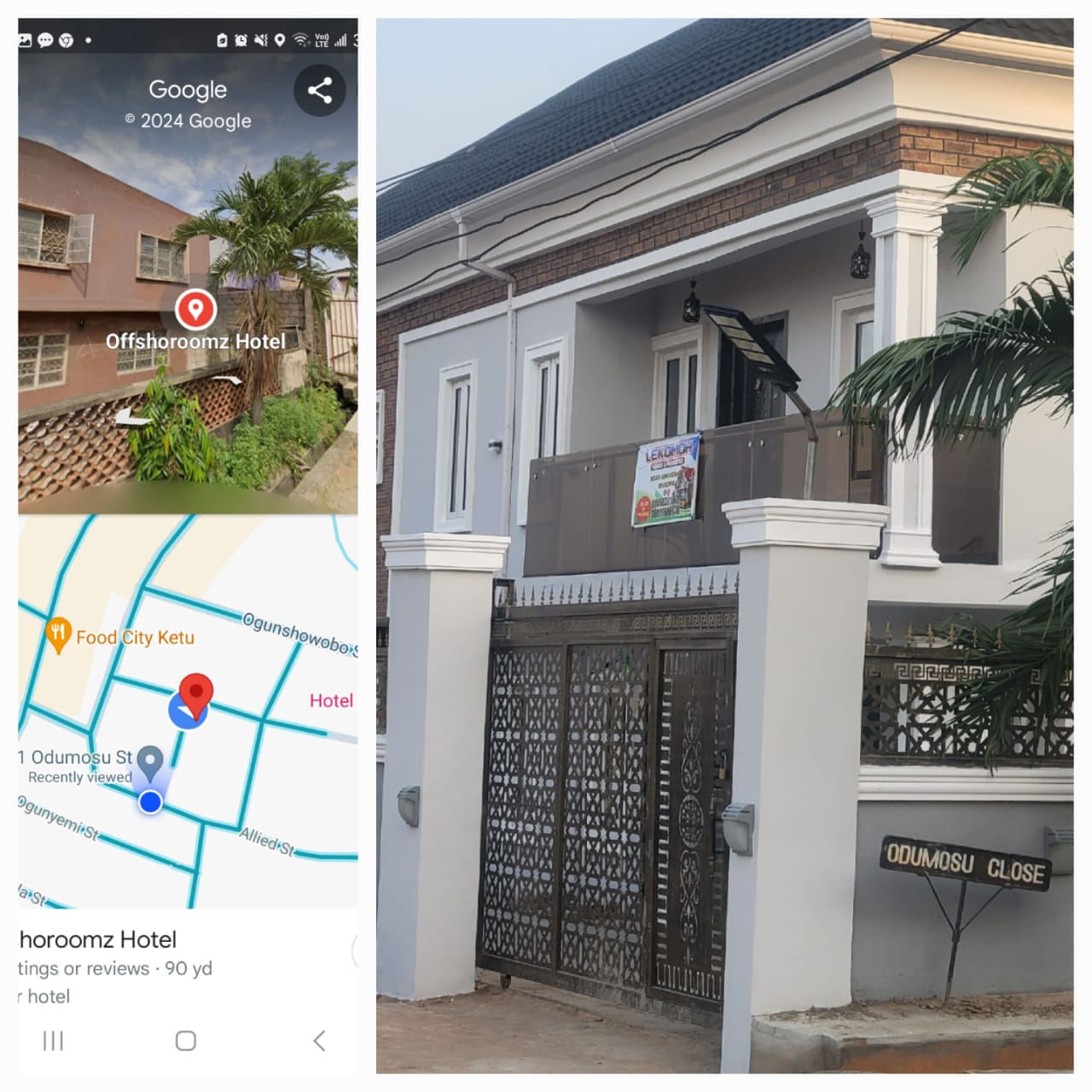
Offshoroomz Hotel had long stopped operating and is now a newly refurbished home for rent. Google confirmed address.

On the issue of CAC records, Falade said there is a difference between the annual returns and LIRS tax returns.

“Companies are also to file CAC annual returns, and the corporation had also said they would scrap dormant records. Those are yet to bite,” he added.

“Until there is a synchronisation of data, most of them (agencies) are beating around the bush. So, there should be collaboration across the board so that the tax process is seamless.

“If the non-state actors do not have the correct data to work with, how much more do the state actors? They do not have the correct data.”

Also, Falade explained that when a company is doing so badly that it cannot meet tax obligations, such a company or hotel should prove that they are making a loss.

“You declare a loss from the audited account,” he said.

“If you are earning an income, you are to file your returns; this is how officials (LIRS) would know that you are making a profit or a loss. You can file your audited account showing you are at a loss and don’t pay anything or file nil returns.”

LIRS clarification

Providing details on how the agency works and how it carried out the shutdown activity, director of the informal sector and special duties at LIRS, Folashade Coker, said the agency cannot take any action without doing its due diligence.

Coker said as long as a company is registered, their details are recorded in the state’s database, which can be accessed by LIRS.

“So, step one is that we have teams that go out daily to scout for companies using the ‘Jehovah Witness’ approach, or door-to-door, streets-to-streets’ kind of thing. Also, these companies have been served notices before they get to the point where they are taken to court, an ex parte motion is obtained, they are convicted, and the court instructs them to be sealed,” she said.

“And in that vein, there is no company that is sealed that opens itself up because it’s a criminal indictment if the government closes you down and you break the seal. A breach of the seal will land you straight in jail.

“So, every company that you saw that after they were listed as being restrained or shut down and you see them open, it is because hotels cannot afford to be sealed for 12 or six or even one hour because they would have guests that have their things in the hotel or they have guests that have already paid, and that can be a criminal charge for them. So, they quickly came over to resolve their cases so that they could be open.

“Most times, we have to open them within an hour or a day because they will come to the office and offset their liability. When none of them come to rectify their issues, we send our team with police officers to arrest whoever has broken the seal and that is imprisonment.”

Responding to the case of the Chelsea Hotel that wasn’t found, Coker said, “The government cannot lie about where they did not seal. The company is registered and exists. It could have a different name, but the LIRS would not call out a company or hotel for no reason or justification.”

Coker also explained that if a company is no longer in operation, it must declare that it has ceased operations, and failure to do so would only lead to accumulated taxes.

“We (LIRS) do not just wake up and sanction companies. First, did you register when you opened it? Another is: did you file your returns when you should, for companies on January 1 and January 31? For individual owners, did you file between January 1 and March 31? When they do not file, it becomes a criminal offence,“ she said.

“Also, there are letters that must be filed. One, was the company audited? If so, was there an assessment? Were the 30 days due after the assessment note? Was there a demand note? Did they object? If they did, were they requested to bring their documents, and did they bring the complete document? If they did not bring the complete documents, was the notice of refusal to amend sent to them?

“When they do not provide those documents, their liability is required, and they are served with an intention to prosecute. When the company does not do the needful, LIRS goes to court to get a judgment, and a court order is then issued. From there, LIRS goes to enforce the judgement of the court.

“We do not just go to any place without proving to the court that we have done the needful.”

Coker also said if a company’s building is sold out to someone else or a company is no longer occupied by the original owner and they are not anywhere traceable, “they would be left off the hook, but the original owner who owes the tax would still be located”.

The shutdown claims by LIRS have brought to the forefront the complex challenges faced by businesses in  Lagos in meeting their tax obligations.

While tax compliance is crucial for the government to generate revenue, there is a need for transparency, accountability, and adherence to due process in tax enforcement actions.

As  Lagos continues to grow as a business hub, regulatory agencies need to work closely with businesses to foster a conducive environment for economic growth and development.

*Tax justice and equity project

Minister sues Niger Speaker over plan to marry off 100 orphans

0

MINISTER of Women Affairs, Uju Kennedy-Ohanenye, has filed for a court injunction to stop the planned marriage of 100 orphans said to be children by the Speaker of Niger State House of Assembly, Abdulmalik Sarkindaji.

The minister also petitioned the Inspector-General of Police (IGP), Kayode Egbetokun, seeking his support to stop the planned marriage.

The ministry’s head of press and public relations Grace Njoku confirmed this while speaking with The ICIR on Tuesday, May 14.

“She has written to seek a court injunction to stop it,” she stated.

On Friday, May 10, Sarkindaji announced plans to marry off the 100 orphans as part of his empowerment project.

The orphans whose ages were not disclosed were said to have lost their parents to banditry in the  Mariga Local Government Area of the state.

Sarkindaji promised to pay their bride price and claimed to have procured all necessary materials for the mass marriage.

However, the minister described the plan as unacceptable, and contrary to the Childs Rights Act.

“These children must be considered, their future must be considered, the future of the children to come out of their marriage must be considered. So I have gone to court. I have written him a letter and written a petition to the IG of Police,” she said on Monday, May 13.

She also stated that her ministry would take up the burden of educating the orphans.

“Those that do not want to go to school, we will train them in a skill, empower them with sustainable empowerment machines to enable that child build his or her life and make up her mind who and when to get married.

“If for any reason the Speaker tries to do contrary to what I have just mentioned, there will be a serious legal battle between him and the Federal Ministry of Women Affairs.”

The Speaker’s announcement to marry the orphans off as an empowerment project generated public outrage from Nigerians over the weekend.

A Civil Society Organisation, the Take It Back Movement, also called on Sarkindaji, to rescind his decision to marry off the orphans.

In a statement signed by its head of the gender department, Omolola Pedro, the group condemned the Speaker’s action and called for sustainable investment in women and girls.

However, the Speaker said he was only funding the wedding ceremony, not forcing orphans into it.

Tony Elumelu advocates ‘big pharma’ incentives in low-income countries

0

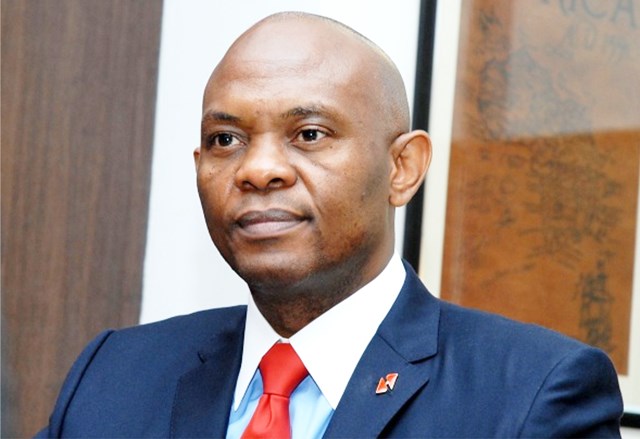
CHAIRMAN of the United Bank for Africa Group and Founder of the Tony Elumelu Foundation, Tony Elumelu, has called for incentives for big pharmaceutical companies to enable them to partner on research and development (R&D) for diseases prevalent in lower-income countries. 

Speaking at the Abu Dhabi Health Forum in the United Arab Emirates, on Monday, May 13, Elumelu emphasised the need for appropriate capital allocation and investment in innovation to drive global health improvements, particularly in Africa.

According to him, big pharmaceutical companies have a role to play in ensuring a sustainable health future for all, adding that “there is a need to review the current patent system and effect reforms while still incentivising innovation.

“There also needs to be incentives for big pharma to partner on R&D for diseases from lower-income countries.

“Incentives for investing in R&D and manufacturing facilities for big pharma in developing countries are also important — so leveraging the global trade system is also an important element of global health equality.”

Elumelu further urged the delegates to leverage the global trade system to achieve global health equality, suggesting that incentives for investing in R&D and manufacturing in developing nations are crucial.

“We need to work innovatively across social sectors to achieve results. A high per cent of health care facilities in Africa do not have reliable power supply (I think it’s around 40 per cent) — without power, the health outcomes will be low,” he said.

The UBA boss added that similar measures should be taken to open up access to medical device research and manufacturing, healthcare business model innovation, and related areas.

On global health equity and implications for health outcomes, Elumelu explained that there were significant imbalances in the quality of health outcomes, excessive investments in R&D in pharma, medical devices and practices for health conditions in rich countries, while poor countries miss out.

The ICIR reports that Nigerians currently face the challenge of paying more for drugs.

Some of the reasons are ballooning inflation and the exit of pharmaceutical companies from the country because of skyrocketing costs of doing business.

For instance, in 2023, a major pharmaceutical firm, GlaxoSmithKline(GSK), producer of prescribable medicine such as Augmentin and Amoxil, disclosed its strategic plan to stop the commercialisation of its prescription medicine and vaccines in Nigeria and transition to a third-party distribution model for its pharmaceutical products, citing foreign exchange concerns.

The development, according to a report, was traced to the steady depreciation of the naira against major global currencies since President Bola Tinubu took office, along with the deregulation of the foreign exchange market, which has triggered a series of economic crises.

This was also as less than 10 per cent of Nigeria’s population had health insurance, putting much financial burden on citizens to pay out-of-pocket for health.

While highlighting his foundation’s efforts to support the healthcare system, Elumelu disclosed that his foundation has funded 700 healthcare entrepreneurs, with a gender distribution ratio of 49 per cent male to 51 per cent female.

He noted that these entrepreneurs have significantly contributed to advancing healthcare delivery in their communities and countries.

Elmelu advocates climate funding for healthcare

Speaking further on raising funds for healthcare deliveries, Elumelu said climate change had complicated access to healthcare, adding that climate funds could be allocated to address healthcare problems.

“We hear so much about available climate financing for renewable energy projects, as well as climate change adaptation and resilience projects — but what about unlocking climate funding for healthcare delivery as well, particularly on the margins where climate change is leading to new diseases, or diseases appearing in place they were not seen before.

“…With private sector innovation, startup funding from foundations and financial institutions, health care policies from national and global health systems, investments from all as well as cross-sector collaboration, we can definitely move humanity forward,“ Elumelu added.


Naira depreciates to 1,515/$ despite CBN’s interventions

THE naira on Monday, May 13, depreciated against the dollar, falling to N1,515/$ on the parallel market, despite various interventions by the Central Bank of Nigeria (CBN).

The apex bank has rallied efforts to save the naira from decline with its interventions and below official rate sale of dollars to the Bureau de Change Operators (BDCs). However, this has failed to save the naira from further decline.

This decline represents 2.97 per cent (N45/$1) depreciation against the US dollar when compared with the level of N1,470 exchanged on Friday, May 10.


Read Also:


The fall came despite a marginal increase in Nigeria’s external reserves by 0.4 per cent week-on-week to settle at a four-week high of $32.4 billion as of May 8.

Economy watchers had expected the naira to extend its depreciation against the dollar to this week with a slight drop in the intervention by the Central Bank of Nigeria (CBN).

“We must intensify the export of finished commodities to strengthen the naira. The CBN interventions are not enough, “an economist, Kingsley Obiakor, told The ICIR.

Last week, the foreign exchange (FX) witnessed persistent weakness in the weaker naira due to a shortage of dollars in the market.

At the close of the FX market on Friday, the naira fell flat by 0.45 per cent as the dollar was quoted at N1,466.31, weaker than N1,459.73 closed on Thursday at the Nigerian Autonomous Foreign Exchange Market (NAFEM), according to the market summary released by FMDQ Securities Exchange Limited.

The intraday high closed at N1,490 on Friday, weaker than the N1,465 closed on Thursday, May 9.

The intraday low strengthened marginally to N1,322 per dollar as against N1,351 on Thursday.

Dollar supplied by willing buyers and willing sellers increased by 34.84 per cent to $113.78 million on Friday from $84.38 million recorded on Thursday.

The naira on Friday fell to a month-low of 1,470 against the dollar, on the parallel market also known as the black market, following the dollar shortage and the activities of speculators. The local currency depreciated to as low as N1,510 as of March 21, 2024, at the parallel market.

The FX market activity level waned as average turnover at NAFEM declined by 31.0 per cent week-on-week to close at $894.3 million as of May 9, according to a report by Afrinvest Securities Limited.

“We expect the naira to extend its decline barring any interventions,” analysts at Afrinvest said.


Tinubu directs MDAs to buy only CNG-powered vehicles

0

PRESIDENT Bola Tinubu has directed ministries, departments and agencies (MDAs) of government to ensure mandatory procurement of compressed-natural-gas CNG-powered vehicles. 

The Special Adviser to the President on Media and Publicity, Ajuri Ngelale, in a statement on Monday, May 13, said that the directive was in line with the President’s commitment to ensuring energy security and cutting high fuel costs.


Read Also:


According to the statement, “The President’s directive is also in furtherance of Nigeria’s effort to transition to cleaner energy as CNG-enabled vehicles have been adjudged to produce lower emissions, even as they present a more affordable alternative for Nigerian energy consumers.”

Addressing members of the Federal Executive Council (FEC) at the Presidential Villa, Abuja, President Tinubu affirmed that there was no turning back in the energy reforms initiated by his administration.

“This nation will not progress forward if we continue to dance on the same spot. We have the will to drive the implementation of CNG adoption across the country, and we must set the example as public officials in leading the way to that prosperous future that we are working to achieve for our people. It starts with us, and in seeing that we are serious, Nigerians will follow our lead,” the President stated.

“The President further directed the rejection of all memos brought by members of FEC seeking the purchase of traditional petrol-dependent vehicles, tasking the affected members of the council to go back and diligently seek value-driven procurements of CNG-compliant vehicles.

“The President remains committed to effectively harnessing the nation’s gas potential, alleviating the burden of high transportation costs on the masses while enhancing the standard of living of all Nigerians.”

The Presidency had noted that the deployment of CNG buses and tricycles and the vision to get at least one million natural gas-propelled vehicles on Nigerian roads by 2027 would mark a major energy transition era in the country’s transportation industry.

“The use of more expensive diesel and PMS will gradually be phased out, when many vehicles, including trucks, run on natural gas, which our nation has in abundance in at least 30 out of the 36 states of the federation,” the Presidency had said.

Nigerian government insists on $300 helicopter landing charge

0

NIGERIA’s Ministry of Aviation and Aerospace Development has said the newly introduced $300 helicopter landing levies were in line with global best practices and cost recovery measures.

The ministry took the stand in a statement on Monday, May 13 by its head of press and public affairs in Lagos, Odutayo Oluseyi.

It insisted that the levies were in tandem with global best practices as seen in the U.S., the United Kingdom, India and other countries.

The ICIR reports that the decision comes against the backdrop of helicopter operators’ refusal to comply, questioning the rationale behind the imposition of the new levy.

The operators had said the new charge amounted to multiple taxations, threatening to cease operations and seek legal action.

In the statement on Monday, Oluseyi noted that the Nigerian government had granted NAEBI Dynamic Concepts Limited the exclusive rights to collect helicopter landing levies.

He said this was in line with the memorandum of understanding between NAEBI Concept and the Nigerian Airspace Management Agency (NAMA), Federal Airport Authority of Nigeria (FAAN) and Nigeria Civil Aviation Authority (NCAA).

“It is instructive to note that NAMA, under the Act as amended in 2022, is empowered to collect aeronautical revenues in both the upper and lower airspace to support her self-sustainability,” he said.

According to Oluseyi, NAMA has, over the years, relied on the upper airspace for its revenue generation.

“Government in her wisdom, having discovered a lacuna on the lower airspace where helicopter operations are dominant, directed NAMA to live up to its responsibilities, to enable them to generate enough resources; to sustain their aeronautical architecture, enhance security and surveillance and improve the overall quality of helicopter operations in Nigeria,” he said.

Oluseyi said the ministry was confident that the initiative would improve capacity, efficiency, safety, and security and attract more investment in the aviation industry.

“We encourage all stakeholders to be committed to this laudable initiative, that has followed due processes and procedures and should embrace the new normal.”


READ ALSO:


The government had granted NAEBI Dynamic Concepts the exclusive rights to collect helicopter landing levies for federal agencies, according to a statement earlier issued by the minister, Festus Keyamo.

All operators and stakeholders in the industry are to comply with the mandate, Keyamo had said. “Non-compliance with this directive will constitute a breach of this mandate and will be met with appropriate sanction.”

He warned that the ministry would enforce compliance without exception and would pursue all available remedies against any party that fails to adhere to the directive.