Home Blog Page 609

Nearly 2 years after ICIR report, deplorable Giri village road receives facelift

0

ALMOST two years after The ICIR report, the road to Giri, a village located along the Abuja-Lokoja expressway, has received a minor facelift. 

Giri is a rural community about eight kilometres from Gwagwalada, one of Abuja’s major towns.

According to residents, the road, which was deplorable for many years, is now motorable.


Read Also:

The state of Giri Road before the facelift made life unbearable for the low-income residents, many of whom work in the city centre. Most were forced to relocate to other neighbouring villages. 

The contract for rehabilitating the road was awarded in 2015, but it was abandoned a few months later after the contractor received an advance payment of N50 million. 

An investigation by The ICIR in 2022 also revealed that the details of the road construction contract were shrouded in secrecy.

Before and after image of Giri town road

A visit to the site in 2022 showed that the road had been abandoned and contractors were not working on it. No drainage was built, and erosion had eaten part of the road.

A bridge linking the road had also collapsed during that period, making the road a nightmare for motorists.

The 1.6km road was unpassable despite the government paying an initial N50 million to the contractor in 2015.

“We are tired every time we hear they have started work on the road, but in the end, the contractors will disappear, while the road remains in a pathetic condition,” Umaru Gidado, a resident of Giri town, told The ICIR in 2022.

State of drainage on Giri town road in 2022

Many residents who spoke to The ICIR reporter during the investigation narrated the ordeals they face daily on the road.

However, confirming the present condition of the road in a chat with The ICIR on Friday, April 26, 2024, Abdulkareem Mumuni, a resident of the area, said the road had been improved, but more work needed to be done.

Drainage being constructed on Giri road. Pictured by The ICIR on 26/04/2024
Drainage is being constructed on Giri Road. Picture by The ICIR on 26/04/2024

According to Mumuni, the collapsed bridge on the road reported by The ICIR in 2022 was reconstructed in 2023, while work on the road started in 2024.

“Yes, the road is better now. They have not completed the road yet, but it is better than before. Cars can now move on it. The damaged bridge has been repaired, and they have done the drainage,” Mumuni said.

He also appealed to the government to complete the road before the rainy season.

It was also observed that drainage is currently being constructed on the road. Before now, there was no single drainage.

According to the FCT audit report of 2019, the construction of the road was awarded to a contractor, Tinamat Biz Construction Ltd, for the sum of N157 million in 2015. 

Present state of Giri road
The present state of Giri road

However, a visit to the contractor’s office in Wuse to find out why the road construction had not taken off despite payment of an initial N50 million showed that no company of such exists at the address listed on the CAC site.
SERAP sues NNPC over alleged missing $2.04bn, N164bn oil revenues

0

THE Socio-Economic Rights and Accountability Project (SERAP) has filed a lawsuit against the Nigerian National Petroleum Company Limited (NNPCL) over what it termed “failure to account for and explain the whereabouts of the alleged missing $2.04 billion and N164 billion oil revenues.”

According to SERAP, this followed the allegations documented in the recently published 2020 audited report by the Auditor-General of the Federation that the NNPC failed to remit the money into the federation account, saying that the funds may have been diverted.

The SERAP disclosed this in a statement signed by its deputy director, Kolawole Oluwadare, on Sunday, April 28.


Read Also:

The suit marked FHC/ABJ/CS/549/2024 was filed on Friday, April 26, at the Federal High Court in Abuja.

In the suit, SERAP is seeking “an order of mandamus to direct and compel the NNPC to account for and explain the whereabouts of the missing USD$2.04 billion and N164 billion oil revenues, as documented in a report by the Auditor-General.”

In the statement, SERAP urged the NNPCL to hand over suspected perpetrators to the Independent Corrupt Practices and Other Related Offences Commission (ICPC) and the Economic and Financial Crimes Commission (EFCC) for investigation and prosecution.

The group also urged the anti-graft agencies to ensure the full recovery and remittance of the missing funds to the federation account.

SERAP stated that the failure to account for the missing oil revenues echoes the nation’s oil giant’s inability to maintain the principles of transparency and accountability.

In condemning the missing oil revenues, SERAP lamented that “more funds would have likely been allocated to the fulfilment of economic and social rights of Nigerians, such as increased spending on public goods and services, had the NNPCL and its subsidiaries accounted for and remitted the disappeared public funds into the federation account.”

SERAP added, “The missing oil revenues have also impeded Nigerians’ ability to enjoy their economic and social rights and denied them access to essential public goods and services, especially at the time of cost of living crisis in the country.”

The SERAP argued that the NNPC had a legal responsibility to account for and explain the whereabouts of the disappeared money.

“Without the full recovery and remittance of the missing USD$2.04 billion and N164 billion oil revenues, the dire economic situation may worsen, and Nigerians will continue to be denied access to basic public goods and services,” the group said.

The SERAP said the Auditor-General of the Federation had reportedly documented complaints of missing public fund from the NNPC for many years.

It added that the Auditor-General of the Federation was concerned that the funds might have been siphoned into private accounts, depriving the government of the necessary revenue to carry out its operations.

A date for the hearing of the suit has not been fixed.

Investors lose over N3trn in one month after CBN’s rate hike

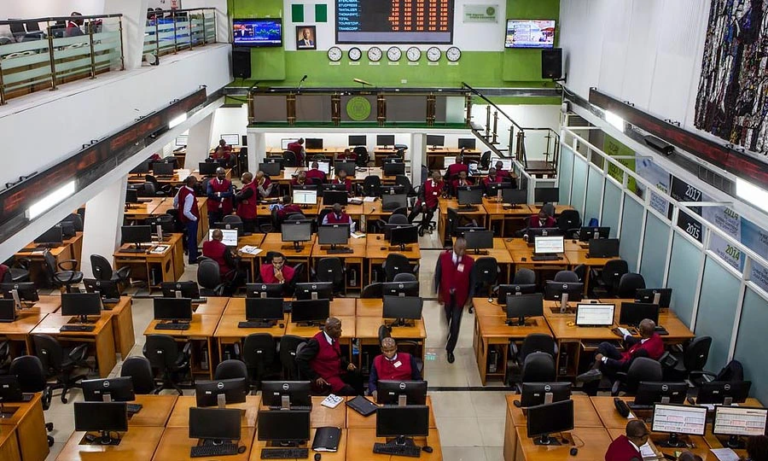
NIGERIA’s stock market has been hit by the Central Bank of Nigeria’s (CBN) monetary policy tightening, as investors have lost over N3 trillion in just one month.

The CBN had increased the monetary policy rate (MPR), otherwise known as the benchmark interest rate, by 200 basis points (bps) to 24.75 per cent on March 26, at the end of its two-day monetary policy committee (MPC) meeting.

This came after it raised the benchmark interest rate by 400 basis points to 22.75 per cent earlier in February, resulting in a 600 basis point increase in MPR since the beginning of this year.

The rate hike was intended to rein in inflation stoking the country’s economy and businesses and worsening citizens’ hardships. However, inflation has further surged since the last MPC meeting.


Read Also:


Stock market analysts had told The ICIR that the rate hike would negatively impact the equities market, lower investors’ confidence, and possibly erode attractive dividends companies might want to pay.

As of the close of trading on Friday, April 26, investors had lost approximately N3.26 trillion, as the market capitalisation had dropped to N55.51 trillion from N58.78 as of Tuesday, March 26.

In the review period, the All Share Index declined to 98,152.91 bps on Friday, April 26, from 103,952.47 bps as of March 26.

An investment and portfolio analyst, Abel Ezekiel, told The ICIR that with the rate hike, investors would prefer to shift their portfolios from higher-risk stocks to the fixed-income market, where bonds and other fixed-income assets are bought and sold.

“If MPR increases, the rate at which the government wants to borrow money from investors will rise. This will now make investors dump the stock market, bond market, treasury bill, and other fixed-income assets,” he explained.

The tradeoff between equities and fixed-income assets has been evident since the last MPC meeting, even though some analysts believe the Nigerian stock market will likely dip further.

In the period under review, all the sectoral indices trading on the Nigerian Exchange Limited (NGX) floor also declined.

The bank sector index declined by 23.05 per cent from 993.50 bps to 764.50 bps, followed by the insurance index, which dropped by 3.40 per cent from 395.13 bps to 381.69 bps.

The industrial index fell by 2.65 per cent from 4,832.29 bps to 4,704.32 bps, the consumer goods index by 2.51 per cent from 1,611.06 bps to 1,570.61 bps, and the oil and gas index by 1.69 per cent from 1,294.38 bps to 1,272.53 bps.

The CBN rate hike has also dashed the expectation of attractive dividend payouts from quoted companies, especially manufacturing companies posting negative performance in their first-quarter financial results.

On Friday, April 26, The ICIR reported that Nigerian Breweries (NB) Plc reported an N52.09 billion net loss in its first quarter (Q1) of 2024, up from the N10.72 billion loss posted in Q1 2023. This represents a 386.13 per cent loss in its bottom-line performance.

The bearing sentiment in the stock market has resulted in sell-offs and profit booking in some highly-priced stocks and blue-chip companies. 

In their weekly market review, Cowry Research analysts anticipate a week of gradual market gains driven by dividend qualifications, noting that entry opportunities emerge due to the market’s oversold condition.

However, the Cowry Research analysts added, “Our outlook remains mixed, contingent on several factors, including macroeconomic reports and foreign exchange market activities.”

Also, analysts at Comercio Partners said, “We expect a positive start to the next session,” despite the dismal performance in the Nigerian stock market. 

FG begins demolition of Landmark Beach for coastal road project

0

THE federal government of Nigeria has begun demolishing structures on the right-of-way of the Lagos-Calabar coastal road project.

The coastal road is designed to connect Lagos to Cross River, passing through Ogun, Ondo, Delta, Bayelsa, Rivers, and Akwa Ibom.

On Saturday, April 27, the Minister of Works, Dave Umahi, flagged off the demolition exercise at the Mani Chula Beach, Oniru Waterfront, a section of the Landmark Beach.

He said the beach was within the coastal corridor and legitimately in the federal government’s right-of-way, hinting that owners of affected structures along the coastal highway would be compensated.

According to Umahi, the 700-kilometre Lagos-Calabar coastal road construction would cost N15 trillion, as each kilometre of the road would cost N4 billion.


Read Also:


Although some Nigerians opposed the project, he said the highway was necessary for the country’s economic development.

The ICIR reports that the project has been criticised by concerned Nigerians, including the 2023 presidential candidate of the Labour Party (LP), Peter Obi, who described it as a misplaced priority and former Vice President Atiku Abubakar, who labelled it a fraud.

In a statement, Obi said, “We must allocate resources towards repairing and completing existing infrastructure, crucial for the well-being and safety of our society, before embarking on new projects, no matter their perceived benefits.

“Let’s prioritise the urgent needs of our people and ensure that our investments serve the collective good of the nation. In any development formula, the primary focus should be on completing and rehabilitating existing infrastructure rather than embarking on colossal new projects that may never reach completion within the next 30 years.”

In an interview with CNN, the proprietor of Landmark Beach Resort, Paul Onwuanibe, said he received a notice to vacate his multimillion-dollar beach resort within seven days in late March due to the impending demolition.

He estimated that the property worth over $200 million, accommodated more than 80 businesses, sustained over 4,000 direct jobs, and contributed more than N2 billion in taxes yearly.

Onwuanibe noted that he purchased the land in 2007, well before the coastal highway plans were formulated, and was left with mixed feelings after receiving the demolition notice.

According to him, his company had spent between $80 and $90 million developing the ecosystem, one-third of which was spent on the beach, for which it was still paying loans.

While the planned coastal project would connect vital regions of the country, Onwuanibe feared it would come at a steep cost for tourism in Lagos and threaten foreign direct investment into the country if Landmark Beach was eventually torn down.

“People who bring in money to make cities like this effective will be very concerned (with the proposed demolition of the beach resort). It will pose a huge threat to inward investment into the state and, most importantly, pose a threat to people who are already in the state trying to do things.

“I have had widespread panic calls from my international and local investors as well as local debt providers threatening to pull the plug as they think this is material to our survival as a business,” he lamented.

Ikeja Electric apologises for failing to meet 20-hour electricity supply

0

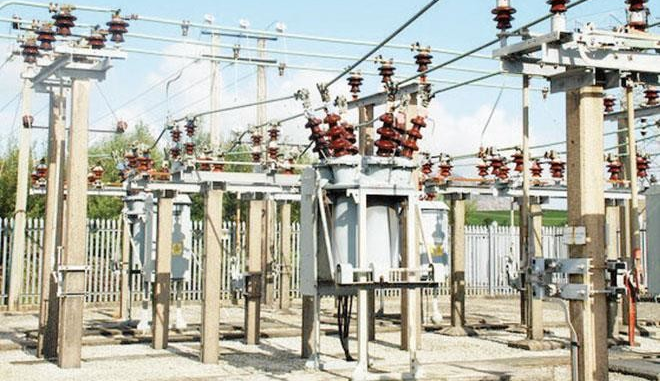
THE Ikeja Electric has apologised for not meeting Band A customers’ 20-hour minimum electricity supply, as power supply has recently worsened in several parts of Lagos State and Nigeria.

In a statement on Saturday, April 27, the distribution company (DisCo) said it experienced faults with some of its feeders in Ikeja and Ikorodu.

“We extend our apologies for falling short of the expected minimum service level of 20 hours on the Band A feeders below, for 25th and 26th April, 2024. We regret any inconvenience this may have caused you,” it said.

It said the locations most affected were Ikeja and Ikorodu, noting that feeder 11-PT-CINJ-T2 at Awuse in Ikeja and the 11-PTCCINJ-T3 feeder at Oba Akinjobi in Ikeja GRA were affected.  


Read Also:


A feeder at Odogunya in Ikorodu was also affected, resulting in the 11-kilovolt (KV) fault.

The Nigerian Electricity Regulatory Commission (NERC) has approved a tariff hike for Band A customers, who enjoy up to 20 hours of power supply, effective April 1.

The NERC recently approved a tariff hike for Band A customers, who will enjoy up to 20 hours of uninterrupted power supply daily.

Accordingly, the 11 DisCos in the country, including Ikeja Electric, have raised their electricity tariff to about N220 per kilowatt-hour for Band A customers, effective April 1.

According to NERC, Band A customers made up 15 per cent of its 12 million customers in Nigeria but raised concerns over the capacity of the DisCos to provide the required hours of electricity.

Despite the tariff hike, blackouts have persisted in most states, as many customers on Band A in different parts of the country have complained of not having a 20-hour electricity supply, The ICIR reported. 

Attempts to reach the principal manager of Public Affairs at Ikeja Electric, Olusola Ayeni, for comment on when the issues would be resolved -were unsuccessful, as his phone line was switched off when filing this report.

However, the NERC’s commissioner of consumer Affairs, Aisha Mahmud, told The ICIR that customers could seek compensation for poor power supply when DisCos failed to supply a minimum of 20 hours of power under the Band following the latest tariff increment.

According to Mahmud, customers will be eligible for a 50 per cent increase in compensation, as stipulated by NERC regulations, should DisCos persistently fail to meet service levels of at least 20 hours daily for seven consecutive days.

She said it would also result in the automatic downgrade of the feeder.

The ICIR reported that stakeholders had raised concerns about how the NERC could monitor a customer who’s supposed to have 20 hours but gets less and that the tariff hike for Band A customers would not solve the country’s epileptic power supply problem.

Five dead, many injured in Rivers tanker explosion

0

FIVE people have been confirmed dead and several injured in an inferno after a tanker exploded on the East-West Road axis of Port-Harcourt, Rivers state, on the night of Friday, April 27.

About 70 vehicles were said to have been consumed in the tragedy.

The spokesperson for the State Police Command, Grace Iringe-Koko, told the Punch on Saturday that five people had died so far from the incident.

, “For now, about five persons are dead. The Commissioner of Police and his team were on the ground last night to ensure there is no breakdown of law and order.”

 Following the impact of the inferno, eye-witnesses said more people could have died from the accident, which happened after a tanker carrying petroleum products burst into flames.


Read Also:

The tanker was said to be travelling on a run-down road when it was struck by another large truck, causing it to burst into flames.

The fire quickly spread to many other cars on the route, trapping occupants and preventing many of them from escaping. 

The East-West Road has been under construction for many years, increasing risks of accident for motorists who ply the route.

A Facebook user, Chinedu Joseph, posted a video of the incident on his page and said many cars had been burnt down in the inferno.

“It sounds like a serious and distressing situation. I hope the authorities and emergency services respond promptly to contain the fire and provide assistance to those affected,” he said.

Meanwhile, Rivers State Governor Siminalayi Fubara visited the site of the tanker explosion in Eleme Local Government Area on Saturday, April 27.

Fubara was accompanied to the scene of the incident by the Rivers Commissioner for Police, Olatunji Disu, and the Commissioner for Energy, Maximus Nwafor.

After seeing the carnage caused by the fire, Fubara directed security agencies to conduct a thorough assessment of the accidents to facilitate the provision of aid to victims’ families.

He said he got the information through the medical director of Indorama and immediately alerted the security agencies. 

“From what we are seeing this morning, it was not a very pleasant case.

We recorded, from what I am seeing, a huge number of vehicles being destroyed and souls lost. I have already asked the security agencies to give us a full brief so that we can come into the situation fully by seeing how much we can support the families of the bereaved and how we can cushion the effect of the losses,” the governor stated.

He also lamented the state of the East-West road’s Eleme segment, which has rapidly deteriorated.

ICPC grills TETFund directors over alleged N3.8bn contract fraud

0

THE Independent Corrupt Practices and Other Related Offences Commission (ICPC) has grilled three directors of the Tertiary Education Trust Fund (TETFUND) over alleged N3.8 billion contract fraud.

The three directors questioned include the agency’s director of finance and accounts, Gloria Olotu, the director of human resources and general administration, Kolapo Okunola, and the director of information communication technology (ICT), Joseph Odo.

The officials reportedly arrived at the ICPC office in the Federal Capital Territory (FCT) between 10 a.m. and 11 a.m. on Thursday and were questioned until around 6 p.m.


Read Also:

The ICPC spokesperson Ademola Bakare told The ICIR on Saturday, April 27, that contrary to wide speculations, the commission did not arrest the executive secretary (ES) of TETFUND, Sonny Echono.

“It’s a director, one Dr Gloria Olotu that was in our custody and helping us with our investigation presently, not the ES,” he stated.

According to Bakara, Olotu could not meet her bail conditions on Thursday but has now been released.

Bakare did not disclose the actual offence committed by the three ICPC directors.

Premium Times reported on Monday, April 22, about a contentious TETFund contract award of N3.8 billion to Fides Et Ratio Academy, an educational service provider.

The TETFund reportedly secretly awarded a contract worth over N3.8 billion five days before the end of former President Muhammadu Buhari’s administration, in violation of the law.

According to the newspaper, the contractor received N2.9 billion from TETFund in four instalments, contravening the law.

As required by Nigeria’s procurement law, the organisation said it could find no proof that bidders submitted a bid for the contract. 

The newspaper claimed the letter of contract award, dated May 24, 2023, was signed by Okunlola.

LG election kicks off in Oyo amid tight security presence

0

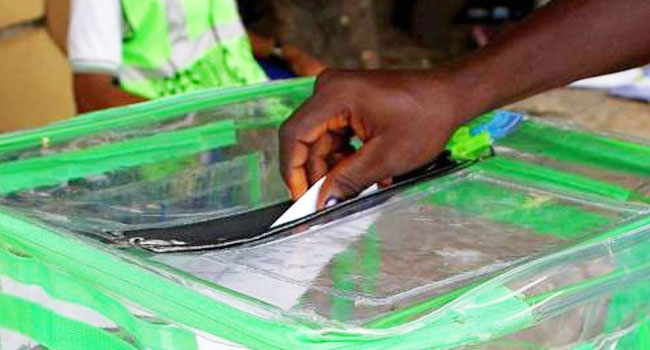
THE local government area (LGA) election in Oyo State, scheduled for Saturday, April 27, has kicked off amid the tight presence of security operatives.

The state Governor Seyi Makinde reportedly cast his vote at about 10.23 a.m. at the polling unit 1, Ward 11 in Ibadan North East LGA.

The Oyo State Independent Electoral Commission (OYSIEC) is conducting the election, which is being held across the 33 LGAs.

However, there was a late arrival of the electoral officials and voting materials at some wards as residents waited patiently for the electoral officials.


Read Also:


The News Agency of Nigeria reported that electoral officials were expected at Ward 9, Onipe area of Ibadan, at about 9.20 a.m.

Similarly, at about 9.15 a.m., electoral officials had yet to resume in Wards 1, 2, and 3 at Aba Aremu, Ido LGA.

A Labour Party (LP) chairmanship candidate for Oluyole LGA, Oyebukola Akinpelu, corroborated the delay.

The election is expected to take place in 6,693 polling units across the 33 LGAs as voters choose their chairpersons and councillors who would oversee the grassroots administration.

The ICIR reports that accreditation and voting are meant to co-occur between 8.00 a.m. and 3.00 p.m.

The state’s Commissioner of Police, Adebola Hamza, had on Friday, April 26, said at least 12,000 security personnel were deployed for the election, placing restriction orders on human and vehicular movements to allow for uninterrupted voting during the stipulated hours.

Hamzat disclosed this at a media briefing by heads of security agencies and OYSIEC, detailing that the personnel included 8,000 police officers and 2,125 from other security agencies, excluding the military.

The police commissioner added that vehicular movement would be restricted from 6 a.m. to 6 p.m.

“Nobody, no matter how highly placed, should go to the polling units with any security aide. The use of sirens or unauthorised number plates will not be tolerated,” he warned.

EFCC arrests 34 suspected currency speculators in Abuja 

0

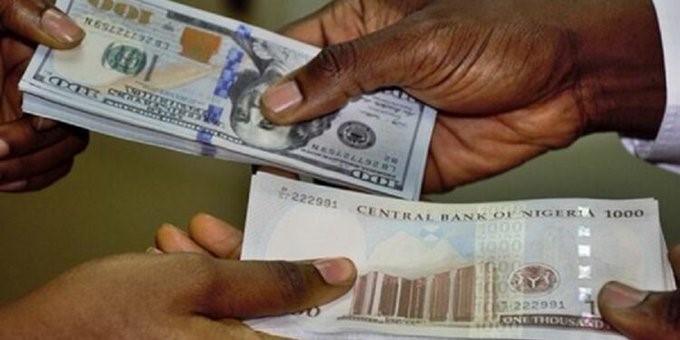
THE Economic and Financial Crimes Commission EFCC) has arrested 34 suspected currency speculators for alleged foreign exchange fraud at the Wuse Zone 4 area of the Federal Capital Territory (FCT).

The suspects were arrested in a sting operation following credible intelligence about illegal sales of dollars.

The spokesperson of the EFCC, Dele Oyewale, disclosed this in a statement on Friday, April 26.


Read Also:

Bawa: EFCC raid on BDC operators behind rise of naira against dollar

CBN revokes 4,173 Bureau De Change operators’ licence

EFCC arrests, grills NDDC’s Account Director over alleged N25bn fraud

ICPC grills TETFund directors over alleged N3.8bn contract fraud

EFCC arrests 34 suspected currency speculators in Abuja 


The anti-graft agency said its operatives, who were attached to the Taskforce on Currency Mutilation, Dollarisation of the Economy, and Forex Malpractice, carried out the arrest.

The agency listed the suspects arrested as Usman Mohammed, Abdullahi Nasir, Abubakar Saleh, Mohammed Kabir Ibrahim, Abubakar Ghadafi, Muktar Usman, Umar Abubakar Abba, Yakubu Sani, Aminu Abubakar, Muhammed Suleman Abara, Yusuf Tahir, Usman Lawal, Usman Lawal and Usman Umar.

Others are Amina Garba Rola, Muhammed Aliyu, Murtala Haruna, Sani Mohammed, Umar Farouk, Muhammed Sagiuru, Aminu Salisu, Lawal Bello, Munzali Hashim, Jamilu Suleiman, Mustapha Umar, Mubarak Tanimu, Adamu Garba, Mohammed Usman, Bello Musa, Saleh Mohammed Naseer, Zaharadeen Yau, Musa Umaru Adamu, Usman Machido, and Abdulaziz Abubakar Abba.

The agency said the suspects would be arraigned in court upon the conclusion of investigation.

The EFCC agents arrested over 50 illegal Bureau De Change (BDC) operators in Wuse Zone 4 Abuja in February due to the continued fall of the naira in the foreign exchange market.

A BDC operator, Abubakar Taura, at the Wuse Zone 4 told reporters that the operatives came around 3 p.m. and arrested over 50 of their members. 

In August 2023, the Central Bank of Nigeria (CBN) intensified efforts to battle currency speculators and developed new guidelines for BDC operators.

Nigeria has been facing serious currency problems since it floated its naira currency against the US dollar. This has caused economic issues, with a surge in inflation leading to a high cost of living.

Also, there are concerns about floating the naira against the dollar, which has led to the dollarisation of the economy and currency speculation. 


Again, ABCON raises concern over naira hoarding, speculation

THE Association of Bureaux De Change Operators of Nigeria (ABCON) has again warned economic saboteurs who are speculating and hoarding the naira to desist from such actions amid the recent naira depreciation.

ABCON has raised several concerns about naira speculation and hoarding. It accused Binance, a borderless foreign exchange trade platform, of significantly influencing Nigeria’s currency market and determining its direction.

The reactions that followed the accusation were Binance’s suspension of its trading platform to Nigerians, the government slam of $10 billion compensation on the platform, and the subsequent arrest of two of its senior executives who are currently being tried in court.

The move saw the naira, which lost value to over N1,900 against the dollar, appreciate to about N1,000 after the clampdown. Still, the naira has returned to depreciating against the dollar in recent weeks.


Read Also:


In the just-concluded week, the naira depreciated against the dollar after opening at N1,169.99 at the official window on Monday, April 22, and closing at N1,339.23 on Friday, April 26. At the parallel (black) market, the naira also slightly depreciated against the dollar when it closed at N1,290 on Friday from N1,245 on Monday.

In a statement on Friday, April 26, ABCON president Aminu Gwadabe expressed hope that the association would establish a unified retail-end forex market to tackle volatility and boost regulatory compliance among Bureau De Change (BDC) operators.

The strategic plan meant to unify operators from different cadres of the market would include the inauguration of state chapters for market coordination to ensure integration and administration of a united market structure in the BDC sub-sector.

He said ABCON would deploy technology to help fight the sabotage of CBN’s reforms.

Gwadabe said the new blueprint for a united retail end forex market structure would ensure the deployment of a centralised, democratised, and liberalised online real-time trading platform.

“Finally, we also condemned in its entirety the seemingly reappearance of illegal economic behaviours in forex conversion and P2P (person-to-person) trading that poses another recent surprises in naira volatility.

“I therefore want to warn that while surprises are the new normal, resilience is also the new skill.”

The ABCON boss expressed confidence in the efforts of the Central Bank and relevant security agencies to adopt measures to deal with any saboteurs and retain successes recorded on naira appreciation.

“It is, therefore, in our own interest to desist from hoarding and speculation as it is a bubble and will burst in no distance time,” he said.

He hinted that ABCON would extend its automation policies and platforms to all BDC operators across Nigeria markets and upgrade its Business Process Platform, formerly SAAZ Master.

Gwadabe also said the association would sustain its engagement with regulatory agencies, security operatives, and other government apparatus to entrench a secure and thriving forex market supporting regulation and government.

“Part of our vision for a united retail-end forex market include activating geo=mapping and automated BDCs physical office verification exercise using the remote gravity physical verification apps.

“This will enable forex buyers to easily locate where BDCs offices are for effective and seamless transactions,” he said.

Gwadabe continued that the vision for a united retail-end forex market would help provide market intelligence reports, enhance the local and global image of BDCs and other stakeholders and market operators, and boost employment generation.

He noted that it would also create a well-structured, transparent, and competitive platform to combat the menace of unlicensed platforms like Binance, Aboki FX, and ByBit.

The ICIR reports that ABCON’s primary goal is to ensure forex availability to the critical retail end of the forex market and bridge the gap between the official and parallel market exchange rates.

Since assuming office last year, the governor of the Central Bank of Nigeria (CBN), Olayemi Cardoso, has repeatedly said the apex bank was pursuing true price discovery for the naira.