THE Nigeria Football Federation (NFF) has appointed Finidi George as the new head coach of the Super Eagles.
According to a statement released on Monday, April 29, the 52-year-old former Real Betis and Ajax Amsterdam forward was given the reins of the nation’s senior men’s team after the NFF Board approved the recommendation of its Technical and Development Committee the appointment.
Following the Super Eagles’ remarkable run to the final of the 2023 Africa Cup of Nations in Cote d’Ivoire, the Super Eagles gaffer at the tournament, José Santos Peseiro, a Portuguese, stepped down, and Finidi George, who had worked as his assistant for 20 months, took over as temporary coach.
The former Super Eagles player, George, oversaw two friendly matches in Morocco last month as interim manager.
The team won 2-1 against Ghana to snap an 18-year winless drought but then lost 0-2 to Mali.
“George, a member of the so-styled ‘Golden Generation’ that won the 1994 Africa Cup of Nations tournament in Tunisia and emerged as the second most entertaining team in Nigeria’s debut at the FIFA World Cup finals in USA the same year, won 62 caps for Nigeria, including featuring at the 1994 and 1998 FIFA World Cup finals,” the NFF said in the statement.
Considering George’s remarkable career, the NFF statement highlighted his achievements, which include “gold, silver and bronze medals from the 1992, 1994, 2000 and 2002 AFCON tournaments.”
According to the statement, one of his most unforgettable experiences was assisting the late Rashidi Yekini in scoring Nigeria’s first-ever FIFA World Cup goal against Bulgaria in Dallas, USA, on June 19, 1994.
Within the next five weeks, the new Super Eagles manager’s primary responsibility will be to lead the side to victory in two key 2026 FIFA World Cup qualifying matches against South Africa and the Benin Republic.
“The matches are must-win encounters, with the Super Eagles lagging behind in third place in Group C of the African campaign behind Rwanda and South Africa,” the NFF stated.
IN recent years, using digital platforms has shifted from simple personal connections and information sharing to a tool for making money and earning a living.
For many Nigerians, social media platforms have become digital oil, according to Standard, a firm supporting corporate institutions to grow faster through technology.
Oil is the mainstay of the Nigerian economy, supporting the nation before its independence in 1960.
Individuals appear to be turning social media platforms into ‘oil wells’ to make fortunes.
People commonly referred to as creators now share content on social media platforms to earn money.
These items are presented in various formats, including articles, videos, and photos.
Some content creators have many followers and audiences and are commonly called influencers.
As influencers, these creators frequently earn fortunes from their content by promoting businesses and brands and receiving payment from some social media platforms they use.
Creators’ earnings are influenced by factors such as their follower count, audience engagement, and content type.
However, even those with smaller following can generate consistent and substantial income by cultivating a personal brand on social media.
The creator industry lacks a standardised pricing model due to variations in niches, strategies, and experience levels.
Subscription models offer creators a reliable income stream, with platforms like Patreon, Fanfix, Fanvue, Fourthwall, and OnlyFans being popular choices for publishing exclusive content.
In Nigeria, there has been an increase in content creators’ population following the COVID-19 lockdown in 2020, which made most people free from work.
As a way of engaging themselves, many Nigerians resorted to making short videos of their families and how they coped with the lockdown. The experience from this activity has since translated into content creation for many.
Many young citizens have turned to content creation as a source of income. Some people do it as a side hustle, while others work full-time. The activity comes with different techniques, including the use of vernaculars and the official lingua franca – the English Language.
The content creation industry is growing throughout the country, providing several opportunities for people and businesses. Young people, entrepreneurs, and other business owners are making ends meet by capitalising on the country’s rapidly developing digital ecosystem and rising need for fascinating content.
In this report, The ICIR spoke with some content creators and influencers who shared their journey as creators and their challenges.
“The current state of content creation is really encouraging. It is thriving with different creators on different platforms dishing out good quality content, as we can see on YouTube, TikTok, Instagram and even X (formerly Twitter). People are really delving into content creation, making money from their talents and passion”, says Lois Aniefiok.
Aniefiok, a content creator and influencer who has been actively creating content on social media platforms for about seven years, shared her journey with The ICIR.
Content Creator/Influencer, Lois Anirfiok’s X page
“I started actively creating content in 2017. This was when I realised I was a content creator in copywriting and visual content. Before that, I had an active audience on Facebook, although my account was not monetised. I then moved to Twitter, I was still able to get engagement on my posts, and that was when I started making money from social media,” she said.
According to Lois, the sector is influenced by various factors, including how internet accessibility, everyone being able to use any social media platform they choose because there is no licencing and the country’s high unemployment rate.
She noted that another driver is the monetisation aspect of content marketing, adding that the world is becoming increasingly digitalised, with many people creating and consuming content.
Assessing the market size and growth potential, Lois told The ICIR that it is largely determined by a creator’s niche, audience size, monetisation opportunity in that niche and brand collaborations.
“Content creators are narrowing down their contents to different niches, which is good because it gives room for growth. Brands are accepting content marketing more, which makes collaboration easier and for every niche, there is an audience,” she said.
Lois also shared that creators in Nigeria and worldwide earn through ad revenue, brand partnerships, sponsorships, workshops, and in many other ways. For her, Lois noted that the brands she had worked for approached her and the average pay currently is between N150k and 400k. She added that “content creation can serve as a full-time job, all a creator needs to do is invest in good tools and take courses”.
A lifestyle content creator, Lauretta Ebube, who has also been in the business of content creation for about five years, told The ICIR that she started influencing on Twitter before delving into visual content to become a lifestyle creator on other platforms.
“I started in 2019, then on Twitter as an influencer. I had lots of followers. Brands started reaching out to me and also gave room for friendship with other people in order to get referrals. Then in 2020, I started creating relatable video content and posting on Instagram, TikTok and YouTube,
I also started getting promotion deals from various brands,” she said.
Lauretta stated that there was an upsurge in content creation since people continued to earn money by sharing content. Besides, marketers are eager to pay influencers to promote their businesses.
When asked how she lands clients, she told The ICIR, “They mostly approach me. But I’m planning to start reaching out more because that is how to get your money up.”
Regarding her earnings, Lauretta said, “I can’t really say because it depends on what the client wants. It’s not a lot of money per client, but at the end of a good month, I can earn between N300k-N500k. It can be more with all my socials.”
When asked if she sees herself becoming a full-time content creator, Lauretta responded, “Yes, it can happen, but I’m not sure I have that confidence yet.”
Lauretta also shared her thoughts on the resources needed to succeed as a content creator, suggesting “creating tools, content creating and editing classes, tutorials, etc.” would be helpful.
Many creators who make money from content creation face a variety of challenges, including algorithm problems from some social media platforms and interacting with their followers, while others find it difficult to collaborate or work with businesses, particularly those with less follower count.
The state government further confirmed the commencement date of the new minimum wage in a press statement issued on the government’s official X account on Monday.
“The Governor made this declaration while commissioning the Labour House, which is second to none, and regarded as the most magnificent Labour House in Nigeria, built by the Governor Godwin Obaseki-led administration, and named after a foremost labour unionist in the country who hails from Edo State, Comrade Sen. Adams Aliu Oshiomhole.,” the statement partly reads.
In May 2022, the governor announced a minimum wage of N40,000 for the state civil servants.
Obaseki made the announcement in Benin, the state capital, while delivering his 2022 Workers’ Day address.
He said his government would continue to prioritise the welfare of Edo workers and equip them with the capacity and environment they needed to deliver efficient and quality service to the people.
He urged the workers in the state to take advantage of opportunities offered by his administration in the agricultural sector to increase food production in the country
The ICIR reports that the federal government and the NLC are negotiating a new minimum wage to address inflation and other economic challenges in the country.
The National Bureau of Statistics (NBS) reported that in March 2024, the inflation rate increased to 33.2 per cent from 31.7 per cent in February. Moreover, food inflation increased from 30 per cent in February to 31.7 per cent in March.
THE StoryMi Academy, in collaboration with the French Embassy in Nigeria, launches the second edition of the StoryMi Documentary Film Fellowship.
This six-month programme offers intensive training for filmmakers.
Selected fellows will gain invaluable skills through workshops and mentorship, network with industry professionals, receive support in developing their documentary proposal, and receive a grant to produce their short films. They will also get a chance to attend a prestigious international film festival.
THE Federal Ministry of Health and Social Welfare has announced the development of a National Policy on Health Workers’ Migration, which aims to address the migration of health workers from the country.
According to the ministry’s deputy director of the Department of Health System, Health Planning Research and Statistics, Nwakaego Chukwuodinaka, the initiative has been submitted to the Federal Executive Council by the ministry.
Chukwuodinaka said this at a recent policy dialogue on health workers’ migration in Africa, which was organized by the African Health Observatory Platform (AHOP) and anchored by the World Health Organization (WHO).
“What we are requesting is to have a managed migration, and to be able to implement that policy, we need a nod from the FEC. One of the key components of the Health Workforce Policy is to incentivise those that are on ground working, especially those in the rural and underserved areas. (It also seeks) to sign a pact with the destination countries.
“The pact is for us to equally gain from them poaching our health workers in the area of bringing technology for us, infrastructure and exchange programmes to help those we are training in-country,” she said.
The ICIR reports that the migration of health workers, particularly doctors, nurses, and other essential healthcare professionals, has long been a significant challenge facing Nigeria’s healthcare system. Their exodus has left many healthcare facilities understaffed and struggling to meet the population’s healthcare needs.
On April 26, this organisation reportedthat only 45 per cent of registered doctors in Nigeria renewed their licence in 2023.
In September 2023, the former president of the Nigeria Medical Association (NMA) said Nigeria had fewer than 100,000 registered doctors, out of which 50,000 practised in Nigeria. He noted that for Nigeria to meet the World Health Organisation’s standard of doctors to patients ratio, the country must employ at least 250,000 medical doctors.
Most doctors have migrated to practise outside the nation due to poor remuneration, inadequate infrastructure, unemployment, workplace conditions, economic issues, and inflation, among others.
Doctors migration has continued to push many medical practitioners, particularly doctors and nurses, to seek a greener pasture abroad.
In response to this, Chukwuodinakasaid the new policy would support those who have migrated and want to return home, including how they could be absorbed into the system.
While the policy details are yet to be unveiled, doctors and other medical practitioners may find it unwelcome, as in the case of the nurses against the Nursing and Midwifery Council of Nigeria (NMCN) new verification certification guidelines.
The ICIRreported how nurses, under the umbrella of the National Association of Nigeria Nurses and Midwives (NANNM), on Monday, February 12, protested in Abuja and Lagos against the council’s new verification certification guidelines.
Many nurses, mainly women, voiced discontent with what they perceived as an effort to impede their freedom to pursue career opportunities.
If implemented, the new policy states that eligible applicants must have a minimum of two years’ post-qualification experience and hold a permanent practising license.
The council also required letters of good standing from the applicant’s workplace and nursing training institution, adding that active practising licenses valid for at least six months prior to expiration are necessary, and the verification process takes a minimum of six months.
‘Brain drain in Nigeria’s healthcare very important issue’
On her part, the chairman of the Senate Committee, Secondary and Tertiary Health Services, Ipalibo Banigo, emphasised the importance of initiating strategies to mitigate brain drain in Nigeria.
She noted that brain drain among healthcare workers in Sub-Saharan Africa had been an important issue, adding that the availability of a quality and large number of health workforce across the various disciplines of health played a major role in health outcomes.
“It is important that we are able to come up with strategies and ways to go about it to mitigate the brain drain, to improve the strength of our health care workers, and improve their retention for a better outcome to compare with the global standard of health.”
Speaking on budgetary allocations to the health sector, she bemoaned the abysmally low health funding, far below the 15 per cent Abuja Health Declaration in 2000.
A LAGOS High Court has directed Air Peace to answer questions raised by the Foundation for Investigative Journalism (FIJ) over alleged defamation claims in a case instituted by the airline.
In the suit marked LD/ADR/4833/23, Air Peace accused FIJ of defamation in a report by the media house on its flight operations of October 12, 2022, from Lagos to Anambra.
Air Peace had maintained that it adhered to safety protocols and practices in compliance with safety directives and policies.
As a defendant in the suit, The FIJ raised some questions for the airline to answer.
Responding to the questions, the airline challenged FIJ’s inquiries regarding the aircraft used and flight operation.
Air Peace described the inquiries as “scandalous and irrelevant” to the libel suit.
Dissatisfied with the responses to the questions, FIJ applied to the court, compelling Air Peace to answer the questions initially objected to by the airline.
In the ruling, delivered on Thursday, July 25, The court, headed by trial judge Jose, upheld FIJ’s argument.
According to the judge, the request for the details of the first two aircraft designated to convey passengers is relevant to the facts in the issue and relates to the defendant’s case.
The court stated that answers to the questions could prove that the defendants were right.
Consequently, the court directed Air Peace to answer Questions 1, 4, and 7 of the defendant’s interrogatories within seven days of issuing the order.
Abimbola Ojenike and Jesulayomi Oyelami represented the FIJ in the case.
The media house wants Air Peace to provide a comprehensive description and specification of aircraft 5N-BUL, which was initially scheduled to operate as Flight P47336 on October 12, 2022.
According to FIJ, the description should include the make, year, engine type, andservice information, including the most recent aircraft maintenance checks conducted before flight P47336 on October 12, 2022, particularly but not limited to any faults or repairs on the systems.
2. Comprehensive specifications of the technical issues discovered during flight P47336’s operation and the circumstances leading to the aircraft’s change from 5N-BUL to 5N-BQQ.
3. A comprehensive description and specification of the aircraft 5N-BQQ initially onboard the passengers for the operation of flight P47336 on October 12, 2022. The description should include make, year, engine type, and service information, including the most recent aircraft maintenance checks conducted before flight P47336, particularly but not limited to any system faults and repairs.
In October 2022, FIJ reported that passengers aboard an Air Peace aircraft flying from Lagos to Anambra managed to escape death after its engine stopped working three times at the take-off point.
FIJ reported that the aircraft, scheduled to take off at 11 a.m., was delayed for two hours after the airline’s management announced that the plane initially earmarked for the Anambra trip had suddenly developed a fault.
“The engine stopped three times, and there was no explanation until passengers asked to be allowed to leave the plane. The captain only gave a vague explanation when the passengers expressed their concerns. He said the DAC or something similar to that went off on us.
“This was supposed to be a substitute plane as the first couldn’t be used for technical reasons. If this lackadaisical attitude continues, I fear they may record a crash soon. If we had flown today, we likely would have crashed,” FIJ had quoted sources as saying in the report.
Following the report, Airpeace instituted legal action against FIJ, demanding N50 million in damages, N250 million in aggravated damages, and N5 million for legal action.
The suit was adjourned to May 23, 2024, for further hearing.
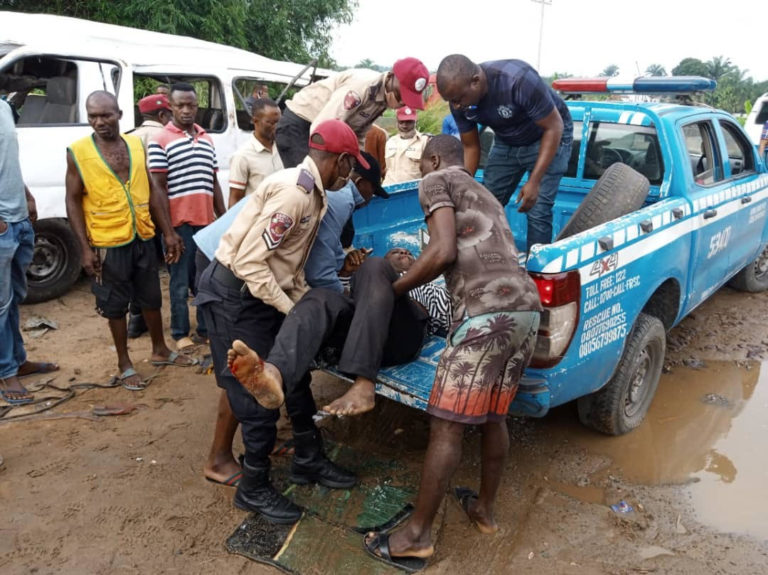
NINETEEN persons reportedly lost their lives in an auto crash at Okene bypass on the Okene-Lokoja highway in Kogi on Sunday, April 28.
The crash involved a Dangote Cement truck and a Toyota Hiace bus, the Public Education Officer of the Federal Road Safety Corps (FRSC), Assistant Corps Marshal Jonas Agwu, told journalists.
According to Agwu, the Toyota bus travelling from Kano was on its lane when the Dangote truck driver travelling from Port Harcourt wrongfully overtook a vehicle and collided head-on with the bus.
He said it took operatives of the FRSC, battling through the accompanying inferno, three hours to rescue two surviving victims of the crash.
“The impact of the collision resulted in an inferno that burnt the victims to death,”
Agwu said the crash, caused by route violation and wrongful overtaking, involved 22 male persons.
“Unfortunately, 19 persons out of the 22 victims were killed, while one was injured. The two victims who got rescued by FRSC operatives survived without injuries because they complied with traffic regulations on the compulsory use of seatbelts.
“Corpses retrieved from the crash were deposited at Okene General Hospital.”
The FRSC spokesperson added that the driver of the Dangote truck would be prosecuted by directives earlier issued by the Corps Marshal, Dauda Ali-Biu.
Ali Biu had called on the judiciary, the leadership of transport unions and other relevant stakeholders to join hands with the FRSC to restore sanity to Nigerian roads through speedy and effective prosecution.
The accident on Sunday came barely one week after 14 persons died, and 13 others sustained various degrees of injuries in an accident at Aloma community in Ofu Local Government Area of Kogi State.
THE National Agency for Food and Drug Administration and Control (NAFDAC) has said the Nido infant milk formula, allegedly containing sugar or honey was not registered or sold in Nigeria.
The Director-General of NAFDAC, Mojisola Adeyeye, stated this in a statement on Sunday, April 28.
She said the agency’s attention was drawn to an online publication that alleged that one of the world’s largest consumer goods companies added sugar and honey to infant milk and cereal products sold in many poorer countries, contrary to international guidelines to prevent obesity and chronic diseases.
Adeyeye noted that the online publication of April 17, 2024, was circulated widely to the general public.
The Guardian UK published the report titled ‘Nestlé adds sugar to infant milk sold in poorer countries, report finds’.
According to the report, samples of baby food products sold in Asia, Africa and Latin America were tested, and results revealed that sugar and honey were added in the form of sucrose in samples of Nido and Cerelac.
Campaigners from Public Eye, a Swiss investigative organisation, sent samples of the Swiss multinational’s baby food products sold in Asia, Africa and Latin America to a Belgian laboratory for testing.
The results and examination of product packaging revealed added sugar in the form of sucrose or honey in samples of Nido, a follow-up milk formula brand intended for use by infants aged one and above, and Cerelac, a cereal aimed at children aged six months and two years.
It added that Nestlé’s main European markets, including the UK, contain formula for young children that contains no added sugar. While some cereals for older toddlers contain added sugar, none is in products targeted at babies between six months and one year.
“Nestlé must put an end to these dangerous double standards and stop adding sugar in all products for children under three years old, in every part of the world,” the Public Eye’s agriculture and nutrition expert, Laurent Gaberell, was quoted to have said.
In her statement on Sunday, the NAFDAC boss said, “The management of NAFDAC wishes to use this medium to reassure the public that the agency exercises due regulatory diligence in the registration of infant and young children foods distributed and used in Nigeria.
“This is in line with relevant Codex Alimentarius international food standards (Codex) and more specifically, Nigerian Industrial Standards (NIS). This is applicable to all categories of infant and young children foods distributed by manufacturers, importers, and marketers of infant and young children foods operating within Nigeria.
She said the product was not registered in Nigeria, not known to the agency, and not in circulation in the country.
Adeyeye maintained that the range of Nestle Cerelac infant cereals distributed in the country was duly registered with NAFDAC and was in line with the Nigerian Industrial Standard for Foods for Infants and Young Children.
“Processed Cereal Based foods (NIS 256:2010) and the Codex Standard for Processed Cereal-based Foods for Infants and Young Children (CXS 74-1981 was adopted in 1981, revised in 2006, amended in 2017, 2019, and 2023), as well as the applicable NAFDAC regulations for compliance with safety, quality, and labelling requirements.
“Adequate, optimal nutrition during infancy and early childhood is essential to ensure the growth, health, and development of children to their full potential.
“The Codex Alimentarius Commission (CAC) implements the Joint FAO/WHO Food Standards Programme, developing international food standards, guidelines, and codes of practice with the mandate to protect the health of consumers and ensure fair international food trade, Adeyeye explained.
She added that iNAFDAC was fully aware of its responsibility to ensure the safety, wholesomeness, and quality of infant and young children’s foods offered for sale in Nigeria in compliance with the relevant standards and regulations.
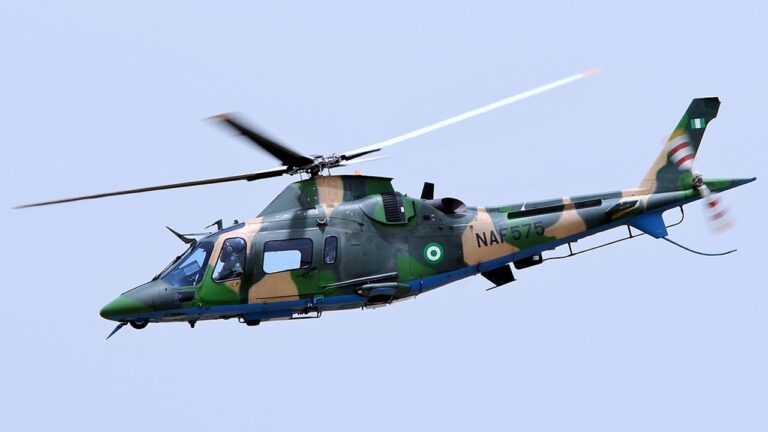
THE Air Components of Operations Whirl Punch and Delta Safe on Saturday knocked out terrorists’ hideouts in the Niger and Niger Delta states.
The director of public relations and information at the Nigerian Air Force (NAF), Edward Gabkwet, disclosed this in a statement on Sunday, April 28.
The ICIR reports the Niger Delta has been notorious for age-long illegal oil bunkery.
In the statement on Sunday, Gabkwet said air strikes were executed against economic saboteurs siphoning crude oil from mutilated pipelines, destroying the environment and ecosystem of the state.
According to him, the surveillance of Ke (Kalabari), Egbema, Akaso Krakama, Krikama, and the military council valley revealed a fleet of illegal refining sites that were effectively destroyed.
He hinted that a Cotonou boat fully loaded with crude oil was also observed at Akaso Krakama, which was about to depart southwards and was destroyed.
“At Krikama, several cooking sites were observed and destroyed as well. In all, 18 illegal refining sites and three Cotonou boats were destroyed.”
In the Niger state, Gabkwet said similar air strikes hit the enclaves of notorious terrorist kingpin Mallam Umar and several other commanders located in Alawa Forest in the Shiroro area of Niger state, following intelligence surveillance targeted at the location.
The terrorist enclaves include clusters of huts amidst dense vegetation, with a significant presence of armed terrorists, he said.
The NAF spokesperson explained that the terrorists were responsible for the recent attacks on ground troops at Bassa in Plateau State and the detonation of multiple improvised explosive devices (IED) along the Pandogari-Alawa road in Shiroro.
“Accordingly, the Air Component promptly deployed its air assets to decisively eliminate the terrorists, resulting in effective and maximum damage to the targets.
“A post-strike Battle Damage Assessment later confirmed the neutralisation of several of the terrorists and the destruction of their hideouts, with positive consequences on their ability to attack surface forces as well as innocent civilians within the area,” Gabkwet said.
He said air strikes had substantially weakened the potency of terrorist elements in the Northwest and oil thieves in the Niger Delta regions.
The statement added that NAF would continue collaborating with other security agencies through extensive situational awareness patrols and targeted interdiction of criminals’ safe havens.
On February 12, The ICIRreported an attack by suspected gunmen in two villages of the Miango district of Bassa Local Government Area (LGA) of Plateau State that led to the death of about four people.
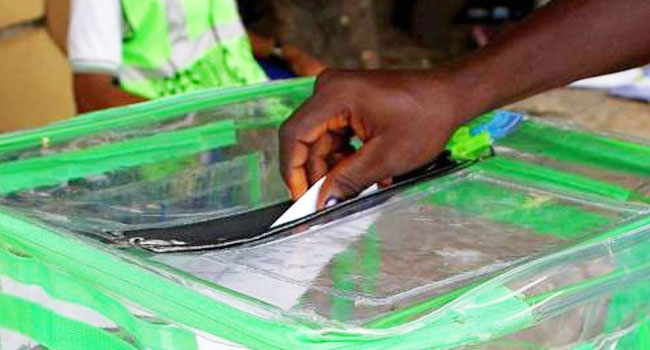
The Peoples Democratic Party (PDP) candidates have won all the chairmanship seats in the 33 Local Government Areas (LGAs) in the Oyo state council election held on Saturday, April 27.
The state Independent Electoral Commission (OYSIEC) announced the result on Sunday, April 28, at the Commission’s Conference Hall in Agodi, Ibadan.
The announcement came amidst controversy over anomalies during the voting process.
The chairman of OYSIEC, Isiaka Olagunju, confirmed the results and declared the candidates of the PDP winner following the announcement of the results from each of the 33 LGAs where the election took place.
Olagunju appreciated all electoral officers, party agents, and security personnel who participated in the process. However, he admitted that there was room for improvement and promised to provide the state government with a thorough report on the election as soon as it was completed.
However, parties in some LGAs complained about anomalies they observed during the election, ranging from personnel and material delays to the unavailability of critical materials.
Meanwhile, The African Action Congress (AAC) has expressed dissatisfaction with how the poll was conducted and has demanded that they be called off.
During a press conference held at the party’s Ibadan headquarters, the AAC’s National Publicity Secretary, Femi Adeyeye, said the Oyo State government did not have a legitimate election.
He demanded that the party’s chairman and another member who had been detained during the election process be released by security agencies.
The ICIR reportedthat the LGA election was held amid tight security.
The state Governor, Seyi Makinde, reportedly cast his vote at about 10.23 a.m. at polling unit 1, Ward 11 in Ibadan North East LGA.
OYSIEC conducted the election, which was held across the 33 LGAs.