Home Blog Page 61

Again, Dangote hikes fuel price to N1,245

0

Dangote Petroleum Refinery has again raised the ex-depot price of Premium Motor Spirit (petrol) to N1,245 per litre, intensifying pressure on Nigeria’s downstream market amid worsening global oil dynamics.

In a notice to marketers on Friday, March 20, the refinery attributed the latest adjustment to escalating geopolitical tensions affecting crude supply chains and international pricing benchmarks. The new gantry price reflects a N70 increase from the previous N1,175 per litre, while the coastal price was also revised upward to N1,606,518 per metric tonne.

“Please be informed that due to the current global geopolitical situation, which has further escalated, the PMS gantry and coastal prices have been reviewed and updated as outlined below,” the notice read.

The ICIR reports that the latest adjustment, effective from midnight on Saturday, marks the fourth upward review by the refinery in March alone, highlighting the speed at which global shocks are transmitting into domestic fuel costs.

PMS prices have risen rapidly from about N774 earlier in the month to N875, N995, N1,175, and now N1,245 per litre.

“The refinery raised its coastal price from N1,512,648 per metric tonne to N1,606,518 per metric tonne, while the gantry price increased from N1,175 per litre to N1,245 per litre. Please note that the revised price will apply to all unloaded gantry and coastal volumes and is effective from 12 am on the 21st of March 2026,” it stated.

The refinery added that marketers with existing supply agreements secured by bank guarantees would continue to lift products under previously approved terms, subject to specified conditions.

“For customers with a valid Bank Guarantee with DPRP, loading will continue with existing ATCs/PRN (if any), provided the BG credit balance covers the price change differential. The corresponding debit note will be passed in your trading account with DPRP. Payment evidence for the price change differential will be required by Monday, March 23, 2026,” the notice added.

The refinery insisted the adjustment was necessary to align with current market conditions, emphasising that external factors outside its control drove the pricing review.

The ICIR reports that the latest increase is likely to ripple through the retail market, with pump prices expected to rise as marketers pass on higher landing costs to consumers. 

Analysts said the move reinforces Nigeria’s continued exposure to external fuel price shocks, despite expectations that the refinery would help stabilise supply and moderate volatility.

Amid tensions in major oil-producing regions in the Middle East, which are driving up crude and freight costs, the refinery maintained that the price review reflects prevailing global realities beyond its control.
Police, Nigerians condemn video of assault, gang rape in Delta

0

THE Nigeria Police Force (NPF) and Nigerians have reacted with outrage following the circulation of disturbing videos showing assault and alleged gang rape of women in Ozoro, a community in Delta State.

The videos, which surfaced on social media on Friday, March 20, show several women crying and calling for help as groups of men harassed and attacked them in public.

In one of the clips, a male voice was heard claiming that any woman who stepped outside during the period risked being raped.

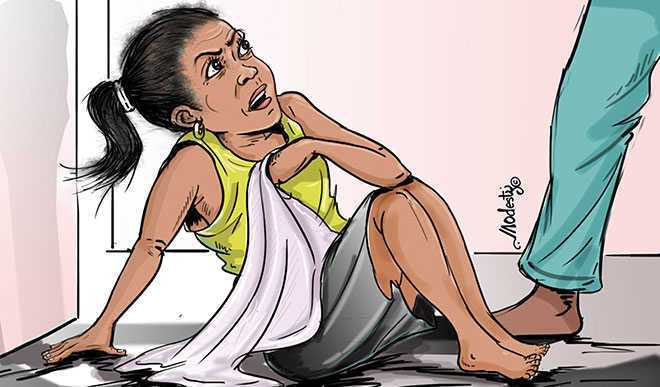
Another clip showed a lady being dragged on the ground, with men attempting to tear her clothes, while also manhandling her. She was later seen to be rescued by another person. However, several other ladies were chased down the street by men numbering hundreds.

The incidents have been linked by online sources to what has been described as a so-called ‘festival’ in Ozoro, where young women were allegedly targeted by men.

Reports also suggested that warnings had circulated within the community advising girls and women to remain indoors for their safety.

The ICIR reports that Ozoro hosts part of Delta State University.

Police condemn act, launch investigation

Reacting to the development on Friday, the Delta State Police Command described the incident as “alarming, disgusting and embarrassing,” stressing that no cultural practice could justify such acts.

The command’s spokesperson, Bright Edafe, said the state Commissioner of Police, Aina Adesola, had ordered an immediate investigation into the matter.

The police condemned the acts in strong terms, noting that “no custom or tradition is superior to the rights of citizens.”

The police further assured residents that those responsible would be identified, arrested, and prosecuted, while calling on witnesses to come forward with useful information to aid the investigation.

Public outrage trails incident

The videos have triggered widespread condemnation across social media, with many Nigerians expressing shock and anger over the attacks.

Travel content creator,Tayo Aina, described the incident as “the sickest” thing he had seen, questioning what kind of tradition could permit such acts. He called on the Delta State Government to intervene.

“This is the sickest shit I ever seen. What kind of disgusting tradition is this? Even animals can’t be doing this shit. Shame to all the men in this video. The government of Delta state needs to intervene and shut down whatever culture or tradition this is,” he wrote.

Another user, Tyson.nie, criticised the practice, noting that warnings for women to stay indoors instead of arresting perpetrators reflected a failure of local security structures.

Others described the acts as barbaric and inhumane, highlighting the trauma associated with sexual violence.

Also, popular social media influencer, Dickson said any practice that violated consent could not be considered tradition. He called for the arrest of all those involved, stressing that customs that contradict Nigerian law and basic principles of justice should not be tolerated.

“There is no such thing as a raping festival. That is not culture. Any sexual practice that removes the right of women to be willing participant, is not culture. That is simply gang rape and sexual assault.

“The police need to pack everybody involved if they are not also involved in this madness. Culture is not absolute. Man made culture. Therefore, man can undo it. Any culture that is repugnant to natural justice, equity and good conscience is not binding. Any culture that is incompatible with extant Nigerian law is not binding. Any culture that contravenes public policy is not binding,” he wrote.

After ICIR investigation, FG shuts down Bond Chemicals over untreated waste dscharge

0

Caleb IJIOMA

THE National Environmental Standards and Regulations Enforcement Agency (NESREA) on Wednesday, sealed Bond Chemicals Industries Limited in Oyo State, for violating environmental regulations.

This is coming after The ICIR published an investigation into how residents of Awe community are facing hardship as a result of chemical spillage from Bond Chemicals Ltd. which has contaminated their water sources. 

The facility was found to be discharging untreated industrial waste into the environment, posing risks to public health and its ecosystem.

During this investigation, this organisation reached out to NESREA on February 16, informing the agency about its findings, and how Bond Chemicals operations breached relevant Nigeria environmental laws.

Key findings

The ICIR investigation revealed the presence of brown coloration and suspended particles in the water sample obtained from one of the wells used by residents, indicating sediment contamination or iron-related discoloration. Also, high levels of ammonia (3.72 mg/L) were detected in the water even as experts warned that the water is unsafe and threatens public health.

Following the investigation, NASREA on Wednesday sealed off Bond Chemicals Industries Limited facility in Oyo State. 

In a press release sent to The ICIR, NASREA said it conducted a compliance inspection from its Southwest zonal office on the February 18, 2026, which revealed the facility had no functional Effluent Treatment Plant and was discharging untreated wastewater with offensive odour directly into the environment in contravention of applicable environmental standards and regulations. 

NASREA noted that following the inspection, the facility was duly notified and issued directives to immediately abate the “environmental nuisance by installing and operating an effluent treatment system in line with regulatory requirement, and also to obtain the required permits.”

However, a follow up inspection revealed that the facility failed to comply with the agency’s directives.

The Agency said it sealed the facility as part of its statutory mandate to prevent further environmental degradation and to safeguard public health.

“The Director General of NESREA Prof, Innocent Barikor reiterates that all industry operators are required to comply fully with environmental regulations, including the installation and proper operation of pollution control equipment.

“He further states that the agency will continue to intensify its monitoring and enforcement activities nationwide and will not hesitate to apply appropriate sanctions against any facility found to be in violation,” part of the statement reads.

NASREA revealed that the facility will remain closed until full compliance with its directive is achieved.

Two more bomb attacks imminent in Borno – Governor

BORNO State Governor, Babagana Zulum, has revealed that two suspected bombers might unleash mayhem in the state at any time, especially as residents celebrate the Eid-el-Fitr festival.

He said the attackers were likely foreign nationals who escaped into the state with three others who detonated bombs that struck three locations in Maiduguri, the state capital, on Monday, March 16.

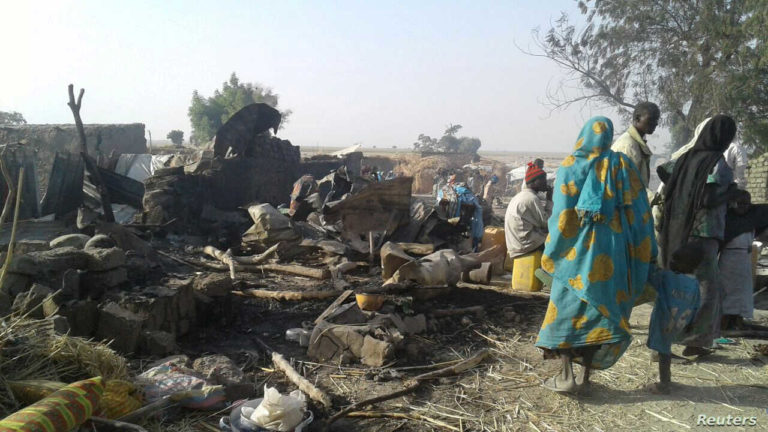
The ICIR reports that the coordinated bombings on Monday Market, the gate of the University of Maiduguri Teaching Hospital, and the Post Office Flyover area killed 23 people and injured 108 others.

Speaking with the BBC Hausa in the aftermath of the attacks, Zulum disclosed that intelligence reports indicated five assailants infiltrated the city ahead of the incidents. Three of them were killed in the explosions, while the remaining two are still being actively tracked by security forces.

“We have directed that people should restrict their movements and activities this Sallah period so there could be fewer casualties when it eventually happens because they often target soft spots where they would record many casualties.

“There are about four to five million people in Maiduguri town. So, there’s no way we could ask everyone to stay indoors this period. That’s why we asked the people to be vigilant in their actions and movement this period,” he noted.

Zulum said the “alarming attacks” of Boko Haram fighters on military formations in Ajari, Baga, and Damboa  in the city were a direct result of sustained military offensives in the Sambisa Forest, which “are pushing insurgents out of their hideouts and into civilian communities.

“These days, there is fighting in Sambisa, whenever there is fighting, they will also come out and show that they are strong to attract our attention so that we leave the bush and come to the city,” Zulum said.

He explained that security sources said that intelligence suggested insurgents deliberately escalate violence during the last ten days of Ramadan, drawing symbolic motivation from the historic Battle of Badr.

He added that the decision triggered coordinated counteroperations by Nigerian armed forces aimed at preventing further attacks.

Zulum said that as the search for the two remaining suspects continued, residents should report suspicious movements and cooperate with security agencies to prevent further attacks.

The ICIR reports that Borno State has faced insurgency for nearly two decades, recording huge human and infrastructural losses.

PDP, ADC slam Tinubu as Nigeria ranks 4th on 2026 Global Terrorism Index

1

NIGERIA’S opposition parties, the Peoples Democratic Party (PDP) and the African Democratic Congress (ADC), have criticised the administration of President Bola Tinubu following the country’s ranking as the fourth most terrorism-impacted nation in the 2026 Global Terrorism Index.

The Global Terrorism Index 2026 (GTI 2026) is an annual data-driven report by the Institute for Economics & Peace that measures the impact of terrorism worldwide. 

GTI 2026 provides a global ranking of countries by the impact of terrorism, using a composite score based on incidents, fatalities, injuries, and hostages, weighted over five years to capture lasting psychological and social effects. 

The report placed Nigeria behind Pakistan, Burkina Faso and Niger, with a score of 7.792.

According to the index, terrorist incidents in Nigeria rose by 43 per cent, from 120 in 2024 to 171 in 2025, while deaths increased significantly, with civilians accounting for the majority of victims.

Data from the Global Terrorism Index also showed that insurgent groups such as ISWAP and Boko Haram remain major drivers of violence, with the North-East, particularly Borno, continuing to bear the brunt of attacks.

The report also notes rising sophistication in some jihadist operations, including increased use of drones and battlefield-style tactics, and warns that overlapping conflicts (for example around Iran and South Asia) and deteriorating economic conditions may reverse recent global gains.

PDP: Tinubu government dancing on blood

In a statement by its National Publicity Secretary, Ini Ememobong, on March 19, the PDP described the ranking as “painful but not surprising,” accusing the Tinubu-led government of failing in its primary duty to protect lives and property.

The party said Nigeria’s placement among the world’s most terrorised countries reflected the “daily lived reality” of citizens, alleging that insecurity had worsened under the current administration.

“The country has now become more insecure than at any time in this Fourth Republic,” the party said, adding that insecurity had evolved into a “trillion-naira economy.”

The PDP also criticised what it described as the government’s ‘reactive’ approach to security, urging the administration to adopt a “whole-of-society” strategy to address the crisis and ensure both immediate cessation of attacks and long-term stability.

“This global report aligns with the daily lived reality of Nigerians, who are now more insecure than they have ever been in this Fourth Republic. In fact, under President Tinubu’s watch, insecurity has not just become very lucrative, it has attained a trillion-naira economy status.

“We call on the president and the entire security hierarchy to stop performing reactive responses that have defined post-attack communications and rather adopt a whole-of-society approach towards solving insecurity. Furthermore, they should evolve programmes and policies capable of delivering negative peace (cessation of attacks and incidents) immediately and providing the basis for positive peace (voluntary and unforced harmonious co-existence),” the statement read.

ADC proposes security overhaul

Similarly, the ADC faulted the federal government’s handling of insecurity, citing figures from the Global Terrorism Index to argue that the situation had deteriorated under Tinubu’s watch.

A statement by the party’s spokesperson, Bolaji Abdullahi, said the figures released by the GTA showed how exposed ordinary Nigerians had become. He noted that Borno State accounted for 67 per cent of attacks and 72 per cent of deaths, while civilians made up 67 per cent of those killed.

Abdullahi also criticised the president’s overseas engagements amid ongoing attacks, contrasting his actions with global examples of leadership during crises.

“It is interesting to note that when American soldiers were killed in the recent Iran conflict, President Trump went to receive their bodies. But when 30 civilians were killed this week in Borno, President Tinubu flew to the United Kingdom for tea and biscuits.

“This is why the ADC will take three decisive steps to fix Nigeria’s broken security system and restore safety across the country,” he wrote.

To address the situation, the party outlined a three-point plan focused on improving coordination among security agencies, decentralising policing, and shifting from reactive to preventive strategies.

It proposed the creation of a national intelligence coordination system, a unified Joint Terrorism Task Force, and the deployment of early warning systems and rapid response units across all states.

Rising insecurity

In recent weeks, insurgents linked to Islamic State West Africa Province and Boko Haram have intensified attacks on military formations in Borno State, exposing the continued vulnerability of security forces in the country.

Reports indicate that terrorists overran military bases in the state during coordinated attacks in early March, killing dozens of soldiers and carting away weapons and vehicles. 

During these coordinated attacks, at least three commanding officers were reportedly killed alongside dozens of junior officers.

The onslaughts, The ICIR reports, were part of a wider surge in insurgent activity in the North-East that has reportedly left at least 65 soldiers dead within two weeks. Recall that the region has faced nearly two decades of attacks by the marauders. 


Tinubu govt signs UK deal to deport asylum seekers, criminals to Nigeria

0

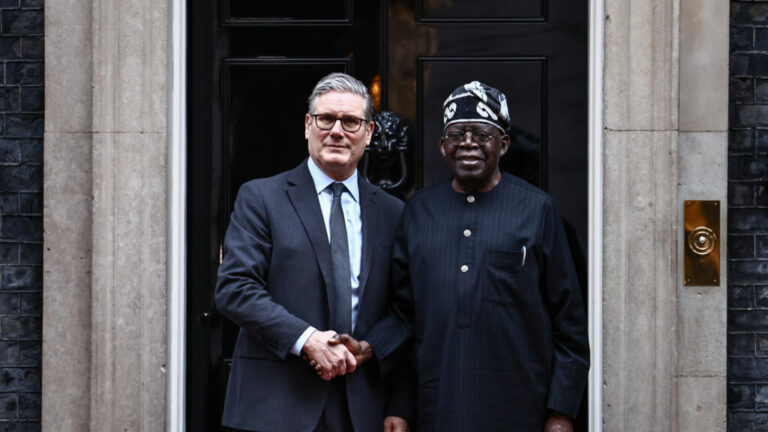
PRESIDENT Bola Tinubu-led Federal Government has signed a new agreement with the United Kingdom (UK) to facilitate the return of thousands of failed asylum seekers and convicted criminals to Nigeria.

The agreement, signed by Minister of Interior, Olubunmi Tunji-Ojo and the UK’s Home Secretary, Shabana Mahmood, seeks to deepen cooperation on migration and criminal justice between both countries.

However, it remains unclear how such a decision would further impact a nation currently overwhelmed with protracted insecurity, occasioned by terrorism, banditry, gunrunning, kidnapping, armed robbery, internet fraud, among others.

The ICIR cannot also immediately confirm if the decision would involve accepting deported citizens of other countries into Nigeria by the Tinubu government, and if there will be pecuniary gains or other benefits attached to the plan.

With the agreement, “visa overstayers, foreign criminals and failed asylum seekers will be removed from British soil far more easily under a new agreement struck this week during the state visit of Nigeria’s President, Bola Tinubu,” a part of a statement released by the UK after the pact said.

The ICIR reported that Tinubu embarked on a state visit to the UK on Tuesday, accompanied by his wife, Oluremi Tinubu, and other top government functionaries for a high-level visit at the invitation of King Charles III and Queen Camilla.

The Nigerian leader was hosted at Windsor Castle, marking the first state visit by a Nigerian president to the United Kingdom in 37 years.

The visit, which ended today, saw some agreements signed between the two nations, including trade and defence to further deepen the relationship between Nigeria’s former colonial master and the Africa’s most populous country.

Reacting further to the agreement on deportation of asylum and criminals, the UK said its letters, an alternative identification document issued to individuals without a valid passport and used to support the return of people with no right to remain in the UK, would be recognised by the Nigerian government for the first time.

“The agreement, reached between the Home Secretary, Shabana Mahmood, and Nigeria’s Minister of Interior, Dr Olubunmi Tunji-Ojo, removes one of the major administrative hurdles to returning people, meaning the UK will no longer have to wait for emergency travel documents to be issued by Nigeria,” the UK said.

According to the country, the new deal adds to the sweeping reforms the Home Secretary has made to the UK immigration system to secure the UK’s borders and remove incentives attracting illegal migrants to Britain.

Data by the UK authorities show that are currently 961 Nigerian failed asylum seekers in the UK who have exhausted their rights of appeal. There are also 1,110 foreign national offenders from Nigeria, whom the Home Office is waiting to deport.

The ICIR reports that the UK struck a similar deal with Rwanda in 2022. It agreed to pay at least £370 million for relocating asylum seekers to the country. However, the decision failed to materialise.

Speaking further on Tuesday after the pact with Nigeria, the UK said, “The agreement marks a shared commitment to safe, fair and well‑managed migration. Annual returns to Nigeria have nearly doubled to 1,150. Returns and deportations of illegal migrants and foreign criminals from the UK have reached nearly 60,000 since the 2024 election.

“A further agreement to launch joint operations and share information has been reached to crack down on criminal gangs abusing visa routes, making sure all arrivals are genuine and ready to contribute.

“Following a series of high‑profile cases involving fake job sponsorships, sham marriages and forged financial or employment records, a new standardised document‑checking system will verify the authenticity of applications. Nigeria will also review its laws to tackle immigration crime, ensuring the toughest possible sentences are handed down to offenders.”

It said the partnership would build on work already disrupting high‑harm fraud networks, preventing millions in losses and protecting vulnerable people across the UK.

Minister for Border Security and Asylum Alex Norris said the agreement was another step in UK’s mission to restore order to the border by ensuring those who have no right to be in the country are swiftly removed.

He said “Nigeria is a key partner in our work to tackle illegal migration, as the UK’s largest African visa market and home to thousands of Nigerians who have built their lives here. We owe everyone across the system fairness.”

Similarly, the Nigerian Minister of Interior commended the pact, noting that his country would ensure its success.

Benin, Togo bypass Nigerian government to buy power directly from GENCOs

AT a time when Nigeria’s electricity supply is arguably at its worst in decades, West African neighbours namely Benin, Togo and Burkina Faso are currently jostling for more electricity load offtake from Nigeria, The ICIR can authoritatively report.  

Benin and Togo already have bilateral agreements with Nigeria on electricity supply. They have also been able to scale up their power evacuation corridors, including transmission lines, sub-stations and switch-gear equipment for easier electricity off-take.

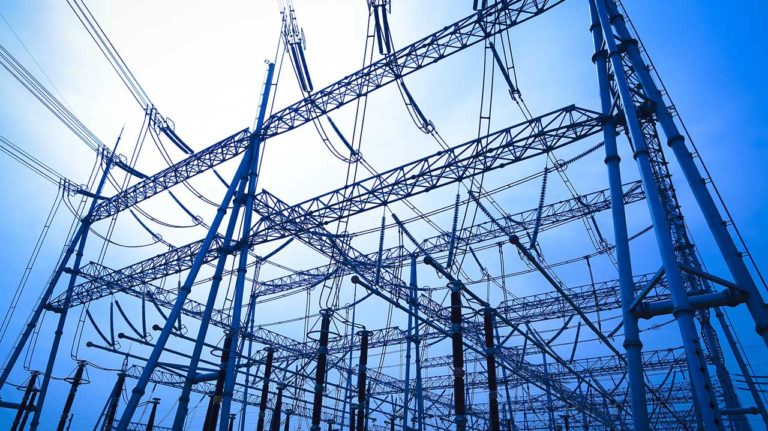
Conversely, Nigeria has been unable to optimally scale up its evacuation corridors, which currently limits offtake of power to such nations by the Nigerian government.

Therefore, these countries are considering buying power directly from power generation companies (GENCOS) in Nigeria to bypass the weakness of Nigerian power infrastructure that had been obstacles to direct supply of electricity to them. The ICIR reports that Burkina Faso has just approached the Nigerian government for power, but Benin and Togo have been regular customers.

Inside sources revealed that direct purchase from GENCOS could reduce costs. However, they must have the federal government’s consent to achieve this.

The ICIR reports that Nigeria’s current power supply oscillates between 3,000 and 4,000 megawatts despite power sector privatisation since 2013, with installed generation capacity of 14,000 megawatts.

Most Nigerian homes lack access to a constant electricity supply, with distribution companies resorting to load-shedding for homes and industrial clusters.

To worsen the crisis, Nigeria’s rising liquidity in the power sector and debts to power generation companies (GENCOS) of over trillion naira, with poor evacuation corridors, are a major cause of weak load evacuation to West African neighbours despite bilateral agreements.

“As of today, the contracting capacity for international customers, which constitutes Benin, Niger and Togo, is 606 megawatts. But they are given 306 megawatts on average, sometimes 320 megawatts, depending on line availability,” the executive director of market operations at Nigerian Independent System Operator (NISO), Edmund Eje, told The ICIR.

“They have asked why we are not able to evacuate to them, and we have explained that our infrastructure cannot evacuate optimally to their demands, which can overstretch our grid if there’s an overload,” Eje said.

The reason for poor evacuation, Eje said, is poor transmission infrastructure, stressing that, “an electricity overload will expose the national grid to incessant collapse.”

Findings by The ICIR showed that from Ikeja West to Sakete in the Benin Republic is 470 kilometres electricity line. While 30 per cent of the line belongs to the Benin Republic, 70 per cent of it is owned by Nigeria. The line, when fully completed, can evacuate 600 megawatts of power and on 330 (kilovolts)kV of transmission line to Benin.

However, the Nigerian evacuation corridors of 70 per cent are not fully built by the federal government, while the Benin Republic axis has been completed. With the non-completion, the evacuation of power to Sakete can only currently evacuate 100 megawatts of power to Benin, leaving those at the economic corridor in the axis stranded without constant power.

Eje confirmed that the weak evacuation corridors had prompted some of the West African neighbours to discuss with power generation companies for direct electricity load offtake through a power purchase agreement (PPA).

“In the past week, three generation companies came to my office to inform me that they want to sign a PPA with Togo. Burkina Faso also came to us and indicated interest in 400 megawatts of power,” Eje added.

The Executive Secretary of the Association of Gas Generation Companies of Nigeria (APGC), Joy Ogaji, told The ICIR that the debts in the sector were affecting investors’ confidence.

“Liquidity constraints continue to strain the generation companies. Gas supply limitations disrupt consistent power delivery, with end users struggling with unreliable electricity,” she said.

Analysts believe that the transmission expansion work by the Transmission Company of Nigeria (TCN), which involves upscaling of transmission infrastructure, could solve the evacuation corridor problems if the federal government intensify investments in transmission infrastructure, which still relies more on World Bank and African Development Bank funds for its works.

Recall that the Niger Delta Power Holding Company (NDPHC) disclosed on Sunday, March 15, that the Republic of Togo had expressed interest in increasing the volume of electricity from its company as part of efforts to meet growing power demand.

Débo-K’mba Barandao, who heads Togo’s utility company, said the country was witnessing an increasing electricity demand following the onboarding of new customers, including industrial and commercial users, as well as efforts by the Togolese government to expand electricity access nationwide.

US weighs more troop deployment as Israel-Iran tensions escalate

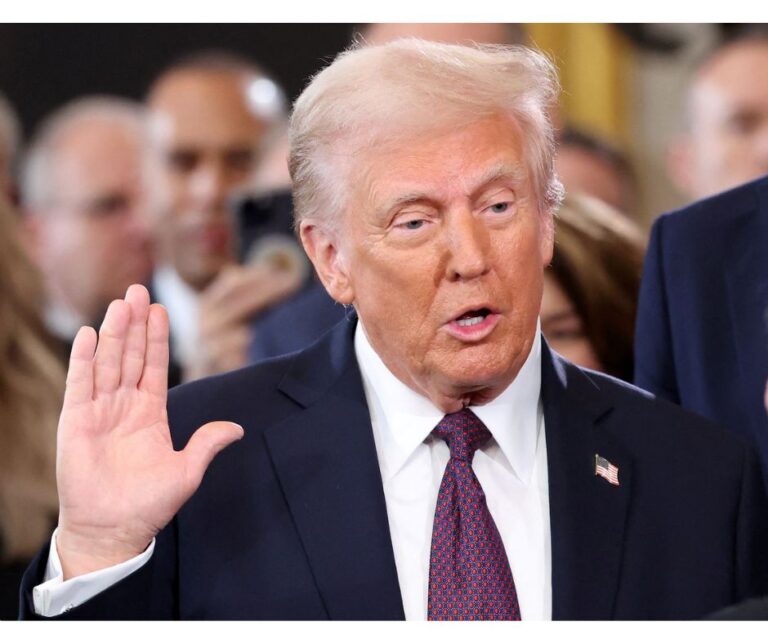
UNITED States (US) President Donald Trump is weighing the deployment of thousands of additional troops to the Middle East as global energy lifelines came under renewed strain on Thursday, March 19.

Trump’s proposal follows the growing spillover of the US-backed Israel-Iran conflict into the Gulf, with fresh strikes hitting gas infrastructure in Qatar and missile threats directed at Saudi Arabia.

 Reuters reported that the development was revealed by officials familiar with the deliberations, as Washington scrambles to secure oil transit routes and prevent a total breakdown of global energy flows.

At the centre of the crisis is the South Pars gas field, the world’s largest natural gas reserve, struck by Israeli forces in what Trump described as a retaliatory move driven by “anger” over recent developments in the conflict, marking a dangerous expansion of targets from military to critical economic infrastructure.

Within hours, Iran responded with missile attacks that hit Qatar’s Ras Laffan Industrial City, a facility responsible for processing roughly a fifth of global liquefied natural gas supply. Qatari authorities reported extensive damage and fires at key installations, raising alarm across global markets already rattled by weeks of instability.

Missiles were also launched toward Riyadh, with Saudi air defences intercepting several ballistic threats. Additional drone and missile strikes targeted energy sites across the Gulf, including facilities in the United Arab Emirates, forcing shutdowns and heightening fears of a coordinated campaign against oil and gas infrastructure.

The widening conflict is now directly threatening the Strait of Hormuz, a narrow passage through which about a fifth of the world’s oil supply flows. Iran’s moves to disrupt the corridor have already driven up global energy prices and intensified concerns over inflation and supply shortages worldwide.

Trump insisted that Washington had no prior knowledge of Israel’s strike on South Pars, as he issued a stark warning to Tehran that any further attacks on Gulf states could trigger overwhelming US retaliation.

Meanwhile, foreign ministers from 12 Muslim-majority nations meeting in Riyadh condemned Iran’s strikes on civilian infrastructure, warning of potential military responses if attacks continue, as Saudi Foreign Minister Prince Faisal bin Farhan said the kingdom “reserves the right” to act.

Thousands have reportedly been killed in Iran since the conflict escalated, with casualties also recorded across Lebanon, Iraq, and Gulf states. In Lebanon, displacement is surging as hundreds of thousands have fled their homes.

Analysts noted that with key energy hubs burning, shipping lanes under threat, and diplomacy yielding little progress, the Gulf crisis is rapidly evolving from a regional conflict into a global economic emergency, one that could redefine both energy security and military alliances in the weeks ahead.

Nigerian mother, two children die in US crash ‘on way to church’

0

A NIGERIAN woman, Nihinlolawa Agoro, and two of her children have lost their lives in a tragic road accident in Texas, United States.

The crash occurred on Sunday, March 15, along US-90A between Harlem and Pitts roads.

According to the Fort Bend County Sheriff’s Office (FBCSO), the incident involved a sport utility vehicle (SUV) carrying five occupants and a truck travelling in the opposite direction.

Authorities said the truck crossed the median, lost control, and crashed head-on into the SUV.

The impact caused the truck to overturn before it caught fire.

Three occupants of the SUV were confirmed dead at the scene, including Agoro and two others. Two children in the vehicle, a four-year-old boy and a 14-year-old girl, were rescued and taken to hospital with serious injuries.

The 20-year-old driver of the truck was also hospitalised.

Investigators said they were still working to determine the cause of the crash, including whether alcohol played a role.

Officials believe the victims were on their way to church at the time of the accident, based on what they were wearing.

“Investigators are working with the district attorney’s office, and charges are expected to be filed, as alcohol is believed to be a factor,” said the FBCSO.

The ICIR’s check on the late woman’s Facebook page showed that she was a practicing lawyer in the US, and she had only two children, who died with her in the crash.


AIJC2026 calls for proposals

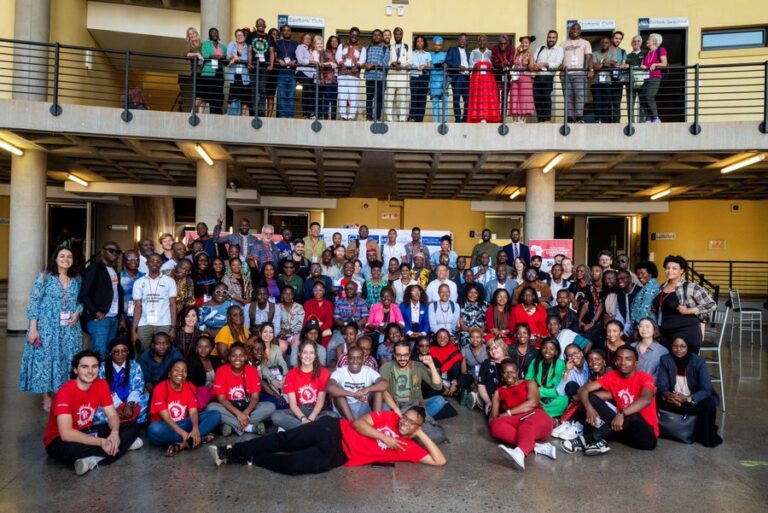
THE African Investigative Journalism Conference (AIJC)is accepting session & speaker proposals for this year’s edition, taking place at the Aga Khan University Graduate School of Media and Communications from November 10 – 12, 2026.

The AIJC returns in 2026, moving from Johannesburg for the first time in its history to Nairobi, Kenya. To ensure it presents the most interesting, urgent work and journalists on the continent, the AIJC invites you to suggest speakers, panels, themes or training that would elevate the conference this year.

Organiser says, “Do you have something that needs to be shared with your colleagues? Do you have a topic or some particular training that you think would enhance the conference? Do you have an idea for a discussion that belongs on the programme?

Help shape the conference by submitting proposals by 5 April 2026”.

The annual African Investigative Journalism Conference, an initiative of the Wits Centre for Journalism, is the largest gathering of African investigative journalists.

Now in its 22nd year (2026), the conference is usually held over three days late in the year (October/November), where journalists from Africa and elsewhere gather to network, share ideas and stories, celebrate excellent, groundbreaking work, and learn from one another through a series of lectures, workshops, masterclasses and seminars.

If you are interested in sending proposals, please use this link.